Men in Therapy: New Approaches for Effective Treatment
Length- 40 minutes, 18 seconds
Deborah Harper, President of Psychjourney, interviews David B. Wexler, Ph.D., author of Men In Therapy: New Approaches for Effective Treatment published by W.W. Norton & Co.

David B. Wexler, Ph.D., is a clinical psychologist in private practice in San Diego, specializing in the treatment of relationships in conflict. He is the Executive Director of the non-profit Relationship Training Institute, which provides education and treatment internationally for relationship development and the prevention and treatment of relationship violence. He has also servedas the Clinical and Administrative Supervisor for the NIMH-sponsoredresearch study of domestic violence in the Navy from 1991 through 1996,and again from 2001 through 2006.
Dr. Wexler is the author of When Good Men Behave Badly: Change Your Behavior, Change Your Relationship, Is He Depressed or What?: What to Do When the Man You Love is Moody, Irritable, and Withdrawn. Dr. Wexler has been featured on the Dr. Phil show and the TODAY show, in the Washington Post, “O” magazine, Cosmopolitan, Redbook, Men’s Health,and on dozens of radio and TV programs throughout North America to help educate the public about relationships in conflict and how to resolve them. Visit his website.
Friday, September 25, 2009
Masculine Psychology - Men in Therapy: New Approaches for Effective Treatment


Thursday, September 24, 2009
Break Up Insurance Monopolies
SUBJECT: Break Up Insurance Monopolies
America's health insurance companies have had a pretty sweet deal for decades.
They can pick and choose their customers and deny coverage to anyone with any sort of pre-existing condition -- even acne. They can get away with dropping your coverage when you get sick.
And since 1945 they have been exempt from the antitrust regulations that apply to nearly every other industry, rules that protect consumers from anti-competitive business practices like price-fixing.
That's why I just sent a letter to Congress, supporting the Health Insurance Industry Antitrust Enforcement Act, which will eliminate the outdated insurance industry antitrust exemption, and force health insurance companies to compete fairly -- like virtually every other business in America.
Please join me by sending a letter to your members of Congress as well:
http://ga3.org/campaign/hcr_antitrust
Tags:
Wednesday, September 23, 2009
Women Owning Their Masculinity
I think we can learn a great deal about masculinity from non-traditional embodiments of it, as is the case in queer studies and women embracing their masculinity.
This comes from Rabbit Write, a very cool gender studies blog I just discovered.
Read the whole post.Getting in Touch with your Masculine Side
Men who are “in touch with their feminine side” are stale news. In the past few decades it has become almost the norm and the default for raising boys.
I have said on this blog that I prefer the femme-y guys to alpha bros. I favor the sensitive chaps for two main reasons: 1.) I don’t think that a blind adherence to one gender and it’s stereotypes can make for a complete or interesting person, and 2.) I am a woman who is pretty in touch with her masculine side, so I need a guy with a gender-balance to match mine.
While the sensitive, sweater-core male is ubiquitous in our generation, society still draws tight lines for women between being butch and femme. But why should guys get all the exploration-fun? I say it is time we explore our masculine sides.
Being in touch with your masculine side doesn’t mean being into sports or farting in public thank goodness, because I could not get down with that. Getting in touch with one’s masculine side is about finding your “masculine” traits and presence. For an opposite example: Ned isn’t a femme-y guy because he likes fashion and baking cupcakes, his femme side is about his gentleness and his capacity for empathy. Getting in touch with your masculine side is about taking those traits that are seen as traditionally “masculine” and owning them. And there are some fantastic “masculine” traits to be owned: strength, courage, power, competitiveness, independence, ambition, confidence, assertiveness, and being logical. From the time we are young and “dainty” girls, these masculine traits often are discouraged in us and eventually erased.
It isn’t about trying to act like one of the boys, but finding the masculine parts that are already inside of us. From the time that I was about three years old, there was a big part of me that identified more with boys, more as male. This part hung out with my boy cousins, was a problem-solver and a trouble brewer, yet also seemed pretty grounded and level headed. I also had a side that was over-the-top girly and giggly, an empathetic part who took care of kittens and created elaborate games. In my three-year-old mind the two me’s were different and gender-specific, they didn’t overlap. I would later realize that this static separation is where problems would arise, getting in touch with my masculine side was key, but it could not be at the expense of my femininity.
This tom-boy part has camped out inside of me my entire life. Yet, while I celebrate masculinity and revel in this part, I am still pretty clueless about what it means to be a boy. In college I starred in a friend’s short film and for the last scene my female character was shown with a mustache and beard. After calling it a wrap, I decided to try my new male look on my public.
Rabbit became Ryan.

Tuesday, September 22, 2009
Cathleen Calbert - Forget the Men. Pick a Guy.

Seriously? Men are two-dimensional and guys are immature? Is that how women really see men? Are we that simple and predictable?
What about it women? Does this article represent how you see men?
By CATHLEEN CALBERT
Forget the Men. Pick a Guy. I’VE never liked men. I like guys.
Guys are often in between things like jobs and houses, which means they’re more likely to stay up with you all night, drinking wine and playing gin rummy. They’ll rub your belly. They’ll lick chocolate off it. They’ll like your cute little dog. A guy is never going to shoot Old Yeller in the woods.
Then again, guys don’t remember to tell you the doctor’s office called. They don’t check your tires before your big trip. They don’t say, “Call me when you get there.” They say, “Love you, have fun,” because they can’t imagine anything bad happening to you. Which is good, and somehow bad. Guys don’t tell you what to do. This also is both good and, oddly, bad.
John Wayne was a man. The young Marlon Brando was a guy — didn’t you see the hurt and indecision in his eyes in “On the Waterfront”? Rock Hudson was a man. James Dean was a guy.
I never wanted to marry a man. I married a guy.
When my guy and I were falling in love and so happy about it that we broke three of my lamps, a friend said, “Someday you’re going to want more than someone who listens to you.” But I really wanted someone who did that.
Another friend said, “I also meant everything I said at 22.” But my guy’s still with me 17 years later. Of course, there remains a fissure between what he says he’ll do and what he actually does. Still, he’s true to me despite my own difficult nature.
A few years ago, when he and I drove past a man mowing his lawn — red face, crew cut, calves all muscle — I sighed and said without thinking: “Men. Sometimes I hate to see them.” This surprised my husband, who laughed but shook his head. That’s about as much as he criticizes me.
On the other hand, I want the E.M.T.’s who show up when I’ve collapsed to be men, not guys. I don’t want someone responsible for saving my life to be torn up about the death of his dog or how some chick hurt his feelings.
Guys can wallow in confusion. They can decide to leave their brides on one side of the country as they head to the other. Guys like “On the Road.” Go, man, go. They like the lyrics of Bob Dylan’s 1964 anthem to Guyhood, “It Ain’t Me, Babe.” No, no, no.
But, as I can attest, guys also can sweetly stick. Yes, they’ll walk past whole bags of garbage without seeing them, they’ll play their guitar while the dog snags an entire meatloaf from the counter and eats it, but they’ll say, “Hi, sweetie,” when you walk in the door, laden with groceries. And they’ll go into therapy to better understand their crazy selves.
Guys wear the kind of clothes they wore as boys even when their hair silvers: cool jeans and baseball jackets coupled with stupid T-shirts boasting faded logos from exotic locales. Men like innocuous dress shirts or pastel polos with colors as nauseating as chewable Tums.
My father was a man, not a guy. But he favored bright red shirts. With black ties. And black sunglasses. I figured him for a gangster when I was small. I can’t imagine him as a boy, but someone in the family must still have that ancient portrait of him as a baby all frilled up like a tiny queen. I never once saw him cry.
Guys are boys who didn’t grow up to be men.
After I was molested in a deserted schoolyard, my father explained to me the difference between boys and men. “If it’s a man,” he told me, “you don’t scream. With a boy, you scream.” The logic being, I suppose, that a man would do whatever it took to make you stop screaming whereas boys still have fear in them; a boy would run away.
My molester and his accomplice were 17 and 15. I was 10. I remember thinking, “How do you know if he’s a boy or a man?”
My father was angry that I hadn’t screamed, but I didn’t know I was supposed to scream. I was just trying to survive. And keep my little dog alive. Because the boy with the knife — the accomplice — told me that he’d kill Junior if I screamed. So I saw my silence as bravery when my molester shoved his hand down my pants and then, horribly, kissed me.
My father found out who the boys were and got in trouble with the cops for going after them with his car. Trying to scare them, he knocked over several mailboxes and plowed through someone’s flowers.
That’s what a man does. He takes revenge.
My father didn’t speak to me again about that day. That’s also what a man does.
Actually, he did bring it up once, a couple of years later, when he considered allowing me to go on my first date. He said he wasn’t sure if I knew how to handle myself with a boy, considering what had happened in that schoolyard.
Even at 12, I knew something was wrong with this equation. What did a matinee date with Denny — who had been my “steady” since giving me his St. Christopher medal, who held my hand at recess, who charmed me by acting like his Hush Puppies could talk to each other — have to do with a molester, a threat and a knife? Did my father think of dating as molestation? Molestation as dating?
But the guys I bedded in my later teens and early 20s were as sweet as could be. All they wanted was to have sex as lovely and uncomplicated as ice cream. No one pulled a knife. Or forced me. Or humiliated me. Or hurt me physically. Hell, it was the ’70s. We didn’t think sex needed to be bad to be good. Good is good, we thought.
Do men want to be guys? I don’t think men know guys exist, at least not as a permanent condition. They assume guys are boys who haven’t manned up yet.
Do guys suffer over not being men? Yes, sometimes. Then they want to talk to women about their feelings of inadequacy.
Do guys ever become men? Possibly. But I’ve met 24-year-old men and 64-year-old guys. It would take more than mere numbers to make that change: something a man wouldn’t talk about again.
My father died when I was 16. My parents had divorced and he was living with his new wife in another town. After we got the phone call, I kept a date to go to the movies with a boy, but we had a fight, and I stepped out of his car at a red light as if I could do whatever I wanted for the rest of my life.
I felt vague regret that my father would not get to enjoy his new boat with his new wife, but not more than that. People told me I’d feel different about my father in time, that I’d yet to grieve. A friend said, “You didn’t get to know him as a grown-up.”
But he would not have liked the grown-up woman I’ve become: a feminist, an atheist, a poet, of all things. I suspect we would not be on speaking terms had he lived.
My father designed window displays for men’s stores — kind of a fey job for such a manly man. But he didn’t make it seem so. He didn’t talk much about his working life, but what he did say made it sound rough: the jerks who tried to cheat him and the traffic he had to blast past. Dark-eyed and glum, he’d swing his Grand Prix into the driveway and then come into the house smelling of smoke and anger like a Vulcan blacksmith.
Oh, no, we thought. Dad’s home.
We slunk off to our rooms as he banged around the kitchen, then closed himself in his bedroom. My father slept separately from my mother and kept the door to his room locked. Every morning when he left, he carried the key to that lock out with him into the world.
Men have keys. Men have the codes to alarms.
My father said if we interrupted his Saturday nap, we’d have to sit at the end of his bed in silence until he slept and woke again. He only made me do it once; at 7 years old, I thought this punishment the height of perversion.
My father thought the world perverted. He kept his dating advice to my brothers simple: “Don’t knock anyone up.” He told my older sister she looked like a slut, though he never called me that: he died before I bloomed into my come-hither gypsy disarray.
I KNOW there must have been love behind his hard words. Fear and love. Love as fear? My father wanted to keep us from harm: sex could lash a man to a woman for 23 years, as it did him. He had gotten the girl next door pregnant, then busted his hump, as he used to say, eking out a living for her and the four of us kids. As for sluts, they could be disrespected and thus hurt by men.
Missing from my father’s version of love was the goodness of sex, the purity of pleasure, and the catharsis of true conversation. Lucky for me, the guys in my life taught me a different love, one that is larger and lighter.
In academia, where I spend my working days, most male professors and students are guys, not men. I think that’s one reason I became a professor. I like the surprise and fire in their eyes. I like their eagerness and curiosity. Guys are capable of swooning over a new writer they’ve just discovered, or of speaking passionately about some idea. They’re nothing but possibility.
That, to me, is a guy: possibility.
~ Cathleen Calbert, a poet and professor at Rhode Island College, is the author of “Sleeping With a Famous Poet.”
Monday, September 21, 2009
Dzigar Kongtrül Rinpoche - Searching for Self
Still, men are more likely to be firmly attached to their sense of self in how they see themselves in the world, except that self is an illusion. At least, in any absolute sense it is. And learning to see it that way can free us up to be who we are - paradoxical but true.
[By the way, It's Up to You is a great book, even if you are not a Buddhist.]
Searching for Self
Dzigar Kongtrül Rinpoche offers advice for facing up to our egos.
Holding to an ordinary notion of self, or ego, is the source of all our pain and confusion. The irony is that when we look for this "self" that we're cherishing and protecting, we can't even find it. The self is shifty and ungraspable. When we say "I'm old," we're referring to our body as self. When we say "my body," the self becomes the owner of the body. When we say "I'm tired," the self is equated with physical or emotional feelings. The self is our perceptions when we say "I see," and our thoughts when we say "I think." When we can't find a self within or outside of these parts, we may then conclude that the self is that which is aware of all of these things—the knower or mind.
But when we look for the mind, we can't find any shape, or color, or form. This mind that we identify as the self, which we could call ego-mind, controls everything we do. Yet it can't actually be found—which is somewhat spooky, as if a ghost were managing our home. The house seems to be empty, but all the housework has been done. The bed has been made, our shoes have been polished, the tea has been poured, and the breakfast has been cooked.
The funny thing is that we never question this. We just assume that someone or something is there. But all this time, our life has been managed by a ghost, and it's time to put a stop to it. On one hand, ego-mind has served us—but it hasn't served us well. It has lured us into the suffering of samsara and enslaved us. When ego-mind says, "Get angry," we get angry; when it says, "Get attached," we act out our attachments. When we look into the "slavish" arrangement we have with our ego-mind, we can see how it pressures us, plays tricks on us, and causes us to do things that bring undesirable consequences.
If you want to stop being the slave of a ghost, you must demand that ego-mind show its face. No true ghost will show up when it hears this! You can practice this simple meditation throughout the day. Whenever you don't know what to do with yourself, challenge your ego-mind to show its face. When you're cooking your dinner or waiting for the bus, challenge your ego-mind to show its face. Do it especially when ego-mind overwhelms you, when you feel threatened, fearful, or enslaved by it. Just straighten your posture and challenge ego-mind. Don't be gullible, wiggly, or spineless. When you challenge ego-mind, be firm but gentle, penetrating but never aggressive. Just say to your ego-mind, "Show me your face!" When no mind shows up saying, "Here I am," ego-mind will begin to lose its hold on you and your struggles will lighten up. See if this isn't true. Of course, maybe your mind does have a face and your experience will be different. But if you don't find a mind with a face, you won't take your struggles so seriously, and all of your pain and suffering will lessen.
When we question ego-mind directly, it is exposed for what it is: the absence of everything we believe it to be. We can actually see through this seemingly solid ego-mind, or self. But what are we left with then? We are left with an open, intelligent awareness, unfettered by a self to cherish or protect. This is the primordial wisdom mind of all beings. Relaxing into this discovery is true meditation—and true meditation brings ultimate realization and freedom from suffering.
From It's Up to You © 2005 by Dzigar Kongtrül Rinpoche. Reprinted by arrangement with Shambhala Publications, Inc., www.shambhala.com.
Image: 15 Buddhas, Atta Kim, 2004, chromogenic print, 74 x 92 inches. © Atta Kim

Sunday, September 20, 2009
Dan John - Four Challenges to Light Your Fire!
Pictures at the bottom.
Four Challenges to Light Your Fire!
by Dan JohnTraining with Dan John is fun.
Wait, scratch that.
Training with Dan John is "fun."
That's better. The quotation marks are crucial because it's difficult to use the word fun if you're talking about gasping, straining, and sucking wind like a football player who shows up fat 'n sloppy for two-a-days.
Sure, challenging is probably a better word. It wakes you up, jolts you from your training stupor, and yanks you by the hair out of your rut. After a Coach John workout is over you feel like you've accomplished something. You feel, well, good. And that's fun.
In that spirit we've asked Dan to hit us with a handful of his "fun" challenges. Give 'em a shot, then come back here and let us know how you did. — Chris Shugart
4 Challenges to Light Your Fire!
"Kick the tires and light the fires, big daddy!" Captain Wilder, Independence Day
Challenge #1: Kick the PUPP
It's true, some coaches don't like the plank exercise. They say it's too easy, at least for their advanced athletes.
But here's the deal: If you start shaking like a wet cat in winter before you even reach the 60 second mark, then you need planks.
I know, I know, you're too "advanced," just like everyone else on the Internet, all of them just one cycle away from being Mr. Universe... But if you can't plank for one full minute, let's just pretend that you need some work on this.
If you're the Olympic 400 meter champion, you can skip it. Fair enough?
Okay, so what's a plank? Basically, it's holding a push-up in the top position. Yes, it's that simple. I'd make you a video of it, but it would be quite boring.
Form? Well, a plank is like my deck. My deck is made of Trex and it'll be straight 10,000 years after the end of the world. So, be like my deck and make one smooth straight line, hips solids, head locked in the "military fashion," and body rigid. No need to coat yourself in varnish, though.
Planks are probably my favorite underrated exercise in my quiver of training tools. I now have about a dozen variations with names that mean something to me and probably nothing to anyone else. I think it's important for a coach and athlete to share a vocabulary, but translating it to others in print or online is impossible. So, I won't comment on star planks, dead bugs, get-up planks or — my favorite — "resurrected dead bugs with a heartbeat."
Let me give you one to try today. I'd like you to fall to the floor and give me a PUPP: a standard Push-Up Position Plank. The shaking in your waist after 30 seconds is a sign that your body wants to discuss some issues with you.
But wait, this is TMUSCLE! I'm going to ask that you do it the way we do it in our gym. I want you to use the PUPP as your rest period for your workout.
Yeah, you read that right.
Simply take a squat movement and use a weight that you can get for ten reps. For this workout, however, we'll halve those reps, so we'll do sets of five. Instead of resting, you will PUPP.
Here's an example:
Front Squat x 5 (with 10 rep weight)
PUPP for 30 Seconds
Front Squat x 5
PUPP for 30 Seconds
Front Squat x 5
PUPP for 30 SecondsBe careful on the last set as the heaving of the chest makes handling the barbell a bit suspect. I strongly encourage you to rest for a little bit after this workout.
Yes, you can PUPP longer than 30 seconds. Yes, five reps with a weight you can front squat for ten is very light. And guess what? Neither will matter when you attempt to leap off the ground and front squat that last set.
How about this? Try it first, then decide if you want to ask me about longer PUPPs and more weight on the bar.
Challenge #2: The Big 55
The next little idea that I use in training is "The Big 55." I had a smart kid once answer a question rather quickly in a math class. The instructor asked, "What's the sum of 10 plus 9 plus 8 plus 7 plus 6 plus 5 plus 4 plus 3 plus 2 plus 1?"
My lifter answered "55!"
The instructor was amazed he could add those numbers so quickly, until the student told him the truth: "That's Coach John's favorite workout."
Here's how to do it. First, put two moves back to back. My good friend, Pavel Tsatsouline, has fallen in love with this little twisted workout:
Swings
Goblet SquatsThe workout: Simply do 10 swings, followed by 10 goblet squats, then 9 and 9, 8 and 8, and — you know where this is heading! — we go all the way to 1 and 1. I don't recommend putting the weight down if you're doing this with the same kettlebell or dumbbell. Enjoy.
Notes:
The swing is simple: Maintain a nice back arch, sit back, keep your head up, stay braced at the bottom, and use a powerful hip snap on every rep. The 'bell shouldn't rise above your shoulders.
Think of a goblet squat as a front squat holding a dumbbell in front of your body at your chest (see pic). This allows for a "comfortable," natural, upright position.
Challenge #3: The 23-Minute Man-Maker
Pick five exercises. Like these:
Squat
Overhead press
Deadlift (any variation, use thick bars if you have them)
Pull-up (preferred) or pulldown
Ab wheel or ab roll-out using a bar or Swiss ballThe chore is to do ten reps back-to-back of each of the five lifts, then start again doing nine, then eight, then seven... and, again, you see where this is heading!
I have a "tap out" rule that you have to finish in 23 minutes. I insist you use weights that are so light in the squat, press, and deadlift that you're embarrassed to begin the workout. If you follow my sage advice, you might be able to finish it.
Challenge #4: Tumble
One other area of training that I feel most people have completely ignored is tumbling.
Tumbling is part of bodybuilding's history. Tumbling was a key to "body culture" a hundred years ago and it existed well into the Muscle Beach era. Franco Columbo was a gifted acrobat and could do amazing things with his total body strength.
I'm telling you this: If you want a workout that will gas you and leave you sweating and crying in a heap, go ahead and tumble. The following workout recently led a fairly good athlete of mine to puke:
Five forward rolls
Five right shoulder rolls
Five left shoulder rolls
Three cartwheels followed by three cartwheels to the other side
One set of bear crawls (about ten meters)
Sprint to waste basketNote: The bear crawl is a "quad-ped" crawl. Your knees don't touch the ground, just your hands and feet. The two basic variations are the bent-knee Spider Man or "military" version, and the straight-leg version.
I don't like my athletes to puke, but the level of intensity, both physical and mental, it takes to tumble really seems to ramp up the metabolism.
Furthermore, I don't push the tumbling repetitions. We take time to review technique and position and protection. But, the workload seems insane compared to rotator cuff exercises on a Bosu ball...
Wrap-Up
"Accept the challenges so that you may feel the exhilaration of victory," said General Patton. Well, you're going to feel something after one of these challenges. Let's hope the exhilaration of victory is part of it!
Front Squat

PUPP

Swing

Barbell Rollout

About Dan John

Dan John is head strength coach at Juan Diego Catholic High School in Daper, Utah. He's also a religious studies instructor in Salt Lake City. An All-American discus thrower, Dan has competed at high levels in Olympic lifting, Highland games, and the Weight Pentathlon, an event in which he holds the American record. Dan's new book, Never Let Go, is available from DaveDraper.com.
© 1998 — 2009 Testosterone, LLC. All Rights Reserved.
Thursday, September 17, 2009
Carl Jung's Red Book - The Holy Grail of the Unconscious
This excellent article on the history and imminent publication of Carl Jung's fabled Red Book is from the New York Times.
Jung's psychological breakdown as long been the stuff of myth within the Jungian Community. The period began when he was 38 years old, with World War I just beginning, following the fallout with his mentor Freud, and with the emergence in his psyche of Philemon, Jung's inner guide.
Jung talked about this period of his life in Memories, Dreams, Reflections (his autobiography) quite openly, but the actual "work" of that period has been a long-guarded secret. Until now. The Red Book is set for publication in October. In it, we see the images and the writings of a man diving deeply into his unconscious life. From that darkness he emerged more whole and complete.
There is a lesson in this for all of us, but especially for men who are often dissuaded in this culture from having an inner life, let alone exploring it and learning from it. Jung was way ahead of his time in some ways. And certainly we can learn from him that if we do not embrace our interior life, it can and will haunt us.
Anyway, here is a passage from the second page of the article:
Jung soon found himself in opposition not just to Freud but also to most of his field, the psychiatrists who constituted the dominant culture at the time, speaking the clinical language of symptom and diagnosis behind the deadbolts of asylum wards. Separation was not easy. As his convictions began to crystallize, Jung, who was at that point an outwardly successful and ambitious man with a young family, a thriving private practice and a big, elegant house on the shores of Lake Zurich, felt his own psyche starting to teeter and slide, until finally he was dumped into what would become a life-altering crisis.Read the whole interesting article.What happened next to Carl Jung has become, among Jungians and other scholars, the topic of enduring legend and controversy. It has been characterized variously as a creative illness, a descent into the underworld, a bout with insanity, a narcissistic self-deification, a transcendence, a midlife breakdown and an inner disturbance mirroring the upheaval of World War I. Whatever the case, in 1913, Jung, who was then 38, got lost in the soup of his own psyche. He was haunted by troubling visions and heard inner voices. Grappling with the horror of some of what he saw, he worried in moments that he was, in his own words, “menaced by a psychosis” or “doing a schizophrenia.”
He later would compare this period of his life — this “confrontation with the unconscious,” as he called it — to a mescaline experiment. He described his visions as coming in an “incessant stream.” He likened them to rocks falling on his head, to thunderstorms, to molten lava. “I often had to cling to the table,” he recalled, “so as not to fall apart.”
Had he been a psychiatric patient, Jung might well have been told he had a nervous disorder and encouraged to ignore the circus going on in his head. But as a psychiatrist, and one with a decidedly maverick streak, he tried instead to tear down the wall between his rational self and his psyche. For about six years, Jung worked to prevent his conscious mind from blocking out what his unconscious mind wanted to show him. Between appointments with patients, after dinner with his wife and children, whenever there was a spare hour or two, Jung sat in a book-lined office on the second floor of his home and actually induced hallucinations — what he called “active imaginations.” “In order to grasp the fantasies which were stirring in me ‘underground,’ ” Jung wrote later in his book “Memories, Dreams, Reflections,” “I knew that I had to let myself plummet down into them.” He found himself in a liminal place, as full of creative abundance as it was of potential ruin, believing it to be the same borderlands traveled by both lunatics and great artists.
Jung recorded it all. First taking notes in a series of small, black journals, he then expounded upon and analyzed his fantasies, writing in a regal, prophetic tone in the big red-leather book. The book detailed an unabashedly psychedelic voyage through his own mind, a vaguely Homeric progression of encounters with strange people taking place in a curious, shifting dreamscape. Writing in German, he filled 205 oversize pages with elaborate calligraphy and with richly hued, staggeringly detailed paintings.
What he wrote did not belong to his previous canon of dispassionate, academic essays on psychiatry. Nor was it a straightforward diary. It did not mention his wife, or his children, or his colleagues, nor for that matter did it use any psychiatric language at all. Instead, the book was a kind of phantasmagoric morality play, driven by Jung’s own wish not just to chart a course out of the mangrove swamp of his inner world but also to take some of its riches with him. It was this last part — the idea that a person might move beneficially between the poles of the rational and irrational, the light and the dark, the conscious and the unconscious — that provided the germ for his later work and for what analytical psychology would become.
The book tells the story of Jung trying to face down his own demons as they emerged from the shadows. The results are humiliating, sometimes unsavory. In it, Jung travels the land of the dead, falls in love with a woman he later realizes is his sister, gets squeezed by a giant serpent and, in one terrifying moment, eats the liver of a little child. (“I swallow with desperate efforts — it is impossible — once again and once again — I almost faint — it is done.”) At one point, even the devil criticizes Jung as hateful.
He worked on his red book — and he called it just that, the Red Book — on and off for about 16 years, long after his personal crisis had passed, but he never managed to finish it. He actively fretted over it, wondering whether to have it published and face ridicule from his scientifically oriented peers or to put it in a drawer and forget it. Regarding the significance of what the book contained, however, Jung was unequivocal. “All my works, all my creative activity,” he would recall later, “has come from those initial fantasies and dreams.”
Jung evidently kept the Red Book locked in a cupboard in his house in the Zurich suburb of Küsnacht. When he died in 1961, he left no specific instructions about what to do with it. His son, Franz, an architect and the third of Jung’s five children, took over running the house and chose to leave the book, with its strange musings and elaborate paintings, where it was. Later, in 1984, the family transferred it to the bank, where since then it has fulminated as both an asset and a liability.
Wednesday, September 16, 2009
The Good Men Project: Film Trailer
What does it mean to be a good man in today's world? Ten men, ten stories. The documentary film, "The Good Men Project: Real Stories From the Front Lines of Modern Manhood" is due to be released on DVD November 15, 2009 and is available at www.goodmenproject.org.
Directed and Produced by Matthew Gannon.
Featuring Kent George, John Sheehy, Bruce Ellman, Mark St.Amant, Konstantin Selivan, Amin Ahmad, Charlie LeDuff, Stuart Horwitz, Michael Kamber and Rolf Gates.
Tuesday, September 15, 2009
Eric Cressey - The Regular Guy Off-Season Strength Program

Eric Cressey knows his stuff on training and rehab - he is one of the rising stars in the world of strength coaching. Follow the link back to the blog to check out the videos for examples of how to do the exercises.
The Regular Guy Off-Season Strength Program
by Eric CresseyPop quiz, hotshot. You need to add some plates to the bar and pack some meat on your bones. You've got precious few weeks to accomplish both, but only have four days per week to train. What do you do? What do you do?
I've asked this question to myself countless times and only recently have I come up with what I believe is the most effective method. Forget total-body training. Forget upper and lower splits. The trick is to, well...I'll get to that in a minute.
I just have to say that before I was ready to unleash this program to TMUSCLE, I had to try it out on my guinea pigs, er...minor-league baseball players and other athletes here at Cressey Performance to see if it truly worked.
And I've got to say the results have been pretty damn impressive.
But why does their success bode well for your success? Well, you've probably got more in common with a typical minor-league baseball player than you might think. As a little frame of reference, here's an excerpt from an email I got from a minor league guy I work with in the off-season:
Yesterday might have been the roughest day of my career. It started by getting back from our game Sunday night at 11:30PM. I couldn't fall asleep until at least 12:30AM, and then we had a 3:30AM wake up call to catch a bus to the airport for our flight at 6:15AM. We had a layover for an hour and a half, then got to the next city at 11AM. We drove to our hotel and I got to my stinky room at the Sleep Inn and tried to catch some sleep - except we had to be at the field at 4PM.
Days like this are not uncommon at all during the professional baseball season: late nights, early wake-up calls, red-eye flights, long bus rides — all of which compromise good sleeping habits. And, it shouldn't come as any surprise that their diets on the road and in the clubhouse are generally atrocious — both in terms of quality and amount. And, let's just say that the typical pro ballplayer consumes far too much alcohol.
What does that have to do with you?
Exhaustive exercise, poor sleep, less-than-perfect nutrition, and more than the occasional brewskie. Starting to sound like anyone you know, skinny?
Anyway, it's pretty clear that these guys need to try to make up for this season of crappy living by getting the absolute most out of their 16-23 week off-season, which is pretty much where I've built my name in the baseball world: quick results in a short amount of time.
While you may not necessarily have an off-season (taking a few weeks off from playing Wii tennis doesn't count), it's probably time for you to clean up your eating, don your war helmet, and hit the gym with authority.
So with little time to work but big results needed, we've come up with a system that has put 20 pounds of muscle or more on damn near every athlete whose followed the program in their off-season.
The Nuts and Bolts
Guys like Chad Waterbury and Alwyn Cosgrove have raved about the benefits of full-body training sessions, and I agree with them 100%.
However, as a powerlifter and a guy who has lifted alongside some of the best powerlifters and strength and conditioning coaches in the world, I've come to appreciate that the twice-upper, twice-lower weekly schedule is the best there is for building strength.
So, what to do if you want muscle and strength?
Both.
Here's how it works:
• You must be willing to train on at least one weekend day, so if you're one of those Monday, Tuesday, Thursday, Friday guys, you can probably stop reading.
• You're going to have two full-body training sessions, one upper body training session, and one lower body training session per week.
• The days on which you perform these sessions is key. It may be Monday, Tuesday, Thursday, Saturday; or Monday, Wednesday, Thursday, Saturday. Whichever days you pick your week must look like this:
Day 1: Full body
Day 2: No lifting
Day 3: Lower body
Day 4: Upper body
Day 5: No lifting
Day 6: Full body
Day 7: No lifting
Day 8: Repeat• Our athletes mix in their medicine ball work, movement training, and (in the case of baseball guys) throwing and hitting throughout the week; this is what you'd want to do on the metabolic conditioning side of things. When all is said and done, they have one day of complete rest per week. You should too.
This set-up actually has some hidden benefits. First, I've often used it as a subtle lower body specialization program. Second, you can also use it in the exact opposite way simply by rearranging the volume to be more upper-body focused than it is lower-body focused. Simply stated, it's a versatile template.
Another thing I love about four-day set-ups as compared to three-day set-ups is that the four-day option forces trainees to go through their foam rolling and warm-ups an extra day per week. Over the course of the years, that's 52 extra flexibility/tissue quality exposures. And consistency like that adds up in terms of keeping people healthy.
Without Further Ado
Before I get to the program, I just humbly request that:
a. You bust your ass.
b. You be ready for big gains.
c. You not eat like a bird while doing this program.
d. You make a point of foam rolling and doing a thorough warm-up before each session.
e. You keep in mind that I'm only including the lifting stuff that we do on these days. In reality, our athletes are plugging in individualized low-level corrective exercises ("fillers," as Tony Gentilcore described here) between exercises rather than just standing around.
And, as I mentioned, they're throwing the medicine balls, sprinting, and doing all sorts of flexibility stuff on the side.
The Program
Day 1: Full Body
A) Front Squat for Speed: 6x2 at 60-70% of 1RM, 45s rest between sets
B1) 1-leg DB RDL: 3x10/side
B2) Alternating Low Incline DB Bench Press: 3x6/side
C1) Chest-Supported Row, Pronated Grip: 4x6
C2) Split-Stance Cable Lift: 3x8/side*If you want, you can throw in some direct arm work here.
Day 2: Off from lifting
Day 3: Lower Body
A) Trap Bar Deadlift: 5x3
B) Barbell Reverse Lunge — Front Squat Grip: 3x8/side
C1) Pallof Press Isometric Hold: 3x3/side (10s hold at lockout)
C2) Glute-Ham Raise (natural, if necessary): 3x8*If you want, you can toss in some direct calf work here.
Day 4: Upper Body
A1) Bench Press: 5x3
A2) Neutral Grip Pull-up: 5x3
B1) 1-arm DB Push Press: 3x8/side
B2) Seated Cable Row — Neutral Grip: 3x8
C1) Band-Resisted Ab Wheel Rollout: 3x8
C2) Side-Lying External Rotation: 3x10/sideDay 5: Off from lifting
Day 6: Full Body
A1) Box Squat: 4x6
A2) Feet-Elevated Push-up: 3x12
B1) Standing 1-arm Cable Row: 3x12/side
B2) Walking DB Lunge: 3x6/side
C1) Landmines: 3x5/side
C2) Supine No Money w/Band: 3x4 (10s hold on each rep)
D) Farmer's Walk: 3x40ydsDay 7: Off from lifting
When it really comes down to it, there aren't any fancy set/rep schemes, elaborate exercises, or other bells and whistles. Instead, it all comes down to good timing, adequate frequency, sufficient calories and, of course, hard work.
Give it a shot; you've got nothing to lose, and plenty to gain.
About Eric CresseyEric Cressey is a highly sought-after strength and conditioning coach and owner of Cressey Performance just west of Boston. Eric has worked with athletes of all levels, from youth sports to the professional and Olympic levels. He publishes a free weekly newsletter and daily blog at EricCressey.com.
Eric's products are available in the TMUSCLE store and you can pick up a copy of his new e-book, The Truth About Unstable Surface Training, here.
Monday, September 14, 2009
Art of Manliness - The Different Types of Manliness
Source: Image from freeparking
If you take the time to read the comments on our site, you’ll soon see that there isn’t always agreement on what constitutes being manly. Some say that dressing to the nines is a manly pursuit; others say that caring about your style is distinctly unmanly: “Real men don’t use umbrellas! They just get wet!” Some say guns are manly and that real men know how to protect their loved ones with force; others say that violence is never manly. An article that one segment of readers loves is derided by another as either offensively barbaric or unbearably foo foo and thus unbefitting of a site about manliness.
Such a reaction is natural, as we all have different views of what manliness means and looks like. When we think about manliness, we probably have various types, drawn from our lives and from popular culture-books, movies, television-that pop into our head. Let’s explore what these types are. Below are 6 different types that we often imagine when we think about manliness. Each includes a short description of the type, along with the positive characteristics associated with the type, the possible pitfalls this type of man runs into, and examples, both fictional and real, of this kind of type in the flesh. Keep in mind that the “possible pitfalls” are faults common to this type, but are in no way inevitabilities.
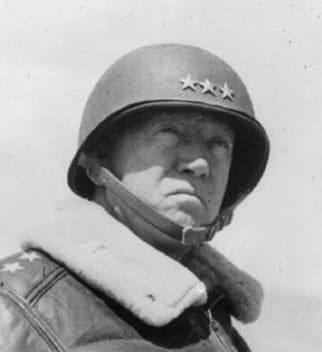
The Warrior
The warrior is arguably the type we’ve been associating with manliness the longest. In ancient times, he was the tribesmen who protected the village from attack; in modern times, he is the soldier who defends freedom. He is the grunt willing to subvert some of his individualism for greater goals and the general who leads his troops into battle. He is the man willing to lay down his life for others and for the glory of conquest and victory.
Positives: Toughness, leadership, courage, sacrifice
Pitfalls: Callousness, difficulty in adjusting to civilian life and relating to non-soldiers, unwilling to question authority
Examples: Audie L. Murphy, George S. Patton, Achilles, Michael Monsoor, Genghis Khan
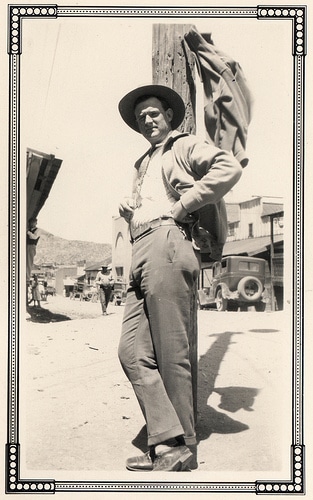
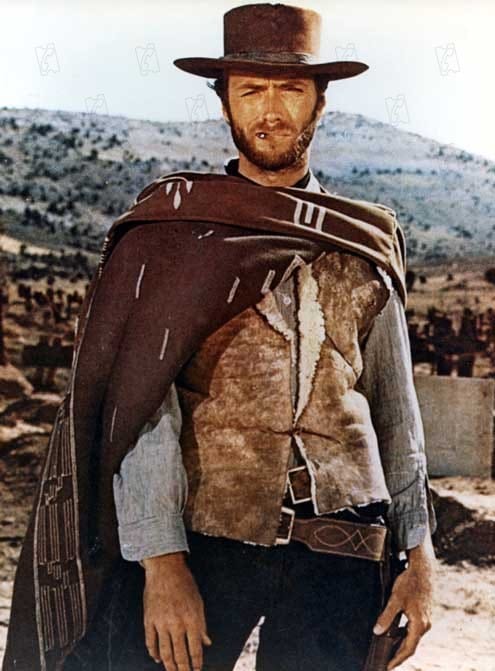
The Lone Wolf
In popular culture, depicting the lone wolf type of manliness is quite popular. He is the cowboy riding his horse alone into the sunset, the biker roaring across the desert, the hobo wandering from place to place. He is also the artistic genius or the intellectual who isolates himself to create a great masterpiece or concentrate on his studies. Taciturn and mysterious, he doesn’t care for cultural rules and conventions; he is the rebel who blazes his own path.
Positives: Self-sufficient, free-thinking, independent, able to be his own man
Pitfalls: Can’t ask for help, difficulty in forming connections with others, depression, suppression of emotions
Examples: Clint Eastwood in pretty much every Clint Eastwood movie, John Wayne, JD Salinger, Louis L’Amour, Jeremiah Johnson
The Adventurer
This is the man with an overpowering desire to wander, travel, explore, and conquer. He wants to see the places no one or few others have seen. He sees a mountain and wants to climb it simply because it is there. He wants to discover all the world has to offer. He desires to test his limits and get outside his comfort zone. The new, the dangerous, make him feel alive.
Positives: Free spirit, courage, vitality, risk-taking
Pitfalls: Flighty, inability to commit
Examples: Lewis and Clark, Edmund Hillary, Sir Richard Francis Burton, Indiana Jones
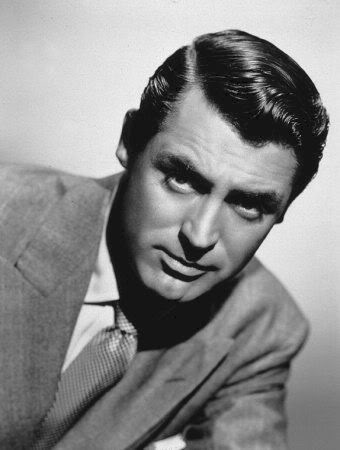
The Gentleman
The gentleman is suave, urbane, polite and respectful to all, both to inferiors and superiors. Dapper in dress, proficient in the conversational arts, confident and witty, he easily wins friends and woos the ladies. He is skilled in and knowledgeable about arts, culture, and current events.
Positives: Well-dressed, well-mannered, sprezzatura
Pitfalls: Superficial, neglect of the inner life in favor of outward forms, lack of toughness
Examples: Cary Grant, Sherlock Holmes, Ronald Reagan, Jimmy Stewart
The Statesman
To the ancient Greeks, a man could not possess manliness without being engaged in civic affairs. The statesman puts the good of the nation above individual pursuits. In his true form, the statesman has 4 attributes, as delineated by Professor J. Rufus Fears: a bedrock of principles, a moral compass, a vision, and an ability to build consensus to achieve that vision. These qualities, along with a proficiency in the art of oratory, allow him to hold together and guide a nation’s or people’s destiny.
Positives: Idealistic, driven, civic-minded, principled
Possible pitfalls: ego-centric, pride leading to scandal and corruption
Examples: Pericles, Demosthenes, Abraham Lincoln, Winston Churchill
The Family Man
While he isn’t the subject of many books and movies like the adventurer or warrior, we still really admire the simple family man, the average Joe who works hard and does the right thing every day. He has “blue collar” values, loves his wife, rarely complains about his job, is a great dad, and is just a solid man all around. He’s the grandfather who exuded manliness and the father you were always a little in awe of.
Positives: Hard working, loyal, good husband and father
Possible pitfalls: Aversion to risk, complacency
Examples: Joe the Little League Coach, your cousin Lou
If there are different types of manliness-es, does that mean we cannot say that there is anything essential to manliness?
Absolutely not. The fundamental principles of manliness-courage, loyalty, integrity, resiliency, personal responsibility, and sacrifice-cut across all types.
Thus we should have a healthy respect for the different types of manliness-es that exist. As long as the fundamental principles are in place, one should not say that one is necessarily better than the others.
And of course, we don’t actually live as types, we live as complex men. Even the men mentioned above as “examples” of each type were not one-sided in their character and pursuits. While one of the types likely describes you more than others, you’re probably a mix of many of them. They should not be seen as incompatible with one another.
The types are really symbols, certain traits and ways of living like a man writ large and exaggerated. Each has important lessons to teach us about being men. From the warrior we learn courage; from the lone wolf we come to understand the importance of individuality; the adventurer teaches us to find ways to explore wherever we are in life; the gentleman rounds off our rough edges; the statesman reminds us to be civic-minded, and the family man teaches us about selflessness. It is not possible to combine the types in our lives in equal degrees, but we can use them to form our own manliness. This was the task accomplished by the greatest men in history. Men like Theodore Roosevelt, Robert E. Lee, and Winston Churchill successfully integrated the best traits from all the types while avoiding the pitfalls of each. They were as at home on the battlefield as the ballroom.
But remember: don’t try to be someone you’re not and beware of the pitfalls of the types that you are. There’s a reason that Cary Grant was never in a Western.