Sunday, March 10, 2013

Sir Patrick Stewart Calls on ‘One Million Men’ to Promise an End to Violence Against Women


In the U.S., Congress finally renewed the Violence Against Women Act (VAWA) and President Obama signed the legislation that provides money for domestic violence shelters, financial support for non-profits that offer therapy services to survivors of domestic violence, sexual assault, and other acts of violence, and other acts of violence, and extends to education efforts to end dating violence and stalking as well.

From Wikipedia:
One of the greatest successes of VAWA is its emphasis on a coordinated community response to domestic violence, sex dating violence, sexual assault, and stalking of women; courts, law enforcement, prosecutors, victim services, and the private bar currently work together in a coordinated effort that had not heretofore existed on the state and local levels. VAWA also supports the work of community-based organizations that are engaged in work to end domestic violence, dating violence, sexual assault, and stalking against women, particularly those groups that provide culturally and linguistically specific services. Additionally, VAWA provides specific support for work with tribes and tribal organizations to end domestic violence, dating violence, sexual assault, and stalking against Native American women.
Part of the opposition from the GOP to renewing this law was the new inclusion of same-sex couples in the list of protected groups, an increased ability for tribal courts to rule on cases involving non-tribal defendants, and provisions allowing battered illegal aliens to claim temporary visas.


Meanwhile, on Friday in New York . . .
"Sir Patrick Stewart stood in the center of the Diplomat Ballroom at the UN Hotel here on Friday, pounding his fist methodically against a podium, each thump punctuated with a number ("One ... two ... three ...") until he got to nine.

"Every nine seconds a woman is assaulted or beaten in the United States," Stewart said.
Stewart was serving as host for an event to launch "Ring The Bell," "a global campaign calling on one million men to make one million "concrete, actionable promises" to end violence against women."

Stewart grew up in a violent home, making him an ideal spokesperson for this event and for the new initiative to gather one million to stand against domestic violence.
"I became an expert on when to open the door and throw myself between my father's fist and my mother's body," Stewart said. 
He said his father "was unable to control his emotions—and his hands." 
"My mother did not do anything to provoke my father," Stewart added. "But even if she did, violence is not the answer."
Other speakers at the event included Dallas Mayor Michael Rawlings and former NFL quarterback and college football hall-of-famer Don McPherson.
Dallas Mayor Michael Rawlings, who in January launched an initiative to combat domestic violence in his city, suggested "dialing up the shame" for men who commit violent acts against women. 
"You can call a man who hits a woman a lot of things," Rawlings said, "but you can't call him a man." 
Don McPherson, a former NFL quarterback and college football hall-of-famer turned feminist, agreed. 
"We don't raise boys to be men," McPherson said. "We raise them not to be women, or gay men." 
McPherson compared the fight to end violence against women with the one to end racism.
"White people confronted white people to fight racism," he said. "Men need to confront men."
That last point is crucial is we are to ever reduce the incidence of violence - men need to stand up to other men who are abusers. Shame is not my idea of how to do so (sorry Mayor).

McPherson offers the real solution. We need raise our boys to be men of honor and integrity, men who do not resort to violence when they are angry or hurt, men who will not stand idle while other men are abusive. This starts with our kids, our parenting, our schools. 

It starts with us.

~ Thanks to Yahoo News' "The Lookout" for the details and quotes in this post.

Saturday, March 9, 2013

Joseph Gelfer - The Teetotal Consciousness Shift


I resonate pretty strongly with this post from Joseph Gelfer over at the Good Men Project. I used to enjoy alcohol, a lot. Moderation was not in my vocabulary - if three drinks felt good, then six would feel better, and then 12 would feel better than that. Unfortunately, I could do this without appearing to be out of control (my father was a dry drunk by the time I was born, but if there is a genetic component, I had it).

By the time I turned 30, and celebrated with a 3-day weekend I still don't remember, it was time to stop. Stopping seemed inconceivable, however. Alcohol was how I socialized; alcohol was my sleep aid; alcohol was the fuel to my writing; alcohol was a central part of my life.

But I did stop.

Aside from a few periods of deep depression, I have not had more than a drink or two in a sitting, and at this point it's often months between beers or glasses of wine - and then only with dinner on a night out.

I drank to self-medicate my social anxiety, my insecurities, my lack of self-awareness. I drank to be numb. When I stopped, there was no physical withdrawal, but there was a lot of psychological turmoil as I began to learn how to feel my feelings, to regulate my affect, to sit with the discomfort of my inner critic and my wounded inner children.

I credit Buddhism and therapy with giving me the tools and the inspiration to stop drinking. I credit sobriety with the ability to feel empathy and compassion for others, which started with feeling it for myself.

The Teetotal Consciousness Shift

MARCH 2, 2013
BY JOSEPH GELFER


Joseph Gelfer found that when he became a teetotaler, he became genuinely free to be who he wanted to be.

I used to enjoy alcohol, a lot. I was never one for moderation. I knew it was not really sustainable health-wise, but found it very difficult to imagine a life without booze: giving up right now rather than some hypothetical point in the future felt a bit like moving to Mars. From the age of 18 I had a maximum of five days off in a row without alcohol and this occurrence required being half way up the Himalayas. I managed to wind down the consumption in my early thirties to three days off, four days on, but four days on when you’re not so great at moderation is still not so good. I loved booze, but also resented being somewhat beholden to it, which for someone with delusions of superhuman grandeur felt like a significant compromise to my sense of self.

I found arguments about health, relationships and wasted money uncompelling as a path to giving up: not even having children and wanting to be better for them made a difference. Ultimately, for me, the path away from alcohol was a thinking exercise, which has lead me to believe that most problematic relationships with substances of any kind are not physical, rather existential.

The Lightbulb Moment

I came to this realization during a time when I was feeling rather sorry for myself. In particular, I had allowed myself to resent my domestic circumstances of being married with children and a mortgage. I felt that I should really be out doing wild and interesting things: instead of being at home watching TV I should be deep in the Amazon guzzling psychedelic brews with shamans. Then I started to unpack the constituent parts of that desire and concluded that what I really wanted was not something exotic, rather something extreme. I wanted to get out of my mind, which actually meant wanting to get out of my status quo consciousness.

I then asked myself, what was the most extreme thing I could do as a person that had been drinking alcohol for every week of his adult life? The answer, of course, is extreme sobriety. I framed this as the ultimate shift in consciousness: this was a trip from which you did not come down or return home; this was a trip that kept going forever.

Recalibration

On the evening of 6 December 2009 I sat with a glass of cheap red wine and decided that the next day was the beginning of the New Order. The first week was something of a challenge, inasmuch as it felt like a clock-watching exercise, chalking up days which were all populated with analysis of the exercise and the viability of its longevity. By the second week I was in unchartered territory (remember the previous five day record?) and this brought a certain amount of renewed energy. In the third week a tangible sense of grief set in. I knew by this point that there was indeed life after booze, but it didn’t look very appealing. I felt that the drinking me had died, and this brought with it a feeling of significant loss. The question then became: was it worth it?

I won’t lie to you, this sense of grief lasted for months. Whenever it was one of my historical on-days (Thursday-Sunday) I would think wistfully of the old times; whenever I walked by a bar and saw people enjoying themselves I had a pang of envy. But slowly that sense of grief began to recede. At some point I realized I was going for a day or more without the idea of alcohol even crossing my mind. And then some breakthrough moments occurred.

One of the things I used to enjoy about alcohol was that it felt like coming home. Whether in a foreign city or in my front room, having a drink brought a certain sense of union, a bit like Neo seeing the code. But once the recalibration phase had completed I began to get those moments of union quite randomly: on the train to work, strolling down the high street, sitting in a cafe. Indeed, one day it occurred to me that both qualitatively and quantitatively I was experiencing a greater sense of union than ever before.

Evangelization

One of the things that happens when you don’t drink is that everyone demands to know why when you turn down alcohol past 6pm. It’s possible to dance around the subject with excuses such as “I’m driving” or “just having a week off.” But I like to gently confront people with the truth stating with a smile, “I don’t drink: I’m not so good at moderation.” I initially thought this would make people feel uncomfortable, but it usually does the opposite. I have lost count of the amount of times people have launched into a story about their own troubles with moderation. I then usually tell them about the “thinking exercise” that brought us to the conversation at hand, and that is the only excuse they need to identify the existential issue that is causing those troubles.

In short, most people are drinking because they are petrified of being alone with their dreams and anxieties, as confronting both would often require a radical change in perspective and lifestyle. Indeed, it’s easy to become rather conspiratorial about all this and to start thinking that the reason why alcohol is so ubiquitous in society (a fact that becomes even more explicit after recalibration) is precisely so that people stay away from this realization, as addressing it usually requires unhooking oneself from many of the things that keep mainstream society operating in the way that it does. Indeed, I find that being teetotal can easily be framed as a significant countercultural gesture.

I therefore find it paradoxical when I see people consuming alcohol (and drugs) in the cause of freedom because I am left with the suspicion that such consumption is doing precisely the opposite. Do not hear me say here that people should stop consuming alcohol or taking drugs, but I would urge everyone to have a serious think about the true nature of freedom within the context of such consumption, and the many different shades of conformity and regulation.

Friday, March 8, 2013

Men Are More Likely to Cooperate in Difficult Circumstances


When men are in stressful and difficult circumstances, they are much more likely to work together and cooperate. The stereotype, er, traditional view, is that men respond to stress or threat with "fight or flight” (aggression or escape), whereas women are more prone to “tend and befriend” (help others). New research, however, overturns this stereotype . . . finally.

Anyone who has served in combat or has seen a documentary like Restrepo knows that men under extreme duress not only bond and cooperate, but willingly give their lives for each other.

When Stress Leads to Male Bonding and Compassion

New evidence that men are more likely to cooperate in difficult circumstances

Published on February 19, 2013 by Emma M. Seppala, Ph.D. in Feeling It

Ever feel that stress makes you more cranky, hot-headed or irritable? For men in particular, we think of stress as generating testosterone-fueled aggression – thus instances of road rage, or the need to “blow off steam” after work with a trip to the gym or a bar. On the other hand, in circumstances of extreme trauma such as the Sandy Hook incident or during natural disasters like Hurricane Sandy, we hear moving accounts of people going out of their way to help others. The tsunami in Asia a couple of years ago led to a huge influx of financial support to help afflicted areas. Many who lived in New York City during 9/11 remember that, for a few days afterward, the boundaries and class divisions between people dissolved: people greeted each other on the street and were more considerate, sensitive to each other, and gentle than normal.

The classic view is that, under stress, men respond with "fight or flight,” i.e. they become aggressive or leave the scene, whereas women are more prone to “tend and befriend,” as has been shown in research by Shelley Taylor. A new study by Markus Heinrichs and Bernadette von Dawans at the University of Freiburg, Germany, however, suggests that acute stress may actually lead to greater cooperative, social, and friendly behavior, even in men. This more positive and social response could help explain the human connection that happens during times of crises, a connection that may be responsible, at least in part, for our collective survival as a species.

In Heinrichs’ and Dawans’ study, male participants were assigned to either an experimental group, with a stress procedure (a public speaking exercise followed by a complicated mental arithmetics), or a control group with no stress. They all were then asked to play an economics game involving potential financial gain based on the choices they make. In this game, they could choose to cooperate with others and trust them or not. The researchers found that, rather than becoming more aggressive after stress, men in the stress group actually became more trusting of others, displayed more trustworthy behavior themselves, and were more likely to cooperate and share profits. The researchers also found that these results were not due to weakened judgment in the stress group: the stress group did not differ from the control groups in their ability to make decisions or their willingness to sanction another participant who behaved unfairly.

One reason why stress may lead to cooperative behavior is our profound need for social connection. Human beings are fundamentally social animals and it is the protective nature of our social relationships that has allowed our species to thrive. Decades of research shows that social connection is a fundamental human need linked to both psychological and and physical health including a stronger immune system, faster recovery from disease and even longevity.

Social connection may be particularly important under stress because stress naturally leads to a sense of vulnerability and loss of control. A study by Benjamin Converse and colleagues at the University of Virginia found that feeling out of control (through a reminder of one’s mortality) leads to greater generosity and helpfulness while research at Stanford University by Aneeta Rattan and Krishna Savani showed that the opposite is true when we are primed with feelings of self-determination and control. Think back to a time when you felt out of control, for example during a romantic break-up, when you had an empty bank account, or lost a job. Chances are your feeling of vulnerability and feelings of lack of control may have made you seek the comfort of others in some way. Brene Brown, Professor at the University of Houston Graduate College of Social Work and expert in the field of social connection, explains that vulnerability is a core ingredient of social bonding (for more on vulnerability, see this post).

War is one of the greatest stresses anyone could ever encounter yet it also often leads to deep human friendships and incredible acts of heroism and sacrifice for one other. In my research with returning veterans, I have often heard them speak of the tight bond that occurs between service members on the battlefield — one of the most stressful situations that exists. Countless soldiers have perished running into a line of fire to save an injured brother-in-arms. Some believe that it these experiences of profound human bonding that, despite the acute anguishes of war, makes some veterans long to return to war.

If stress leads to bonding, why then do we sometimes experience stress as making us cranky? The cause may be explained by a difference between acute and chronic stress.We know from research by Robert Sapolsky that acute stress prepares the body for resistance (physiological readiness, increased immune response, and heightened awareness) but that chronic stress slowly beats down the body. It may be that “acute” stress, i.e. a one-time stressful experience may lead to social bonding, as shown in the study, but that “chronic” stress, i.e. repeated exposure to stress over a long period, might wear us out. More research is needed to thoroughly examine the impact of chronic stress on social behavior.

Acute stress may help remind us of a fundamental truth: our common humanity. Understanding our shared vulnerability — life makes no promises — may be frightening, but it can inspire kindness, connection, and desire to stand together and support each other. Acute stress, as unpleasant as it may be, may also be an opportunity to experience the most beautiful aspects of life: social connection and love.

----------------

For more on the science of happiness, health and social connection: www.emmaseppala.com.

Follow Emma on Twitter: https://twitter.com/emmaseppala
Subscribe Facebook: https://www.facebook.com/emma.seppala

Photo Credit: DavidMixner.com

[a version of this article was originally published in Scientific American Mind]

Thursday, March 7, 2013

Loss Of Virginity More Humiliating Than Original Virginity


For a lot of guys, I suspect there is some real truth in this satire from The Onion. If only there had been REAL sex education classes - not the stuff about how babies are made and "just say no," but real education about sexual response patterns in men and women [boys know nothing about this until they have a girlfriend who teaches them], about intimacy as foreplay, and about ways to be sexual without intercourse.

But of course the religious folks would never tolerate real education about sex - they'd rather shame the young women who get pregnant and seek abortions than do anything that might prevent pregnancy in the first place. And it's all made worse with so many young guys learning about sex from internet porn - dudes, it ain't like that in the real world.

Okay, down from my soapbox - this is funny, and sad, and a lot too true for many of us. It's from 2007, but this is timeless.

Loss Of Virginity More Humiliating Than Original Virginity 
ISSUE 43•47 • Nov 20, 2007

COLUMBUS, OH—The shame, humiliation, and ridicule local teen Brandon Means suffered from being the only member of his peer group still burdened with his own virginity were nothing compared to what he felt on the night he finally lost it, the 17-year-old said Monday. "I have never been so embarrassed in all of my life," Means said of the Saturday night fiasco. After some awkward fumbling, Means prematurely ejaculated, and, while trying to clean the semen off himself and girlfriend Kassi Helms, also 17, with a sock from his bedroom floor, he managed only to smear them both with lint. "There was this moment when I was on top of her and she realized I really didn't know where her [vagina] was, so she kind of had to steer my [penis] inside it, but at that point I was so demoralized that I lost my [erection]." Means added that when he heard his father enter the house, forcing both teenagers to immediately stop and clothe themselves, he had never felt a stronger sense of relief.

Wednesday, March 6, 2013

Is the New Lamborghini Veneno the Most Bad-Ass Super-Car?

I'm not what you might call a "car guy" - I can't fix the damn things (other than minor things like an oil change or belt), I don't watch NASCAR, I don't go to car shows, and I don';t feel the need to own a car that costs nearly as much as my house.

But I do like a beautiful machine, like the new Corevette ZR1 (638 hp, 0-60 in 3.4 seconds, 205 mph top speed).


The Corvette ZR1 was designed, in part, to compete with some of the European heavyweights - Lamborghini, Ferrari, and McLaren. Considering it's a fraction of the price, it competes pretty well for the middle income driver who wants speed and performance.

But the European cars, especially the new Lamborghini Veneno (only three being built, at $4 million each), are still the archetype of high performance cars. Personally, the McLaren looks pretty awesome.

Is the New Lambo the Most Bad-Ass Super-Car?
By Nate Hopper

Lamborghini

There is no car that looks like it just dropped its gloves and is ready to bare-knuckle your jaw more than the newly debuted Lamborghini Veneno, a three-of-a-kind, nearly $4 million, beautiful monster of a car. Road & Track sums it up well:
Based on the Aventador [LP700-4] chassis and powertrain, the Veneno sports carbon-fiber bodywork that makes the Avantador look like a wallflower. It is all the brashness, daring, and machismo that we've mentally associated Lamborghini with since the wall-poster-era Countach, the O.G. Alpha Male Supercar. Yes, Lamborghini's newer cars are its best ever, but one look at the Veneno confirms that it has that old-school, '80s-style gunslinging swagger. The car on display in Geneva wears its Italian bravado right on its sleeve, so to speak, in the form of the tricolor stripes running across the door. Oh and yes, it's named after a fighting bull.
The car can definitely kick. The specs: L539 6.5-liter V12; 740 horsepower; seven-speed; 220 mph, at top-speed. But is it the most bad-ass super-car in this year's auto show?

 
Its two competitors for the title are the McLaren P1 and the Ferrari LaFerrari, which, between the two, comprised the bout that most auto guys looked forward to before the show began. And the breakdown is hit or miss. The Veneno's top speed is slower than the LaFerrari (about 230 mph) but faster than the P1 (217); its horsepower is below the both of them; and it also costs a ton more than the P1 (about $4 million compared to the P1's $1.15M) — though that's because there's only three of the things getting made.

But for the average man, the point of super-cars is the gazing. There's no denying the Veneno's jags and ribs over the P1's curves and the LaFerrari's classicism. It just looks angry, like it's snarling. And that's what we want for our day-dreams of escape: a testosteronic speedster. And so — with due respect to the others — we've got to raise its winged door in victory.

For reference, here is a picture of the McLaren P1:


And one of the new Ferrari LaFerrari:


Tuesday, March 5, 2013

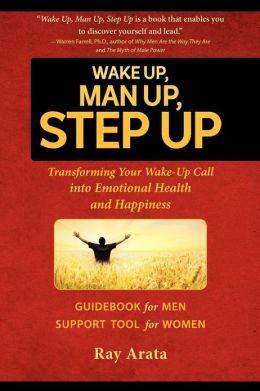
Michael Taylor with Ray Arata - Are You Ready To Wake Up, Step Up and Man Up?


On the most recent episode of Coach Michael Taylor's A New Conversation with Men, Michael welcomed Ray Arata to talk about his new book, Wake Up, Man Up, Step Up: Transforming Your Wake-Up Call Into Emotional Health and Happiness. I'm not a fan of the whole "man up" thing, but the conversation is useful and productive and the book sounds interesting.


Listen to internet radio with Coach Michael Taylor on Blog Talk Radio


Coach Michael Taylor with Ray Arata - Are You Ready To Wake Up, Step Up and Man Up?
How do you find freedom from outmoded and destructive patterns of behavior that keep you from achieving success in your roles as partner, father, husband, leader, and friend? 
Most men aren't aware that the old model of masculinity is outdated and ineffective in today's culture. The absence of a healthy, functioning model of masculinity often causes emotional pain that is unbearable, demanding significant life changes and generating the proverbial "wake-up call." 
Wake Up, Man Up, Step Up: Transforming Your Wake-Up Call Into Emotional Health and Happiness provides an insightful and practical seven-step Roadmap for how you can transform large or small crises into opportunities for better relationships, happiness, and success. 
Join Coach Michael Taylor as he interviews Ray Arata about his wonderful new book Wake Up, Man Up, Step Up as they discuss how men can use this book as a resource to support them in living extraordinary lives.

Monday, March 4, 2013

Art of Manliness - The Importance of Owning Up to Mistakes

This is an excellent post from Brett and Kate McKay at The Art of Manliness on the importance of admitting our mistakes and how to do it. One of the best ways in the world to strengthen a relationship, in my opinion, whether it's friendship or romantic, is to be able to say, "I was wrong. I'm sorry."

Quoting Tavris and Aronson (authors of Mistakes Were Made (But Not by Me): Why We Justify Foolish Beliefs, Bad Decisions, and Hurtful Acts), they conclude we must, “learn to see mistakes not as terrible personal failings to be denied or justified, but as inevitable aspects of life that help us grow, and grow up.” Sounds right to me.

Here is the first half of the article, follow the links to see the "how to" portion on taking responsibility for our mistakes.

Personal Responsibility 102: The Importance of Owning Up to Your Mistakes and How to Do It

by BRETT and KATE MCKAY on FEBRUARY 19, 2013


Yesterday we discussed the cognitive blind spots our brains generate that can make it difficult for us to honestly assess our actions and determine our responsibility for those actions and their consequences. We discovered the way in which our brains are inclined to flatter and shield our egos from blame when we make mistakes.

Despite how difficult it is to counter the mechanisms of our ego defense system, the task is not wholly insurmountable. Every man who wishes to take on the mantle of manhood must make the effort. In doing so, you will find that striving to take responsibility for your life and ownership of your mistakes is incredibly worthwhile for many reasons:

Allows you to make better decisions. Self-justifications distort reality. The more you use them, the more you create an alternate universe for yourself. This leads to a decreased ability to make good choices, as the information you’re using to do so is warped. This can keep you from the people and pursuits that could have been good for you – if only you had been able to see them clearly for what they were. For example, that professor who was “out to get you” might have become an incredible mentor, if you had seen his criticism as a desire to help, rather than an attack.

Most dangerously, one self-justification begets another, setting off a domino effect that sends you more and more off track. Once you justify one decision, you’re deeper into it, and to get rid the dissonance you’ll feel worrying if was the right choice, you’ll make a decision that digs you even further into it. And the cycle continues. For example if you bully a kid at school, you’ll then feel some dissonance in the aftermath for hurting someone (no one likes to think of themselves as cruel), so you’ll justify that decision by saying the kid is an annoying crybaby who deserved it. The more you dwell on those justifications, the more convinced of them you’ll become, and the more you’ll feel like bullying him again.

Keeps little problems from turning into big ones. Related to the point above, if you can own up to a mistake as soon as you make it and do your best to correct it or make it right, you can prevent it from turning into a huge problem that’s going to be difficult to solve. A snowballed mistake may torpedo various aspects of your relationships and career before you can get yourself out from under it.

Allows you to learn from your mistakes. Simple — you can’t learn from your mistakes if you can’t acknowledge you’ve made them! And if you don’t learn from your mistakes, you’re destined to repeat them. That’s a recipe for quickly going nowhere in life.

Engenders the respect of others. We often hide our mistakes from other people because we worry they will think less of us once they’ve seen that we’ve messed up. But, frankly acknowledging your mistakes, apologizing for them, and then earnestly working to make things right almost always has the opposite effect – people respect you for it. There might still be consequences, of course, but people will appreciate your honesty. If they use your confession as a way to belittle and use you, those are probably not the kind of people you want to work/live with anyway. It’s actually when you hide your mistakes, and they’re found out anyway, that people lose their respect and their trust in you.

Strengthens relationships. Self-justification is a cold, hard relationship killer, as it causes us to build a case of total blame against the other person when things are going poorly between you.

There are two ways to explain mistakes: the person did what they did because of the situation, or, because of who they are. We use the former explanation with ourselves — “I forgot her birthday because I have so much on my mind right now.” We tend to use the second explanation on others — “She forgot my birthday because she’s so self-centered.” We don’t critique theirbehavior, but their character – they don’t do bad stuff, they are bad. This kind of blanket condemnation is called a global label. The person is stupid, crazy, useless, selfish, immature, bitchy, evil, lazy, etc. They’re a failed human being.

Global labels are almost never accurate, but your brain finds them very satisfying to develop and spew. They allow you to see your partner as deliberately hurting you — as intentionally sinking the relationship. It’s their fault, and you’re the victim, so you feel entitled to punish and attack them.

Once you give someone a global label – “She’s self-centered” – you focus on gathering evidence to confirm your conclusion, and overlook all evidence to the contrary. Velcro and Teflon. You keep mulling over how she forgot your birthday, but don’t think about how just yesterday she canceled plans with her friends to stay home and help you finish a paper. As you strengthen your “case” against her, you’re filled with self-righteous indignation, which allows you to go on the attack. Then, when you see you’ve hurt her, dissonance arises (again nobody likes to think of themselves as mean or heartless), so you gather more evidence to justify your attacks as well-deserved. And on it goes. When the global label becomes firmly entrenched, you come to see the person as hopelessly flawed and unable to change (“You’re just like your father!”), which leads to you feeling contempt for them, one of the death knells of a relationship.

Conversely, being able to admit fault, being able to acknowledge one’s role in the current health of the relationship, and having empathy for why your partner might do what she does from time to time without being hopelessly flawed (just like you!), leads to strong, healthy relationships.

The Bottom Line: Owning up to our mistakes allows us to take responsibility for our lives. If we can’t accurately perceive who we are, how we behave (and how others behave towards us), and how our behavior affects others and our own lives, life will always feel like something that’s happening to us, rather than something we are in control of. Men with an internal locus of control – those who believe they can shape life through their own decisions and actions — are more confident, more likely to seek learning and be leaders, more disciplined, and better able to deal with stress and challenges. Men with an external locus of control, on the other hand, believe the course of their life is determined by luck and other people, and see themselves as victims. They are prone to problems with both their physical and mental health, and often plagued by stress, anxiety, and depression. When they make mistakes, they are apt to think, “Why is this happening to me?”

Men with an internal locus of control are achievement-oriented and more likely to find academic and professional success. Instead of remaining in a childish mindset, they grow into mature manhood. Instead of seeing themselves as the victim and blaming others for their failures, they learn from their mistakes and use them as stepping stones to getting stronger and moving ahead.
Read the second half of this article.

Sunday, March 3, 2013

Men's Magazines Target Hyper-Masculine Advertising Images to Adolescents

This article appeared recently in the XX Factor column at Slate (What Women Really Think). Amanda Hess offers a summary of a new article from Sex Roles that looked at how advertising in magazines aimed at young, lesser educated men define masculinity and manhood. The view is not good - the stereotypes being presented are very limited and limiting.

According to a survey of the advertising, a "man" is a "stomping, yelling, shooting, drinking, fucking, tough guy. He has big muscles and a limited emotional range—stoic, angry, horny. He exists in dark alleyways, war zones, and fast cars. He holds his beer bottle over his crotch to approximate a boner."

How Men's Magazines Sell Masculinity to Young, Low-Income Men

By Amanda Hess | Posted Friday, March 1, 2013

A group of psychologists read Playboy for the ads

What makes an ideal man? Page through the advertisements placed in a standard American men’s magazine, and you’ll find one idea: He is a stomping, yelling, shooting, drinking, fucking, tough guy. He has big muscles and a limited emotional range—stoic, angry, horny. He exists in dark alleyways, war zones, and fast cars. He holds his beer bottle over his crotch to approximate a boner.

If advertising is meant to be aspirational, these ads are presenting a pretty sad version of what American men can aspire to be. And advertisers aren’t selling this hyper-masculine ideal to just any man: They’re specifically targeting the younger, poorer, less-educated guys in the supermarket aisle. In the latest issue of the journal Sex Roles, a trio of psychologists at the University of Manitoba analyzed the advertising images in a slate of magazines targeted at men, from Fortune to Field and Stream. They counted up the adsthat depict men as violent, calloused, tough, dangerous, and sexually aggressive—what the researchers call “hyper-masculine”—then indexed them with the magazine’s target demographics. Hyper-masculine images, the researchers found, are more likely to be sold to adolescents, who find higher “peer group support” for manly-man behaviors. They’re also sold to working-class men, who are “embedded in enduring social and economic structures in which they experience powerlessness and lack of access to resources” like political power, social respect, and wealth, and so turn to more widely accessible measures of masculine worth—like “physical strength and aggression.”

The magazines pushing this image most aggressively are Playboy and Game Informer, whose ads play on hyper-masculine tropes about 95 percent of the time. (Compare that to magazines like Golf Digest and Fortune, which rely on those images for about 20 percent of ads). Playboy and Game Informer represent two different segments of the hyper-masculine demo: The playboys and the gamers are both bringing in a low annual household income, but the playboys are older (the target age for readers is 30 to 39) and less likely to have attended college than their gaming peers. So while Game Informer’s socially-mobile twentysomethings can conceivably age out of these hyper-masculine tropes, Playboy’s readers are stuck with them.

These advertising trends speak to the latest development in Hugh Hefner’s sexual revolution. When Playboy launched in 1953, it was billed as a liberating, sophisticated, and intellectual response to conservative sexual norms. It featured icons like Marilyn Monroe and Ray Bradbury. It was not, in fact, inconceivable to read it for the articles. Sixty years later, the magazine’s advertisers are chasing a readership of middle-aged men who are undereducated and underpaid. Its vision of masculinity now looks constrictive. And its titular image—that of the wealthy man of leisure—plays ironically. Playboy’s version of sexual revolution was never very empowering to women and gay men. But if the tactics of its advertisers is any indication, it’s not a very liberating mold for straight guys, either.

Saturday, March 2, 2013

Christian Williams - The Trouble with Tough Guys


This brief article by Christian Williams serves as an introduction to the special section in the March/April UTNE Reader issue on issues facing boys and men in our culture. Here are the three articles in the collection.
I already posted the third article above, which offers the perspective of a transman on what makes a man. All of the articles are good and recommended.

The Trouble with Tough Guys

2/26/2013
by Christian Williams


When I was growing up the boys in my neighborhood relished every opportunity to prove how “manly” we were. We shot fireworks at one another for fun, raced (and crashed) our bikes with reckless abandon, and played football in rocky lots. It’s almost as if we invited injury and looked forward to the chance to show off to the girls in the neighborhood that we could take the pain. We knew “real men” didn’t cry, no matter how much it hurt. Man, were we stupid.

Fortunately, I outgrew that adolescent bloodlust, but I’m still not immune to the trappings of traditional manliness. Hubris is my adulthood Achilles’ heel; I don’t normally read instructions and often find it more appealing to get lost than ask for directions. Somewhere along the line, stubbornness became baked into my psyche. How did that happen?

Take a look at the male icons of Western culture and you’ll see a pattern: tough and rugged like Clint Eastwood, charming and fearless like James Bond, overconfident and womanizing like Don Draper. Consciously or not, boys in this culture identify these traits as “manly,” and the result is a continuous cycle of boys becoming men who strive to show no weakness, whether it be physical, mental, or emotional. You might assume that tendency is just a natural male characteristic, but the truth is men aren’t wired that way—it’s something we learn.

Take mental health among men, for instance. For a man who’s been taught by his father and the culture he lives in that burying your feelings is the manly thing to do, stress becomes something you ignore and depression something you just learn to live with. It goes without saying that the end result of this emotional neglect isn’t usually a good one for the man or the people around him. Everyone has a breaking point, and some are more violent than others. To make matters worse, if a man does summon the courage to ask for help, our current mental health system is woefully underfunded and understaffed to provide adequate treatment.

The good news, though, is that more people are starting to recognize and rectify these damaging and potentially dangerous myths about masculinity. The call for better male role models signals the emergence of a mentor/mentee approach that’s sorely needed in our society today. Equally valuable are the lessons about masculinity we can learn from those experiencing it from a transgender perspective. Altogether, there’s hope that we’re breaking down yet another wall of ignorance.

Speaking of curing ignorance, you may have noticed something different on the top of the website; specifically, the tagline right beneath the Utne Reader logo.

The purpose of the tagline as we see it is to pique a reader’s interest into what we’re really about. While the previous tagline “The Best of the Alternative Press” did a great job identifying where the articles within came from, it didn’t do much to explain why we think they’re important enough for you to read. In this age of climate change, income inequality, and corporate influence on every facet of our lives, we think it’s necessary to emphasize the active role all of us need to play if we hope to leave this world better than we found it.

We recognize our duty to that end is to provide readers with the most interesting, surprising, cutting-edge, and thought-provoking information we can find on the issues that matter to you most (and some you didn’t even know about yet). You may not always agree with what you read, but we’re confident we’ll at least get you thinking and formulating your own opinions. It’s our mission to cure ignorance, and we figured we may as well say it loud and proud. We hope you like it, but more importantly, we hope you’ll join us.

~ Image courtesy , licensed under Creative Commons

Friday, March 1, 2013

Tom Matlack and the Founding of The Good Men Project


Here is a short video on Tom Matlock and the founding of the Good Men Project. He's looking a little mean and perturbed in this picture . . . .

HLN: Tom Matlack and the Founding of The Good Men Project

MARCH 1, 2013 BY THE EDITORS


Tom Matlack tells Raising America about what inspired him to create The Good Men Project.

The Good Men Project, which was founded in 2009 by Tom Matlack, began first as a book and a film, and has grown over the last 4 years into an international conversation about what it means to be a “good man” in the modern world. He says, “Most of the men I know, even the most traditional average, conservative guys are struggling with these issues: What does it mean to be a good father, what does it mean to show up for your wife? How important is it to make money? How do you balance all of these things out?”

For more conversations like this, be sure to watch Raising America every week day at 12 p.m. ET on HLN.