Showing posts with label emotional intelligence. Show all posts

Thursday, June 12, 2014

Five Reasons Why Men Should Start Practicing Mindfulness


Would you like to feel more focused? More emotionally aware? More confident? Be a better lover?

If you answer yes to any of these questions, then you can benefit from taking up a mindfulness practice.

Elisha Goldstein, PhD, is the editor of A Mindful Dialogue: A Path Toward Working with Stress, Pain and Difficult Emotions (Kindle only), The Now Effect: How a Mindful Moment Can Change the Rest of Your Life, co-author of A Mindfulness-Based Stress Reduction Workbook, Foreword by Jon Kabat-Zinn, author of Mindfulness Meditations for the Anxious Traveler: Quick Exercises to Calm Your Mind.

Five Reasons Why Men Should Start Practicing Mindfulness

By Elisha Goldstein, Ph.D.
June, 2014


From my experience the gender that is overwhelmingly attracted to mindfulness is women, men aren’t quite as attracted to it. Why is this? In the early days, the man’s greatest responsibility was to protect the tribe. Our brains have been crafted over thousands and thousands of years to guard against vulnerability. The problem with mindfulness for men is that the practice of it asks us to look toward and open up to vulnerability because that is where the gold is. We are also asked to relate to it in very feminine language like with “warmth,” “tenderness,” and “gentleness.” However, the physical threats that men were guarding against in the past, in most cases, are no longer the threats of modern day. But the brain hasn’t figured this out yet and treats emotional vulnerability as a threat, keeping men from truly reaching our highest human potential.

But things are changing! There is an evolution afoot as more men are starting to see the benefits of integrating mindfulness into daily life.

If you’re a man or you know one, here are five reasons why I think men should give mindfulness a try.
  1. Increase Focus – George Mumford taught the Chicago Bulls and the Lakers mindfulness enroute to their string of championships. Sports psychologist Michael Gervais stepped in to the Seattle Seahawks locker room and taught them mindfulness giving them a boost to their first Super bowl victory. AETNA embraced the Mindfulness at Work® program that thousands of employees have taken because Mark Bertolini, the CEO, knew the value it could bring to their organization and corporate clients. Other companies including Google, Apple, Edmunds, McKinsey, Yahoo, and so many others now have meditation rooms in their offices). Now the military is on board to stay calm and focused out in the field. This shouldn’t come as a surprise, when we intentionally practice and repeat paying attention to an intended object of awareness, of course, it would follow that we would get better and better at paying attention to what matters.
  2. Improve Performance – Usually if we’re able to focus better this would increase our performance as is evident by the integration of mindfulness into business and sports. A study in the Journal of Occupational Health showed that The Mindfulness at Work® program saved employees 69 minutes per week in productivity. In a world where we’re trained in multitasking with a continuous fractured attention it’s a slippery slope to get confused between what is urgent and important and what’s not. What’s more important, the Facebook notification on the phone or the project in front of me? Is it the recent sports score update or listening to my coworker? My brain seems to side with the updates, but in reality it’s likely the least urgent and important. There’s nothing mystical about why we can be more effective at what we do if we’re training our brains to pay attention to what matters over and again.
  3. Build Emotional Intelligence – Emotional intelligence has been shown to be a cornerstone of effective leadership (not to mention an essential component of mental health and healthy relationships). If we’re constantly guarding against vulnerability, guess what? We’re also guarding against the most critical decision maker in our brains – our emotions. The brain makes decisions based on our emotional state most of the time, so we don’t want to be in the dark about what is happening in our internal world. Our brain goes particularly haywire when it comes to uncertainty and fear. Mindfulness teaches us how to approach these triggering emotions in a particular way so that we not only no optimal responses, but the emotions themselves become our greatest teachers. It’s incredibly important to lean in and start to get curious about our emotional lives, understand the information they are conveying and develop the courage to embrace vulnerability. In doing this we start to feel more grounded, stronger and ignite a sense of trust and self-reliance.
  4. Be a Better Lover – The practice of paying attention, on purpose, also has to do with getting increasingly better at tuning into other people in our lives. There is a lot of dissatisfaction that occurs in relationships because people are not tuned into the needs of each other. As we learn to focus and cultivate emotional intelligence we also build the strength of empathy. This is the ability to put yourself in your partner’s shoes and better understand his or her needs. You can learn to be less defensive, more receptive, a better listener and more physically present and responsive which also makes for a better sex life. The insula is a part of the brain that makes us more able to tune into the sensations of our bodies. We learned a long time ago (9 years to be exact) that mindfulness is correlated with a larger insula. In this case, bigger is better. As we learn how to tune into our bodies and are more present for our partners, everyone is more likely to get their needs met emotionally and physically. If you’re not in a relationship, this is good for the future and a fantastic reason to start practicing.
  5. Train Confidence – It feels good to get increasingly better at something. We’ve all experienced this with walking, talking and driving a car (to one degree or another). This a part of the brain that records procedures in life and it gets stronger as we practice. This is no different. In Outliers Malcolm Gladwell noted it takes 10,000 hours to experience true mastery. What if you could get increasingly better at all of the benefits of mindful awareness? We can learn to experience more confidence with our focus, performance, emotional intelligence and in our relationships. Of course as we intentionally practice and repeat all of this, the changes that we experience begin to open up a much greater gift than any of this. We start to realize that mindfulness is about far more than this, it’s about experiencing the insight into who we truly are and a sense of freedom arises.
As we practice, something else wonderful happens, we begin to inspire others and this continues to have ripple effects across all the people around us. This may even be the most important motivation to practice.

Why not get started now?

Be well,

Elisha Goldstein, PhD

PS - One way to get started, reconnect or deepen your mindfulness practice is to take the 28 Day Challenge with the new online program Basics of Mindfulness Meditation: A 28 Day Program. Enjoy!

Elisha Goldstein, Ph.D. is author of The Now Effect, co-author of A Mindfulness-Based Stress Reduction Workbook, Foreword by Jon Kabat-Zinn, author of Mindfulness Meditations for the Anxious Traveler: Quick Exercises to Calm Your Mind, the premier eCourse Basics of Mindfulness Meditation: A 28 Day Program, the Mindful Solutions audio series, and the Mindfulness at Work™ program currently being adopted in multiple multinational corporations. Join The Now Effect Community for free Daily Now Moments, Weekly Updates and tips and free access to a Live Monthly Online Event with Elisha Goldstein, PhD. He is a clinical psychologist in private practice in West Los Angeles.

Like this author?
Catch up on other posts by (or subscribe to their feed). 
Wednesday, April 10, 2013

David Brooks - The Heart Grows Smarter


Over the past several years, as conservative New York Times Op-Ed columnist David Brooks has read more and more in sociology, social psychology, and neuroscience, he has become more and more liberal on social issues. Granted, he still writes some bone-headed columns from time to time, likely to appease his conservative base, but he tends more toward progressive, compassionate views on social issues, as in the column below.

George Vaillant, a psychiatrist and Professor at Harvard Medical School, spent the last 30 years as Director of the Study of Adult Development (The Grant Study, which is what Brooks is referencing below) at the Harvard University Health Service. The study has prospectively charted the lives of 824 men and women for over 60 years. His book summarizing some of  the data from the study is Aging Well: Surprising Guideposts to a Happier Life from the Landmark Harvard Study of Adult Development (2003) - you can read more about the study in this 2009 article from the Atlantic Monthly.

The Heart Grows Smarter

By DAVID BROOKS

Published: November 5, 2012 
If you go back and read a bunch of biographies of people born 100 to 150 years ago, you notice a few things that were more common then than now.

First, many more families suffered the loss of a child, which had a devastating and historically underappreciated impact on their overall worldviews.

Second, and maybe related, many more children grew up in cold and emotionally distant homes, where fathers, in particular, barely knew their children and found it impossible to express their love for them.

It wasn’t only parents who were emotionally diffident; it was the people who studied them. In 1938, a group of researchers began an intensive study of 268 students at Harvard University. The plan was to track them through their entire lives, measuring, testing and interviewing them every few years to see how lives develop.

In the 1930s and 1940s, the researchers didn’t pay much attention to the men’s relationships. Instead, following the intellectual fashions of the day, they paid a lot of attention to the men’s physiognomy. Did they have a “masculine” body type? Did they show signs of vigorous genetic endowments?

But as this study — the Grant Study — progressed, the power of relationships became clear. The men who grew up in homes with warm parents were much more likely to become first lieutenants and majors in World War II. The men who grew up in cold, barren homes were much more likely to finish the war as privates.

Body type was useless as a predictor of how the men would fare in life. So was birth order or political affiliation. Even social class had a limited effect. But having a warm childhood was powerful. As George Vaillant, the study director, sums it up in “Triumphs of Experience,” his most recent summary of the research, “It was the capacity for intimate relationships that predicted flourishing in all aspects of these men’s lives.”

Of the 31 men in the study incapable of establishing intimate bonds, only four are still alive. Of those who were better at forming relationships, more than a third are living.

It’s not that the men who flourished had perfect childhoods. Rather, as Vaillant puts it, “What goes right is more important than what goes wrong.” The positive effect of one loving relative, mentor or friend can overwhelm the negative effects of the bad things that happen.

In case after case, the magic formula is capacity for intimacy combined with persistence, discipline, order and dependability. The men who could be affectionate about people and organized about things had very enjoyable lives.

But a childhood does not totally determine a life. The beauty of the Grant Study is that, as Vaillant emphasizes, it has followed its subjects for nine decades. The big finding is that you can teach an old dog new tricks. The men kept changing all the way through, even in their 80s and 90s.

One man in the study paid his way through Harvard by working as a psychiatric attendant. He slept from 6 p.m. to midnight. Worked the night shift at a hospital, then biked to class by 8 in the morning. After college, he tried his hand at theater. He did not succeed, and, at age 40, he saw himself as “mediocre and without imagination.” His middle years were professionally and maritally unhappy.

But, as he got older, he became less emotionally inhibited. In old age, he became a successful actor, playing roles like King Lear. He got married at 78. By 86, the only medicine he was taking was Viagra. He lived to 96.

Another subject grew up feeling that he “didn’t know either parent very well.” At 19, he wrote, “I don’t find it easy to make friends.” At 39, he wrote, “I feel lonely, rootless and disoriented.” At 50, he had basically given up trying to socialize and was trapped in an unhappy marriage.

But, as he aged, he changed. He became the president of his nursing home. He had girlfriends after the death of his first wife and then remarried. He didn’t turn into a social butterfly, but life was better.

The men of the Grant Study frequently became more emotionally attuned as they aged, more adept at recognizing and expressing emotion. Part of the explanation is biological. People, especially men, become more aware of their emotions as they get older.

Part of this is probably historical. Over the past half-century or so, American culture has become more attuned to the power of relationships. Masculinity has changed, at least a bit.

The so-called Flynn Effect describes the rise in measured I.Q. scores over the decades. Perhaps we could invent something called the Grant Effect, on the improvement of mass emotional intelligence over the decades. This gradual change might be one of the greatest contributors to progress and well-being that we’ve experienced in our lifetimes.


A version of this op-ed appeared in print on November 6, 2012, on page A29 of the New York edition with the headline: The Heart Grows Smarter.

Wednesday, January 9, 2013

Jayson Gaddis - The Modern Day Spiritual Warrior

The other day, Jayson Gaddis, over at his personal blog, posted an interesting article on the "spiritual warrior," a concept that comes from Buddhism, and more specifically from Chogyam Trungpa Rinpoche. The post concludes with a short video on his upcoming Warrior Training.

This morning, Tricycle's Daily Dharma quote was from Pema Chodron, a short piece taken from an excerpted section of The Places that Scare You: A Guide to Fearlessness in Difficult Times (2001). In this short section she also addresses the idea of the spiritual warrior, which is fitting since she was Trungpa's student up until his death.

I think these are important first steps in reframing the warrior archetype toward a more compassionate and self-aware ideal. One of the things I like about Trugpa's vision of the spiritual warrior is his emphasis on having a "warrior heart."
Warriorship is so tender, without skin, without tissue, naked and raw. It is soft and gentle. You have renounced putting on a new suit of armor. You have renounced growing a thick, hard skin. You are willing to expose naked flesh, bone, and marrow to the world. 
~ Adapted from Smile at Fear: Awakening the True Heart of Bravery, by Chogyam Trungpa. Copyright 2009 by Diana J, Mukpo.
Jayson's post first:

The Modern Day Spiritual Warrior

January 5, 2013


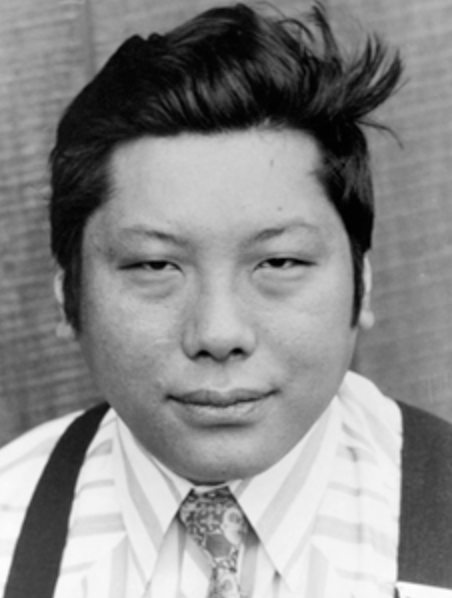
Chogyam Trungpa Rinpoche

Recently, I realized that I’m in the business of training warriors.

But what is a warrior? what exactly do I mean?

I have not been able to find a better term than warrior. Sure, there is Jedi, Samurai, badass, etc.

But warrior is the closest term I have found for what I’m attempting to describe. And, I love that one of my teachers Chogyam Trungpa Rinpoche spoke of the sacred warrior. He was speaking to the spiritual practitioner who is willing to face their life head on and help others eliminate their suffering. It’s a bold path.

So, the term warrior must be defined here. I get that “warrior” conjures up a lot of historycially and traditional masculine roles. Pick any movie from Gladiator, to Braveheart, to Hunger Games. They all have a hero or heroine who fights to save their people or save the day. But I am not so idealistic or naive here. Sure, we are all great, heros and heroines in our own right. But let’s be realistic and true, meeting our lives directly free from unrealistic expectations, magical thinking, or fairy tales.

So, here’s my definition (or better yet aspiration) of the modern day spiritual warrior:
A modern day spiritual warrior is first and foremost a student of his or her own, direct experience. She is committed to being herself completely and her life journey is about coming home to who she really is. He is always learning, always growing. Her courage gives her the power and choice to face “what is so” directly and head on. He turns toward the darkness in order to transmute it. She learns to train the mind to serve the heart. He learns to “hold his seat” in the midst of life’s challenges. He learns to own and tame his inner stallion so that he may ride him powerfully and elegantly. She is willing to fall down, fail miserably, and get back up in order to be herself. He is embodied, emotionally literate, relationally adept. She is willing to fight, even die, for truth, love, and family. He enjoys the practice of burning up in this way. She desires, and is willing, to go all the way.
And, for the men out there, here’s a quick video about an upcoming warrior training.


And here is the Pema Chodron excerpt:

The In-between State

Pema Chodron points to the perfect training ground for the spiritual warrior—anxiety, heartbreak, and tenderness.

By Pema Chodron
The secret of Zen is just two words: not always so.—Shunryu Suzuki Roshi
It takes some training to equate complete letting go with comfort. But in fact, "nothing to hold on to" is the root of happiness. There's a sense of freedom when we accept that we're not in control. Pointing ourselves toward what we would most like to avoid makes our barriers and shields permeable.
This may lead to a don't-know-what-to-do kind of feeling, a sense of being caught in-between. On the one hand, we're completely fed up with seeking comfort from what we can eat, drink, smoke, or couple with. We're also fed up with beliefs, ideas, and "isms" of all kinds. But on the other hand, we wish it were true that outer comfort could bring lasting happiness.

This in-between state is where the warrior spends a lot of time growing up. We'd give anything to have the comfort we used to get from eating a pizza or watching a video. However, even though those things can be pleasurable, we've seen that eating a pizza or watching a video is a feeble match for our suffering. We notice this especially when things are falling apart. If we've just learned that we have cancer, eating a pizza doesn't do much to cheer us up. If someone we love has just died or walked out, the outer places we go to for comfort feel feeble and ephemeral.

We are told about the pain of chasing after pleasure and the futility of running from pain. We hear also about the joy of awakening, of realizing our interconnectedness, of trusting the openness of our hearts and minds. But we aren't told all that much about this state of being in-between, no longer able to get our old comfort from the our side but not yet dwelling in a continual sense of equanimity and warmth.

Anxiety, heartbreak, and tenderness mark the in-between state. It's the kind of place we usually want to avoid. The challenge is to stay in the middle rather than buy into struggle and complaint. The challenge is to let it soften us rather than make us more rigid and afraid. Becoming intimate with the queasy feeling of being in the middle of nowhere only makes our hearts more tender. When we are brave enough to stay in the middle, compassion arises spontaneously. By not knowing, not hoping to know, and not acting like we know what's happening, we begin to access our inner strength.

Yet it seems reasonable to want some kind of relief. If we can make the situation right or wrong, if we can pin it down in any way, then we are on familiar ground. But something has shaken up our habitual patterns and frequently they no longer work. Staying with volatile energy gradually becomes more comfortable than acting it out or repressing it. This open-ended tender place is called bodhichitta. Staying with it is what heals. It allows us to let go of our self-importance. It's how the warrior learns to love.

This is exactly how we're training every time we sit in meditation. We see what comes up, acknowledge that with kindness, and let go. Thoughts and emotions rise and fall. Some are more convincing than. others. Habitually we are so uncomfortable with that churned-up feeling that we'd do anything to make it go away. Instead we kindly encourage ourselves to stay with our agitated energy by returning to the breath. This is the basic training in maitri that we need to just keep going forward, to just keep opening our heart.

Dwelling in the in-between state requires learning to contain the paradox of something's being both right and wrong, of someone's being strong and loving and also angry, uptight, and stingy. In that painful moment when we don't live up to our own standards, do we condemn ourselves or truly appreciate the paradox of being human? Can we forgive ourselves and stay in touch with our good and tender heart? When someone pushes our buttons, do we set our to make the person wrong? Or do we repress our reaction with "I'm supposed to be loving. How could I hold this negative thought?" Our practice is to stay with the uneasiness and not solidify into a view. We can meditate, do tonglen, or simply look at the open sky—anything that encourages us to stay on the brink and not solidify into a view.

When we find ourselves in a place of discomfort and fear, when we're in a dispute, when the doctor says we need tests to see what's wrong, we'll find that we want to blame, to take sides, to stand our ground. We feel we must have some resolution. We want to hold our familiar view. For the warrior, "right" is as extreme a view as "wrong." They both block our innate wisdom. When we stand at the crossroads, not knowing which way to go, we abide in prajnaparamita. The crossroads is an important place in the training of a warrior. It's where our solid views begin to dissolve.

Holding the paradox is not something any of us will suddenly be able to do. That's why we're encouraged to spend our whole lives training with uncertainty, ambiguity, insecurity. To stay in the middle prepares us to meet the unknown without fear; it prepares us to face both our life and our death. The in-between state—where moment by moment the warrior finds himself learning to let go—is the perfect training ground. It really doesn't matter if we feel depressed about that or inspired. There is absolutely no way to do this just right. That's why compassion and maitri, along with courage, are vital: they give us the resources to be genuine about where we are, but at the same time to know that we are always in transition, that the only time is now, and that the future is completely unpredictable and open.

As we continue to train, we evolve beyond the little me who continually seeks zones of comfort. We gradually discover that we are big enough to hold something that is neither lie nor truth, neither pure nor impure, neither bad nor good. But first we have to appreciate the richness of the groundless state and hang in there.

It's important to hear about this in-between state. Otherwise we think the warrior's journey is one way or the other; either we're all caught up or we're free. The fact is that we spend a long time in the middle. This juicy spot is a fruitful place to be. Resting here completely—steadfastly experiencing the clarity of the present moment—is called enlightenment. ▼

Pema Chodron, an American Buddhist nun, is a founding member and resident teacher at Gampo Abbey, Cape Breton, Nova Scotia, the first Tibetan Buddhist monastery in North America established for Westerners. Excerpted from The Places That Scare You © 2001 by Pema Chodron. 

Sunday, April 22, 2012

Males Believe Discussing Problems Is a Waste of Time


The general belief has been that boys don't talk about their feelings because they would be embarrassed or afraid of being seen as weak. According to this new study, however, they simply do not believe that talking about their feelings will make any difference.

A lot of my counseling clients do not think it will help to talk about their feelings, either, including a lot of women, but that does not make it so. It's good to know that "boys didn't express angst or distress about discussing problems any more than girls," so at least it's not a fear issue.

We can educate boys to know that sometimes it does help to talk about feelings. And I would suspect that part of their belief that it doesn't help comes from their socialization. We teach boys that feelings are useless, stuff for girls to talk about but not something real men even think about. That can change - it needs to change.

Boys are never likely to share as much emotionally as do girls, but that does not mean we cannot help them be more emotionally intelligent and, with that, more empathetic and compassionate.

Citation:
Amanda Rose, Rebecca Schwartz-Mette, Rhiannon Smith, Lance Swenson, Wendy Carlson, Erika Waller, and Steven Asher. (2011, August 22). Males believe discussing problems is a waste of time, study shows. University of Missouri press release. ScienceDaily. Retrieved April 22, 2012, from www.sciencedaily.com/releases/2011/08/110822151021.htm

Males Believe Discussing Problems Is a Waste of Time, Study Shows

ScienceDaily (Aug. 22, 2011) — A new University of Missouri study finds that boys feel that discussing problems is a waste of time.

"For years, popular psychologists have insisted that boys and men would like to talk about their problems but are held back by fears of embarrassment or appearing weak," said Amanda J. Rose, associate professor of psychological sciences in the MU College of Arts and Science. "However, when we asked young people how talking about their problems would make them feel, boys didn't express angst or distress about discussing problems any more than girls. Instead, boys' responses suggest that they just don't see talking about problems to be a particularly useful activity."


Rose and her colleagues conducted four different studies that included surveys and observations of nearly 2,000 children and adolescents. The researchers found that girls had positive expectations for how talking about problems would make them feel, such as expecting to feel cared for, understood and less alone. On the other hand, boys did not endorse some negative expectations more than girls, such as expecting to feel embarrassed, worried about being teased, or bad about not taking care of the problems themselves. Instead, boys reported that talking about problems would make them feel "weird" and like they were "wasting time."


"An implication is that parents should encourage their children to adopt a middle ground when discussing problems. For boys, it would be helpful to explain that, at least for some problems, some of the time, talking about their problems is not a waste of time. Yet, parents also should realize that they may be 'barking up the wrong tree' if they think that making boys feel safer will make them confide. Instead, helping boys see some utility in talking about problems may be more effective," Rose said. "On the other hand, many girls are at risk for excessive problem talk, which is linked with depression and anxiety, so girls should know that talking about problems isn't the only way to cope."


Rose believes that the findings may play into future romantic relationships, as many relationships involve a "pursuit-withdraw cycle" in which one partner (usually the woman) pursues talking about problems while the other (usually the man) withdraws.


"Women may really push their partners to share pent-up worries and concerns because they hold expectations that talking makes people feel better. But their partners may just not be interested and expect that other coping mechanisms will make them feel better. Men may be more likely to think talking about problems will make the problems feel bigger, and engaging in different activities will take their minds off of the problem. Men may just not be coming from the same place as their partners," Rose said.


The paper, "How Girls and Boys Expect Disclosure About Problems Will Make Them Feel: Implications for Friendships," will be published in an upcoming edition of the journal Child Development. The study was funded by the National Institute for Mental Health and was co-authored by current and former MU psychology graduate students Rebecca Schwartz-Mette, Rhiannon Smith, Lance Swenson, Wendy Carlson, and Erika Waller and Rose's colleague Steven Asher.

Monday, December 19, 2011

Can Emotional Competence be Learned?


The folks at GoodTherapy.org posted this research review that suggests emotional competence (EC), the ability to understand, manage, express and use emotions, is a skill that can be learned.This is relevant to men because we are often accused - wrongly, in some instances - of lacking emotional competence. However, it is also true that men were not taught as we grew up how to be emotionally aware and competent, so we may have skill building to do. The good news is that we can learn those skills.

The better news is that we are born with everything we need to develop as emotionally competent people - we simply need to raise our boys to be comfortable with their feelings and help them to develop the empathy skills that seem to be hard-wired into our nature.

Can Emotional Competence be Learned?

November 25th, 2011


According to a new study, emotional competence (EC), the ability to understand, manage, express and use emotions, is a skill that can be learned. There are three levels of EC that affect every area of one’s life, knowledge, focus and ability. Knowledge is how much an individual understands about their own emotions. Focus is how well someone is able to manage their emotions and emotional responses. And Ability refers to how a person uses their emotional knowledge to cope with a specific situation in order to achieve a desired outcome. “At a psychological level, higher trait EC is associated with greater well-being and higher self-esteem as well as a lower risk to develop psychological disorders,” said Delphine Nelis of the Department of Psychology at the University of Liege in Belgium, and lead author of the study. “Socially, higher ability–trait EC is related to better social and marital relationships and, all things being equal, to a greater likelihood of being chosen as a romantic partner. Workwise, higher trait EC is associated with greater academic achievement and higher ability–trait EC is associated with higher job performance,” said Nelis. “Ability–Trait EC is also linked to the likelihood of adopting unhealthy behaviors such as smoking, excessive drinking, and reckless driving.”

Because of the deleterious consequences poor EC can have, Nelis wanted to know if adults could improve their EC, and if so, what implications that would have on their lives. “To this end, we designed an 18-hour intervention that focused on teaching theoretical knowledge about emotions and on training participants to apply specific emotional skills in their everyday lives,” said Nelis. “Sessions were centered on the four core emotional competencies: identification, understanding, regulation, and utilization.” Nelis found that the participants saw significant long-term improvement in EC as a result of the sessions. “Six months after the intervention, participants in the training group were more extroverted, more agreeable, and less neurotic. We also showed that the development of EC paired with positive changes in psychological well-being, subjective health, quality of social relationship, and work success.” Nelis added, “These findings bring hope to people who have not had the opportunity to develop their EC as children. With motivation, effort, and guidance, such individuals can still improve their EC later in life, and thereby enhance their adjustment in many domains of life.”

Reference:
Nelis, Delphine, Ilios Kotsou, Jordi Quoidbach, Michel Hansenne, Fanny Weytens, Pauline Dupuis, and Moira Mikolajczak. “Increasing Emotional Competence Improves Psychological and Physical Well-being, Social Relationships, and Employability.” Emotion 11.2 (2011): 354-66. Print.

Saturday, April 30, 2011

Daniel Goleman - Are Women More Emotionally Intelligent Than Men?

http://www.hookingupsmart.com/wp-content/uploads/2010/10/Handcuff-Heart.jpg

This post from Daniel Goleman at his Psychology Today blog, The Brain and Emotional Intelligence, is useful, if for no other reason, because it distinguishes between emotional empathy (what women excel at, and which men are seen not to possess) and action empathy (where men excel, after registering the affective aspect) - too often men are seen not to possess empathy when in reality there is only a difference in how it is expressed.
Here's where women differ form men. If the other person is upset, or the emotions are disturbing, women's brains tend to stay with those feelings. But men's brains do something else: they sense the feelings for a moment, then tune out of the emotions and switch to other brain areas that try to solve the problem that's creating the disturbance.
Goleman uses different terms and doesn't name the male performance of empathy as action empathy, but that is the proper term as offered by Dr. Ron Levant. More than likely, this is a learned behavior in young boys who are taught that feelings are "girlie," but doing something to fix the problem is "manly." There is probably some hard-wiring around this too, in that men served to protect the group evolutionarily - so acting takes precedence over feeling.

But, as I often suggest, we are not bound by biology - learning and experience re-wires the brain.

Are Women More Emotionally Intelligent Than Men?

Yes, and Yes and No.

Emotional intelligence has four parts: self-awareness, managing our emotions, empathy, and social skill. There are many tests of emotional intelligence, and most seem to show that women tend to have an edge over men when it comes to these basic skills for a happy and successful life. That edge may matter more than ever in the workplace, as more companies are starting to recognize the advantages of high EI when it comes to positions like sales, teams, and leadership.

On the other hand, it's not that simple. For instance, some measures suggest women are on average better than men at some forms of empathy, and men do better than women when it comes to managing distressing emotions. Whenever you talk about such gender differences in behavior, your are referring to two different Bell Curves, one for men and one for women, that largely overlap. What this means is that any given man might be as good or better as any woman at empathy, and a woman as good as or better than a specific man at handling upsets.

Let's look at empathy. There are three kinds: cognitive empathy, being able to know how the other person sees things; emotional empathy, feeling what the other person feels; and empathic concern, or sympathy -being ready to help someone in need.

Women tend to be better at emotional empathy than men, in general. This kind of empathy fosters rapport and chemistry. People who excel in emotional empathy make good counselors, teachers, and group leaders because of this ability to sense in the moment how others are reacting.

Neuroscientists tell us one key to empathy is a brain region called the insula, which senses signals from our whole body. When we're empathizing with someone, our brain mimics what that person feels, and the insula reads that pattern and tells us what that feeling is.

Here's where women differ form men. If the other person is upset, or the emotions are disturbing, women's brains tend to stay with those feelings. But men's brains do something else: they sense the feelings for a moment, then tune out of the emotions and switch to other brain areas that try to solve the problem that's creating the disturbance.

Thus women's complaint that men are tuned out emotionally, and men's that women are too emotional - it's a brain difference.

Neither is better - both have advantages. The male tune-out works well when there's a need to insulate yourself against distress so you can stay calm while others around you are falling apart - and focus on finding a solution to an urgent problem. And the female tendency to stay tuned in helps enormously to nurture and support others in emotional trying circumstances. It's part of the "tend-and-befriend" response to stress.

There's another way of looking at male-female differences in EI: Simon Baron-Cohen at Cambridge University, says that there's an extreme "female brain" which is high in emotional empathy -- but not so good at systems analysis. By contrast, the extreme "male brain" excels in systems thinking and is poor at emotional empathy (he does not mean that all men have the "male brain", nor all women the "female brain" of course; many women are skilled at systems thinking, and many men at emotional empathy).

Psychologist Ruth Malloy at the HayGroup Boston studies excellence in leaders. She finds when you only look at the stars -- leaders in the top ten percent of business performance -- gender differences in emotional intelligence abilities wash out: The men are as good as the women, the women as good as the men, across the board.

That echoes a discovery by scientists who study primates. When a chimp sees another chimp who is upset, say from an injury, she mimics the distress, a way of showing empathy. Some chimps will then go over and give some solace to the upset chimp, for example, stroking the other to help it calm down. Female chimps do this more often than male chimps do - with one intriguing exception: The alpha males, the troupe leaders, give solace even more often than do female chimps. In nature's design, leaders, it seems, need a large dose of empathic concern.


Saturday, October 30, 2010

Jason Marsh - Gender and Touch

Cool article from UC Berkeley's Greater Good project. This article reviewing some recent research calls into the question - finally - the stereotype that women are more emotionally intelligent than men - rather, it seems that they each have strengths in this realm that look different from the outside.

On the other hand, they found significant gender differences in recognizing three emotions: compassion, anger, and happiness - which seem to reinforce some common gender stereotypes. My argument would be, however, that these differences are cultural constructed differences, not innate differences.

Gender and Touch

By Jason Marsh | October 18, 2010

When it comes to touch, do men and women speak the same language?

Since we published Greater Good Executive Editor Dacher Keltner's recent essay and video on the science of touch, we've had lots of readers write to thank us for calling attention to the profound and varied benefits of simple human contact.

Now here's an interesting twist on the touch research: In a paper just published in the journal Sex Roles, Dacher and Matt Hertenstein, a former student of his who's now a professor at DePauw University, have found revealing differences in the ways men and women communicate and understand different emotions via touch.

Valentin Casarsa

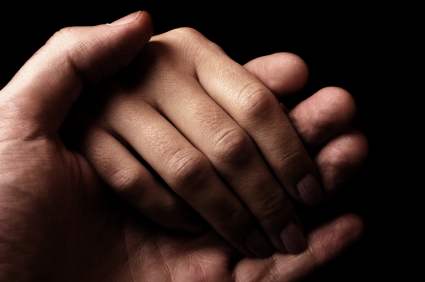
The study revisits an experiment Dacher describes in his Greater Good essay: Two strangers are placed in a room together, separated by a barrier. One of them sticks his or her arm through a hole in the barrier; the other tries to convey one of 12 emotions to that person only by touching his or her forearm. After each attempt, the touched person has to guess which emotion his or her partner was trying to communicate.

Originally, Dacher and Matt found that men and women were equally accurate in their ability to detect emotion through touch.

But in this study, they analyzed their data to determine whether there were any differences when it came to individual emotions.

They found significant gender differences for three emotions: compassion, anger, and happiness. And those differences seem to reinforce certain stereotypes about men and women.

Consider compassion. When both partners in the experiment were men, if one tried to convey compassion, the odds of the other recognizing that emotion were no better than if he'd just randomly guessed an emotion from the list of 12 choices. But when at least one of the partners was female, the odds of detecting compassion were much better than chance - 62 percent, in fact.

Similarly, participants communicated anger at greater-than-chance levels only when one of the partners was male (again at about 62 percent accuracy). Participants were most accurate at detecting anger when both members of the pair were male.

And happiness was communicated successfully only when both members of the pair were women.

The other emotions that participants could successfully communicate - fear, disgust, love, and gratitude - were understandable regardless of the gender pairing, whether it was a man touching a man, a man touching a woman, a woman touching a man, or a woman touching another woman.

So why might Dacher and Matt have seen such gender differences?

They speculate that successfully communicating compassion might be skewed toward women since, according to evolutionary theory, women throughout human history have taken on a disproportionate amount of the caretaking for their offspring; indeed, other research has found that women report experiencing more compassion than men do.

They were also unsurprised that men would be more skilled at communicating and detecting anger, as studies show that men consistently report experiencing and expressing more anger than women. And in other research, participants more accurately and more quickly detect male facial expressions of anger than female ones.

And research has also suggested that women would be more skilled at communicating happiness than men: Studies show that women report experiencing more happiness than men and smile more, share emotions more, and experience positive emotions more than men.


Of course, these corroborate prevalent stereotypes about the sexes. But Dacher and Matt also allow that those stereotypes might have helped to drive some of their results rather than the other way around.

They note that when they asked the people being touched in the experiment to guess whether the person touching them was a man or woman, they were usually correct: Depending on the gender of each participant, the touched person could identify the gender of the toucher anywhere between 70 and 96 percent of the time.

As a result, Dacher and Matt say it's possible that the touched person's knowledge of his or her partner's gender may have affected the meaning he or she assigned to the touch. For example, he or she may have been more likely to interpret a gesture from a woman as a signal of compassion while interpreting the same gesture from a man as a different emotion.

In some subtle, perhaps subconscious way, these stereotypes may have been making the participants more likely to select the emotions typically associated with the gender of the person touching them.

Overall, though, the study does challenge some existing beliefs that women are simply more emotionally intelligent than men - i.e., better at detecting and interpreting others' emotions. Instead, it seems that each gender has its own advantage, depending on the emotion.


Tags: , , , , , , , , , , , , , , , , ,