Trigger Warning: Sexual Violence and Abuse 5 Lies that Distort Male Sexuality and Hurt Men
Some of the most important lessons I’ve learned in life came through sports. They taught me hard work, commitment, and teamwork. They also taught me some of my most foundational lessons about masculinity and sex.
Not all of these messages were problematic and harmful. I often had coaches talk to me in positive (though sometimes paternalistic) ways about “respecting women.” But looking back, most of the messages I received about sex and my masculinity’s role in sex were quite horrifying.
Perhaps one of the most terrifying messages that I received came from an older soccer player named Dave when I was in tenth grade. One day, he was bragging to me about his sexual relationship with his girlfriend, a girl widely recognized as “hot” and “popular.”
In the midst of his braggadocio, he mentioned wanting to perform an incredibly violent sexual act that would violate her consent and would likely lead to serious injury.
He said he was only joking, and I laughed along, but it didn’t sit right with me. No matter how uncomfortable it made me, though, I didn’t dare challenge the “joke.”
After all, to do so would not only have challenged a man I was supposed to look up to, but it might have led to me being further ostracized for being “gay” (because apparently men are gay if they stand up to violence against women, and being gay was the “worst possible thing” I could have been in high school).
To this day, I’m ashamed that I never said anything, but I simply didn’t know how. I was a young man lacking in confidence, and I felt like it was “normal” that we were talking about women in this way.
Though some might write this story off as adolescent immaturity, this story speaks to a wider problem of patriarchal masculinity and how we as men are taught to understand sex and sexuality.
Feminism vs. Patriarchy
For generations now, feminism in its many iterations has done an amazing job of pointing out the terrible impacts of patriarchal masculinity. And, increasingly, feminists have focused on how patriarchy hurts people of all genders.
With the rise of the Internet as a dominant force in so many people’s lives, though, the resistance to feminism has only grown louder and stronger.
The power of the Internet for organizing Men’s Rights Activists, Pick Up Artists, and other anti-feminist groups has meant a surge in numbers of those who see feminism as “anti-male” or who despise the ways that feminism subverts patriarchal masculinity.
And ironically, these groups prey on men who feel hurt, who feel insecure, who feel entitled to sex, but who struggle socially and can’t find fulfilling relationships.
MRAs and PUAs tell insecure men that the problem is feminism, not patriarchy, and in doing so, fuel a particularly violent online (and offline) misogyny.
Yet the hurt and frustration these men face when it comes to sexuality is almost always directly tied to the ways in which patriarchal masculinity distorts male sexuality – which is a battle that feminism fights.
In her book The Will to Change: Men, Masculinity, and Love, bell hooks describes patriarchy as “the single most life-threatening social disease assaulting the male body and spirit in our nation.”
If we are ever going to engage men more fully in dismantling patriarchy and ending misogyny, we need more men to understand how the messages we receive about sex hurt more than women. These messages hurt us in myriad ways, too.
Thus, though I could likely unpack just about every message about sex that we receive, I want to analyze five of the most prominent messages men are taught about our sexuality.
1. ‘Sow Your Wild Oats’
This one is also known as “View sex as a conquest, and have sex with as many partners as you possibly can.”
Somewhere in our early twenties, my friend reached out to his dad for some advice about women and relationships. His dad told him that his twenties were not a time to be “tied down” and that he should “sow his wild oats.” Considering that my friend was seeking advice about whether to invest more seriously in a relationship with a woman, the message was clear.
From a very early age, we, as men, get the message from media and from other men that our role in sex is conqueror. I saw in in the way that Dave bragged about his sexual conquest with his “hot” and “popular” girlfriend, and we got the message in the talk with my buddy’s dad.
By feeling pressure to live up to the “sow your wild oats” message, we end up viewing partners as disposable. This obviously hurts our partners, but it also ensures that we never form loving and/or accountable bonds of attachment unless we forsake this messaging!
After all, whether we’re talking about a one-night stand or a long-term relationship, connection (and thus good sex and healthy relationships) is driven by investment, love, and care. This is not to say that all sex needs to happen in the context of love, but we need to invest in connection rather than disconnection to ensure both our partners and we are fulfilled.
2. ‘Always Be in Control’
I’m not sure where exactly it came from, but somewhere along the way, I received the message that I always need to be in control sexually. Sure, it can be “hot” for a woman (because I never received any messaging about what sex with anyone but a woman could or should be) to take control from time to time, but that message was the exception to the rule.
And I don’t think I’m alone.
There’s a reason that in dominant masculine cultures, it’s seen as wildly subversive for a man to be a “bottom” or “submissive” in sex with other men or in BDSM. And there’s a reason that these men are referred to as the “b*tch.”
But releasing control allows us to build accountable and trusting partnerships, as trust cannot live in a relationship characterized by control over another person.
Plus, relationships where one person is always in control sexually are not only boring, but they can stifle our full sexual expression! Relinquishing control allows us to experience things that might bring tremendous fulfillment and pleasure that we otherwise would never have considered!
3. ‘Value Hotness (Traditional Measures of Physical Attractiveness) Above Everything.’
When I watched the video that the UCSB shooter made just before going on his violent rampage, I noticed a particularly disturbing trend: Much of his ramblings about women rejecting him focused on women he deemed “hot” and non-deserving men having sexual access to these women.
And it got me thinking about the ways that I have been taught to value particular types of beauty in my relationships with women.
Considering my earliest sexual experiences were with mainstream pornography, my understanding of sex and sexuality was cemented with a pretty strict construction of beauty. Outside of that, nearly every message I’ve received from other men and from the media point to one thing: Unless a woman is “hot,” she’s not worth my time.
And to this day, this conditioning impacts me both consciously and subconsciously in ways that I have to check and reflect upon. I find myself engaging more intently in a conversation with a woman who is stereotypically “attractive,” and I find myself remembering the names of women I find attractive far more easily than those I do not.
The bizarre part of these tendencies is that they don’t necessarily have anything to do with sex! I am happily in a committed and fulfilling relationship where I’m not looking for sexual partners, yet I still find myself valuing women I find most attractive more than those I don’t.
How does this impact my relationships with the women in my life?
What relationships — sexual and romantic or otherwise — are we closing off because of how we’ve been taught to value physical beauty above all else?
The point is that when we value women as sexual objects, we not only hurt women, but we hurt ourselves in the ways we lose out on friendships, romantic partnerships, fantastic sexual connections, or any other relationships with people who exist outside of a tiny standard of beauty.
When we decolonize our understanding of beauty from patriarchal norms, we open ourselves to a myriad of beautiful human connections with people of all genders.
4. ‘If She Doesn’t Stop You, You’re Good to Go!’
I had a lot of awkward sex talks with my dad. I guess he wanted to make sure I got the message about condoms and pregnancy and STIs.
Aside from any mention of non-heterosexual sex, looking back on these talks, I notice one glaringly absent topic: consent. In none of these awkward talks during long car trips was consent even mentioned, let alone explored and discussed with nuance and complexity.
This absence reinforced another aspect of sexuality that is “normal” within patriarchal masculinity: “Consent means go until they say stop.” Nowhere was that actually explicitly said, yet every model in the media where much of my understanding of how sexuality would look demonstrated anything different.
And so long as our model for consent relies on the negative, on a partner expressing discontent to keep us from moving forward, we ensure two things.
First, we ensure that we run tremendous risk of hurting our partners by violating their boundaries of consent, and if our partners have received similar messaging, they run the same risk of hurting us and violating our boundaries.
Second, we ensure that overt communication during sex is the exception rather than the rule, and this message means that we don’t have the best sex we could possibly have. A simple rule for good sex is that the more clearly everyone communicates, the better the sex will be.
5. This All Culminates in One Thing: Male Entitlement to Sex
All of this messaging together serves to teach men that we are entitled to sex and to other people’s bodies. And this entitlement hurts everyone.
There is only one outcome for this entitlement: violence.
Of course, #notallmen end up overtly expressing this learned entitlement through violence, but we all get the same messaging, and there are countless ways for us to act on our sexual entitlement by hurting others.
So how does this entitlement show up in the form of violence?
The most extreme form of this violence shows up when men murder out of this entitlement, as we saw in a sensationalized way with the Isla Vista killings and as we see every single day when at least three men kill their intimate partners.
This violence appears in the form of relationship violence, most recently in the public eye because of Ray Rice’s violence against Janay Palmer, and with at least two million men per year beating their intimate partners.
This violence shows up in sexual violence, where, though it is hard to truly study perpetrators of sexual violence, the vast majority of perpetrators of sexual violence are men (yes really, MRAs).
This violence shows up in street harassment, where the vast majority of street harassment is committed by men.
Sadly, I could go on and on with this list, but the common denominator is entitlement that is intimately woven into patriarchal masculinity.
So What Do We Do?
Knowing that patriarchal masculinity distorts male sexuality in ways that hurts people of all genders, we have to find ways to interrupt the cycles of male socialization as we know them.
We need learn from men like those at A Call to Men who are willing to raise boys differently, offering a more inclusive and non-violent masculinity. We have to have the courage to teach our boys that what it means to be a man is to be gentle, to be loving, to be kind, and to see the full humanity in all people.
We have to take a page from the book of The Representation Project who are pushing back against the ways our genders are constructed and portrayed in the media.
We have to push for public policy that holds everyone, particularly men, accountable to healthy and nonviolent relationships.
And we, as men, need to do more to call in other men to considering a new masculinity. When we hear our friends spout some MRA bullshit, we need to call them out and call them in. When we hear men talk in objectifying ways about other people’s bodies, we need to call them out and call them in.
And we need to build relationships with other men that are built upon non-violence, love, accountability, and transformative (rather than patriarchal) masculinity.
Because if we don’t, we all suffer.
Jamie Utt is a Contributing Writer at Everyday Feminism. He is the Founder and Director of Education at CivilSchools, a comprehensive bullying prevention program, a diversity and inclusion consultant, and sexual violence prevention educator based in Minneapolis, MN. He lives with his loving partner and his funtastic dog. He blogs weekly at Change from Within. Learn more about his work at his website here and follow him on Twitter @utt_jamie. Read his articles here and book him for speaking engagements here.
Showing posts with label males. Show all posts
Showing posts with label males. Show all posts
Thursday, September 25, 2014
5 Lies that Distort Male Sexuality and Hurt Men
Think all feminists hate men? Think again. This excellent post comes from a site called Everyday Feminism. I agree with all 5 of these - and regular readers will have seen other posts here dealing with these ways we demean and underestimate men.



Thursday, May 8, 2014
How Often Do Men Not Become Fathers and Why?

George Clooney has been tbe poster boy for childless men
I am happily a non-dad, or a childless man, and I have never wanted it any other way. Among the men I know, I am an exception, though not so rare as to be an oddity. Interestingly, I know many more childless women.
The reasons why for many of us are complicated. Maybe we are men who are not interested in reproducing; or men who had terrible parents and don't want to pass on the trauma; or maybe we just DON'T LIKE KIDS.
Certainly, our reasons in this country would be different than men in developing countries or in aboriginal cultures.
On Non-Dads (Or Childless Men)
How often do men not become fathers and why?
Published on November 7, 2013 by Peter B. Gray, Ph.D. in The Evolving Father
Even this guy, who biked across Africa, had kids.
The majority of males who reach adolescence will become fathers. While their immediate interests may be guided by status and sexual concerns, they may be laying the groundwork for subsequent reproductive success. Garnering a good hunting reputation or job may pave the way to a long-term relationship and children. But what about the guys who don’t become dads? How commonly have men ended their lives childless, in small-scale societies and in today’s wider world? What are some of the reasons why men might be non-dads?
Across human societies, males tend to have higher variance in reproductive success than females. In other words, male reproductive output (e.g., number of kids) tends to be more variable than female reproductive output. That overarching pattern is consistent with sexual selection pressures operating more stringently on males. It can leave a set of males childless. Of course, there are other considerations behind that pattern. Males have higher variance in reproductive success in serial monogamous and polygynous societies but not ones practicing more strict social monogamy. The extremes of male reproductive skew can be found in some past despotic societies, in which the elite of the elite males had lots of kids (perhaps with lots of concubines and multiple wives) while plenty of other men had few or none. Think of the Incan empire at the time of Spanish contact or various societal depictions in the Old Testament.
To provide some more specific data on non-dads, among the Dogon of Mali only two of 44 men whose lifetime reproductive success was tabulated had no children. Among Aka foragers of Central African Republic, only one man of 29 had no children. From Hadza demographic data, about 15% of some 45 men with completed fertility schedules did not have any reported children. Among the Chimbu of highland New Guinea, Kent Flannery and Joyce Marcus report in their book The Creation of Inequality that, “About 15 percent of the population wound up as unproductive “rubbish men” who attached themselves to Big Men as errand boys. Many rubbish men never married, because their kinsmen considered them such losers that they would not contribute to their purchase of a wife. Ordinary men, usually monogamous and at least minimally involved in trade, made up 70 percent of the population. The remaining 15 percent were Big Men, who averaged between two and three wives and were very successful at trade, controlling almost all the valuables referred to colloquially as “shell money.”” (p. 101)
This Chimbu case also points to some of the reasons why some men might be non-dads: they may not have garnered the status and resources that made them viable long-term mates and fathers. The Chimbu non-dads were apparently the men who occupied the tail end of a statistical distribution. Of course, we can imagine other reasons why men in other societies become non-dads. Men might be killed before having the opportunity to have children. An adolescent male engaging in risky foraging strategies in the quest for status could instead meet his grave, dying childless. Young men fighting with each other over status in reproductive contexts could fall victim to the selective embrace of a love triangle, also dying childless. Enemies from other groups might have motivated some men to head-hunting, but their own heads might be taken instead. If those seem like dramatic ways to die as a non-dad, they are reasonable inferences from ethnographic studies, like those reported in Flannery and Marcus’ book, and also align with the idea that males strive for the status that makes them eligible mates, even if it results in deaths along that path. Add to that cases in which some men lived as non-reproductive adults—as among “two-spirits” in many Native American societies—and we find another means by which men might remain childless.
In today’s world, these views of non-dads may seem remote. The challenges of garnering an education and having the desired resources to have long-term fertile unions are considerable. Men and women alike may delay childbearing and have fewer, or no kids, as a result. More men than our foraging forebears could have imagined opt out, intentionally, of fatherhood altogether. Perhaps, too, infertility or other medical problems leave men without genetic children, even when the desire to have them exists. In a large study of Australians, 13% of men aged 45-59 were childless, which was higher than the rate among similarly aged women (10%). Furthermore, Australian men in high status occupations were more likely to be in partnerships, which in turn was associated with a reduced likelihood of being childless. Those Australian findings also have a parallel in the U.K., in which men’s wealth was inversely related to the likelihood being childless. Thus, the social standing men garner through work impacts reproductive outcomes, linkages that suggest selection continues to operate on men. Not all men become fathers.
References
- Betzig, L. (2012). Means, variances, and ranges in reproductive success: comparative evidence. Evolution and Human Behavior, 33, 309-317.
- Brown, G. R., Laland, K. N., & Borgerhoff-Mulder, M. (2009). Bateman’s principles and human sex roles. Trends in Ecology and Evolution, 24, 297-304.
- Blurton Jones, N. http://www.anthro.ucla.edu/people/faculty?lid=1133
- Flannery, K., & Marcus, J. (2012). The creation of inequality: How our prehistoric ancestors set the stage for monarchy, slavery, and empire. Cambridge: Harvard University Press.
- Nettle, D., & Pollet, T. V. (2008). Natural selection on male wealth in humans. The American Naturalist, 172, 658-666.
- Parr, N. (2010). Childlessness among men in Australia. Population Research and Policy Review, 29, 319-338.

Thursday, January 3, 2013
Lynn E. O'Connor - Male Dominance and Female Depression: Based on Ideas?
Lynn E. O’Connor, Ph.D. in her Psychology Today blog, Our Empathic Nature, published this interesting look at how our primate relatives might provide insight into our own social construction of gender stereotypes. The research seems to indicate that depression levels in females, both chimps and humans, is relatively identical to that of males, until puberty. Once puberty arrives, the males become more physically dominant and the females become much more likely to experience depression. Food for thought.
Male Dominance and Female Depression: Based on Ideas?
An explanation for cultural differences in orangutans might have relevance
Published on December 31, 2012 by Lynn E. O’Connor, Ph.D. in Our Empathic Nature
Chimpanzee's Emotions Similar to OursOver a decade ago I conducted a study with James King and Jack Berry on antecedents to psychopathology in chimpanzees. We used data that King had first collected in a study of personality in Chimps in 12 zoos, maintained under the auspices of the Jane Goodall Institute. Meaning the Chimps were living in as benign circumstances as zoos can provide, with efforts made to provide an interesting environment given the confines. The method used was to have zookeepers and volunteers who knew the Chimps well sit and observe them for hours and hours, and mark down how much they exhibited a variety of behaviors, derived from 43 specific personality attributes (used previously with people). This included behaviors like aggressiveness, friendliness, sociability, intelligence, and other obvious characteristics. King and his colleague Figueredo found the Chimps could be categorized on a scale very close to the most commonly used “Big Five Factor” personality scale used with people. There was one additional factor related to “Dominance” although I questioned its inclusion, as the attributes that went into it were also frequently found in “Extraversion,” one of the “big five factors.”
I began this new study by speaking at length to the zookeepers who had been part of the original study. Some of them had been with their “group” of Chimps for 15 years or longer. They really knew and spoke about their Chimps much as we speak of our children and family members. I heard stories, detailed fantastic stories of the Chimps behaviors. Some sounded quite screwy, along the lines of what, if it had been a person, we would have diagnosed her (yes it’s usually a “her”) as suffering from a “borderline personality disorder.” Others would –had they been people—been called “schizoid (personality disorder)” or “antisocial personality disorder” (we all know some of them, they take what they want, push to the front of the line, and don’t seem to worry whose feelings they hurt in the process). Others seemed to be quite normal, just ordinary, getting along with other Chimps kinds of behavior. After transcribing all of these extensive interviews, I read them over and over. Things just popped out at me, and I went to what was then our “diagnostic bible” the first version of the “DSM-IV” that psychiatrists and psychologists use to diagnose people with mental disorders. I started looking through disorders, characterized by “criteria” otherwise known as specific symptoms. I was limited to behavioral symptoms since I didn’t know what was in the Chimps’ minds, only how they behaved. My colleague Jack Berry joined me on this. Together we came up with five scales that were made up of “criteria” as laid out by the DSM-IV, and considered them antecedents to psychological problems we see in people. A few were the most commonly known psychological problems, like “depression” and “anxiety.” The others were “personality disorders (PD)” and specifically, “borderline PD”, “antisocial PD,” and “schizoid PD.” We then found the attributes from the original personality scales that fit into the characteristics or criteria for these disorders, thereby coming up with “antecedents to psychopathology in chimpanzee scales.”
What happened when we ran the statistics was amazing. Chimps I had thought were “schizoid” actually came out “schizoid” on our scales. One really mean girl, “Lila” sure enough showed up as “antisocial PD” on our scales. But most astounding was that we found that before adolescence, males and females were identical in proneness to depression. Sometime during adolescent however, the females zoomed ahead and became significantly more depressed than the males. What was so striking here was that they followed the exact pattern we have repeatedly found in people.
Our question then was –why did this happen (in Chimps or in our species)? Perhaps it was due to hormones and rising estrogen? Or was it because females were not as quick at metabolizing serotonin which left them more vulnerable. Biological considerations aside we wondered about the role of social environment – In other words - Is male dominance in any way related to the observed differences in proneness to depression between males and females. We wanted to look at Pygmy Chimps, better known as Bonobos. They’re the species that “makes love not war.” When they come upon a tree with ripe fruit, the first thing they do before jumping in – they all make love to one another. Males and females, males and males, females and females, they have a sex orgy. Then, apparently having reduced potentially competitive tension, they all enjoy the fruit together. Furthermore bonobos share often (so do chimps in their natural habitat, but not quite as much as Bonobos). Most striking -- in Bonobos culture, females are dominant because they stick closely together. If a male aggresses upon a female, the females gang up and go after the guy who flees as fast as he can. While there is infanticide among Chimps, there is no such thing with Bonobos. The women really stick together and thus their young are well protected, as well as one another. For all these years since we did this study, I’ve had this question – if we studied Bonobos in zoos, replicating the way we studied the Chimpanzees, would we find the females getting significantly more depressed than the males, around adolescence? Or would the female dominance protect them. Maybe the males would get more depressed. Is it social environment that leads to depression? We have no way to know. Frans de Waal, a world expert on Bonobos, told me he thought we’d be unable to find enough Bonobos to replicate the study, even if we looked at zoos world wide.
Orangutan culture transmitted by ideasThen a few weeks ago I read a piece by Jason Goldman, a Scientific American blogger. He is summarizing research that demonstrates that Orangutan’s culture (which differs from group to group) is being passed on by ideas instead of by genetic differences, or some other physical or concrete environmental explanation.In Orangutans, just seeing a behavior before a child has the physical skills to actually do it, allows them to do it quite easily when they are old enough to develop the skills. But Orangs from a group where the behavior was never done so the children never saw it, have a much harder time learning it, when exposed to the behavior under different conditions, in a shelter where Orangutans from differing cultures are mixed together. Maybe the same is true of male or female dominance, and subsequently, maybe the onset of female depression in adolescence is part of a cultural package, made up of ideas carried from generation to generation. Could this possibly hold an answer to the mystery of the onset of adolescent depression in Chimpanzees and in our own species. Could the cultural habit of male dominance be something the young have to see, long before they can actually do it. Could the cultural habit of females sticking together and chasing off males who grew offensive, thereby establishing a female dominant culture be something youngsters just have to see, in order to later imitate the same pattern? I don’t have the answer but Goldman’s summary of this new research really made me wonder if male dominance is based on cultural ideas and cognitions and thereby possibly subject to change, albeit with effort.
Male dominance at work, still very presentThe story of our Chimpanzee research is sadly an example of how the idea of male dominance holds power in our culture. Our study was presented at the APA in 2001, over a decade ago. Then a young alpha male joined King’s group. I’m not naming names. He grabbed the data, began to dominate the show, claimed he added some Chimps to the data, re-analyzed it and came up with the same results. But when I tried to publish our findings, he refused to give me the original data, or the data set to which he’d added. Feeling uneasy at publishing something based on a data set I was unable to review myself, presenting findings while being unable to re-analyze data on my own --well that seemed potentially unethical. Why would I be denied the data set, having been the principal investigator on the study? Must be the pervasive idea of male dominance. I withdrew the piece from the Journal to which I’d sent it. The new alpha male who had nothing to do with the original study is now getting a bigger and bigger name in animal and human personality. I accept it (almost), we live in a culture that’s still unfortunately male dominated at least in science. But I found Goldman’s review of the orangutan research a comfort. If social differences or culturally specific skills are related to cultural ideas, this thing we know as male dominance may all change in the future. Ideas may be far more malleable than something wired into our genetic material.
References
Gruber T., Singleton I. & van Schaik C. (2012). Sumatran Orangutans Differ in Their Cultural Knowledge but Not in Their Cognitive Abilities, Current Biology, 22 (23) 2231-2235. DOI: 10.1016/j.cub.2012.09.041
King JE, Figueredo AJ. (1997). The Five-Factor Model plus Dominance in chimpanzee personality. J Res Pers 31:257–271.
O'Connor, L. E., Berry, J. W., King, J., Landau, V., & Pedersen, A., (2001). Chimpanzee subjective well-being and psychopathology. Presented at American Psychological Association, August, 2001, San Francisco California.
De Waal, F. & Lanting, F. (1998). Bonobo: The forgotten Ape. Berkeley: U. California Press.


Sunday, December 23, 2012
Christy Wampole - Guns and the Decline of the Young Man

Writing for the New York Times Opinionator blog, Christy Wampole suggests that the decline of males in our culture - and most Westernized cultures - has a lot to do with why all of the mass killers, save one, have been white and all have been males. She argues that maleness and whiteness are commodities in decline.
And while those of us who are not male or white have enjoyed some benefits from their decline, the sort of violence and murder that took place at Sandy Hook Elementary will continue to occur if we do not find a way to carry them along with us in our successes rather than leaving them behind.As is the case with most attempts at explaining these kinds of tragic events, her perspective is useful but partial. We need a systems approach to this issue.
Guns and the Decline of the Young Man
THE STONE | December 17, 2012Updated: This post originally contained an article that was not ready for publication. The correct version appears below.
~~~
In the wake of the school massacre in Newtown, Conn., and the resulting renewed debate on gun control in the United States, The Stone will publish a series of essays this week that examine the ethical, social and humanitarian implications of the use, possession and regulation of weapons. Other articles in the series can be found here.
~~~
Adam Lanza was a young man. Jacob Roberts was a young man. James Holmes is a young man. Seung-Hui Cho was a young man. Eric Harris and Dylan Klebold were young men.
We can all name a dozen or so hypotheses about why they kill: their parents’ unlocked gun cabinet, easy access to weapons on the Internet, over- or under-medication, violent video games and TV programs, undiagnosed or misdiagnosed mental disorders, abusive or indifferent parents, no stable social network, bullying. However, young women are equally exposed to many of the same conditions yet rarely turn a weapon on others. This leaves us wondering about the young men.
There is something about life in the United States, it seems, that is conducive to young men planning and executing large-scale massacres. But the reasons elude us.
The first reaction to the horror and bloodshed of a mass killing like the one in Newtown, Conn., is a rekindling of the gun control debate. I happen to believe, along with many others, that the repeated mandate we give to the National Rifle Association and its lobby, and the complacency with which we allow our politicians to be subject to the will of gun manufacturers is odious.
Limiting access to weapons is certainly a pragmatic albeit incomplete solution to the United States’ propensity for murder. However, were the guns to vanish instantaneously, the specter that haunts our young men would still hover in silence, darkly.
What is it that touches them?
I come from a small town near Fort Worth, Texas. In this region, like many others across the United States, young men are having a very hard time of it. When I consider how all of the people I knew there are faring, including my own family members, the women have come out considerably better than the men. While many of the women were pregnant in high school and have struggled with abusive relationships, financial hardships and addictions, they’ve often found ways to make their lives work, at least provisionally, and to live with their children if not provide for them in more substantial ways.
The same cannot be said for many young men in the region, who are often absent fathers of multiple children by multiple women, unemployed or underemployed, sullen and full of rage. While every woman in my family has done O.K. in the end, every man on one side of my family except for my grandfather has spent time in jail, abused drugs or alcohol, suffered from acute depression, or all of the above. Furthermore, pervasive methamphetamine use, alcoholism, physical and psychological abuse and severe depression have swept not only my hometown and my region but large segments of the United States. If this pattern is not familiar to you personally, I am certain it is the lived experience of someone you know.
This is merely anecdotal evidence, not social science, but I believe that it is indicative of a sort of infection spreading in our collective brain, one that whispers to the American subconscious: “The young men are in decline.” They were once our heroes, our young and shining fathers, our sweet brothers, our tireless athletes, our fearless warriors, the brains of our institutions, the makers of our wares, the movers of our world. In the Western imagination, the valiance of symbolically charged figures like Homer’s Ulysses or the Knights of the Round Table remained unquestioned since their conception. However, as centuries progressed and stable categories faltered, the hero figure faces increasing precarity. Even if we consider the 20th century alone, we see this shift from World War II, when the categories of good and evil were firm, to later conflicts like the wars in Vietnam and Iraq, involving a disparity between what the government believed to be right and what much of the civilian population did.
Does the heroic young man still make sense today, or has his value already been depleted?
Certainly, there are young men who are paragons of success: the entrepreneurs of Silicon Valley, the sharply dressed bankers, the swarms of brilliant graduates who receive their diplomas each year. And there are heroes who fight our fires, soldiers who fight our wars and the first-responders who are the first to set eyes on the dead children’s bodies at the scenes of mass shootings. But more young men these days are avatars of soldiers rather than soldiers themselves.
If the soldier has largely been replaced by the video game character and the drone, if the mothers have proven that they can raise the children alone, if the corporations are less able or willing to guarantee the possibility of upward mobility and some level of respect that comes with title, if someone else can bring home the bacon, what is left for young men?
All this, and they still are not allowed to cry.
There is also the issue of race. Not all of the men I listed in the beginning of this piece are Caucasian. However, take a moment and imagine what the archetypical image of a mass murderer in the United States looks like. Is he white in your mind? This image can only be attributed to the truth of those patterns that have established themselves, from Charles Whitman’s 1966 shooting spree at the University of Texas, to Timothy McVeigh’s 1995 Oklahoma City bombing, to the 1999 Columbine massacre, to Wade Michael Page’s 2012 attack on the Sikh temple in Wisconsin. The mass murderer is a type. And his race is white.
Young, African-American men are often imagined to be violent on the street, killing one another in gang-related violence or murdering convenience store clerks while trying to empty the cash register. The stereotypical image, even in its wrongheaded reduction of the black man to an inherently violent being, does not leave room for that other kind of murderer, the one who plans and executes a calculated, non-spontaneous large-scale death spree.
The angry white man has usurped the angry black man.
I would argue that maleness and whiteness are commodities in decline. And while those of us who are not male or white have enjoyed some benefits from their decline, the sort of violence and murder that took place at Sandy Hook Elementary will continue to occur if we do not find a way to carry them along with us in our successes rather than leaving them behind.
For women, things are looking up. We can vote, we can make more choices about our bodies than in decades past, we’ve made significant progress regarding fair pay, and more women are involved in American politics than ever before. The same can be said for minorities. However, because resources are limited, gains for women and minorities necessarily equal losses for white males. Even if this feels intuitively fair to many, including those white males who are happy to share resources for the greater benefit of the nation as a whole, it must feel absolutely distressing for those who are uncomfortable with change and who have a difficult time adjusting to the inevitable reordering of society.
From the civil rights and feminist movements of the 1960s and onward, young men – and young white men in particular – have increasingly been asked to yield what they’d believed was securely theirs. This underlying fact, compounded by the backdrop of violent entertainment and easy access to weapons, creates the conditions for thousands of young men to consider their future prospects and decide they would rather destroy than create.
Can you imagine being in the shoes of the one who feels his power slipping away? Who can find nothing stable to believe in? Who feels himself becoming unnecessary? That powerlessness and fear ties a dark knot in his stomach. As this knot thickens, a centripetal hatred moves inward toward the self as a centrifugal hatred is cast outward at others: his parents, his girlfriend, his boss, his classmates, society, life.
A partial solution to these toxic circumstances could be a coordinated cultivation of what might be called an empathic habit. Most people surely felt an impulsive empathy for the parents and survivors involved in the Sandy Hook massacre, as shown by the countless memorial services and candlelight vigils that took place after the murders. But empathy could help best if exercised before rather than after such tragedies.
Empathy could serve many of us: those who have not yet put themselves in the position of a person who is losing their power and those who can aim a gun at someone without imagining themselves on the other end of the barrel. For those of us who belong to a demographic that is doing increasingly better, a trained empathic reflex toward those we know to be losing for our gains could lead to a more deferential attitude on our part and could constitute an invitation for them to stay with us. To delight in their losses and aim at them the question, “How does it feel?” will only trigger a cycle of resentment and plant the seeds for vengeance. It is crucial to accommodate the pain of others.
For a start, feeling needed is undoubtedly essential to each individual. This fact must be addressed at home, at school, in the workplace, and in politics. For example, one could envision the development of a school curriculum that centers around an empathic practice, particularly in courses such as history, social studies, literature, and political science. If students have no access to an empathic model at home, they would at least be exposed to it in the classroom. In the workplace, the C.E.O. must be able to put herself in the position of the lowest ranked employee and vice versa. Victims and victors must engage in the hypothetical practice that forces each to acknowledge the others’ fortunes and misfortunes.
Empathy is difficult because it forces us to feel the suffering of others. It is destabilizing to imagine that if we are lucky or blessed, it just as easily could have gone some other way. For the young men, whose position is in some ways more difficult than that of their fathers and grandfathers, life seems at times to have stacked the cards against them. It is for everyone to realize the capricious nature of history, which never bets consistently on one group over another. We should learn to cast ourselves simultaneously in the role of winner and loser, aggressor and victim.
We have a choice whether our national refrain of “No more mass murders” will be meaningful or meaningless. We cannot neglect the young men. By becoming empathic stewards of civic and personal life, there is a chance we could make someone think twice before targeting another human being.
Related: “The Freedom of an Armed Society.”
~ Christy Wampole is an assistant professor of French at Princeton University. Her research focuses primarily on 20th- and 21st-century French and Italian literature and thought.
Tuesday, November 13, 2012
International Men's Day - November 19, 2012


Our theme in 2012: Positive Male Role Models
Every year a new theme is chosen for International Men's Day. This year the theme is "Positive Male role models". M C Hammer said, “I make an active effort to remain a positive role model to kids. They need people to show them there’s another way.” M C Hammer is right, and that is why we encourage you to celebrate International Men's Day and raise funds for your favourite men’s or children's charity of your choice at the same time.
There is a desperate need around the world for more positive male role models. Many boys today do not know what it means to be a man because they don’t have a man in their lives. Many children will go to bed tonight without saying goodnight to their father because he just isn’t there.
Nearly one-fourth of America’s children live in mother-only families. Of the children living with their mothers, 35 percent never see their father and 24 percent see their fathers less than once a month. This is the reality across the western world to a lesser or greater extent. Unfortunately this trend is beginning to occur in less developed countries as well.
These children live with a woman and more than likely, they are taught by a woman at school. Where do they see and interact with positive male role models? Or, if they are a boy how do they learn what it means to be a man? Television? Movies? On the street?
Even in homes where the father is present research shows that the average father spends less than 10 minutes a day one-on-one with his child. These statistics tend to be more relevant in western countries but they are sadly becoming all the more relevant in other countries as well. We are living in a world where emotional and spiritual fatherlessness is becoming the norm. Many of today’s fathers did not have positive role models to show them what it means to be a father to a child, so they are not there to show their children what it means to be a father.
No matter how great a mother is, she cannot replace what a father provides to a child. Irrefutable research shows that mothers typically are nurturing, soft, gentle, comforting, protective and emotional. Fathers tend to be challenging, prodding, loud, playful, encourage risk taking, and physical. Children need a balance of protection and reasonable risk taking. If a positive male role model is not present in the life of a child there is a void in this area. Children who live in this environment are more likely to be involved in criminal activity, premarital sexual activity, do poorer in school and participate in unhealthy activities.
Studies have shown that involvement of a father or a positive male role model in the lives of children has profound effects on them. Father-child interaction promotes a child’s physical well being, perceptual ability and competency for relating with others. These children also demonstrate greater ability to take initiative and evidence self-control.
How can you make a positive difference for these children?
Every child needs someone who is absolutely committed to their success in life. It is up to us to make sure they have that person.
- If you are a positive male role model you can Celebrate International Mens Day and involve yourself in the lives of children and young people in your community who can benefit from your influence.
- If you are a mother you can encourage the involvement of positive male role models in the life of your child.
- If you are a non-custodial dad you can make the effort to visit with your child more often and be intentional about teaching them important life lessons.
- If you are an educator you can encourage fathers to take on a more active role in the classroom.
- If you are working in government you can encourage the celebration of International Mens Day and the development of positive male role models in your country and in your community.
- If you are a Non Profit Organisation working in the community you can celebrate International Mens Day and promote positive male role models.
- If you are a faith-based institution you can provide programs that bring fathers together with their children and also encourage male role models to be involved with children in their sphere of influence.
- If you are a leader in your business encourage your employees to be involved in community efforts such as mentoring groups in the country in which you live i.e. , Boy Scouts, Girl Scouts, Big Brothers-Big Sisters, youth groups, Boys Club or sports clubs.
One more thing. If everyone that celebrated International Men's Day gave $10 to charity, we could raise hundreds of millions of dollars a year to help our children and provide more positive male role models. Together we can make a difference.


Saturday, October 27, 2012
End of Men: The "Feminization" of Psychotherapy

This article comes from Dr. Stephen Diamond's Evil Deeds blog over at Psychology Today. I don't know if I would say that psychotherapy has been feminized, but the percentage of male therapists and counselors (who are not psychiatrists) is probably less than 20% nationwide, and maybe lower if you look at the under-40 cohort [Stephanie Coontz, in her New York Times article said that 81 percent of social workers are now female, up from 64 percent in 1980].
Among the men who do go into counseling, at least from what I have seen here in Tucson, it seems a pretty large percentage of them are gay or bisexual. This should not even be an issue, but for traditionally masculine men it can be a serious issue, not to mention for those who are fundamentalist in their religious beliefs.
Anyway, Dr. Diamond (in response to an article by Sherrie Bourg Carter, Psy.D., Is It Really the "End of Men?") looks at the decline of male psychotherapists.
Are we witnessing the extinction of male psychotherapists?
I personally witnessed this insidious shift to a predominantly female demographic during my twenty years of teaching psychotherapy to graduate students. The reasons for men fleeing the field of psychotherapy are many. First, and foremost, is financial. In recent decades it has become increasingly difficult to earn a decent living as a psychotherapist of any discipline, be it psychiatry, clinical psychology, clinical social work, marriage and family therapy, or counseling. For men, who traditionally have a family to support or must support themselves, the mental health profession, especially private practice, no longer provides a viable source of steady income. Many male psychotherapists dropped out of the profession, finding work in other better paying venues. While this economic crunch equally affected female practitioners too, those women who were not the sole breadwinner for the family or were financially supported by their partners and therefore didn't need to earn as much money were better positioned to enter or remain in the field. But it is not just about money.
A New York Times article by Benedict Carey (May 21, 2011) titled "Need Therapy? A Good Man Is Hard to Find," highlights the fact that men have been abandoning the psychotherapy field in droves for decades. So much so that the profession has now become almost totally dominated by female practitioners. According to Carey, less than 20% of Master's degrees in psychology, clinical social work or counseling are being sought by men today. Women outnumber men in doctoral psychology programs by a ratio of at least 3 to 1. (See an article published by the American Psychological Association on this remarkable development.) But this has not always been so. Certainly not when I was a graduate student back in the mid-1970s. What's happening to the psychotherapy profession? Why have men gradually deserted the field? And does gender really matter in psychotherapists?
Since so many men in our society place such a high value on status and power, and since status and power are closely associated with money, some men choose to pursue status and power in more monetarily rewarding professions than psychotherapy. Psychotherapy was once a fairly lucrative vocation. But not so much now. Moreover, the mental health professions--especially clinical psychology--have significantly lost status and prestige overall. Whereas, at one time, clinical psychologists were seen as distinguished clinical specialists and uniquely qualified providers of treatment, today we are generically lumped together by insurance companies and consumers as merely one of a multitude of non-physician mental health providers who, unlike psychiatrists, cannot prescribe psychotropic medication to patients. (In a few states, clinical psychologists can, with additional post-doctoral training, prescribe such medications, but this is the exception rather than the rule. See my prior post.) Psychiatrists, in contrast to clinical psychologists, are still mostly males, but this too is slowly shifting. One reason that not as many male psychiatrists have fled their profession is that most, perhaps up to ninety percent, exercised their option as physicians to focus on psychopharmacology exclusively, a far more lucrative specialty than psychotherapy could ever be. Hence, their status and power--and income--was preserved. But most clinical psychologists and other non-medical clinicians don't have that dubious and, in some cases, cynical option.
But this alarming phenomenon goes deeper than any one of these single factors, far deeper than former American Psychological Association president Dr. Dorothy Cantor's simplistic assessment cited in Carey's piece: "Usually women get blamed when a profession loses status, but in this case the trend started first, and men just evacuated. . . . Women moved up into the field and took their place." While this is true, it must also be admitted that during that same period there was a pervasive devaluation of the archetypal "masculine" by women, both within and without the mental health profession. Much of this devaluation was a compensatory reaction against the prior denigration of the "feminine" in psychology and psychiatry, starting with Sigmund Freud. (Freud's famous male pupils, Rank and Jung, both tried to counteract this patriarchal prejudice in psychoanalysis by rehabilitating the "feminine" in their own approaches, as did pioneering psychoanalyst Karen Horney.) One manifestation of this devaluation and rejection of the masculine by women can be seen in the relatively recent trend toward females seeking treatment only from female therapists, a gender preference that presumably negatively affected the caseloads--and already plummeting incomes--of male practitioners, since women statistically comprise a greater portion of psychotherapy consumers. (See Chapter Two, "Sex Wars," in my book Anger, Madness, and the Daimonic. and also this excellent article, "Gender Issues in Psychotherapy.")
Does the sex of your psychotherapist really matter? As Carey's timely article notes, there is nothing in the rather limited mainstream scientific literature on gender and treatment outcome suggesting unequivocally that either males or females make better, more effective psychotherapists. (Having said that, the Helsinki Psychotherapy Study [2004] suggests some significant relationship between professional efficacy and personal qualities such as introversion and extraversion, self-confidence, and active vs. passive approaches to treatment.) So individual differences in personality style, some of which are inevitably linked to gender, do impact treatment. A male psychotherapist may be more effective for some patients than others; just as a female may have more success with certain cases than others. Part of this difference does have to do with gender and often unconscious gender psychology. Some male psychotherapists, for example, are fearful or out of touch with their "masculine" aggression, while others are estranged from their "feminine" side and feelings. Some female therapists either overidentify with the "masculine,"or devalue and dissociate it in their own personalities. This can all come into play during treatment, and commonly does so unconsciously in the form of what we call "countertransference" and other blindspots and biases on the psychotherapist's part. (For more on defining the archetypal "masculine" and "feminine" from a Jungian perspective, see my prior post.)
For instance, when women stepped into the void left by men in the field of clinical psychology and other mental health professions, many adopted men's "masculine" perspective and rational orientation to treatment. Cognitive-Behavioral Therapy (CBT) is a good example of such a highly "masculinized" approach today, one which imputes primacy to rationality and thinking over affect, the unconscious, and the so-called "irrational" (i.e., "feminine" or emotional) aspects of experience. The choice of this one-sidedly logical, mechanistic orientation to treatment represents an overvaluation of the "masculine" and devaluation of the "feminine" in psychotherapy itself. Paradoxically, given the vast popularity of CBT with today's female and few remaining male psychotherapists as opposed to more analytical, humanistic or existential approaches, it is clear that, unfortunately, the "feminization" of the psychotherapy field in terms of gender does not necessarily translate into a more truly "feminine" (i.e., compassionate, caring, affective and relational) orientation to psychotherapy. And, when it does, it tends to be a lopsidedly "feminine," nurturing, soft, passive, supportive approach to treatment in which firm limits, boundaries, diagnosis, structure and confrontation are sorely lacking. Balance between "masculine" and "feminine," between a focus on both feeling and thinking, intellect and experience, rational and irrational, is essential in psychotherapy, whatever the clinician's gender.

One key issue Carey's article touches on has to do with both male aggression and sexuality. Can a female therapist relate adequately to that which is archetypally and instinctually masculine? To the innate, primitive, often intimidating aggression, anger or rage of men? To the unique nature and primal power of male sexuality? Much of that depends, in my estimation, on how conscious and related she is to what Jung called her animus or inner masculinity. And on her own personal experiences with men. For male psychotherapists treating female patients, the same may be said regarding the awareness of and attitude toward their anima or inner femininity. Much like their patients, psychotherapists can suffer unconsciously from either "fear of the feminine" or "fear of the masculine." And unless they have faced that fear in themselves, and its psychological significance, it can be difficult to help others to deal with it.
Still, some men simply don't feel comfortable talking with a female therapist about these intimate matters. Just as some women feel uneasy with male therapists. Now the reasons for this discomfort, for either gender, can be--and, in my experience, often are--neurotic forms of negative transference, resistance or deep-seated distrust and dread of the opposite sex. Or, sometimes, of the same sex. Or one's own sexuality. In many such cases, it may be advisable for the male patient to, despite his reticence, courageously consult a female therapist and work through his anxiety with her as part of the treatment process. Or vice-versa for the fearful female patient. Or for the person who insists on only seeing an opposite sex psychotherapist to work with someone of the same sex. To choose to challenge the conscious or unconscious avoidance. But the fact remains that men and women clinicians have very divergent perspectives, psychologies and life experiences, and each bring something different to the therapeutic table. Not better or worse, superior or inferior. Just different, but equally valuable. This is why it is wisely recommended, and in some analytic training programs required, that therapy trainees undergo two courses of treatment--one with each sex.
Essentially, the best psychotherapy is not merely about eliminating some specific symptom, but confronting one's demons, facing one's fears, discovering one's true self, finding and fulfilling one's destiny. In this sense, psychotherapy is a type of spiritual mentoring and initiation into powerful secret wisdom for dealing with life's most perplexing problems. (See my prior posts.) In the Arthurian legend of the Holy Grail, Perceval is mentored into knighthood by a wise hermit named Gurnemonz, who served as the model for the wizened and diminutive Yoda in Star Wars. Perceval, whose name means "innocent fool," is a young man destined to find the Holy Grail. But before he can fulfill his personal destiny, he must intensively prepare psychologically, physically and spiritually, a difficult, arduous, painstaking process requiring many years.
Luke Skywalker's secret initiation into Jedi knighthood by both Obi-Wan Kenobe and Master Yoda closely parallels both the psychotherapy process itself and psychological and spiritual development in general. There are similar archetypal examples of initiation of women into the feminine mysteries solely by females. In different cultures around the globe for millennia young men have been initiated into adulthood and the essential secrets of masculinity by men, just as young women have been initiated by women. The time-honored wisdom of such structured, socially sanctioned, transformative rituals suggests that it is crucial to acknowledge and honor the profound differences--both biologically and psychologically-- between men and women, and that there are certain initiatory tasks best conducted by specially prepared members of the same sex. Such painful yet healing initations or rites of passage are not limited to children approaching puberty or adolescents entering adulthood, but occur also during later stages of psychological development like marriage, child-birth, parenthood, mid-life crisis and old age. ( See, for instance, my prior post "Staring at Sixty.")
Such existential crises and painful rites of passage can differ significantly for males and females. Becoming a mature man is not exactly the same task as becoming a mature woman, and sometimes demands a very different set of skills and values. But, given the current "feminization" of psychotherapy, with the number of female therapists and therapists-in-training far outnumbering males, where will men, already reluctant to seek psychological treatment, go for such much-needed assistance? And, if women dominate the field of psychotherapy completely, what will become of the sacred clinical secrets of masculinity? Who will be the cultural containers and teachers of this sacred masculine wisdom passed down traditionally from one generation of male psychotherapists to the next? Because of our complementary polar differences, women will always need male psychotherapists, and men female psychotherapists. There are certain wounds inflicted by women on men that only women can help heal, as there are those inflicted on women by men that require a "corrective emotional experience" with a male.
Despite of, or really, because of our profound psychobiological gender differences, we still have a great deal to learn from each other. Female psychotherapists, as women, can provide precious therapeutic perspectives to male patients, and vice-versa. But men will always need mentoring and initiation into manhood mainly by men, and women by women. Now that there is a critical shortage of men remaining in or entering the psychotherapy field, coupled with the scarcity of psychodynamic practitioners in general (see my prior post), consumers have increasingly fewer choices--not only regarding the particular type of mental health treatment they receive, but what gender will provide it. Thie feminization of psychotherapy may be good for women. But can this gender imbalance be good for the profession? I wonder. Women make wonderful psychotherapists. But so do men.
My hope is that, as with the recent signs of renascence of psychodynamic psychotherapy (see, for instance, my forthcoming review of 2012's Psychodynamic Psychotherapy Research for PsycCRITIQUES) now in motion, eventually the gender pendulum will slowly swing back toward middle ground, with men once more being drawn to becoming psychotherapists alongside women. The practice of psychotherapy itself is dying. (See my prior post.) If the profession is to survive, we definitely need men's masculine energy and perspective in clinical psychology to complement that of female practitioners. And vice-versa. But how can we make the psychotherapy profession today more attractive, especially to men? Is it all about money? Prestige? Status? Power? Have men lost touch with their nurturing, giving, caring, compassionate side? Have we brutishly become more materialistic and selfish than women? Too technical, mechanistic or mercenary? Have men lost their faith in psychotherapy? Or have men in the field of psychotherapy simply surrendered to women in the proverbial war of the sexes? Resolutely accepted defeat and withdrawn from the field of battle?
Is this really the "end of men" in general? Is what we are seeing in the mental health professions merely a symptom or sign of a much more pervasive trend in American culture? (See PT blogger Mark Sherman's review of a recent book by Hanna Rosin titled The End of Men here. See also a response by another PT blogger, Melissa Kirk here.) Reader comments, as always, are welcome on this particularly exquisitely sensitive subject.
Thursday, October 25, 2012
Romeo Vitelli, Ph.D. - When Men Are Raped
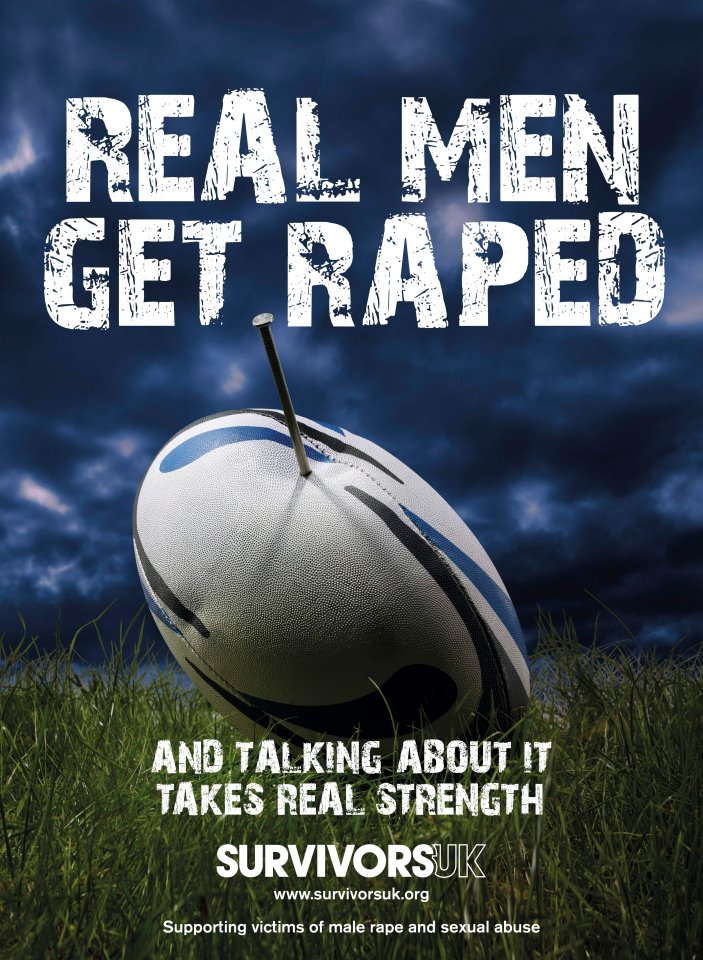
Contrary to what the author of this study reports, I am proud to say that SACASA (Southern Arizona Center Against Sexual Assault), where I work as a trauma therapist, has been seeing male survivors or rape, assault, molestation, and incest for most of its existence, beginning with the Tucson Rape Crisis Center in the late 1970s.
The numbers reported here a bit low, from what I have seen - around 11-15% of all rapes are of males, with 85-89% female victims. [If male rapes in prison and/or the military were accurately reported, I suspect these numbers would be much different.] From what I have seen personally, there is definitely a higher percentage of gay and bisexual (and possibly MTF transgender) survivors, with most being under 25 when they first seek services with our agency.
We work hard to include information on male victims, especially young boys and teens, in our community outreach and education, but I suspect there are still a lot of myths about men and rape, as this article suggests and tries to remedy.
Being sexually assaulted is not something that only happens to women
The trauma that women who have been sexually victimized is well-known, both in terms of the emotional consequences of the assault itself as well as the pain associated with trying to obtain justice afterward. While men are usually the perpetrators of sexual violence and women are usually the victims, that is not always the case however.
Actual incidence of sexual assault involving adult male victims has always been difficult to estimate. Victim surveys of British and American males have shown that 3 to 8 per cent of males reported at least one adulthood incidence of sexual assault in their lifetimes with at least 5 to 10 per cent of all rape victims being male (Pino & Meier, 1990; Coxell & King, 1999). These numbers can be substantially higher for non-heterosexual males though. One 2005 study reported that 13.2 per cent of bisexual males and 11.2 per cent of gay men reported at least one instance of sexual assault as adults. Still, those numbers are almost certainly underestimate the reality considering most male victims are reluctant to report their sexual assault to the police. While the majority of these crimes are committed by male offenders, an estimated 6 to 15 per cent of these sexual assaults can involve female perpetrators (either working independently or in association with male co-offenders).
But why has male sexual assault been so often marginalized in many societies? According to a provocative new literature review recently published in Psychology of Men and Masculinity, the problem may stem from various “myths” surrounding male rape. The review authors, Jessica A. Turchik of Stanford Medical School and Katie M. Edwards of Ohio University, focus on a series of common rape myths that often prevent male victim from reporting their assault and can even make police officers refuse to take their complaint seriously. The myths include:
Many of these myths are frequently reported in social psychological reviews of male and female rape. Found across different cultures, they often reflect common attitudes about male sexuality. Since most media coverage on rape focuses on female victims with any reporting of male rape tending to be lurid (and often sarcastic), it is probably not surprising that male rape myths persist over time.
- Men cannot be raped
- “Real” men can defend themselves against rape
- Only gay men are victims and/or perpetrators of rape
- Men are not affected by rape (or not as much as women)
- A woman cannot sexually assault a man
- Male rape only happens in prisons
- Sexual assault by someone of the same sex causes homosexuality
- Homosexual and bisexual men deserve to be sexually assaulted because they are immoral and deviant
- If a victim physically responds to a sexual assault, he must have wanted it.
Media representations of male rape (such as in movies like “Deliverance” and graphic scenes of rape in prison) certainly reinforce these attitudes. Even laws relating to sexual assault have shown a clear gender bias at times with rape being defined as female-only in many jurisdictions (such as in Canada before the Criminal Code was revised during the 1980s).
Considering how common male rape myths are, it is probably not surprising that studies of law enforcement officers, medical students, and even rape crisis workers have shown these same attitudes towards sexual assault involving male victims. While homophobia can often account for gay rape victims being more likely to be blamed than heterosexual victims of sexual assault, there is also a strong correlation between believing rape myths involving both male and female victims. In other words, people who believe common myths about male rape are likely to believe myths about female rape as well.
Whatever the cause, persistent attitudes about male rape are found in large segments of the general population and can have devastating consequences for men who have been victimized. Not only are victims far less likely to report the crime but those victims courageous enough to come forward can face a horrendous lack of support from the criminal justice system and even from those agencies that provide assistance for female victims of sexual assault.
Although crisis center and hospital records have consistently shown that 3 to 12 per cent of reported sexual assault involve male victims, one study from the 1990s indicate that as many as 37 per cent of rape crisis centres restrict services to females only. I am not aware of any more recent studies to suggest that this has changed substantially over time.
As Turchik and Edwards point out in their review, the negative attitudes spurred on by myths surrounding male rape are well-established among medical professionals, the courts, police officers, the military, and even the prison system and spring from the same patriarchal systems that reinforce negative attitudes about female rape. While more sensitive reporting has helped change attitudes towards female rape, whether these same changes will encourage male victims to come forward is another question.
Though prison rape and sexual assault of underage males have been forced into the open as more high-profile cases are reported, the prevalence of male rape myths in our society and the attitudes about male sexuality that they reflect are much slower to change. That these changes need to happen and resources need to be put in place to help both men and women who experience sexual assault is something that we must face, both as a society and as individuals.
For simple justice, if nothing else.
Subscribe to:
Posts (Atom)