Showing posts with label manhood. Show all posts

Monday, October 27, 2014

"Force Majeure" - A Movie That Will Change How You Think About Manhood (via Esquire)

This review of the new Swedish film Force Majeure (96% Fresh at Rotten Tomatoes), from Esquire, makes it sound equally important for most men to see and painful to have to sit through. Likely, both are true.

Here is the official trailer:


This seems to be a can't miss film, especially for those of us who care about creating a healthier more authentic masculinity.

A Movie That Will Change How You Think About Manhood

The bleak, funny Force Majeure


By Nick Schager on October 23, 2014


Tired of all those superheroes outmatching you in toughness, confidence, and manliness? If so, then the cinematic antidote has arrived in the form of Force Majeure, a Swedish film (and the country's Oscar entry) that tears masculinity a new one.

Opening in limited release tomorrow and then expanding in the coming weeks, director Robert Ostlund's film is ostensibly a drama. But its dissection of macho attitudes and guises is so unsparing that it achieves a pitch-perfect balance between scathing censure and black humor. Rarely has a film taken men to the woodshed for their failings with such a mix of disgust, pity, and wit, the last of which is the key ingredient that helps make Force Majeure such a unique high-wire balancing act. It puts the awkwardness of a Ben Stiller farce to shame, and investigates the man-child phenomenon more deeply than a timid Hollywood bro-comedy ever could.

The film, exquisitely shot to emphasize the dynamics between characters, concerns a middle-class Swedish family on a ski-resort vacation. They're an average clan, led by the average Tomas (Johannes Bah Kuhnke), whose defining characteristic is his milquetoast personality and habit of constantly checking his iPhone for work messages. Their perfectly pleasant, unremarkable getaway is demolished, however, when during breakfast on the resort terrace one morning, a "controlled" avalanche is detonated by mountain officials, and the cascade of snow approaches the vacationers. At first, Tomas tells his panicking children to be calm. Yet as the snow builds to a roaring wall facing them, the possibility of death becomes frighteningly real. In that moment, as wife Ebba (Lisa Loven Kongsli) grabs the children to shield them from the avalanche, Tomas grabs his gloves and phone—and flees.

Yes, he flees.


It's a moment of undeniable cowardice, and one that doesn't go unnoticed by Ebba and the kids, who, once the false alarm is over, sit in stunned silence as their father rejoins them at the table. Tomas's spinelessness and selfishness hang in the air for what seems like an eternity, even as they resume their vacation, with the kids miserable and Ebba barely able to contain her revulsion around Tomas. Her horror at her husband soon builds to an uncontrollable point, and it's then, during two separate conversations with other couples, that Force Majeure truly becomes a film that's watched while squirming restlessly and half-covering one's eyes.

During the first of those two chats, with a man and woman they've just met, Tomas denies that he fled the scene, thus digging himself an even deeper hole. Of course, Tomas is wracked with shame over his failure to act as protector, and Force Majeure depicts him as a man who's outwardly possessed and yet so internally weak and pathetic that he lacks even the courage to retroactively admit to (and atone for) his sins. Tomas hits rock bottom during a later evening spent with big-bearded friend Mats (Game of Thrones' Kristofer Hivju) and his 20-year-old girlfriend, who are put in the amusingly uncomfortable position of having to hear about Tomas's gutlessness, and then, in Mats's case, try to put a positive spin on indefensible behavior. During this tense centerpiece, director Ostlund refuses to turn away from his characters as they grapple with Tomas's shortcomings and the misery he's wrought, casting such an intense eye on Tomas and Ebba (and, in heartbreaking cutaways, their kids) that the film takes on the air of an inescapable nightmare at which you can only laugh.

Tomas's and Mats's ladies-man self-images are destroyed while they have a post-skiing drink, and Mats's girlfriend slams him for, hypothetically speaking, having the same cowardly instincts as Tomas (because, in part, he's left his kids with his ex-wife). No matter where you turn in Force Majeure, masculinity is under attack, and with good reason. And yet despite its scornful critique of traditional ideas about men's strength, bravery, virility, and altruism fostered by Marvel comics adaptations, Ostlund's film is no reprimanding lecture or slog. Instead, by rigorously fixating on his characters' faces as they refuse to look at each other or blubber uncontrollably over their own crappiness, he's created a sharply funny satire about the distance between what men project and what they really are. It's a joke for the ages, but it's also designed as a wake-up call to the real modern man-children of the world who haven't owned up to their true, flawed selves.

Monday, October 13, 2014

7 Biggest Myths about Big Penises

This article appeared originally at The Daily Dot, and then was reposted by Salon, which is where I found it. This article provides an honest and explicit discussion of the perils of a big penis. Men may crave the "cred" that goes with a big unit, especially in the gay world, but there are also a lot of drawbacks.

7 biggest myths about big penises

Bigger may be better, but when it comes to a partner's sexual satisfaction, size is pretty low on the priority list


Ej Dickson and Nico Lang, The Daily Dot


This article originally appeared on The Daily Dot.

Here’s a fun anecdote for your next cocktail party: When it came to providing urine receptacles for their astronauts, NASA encountered an unexpected problem. They gave their astronaut a choice of small, medium, or large sleeves to fit around their penises, but nobody would select either of the first two choices—and they kept slipping right off, leading to some unintended consequences. To fix this issue, the organization came up with a brilliant idea. They labeled them large, gigantic, and humongous instead.

Our society’s penis anxiety is deeply ingrained in the fabric of how we think about our own sexualities—and those of our partners. For a man, the ultimate dig is to suggest that he has a small penis, thus questioning his very manhood. In the case of Drake, all it took was for one message board commenter on Gawker to suggest that his disco stick was “weird,” and penis speculation quickly went viral.

Patrick Moote had a similar experience when he proposed to his girlfriend at a UCLA basketball game. Instead of accepting his offer, she walked away off camera, later admitting that the reason she wouldn’t marry him is that his penis was too small. The moment was documented on YouTube, becoming a viral phenomenon, and Moote later filmed a documentary, Unhung Hero, chronicling his exploration of society’s preferences around penis size.

How much does penis size matter and how much is myth? To address the issue, Daily Dot sexperts EJ Dickson and Nico Lang put together a list of seven reasons that penis size doesn’t matter as much as we think. The results will surprise you.

1) Bigger is only better to an extent.

Nico: I feel the same way about a nine-inch penis that I do an armored tank: They’re nice to look at, but if a guy thinks he’s parking it in my garage, he’s utterly insane. Just because you have the equipment doesn’t mean you necessarily know to operate the machinery, and there’s simply no correlation between a guy’s dick size and performance in bed. A guy with a big penis may be more confident in his sexuality, after a lifetime of having his body affirmed by sexual partners, but that can go one of two ways. Confidence can lead to incredibly sexy sex, but it also could mean that he’s the type of guy who is so “sure of what he’s doing” that he ignores communication and physical cues. Guys who haven’t been gifted with a battering ram tend to be more willing to listen and to give—and everyone loves a giver.

In addition, research has shown that while size matters to the receptive partner, it doesn’t necessarily correlate to being more satisfied either in the bedroom or in a relationship. A survey from Kenya showed that women whose partners had large penises were actually more likely to cheat, and a large penis takes so much effort that there are actual guides on how to date a guy who is “too well-endowed.” If “dating is just one big game of penis roulette,” big penises are a special kind of bullet, one that you don’t necessarily want to have to deal with all the time. Frankly, large members entail a kind of preparation and diligence that one simply doesn’t want to give all the time. That’s why instead of a military-grade member, I personally prefer “boyfriend penis,” the kind that’s just right.

Summing up “bigger is better” debate, former Men’s Health Columnist Nicole Beland put it best: “Yes, we care about the size of a man’s penis. But when it comes to sexual satisfaction, it’s pretty far down on our list of priorities.”

2) Women care about other things way more than they care about large penises.

EJ: For whatever reason, men have been laboring under the misguided impression that there is an underlying scientific reason for why women prefer big penises to smaller ones. And it is true that there are some studies demonstrating a slight tendency toward that preference. Last year, for instance, the Australian National University made headlines with a study that presented women with images of computer-generated males with varying heights and penis lengths. The researchers concluded that women demonstrated a slight preference toward men with larger flaccid penises.

The media, however, failed to pick up on two things about the study. First of all, the women’s attraction to the men actually decreased when their penis size exceeded a certain length, indicating that most women prefer an average or slightly-above-average-size penis to an extra-large one. Just like anything else in life, there’s a happy medium to be attained when it comes to penis size.

The other thing that people failed to realize about the study is that the women only preferred bigger penises when the penises were proportional to the men’s size. So for instance, while they demonstrated a stronger attraction to tall men with larger penises, they weren’t so crazy about shorter men with the same size penis. The Australian researchers surmised that had something to do with women’s aversion to dating short men, but I suspect it has less to do with that and more with the general (though far from scientifically proven) human preference for proportionality. A shorter man with a large penis sort of comes off like the Little Tramp, jauntily whistling and twirling his enormous member at passersby.

3) Just because big penises are the standard in porn doesn’t mean they should be yours in real life.

Nico: If used correctly, pornography can be a great tool for education and discourse, a subject that EJ and I explored in a previous post, but something it’s absolutely awful at is setting the tone for what our bodies should look like. Although there’s nothing wrong with very skinny women who have implants, they tend to be the unilateral norm in straight porn, just as guys with gigantic cocks are in gay porn. Because porn often plays on our desires for excess and the spectacle, pornography has a way of making everything about size for the purpose of a fantasy, an irritatingly singular one.

While it would be imprudent to suggest that these fantasies shouldn’t inform our sex life at all (because what we like to see often carries over to what we like in bed), the fantasy should not be our entire reality. This is a particular problem in the gay community, simply because we have so few representations of what queer bodies look like outside of pornography. LGBT people have made some progress in breaking the glass ceiling of mainstream media, but when it comes to pornography, you can’t throw a rock without hitting a gay porn star. I know a lot of gay porn stars, and I have an enormous respect for what they do, but I don’t think any gay porn star alive thinks that the entire gay community should form their sole opinion of what bodies are by watching Corbin Fisher. That would be like trying to understand what women are by watching the Transformers franchise.

Instead of relying on other people to create your preferences for you, we all need to go out and find out what we like ourselves.

4) The expectations around big penises are too high.

EJ: There are many people who believe that having sex with a dude with a really, really, really big penis is far preferable to having sex with a dude with a really, really, really small penis—or micropenis (pronounced mike-rah-pen-is, as in “acropolis”). I strongly disagree with this. In my experience, having sex with someone with a small penis is kind of like taking the SATs with a quantitative reasoning deficiency. It’s not ideal, and overall you probably won’t do stellar, but you can certainly compensate by your performance on other sections.

This is not the case for men with POUSes (Penises of Unusual Sizes). While they, too, can certainly hold their own on the written and verbal sections, the problem is that, through no fault of their own, the bar is already set so high for them that it’s impossible to live up to your expectations. Their gifts in other areas, however prodigious they might be, are limited by the prodigiousness of their members.

I like to compare seeing your first POUS to seeing a David Lynch movie (for our purposes, let’s go with Mulholland Drive) for the first time. “Oh, OK, so this is what everyone’s gets so excited about,” you find yourself thinking. “This is what everyone’s talking about and quoting from when they drink too much whiskey and printing ironic t-shirts about. OK, well, let’s see if it lives up to the hype.”

Let me tell you something. It doesn’t. Much like seeing Mulholland Drive for the first time, having sex with someone with an enormous penis is an immensely disorienting experience. You don’t know what the hell is going on, and you’re kinda turned on and kinda repulsed at the same time, and all you want to do is get up and take a drink of water and collect your bearings for a minute. In the end, you’re just so overwhelmed by confusion that you shut the DVD off during the “Llorando” scene, scream “This sucks,” and go back to watching 30 Rock reruns for a while.

This is the tragedy of having sex with someone with an enormous penis: Your expectations are so high that it’s impossible for the penis to live up to them, and that’s assuming you guys even make it to the sex act at all. You see that girl on the train with her mascara running down her cheeks? That’s not a drunk chick crying over a breakup; that’s a girl who just lost the opportunity to have sex with a guy with an enormous penis. If you’re a halfway decent person, you should go over there with a tissue immediately and tell her how very sorry you are for her loss.

5) Sex isn’t just about penetration.


Nico: If you’ve ever perused the Kama Sutra, you know that the missionary position is just one of an endless number of positions available to you to explore, and penetrative sex is the same way. Only 25 percent of women are able to regularly experience orgasms through vaginal, meaning that it doesn’t matter how big her partner’s penis is. It’s not going to get her there without a little help from its friends, the vast array of options that are available outside of copulation, in order to provide the direct clitoral stimulation that sex often does not.

Even for gay men, copulation shouldn’t be the only offering at the buffet. The entire BDSM and leather movements are predicated on the idea that sexual intercourse along is just a fraction of everything that goes into attraction and arousal, and for many people, oral sex is more pleasurable than anal interaction. Many gay men report that they dislike penetrative sex, and according to research from the Journal of Sexual Medicine, only “36 percent of men reporting receiving anal sex and 34 percent of men reporting giving it.” According to Good’s Amanda Hess, this study showed that anal sex was actually among the least common sexual behaviors that queer men engaged in, below masturbation, mutual masturbation, and genital-genital contact.

To put this into perspective, around half of women report engaging in anal sex, meaning that more heterosexual couples are having anal sex than same-sex couples are. Like everything in the bedroom, these preferences are highly variable and in no way universal. In bed, one size simply never fits all.

6) Big penises can be painful.


EJ: When men discuss the merits of having a big penis, something that often gets overlooked is how excruciatingly painful it is for most women to have sex with a guy who has one. No matter how much of an ego trip it must be for a dude to be packing a Louisville Slugger instead of a Fisher Price toy, the sad truth is that it’s actually quite difficult for well-endowed men to find partners who are able to handle their equipment, because ladies, I don’t care if you’re the Virgin Mary or if you’ve had sex with the entire 1975 lineup of the New Jersey Nets: If you are not regularly having sex with a man with a big penis, it will hurt. A lot.

I would like, if I may, to share with you a personal anecdote of sorts. When I encountered my first POUS, I had been sexually active for eight years, give or take. Given the amount of time I had invested in my training, I had assumed I had already worked my way up to the Olympics, and was ready to compete with the top athletes in my field. Nearly eight hours of extensive foreplay and an embarrassing train ride on the C later, I discovered that I had not. We hadn’t even been able to have sex. I was a second-string player on a farm team, and an incredibly exhausted one at that.

Although I still look upon that day with some degree of shame and regret—everyone has their 1986 World Series moment, I suppose—I actually learned a very important lesson that day. When it comes to sexual performance, training is key. If you haven’t previously encountered a POUS, and you haven’t put in the time and effort to work up to that specific level, one of two things will happen: 1) Either you’ll be in excruciating pain the whole time, and you’ll feel like you’re giving birth in reverse or 2) You won’t be able to have sex at all, and all the lube and foreplay in the world won’t be able to wash away the shame and disappointment of not being able to take your first enormous dick.

7) Being a “size queen” leaves too many men out.

Nico: If you’re the type of person who will only have sex with guys who at are at least seven inches long (I have some friends insist upon nine), you are severely depleting your dating pool. Studies show that the average erect penis is between 5.1 and 5.9 inches long, but the actual range in terms of penis size is all over the place. An sculpture at Iceland’s Penis Museum shows the incredible diversity of male phalluses, not just in terms of size but also girth. It’s an eye-opening and powerful example of why society’s big penis fetish simply doesn’t measure up; having just one preference doesn’t just set your partners up to fail. It sets you up to fail.

Arguably, that small penis phobia is even more toxic in the bedroom than the actual phallus itself. Men who don’t have a porn-ready seven or eight inches might be dealing with a great deal of internalized shame about their privates, accrued from years of rejection by their partners or silent feelings of worthlessness. Although many studies have shown that those feelings are “all in guys heads,” as even well-endowed men deal with feelings of penis shame, that sense of dysmorphia can lead to eating disorders, depression, and anxiety. Considering the fact that around 45 percent of men report that they’re unhappy with the size of their equipment, this is a major problem.

How can we address such a widespread phenomenon? You can begin by simply shifting your own preferences. Be the change that you want to see in your bedroom.

More Ej Dickson.

Nico Lang is the Opinion Editor at the Daily Dot, as well as a contributor to L.A. Times, Rolling Stone, and the Onion A.V. Club. You can follow him on Twitter @nico_lang.

More Nico Lang.

Wednesday, September 10, 2014

The 10 Best Movies About Becoming a Man (via Esquire)

Esquire has assembled their list of the 10 best male coming of age movies, beginning with this year's instant classic, Boyhood.

The original version of Lord of the Flies is a classic bit of weirdness and a deep look at the savage still lurking within all of us.

The 10 Best Movies About Becoming a Man

By Nick Schager on July 11, 2014


Richard Linklater's Boyhood.

Shot over twelve years in order to capture its headlining newcomer Ellar Coltrane's literal aging from a precocious 6-year-old kid to a lanky 18-year-old teen, the exceptional Boyhood, in theaters today, takes a unique approach to the coming-of-age saga. But despite the clever gimmick, it follows in a long line of films concerned with male maturation, a process that can be at once funny and awkward, tumultuous and traumatic, depressing and euphoric. Whether somber or comic (or both), these stories plumb adolescent and young-adult experiences in order to locate the ways in which we confront early challenges, encounters, and triumphs, and then use those incidents as stepping stones on the path to adulthood. In honor of Boyhood, we present ten great movies about becoming a man.


Stand by Me (1986)


A truly great American coming-of-age film, this gem directed by Rob Reiner (based on Stephen King's short story "The Body") tracks four friends as they embark on an odyssey to find the corpse of a missing friend. It's an alternately joyous and haunting tale, and one marked by its mature, unsettling snapshot of kids coming face-to-face, for the first time, with their own mortality.


The 400 Blows (1959)


François Truffaut's debut remains the genre's standard-bearer, depicting the adolescent bumps and bruises suffered by young schoolboy Antoine Doinel (Jean-Pierre Léaud) with piercing empathy and acute attention to detail. Though Truffaut and Léaud would revisit the character four subsequent times, The 400 Blows' legendary final close-up speaks silent volumes about Doinel's transition from naïve boy to young man.


Say Anything... (1989) 


The definitive '80s romantic comedy as well as a sly coming-of-age tale, Cameron Crowe's Say Anything... is rooted in the amorous quest — and concurrent, hard-won maturation — of John Cusack's Lloyd Dobler, the endearingly funny, sensitive high-school guy no one could resist.


Empire of the Sun (1987)


Steven Spielberg's period drama focuses on the ordeal of a young British boy (Christian Bale) living in Shanghai who, during WWII, finds himself a prisoner of war after the city is occupied by the Japanese, and is separated from his parents and forced to contend with the horrors of war. It's one of Spielberg's most quietly evocative depictions of childhood's end.


Lord of the Flies (1963)


Peter Brook's adaptation of William Golding's famous 1954 novel concerns the harsh lessons learned by a group of British schoolchildren stranded on a remote island. Left to fend for themselves, their efforts to survive — and establish some sort of law and order in the process — result in an unforgettable allegory about the alternately kind and cruel nature of both boys and men.


Hope and Glory (1987)


Like Spielberg's Empire of the Sun (released the same year), John Boorman's Hope and Glory charts the difficult childhood of a young boy during wartime — in this case, a ten-year-old named Bill (Sebastian Rice-Edwards), whose turbulent attempts to make sense of the world while London is wracked by the Blitz during WWII is based on director Boorman's own harrowing experiences.


Walkabout (1971)


Stranded in the Australian outback after their father loses his mind and kills himself, a young brother and sister are compelled to survive off the land with the help of an Aboriginal boy in Nicolas Roeg's Walkabout. It's a film of tremendous beauty and terror about the clash between civilization and untamed nature, and how that conflict shapes — in ways both predictable and unexpected — these siblings' transformation into adults.


Big Wednesday


John Milius's unsung surfing movie follows three friends (Jan-Michael Vincent, William Katt, and Gary Busey) as they grow up during the late 1960s, as the Vietnam War escalates. A rowdy saga of riding waves and enduring tragedies, it's a surprisingly poignant film about seemingly invulnerable men coping with the inevitable loss of youthful innocence.


Swingers (1996)


Unemployed actors enjoy the L.A. and Vegas nightlife — and ladies — in Jon Favreau's Swingers, an amusing ode to getting busy and moving on with your life. Via the fumbling and bumbling of Favreau's mopey Mike Peters, it captures how a broken heart can be the unlikely catalyst for finding your true, grown-up self.


Straw Dogs (1971)


Sam Peckinpah's controversial character study/home-invasion thriller revolves around a wimpy mathematician (Dustin Hoffman) whose very masculinity is challenged when a group of roughneck locals begins terrorizing him and his beautiful wife at a rural English cottage. Noted for its incendiary rape scene, it's fundamentally the story of a coward learning, through violence, to embrace his powerful, ultimately destructive manhood.

Wednesday, July 2, 2014

The New American Man Doesn't Look Like His Father (NPR)

This is the first installment in a new series from NPR's All Things Considered on the state of masculinity in America right now.

Key quote:
"Survey after survey shows that 60 to 70 percent of men still agree with the notion that masculinity depends on emotional stoicism — never showing fear, never showing pain," Kimmel says. "So, the world has changed dramatically, and yet most men still cling tenaciously to an ideology of masculinity that comes off the set of Mad Men."
I will try to post these as they come up from time to time.

The New American Man Doesn't Look Like His Father

by NPR STAFF | All Things Considered
June 23, 2014 5:55 PM ET

Listen to the Story - 7 min 44 sec

Download
Transcript

   
While life has changed significantly for American men in the past half-century, notions of masculinity remain tied to those that may have been passed down from this father to the son on his shoulders. Evans/Three Lions/Getty Images

This summer, All Things Considered is exploring what it means to be a man in America today. In some ways, the picture for men has changed dramatically over the past 50 years. More women than men are going to college, and the economy is moving away from jobs that traditionally favored men, like manufacturing and mining. Attitudes have also changed on the social front, with young men having more egalitarian attitudes toward women and expectations of being involved fathers.

Pedro Noguera, a professor at New York University and head of the Metropolitan Center for Research on Equity and the Transformation of Schools, says the biggest shakeup has been in education. In 1962, men made up about 65 percent of college enrollees; today they make up about 43 percent.

The other side of that figure is the dropout rate for men. Noguera tells NPR's Audie Cornish that in some states, it's twice as high as the female dropout rate.

"These patterns speak to a larger problem, because we know now that the jobs of the future require college degrees," Noguera says.

The education imbalance between men and women is also having an impact on the dating scene, Noguera adds, something that's been already true in the African-American community: "A growing number of well-educated, professional women ... are unable to find men of similar education."

But sociologist Michael Kimmel, a professor at Stony Brook University and director of the Center for the Study of Men and Masculinities, says the changing landscape hasn't come with changed attitudes about masculinity.

"Survey after survey shows that 60 to 70 percent of men still agree with the notion that masculinity depends on emotional stoicism — never showing fear, never showing pain," Kimmel says. "So, the world has changed dramatically, and yet most men still cling tenaciously to an ideology of masculinity that comes off the set of Mad Men."

But Kimmel says today's boys and young men have a much better sense of gender equality than many of their fathers did. He sees a clear example in cross-sex friendship. For 25 years, Kimmel has asked his students if they had a good friend of the opposite sex. When he first started asking, about 10 percent would answer yes. Today, almost everyone does.

"Think about that. You make friends with your peers, right? You make friends with people you consider your equals, not your boss or your servants. I mean, my students today are more experienced with gender equality in their interpersonal relationships than any generation in our history," he says.

Noguera also has seen men become much more involved with raising their children and general housework.

"But what hasn't come with that is a new definition of what it means to be a man as a nurturer in the family," Noguera says. "Can you be strong and be a nurturer? Well, many women have figured out, yes, they have to be, in fact. Because they have to raise the kids on their own, and they can't afford to just expect some man to save the day."

He says today's men are searching for a way to reconcile old ideas related to strength with the need to be better listeners, more cooperative and more open to others.

Wednesday, May 21, 2014

No One Wants To Be With The Marlboro Man: Terry Crews On 'Manhood'


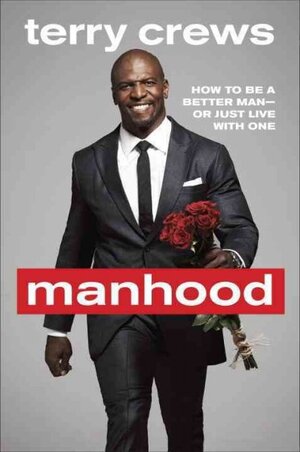
I heard this interview on NPR over the weekend and found it quite entertaining, and disarmingly honest. Who knew that the Old Spice guy was this interesting. His name is Terry Crews, he is a former NFL player, and he was once known as T-Money on the gladiator show Battle Dome. His new book is How to Be a Better Man-Or Just Live With One.

Here is the ad copy for the book:
From NFL player turned film and TV star Terry Crews comes a wise and warmhearted memoir chronicling his lifelong quest to become a good man, loving husband, and responsible father.
 
What does it mean to be a man? Terry Crews, TV’s iconic “Old Spice Guy” and co-star of the hit Golden Globe Award–winning series Brooklyn Nine-Nine, has spent decades seeking the answer to that question. In Manhood, he shares what he’s learned, telling the amazing story of his rise to fame and offering straight-talking advice for men and the women who love them.

A self-described “super-driven superstar alpha male,” Terry Crews embodies the manly ideal for millions worldwide. But as he looks back on his difficult childhood and shares hard-learned lessons from the many humbling experiences he endured to get where he is today, he shows how his own conception of manhood is constantly evolving.

Crews offers up a lively, clear-eyed account of the ups and downs of his twenty-five-year marriage, revealing the relationship secrets that have kept it going—and the one dark secret that nearly tore it apart. Along the way, he shares his evolving appreciation for looking good, staying fit, and getting it done for the people you love.

Being a man is about more than keeping your core strong. It’s about keeping your core values stronger. With insightful observations on spirituality, work, and family, Terry Crews shows men how to face their inner demons, seek forgiveness from those they’ve wronged, and tear down the walls that prevent them from forging meaningful relationships with others.

From the NFL gridiron to the Hollywood backlot, Terry Crews has survived it all with his sense of humor—and his marriage—intact. In Manhood he shows men everywhere that real strength is not measured in muscle mass—unless that muscle is the heart.
Interesting man.

No One Wants To Be With The Marlboro Man: Terry Crews On 'Manhood'

by Terry Crews
May 17, 2014
10 min 3 sec


How to Be a Better Man-Or Just Live With One
by Terry Crews

More on this book

When Hollywood needs a big dude — a really big dude — they can call on all sorts of former athletes. Few come with the heart and humor of Terry Crews.

An 11th-round draft pick of the Rams, Crews gave up his NFL dream in 1997 to pursue a different dream in Hollywood. He thought he'd turn his love of art into a job behind the scenes in special effects. Instead, he has stolen scenes on camera — from action movies like The Expendables to TV comedies like the Golden Globe-winning Brooklyn Nine-Nine.

Maybe his most puzzling role: those surreal ads for Old Spice.

Crews has written a new memoir, Manhood: How to Be a Better Man — or Just Live with One. As he tells NPR's Tess Vigeland, "The book should've been called, Terry Crews Is an Idiot and This Is How I Survived. I'm serious! There was so much astounding immaturity in this book."

Interview Highlights


On living under an alcoholic father

As an African-American, there's a lot of things that — culturally we just don't talk to each other. Anything bad in the past is supposed to be suppressed. "Somebody had it harder than you! So just be glad you're eating!" That's the attitude. And then what would happen is he would bury all his problems in alcohol. It would come out one way or the other. He abused my mother. There was a lot of physical violence in the home."

On revealing his pornography addiction to his wife

She gave me another chance. She said, "Now that I know everything, I'm still choosing to love you." ... That kind of mercy, that kind of grace — it took our relationship to a whole other level, because this is one thing I never realized. ... I always thought if she really knew who I was, she wouldn't want to be with me. And that blew my mind!

On manhood

Manhood used to be the Marlboro Man — my way, the highway, I walk alone! And the Marlboro Man is always by himself. Family, kids? Can't hang with him. They don't understand him. What happens is, that guy in his 60s, he's back there in his shed and he's crying his eyes out. He's alone. No one wants to be with him. And I averted that future.

Wednesday, April 23, 2014

Paul Rosenberg on David Brooks’ and Chuck Todd's Twisted Rhetoric on Obama's “Manhood Problem" (Salon)

This kind of nonsense is infuriating. Because President Obama does not want to engage militarily with Russia to force them out of the Ukraine, then somehow Obama is not really an "alpha male" (Todd) and has a "manhood problem" (Brooks).

For perspective, this is what Steve Benen noted at Maddowblog noted about Obama's use of force as president:
It was this president who escalated the use of force against al Qaeda; it was this president that launched the mission that killed bin Laden; it was this president who increased the use of predator drones to strike at terrorist suspects (including killing Americans affiliated with al Qaeda living abroad); it was this president who helped assemble an international coalition to strike at the Gadhafi regime in Libya; and on and on.
Far from being a pacifist based on this record. Perhaps his rhetoric is not he cowboy bravado we
heard from Bush, or that we are getting from Putin, but talk is cheap. Bush bungled the whole 9/11 response, and Obama has cleaned up the mess, and in fact has taken even broader steps in the futile "war on terror."

In fact, Obama has been so willing to use force that does not endanger American soldiers that the far left in this country (what there is of it) has called him a thug - which is white code for a scary black man.

When one is a pragmatist and a realist, looking often for the middle way through conflict, neither side is going to support such an agenda - the conservatives brand him unmanly and the liberals brand him a brutish man. It's a no-win public image war, so one might as well do what he things is best.

David Brooks’ twisted “manhood”: Questioning Obama’s masculinity isn’t just racist, it’s wrong

Obama foreign policy's rooted in successful realist tradition. Questioning his manhood is rooted in white supremacy


Paul Rosenberg |

Chuck Todd, David Brooks (Credit: NBC News/AP/Nam Y. Huh)

This just in: New York Times columnist David Brooks and NBC’s Chuck Todd want you to know that President Obama has “a manhood problem” — or at least the appearance of one. That’s the conclusion the two white men reached on “Meet the Press” on Sunday (transcript), following comments by another white man, Sen. Bob Corker, R-Tenn., the ranking Republican on the Senate Foreign Relations Committee. Corker warned, “I think we’re going to lose eastern Ukraine,” which would be “a geopolitical disaster,” resulting from “an era of permissiveness the U.S. has created around the world.”

But that perception doesn’t only belong to Republicans. No, it was international, Brooks claimed:
Basically since Yalta we’ve had an assumption that borders are basically going to be borders and once that comes into question if in Ukraine or in Crimea or anywhere else, then all over the world all bets are off. And let’s face it, Obama, whether deservedly or not, does have a — I’ll say it crudely — but a manhood problem in the Middle East. (editor’s note: the bolding is ours) Is he tough enough to stand up to somebody like Assad or somebody like Putin? I think a lot of the rap is unfair but certainly in the Middle East there is an assumption that he’s not tough enough.
And Todd asserted that the Obama administration itself shared this perception:
By the way, internally, they fear this. You know, it’s not just Bob Corker saying it, okay, questioning whether the president is being alpha male. That’s essentially what he’s saying: He’s not alpha dog enough. His rhetoric isn’t tough enough. (blogger's note: bolding is mine) They agree with the policy decisions that they’re making. Nobody is saying– but it is sort of the rhetoric. Internally this is a question.
Here’s the video:


Of course, Todd provided no sourcing for this claim. He wouldn’t be an insider if he didn’t depend on sources he can’t name. It’s such a manly way to do politics, sniping from the shadows.

There’s so much BS involved here, one hardly knows where to start. Because it can cloud out everything else, it’s best to hold back the black masculinity aspect, and start with foreign policy facts. First off, as Steve Benen noted at Maddowblog, the assumption Obama is “not tough enough” flies in the face of “overwhelming evidence to the contrary,” even using Brooks-approved standards:
It was this president who escalated the use of force against al Qaeda; it was this president that launched the mission that killed bin Laden; it was this president who increased the use of predator drones to strike at terrorist suspects (including killing Americans affiliated with al Qaeda living abroad); it was this president who helped assemble an international coalition to strike at the Gadhafi regime in Libya; and on and on.

If you knew literally nothing about the last five years, you might hear this chatter about “manhood” and “alpha males” and assume that President Obama was a pacifist, reluctant to use military force under any circumstances. But given what we know about what actually happened over the last five years, the scuttlebutt is just bizarre.
What Obama actually is — Surprise! Surprise! — is a foreign policy realist, which is to say he belongs to the sober mainstream of U.S. foreign policy thinking since World War II. The realists stand in stark contrast to the neocons, along with their deluded sidekicks, the liberal hawks. As Stephen Walt explained last week in Foreign Policy, realists have often come off as doves, because war is almost always a bad idea from a levelheaded realist perspective, particularly for a superpower as dominant as the U.S. has been since 1945.

“For realists, international politics takes place in a dog-eat-dog world, where states keep a wary eye on potential rivals and constantly seek ways to improve their own positions,” Walt wrote, but he goes on to outline “four obvious reasons why realists are inclined to be dovish, especially here in the United States.” The first is that “realism encourages close attention to the material elements of power,” which have favored the U.S. ever since the end of World War II. During the Cold War, Walt notes, “The Soviet economy was much smaller and less efficient than America’s and its allies were also less powerful or reliable than ours.” We were sure to prevail in the long run, provided we didn’t undo ourselves “through bloated defense budgets or foolish foreign adventures.” Putin’s Russia, obviously, is far less powerful than the Soviet Union. The realist logic is stronger than ever.

Walt’s second point is the realist belief that “states tend to balance against threats rather than bandwagon with them.” Faced with clear-cut aggression, it’s relatively easy to pull together a strong coalition — become the aggressors, even just arguably, and the logic reverses against you. Hence, realists “understood that other states might take various steps to counter the United States if it threw its own weight around too often or too carelessly.” What’s more, far from bolstering your credibility, belligerence could be counterproductive: “realists understood that wasting resources on pointless wars might actually undermine your credibility, especially if it left the nation weaker or war-weary.”

Walt’s third point is so obvious — “[R]ealists also understand that war was an unpredictable business, and even powerful states sometimes blunder into costly conflicts” — that it only needs a one-word explication: Vietnam.

But Walt’s fourth point may be the most telling, for situating foreign policy in a domestic political framework: “[R]ealists are less prone to demonize opponents because they recognize that all states face competitive pressures and that most countries will act ruthlessly in order to protect their interests.”

For conservatives, however, demonizing opponents, and implicating them all in each other’s bad deeds, is the whole point, the very essence of their tribal politics. After 9/11, neocons came to the fore because their enemy “other” was most readily demonized — even if Saddam Hussein was actually bin Laden’s bitterest ideological foe. Things have changed a lot since then, as other demonizing frameworks have been deployed against Obama. A favorite one — Obama himself as Hitler — clashes violently with the notion of Obama as an incompetent weakling. But demonizing narratives don’t have to be consistent, so long as they are consistently frightening to the point that rational thought becomes impossible. And that’s what we see from conservatives today.

The racial aspect adds another dimension. Obama’s entire political career has been defined by pushing back against the “threatening, black alpha-male” stereotype. Conciliation, not confrontation, is not just his style, but the core of his substance as well. The slightest break from this stance can trigger immediate backlash — as was seen in the knee-jerk response to his comment saying police acted “stupidly” when they arrested Harvard professor Henry Louis Gates for trespassing in his own home. Since then, conservative activists and media have manufactured countless similar offenses as Obama has consistently failed to produce them himself. He has a “deep-seated hatred of white people,” as Glenn Beck alleged, without a scintilla of evidence, when Obama held his “beer summit” to atone for his momentary lapse of inconvenient truth-telling. And that has been the right-wing narrative subtext ever since. But the textual evidence has been virtually nonexistent, because Obama’s personality and his politics have been so deeply wedded to compromise and conciliation.

Now, suddenly, it’s possible for conservatives to finally admit Obama’s not a dictatorial tyrant — now that they’ve found a way to hold it against him!

This swift reversal should not be surprising. White male anxiety about black manhood has always been so deeply irrational that it can switch polarities multiple times in a single racist rant. On a much larger, historical scale, in ”Darwin’s Athletes,” one of the most striking reversals John Hoberman notes came about when blacks first began demonstrating their athletic prowess. Before that, white supremacy had been asserted across the boards — whites were superior to blacks in every way — mentally, physically, morally, spiritually. But when top black athletes emerged to disprove that, white supremacy reconfigured itself: Brute physical superiority was suddenly equated axiomatically with inferiority in every other realm.

Naturally, that’s been a problem for white manhood ever since — even without considering the long history of top black scholar athletes, from Paul Robeson to Richard Sherman. The more that physicality, per se, is demonized in the black male, the more problematic it becomes for white males asserting their own masculine identities, particularly their power over women. This inherent, largely buried contradiction lies close to the core of the GOP’s current problems, simultaneously losing the votes of women and minorities in a long demographic decline.

Faced with this reality, the GOP has no choice. No matter how riddled with contradictions it may be, faulting Barack Obama for his performance of masculinity is the only possible move Republicans have left. And if they can get away with it on “Meet the Press,” then who’s to say they’re wrong?

Paul Rosenberg is a California-based writer/activist, senior editor for Random Lengths News, and a columnist for Al Jazeera English. Follow him on Twitter at @PaulHRosenberg. 

More Paul Rosenberg.

Tuesday, April 22, 2014

Omnivore - A Manhood Problem (and a Rebuttal to Hanna Rosin)

Silhouette of young man looking up.

Here is another feast of links form Bookforum's Omnivore blog - this time all of the links are related to men, masculinity, social gender theory, and other related topics - some interesting articles.

One of the articles linked below, by Hanna Rosin (The End of Men) is adapted from her opening statement at the Munk Debate, “Resolved: Men Are Obsolete,” held in Toronto. In it she offers a list of reasons supporting her contention that men are obsolete (not in a biological sense, but in a social constructivist sense).

Here are her five evidence points:
ONE: It’s the end of men because men are failing in the workplace [curator: and in education].
TWO: It’s the end of men because the traditional household, propped up by the male breadwinner, is vanishing.
THREE: It’s the end of men because we can see it in the working and middle class.
FOUR: It’s the end of men because men have lost their monopoly on violence and aggression.
FIVE: It’s the end of men because men, too, are now obsessed with their body hair.
These are weak points aside from number one. Point two is relevant, but not necessarily a bad thing if the men are still involved in raising their kids (but they often aren't).

Once again, as I have argued before, this is not the end of men any more than the 60s and 70s was the end of women. Men are in a transitional space as far as our role in society, and how we navigate this transition will determine whether men evolve into greater care and compassion, or retrench themselves in traditional, domination models of masculinity. How women engage this transition will make all of the difference.

A manhood problem

Apr 21 2014
9:00AM

Monday, January 27, 2014

Is Masculinity in Crisis? Singer Billy Bragg and Director Topher Campbell Discuss

From The Independent, this is an interesting discussion between two guys (who happen to be somewhat famous) about what is means to be a man today. They look at the supposed crisis in masculinity, how we define masculinity, and a lot of related topics.

It would be cool to see a whole series of these kinds of discussions appear in the media - between celebrities and regular blokes alike. These are important discussions not only for men, but for the culture at large as we redefine what masculinity looks like in a postmodern context.

Is masculinity in crisis? Singer Billy Bragg and director Topher Campbell have their say...


Fighting, football, feminism… The singer-songwriter Billy Bragg, 57, and the theatre director, writer and film-maker Topher Campbell, 42, discuss what it means to be a man today

Robert Epstein
Sunday 26 January 2014

Is there, as Diane Abbott claimed last year, a 'crisis of masculinity' in Britain?

BB For straight white men, we've been at a cultural apex in England. We've not run up against the barriers that women have as a gender, that people of colour have, so the need to analyse ourselves hasn't really arisen. A lot of men are acting with hostility towards the current wave of feminism because they can't tell the difference between a personal accusation of sexism and a structural critique of the way sexism is endemic in our culture.One of the issues is that there is no single place where we talk about these things, similar to the way that Mumsnet works. We have to give credit to women; coming up against various glass ceilings, they have spent a lot more time discussing how they fit into society than we have. These debates aren't going on anywhere that I can see within male groups.

TC I think that if there is a crisis of masculinity, it's a white crisis and a heterosexual crisis. I think that perhaps Diane, as a black woman with a son, was talking a little bit about the way in which the traditional behaviour of certain guys is under scrutiny. For black men, this has always been the case; and the idea of identity has always been explored in a lot of different ways for gay men because we have always been in opposition to certain ideas that perhaps would be the best-received ideas of masculinity. The idea of examining or understanding masculinity, if you're gay or gay-identified, might be something that impacts you from a very young age. So while, as a gay man, you might get involved [from youth] with organisations where people do have these conversations, a mainstream forum for lots of diverse men to get together just doesn't exist.

BB Is there a Dadsnet? Sort of, but it's only for new dads. There's no practical Blokesnet or Geezernet or whatever you'd want to call it.


MP Diane Abbott claimed last year that there was a 'crisis of masculinity' in Britain (Getty Images)

So what defines a contemporary male identity?

TC For me, it's very difficult to enter this debate from a central point of view. As a black person and as a gay person, I come from a very marginal place, away from the rut of a perceived black masculinity, which is very narrow, of a certain machismo; and away from mainstream ideas of the kind of David Furnish-Elton John kind of gay respectability. You know, I'm not respectable. I come in a very conventional framework, in the way that I look, but to be out and gay and queer is very disruptive, because what you're saying is that my place in society is equal to your place. And it's disruptive because you hear, in the tunes of my brothers who make rap or dance music, words such as "faggot" and "batty man", and that it's not right to be a batty man because it's a white thing.

Then you hear the heterosexual idea that you can only really be acceptable if you have a loving relationship in a nice kind of parameter around professional, middle-classness. Actually, some gay lives are very messy. We get chucked out of homes, we get bullied at school, we don't get promoted at work, we can't choose certain professions, we can't even travel certain places or we get beaten and killed in certain countries. The whole notion of conversation around masculinity is very interesting to me for that reason because it's that question of how we allow for difference; and if we're talking in terms of left-wing politics or feminism, the idea of "difference" can become very narrow.

BB For my generation, and for my son's, there has been no formal event that has shaped our masculinity. It's not like my father's generation – my father was 15 when the Second World War broke out, so that defined his masculinity. The same goes for my grandfather, whose life was defined by working in a factory and the First World War. For those of us who haven't been through some sort of ritual of manhood like that, our markers go right back to the playground. There, ideas of masculinity came about by identifying outsiders, and at my school that was the black kids, the Asian kids.

We actually had more in common with the black kids through music and football; the Asian kids didn't seem to be into that so much. And if you ended up at a school where there weren't any black or Asian kids, it was then ginger people. Of course queer was a big one, defining people as queer, even if they weren't, because they didn't match up to our ideals of masculinity. The problem is that as that is our primal experience in k declaring masculinity, sometimes when provoked we return to these playground impulses, we turn to the identification of outsiders. We're not just identified as men; we're identified as particular types of men that do particular things in the playground.


Bragg says: 'You need figures such as Tom Daley (pictured) to be able to come out and I think it's the same with masculinity' (Getty Images)

TC It's interesting because also tied in with that is the notion of violence, fighting your way into a status, a place. I used to fight at school and I'm sure you did a bit of fighting as well.

BB It's what bonds you; and that's unfortunate and a real problem. There's a lot of macho territorialism in negotiating how to be a grown man. We all struggle to overcome it, most of us don't think of it ourselves, but under pressure, when you're in a bar somewhere and someone starts pushing and shoving, you'd be surprised how close you get back to that place where you felt threatened at schools – or at least I would.

TC Because of my size, I've always had this issue. When I was at school, I was always a bit bigger, and everyone picked on me because I was taller and always looking down at people. Now that I'm older, if I was to go to a bar or club, people would think that I'm trouble because I'm a big guy. But then, of course, [in reality] I'm a sensitive artist, and all the different ideas people have of you dissolve when they actually get close to you. That's kind of interesting, because you're always in negotiation with your masculinity.

BB That's because we're dealing with other people's idea of masculinity, a weird standard of masculinity, a stereotype of masculinity that we either have to inhabit or push against or step back from.

TC That kind of primal playground is very different to what you then get at university. See, when I went to university, my background was quite mixed up; I lived with my mum for a bit in a very working-class community in Coventry, then I fought my way out through education, as I had some very enlightened and thought-provoking teachers. As soon as I went to university, there was a whole different series of experimentation of relationships, both sexual and friends – we call it bromance nowadays. So you had a different kind of playground of finding your way in life, and some of that was because of what people had experienced in that school playground and were trying to get away from.


Insightful: Turner Prize-winning artist Grayson Perry will be giving a talk at the Being a Man festival

What, then, does it mean to be a 'man' today?

TC As a younger guy, I was very much obsessed with how you become a man. All my older brothers were off getting married, women seemed to be the aim, but that wasn't my aim, so how do you live your life, how do you make it work? For a long time I've had this conversation with myself about relationships, and you're bombarded with conventionality. The liberation of queerness and gayness is to go and live your life how you can to be happy. I think one of the things you do is that you make a declaration of love; you say, at the end of the day I will love myself, I will love others in order to find my way forward in my life, because I may not want to be producing children and I may not want to be living the life in a semi-detached house somewhere.

BB We need role models to say that manhood is "this". The majority of men aren't out scrapping every night, beating their wives, getting drunk all the time or watching football. We can learn a lot from the debates that are going on around feminism, if only for insights. Women, people of colour, and of different sexualities, are exploring the ways they can define themselves and look at themselves and be critical of themselves. Men can learn a lot from that. Again, when you want to talk about these things, masculinity rears its ugly head. We should be examining ourselves and questioning whether the way this society is constructed is right or if it could be better structured. You need figures such as Tom Daley to be able to come out and do that, and I think it's the same with masculinity. We need people who come out and make this point, that masculinity exists in other forms, and it's not all just mainstream.

TC The more we articulate the presence and ability of differences, the better. Without making difference work, we can't find commonality.

How do you define your masculinity?

BB I've thought a lot about this: what defines my masculinity? In the end, the only thing I could really come up with were the things that were hanging on the wall in my office. There are pictures of my family, a certificate I got when I was in the Army for being the best intake in 1981 in the Royal Armoured Corps. There's a big picture of Yuri Gagarin, the first man in space, and a West Ham shirt. I even have a picture of my dad from the war in his army uniform. I realised how male-oriented all these things in my office were. I looked at this shit on my wall and thought, "These are the things I've chosen to represent me." They are all bits of me but very male bits of me. I think about the three men I have the strongest experiences with – my father, my brother and my son – and I react to them in completely different ways. I'm sure my sense of masculinity has changed over time. It's not as though it's a monolithic structure.

TC The shape of masculinity is definitely changing. You look around and younger, teenage men, whether they are black, white, Asian, they are wearing skinny jeans. There's a whole shape difference in the gender representation, the way people define themselves, whether they are straight or gay. Self-determination is also an important part of my masculinity, as a black or a gay man or whatever. I feel as though I need to be able to have the courage and have that courage manifest through my life. What I don't want is someone to tell me what I can and can't do; as a man, I find that offensive and difficult to deal with. I will hit back and hit out at it, whether it's authoritative or personal. I think that's important about my masculinity because it's "my" masculinity, not a gay man's or a black man's.

Billy Bragg and Topher Campbell will be appearing at the Being a Man festival , which runs from Friday to 2 February at the Southbank Centre (southbankcentre.co.uk). Additional reporting by Zander Swinburne

Friday, January 17, 2014

Christina Hoff Sommers - Masculinity Is More Than a Mask


Christina Hoff Sommers is a political commentator, author, and resident scholar at the American Enterprise Institute (a right wing "think tank"). A revised and updated version of her book, The War Against Boys: How Misguided Policies are Harming Our Young Men, has recently been published.

Although I applaud Sommers for her frequent and vocal defense of men (although it sometimes seems she is defending the traditional model of masculinity against its own growth and evolution), I often disagree with he, as the prior parenthetical indicates.

In this article from Time Magazine she offers her supportive critique of how to make The Mask You Live In a better or more fair film for men and boys. This is one of those times I mostly agree with her. 

Masculinity Is More Than a Mask

Is it O.K. to tell boys to "be a man"? An upcoming film that is much buzzed about on the web ignores the real differences between the sexes


By Christina Hoff Sommers Jan. 13, 2014


Are school shooters and mass murderers born out of an aggressive emphasis on masculinity in our society? The trailer for filmmaker and feminist activist Jennifer Siebel Newsom’s new documentary, The Mask You Live In, would have us think so.

The recently released trailer has attracted 1 million views on YouTube. It argues that American boys are captive to a rigid and harmful social code of masculinity. From the earliest age, they are told to “Be a man!” “Don’t cry!” “Stop with the emotion!” and “Man up!” This “guy code” suppresses their humanity, excites their drive for dominance and renders many of them dangerous. The trailer features adolescent men describing their isolation, despair and thoughts of suicide, artfully interspersed with terrifying images of school shooters and mass murderers.

I admire Newsom for using her considerable talent to advocate for boys. But I worry that she is less concerned with helping boys than with re-engineering their masculinity according to specifications from some out-of-date gender-studies textbook. The trailer is suffused with males-are-toxic ideology but shows little appreciation for how boys’ nature can be distinctively good. The Mask You Live In is scheduled to be released later this year. Let’s hope there is still time for edits.

Here are a few suggestions:


1. Recognize that masculinity is more than a “mask”

The title and content of the film suggest that masculinity is a cultural creation. That is only marginally true. A lot of typical boy behavior, such as rough-and-tumble play, risk taking and fascination with gadgets rather than dolls, appears to have a basis in biology. Researchers have found, for example, that female monkeys play with dolls much more than their brothers, who prefer toy cars and trucks. Are male monkeys captive to a “guy code”? A recent study on sex differences by researchers from the University of Turin, in Italy, and the University of Manchester, in England, confirms what most of us see with our eyes: with some exceptions, women tend to be more sensitive, esthetic, sentimental, intuitive and tender-minded, while men tend to be more utilitarian, objective, unsentimental and tough-minded. We do not yet fully understand the biological underpinnings of these universal tendencies, but that is no reason to deny they exist.

(MORE: It’s a Man’s World, and It Always Will Be)


2. Appreciate the difference between healthy and pathological masculinity

Some boys are hypermasculine or pathologically masculine. They are bullies and worse, establishing their male bona fides through destruction, mayhem and preying on the weak and vulnerable. But most boys evince healthy masculinity. They may enjoy mayhem in games and sports, but in life they like to build, not destroy. Their instinct is not to exploit vulnerable people but to protect and defend them. Of course, all boys need guidance and discipline from the adults in their lives. I agree with Newsom that telling a boy to “man up” can be harsh and degrading. But teaching him to “be a gentleman” is another matter. It’s a tried-and-true way to bring out the best in males.


3. Acknowledge the virtue of male reserve

Newsom’s film tells us that boys in our society don’t feel safe talking about emotions and personal struggles. To do so violates the boy code and subjects them to shame and ridicule. The driving message of Newsom’s film is that we must free our young men to become emotionally expressive. Of course, parents should do all they can to improve their sons’ emotional literacy. But parents (as well as wives and girlfriends) should keep in mind that male reticence has its advantages.

A 2012 a study surveyed and observed nearly 2,000 children and adolescents and found that boys and girls have very different expectations about the value of problem talk. Girls were more likely to report that personal disclosure made them feel cared for and understood. Boys, overall, found it to be a tedious waste of time — and “weird.” Contrary to what we learn from Newsom’s film, boys did not find personal disclosure embarrassing or unmasculine. According to the study’s author, Amanda Rose: “Boys’ responses suggest they just don’t see talking about problems to be a particularly useful activity” (emphasis added).

But in girls, excessive problem talk is in fact linked to anxiety and depression. Male stoicism may be adaptive and protective. If you want a boy to be more forthcoming, Rose has good advice for parents and counselors: “You will have to persuade him that it serves a practical purpose.” Engage his male instinct for problem solving.

(MORE: What Boys Want: Hook-Up Culture Doesn’t Just Hurt Girls)


4. Make clear that most boys are psychologically sound and resilient

The Mask You Live In gives the impression that the average adolescent boy is severely depressed. In fact, clinical depression is rare among boys. (National Institute of Mental Health data show that the prevalence of depression among among 13- to 17-year-old boys is 4.3%; among girls of the same age group, it is 12.4%.)

Newsom’s film reports that every day in the U.S. three or more boys take their own lives. Suicide is, indeed, primarily a male disease. Among 10- to 24-year-olds, 81% of suicide victims are male. In 2010, a total of 3,951 young men died by their own hands. Male suicide is a much neglected scourge, and Newsom’s efforts to raise awareness are admirable. Still, in a nation of nearly 33 million boys, that means that the percentage of boys who commit suicide is close to 0.01%. Each of these deaths is a tragedy. But it helps no one to pretend that suicide is typical male behavior.

Attention-deficit/hyperactivity disorder (ADHD) does appear to be an epidemic among boys, but the implications of that are ambiguous. It could be that as a society, we are pathologizing age-old male rambunctiousness. Some experts have suggested that ADHD would be significantly reduced if we allowed boys more unstructured recess and occasions for spirited rough-and-tumble play. Yet, in Newsom’s documentary, scenes of boys engaging in mock fisticuffs, playfully head-butting and chasing one another around the playground are offered as evidence of how young males are driven to “prove” their aggressive masculinity.


5. Include specific ideas on how to help boys with depression or thoughts of suicide

Some of the most promising, innovative ideas are coming out of Australia. In 2006, a report in the Medical Journal of Australia argued for a paradigm shift in the nation’s mental-health system. Rather than blaming “masculinity” or trying to “re-educate” men away from their reluctance to seek help, the author asks, “Why not provide health services that better meet the needs of men?”

The Australians are now developing male-specific mental-health protocols. A 2012 Australian study, for example, found that large majorities of young men associate the term mental health with insanity and straightjackets. Mental fitness seems to go over better with men. The Australians recently launched a mental-fitness app for guys. The focus is on acquiring “skills,” developing “strengths” and achieving “self-mastery.” But doesn’t that reinforce traditional narratives of masculinity? It certainly does — that’s the point, and the key to its promise.

The energy, competitiveness and corporal daring of normal males are responsible for much good in the world. No one denies that boys’ aggressive and risk-taking tendencies must be socialized and channeled toward constructive ends. But the de–Tom Sawyering of the American boy should not be anyone’s agenda. I am sure it is not Newsom’s. Yet her film in progress suggests otherwise.


Christina Hoff Sommers @chsommers

Christina Hoff Sommers is a resident scholar at the American Enterprise Institute. A revised and updated version of her book, The War Against Boys: How Misguided Policies are Harming Our Young Men, has recently been published. The views expressed are solely her own.