Showing posts with label rescuer. Show all posts

Thursday, May 9, 2013

Charles Ramsey Helps Rescue Abducted Women, Asks that Reward Money Be Given to Victims [UPDATED]

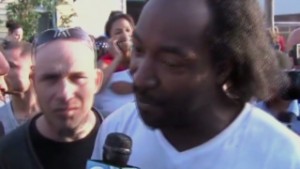
Charles Ramsey has become an American hero after he helped rescue three abducted women being held captive in Cleveland, OH. When offered reward money, he asked that it be given to the victims - this from a man who works at McDonald's, not exactly a life of wealth.

For his actions, his humility, and his generosity, he is a living example of a masculine heart.

[UPDATE: I guess it was inevitable that there was more to the story - Ramsey served time on multiple occasions for domestic violence, and before that for drug abuse, and other crimes. One can hope that this is a new version of the man, that he has learned his lessons and wants to live in greater integrity.]

Charles Ramsey: I'm no hero in freeing of captive women


By Josh Levs, Phil Gast and Steve Almasy, CNN
Wed May 8, 2013


(CNN) -- Within hours of becoming a national hero, a viral video star and the top topic on Twitter, Charles Ramsey talked about having trouble getting sleep. 
It wasn't because of all the excitement that followed his knocking down a Cleveland neighbor's door, freeing three women and a girl who police say were held hostage for years. 
Instead, Ramsey told CNN's Anderson Cooper on Tuesday, it was about knowing he had lived for a year near the captive women on the city's West Side. 
"Up until yesterday the only thing that kept me from losing sleep was the lack of money," the restaurant dishwasher said on "Anderson Cooper 360." 
Neighbor kicked in door to rescue women
Ramsey to 911: 'She's in a panic'
Women rescued after 10-year nightmare
Neighbor heard scream near Castro home 

"I could have done this last year, not this hero stuff," said Ramsey. "Just do the right thing." 
Ramsey recounted Monday night's drama, when he heard a girl scream "like a car had hit a kid." 
He ran from his living room, clutching a half-eaten McDonald's Big Mac, to the house and helped free a woman identified as Amanda Berry. 
"Amanda said, 'I've been trapped in here. He won't let me out. It's me and my baby." 
Ramsey and a man named Angel Cordero broke down the door, CNN affiliate WEWS reported in an earlier interview heard around the world. 
Ramsey told CNN he had never seen Berry before Monday, and at first, he could not place the name. 
"Berry didn't register with me until I was on the phone, like wait a minute, I thought this girl was dead." 
"She's like, 'This (expletive) kidnapped me and my daughter,'" he told the 911 operator, according to WEWS. 
After police arrived, Berry explained there were other women inside. When police came out with them, Ramsey told the station, "it was astonishing." 
Berry was last seen after finishing her shift at a Burger King in Cleveland in 2003 on the eve of her 17th birthday. 
The other two women are Georgina "Gina" DeJesus, who disappeared at age 14 in 2004, and Michelle Knight, who vanished in August 2002, at age 21, according to police. 
Ramsey told CNN he is no hero and should not receive any reward. 
"You've got to put that being a coward and 'I don't want to get in nobody's business,'" he said. "You got to put that away for a minute." 
'I barbecue with this dude' 
While Ramsey's quick action in the largely rundown neighborhood made him a hero, his colorful descriptions to WEWS helped make him dream fodder for the Twitterverse. 
Explaining that he had no idea Ariel Castro, his neighbor, may have had other people inside his home, Ramsey said, "I've been here a year. You see where I'm coming from? I barbecue with this dude. We eat ribs and whatnot and listen to salsa music... 
"He just comes out to his backyard, plays with the dogs, tinkers with his cars and motorcycles, goes back in the house. So he's somebody you look, then look away. He's not doing anything but the average stuff. You see what I'm saying? There's nothing exciting about him. Well, until today." 
Castro "got some big testicles to pull this off, bro," Ramsey told WEWS. "Because we see this dude every day. I mean every day." 
He added, "I knew something was wrong when a little, pretty white girl ran into a black man's arms. Something is wrong here. Dead giveaway." 
In one of the top tweets about Ramsey, comedian Patton Oswalt wrote, "Dear Charles Ramsey: I am not a little pretty white girl, but I totally want to run into your black arms. #hero." 
Hodge's restaurant in Cleveland posted a message on Facebook saying, "we're extremely proud of our employee Charles Ramsey for not turning his back on the young women. He's a true Cleveland hero. Our thoughts and prayers will continue to be with the women, their families and their friends." 
Three separate cases, one rescue
Ohio cop dispels story of naked lady
The search for Ashley Summers
 Restaurant owner Chris Hodgson told CNN that Ramsey goes above and beyond in his duties. 
"You give him something to do, and he'll do more," he said. "We always look forward to seeing him, because you know he's gonna bring a smile to your face." 
Hodgson said people have offered to raise money for Ramsey, but the employee would end up giving it to the victims and their families. 
The company is working with other restaurants to plan fund-raisers for the families, Hodgson said. 
For its part, McDonald's Corp., on its Twitter account Tuesday, said, "Way to go Charles Ramsey -- we'll be in touch." 
Despite his assertions, Ramsey and Berry were praised as heroes by John Walsh, former host of TV's "America's Most Wanted." 
At an awards dinner for the National Center for Missing and Exploited Children, Walsh said he called Ramsey on Tuesday to tell him that. 
"You are the guy who decided in 30 seconds to go up and spring a woman from a house of hell that she's been in and was desperate to get out that door with her 6-year-old daughter," Walsh recalled saying. 
Ramsey said he was raised to help women in distress, said Walsh. 
Breathless 911 call 
Ramsey's demeanor comes across clearly in his 911 call.
"Hey bro," Ramsey tells the 911 operator. "Check this out. I just came from McDonald's right? So I'm on my porch eating my little food, right? This broad is trying to break out the f-----g house next door to me, so there's a bunch of people on the street right now and s--t. So we're like, 'What's wrong, what's the problem?' She's like, 'This m--------r done kidnapped me and my daughter ... She said her name is Linda Berry or some s--t. I don't know who the f--k that is, I just moved over here, bro. You know what I mean?"
He then answers the 911 operator's questions about the woman, what she looks like, and what she's wearing. 
Ramsey tells the operator an address which he says corresponds to Berry's location, not Ramsey's home address. "I'm smarter than that, bro. I'm telling you where the crime was, not my house," he says. 
"Are the people that she said did this, are they still in the house?" the 911 operator asks. 
"I don't have a f-----g clue, bro. Like I said, I just came from McDonald's." 
The operator then asks him to check whether Berry needs an ambulance. 
"She needs everything. She's in a panic, bro. She's been kidnapped, so, you know, put yourself in her shoes." 
"We'll send the police out," the operator responds. 
~ CNN's Catherine E. Shoichet contributed to this report.

Tuesday, August 10, 2010

Acknowledging Our Pain - Rescuing the Rescuer

http://www.talkingbuddhism.com/images/talking_sitting.JPG

My girlfriend, Jami, is a very knowledgeable and insightful therapist. As she watched me struggle over the past few days with my role in questioning the standing of some people in the integral community, she asked me, point blank, "Why do you need to rescue everyone from him?"

My first instinct is to say, I don't need to rescue everyone. But that is not true. In the case at hand, it is because no one else will - he has intimidated or smeared everyone else who has gone up against him. I am the only member of the integral community who is willing to voice these concerns.

But as I reflect on it, this goes back a long way. More on this below today's Daily Om, which addresses this need to rescue people and why we do it.
Acknowledging Our Pain
Rescuing the Rescuer

Sometimes the strong desire to help and rescue others is actually
a call to help our own deep seated pain.

Some people seem called to help others, often from very early on in their childhoods, responding to the needs of family members, strangers, or animals with a selflessness that is impressive. Often, these people appear to have very few needs of their own, and the focus of their lives is on rescuing, helping, and healing others. While there are a few people who are truly able to sustain this completely giving lifestyle, the vast majority has needs that lie beneath the surface, unmet and often unseen. In these cases, their motivation to help others may be an extension of a deep desire to heal a wounded part of themselves that is starving for the kind of love and attention they dole out to those around them on a daily basis. For any number of reasons, they are unable to give themselves the love they need and so they give it to others. This does not mean that they are not meant to be helping others, but it does mean that they would do well to turn some of that helping energy within.

One problem with the rescuer model is that the individual can get stuck in the role, always living in crisis mode at the expense of inner peace and personal growth. Until the person resolves their own inner dramas, they play them out in their relationships with others, drawn to those who need them and often unable to acknowledge their own needs or get them met. In the worst-case scenario, they enable the other person’s dilemma by not knowing when to stop playing the rescuer and allow the person to figure it out on their own. However, if the rescuer finds the strength to turn within and face the needy aspects of their own psyche, he or she can become a model of empowerment and a true source of healing in the world.

Some signs that you or someone you love may need to rescue the rescuer within are inner burnout from overgiving; underlying resentment; an inability to admit to having needs of one’s own; and an unwillingness to be vulnerable. Help comes when we allow ourselves to admit we need it, acknowledging our humanity and our wholeness by acknowledging our pain. The understanding we gain in the process will naturally inform and inspire our ability to help those in need to do the same.

I am not as as bad as this article suggests it can be - my "rescue" attempts/needs are very specific and focused - and I know where they come from. It also helped to learn about the Karpman Triangle a few years back:

http://www.therapyideas.net/Images/VRP-triangle.gif

As long as people act out these roles unconsciously, they continue to control people's lives. Assuming these roles is one of the many ways we remain unconscious to our own pain. Here is a brief explanation (same link as for the diagram above):
The Purpose of The Victim, Rescuer, Persecutor Game

1. Keeps responsibility out there.
2. There is a lack of internal conflict within the individual. It's all created in others.
3. Players lack empathy, are very self absorbed in their own role of the moment.
4. Patterns of the game prevent problem solving — the drama rules.
5. Maintains bad boundaries.
6. The game provides identity and fills emptiness, because two people can jump around in all three roles to fuel the drama.

Good guy/Bad guy split thinking leads to drama. Drama obscures the real issues. People are seduced by the false excitement the drama offers — all style, no substance. Manipulation is the core of the game. It creates confusion and upset, not solutions.

*****

This game is what operates in many relationships. It is all style and no substance. It has become a lifestyle for too many people. The game provides people with their identity as Victim, Rescuer, or Persecutor. People generally favor one or two roles.

Most of us in the helping professions (nurses, teachers, counselors) all begin with favoring the Rescuer role. (So be sure to choose a therapist who’s been a client and seriously worked on issues in their own backyard. This means they’ll more clearly see who you really are instead of projecting their own issues onto you.) Rescuers get caught up in enabling. They see themselves as good and have to learn to back up. Doing too much for someone else is rationalized because "I care so much." Rescuers are often unaware that pity and disrespect are the fuel for this role. "I know what's best for you." is illustrated in the mother's role in the movie "The Deep End." The reality is that backing up from the rescuer role means learning that indifference can be a useful tool. Wait and see if the person you’re trying to rescue steps forward for themselves or how they do it differently. (Rhoda Mills Sommer, Therapy Ideas)
This was my first drive into becoming a therapist in college - that rescuer energy. Somehow, I didn't follow through, unconsciously knowing I was not ready to sit with other people's suffering when I hadn't even faced my own. I had to go back and do my own work.

Facing One Big Piece of My Past

When my sister was 15 or so, she was raped by an older guy she knew. In some ways she was complicit - she knew he was dangerous, a petty criminal, and a drug dealer. She was buying drugs and getting high with him when he attacked her.

In college I knew several women who were date raped, and one who was raped brutally by a stranger. Since then I have known several more women who were raped, either by strangers or by men they knew. I have also known a couple of gay men who have been raped.

So that's part of it.

When I was much younger (maybe seven or eight), I was targeted by bullies several times, including being stuffed upside down into a garbage can. I don't know why I was a target, except that I was often sent to upper level classes because my teachers didn't know what to do with me. So I was a third or fourth grader in the sixth grade classes (7th grade was at a different school). Smart kids get picked on, I guess.

The feeling of fear and humiliation of being helpless are nearly unbearable to me. There is also the shame that comes with that helplessness and the feeling of being overpowered, of having control of my body taken away from me.

I felt the same helplessness when my father died (when I was 13) and then again over the years as other friends died. Death no longer impacts me that way (learning to befriend impermanence as a student of Buddhism has helped a lot with this part of life).

In the years immediately following my father's death, I acted out - I became the bully who I hated. I intimidated weaker, socially outside kids. I belittled my mother, and any other adult when I thought I could get away with it. I was a punk kid with no self-esteem, no respect for others. I am example of how kids who are bullied become bullies.

I am ashamed of having done those things. But I also know I was doing the best I could at the time with the limited resources available to me. There was no adult in my life to set boundaries, and I was defiant of anyone who tried to set boundaries.

So over the years I have been involved in protecting those who are being pushed around or abused by others - the victim - whether that is a person, an environment, or something else. For a long time, this was unconscious, but therapy helped me identify my "savior" part that wants to protect people.

When it was unconscious, I had little access to that part in my psyche, to use it to protect myself, or to nurture myself. I could not ask it to step aside and let me really feel other people's pain.

Men as Rescuers in Relationships

One of the long-standing complaints women (at least those I have dated) have about men is that we are seldom able to listen to them tell us about their feelings, especially their pain and struggle. They don't want us to fix things, to give them solutions, they simply want us to witness and hear them, to acknowledge that their feelings are validated by us.

Men like to fix things - we want to offer solutions (we are often living in our agency without holding it as an object of awareness - we don't have to react from this perspective). We also have the ability to sit in communion (even if it isn't our first impulse, we have this option available to us at all times). [More on agency and communion here.]

The key, it seems to me, is to develop the ability to discriminate between those times when action is required or beneficial and those times when simply being with the feelings is all that is required of us. I am still working on this.