Showing posts with label television. Show all posts

Saturday, October 18, 2014

Amazon's "Transparent" Normalizes Transgender Lives for a Mainstream Audience

In her review of Transparent, the newish streaming-only series from Amazon Prime, Francine Prose offers an overview of the series's strengths, which are many, and a few minor flaws.

I had heard about the series and wanted to see it, but somehow had missed that it was already available (since February). It's my next binge-watch weekend.

In working with trans clients, my biggest take away has been that their lives have the same basic dramas and struggles as do cisgender people. They know who they are as people, mostly, and being trans is only an issue insofar as others make it an issue.

It seems that Transparent gets that part of it right in this series.

Seeing Our Selves

Francine Prose
New York Review of Books
October 10, 2014

Amazon Studios Amy Landecker and Jeffrey Tambor in a scene from Transparent

After I’d watched all ten half-hour episodes of the first season of Transparent in just two evenings, it occurred to me that, with the exception of Louie, most of the TV series I’d binge-watched—The Wire, Breaking Bad, The Fall, and Spiral, among others—had involved either enormous amounts of violence, ruinous drug addiction, a grisly crime requiring a crack team of British (or French) detectives to solve, or all of the above. So far, Transparent‘s body count is zero, unless we add in the erasure (and the effective demise) of Mort Pfefferman, a retired Los Angeles academic and political scientist who, in late middle age, comes out to his three grown children as Maura, the woman he truly is and always was. Its tone is wistfully comic; its suspense—how will the kids react to the fact that Dad, or, as they begin to call him, Moppa, is shopping at the mall in make-up and a dress?—is tempered and low-key. And yet I finished each installment eager to spend more time with the Pfeffermans, whose individual and collective predicaments, and whose familial relationships, seem at once entirely unique and universal.

Since the series became available to Amazon Prime subscribers this fall (the first episode appeared in February), the show has received a great deal of popular attention; the series has already been renewed for a second season. It’s a somewhat unlikely hit, given its lack of dramatic action (a euphemism for bloodshed), its vaguely melancholic register, and the extent to which all of its principal characters seem isolated, rudderless, and lost. Above all is the unlikely fact that it has, at its center, the balding, ponytailed, thickset Mort/Maura, not exactly a wildly attractive exemplar of either gender. One can imagine a generation seeing their experience mirrored (or not) in the HBO series Girls, but most viewers, I’d assume, might hesitate to identify with the sympathetic, appealing, but troubled and maddeningly solipsistic Pfeffermans.

Part of what makes the series so engaging is the pleasure of seeing what gifted actors can do when they are provided with scripts and direction that allow them to create highly complex, interesting characters, as fully nuanced and contradictory as actual human beings. Gaby Hoffmann delivers a typically fearless, even reckless performance as the youngest sibling, Ali, a lost soul blessed and cursed with an excruciatingly high concentration of generosity, desperation, decency, human kindness—and weirdness. Hoffmann’s intensity injects humor and pathos into scenes (including one in which Ali tries and fails miserably to enlist two male bodybuilder roommates in a mini-orgy) that might otherwise remain mocking burlesques. Jay Duplass brings a persuasive mixture of surface charm and deep anxiety to his portrayal of Josh, a successful music producer whose natural confidence and cultivated hipness belie a longing to love and be loved, to understand and transcend the damage done by his longstanding affair with Rita, the family babysitter with whom he began a sexual relationship when he was fifteen. And Amy Landecker is equally convincing as Sarah, whose readiness to torpedo her “perfect” life, to leave her children and her rich husband and reconnect with her college girlfriend seems motivated partly by exhaustion and impatience with the compulsory niceness and the custodial responsibilities of being an older sister.

All three actors deftly convey the wide range of emotions and behaviors that go along with being a sibling: the inside jokes, the familiarity, the affection, the knowledge of how to irritate and comfort one another (there’s a moving scene in which Ali, having just heard that Josh’s girlfriend has had an abortion, cajoles him into joining her in a sweet, awkward dance), and the puppy-like competition for sustenance and parental attention. For the Pfeffermans, this rivalry is exacerbated by Mort’s habit—a tic that survives his transition to Maura—of telling each of his children something (mostly having to do with money) and making them promise not to tell the others.

The supporting cast is similarly virtuosic. As Mort’s ex-wife Shelly, Judith Light communicates the sharpness and the resilience of a quick-witted, soft-hearted woman slightly hardened and concealed beneath the persona of the daffy grand-dame she’s developed for self-protection. Katherine Hahn enters the series, partway through, as Raquel, a compassionate, intelligent, and (why should this surprise us?) sexy rabbi whom we want to warn against getting involved with Josh even as we are fervently hoping that their romance might work out. And Carrie Brownstein, as Ali’s best friend Syd, persuades us—along with Ali—that she genuinely believes there is nothing wrong in having and concealing a casual affair with Ali’s brother.

But ultimately everything turns on Jeffrey Tambor’s stellar turn as Maura, whose thrilled, tentative forays into femininity excite our protectiveness even as her failings as a parent become increasingly clear. As Maura edges, step by step, into her new life, her terror of the unknown is mediated by a girlish delight in the exterior trappings of womanhood; in one scene, we witness her near ecstatic introduction to the rituals of the department-store cosmetics counter.

Amazon Studios A scene from Transparent

As we come to realize, the Pfeffermans’ problems go beyond gender confusion and a familial predilection for secrecy. The question they can’t seem to answer is a more basic and common one: How much should—and can—each individual give up for the good of others? Transparent floats the radical idea (which we may have observed on our own) that love, real love, can coexist with crippling selfishness and self-involvement. In the first episode, when Mort tries and fails to tell his kids about his decision, and they cannot or will not hear him, he says that he cannot believe he raised three people so unable to see beyond themselves. But the more we learn about Mort and Shelly, the more we’re inclined to think that self-centeredness may be an inherited trait. When her kids arrive at her apartment, bringing her favorite take-out, Shelly exclaims, “Look how much my children love me!” And there’s a scathing flashback in which Mort is so eager to attend a rural retreat where he will be able to dress as Maura that he accedes with appalling haste to thirteen-year-old Ali’s semi-serious child’s suggestion that her parents cancel her bat mitzvah.

Created by writer/director Jill Soloway, whose own father became a woman late in life, the show is especially sensitive to (and informative about) issues of gender. When Sarah tries to prevent Ali from “outing” their father to Josh, who has not yet been told the startling news, and when she informs her siblings that the correct term for Moppa is “trans,” her lines seem as if they might have been suggested or influenced by one of the many trans crew members who were hired to work on the series. When Maura is ejected from a ladies’ room at the mall by outraged strangers, it reminds us that (as a recent New Yorker article explained) public bathrooms and all-female music festivals have become the new battlegrounds in the war between feminists and male-to-female transsexuals over what it means to be a woman.

Watching Mort turn into Maura—figuring out how to walk and talk, how to tilt her head and fiddle with her hair—makes us think again about how much of our behavior is hormonally determined and how much is learned and practiced: how much is theater. Tambor’s transformation recalls Felicity Huffman’s extraordinary performance as Bree, the male-to female heroine of the 2005 road-trip film TransAmerica. What a challenge and how much fun it must be for actors to impersonate characters who must learn to impersonate someone else, someone whom they have long recognized as their true self.

The series gets so much right that when it doesn’t, we notice. Perhaps its most implausible aspect is the response (or lack of response) of Sarah’s two young children to the fact that Mom has left Dad for Tammy. Watching Sarah and her offspring, one might conclude that the most critical qualifications for parenthood are the ability to pick up one’s children after school on time, and a knack for arranging entertaining play-dates. The children seem to vanish, rather conveniently, from Sarah’s consciousness, reappearing only when necessary; when, for example, we are invited to observe their response to Grandpa’s new wardrobe and hairstyle. And at times one can’t help wishing that the writers would search the script for “secret” and “family secret” and delete all the results; surely most viewers are savvy enough to understand how much concealment has hurt the family without the frequent promptings, which tend to flatten out, rather than deepen or illuminate, our sense of who these people are.

But these hesitations and criticisms are minor. Despite one’s reservations about Amazon and its dark plans for writers and publishers, we can be thankful that Transparent exists. What a joy and a relief it is to be drawn into a mystery—the mystery of character, the mystery of gender, the mystery of family love—that is so far beyond the provenance and the expertise of the crime-scene squad and the forensic pathologists.

Monday, September 15, 2014

Gender Studies, Masculinity and Television (via Utne Reader)

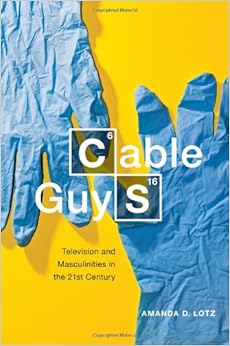
http://ecx.images-amazon.com/images/I/51lIcjN9IWL._SY344_BO1,204,203,200_.jpg

This is an interesting look at the dearth of analysis of male characters on television in gender studies. The majority of characters are male, yet they are seldom studied within their gender performance context, while women have been often studied over the last several decades.

This brief article is an excerpt from the Introduction to Cable Guys: Television and Masculinities in the 21st Century (NYU Press, 2014), by Amanda D. Lotz.

Gender Studies, Masculinity and Television


Why gender studies should examine male television characters like Archie Bunker and Tony Soprano more closely.

 
By Amanda D. Lotz
September 2014

Despite the number of male characters in American television, the study of these men—and their roles as men in society—are not among the popular topics when discussing gender studies. Photo by Fotolia/migfoto

Women’s roles on television have been analyzed over the course of television’s history. Through the 20th century and into the 21st century, the evaluation of gender roles has come mostly through the analysis of women. Why not men? In Cable Guys: Television and Masculinities in the 21st Century (NYU Press, 2014), Amanda D. Lotz attributes the lack of analysis and typology to the abundance of types of male characters in television, which leads to an audience who is more accepting of the male characters they see on television. In the following excerpt from the introduction, Lotz examines why male television characters have not been analyzed in depth under gender studies while many male film characters have. 


What Do We Know about Men on Television?


It is revealing that so little has been written about men on television. Men have embodied such an undeniable presence and composed a significant percentage of the actors upon the small screen—be they real or fictional—since the dawn of this central cultural medium and yet rarely have been considered as a particularly gendered group. In some ways a parallel exists with the situation of men in history that Michael Kimmel notes in his cultural history, Manhood in America. Kimmel opens his book by noting that “American men have no history” because although the dominant and widely known version of American history is full of men, it never considers the key figures as men. Similarly to Kimmel’s assertion, then, we can claim that we have no history of men, masculinity, and manhood on television—or at best, a very limited one—despite the fact that male characters have been central in all aspects of the sixty-some years of US television history. It is the peculiar situation that nearly all assessments of gender and television have examined the place and nature of women, femininity, and feminism on television while we have no typologies of archetypes or thematic analyses of stories about men or masculinities.

For much of television studies’ brief history, this attention to women made considerable sense given prevailing frameworks for understanding the significance of gender representation in the media. Analyses of women on television largely emerged out of concern about women’s historical absence in central roles and the lack of diversity in their portrayals. Exhaustive surveys of characters revealed that women were underrepresented on television relative to their composition of the general populace and that those onscreen tended to be relegated to roles as wives, love interests, or sex objects. In many cases, this analysis was linked with the feminist project of illustrating how television contributed to the social construction of beliefs about gender roles and abilities, and given the considerable gender-based inequity onscreen and off, attention to the situation of men seemed less pressing. As a result, far less research has considered representations of men on television and the norms or changes in the stories the medium has told about being a man.

Transitioning the frameworks used for analyzing women on television is not as simple as changing the focus of which characters or series one examines. Analyzing men and masculinity also requires a different theoretical framework, as the task of the analysis is not a matter of identifying underrepresentation or problematic stereotypes in the manner that has dominated considerations of female characters. The historic diversity of stories about and depictions of straight white men has seemed to prevent the development of “stereotypes” that have plagued depictions of women and has lessened the perceived need to interrogate straight white men’s depictions and the stories predominantly told about their lives. Any single story about a straight white man has seemed insignificant relative to the many others circulating simultaneously, so no one worried that the populace would begin to assume all men were babbling incompetents when Darrin bumbled through episodes of Bewitched, that all men were bigoted louts because of Archie Bunker, or even that all men were conflicted yet homicidal thugs in the wake of Tony Soprano. Further, given men’s dominance in society, concern about their representation lacked the activist motivation compelling the study of women that tied women’s subordinated place in society to the way they appeared—or didn’t appear—in popular media.

Gender Studies: Focusing on Men


So why explore men now? First, it was arguably shortsighted to ignore analysis of men and changing patterns in the dominant masculinities offered by television to the degree that has occurred. Images of and stories about straight white men have been just as important in fostering perceptions of gender roles, but they have done their work by prioritizing some attributes of masculinity—supported some ways of being a man—more than others. Although men’s roles might not have been limited to the narrow opportunities available to women for much of television history, characteristics consistent with a preferred masculinity have pervaded—always specific to the era of production—that might generally be described as the attributes consistent with what is meant when a male is told to “be a man.” In the past, traits such as the stoicism and controlled emotionality of not being moved to tears, of proving oneself capable of physical feats, and of aggressive leadership in the workplace and home have been common. Men’s roles have been more varied than women’s, but television storytelling has nevertheless performed significant ideological work by consistently supporting some behaviors, traits, and beliefs among the male characters it constructs as heroic or admirable, while denigrating others. So although television series may have displayed a range of men and masculinities, they also circumscribed a “preferred” or “best” masculinity through attributes that were consistently idealized.

The lack of comprehensive attention to men in any era of television’s sixty-some-year history makes the task of beginning difficult because there are so few historical benchmarks or established histories or typologies against which newer developments can be gauged. Perhaps few have considered the history of male portrayal because so many characteristics seemed unexceptional due to their consistency with expectations and because no activist movement has pushed a societal reexamination of men’s gender identity in the manner that occurred for women as a component of second-wave feminism. Male characters performed their identity in expected ways that were perceived as “natural” and drew little attention, indicating the strength of these constructs. Indeed, television’s network-era operational norms of seeking broad, heterogeneous audiences of men and women, young and old, led to representations that were fairly mundane and unlikely to shock or challenge audience expectations of gender roles.

One notable aspect of men’s depictions has been the manner through which narratives have defined them primarily as workers in public spaces or through roles as fathers or husbands—even though most male characters have been afforded access to both spaces. A key distinction between the general characterizations of men versus women has been that shows in which men functioned primarily as fathers (Father Knows Best, The Cosby Show) also allowed for them to leave the domestic sphere and have professional duties that were part of their central identity—even if actually performing these duties was rarely given significant screen time. So in addition to being fathers and husbands, with few exceptions, television’s men also have been workers. Similarly, the performance of professional duties has primarily defined the roles of another set of male characters, as for much of television history, stories about doctors, lawyers, and detectives were necessarily stories about male doctors, lawyers, and detectives. Such shows may have noted the familial status of these men but rarely have incorporated family life or issues into storytelling in a regular or consistent manner.

This split probably occurs primarily for reasons of storytelling convention rather than any concerted effort to fragment men’s identity. I belabor this point here because a gradual breakdown in this separatespheres approach occurs in many dramatic depictions of men beginning in the 1980s and becomes common enough to characterize a subgenre by the twenty-first century. Whether allowing a male character an inner life that is revealed through first-person voice-over—as in series such as Magnum, P.I., Dexter, or Hung—or gradually connecting men’s private and professional lives even when the narrative primarily depicts only one of these spheres—as in Hill Street Blues or ER—such cases in which the whole lives of men contribute to characterization can be seen as antecedents to the narratives that emphasize the multifaceted approach to male characters that occurs in the male-centered serial in the early 2000s. Though these series offer intricately drawn and complex protagonists, their narrative framing does not propose them as “role models” or as men who have figured out the challenges of contemporary life. The series and their characters provide not so much a blueprint of how to be a man in contemporary society as a constellation of case studies exposing, but not resolving, the challenges faced.

The scholarly inattention to men on television is oddly somewhat particular to the study of television. The field of film studies features a fairly extensive range of scholarship attending to changing patterns of men’s portrayals and masculinities. While these accounts are fascinating, the specificity of film as a medium very different from television in its storytelling norms (a two-hour contained story as opposed to television’s prevailing use of continuing characters over years of narrative), industrial characteristics (the economic model of film was built on audiences paying for a one-time engagement with the story while television relies on advertisers that seek a mass audience on an ongoing basis), and reception environment (one chooses to go out and see films as opposed to television’s flow into the home) prevent these studies of men on film to tell us much about men on television. Further, gender studies and sociology have developed extensive theories of masculinity and have been more equitable in extending beyond the study of women. Although theories developed in these fields provide a crucial starting point—such as breaking open the simple binary of masculinity and femininity to provide a language of masculinities—it is the case that the world of television does not mirror the “real world” and that the tools useful for exploring how societies police gender performance aren’t always the most helpful for analyzing fictional narratives. Sociological concepts about men aid assessments of men and masculinity on television, but it is clearly the case that the particularities of television’s dominant cultural, industrial, and textual features require focused and specific examination.


Reprinted with permission from Cable Guys: Television and Masculinities in the 21st Century by Amanda D. Lotz and published by NYU Press, 2014.


Related Content

Saturday, August 2, 2014

'Masters of Sex' Artfully Exposes a Myth of Masculinity

A recent episode (July 27) of Masters of Sex (Showtime) has received a lot of attention for its depiction of main character William Masters' revelation of childhood physical abuse by his father. This revelation was quickly buried again.

The impetus for the revelation was Masters' experience delivering a baby with ambiguous genitalia, and then feeling outraged by the harsh reaction from the newborn's father. Because of this series of events, Masters found himself reflecting on his own struggles with masculinity to research partner Virginia Johnson (Lizzy Caplan) during a secret hotel rendezvous.

This is a show I have not gotten into yet, but I plan to do so. It is currently one of the most highly praised shows on television.

'Masters of Sex' artfully exposes a myth of masculinity

By Yvonne Villarreal


Michael Sheen has wowed critics by playing one of TV’s most unlikable characters in Showtime’s highly praised “Masters of Sex.” (Jay L. Clendenin / Los Angeles Times)

Highlights:
  • Michael Sheen propels 'Masters of Sex' by exposing a troubled childhood and then quickly shutting it away
  • 'Masters of Sex' has delivered a masterful episode that artfully exposes a myth of masculinity
It turns out that the pioneering sex researcher William Masters in "Masters of Sex" is most exposed when cloaked in a plush white bathrobe.

The July 27 episode of the highly praised Showtime drama had viewers more on edge than the moments before a physician delivers test results. The episode pivoted on Michael Sheen's stellar performance as the famous sex researcher who slowly peeled back the Band-Aid on a very troubled childhood and then quickly re-applied it.

After delivering a baby with ambiguous genitalia, and later becoming incensed by the harsh reaction from the newborn's father, Masters found himself reflecting on his own struggles with masculinity to research partner Virginia Johnson (Lizzy Caplan) during a secret hotel rendezvous. With nothing but a bathrobe as his armor, Masters became the patient.

"He did me a favor," Sheen said in the scene where he tells of suffering a broken nose at the hands of his father at age 14. "He made me the man I am today."

It was a commanding point in the slow-burn of the icy character as the modest-performing show settles into its second season. For the man who has thrived in Hollywood's world of historical fiction — playing real-life characters in film such as David Frost in "Frost/Nixon" and former British Prime Minister Tony Blair in "The Queen" — the Welsh native has established himself as one of television's premiere actors. His depiction of the sex researcher as one of TV's least sympathetic anti-heroes has been revered by critics — many took issue with his omission from this year's Emmy race.

Over a recent breakfast, Sheen reviewed the intricacies of the confounding character whose work help set the stage for the sexual revolution. As he cut into two poached eggs, the 45-year-old actor motioned to the oozing yolk with his eyes.

"That will never be Bill," he said. "You won't see his feelings spill out, but he gave us a little something in that episode."

After a pause, he elaborated.


Lizzy Caplan and Michael Sheen star in "Masters of Sex." (Craig Blankenhorn / Showtime)

"The road to happiness can often be a road of awfulness in getting there," he added. "Bill has become the person he's become and he's adapted to life and dealt with things the ways he's dealt with them because of stuff that happened to him when he was younger, but it's not really working for him. What it's created is kind of a prison. And, yeah, he'd like to be free from that prison, but there's a part of him that made that prison for a reason, and he doesn't want to leave it. It's too scary. And I find that so damn interesting, I have to say. It's like he's the Walter White journey in reverse."

When viewers met Masters, he was a prominent but uptight OB-GYN physician at Washington University School of Medicine who was also a detached husband to a doting wife (Caitlin FitzGerald). He soon became fixated on the study of sex, a taboo subject particularly for an academic in the 1950s. Eventually, to pursue his passion, he enlisted Johnson to help conduct research — the two eventually began a sexual relationship.

The near constant in Masters' character is that he's a jerk much of the time. It's a boldly honest approach to a character that dares to buck TV's hang-ups with likability, Sheen said. And like Masters, Sheen isn't here to play nice and make friends.

Michelle Ashford, who developed the series from Thomas Maier's biography of the same name, initially gave consideration to making Masters slightly warmer and more palatable for viewers. The decision was being weighed during a time when audiences were actually rooting for "Breaking Bad's" meth-dealing Walter White.

But Sheen fought against softening his character to please viewers.

"There's a scene in Oliver Stone's film 'Nixon' where [Richard] Nixon points to a painting of JFK, and he says, 'When they look at you, they see what they want to be. When they look at me, they see what they are,'" he said in his best Anthony Hopkins-as-Nixon impersonation. "Most TV characters are who people want to be, even if it's Walter White.

"Sure, Don Draper isn't a pleasant character, but he looks gorgeous, and everyone wants to sleep with him. I don't look like that! And I want to make that a strength. At the same time, I have an absolute responsibility to be totally rigorous in making sure that he's a real person. Why shouldn't the audience have a character that's about all their worst qualities?"

The role was presented to Sheen during his run as Hamlet in a controversial production in London in late 2011. The call was Ashford's first glimpse of Sheen's intensity.

"He was really listening more than he was asking a ton of questions," Ashford said. "Since then, the back and forth between the two of us as to who Bill is and what makes him tick and what makes him weak is a true collaboration. You can't even say he's been invaluable to the process. He just is the process. We talk on the phone, by email, in his trailer — we talk all the time about this character. The way we're able to follow this character for a long time really stirs something in Michael."

Over breakfast, Sheen displays an equal curiosity over the medium's state of metamorphosis — the way it's consumed; its multi-platformness. The fascination has spurred him to begin developing his own projects for television. In doing research, he's read over some TV outlines — among them was the original series overview of HBO's "True Detective."

"In the very opening line, it's described as a 'literary,'" Sheen said. "It hit me like a bullet because I've been thinking about that. I feel like that is what this new version of TV is kind of becoming. It's a cross between a novel and a film. The way you can layer and reveal characters in this space is just so fascinating to me.

"It's why I'm OK with being the [jerk] in your living room. At least I'm not a [jerk] trying to cover it up."

Twitter: @villarrealy

'Masters of Sex'
Where: Showtime
When: 10 p.m. Sunday
Rating: TV-MA-LSV (may be unsuitable for children under the age of 17 with advisories for coarse language, sex and violence)

Tuesday, July 1, 2014

Orange Is the New Black's Irresponsible Portrayal of Men

I enjoy this show - and although I have noticed stereotypical and limited portrayals of men on the show, specially the males who work at the prison, this article takes that analysis to a whole other level.

I think I will continue to suspend my analytical mind until I have gotten through the 2nd season.

Orange Is the New Black's Irresponsible Portrayal of Men

The victims of the prison system the Netflix show satirizes are overwhelmingly male. Leaving them out reinforces old stereotypes that hurt both genders.

Noah Berlatsky Jun 30 2014


Orange Is the New Black has been justly praised for its representation of groups who are often either marginalized or completely invisible in most mainstream media. The show has prominent, complex roles for black women, Latinas, lesbian and bisexual women, and perhaps the first major role for a trans woman played by a trans woman, the wonderful Laverne Cox. There remains, however, one important group that the show barely, and inadequately, represents.

That group is men.

This may seem like a silly complaint. Men, after all, are amply represented in the media, in major and minor rolls, whether on Game of Thrones or Mad Men or Breaking Bad or The Wire. For that matter, there are in fact a number of male characters on OITNB, such as counselor Sam Healey (Michael Harney) who gets a typical guy-plot about struggling against disillusionment and prejudice to be a good man. Why should OITNB, unique in being devoted to women, bother with more men?


The reason: While media is full of men, real-life prisons are even more so. Men are incarcerated at more than 10 times the rate of women. In 2012, there were 109,000 women in prison. That's a high number—but it's dwarfed by a male prison population that in 2012 reached just over 1,462,000. In 2011, men made up about 93 percent of prisoners.

Of course, Orange is the New Black is under no obligation to accurately represent prison demographics, and just because they're a minority in prison doesn't mean that women's stories there aren't important. The problem is that the ways in which OITNB focuses on women rather than men seem to be linked to stereotypically gendered ideas about who can be a victim and who can't.

The few male prisoners who are shown on OITNB are presented in almost aggressively stereotypical ways. Early in the second season, when Piper (Taylor Schilling) is being moved to Chicago to testify in a drug trial, we're shown a number of male inmates being transported as well. They are presented as a threatening, uniform mass. The one prisoner who is given a more substantial role is a black man who makes frightening sexual verbal advances towards Piper; he's a contract killer and refers to himself, apparently without irony, as a "super-predator." He eventually delivers a message for Piper in exchange for her dirty panties. The one male prisoner we meet, then, is violent and abusive, with a sexual kink that is presented as laughable and repulsive. He deviant, dangerous, and the show seems to think that he is exactly where he belong—behind bars.

Female prisoners on the show are treated very differently. They may be violent and may be queer, but they are, for the most part, presented as sympathetic. This seems like a feminist move, on the surface. But the inability to extend that sympathy to male inmates, raises a disturbing possibility: that the show is condescending to women while reinforcing old and destructive attitudes about men.

Adam Jones argues in his book Gender Inclusive that empathy for victims is often, in our culture, dependent on the victim being a woman. As he says, "We live in a culture that is trained to view the violent victimization of women as a much more serious offense than the violent victimization of men."

Jones includes a wide range of supportive evidence. Male victims of domestic violence are almost entirely ignored, though domestic violence is perpetrated by men and women at about equal rates (though, Jones points out, violence by men is disproportionately more serious because of strength and weight difference.) In Bosnia, human-rights organizations focused on the (horrible, important) suffering of women rape victims and refugees, while largely ignoring the mass, gender-targeted killing of "battle-age" men. Similarly, violent attacks on women receive much more media attention than violent attacks on men, though men are substantially more likely to be attacked.

In other words, male victimization is seen as natural, or not worth commenting on. As a result, Jones argues, it is difficult to see that, "the most severe and institutionalized human rights abuses in the United States are overwhelmingly inflicted upon men, especially—though far from exclusively—younger, poorer, and minority men."

I don't know that I agree that men are the victims of the worst human rights abuses in this country, nor am I sure that ranking abuses in that way is helpful. But I think Jones is absolutely right that part of the reason we see our violent, abusive prison system as acceptable is because we have trouble seeing violence against young, black men as violence. That's why, Jones argues, men are 17 percent more likely to be put in prison than women for similar crimes, and serve an additional year in prison when they are incarcerated.

According to Orange Is the New Black, though, men in prison are "super-predators" while women in prison are, often, innocent victims, doomed by circumstances and their own painful but touching character flaws. OITNB underlines this most clearly in its flashbacks, where we see each inmate’s life-story as a tragic melodrama (a significantly gendered genre) leading to prison.

Though there are a couple of exceptions (like cancer-victim Rosa, a former bank-robbing adrenaline junkie, or sociopathic new villain Vee (Lorraine Toussaint)) for the most part the characters land behind bars because of a tragic lack of love. Taystee (Danielle Brooks) is a foster-child who craves a mother; Suzanne (Uzo Aduba) is a black adoptee of a white family hungry for affection and acceptance; Morello (Yael Stone) is a stalker fixated on romantic love; even Sister Ingalls (Beth Fowler), the nun, has a story framed around her failure to connect with Jesus in her heart. The backstories don't really focus on systemic injustices. Instead, they show how individual weaknesses lead the women to prison. A woman in OITNB goes to the bad when her impulse for love is thwarted.

In contrast, a former prisoner reviewing the series at the Washington City Paper said, "I get the need for drama and stories, but if the lady who runs this show wanted to be realistic, most of these flashbacks would be about 8 seconds long." She adds:
I mean that a lot of the girls I knew in prison were in there for really uncomplicated and undramatic reasons. Like, an accurate flashback scene would be a black girl sitting on the couch watching TV, and her boyfriend...says “Hey, baby, do you mind if I leave this shit here for my cousin to pick up?” And she says “OK,” without even looking up from QVC. And then, boom, cut to her serving 10 years.
The prison pipeline is routine—and, just as significantly, it's a routine involving, and closely connected, to men.

As Yasmin Nair points out, heroin in OITNB is presented as some sort of absolute, corrupting, verboten evil—precisely the attitude that has created our decades-old incarceration binge. Minority, marginalized men, often deliberately segregated and barred from most employment, turn to the drug trade. The state typically uses moral panic around drug use as an opportunity to police, harass, and imprison them.

Occasionally, women—especially minority women—end up getting caught in the gears too. That doesn't make for a dramatic, personal story about victimized individuals who want love. It's just the boring, soul-crushing, everyday grind of institutional oppression, mostly aimed at controlling minority men who are perceived, by virtue of their race and gender, as a violent threat just for existing. Destroying the lives of minority women is, in that context, mostly an accidental bonus oppression.

This isn't to say that minority women aren't discriminated against in many, many ways. The fact that Orange Is The New Black has been able to attract such a range of phenomenally talented women actors of color speaks loudly about the shamefully limited opportunities for black and Latina women in television and film. But despite its path-breaking representation of minority women, the show remains trapped by gender preconceptions that aren't path-breaking at all. OITNB is so eager to sympathize with broken-hearted women and their individual sadnesses that it has no time to consider the institutional machinery of injustice that, in this case, has little directly to do with either individuals or women. It's hard to see how such a distorted view of incarceration helps prisoners of any gender.

Wednesday, January 15, 2014

The U.S. Is Not a "Feminized Atmosphere" - Life Is Just Getting Harder If You're an Asshole

Fox News' Brit Hume is an asshat. He argued the other day that Chris Christie's bridge blocking scandal is just a man being a good old fashioned man, you know, an asshole, and that he is only in trouble because America is too feminized. Via Esquire.

We Are Not Living in a Feminized Atmosphere - We've Just Made Life Harder If You're an Asshole


By Ben Collins on January 13, 2014


Fox News’ Brit Hume knows why all you peons are lapping up this Chris Christie Bridgegate story. It’s not because Christie’s administration made his constituents’ commutes a living hell solely over a petty political grudge that no average person had anything to do with.

No, it’s because you’re all a bunch of fairies who need to do some lifting, stat.

Punch yourself in the face and listen up, sissies:


Well, I would have to say that in this sort of feminized atmosphere in which we exist today, guys who are masculine and muscular like that in their private conduct, kind of old fashion tough guys, run some risk.  
I mean that men today have learned the lesson the hard way—that if you act like a kind of an old fashioned guy’s guy, you’re in constant danger of slipping out and saying something that’s going to get you in trouble and make you look like a sexist or make you look like you seem thuggish or whatever. That’s the atmosphere in which he operates. This guy is very much an old fashioned masculine, muscular guy, and there are political risks associated with that. Maybe it shouldn’t be, but that’s how it is.
There is no grander American past where you went to the store and fought the clerk fair and square for a jug of milk. That era did not exist. Not everybody lined up red rover-style and snapped at one another to assert dominance until a fist/knifefight broke out. That was West Side Story, and West Side Story is a musical where they would only stop stabbing each other to dance, and we’re not even going to get into the gender politics of that.

Even back in the days of the venerated/since-bastardized-into-something-unrecognizable Founding Fathers, everybody wore wigs to hide their crippling insecurities brought upon largely by syphilis. Have you seen John Hancock's signature? Alexander Hamilton’s pen name in the Federalist Papers was “Glory Hole Johnson.” (Okay, that one's a joke.)

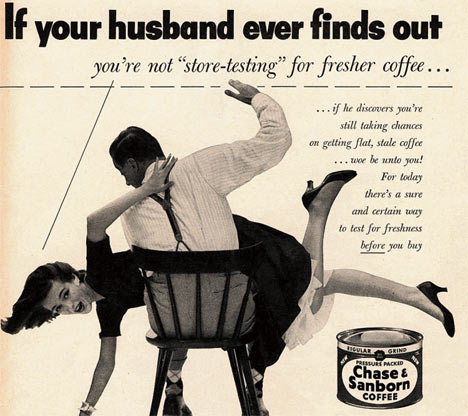
Maybe Brit Hume is thinking of the beautiful 1950s, where if your wife didn’t smell coffee before bringing it home from the supermarket, even advertisements would implore you to beat the living shit out of her until she figured it out. This was basically a cottage industry.

Just to get on the record for this one: That era was worse. Rhetorically, that was a bad time.

Not only is being an asshole an undesirable and unnecessary trait — one that's counterintuitive to getting stuff done and leading a beneficial life — it’s also not why Chris Christie is catching hell.

The media has latched onto this story — this unbelievably boring story about traffic, by the way, which is the world’s sleepiest subject — because this is the definitive role of the press in America: To out precisely this kind of corruption before somebody like this runs for president.

But while we’re at it, remember: The only thing less manly than acting like a tough guy is inquiring where all of the tough guys went, to an audience of nobody.

Tuesday, December 31, 2013

Die Like a Man: The Toxic Masculinity of "Breaking Bad"

I missed this article when it first appeared in October, but it's still a topic worth discussing now that nearly everyone has seen the Breaking Bad finale. The title of the article tells you what you are going to read, a review of the ways this epic television show portrayed a toxic form of masculinity defined by violence, power, and money.

I have no disagreements with any of that.

However, I want to suggest that there are other depictions of masculinity that are not so toxic. For much of the series, Walt and Jesse perform a strange dance of interdependence - many times Walt could have allowed Jesse to be killed and did not. And in one of the most difficult scenes early in the series, Walt allows Jesse's heroin addict girlfriend to die of asphyxiation in her sleep rather than save her, ostensibly to protect Jesse from his proclivity for addiction.

It's Jesse who represents the best of masculine values, in spite of the chaotic world in which he lives. He loves honestly and consistently. He does his best to take care of the young woman and her son that he loves and had to leave in order to protect them from the dangerous people in his life, including Walt. When he escapes in the final episode after Walt rescues him, we can imagine he will find the young boy (his mother, Jesse's love, is now dead) and raise him as his own.

Throughout the show, Jesse struggles with addiction, goes to rehab, and struggles some more with addiction. He is beaten nearly to death by Hank, Walt's brother-in-law, and then for much of the last season he is beaten and tortured.

Jesse never gives up hope. And he never loses his sense of right and wrong the way Walt does as he seeks more money, more power, and does so with violence - including putting out a hit on Jesse.

It's too simplistic to say that Breaking Bad presents and represents toxic masculinity - it reveals the full spectrum of masculinity, from tenderness to toxicity, often within the space of a single scene. 

Die Like a Man: The Toxic Masculinity of Breaking Bad

By Laura Hudson
10.05.13


Spoilers for the Breaking Bad finale follow.
“It felt right and satisfying and proper to us that he went out on his own terms; he went out like a man,” Breaking Bad creator Vince Gilligan shared in a recent podcast, describing the death of Walter White in the series finale.

If that sounds familiar, it’s because we heard Hank – his prototypically macho brother-in-law – say something very similar during Skyler’s intervention, when he defended Walt’s decision to refuse both financial charity and cancer treatment: “Maybe Walt just wants to die like a man.”

What, exactly, does it mean to be a “man”? It’s a question that sits at the dark, warped heart of the entire series and its anti-hero protagonist. A nerdy chemist whose brains haven’t earned him any power or respect from the world at large, the terminally ill Walt decides that he’s finally going to get that power and respect through whatever means necessary (and whenever possible, using science). The show doesn’t just trace Walt’s arc from Mr. Chips to Scarface, as Gilligan famously described it, or from Walt to Heisenberg; it also maps his journey from being a “pussy” to being a “man.” And while he succeeds in his goals, it’s a transformation that comes at a high price.

If we really want to look at the definition of a man within the world of Breaking Bad, it’s easiest to start by looking at what it says a man is not: the Walter White we meet in the very first episode of the show.

By some measures, Walt has had a successful life: He’s incredibly brilliant (we’re told his research contributed to a project that won a Nobel Prize, not to mention Gray Matter Industries); he’s a teacher; and most importantly, he has a loving relationship with his family, and another child on the way. But Walt still feels like a failure, particularly because he hasn’t achieved the sort of financial success he believes he deserved.

Money and masculinity are deeply linked by the series. Not only does money signify the value of the person who earns it, but also the control and self-sufficiency that comes along with it. This link between manliness, money, and power is a dangerous one for people who accept it. Walt, after all, would literally rather die than accept charity, because taking money from Gretchen and Elliott would somehow make him feel like less of a man.

Later, when Walt says that cooking meth has cost him his family, drug kingpin Gus Fring suggests that perhaps he’s looking at it the wrong way. Perhaps in alienating his family, he was actually fulfilling a more important role: “When you have children, you will always have family. They will always be your priority, your responsibility. And a man, a man provides. And he does it even when he’s not appreciated, or respected, or even loved. He simply bears up and he does it. Because he’s a man.”

This seems particularly prescient, because it’s the exact model of manhood that Walt embraces. By the time the finale rolls around, Walt is so alienated from his family that they neither want to see him nor accept his money, and so he must funnel his drug fortune to them without their knowledge, ensuring he receives no credit — no appreciation, respect or love. In Walt’s mind, the measure of a man isn’t his relationship to his family, but rather his ability to support them financially. Faced with a terminal cancer diagnosis, and the decision about what sort of legacy he truly wants to leave behind, Walt sacrifices the former for the latter. (Of course, as he admits in the final episode, it isn’t simply about the money, and it isn’t really for his family. Leaving them the money isn’t an act of altruism so much as it is an affirmation of his own power and identity: being a man who provides.)

Masculinity in Breaking Bad is a brittle thing, one so terrified of weakness that any display of vulnerability must be punished, and any slight against another man’s power answered with violence – or else perceived as a weakness. We see it in the hyper-masculine culture of both the neo-Nazis and the drug cartel, where the air is always dripping with machismo and vengeance is considered an almost sacred duty.

This model of manhood also requires control not only over your own life, but over the lives of others. Think about all of the most iconic moments of the show, the badass lines that made us want to pump our fists: “Say my name.” “I am the danger.” “I am the one who knocks.” “I won.” Every single time, it’s about dominance – not just about having power, but about taking power away from someone else.


The series begins with what seems like an odd image: a pair of pants, flying through the air. Much of what follows is about who gets to wear them. When Skyler shows up unexpectedly to threaten Jesse for supposedly selling weed to Walt, Jesse is quick to insult Walt’s manhood: “Good job wearing the pants in the family.” As time goes on, however, and Walt slowly dominates Skyler to the point that she would rather try to drown herself in a pool than speak up against him, the new status quo becomes clear: He’s wearing the pants now.

It’s also worth noting that when Hank finally discovers the truth about Walt, it’s while Hank is sitting on the toilet – literally, getting caught with his pants down. And while Walt may not have wanted Hank to die, Walt almost surely thrills a little to getting away with all his crimes under the nose of the man who used to condescend to him, enacting his own twisted version of the movie where the nerd gets one over on the jock. Once the truth is out and Hank assaults him physically, Walt fires back with a chilling warning, letting Hank knows that he is no longer a man to be trifled with: “If you don’t know who I am, then maybe the best course is to tread lightly.”

Their conflict is one of the most interesting in the show, not only because Hank serves as the uber-masculine counterpoint to Walt – the Charles Atlas to Walt’s skinny kid getting sand kicked in his eyes – but because their pissing contest in the garage isn’t just about who has more power. It’s about which brand of power is superior: brains or brawn. Ultimately, Walt doesn’t subordinate Hank by lifting weights, getting buff and beating him in a fistfight. He wins by outsmarting him, like Walt always does.

When we first meet Walt, he’s an object of ridicule to his students, trapped in a low status loop where his intellect isn’t valued and confers no power to him. The first sign that he is transforming into someone different is when he begins to push back, and lash out at the bullies around him – and of course, he does it with science. When slighted by a jerk in an expensive car, Walt manipulates the engine and causes it detonate. When a drug lord beats Jesse and takes their money, Walt shows up with an explosive designed to look like meth and blows up the building. When the feds get hold of the incriminating tapes from the superlab, Walt rigs a truck with a supermagnet, and uses it to erase the evidence from outside the building.

Walt and science, making everyone their bitch since 2008.

Which leads us to perhaps the most interesting and gender-charged word on Breaking Bad: “bitch.” Yes, yes, it’s just a word. But it’s also coded with some very gender-specific ideas about power and dominance – who has it and who takes it – that are fundamental to the conflict at the heart of Walt’s transformation.

The easiest way to deconstruct a word is to think not only about what it means but what it does, and how it does it. When you call a woman a bitch, you’re saying that she’s difficult, unaccommodating. By that standard, Walter White would be possibly the biggest bitch of all. Of course, that’s not the way it works. When we apply a female slur like “bitch” to a man, something strange happens. It stops meaning that someone is difficult or unpleasant – words that for men more easily be seen as signs of strength – and instead becomes an indicator of weakness and cowardice.

In short, calling a man a “bitch” is designed to diminish his power by comparing him to a woman. It implies that women are weaker and less powerful, and also that they are to be used and dominated. “Bitch” is linked to exploitation, to submission; if you make someone your bitch, you force them to submit to your will, in one way or another. (Despite being the most famous and popular insult of Jesse Pinkman, it’s worth noting that Jesse almost never uses the word to describe women.)

Similarly, “pussy” is a word used almost exclusively against men, for the very reason that it reduces them from masculine to feminine, from a higher level of power to a lower one. What these words tell us is that men aren’t just defined by what they are; they’re defined by what they’re not supposed to be. Over and over again, men in Breaking Bad send and receive the message that the last thing they want to be is women.

Jesse: The face of toxic masculinity

Jesse is highly aware of the very narrow cultural script for being a man, and certainly knows how to act it out. This is a guy who feels perfectly comfortable grabbing his crotch and telling Walt to “speak into the mic, bitch!” But despite his flaws and his posturing, he’s always been a good guy: compassionate, caring and even sensitive. Deep down Jesse is more creampuff than criminal, unable to take part in the sociopathy of the people around him and deeply traumatized when forced to commit violence. (Walt, meanwhile, just whistles.) We see Jesse cry on more than one occasion, and he has a particular soft spot for children, both very stereotypically feminine traits.

Needless to say, Jesse is punished for them. Expressing emotion is seen as weakness and liability, and the reason that Jesse ultimately ends up broken, enslaved and exploited by the final episode. Despite his attempts to ward off subordination with masculine posturing — like calling everyone in earshot a “bitch” — that’s exactly what he becomes. Manipulated by a long series of more powerful men, by the end of the series Jesse is shackled in a cell while the men around him watch videos of him weeping during his confession for entertainment. “Does this pussy cry through the whole thing?” asks Jack.

In many ways a boy trying to become a man, Jesse is the male face of the damage that toxic masculinity does – the cost it extracts not only from women but from men. He shatters against the rocks of the masculine ideal, and it’s doubtful he will ever be able to put himself back together. Taken to its furthest extent, this brand of masculinity punishes men for acting like Jesse, and instead produces men like Walt – and even Todd.

The irony of this perspective on masculinity is that for all its insistence on the importance of power — both having it and taking it — it often makes the people who adopt it weaker. Or as Walt Jr. says, when asked to discuss his father’s refusal to accept charity or get treatment for his cancer: “You’re a pussy.” (Of course.)

When Hank refuses to acknowledge his PTSD – or accept his physical weakness after his shooting – he prevents himself from healing both emotionally and physically. When Heisenberg’s crimes are pinned on Gale, Walt tells Hank that the other chemist wasn’t good enough to pull it off because his pride won’t allow him to give up the credit. And in the end, masculine pride is what makes Walt’s final act of revenge possible: By suggesting that Jack might have partnered with a rat — impugning his honor — Walt is able to delay his own death long enough to activate his machine gun.

Many have argued that Breaking Bad is an indictment of Walt, a critique of the male power fantasy rather than a celebration. How we respond to the ending and whether we’re still rooting for Walt in those final moments is indeed a measure of our own complicity – or Matt Zoller Seitz puts it at Vulture, “it’s an ending that leaves us alone with a mirror.”

While we may want to cheer for the character we’ve been identifying with for so long, what are we really cheering? What standards of success are we tacitly endorsing when we feel just a little bit pleased that Walt got to live — and die — “like a man”? The masculinity described in Breaking Bad is something deeply pernicious, a cultural dogma that damages, warps and limits men, isolating them from their emotions and from others. It promotes violence, retribution, and a hierarchy built upon the backs victims both male and female. Sometimes, it kills them. As Silpa Kovvari at The Atlantic observed, the masculinity of Breaking Bad represents “standards to die by, not to live by.”

Regardless of whatever personal triumph it represents to him, Walt’s is a Pyrrhic victory; he has achieved power only by stripping it from others, and perpetuating the same ruthless system that once humiliated him and treated him as worthless.

If we learned anything from the kind, brilliant Gale, it’s that the Walter White who dies at the end of the show would have had no problem shooting the Walter White of the first episode in the head if he got in his way. When the nerd who was bullied becomes the bully, should we really feel a sense of satisfaction? Or should we take a deep, soul-searching look at the sort of system that makes underdogs like Walt feel like the only way they can be men is by destroying and dominating everyone around them?

Breaking Bad was a show about a man with greatness inside him, and who believed that the only way to achieve it was by becoming the sort of man who whose greatness would be acknowledged and respected. While it’s obvious that Walt isn’t a “good” guy by the end, to many people he was still a sympathetic one. It’s far easier to high-five Walt for climbing to the top of the masculine power pyramid than to reexamine whether we should be tearing it down. Not only because of the collateral damage it does to people like Skyler and Andrea, but the damage it does to the men who attempt the climb.

While Gilligan has voiced his criticism and even contempt for the man Walt becomes on numerous occasions, the final installment is nothing if not a victory lap. Yes, Walt pays for his decisions in many ways, but it’s telling that all of those costs get extracted in the episodes preceding the finale. Taken on its own, the last episode of the show reads more like wish fulfillment than condemnation, as Walt dies surrounded not by his failures but by his triumphs, by the chemistry he loves rather than the family he sacrificed, and with a smile on his face. You can (and probably should) step back and view Walt’s final form as a critique, as something that ends in emptiness, but somehow that’s not the feeling the finale imparts. The show ends not by inviting introspection, but rather, as Gilligan said, offering satisfaction:

“As bad a guy as he has been, and as dark a series of misdeeds as he has committed, it felt right and satisfying and proper for us that he went out on his own terms. He went out like a man.”

Indeed he did.

Monday, September 30, 2013

Reviewing the Final Episode of Breaking Bad

[WARNING: Spoiler alert - if you have not seen the finale do not read this post.]

NOTE: This post also appears at my other blog, Integral Options Cafe.

As the music played and the camera panned away from Walt's body, I felt a kind of relief, as though I had been holding my breath for five seasons waiting for the conclusion that was inevitable at the beginning of the show.

And still I am haunted (as much as one can be by a television show) by the vagueness of Jesse's fate. He was, for many reasons, my favorite character on the show. Perhaps I identified with his troubled family background and retreat into drug use (all too familiar in my youth), or I saw in him the path not taken when I decided to get my act together, quit the drugs, and go back to school.

More than that, Jesse was the heart of the show in many ways. He FELT the things the happened, the killings, the manipulations, the torture. Walt was able to compartmentalize it all, rationalize it all, but not Jesse - he was tormented by the things that happened, the things he nonetheless participated in. If Walt was the brain, Jesse was the heart.

I want a whole new series, set two years after this finale, with Jesse as the central character, possibly raising Brock as a single father now that Andrea was killed. I won't get that wish. But I like to think that is the path Jesse took following his primal scream of freedom, loss, suffering, frustration, relief, and maybe even happiness that he survived.

I liked the finale. How about you?

Here are several of the multitude of morning-after evaluations of the most talked about series finale in years.

Two from Salon:

Was the “Breaking Bad” ending too neat?

The show's finale was well-received, but some critics wonder if it was true to the characters and the show 
By Prachi Gupta

Was the  

AMC’s epic crime drama “Breaking Bad” has come to its bloody end, and so far, reception from television critics has been overwhelmingly positive — good news for show creator Vince Gilligan, who had predicted that it would be “polarizing.” On “Talking Bad,” which aired immediately following the finale, Gilligan said that unlike “The Sopranos,” “Breaking Bad’s” finale episode, “Felina,” needed to tie up lose ends. “This show was intended all along to be very finite. It’s a story that starts at A and ends at Z, as it were. It’s a very closed-ended thing.” 

* * *

In the end, Walt won


Whether he was a hero or a villain, Walter White got nearly everything he ever wanted
By Neil Drumming


“When I pop the trunk, hit the deck.” — The Beatnuts, “Reign of the Tec”

Last night, we witnessed the end of AMC’s “Breaking Bad.” I’d been dreading that moment for a week and not just because I am a faithful disciple of the program and hate to see it disappear from my Sunday ritual. I was dreading the finale because I knew that as soon as the credits rolled I would have to craft some sort of coherent and cohesive reaction to something that had taken me years to consume and would likely take days if not weeks to digest.

 * * * * *

Two from Rolling Stone:

Lessons of the 'Breaking Bad' Series Finale

Five takeaways from the last episode of a modern saga


By Scott Neumyer
September 30, 2013

Breaking Bad premiered its first episode on AMC in January 2008. Five years, five seasons and 62 episodes later, one of the greatest television dramas of all time came to an end last night as Vince Gilligan's landmark series took its final, bloody bow. In a TV landscape that has, in recent years, found it difficult to satisfyingly wrap up beloved shows in a way that hits the right emotional notes while also tying up loose ends, Breaking Bad's final episode may prove to be one of the most fulfilling and well-made farewells ever. And while we're sure to keep "Felina" on our DVRs for repeated close inspection of the episode over the next few weeks, here are a few quick takeaways.

* * *

'Breaking Bad' Finale Recap: Heisenberg Certainty Principle

Like Walter White's meth, the finale's formula was flawless – but is that a good thing?

September 30, 2013 
Jesse Pinkman built the perfect box. He sawed it off, sanded it down, hammered it together, smoothed it out, and carried it away with all the pride of a first-time father. This is the fantasy-memory he retreated to when reality became too broken for him to face at last – the one time in his life when he felt he accomplished exactly what he set out to do, the one time he made everything fit.

For better or for worse, that box is Breaking Bad.


* * * * *

From Vulture:
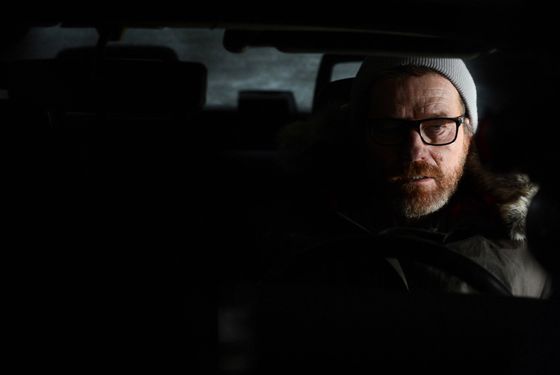
Walter White (Bryan Cranston) - Breaking Bad _ Season 5, Episode 16 - Photo Credit: Ursula Coyote/AMC
"Strike, Shadow, strike! And see his good deeds springing from the wound, to sow the world with life immortal!" – Charles Dickens, A Christmas Carol

"Hello, Carol."

That is, if I'm not mistaken, the first line in the final eight-episode stretch of Breaking Bad, uttered at the end of the prologue in "Blood Money." We heard the name of that previously unmet neighbor, Carol, again in "Felina." The episode's title is an anagram for "finale" as well as a reference to The Girl in Marty Robbins's classic "El Paso," whose lyrics are echoed in this chapter's Western-ballad-like tale of an outlaw dying an outlaw's death. In a phone conversation between Skyler and Marie about Walt's return to Albuquerque, series creator Vince Gilligan, who wrote and directed this series ender, repeated her name and even had Skyler situate her geographically. "Hello, Carol": or hello, Carol. As in A Christmas Carol.

* * * * *

From NPR:


Bryan Cranston wrapped up his run Sunday night as Walter White in Breaking Bad.
Breaking Bad creator Vince Gilligan signaled in interviews leading up to Sunday night's series finale that those who craved some redemption for Walter White were the ones most likely to leave happy.

"We feel it's a satisfying ending," Gilligan told Entertainment Weekly. "Walt ends things more or less on his own terms."

For Gilligan, those things were self-evidently connected: the satisfaction of the ending and the degree to which the terms of that ending are set by Walt. And that's probably true for broad segments of the show's legions of fans who continued to root for Walt at some elemental level, or least to root for him to become root-able again.

Friday, September 20, 2013

Masculine Identity in Breaking Bad

When Breaking Bad began its story, Walter White was a meek, under-achieving everyman who teaches high school chemistry to uninterested kids and who is diagnosed with lung cancer. We sympathize and we like him. Even when discovers a way to leave some money for his family (he assumes the cancer will kill him sooner or later) by cooking methamphetamine, we still like him because we sense a man pushed to the brink who is desperate to be a good husband and a good father, and that means, in part, taking care of his family financially.

As a fan of the show, I was horrified (for lack of better word) when Walt stood by and did nothing while Jesse’s girlfriend Jane died (end of the second season). Jesse is Walt's partner in cooking the meth, and until Walt decides to go big with his pure blue meth, Jesse handled the street side of things, setting up a ring of dealers to peddle their chemistry project.

Hank and Walt

Jesse is a former student of Walt's and for most of the now five seasons he still calls him Mr. White, and this simple act serves to support and reinforce the power differential between the two men. In large part, Walt (and later Mike) are surrogate fathers for Jesse. We learn a while into the show that Jesse comes from a well-off family where he has been the scapegoat or the exile - the one who holds most of the pain and raw emotions and often acts out as a form of rebellion against being exiled.

And Jesse is literally exiled from his family, who appear to have put him in rehab a couple of times, but have largely asked him not to come around. Which is why he looks to "Mr. White" as a kind of father figure, and also why he is the one of the two men who is capable of feelings and feels horrified by some the things they have done (especially the killing).

Gus, Jesse, Walt, Mike

I could go on and on - and one day I might. The relationships between the men on the show is interesting and worth exploration. The main dyads are Walt and Jesse, Walt and Junior (his son, Walter, Jr.), Walt and Hank (Walt's hyper-masculine, DEA agent brother-in-law), Jesse and Hank (enemies, who find common ground as the show draws to a close), and Jesse and Mike, (an enforcer for Gus, who was a major player in the drug trade, and who Walt eventually kills in his first power-grab - he also kills Mike, which is devastating to Jesse). Even the relationship between Gus and Walt is interesting for what it says about men and power.

For those who are interested in this topic, the below article was first published at Huffington Post and then at the Good Men Project. Also check out this article from NPR on Death and Walter White.

‘Breaking Bad’ and the Foolishness of Masculinity‏

September 20, 2013 by Pete Strauss


The male characters of AMC’s hit series deconstructed. Is male pride a destructive influence?

Breaking Bad is but a few episodes from completion and it’s hard to say anything about it that has not been said, but I bravely intend to do so anyhow. In recent weeks, there has been much discussion of the lack of strong female characters (which I personally think does the show a bit of a disservice), but not enough has been made of the show’s persistent and fierce criticism of masculinity that has permeated the show throughout the five-season run.

Walter White’s descent (or ascent depending on how you view it) from a justifiable anti-hero to a loathsome villain has been gradual. Vince Gilligan described the character’s transformation as “protagonist to antagonist,” and when we first meet Walter as the protagonist, he has lived a life forever repressed and stripped of the limited power available to him. His family affairs up until this point have been predominantly controlled by Skyler, he teaches chemistry to a largely indifferent group of teenagers and his brother-in-law Hank represents a cliched hyper-masculinity that serves to diminish Walt’s already lowly status further.

So when he finds an area in which he can assert dominance and power, his ego grows exponentially. The decreased empathy that we feel for Walt runs in tandem with his acts being less about selflessness or basic self-preservation and infinitely more to do with retaining power in an industry in which callousness and violence are prerequisites. Walt becomes obsessed with his manhood, even going as far as to purchase a car wash in order to spite the owner for a perceived slight that occurred sometime beforehand. The zenith of Walt’s egomania is perhaps typified with the memorable “say my name” scene. This scene exemplifies the transformation from the timidity and nervousness of Walter White into the arrogance and ruthlessness of Heisenberg; the conversion from protagonist to antagonist is complete.

Hank’s character starts life as a stereotype of masculinity, a jock. He subscribes to a largely outmoded but still prevalent criteria of what it means to be a man. At family gatherings, he frequently takes the time to emasculate Walt and assert a dominance within the family that had previously gone unchallenged in Walt’s pre-Heisenberg days. However, as the show develops, the characters develop as well, and before long, Hank becomes much more than a caricature, but rather a rounded, three-dimensional character. Perhaps more than any other character in the show, Hank is obsessed with the projection of masculinity; from his home-brewed Schraderbrau to his job at the DEA, he seeks to emanate a brashness and confidence. However, rooted in his masculinity are deep-seated insecurities and anxiety attacks that impede his judgement.

Hank’s sense of himself is almost completely based around basic tenants of what he views to be essential to being a male. His own masculinity is perhaps at its most destructive when refusing money for treatment that would enable him to walk again, which echoes Walt’s own refusal of monetary help for his cancer treatment from his former business partner. Masculinity in these instances is associated with a detrimental desire to be self-sufficient. Indeed, had Walt swallowed his pride at this early stage, then he would have saved everyone a lot of bother.

Jesse is by far the most tragic character in Breaking Bad. The initial projection of youthful overconfidence and independence gives way to a lost boy desperately in need of the father-figure that has been sorely absent in his turbulent life. At different stages of the plot, he comes to see Walt and Mike as paternal figures, but it’s his persistent reference to Walt as Mr. White that gives an indication of the perverse and manipulative relationship between the two. It is no coincidence that the character that seems most troubled with the morality of his actions is also the character that has long eschewed the facade of masculinity. Jesse is also one of the few male characters that seems willing to discuss his feelings and not act with the apparent indifference or stoicism of which Hank and Walt are both guilty.

As the series hurtles to a close, it is becoming very apparent that its creators seek to portray male pride as a destructive influence. The large yet fragile egos of all of the male characters at some point or another leads to miscalculations or seemingly needlessly vindictive acts. Time and again, the damaged pride and vanity of the male characters cause them to act without logic and—at their most destructive—extreme violence. Between Walt’s angry desire to be a “pursuer rather than pursued” and Hank’s desperate need to create the illusion of self-sufficiency, it becomes clear that masculinity is twinned with the wholly negative traits of the male characters within the show.

Originally published at The Huffington Post