First up, from Brian St. Pierre at Precision Nutrition, here is the newest thinking on workout nutrition, pre-, peri-, and post-. John Berardi, founder of Precision Nutrition, helped Biotest design some of the earliest effective post-workout nutrition products, and he has continued working in this realm ever since.
Read the whole article.Workout nutrition: What to eat before, during, and after exercise
By Brian St. Pierre
We all know that what you eat is important. But what about when you eat? Especially if you’re active?
In this article, we’ll review the evidence on workout nutrition and give you practical recommendations for what to eat before, during, and after exercise.
Quick summary
By eating a healthy, well-considered meal 1-2 hours before exercise, and another healthy, well-considered meal within 1-2 hours after exercise, most people can meet their workout nutrition needs without anything else.
In other words:
If you’re a healthy person who exercises regularly, you probably don’t need special workout nutrition strategies.
Athletes have special needs
Of course, if you’re…
Here’s a handy table that outlines our recommendations by goal and by body type.
- An endurance athlete. You train for high-level competition. You log a lot of high intensity miles each week. For you, carbohydrate and calorie needs are likely higher. You could add a protein + carbohydrate (P+C) drink during your training.
- Training as a bodybuilder. You lift weights with serious muscle growth in mind. You want to gain weight. Your protein and calorie needs are likely higher. You could also add a protein + carbohydrate (P+C) drink during your training.
- Getting ready for a fitness competition. You accumulate a lot of exercise hours. You’re trying to drop to a single-digit body fat percentage. For you, carb intake should be lower. You’d benefit from the performance-enhancing, muscle-preserving branched-chain-amino acids (BCAA) during your training.
* * * * *
Here is another opinion on Crossfit, since everyone seems to have one. This time it's Dr. Jose Antonio, a well-known research in sports science.
Read the whole article.CrossFit – My Fiddy Cents
By Jose Antonio PhD FISSN
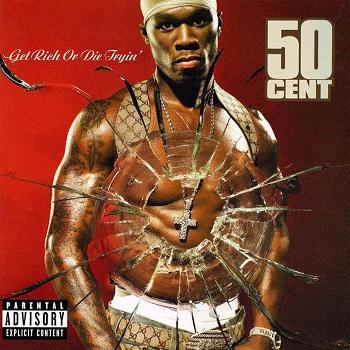
I’ve been asked so much about CrossFit that I figured I’d share my fiddy cents worth. Now mind you, naysayers have suggested to me that “if you haven’t tried CrossFit, then you shouldn’t criticize it.” WTF? That’s the dumbest thing (okay, not the dumbest, but it’s in my top 25) I’ve ever heard. So let me use that sterling logic. If I can’t run a 9.9 sec 100 meter dash, then I can’t comment on sprinting. If I haven’t actually finished a marathon in 2 hr 30 min or less, then I can’t comment on that either. So only those who climb Mt Everest have an understanding of altitude physiology? And if you want to compete in the Iditarod Trail Sled Dog Race, then I guess only dogs can comment on that. Those pre-conceived notions make about as much sense as fighting Mike Tyson with two arms tied behind your back. It’s just plain dumbass.

News Flash: if you understand the underlying physiology and biochemistry of any exercise or sport (i.e., overload, specificity, progression, etc), then you should be able to provide sound and evidence-based advice. It’s called SCIENCE.
Moving on.

* * * * *
Two articles from T-Nation this week, one is a brutal way to improve your squats, and the other is from Eric Cressey on how to build "bullet-proof" shoulders.
The 185 Rep Squat Workout
by Dennis Weis
04/10/14
Here's what you need to know...
• High-rep squats were once a staple of legendary bodybuilders. Why? Because they worked!
• High reps improve cardiovascular function, muscular bulk and definition, articulation and mobility of joints, coordination, and mental toughness.
• Leg specialization of this kind has a tremendous anabolic effect on other muscle groups as well. Bodybuilders have experienced a solid 1-inch gain on their upper arms, usually accompanied by a 10-pound muscle mass gain.

Pain. Suffering. Lactic-acid paralysis. Some workouts not only tax your muscles and trigger hypertrophy, they also challenge your mental toughness, testing your courage and even your character. This is one of those workouts.Read the whole article.
High-rep leg specialization is a badge of hardcore bodybuilding and will shred you down to the essence of who you are. My personal bests over the years were 305 x 75, 405 x 27, and 455 x 15 at a bodyweight of 212-pounds or under.
The dramatic training results of many old-school bodybuilding stars such as Steve Reeves, Larry Scott, Reg Park (who did up to 50 reps per set), John Grimek, and many others, is undeniable proof of the benefits of high reps. High reps improve cardiovascular function, respiratory efficiency, muscular bulk and definition, articulation and mobility of joints, coordination, and endurance. With high-rep back squats, your mind has to play a big part too, because they're just too damn hard to do without full-throated commitment.
* * * * *
How to Build Bulletproof Shoulders
by Eric CresseyRead the whole article. By the way, for those who remember him, that is Lee Priest in the picture above. He used to advocate 25 sets of biceps curls in magazine articles (Flex usually). Insanity for anyone not loaded to the gills on steroids and growth hormone.
04/09/14

Here's what you need to know...
• Landmine presses are an effective "middle of the road"exercise between overhead work and true horizontal pressing exercises.A lot of athletes refer to me as the "Shoulder Guy." This is probably because I've personally evaluated more than 3,000 shoulders. With that experience comes a lot of new expertise in the shoulder arena. Below, you'll find three examples of new things we're doing to keep shoulders healthy and performing at high levels.
• If you're dead-set on returning to barbell overhead pressing as you come back from a shoulder injury, test the waters with a bottoms-up kettlebell variation first.
• Athletes need to earn the right to train lats. You aren't allowed to do pull-ups or pulldowns until you pass the back-to-wall shoulder flexion test. No exceptions allowed.
• Don't train the rotator cuff to failure. Fatigue is your enemy when you're trying to establish a strong and effective rotator cuff.
* * * * *
Finally,
Read the whole article.8 Moves For A Crazy-Strong Core
by Ben Bruno Apr 09, 2014

Website: benbruno.com
Many compound lifters scoff at abdominal exercises and argue that heavy squats and deadlifts work the core sufficiently. I think this is a mistake. Sure, the core gets taxed during heavy compound movements, but it's often the hidden weak link and limiting factor that keeps lifters from reaching new PRs.
In other words, a stronger core inevitably leads to bigger lifts. If it helps, think of it this way: Squats and deadlifts work the glutes and hamstrings a hell of a lot, but most serious lifters still do supplemental posterior chain work. Why should the core be any different?
There's a catch, though. Crunches, basic planks, and side planks aren't going to provide the stimulus necessary for strong lifters to get stronger, because they're simply too easy. You need to challenge yourself with difficult, high-tension core exercises to see improvement across the board.
Here are eight demanding exercises to take both your abdominal strength and your overall strength to the next level!


