Showing posts with label fat loss. Show all posts

Sunday, November 9, 2014

Fitness Friday - Fitness News You Can Use (Sunday Edition)

Due to a browser crash (apparently Firefox is unstable with 100+ tabs open), this week's Fitness Friday is a couple of days late, but the posts are still fresh.

Lots of good stuff this week, including research on fat intake and body composition, garlic for a healthier prostate, impact of antioxidants on muscle growth, the many benefits of creatine, complexes for muscle fat loss, and how time under tension can increase strength and muscle size.

Weight gain? The kind of fat in your diet helps determine how much muscle mass you build up

ergo-log.com

If you gain weight, the kind of fat in your diet partly determines the amount of fat and the amount of muscle in your newfound kilograms. The unsaturated fatty acids in sunflower oil stimulate the growth of muscle; the saturated fatty acids in palm oil – found in many processed foods – lead to an increase the amount of fat. Researchers at the University of Uppsala in Sweden report on this in Diabetes. 

* * * * *

Garlic, prostate cancer and Death Receptor-4

ergo-log.com

Garlic, prostate cancer and Death Receptor 4

The more leeks, onions, chives or garlic that men eat, the less likely they are to develop prostate cancer. Epidemiologists at the China-Japan Friendship Hospital in Beijing discovered the prostate-cancer inhibiting properties of the Allium vegetable family when they gathered and reanalysed data from 9 big epidemiological studies. They looked at data on 132,192 men in total.

Source:
Asian Pac J Cancer Prev. 2013;14(7):4131-4.

* * * * *

Do Antioxidants Impede the Benefits of Exercise?

Breaking Muscle
Craig Marker - Contributor - Psychology and Research
More Articles from this Author


Antioxidants have been shown in multiple studies to impair the benefits of exercise. But newer theories of antioxidants propose that the reactive oxygen molecules thought to be so harmful actually set in motion important reactions in the body that make us stronger in the long run.

RELATED: Antioxidants Have Mixed Effects on Performance

* * * * *


Creatine: A Versatile Supplement

Creatine is one of the few supplements that has stood the test of time. I can recall first taking it when I was in high school over 20 years ago. I’m pretty sure it’s the most well-research supplement in the literature, with thousands upon thousands of articles on the topic. HERE is a Wikipedia link to creatine in case you’d like to learn the basics. Over the years, I’ve stumbled across some interesting research on creatine. I decided to compile some of these study abstracts together into an article. When sifting through the entire body of research, it seems that creatine does not enhance testosterone or growth hormone output (one study showed increased growth hormone, but several others have shown no effect), does not work as well in the elderly as it does with younger subjects, does not reduce muscle damage (one study showed that it did, but several others showed that it did not), does not improve the plasma-lipid ratio during aerobic training, and does not alter insulin sensitivity.
creatine
However, creatine does indeed lead to some very favorable outcomes. It’s also very safe and well-tolerated. In the abstracts below, you will note that creatine....
* * * * * 

Note: despite the title of this post, guys will definitely benefit from these complexes.

3 Complexes for Rapid Female Fat Loss 

by TC | 11/04/14

Here's what you need to know...

  • CrossFit generates a lot of controversy, but everybody agrees that it does great things for the female body. Not interested in CrossFit? Do complexes.
  • Complexes provide the same kind of exertion, the same type of fat burning and strength building, and they require very little equipment or time.
  • Complexes are simply a series of movements performed with a barbell, dumbbell(s), or kettlebell(s) where you finish each rep of one movement before quickly moving onto the next movement.
  • They can be done after your regular workout as a fat-burning, muscle-shaping finisher. However, they're so effective, many women would be better off replacing their entire workout with complexes.
CrossFit? No Thanks.

CrossFit has its fans and its detractors, but the one thing everyone seemingly agrees on is that the women who do it look pretty darn good.

As powerful a lure as looking pretty darn good might be to a lot of non-CrossFit women, the idea of joining a "box" probably freaks many of them out. It could be that you were never one to join sororities in college and the notion of all that rah-rah stuff and allegedly friendly competition makes you get frown lines around your mouth.

Maybe CrossFit comes off just a little bit too much like a cult and you're in no mood to give away all your worldly possessions and swear allegiance to its founder. Others might cringe at the idea of doing all those bunion-pounding sprints. Or, it could simply be that you don't know how to do some of those Olympic lifts.

If it's the last option, you're not alone. There are thousands of female (and male) bodybuilders and fitness enthusiasts who can't do a proper snatch, clean and jerk, or muscle-up on gymnastic rings. Either they didn't learn how do to them in gym class, no one in a commercial gym taught them, they didn't bother to seek out a qualified coach, or they were just plain klutzy and were worried about impaling innocent bystanders.

* * * * *

Create Tension, Build More Muscle 

by James Chan | 11/05/14

Here's what you need to know...

  • High mechanical tension is the primary stimulus for muscle growth. The more tension you create within a muscle, the more size you'll build.
  • The tension must be long in duration, at least 20 seconds.
  • The tension must also be high throughout the entire range of motion.
  • Set extenders accomplish all three things – they create high tension for a long time throughout the entire range of motion.
  • Set extenders are when you hit a muscle group with a series of two or more exercises done in consecutive order with little or no rest.
Why are some exercises better for developing muscular size than others? 

Ultimately, high mechanical tension is the primary stimulus for muscle growth. The more tension you can create within a muscle, the more size you'll build. To maximize muscular growth, the tension has to meet the following criteria....

Friday, August 1, 2014

Fitness Friday - Fitness News You Can Use

I missed last week, so there are a few extra articles here this week to give you something to read while you should be working. There's a lot of good stuff, so enjoy!

* * * * *

From the Cressey Performance blog, a guest post from Andrew Zomberg.

7 Strategies for Strength Training with the Minimum

Written on June 20, 2014, by Eric Cressey

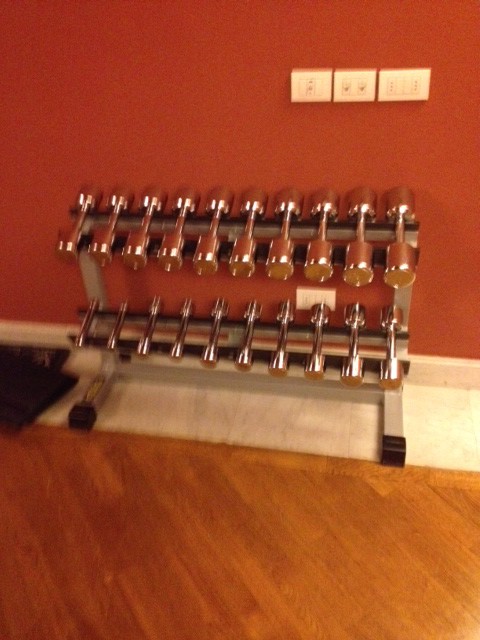
Recently, my wife and I vacationed in Italy, and fitness nuts that we are, we frequented several hotel gyms - none of which were particularly well equipped. Here's the one from hotel in Florence; yes, it was just dumbbells up to 10kg.


Immediately upon leaving, I sent an email to Cressey Performance coach Andrew Zomberg (@AndrewZomberg), who I knew was the guy to write up a post on having a great training effect without much equipment. This is what he pulled together; enjoy! -EC


Greater equipment availability generally yields greater efficiency because in order to induce structural or functional adaptations, you have to “force” the body to do so. Unfortunately, getting to a gym is not always feasible. The good news? Resistance training does not always have to depend on cable machines, power racks, and barbells.

Inaccessibility to gym equipment can be discouraging. The good news is that by creating structured programs and discovering new ways to challenge yourself with progressions, you can easily elicit a comparable training effect, just as if you were in a gym. Here are some options...
* * * * *

From Brett Contreras (the glute guy, as the picture below attests) - a collection of cool links in his "Random Thoughts" post - there is a TON of stuff there, so be sure to check it out.

Random Thoughts


How’s it going fitness peeps? I’ve got some great articles, videos, rants, and before/after pictures for you to check out. Just keeping you in the know!

Good Articles


Here are some great recent articles to read, written by various colleagues.

Scientific Articles


Chris Beardsley

Chris has written some great scientific articles in the past month. Several months ago he focused on hypertrophy, then he moved on to strength, and now he’s examining power. Here are the last six blogposts:
  1. Resistance Training and Power
  2. Ballistics and Power
  3. Injury Rates in Strength Sports
  4. Range of Motion on Strength Gains
  5. Rest Periods on Strength Gains
  6. Training to Failure on Strength Gains

Other Scientific Articles
  • We’re getting fatter due to less exercise, not more calories. See HERE.
  • Are you tired of pseudoscience? HERE are 10 claims that the authors would like to see go away forever.
  • Nick Tumminello teaches you some B.S. detection strategies HERE.
* * * * *

A few articles from T-Nation.

Total Body Strength

Loaded Isometrics for Size and Strength

by Nate Palmer | 07/24/14


Here's what you need to know...

  • Loaded isometrics teach irradiated tension, which increases strength gains in almost every exercise.
  • These moves can be done to increase either muscle size or strength, depending on the load used and the time under tension.
  • These exercises will teach you to use your entire body as one unit, test your mettle, and build strength in several key areas. Perform these after your main lift for the day, as a finisher, or just to test your willpower and see how strong you really are.
  • Keep the entire body tight to build total body strength. Keep your mental focus on the muscle you're working. Build your mental focus and you will get stronger!
Loaded isometrics can teach you a great number of things. The lesson I always learn is that I'm not as strong or as tough as I think I am. It's always a humbling experience to feel a whole new level of pain from a familiar exercise and it's a good check to see if you're actually working on your weak areas or just on the exercises you like.

Loaded isometrics are also fantastic for teaching the concept of irradiated tension, which, when properly performed, can increase strength gains in almost every exercise. The basic premise of irradiated tension is the idea that the body does not function in single units, but that the entire structure is important for even the smallest isolation move. In other words, when you create tension through your whole body, a dumbbell curl is more than just a dumbbell curl.

To create this next-level type of tension through your whole body, assume an athletic stance, feet shoulder-width apart, knees slightly bent, and starting with your core, begin to tighten your abs and then your glutes to create a foundation. Then squeeze the quads, pull the shoulder blades down and back, engage the lats, and lastly, tighten both fists.

Make sure you're taking small shallow breaths and then take inventory of your body. You should feel like an immovable object. If you need more proof that this technique will allow you to lift more, do a single arm dumbbell press with your weaker arm. Try it once without the tension, and try it once with it. Make up your own mind.

* * * * *

8 Rules for Fat Loss Training

by Andrew Heming | 07/29/14 
Here's what you need to know...
  • If you're serious about stripping off body fat, you must make time for proper nutrition. If you don't have time for this, make time.
  • Too often people trying to lose body fat just use intense metabolic resistance training and HITT (high intensity interval training). With fat loss programs, you need to switch as needed to different strategies such as metabolic resistance training, strength training, bodybuilding, and strength plus conditioning.
  • When designing a weekly plan for your training, consider how different styles of training affect different systems and thus affect recovery. You need to allow for some "space" between different kinds of stressors such as nervous system stressors, joint stressors, spinal compression, and metabolic stressors.
  • When trying to burn fat, you should rotate between different types of alactate (without lactic acid) conditioning that consists of short, intense work and lactate (produces lactic acid as a byproduct) conditioning that consists of longer duration work.
Want to lose body fat quickly and keep it off? Stop following those mainstream fitness workouts designed for your granny. Real fat loss training should build calluses on your hands. Here are eight rules for effective fat loss training, plus a sample workout plan that puts them all into action.

* * * * *

Bodybuilder Goes CrossFit

by Christian Thibaudeau | 07/25/14 
Here's what you need to know...
  • While the thinking used to be that CrossFit made guys weak, the average competitor in the CrossFit Games is very impressive.
  • Quite a few CrossFit girls have better physiques than some figure competitors, even without dieting.
  • There's something magical about being able to perform an explosive lift when you're metabolically fatigued and your heart rate is skyrocketing.
  • Doing submaximal lifting that focuses more on speed and density of work, like you do in CrossFit, is a great way to build muscle.
  • CrossFit can also get you lean fast, even with zero emphasis on nutrition.
I have a secret. I did CrossFit almost exclusively last summer. I've competed in Olympic lifting, powerlifting, and I've been a competitive bodybuilder... and now I can say I've been a CrossFitter too. I went to CrossFit Levis three times a week and then trained on my own to work on strength and my Olympic lifts. I actually kept a kind of CrossFit journal back then. So, one year later, here it is: my CrossFit diary, along with some current-day observations.
* * * * *

Here is a little science for you this week:

After resistance exercise, muscle repair and strengthening aided by stem cells


Thursday, 24 July 2014
A new study in mice reveals that mesenchymal (mezz-EN-chem-uhl) stem cells (MSCs) help rejuvenate skeletal muscle after resistance exercise.

By injecting MSCs into mouse leg muscles prior to several bouts of eccentric exercise (similar to the lengthening contractions performed during resistance training in humans that result in mild muscle damage), researchers were able to increase the rate of repair and enhance the growth and strength of those muscles in the exercising mice.

The findings, described in the journal Medicine and Science in Sports and Exercise, may one day lead to new interventions to combat age-related declines in muscle structure and function, said University of Illinois kinesiology and community health professor Marni Boppart, who led the research.
 * * * * *

This comes from Ergo-Log.com, a site that posts some interesting research summaries related to supplements, nutrition, and strength.

The joint effect of strength training and ginger supplementation

Supplementation with ginger combined with strength training reduces the damage wreaked by aggressive molecules in fat people, but the combination doesn't work better than either supplementation or training alone. Sports scientists from Iran state this in the Journal of Exercise Science & Fitness. The results of their study also suggest that ginger supplementation boosts the number of kgs muscle mass you build with strength training, and the number of kgs fat you lose as a result.

Strength training and ginger

Overweight is unhealthy for a number of reasons, and one of these is that the extra kgs of fat multiply the activity of aggressive molecules – free radicals – in the body. Physical exercise – so strength training too – reduces this, and supplementation with ginger does the same. But what does combining the two do? That's the question the researchers wanted to answer in their experiment.

Wednesday, January 1, 2014

A Healthy New Year, Part One: Creating a Weight Training Workout


Here is a little offering for the new year on how to create your own weight training workouts.

Most people don't plan to fail in their New Year's resolutions to get in shape or lose some weight, the problem is that they often fail to plan. That means having a strategy for workouts and a specific and measurable goal. This is the first part of a series designed to help you understand how to construct basic training programs.

Part Two will discuss ways to use weight training as cardio and to burn fat.


Creating a Weight Training Workout

From the following menu of exercises (not exhaustive - see Bobybuilder.com for an exhaustive list), pick one exercise from each bodypart/body region using either free weights or machines (or some of each). Ideally, there is a leg exercise, a back movement, a chest movement, a shoulder exercise, and an ab exercise or two.

If you are pressed for time, go down to three exercises: a leg movement, a press, and a pull. Ideally, you will use one of the "Big" lifts for each exercise, for example, front squat, DB bench press, and pull ups.

You can also use full-body exercises and “odd equipment” movements to add intensity.

You’ll notice that there are no direct arm exercises - they are a waste of time if fat loss and muscle are the goals. All pulling exercises work your biceps and all pushing exercises work your triceps. If you want to add arm work, please feel free to do so, but add it in as a finisher (see Part Two, when it's posted).


Free Weights

Legs
  • Static Lunges or Walking Lunges
  • Barbell Squats, DB squats, Goblet Squats, Bodyweight Squats
  • Jump Squats, or Lunge Jumps (change feet in air), with or without dumbbells
  • Barbell Deadlift, DB deadlift, Romanian deadlift, Uni-lateral Romanian deadlift, KB Deadlift (sumo style, wide stance)
  • Overhead Squat (hold barbell or DBs overhead and squat), One-Arm Overhead Squat (DB or KB)
  • Sprints, Standing Broad Jump, and Lateral Jumps (if space allows)0
  • Drag or Pull a Sled (if available) or a wheelbarrow loaded with rocks
  • Core Ball Hamstring Curls (Lying on back, place feet on the core ball, legs straight, lift butt off the floor until body is in a straight line, then roll the ball toward your butt by pulling with heals, then roll back out - that’s one rep - can also be done one leg at a time to make it harder)

Back
  • Pull-ups (bodyweight or assisted), Chin Ups (palms toward face, bodyweight, or assisted)
  • One Arm DB or KB Row, Body Row (use TRX, rings, or smith machine bar set low), Barbell Row, Double KB Row
  • DB Pullover (hold dumbbell with both hands over chest and lower behind the head as far as possible w/out pain, them using the lats pull the DB back to start position)
  • Bent laterals, Barbell/DB bent shrugs (pull shoulder blades together)
  • Shrugs, High pulls, Hang clean, Squat clean, Snatch (from floor or from hang) - Do not try Olympic lifts without some coaching on form.

Chest
  • Bench Press, DB Bench Press, Push-Ups, TRX Push-Ups, Spiderman Push-Ups, Resistance Band Standing Press (press straight out the front of the body, hands coming together slightly), Dips (weighted, bodyweight, or assisted)
  • Incline Variations of Bench Press, DB Press
  • DB Flies, Incline DB flies, TRX or Ring Flies, Resistance Band Flies
  • Pullover (works lats and pecs)

Shoulders
  • DB Overhead Press, KB Press, DB Push-Press (or one-arm variations of these)
  • Seated Barbell Press, Standing Barbell Press, Push Press
  • DB Side Laterals, DB Bent Laterals, DB Front Laterals, Combinations (of first three)
  • Upright barbell row, or Upright DB row

Abs
  • Planks, TRX or Ring Fall Outs, Side Planks, Bodysaw
  • Hand Step-Ups (step down and back up one hand at a time on a 6” riser), Plank to Push-Up Position (from push-up position, place one elbow on floor, then the other, then back up to push-up position), Push-Up Reach Under (from top of push-up position, reach one arm under and touch the opposite hip, alternate arms)
  • Reverse Crunch (lying on back, feet in the air, raise hips off the floor)
  • Inch Worm (from standing, touch the floor then walk hands out to slightly past shoulders and walk them back to feet, then stand up)
  • Back Bridges (lying on back, feet on floor w/ knees bent, lift hips off the floor and squeeze the butt muscles, then slowly lower back to floor) - Can be done one-legged, with feet on BOSU ball or with feet on Core Ball
  • Ab Wheel Roll-Outs (knees on floor, on BOSU Ball, or on stability disc) - Can also be done with a loaded barbell

Full-Body Exercises
  • Kettlebell Swing (or DB) One or Two-hand, Full-Body Extensions, Burpees (add push-up and/or jump), DB Clean and Press, DB Snatch, Battling Ropes, Medicine Ball Slams, DB Squat-Press, Spiderman Push-ups, Renegade Push-ups with Row, Snatch into uni-lateral overhead squat (DB or KB)


Machine Exercises

Legs
  • Horizontal Leg Press or Seated Leg Press (NOT 45 degree angle machines)
  • Seated, Standing, or Lying Leg Curl
  • Leg Extension (do lower weights for higher reps)

Back
  • Lat Pull-Down (wide handles or narrow v-grip), One-Arm Lat Pull (use cable handles), Straight-Arm Lat Pull (Standing, arms straight but elbows not locked, bar slightly higher than head, use upper back pull to bar to the hips while heeping arms straight, then reverse under control)
  • Seated Row, Seated Cable Row, Seated One-Arm Cable Row (use cable handles)
  • Standing Cable Row (knees soft), Standing One-Arm Cable Row (knees soft)
  • Seated pullover

Chest
  • Seated Chest Press, Incline Chest Press
  • Seated Chest Flies, Cable Chest Flies
  • Seated pullover

Shoulders
  • Seated Overhead Press, Seated Laterals


SAMPLE Work Outs:

General guidelines:
  • Use a rep range of 3 to 20 (lower reps = heavier weights; higher reps = lower weights)
  • Aim for 24-60 reps per exercise total (so 10 sets of 3 reps, 5 sets of 5 reps, or 6 sets of 6 reps, or 3 sets of 12 reps, and so on)
  • Heavier weights, lower reps (3-6) = strength; Lighter weights, medium reps (6-10) = muscle and strength; Light weights, high reps (10 or more) = muscular endurance - All are good for fat loss if rest periods are minimal
  • These suggestions apply to machine exercises, too
  • For best metabolic effect, use supersets (2 exercises) or giant sets (3 or more exercises)
  • On average, do 2 back exercises for every chest exercise
  • When supersetting, pair a push and a pull, or an upper body and lower body
  • Total workout time should be 30-45 minutes
  • If you have access, add sprints, sled pulls/pushes, sledge hammer swings, tire flipping, etc.
  • ALWAYS use good form, and if form is failing, put the weight down
Workout A:
  • DB Jump Squats
  • Unilateral Kettlebell Row
  • Spiderman Push-Ups
  • DB Squat-Press
  • Bodysaw
  • Battling Ropes
For the above workout, it might look like this if we use supersets:

A1: DB Jump Squats, 8 reps
A2: Unilateral KB row, 8 reps
> 4 sets

B1: Spiderman Push-ups, 12 reps
B2: DB Squat-Press, 12 reps
> 3 sets

C1: Bodysaw, 30 seconds
C2: Battling Ropes, 30 seconds
> 30 seconds rest, then repeat for 6 total sets

Workout B:
  • Seated Leg Press
  • Lat Pulldowns (vertical pull)
  • Incline Chest Machine
  • Seated Overhead Press
  • Seated Cable Rows (horizontal pull)
  • DB Swing
  • Ab Wheel Roll-outs
I might do this in the following way (assuming easy access to all machines, which is tough in a commercial gym):

A1: Seated Leg Press, 20 reps
A2: Lat Pulldowns, 8 reps
A3: Incline Chest Machine, 8 reps
> 3 sets - on lats and chest aim for a quick pull or push, then let the lat bar go up on a 3-5 seconds count, and the chest machine handle come down on 3-5 seconds count

B1: Seated Overhead Press, 6 reps
B2: Seated Cable Rows, 6 reps
> 5 sets

C1: DB Swing, 15 reps
C2: Ab Wheel, 12 reps
> 3 sets, minimal rest


In Part Two, I will discuss ways to make weight training into the best fat burning exercise you can do - and still build cardiovascular capacity and maintain or even build muscle.

Wednesday, October 16, 2013

What's Really in Your Pre-Workout Supplement? It Might Be Methamphetamine . . .

Over the past 15 to 25 years, the sports supplement market has exploded. When I was a wee lad, there was a limited selection of supplements, mainly dessicated liver tablets, Joe Weider Mega Mass 4000 (and other similar buckets of sugar), some amino acids, and a faith in drinking glasses of raw eggs.


Now there are supplements for everything - pre-workout, poist-workout, A.M, P.M., fat loss, energy, focus, better pumps, test boosters, anti-estrogens, and an assortment of proteins, creatine mixtures, and other crap.

One of the areas that has exploded in recent years is the pre-workout segment of the market. Back 15 years, it was common to take 20 mg ephedra, 200 mg caffeine, and 200 mg of aspirin (the ECA stack), but when the FDA banned ephedra because a handful of idiots took 3 or 4 times the recommended dosage and did not eat, then had heart attacks or fainted, the market blew up with companies trying to concoct an equally effective supplement.

During this same period, several companies promoting testosterone boosting supplements got nailed when athletes using the products failed drug tests for anabolic steroids. No wonder they worked!

The practice among the shady companies was to come out with a new product making extraordinary claims - claims any close look at the ingredients listed on the label could not support. Yet users would post rave reviews on message boards about gaining 10 lbs of muscle in just two weeks or losing 4% bodyfat in a week, or whatever. And they did - because the supplement contained banned substances. Once the hype had built around the product, the manufacturer could remove the illegal substances before the FDA caught on and still sell tons of the product to undiscerning people who believed the hype. [T-Nation did an excellent story on this back in the day.]

Turns out the practice is still occurring, with a slight tweak. Now they avoid the actually illegal substances but instead they include analogs, substances that are chemically similar but are not listed as illegal yet (this is especially true in the pro-hormone market, where many products can be found online that are actual steroids, but are not on the controlled substances lists).

A new study found that the popular pre-workout supplement Craze contains an analog of methamphetamine, you now, crystal meth. The FDA has cracked down on them, and they have removed the product from the market - Gaspari Nutrition, a company generally thought reputable, also had a product with this substance, and they have also removed it from the shelves.


Here is the summary of the research study from Medical News Today, followed by an article from USA Today about this whole mess.

Muscles and meth: Drug analog identified in 'Craze' workout supplement

An international team of scientists have identified potentially dangerous amounts of methamphetamine analog in the workout supplement Craze, a product widely sold across the U.S. and online. The study, published in Drug Testing and Analysis, was prompted by a spate of failed athletic drug tests. The results reveal the presence of methamphetamine analog N,α- DEPEA, which has not been safely tested for human consumption, in three samples.

"In recent years banned and untested drugs have been found in hundreds of dietary supplements. We began our study of Craze after several athletes failed urine drug tests because of a new methamphetamine analog," said lead author Dr. Pieter Cohen, of Harvard Medical School, U.S.A.

A workout supplement marketed as a 'performance fuel', Craze is manufactured by Driven Sports, Inc., and is sold in stores across the United States and internationally via body supplement websites.

The supplement is labeled as containing the compound N,N-diethyl-phenylethylamine (N,N-DEPEA), claiming it is derived from endangered dendrobium orchids. However, while there is no proof that this compound is found within orchids, it is also structurally similar to the methamphetamine analog N,α-diethylphenylethylamine (N,α-DEPEA), a banned substance.

The team analyzed three samples of Craze for traces of N,α-DEPEA. The first sample was brought from a mainstream retailer in the U.S., while the second and third samples were ordered from online retailers in the U.S. and Holland.

The team used ultra-high performance liquid chromatography to detect the presence of N,α-DEPEA. The first two samples were analyzed by NSF International, while the third was tested at the Netherland's National Institute for Public Health. The findings were independently corroborated by the Korean Forensic Service, which confirmed the presence of N,α-DEPEA in two further samples of Craze in a parallel investigation.

"We identified a potentially dangerous designer drug in three separate samples of this widely available dietary supplement," said Cohen. "The tests revealed quantities of N,α-DEPEA of over 20mg per serving, which strongly suggests that this is not an accidental contamination from the manufacturing process."

As a structural analog of methamphetamine, N,α-DEPEA , may have stimulant and addictive qualities; however, it has never been studied in humans and its adverse effects remain unknown.

The product labeling claims that Craze contains several organic compounds, known as phenylethylamines. However, phenylethylamines are a very broad category of chemicals which range from harmless compounds found in chocolate to synthetically produced illegal drugs.

"The phenylethylamine we identified in Craze, N,α-DEPEA, is not listed on the labeling and it has not been previously identified as a derivative of dendrobium orchids," said Cohen.

"If these findings are confirmed by regulatory authorities, the FDA (The U.S. Food and Drug Administration) must take action to warn consumers and to remove supplements containing N,α-DEPEA from sale," concluded Cohen. "Our fear is that the federal shutdown may delay this, resulting in potentially dangerous supplements remaining widely available."

Full Citation:
Pieter A. Cohen, John C. Travis, Bastiaan J. Venhuis. (2013, Oct 14), A methamphetamine analog (N,α-diethyl-phenylethylamine) identified in a mainstream dietary supplement. Drug Testing and Analysis: Article first published online: 14 OCT 2013 - DOI: 10.1002/dta.1578

Here is the USA Today article:

Maker of Craze suspends production of sports supplement

Alison Young, USA TODAY, October 15, 2013

Driven Sports, maker of the pre-workout supplement Craze, announced Tuesday that it has suspended all production and sales of the product in the wake of tests finding amphetamine-like ingredients.


(Photo: Alison Young, USA TODAY)

Story Highlights
  • Driven Sports says it stopped production of Craze "several months" ago after media reports
  • A USA TODAY investigation in July reported that tests had found amphetamine-like compounds in Craze
  • Two scientific journal articles have recently identified a methamphetamine-like compound in Craze
  • FDA and DEA officials could not be reached for comment because of the government shutdown
The maker of the popular sports supplement Craze, which scientists say contains a methamphetamine-like compound, revealed Tuesday that it has suspended all production and sales of the product.

Driven Sports, which has declined USA TODAY's repeated interview requests, posted a statement on its website disclosing that the New York-based company suspended production "several months ago while it investigated the reports in the media regarding the safety of Craze."

In July, a USA TODAY investigation revealed that a top Driven Sports official, Matt Cahill, is a convicted felon who has a history of putting risky products on the market and that tests of Craze by the U.S. Anti-Doping Agency and a lab in Sweden had found amphetamine-like compounds in the pre-workout powder.

On Monday, a team of scientists from the U.S. and the Netherlands published an article in the peer-reviewed scientific journal Drug Testing and Analysis saying they had identified an analog — or chemical cousin — of methamphetamine in samples of Craze. They warned that the chemical has never been studied in humans, that the health risks are unknown and that it is not disclosed on Craze's label.

Driven Sports says that its own studies continue to show Craze is safe "when used responsibly" and that tests it has commissioned "have consistently indicated that Craze does not contain amphetamines or controlled substances." It added "the confidence of our retailers to sell the product and our consumers to buy the product is our primary concern so we will continue the suspension of the production and sale of Craze for the foreseeable future until these issues are resolved."

Walmart.com, Bodybuilding.com and some other online retailers stopped selling Craze earlier this summer in the wake of the USA TODAY investigation, but tubs of the pre-workout powder continued to be available for purchase elsewhere online and in GNC stores. Recently, the product was no longer available on GNC.com and Driven Sports' own website listed Craze as out of stock.

GNC officials have declined to be interviewed. In a statement the retailer said: "With third party products, GNC is simply the retailer and, like all retailers, relies upon the representations and contractual warranties made by the vendor that the products are safe and compliant with all applicable laws and regulations."

In a related development this week, NSF International announced that in separate testing they found the same meth-like compound in the weight-loss supplement Detonate, which is marketed by Gaspari Nutrition. NSF International is a Michigan-based testing organization; one of its scientists co-authored Monday's journal article about Craze.

Gaspari Nutrition officials did not respond to interview requests and as of Tuesday night had removed Detonate from its website's list of products. Detonate was still listed on Gaspari's website as of Oct. 10, according to a version of the page archived by Google that day. Detonate remains available for sale online and in some stores. USA TODAY was able to purchase a bottle of Detonate on Tuesday at a Vitamin Shoppe store in Sterling, Va., but found several GNC and Vitamin Shoppe stores in the Virginia suburbs of Washington, D.C. did not have it in stock.

Driven Sports says it believes that the independent labs and scientists who have found amphetamine-like and methamphetamine-like compounds in Craze may have made a mistake in their tests. Craze's label says it contains dendrobium orchid extract, which the company says has naturally occurring phenylethylamine compounds. The statement says that these other scientists' tests may be mistaking the natural compound for amphetamine-like substances.

Driven Sports says its labs' tests indicate the presence of "n-beta DEPEA" in Craze" and that this compound is "a related but very different substance" from the n,alpha DEPEA identified in Monday's journal article. The company said it is "very difficult to distinguish these two substances unless you know precisely what you are looking for and are using the proper test methodology."

In an e-mailed statement, the journal article's authors said that "their argument holds no merit" and that Driven Sports is "just throwing out new chemical names to try to confuse." The authors said that n-beta DEPEA is "a completely different molecule" and that the differences in the molecule would have made them act differently on two of the three tests they ran.

"We stand 100% behind our results," said the research team: Pieter Cohen of Harvard Medical School; John Travis, a scientist at NSF International; and Bastiaan Venhuis of the National Institute for Public Health and the Environment in the Netherlands.

Another team of scientists based in South Korea found the same methamphetamine-like substance when they tested other samples of Craze. Their findings were published in a forensic toxicology journal in August.

Neither the Food and Drug Administration nor the Drug Enforcement Administration could be reached for comment because of the federal government shutdown.

Amy Eichner, a special advisor on supplements at the U.S. Anti-Doping Agency, noted that both Craze and Detonate have been listed on the nonprofit organization's "high risk" supplement list. "There needs to be a serious examination of the current regulations of supplements," she said, "and changes must be made in order for the FDA to have the necessary tools to effectively regulate the supplement industry."

Although dietary supplements -- such as vitamins, minerals and herbal pills -- are often marketed as health remedies, the FDA does not have the authority to require pre-market testing for safety or effectiveness as it does with medications. Supplement industry officials have said that greater enforcement, not new regulations, are what is needed to address problem products and makers.

Driven Sports and Gaspari Nutrition, the companies marketing Craze and Detonate, are both members of the American Herbal Products Association. The association did not respond to questions or an interview request from USA TODAY about the findings of meth-like compounds in the companies' products.

Saturday, April 27, 2013

Exercise Harder, Not Longer (Men's Journal)


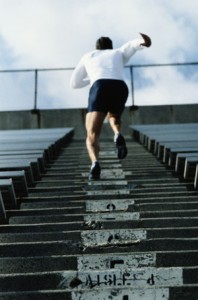
If you want to lower your triglyceride levels (a marker for increasing fat storage), interval exercise does a better job at this task than does steady-state exercise. Some of the best forms of HIIT (high-intensity interval training) are running stadiums, sprints, and jumps, but you can also utilize most cardio machines, such as spin bikes, rowers (the two best, imo), and elipticals.


Full Citation:
Trombold JR, Christmas KM, Machin DR, Kim I-Y, and Coyle EF. (2013, Mar 15). Acute High-Intensity Endurance Exercise is More Effective than Moderate-Intensity Exercise for Attenuation of Postprandial Triglyceride Elevation. Journal of Applied Physiology, 114(6):792-800. DOI: 10.​1152/​japplphysiol.​01028.​2012 [ePub Jan 31, 2013]

Exercise Harder, Not Longer

Andy Batt / Getty Images


Intense workouts are the best way to fight fat


An intense workout is the most efficient way to fight fat, according to new research. Experts have long known that regular exercise helps lower the spike in triglycerides (fat in your blood) that happens after you eat. But a study by the University of Texas suggests that interval training may lower triglyceride levels more than working out longer but not as hard. "The different intensities might modify the way fat and carbohydrates are burned or stored after exercise," says lead researcher Justin Trombold. "By exercising a bit harder, you could save time and get similar, if not better, health benefits." 
– Melaina Juntti

Follow us: @mensjournal on Twitter | MensJournal on Facebook
Here is the abstract of original research article - unfortunately, it's not open access.

Acute High-Intensity Endurance Exercise is More Effective than Moderate-Intensity Exercise for Attenuation of Postprandial Triglyceride Elevation


Justin R. Trombold Ph.D, Kevin M. Christmas, Daniel R. Machin, Il-Young Kim, and Edward F. Coyle


Abstract


Acute exercise has been shown to attenuate postprandial plasma triglyceride elevation (PPTG); however the direct contribution of exercise intensity is less well understood. The purpose of this study was to examine the effects of exercise intensity on PPTG and postprandial fat oxidation. Healthy, young men (n=6) performed one of three experimental treatments: non-exercise control (CON), moderate-intensity (MIE; 50% VO2 peak for 60 min), or isoenergetic high-intensity exercise (HIE; alternating 2 min at 25% and 2 min at 90% VO2 peak). The morning after the exercise, a standardized meal was provided (16 kcal/kg BM; 1.02 g fat/kg, 1.36 g CHO/kg, 0.31 g PRO/kg) and measurements of plasma concentrations of triglyceride (TG), glucose, insulin and β-hydroxybutyrate were made in the fasted condition and hourly for 6 h postprandial. Indirect calorimetry was used to determine fat oxidation in the fasted condition and 2, 4 and 6 h postprandial. Compared to CON, both MIE and HIE significantly attenuated PPTG (Incremental AUC) [75.2 (15.5) %, p = 0.033 and 54.9 (13.5) %, p = 0.001], with HIE also significantly lower than MIE (p = 0.03). Postprandial fat oxidation was significantly higher in MIE [83.3 (10.6) % of total energy expenditure) and HIE (89.1 (9.8) % of total] compared to CON [69.0 (16.1) % of total; p = 0.039 and; p = 0.018, respectively], with HIE significantly greater than MIE (p = 0.012). We conclude that, despite similar energy expenditure, HIE was more effective than MIE for lowering PPTG and increasing postprandial fat oxidation.

Sunday, April 21, 2013

M-​​100s — Insane 3 Minute Home Cardio Workout

April is nearly over, which means summer is just around the corner. With summer there are beaches, pool parties, and other situations where we might want to look good with our shirt off. There's not a lot of time to build new muscle, but there is plenty of time to burn off some body fat and add definition.

Adam Alexander at The Daily PT (Military.com's fitness blog), offers a quick and simple way to burn some fat in a hurry with three bodyweight exercises done for 100 reps each, with the goal of doing all of the reps within 20 minutes. It's harder than you might think.

M-​​100s — Insane 3 Minute Home Cardio Workout


ADAM ALEXANDER
MARCH 26, 2013


There is one key component to reaching your fitness goals, regardless of your current fitness levels. Consistency.

That may sound oversimplified but that doesn’t make it any less truthful. However, most people have lives that make this one component very difficult to obtain.

If you’re serious about your fitness goals, if you’d like to transform your body from the state it is in now to that of a modern day Spartan on the inside and out than what I’m about to share with you can help you achieve your goals.

Have you ever heard of the K.I.S.S. Rule?

Keep It Simple Spartan!

If you keep your workouts simple and short, than avoiding all of the pitfalls that keep you from training on a daily basis becomes a lot easier.

Bodyweight exercises are perfect for these types of workouts because they don’t require heavy or bulky equipment, you can workout where ever you are, and they can be just as effective as training in the gym.

I recently had the opportunity to talk with Mike Chang, the lead trainer at SixpackShortcuts​.com. I asked Mike if he used bodyweight exercises in their training programs.

“This might shock a lot of people, but I built most of the ripped muscles on my body from doing just simple bodyweight exercises. Don’t get me wrong, I’m not saying that lifting weights doesn’t work and I’m definitely not saying that I have great genetics. But when it comes to building muscle, and burning fat… bodyweight training is an awesome choice.

They are a perfect way to build a natural and balanced looking physique and it eliminates any excuses someone would have for not working out. Reasons such as not having time, no equipment, and no money for a gym membership simply do not apply.”

If you’ve been sitting on the fence this year, wanting to start your journey to meeting your fitness goals but you’re not sure how to get started or you’re running into some of the issues we mentioned, here is a short, intense and effective workout Mike recommends for his clients.

“If you want to build some serious muscle and burn off that stubborn belly fat, check out my M-​​100s bodyweight exercise routine that I personally used to help me build ripped muscle and get the six pack abs I’ve always wanted.”

The M-​​100s workout involves three advanced bodyweight exercises repeated in an effort to reach 100 reps.

Here are the exercises:


1. Burpees: Burpees are a full body exercise that increases strength, lean muscle mass and also burns a ton fat. This compound movement is a combination of a squat, pushup and a jump squat. Its a perfect exercise to to build endurance and a balanced physique. Some of the muscles worked during a burpee include traps, lower back, chest, shoulders, arms, legs and six pack abs.


2. Mountain Climbers: This exercise works the entire body and builds strength in the arms, shoulders, core and legs. It a very high intensity movement that really helps with building up your cardiovascular endurance and also awesome for burning belly fat. But the what mountain climbers are best know for is its effectiveness on sculpting six pack abs. With every lunge forward and lunge back, your abs are worked constantly throughout the entire exercise.


3. Double pump squat jump: This is an very advance form of the regular squat. Not only did we add in the jump, we also doubled up the squat movement. Your quads and hamstrings are your biggest muscles on the body and they also burn the most calories. By adding these additional movements, the double pump squat jump requires you to burn as much fat calories as possible with every rep.

I’d like to challenge you to start doing the M-​​100s bodyweight workout routine for one month.

The Plan: 4 workouts per week and repeat until you reach 20 minutes each session.

If you’re consistent and keep the workouts simple I’m confident you’ll see the results you’re looking for. I’m sure in a month you’ll see dramatic changes in your fitness level, and soon you’ll have the ripped athletic body you’ve always wanted.

If you want 3 more great bodyweight training routines that’ll get you ripped and muscular FAST, be sure to check out more videos with Mike Chang. This new video he just posted teaches you how to strengthen your core and get six pack abs at the same time.

Friday, October 26, 2012

Revolutionizing Fat Loss with Interval Weight Training

More and more research shows that interval training is superior to steady-state cardio for fat loss. There is also increasing evidence that doing intervals with weights can both build muscle or strength and burn body fat.

The first piece is a brief podcast from Scientific American on a new study supporting the benefits of interval training. The second piece is from Men's Health, a two-exercise interval workout that will build strength and burn fat.

A healthy body is necessary for a healthy mind and a healthy life.

Short Interval Training Burns Big Calories

Active young men burned 200 more calories on days when they did five 30-second sprints on an exercise bike. Christopher Intagliata reports.

60-Second Science

Listen to this Podcast


Listen to this Podcast

Want to exercise, but don't have enough time? Forget slogging half an hour on the treadmill. You can burn the same number of calories with a few quick sprints on an exercise bike. So says a study presented at a meeting of the American Physiological Society. [Kyle Sevits et al., A Single Session of Sprint Interval Training Increases Total Daily Energy Expenditure]
Researchers studied 10 active young men. For three days, the men ate an energy-balanced diet--meaning calories in matched calories out. Then, still on the diet, each guy spent two days living in a sealed chamber, so researchers could monitor oxygen and CO2 levels—a way of exactly calculating calories burned.
Just hanging out watching TV, the guys burned 2,200 calories a day. But they burned 200 more on days when they did five 30-second sprints on an exercise bike. Now, these were not laid-back efforts. The guys pedaled as hard as they could, and had to take four-minute rest breaks in between.
Previous studies show that sprint training like this improves the body's response to blood sugar, possibly helping to stave off diabetes. And the researchers say it may be an alternative to endurance exercise for burning calories. That is, if you don't mind really feeling the burn. —Christopher Intagliata [The above text is a transcript of this podcast.]
* * * * *

The Ultimate Two-Exercise Workout

Posted Date: June 22, 2012 

A couple of month's ago, I asked Alwyn Cosgrove, C.S.C.S.—one of the world's top trainers—to create a cutting-edge fat loss program for Men's Health. And, of course, he obliged. But a curious thing: One of the workouts in the plan featured just two exercises.

That's right: When asked to create a super-effective, calorie-torching routine, Cosgrove gave us a workout that had readers do only a dumbbell swing and a squat thrust. This confused some folks, who wondered, "How can you lose fat with just two exercises?"

Cosgrove's response: "Running is just one exercise, but no one questions that when it comes to burning fat." 

He makes a good point. And in fact, once you understand the philosophy behind Cosgrove's routine, you start to see why it works so well. But first, an explanation of the actual routine itself.

Here's how it works: You do 15 repetitions of the kettlebell swing (you can also use a dumbbell for this), followed immediately by 15 reps of the squat thrust. (See below for descriptions of both exercises.) Without resting, do 14 reps of the swing and then 14 reps of the squat thrust. Continue this pattern until you complete only one rep of each exercise. This is called a countdown workout.

Sure, that's just two exercises, but do the math: If you complete the entire routine—from 15 down to 1—you'll do 120 repetitions of each exercise. That's 240 repetitions. And these aren't just any exercises: They're movements that challenge your entire body. 


They're also done at a fast pace. On average, it'll only take you about three seconds per rep. So you'll do those 240 reps in just 12 minutes or so. That'll light your muscles on fire, and have you gasping for air (in a good way).

If you think that sounds too easy or too fast, I suggest you try it. You may find you can't even finish. But that's okay—you can just start with a lower number, like 8, and work your way up as you improve your fitness. (In fact, I recommend this strategy.) If you want an even greater challenge, you can always take a breather and repeat the routine.


Remember: Whether you're running or lifting, your muscles require energy to help you move. And this workout forces more of your muscles into action than you'd ever use while jogging for the same duration. It'll also boost your metabolism for hours after your workout.

What's more, unlike jogging, these aren't joint-pounding exercises. So this is actually a "low-impact" workout that you can do at a high intensity, making it ideal for overweight folks. The best part: You can do the routine without even leaving your house, since all you need is a single kettlebell or dumbbell.


How to do the countdown workout: Do 8 reps of the kettlebell swing, followed immediately by 8 reps of the squat thrust. Without resting, do 7 reps of the kettlebell swing, and then 7 reps of the squat thrust, and so on, until you work your way down to 1. A reminder: Don’t overdo it. If your form breaks down during the routine, just stop there. Then next time, adjust your starting point so that you can work all the way down to one without having to stop. As you become better conditioned, start with a higher number. An important note: This isn't a complete workout program, but it is a great routine that you can do almost anywhere, anytime. And it's a fantastic substitute for 15 minutes on the treadmill.

Kettlebell (or Dumbbell) Swing

Bend at your hips and hold a kettlebell (or dumbbbell) with both hands at arm’s length in front of you. Now rock back slightly and “hike” kettlebell between your legs. Then squeeze your glutes, thrust your hips forward forcefully, and swing the weight to shoulder height. Allow momentum to swing the weight—you're not trying to actively lift it with your arms. Reverse the movement, so that you swing the kettlebell between your legs again. Make sure you don't round your lower back at any time; it should stay naturally arched when you bend at your hips. Continue to swing back and forth. Watch the video below to see fitness expert David Jack show you how to do the kettlebell swing with perfect form.


Squat Thrust


Stand with your feet slightly wider than shoulder-width apart. Bending at your hips and knees, squat down and lower your body until you can place your hands on the floor. Kick your legs backward—into a pushup position—and then immediately reverse the move and quickly stand up from the squat. That's 1 rep. To make the exercise even more challenging, you can jump up from the squat instead of simply standing up quickly. Watch the video below to see strength coach David Jack do the squat thrust.


Want to learn more?  

Sunday, July 22, 2012

Sprints Can Cut Fat in Men - Better Results, Less Time


If you want to cut body fat, and long hours on the cardio machines seem more like torture than exercise, then sprints may be the answer to your needs. Apparently, this research was based on a very specific program called LifeSprints. Here is some information from their site:
LifeSprints exercise has been developed from research conducted in the Medical Faculty at the University of New South Wales. This research has shown that a 20-minute workout consisting of 8 seconds of sprint exercise, followed by 12 seconds of easy cycling, resulted in much more fat loss than 40 minutes of steady state cycling (three times a week for 15 weeks).

LifeSprints also resulted in big increases in aerobic and anaerobic fitness. Subjects showed significant decreases in fasting insulin and also increased leg and abdomen muscle mass. This form of exercise gives a more complete muscle fibre workout and the brief 20 minute sprint session makes it easier to fit into busy, modern lifestyles.
This is an easy way to begin doing interval training. When 8/12 gets easy, you can go to 10/15, then 15/25, and so on - the longer the sprint portion, the better the results. As the sprint portion gets larger, the recovery portion will need to expand - for example, my sprint program aims for 30/60.

Sprints can cut fat: study

One hour of sprinting per week can significantly cut the visceral fat in the abdomen.

The University of New South Wales
Friday, 29 June 2012

Berc_-_sprint2
Image: Berc/iStockphoto
Men can significantly cut the visceral fat in their abdomen with one hour of interval sprinting per week instead of relying on seven hours of jogging a week for a similar result, according to new Australian research.

Just 20-minutes of sprints on an exercise bike, three times a week, is all that’s required, the University of New South Wales researchers found.

“Sprints are a very time efficient form of exercise,” says Associate Professor Steve Boutcher, who led the UNSW Medicine research.

“The sprint program, LifeSprints, reduced visceral fat with seven times less exercise time and has a much greater impact on cardiovascular and metabolic health than reductions of subcutaneous fat stores in the legs and arms.”

Men who participated in the research lost two kilograms of body fat, 17 per cent of visceral fat, and put on 1.2 kilograms of muscle in their legs and trunk after the 12-week exercise bike sprints program.

“Other studies using aerobic exercise, such as continuous jogging, have found that the amount of exercise needed to produce a similar decrease in visceral fat was around seven hours per week for 14 weeks,” Professor Boutcher says.

The team of researchers has previously studied the impact of the sprinting program on women, which also showed a significant loss of body fat from stationary cycling for 20 minutes, three times a week.

LifeSprints were also good for those who wanted to boost muscle mass.

“Participation in regular aerobic exercise typically results in little or no gain in muscle mass, whereas moderately hard resistance exercise over months may increase muscle mass. The amount of LifeSprints exercise, however, needed to significantly increase muscle mass appears to be much less,” Professor Boutcher says.

The research was carried out by UNSW Medicine PhD candidate Mehrdad Heydari, with body composition assessment by Professor Judith Freund from St Vincent’s Hospital’s Nuclear Imaging Department. It was funded by Diabetes Australia and is published in the Journal of Obesity.
Editor's Note: Original news release can be found here.

Saturday, April 10, 2010

Introduction the Paleo Diet

http://4pack.files.wordpress.com/2009/04/paleo-diet.jpg

Over at Dave Munger's The Daily Monthly blog, he has been looking at ways to lose some weight in healthy and sustainable way for this month's topic.

Here is his introduction to this month's topic and an explanation of what he is looking for in this exploration:

Can you be fit and healthy without ruining your life?

Posted by Dave on April 1, 2010

I consider myself a relatively fit person. Of course, “relatively” is still relative. I try to watch what I eat. I usually exercise five days a week. Heck, I’ve even run a couple half-marathons. But the rest of my days are pretty much sedentary. I sit in a climate-controlled office staring at my computer screen. I make dinner in my highly automated kitchen. After dinner I sit in the living room sipping wine and watching TV or talking to Greta. Then I go to bed and start the process over again.

That’s not a whole lot of activity for a creature that evolved for endurance. Over a 50 mile course, a race between a man and a horse can be quite competitive. Millions of people all over the world do hard manual labor day in and day out. But millions of others don’t set aside any time for exercise. In my half-marathons, I’ve finished in the top half of competitors, so compared to a lot of people, I must be doing something right. Right? Or do my sedentary days outweigh my occasional bursts of activity? I exercise an average of 4 hours per week. That’s less than 4 percent of my total waking time. Is that really enough to stay fit?

There’s some evidence that a sedentary lifestyle increases mortality, even when exercise levels are taken into account.

I think a lot of people are in my position, living basically sedentary lives and adding in a few minutes here and there for exercise. That’s why, this month, I’m going to discuss fitness. What does it take to be a truly “fit” person? What’s the best way to maximize your health and live a long, active life?

Needless to say, there’s tons of research on the topic, often conflicting. I’ll try to negotiate through as much of it as I can while steering clear of fad diets and scams.

Meanwhile, over the course of the month I’m going to be keeping track of every calorie I consume and every moment of exercise. In fact, I’ve started up an account on a website that allows you to report your consumption to the world, so you can check up on me any time you like by following this link. The site also has an iPhone app, so in principle I should be able to keep track of this stuff wherever I go. I’ll provide updates here from time to time in case you don’t want to check a different site.

One interesting point about the MyFitnessPal site is that it assumes what you want to do is lose weight. You can’t even sign up without entering a weight-loss goal. For the most part, people feel that getting “fit” involves losing weight. I agree, I’d probably be a bit more “attractive” if I lost 20 pounds or so, but would that really make me healthier? There are places on the site to enter your weight, height, and measurements, but no spot to enter other health measures, like resting heart rate, cholesterol levels, and so on. Is this common among the many “fitness” tools out there? I may take some time this month to analyze the most popular fitness web sites and applications, to learn if any one is better than the others (I chose this one because its iPhone app is free and it received better reviews than most of the paid options).

The ultimate goal is to come up with a regimen that doesn’t sacrifice quality of life for health benefits. I’m not going to be eating spelt granola and wheatgrass, and I’m not going to work out for four hours a day. Is it possible to extend and improve your life while still actually living it? With any luck, by the end of this month, we’ll find out.
Since it is my job to do exactly this with my clients, I am very sympathetic to his project here. On the other hand, I know that need to make serious changes to our nutritional habits if we want to be healthy and maintain a healthy weight.

When Dave posted his week one update, he mentioned that we was using the guidelines from the MyFitnessPal site for his nutritional plan. That site gave his the following guidelines for weight loss:
55 percent of my calories should come from carbohydrates, 30 percent from fat, and 15 percent from protein.
My first thought was, "WOW, how out of date is that?" Forward thinking doctors have been recommending higher protein and very little to no grain diets for decades now, with The Adkins Diet, the Zone Diet, the Protein Power Diet, and the Paleo Diet being the most well-known approaches. For me, the Paleo Diet is probably the best overall approach, as long as we are not to strict and are willing to make a few modifications.

This was my comment on Dave's post:

That MyFitnessPal thing is going to make you a fat skinny guy (think Jared from the Subway commercials). You’re eating WAY too many carbs – aim for 30% protein, 40% carbs and 30% fats (only healthy fats), and when that stops working (and it will) drop to 30% carbs and go up to 35% protein and fats (the body does not need carbs to function).

Moreover, try to get most of your carbs from vegetables (higher in fiber, and so much more filling, as well as reducing blood sugar and cholesterol), berries, and starchy vegetables (pumpkin, sweet potatoes, squash) – eat whole grain breads/rice as a last resort.

Proteins should be lean: chicken, turkey, fish, and lean red meat, as well as eggs, and whey protein post-workout.

Fats should be seeds and nuts and nut-butters (walnuts, cashews, almonds, sunflower seeds, pumpkin seeds, flax seed), and olive oil or flax oil – almond oil and walnut oil are also good on salads and good for you.

If you do this with your diet, left weights a few days a week in hard, intense, but brief sessions (40-50 minutes, full-body), and get good sleep, the weight will come right off.

Dave asked for some references to look at my recommendations, and I applaud his willingness to look at other ideas about how to live and eat in a healthy way. Here is the comment I left in response:

My nutritional approach is based on Cordain’s “Paleo Diet” theory. But I am not nearly as strict as he is, recognizing that this is the 21st century and not everything we have invented is bad for us.

I also allow the occasional “cheat meal” after 2-3 weeks of initial adherence to the nutrition plan (depending on progress) – as a way to avoid “craving binges” and as a way to jump-start the metabolism, which slows down as calories are restricted (leptin is the main culprit).

One thing I didn’t mention in my approach is that once my clients reach or near their ideal weight (I’m a fitness trainer, nutritional coach), I advocate an 80/20 approach – do it right 80% of the time and the 20% of the time when you don’t is cool. That way we get to be healthy and still eat foods we like once in a while.

There are some modern conveniences that still work as part of this diet approach, so I am not a purist – 70% or more cocoa content organic dark chocolate (on oz. or so a day) is great for health, and it soothes cravings. Low-fat organic cottage cheese is a great source of non-meat protein.

In reality, however, we need to reprogram our brains to like healthier foods (lower fat and lower sugar). Evolution has programmed us to crave high energy density foods, but now that these foods are ubiquitous and not hard to come by, we have serious health issues as a result of having too much access to the foods and little emotional / cognitive control over eating them.

Peace,
Bill
________

A few studies, in no particular order:

Eric C Westman, Richard D Feinman, John C Mavropoulos, Mary C Vernon, Jeff S Volek, James A Wortman, William S Yancy and Stephen D Phinney. (2007). Low-carbohydrate nutrition and metabolism. American Journal of Clinical Nutrition, Vol. 86, No. 2, 276-284. PMID: 17684196

LA Frassetto, M Schloetter, M Mietus-Synder, RC Morris Jr and A Sebastian. (2009). Metabolic and physiologic improvements from consuming a paleolithic, hunter-gatherer type diet. European Journal of Clinical Nutrition; 1–9. doi:10.1038

Gabriela Radulian,Emilia Rusu, Andreea Dragomir, & Mihaela Posea. (2009). Metabolic effects of low glycaemic index diets. Nutr J. 2009; 8: 5. Published online 2009 January 29. doi: 10.1186/1475-2891-8-5.

Staffan Lindeberg, Loren Cordain, Boyd S. Eaton. (2003). Biological and Clinical Potential of a Palaeolithic Diet. Journal of Nutritional & Environmental Medicine, Volume 13, Issue 3 September 2003 , pages 149 – 160. DOI: 10.1080/13590840310001619397

Cordain L, Eaton SB, Sebastian A, Mann N, Lindeberg S, Watkins BA, et al. (2005). Origins and evolution of the Western diet: health implications for the 21st century. Am J Clin Nutr 81, 341–354.

Frassetto, Lynda A.; Krasnoff, Joanne B.; Mietus-Snyder, Michele; Duda, John; Painter, Patricia L. (2007). Medicine & Science in Sports & Exercise: May, Volume 39, Issue 5; p S286. doi: 10.1249/01.mss.0000274102.15465.3a (conference poster)

Alexander Leaf, and Peter C Weber. (1987). A new era for science in nutrition. Amer J Clin Nutr. 45: 1048-53.

A. Adam-Perrot, P. Clifton, F. Brouns. (2006). Low-carbohydrate diets: nutritional and physiological aspects. Obesity Reviews.
Volume 7, Issue 1 , P. 49 – 58.

Many of these articles (but now all) are available as Open Access, so if you are interested in reading them yourself you can just search for the title.

Again, Dave took my offerings seriously and reviewed some of the research in his most recent post, Glycemic What? His initial look at the material seems to confirm my point of view:

I asked Bill if he could provide any references to support his claims, and he did. So I decided to pick one of his sources at random and give it a read.

The article, led by Gabriela Radulian, reviews several studies on foods with low glycemic indexes. What’s a glycemic index? Wikipedia has a pretty good summary:

The glycemic index, glycaemic index, or GI is a measure of the effects of carbohydrates on blood sugar levels. Carbohydrates that break down quickly during digestion and release glucose rapidly into the bloodstream have a high GI; carbohydrates that break down more slowly, releasing glucose more gradually into the bloodstream, have a low GI. The concept was developed by Dr. David J. Jenkins and colleagues in 1980–1981 at the University of Toronto in their research to find out which foods were best for people with diabetes.

If carbohydrates break down more slowly, the theory goes, then you’re not hungry so quickly after you eat them. It makes some sense: If I eat a bag of potato chips (high GI), I’m hungry 15 minutes later. If I eat a bowl of oatmeal with the same number of calories, I can be satisfied for hours.

Radulian’s team, after reviewing dozens of studies, concluded that diets with low GIs can help with weight loss and also reduce blood pressure and inflammation that lead to heart disease, and also reduce insulin resistance and other factors leading to diabetes.

This particular study doesn’t discuss protein intake, another factor in the “paleo diet” Bill advocates, but another study does. I haven’t read it, but Yoni Freedhoff has. After studying hundreds of families with overweight or obesity problems, researchers found that the only diet that was successful in keeping weight off long-term was a high-protein diet. Low GIs didn’t help. So, at least for this population, GI isn’t a panacea, but Bill’s theory is holding up fairly well: Protein appears to be a key to weight loss, and low-GI foods have other benefits.
Dave concludes his post by speculating on the possible health impact of making the switch from the usual Western diet to the more healthy Paleo style diet. He raises a good point - we have no good longitudinal studies since the research into these diets is all relatively recent (for years, no one took these ideas seriously, but that is now changes).

Here are a couple of articles looking at the health benefits of eating a Paleo style style:
Metabolic and physiologic improvements from consuming a paleolithic, hunter-gatherer type diet

LA Frassetto, M Schloetter, M Mietus-Synder, RC Morris Jr and A Sebastian

Background: The contemporary American diet figures centrally in the pathogenesis of numerous chronic diseases—‘diseases of civilization’. We investigated in humans whether a diet similar to that consumed by our preagricultural hunter-gatherer ancestors (that is, a paleolithic type diet) confers health benefits.

Methods: We performed an outpatient, metabolically controlled study, in nine nonobese sedentary healthy volunteers, ensuring no weight loss by daily weight. We compared the findings when the participants consumed their usual diet with those when they consumed a paleolithic type diet. The participants consumed their usual diet for 3 days, three ramp-up diets of increasing potassium and fiber for 7 days, then a paleolithic type diet comprising lean meat, fruits, vegetables and nuts, and excluding nonpaleolithic type foods, such as cereal grains, dairy or legumes, for 10 days. Outcomes included arterial blood pressure (BP); 24-h urine sodium and potassium excretion; plasma glucose and insulin areas under the curve (AUC) during a 2 h oral glucose tolerance test (OGTT); insulin sensitivity; plasma lipid concentrations; and brachial artery reactivity in response to ischemia.

Results: Compared with the baseline (usual) diet, we observed (a) significant reductions in BP associated with improved arterial distensibility (-3.1±2.9, P=0.01 and + 0.19±0.23, P = .05); (b) significant reduction in plasma insulin vs time AUC, during the OGTT (P=0.006); and (c) large significant reductions in total cholesterol, low-density lipoproteins (LDL) and triglycerides (-0.8±0.6 (P = 0.007), -0.7±0.5 (P = 0.003) and -0.3±0.3 (P = 0.01) mmol/l respectively). In all these measured variables, either eight or all nine participants had identical directional responses when switched to paleolithic type diet, that is, near consistently improved status of circulatory, carbohydrate and lipid metabolism/physiology.

Conclusions: Even short-term consumption of a paleolithic type diet improves BP and glucose tolerance, decreases insulin secretion, increases insulin sensitivity and improves lipid profiles without weight loss in healthy sedentary humans.

European Journal of Clinical Nutrition advance online publication, 11 February 2009; doi:10.1038/ejcn.2009.4
Emphasis added in the results section - the benefits of even a short-term adoption of this nutritional approach are dramatic.

Here is another study looking at the health results. This is a review article presented as a plenary at a conference, so I am just posting one crucial idea about diet composition and what is means for health.
A new era for science in nutrition
Alexander Leaf MD, and Peter C Weber, MD

Human beings today, however, are confronted with diet-related health problems that were previously of minor importance and for which prior genetic adaptation has poorly prepared us. Chronic illness, affecting the older postreproductive persons primarily, could have had little selective influence during evolution, yet such conditions are now the major cause of morbidity and mortality in Western nations. As physicians and nutritionists we are increasingly convinced that the dietary habits adopted by Western societies over the past 100 years make an important etiologic contribution to coronary heart disease, hypertension, diabetes, and some types of cancer. These conditions have emerged as dominant health problems only in the past century and, as Eaton and Konner (5) point out, are virtually unknown among the few surviving hunter-gatherer populations whose way of life and eating habits most closely resemble those of preagricultural human beings (6). The longer life expectancy of people in industrialized countries is not the only reason that the chronic illnesses have assumed importance. The members of technologically primitive cultures who survive to the age of 60 years or more remain relatively free from these disorders, unlike their civilized counterparts (7-9).

Eaton and Konner (5) have estimated a proposed average daily macronutrient intake for late paleolithic human beings consuming a 3000 kcal diet containing 35% meat (788 g of game) and 65% vegetable (1464 g) foods with the composition shown in Table 1. Note that despite the very high animal protein intake, fat intake is low by our standards and contains a high proportion of polyunsaturated fatty acids. This important situation arises because game animals were lean and since they foraged for their food rather than being fattened with grains, as are present domesticated meat sources, little of the fat they contained was saturated and the plants they ate provided a relatively high proportion of polyunsaturated fatty acids. Furthermore-and probably highly significant-the fat of wild animals contains appreciable amounts of eicosapentaenoic acid (C20:5n-3), ‘ı-4% (5). Because the vegetable portion of the diet must also have contained appreciable amounts of n-3 polyunsaturated fatty acids including eicosapentaenoic acid (C20:5n-3), it becomes apparent that paleolithic man was ingesting an appreciable amount of these interesting n-3 fatty acids. In contemporary nutrition such quantities of n-3 fatty acids are present only in the diets of Eskimos and Japanese fishermen in whom the incidence of atherosclerosis and its most serious manifestation, coronary artery disease, is very much lower than among Western affluent societies (11, 12).
They raise a crucial point here that I have raised elsewhere - eating grass-fed beef and wild game is crucial to our health if we want to be healthy and still eat meat. The fat content makes a huge difference compared to what we get in feed-lot beef.

Finally, here is one last article that looks at higher protein diets in weight loss, which was Dave's original goal in this month's topic.

Comparison of high-fat and high-protein diets with a high-carbohydrate diet in insulin-resistant obese women.

McAuley KA, Hopkins CM, Smith KJ, McLay RT, Williams SM, Taylor RW, Mann JI.

Edgar National Centre for Diabetes Research, Medical and Surgical Sciences, University of Otago, PO Box 56, Dunedin, New Zealand. kirsten.mcauley@stonebow.otago.ac.nz

Erratum in:

  • Diabetologia. 2005 May;48(5):1033.

Comment in:

Abstract

AIMS/HYPOTHESIS: A diet low in saturated fatty acids and rich in wholegrains, vegetables and fruit is recommended in order to reduce the risk of obesity, cardiovascular disease and type 2 diabetes mellitus. However there is widespread interest in high-fat ("Atkins Diet") and high-protein ("Zone Diet") alternatives to the conventional high-carbohydrate, high-fibre approach. We report on a randomised trial that compared these two alternative approaches with a conventional diet in overweight insulin-resistant women. METHODS: Ninety-six normoglycaemic, insulin-resistant women (BMI >27 kg/m(2)) were randomised to one of three dietary interventions: a high-carbohydrate, high-fibre (HC) diet, the high-fat (HF) Atkins Diet, or the high-protein (HP) Zone Diet. The experimental approach was designed to mimic what might be achieved in clinical practice: the recommendations involved advice concerning food choices and were not prescriptive in terms of total energy. There were supervised weight loss and weight maintenance phases (8 weeks each), but there was no contact between the research team and the participants during the final 8 weeks of the study. Outcome was assessed in terms of body composition and indicators of cardiovascular and diabetes risk. RESULTS: Body weight, waist circumference, triglycerides and insulin levels decreased with all three diets but, apart from insulin, the reductions were significantly greater in the HF and HP groups than in the HC group. These observations suggest that the popular diets reduced insulin resistance to a greater extent than the standard dietary advice did. When compared with the HC diet, the HF and HP diets were shown to produce significantly (p<0.01) p="0.02).">10% increase in LDL cholesterol, whereas this occurred in only 13% of subjects on the HC diet and 3% of those on the HP diet. CONCLUSIONS/INTERPRETATION: In routine practice a reduced-carbohydrate, higher protein diet may be the most appropriate overall approach to reducing the risk of cardiovascular disease and type 2 diabetes. To achieve similar benefits on a HC diet, it may be necessary to increase fibre-rich wholegrains, legumes, vegetables and fruits, and to reduce saturated fatty acids to a greater extent than appears to be achieved by implementing current guidelines. The HF approach appears successful for weight loss in the short term, but lipid levels should be monitored. The potential deleterious effects of the diet in the long term remain a concern.

PMID: 15616799 [PubMed - indexed for MEDLINE]
There you have it - a basic introduction to eating healthier with a Paleo style diet consisting of higher protein, healthy fats, fresh fruits and vegetables, and little to do no dairy or grains.