Being Gay in Iran
Coming Out in a Country Where That Can Get You Killed, and the TV Documentary That Outed Me to the World
by Farhad Dolatizadeh
May 28, 2014
Photos by Ethan Folk
 I RAN FROM IRAN - And found myself in this town in Turkey, where I didn’t know a soul. I was one of the lucky ones.
I'm 16.
"May I ask you something personal?"
I know what's coming.
I look at my aunt as she takes her time to assemble the correct words. She is a tiny, sweet woman wearing a loosely draped head scarf, staring at me with shining dark-brown eyes. I love her more dearly than anything in the world. Of course I will tell her the truth. I can't think of a reason to hide from her. It isn't as if she might murder me or run around spreading my secret. She's not one of those closed-minded, brainwashed people who would automatically judge me. She spent most of her life outside of Iran, living and working as an architect in Norway and Germany. If there is anyone out there who would understand me, it's her.
"Are you gay, Feri Kitty?" she asks.
My name is Farhad, but since I was little, my aunt has affectionately called me Feri Kitty, referring to my soft spot for kittens.
"You call me Feri Kitty and expect me to be who? Robocop?" I snap. The bitch inside me has been growing day by day.
She just gazes at me. Eventually she smiles and wraps me in her arms. "It's okay. There's no need to be aggressive... everything is going to be okay."
I weep into her shoulder and can't respond.
This is my first coming out.
I'm 17.
I'm lying on my bed, waiting for sleep to take me, when my brother stirs. He and I are sharing a room, and his bed is only a few meters away. He is four years older than I am, but I have always regarded myself as the more mature one.
It's been six months since the conversation with my aunt.
I can't make out my brother's features, but I hear his voice, husky from sleep: "Farhad, who is this new guy you are hanging out with so much? He seems older than you! Is he from your school?"
I am silent for a beat. "You mean Darius?"
"Yes."
"Yep. He's my friend. Nope. Not from school," I say, trying my best to indicate that I am on the verge of sleep and the conversation is over.
But he barges on: "Where do you know him from, then?"
"Why do you care, you dumbass? Go bug your girlfriend and leave my life to me," I say in my mind. But to my brother, I say: "I met him at a cafe."
Another pause, and then, without a trace of emotion, my brother says: "He is handsome. Is he your boyfriend?"
I am shocked. Is this really my brother? Has he been possessed by some kind of demon? I quickly assess that, although he is not the smartest or even the most open-minded person in the world, he is a good brother, and he has always been there when I've needed him. I can trust him with the truth.
I still can't see his face in the dark, so I'm unable to catch his reaction when I reply, "Yes. He is."
Another heavy pause.
"So, does that mean that you are gay?"
Whoa. "Gay"? Really? I am shocked that he has used the English term. I thought that my brother, like most Iranians, would know only the slang term "sissy." Maybe he's not as stupid as I thought.
"Yes?" I blurt, stunned.
I wait for him to respond, but nothing comes. I can't believe it—he just rolls over and goes back to sleep. For fuck's sake, you just found out that your younger brother is gay! You can't just nod off and leave it like that! You should say something, you need to say something!
What a dumbass.
Five minutes later, I hear another rustle and see his silhouette shift as he turns back to me.
"Farhad, does that mean that I'm not going to be an uncle?"
Is he trying to act cool? Is that really his primary concern? "I... really don't know. Maybe someday?"
"Okay," he says, and goes quiet again, leaving me with a head full of racing thoughts.
I'm 18.
I'm sitting in the car with my dad. We are driving to his factory, when he suddenly asks, "Have you decided what you are going to do about your military service?"
"I'm not going," I say, trying to avoid his searching look.
"But every single man must go into the military, unless they can prove some handicap..."
My father is in his 40s and has worked hard all his life. I see the deep lines of experience on his face. Maybe this evidence of wisdom is why I feel so ready to expose myself to him. I don't know. But I have a feeling that he will accept me.
"I know the rules, Father. I'm not going. I can't go because of the rule prohibiting homosexuals from serving in the military," I say. Despite my determination, I am unable to keep my voice completely stable.
"But... are you gay?" he says, eyes fixed straight ahead—on the road.
"Yes," I reply. This time, with confidence.
The car fills with silence. After listening to my heart pound and the sounds of the road, I find the courage to say, "Well... aren't you going to say anything?"
Still staring at the road, my father begins to speak. "We are not stupid, Farhad. We are your parents. I knew the moment I laid eyes on you. I didn't want to believe it, but I knew."
Perhaps I have misjudged my father. I feel my mouth go dry and I begin to choke up.
"Farhad, I didn't want to believe it, not because I'm ashamed, but because I know how hard it is for homosexuals in this country. I don't want my baby boy to be killed by the government just because of his sexual preference. I want the best life for you. I want to send you away. To a safer country. To somewhere no one can hurt you because of the kind of person you love."
As afraid as I am, I understand him completely. I am overwhelmed by feelings of relief and love. I am so fortunate to have such a father, but feel so cursed to know that I will eventually be banished from my homeland. I'll have to leave Iran eventually. No gay is safe in this country. I heard this from my aunt, years ago, and now I've heard it from my father. I know his intentions are good.
I don't want to break down in front of my father, so I simply smile and try to keep it lighthearted. "Let's just deal with the military duty first."
He returns my smile, and it lingers as he turns his attention back to the road.
"Thank you for loving me, Dad."
"Always, Son. Always."
I'm 20.
Of course, my father is the one to open the discussion with my mother. He knows exactly how to reason with her, and after three days of tears and talking, she manages to calm down.
In many ways, my mom is my best friend now. I can tell her anything. She loves my boyfriend, Darius, and she is constantly urging me to bring him home for dinner with the family. She is still squeamish about the topic of sex, but I think this is normal for mothers regardless of their son's orientation.
I'm sitting in the living room with Darius, and the house is empty. I'm kissing him, as I do whenever we have the luxury of being alone together. We are in love, and in these moments, I feel absolute bliss and comfort.
I am thinking about the flavor of his mouth, when the ringing of the telephone pulls me out of the moment.
I reluctantly break away and answer. I recognize my cousin's familiar voice, but I can tell immediately that something is very, very wrong.
"Farhad. I saw you on the TV," he declares. Coldly.
What? TV? My mind races, but I cannot imagine what he could be referring to. Before I can respond or even question him, he says, "I know what you are. I know what you are and I don't want to see you anymore."
The line clicks dead.
I'm frozen. I am unable to speak, and Darius grows worried as my face turns pale. I fumble for the remote control, and the TV comes to life. I flip through the channels until I find something unusual. They are showing a documentary about gay people in Iran and letting people around the world know how hard and dangerous it is for gays in this country. The film was made by a Canadian television channel, and it sure seems like they care a lot about the well-being of gays in Iran.
Darius and I are shocked that a documentary on such a subject is being aired. Now some people are talking about their problems in front of the camera, but their faces are blurred. It is interesting, I suppose, but what does it have to do with me? In less than a minute, I have my answer. I begin to feel dread when the camera pans across a restaurant I know well. It is the spot where gay people in Tehran gather every Tuesday. Where I go most Tuesdays. Now the camera is inside the restaurant, and they are showing us. They are showing our faces. They are showing my face. It is obviously shot with a concealed camera. A long lens, zoomed in—my face filling the screen for several seconds. Casually chatting, completely unaware. They are even sure to identify the restaurant by name. And we don't know we are being filmed. How nice of them: They want to let the world know how miserable gay people are in Iran and how the government kills them because of their orientation, and they come to our community and expose us to everyone? To the hateful government? To our neighbors, friends, and families?
I watch the film until the end. My face was clearly shown, yet I had no clue of the film's existence until a few minutes ago. I'm shocked. I'm scared. I don't know what to do. Darius and I sit speechless. According to the documentary, the producers got "group consent," but I never consented to this.
I pick the phone up and call my aunt in Norway. She answers, and I blurt out, "Auntie, I just came out to the world..."
 A window display IN ANKARA Where I lived as a refugee after a TV documentary aired undercover footage of my face.
I'm 24.
I've been in Ankara, Turkey, for three months now, and I sit in a small, nearly empty concrete room. Across from me sits a blue-eyed man with slicked-back ginger hair and a bright beard. The table in front of me is bare except for a computer and some loose notes. I can't shake the impression that the man is some sort of church official—a pastor, perhaps. In reality, he is a representative of the United Nations High Commissioner for Refugees (UNHCR), who handles amnesty requests. I prefer not to go into detail so that other refugees who are going to leave Iran won't face any extra problems, but I have escaped from Iran.
"How do you feel when you see yourself in that documentary?" he asks.
Angry. Upset. Desperate.
Angry at all of the people who mocked me and looked down on me. Angry at the president, who went on national television and stated that there were no homosexuals in Iran. Angry at the TV channel that wasted an opportunity to put the spotlight on a reprehensible government, and instead put the spotlight on people like me. Angry at the idiocy that allowed them to describe how Iranian gays are facing execution, and in the next moment broadcast images of dozens of closeted homosexuals. Angry at the hurry, the oversight, the ignorance—whatever allowed such an obvious and dangerous mistake to happen. I was angry at God, to create me as I was—a gay man in a country that did not accept me.
And yes, upset. Upset about the blind submission of millions to an intolerant brand of religion that states that homosexuality is an unforgivable sin. Upset about the hypocrisy and inconsistent interpretations of Islam. Upset about the Iranian parents who have murdered their children just for being gay. Upset and confused by a society in which murdering your own child is less of a crime than loving someone.
And yes, desperate. Desperate to be loved again by the ones who decided I was inhuman once they discovered that I was gay. Desperate to get far away from the situation that had developed since the airing of the documentary. Desperate to get back the four years of my life spent defending myself from hatred and mockery, perpetually in fear of the government. Desperate to find shelter. To find a safe place. A place where I needn't fear for my life. I lived for four years in Iran after that documentary aired, four years of living in protective mode: I didn't go to that restaurant anymore, I lost friends, I was forced to leave university, and I had to begin a new life with people who didn't know me. Finally, I had an opportunity to flee to Turkey, and I took it.
So yes, I am angry and upset and desperate. I look at the guy in front of me. He seems to be a nice guy. He is working for UNHCR. I can trust him. He is smiling at me and waiting for my answer. I try my best to give him an answer, but I burst into tears instead.
He doesn't reply. He nods and taps a few notes into his keyboard. I try to stifle my tears and give him an answer. Then I think about all of the other refugees in Turkey. About their miserable lives. How they are relegated to small villages, which they cannot leave. How they aren't allowed to work and have no legal means to support themselves. They have no identity and no nationality. They are just beings—walking around, waiting for their time to come, waiting to know their destiny. Just like me.
Then I think about the others in the documentary who weren't even able to escape as far as Turkey.
And I burst into tears again.
 NOT SO WELCOME - The UN pondered my application for amnesty for two years, and Canada took another year to decide after that.
I'm 27.
I'm in my room. My last roommate moved out five months ago, so the house is silent. His asylum request to the US was granted, but I remain here in our small house. I sit on my bed, staring at my computer screen and trying to pass the time.
It's been almost three years since I filed for asylum, and I'm still here in the Turkish village. I'm terribly depressed. I feel lonely and unspeakably weary from constant harassment. The villagers look at me like some sort of strange, alien object. The police have accused me of being HIV-positive and demanded that I submit to blood tests. I knew this was an illegal request, and when I refused, they told me to stay away from people, and that I was a threat to the community. At our weekly "check-in" today, the police officer wouldn't even let me in his room. He told me that he wouldn't shake my hand because he is scared of contracting AIDS.
I miss so many of the friends that I've made in these three years. I've met many other refugees from Iran and seen them all come and go—off to their new, safe homes. But I remain. Alone. Does anyone think of me? Does the UNHCR or the Canadian embassy know what my life is like in here? How can they expect me to survive in a place where I'm not even allowed to work for three years? Don't they feel some sort of responsibility for me, since it was a Canadian television company that made the documentary? Once the UN finally completed the two-year processing of my application, why has it taken the Canadian embassy an additional year to decide if I deserve to live in their country? Why, when every other case has been decided in a matter of months? I wonder what I have done wrong to deserve this.
I have thought of suicide. I have thought of different ways to end this miserable waiting. But there is a hope in the name "Canada"—it conjures imagery in my mind that is both vivid and uncertain. A better life. Freedom. Safety in a distant northern land.
But I am tired. I'm so tired of waiting for their call. I am sick of the endless, numbing disappointment. It's simply not fair.
Then my cell phone rings.
"Hello. Am I speaking to Farhad?" asks the voice from the other end.
"Yes, I am Farhad!" I rush to spit out the words. No matter how many times the phone has rung, or the mail has arrived, or I have felt hope—I still can't suppress the thrill when I think something is about to happen. No matter how many times that hope has been crushed or I have been disappointed, I still can't completely eliminate the excitement. I am aware of all of this as I state my name. My hope begins to fade as the line is briefly silent. I prepare myself for the letdown—I've gotten good at this.
Then the voice says, "Hi, Farhad. This is Mr. [redacted] from the Canadian embassy. Are you available tomorrow to come to the embassy? We will need your passport to issue you the visa."
~ Farhad Dolatizadeh's name has been changed to protect his identity. He is now living safely in Canada.
Showing posts with label coming out. Show all posts
Showing posts with label coming out. Show all posts
Tuesday, August 12, 2014
Being Gay in Iran - Coming Out in a Country Where That Can Get You Killed
From The Stranger, Seattle's real alternative weekly, this is a tender and harrowing first-person account of coming out and being outed in Iran, a country where being gay can get you killed.


Thursday, April 10, 2014
Why Derrick Gordon Coming Out is Important, and a Story
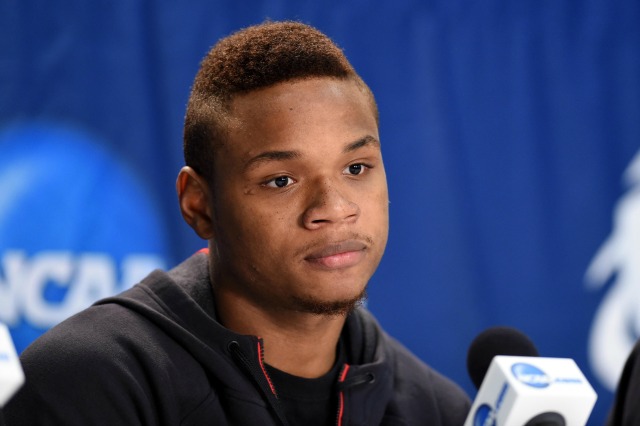
Jason Collins was the first active NBA player to come out; Michael Sam was the first Division I NCAA football player to come out; and now Derrick Gordon is the first Division I NCAA men's basketball player to come up.
Some people seem to think it's no big deal, and it shouldn't be - no one should give a rat's ass about anyone else's sexuality if the other person is not being evangelical. But that's not the world we live in, and that is certainly not the world of male sports. So, kudos to Mr. Gordon for showing other young men it is okay to be yourself - gay, straight, or somewhere in between.
Why Derrick Gordon Coming Out is Important, and a Story
April 9, 2014
Derrick Gordon first realized he was gay in middle school but never told anybody until earlier this month. He's now 22 years old. So the UMass guard has been hiding things from his family and friends for nearly a decade, and, by Gordon's own admission, he didn't figure he'd publicly disclose his sexual orientation for at least another three or four years.
But then NBA veteran Jason Collins came out last year.
And ...
"When he came out I wanted to come out the next day," Gordon said in an interview conducted by Kate Fagan that was broadcast nationally on Wednesday. "It was a relief."
And that, quite simply, is why Gordon's story is a huge and important story.
Because his story might help somebody else the way Collins' story helped him.
"[Collins] was getting subbed into [an NBA] game [as an openly gay man], and everybody stood up and started clapping," Gordon said. "And I was visualizing ... that being me. ... I just kept replaying it over and over again. ... And that definitely put a huge smile on my face."
Over the past year we've now had three examples of prominent male athletes publicly acknowledging that they're gay, and each time somebody on Twitter or a message board has been compelled to ask why this is a story. It happened when Collins came out. It happened again when Missouri football player Michael Sam came out. It happened again early Wednesday, when Gordon, a starter on the UMass team that made this season's NCAA Tournament, came out, and I get so frustrated every time somebody asks this question.
Are you one of those people?
Are you somebody who asks why this is a story?UMass guard Derrick Gordon's decision to come out is important beyond college basketball. (USATSI)
If so, take eight minutes, watch this interview, and then, presumably, you'll never ask that question again because what you'll realize is that Gordon wouldn't be able to live honestly if not for Collins' story first being a story. There had never been an openly gay man in the NBA until Collins just like there had never been an openly gay man in Division I football until Sam just like there had never been an openly gay man in Division I basketball until Gordon, and it's naive to think one very public announcement didn't help trigger the next. In fact, Gordon was quite clear in stating that without Collins' story he'd almost certainly still be in the closet, and he was quite clear in stating that being in the closet was an awful way to live.
"I want to be myself," Gordon said. "I don't want to be somebody that I'm not."
Now, Gordon can be himself.
He doesn't have to hide anything anymore.
And the only reason Gordon ever felt comfortable enough to take this step is because he saw the way Collins and Sam have been treated by teammates and fans in recent months, and the only reason he saw that is because their stories were stories. This is still all so new, you know? So it doesn't matter whether you care or do not care if a player is gay. What matters is that there's another young gay athlete somewhere who will feel empowered to come out because of Gordon's story the same way Gordon was empowered by Collins' story.
And I'll take it a step farther.
Is it foolish to think that Gordon's teammates at UMass are more accepting of the news than they might've otherwise been because of the way they saw the Brooklyn Nets accept Collins? Is it farfetched to suggest that the way future Hall of Famers Kevin Garnett and Paul Pierce publicly handled that situation helped the UMass players better handle this situation?
I don't think it is.
I think all of these stories are connected.
And that's why anybody suggesting these stories aren't stories is wildly missing the point. Again, Collins' story helped pave the way for Sam's story, and those stories helped pave the way for Gordon's story. Across the board, those three men now say they're happier than they've ever been, and watching them be accepted will undoubtedly help somebody else, which is why these important stories deserve every headline they can possibly get.
~ Gary Parrish is a senior college basketball columnist for CBSSports.com and frequent contributor to the CBS Sports Network. The Mississippi native also hosts the highest-rated sports talk radio show -- The Gary Parrish Show -- in the history of Memphis. He lives in that area with his wife, two children and a dog.

Tuesday, April 30, 2013
Jason Collins - "I'm a 34-year-old NBA center. I'm black. And I'm gay"

Collins (right) guarding Shaq
It was going to happen at some point, and now it has - a male athlete in one of the four big team sports (MLB, NFL, NBA, NHL) has come out and will go forward living as an openly gay man. Congratulations to Jason Collins for choosing to be himself, and feeling comfortable enough to do so.
But Collins is 34 years old, and he is a perennial backup center in a sport where big men are often done at his age - and he is free agent. The big question is whether or not he will be on an NBA roster next season. If not, his coming out will still be a good thing, but we not yet know how an openly gay athlete will be accepted in the locker room.
Here is some of the Sports Illustrated article:
By its nature, my double life has kept me from getting close to any of my teammates. Early in my career I worked hard at acting straight, but as I got more comfortable in my straight mask it required less effort. In recent days, though, little has separated "mask on, mask off." Personally, I don't like to dwell in someone else's private life, and I hope players and coaches show me the same respect. When I'm with my team I'm all about working hard and winning games. A good teammate supports you no matter what.At The Atlantic, there is a good response to this story.
I've been asked how other players will respond to my announcement. The simple answer is, I have no idea. I'm a pragmatist. I hope for the best, but plan for the worst. The biggest concern seems to be that gay players will behave unprofessionally in the locker room. Believe me, I've taken plenty of showers in 12 seasons. My behavior wasn't an issue before, and it won't be one now. My conduct won't change. I still abide by the adage, "What happens in the locker room stays in the locker room." I'm still a model of discretion.
As I write this, I haven't come out to anyone in the NBA. I'm not privy to what other players say about me. Maybe Mike Miller, my old teammate in Memphis, will recall the time I dropped by his house in Florida and say, "I enjoyed being his teammate, and I sold him a dog." I hope players swap stories like that. Maybe they'll talk about my character and what kind of person I am.
As far as the reaction of fans, I don't mind if they heckle me. I've been booed before. There have been times when I've wanted to boo myself. But a lot of ill feelings can be cured by winning.
I'm a veteran, and I've earned the right to be heard. I'll lead by example and show that gay players are no different from straight ones. I'm not the loudest person in the room, but I'll speak up when something isn't right. And try to make everyone laugh.
I've never sought the spotlight. Though I'm coming out to the world, I intend to guard my privacy. I'm making this blanket statement in part to keep rumors and misunderstandings at bay. I hope fans will respect me for raising my hand. And I hope teammates will remember that I've never been an in-your-face kind of guy. All you need to know is that I'm single. I see no need to delve into specifics.
I've been asked how other players will respond to my announcement. The simple answer is, I have no idea. I'm a pragmatist. I hope for the best, but plan for the worst.
Look at what happened in the military when the Don't Ask, Don't Tell policy was repealed. Critics of the repeal were sure that out military members would devastate morale and destroy civilization. But a new study conducted by scholars from every branch of the armed forces except the Coast Guard concluded that "cohesion did not decline after the new policy of open service was put into place. In fact, greater openness and honesty resulting from repeal seem to have promoted increased understanding, respect and acceptance."
The same goes for sports. Doc Rivers, my coach on the Celtics, says, "If you want to go quickly, go by yourself -- if you want to go farther, go in a group." I want people to pull together and push ahead.
Openness may not completely disarm prejudice, but it's a good place to start. It all comes down to education. I'll sit down with any player who's uneasy about my coming out. Being gay is not a choice. This is the tough road and at times the lonely road. Former players like Tim Hardaway, who said "I hate gay people" (and then became a supporter of gay rights), fuel homophobia. Tim is an adult. He's entitled to his opinion. God bless America. Still, if I'm up against an intolerant player, I'll set a pretty hard pick on him. And then move on.
The most you can do is stand up for what you believe in. I'm much happier since coming out to my friends and family. Being genuine and honest makes me happy.
Why Jason Collins's Coming Out Is Such a Big Deal
Everyone's been waiting for a major male sports star to make a move like this. Here's why it's so much harder for men than for women.
APR 29 2013Washington Wizards' Jason Collins (L) goes to the basket against Chicago Bulls' Taj Gibson during the first half of their NBA basketball game in Chicago, April 17, 2013. (Jim Young/Reuters)
Female professional athletes are already gender non-conforming. Male ones are still worshiped as exemplars of traditional masculinity. Extremely sporty women have to fight stereotyping that they are lesbians and ignore all manner of unkind commentary about how they are mannish, while sporty men are seen as participating in a form of the masculine ideal.
This is the backdrop to why N.B.A. center Jason Collins' revelations in a Sport Illustrated piece today that he is gay are such a big deal -- and why it is that similar recent revelations from the this year's W.N.B.A. Number 1 draft pickBrittney Griner were greeted in mid-April with a collective yawn.
Women who play professional sports are grown-up versions of what we still to this day call "tomboys," a linguistic relic of our cognitive inability to see outdoorsy, competitive, rough-and-tumble behavior as inherently and naturally female, as well as male. Remember when people were speculating that then Supreme Court-nominee Elena Kagan was a lesbian just because she played on a softball team? "Sorry, softball=lesbian," wrote Brian Moylan in Gawker. (Yeah, that still happens.) Team sports have about them something martial or manly, which means that female team sports are often seen as butch activities. Meanwhile, men who participate in activities like gymnastics or ice skating are often stereotyped as gay; even though they are athletes, they are taking part in something more feminine. As King Kaufman observed in Salon in 2002: "The average American sports fan, watching the Olympic men's figure skating competition, probably figured that most of the contestants were gay." He then went on to debunk this assumption in a conversation with U.S. Olympic medalist Rudy Galindo, "the first actively competing figure skater who was out as being gay."
There have been many female athletes who have come out of the closet and been pioneers. Tennis great Billie Jean King. Tennis player Martina Navratilova. WNBA player Sheryl Swoopes, the "female Michael Jordan." Soccer midfielderMegan Rapinoe. Most recently, we had the example of college basketball phenom Griner. Her casual mention earlier this year that she's gay was greeted with aNew York Times story headlined, "Female Star Comes Out as Gay, and Sports World Shrugs." Why was her declaration seen as not such a big deal? Because she was female, according to the paper of record.
"It was an odd juxtaposition," the paper's Sam Borden wrote, "as there is increased speculation about whether a male athlete -- any male athlete -- will come out while still playing a major professional team sport, one of the best female athletes in the history of team sports comes out, and the reaction is roughly equivalent to what one might see when a baseball manager reveals his starting rotation for a three-game series in July."
The reality is that by becoming a top-ranking female basketball player, Griner had already done hard work violating gender norms and was already seen as a gender outlier. "In sports right now, there are two different stereotypes -- that there are no gay male athletes, and every female athlete is a lesbian," Patrick Burke of the gay sports advocacy group You Can Play told the Times. "We've had tremendous success in getting straight male players to speak to the issue; we're having a tougher time finding straight female athletes speaking on this issue because they've spent their entire careers fighting the perception that they're a lesbian."
But a traditionally masculine man, playing a traditionally masculine team sport -- and he's gay? Well, that's news.

Subscribe to:
Posts (Atom)