Showing posts with label literature. Show all posts

Tuesday, February 18, 2014

C.S. Sloan - On Literature, Beer, and the Joy of Heavy Squats (Among Other Things)

This comes from C.S. Sloan's Integral Strength blog. Sloan is a contributing editor for Iron Man magazine and Planet Muscle Magazine, strength athlete, martial artist, and convert to Orthodox Christianity (with a Stoic and integral bent, I might add). I have featured his writing here several times over the years.

I resonated with this new post because I love to read (and to discover new authors), I love good beer (i.e., not mainstream and corporate), and I love heavy squats.

On Literature, Beer, and the Joy of Heavy Squats (Among Other Things)


I am sorry that it has been so long since I last posted something here. It has been a few weeks. I will try my best to do better with more frequent postings. That being said, I hope you enjoy my latest (slightly philosophical) rant...

There are a few things in life that I love. I love studying philosophy. I love the feel of a new book in my hands—along the same lines, I love discovering a new author, for it is a deep joy; and I worry deeply about people who do not understand the joy to be found in such a discovery.

But there are still greater things that I love even more. I love God[1]. I love cold beer[2] (and worry even more deeply about those who do not understand how great a thing a beer can be). I love holding my wife in my arms.

Last—but certainly not least—I love the feel of deep squats with a heavy barbell on my back. (Oh, what a loathsome life it must be to not love literature, beer, and heavy squats.)

I love all of these things because of what they have taught me in life. And, to be honest, they are all integral to one another. For instance, I trust God, however much I may not understand the Mystery that lies at the depths of the Divine’s Existence[3]. And because of this trust, I can say with conviction that my life is not my own. Whatever God decides to give to me or take away from me, that is His business. It is not mine. Mine is to live my life to the best of my ability with what has been given to me, and with what is under my control. The things under my control are my thoughts and my actions. And because I understand this—because I know this, and am not concerned with the frivolities that many men spend in the baneful existence with which they claim to be a life—I can focus all of my strength and willpower on what is important when lifting, or, hell, when drinking a beer.

The beer—when it’s good beer, at least; please do not waste your money or time on cheap beer just for its alcohol content—is a joy to drink because it, too, is a gift given to me by God (or by Fate, or perhaps the Fates themselves, if you choose to be of a more non-theistic bent[4]). I enjoy it, but I know that it may be my last, for who knows how much longer I have upon this earth. I certainly do not. The beer is in the present, where things actually exist for now. How many men concern themselves with thoughts of the past—worries over what might have been, or reliving “glory days” that they can never get back? The past is gone. Do not give it one more thought, except to learn from your mistakes so that you might live with the utmost dignity, self-respect, and values for the things which do matter. And how many men concern themselves with thoughts of the future—worries over their inevitable losses or fixations upon owning more monetary things? The truth is that the future will take care of itself—and it will be a good future—if you but live for today, concerned only with doing what is right with the thoughts and actions under your control.

Live for the heavy squats that you must do today. Give your attention to them, your time to perfecting them and other heavy, basic lifts. If you want to be big and strong (or lean and strong), then that is a good goal to aim for, but it is not something that you should be fixated upon. Train your squats heavy—learn the joy of simply squatting heavy weights without thought of the results they will bring—and the results will naturally come of their own accord.

Notes

[1] When I use the word “God” I am talking about the ground of all Being, not the mythical “sky god” that so many take to be God, but is nothing more than a construct of their own making, for their own whims.

[2] Beer is great, but you must choose a good beer. My favorite beer—as far as the more popular brands go—is “Newcastle.” It’s a brown ale that, perhaps people who like their beers “hoppier” might complain to be too bland, but I have found that it’s what I usually return to the most after trying an assortment of others. By and large, I do not like mainstream American beers. There is little worse than a Bud Light, a Miller Lite, or a Coors Light. Sure, Bud Light sells more than any other beer in the U.S.A., but that ought to tell you something about how bad it is, not how good. I do enjoy drinking beers from smaller breweries in the U.S. Currently, my favorite beer from a local brewery is “Truck Stop Honey Brown Ale” made by “Back 40 Beer Company” right here in Alabama.

[3] I am using “existence” more for nomenclature than any kind of ontological proof. To be honest, you cannot say that God “exists” at all. He doesn’t. Created beings and creatures exist. God is That which is beyond all existence.

[4] Although I don’t agree with it on either metaphysical or epistemological grounds, I am not opposed to good, well thought-out non-theism. Much of the philosophy espoused in this article is of a Stoic bent. Stoicism can certainly be very good and still be non-theistic.

Saturday, December 22, 2012

Wallace Stevens - The Snow Man


The Snow Man
by Wallace Stevens

One must have a mind of winter
To regard the frost and the boughs
Of the pine-trees crusted with snow;

And have been cold a long time
To behold the junipers shagged with ice,
The spruces rough in the distant glitter

Of the January sun; and not to think
Of any misery in the sound of the wind,
In the sound of a few leaves,

Which is the sound of the land
Full of the same wind
That is blowing in the same bare place

For the listener, who listens in the snow,
And, nothing himself, beholds
Nothing that is not there and the nothing that is.


For those who feel uneasy trying to read or understand modern poetry, NPR ran a short piece on this poem a while back (in 2005, the 50th anniversary year of Stevens' death), and the reviewer names this as the best short poem in the English language. It's hard to argue with that assessment, this is one of great American poems.

Wallace Stevens: 'The Snow Man'
by JAY KEYSER
November 29, 200512:00 AM

Listen

All Things Considered
Download


Wallace Stevens won the Pulitzer Prize for his book Collected Poems in 1955.Corbis

Read the Poem: 'The Snow Man'

The American poet Wallace Stevens died 50 years ago this year. Commentator Jay Keyser says Stevens wrote the best short poem in the English language, "The Snow Man." Stevens marries what the poem is about with the way that it is built.

ROBERT SIEGEL, host:

Now in praise of Wallace Stevens. The American poet passed away 50 years ago this year. Commentator and linguist Jay Keyser saves his highest praise for one of Stevens' poems.

JAY KEYSER:

With something as personal as a poem, it's risky making hard and fast judgments. That won't stop me. I declare that Wallace Stevens wrote the best short poem in the English language, bar none, and in a minute I'll tell you why. But first, listen to the poem. It's called "The Snow Man."

(Reading) `One must have a mind of winter to regard the frost and the boughs of the pine trees crusted with snow, and have been cold a long time to behold the juniper shagged with ice, the spruces rough in the distant glitter of the January sun, and not to think of any misery in the sound of the wind, in the sound of a few leaves, which is the sound of the land full of the same wind that is blowing in the same bare place for the listener, who listens in the snow and, nothing himself, beholds nothing that is not there, and the nothing that is.'

Why is this poem so good? Unlike any other English poem I've read, "The Snow Man" marries what it's about with the way it's built. If you were to parse it the way I was taught in high school, diagraming all those clauses and phrases on those slanted lines, you would come up with a perfectly balanced mobile built around the conjunction `and.' That's the trick of the poem. Each clause seems to be coming to an end and then suddenly up pops another `and.'

It begins `One must have a mind of winter to regard the frost and the boughs of the pine trees crusted with snow.' Fine, that looks like the end of the first sentence. But, no, it goes on impelled by `and.' `One must have a mind of winter to regard the frost and the boughs of the pine trees crusted with snow and have been cold a long time to behold the juniper shagged with ice, the spruces rough in the distant glitter of the January sun.' There, we're finished with the `ands.' Think again. The very next word in the poem is another pesky `and.' Stevens is forcing his readers to reanalyze what they have just read again and again and again.

I once put all the words of the poem on little white cards and made a mobile out of it. It dangled, perfectly balanced, like an Alexander Calder creation. The poem, twisting and turning when I blew on it, became the visual counterpart of what it's about.

But what is it about? The poem is a recipe for seeing things as they really are. To do that, you must see the world the way the snow man does. The snow man is free of human biases. He knows that in winter the days aren't cold and miserable; you are. To see like him, you must constantly challenge your own assumptions. It's one thing to say that in words. It's quite another to say it in the structure the words hang on. No one did it before. No one has done it since. You can measure great jugglers by how many balls they keep in the air. It's the same thing with poets.

Wednesday, May 23, 2012

Masculinity Movies Reviews Shutter Island


Speaking of movies (see the previous post below), Masculinity Movies has posted a review of Shutter Island, an excellent psycho-horror homage to film noir with Leonardo DiCaprio in the lead role, along with Mark Ruffalo, Max von Sydow, and Ben Kingsley - and directed by Martin Scorsese. This is a classic style suspense drama with clues and confusion and twists, lots of rising tension, and all leading to one climactic scene. A feminist critic might see this as a typically male plot structure.

Here is a plot summary from IMDb:
It's 1954, and up-and-coming U.S. marshal Teddy Daniels (DiCaprio) is assigned to investigate the disappearance of a patient from Boston's Shutter Island Ashecliffe Hospital. He's been pushing for an assignment on the island for personal reasons, but before long he wonders whether he hasn't been brought there as part of a twisted plot by hospital doctors whose radical treatments range from unethical to illegal to downright sinister. Teddy's shrewd investigating skills soon provide a promising lead, but the hospital refuses him access to records he suspects would break the case wide open. As a hurricane cuts off communication with the mainland, more dangerous criminals "escape" in the confusion, and the puzzling, improbable clues multiply, Teddy begins to doubt everything - his memory, his partner, even his own sanity.
This is a "user review," and the user in question is Paul Miller, a consultant psychiatrist & psychogeriatrician trained in Northern Ireland with a special interest in the effects of trauma on people - including miscarriages of justice.


Published: May 23, 2012

Shutter Island Synopsis

Drama set in 1954, U.S. Marshal Teddy Daniels is investigating the disappearance of a murderess who escaped from a hospital for the criminally insane and is presumed to be hiding nearby. This movie has an amazing twist at the heart of it and you may wish to watch it BEFORE reading this. However, you will want to watch it again.

Genre: Thriller
Production year: 2010
Director: Martin Scorsese
Male actors: Leonardo DiCaprio, Mark Ruffalo, Ben Kingsley

"Denial is Not a River in Egypt"

Past Traumas

Teddy Daniels - the US Marshall - is a troubled man who has returned from WWII having seen the horrors of the holocaust in the Nazi death camps. Pierre Janet (30 May 1859 – 24 February 1947) IMHO the true father of psychotherapy coined the words ‘dissociation’ and ‘subconscious’. He stated that traumatic memories were stored differently in the brain to normal memories and this is now been proven with modern scanning techniques. Essentially traumatic memories are relived rather than re-experienced. He was one of the first people to draw a connection between events in the subject's past life and his or her present day trauma. This is what we see Teddy experiencing in the movie. 

Go read the whole review.

Jack Kerouac's "On the Road" Hits the Big Screen at Cannes

Director Salles and cast members pose during a photocall at the 65th Cannes Film Festival


Finally, more than 30 years after Francis Ford Coppola bought the rights to the book, and more than five decades since Jack Kerouac spent three benzedrine-fueled weeks furiously typing the manscript, On the Road - "a frenetic tale of liberation, masculinity and post-War America" - has been made into a film. 

The film debuts at Cannes, and it seems that so far, the reviews have been quite negative. That's too bad, it has the material to be a great film if were done honestly and faithfully to the book, with no pretense and no overly pretty faces (aside from the Dean Moriarty character, who I always pictured a young Marlon Brando or James Dean).

Kerouac's "On the Road" hits screen in Cannes debut


CANNES (Reuters) - The Bible of the Beat Generation, "On the Road" premiered at Cannes on Wednesday, taking more than five decades for the frenetic tale of liberation, masculinity and post-War America to play out its journey from novel to the big screen.

Furiously written on a typewriter over a three-week long creative binge in 1951, Jack Kerouac's On the Road is the seminal portrayal of "Beat" culture and its spiritual quest for expression.

The film version from Brazilian director Walter Salles ("Motorcycle Diaries") strives to capture the energy and drug-fuelled stream of consciousness of the original book.

Salles is helped by the casting of British actor Sam Riley as protagonist Sal Paradise, a stand-in for Kerouac himself, and U.S. actor Garrett Hedlund as Dean Moriarty, a symbol of American virility and poster child for living in the moment.

"The only people who interest me are the mad ones," Paradise writes, and Moriarty fits the bill. The charming, adventurous con man becomes Paradise's alter ego, and their closely bonded friendship plays out across a series of road trips.

"It's about the loss of innocence, it's about the search for that last frontier they'll never find," Salles told reporters in Cannes. "It's about also discovering that this is the end of the road and the end of the American dream."

Kristen Stewart of "Twilight" fame plays Moriarty's young wife Marylou, Kirsten Dunst plays second wife Camille and Viggo Mortensen takes a turn as Old Bull Lee, who is based on William Burroughs.

Salles said he and the team had "enormous respect for Kerouac" which helped drive the process from the time Francis Ford Coppola bought the film rights to the book in 1979.

The idea of making On the Road into a movie languished "until Walter raised his hand and said I think I can make this movie," said Coppola's son, Roman, who is a co-producer. "It took 30 years but it was such a natural fit with Walter."

Most early reviews were negative.

"It feels long and tedious, as if we've dropped in on someone else's party without knowing or caring who these folks are, knocking back the whisky and barbiturates as regularly as they're knocking off each other," wrote London magazine Time Out's Dave Calhoun.

British newspaper The Telegraph called the film a "tedious loop of beatnik debauchery" while the Evening Standard said it "seems to lack the mad passion of Jack Kerouac's ferocious and extraordinary writing."

ROAD MOVIE

Drugs, sex and jazz are central to On the Road, as the lead characters' quest for freedom of body and mind take them to black jazz clubs, flop houses, migrant camps and rail depots.

"A road movie I think is what made me into a film maker and I'm very loyal to it," Salles told the press.

He said he found parallels between Kerouac's search for inspiration through jazz and bebop as he wrote his novel in an improvisational style and the job of the director.

"You always have to be on the lookout for what you find along the way, it's a way of creating fantastic images."

Salles' camera captures America's vastness - and the promise of something new around the corner - from the lights of New York to the hills of San Francisco and the long expanse of flat road and endless sky in between.

But as the sun fades on the brief and bright explosion of the characters' lives, age and responsibility intrude.

"This high we're on is a mirage," character Carlo Marx tells Paradise and Moriarty.

For a look at Cannes' 2012 lineup, click here: http://link.reuters.com/vav28s

(Reporting By Alexandria Sage, editing by Paul Casciato)

Wednesday, April 18, 2012

On Manhood - Deborah Robertson and Malcolm Knox

From Blip.TV, a discussion presented by Adelaide Writers' Week, March 2012:
At Adelaide Writers' Week, two novelists explore the vexing questions of contemporary manhood. Malcolm Knox’s novel The Life is a knowing rift on the life of a retired surfer. Deborah Roberston’s Sweet Old World tells the story of a man who falls in love with a mother trying to save her child. Their books paint complex and thoughtful portraits of contemporary masculinity, and in this conversation they explore their ideas further.

On Manhood - Deborah Robertson and Malcolm Knox


Friday, January 27, 2012

If you want your child to be a writer, go bankrupt


This interesting article about Kurt Vonnegut, Jr., was posted at Humanities. They begin the piece with a rundown of great authors who fathers went bust or put their kids, for whatever reason, through serious challenges. It seems sons are so deeply affected by fathers that they can self-destruct (what I see with some clients) and aspire to greatness - perhaps all in different ways an attempt to get the love and validation they always sought but never received.
If you want your child to be a writer, go bankrupt.

The evidence confirms it. Failing that, at least suffer a severe financial reversal, obliging your son or daughter to endure the social opprobrium of changed schools and dropped friendships. Let him know the shame of fallen status, that he might grow ever more attuned to the minutest of slights, real or imagined. Careful scrutiny of his fellows will likely become a habit, a good sense of humor his first line of defense. Imagination will be his refuge. If you want your child to be a writer, do all this, and you may yet join an impecunious fraternity of writers’ parents that includes John Shakespeare, John Joyce, John Clemens, John Dickens, John Ernst Steinbeck, and Kurt Vonnegut, Sr. (Apparently, you might also want to consider changing your name to John.) Not convinced? Throw in Jorge Guillermo Borges Haslam, Edward Fitzgerald, and Richard Thomas Hammett, too.

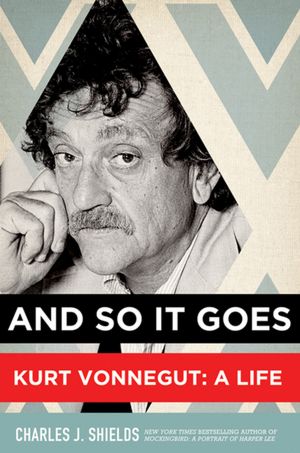
Charles J. Shields interviewed Vonnegut a couple of times for his biography, And So It Goes, and found the author still obsessed with ill feelings toward his parents and still angry about his lack of acceptance as a literary figure (from a review of the book):
Shields makes noise early about his subject’s sense of being overlooked, a feeling that went back to his relationship with his parents and his older brother Bernard, a noted physicist who died in 1997. During their final meeting, Vonnegut asked Shields to look up his name in Webster’s Dictionary; when Shields couldn’t find it, he directed him to look up Jack Kerouac. The implication is that Kerouac (or Norman Mailer or Nelson Algren or Truman Capote, all of whom make cameos in these pages) was taken more seriously than Vonnegut, whose early work was ghettoized as science fiction.  
In his interview with NPR, Shields offer this perspective:
Shields persuaded Vonnegut to let him write the book, and he spent hours talking to the Slaughterhouse-Five author during the last year of his life. He says he was surprised during their very first conversation when Vonnegut began by complaining about his parents.

"For all the world, I thought I was talking to a much younger person who still had a real beef with the way he had been raised," Shields says. But that oddly youthful outlook was what endeared Vonnegut to generations of disaffected kids.
With that background, here is a taste of the Humanities article, Unhappy Camper.
The late Kurt Vonnegut, Jr., whose most productive decade has just entered the Library of America pantheon with the publication of Novels & Stories 1963–1973, is no less classic a case than the rest.

Born into a prosperous German-American family in 1922 Indianapolis, the son and grandson of architects, his mother a privileged beer heiress soon unstrung by the Depression, Vonnegut was rudely yanked out of private school as the thirties began. “A wise use of resources,” he once ruefully called this step down in the world, still smarting in an interview quoted in Charles J. Shields’s fine, undeluded new Vonnegut biography, And So It Goes.

The hijacking of Vonnegut’s early education embarrassed him not just at the time but down the road, when his career would bring him into contact with writers more well-read than he was. “Who’s Keats?,” he once innocently asked of his writing students at the University of Iowa, and then, mortified at their laughter, fled the room. Two years later, a “Who’s Keats?” banner hung above his thronged, adoring going-away party.

Vonnegut may not have read his Keats, but he found his way early to the models he’d need most: the black humorists Mark Twain, Ambrose Bierce, and H. L. Mencken. Together they form a too often unacknowledged tradition in our letters, that of the Great American Dyspeptic. (Later, Hunter S. Thompson would join their raffish parade.) If he’s lucky, a reader finds them in adolescence, perhaps first as a suspiciously recurrent presence in Bartlett’s Quotations or other bathroom books. Of them, only Twain was a novelist, and therefore the only one likely to stray onto a school syllabus. Twain has also become the one most strongly identified over the years with Vonnegut, and the one likeliest to wind up alongside him on the business end of some bluestocking’s library or curriculum challenges.

All that dubious glory lay far in the future when Vonnegut first embarked on the genre fiction career that ultimately led to Library of America’s first volume of his writing. That nonprofit publisher has collected four consecutive midcareer Vonnegut novels and a miscellany of incidental writing into its customary handsome volume. Hemmed into its 1963–73 rubric, the book includes only a couple of his short stories, preferring to take Vonnegut from 1963’s Cat’s Cradle, perhaps the purest distillation of his novel-length genre work; through the pointed social satire of God Bless You, Mr. Rosewater; past his breakthrough, Slaughterhouse-Five; to 1973’s Breakfast of Champions, which Vonnegut described as his “fiftieth-birthday present to myself . . . as though I am crossing the spine of a roof—having ascended one slope.”

The downhill slope was gentler, but no breeze. The collection forms a fitting tribute to a beloved novelist who peaked late but fast. One year Vonnegut was still writing paperback originals for not much money. The next he was opining darkly on television about the moon landing with Walter Cronkite and Gloria Steinem. The difference was Slaughterhouse-Five, a book with, depending how you count them, at least two titles and two plots, and without which his other novels might, incredibly, not be in print from anyone, let alone the Library of America.

Vonnegut had been trying to shape the material that became Slaughterhouse-Five for twenty years. Rare for writers—rare for anybody—this most formative experience may have befallen him not as a child, but in young manhood. As a World War II POW, he had narrowly escaped the Allied firebombing of Dresden in an underground slaughterhouse. He emerged the next morning to find the whole city transformed into an abattoir, as if his hole had somehow expanded overnight to swallow what was left of the world. The experience, naturally, haunted him, not least because he must have suspected he had found, early on, by far his most important material.

After mustering out of the army, Vonnegut knocked around a bit, newspapering in Chicago and then flacking for General Electric. Always, he was writing. The arc of Vonnegut’s eventual career proceeds steadily from escapist yet thoughtful science fiction to fragmentary personal history. It’s only at the midpoint, Slaughterhouse-Five, that these two axes, the outlandish and the autobiographical, almost perfectly cross. The novel combines stroboscopic flashbacks to Vonnegut’s war experiences with the science-fiction overlay of a character called Billy Pilgrim who has become, in this seemingly plainspoken writer’s lovely formulation, “unstuck in time.”

Slaughterhouse-Five became a counterculture sensation, joining Joseph Heller’s Catch-22 and anticipating his fellow Cornellian Thomas Pynchon’s Gravity’s Rainbow in their time-scrambled use of the same “good war” to indict the absurdity of any war at all. Lost amid the eminently deserved praise heaped over the years on Slaughterhouse-Five has been Vonnegut’s only other novel-length treatment of the war, the vastly underrated Mother Night. Preceding Slaughterhouse-Five by seven years, Mother Night takes the form of a condemned man’s suicide note, the long jailhouse affidavit of an American spy who rose through the ranks of the Third Reich to become Nazi Germany’s star radio apologist.

This tightly plotted and structured book lacks most of its successor’s capering narrative pyrotechnics, concentrating instead on the story of a pathologically rationalizing man’s divestment, one by one, of all his cherished alibis. At the end, bereft of his sweetly loving marriage, his sense of mission as the deepest of deep-cover moles, he stands exposed as the quintessential hypocrite, the Gorgon who can no longer hide from his own reflection. It’s a mordantly thrilling novel, one whose potential eclipse behind the four newly enshrined by Library of America would be an outright shame.
Read the whole article.

Saturday, April 2, 2011

Academy of American Poetry - How to Read a Poem


For those who are not aware - April is National Poetry Month. I have been posting poetry here from time to time, but I will be posting more this month - maybe you will like what you see and want to explore more.

Poetry is a great form of literature. It's useful for contemplation, for self-exploration, and for simple enjoyment. But many people have never tried or been taught to read a poem, so I thought I'd post this article from the Academy of American Poets on how to approach and appreciate a poem.

How to Read a Poem
Reproduced in partnership with the Great Books Foundation
.

Reading poetry well is part attitude and part technique. Curiosity is a useful attitude, especially when it’s free of preconceived ideas about what poetry is or should be. Effective technique directs your curiosity into asking questions, drawing you into a conversation with the poem.

In Great Books programs, the goal of careful reading is often to take up a question of meaning, an interpretive question that has more than one answer. Since the form of a poem is part of its meaning (for example, features such as repetition and rhyme may amplify or extend the meaning of a word or idea, adding emphasis, texture, or dimension), we believe that questions about form and technique, about the observable features of a poem, provide an effective point of entry for interpretation. To ask some of these questions, you’ll need to develop a good ear for the musical qualities of language, particularly how sound and rhythm relate to meaning. This approach is one of many ways into a poem.

Getting Started: Prior Assumptions

Most readers make three false assumptions when addressing an unfamiliar poem. The first is assuming that they should understand what they encounter on the first reading, and if they don’t, that something is wrong with them or with the poem. The second is assuming that the poem is a kind of code, that each detail corresponds to one, and only one, thing, and unless they can crack this code, they’ve missed the point. The third is assuming that the poem can mean anything readers want it to mean.

William Carlos Williams wrote a verse addressed to his wife in the poem "January Morning,":

All this—
was for you, old woman.
I wanted to write a poem
that you would understand.
For what good is it to me
if you can’t understand it?
But you got to try hard—

Williams admits in these lines that poetry is often difficult. He also suggests that a poet depends on the effort of a reader; somehow, a reader must "complete" what the poet has begun.

This act of completion begins when you enter the imaginative play of a poem, bringing to it your experience and point of view. If a poem is "play" in the sense of a game or a sport, then you enjoy that it makes you work a little, that it makes you sweat a bit. Reading poetry is a challenge, but like so many other things, it takes practice, and your skills and insight improve as you progress.

Literature is, and has always been, the sharing of experience, the pooling of human understanding about living, loving, and dying. Successful poems welcome you in, revealing ideas that may not have been foremost in the writer’s mind in the moment of composition. The best poetry has a magical quality—a sense of being more than the sum of its parts—and even when it’s impossible to articulate this sense, this something more, the power of the poem is left undiminished.

Poems speak to us in many ways. Though their forms may not always be direct or narrative, keep in mind that a real person formed the moment of the poem, and it’s wise to seek an understanding of that moment. Sometimes the job of the poem is to come closer to saying what cannot be said in other forms of writing, to suggest an experience, idea, or feeling that you can know but not entirely express in any direct or literal way. The techniques of word and line arrangement, sound and rhythm, add to—and in some cases, multiply—the meaning of words to go beyond the literal, giving you an impression of an idea or feeling, an experience that you can’t quite put into words but that you know is real.

Reading a Poem Aloud

Before you get very far with a poem, you have to read it. In fact, you can learn quite a few things just by looking at it. The title may give you some image or association to start with. Looking at the poem’s shape, you can see whether the lines are continuous or broken into groups (called stanzas), or how long the lines are, and so how dense, on a physical level, the poem is. You can also see whether it looks like the last poem you read by the same poet or even a poem by another poet. All of these are good qualities to notice, and they may lead you to a better understanding of the poem in the end.

But sooner or later, you’re going to have to read the poem, word by word. To begin, read the poem aloud. Read it more than once. Listen to your voice, to the sounds the words make. Do you notice any special effects? Do any of the words rhyme? Is there a cluster of sounds that seem the same or similar? Is there a section of the poem that seems to have a rhythm that’s distinct from the rest of the poem? Don’t worry about why the poem might use these effects. The first step is to hear what’s going on. If you find your own voice distracting, have a friend read the poem to you.

That said, it can still be uncomfortable to read aloud or to make more than one pass through a poem. Some of this attitude comes from the misconception that we should understand a poem after we first read it, while some stems from sheer embarrassment. Where could I possibly go to read aloud? What if my friends hear me?

The Line

What determines where a line stops in poetry? There is, of course, more than one answer to this question. Lines are often determined by meaning, sound and rhythm, breath, or typography. Poets may use several of these elements at the same time. Some poems are metrical in a strict sense. But what if the lines aren’t metrical? What if the lines are irregular?

The relationship between meaning, sound, and movement intended by the poet is sometimes hard to recognize, but there is an interplay between the grammar of a line, the breath of a line, and the way lines are broken out in the poem—this is called lineation. For example, lines that end with punctuation, called end-stopped lines, are fairly simple. In that case, the punctuation and the lineation, and perhaps even breathing, coincide to make the reading familiar and even predictable. But lines that are not end-stopped present different challenges for readers because they either end with an incomplete phrase or sentence or they break before the first punctuation mark is reached. The most natural approach is to pay strict attention to the grammar and punctuation. Reading to the end of a phrase or sentence, even if it carries over one or several lines, is the best way to retain the grammatical sense of a poem.

But lineation introduces another variable that some poets use to their advantage. Robert Creeley is perhaps best known for breaking lines across expected grammatical pauses. This technique often introduces secondary meaning, sometimes in ironic contrast with the actual meaning of the complete grammatical phrase. Consider these lines from Creeley’s poem "The Language":

Locate I
love you some-
where in

teeth and
eyes, bite
it but

Reading the lines as written, as opposed to their grammatical relationship, yields some strange meanings. "Locate I" seems to indicate a search for identity, and indeed it may, but the next line, which continues with "love you some-," seems to make a diminishing statement about a relationship. On its own, "eyes bite" is very disturbing.

Hearing Creeley read his poems can often be disquieting, because he pauses at the end of each line, and these pauses create a kind of tension or counterpoint in relation to the poem’s sentence structure. His halting, hesitant, breathless style is immediately recognizable, and it presents writers with new ideas about meaning, purely through lineation. But many poets who break lines disregarding grammatical units do so only for visual irony, something that may be lost in performance. Among metrical, free verse, and even experimental poets of today, there are those who do not interrupt grammatical sense when reading a poem aloud as much as they interrupt it in the poem’s typography. What to do as a reader? Try a variety of methods. It’s fun to "Creeleyize" any poem, just to hear what the lineation is doing. But if the results seem to detract from the poem’s impact, in terms of its imagery or concept, drop the literal treatment of line breaks and read for grammar or visual image. Reading a poem several ways allows you to see further into the poem simply through repetition.

With poets who use techniques drawn from music—particularly jazz, such as Michael S. Harper or Yusef Komunyakaa—or poets like Walt Whitman who employ unusually long lines, there may be another guiding principle: breath. Some poets think of their words as music flowing from a horn; they think of phrases the way a saxophonist might. Poems composed in this way have varied line lengths but they have a musicality in their lineation and a naturalness to their performance. They may have a recognizable sense of measure, an equivalent duration between lines, or, for the sake of contrast, one rhythmic pattern or duration that gives way to successive variations.

For some poems, visual impact may also be important. In "shaped poetry," as well as many other types of writing that are meant to be seen as a painting might be seen, the line is determined by its placement in space. Some visually oriented poets present real challenges in that the course of the poem may not be entirely clear. Visual choices presented by the poet may be confusing. Sometimes the arrangements of words on a page are intended to represent different voices in a dialogue, or even a more complex discourse on a subject. Overlapping and layering might be the poet’s intent, which no single voice can achieve. It’s best to be aware that poems with multiple voices, or focuses exist and, again, looking for the inherent rules that determine the shape of the poem is the best approach.

Remember that the use of these techniques, in any combination, pushes the words of the poem beyond their literal meanings. If you find more in a poem than the words alone convey, then something larger is at work, making the poem more than the sum of its parts.

Starting the Conversation

We mentioned earlier that encountering a difficult poem is like a game or sport, say rock climbing, that makes you work a bit. The idea of finding handholds and footholds and ascending one bit at a time is apt. But some climbs are easier than others; some are very easy. You may enjoy an easy climb for a while, but you may also find that you want a bigger challenge. Reading poetry works the same way, and, fortunately, poets leave trails to help you look for the way "up" a poem. You’ll have to do some work, hard work in some cases, but most of the time, the trails are there for you to discover.

At the Great Books Foundation, we believe that the best way to discover and learn about a poem is through shared inquiry discussion. Although your first experience of the poem may be private and personal, we think talking about the poem is a natural and important next step. Beginning with a focus question about the poem, the discussion addresses various possible answers to the question, reshaping and clarifying it along the way. The discussion should remain grounded in the text as much as possible. Responses that move away from what is written into personal anecdotes or tangential leaps should be gently urged back into analyzing the text. The basis for shared inquiry is close reading. Good readers "dirty the text" with notes in the margins. They make the inquiry their own. We encourage you to write your own notes in this book.

Talking Back to a Poem

It would be convenient if there were a short list of universal questions, ones that could be used anytime with any poem. In the absence of such a list, here are a few general questions that you might ask when approaching a poem for the first time:
  • Who is the speaker?
  • What circumstances gave rise to the poem?
  • What situation is presented?
  • Who or what is the audience?
  • What is the tone?
  • What form, if any, does the poem take?
  • How is form related to content?
  • Is sound an important, active element of the poem?
  • Does the poem spring from an identifiable historical moment?
  • Does the poem speak from a specific culture?
  • Does the poem have its own vernacular?
  • Does the poem use imagery to achieve a particular effect?
  • What kind of figurative language, if any, does the poem use?
  • If the poem is a question, what is the answer?
  • If the poem is an answer, what is the question?
  • What does the title suggest?
  • Does the poem use unusual words or use words in an unusual way?

You can fall back on these questions as needed, but experience suggests that since each poem is unique, such questions will not go the necessary distance. In many instances, knowing who the speaker is may not yield any useful information. There may be no identifiable occasion that inspired the poem. But poems do offer clues about where to start. Asking questions about the observable features of a poem will help you find a way in.

We’ll now bring inquiry to bear on two very different poems, each of which presents its own challenges:

Text and Context

Some people say that a poem is always an independent work of art and that readers can make full sense of it without having to use any source outside the poem itself. Others say that no text exists in a vacuum. However, the truth lies somewhere in between. Most poems are open to interpretation without the aid of historical context or knowledge about the author’s life. In fact, it’s often best to approach a poem without the kind of preconceived ideas that can accompany this kind of information. Other poems, however, overtly political poems in particular, will benefit from some knowledge of the poet’s life and times. The amount of information needed to clearly understand depends on you and your encounter with the poem. It’s possible, of course, even for someone with a deep background in poetry to be unaware of certain associations or implications in a poem. This is because poems are made of words that accumulate new meanings over time.

Consider this situation, a true story, of a poet who found a "text" at the San Mateo coast in northern California. As she scrambled over rocks behind the beach, near the artichoke fields that separate the shore from the coast highway, she found a large smear of graffiti painted on the rocks, proclaiming "La Raza," a Chicano political slogan meaning "the struggle." She sat down and wrote a poem. Why? her poem asked. I understand, she wrote, why someone would write La Raza on the side of a building, or on public transport. There it would be seen and would shout its protest from the very foundations of the oppressive system. But why here, in nature, in beauty, so far from that political arena. Couldn’t you leave the coast unspoiled? Then, one evening while reading the poem in Berkeley she got her answer. A man came up to her and asked her, "Do you want to know?" "I beg your pardon," she said. "Those fields," the man went on, "were where Chicanos had been virtually enslaved, beaten, and forced to live in squalor for decades." The landscape was not innocent of political struggle. The text was not out of place.

Embrace Ambiguity

Here’s a tricky issue: the task is to grasp, to connect, to understand. But such a task is to some degree impossible, and most people want clarity. At the end of class, at the end of the day, we want revelation, a glimpse of the skyline through the lifting fog. Aesthetically, this is understandable. Some magic, some satisfaction, some "Ahhh!" is one of the rewards of any reading, and particularly the reading of poetry. But a poem that reveals itself completely in one or two readings will, over time, seem less of a poem than one that constantly reveals subtle recesses and previously unrecognized meanings.

Here’s a useful analogy. A life partner, a husband, a wife—these are people with whom we hope to constantly renew our love. Despite the routine, the drone of familiarity, the daily preparation of meals and doing of dishes, the conversations we’ve had before, we hope to find a sense of discovery, of surprise. The same is true of poems. The most magical and wonderful poems are ever renewing themselves, which is to say they remain ever mysterious.

Too often we resist ambiguity. Perhaps our lives are changing so fast that we long for stability somewhere, and because most of the reading we do is for instruction or information, we prefer it without shades of gray. We want it to be predictable and easy to digest. And so difficult poetry is the ultimate torment.

Some literary critics would link this as well to the power of seeing, to the relationship between subject and object. We wish the poem to be object so we can possess it through our "seeing" its internal workings. When it won’t allow us to "objectify" it, we feel powerless.

Torment, powerlessness—these are the desired ends? Well, no. The issue is our reaction, how we shape our thoughts through words. We have to give up our material attitude, which makes us want to possess the poem. Maybe we’ve bought the book but we don’t own the poem. We have to cultivate a new mindset, a new practice of enjoying the inconclusive.

Embracing ambiguity is a much harder task for some than for others. Nothing scares some people like the idea (even the idea) of improvisation as a writing or analytical tool. Some actors hate being without a script; the same is true of some musicians. Ask even some excellent players to improvise and they start to sweat. Of course, actors and musicians will say that there is mystery in what they do with a script or a score, and it would be pointless to disagree. The point, after all, is that text is mysterious. Playing the same character night after night, an actor discovers something in the lines, some empathy for the character, that he or she had never felt before. Playing or listening to a song for the hundredth time—if it is a great song—will yield new interpretation and discovery. So it is with great poetry.


From Modern American Poetry, selected and edited by Joseph Coulson and Peter Temes (Great Books Foundation, 2002). Copyright © 2002 by the Great Books Foundation. Used by permission.

Friday, March 4, 2011

Poem - "Fairbanks Under the Solstice" by John Haines


Fairbanks Under the Solstice
by John Haines

Slowly, without sun, the day sinks
toward the close of December.
It is minus sixty degrees.

Over the sleeping houses a dense
fog rises—smoke from banked fires,
and the snowy breath of an abyss
through which the cold town
is perceptibly falling.

As if Death were a voice made visible,
with the power of illumination...

Now, in the white shadow
of those streets, ghostly newsboys
make their rounds, delivering
to the homes of those
who have died of the frost
word of the resurrection of Silence.


~ Excerpted from The Owl in the Mask of the Dreamer: Collected Poems, copyright © 1993 by John Haines.

Friday, February 11, 2011

Poem: "The Tongue" by Chris Martin

http://www.privilegedclub.com/wp-content/uploads/2010/12/Georgia-O%E2%80%99Keeffe%E2%80%99s-oil-painting-of-a-flower-%E2%80%9CCanna-Red-and-Orange%E2%80%9D-on-canvas-560x702.jpg

As some friends and readers here know, I once wrote poetry, some of which even was published from time to time. I don't really write much anymore, other than the occasional poem, but I still read and enjoy poetry.

Every once in a while, I am going to be posting poems here from known and unknown poets that are by and/or about men. I will also try to find an image that goes with the poem, preferably a painting or photograph.

If you know of a poet or a poem I might like, please drop me a note.

Today's poem comes from Poets.org. This is from Chris Martin's collection called American Music. The painting is by Georgia O'Keeffe, "Canna Red and Orange," which recently sold for nearly $1.8 million.

The Tongue
by Chris Martin

for Ben Estes
So taste
as day
rearranges the red
and orange flowers
from tongue to tongue
like losing the cymbal's
clang for all its glints
we crept behind the moon
which always insists on sleeping over
barely a belly for a mouth
an hour past the movie
we were still filming
the way food fills
each curving lapse
between your teeth
or song
in sheets
against the windshield
no one believes
air is the enemy
so don't be afraid
to breathe all this speech
someone already died to say
the moon is on the couch
so we climb onto the roof
where our bellies swell open
to slosh and go flowers
red and orange flowers
hairy and pink-stemmed
like champagne flutes
we always overuse
everything that
happens happens
wrong if not
by tongue's might
in the little time
left before sun drives
all the workers into work


Friday, December 17, 2010

Art of Manliness - Nine Writers Carrying the Torch for Men’s Fiction

The days of Herman Melville, Jack London, Theodore Dreiser, Ernest Hemingway, John Updike, and Raymond Carver - among many others - are long gone. These days, there is no such thing as men's fiction in the same way as we have Chick Lit.

The Art of Manliness recently featured a guest post from Jarrett Haley and Tim Chilcote that offers nice current men's fiction writers (but they forgot a couple: Chuck Palahniuk and Michael Chabon are very different, but both are great writers).

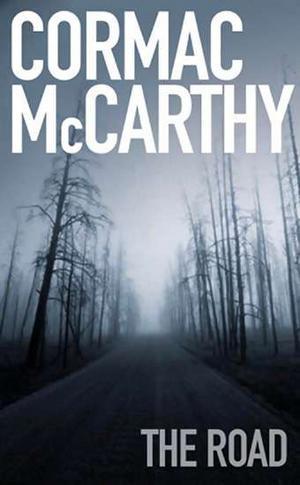
Cormac McCarthy's The Road is a masterpiece of father/son relationships.

Nine Writers Carrying the Torch for Men’s Fiction

by Guest on December 16, 2010

Editor’s note: This is a guest post from Jarrett Haley and Tim Chilcote.

Gentlemen, let’s face it: Hemingway is dead. Likewise with Faulkner, Mailer, Updike, Cheever, Miller, Carver, and the rest of the greats who made a living writing the stories of men in the golden age. But just because the big men of letters have fallen doesn’t mean that letters for men have gone down with them. There’s plenty of manly literature outside the icons, and plenty of writers still making books for the male mind. Here’s a sampling of living, breathing authors to look out for the next time you’re in need of a manly read:

Cormac McCarthy


We’ll start with the obvious choice, because chances are if you haven’t read his books you’ve at least seen one adapted for the screen, from All the Pretty Horses to the blockbusters No Country for Old Men and The Road. Good movies, sure, but nothing compares to the man’s way with words. Most of his early books are set in backwoods Tennessee, but that was before he was branded master of the dark, gruesome West. Brutality peaks with Blood Meridian, and as for The Road, don’t let Oprah’s Book Club endorsement scare you off — never has a book more savagely examined the dedication of a father for his son.

Wells Tower


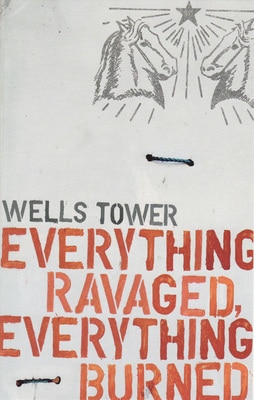
Wells Tower’s Everything Ravaged, Everything Burned, a collection of nine short stories, is a world inhabited by down-on-their-luck narrators, men trying in vain to forge a new path through contemporary life. Tower often likes to end his stories with an explosive catastrophe, one that leaves the reader probing for meaning inside, say, a rotting moose carcass or a shattered aquarium. Ever gone through a rough patch in life? Ever battled to reinvent yourself? Read this book.

Read the whole post.

Tuesday, February 2, 2010

Sam Shepard and the Struggles of American Manhood

Sam Shepard is hot again. Fool for Love is one of the great American plays in my opinion (but, then I like all of Shepard's work that I have read).


Now, with a new play, a new collection of fiction, and another play in revival, Shepard is featured in a long New Yorker article and in an article at The Daily Beast.

In many ways, his body of work documents the changes and challenges of men in America. As such, I thought I would share the two recent articles here.

This biography and discussion is from the New Yorker:

The Pathfinder: Sam Shepard and the struggles of American manhood.

John Lahr

February 8, 2010

“I had a sense that a voice existed that needed expression,”  Shepard said of his early plays. Photograph by Brigitte Lacombe.

“I had a sense that a voice existed that needed expression,”
Shepard said of his early plays. Photograph by Brigitte Lacombe.

“I just dropped out of nowhere,” Sam Shepard said of his arrival in New York, at nineteen, in the fall of 1963. “It was absolute luck that I happened to be there when the whole Off-Off Broadway movement was starting.” Shepard, a refugee from his father’s farm in California, had spent eight months as an actor travelling the country by bus with a Christian theatre troupe, the Bishop’s Company Repertory Players. Acting had been his ticket to ride; he’d been so scared at his Bishop’s Company audition that he’d recited the stage directions. “I think they hired everybody,” he said. Once he’d taken up residence in Manhattan—“It was wide open,” Shepard said. “You were like a kid in a fun park”—he proceeded to knock around the city, “trying to be an actor, writer, musician, whatever happened.” He had no connections, no money (he sold his blood to buy a cheeseburger), and nothing to fall back on but his lanky, taciturn Western charisma. He did, however, have renegade credentials and a store of arcane knowledge: he had been a 4-H Club member, a sheepshearer, a racecourse hot walker, a herdsman, an orange picker, and a junior-college student.

Shepard was homespun and handsome, with a strong jaw and a dimpled chin. He exuded the mystery and swagger of a movie star, which he would eventually become. (In addition to writing four dozen or so plays—the latest of which, “Ages of the Moon,” opened last week, at the Atlantic Theatre Company—Shepard, who is now sixty-six, has appeared in some forty films; he was nominated for an Oscar for his performance as the test pilot Chuck Yeager, in “The Right Stuff.”) But even as a new arrival in the city he seemed instinctively to understand the importance of image. “Use yer eyes like a weapon. Not defensive. Offensive,” a character in his play “The Tooth of Crime” (1972) says, adding, “You can paralyze a mark with a good set of eyes.” Shepard had such a pair. His almond-shaped blue eyes looked out at the world with wry detachment; they imposed on his passionate nature a mask of cool. His smile was tight-lipped—half knowing, half strategic (it hid a mouthful of craggy teeth). Years of living with invasive family aggression—“The male influences around me were primarily alcoholics and extremely violent,” he said—had taught Shepard to play things close to his chest: to look and to listen. “I listened like an animal. My listening was afraid,” Wesley, the son in Shepard’s 1978 play “Curse of the Starving Class,” says, describing his method for coping with his drunken father. Shepard was a man of few words, many of them mumbled. Compelling to look at but hard to read—at once intellectually savvy and emotionally guarded—he exuded the solitude and the vagueness of the American West.

Though Shepard lacked East Coast sophistication—he was poorly read in those days—he brought news of what he called “the whacked out corridors of broken-off America”: its blue highways, its wilderness, its wasteland, its animal kingdom, its haunted lost souls, its violence. “People want a street angel. They want a saint with a cowboy mouth,” a prescient character in one of Shepard’s early one-acts said. Shepard, it turned out, was the answer to those prayers. He got a job busing tables at the Village Gate, and began to write in earnest. “I had a sense that a voice existed that needed expression, that there was a voice that wasn’t being voiced,” he said. “There were so many voices that I didn’t know where to start. I felt kind of like a weird stenographer. . . . There were definitely things there, and I was just putting them down. I was fascinated by how they structured themselves.” Ralph Cook, the Village Gate’s headwaiter, who was a former bit-part actor in Hollywood Westerns and a fellow-Californian, provided him an entry into the downtown scene through a new space he was starting on the Bowery—Theatre Genesis—where Shepard made his playwriting début, in 1964. By the following year, the twenty-two-year-old Samuel Shepard Rogers VII, who was known as Steve to his family and friends, had reinvented himself as Sam Shepard, whom the Times described as “the generally acknowledged ‘genius’ ” of the Off-Off-Broadway circuit.

Shepard’s early plays, written between 1964 and 1971, were full of surprises and assaults on the senses—people spoke from bathtubs or painted one another, colored Ping-Pong balls dropped from the ceiling, a chicken was sacrificed onstage. The plays express what Shepard called the “despair and hope” of the sixties; they act out both the spiritual dislocation and the protean survival instinct of traumatic times. Better than anyone else writing in that fractious hubbub, Shepard defined the fault lines between youth culture and the mainstream. “You were so close to the people who were going to the plays, there was really no difference between you and them,” he said, pinpointing both his work’s value and its limitation. The mockery, the role-playing, the apocalyptic fears, the hunger for new mythologies, and the physical transformations in his work gave shape to the spiritual strangulation of the decade—which, in Shepard’s words, “sucked dogs.” “For me, there was nothing fun about the sixties,” he said. “Terrible suffering. . . . Things coming apart at the seams.”

In their verbal and visual daring, Shepard’s early plays aspired to match the anarchic wallop of rock and roll. He had been playing drums since the age of twelve, when his father, a semi-professional Dixieland drummer, bought him a secondhand set and taught him how to play. (He continued drumming into his adulthood, with such bands as the Holy Modal Rounders and T Bone Burnett’s Void.) In his writing, he gravitated toward rock’s maverick energy; he listed Little Richard among his literary influences, along with Jackson Pollock and Cajun fiddles. (Later, he befriended Keith Richard, lived briefly with Patti Smith—“He was a renegade with nasty habits / he was a screech owl / he was a man playing cowboys,” she wrote of him—chronicled Bob Dylan’s Rolling Thunder Revue, and co-wrote, with Dylan, the eleven-minute song “Brownsville Girl.”) In plays as varied as “The Tooth of Crime,” “Forensic & the Navigators” (1967), and “Operation Sidewinder” (1970), music and song are a crucial part of Shepard’s dramatic attack. Of these plays, “The Tooth of Crime,” which involves a style war between an old rock king, Hoss, and his upstart challenger, Crow, is the most visionary work. Here Shepard carried the language of drugs, rock, and political struggle from the street to the stage:

CROW: So ya’ wanna be a rocker. Study the moves. Jerry Lee Lewis. Buy some blue suede shoes. Move yer head like Rod Stewart. Put yer ass in a grind. Talkin’ sock it to it, get the image in line. Get the image in line boy. The fantasy rhyme. It’s all over the streets and you can’t buy the time. You can’t buy the bebop. You can’t buy the slide. Got the fantasy blues and no place to hide.
Rhythm led Shepard to character. “When you write a play, you work out like a musician on a piece of music,” he wrote. “You find all the rhythms and the melody and the harmonies and take them as they come.” His early plays, which he refers to now as “cavorting,” were riffs, written at speed—wild, energized, and slipshod—following the rhythmic strategy of his drumming. “Break it all down in pairs. Make the pairs work together, with each other. Then make ’em work against each other, independent,” he wrote in his 1969 play “The Holy Ghostly.” His pieces were abstract flights of illuminated feeling, like the work of the jazz greats—Thelonious Monk, Dizzy Gillespie, Gerry Mulligan, Nina Simone—he heard at the Village Gate, more vectors of energy than maps of psychology. “I preferred a character that was constantly unidentifiable,” Shepard said. As he explained in his note to the actors in “Angel City” (1976), instead of embodying a “whole character” the actor should consider his performance “a fractured whole with bits and pieces of character flying off the central theme,” and aim “to make a kind of music or painting in space without having to feel the need to completely answer intellectually for the character’s behavior.” In those years, by his own admission, Shepard was “dead set against revisions because I couldn’t stand rewriting.” For him and for his downtown audience, the plays were exercises in spontaneity and emotional discovery. “They were chants, they were incantations, they were spells,” he said in “Stalking Himself,” a 1998 PBS documentary. “You get on them and you go.”

Read more.

This shorter look at Shepard comes from The Daily Beast. While the New Yorker article covers his life and career going back to his arrival in new York, in the early sixties, this article looks at his recent revival with the new book and play.

Sam Shepard Rides Again

by Caryn James

BS Top - James Shepard Jakub Mosur / AP Photo

The iconic actor and writer is in the midst of a cultural moment with a new play opening, another one in revival, and a book of fiction set in the American West just out. Caryn James on why Shepard is as fresh and bold as ever.

Once a cowboy always a cowboy? The cover of Sam Shepard’s new story collection, Day Out of Days, shows a family photo of little Sam at about 6, a fair-haired boy on a horse many times his size waving a cowboy hat. You can still feel the dusty air of the West in his work. But Shepard is 66 now—strange but true. The chiseled, movie-star face that made women swoony watching Days of Heaven back in 1978 looks weathered. And this book and his new play, Ages of the Moon (which opened last week at the Atlantic Theater Company) tell us he’s hyperaware of heading toward geezerville. The stories’ fictional, Sam-like narrator criss-crosses the country’s highways, stopping at motels, and wonders, “How does this happen?” meaning life, aging, change. The two men in Ages of the Moon are friends at the bitter end of middle age, meeting in a country cabin to mourn their lost loves.

Who knows if Shepard’s feeling old these days? But no one can call him worn-out.

Don’t worry, though. As a writer Shepard is not nearly in the land of the has-been. These deceptively modest works, reflective and witty, explode with fresh energy. Their touches of absurdity give way to a depth of emotional loss that will sneak up and wring your heart dry. He’s still a star, still a treasure.

And we are having a Shepard moment. An off-Broadway revival of A Lie of the Mind, one of his big plays about loony violent families, is about to land in a production loaded with indie-hip cred: directed by Ethan Hawke, starring Keith Carradine and Josh Hamilton (previews begin January 29).

Book Cover - James Shepard

Day Out of Days: Stories. By Sam Shepard. 304 Pages. Knopf. $25.95.

Shepard's vintage plays hold up, but this is a moment to appreciate his new works, of a piece with each other: haunting stories a page or so long, a multi-layered, two-character play that runs a swift hour and a quarter, all about guys who have really lived.

His recent plays, The God of Hell and Kicking a Dead Horse, had a vital political edge. Ages of the Moon is a personal, character-driven piece, with the amazing, hang-dog-faced Stephen Rea (has he ever overacted in his life?) as Ames, who has called his white-haired pal Byron (Irish actor Sean McGinley) to visit him. Ames is in distress because his wife has bolted after learning of his one-night stand with a woman Ames hardly remembers.

Sitting on the porch, talking in the rhythms and with the existential shrug of Beckett characters (“What are we gonna do?” one of the them says. “There’s nothing to do,” the other answers) they raise their glasses to drink like a couple of synchronized swimmers. (The production, which originated at the Abbey Theater in Dublin, is directed with perfect timing by Jimmy Fay.) In the flashier role, Rea gets to sing snatches of "King of the Road" and "The Halls of Montezuma"; he takes a rifle and shoots down an annoying ceiling fan, then stares at it warily as if it’s some half-dead creature that might jump up and bite him. There’s even a True West-inflected brotherly wrestling match.

This play is wildly entertaining, yet in the end all the chaos and fun can’t mask the heartbreaking sadness at what both men have lost over time.

“You were head over heels,” Byron says of Ames and his wife.

“I was,” Ames tells him. “I thought it would never end.”

That feeling—knocked out by the impermanence of love—is echoed in the stories in Day Out of Days. A man whose wife thinks he’s been cheating (we suspect he has too) walks with her on the beach “remembering the days when we were seldom out of each other’s sight and had no reason to doubt we would be forever in love.”

The central character, on the road throughout these stories, is not always the same man, but he has a consistent, familiar voice. As in Shepard’s earlier collections, these fictions tease, toying with autobiography. The main character shares plenty with the author. Sometimes he is an actor on a film set, like Shepard, playing one more money-making small part as a gruff military officer. Sometimes he has a son and daughter with his longtime love, as Shepard famously has with Jessica Lange. He has fraught memories of his father. “I thought I had done my level best, done everything I possibly could, not to become my father,” one narrator says, only to get lost in a bottle of tequila and have the old man turn up like an angry ghost demanding Why?

But any autobiographical assumptions are undercut by pure fiction. Obviously he’s not the guy on vacation from the office. Anyway, as a character who tells the Shepard figure a tall tale—about saving Fats Domino and his floating piano during Hurricane Katrina—says when asked if that really happened: “What’s the difference?” If Shepard wanted to write an autobiography he would have; he won’t be pinned down.

While these pieces are rooted in the details of the narrator’s travels, all those cramped rooms where he lies, “listening to Highway 220 moaning right outside the sliding glass door,” they often float gracefully away from realism. The book’s epigraph is from Beckett, who feels like the guiding spirit as the narrator grapples with a sense of loss and disconnection, from other people, even from himself. That dislocation takes a physical shape in a series of stories about a man who finds a talking severed head. A couple of those pieces are told from the head’s point of view. The head speculates that he and the man who picks him up “might have become great pals” if the head hadn’t been “completely cut off as I was.” Well, the Beckett quote warns that there won’t be neat little stories here. And that’s all good. Any old realist can give us lifelike stories. It takes an eternally young genius like Shepard to make us laugh and wonder what it would mean to be a detached head, “yearning for home.”

“We used to be young and vigorous,” one of Shepard’s narrators—a guy with an actual body—says. Who knows if Shepard’s feeling old these days? But no can call him worn-out.

Plus: Check out Book Beast for more news on hot titles and authors and excerpts from the latest books.

Caryn James is a cultural critic for The Daily Beast. She also contributes to Marie Claire and The New York Times Book Review. She was a film critic, chief television critic and critic-at-large for The New York Times, and an editor at the Times Book Review. She is the author of the novels Glorie and What Caroline Knew. As a film commentator, she has been a guest on Charlie Rose, Today, CBS Sunday Morning and MSNBC.