Showing posts with label muscles. Show all posts

Friday, October 24, 2014

Fitness Friday: Fitness News You Can Use

This week on Fitness Friday, we have articles on carbohydrate tolerance (Performance Nutrition), the anti-estrogenic properties of kelp (Journal of Nutrition), intermittent hypoxic resistance training (Frontiers in Striated Muscle Physiology), and two articles from T-Nation (perfecting the push-press and the 5/3/1 Beach Body Challenge).
squatting

First up, from Performance Nutrition, everything you need to know about carb intolerance.

Carbohydrate tolerance: Is your ability to eat carbs determined by your genes?


By Helen Kollias

Ever wonder why some people can eat bushels of bananas without gaining a pound, but you seem to gain weight by just looking at a potato? Maybe it’s your genes. But just because you’re “carb intolerant” doesn’t mean you’re doomed. These simple guidelines can help.

[Note: we’ve also prepared an audio recording of this article for you to listen to. So, if you'd rather listen to the piece, click here.]

++

You and a friend sit down for dinner.

Your friend orders a rice and potato sandwich with a side of spaghetti.

“I’m carb tolerant,” he explains, taking a sip of his beer and glancing eagerly at the dessert buffet.

You, on the other hand, order the green salad with salmon — hold the chickpeas.

You are not carb tolerant.

But you are annoyed with your friend.

In fact, for a bite of his sandwich, you would gladly stab him with a fork.


What is “carb tolerance” anyway?

Actually, come to think of it, does “carb tolerance” even exist?

Sure, the phrase peppers a lot of contemporary dinner conversations.

But does anybody really know what it means?

Maybe “carb intolerant” people just eat too many carbs. Or the wrong kind. You know — cookie carbs, donut carbs.

Or maybe the problem isn’t carbs at all. Maybe their “baked potato” has more sour cream and butter than potato.

Then again…maybe some of those people simply can’t process carbs the way the rest of us do.

In other words, maybe their genes are to blame.
* * * * *

It appears sea kelp has anti-estrogenic effects (in mice). This is from 2005, but it's interesting nonetheless.

Kelp has anti-estrogenic effect


Kelp, or bladderwrack seaweed – scientific name Fucus vesiculosus – has an anti-estrogenic effect. Substances found in kelp delay the manufacture of estradiol in the body and sabotage the working of the estradiol receptor.

Researchers at the University of California at Berkeley stumbled upon the anti-estrogenic effect of kelp when they tested an alternative theory on why very few Japanese women have breast, womb or ovarian cancer. These types of cancer are caused by estradiol. The conventional theory is that high consumption of soya, a food with an anti-estrogenic effect, protects Japanese women against estradiol-related cancers.
Source: J Nutr. 2005 Feb;135(2):296-300. 
You can read the original research article, as well.

Brown Kelp Modulates Endocrine Hormones in Female Sprague-Dawley Rats and in Human Luteinized Granulosa Cells


Christine F. Skibola, John D. Curry, Catherine VandeVoort, Alan Conley, and Martyn T. Smith
 
Abstract
Epidemiological studies suggest that populations consuming typical Asian diets have a lower incidence of hormone-dependent cancers than populations consuming Western diets. These dietary differences have been mainly attributed to higher soy intakes among Asians. However, studies from our laboratory suggest that the anti-estrogenic effects of dietary kelp also may contribute to these reduced cancer rates. As a follow-up to previous findings of endocrine modulation related to kelp ingestion in a pilot study of premenopausal women, we investigated the endocrine modulating effects of kelp (Fucus vesiculosus) in female rats and human luteinized granulosa cells (hLGC). Kelp administration lengthened the rat estrous cycle from 4.3 ± 0.96 to 5.4 ± 1.7 d at 175 mg · kg−1 body wt · d−1 (P = 0.05) and to 5.9 ± 1.9 d at 350 mg · kg−1 · d−1 (P = 0.002) and also led to a 100% increase in the length of diestrus (P = 0.02). Following 175 mg · kg−1 · d−1 treatment for 2 wk, serum 17β-estradiol levels were reduced from 48.9 ± 4.5 to 40.2 ± 3.2 ng/L (P = 0.13). After 4 wk, 17β-estradiol levels were reduced to 36.7 ± 2.2 ng/L (P = 0.02). In hLGC, 25, 50, and 75 μmol/L treatment reduced 17β-estradiol levels from 4732 ± 591 to 3632 ± 758, 3313 ± 373, and 3060 ± 538 ng/L, respectively. Kelp treatment also led to modest elevations in hLGC culture progesterone levels. Kelp extract inhibited the binding of estradiol to estrogen receptor α and β and that of progesterone to the progesterone receptor, with IC50 values of 42.4, 31.8, and 40.7 μmol/L, respectively. These data show endocrine modulating effects of kelp at relevant doses and suggest that dietary kelp may contribute to the lower incidence of hormone-dependent cancers among the Japanese.
* * * * *

Intermittent hypoxic resistance training: does it provide added benefit?


Brendan R. Scott, Katie M. Slattery, and Ben J. Dascombe
Introduction

Methods to enhance the adaptive responses to resistance training are of great interest to clinical and athletic populations alike. Altering the muscular environment by restricting oxygen availability during resistance exercise has been shown to induce favorable physiological adaptations. An acute hypoxic stimulus during exercise essentially increases reliance on anaerobic pathways, augmenting metabolic stress responses, and subsequent hypertrophic processes (Scott et al., 2014). Hypoxic strategies during resistance exercise were originally investigated using blood flow restriction (BFR) methods (Takarada et al., 2000), whereby a cuff is applied proximally to a limb to partially limit arterial inflow while occluding venous outflow from the working muscles. Another method that has been investigated more recently is performing resistance exercise in systemic hypoxia, by means of participants breathing a hypoxic air mixture.

The addition of systemic hypoxia to resistance training has previously resulted in significantly enhanced hypertrophic and strength responses to both low-load (20% 1-repetition maximum; 1RM) (Manimmanakorn et al., 2013a,b) and moderate-load (70% 1RM) (Nishimura et al., 2010) resistance training.
* * * * *

Finally, here are a couple of articles from T-Nation.

How to Do the Perfect Push Press 


by Eric Auciello | 10/16/14 
Here's what you need to know...
  • The push press develops a strong and stable trunk while highlighting gross deficiencies in mobility.
  • The push press is a great way to train heavy loads overhead in a strength-endurance format.
  • Unlike the press, the push press requires the upper arms to be parallel to the floor, similar to the arm position used in a front squat.
  • Maintaining a stacked spinal column while exhibiting force throughout the lift is best achieved by taking a wide stance.
  • The dip-drive phase isn't a one-fourth squat. It's a shallow and violent redirection of energy from your body to the barbell.

The Perfect Push Press

When it comes to lifting a barbell overhead, there are several options to choose from, from the simple shoulder press for hypertrophy to the technically complex jerk. But somewhere in the middle of that complexity spectrum lies a lift everyone should be doing: the push press.
* * * * *

5/3/1 Beach Body Challenge 


by Jim Wendler | 10/20/14 

Here's what you need to know...

  • The goal of this challenge is performance, not aesthetics. But you'll look awesome anyway.
  • Goal setting is a three-step process: Set the goal, make the plan, and get to work.
  • The challenges are very typical of the 5/3/1 set-up in that each day has a squat, a push, and a pull.
  • Many of the lifts will use the 5's Progression: 5 reps for every set, regardless of percentage.
  • Once you've completed the first three weeks, you'll have established rep records for the squat, press, and hang clean.
  • The next three weeks of the program will be devoted to you beating or attempting to beat each record.
"Beach Muscles"

A couple of months ago I was talking with a friend of mine about what the 5/3/1 "beach muscles" would be. The list was easy to come up with:

  • Legs
  • Traps
  • Neck
  • Shoulders
  • Forearms
These obviously aren't the usual muscles associated with the beach, but I live next to a corn field, so cut me some slack. Anyway, it gave birth to the 5/3/1 "Beach Body" Challenge.

The key to the challenge is that performance is the main goal, not aesthetics. I always focus on performance. I believe that when one has a concrete training goal – for example, "press 300 pounds, box jump 45", and run a 6:30 mile" – training becomes more focused and goals become real.

Friday, October 3, 2014

Fitness Friday - Fitness News You Can Use

I missed last week's installment due to life. So I'm back this week with a ton of useful health and fitness information. We have articles this week on supplements (one good, one bad, one questionable), muscle fiber types, the type of training most likely to cause injury, and a couple of good training articles from Christian Thibaudeau at T-Nation.

* * * * *

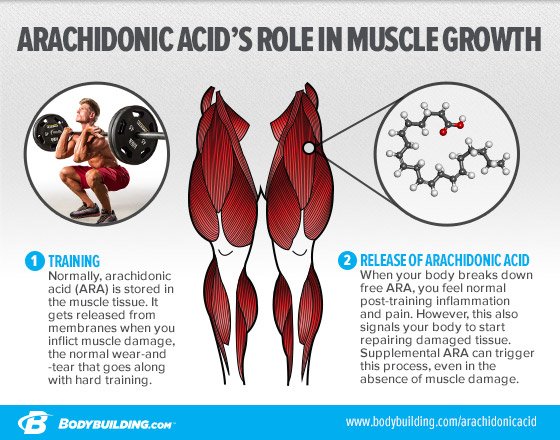
I want to start with an article that promotes a supplement I would NEVER recommend to anyone based on the information currently available. The supplement is arachidonic acid, a pro-inflammatory omega-6 fat found in eggs, chicken, beef, and to lesser degree, fish. It is non-essential because our livers can manufacture it from linoleic acid, one of the omega-6 fats we already tend to get too much of in our diets (optimal omega-6 to omega-3 ratio is 2:1, but the Western diet ranges from 10:1 to 30:1 due to large amounts of vegetable oils in processed foods).

When we look at disease, one of the primary causal factors is inflammation - most Americans, athlete or not, suffer from chronic inflammation, In fact, athletes are likely to have higher levels of inflammation due to the stress of intense exercise. So why would they want more inflammation?

The marketers of the supplement likely commissioned this article from Bodybuilding.com to sell their supplement, or the author received some compensation. I can't imagine any educated nutritional expert promoting this kind of supplement.

Caveat emptor.

Arachidonic Acid: When Inflammation Is Good

Your body knows how to use training-induced inflammation as a springboard into muscular gains. Now there's a supplement that taps into this process. Get to know arachidonic acid and experience gains like the old days!

by Jacob Ormes
Last updated: Sep 25, 2014


Once upon a time, hard-training strength athletes were almost never seen without a certain trusty bottle in hand. It followed them in their gym bag wherever they went, and they were never comfortable unless they knew it was close by.


Several studies determined that the body's muscle-building response to training was more or less shut off in people who regularly used anti-inflammatory drugs.

It wasn't the juice. It wasn't whey or creatine. It was NSAIDs—or non-steroidal anti-inflammatory drugs. You might know them by other names such as ibuprofen and naproxen.

Then, around the turn of the century, everything changed. Several studies determined that the body's muscle-building response to training was more or less shut off in people who regularly used anti-inflammatory drugs.[1,2]

It became clear that our bodies actually need acute inflammation to grow; without it, our potential to increase lean mass is blunted. While many strength athletes—and many more endurance athletes—still use these drugs periodically, the days of the Advil-popping bodybuilder were numbered.

But there's more for strength athletes to take away from this story than just "Lay off the pain pills." It also raises a question: What if there was a way to strategically—or supplementally—induce the type of inflammation that leads to muscle growth? This would seem ideal for those inevitable times when your progress has stalled and you've started using the dreaded P-word.

There is such a supplement. It's called arachidonic acid (ARA or AA), and research is showing that it has great potential to be a potent new tool in the modern athlete's nutritional arsenal.
* * * * *

On the other end of the spectrum, we know that omega-3 fats found in fish oils are anti-inflammatory, help control blood sugar levels, and help maintain healthy cholesterol levels. Now there is further proof that they are a good, natural way to prevent depression.

Omega-3 fatty acids may prevent some forms of depression

Date: October 1, 2014
Source: Elsevier
 

Summary:
Patients with increased inflammation, including those receiving cytokines for medical treatment, have a greatly increased risk of depression. For example, a 6-month treatment course of interferon-alpha therapy for chronic hepatitis C virus infection causes depression in approximately 30% of patients. Omega-3 fatty acids have a long list of health benefits, including lowering the risk of heart disease and reducing triglyceride levels. These nutritional compounds are also known to have anti-depressant and anti-inflammatory properties.
* * * * *

From T-Nation. Hint: the answer is running.

The 4 Most Damaging Types of Training 

by John Rusin | 09/23/14 


Here's what you need to know...

  • All types of training can lead to injuries, but some are much worse than others. With a few self-myofascial release techniques, you can at least minimize these risks.
  • With bodybuilders, the common use of active muscle isolation leads to increased rates of muscular adhesion and scar tissue formation.
  • The bench, squat, and deadlift weren't designed for extreme volumes and frequencies, but that's exactly what powerlifters are doing with them. Luckily, there are three effective self-treatment techniques to keep you moving some serious iron.
  • This year over 70% of CrossFitters will be sidelined for over a week at a time due to injury. A majority of that 70% can be attributed to shoulder injuries. There are, however, a few techniques to help.
  • Running is the most popular and most debilitating form of exercise. Up to 80% of runners are in pain on any given run, no matter the distance, intensity, or course.
* * * * *

From at Strength and Conditioning Research, this is an excellent primer on muscle fiber types.


What is the fiber type of different muscle groups?


Training in line with the muscle fiber type of body parts could be useful for maximizing hypertrophy. However, for too long, information about muscle fiber types has been promoted based on references to single studies and hearsay. In this article, Chris Beardsley reviews the literature regarding muscle fiber types for the main upper and lower body muscles.

What is the background?


What are muscle fiber types?

Muscle fibers can be classified in various ways. All current methods are dependent upon the assumption that limiting factor for the speed at which cross-bridge cycling can occur is the speed at which the ATPase of the myosin head can hydrolyze ATP to power the process. The three ways are:

Myosin ATPase histochemical staining – this process differentiates between individual muscle fibers on the basis of their staining intensities. These staining intensities differ between muscle fibers as a result of differences in pH sensitivity. The differences indirectly provide relative information between muscle fibers about the speed at which ATP hydrolysis occurs, although the staining procedure does not directly measure the speed of hydrolysis (Scott, 2001). The main three myosin ATPase staining results are referred to as muscle fiber types I, IIA, and IIX (or historically IIB), respectively. Interim fiber types are identified where staining types between the main classes are observed.


MHC isoform identification – this process involves differentiating between individual muscle fibers in the basis of the different myosin heavy chain isoforms. The MHCs contain the site that serves as the ATPase, which is how identifying the MHC isoform is relevant for the speed of ATP hydrolysis. Each muscle fiber can contain more than one MHC isoform. Thus, although there are only three isoforms expressed in human skeletal muscle, there are many more hybrid muscle fiber types comprising muscle fibers with several different isoforms in the same muscle fiber (Scott, 2001). The main three myosin isoforms are most correctly referred to as MHCI, MHCIIa, and MHCIIx (or MHCIIb historically).


Biochemical identification of metabolic enzymes – this process combines information derived from myosin ATPase histochemistry with histochemistry of certain enzymes that are involved in energy metabolism. In such cases, the myosin ATPase fiber typing is used to classify muscle fibers into either type I or type I. Analysis of enzymes is then performed in order to provide information about the metabolic pathways. This leads to describing the muscle fibers as either aerobic/oxidative or anaerobic/glycolytic and ultimately three different fiber types: fast-twitch glycolytic, fast-twitch oxidative, and slow-twitch oxidative (Scott, 2001).

In many circles, the three different methods are taken as producing similar outputs that can be compared across studies. While this has been found to be acceptable for certain muscle fiber types and between certain typing methods (most obviously in respect of type I muscle fibers and between MHC and myosin ATPase), it is certainly not valid across the board and we must bear this in mind when reviewing the literature.
* * * * *

From T-Nation again, Christian Thibaudeau offers an ass-kicking way to increase strength.

The 2-Second Pause for Big Gains 

by Christian Thibaudeau | 09/22/14 

Here's what you need to know...

  • Most of your strength should be built via regular sets (no pauses) on the big lifts. However, the strategic use of two-second pauses can help strengthen weak parts of specific ranges of motion.
  • Pausing also allows you to do a mental check to see if your body position and lifting mechanics are optimal. As such, pausing is a great learning tool to master technique.
  • Intra-set pauses can be performed both during the eccentric (lowering) and concentric (lifting) phases of a lift. Pauses during the eccentric portion of a lift are much easier and less effective, though.
I believe in the big, basic lifts: deadlifts, squats, bench presses, cleans, and snatches. These form the core of my training as well as that of my athletes and bodybuilders.

There are three key elements in each of these lifts and a deficiency in any of them will impede optimal performance and, by extension, gains. Including pauses during a compound lift can help improve each of these key elements.
* * * * *

Be careful with this one - there is also evidence that higher serum levels of 25-Hydroxyvitamin D
in the blood are correlated with a greater risk of prostate cancer. Low levels are also dangerous - so there is a fine line between too little and too much.

Vitamin D in Elite Athletes: The More the Better

Doug Dupont
Contributor - Health and Fitness News, Reviews


Vitamin D affects your muscles, immune system, and energy levels, so it will probably also have an effect on your performance. In a new study in PLOS One, researchers wanted to see whether vitamin D levels in athletes were associated with strength and other measures of fitness.


Previous studies have found that even in athletes who live in regions with plenty of sunlight (a major source of vitamin D in humans), vitamin D levels are often low. The goal of this new study was to take a look at both the vitamin D status and performance levels of a group of elite athletes, in this case soccer players.
* * * * *

How physical exercise protects the brain from stress-induced depression


Date: September 25, 2014
Source: Karolinska Institutet
 

Summary:
Physical exercise has many beneficial effects on human health, including the protection from stress-induced depression. However, until now the mechanisms that mediate this protective effect have been unknown. In a new study in mice, researchers show that exercise training induces changes in skeletal muscle that can purge the blood of a substance that accumulates during stress, and is harmful to the brain. 

In a study in the journal Cell, Jorge Ruas and Maria Lindskog show how physical exercise protects the brain from stress-induced depression in mice.
* * * * *

We end this week with another training article from Thibaudeau at T-Nation.

6 Ways to Keep Getting Stronger 

by Christian Thibaudeau | 09/29/14 
Here's what you need to know...
  • All progression models have their limits. These advanced strategies will allow you to keep getting stronger.
  • End every single workout with a few sets of your worst lift.
  • Use contrast series lifting. Do a series of 3 sets of an exercise using different speed dynamics with moderate weight, light weight, and then heavy weight.
  • Perform isometric holds. Pick up the barbell, bring it to the weakest position, and hold it there for 12 seconds.
  • Use next-day isolation work. Do isolation work for the weakest muscle involved in your main lift from the preceding day.
  • Do the lift you want to improve the most twice in your workout. Doing 4 sets of an exercise twice during a session will lead to greater strength gains than doing 8 sets in a row.
The Double Progression Model

The stronger you get on the big, basic barbell lifts, the more muscle you'll grow. Period. And one of the best ways to do that is to use the double progression model.

First you select a rep range. Let's say 5 reps per set. Then you select a number of sets to perform, 5 for example. You want to do all 5 work sets using the same weight and your goal is to complete all 5 sets using your target rep range.

When you can complete all your sets with the same weight at the targeted number of reps, you're allowed to increase the weight at your next session. Not being able to get all your sets done with the upper limit of the range - for example getting 5, 5, 5, 4, 3 reps - is fine, but it means you don't get to increase the weight at your next session.

However, double progression has its limits, just like any other progression model. At some point you'll need to use advanced strategies to keep getting stronger. Here are six of my favorite.