Showing posts with label health. Show all posts

Sunday, November 9, 2014

Fitness Friday - Fitness News You Can Use (Sunday Edition)

Due to a browser crash (apparently Firefox is unstable with 100+ tabs open), this week's Fitness Friday is a couple of days late, but the posts are still fresh.

Lots of good stuff this week, including research on fat intake and body composition, garlic for a healthier prostate, impact of antioxidants on muscle growth, the many benefits of creatine, complexes for muscle fat loss, and how time under tension can increase strength and muscle size.

Weight gain? The kind of fat in your diet helps determine how much muscle mass you build up

ergo-log.com

If you gain weight, the kind of fat in your diet partly determines the amount of fat and the amount of muscle in your newfound kilograms. The unsaturated fatty acids in sunflower oil stimulate the growth of muscle; the saturated fatty acids in palm oil – found in many processed foods – lead to an increase the amount of fat. Researchers at the University of Uppsala in Sweden report on this in Diabetes

* * * * *

Garlic, prostate cancer and Death Receptor-4

ergo-log.com

Garlic, prostate cancer and Death Receptor 4

The more leeks, onions, chives or garlic that men eat, the less likely they are to develop prostate cancer. Epidemiologists at the China-Japan Friendship Hospital in Beijing discovered the prostate-cancer inhibiting properties of the Allium vegetable family when they gathered and reanalysed data from 9 big epidemiological studies. They looked at data on 132,192 men in total.

Source:
Asian Pac J Cancer Prev. 2013;14(7):4131-4.

* * * * *

Do Antioxidants Impede the Benefits of Exercise?

Breaking Muscle
Craig Marker - Contributor - Psychology and Research
More Articles from this Author


Antioxidants have been shown in multiple studies to impair the benefits of exercise. But newer theories of antioxidants propose that the reactive oxygen molecules thought to be so harmful actually set in motion important reactions in the body that make us stronger in the long run.

RELATED: Antioxidants Have Mixed Effects on Performance

* * * * *


Creatine: A Versatile Supplement

Creatine is one of the few supplements that has stood the test of time. I can recall first taking it when I was in high school over 20 years ago. I’m pretty sure it’s the most well-research supplement in the literature, with thousands upon thousands of articles on the topic. HERE is a Wikipedia link to creatine in case you’d like to learn the basics. Over the years, I’ve stumbled across some interesting research on creatine. I decided to compile some of these study abstracts together into an article. When sifting through the entire body of research, it seems that creatine does not enhance testosterone or growth hormone output (one study showed increased growth hormone, but several others have shown no effect), does not work as well in the elderly as it does with younger subjects, does not reduce muscle damage (one study showed that it did, but several others showed that it did not), does not improve the plasma-lipid ratio during aerobic training, and does not alter insulin sensitivity.
creatine
However, creatine does indeed lead to some very favorable outcomes. It’s also very safe and well-tolerated. In the abstracts below, you will note that creatine....
* * * * * 

Note: despite the title of this post, guys will definitely benefit from these complexes.

3 Complexes for Rapid Female Fat Loss 

by TC | 11/04/14

Here's what you need to know...

  • CrossFit generates a lot of controversy, but everybody agrees that it does great things for the female body. Not interested in CrossFit? Do complexes.
  • Complexes provide the same kind of exertion, the same type of fat burning and strength building, and they require very little equipment or time.
  • Complexes are simply a series of movements performed with a barbell, dumbbell(s), or kettlebell(s) where you finish each rep of one movement before quickly moving onto the next movement.
  • They can be done after your regular workout as a fat-burning, muscle-shaping finisher. However, they're so effective, many women would be better off replacing their entire workout with complexes.
CrossFit? No Thanks.

CrossFit has its fans and its detractors, but the one thing everyone seemingly agrees on is that the women who do it look pretty darn good.

As powerful a lure as looking pretty darn good might be to a lot of non-CrossFit women, the idea of joining a "box" probably freaks many of them out. It could be that you were never one to join sororities in college and the notion of all that rah-rah stuff and allegedly friendly competition makes you get frown lines around your mouth.

Maybe CrossFit comes off just a little bit too much like a cult and you're in no mood to give away all your worldly possessions and swear allegiance to its founder. Others might cringe at the idea of doing all those bunion-pounding sprints. Or, it could simply be that you don't know how to do some of those Olympic lifts.

If it's the last option, you're not alone. There are thousands of female (and male) bodybuilders and fitness enthusiasts who can't do a proper snatch, clean and jerk, or muscle-up on gymnastic rings. Either they didn't learn how do to them in gym class, no one in a commercial gym taught them, they didn't bother to seek out a qualified coach, or they were just plain klutzy and were worried about impaling innocent bystanders.

* * * * *

Create Tension, Build More Muscle 

by James Chan | 11/05/14

Here's what you need to know...

  • High mechanical tension is the primary stimulus for muscle growth. The more tension you create within a muscle, the more size you'll build.
  • The tension must be long in duration, at least 20 seconds.
  • The tension must also be high throughout the entire range of motion.
  • Set extenders accomplish all three things – they create high tension for a long time throughout the entire range of motion.
  • Set extenders are when you hit a muscle group with a series of two or more exercises done in consecutive order with little or no rest.
Why are some exercises better for developing muscular size than others? 

Ultimately, high mechanical tension is the primary stimulus for muscle growth. The more tension you can create within a muscle, the more size you'll build. To maximize muscular growth, the tension has to meet the following criteria....

Friday, October 31, 2014

Fitness Friday - Fitness News You Can Use

Welcome to another edition of Fitness Friday. This week in fitness news you can use, we begin with the EXOS 7-Minute workout that they created for the New York Times, installment 60 of Eric Cressey's Quick and Easy Ways to Feel and Move Better, a post on using crawls in fitness programming from Dean Somerset, and wrapping up with 3 articles from T-Nation, Brett Contreras on  training smarter, Dan John on building your own home gym, and Tony Gentilecore with 5 reasons you aren't getting stronger.

Enjoy!

EXOS Creates the Advanced 7-Minute Workout for The New York Times

The New York Times

Looking to provide their readers with a more challenging 7-minute workout following the release of last year's Scientific 7-Minute Workout, writer Gretchen Reynolds turned to Mark Verstegen and the EXOS team. The result, the Advanced 7-Minute Workout which provides a series of exercises focused on upper body, lower body, and torso strength and mobility.

The workout, which can be completed with minimal equipment (dumbbells only) and space, focuses on elements that can be challenging but completed by a variety of fitness levels.
You can also download a free app for this workout.

* * * * *

Quick and Easy Ways to Feel and Move Better: Installment 60


Written on October 24, 2014, by Eric Cressey

This installment of quick training and nutrition tips comes from Cressey Sports Performance coach Miguel Aragoncillo.


5 Good tips here.

* * * * *

Crawling Your Face Off

Dean Somerset | Posted October 24, 2014

I’m a big fan of crawling, and not just for infants, frat boys on Saturday nights, or sniper ninjas sneaking up on their unsuspecting opponents. Crawling is one of those basic “template movements” where a lot of things can happen simply from that position to make adjustments, give variations, and produce entirely different exercises based on who you’re working with, scaled from rehab to elite athlete.


images-7

It’s a basic developmental movement that allows infants to go from stationary, using only rolling patterns to move from one place to another, to being somewhat mobile and able to explore their environment. In adults, it’s a challenge to the shoulders, core and hips as the quadruped position redistributes gravitational forces in new directions that we’re not used to. Upright standing puts more emphasis on axial compression, whereas crawling causes the spine and core to manage forces through the transverse plane and to manage low level shear stresses through the spine. The hips are working on a flexed position, and the shoulders are working on bearing weight with a locked out elbow, meaning the scapulae and muscles around it are working to keep the scaps from slapping off the rib cage. Like I said, there’s a lot going on.
* * * * *

And now, the usual several articles from T-Nation.

20 Ways to Train Smarter 

by Bret Contreras | 10/21/14 

Here's what you need to know...

  • Do leg presses while wearing Olympic shoes to really target the quads.
  • Position the hands on the outside of the dumbbells when curling. It creates an insane burn in the biceps while saving the elbows and forearms.
  • If dips hurt your shoulders, do band dips where you attach two bands to the top of a rack. Great for pec and triceps activation.
  • Brace yourself during single-leg lifts by holding onto a bar or rack for support. It'll allow for better balance and greater loads.
  • Do back extensions with a glute focus. Flare the feet out, round the upper back, squeeze the glutes, and drive the hips into the pad during each rep.
1. Don't let the hips shoot up during squats and deadlifts. 

Many lifters will shoot their hips up when they initiate the squat or the deadlift. Don't allow this to occur. Make sure the knees and hips extend at the same rate as you rise upward.
* * * * *

Build the Perfect Home Gym 

by Dan John | 10/22/14 
Here's what you need to know...
  • It's a mistake to equip your gym too well in the beginning. Building a perfect home gym should take a few years.
  • Outfitting a gym comes down to cost vs. benefit. Buy the good stuff you really need and get the rest cheap (or build it yourself.)
  • It's hard to beat a couple of kettlebells for swings, goblet squats and presses. They're portable and space efficient.
  • When training outdoors, the TRX and a kettlebell can turn any place into a full gym.
  • The ab wheel is the absolute king of full body tension and it can help your pull-up power.
  • Other things you might want to include: climbing ropes, a Prowler, chalkboards, and heavy bags for carries.
Open 24 Hours, No Membership Fees

I hate commercial gyms. I can't stand public training facilities of any kind.

Since 1971, the bulk of my training has been in my backyard and my garage. When you add up the commute time, the gym fees, and the hassle of dealing with some oily teen who slimes every flat surface in the facility, I prefer to stay home.

Here are some tips for constructing your own home gym.
 * * * * *

5 Reasons You're Not Getting Stronger 

by Tony Gentilcore | 10/24/14 
 

Here's what you need to know...

  • There's a lot more to getting strong than lifting heavy things for one rep. That will just lead to stagnation.
  • Accumulate volume. Take your 3RM and train it until you can do 5 reps with that weight.
  • Use supplemental lifts to add volume, fix weaknesses, and improve technique in the big lifts.
  • Unless your squat and deadlift are around 2x bodyweight and your bench press is 1.5x bodyweight, adding in speed work or dynamic effort days isn't going to do much.
  • Recovery days where you perform mobility, activation, or movement prep should be used along with your "balls to the walls" workouts.
Getting strong is easy. Focus on compound, multi-joint movements - preferably the squat, deadlift and bench press - and to try to move more weight in those lifts on a weekly, monthly, and yearly basis.

Basically, lift heavy shit, a lot. Repeat. Forever.

So why do many people fail to make appreciable progress with their strength goals? Here are five mistakes you can fix....

Wednesday, October 29, 2014

Two New Studies on Prostate Cancer with a Surprising Link

Two new studies on prostate cancer have been released in the last couple of days. The first one shows a 3.3 times greater risk of fatal cardiac events (heart attacks) in men who undergo androgen depletion therapy (ADT) for the treatment of prostate cancer (ADT eliminates testosterone from the body).

The new information supports previous studies suggesting that ADT increases risk of cardiovascular disease, risk of depression, induces muscle loss, decreases bone density (leading to osteoporosis), and results in an overall lower quality of life. I'd rather die of the disease than go through any of that. And in the long term, ADT does not stop progression of the disease, it only slows it down for about 6 months. After ADT the risk of a highly aggressive tumor is increased considerably, at which point it is untreatable.

The other study suggests that men who have had more than 20 female sexual partners have a 1/3 lower risk of developing prostate cancer. Strangely, men who sleep with 20 or more male partners are twice as likely to develop prostate cancer. That is a curious result that may be an anomaly, further studies are needed.

The connection between these two studies is testosterone. Men who have more sexual partners tend to have higher testosterone levels, and despite the prevailing belief that ADT is a useful treatment, there is mounting evidence that testosterone provides some protection against developing the most severe prostate cancers (which tend to be estrogen dependent, which makes ADT the most wrong choice possible).

Anyway, here are the press releases for the new studies.

Prostate cancer treatment linked to cardiac death risk 

An increased risk of dying from heart-related causes has been linked with a mainstay treatment of prostate cancer in a subgroup of men who have had prior heart attacks or congestive heart failure.


Written by David McNamee | 10.29.2014
The authors say that the findings of their study should be carefully weighed against larger controlled trials that demonstrate benefits of ADT.

One of the main treatments for prostate cancer, androgen deprivation therapy (ADT) reduced male hormone levels in an effort to prevent them from stimulating cancer cells. However, previous studies have found some adverse effects to be associated with ADT, including increased risk of diabetes, coronary heart disease, heart attacks and sudden cardiac death.

To further investigate this link, a group of researchers from Brigham and Women's Cancer Center and Harvard Medical School - both in Boston, MA - analyzed data from 5,077 prostate cancer patients who were treated between 1997 and 2006. About 30% of the participants had been treated with ADT.

No link was found between ADT and heart-related deaths among men with no risk factors for heart problems after a median follow-up of 4.8 years.

However, among men with congestive heart failure or prior heart attacks, there was a 3.3-times increased risk of death from heart problems. Heart-related deaths occurred in 7.01% of men in this subgroup who were receiving ADT, compared with 2.01% of men not receiving ADT.

The researchers explain that this increased risk works out as one cardiac death for every 20 at-risk men who receive this therapy.

"While androgen deprivation therapy can be a life-saving drug for men with prostate cancer and [can] significantly increase the cure rates when used with radiation for aggressive disease," says Dr. Paul Nguyen, of Brigham and Women's Cancer Center, "this study also raises the possibility that a small subgroup of men who have significant heart disease could experience increased cardiac death on ADT."

Further research should examine different types and durations of ADT

However, the researchers also warn that, as the study - which is published in the journal BJU International - was a retrospective analysis, its findings should be carefully weighed against larger controlled trials that demonstrate benefits of ADT.

It is also possible that changing the type or duration of ADT may reduce cardiac harm, and the researchers suggest that future studies should examine this.

The authors also consider that a longer follow-up period in future studies may reveal associations between ADT and cardiac harms in lower risk subgroups, such as among men with diabetes.

Dr. Nguyen says:
"I would still say that for men with significant heart problems, we should try to avoid ADT when it is not necessary - such as for men with low-risk disease or men receiving ADT only to shrink the prostate prior to radiation. However, for men with high-risk disease, in whom the prostate-cancer benefits of ADT likely outweigh any potential cardiac harms, ADT should be given even if they have heart problems, but the patient should be followed closely by a cardiologist to ensure that he is being carefully watched and optimized from a cardiac perspective."
In March, a study published in the Journal of Clinical Oncology found that prostate cancer patients who received ADT as their primary treatment instead of surgery or radiation therapy did not live any longer than patients who received no treatment.

The authors, from Georgetown Lombardi Comprehensive Cancer Center in Washington, DC, said that their study - which analyzed data from 15,170 patients - "mitigates against any clinical or policy rationale for use of primary androgen deprivation therapy in these men."
* * * * *

Prostate Cancer Risk Reduced By Having More Sex

Trending News: This New Study Suggests The Weirdest Reason You Should Sleep Around


Paul Watson October 28, 2014


Why Is This Important?

Because it may now be medically advisable for men to sleep around.

Long Story Short

Research has revealed that men who have slept with more than 20 women have reduced their risk of prostate cancer by almost a third, but men who have slept with 20 men have doubled their risk.

Long Story

A revolutionary new study has shown that sleeping with more than 20 women can reduce a man’s chances of developing prostate cancer by 28 percent. Conversely, men who sleep with more than 20 male partners are twice as likely to get prostate cancer than a man who has never had sex with another man.

Researchers at the University of Montreal and the Institut Armand-Frappier published their discovery in the journal Cancer Epidemiology after a survey of 3,208 men between 2005 and 2009.

It is suggested that intercourse can protect men from prostate cancer and those who are more promiscuous have more regular sex than those in long-term relationships.

“It is possible that having many female sexual partners results in a higher frequency of ejaculations, whose protective effect against prostate cancer has been previously observed,” lead researcher Dr. Marie-Elise Parent is quoted as saying by The Telegraph.

However, the reason for the reverse effect in homosexual male relationships where men who have slept with 20 male partners have double the chance of getting prostate cancer and a staggering 500% greater chance of developing a less aggressive prostate cancer, is still not clear.

“It could come from greater exposure to STIs, or it could be that anal intercourse produces physical trauma to the prostate,” Parent said, but she stressed that was a “highly speculative" analysis.

This is the first study to find a link between the number of sexual partners and prostate cancer, but it has previously been suggested that intercourse may help guard against prostate cancer because it reduces the concentration of carcinogenic substances in the fluid of the prostate.

Still, many men will be disappointed to hear that Dr. Parent was unwilling to recommend men should be told to sleep with more women, insisting we were “not there yet.”

Own The Conversation
  • Ask The Big Question: Does sleeping with more women really help men avoid prostate cancer?
  • Disrupt Your Feed: I always knew it was medically responsible to sleep with as many women as possible... Kidding.
  • Drop This Fact: Prostate cancer is the most common cancer in Europe for males and the third most common cancer overall.
Expand Your Expertise
  • Prostate cancer risk reduced by sleeping with many women, but increased with many men [Eureka Alert]
  • Sex with 21 women lowers risk of prostate cancer, academics find [The Telegraph]
  • Men who sleep with multiple women REDUCE their risk of prostate cancer [Daily Mail]

Friday, October 24, 2014

Fitness Friday: Fitness News You Can Use

This week on Fitness Friday, we have articles on carbohydrate tolerance (Performance Nutrition), the anti-estrogenic properties of kelp (Journal of Nutrition), intermittent hypoxic resistance training (Frontiers in Striated Muscle Physiology), and two articles from T-Nation (perfecting the push-press and the 5/3/1 Beach Body Challenge).
squatting

First up, from Performance Nutrition, everything you need to know about carb intolerance.

Carbohydrate tolerance: Is your ability to eat carbs determined by your genes?


By Helen Kollias

Ever wonder why some people can eat bushels of bananas without gaining a pound, but you seem to gain weight by just looking at a potato? Maybe it’s your genes. But just because you’re “carb intolerant” doesn’t mean you’re doomed. These simple guidelines can help.

[Note: we’ve also prepared an audio recording of this article for you to listen to. So, if you'd rather listen to the piece, click here.]

++

You and a friend sit down for dinner.

Your friend orders a rice and potato sandwich with a side of spaghetti.

“I’m carb tolerant,” he explains, taking a sip of his beer and glancing eagerly at the dessert buffet.

You, on the other hand, order the green salad with salmon — hold the chickpeas.

You are not carb tolerant.

But you are annoyed with your friend.

In fact, for a bite of his sandwich, you would gladly stab him with a fork.


What is “carb tolerance” anyway?

Actually, come to think of it, does “carb tolerance” even exist?

Sure, the phrase peppers a lot of contemporary dinner conversations.

But does anybody really know what it means?

Maybe “carb intolerant” people just eat too many carbs. Or the wrong kind. You know — cookie carbs, donut carbs.

Or maybe the problem isn’t carbs at all. Maybe their “baked potato” has more sour cream and butter than potato.

Then again…maybe some of those people simply can’t process carbs the way the rest of us do.

In other words, maybe their genes are to blame.
* * * * *

It appears sea kelp has anti-estrogenic effects (in mice). This is from 2005, but it's interesting nonetheless.

Kelp has anti-estrogenic effect


Kelp, or bladderwrack seaweed – scientific name Fucus vesiculosus – has an anti-estrogenic effect. Substances found in kelp delay the manufacture of estradiol in the body and sabotage the working of the estradiol receptor.

Researchers at the University of California at Berkeley stumbled upon the anti-estrogenic effect of kelp when they tested an alternative theory on why very few Japanese women have breast, womb or ovarian cancer. These types of cancer are caused by estradiol. The conventional theory is that high consumption of soya, a food with an anti-estrogenic effect, protects Japanese women against estradiol-related cancers.
Source: J Nutr. 2005 Feb;135(2):296-300. 
You can read the original research article, as well.

Brown Kelp Modulates Endocrine Hormones in Female Sprague-Dawley Rats and in Human Luteinized Granulosa Cells


Christine F. Skibola, John D. Curry, Catherine VandeVoort, Alan Conley, and Martyn T. Smith
 
Abstract
Epidemiological studies suggest that populations consuming typical Asian diets have a lower incidence of hormone-dependent cancers than populations consuming Western diets. These dietary differences have been mainly attributed to higher soy intakes among Asians. However, studies from our laboratory suggest that the anti-estrogenic effects of dietary kelp also may contribute to these reduced cancer rates. As a follow-up to previous findings of endocrine modulation related to kelp ingestion in a pilot study of premenopausal women, we investigated the endocrine modulating effects of kelp (Fucus vesiculosus) in female rats and human luteinized granulosa cells (hLGC). Kelp administration lengthened the rat estrous cycle from 4.3 ± 0.96 to 5.4 ± 1.7 d at 175 mg · kg−1 body wt · d−1 (P = 0.05) and to 5.9 ± 1.9 d at 350 mg · kg−1 · d−1 (P = 0.002) and also led to a 100% increase in the length of diestrus (P = 0.02). Following 175 mg · kg−1 · d−1 treatment for 2 wk, serum 17β-estradiol levels were reduced from 48.9 ± 4.5 to 40.2 ± 3.2 ng/L (P = 0.13). After 4 wk, 17β-estradiol levels were reduced to 36.7 ± 2.2 ng/L (P = 0.02). In hLGC, 25, 50, and 75 μmol/L treatment reduced 17β-estradiol levels from 4732 ± 591 to 3632 ± 758, 3313 ± 373, and 3060 ± 538 ng/L, respectively. Kelp treatment also led to modest elevations in hLGC culture progesterone levels. Kelp extract inhibited the binding of estradiol to estrogen receptor α and β and that of progesterone to the progesterone receptor, with IC50 values of 42.4, 31.8, and 40.7 μmol/L, respectively. These data show endocrine modulating effects of kelp at relevant doses and suggest that dietary kelp may contribute to the lower incidence of hormone-dependent cancers among the Japanese.
* * * * *

Intermittent hypoxic resistance training: does it provide added benefit?


Brendan R. Scott, Katie M. Slattery, and Ben J. Dascombe
Introduction

Methods to enhance the adaptive responses to resistance training are of great interest to clinical and athletic populations alike. Altering the muscular environment by restricting oxygen availability during resistance exercise has been shown to induce favorable physiological adaptations. An acute hypoxic stimulus during exercise essentially increases reliance on anaerobic pathways, augmenting metabolic stress responses, and subsequent hypertrophic processes (Scott et al., 2014). Hypoxic strategies during resistance exercise were originally investigated using blood flow restriction (BFR) methods (Takarada et al., 2000), whereby a cuff is applied proximally to a limb to partially limit arterial inflow while occluding venous outflow from the working muscles. Another method that has been investigated more recently is performing resistance exercise in systemic hypoxia, by means of participants breathing a hypoxic air mixture.

The addition of systemic hypoxia to resistance training has previously resulted in significantly enhanced hypertrophic and strength responses to both low-load (20% 1-repetition maximum; 1RM) (Manimmanakorn et al., 2013a,b) and moderate-load (70% 1RM) (Nishimura et al., 2010) resistance training.
* * * * *

Finally, here are a couple of articles from T-Nation.

How to Do the Perfect Push Press 


by Eric Auciello | 10/16/14 
Here's what you need to know...
  • The push press develops a strong and stable trunk while highlighting gross deficiencies in mobility.
  • The push press is a great way to train heavy loads overhead in a strength-endurance format.
  • Unlike the press, the push press requires the upper arms to be parallel to the floor, similar to the arm position used in a front squat.
  • Maintaining a stacked spinal column while exhibiting force throughout the lift is best achieved by taking a wide stance.
  • The dip-drive phase isn't a one-fourth squat. It's a shallow and violent redirection of energy from your body to the barbell.

The Perfect Push Press

When it comes to lifting a barbell overhead, there are several options to choose from, from the simple shoulder press for hypertrophy to the technically complex jerk. But somewhere in the middle of that complexity spectrum lies a lift everyone should be doing: the push press.
* * * * *

5/3/1 Beach Body Challenge 


by Jim Wendler | 10/20/14 

Here's what you need to know...

  • The goal of this challenge is performance, not aesthetics. But you'll look awesome anyway.
  • Goal setting is a three-step process: Set the goal, make the plan, and get to work.
  • The challenges are very typical of the 5/3/1 set-up in that each day has a squat, a push, and a pull.
  • Many of the lifts will use the 5's Progression: 5 reps for every set, regardless of percentage.
  • Once you've completed the first three weeks, you'll have established rep records for the squat, press, and hang clean.
  • The next three weeks of the program will be devoted to you beating or attempting to beat each record.
"Beach Muscles"

A couple of months ago I was talking with a friend of mine about what the 5/3/1 "beach muscles" would be. The list was easy to come up with:

  • Legs
  • Traps
  • Neck
  • Shoulders
  • Forearms
These obviously aren't the usual muscles associated with the beach, but I live next to a corn field, so cut me some slack. Anyway, it gave birth to the 5/3/1 "Beach Body" Challenge.

The key to the challenge is that performance is the main goal, not aesthetics. I always focus on performance. I believe that when one has a concrete training goal – for example, "press 300 pounds, box jump 45", and run a 6:30 mile" – training becomes more focused and goals become real.

Thursday, October 9, 2014

Man Pushing Giant Testicle Across U.S. For Cancer

http://www.gannett-cdn.com/-mm-/bd6a36880cde1d99db722d23e34769c5a9b9950b/c=1-0-534-400&r=x404&c=534x401/local/-/media/WTSP/None/2014/10/02/1412290499000-ball.jpg

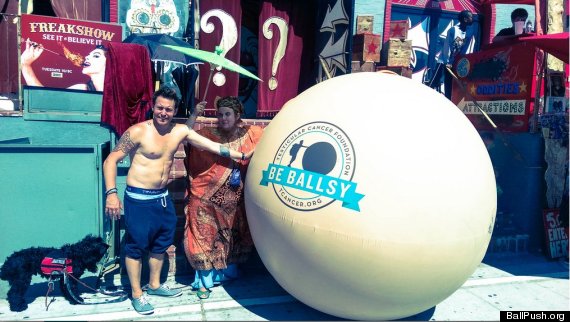
Thomas Cantley, also known as "Mr. Ballsy" is rolling a giant ball from Los Angeles to New York city to educate and engage with others about testicular cancer.

* * * * *

BALLSY MOVE: Thomas Cantley Pushing Giant Testicle Across US To Raise Cancer Awareness

The Huffington Post | By David Moye
Posted: 10/03/2014
Thomas Cantley wants to raise awareness about testicular cancer in the ballsiest way possible.

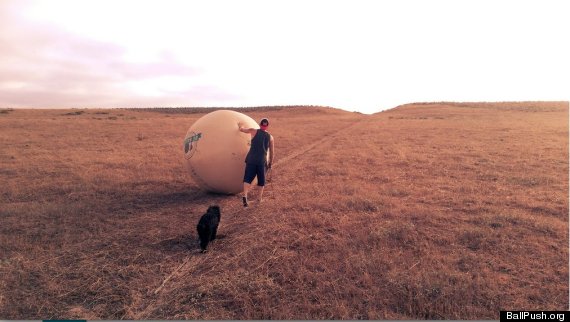
Cantley, 31, a fashion photographer by trade, is currently pushing a giant 6-foot ball across America from Los Angeles to New York.
He started Sept. 4 and is currently in New Orleans. If all goes well, Cantley, his dog Vader, and giant ball -- which he has named "Lefty" -- will roll into New York around Oct. 13.
The testicle trek isn't as nutty as it might seem at first glance.
"I wanted to do sort of a social experiment," Cantley told KSBW TV. "I didn't want to force myself on anyone, and what this does, it forces people to come to me, ask me, 'What is this, what's it about, it kind of looks like a testicle, what's going on?' It creates that conversation." 
thomas cantley 3
Cantley was diagnosed with testicular cancer in 2009. At the time, he had been suffering from abdominal and lower back pain but wasn't aware they were key warning signs of testicular cancer.
"I had this 'Superman Complex' all these men create," he told Today.com. "I was a fashion photographer in New York and I was so self-centered."
If detected early, testicular cancer has a 95 percent survival rate. By the time Cantley did go to a doctor, his left testicle had ballooned to the size of an orange, Newser.com reports.
thomas cantley
Cantley said that after his diagnosis, he sat down and asked himself: “If I died right now, what could I say I’ve accomplished in my life?”
He decided he needed to get teste.
“My initials are T.C., same as testicular cancer, and testicular cancer month is in April, my birthday is April 3. So, for me there was kind of a calling,” he told the Killeen Daily Herald. “When I was diagnosed with cancer, it was an awakening for me. I realized that I’m a communicator, I love people.”
thomas cantley 2 

Saturday, October 4, 2014

#FeelingNuts Challenge for Men Goes Viral

http://media2.whosaystatic.com/661088/661088_602x602.jpg

William Shatner is doing it.

Embedded image permalink

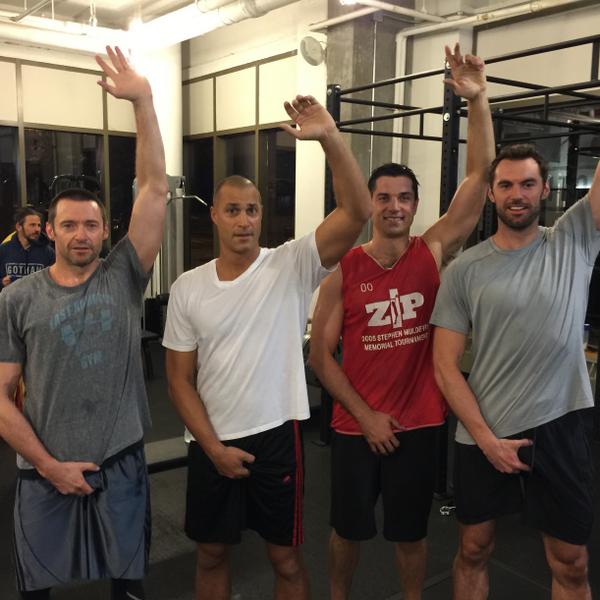
Hugh Jackman (far left) is doing it.

Are you doing it?

It's time to grab your stuff, boys, and feel around for lumps that don't belong there (note: those two big lumps are your testicles).

Feeling Nuts Challenge for men goes viral


By Sara Cheshire, Special to CNN
Fri October 3, 2014

Men, are you #feelingnuts?

STORY HIGHLIGHTS

  • #feelingnuts is raising awareness online of testicular cancer
  • Celebrities Hugh Jackman and William Shatner have joined in
  • Testicular cancer typically affects young men
  • Experts estimate 8,820 cases of testicular cancer will be diagnosed this year in the U.S.
(CNN) -- Now that the Ice Bucket Challenge has made the rounds, a new trend is on the rise: crotch grabbing -- for testicular cancer.

Stars such as Hugh Jackman and William Shatner have already participated in the Feeling Nuts Challenge, which you can follow online with the hashtag #feelingnuts.

Why testicular cancer awareness? Unlike some other cancers, testicular cancer typically affects young men, with an average age of diagnosis 33, according to American Cancer Society. The organization estimates that 8,820 new cases of testicular cancer will be diagnosed this year in the United States.

Fortunately, it is highly treatable if discovered early.

Men who have cryptorchidism, or an undescended testicle, are more at risk, along with those with a family history of the cancer. White males have the highest risk, followed by Latino, Asian-American and black men, according to the ACS.

So if you're joining the Feeling Nuts Challenge, feel for lumps and follow up with a doctor if anything seems amiss.

Friday, October 3, 2014

Fitness Friday - Fitness News You Can Use

I missed last week's installment due to life. So I'm back this week with a ton of useful health and fitness information. We have articles this week on supplements (one good, one bad, one questionable), muscle fiber types, the type of training most likely to cause injury, and a couple of good training articles from Christian Thibaudeau at T-Nation.

* * * * *

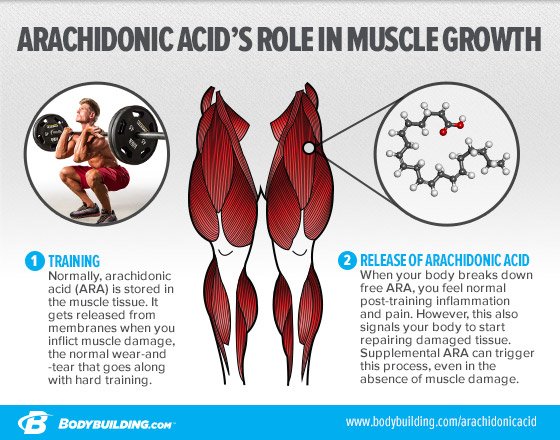
I want to start with an article that promotes a supplement I would NEVER recommend to anyone based on the information currently available. The supplement is arachidonic acid, a pro-inflammatory omega-6 fat found in eggs, chicken, beef, and to lesser degree, fish. It is non-essential because our livers can manufacture it from linoleic acid, one of the omega-6 fats we already tend to get too much of in our diets (optimal omega-6 to omega-3 ratio is 2:1, but the Western diet ranges from 10:1 to 30:1 due to large amounts of vegetable oils in processed foods).

When we look at disease, one of the primary causal factors is inflammation - most Americans, athlete or not, suffer from chronic inflammation, In fact, athletes are likely to have higher levels of inflammation due to the stress of intense exercise. So why would they want more inflammation?

The marketers of the supplement likely commissioned this article from Bodybuilding.com to sell their supplement, or the author received some compensation. I can't imagine any educated nutritional expert promoting this kind of supplement.

Caveat emptor.

Arachidonic Acid: When Inflammation Is Good

Your body knows how to use training-induced inflammation as a springboard into muscular gains. Now there's a supplement that taps into this process. Get to know arachidonic acid and experience gains like the old days!

by Jacob Ormes
Last updated: Sep 25, 2014


Once upon a time, hard-training strength athletes were almost never seen without a certain trusty bottle in hand. It followed them in their gym bag wherever they went, and they were never comfortable unless they knew it was close by.


Several studies determined that the body's muscle-building response to training was more or less shut off in people who regularly used anti-inflammatory drugs.

It wasn't the juice. It wasn't whey or creatine. It was NSAIDs—or non-steroidal anti-inflammatory drugs. You might know them by other names such as ibuprofen and naproxen.

Then, around the turn of the century, everything changed. Several studies determined that the body's muscle-building response to training was more or less shut off in people who regularly used anti-inflammatory drugs.[1,2]

It became clear that our bodies actually need acute inflammation to grow; without it, our potential to increase lean mass is blunted. While many strength athletes—and many more endurance athletes—still use these drugs periodically, the days of the Advil-popping bodybuilder were numbered.

But there's more for strength athletes to take away from this story than just "Lay off the pain pills." It also raises a question: What if there was a way to strategically—or supplementally—induce the type of inflammation that leads to muscle growth? This would seem ideal for those inevitable times when your progress has stalled and you've started using the dreaded P-word.

There is such a supplement. It's called arachidonic acid (ARA or AA), and research is showing that it has great potential to be a potent new tool in the modern athlete's nutritional arsenal.
* * * * *

On the other end of the spectrum, we know that omega-3 fats found in fish oils are anti-inflammatory, help control blood sugar levels, and help maintain healthy cholesterol levels. Now there is further proof that they are a good, natural way to prevent depression.

Omega-3 fatty acids may prevent some forms of depression

Date: October 1, 2014
Source: Elsevier
 

Summary:
Patients with increased inflammation, including those receiving cytokines for medical treatment, have a greatly increased risk of depression. For example, a 6-month treatment course of interferon-alpha therapy for chronic hepatitis C virus infection causes depression in approximately 30% of patients. Omega-3 fatty acids have a long list of health benefits, including lowering the risk of heart disease and reducing triglyceride levels. These nutritional compounds are also known to have anti-depressant and anti-inflammatory properties.
* * * * *

From T-Nation. Hint: the answer is running.

The 4 Most Damaging Types of Training 

by John Rusin | 09/23/14 


Here's what you need to know...

  • All types of training can lead to injuries, but some are much worse than others. With a few self-myofascial release techniques, you can at least minimize these risks.
  • With bodybuilders, the common use of active muscle isolation leads to increased rates of muscular adhesion and scar tissue formation.
  • The bench, squat, and deadlift weren't designed for extreme volumes and frequencies, but that's exactly what powerlifters are doing with them. Luckily, there are three effective self-treatment techniques to keep you moving some serious iron.
  • This year over 70% of CrossFitters will be sidelined for over a week at a time due to injury. A majority of that 70% can be attributed to shoulder injuries. There are, however, a few techniques to help.
  • Running is the most popular and most debilitating form of exercise. Up to 80% of runners are in pain on any given run, no matter the distance, intensity, or course.
* * * * *

From at Strength and Conditioning Research, this is an excellent primer on muscle fiber types.


What is the fiber type of different muscle groups?


Training in line with the muscle fiber type of body parts could be useful for maximizing hypertrophy. However, for too long, information about muscle fiber types has been promoted based on references to single studies and hearsay. In this article, Chris Beardsley reviews the literature regarding muscle fiber types for the main upper and lower body muscles.

What is the background?


What are muscle fiber types?

Muscle fibers can be classified in various ways. All current methods are dependent upon the assumption that limiting factor for the speed at which cross-bridge cycling can occur is the speed at which the ATPase of the myosin head can hydrolyze ATP to power the process. The three ways are:

Myosin ATPase histochemical staining – this process differentiates between individual muscle fibers on the basis of their staining intensities. These staining intensities differ between muscle fibers as a result of differences in pH sensitivity. The differences indirectly provide relative information between muscle fibers about the speed at which ATP hydrolysis occurs, although the staining procedure does not directly measure the speed of hydrolysis (Scott, 2001). The main three myosin ATPase staining results are referred to as muscle fiber types I, IIA, and IIX (or historically IIB), respectively. Interim fiber types are identified where staining types between the main classes are observed.


MHC isoform identification – this process involves differentiating between individual muscle fibers in the basis of the different myosin heavy chain isoforms. The MHCs contain the site that serves as the ATPase, which is how identifying the MHC isoform is relevant for the speed of ATP hydrolysis. Each muscle fiber can contain more than one MHC isoform. Thus, although there are only three isoforms expressed in human skeletal muscle, there are many more hybrid muscle fiber types comprising muscle fibers with several different isoforms in the same muscle fiber (Scott, 2001). The main three myosin isoforms are most correctly referred to as MHCI, MHCIIa, and MHCIIx (or MHCIIb historically).


Biochemical identification of metabolic enzymes – this process combines information derived from myosin ATPase histochemistry with histochemistry of certain enzymes that are involved in energy metabolism. In such cases, the myosin ATPase fiber typing is used to classify muscle fibers into either type I or type I. Analysis of enzymes is then performed in order to provide information about the metabolic pathways. This leads to describing the muscle fibers as either aerobic/oxidative or anaerobic/glycolytic and ultimately three different fiber types: fast-twitch glycolytic, fast-twitch oxidative, and slow-twitch oxidative (Scott, 2001).

In many circles, the three different methods are taken as producing similar outputs that can be compared across studies. While this has been found to be acceptable for certain muscle fiber types and between certain typing methods (most obviously in respect of type I muscle fibers and between MHC and myosin ATPase), it is certainly not valid across the board and we must bear this in mind when reviewing the literature.
* * * * *

From T-Nation again, Christian Thibaudeau offers an ass-kicking way to increase strength.

The 2-Second Pause for Big Gains 

by Christian Thibaudeau | 09/22/14 

Here's what you need to know...

  • Most of your strength should be built via regular sets (no pauses) on the big lifts. However, the strategic use of two-second pauses can help strengthen weak parts of specific ranges of motion.
  • Pausing also allows you to do a mental check to see if your body position and lifting mechanics are optimal. As such, pausing is a great learning tool to master technique.
  • Intra-set pauses can be performed both during the eccentric (lowering) and concentric (lifting) phases of a lift. Pauses during the eccentric portion of a lift are much easier and less effective, though.
I believe in the big, basic lifts: deadlifts, squats, bench presses, cleans, and snatches. These form the core of my training as well as that of my athletes and bodybuilders.

There are three key elements in each of these lifts and a deficiency in any of them will impede optimal performance and, by extension, gains. Including pauses during a compound lift can help improve each of these key elements.
* * * * *

Be careful with this one - there is also evidence that higher serum levels of 25-Hydroxyvitamin D
in the blood are correlated with a greater risk of prostate cancer. Low levels are also dangerous - so there is a fine line between too little and too much.

Vitamin D in Elite Athletes: The More the Better

Doug Dupont
Contributor - Health and Fitness News, Reviews


Vitamin D affects your muscles, immune system, and energy levels, so it will probably also have an effect on your performance. In a new study in PLOS One, researchers wanted to see whether vitamin D levels in athletes were associated with strength and other measures of fitness.


Previous studies have found that even in athletes who live in regions with plenty of sunlight (a major source of vitamin D in humans), vitamin D levels are often low. The goal of this new study was to take a look at both the vitamin D status and performance levels of a group of elite athletes, in this case soccer players.
* * * * *

How physical exercise protects the brain from stress-induced depression


Date: September 25, 2014
Source: Karolinska Institutet
 

Summary:
Physical exercise has many beneficial effects on human health, including the protection from stress-induced depression. However, until now the mechanisms that mediate this protective effect have been unknown. In a new study in mice, researchers show that exercise training induces changes in skeletal muscle that can purge the blood of a substance that accumulates during stress, and is harmful to the brain. 

In a study in the journal Cell, Jorge Ruas and Maria Lindskog show how physical exercise protects the brain from stress-induced depression in mice.
* * * * *

We end this week with another training article from Thibaudeau at T-Nation.

6 Ways to Keep Getting Stronger 

by Christian Thibaudeau | 09/29/14 
Here's what you need to know...
  • All progression models have their limits. These advanced strategies will allow you to keep getting stronger.
  • End every single workout with a few sets of your worst lift.
  • Use contrast series lifting. Do a series of 3 sets of an exercise using different speed dynamics with moderate weight, light weight, and then heavy weight.
  • Perform isometric holds. Pick up the barbell, bring it to the weakest position, and hold it there for 12 seconds.
  • Use next-day isolation work. Do isolation work for the weakest muscle involved in your main lift from the preceding day.
  • Do the lift you want to improve the most twice in your workout. Doing 4 sets of an exercise twice during a session will lead to greater strength gains than doing 8 sets in a row.
The Double Progression Model

The stronger you get on the big, basic barbell lifts, the more muscle you'll grow. Period. And one of the best ways to do that is to use the double progression model.

First you select a rep range. Let's say 5 reps per set. Then you select a number of sets to perform, 5 for example. You want to do all 5 work sets using the same weight and your goal is to complete all 5 sets using your target rep range.

When you can complete all your sets with the same weight at the targeted number of reps, you're allowed to increase the weight at your next session. Not being able to get all your sets done with the upper limit of the range - for example getting 5, 5, 5, 4, 3 reps - is fine, but it means you don't get to increase the weight at your next session.

However, double progression has its limits, just like any other progression model. At some point you'll need to use advanced strategies to keep getting stronger. Here are six of my favorite.

Friday, September 19, 2014

Fitness Friday - Fitness News You Can Use

http://i.telegraph.co.uk/multimedia/archive/03043/jens_3043716b.jpg

We start this week's Fitness Friday with a sports story that exemplifies fitness. Yesterday, in Switzerland, 43-year-old Jens Voigt broke the Hour Record, becoming the oldest man to hold the record. He rode 51.115 km in the 60 minutes of pain, topping the previous record by more than a kilometer. AND he did this as the last race in his long career, having announced his retirement earlier this season. Hats off to one of the great cyclists of his generation.

* * * * *

Okay then, back to the usual format. This week we have a research study suggesting cardio BEFORE weights offers a better hormonal response, a primer of squat patterning from Tony Gentilcore, some fire-breathing finishers from Eric and Ryan Johnson, and some excellent kneeling exercises from Brett Contreras (the later two articles come from T-Nation).

First up, from Breaking Muscle:

Cardio Before Strength Elicits Better Hormonal Response

Doug Dupont
Contributor - Health and Fitness News, Reviews
 
***
Conclusion

The most common wisdom in the gym is to perform strength training before cardio. However, evidence is mounting that cardio first is a superior approach. While we need more research to be certain, we now have good reason to try out new methods. 
References:
Claudio Rosa, et. al. (2014). Order effects of combined strength and endurance training on testosterone, cortisol, growth hormone and IGFBP-3 in concurrent-trained men. Journal of Strength and Conditioning Research. DOI: 10.1519/JSC.0000000000000610
* * * * *

From Tony Gentilcore (scroll down past the stories of his European Adventure):

Squat Patterning 101: How to Clean Up Your Squat. Like a Boss


Just so we’re clear: I think the squat is a basic movement pattern that everyone should be able to perform. I’m not insinuating that everyone should be able to walk into a gym on day #1 and drop it like it’s hot into a clean, deep squat and/or be able to load it to a significant degree.
Not everyone can (or should) squat deep. I’ve written on the topic several times, and for those interested you can go HERE and HERE.

* * * * *

The next 2 articles are from T-Nation:

4 Fire-Breathing Finishers 

by Eric Johnson, Ryan Johnson | 09/16/14


Here's what you need to know...

  • Developing the ability to control your breathing will allow you to deliver more oxygen-rich blood to your muscles, efficiently lower your heart rate and blood pressure, maintain optimal conditions at the biochemical level, and most importantly, kick some butt.
  • These combinations were designed to optimize breathing in a stressed state. Each of them will teach your body how to respond in the absence of oxygen so that you can keep your composure, perform at your highest levels, and come out victorious.
Walking back to your corner, your lungs feel like they're on fire. Your heart rate is racing towards unknown territories. You only have sixty precious seconds to lower your heart rate, catch your breath, and resume the battle.

You look across the ring at your opponent. He resembles a lion patiently waiting to attack his prey – cool, calm, and collected. In this moment, he's gained the advantage over you.

The question is, why aren't you cool, calm, and collected? Why didn't you develop the ability to control your breathing, to switch your nervous system from a state of fight or flight to a parasympathetic one? This would have allowed you to deliver more oxygen-rich blood to your muscles, efficiently lower your heart rate and blood pressure, maintain optimal conditions at the biochemical level, and most importantly, kick some ass.

Before the next time, you should practice these four fire-breathing finishers that were designed to leave you gasping for air. These combinations were designed to optimize breathing in a stressed state. Each of them will teach your body how to respond in the absence of oxygen so that you can keep your composure, perform at your highest levels, and come out victorious.
* * * * *

There are some excellent exercises in the post from Brett Contreras, especially like the half-kneeling overhead press (did it yesterday with the trap-bar after reading the article). If you try these, do NOT load up the bar with weights you might be more familiar with - start light and get a feel for the exercise first.

A lot of the half-kneeling presses are excellent if you have access to a landmine anchor in your gym, or a solid corner to plant the end of the bar.

13 Exercises That'll Floor You 

by Bret Contreras | 9.18.2014

Here's what you need to know...

  • Don't roll your eyes. These aren't wimpy rehab exercises. There are several difficult kneeling exercises that will challenge even the most advanced lifter.
  • The half-kneeling cable anti-rotation press is one of the most underestimated core exercises in existence.
  • Louie Simmons uses heavy loads on the kneeling squat to target the glutes of certain powerlifters.
  • The Nordic ham curl is an incredible hamstring exercise. Highly advanced lifters can do these without the use of their hands to reverse the direction at the bottom of the movement.
  • The half-kneeling overhead press is an amazing shoulder exercise that transfers well to the military press, spares the spine, and allows for sound levels of balance and stability.
Get ready for some challenging new exercises that'll leave you floored... literally. Here are 13 different movements performed from a kneeling position that are worth including in your program from time to time.
 

Friday, September 12, 2014

Fitness Friday - Fitness News You Can Use

It's another Fitness Friday. Today we have Eric Cressey on the negative impact of sitting all day, Christian Thibaudeau on how hard do we need to work out, Tony Gentilcore on mastering the kettlebell swing, and Travis Pollen on adding static contractions to the end of our sets for added growth.

How Chronic, Prolonged Sitting Impacts Your Body – and What to Do About It


Written on September 9, 2014, by Eric Cressey

Last week, over the course of two days, I made the long drive from Hudson, MA to Jupiter, FL. Suffice it to say that all those hours in the car gave me a newfound appreciation (or distaste?) for just how hard sitting is on the body. As such, it was really timely when my friend Michael Mullin emailed along this guest post on the subject. Enjoy! -EC

I would like to have you read the scenario below and let me know if you would want this job.

“Congratulations on being selected for the position of top minion here at Do Everything Against Design, Inc. (DEAD). Our company is a prestigious purveyors of thneeds—and a thneed is a thing that everyone needs (5). We pride ourselves on our commitment to being on the cutting edge of business and we use only the best, most up-to-date information possible to dictate how we run our business.”

“Let me start off by saying that this job will provide all kinds of potential benefits. It is up to you to decide how committed you are. The potentials are endless—overuse injury, chronic pain, depression, increased alcohol use, drug or medication use, cancer, increased general mortality, even bullying—that’s right, just like when you were a kid—are all very real possibilities here at DEAD, Inc.”

* * * * *

How Hard Do You Need to Work Out? 

by Christian Thibaudeau | 09/08/14


Here's what you need to know...
  • You need to train very hard to progress optimally, but if you train so hard that it affects the quality of your other workouts or causes so much stress that performance decreases, it's a bad move.
  • If you train a muscle only once a week, you'll be able to impose a lot more punishment without too many ill-effects than if you train each muscle several times in a week.
  • Testing your mettle with challenge-based workouts can be a great way to see how physically capable you are and preparing for those challenges can boost your training motivation significantly.
  • If you don't go borderline crazy from time to time you lose sight of what training hard means. An occasional lesson in pain in the gym will allow you to keep things in perspective.
  • Puking may make you seem hardcore, but vomiting during a workout simply means that you mistimed your food intake and training, which really doesn't make you that hardcore at all.
Feeling the burn. Driving yourself into the ground. Feeling crippling soreness. Puking. Not being able to walk after leg day. Not being able to drive after arm day.

All of the above are badges of honor for many lifters, but none of them guarantee that your workout was positive and will lead to improvements. Regardless, many of us prefer to focus on these elements rather than on objective progression.

Why? Because doing madman workouts makes you look hardcore, like a warrior. Your workout often turns into a test of how much suffering you can endure. But do you really need to drive yourself into the ground every single workout to make progress?

* * * * *

Master the Kettlebell Swing 

by Tony Gentilcore | 09/10/14


Here's what you need to know...
  • The hip hinge serves as a precursor to everything you probably want to improve, from athletic performance to body composition.
  • The ultimate hip hinge or hip snap movement is the kettlebell swing... and you're probably doing it wrong.
  • Many lifters and athletes make the mistake of breaking with their knees first and making it more of a squat pattern. This is wrong. You want to hinge with the hips first, "attack the zipper," and keep the kettlebell as close to the body as possible.
Hip Hinging for Strength and Fat Loss

The hip hinge is a crucial ingredient for pretty much every lower-body movement you'll perform in the gym that doesn't involve a machine or sitting down. Get it down now and it makes everything easier down the road.

The hip hinge is nothing more than any movement which involves flexion/extension originating at the hips and which also involves a posterior weight shift. Breaking it down more, it's important to note that the hip hinge is in no way associated with a squat pattern.
Hip Hinge = maximal hip bend, minimal knee bend.
Squat = maximal hip bend, maximal knee bend.
While grooving both patterns is important, I'll place more emphasis on the hip hinge because, well, most people move like shit and don't perform it properly. As a coach, the sooner I can correct the pattern and get an athlete or weekend warrior to perform it right, the sooner I can introduce any exercise I want. The hip hinge makes the learning curve infinitely smaller.

* * * * *

6 Ways to Bring the Pain

Deadly Dynamic-Static Compound Sets
by Travis Pollen | 09/10/14


Here's what you need to know...
  • Static holds have long been known to build impressive amounts of mass, if you can stand the pain.
  • By pairing a static hold performed at the hardest part of a bodyweight exercise with a heavy compound lift for the same muscles, you have yourself a time-effective - and brutal - way to gain size.
  • Advanced lifters can ramp it up again by performing a third static hold.
When it comes to building muscle, time under tension (TUT) is king, or at least a big part of the royal court. Historically speaking, many bodybuilding greats have used isometric training to help build their imposing physiques, sometimes doing sets lasting upwards of three minutes. The trouble is, most of us neither have the time nor the patience to hold an isometric lateral raise all damn day. Fortunately, there's a way to reap these same muscle-building benefits with iso holds lasting a third of the time. I call it the dynamic-static compound set.