Showing posts with label complexes. Show all posts

Sunday, November 9, 2014

Fitness Friday - Fitness News You Can Use (Sunday Edition)

Due to a browser crash (apparently Firefox is unstable with 100+ tabs open), this week's Fitness Friday is a couple of days late, but the posts are still fresh.

Lots of good stuff this week, including research on fat intake and body composition, garlic for a healthier prostate, impact of antioxidants on muscle growth, the many benefits of creatine, complexes for muscle fat loss, and how time under tension can increase strength and muscle size.

Weight gain? The kind of fat in your diet helps determine how much muscle mass you build up

ergo-log.com

If you gain weight, the kind of fat in your diet partly determines the amount of fat and the amount of muscle in your newfound kilograms. The unsaturated fatty acids in sunflower oil stimulate the growth of muscle; the saturated fatty acids in palm oil – found in many processed foods – lead to an increase the amount of fat. Researchers at the University of Uppsala in Sweden report on this in Diabetes

* * * * *

Garlic, prostate cancer and Death Receptor-4

ergo-log.com

Garlic, prostate cancer and Death Receptor 4

The more leeks, onions, chives or garlic that men eat, the less likely they are to develop prostate cancer. Epidemiologists at the China-Japan Friendship Hospital in Beijing discovered the prostate-cancer inhibiting properties of the Allium vegetable family when they gathered and reanalysed data from 9 big epidemiological studies. They looked at data on 132,192 men in total.

Source:
Asian Pac J Cancer Prev. 2013;14(7):4131-4.

* * * * *

Do Antioxidants Impede the Benefits of Exercise?

Breaking Muscle
Craig Marker - Contributor - Psychology and Research
More Articles from this Author


Antioxidants have been shown in multiple studies to impair the benefits of exercise. But newer theories of antioxidants propose that the reactive oxygen molecules thought to be so harmful actually set in motion important reactions in the body that make us stronger in the long run.

RELATED: Antioxidants Have Mixed Effects on Performance

* * * * *


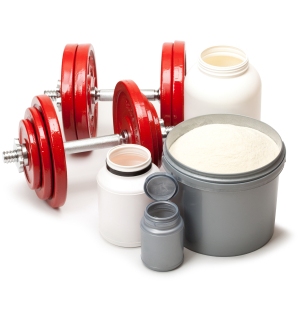
Creatine: A Versatile Supplement

Creatine is one of the few supplements that has stood the test of time. I can recall first taking it when I was in high school over 20 years ago. I’m pretty sure it’s the most well-research supplement in the literature, with thousands upon thousands of articles on the topic. HERE is a Wikipedia link to creatine in case you’d like to learn the basics. Over the years, I’ve stumbled across some interesting research on creatine. I decided to compile some of these study abstracts together into an article. When sifting through the entire body of research, it seems that creatine does not enhance testosterone or growth hormone output (one study showed increased growth hormone, but several others have shown no effect), does not work as well in the elderly as it does with younger subjects, does not reduce muscle damage (one study showed that it did, but several others showed that it did not), does not improve the plasma-lipid ratio during aerobic training, and does not alter insulin sensitivity.
creatine
However, creatine does indeed lead to some very favorable outcomes. It’s also very safe and well-tolerated. In the abstracts below, you will note that creatine....
* * * * * 

Note: despite the title of this post, guys will definitely benefit from these complexes.

3 Complexes for Rapid Female Fat Loss 

by TC | 11/04/14

Here's what you need to know...

  • CrossFit generates a lot of controversy, but everybody agrees that it does great things for the female body. Not interested in CrossFit? Do complexes.
  • Complexes provide the same kind of exertion, the same type of fat burning and strength building, and they require very little equipment or time.
  • Complexes are simply a series of movements performed with a barbell, dumbbell(s), or kettlebell(s) where you finish each rep of one movement before quickly moving onto the next movement.
  • They can be done after your regular workout as a fat-burning, muscle-shaping finisher. However, they're so effective, many women would be better off replacing their entire workout with complexes.
CrossFit? No Thanks.

CrossFit has its fans and its detractors, but the one thing everyone seemingly agrees on is that the women who do it look pretty darn good.

As powerful a lure as looking pretty darn good might be to a lot of non-CrossFit women, the idea of joining a "box" probably freaks many of them out. It could be that you were never one to join sororities in college and the notion of all that rah-rah stuff and allegedly friendly competition makes you get frown lines around your mouth.

Maybe CrossFit comes off just a little bit too much like a cult and you're in no mood to give away all your worldly possessions and swear allegiance to its founder. Others might cringe at the idea of doing all those bunion-pounding sprints. Or, it could simply be that you don't know how to do some of those Olympic lifts.

If it's the last option, you're not alone. There are thousands of female (and male) bodybuilders and fitness enthusiasts who can't do a proper snatch, clean and jerk, or muscle-up on gymnastic rings. Either they didn't learn how do to them in gym class, no one in a commercial gym taught them, they didn't bother to seek out a qualified coach, or they were just plain klutzy and were worried about impaling innocent bystanders.

* * * * *

Create Tension, Build More Muscle 

by James Chan | 11/05/14

Here's what you need to know...

  • High mechanical tension is the primary stimulus for muscle growth. The more tension you create within a muscle, the more size you'll build.
  • The tension must be long in duration, at least 20 seconds.
  • The tension must also be high throughout the entire range of motion.
  • Set extenders accomplish all three things – they create high tension for a long time throughout the entire range of motion.
  • Set extenders are when you hit a muscle group with a series of two or more exercises done in consecutive order with little or no rest.
Why are some exercises better for developing muscular size than others? 

Ultimately, high mechanical tension is the primary stimulus for muscle growth. The more tension you can create within a muscle, the more size you'll build. To maximize muscular growth, the tension has to meet the following criteria....

Friday, September 5, 2014

Fitness Friday - Fitness News You Can Use

It's Friday, so it's time for another Fitness Friday. This week we have a primer on the pull-up vs. the chin-up, and a breakdown of the bodybuilder squat vs. the power lifter squat. We also have a report on the state of strength and conditioning coaching. There's an article on "Hellfire Reps." And finally, an article on using complexes for 20-minute workouts.

From Breaking Muscle:

Pull Up vs. Chin Up: A Comparison and Analysis


Amber Larsen - Contributor - Biology, Gymnastics, CrossFit
Chin ups are not really pull ups. Well, according to some Internet debates, that’s the case, but I contend that chin ups are in fact pull ups.

I suggest that pull ups is an umbrella category, and there are several different variations within that category including the overhand grip (traditionally called the pull up), reverse grip (the chin up), and opposing grip. In this article, we will explore the chin up in depth and how it activates our muscles, as well as how it differs from the pull up.
Note: Throughout this article, when I say pull ups, I am speaking about strict pull ups.
Left: chin up; Right: pull up.

* * * * *

From T-Nation:

Bodybuilding vs Powerlifting Squat

The 10 Components You Need to Know 
by Rob King | 09/01/14 
Here's what you need to know...
  • After the newbie stage, you need to pick between getting stronger or getting bigger and squat accordingly.
  • Mix lower rep squats and higher rep squats for hypertrophy (8-12 and even sets of 25 or 50) and use lower rep squats for strength (1-5).
  • Tempos with a slow eccentric are often useful for bodybuilding squats but usually have no place in powerlifting squats.
  • A longer time under tension is great for hypertrophy, but not so great for strength.
  • Generally speaking, use a high-bar placement for bodybuilding squats and a low-bar placement for powerlifting squats.
  • For building muscle, mix up short rest periods and long rest. When training for strength, have a minimum of three minutes rest between sets to maximize recovery and strength.
  • A bodybuilding squat requires a narrow stance while a powerlifting squat is best approached with a hip dominant stance.
To maximize results from the squat, it all comes down to reverse engineering the movement and asking yourself the question, "What's my current training goal?" During your first year or two of training you can squat every Monday and get results with no problem. But after a while those gains will slow no matter how hard you bust your butt. When this happens it's time to take a step back and pick between the following two goals:

1. Get Stronger
or
2. Get Bigger

Sure, there's always a carryover in size and strength while squatting, but what we're talking about here is squatting to maximize either strength or size. Why is this important? Well, for the bodybuilder, what he squats really doesn't matter. What matters is the development of his legs. For the powerlifter, no one judges the size of his legs, only how much he lifts. As such, he has to squat with his goal in mind.

Let's break down ten components of the squat and discuss the differences between a powerlifting squat and a bodybuilding squat.
* * * * *

The Current State of S&C Coaching 

by Mark Rippetoe | 09/03/2014


Here's what you need to know...
  • Some of the worst strength and conditioning coaches in the industry are found at the D1 university and professional levels. Hiding behind the innate talents of the genetic phenoms handed to them by skilled recruiters, these coaches bask in glory as they squander the talent of their athletes.
  • The ability to display power is largely controlled by genetics. Explosive athletes are born that way. Athleticism is not very trainable, but strength is. An increase in strength increases the ability to fully display athleticism. So why aren't "strength coaches" focusing on strength development in 2014?
  • What detracts from effective, sport-applicable strength training? So-called functional training, stability work, agility training, incorrectly coached and applied Olympic lifting, machine exercises, corrective exercises, core-specific exercise, and an overemphasis on conditioning.
  • Barbell training with progressively increasing loads on the basic exercises increases strength, power, and all of the other dependent characteristics – for everybody, and for several years.
Note to Future Readers

This essay is about the state of the strength and conditioning profession in 2014, most of which is practiced in high schools, colleges and universities, and at the professional sports level.

Those of you reading this in the distant future, while you drive your flying cars (please be careful), may observe with amusement that all these problems have long since been corrected – if I have even described them accurately here in 2014 – and my concerns turned out to be about as relevant to your advanced civilization as global warming.

From atop your glacier, you may look down on a landscape devoid of weak, overtrained athletes, and wonder just what in the hell I was so concerned about. I hope so.
* * * * *

Hellfire Reps

Fire Up Your Gains! 
by Ben Bruno | 09/04/2014 
Here's what you need to know...
  • Weight and form are often inversely proportional: the higher the weight, the worse the form.
  • Descending eccentrics clean up poor technique, encourage using a full range of motion, and also ensure that you're selecting a weight you can control. They're also great for hypertrophy and better tolerated by lifters with joint issues.
  • However many reps you're doing (5 or 6), the eccentric phase of the first rep should last that many seconds and decrease by one second on each subsequent rep. For example, do a six-second eccentric on the first rep, a five-second eccentric on the second rep, etc.
  • You can apply the idea to virtually any exercise you want – bench press variations, glute-ham raises, pushups, or inverted rows, but not deadlift variations, free-weight rowing variations, and overhead pressing variations.
Getting clients and athletes to use good form is one of the ongoing struggles of any trainer or strength coach.

You can tell your athletes to go all the way down on chin-ups until you're blue in the face. If you're lucky, you may get them to comply with your demands for a few reps, but the minute you turn your back, they'll inevitably start cheating in an effort to crank out more reps.

You'll see the same thing with squats and Bulgarian split squats. If you don't demand a full range of motion and stick to your guns – almost to the point of being a dick – you'll almost never see it. And even if you do demand it, you'll often see people start the set with good form and a full range of motion and then start to cut the reps short as pain and fatigue set in.

You'll also see people try to increase the weight too quickly and just start using a reduced range of motion and sloppier form. In fact, weight and form are often inversely proportional: the higher the weight, the worse the form.
* * * * *

From Bodybuilding.com:

20-Minute Muscle: Better Gains Through Shorter Workouts


Short workouts aren't for beginners anymore. Ramp up your intensity and you can still build muscle and torch fat with this series of high-octane workouts.

by Dan Blewett | Sep 02, 2014


http://www.bodybuilding.com/fun/images/2014/20-minute-muscle_better-gains-through-shorters-workouts_header.jpg

Some days you're so rushed for time that it's nearly impossible to get your regular workout in. But rather than write off the day altogether, consider slotting in a condensed 20-minute training session.

That's for beginners, you say? Not if you use the most of your time by increasing the workout intensity. All you have to do is follow the plan, move quickly, and work hard. You still need to accumulate volume over the course of those 20 minutes if you want to make physique gains. One or two short workouts per week won't make you fit.

The "get in, get out" mentality can pay great dividends if you keep the frequency and intensity up. You'll aim for 4-6 short intense workouts per week, chosen from the following categories, all of which give great bang for the buck.

  • Mid-Range Strength Workouts (3 to choose from)
  • Complexes (3 to choose from)
  • Challenges (2 to choose from)
  • Conditioning (3 to choose from) 

Friday, August 23, 2013

Ben Bruno: Complexes Made Simple (T-Nation)

Here is an excellent from T-Nation on the benefits and methods of doing complexes, a series of exercises performed with the same weight that generally hit the full body or the lower body, done without rest between exercises.

An example might be as follows:
A1: Deadlift
A2: Hang Clean
A3: Push Press
A4: Front Squat
A5: Bent Row
Whichever exercise requires the lowest weight to get 5-8 reps will the weight you use for the complex (the one I created above is particularly brutal).

With complexes, you get the benefit of strength training with the conditioning of cardio, and you don't have to be on the treadmill for an hour.

Complexes Made Simple

by Ben Bruno – 7/30/2013


Here's what you need to know. . .
  • Complexes are a great way to build muscle, boost conditioning, and burn body fat while avoiding the boring cardio section of the gym.
  • Despite popular belief, the goal of the complex should be to add weight to the bar, not perform it faster. Too much emphasis on speed can lead to shoddy technique.
  • Complexes are a good way to push your limits in a relatively safe way, provided you do them correctly. There are 10 guidelines you need to follow.
Despite the name, complexes -- a series of exercises performed in succession with a single implement -- shouldn't be complex. To put together an effective complex that builds muscle and slashes body fat, you just need to follow a few simple guidelines.

Why Should You Use Complexes?

They're a great fat loss and conditioning tool, especially for lifters who cringe at the thought of traditional "gerbil" cardio like the bike, elliptical, Stairmaster, or treadmill.

Complexes are far less boring to perform as the cardio is "masked" as lifting, which is much more palatable for most meatheads. 
They're a good option for a quick workout when you're crunched for time. "I only have 20 minutes to work out" is no longer a valid excuse to skip the gym. They also make for a viable option for in-season athletes. 
They're a good chance to work on technique. Because complexes require using significantly lighter weights than what you'd normally use in your strength work, you get a chance to work on your form without your ego getting in the way. 
For banged up folks, it's a chance to do exercises you might not otherwise be able to do. If you have exercises you love doing but run into problems when you do them heavy, you often can do lighter versions of them in a complex without issue. Many times it's not the exercise that's problematic but the load. Cut down the load substantially and you can then perform the exercise without pain. 
It's a great alternative to a deload workout. I loathe deload workouts. I either like to train hard or skip the gym altogether. Complexes allow you to lift hard and get the feeling of pushing yourself without beating up your joints, making it a good option for days where you're ready to get after it mentally, but physically aren't feeling quite up to snuff. 
They're a good way to test your mettle. Complexes can be downright brutal. While you shouldn't approach every workout with the intent to kick the crap out of yourself, no one has ever gotten better by being a pussy. Sometimes you have to forget what the textbooks say, ditch the script, and just see what the hell you're made of.

That's not free reign to be reckless, and many dudes run into problems by being knuckleheads in the name of being "hardcore." However, complexes are a good way to push your limits in a relatively safe way, provided you do them correctly.

10 Complex Principles


I say "principles" rather than rules because one of the beauties of complexes is that they offer a lot of freedom and leeway to construct them according to your personal preferences and goals.

That said, there are some guidelines to follow:

1. Form still matters.

I hate seeing people use poor form in the name of trying to be more "metabolic."

No matter what program you're following or what your goal is, good form still matters. Just because the weights are lighter and you're trying to burn fat and improve your conditioning doesn't mean you should lift like a spaz.

Use a full range of motion and always make sure you're in control of the weight and not just flinging it around -- quality over quantity.

2. Time isn't a good way to gauge progress.

With some programs, the workout and the load remain consistent and the goal is to complete the workout faster, with a better time indicating improvement.

To me, that's a misguided way to gauge progress because all it tells me is that you used shittier form and rushed through it. So while you may think you're getting better, you're really just shortchanging yourself and needlessly risking injury.

Instead, aim to increase the load you use for the complex while still maintaining good form. In most cases -- not just complexes -- adding weight to the bar is the best form of progress.

You could also do things like add more rounds or decrease the rest period between rounds, but don't rush the complexes themselves.

3. Complexes should either have a full body focus or a lower body focus.


Upper body complexes sound good in theory but don't work very well in practice. The upper body doesn't have the same endurance capacity as the legs, meaning you can't challenge yourself nearly to the same degree without dropping the weights to almost pitiful levels.

You can certainly include upper body exercises in a complex, but make sure to alternate them with lower body exercises for a full-body training effect.

Alternatively, lower body complexes work well as a way to blast the legs while also jacking up the metabolism. The downside to them is that you might also jack up your lunch. Consider yourself warned.

4. If you're using Olympic lifts, put them first in the complex and do no more than five reps.

Olympic lifts can work well in a complex and are a great way to work on technique with lighter loads. However, doing them in a fatigued state late in a complex or doing them for higher reps is a bad idea due to the technical nature of the exercises.

5. Put the hardest exercises early in the complex.

"Hardest" refers to technically demanding lifts such as the Olympic lifts, along with exercises that require using lighter loads. Do those while you're still fresh.

6. For full body complexes, alternate between lower and upper body exercises.

This gives the upper body a chance to rest (at least to some extent) while you do your lower body exercise, and vice versa, which in turn allows you to extend the complex without fizzling out.

7. Try to order the exercises in a way that flows.


Nothing kills your complex mojo like an awkward transition between exercises. Instead, try to structure the complex such that one exercise flows seamlessly into the next so you can maintain a good rhythm.

An example of an awkward transition would be a barbell row into a back squat -- you have to clean the weight and put it over your head before you can start squatting.

Examples of better transitions might be a push press into a back squat, a front squat into a military press, or a barbell row into a deadlift because they don't require extra steps to get into position.

8. Avoid choosing exercises that require a significant reduction in weight as compared to the other exercises.

The load you use for a complex is going to be limited by the weakest exercise, so try to avoid picking exercises that require drastic weight drops so you don't shortchange the whole complex.

For example, rather than a military press, you may be better off with a push press. Similarly, you might be better off using a power curl instead of strict biceps curl, or a high pull instead of an upright row.

This point applies more so to upper body exercises as these tend to be the weakest links.

9. Try to give your grip a break.

Grip often becomes the limiting factor in how much weight you can use in a complex because the weight never leaves your hands. So whenever possible, give your grip a little reprieve by interspersing exercises that allow you to rest the weight on your shoulders -- such as squats, front squats, and lunges -- in between more grip-intensive exercises.

10. Combo exercises can be great.

I'm typically not a fan of combo exercises (i.e. squat to press) for strength work, but they tend to work very well in complexes where strength isn't the primary goal.

Sample Complexes

Abiding by these principles, here are four sample complexes for you to try. That is, if you're up for it. Wussies need not apply.

Barbell Complex

Here, Eirinn Dougherty does 5 hang cleans, 10 reverse lunges with a front squat grip (5 per leg), 10 push presses, 10 squats, 10 high pulls, and 10 Romanian deadlifts (RDLs) all in succession without putting the bar down.


Eirinn makes it look easy, but trust me, it's anything but. Get the puke bucket ready. 
Landmine Complex

Here Kevin Anderson uses the landmine to crank out 10 squat-to-presses, 10 single-arm presses per arm, 10 single-leg RDLs per leg, 10 single-arm rows per arm, and 10 reverse lunges per leg, all without letting the bar touch the floor.


Holding the thick part of the barbell really challenges your grip strength, but because the complex is composed primarily of unilateral exercises, one arm rests while the other works, allowing you to extend the set.

Trap Bar Complex

Here's a complex I like using the trap bar or Dead-Squat™ Bar that absolutely fries the legs: 10 split squats (5 per leg), 10 RDLs, and 10 low handle trap bar deadlifts.


For the final leg of the trap bar deadlifts, focus on getting your hips low and almost try to squat the weight up to keep the stress on the quads for a total leg blitz when combined with the RDLs. 
Barbell Leg Complex

This one's a real doozy so you'll want to wear your big boy panties. Ten reverse lunges with a front squat grip, 10 front squats, and 10 squats, done as one continuous set.

Kevin knocks that sucker out with 225 pounds on the bar, which is no joke:


Put It To Work

Now that you have the guidelines to put together your own complex and even have a few to try, it's all on you now to put in the work.