Showing posts with label weight training. Show all posts

Sunday, November 9, 2014

Fitness Friday - Fitness News You Can Use (Sunday Edition)

Due to a browser crash (apparently Firefox is unstable with 100+ tabs open), this week's Fitness Friday is a couple of days late, but the posts are still fresh.

Lots of good stuff this week, including research on fat intake and body composition, garlic for a healthier prostate, impact of antioxidants on muscle growth, the many benefits of creatine, complexes for muscle fat loss, and how time under tension can increase strength and muscle size.

Weight gain? The kind of fat in your diet helps determine how much muscle mass you build up

ergo-log.com

If you gain weight, the kind of fat in your diet partly determines the amount of fat and the amount of muscle in your newfound kilograms. The unsaturated fatty acids in sunflower oil stimulate the growth of muscle; the saturated fatty acids in palm oil – found in many processed foods – lead to an increase the amount of fat. Researchers at the University of Uppsala in Sweden report on this in Diabetes

* * * * *

Garlic, prostate cancer and Death Receptor-4

ergo-log.com

Garlic, prostate cancer and Death Receptor 4

The more leeks, onions, chives or garlic that men eat, the less likely they are to develop prostate cancer. Epidemiologists at the China-Japan Friendship Hospital in Beijing discovered the prostate-cancer inhibiting properties of the Allium vegetable family when they gathered and reanalysed data from 9 big epidemiological studies. They looked at data on 132,192 men in total.

Source:
Asian Pac J Cancer Prev. 2013;14(7):4131-4.

* * * * *

Do Antioxidants Impede the Benefits of Exercise?

Breaking Muscle
Craig Marker - Contributor - Psychology and Research
More Articles from this Author


Antioxidants have been shown in multiple studies to impair the benefits of exercise. But newer theories of antioxidants propose that the reactive oxygen molecules thought to be so harmful actually set in motion important reactions in the body that make us stronger in the long run.

RELATED: Antioxidants Have Mixed Effects on Performance

* * * * *


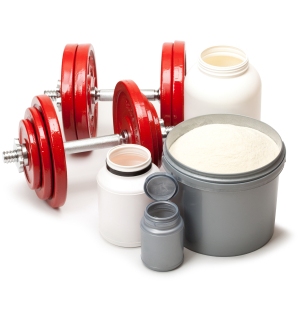
Creatine: A Versatile Supplement

Creatine is one of the few supplements that has stood the test of time. I can recall first taking it when I was in high school over 20 years ago. I’m pretty sure it’s the most well-research supplement in the literature, with thousands upon thousands of articles on the topic. HERE is a Wikipedia link to creatine in case you’d like to learn the basics. Over the years, I’ve stumbled across some interesting research on creatine. I decided to compile some of these study abstracts together into an article. When sifting through the entire body of research, it seems that creatine does not enhance testosterone or growth hormone output (one study showed increased growth hormone, but several others have shown no effect), does not work as well in the elderly as it does with younger subjects, does not reduce muscle damage (one study showed that it did, but several others showed that it did not), does not improve the plasma-lipid ratio during aerobic training, and does not alter insulin sensitivity.
creatine
However, creatine does indeed lead to some very favorable outcomes. It’s also very safe and well-tolerated. In the abstracts below, you will note that creatine....
* * * * * 

Note: despite the title of this post, guys will definitely benefit from these complexes.

3 Complexes for Rapid Female Fat Loss 

by TC | 11/04/14

Here's what you need to know...

  • CrossFit generates a lot of controversy, but everybody agrees that it does great things for the female body. Not interested in CrossFit? Do complexes.
  • Complexes provide the same kind of exertion, the same type of fat burning and strength building, and they require very little equipment or time.
  • Complexes are simply a series of movements performed with a barbell, dumbbell(s), or kettlebell(s) where you finish each rep of one movement before quickly moving onto the next movement.
  • They can be done after your regular workout as a fat-burning, muscle-shaping finisher. However, they're so effective, many women would be better off replacing their entire workout with complexes.
CrossFit? No Thanks.

CrossFit has its fans and its detractors, but the one thing everyone seemingly agrees on is that the women who do it look pretty darn good.

As powerful a lure as looking pretty darn good might be to a lot of non-CrossFit women, the idea of joining a "box" probably freaks many of them out. It could be that you were never one to join sororities in college and the notion of all that rah-rah stuff and allegedly friendly competition makes you get frown lines around your mouth.

Maybe CrossFit comes off just a little bit too much like a cult and you're in no mood to give away all your worldly possessions and swear allegiance to its founder. Others might cringe at the idea of doing all those bunion-pounding sprints. Or, it could simply be that you don't know how to do some of those Olympic lifts.

If it's the last option, you're not alone. There are thousands of female (and male) bodybuilders and fitness enthusiasts who can't do a proper snatch, clean and jerk, or muscle-up on gymnastic rings. Either they didn't learn how do to them in gym class, no one in a commercial gym taught them, they didn't bother to seek out a qualified coach, or they were just plain klutzy and were worried about impaling innocent bystanders.

* * * * *

Create Tension, Build More Muscle 

by James Chan | 11/05/14

Here's what you need to know...

  • High mechanical tension is the primary stimulus for muscle growth. The more tension you create within a muscle, the more size you'll build.
  • The tension must be long in duration, at least 20 seconds.
  • The tension must also be high throughout the entire range of motion.
  • Set extenders accomplish all three things – they create high tension for a long time throughout the entire range of motion.
  • Set extenders are when you hit a muscle group with a series of two or more exercises done in consecutive order with little or no rest.
Why are some exercises better for developing muscular size than others? 

Ultimately, high mechanical tension is the primary stimulus for muscle growth. The more tension you can create within a muscle, the more size you'll build. To maximize muscular growth, the tension has to meet the following criteria....

Friday, October 31, 2014

Fitness Friday - Fitness News You Can Use

Welcome to another edition of Fitness Friday. This week in fitness news you can use, we begin with the EXOS 7-Minute workout that they created for the New York Times, installment 60 of Eric Cressey's Quick and Easy Ways to Feel and Move Better, a post on using crawls in fitness programming from Dean Somerset, and wrapping up with 3 articles from T-Nation, Brett Contreras on  training smarter, Dan John on building your own home gym, and Tony Gentilecore with 5 reasons you aren't getting stronger.

Enjoy!

EXOS Creates the Advanced 7-Minute Workout for The New York Times

The New York Times

Looking to provide their readers with a more challenging 7-minute workout following the release of last year's Scientific 7-Minute Workout, writer Gretchen Reynolds turned to Mark Verstegen and the EXOS team. The result, the Advanced 7-Minute Workout which provides a series of exercises focused on upper body, lower body, and torso strength and mobility.

The workout, which can be completed with minimal equipment (dumbbells only) and space, focuses on elements that can be challenging but completed by a variety of fitness levels.
You can also download a free app for this workout.

* * * * *

Quick and Easy Ways to Feel and Move Better: Installment 60


Written on October 24, 2014, by Eric Cressey

This installment of quick training and nutrition tips comes from Cressey Sports Performance coach Miguel Aragoncillo.


5 Good tips here.

* * * * *

Crawling Your Face Off

Dean Somerset | Posted October 24, 2014

I’m a big fan of crawling, and not just for infants, frat boys on Saturday nights, or sniper ninjas sneaking up on their unsuspecting opponents. Crawling is one of those basic “template movements” where a lot of things can happen simply from that position to make adjustments, give variations, and produce entirely different exercises based on who you’re working with, scaled from rehab to elite athlete.


images-7

It’s a basic developmental movement that allows infants to go from stationary, using only rolling patterns to move from one place to another, to being somewhat mobile and able to explore their environment. In adults, it’s a challenge to the shoulders, core and hips as the quadruped position redistributes gravitational forces in new directions that we’re not used to. Upright standing puts more emphasis on axial compression, whereas crawling causes the spine and core to manage forces through the transverse plane and to manage low level shear stresses through the spine. The hips are working on a flexed position, and the shoulders are working on bearing weight with a locked out elbow, meaning the scapulae and muscles around it are working to keep the scaps from slapping off the rib cage. Like I said, there’s a lot going on.
* * * * *

And now, the usual several articles from T-Nation.

20 Ways to Train Smarter 

by Bret Contreras | 10/21/14 

Here's what you need to know...

  • Do leg presses while wearing Olympic shoes to really target the quads.
  • Position the hands on the outside of the dumbbells when curling. It creates an insane burn in the biceps while saving the elbows and forearms.
  • If dips hurt your shoulders, do band dips where you attach two bands to the top of a rack. Great for pec and triceps activation.
  • Brace yourself during single-leg lifts by holding onto a bar or rack for support. It'll allow for better balance and greater loads.
  • Do back extensions with a glute focus. Flare the feet out, round the upper back, squeeze the glutes, and drive the hips into the pad during each rep.
1. Don't let the hips shoot up during squats and deadlifts. 

Many lifters will shoot their hips up when they initiate the squat or the deadlift. Don't allow this to occur. Make sure the knees and hips extend at the same rate as you rise upward.
* * * * *

Build the Perfect Home Gym 

by Dan John | 10/22/14 
Here's what you need to know...
  • It's a mistake to equip your gym too well in the beginning. Building a perfect home gym should take a few years.
  • Outfitting a gym comes down to cost vs. benefit. Buy the good stuff you really need and get the rest cheap (or build it yourself.)
  • It's hard to beat a couple of kettlebells for swings, goblet squats and presses. They're portable and space efficient.
  • When training outdoors, the TRX and a kettlebell can turn any place into a full gym.
  • The ab wheel is the absolute king of full body tension and it can help your pull-up power.
  • Other things you might want to include: climbing ropes, a Prowler, chalkboards, and heavy bags for carries.
Open 24 Hours, No Membership Fees

I hate commercial gyms. I can't stand public training facilities of any kind.

Since 1971, the bulk of my training has been in my backyard and my garage. When you add up the commute time, the gym fees, and the hassle of dealing with some oily teen who slimes every flat surface in the facility, I prefer to stay home.

Here are some tips for constructing your own home gym.
 * * * * *

5 Reasons You're Not Getting Stronger 

by Tony Gentilcore | 10/24/14 
 

Here's what you need to know...

  • There's a lot more to getting strong than lifting heavy things for one rep. That will just lead to stagnation.
  • Accumulate volume. Take your 3RM and train it until you can do 5 reps with that weight.
  • Use supplemental lifts to add volume, fix weaknesses, and improve technique in the big lifts.
  • Unless your squat and deadlift are around 2x bodyweight and your bench press is 1.5x bodyweight, adding in speed work or dynamic effort days isn't going to do much.
  • Recovery days where you perform mobility, activation, or movement prep should be used along with your "balls to the walls" workouts.
Getting strong is easy. Focus on compound, multi-joint movements - preferably the squat, deadlift and bench press - and to try to move more weight in those lifts on a weekly, monthly, and yearly basis.

Basically, lift heavy shit, a lot. Repeat. Forever.

So why do many people fail to make appreciable progress with their strength goals? Here are five mistakes you can fix....

Friday, October 10, 2014

Fitness Friday - Fitness News You Can Use

It's Friday, so it's time for some fitness information from around the interwebs. This week we have articles on getting into the "zone" by finding "flow," the benefits of ultra-high rep sets, grapefruit juice, your aerobic window, and single-leg training.

As always, follow the link in the title of each article to go read the whole thing.

To start this week, here are a couple of articles from T-Nation.

Finding Flow: How to Get in the Zone

by Bill Rom | 10/02/14


Here's what you need to know...


  • The "flow state" is completely focused motivation; a single-minded immersion into the task at hand.
  • The leading powerlifting gym in the history of this country, Westside Barbell, has flow states mapped into its DNA.
  • CrossFit has mainstreamed flow states. The social environment creates a group flow state that has brought more people into fitness than any other area of exercise.
  • To use flow in your own training, you need to have clearly defined and measureable goals. You need to think about creating a situation where you're reaching 1% past your comfort zone at all times.
Have you ever competed in a sport where you felt like every decision you made was perfect? Any long-time athlete who's done this would say he was "in the zone." But the zone is just another way of describing a flow state. So, what's a flow state?
"Flow is completely focused motivation," writes Mihaly Csikszentmihalyi. "It is a single-minded immersion and represents perhaps the ultimate experience in harnessing the emotions in the service of performing and learning. In flow, the emotions are not just contained and channeled, but positive, energized, and aligned with the task at hand."
Flow is everywhere in sports. For example, in the book, The Rise of Superman, Steve Kotler uses the evolution of extreme sport athletes to define how flow can magnify human performance. These athletes have consistently shattered their records by tapping into natural flow state triggers.
* * * * *

100 Reps to Ripped

by Dennis Weis | 10/01/14


Here's what you need to know...

  • The more experienced you are in the gym, the easier it is to hit a plateau.
  • To break through a training plateau, use 50-100 rep sets with short rest-pauses interspersed throughout.
  • For a 50-rep set, perform 25 reps consecutively, take a 15 second rest-pause, then bang out as many reps as you can before rest-pausing again.
  • The goal is to reach 50 or 100 reps with 6 or fewer rest-pauses or subsets.
  • This method can used for strength, hypertrophy, or as a fat burning finisher, depending on how you set it up.
Smash Your Plateau

Take off your shirt and stand in front of a mirror. Do you look any different than you did a few months ago? Be honest.

Now check your training log. Have the weights gone up? Can you do more reps with the same amount of weight? Have you beaten your 1RM or 3RM on the key lifts recently or have things kinda stalled out?

If things aren't looking good, you may have hit a plateau. That's okay, it happens to every advanced lifter. To blast through it, you can't just keep doing the same things you've been doing in the gym. It's time to get a running start and juggernaut through that wall.
* * * * *

A new study just released suggests that grapefruit juice, at least in mice, has positive effects on fat metabolism and glucose levels.

Grapefruit juice stems weight gain in mice fed a high-fat diet, study finds

Date: October 8, 2014
Source: University of California - Berkeley
 

Summary:
Mice fed a high-fat diet gained 18 percent less weight when they drank clarified, no-pulp grapefruit juice compared with a control group of mice that drank water, a new study demonstrated. Juice-drinking mice also showed improved levels of glucose, insulin and a type of fat called triacylglycerol compared with their water-drinking counterparts.


Fad diets come and go, but might there be something to the ones that involve consuming grapefruit and grapefruit juice? New research at the University of California, Berkeley, suggests that a closer look at grapefruit juice is warranted.
* * * * *

From Mike Robertson, of Robertson Training Systems - this is an excellent post how to increase aerobic capacity for athletes.

Widening the Aerobic Window

October 6, 2014

girl-on-stairs2

If you’ve been around athletics for any period of time, chances are you’ve seen the athlete who isn’t “in shape.”

Whether it’s football, basketball, soccer, or something in between, they make a few runs up and down the field or court and they’re gassed.

Red faced, tugging on the shorts, and gasping for air like they’ve just been held under water against their will for the last 30 seconds.

And what’s even more baffling is that sometimes these athletes, outwardly, are the fittest looking athletes you can imagine!

So what gives?

Let’s start with a few definitions, just so we’re all on the same page. From there, we’ll talk about strategies and interventions to help these athletes out.
* * * * *

And here is one more from T-Nation to round out this week's collection.

5 New Reasons to Train on One Leg 

by Adam Vogel | 10/07/14


Here's what you need to know...
  • Explosive unilateral exercises have been shown to improve Rate of Force Production (RFD) and contribute to overall power output.
  • High-load eccentric or negative training is one of the most powerfully effective ways to pack on muscle.
  • Single-leg exercises are valuable since you can use one leg for the eccentric (lowering) portion and two legs for the concentric (lifting) portion.
  • Single-leg training can increase hamstring length, which has benefits for activities like sprinting.
  • Single-leg exercises are great for metabolic conditioning.
  • It takes twice as long to train each leg individually. That means at least twice the metabolic cost.
One Leg, Twice the Results

Single-leg exercises have become a staple in many strength and conditioning programs:
  1. They allow athletes and bodybuilders to continue training around an injury.
  2. They correct left-right strength and size asymmetries.
  3. They improve general balance and proprioception.
  4. They're similar to athletic movements such as running and bounding and therefore have a strong motor carryover to sport.
When you dig a little deeper, there are even more hidden benefits that make single-leg exercise a powerful training tool.

Friday, September 19, 2014

Fitness Friday - Fitness News You Can Use

http://i.telegraph.co.uk/multimedia/archive/03043/jens_3043716b.jpg

We start this week's Fitness Friday with a sports story that exemplifies fitness. Yesterday, in Switzerland, 43-year-old Jens Voigt broke the Hour Record, becoming the oldest man to hold the record. He rode 51.115 km in the 60 minutes of pain, topping the previous record by more than a kilometer. AND he did this as the last race in his long career, having announced his retirement earlier this season. Hats off to one of the great cyclists of his generation.

* * * * *

Okay then, back to the usual format. This week we have a research study suggesting cardio BEFORE weights offers a better hormonal response, a primer of squat patterning from Tony Gentilcore, some fire-breathing finishers from Eric and Ryan Johnson, and some excellent kneeling exercises from Brett Contreras (the later two articles come from T-Nation).

First up, from Breaking Muscle:

Cardio Before Strength Elicits Better Hormonal Response

Doug Dupont
Contributor - Health and Fitness News, Reviews
 
***
Conclusion

The most common wisdom in the gym is to perform strength training before cardio. However, evidence is mounting that cardio first is a superior approach. While we need more research to be certain, we now have good reason to try out new methods. 
References:
Claudio Rosa, et. al. (2014). Order effects of combined strength and endurance training on testosterone, cortisol, growth hormone and IGFBP-3 in concurrent-trained men. Journal of Strength and Conditioning Research. DOI: 10.1519/JSC.0000000000000610
* * * * *

From Tony Gentilcore (scroll down past the stories of his European Adventure):

Squat Patterning 101: How to Clean Up Your Squat. Like a Boss


Just so we’re clear: I think the squat is a basic movement pattern that everyone should be able to perform. I’m not insinuating that everyone should be able to walk into a gym on day #1 and drop it like it’s hot into a clean, deep squat and/or be able to load it to a significant degree.
Not everyone can (or should) squat deep. I’ve written on the topic several times, and for those interested you can go HERE and HERE.

* * * * *

The next 2 articles are from T-Nation:

4 Fire-Breathing Finishers 

by Eric Johnson, Ryan Johnson | 09/16/14


Here's what you need to know...

  • Developing the ability to control your breathing will allow you to deliver more oxygen-rich blood to your muscles, efficiently lower your heart rate and blood pressure, maintain optimal conditions at the biochemical level, and most importantly, kick some butt.
  • These combinations were designed to optimize breathing in a stressed state. Each of them will teach your body how to respond in the absence of oxygen so that you can keep your composure, perform at your highest levels, and come out victorious.
Walking back to your corner, your lungs feel like they're on fire. Your heart rate is racing towards unknown territories. You only have sixty precious seconds to lower your heart rate, catch your breath, and resume the battle.

You look across the ring at your opponent. He resembles a lion patiently waiting to attack his prey – cool, calm, and collected. In this moment, he's gained the advantage over you.

The question is, why aren't you cool, calm, and collected? Why didn't you develop the ability to control your breathing, to switch your nervous system from a state of fight or flight to a parasympathetic one? This would have allowed you to deliver more oxygen-rich blood to your muscles, efficiently lower your heart rate and blood pressure, maintain optimal conditions at the biochemical level, and most importantly, kick some ass.

Before the next time, you should practice these four fire-breathing finishers that were designed to leave you gasping for air. These combinations were designed to optimize breathing in a stressed state. Each of them will teach your body how to respond in the absence of oxygen so that you can keep your composure, perform at your highest levels, and come out victorious.
* * * * *

There are some excellent exercises in the post from Brett Contreras, especially like the half-kneeling overhead press (did it yesterday with the trap-bar after reading the article). If you try these, do NOT load up the bar with weights you might be more familiar with - start light and get a feel for the exercise first.

A lot of the half-kneeling presses are excellent if you have access to a landmine anchor in your gym, or a solid corner to plant the end of the bar.

13 Exercises That'll Floor You 

by Bret Contreras | 9.18.2014

Here's what you need to know...

  • Don't roll your eyes. These aren't wimpy rehab exercises. There are several difficult kneeling exercises that will challenge even the most advanced lifter.
  • The half-kneeling cable anti-rotation press is one of the most underestimated core exercises in existence.
  • Louie Simmons uses heavy loads on the kneeling squat to target the glutes of certain powerlifters.
  • The Nordic ham curl is an incredible hamstring exercise. Highly advanced lifters can do these without the use of their hands to reverse the direction at the bottom of the movement.
  • The half-kneeling overhead press is an amazing shoulder exercise that transfers well to the military press, spares the spine, and allows for sound levels of balance and stability.
Get ready for some challenging new exercises that'll leave you floored... literally. Here are 13 different movements performed from a kneeling position that are worth including in your program from time to time.
 

Friday, September 12, 2014

Fitness Friday - Fitness News You Can Use

It's another Fitness Friday. Today we have Eric Cressey on the negative impact of sitting all day, Christian Thibaudeau on how hard do we need to work out, Tony Gentilcore on mastering the kettlebell swing, and Travis Pollen on adding static contractions to the end of our sets for added growth.

How Chronic, Prolonged Sitting Impacts Your Body – and What to Do About It


Written on September 9, 2014, by Eric Cressey

Last week, over the course of two days, I made the long drive from Hudson, MA to Jupiter, FL. Suffice it to say that all those hours in the car gave me a newfound appreciation (or distaste?) for just how hard sitting is on the body. As such, it was really timely when my friend Michael Mullin emailed along this guest post on the subject. Enjoy! -EC

I would like to have you read the scenario below and let me know if you would want this job.

“Congratulations on being selected for the position of top minion here at Do Everything Against Design, Inc. (DEAD). Our company is a prestigious purveyors of thneeds—and a thneed is a thing that everyone needs (5). We pride ourselves on our commitment to being on the cutting edge of business and we use only the best, most up-to-date information possible to dictate how we run our business.”

“Let me start off by saying that this job will provide all kinds of potential benefits. It is up to you to decide how committed you are. The potentials are endless—overuse injury, chronic pain, depression, increased alcohol use, drug or medication use, cancer, increased general mortality, even bullying—that’s right, just like when you were a kid—are all very real possibilities here at DEAD, Inc.”

* * * * *

How Hard Do You Need to Work Out? 

by Christian Thibaudeau | 09/08/14


Here's what you need to know...
  • You need to train very hard to progress optimally, but if you train so hard that it affects the quality of your other workouts or causes so much stress that performance decreases, it's a bad move.
  • If you train a muscle only once a week, you'll be able to impose a lot more punishment without too many ill-effects than if you train each muscle several times in a week.
  • Testing your mettle with challenge-based workouts can be a great way to see how physically capable you are and preparing for those challenges can boost your training motivation significantly.
  • If you don't go borderline crazy from time to time you lose sight of what training hard means. An occasional lesson in pain in the gym will allow you to keep things in perspective.
  • Puking may make you seem hardcore, but vomiting during a workout simply means that you mistimed your food intake and training, which really doesn't make you that hardcore at all.
Feeling the burn. Driving yourself into the ground. Feeling crippling soreness. Puking. Not being able to walk after leg day. Not being able to drive after arm day.

All of the above are badges of honor for many lifters, but none of them guarantee that your workout was positive and will lead to improvements. Regardless, many of us prefer to focus on these elements rather than on objective progression.

Why? Because doing madman workouts makes you look hardcore, like a warrior. Your workout often turns into a test of how much suffering you can endure. But do you really need to drive yourself into the ground every single workout to make progress?

* * * * *

Master the Kettlebell Swing 

by Tony Gentilcore | 09/10/14


Here's what you need to know...
  • The hip hinge serves as a precursor to everything you probably want to improve, from athletic performance to body composition.
  • The ultimate hip hinge or hip snap movement is the kettlebell swing... and you're probably doing it wrong.
  • Many lifters and athletes make the mistake of breaking with their knees first and making it more of a squat pattern. This is wrong. You want to hinge with the hips first, "attack the zipper," and keep the kettlebell as close to the body as possible.
Hip Hinging for Strength and Fat Loss

The hip hinge is a crucial ingredient for pretty much every lower-body movement you'll perform in the gym that doesn't involve a machine or sitting down. Get it down now and it makes everything easier down the road.

The hip hinge is nothing more than any movement which involves flexion/extension originating at the hips and which also involves a posterior weight shift. Breaking it down more, it's important to note that the hip hinge is in no way associated with a squat pattern.
Hip Hinge = maximal hip bend, minimal knee bend.
Squat = maximal hip bend, maximal knee bend.
While grooving both patterns is important, I'll place more emphasis on the hip hinge because, well, most people move like shit and don't perform it properly. As a coach, the sooner I can correct the pattern and get an athlete or weekend warrior to perform it right, the sooner I can introduce any exercise I want. The hip hinge makes the learning curve infinitely smaller.

* * * * *

6 Ways to Bring the Pain

Deadly Dynamic-Static Compound Sets
by Travis Pollen | 09/10/14


Here's what you need to know...
  • Static holds have long been known to build impressive amounts of mass, if you can stand the pain.
  • By pairing a static hold performed at the hardest part of a bodyweight exercise with a heavy compound lift for the same muscles, you have yourself a time-effective - and brutal - way to gain size.
  • Advanced lifters can ramp it up again by performing a third static hold.
When it comes to building muscle, time under tension (TUT) is king, or at least a big part of the royal court. Historically speaking, many bodybuilding greats have used isometric training to help build their imposing physiques, sometimes doing sets lasting upwards of three minutes. The trouble is, most of us neither have the time nor the patience to hold an isometric lateral raise all damn day. Fortunately, there's a way to reap these same muscle-building benefits with iso holds lasting a third of the time. I call it the dynamic-static compound set.

Friday, September 5, 2014

Fitness Friday - Fitness News You Can Use

It's Friday, so it's time for another Fitness Friday. This week we have a primer on the pull-up vs. the chin-up, and a breakdown of the bodybuilder squat vs. the power lifter squat. We also have a report on the state of strength and conditioning coaching. There's an article on "Hellfire Reps." And finally, an article on using complexes for 20-minute workouts.

From Breaking Muscle:

Pull Up vs. Chin Up: A Comparison and Analysis


Amber Larsen - Contributor - Biology, Gymnastics, CrossFit
Chin ups are not really pull ups. Well, according to some Internet debates, that’s the case, but I contend that chin ups are in fact pull ups.

I suggest that pull ups is an umbrella category, and there are several different variations within that category including the overhand grip (traditionally called the pull up), reverse grip (the chin up), and opposing grip. In this article, we will explore the chin up in depth and how it activates our muscles, as well as how it differs from the pull up.
Note: Throughout this article, when I say pull ups, I am speaking about strict pull ups.
Left: chin up; Right: pull up.

* * * * *

From T-Nation:

Bodybuilding vs Powerlifting Squat

The 10 Components You Need to Know 
by Rob King | 09/01/14 
Here's what you need to know...
  • After the newbie stage, you need to pick between getting stronger or getting bigger and squat accordingly.
  • Mix lower rep squats and higher rep squats for hypertrophy (8-12 and even sets of 25 or 50) and use lower rep squats for strength (1-5).
  • Tempos with a slow eccentric are often useful for bodybuilding squats but usually have no place in powerlifting squats.
  • A longer time under tension is great for hypertrophy, but not so great for strength.
  • Generally speaking, use a high-bar placement for bodybuilding squats and a low-bar placement for powerlifting squats.
  • For building muscle, mix up short rest periods and long rest. When training for strength, have a minimum of three minutes rest between sets to maximize recovery and strength.
  • A bodybuilding squat requires a narrow stance while a powerlifting squat is best approached with a hip dominant stance.
To maximize results from the squat, it all comes down to reverse engineering the movement and asking yourself the question, "What's my current training goal?" During your first year or two of training you can squat every Monday and get results with no problem. But after a while those gains will slow no matter how hard you bust your butt. When this happens it's time to take a step back and pick between the following two goals:

1. Get Stronger
or
2. Get Bigger

Sure, there's always a carryover in size and strength while squatting, but what we're talking about here is squatting to maximize either strength or size. Why is this important? Well, for the bodybuilder, what he squats really doesn't matter. What matters is the development of his legs. For the powerlifter, no one judges the size of his legs, only how much he lifts. As such, he has to squat with his goal in mind.

Let's break down ten components of the squat and discuss the differences between a powerlifting squat and a bodybuilding squat.
* * * * *

The Current State of S&C Coaching 

by Mark Rippetoe | 09/03/2014


Here's what you need to know...
  • Some of the worst strength and conditioning coaches in the industry are found at the D1 university and professional levels. Hiding behind the innate talents of the genetic phenoms handed to them by skilled recruiters, these coaches bask in glory as they squander the talent of their athletes.
  • The ability to display power is largely controlled by genetics. Explosive athletes are born that way. Athleticism is not very trainable, but strength is. An increase in strength increases the ability to fully display athleticism. So why aren't "strength coaches" focusing on strength development in 2014?
  • What detracts from effective, sport-applicable strength training? So-called functional training, stability work, agility training, incorrectly coached and applied Olympic lifting, machine exercises, corrective exercises, core-specific exercise, and an overemphasis on conditioning.
  • Barbell training with progressively increasing loads on the basic exercises increases strength, power, and all of the other dependent characteristics – for everybody, and for several years.
Note to Future Readers

This essay is about the state of the strength and conditioning profession in 2014, most of which is practiced in high schools, colleges and universities, and at the professional sports level.

Those of you reading this in the distant future, while you drive your flying cars (please be careful), may observe with amusement that all these problems have long since been corrected – if I have even described them accurately here in 2014 – and my concerns turned out to be about as relevant to your advanced civilization as global warming.

From atop your glacier, you may look down on a landscape devoid of weak, overtrained athletes, and wonder just what in the hell I was so concerned about. I hope so.
* * * * *

Hellfire Reps

Fire Up Your Gains! 
by Ben Bruno | 09/04/2014 
Here's what you need to know...
  • Weight and form are often inversely proportional: the higher the weight, the worse the form.
  • Descending eccentrics clean up poor technique, encourage using a full range of motion, and also ensure that you're selecting a weight you can control. They're also great for hypertrophy and better tolerated by lifters with joint issues.
  • However many reps you're doing (5 or 6), the eccentric phase of the first rep should last that many seconds and decrease by one second on each subsequent rep. For example, do a six-second eccentric on the first rep, a five-second eccentric on the second rep, etc.
  • You can apply the idea to virtually any exercise you want – bench press variations, glute-ham raises, pushups, or inverted rows, but not deadlift variations, free-weight rowing variations, and overhead pressing variations.
Getting clients and athletes to use good form is one of the ongoing struggles of any trainer or strength coach.

You can tell your athletes to go all the way down on chin-ups until you're blue in the face. If you're lucky, you may get them to comply with your demands for a few reps, but the minute you turn your back, they'll inevitably start cheating in an effort to crank out more reps.

You'll see the same thing with squats and Bulgarian split squats. If you don't demand a full range of motion and stick to your guns – almost to the point of being a dick – you'll almost never see it. And even if you do demand it, you'll often see people start the set with good form and a full range of motion and then start to cut the reps short as pain and fatigue set in.

You'll also see people try to increase the weight too quickly and just start using a reduced range of motion and sloppier form. In fact, weight and form are often inversely proportional: the higher the weight, the worse the form.
* * * * *

From Bodybuilding.com:

20-Minute Muscle: Better Gains Through Shorter Workouts


Short workouts aren't for beginners anymore. Ramp up your intensity and you can still build muscle and torch fat with this series of high-octane workouts.

by Dan Blewett | Sep 02, 2014


http://www.bodybuilding.com/fun/images/2014/20-minute-muscle_better-gains-through-shorters-workouts_header.jpg

Some days you're so rushed for time that it's nearly impossible to get your regular workout in. But rather than write off the day altogether, consider slotting in a condensed 20-minute training session.

That's for beginners, you say? Not if you use the most of your time by increasing the workout intensity. All you have to do is follow the plan, move quickly, and work hard. You still need to accumulate volume over the course of those 20 minutes if you want to make physique gains. One or two short workouts per week won't make you fit.

The "get in, get out" mentality can pay great dividends if you keep the frequency and intensity up. You'll aim for 4-6 short intense workouts per week, chosen from the following categories, all of which give great bang for the buck.

  • Mid-Range Strength Workouts (3 to choose from)
  • Complexes (3 to choose from)
  • Challenges (2 to choose from)
  • Conditioning (3 to choose from) 

Friday, August 29, 2014

Fitness Friday - Fitness News You Can Use

It's time for another Fitness Friday. Just because summer is winding down (Labor Day being the unofficial end of summer) does not mean we can stop staying fit and healthy.

This week we have a primer on the Anabolic Diet, a guide to high-intensity interval training, why the box squat is over-rated, Charles Staley on his training philosophy for clients, and finally, four myths about having a big bench press.


Complete Anabolic Diet Guide With Sample Meal Plan

Complete Anabolic Diet Guide With Sample Meal Plan
The Anabolic Diet is a muscle building and fat loss eating protocol developed by Dr. Mauro DiPasquale as a method to induce safe steroid-like gains for natural lifters.


Table of Contents:

  1. 1. Introduction
    1. 1.1. What are cyclic ketogenic diets (CKDs)?
  2. 2. The Anabolic Diet
    1. 2.1. Principles behind the Anabolic Diet
    2. 2.2. Anabolic Diet phases
    3. 2.3. Anabolic Diet macronutrient cycling
    4. 2.4. Purported physiology behind the Anabolic Diet
    5. 2.5. Anabolic Diet food choices
  3. 3. Sample Eating Plans
    1. 3.1. Sample weekday menu ~2800 calories
    2. 3.2. Sample Weekend Menu
  4. 4. FAQs about the Anabolic Diet

This Guide Teaches You:


  • What a cyclic ketogenic diet (CKD) is.
  • About the main principles of the Anabolic Diet.
  • The 3 phases of the Anabolic Diet: the induction, bulking and cutting phases.
  • How to cycle protein, carbs and fats.
  • What kind of meals you should eat on the Anabolic Diet.
The Anabolic Diet is a book/diet that was written/introduced into the health and fitness subculture in 1995 by Dr. Mauro Di Pasquale, a licensed physician from Ontario, Canada that has vested interests in sports medicine and nutrition. The Anabolic Diet is essentially Dr. Mauro Di Pasquale’s twist on a cyclical ketogenic diet (CKD).

Aside from his educational background in molecular biology and genetics and completion of his medical degree, Dr. Di Pasquale was a world-class powerlifter in the late 1970s. After he was finished competing he opened up his own practice to help athletes and even just lay-people achieve their health and fitness goals. The Anabolic Diet [currently out of print] is one of his first compositions, and he has since written a handful of other pertinent books.

But just because the Anabolic Diet is one of his older works doesn’t mean it isn’t still useful today, if anything it has quite a few worthwhile principles behind it. This guide will delve into what the Anabolic Diet is, the proposed science behind it, how to start your own Anabolic Diet regimen, and answer some frequently asked questions about it.

* * * * *

High-Intensity Interval Training: The Ultimate Guide

by Josh Bryant Aug 28, 2014
Website: www.joshstrength.com  


Get the story behind high-intensity interval training (HIIT), its muscle-building and fat-burning benefits, and how you can integrate it into your workouts!

http://www.bodybuilding.com/fun/images/2014/the-ultimate-guide-to-high-intensity-interval-training_header.jpg

Have you ever compared the physique of a world-class distance runner with that of a world-class sprinter? The sprinter's body resembles that of a Greek Adonis, with chiseled arms and powerful quads, while the skinny-fat distance runner makes Richard Simmons look like a Mr. Olympia contender.

These different body compositions point to the fact that not all cardio is created equal, which is why it's important to choose a form of cardio that meets your goals. A recent study compared participants who did steady-state cardio for 30 minutes three times a week to those who did 20 minutes of high-intensity interval training (HIIT) three times per week.

Both groups showed similar weight loss, but the HIIT group showed a 2 percent loss in body fat while the steady-state group lost only 0.3 percent. The HIIT group also gained nearly two pounds of muscle, while the steady-state group lost almost a pound.1

Excessive aerobic activity can decrease testosterone levels, increase cortisol production, weaken the immune system, handicap strength gains, and halt any hope of hypertrophy. But this doesn't mean you can't maximize muscle mass and strength gains while conditioning. It just means you need to be smart about your cardio.

Check out the different forms of conditioning you can use to trim down the smart way—without giving up your strength and muscle gains. 

* * * * *

Why the Box Squat is Overrated

By Tony Gentilcore


Box for squatting 

There are a lot of things I don’t do anymore that I used to.

1. Unlike when I first moved here eight years ago, I no longer refer to Boston as Beantown. That’s a big no-no amongst locals.  Doing so is as sacrilegious as wearing a Laker hat or a Derek Jeter jersey down Boylston!

2. I don’t watch Saturday morning cartoons. That much.

3. I don’t start hyperventilating into a brown paper bag anymore if a baseball player walks in on day one and lacks internal range of motion in his dominant throwing shoulder. As Mike Reinold brilliantly states HERE, glenohumeral internal rotation deficit (GIRD for short. Who wants to write all that out?) is a normal adaptation to the throwing shoulder.

4. I no longer feel Star Wars Episode I: The Phantom Menace is the weakest chapter in the Star Wars saga.  That title goes to Episode II: Attack of the Clones.


5.  And, I don’t pick my nose in public.*

Wanna know what else I don’t do?

I Don’t Place Box Squats Into Any of My Programs


Yes, yes I did.

Well, I do and I don’t.  Let me explain myself a bit further.

So that I can stave off the barrage of hate mail and people reaching for their pitchforks at the notion of me saying something so batshit crazy….

* * * * *

by Charles Staley | August 28, 2014


Here's what you need to know...

  • Too often, we adopt practices like stretching, elaborate warm-ups and corrective work reflexively rather than strategically.
  • The Friction Principle states that whenever we dislike doing something, we're less likely to do it. If we dislike various "extra" work in the gym, like pre-hab, we may begin to dislike training itself.
  • The Suitcase Principle states that we only have so much room – time and resources – available. Don't spend all your gym resources on things you most likely don't need.
  • How flexible do you really need to be? How much endurance do you really need? We must ask these questions to better be able to plan our workouts and focus on the things that have the biggest impact.
I have a confession to make. Before I do, I'd just like to remind some of you that I've been coaching professional and Olympic athletes, teaching seminars around the world, and writing about fitness and strength training for over 30 years. In addition, I've been a competitive athlete the whole time, from martial arts and Olympic weightlifting to powerlifting. I've also been fortunate enough to pick the brains of many of the world's top coaches and athletes. So while what I'm about to share with you might strike you as unorthodox, I want you to know this isn't my first rodeo.

Now about that confession: I don't really warm-up. I don't stretch either. I don't do dynamic activation drills. I don't foam roll. I don't do corrective exercise or "pre-hab." I don't do conditioning work. Pretty much all I do is lift.

I'd like to make it clear that every item on that list can definitely be worthwhile for specific people in specific contexts. I just think that all these things are too often done reflexively rather than strategically. So I'd like to give you some insight on my decision making about what training activities I do, and don't do, and how and why I make these decisions. Then, you can think about these decisions and apply them – or not – to your own training.
* * * * *

by Tony Bonvechio | 08/27/14


Here's what you need to know...
  • Big triceps won't help you if you can't break through the sticking point off the chest. So stop it with the board press and floor press and work on your incline and overhead press.
  • Big traps and strong scapular retractors are more important than the lats for a solid bench press foundation and stable bar path.
  • The bench press is no more dangerous than any other barbell exercise and can be shoulder-friendly when done with good technique and common sense.
  • Great raw benchers press the bar in a J-curve, not a straight line, to maximize leverage.
The misinterpreted words of multi-ply powerlifters has trickled down to the masses. And now, raw (no bench shirt) lifters are experiencing undue suffering and frustration as a side effect.

Like a game of telephone, the truth has been lost as each piece of information is transferred from the mouths of giants to internet forums and gyms. Good advice from strong people gets twisted into something laughably false and useless.

If you've ever been wronged by bad bench press advice, I feel you. I've been there. After years of struggling to increase my bench press numbers despite following the dogmatic suggestions of the armies of keyboard warriors, I finally discovered the truth. The barbell is a great teaching tool, but it's easy to ignore its teachings if you get brainwashed by the propaganda.

In less than a year, I added 50 pounds to my competition bench press. What's my secret? I abandoned everything I'd learned about benching and listened to what the bar had been telling me for years. Here are four bench press myths I busted during my journey.

Friday, August 22, 2014

Fitness Friday - Fitness News You Can Use

Another Fitness Friday to read while you should be working. This week:
  • Zach Even-Esh interviews Chad Waterbury
  • A cool 2 exercise, 4 set strength and muscle program
  • How to do myofascial release on yourself
  • 9 tips for lifters from Dan John
  • Eric Cressey on bear crawl vs. crab walk
  • Excellent lower body kettlebell exercises from Mike Boyle
First up, from Zach Even-Esh, an interview with strength and fitness coach Chad Waterbury, one of the really smart guys in this field.

STRONG Life 31: Chad Waterbury and Bodyweight Volume Training

male-gymnast-rings

Chad Waterbury and I “met” about 12 years ago through the interwebs. Back then he had long flowing locks and wrote for T Nation on the regular while I was testing his encouragement of following his popular program of 10 sets of 3 reps.

In 12 years, a LOT can change.

Since then Chad has been living in Santa Monica, Ca. He has immersed himself in bodyweight training by getting coaching from a Russian Gymnastics Olympic Coach, is about to embark on his PhD journey and he no longer has the hair of The Mighty Thor.

In this episode of The STRONG Life Podcast we don’t discuss hair, sorry to disappoint.

Chad Waterbury and I discuss the power of bodyweight exercise and how you should be using bodyweight training to add muscle with out spending excess time in the gym. In addition to training, we also discuss life and what it takes to achieve those lofty goals you have running through your head, likely collecting “dust”.
- How does Chad organize each training session from the warm up to the workout?
- Do his workouts change when working with someone who wants greater fitness vs training a pro MMA fighter?
- Why doesn’t Chad go to the gym anymore?
- What was the BIG takeaway Chad picked up while working with a Russian Olympic Gymnastics Coach?
- Everyone says they want to “live the dream”. Chad packed up and moved to Santa Monica and is living his dreams. It wasn’t easy, so listen to his advice for you…..

* * * * *

A few pieces from T-Nation:

Primer 4: Big, Bad, Basic Workouts 

by Paul Carter | 8.22.2014 

Here's what you need to know...
  • Everyone knows what a single, double, or triple is, but when it gets to "four," people suddenly develop weight training amnesia.
  • You can build a solid foundation of strength and mass with a program based around sets of four. And it only requires four days a week of training.
  • One of the biggest reasons people get stuck in a training rut is because they start implementing more exercises and more set and rep schemes. Their training starts to resemble that of a buffet more than a basic meal of steak and potatoes.
  • Any time you find yourself frustrated by a plateau, the best thing you can do is eliminate all of the BS you've been doing and reel it back into simplicity. That's where the Primer 4 Program comes in.
The number four is the lonely, bastard child of the strength rep scheme. Everyone knows what a single, double, or triple is, but when it gets to "four" people suddenly develop weight training amnesia.

No one talks about their best "quad" rep set. They skip right over ugly number four and talk about "fives" like four never even existed. Why that is, I don't know. John Kuc, the first man to squat 900 pounds and who deadlifted a ridiculous 870 at a bodyweight of 242 pounds, did lots of sets of four in his training. Shieko, the Russian powerlifting system that's produced solid lifters, also uses sets of four throughout the programming.

So let's clear the air here. Four is not an ugly number for strength training. It's more or less the intellectual hot sister that never gets a date because she's misunderstood and doesn't get used up like her slutty sisters, the triple and "fives." The point is, sets of four have merit and you can build a solid foundation of strength and mass with a program based around them. The way we're going to use sets of four in my "Primer 4" program is to "prime" you for the last set of four in the volume sequence.

* * * * *

Do-It-Yourself Myofascial Release 

by John Rusin | 08/20/14 
Here's what you need to know...
  • Why are we still treating our soft tissues with techniques and implements that are decades old? You are better than your foam roller.
  • For every deadlift session, do one session of soft tissue work to counteract the damage. Every time you hit up the bench, perform two concentrated sessions of soft tissue work. Don't worry, you can do it watching TV. And it's free.
  • Just as the tennis ball provides a smaller surface area as compared to the foam roller, your fingertips provide an even more acute area with which to exert forces into your tissues. This high level of proprioception allows you to distinguish how painful trigger points feel, along with the tissue's texture and tone.
  • With only your hands and the ability to optimally position your body for force and leverage, your shoulders can be bullet-proofed by tacking on as little as 5 minutes to the end of your training.
The foam roller has become one of the most notorious time wasters in any type of training center. The tennis ball kept us sane for a while, but that too has left us less than ecstatic every time we wedge it under our shoulder blades. With all the advancements in our industry, why are we still treating our soft tissues with techniques and tools that are decades old?

* * * * *

9 Tips for Dedicated Lifters 

by Dan John | 08/19/14 

Here's what you need to know...
  • The only real secret to adding muscle to your whole body is this: do high rep squats.
  • If you can perfectly follow all those fancy lifting tempo recommendations, you just aren't lifting enough.
  • Conditioning has value, but if you're doing a bunch of junk for no rhyme or reason, cut it back or cut it out.
  • If you can't pull double bodyweight off the ground, press bodyweight overhead, and carry bodyweight for about 100 yards, work on that stuff first.
  • Sometimes the best way to get better is to take some time off. Do it before your body forces you to do it.
  • Every workout should build, in some way, upon the previous session. If you keep leaping from idiotic program to idiotic program, you might never learn this lesson.
I started lifting in 1965. I've been employed as a strength coach since 1979. I've seen a lot come and go, but I'm fairly confident that the following nine tips will still be around fifty years from now.
* * * * *

Here is a brief but useful article from Eric Cressey.

Bear Crawls vs. Crab Walks

Written on August 19, 2014, by Eric Cressey


Yesterday, I posted on Twitter that I was a big fan of bear crawls because they get you great serratus anterior recruitment, more scapular upward rotation, improved anterior core function, tri-planar stability, and some awesome reciprocal arm/leg activity. They're one of my favorite warm-up and end-of-workout low-level core activation drills.


For some reason, though, every time you mention bear crawls, someone asks about crab walks. Candidly, I don't think so highly of crab walks. In fact, I have never used them - and that's why I didn't have a video on hand of them.

* * * * *

Finally, here is Michael Boyle on kettlebells for the lower body.

Elite Performance with Mike Boyle: The Best Lower-Body Kettlebell Exercises

August 4, 2014

In this episode of STACK Elite Performance, Mike Boyle demonstrates the four best lower-body kettlebell exercises for athletes.


Elite Performance with Mike Boyle: The Best Lower-Body Kettlebell Exercises 

In this episode of STACK Elite Performance, Mike Boyle shows you how to perform four lower-body kettlebell exercises, which he explains are ordered in increasing difficulty, so you can easily progress through each variation as your strength and technique improve.  

Coaching Points Kettlebell 
  • Goblet Squat - Hold the kettlebell in front of your chest. - Lower until your elbows touch your knees.  
  • Single-Arm Goblet Squat - Hold the kettlebell in the rack position. - Keep your core tight to prevent upper-body rotation.  
  • Double-Kettlebell Front Squat - Hold two kettlebells in the rack position.  
  • Single-Leg, Straight-Leg Deadlift - Maintain a 10-degree knee bend. - Pull your shoulders down and back. 
  • Sets/Reps: 3 x 5-10 each variation 
Click here to see more Elite Performance tips with Mike Boyle.