Showing posts with label bodyweight exercises. Show all posts

Friday, August 22, 2014

Fitness Friday - Fitness News You Can Use

Another Fitness Friday to read while you should be working. This week:
  • Zach Even-Esh interviews Chad Waterbury
  • A cool 2 exercise, 4 set strength and muscle program
  • How to do myofascial release on yourself
  • 9 tips for lifters from Dan John
  • Eric Cressey on bear crawl vs. crab walk
  • Excellent lower body kettlebell exercises from Mike Boyle
First up, from Zach Even-Esh, an interview with strength and fitness coach Chad Waterbury, one of the really smart guys in this field.

STRONG Life 31: Chad Waterbury and Bodyweight Volume Training

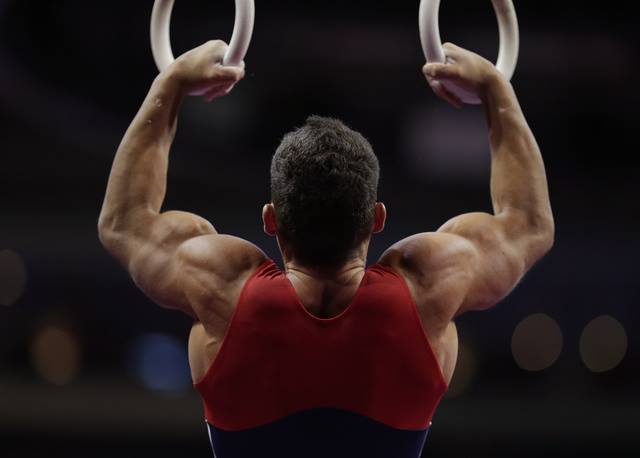
male-gymnast-rings

Chad Waterbury and I “met” about 12 years ago through the interwebs. Back then he had long flowing locks and wrote for T Nation on the regular while I was testing his encouragement of following his popular program of 10 sets of 3 reps.

In 12 years, a LOT can change.

Since then Chad has been living in Santa Monica, Ca. He has immersed himself in bodyweight training by getting coaching from a Russian Gymnastics Olympic Coach, is about to embark on his PhD journey and he no longer has the hair of The Mighty Thor.

In this episode of The STRONG Life Podcast we don’t discuss hair, sorry to disappoint.

Chad Waterbury and I discuss the power of bodyweight exercise and how you should be using bodyweight training to add muscle with out spending excess time in the gym. In addition to training, we also discuss life and what it takes to achieve those lofty goals you have running through your head, likely collecting “dust”.
- How does Chad organize each training session from the warm up to the workout?
- Do his workouts change when working with someone who wants greater fitness vs training a pro MMA fighter?
- Why doesn’t Chad go to the gym anymore?
- What was the BIG takeaway Chad picked up while working with a Russian Olympic Gymnastics Coach?
- Everyone says they want to “live the dream”. Chad packed up and moved to Santa Monica and is living his dreams. It wasn’t easy, so listen to his advice for you…..
* * * * *

A few pieces from T-Nation:

Primer 4: Big, Bad, Basic Workouts 

by Paul Carter | 8.22.2014 

Here's what you need to know...
  • Everyone knows what a single, double, or triple is, but when it gets to "four," people suddenly develop weight training amnesia.
  • You can build a solid foundation of strength and mass with a program based around sets of four. And it only requires four days a week of training.
  • One of the biggest reasons people get stuck in a training rut is because they start implementing more exercises and more set and rep schemes. Their training starts to resemble that of a buffet more than a basic meal of steak and potatoes.
  • Any time you find yourself frustrated by a plateau, the best thing you can do is eliminate all of the BS you've been doing and reel it back into simplicity. That's where the Primer 4 Program comes in.
The number four is the lonely, bastard child of the strength rep scheme. Everyone knows what a single, double, or triple is, but when it gets to "four" people suddenly develop weight training amnesia.

No one talks about their best "quad" rep set. They skip right over ugly number four and talk about "fives" like four never even existed. Why that is, I don't know. John Kuc, the first man to squat 900 pounds and who deadlifted a ridiculous 870 at a bodyweight of 242 pounds, did lots of sets of four in his training. Shieko, the Russian powerlifting system that's produced solid lifters, also uses sets of four throughout the programming.

So let's clear the air here. Four is not an ugly number for strength training. It's more or less the intellectual hot sister that never gets a date because she's misunderstood and doesn't get used up like her slutty sisters, the triple and "fives." The point is, sets of four have merit and you can build a solid foundation of strength and mass with a program based around them. The way we're going to use sets of four in my "Primer 4" program is to "prime" you for the last set of four in the volume sequence.

* * * * *

Do-It-Yourself Myofascial Release 

by John Rusin | 08/20/14 
Here's what you need to know...
  • Why are we still treating our soft tissues with techniques and implements that are decades old? You are better than your foam roller.
  • For every deadlift session, do one session of soft tissue work to counteract the damage. Every time you hit up the bench, perform two concentrated sessions of soft tissue work. Don't worry, you can do it watching TV. And it's free.
  • Just as the tennis ball provides a smaller surface area as compared to the foam roller, your fingertips provide an even more acute area with which to exert forces into your tissues. This high level of proprioception allows you to distinguish how painful trigger points feel, along with the tissue's texture and tone.
  • With only your hands and the ability to optimally position your body for force and leverage, your shoulders can be bullet-proofed by tacking on as little as 5 minutes to the end of your training.
The foam roller has become one of the most notorious time wasters in any type of training center. The tennis ball kept us sane for a while, but that too has left us less than ecstatic every time we wedge it under our shoulder blades. With all the advancements in our industry, why are we still treating our soft tissues with techniques and tools that are decades old?

* * * * *

9 Tips for Dedicated Lifters 

by Dan John | 08/19/14 

Here's what you need to know...
  • The only real secret to adding muscle to your whole body is this: do high rep squats.
  • If you can perfectly follow all those fancy lifting tempo recommendations, you just aren't lifting enough.
  • Conditioning has value, but if you're doing a bunch of junk for no rhyme or reason, cut it back or cut it out.
  • If you can't pull double bodyweight off the ground, press bodyweight overhead, and carry bodyweight for about 100 yards, work on that stuff first.
  • Sometimes the best way to get better is to take some time off. Do it before your body forces you to do it.
  • Every workout should build, in some way, upon the previous session. If you keep leaping from idiotic program to idiotic program, you might never learn this lesson.
I started lifting in 1965. I've been employed as a strength coach since 1979. I've seen a lot come and go, but I'm fairly confident that the following nine tips will still be around fifty years from now.
* * * * *

Here is a brief but useful article from Eric Cressey.

Bear Crawls vs. Crab Walks

Written on August 19, 2014, by Eric Cressey


Yesterday, I posted on Twitter that I was a big fan of bear crawls because they get you great serratus anterior recruitment, more scapular upward rotation, improved anterior core function, tri-planar stability, and some awesome reciprocal arm/leg activity. They're one of my favorite warm-up and end-of-workout low-level core activation drills.


For some reason, though, every time you mention bear crawls, someone asks about crab walks. Candidly, I don't think so highly of crab walks. In fact, I have never used them - and that's why I didn't have a video on hand of them.

* * * * *

Finally, here is Michael Boyle on kettlebells for the lower body.

Elite Performance with Mike Boyle: The Best Lower-Body Kettlebell Exercises

August 4, 2014

In this episode of STACK Elite Performance, Mike Boyle demonstrates the four best lower-body kettlebell exercises for athletes.


Elite Performance with Mike Boyle: The Best Lower-Body Kettlebell Exercises 

In this episode of STACK Elite Performance, Mike Boyle shows you how to perform four lower-body kettlebell exercises, which he explains are ordered in increasing difficulty, so you can easily progress through each variation as your strength and technique improve.  

Coaching Points Kettlebell 
  • Goblet Squat - Hold the kettlebell in front of your chest. - Lower until your elbows touch your knees.  
  • Single-Arm Goblet Squat - Hold the kettlebell in the rack position. - Keep your core tight to prevent upper-body rotation.  
  • Double-Kettlebell Front Squat - Hold two kettlebells in the rack position.  
  • Single-Leg, Straight-Leg Deadlift - Maintain a 10-degree knee bend. - Pull your shoulders down and back. 
  • Sets/Reps: 3 x 5-10 each variation 
Click here to see more Elite Performance tips with Mike Boyle.

Friday, March 28, 2014

Fitness Friday - Fitness News and Information You Can Use

If it's Friday, and I think it is, it must be time for some good fitness info. In this week's edition, we have a great article on using bodyweight exercises for strength and size from Jason Ferruggia, two great articles from T-Nation (one on the "Olympic deadlift" and one on cortisol), and a final article from Eric Cressey on coming back from injury to do overhead presses.

Top 20 Bodyweight Exercises for Building Muscle and Strength

Jason Ferruggia
 
Bodyweight exercises need to be part of your program if you want to get jacked.
 

But not just pushups, sit ups and high rep calisthenics.
 

That’s beginner stuff that won’t build any real muscle.
 

We’re talking about really working hard on high tension, advanced bodyweight exercises that can only be done for somewhere between five and ten reps, on average.
 

The nice thing about these is that they’re very natural and can usually be done pain free by most people.
 

They can be added to any program along with barbells, dumbbells and strongman implements.
 

That’s the ultimate combination for building high performance mass.
 

Or you can use nothing but bodyweight exercises. The choice is yours.
 

Below is a list of my top 20 bodyweight exercises for size and strength. 
*****

This article from T-Nation has provided me with a new exercise I very much like, the Olympic deadlift.

The Olympic Deadlift

by Amit Sapir
3/26/2014
 

Here's what you need to know...

  • The Olympic deadlift is a hybrid of the deadlift and the traditional Olympic clean pull.
  • What makes this exercise different from the traditional deadlift is that it involves a much greater range of motion. Think vertical jump, except your feet don't leave the floor.
  • Since the Olympic deadlift and the conventional deadlift share some similarities, you can transition straight into deadlifts after finishing your Olympic deads without a warm up.
  • Olympic deadlifts will build huge calves, traps, and hamstrings without working on them directly in separate exercises. They'll also improve your conditioning.
The "Olympic deadlift" is an exercise I created that's a hybrid between deadlifts and the traditional Olympic clean pull. The grip width and the starting position is the same as it is for a regular deadlift with the bar above your toes and your shoulders over the bar, but your finishing position is like the end of a clean pull where you end up on your toes and your shoulders almost touch your ears. There's also a pause at the end of the movement to put more emphasis on the calves and traps.
*****

Cortisol is a necessary hormone in the human body, but too much of a good thing is a bad thing. Excess cortisol can result in muscle breakdown and other undesirable effects. This article from T-Nation offers a good primer on cortisol.

The Two Faces of Cortisol

by Dr. Jade Teta
03/26/14


Here's what you need to know...
  • Cortisol, despite its bad reputation, is required for optimal health and actually burns fat, under the right circumstances.
  • Chronically elevated or continuously suppressed cortisol can be destructive. The key is balance.
  • You WANT cortisol high while you're exercising. During exercise, cortisol works with your other fat burning hormones to increase fat release.
  • Cortisol can cause cravings for junk foods – simultaneously shutting off the goal oriented centers of the brain and ramping up the reward centers of the brain. Bad combo for dieters.
  • The three best ways to control cortisol are diet, exercise, and lifestyle. The three easiest ways to assess if cortisol is balanced is by paying attention to hunger, energy, and cravings (HEC).
How Many Calories Does Stress Have?

I'll admit, this is a silly question. You can't eat stress! But this question makes a critical point about metabolism that the entire health and fitness world seems to miss: calories don't control metabolism, hormones do. And when it comes to hormones, the stress hormone cortisol is critical.

Not only can stress hormones impact how many calories you eat in a day, they can also impact the quality of calories you choose to eat and even influence how, and where, those calories might get stored or burned from. But if all that is true, how does the whole thing actually work? And what can you do about it?

Understanding Cortisol

The best way to think about hormones is as cellular messengers. They deliver information about what's happening outside the body to cells inside the body. A good way to think about cortisol is as the 911 hormone. It sends a message similar to first responders like firefighters and police officers. Cortisol plays both a protective role and adaptation role. It works against inflammation and also releases the body's sugar and fat stores to meet the demands of stress. Anything that poses a potential threat to the body will result in cortisol being called in to help.
*****
Eric Cressey has a developed a well-deserved reputation as the "shoulder guy." In this recent post, he shares some of his knowledge on how to get back to overhead pressing for those coming back from a shoulder injury.


How to Build Back to Overhead Pressing

Written on March 27, 2014, by Eric Cressey
shoulder-performance-dvdcover 
A lot of people refer to me as the “Shoulder Guy.” This came about, in part, because of the “Shoulder Savers” series I authored all the way back in 2006. In spite of the fact that they’re almost eight years old now, I still get emailers and seminar participants saying that those three articles were complete game-changers.

Well, since that time, I’ve personally evaluated more than 3,000 shoulders. And, with that experience comes a lot of new expertise in the shoulder arena. Today, I'd like to share one observation I've made. First, though, I have to tell a quick story to set the stage.

My role of the “shoulder guy” was actually somewhat born out of necessity, as I have a right shoulder that is structurally a mess (bone spurs, partial thickness rotator cuff tear, and very likely a labral tear and cranky, degenerative biceps tendon). Still, I’ve managed to work around it to move some solid weight around for a guy my size, and it doesn’t give me any problems at rest unless I do something stupid – most notably overhead pressing, and even incline pressing. Still, I miss my overhead work, so I tinker and experiment with things quite a bit to see what works. Last year, I talked about how landmine presses had been working. Effectively, they’re a nice “middle of the road” between overhead work and true horizontal pressing exercises.

Friday, October 18, 2013

The Get Ripped at Home Bodyweight 500


Great bodyweight based exercise circuit - perfect for burning fat and keeping muscle. Just because it's getting to be sweatshirt season does not mean we can stop working at our fitness until spring. This is a quick and brutal workout.

This comes from Craig Ballantine's Turbulence Training aproach.

Renegade Burpee Combo Workout

The Get Ripped At Home Bodyweight 500

Date Posted: October 9, 2013


WORKOUT DESCRIPTION

Perform the following circuit 3 times, resting 1 minute between each circuit. Rest as little as possible otherwise.
1. Push-ups – 40 reps
2. Bodyweight Squats – 40 reps
3. Mountain Climbers – 40 reps
4. Bodyweight Row – 40 reps

Rest for 1 minute. Repeat circuit 2 more times for a total of 3 circuits. After last circuit, rest 1 minute, then do the following bodyweight exercise 1 time.
1. Jumping Jacks – 20 reps

Monday, August 5, 2013

The Do-Anywhere, Zero-Excuse Metabolic Circuit (from Men's Health)


If you are short on time and need to rev up your metabolism and keep your hard-earned muscle from wasting away due to neglect, then this is the workout for you. It requires no equipment and takes less than 30 minutes to complete.

There are 5 exercises: push-ups, mountain climbers, crunches, jumping jacks, and body weight squats. To add intensity you can place your hands behind your neck or add a jump to the squats, or add a clap to the push-ups, and so on. The goal is 50 reps for each exercise performed in order. You can break it down, for example, 20 push-ups, 20 mtn climbers, etc.

TheBodyFatBroiler

This is the ultimate do-anywhere, zero-excuse metabolic circuit

By Jill Yaworski

HOW TO DO IT

Perform 50 reps of each exercise in any order as quickly as you can without rest. You don't have to do all 50 reps in a row—you might do 20 pushups, move on to jumping jacks, do another 15 pushups, and so on. Once you complete the circuit, rest 1 to 2 minutes and repeat. Do up to 3 circuits total, starting with a different move each time.

Trainer: David Jack, performance coach and owner of Actv8 Phoenix
Time: 18 minutes
Equipment: None
Target: Total body
Calories burned: 248*
Best for: Fitting in a quick, metabolism-revving workout when you're on the road, pressed for time, or don't have access to fitness equipment or a gym

*As measured by a fit 5'11" 175-pound man using a Polar FT7 watch


PUSHUP

Drop down on all fours and place your hands on the floor so they're straight and slightly beyond shoulder width. Lower your body until your chest nearly touches the floor, and then push yourself back up as quickly as you can.


MOUNTAIN CLIMBER

Assume a pushup position with your arms straight. Lift your right foot off the floor and bring your knee as close to your chest as you can, touching the floor with your toes. Repeat with your left leg. Continue alternating back and forth.


CRUNCH

Lie on your back with your knees bent and feet flat on the floor. Place your fingertips behind your ears. Now raise only your head and shoulders as you crunch your rib cage toward your pelvis. Return to the starting position and repeat quickly.


JUMPING JACK

Stand with your feet together and hands at your sides. Now simultaneously swing your arms above your head and jump just high enough to spread your feet wide. Without pausing, quickly reverse the movement and repeat.


BODY-WEIGHT SQUAT

Hold your arms straight out in front of you and stand as tall as you can with your feet shoulder-width apart. Push your hips back and lower your body until your thighs are parallel to the floor. Drive back up to the starting position and quickly repeat.

Saturday, May 4, 2013

Periodic Table of Bodyweight Exercises

From Strength Stack 52, this is a pretty cool chart of bodyweight exercises that require no additional equipment. Open the fully clickable PDF at this link.

Periodic Table of Bodyweight Exercises

Embed this fitness infographic into your website or social media account using this embed code at the bottom of this page

Right click on this Periodic Table of Bodyweight Exercises link and select “save link as” to save a clickable copy to your computer.

ANNOUNCEMENT: PINTREST CONTEST! Pin this to your PINTREST board (using the icon above). We will select 5 winners at random who will get a free Strength Stack 52!

Submit a bodyweight exercise and we may include it in the infograph! Submit your bodyweight exercise here. Remember: all of the exercises displayed in this infographic use NO EQUIPMENT!

Simply right click the below image and and select “save link as” to open this clickable infograph via pdf.
Periodic Table of Bodyweight Exercises
Courtesy of: Strength Stack 52
