Showing posts with label weight lifting. Show all posts

Friday, September 12, 2014

Fitness Friday - Fitness News You Can Use

It's another Fitness Friday. Today we have Eric Cressey on the negative impact of sitting all day, Christian Thibaudeau on how hard do we need to work out, Tony Gentilcore on mastering the kettlebell swing, and Travis Pollen on adding static contractions to the end of our sets for added growth.

How Chronic, Prolonged Sitting Impacts Your Body – and What to Do About It


Written on September 9, 2014, by Eric Cressey

Last week, over the course of two days, I made the long drive from Hudson, MA to Jupiter, FL. Suffice it to say that all those hours in the car gave me a newfound appreciation (or distaste?) for just how hard sitting is on the body. As such, it was really timely when my friend Michael Mullin emailed along this guest post on the subject. Enjoy! -EC

I would like to have you read the scenario below and let me know if you would want this job.

“Congratulations on being selected for the position of top minion here at Do Everything Against Design, Inc. (DEAD). Our company is a prestigious purveyors of thneeds—and a thneed is a thing that everyone needs (5). We pride ourselves on our commitment to being on the cutting edge of business and we use only the best, most up-to-date information possible to dictate how we run our business.”

“Let me start off by saying that this job will provide all kinds of potential benefits. It is up to you to decide how committed you are. The potentials are endless—overuse injury, chronic pain, depression, increased alcohol use, drug or medication use, cancer, increased general mortality, even bullying—that’s right, just like when you were a kid—are all very real possibilities here at DEAD, Inc.”

* * * * *

How Hard Do You Need to Work Out? 

by Christian Thibaudeau | 09/08/14


Here's what you need to know...
  • You need to train very hard to progress optimally, but if you train so hard that it affects the quality of your other workouts or causes so much stress that performance decreases, it's a bad move.
  • If you train a muscle only once a week, you'll be able to impose a lot more punishment without too many ill-effects than if you train each muscle several times in a week.
  • Testing your mettle with challenge-based workouts can be a great way to see how physically capable you are and preparing for those challenges can boost your training motivation significantly.
  • If you don't go borderline crazy from time to time you lose sight of what training hard means. An occasional lesson in pain in the gym will allow you to keep things in perspective.
  • Puking may make you seem hardcore, but vomiting during a workout simply means that you mistimed your food intake and training, which really doesn't make you that hardcore at all.
Feeling the burn. Driving yourself into the ground. Feeling crippling soreness. Puking. Not being able to walk after leg day. Not being able to drive after arm day.

All of the above are badges of honor for many lifters, but none of them guarantee that your workout was positive and will lead to improvements. Regardless, many of us prefer to focus on these elements rather than on objective progression.

Why? Because doing madman workouts makes you look hardcore, like a warrior. Your workout often turns into a test of how much suffering you can endure. But do you really need to drive yourself into the ground every single workout to make progress?

* * * * *

Master the Kettlebell Swing 

by Tony Gentilcore | 09/10/14


Here's what you need to know...
  • The hip hinge serves as a precursor to everything you probably want to improve, from athletic performance to body composition.
  • The ultimate hip hinge or hip snap movement is the kettlebell swing... and you're probably doing it wrong.
  • Many lifters and athletes make the mistake of breaking with their knees first and making it more of a squat pattern. This is wrong. You want to hinge with the hips first, "attack the zipper," and keep the kettlebell as close to the body as possible.
Hip Hinging for Strength and Fat Loss

The hip hinge is a crucial ingredient for pretty much every lower-body movement you'll perform in the gym that doesn't involve a machine or sitting down. Get it down now and it makes everything easier down the road.

The hip hinge is nothing more than any movement which involves flexion/extension originating at the hips and which also involves a posterior weight shift. Breaking it down more, it's important to note that the hip hinge is in no way associated with a squat pattern.
Hip Hinge = maximal hip bend, minimal knee bend.
Squat = maximal hip bend, maximal knee bend.
While grooving both patterns is important, I'll place more emphasis on the hip hinge because, well, most people move like shit and don't perform it properly. As a coach, the sooner I can correct the pattern and get an athlete or weekend warrior to perform it right, the sooner I can introduce any exercise I want. The hip hinge makes the learning curve infinitely smaller.

* * * * *

6 Ways to Bring the Pain

Deadly Dynamic-Static Compound Sets
by Travis Pollen | 09/10/14


Here's what you need to know...
  • Static holds have long been known to build impressive amounts of mass, if you can stand the pain.
  • By pairing a static hold performed at the hardest part of a bodyweight exercise with a heavy compound lift for the same muscles, you have yourself a time-effective - and brutal - way to gain size.
  • Advanced lifters can ramp it up again by performing a third static hold.
When it comes to building muscle, time under tension (TUT) is king, or at least a big part of the royal court. Historically speaking, many bodybuilding greats have used isometric training to help build their imposing physiques, sometimes doing sets lasting upwards of three minutes. The trouble is, most of us neither have the time nor the patience to hold an isometric lateral raise all damn day. Fortunately, there's a way to reap these same muscle-building benefits with iso holds lasting a third of the time. I call it the dynamic-static compound set.

Friday, August 15, 2014

Fitness Friday - Fitness News You Can Use

A little late today, but better late than never. Here is this week's installment of Fitness Friday. We have upper body exercise combos for mass, a 5-move kettlebell sequence, a highlight video from the Crossfit Games, a study on pushups being as effective as bench, and a 2-part interview with Mark Rippetoe from The Art of Manliness Podcast.

6 Combo Exercises for Upper Body Mass

by Ben Bruno | 08/01/14


Here's what you need to know...
  • The problem with most combination exercises is that one of the exercises is significantly stronger than the other and you end up using less weight for it. These six combos solve that problem.
  • Combination exercises can work well for packing on mass if both exercises are equally demanding so you don't have to shortchange one for the sake of the other.
  • Combos done in alternating fashion allow you to get more reps of each than if you were to use straight sets. Why? Because each muscle group gets a brief rest while you work the other.
The problem with most combination exercises is that one of the exercises is usually significantly stronger than the other. This means when it comes to selecting a weight, you must choose according to the weaker exercise, which in turn means that you're shortchanging the stronger exercise and not getting as much out of it as you could had you done it on its own. This isn't as big of a deal if you're just looking to do some lighter metabolic work, but if your goal is to build muscle, it's not ideal.

So while I typically don't like combination exercises for muscle building, they can work well if both exercises are equally demanding so you don't have to shortchange one for the sake of the other. With that in mind, here are six great combination exercises to add muscle to your upper body.

* * * * *

The 5-Move Core Shredder

Blast your abs, balance your strength, and boost total-body power and stability by training one limb at a time

By the editors of Men's Health, August 04, 2014

Trainer: Tony Gentilcore, C.S.C.S., cofounder of Cressey Performance, Hudson, Massachusetts


Best For: Shredding your core, eliminating muscle imbalances, boosting athletic performance, and packing on lean mass all over.

Equipment Needed: Two kettlebells
Focus: Strength, power, stability, coordination
Calories Burned: 397*
*As measured by a fit 6'2", 180-pound man using a Polar H7 heart rate sensor
How To Do It: Grab two kettlebells and do these exercises in the order shown. Rest 60 seconds between each set and 2 minutes between exercises.

* * * * *

Highlights from the 2014 Reebok CrossFit Games

Published on Aug 6, 2014


The CrossFit Games -- (http://games.crossfit.com)

* * * * *


Push-ups just as good as bench presses for strength building


 8.11.2014
Push-ups just as good as bench presses for strength building

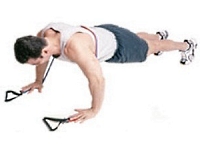
You're off on holiday: the neighbors are watering the plants; the in-laws are looking after the dog. But who will look after your pecs? How will they survive all those weeks without bench presses? You can't take benches, barbells or weights with you. But according to sports scientists at the University of Valencia in Spain you can work on your chest muscles without doing bench presses. If you use an elastic band, push-ups are just as effective as bench presses. 

* * * * *

Art of Manliness Podcast #75: Barbell Training With Mark Rippetoe Part I

Brett McKay | August 2, 2014


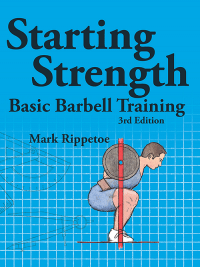
After taking a summer break from podcasting, I’m back in the saddle. And this week’s episode is a great one to come back on. I have a very enjoyable discussion with strength training expert and author Mark Rippetoe about barbell training. Mark is the author of the popular book, Starting Strength: Basic Barbell Training. Since 2005, Starting Strength has sold over 250,000 copies without any marketing; its solid advice has simply spread by word of mouth.

Show highlights:

  • Why a man should be strong
  • The benefits of barbell training over machines
  • The manly strength of old-time strongmen
  • The importance of form in barbell training
  • The main lifts every man should be doing
  • Mark’s opinion of Crossfit
  • And more!
In next week’s episode, Mark answers questions that were submitted by AoM readers. 

If you want to get strong, then I highly recommend picking up a copy of Starting Strength. It’s the most comprehensive book on barbell training out there that’s geared for the complete beginner. Even if you’ve been lifting for awhile, you’re bound to learn a thing or two from Starting Strength. And stay tuned for a great article by Mark next month on why barbells beat machines for building strength, hands down.

Art of Manliness Podcast #76: Barbell Training With Mark Rippetoe Part II

Brett McKay | August 8, 2014

In this week’s episode I continue my conversation (listen to Part I) with strength training expert Mark Rippetoe, author of Starting Strength. In this part of our discussion, I ask Mark questions submitted by podcast listeners via Twitter. Here’s a sampling:
  • Should you stretch before a workout?
  • Can you still squat even if you have bad knees?
  • Can squatting make your sprint faster?
  • Does the one rep max even mean anything?

Friday, August 8, 2014

Fitness Friday - Fitness News You Can Use

It's Friday, so it must be time for some fitness information. This week we have Chad Waterbury with a protocol to add strength in your training program; Christian Thibaudeau with a new training program; Charles Staley with a good post on sets, reps, and goals; Tony Gentilcore with a post of using kettlebells to improve your deadlift; and finally, Bret Contreras with 10 things people new to training should know.

Add Strength to Your Program

Chad Waterbury | August 6, 2014
Most of us want to get bigger and stronger at the same time. But most guys or gals that follow a bodybuilding-style program aren’t building much strength.

So today I’m going to outline a workout you can put in your current bodybuilding program that will fill in the much-needed gaps.

That’s important because if you increase your full-body strength you’ll be able to lift heavier loads in your bodybuilding workouts. This, in turn, will make it easier to build muscle in your other workouts.

Maximal Strength


There are many types of strength, so when I talk about strength-training I always make it clear to my audience what type of strength I’m talking about. In most cases, I’m referring to maximal strength: your ability to lift the heaviest load possible for 1-3 reps.

The master of maximal strength, Pavel Tsatsouline, and I have had many discussions on the best way to build it. Russian weightlifters – known as Olympic lifters to us in the states – spend most of their training cycle in the 80-85% of one-rep max (1RM) training zone. That fact will be surprising to many since it’s typically best to train with heavier loads than 85% of 1RM if you’re far from your maximal strength potential.

* * * * *

The 915 Workout Program

by Christian Thibaudeau | 08/06/14


Here's what you need to know...
  • This program is designed to make you at least 15% stronger while adding 7 pounds of muscle on your body – distributed in such a way that it will not only make you look a lot larger, but more powerful.
  • The 915 program uses the three powerlifts (squat, bench press, deadlift) and the snatch-grip high pull or power clean as the foundation lifts.
  • You'll use two assistance exercises for each main lift. These assistance exercises will allow you to correct any weaknesses holding you back on your main lift.
If you want to build muscle at a fast rate, you don't have to include an exercise for every single angle of every single muscle in your body. You don't have to use all the most advanced methods at the same time. Growing is all about working hard on exercises that will deliver results 10 out of 10 times. It's also about finding your personal weakness and hammering it hard.

The system I present below is very simple, but if you apply some elbow grease the results are guaranteed. So stop over thinking! Get on the system, work hard, and you will grow and get stronger. It's as simple as that. And for those who need further assurance, I've been using this system with several clients and they're all progressing faster than I expected; gains of at least 15% on the big lifts in 9 weeks is normal!

* * * * *

How Many Reps Should I Do?

by Charles Staley | 08/04/14


Here's what you need to know...

  • It's not what you can do in a set, it's what you can do in a workout. It's not what you can do in a workout, it's what you can do in a training cycle.
  • If you're interested in maximal strength, tension is the name of the game. That can mean lifting a very heavy weight as fast as you can, lifting a moderately heavy weight as fast as you can, or ideally, both.
  • If your main goal is strength, you should terminate any given set just short of technical breakdown, or for stable lifters, always leave one solid rep in the tank for any given set.
  • If your main goal is hypertrophy, you should use a wide range of reps, from as few as 1 to as many of 30. This can be done by pyramiding up to a few heavy sets, followed by a few higher-rep "back off" sets with lighter weights.
  • Most trainees need to address both strength and hypertrophy in their training, regardless of what they consider their primary goal to be. The "sweet spot" between these two adaptations seems to be 5-8 reps per set.
  • Training to failure is only advisable for technically stable athletes on their last set. Blowing your wad on your first set will limit the overall amount of volume you'd otherwise be able to rack up.
Whenever you're doing a set, there are only two real decisions you need to make:
1. How many reps should I do?
2. How close to failure should I go?
Aside from exercise selection and training frequency, these are possibly the two most important decisions you'll need to make in order to obtain optimal results from your training. To answer these questions, you'll in turn need to ask two additional questions:
1. What's my goal?
2. How many total sets am I going to do for that exercise?

* * * * *

How the Kettlebell Can Improve Your Deadlift

Tony Gentilcore | August 2, 2014


I had an interesting conversation with my good friend and fellow strength coach, Ben Bruno, not too long ago.

He and I like to catch up every now and then to 1) discuss our mutual affinity for JP Licks ice-cream and 2) talk some training and fitness shop.

He’s originally from New England and worked as a coach at Mike Boyle Strength and Conditioning for a handful of years before moving out to LA last fall for a change of pace and to pursue some other opportunities.

His typical clientele now out in LA resembles a litany of Hollywood A-listers and a “who’s who” of gossip magazine covers, as well as those people who have a bit more of an aesthetic bias towards training.

While he loves LA and the people he works with, a small percentage of his heart is still back in Boston, working with athletes and helping people get strong.

In one of our last conversations he made the comment that there’s a stark contrast in training mentality between the west and east coast. But a little context comes into play.

Whereas at Cressey Sports Performance, someone nails a 400+ lbs deadlift and no one bats an eye, out in LA someone hits that same lift in a commercial gym and it’s assumed they’re on steroids. And then given their own reality tv show!

Similarly, with regards to female training, and especially with regards to female celebrities and the “Hollywood” mentality as a whole (my apologies with the gross generalization here), barbell training is almost considered taboo.


Ben noted that whenever he’s tried to get some (not all) of his female clients to train with free-weights they were a tad skittish and reticent to place any appreciable load on the barbell.

Truth be told, while the tide is slowly turning for the better (more and more women are reaping the benefits of strength training. See: CrossFit), there’s still a “barbells are scary” vibe that pervades the female psyche. It’s slight, but it’s still there.

Ben noticed a funny thing, however. He noted that whenever he had his female clients use kettlebells they were more than eager to “get after it.” It was almost as if they didn’t think kettlebells counted as strength training.

* * * * *

10 Things All Beginning Lifters Should Know

Brett Contreras | August 5, 2014

Every experienced lifter out there can remember the first time they moseyed into the weightroom, full of fear, confusion, and insecurity. Though most of us make it past these initial stages, some lifters never do. Some lifters quit training, mostly because they don’t understand it. If only there was a seasoned lifter at every gym who could talk to beginners and educate them on what things are important and what things aren’t very important. Below are the more common sources of confusion and misunderstanding that newcomers to resistance training share.

Friday, August 1, 2014

Fitness Friday - Fitness News You Can Use

I missed last week, so there are a few extra articles here this week to give you something to read while you should be working. There's a lot of good stuff, so enjoy!

* * * * *

From the Cressey Performance blog, a guest post from Andrew Zomberg.

7 Strategies for Strength Training with the Minimum

Written on June 20, 2014, by Eric Cressey

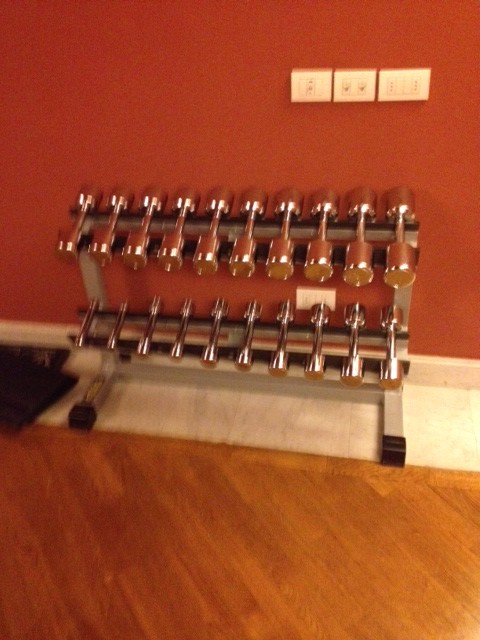
Recently, my wife and I vacationed in Italy, and fitness nuts that we are, we frequented several hotel gyms - none of which were particularly well equipped. Here's the one from hotel in Florence; yes, it was just dumbbells up to 10kg.


Immediately upon leaving, I sent an email to Cressey Performance coach Andrew Zomberg (@AndrewZomberg), who I knew was the guy to write up a post on having a great training effect without much equipment. This is what he pulled together; enjoy! -EC


Greater equipment availability generally yields greater efficiency because in order to induce structural or functional adaptations, you have to “force” the body to do so. Unfortunately, getting to a gym is not always feasible. The good news? Resistance training does not always have to depend on cable machines, power racks, and barbells.

Inaccessibility to gym equipment can be discouraging. The good news is that by creating structured programs and discovering new ways to challenge yourself with progressions, you can easily elicit a comparable training effect, just as if you were in a gym. Here are some options...
* * * * *

From Brett Contreras (the glute guy, as the picture below attests) - a collection of cool links in his "Random Thoughts" post - there is a TON of stuff there, so be sure to check it out.

Random Thoughts


How’s it going fitness peeps? I’ve got some great articles, videos, rants, and before/after pictures for you to check out. Just keeping you in the know!

Good Articles


Here are some great recent articles to read, written by various colleagues.

Scientific Articles


Chris Beardsley

Chris has written some great scientific articles in the past month. Several months ago he focused on hypertrophy, then he moved on to strength, and now he’s examining power. Here are the last six blogposts:
  1. Resistance Training and Power
  2. Ballistics and Power
  3. Injury Rates in Strength Sports
  4. Range of Motion on Strength Gains
  5. Rest Periods on Strength Gains
  6. Training to Failure on Strength Gains

Other Scientific Articles
  • We’re getting fatter due to less exercise, not more calories. See HERE.
  • Are you tired of pseudoscience? HERE are 10 claims that the authors would like to see go away forever.
  • Nick Tumminello teaches you some B.S. detection strategies HERE.
* * * * *

A few articles from T-Nation.

Total Body Strength

Loaded Isometrics for Size and Strength

by Nate Palmer | 07/24/14


Here's what you need to know...

  • Loaded isometrics teach irradiated tension, which increases strength gains in almost every exercise.
  • These moves can be done to increase either muscle size or strength, depending on the load used and the time under tension.
  • These exercises will teach you to use your entire body as one unit, test your mettle, and build strength in several key areas. Perform these after your main lift for the day, as a finisher, or just to test your willpower and see how strong you really are.
  • Keep the entire body tight to build total body strength. Keep your mental focus on the muscle you're working. Build your mental focus and you will get stronger!
Loaded isometrics can teach you a great number of things. The lesson I always learn is that I'm not as strong or as tough as I think I am. It's always a humbling experience to feel a whole new level of pain from a familiar exercise and it's a good check to see if you're actually working on your weak areas or just on the exercises you like.

Loaded isometrics are also fantastic for teaching the concept of irradiated tension, which, when properly performed, can increase strength gains in almost every exercise. The basic premise of irradiated tension is the idea that the body does not function in single units, but that the entire structure is important for even the smallest isolation move. In other words, when you create tension through your whole body, a dumbbell curl is more than just a dumbbell curl.

To create this next-level type of tension through your whole body, assume an athletic stance, feet shoulder-width apart, knees slightly bent, and starting with your core, begin to tighten your abs and then your glutes to create a foundation. Then squeeze the quads, pull the shoulder blades down and back, engage the lats, and lastly, tighten both fists.

Make sure you're taking small shallow breaths and then take inventory of your body. You should feel like an immovable object. If you need more proof that this technique will allow you to lift more, do a single arm dumbbell press with your weaker arm. Try it once without the tension, and try it once with it. Make up your own mind.

* * * * *

8 Rules for Fat Loss Training

by Andrew Heming | 07/29/14 
Here's what you need to know...
  • If you're serious about stripping off body fat, you must make time for proper nutrition. If you don't have time for this, make time.
  • Too often people trying to lose body fat just use intense metabolic resistance training and HITT (high intensity interval training). With fat loss programs, you need to switch as needed to different strategies such as metabolic resistance training, strength training, bodybuilding, and strength plus conditioning.
  • When designing a weekly plan for your training, consider how different styles of training affect different systems and thus affect recovery. You need to allow for some "space" between different kinds of stressors such as nervous system stressors, joint stressors, spinal compression, and metabolic stressors.
  • When trying to burn fat, you should rotate between different types of alactate (without lactic acid) conditioning that consists of short, intense work and lactate (produces lactic acid as a byproduct) conditioning that consists of longer duration work.
Want to lose body fat quickly and keep it off? Stop following those mainstream fitness workouts designed for your granny. Real fat loss training should build calluses on your hands. Here are eight rules for effective fat loss training, plus a sample workout plan that puts them all into action.

* * * * *

Bodybuilder Goes CrossFit

by Christian Thibaudeau | 07/25/14 
Here's what you need to know...
  • While the thinking used to be that CrossFit made guys weak, the average competitor in the CrossFit Games is very impressive.
  • Quite a few CrossFit girls have better physiques than some figure competitors, even without dieting.
  • There's something magical about being able to perform an explosive lift when you're metabolically fatigued and your heart rate is skyrocketing.
  • Doing submaximal lifting that focuses more on speed and density of work, like you do in CrossFit, is a great way to build muscle.
  • CrossFit can also get you lean fast, even with zero emphasis on nutrition.
I have a secret. I did CrossFit almost exclusively last summer. I've competed in Olympic lifting, powerlifting, and I've been a competitive bodybuilder... and now I can say I've been a CrossFitter too. I went to CrossFit Levis three times a week and then trained on my own to work on strength and my Olympic lifts. I actually kept a kind of CrossFit journal back then. So, one year later, here it is: my CrossFit diary, along with some current-day observations.
* * * * *

Here is a little science for you this week:

After resistance exercise, muscle repair and strengthening aided by stem cells


Thursday, 24 July 2014
A new study in mice reveals that mesenchymal (mezz-EN-chem-uhl) stem cells (MSCs) help rejuvenate skeletal muscle after resistance exercise.

By injecting MSCs into mouse leg muscles prior to several bouts of eccentric exercise (similar to the lengthening contractions performed during resistance training in humans that result in mild muscle damage), researchers were able to increase the rate of repair and enhance the growth and strength of those muscles in the exercising mice.

The findings, described in the journal Medicine and Science in Sports and Exercise, may one day lead to new interventions to combat age-related declines in muscle structure and function, said University of Illinois kinesiology and community health professor Marni Boppart, who led the research.
 * * * * *

This comes from Ergo-Log.com, a site that posts some interesting research summaries related to supplements, nutrition, and strength.

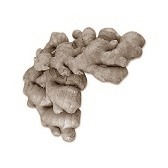
The joint effect of strength training and ginger supplementation

Supplementation with ginger combined with strength training reduces the damage wreaked by aggressive molecules in fat people, but the combination doesn't work better than either supplementation or training alone. Sports scientists from Iran state this in the Journal of Exercise Science & Fitness. The results of their study also suggest that ginger supplementation boosts the number of kgs muscle mass you build with strength training, and the number of kgs fat you lose as a result.

Strength training and ginger

Overweight is unhealthy for a number of reasons, and one of these is that the extra kgs of fat multiply the activity of aggressive molecules – free radicals – in the body. Physical exercise – so strength training too – reduces this, and supplementation with ginger does the same. But what does combining the two do? That's the question the researchers wanted to answer in their experiment.

Friday, July 4, 2014

Fitness Friday - Fitness News and Information You Can Use

It's time for another Fitness Friday. We start off with two articles from Chad Waterbury (partly as a promotion for his new book), one from his own blog and one from Eric Cressesy's sight. After that we have an article on running from T-Nation. Finally, a nutrition article on the Western diet and its impact on the immune system, then two articles debunking the health risks associated with testosterone replacement therapty (good news for men on T replacement).

http://hftmuscle.com/


Full-Body Training for Mass Rules

Chad Waterbury
 

blog full body

The best trigger for muscle growth across your entire body is a full-body workout. The combination of an upper-body pull, push and squat/deadlift/lunge is a powerful stimulus to upregulate the anabolic hormones and ramp up protein synthesis.

I’ve written extensively about full-body training over the years, and I keep experimenting with ways to make it better. Here’s what I’ve learned over the years that you can do to make full-body training your go-to strategy for fast muscle gains....

* * * * *

What Cirque du Soleil Can Teach You About How to Build Muscle

Written by Chad Waterbury on June 28, 2014 | by Eric Cressey


I'm in Chicago to speak at the Perform Better Summit this weekend, but fortunately, my good friend Chad Waterbury provided this guest post for today. Enjoy! -EC

In 2001, I went with a buddy to Vegas. I wish I could say the trip was replete with all the temptations that Sin City had to offer, but it was strictly business.

At the time, I had a packed personal training calendar that kept me busy from dawn to dusk. Most of my clients were guys that wanted to build muscle, so I had them do a combination of heavy and high-rep training to failure.

That’s how bodybuilding protocols worked back then, and most of them still do today. I made my clients work hard and they trained each major muscle group about twice per week.

Now this is where my Vegas trip comes in.

That year I went to see the Cirque du Soleil show, Mystere. Many of my clients had seen the popular show and they mentioned that I should make a point to attend, mainly because of two heavily-muscled gymnastics that display mind-blowing feats of strength: the Alexis Brothers.
* * * * *

Running Doesn't Suck

by Max Shank   
07/01/14

Here's what you need to know...
  • The anti-running movement has gone too far when it says that running is stupid or that it will eat up all of your muscle.
  • The weight-lifter-who-moves-like-garbage and bashes running is becoming a tiresome cliché.
  • Short distances like 10-40 meters, 40 to 100 meters, and 100 to 800 meters, in addition to hill sprints and shuttle runs, all have varying benefits ranging from increases in GH and Testosterone to increases in leg strength, coordination, and bone and soft tissue integrity.
  • If the endurance nutballs would start doing repeats of 400-800 meters at high effort, they might forget what a thruster is.
The fact that there's been a revolt against "jogging" as a fitness modality is terrific and I'm happy we're moving more towards the center. However, one thing that's gone too far is this whole idea of how running is stupid, or will somehow eat up all of your muscle. I've even heard trainers tell people that running is the worst thing you can do to stay in shape.

Now I'm all for the execution of "jogging" in general, but to make a blanket statement that all running is worthless is extreme. Running sucks? Really? Seriously? Humans are literally built for running. As far as the hierarchy of things you need to do for survival, running is right smack dab at the top of the list, next to keeping your heart beating at all times. Frankly, the weight-lifter-who-moves-like-garbage and bashes running is becoming a tiresome cliché.

Running offers several benefits including, but not limited to:
• Increase in growth hormone and Testosterone production
• Increase in leg strength
• Increase in coordination
• Increase in bone and soft tissue integrity
• Prevention of injuries
Now when I advocate that you run, it's not for 26 miles, but for varying distances up to 800 meters at a time. Here's a short list of the different modalities I use and their benefits....
* * * * *

Next up we have two nutrition/supplement studies. One looks at the impact of the Western diet on the immune system, the other is a new testosterone study that fails to confirm a study from earlier this year that suggested testosterone replacement cause cardiac damage.

Fast food fever: reviewing the impacts of the Western diet on immunity

Ian A Myles

Nutrition Journal; 2014, 13:61 doi: 10.1186/1475-2891-13-61
This is an Open Access article distributed under the terms of the Creative Commons Attribution License (http://creativecommons.org/licenses/by/4.0), which permits unrestricted use, distribution, and reproduction in any medium, provided the original work is properly credited. The Creative Commons Public Domain Dedication waiver (http://creativecommons.org/publicdomain/zero/1.0/) applies to the data made available in this article, unless otherwise stated.

Abstract

While numerous changes in human lifestyle constitute modern life, our diet has been gaining attention as a potential contributor to the increase in immune-mediated diseases. The Western diet is characterized by an over consumption and reduced variety of refined sugars, salt, and saturated fat. Herein our objective is to detail the mechanisms for the Western diet’s impact on immune function. The manuscript reviews the impacts and mechanisms of harm for our over-indulgence in sugar, salt, and fat, as well as the data outlining the impacts of artificial sweeteners, gluten, and genetically modified foods; attention is given to revealing where the literature on the immune impacts of macronutrients is limited to either animal or in vitro models versus where human trials exist. Detailed attention is given to the dietary impact on the gut microbiome and the mechanisms by which our poor dietary choices are encoded into our gut, our genes, and are passed to our offspring. While today’s modern diet may provide beneficial protection from micro- and macronutrient deficiencies, our over abundance of calories and the macronutrients that compose our diet may all lead to increased inflammation, reduced control of infection, increased rates of cancer, and increased risk for allergic and auto-inflammatory disease. 
* * * * *

Latest Testosterone Study Finds No Heart Attack Risk

Nancy A. Melville
July 03, 2014

In the latest addition to the ongoing debate over the safety of testosterone treatment, researchers report no significant increased heart attack risk in older men treated with an intramuscular form of the therapy.

The study, published online this week in the Annals of Pharmacotherapy, compared 6,355 Medicare beneficiaries treated with testosterone with 19,065 who were not, between January 1997 and December 2005, and showed no increased risk of myocardial infarction (MI) in the treatment group (hazard ratio [HR], 0.84; 95% confidence interval [CI], 0.69 - 1.02).

“In this matched double-cohort study of more than 24,000 Medicare beneficiaries, we found that use of intramuscular testosterone therapy was not associated with an increased risk of MI,” say the authors.

Furthermore, "a dose–response analysis demonstrated no increased risk in MI according to estimated cumulative dose of testosterone. These findings were robust across a range of sensitivity analyses that addressed eligibility criteria, exposure thresholds, follow-up periods, and covariate adjustment,” they add.
* * * * *

Testosterone Therapy Does Not Cause Prostate Cancer

NEW YORK, NY--(Marketwired - Jul 3, 2014) 
What are the dangers of testosterone therapy? Does long-term hormone replacement therapy increase prostate cancer risk? Testosterone replacement therapy is on the rise, though recent reports suggest that low testosterone (Low T) diagnoses may be too prevalent and that excessive treatment pose risks to men. However, according to a recent German study, long-term testosterone therapy does not increase a man's risk of developing prostate cancer.

Some experts caution that testosterone therapy is overused. Evidence shows that the treatment increases prostate size, elevates prostate-specific antigen (PSA) levels, and permanently impairs the body's ability to produce natural testosterone. Leading New York robotic prostate surgeon, David B. Samadi, MD, Chairman of Urology and Chief of Robotic Surgery at Lenox Hill Hospital, encourages men to seek a second opinion before beginning a testosterone therapy regimen.

"For some men, Low T is very real and can cause loss of energy, reduced sex drive, weight gain, and depression," said Dr. Samadi. "Men with truly low testosterone levels can experience tremendous benefits from testosterone therapy and may opt for long-term treatment. For them, this is good news. Their risk of prostate cancer is no higher than that of other men."

Monday, June 16, 2014

Exercise and Testosterone


This article comes from www.WebMD.com, May 2014.The author examines the ways that working out can help improve testosterone levels for men whose levels are not so low as to require medical intervention.

One of the points they mention, but do not explain, is that being overweight or obese can cause serious drops in T levels. This happens because fat cells both produce estrogen and have estrogen receptors, and the more estrogen one has, the less effective one's testosterone will be in relation.

If you want to serious improve your overall hormone levels, lose the bodyfat - do not accept it when doctors tell you 18% is healthy - it's borderline obese. And don't trust body mass index (BMI) to be a good indicator, either. You can have a BMI of 24-25 and still have 20% bodyfat.

For most men who are not athletes or competing in strength events, 12-15% bodfat is a good goal. 

One other point - the author mentions that weight training provides more return on investment for increasing T levels, but he didn't mention that long sessions of steady-state cardio can actually increase estrogen levels and reduce T levels. The best evidence of this is that endurance athletes, such as professional cyclists, are 20-50% below normal in their T levels during a 3-week race such as the Tour de France.

Does Working Out Affect Testosterone Levels?

By Eric Metcalf, MPH
WebMD Feature
Reviewed by Brunilda Nazario, MD

If you’re a man with low testosterone, exercise may help.

Doctors and fitness professionals still have a lot to learn about exercise and its effects on testosterone. Several factors besides your workout are involved.

But one thing is clear: You need to make exercise a habit in order to get the benefits.
After exercise, testosterone levels rise -- but not for long.  

"Sometimes it’s 15 minutes after exercise that testosterone is elevated. Sometimes it can be up to an hour,” says Todd Schroeder, PhD, who studies exercise and hormones in older men at the University of Southern California.

It's not yet clear what health effects, if any, these temporary boosts may have. Of course, exercise has many other well-known health perks.

For men who have low testosterone, exercise alone probably won’t raise their levels enough to make a difference in how they feel, says endocrinologist Scott Isaacs, MD, of Emory University. But he says for men whose testosterone level is on the borderline between normal and low, “I think it’s going to have a much more potent effect.”

4 Factors That Matter

Your weight, age, fitness level, and the timing of your workout all matter.
1. Your weight: Isaacs treats men with low testosterone. He sees obesity as a big part of the problem. If you’re overweight, exercise can improve your testosterone levels by helping you shed pounds, says Isaacs, the author of Hormonal Balance: How to Lose Weight By Understanding Your Hormones and Metabolism.

2. Your age: Older men seem to get less of a post-exercise boost in testosterone, Schroeder says -- though this needs more research. Still, exercise offers many other health benefits for older men, including bone and muscle health and better balance.

3. When you exercise: Your testosterone levels vary throughout the day. Levels are typically highest in the morning and lowest in the afternoon. Research has found that strength-training workouts may have a bigger effect on testosterone in the evening. As a result, the brief boost from your exercise session might be even bigger if you schedule it after work instead of early in the morning, Isaacs says.

4. Your fitness level: Not in great shape? If you start exercising, you maybe get a bigger, though still brief, boost in testosterone than a man who's already in good shape. But after a few weeks, your body gets used to the challenge. Eventually, you'll get a lower hormone response from the same workout, Schroeder says. 

All Types of Exercise Count

Endurance training and resistance training (such as weight lifting) both boost testosterone levels briefly, Schroeder says.

Lifting weights or doing other strength-training workouts has a bigger effect on your testosterone, Schroeder says. He says the following strategies will give you an even bigger boost in testosterone from your strength training workouts, which is backed up by research. 
  • Use more muscles. (For instance, a full-body workout affects this hormone more than doing one exercise, such as biceps curls.)
  • Lift heavier weights rather than doing many reps of light weights.
  • Have shorter rest periods during your workout.
Still, you should build an overall exercise plan that also includes cardio and flexibility training, so you're helping your overall health.

Overdoing it, though, could backfire. Elite athletes (and amateurs who overtrain), can see a drop their testosterone level, which is a sign that they’re doing harm to their bodies. In these cases, they tend to have low testosterone and high cortisol, a stress hormone, Schroeder says. He notes that a rise in cortisol can be linked to a fall in testosterone. 
Signs of overtraining include:
  • Excessive soreness
  • Trouble recovering from workouts
  • Trouble sleeping
  • Losses in performance and strength
Give yourself enough time to rest between workouts, and eat healthfully to help your body recover after workouts.

Isaacs discloses that he is on the speaker’s bureau for Abbott Laboratories, which markets a testosterone replacement product. Schroeder reports no disclosures.

Friday, May 16, 2014

Fitness Friday - Fitness News and Information You Can Use

It's Friday, so it's time for another collection of fitness articles from around the web. This week's topics include "butt wink," how to improve power, 10 health myths debunked, understanding and using training percentages, and last, whether or not time under tension is important.


First up, this is from Girls Gone Strong (don't let the name of the site fool you, these women know their stuff - and this is problem I see more in men than in women, so pay attention):

My Butt Is Doing What? Squats and Butt Wink

(Note from GGS: Hey GGS Community!  We have a real treat for you today with another awesome installment of Ask Ann, our monthly column with Physical Therapist and Athletic Trainer, Ann Wendel.  Enjoy!)

“Hi Ann!  I try to squat to full depth, but I can’t seem to do it comfortably or with good form. I keep hearing the term “butt wink.” What is it and what causes it?”

Hi there!  Thank so much for submitting your question.  It’s a great question, and ties in nicely with last month’s column. Let’s start by defining the term “butt wink.”

Butt wink is a common term for losing proper spinal positioning when squatting to depth (in gym terms, “in the hole” or “ass to grass”). Instead of maintaining a neutral or slightly extended lumbar spine, the lifter experiences posterior pelvic tilt and lumbar flexion at the lowest point of their squat. This makes the butt “wink” or tuck under (the photo below left shows proper form, photo on the right shows butt wink).


Butt Wink Picture 1
Image Source: here 

* * * * *

3 Keys to Improving Power

May 9, 2014 | Mike Robertson


power-jump 
As an athlete, power reigns supreme.

Sure maximal speed is important, and being brutally strong can help, but if you want to be at your best it behooves you to improve power.

Unfortunately, I think most athletes go about this entirely wrong.

First and foremost, they spend all their time focusing on force production vs. force absorption.
 
Second, athletes and coaches alike don’t follow a basic hierarchy when it comes to training power. Just like you shouldn’t train force production before force absorption, you may not need to train power at all initially to see improvements in power production!

Here are three keys you should focus on if your goal is to improve power.

* * * * *

From Lifehacker:

10 Health Myths That Just Won't Die, Debunked by Science

By Adam Dachis


Everything makes you fat! Gluten-free food is the key to eternal youth! You need to poop ten times a day or you’ll die! You’ll find tons of equally ridiculous health claims around the internet, and you’ll actually believe some of them. Today we’re taking a look at 10 common myths and uncovering the truth.

While we’ve learned a lot about health issues here at Lifehacker over the years, we can’t claim expertise on any particular subject. To help us get to the root of these myths, we solicited the help of three experts: Dr. Carly Stewart (medical expert at Money Crashers), Andy Bellatti (Las Vegas-based registered dietitian), and Dr. Spencer Nadolsky (medical editor at Examine.com). They all offer a unique perspective on each myth but mostly came to the same conclusions: we have a lot of silly misinformation out there about our health.

* * * * *
From T-Nation:

From 0 to 100: Know Your Percentages!

by Christian Thibaudeau
05/13/14


Here's what you need to know...

  • Knowing the effects of each training zone will allow you to make the best choices when it comes to designing your own training plans. 
  • Each training percentage, from zero to 100% of your 1RM, has a distinct effect on speed, power, muscle hardness, muscle density, and hypertrophy. 
  • Percentages can't always be followed to the "T". Some days 80% will feel like 90%, but these general guidelines will help you plan your training to get the results you're after.
While training percentages can vary depending on how you're feeling on a given day, they can still be extremely useful. After all, if you know the specific training effect of various levels of loading, you can select the weight that's appropriate to your goals. So here's something I've rarely seen presented: a list of percentages that explains what each type of training load can provide and what kind of body they will give you.
* * * * *

Last up this week is a video talk from Team3DMJ about time under tension (TUT), which was once all the rage in training for size or strength.

Peeling Back a Layer Episode 5: "Is Time Under Tension Important?"

Published on May 14, 2014


Peeling back a layer addresses commonly misunderstood topics that we think we have a solid grasp of, but that we are actually missing a critical understanding of.

This episode asks the question, "Is Time Under Tension Important?"

See the referenced scientific studies here (I recommend reading the full texts):

Friday, May 9, 2014

Fitness Friday - Fitness News and Information You Can Use

It's Friday, so it's time for another Fitness Friday post. There is a lot of good stuff this week, so pour some coffee, shut your office door, and get ready to be educated from some of the best minds in strength and fitness.

To begin, here are three articles from T-Nation - ridding ourselves of stubborn body fat, the problems with exercise science programs in most universities, and deadlifting 101, from a guy with an 800+ lb deadlift.

How to Burn Stubborn Body Fat

by Dr. Jade Teta
5.6.2014


Here's what you need to know...
  • Spot reduction can occur, but on a very small scale. Attacking stubborn fat and spot reduction are two different things.
  • Stubborn fat is physiologically different than other fat. It has a high density of alpha-receptors compared to betas, is more insulin sensitive, and receives less blood flow than less stubborn fat.
  • Dieting by eating less and exercising more is by far one of the major blocks to permanent change. Supplements such as green tea extract, forskolin, and yohimbine HCL can help with stubborn body fat, once you get your diet in order.
The other day I was perusing some popular health and fitness pages on Facebook . One discussion was from a person asking a question about "targeting stubborn fat". The page administrator answered the question this way: "You can't target certain areas of the body. It's simply impossible. The body burns fat from all over. Spot reduction has been proven a myth."

And the truth is? The page administrator is wrong on both accounts. First, you can certainly target stubborn fat, and spot reduction has been proven to occur.

* * * * *

The Problem with "Exercise Science"

by Mark Rippetoe
5.5.2014


Here's what you need to know...
  • Most university-level programs do not equip their graduates to function beyond the commercial gym pin-setter level.
  • Barbell training, the most basic and effective method for improving strength and conditioning, is either not taught in most programs or so poorly taught that it leaves students unable to get real results with their clients and athletes.
  • Many studies that make it into the hallowed "Literature" draw conclusions based on unrealistic, silly methodology and puny weights. It's clear the "exercise scientists" conducting these studies do not use barbells beyond a novice level, if at all.
  • To get a real education, study a "hard" science, plan for much self-education, compete in your field of interest, and coach lots of other people... for years on end.
I talk to lots of kids who are interested in becoming strength coaches. I get e-mail about this every week, and we talk about it with people who attend our seminars every month. Most are in school for an "Exercise Science" degree, at either the graduate or Masters level. I have two important observations:

1. The university-level programs are so uniformly bad that everyone who comes prepared to pass our barbell training and coaching course has done the preparation themselves, with no help whatsoever from their coursework at school. As far as I know, there are so few college-level programs that actually equip their graduates to function beyond the commercial gym pin-setter level that I cannot tell you the name of a single school that does the job adequately.

2. These people come to our Level II seminar, and the most frequent comment from them is something to the effect that "I learned more in your 25-hour course than I learned in the past 4 years of my Exercise Science program at [name any university].
Thank you THIS much [stretches arms wide and hugs me]." I understand that people don't go to college to learn how to lift weights. I know that Brooks and Fahey must be read and understood, that some approach to understanding cardiopulmonary topics must be taught, and that testing and measurements are sometimes important if quantification is necessary for the Physical Therapists.


But I also know that any college-level program that calls itself "Exercise Science" or "Biomechanics" or "Exercise Physiology" or any other trendy permutation of PE should at least prepare the student to function in a situation where the coursework can be applied in a real-world scenario, beyond what would be expected of a self-taught trainer in a gym, and that this is the expectation of the student who enrolls there. Most of these people graduate from the typical PE program quite literally unequipped to show a client the most basic weight room exercises and, more importantly, completely unable to put this client on an effectively-designed program that improves physical capacity over the longer term. The ones who can have learned how on their own.

* * * * *

Heavy Deadlifting 101

Tips from an 810 Pound Deadlifter by Matt Kroc
05/02/14


Here's what you need to know...
  • With deadlifting, you don't need fancy techniques like drop sets, super sets, rest/pause, etc. Keep training simple with rep ranges of 1-10 reps.
  • Smaller, thinner lifters tend to typically perform better with the Sumo style while larger, thicker lifters tend to be stronger in the conventional style.
  • Conventional deadlifting is preferential for bodybuilders, has a greater carryover to everyday movements outside the gym, and is more applicable to increasing performance in other sports.
  • It's important at the beginning of the lift to move the bar away from the floor as fast and as explosively as possible as the momentum gained from this will aid greatly in completing the lift.
  • If the bar moves in towards you as it leaves the floor, then you're setting up too far away from the bar. Conversely, if the bar moves out away from you, you're setting up too close to the bar.
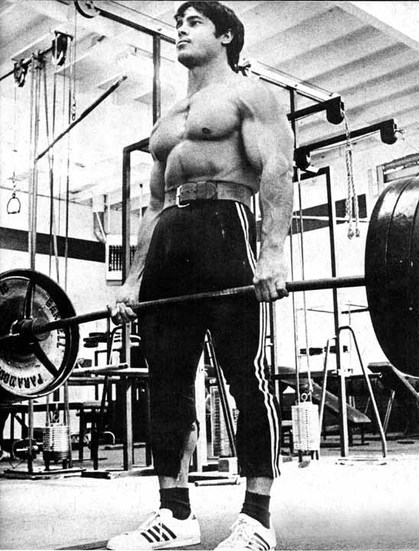
Deadlifting is the base upon which all real back strength is built. There's not a more raw or true to life exercise. You bend over and pick up something heavy. That's it. However, the deadlift's simplicity is also the reason it's so effective. It stresses every major muscle group in your posterior chain, but none more so than your back. It works your back from the base of your erectors to the top of your traps and everything in between.

You can always spot a guy with a big deadlift. He has powerful, yoked traps and a back thickness that you can't obtain any other way. Ronnie Coleman and Johnnie Jackson possess two of the thickest and most powerful looking backs to ever step foot on a bodybuilding stage and it's no coincidence that they're both capable of deadlifting in excess of 800 pounds.
* * * * *

From Eric Cressey's blog, a brief video on understanding and managing joint hypermobility.

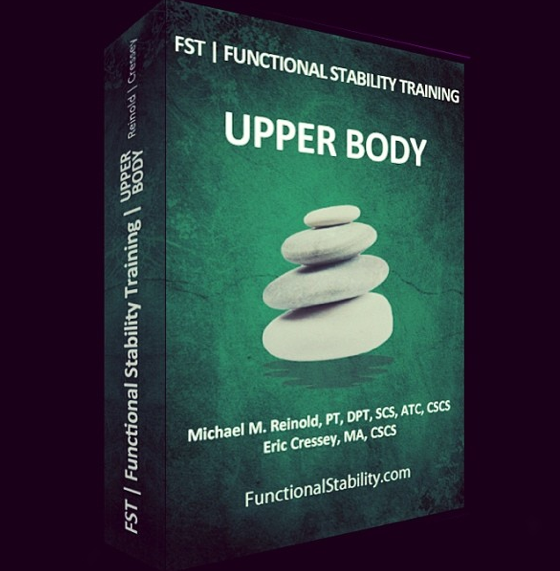
Functional Stability Training of the Upper Body: Why Do You Feel “Tight?”

Written on May 6, 2014, by Eric Cressey

Next week, Mike Reinold and I will release our newest resource, Functional Stability Training of the Upper Body. We're super excited to introduce the third installment of our popular series, and thought you might like a little teaser of what to expect. Here is an excerpt from one of my webinars, "Understanding and Managing Joint Hypermobility:"


Keep an eye out early next week for the release of this resource!


* * * * *

From Tony Gentilcore's blog, an article on the joys of the goblet squat, and an intensity adaptation he calls "goblet elevator squats" - looks brutal, which means I will need to try this soon.

Exercises You Should Be Doing: Goblet Elevator Squats 

As far as “fool proof” exercises are concerned, you’d be hard pressed to do much better than Goblet squats.
I’d toss in an obligatory “it’s so easy a cave man can do it” joke here, but, well, shit, I just did.
Time and time again I’ve seen someone with some of the worst squatting technique you can imagine (Think: knee valgus, rounded back, my corneas perpetually bleeding), only to see them squatting flawlessly in a matter of minutes when coaching them up on the Goblet squat.
Likewise, almost always, whenever someone complains about how much “squatting hurts my knees,” I can get them performing them pain-free with a little cueing and attention to detail.
I like to call it “pulling a Dumbledore,” because it’s borderline magical in their eyes.
It makes complete sense when you think about though.


- Give them an anterior load to force them engage their core musculature more efficiently and to provide more stability.

- Cue them to SIT BACK (keeping their feet flat, however placing the brunt of their weight into their heels), while simultaneously pushing their knees out (t0 open up the hips).


- And then teach them to “finish” with their glutes at the top, and not only do they see drastic improvements in their technique (and depth), but it feels effortless and less painful.
That said, even though the natural progression is to (eventually) move towards barbell variations, sometimes it’s advantageous to stick with Goblet squats in the interim and make them more “challenging.”

* * * * *

And finally, from Breaking Muscle, a look at the back squat vs. the overhead squat.

Science Compares the Back Squat to the Overhead Squat

Doug Dupont: Contributor - Health and Fitness News

The overhead squat doesn’t get enough attention in some circles and may be overemphasized in others. Some people consider it inferior to bigger lifts like the back squat, whereas others emphasize its advantages as a superior core exercise. A recent study in the Journal of Strength and Conditioning Research addressed this controversy.

In the study, researchers took a group of rugby players who were experienced lifters and had them perform back squats and overhead squats at 60%, 75%, and 90% of their three-rep max. Their squats were studied by electromyography (EMG) in order to analyze the amount of activity in their muscles. The researchers focused on trunk and lower body muscles, but also looked at the anterior delts.

Technically speaking, the overhead squat outperformed the back squat for the anterior trunk muscles, as measured by the EMG activity of the rectus abdominis and the external oblique. However, the authors of the study were quick to note that the differences were a small, albeit significant, 2%-7% difference. Due to the small percentage, they concluded that the claims of superiority of the overhead squat for trunk musculature are therefore false.

However, let me play devil’s advocate for a minute here. First, up to a seven-percent improvement is not to be discounted. That’s a big difference when it adds up over time. Second, experience level with the overhead squat is a big factor. Few people are as practiced with it as they are with a back squat, which can affect results like this. Third, overhead squat loads were smaller. This study focused mostly on relative weight, meaning the percentage of one rep max, so the back squat loads were higher. When they compared pound for pound, the overhead squat had higher EMG activity in every muscle except the gluteus maximus, and only during the concentric phase.

Back squats, on the other hand, can be lifted with greater loads. While the overhead squat may be better for the anterior trunk, the study found the back squat was better for every other lower body and trunk muscle when compared at relative loads rather than absolute. The only other muscles they tested were the anterior delts which, not surprisingly, were hit much harder on the overhead squat.

The researchers also compared both squats to traditional core moves like sit ups and planks. The rectus abdominis and the external obliques both showed much greater activity from the core moves. By contrast, both kinds of squats hit the erector spinae much harder.