Showing posts with label interview. Show all posts

Friday, August 15, 2014

Fitness Friday - Fitness News You Can Use

A little late today, but better late than never. Here is this week's installment of Fitness Friday. We have upper body exercise combos for mass, a 5-move kettlebell sequence, a highlight video from the Crossfit Games, a study on pushups being as effective as bench, and a 2-part interview with Mark Rippetoe from The Art of Manliness Podcast.

6 Combo Exercises for Upper Body Mass

by Ben Bruno | 08/01/14


Here's what you need to know...
  • The problem with most combination exercises is that one of the exercises is significantly stronger than the other and you end up using less weight for it. These six combos solve that problem.
  • Combination exercises can work well for packing on mass if both exercises are equally demanding so you don't have to shortchange one for the sake of the other.
  • Combos done in alternating fashion allow you to get more reps of each than if you were to use straight sets. Why? Because each muscle group gets a brief rest while you work the other.
The problem with most combination exercises is that one of the exercises is usually significantly stronger than the other. This means when it comes to selecting a weight, you must choose according to the weaker exercise, which in turn means that you're shortchanging the stronger exercise and not getting as much out of it as you could had you done it on its own. This isn't as big of a deal if you're just looking to do some lighter metabolic work, but if your goal is to build muscle, it's not ideal.

So while I typically don't like combination exercises for muscle building, they can work well if both exercises are equally demanding so you don't have to shortchange one for the sake of the other. With that in mind, here are six great combination exercises to add muscle to your upper body.

* * * * *

The 5-Move Core Shredder

Blast your abs, balance your strength, and boost total-body power and stability by training one limb at a time

By the editors of Men's Health, August 04, 2014

Trainer: Tony Gentilcore, C.S.C.S., cofounder of Cressey Performance, Hudson, Massachusetts


Best For: Shredding your core, eliminating muscle imbalances, boosting athletic performance, and packing on lean mass all over.

Equipment Needed: Two kettlebells
Focus: Strength, power, stability, coordination
Calories Burned: 397*
*As measured by a fit 6'2", 180-pound man using a Polar H7 heart rate sensor
How To Do It: Grab two kettlebells and do these exercises in the order shown. Rest 60 seconds between each set and 2 minutes between exercises.

* * * * *

Highlights from the 2014 Reebok CrossFit Games

Published on Aug 6, 2014


The CrossFit Games -- (http://games.crossfit.com)

* * * * *


Push-ups just as good as bench presses for strength building


 8.11.2014
Push-ups just as good as bench presses for strength building

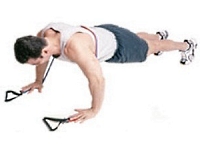
You're off on holiday: the neighbors are watering the plants; the in-laws are looking after the dog. But who will look after your pecs? How will they survive all those weeks without bench presses? You can't take benches, barbells or weights with you. But according to sports scientists at the University of Valencia in Spain you can work on your chest muscles without doing bench presses. If you use an elastic band, push-ups are just as effective as bench presses. 

* * * * *

Art of Manliness Podcast #75: Barbell Training With Mark Rippetoe Part I

Brett McKay | August 2, 2014


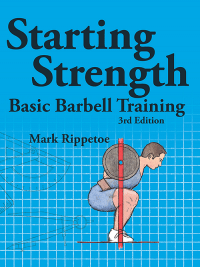
After taking a summer break from podcasting, I’m back in the saddle. And this week’s episode is a great one to come back on. I have a very enjoyable discussion with strength training expert and author Mark Rippetoe about barbell training. Mark is the author of the popular book, Starting Strength: Basic Barbell Training. Since 2005, Starting Strength has sold over 250,000 copies without any marketing; its solid advice has simply spread by word of mouth.

Show highlights:

  • Why a man should be strong
  • The benefits of barbell training over machines
  • The manly strength of old-time strongmen
  • The importance of form in barbell training
  • The main lifts every man should be doing
  • Mark’s opinion of Crossfit
  • And more!
In next week’s episode, Mark answers questions that were submitted by AoM readers. 

If you want to get strong, then I highly recommend picking up a copy of Starting Strength. It’s the most comprehensive book on barbell training out there that’s geared for the complete beginner. Even if you’ve been lifting for awhile, you’re bound to learn a thing or two from Starting Strength. And stay tuned for a great article by Mark next month on why barbells beat machines for building strength, hands down.

Art of Manliness Podcast #76: Barbell Training With Mark Rippetoe Part II

Brett McKay | August 8, 2014

In this week’s episode I continue my conversation (listen to Part I) with strength training expert Mark Rippetoe, author of Starting Strength. In this part of our discussion, I ask Mark questions submitted by podcast listeners via Twitter. Here’s a sampling:
  • Should you stretch before a workout?
  • Can you still squat even if you have bad knees?
  • Can squatting make your sprint faster?
  • Does the one rep max even mean anything?

Sunday, July 20, 2014

Men, Power, Money, and Sex - An Interview with Warren Farrell, Men's Rights Advocate


Marty Nemko is a life coach, author, and he blogs at his self-named site. He often blogs on topics related to men and boys, so it seems appropriate that he interview men's rights activist Warren Farrel for his Psychology Today blog, How to Do Life. Yes, I wrote activist and not advocate - he is the former, not the later.

First, my disclaimer: I do not like Farrell. His claims on the frequency of false rape accusations are totally ignorant of the reality "on the ground." For example, he claims below that we need to do away with the guilty/not-guilty binary because sexual encounters are far too nuanced for such a binary (this has been Marc Gafni's defense of his sexual predation on students, on whose board of directors Farrell sits). And besides, he adds, sometimes there are false reports, so we should never assume guilt.

WRONG - 92% (at least) to 98% of rape claims or true, and this doesn't even acknowledge the true claims that are not investigated by police.

Farrell has repeated made insanely stupid comments on date rape. Like this one:
We have forgotten that before we began calling this date rape and date fraud, we called it exciting. (Myth of Male Power, p. 314-15)
Or this one:
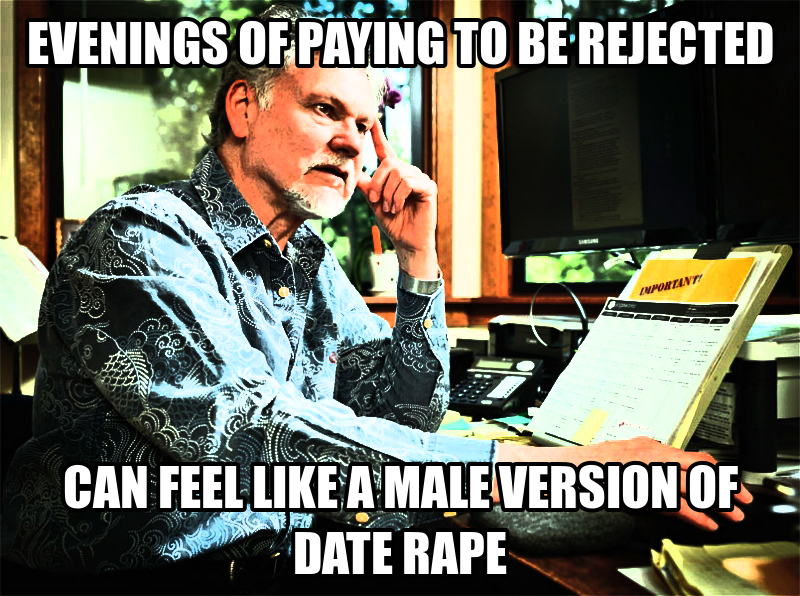
Evenings of paying to be rejected can feel like a male version of date rape. (MoMP, p. 314)
Really? Paying for dinner and not getting laid is the same as date rape? So the price of sex with a woman is dinner? Are we talking a nice restaurant here, or will Taco Bell due? Isn't that prostitution?

Oh, and by the way, have you been raped, Warren? Do you know how it feels to have your autonomy and physical body, not to mention your psychological self, sexually violated by another person? To have your trust in other human beings destroyed? To believe, despite the evidence, that somehow it was your fault? To have the nightmares, the hypervigilance, the self-loathing that comes with rape? Yeah, thought not.

Or this:
Almost all single women acknowledge they have agreed to go back to a guy’s place “just to talk” but were nevertheless responsive to his first kiss. Almost all acknowledge they’ve recently said something like “That’s far enough for now,” even as her lips are still kissing and her tongue is still touching his. (MoMP, p. 314)
Okay, so if you kiss somebody, that is tacit consent to sex? Wrong again, Warren.

And he always goes back to his straw man about false reports. Most studies put the false report rate at 2%. Even the FBI (1996), only put it at 8%:
As with all other Crime Index offenses, complaints of forcible rape made to law enforcement agencies are sometimes found to be false or baseless. In such cases, law enforcement agencies “unfound” the offenses and exclude them from crime counts. The “unfounded” rate, or percentage of complaints determined through investigation to be false, is higher for forcible rape than for any other Index crime. Eight percent of forcible rape complaints in 1996 were “unfounded,” while the average for all Index crimes was 2 percent.
What that section fails to mention, however, and Farrell has never acknowledged, is that local law enforcement will often decide a case is unfounded when drugs or alcohol are involved, or when there is previous sexual activity between the rapist and the victim.

Roughly a third to a full half of the clients I see have reported their rapist and the police/sheriff decided not to file charges or even pursue an investigation. This is seldom acknowledged aside from claims that reported rapes are far less than total rapes.

* * * *

One place Farrell is right is that this needs to be something we talk about with kids long before college or when they become sexual (high school, in general). Education is always the best prevention.

Where Farrell tends to be most relevant is in his discussions of the disposable nature of men in most societies. However, the answer is not to put more women in those jobs to make the risk more equal - it's to remove that safety issues that make those jobs so deadly (mining, oil fields, etc, where the corporations repeatedly avoid, undermine, or lobby against safety regulations). And the exception here is combat - let women be in combat military roles if they can do it.

Anyway, here is the brief interview.

Men, Power, Money, and Sex

An interview with men's advocate, Warren Farrell

Published on July 17, 2014 by Marty Nemko, Ph.D. in How To Do Life


Warren Farrell is a leading expert on men’s issues. He is the author of seven books and chair of the Commission to Create a White House Council on Boys and Men. He served on the board of the National Organization for Women (NOW) in New York City and is an advocate for both sexes having the full range of options, professionally and personally. 

I interviewed him about gender roles, power, why men earn more, and campus rape.

Marty Nemko: You're most well-known for your book The Myth of Male Power, just out in a new e-book edition. Many people think men have the power: Look at the Senate and CEO rosters. How would you respond?

Warren Farrell: A small percentage of men have major institutional power but across the full population, real power is about having choices. The women’s movement has made it socially acceptable for a mom to work full-time, stay home with the child full-time, or work part-time. That’s as it should be. Alas, it’s not as acceptable for a man to work part-time, let alone be a full-time parent. Mr. Mom is still a term of derision.

Marty Nemko: But men earn more. Isn’t that power?

Warren Farrell: Many men still buy into a false definition of power: feeling obligated to earn money that someone else spends while we die sooner—5.2 years sooner. That’s not power. That’s being a prisoner of the need for love and approval.

Marty Nemko: In your book, Why Men Earn More, you report that the statistic that women earn 77 cents for each dollar a man earns for the same work is very misleading. Can you give an example as to why? 

Warren Farrell: Women who have never been married and never had children earn 17% more than never-married men that have never had children, even when education and years worked are equal. Men don’t earn more than women. Dads earn more than moms. Why? When a child is born, a mom is more likely to divide her labor between work and home, earning less at work. A dad is more likely to increase his hours at work—or work two jobs—often taking jobs he likes less that pay more. 

Marty Nemko: In Why Men Earn More, you write, “The road to high pay is a toll road.” Are you suggesting that high pay and power can be inversely correlated?

Warren Farrell: Yes. For many dads, the road to high pay is not about power; it’s about his hope to make his children’s life better than his. It’s about giving his wife a better life. And to get that higher pay, he often has to forgo work he'd rather do. For example, he might prefer to be a teacher or a creative but to better support his family, he accepts a long-hours, high-stress, technical, travel-intensive, often soulless management position.

Marty Nemko: In your recent Reddit Highlighted Conversation, you cite statistics so startling that some would question their veracity. Would you provide the source for:
  • This is the first time in U.S. history that our sons will have less education than their dads.
  • Boys' suicide rate goes from equal to girls at age 9 to five times(!) girls' in their twenties.
  • More U.S. male military were killed by suicide in one year than were killed in the wars in Iraq and Afghanistan in all years combined.
Warren Farrell: Yes. Boys having less education than their dads is from the OECD (Organization for Economic Co-operation and Development), “Education at a Glance,” 2010, Table A1.3a

The boy-girl suicide rate is from the Centers for Disease Control and Prevention, Morbidity and Mortality Weekly Report, 58,1, 2009, and Web-based Injury Statistics Query and Reporting System (WISQARS), 2010.

The U.S. military suicide rate data is from the DOD, uncovered by CBS, in Armen Keteyian, “Suicide Epidemic Among Veterans.” CBS News, November 13, 2007. http://www.cbsnews.com/stories/2007/11/13/cbsnews_investigates/main3496471.shtml.

Marty Nemko: The subtitle of your book The Myth of Male Power is: Why Men are the Disposable Sex. How are men the disposable sex?

Warren Farrell: Virtually all societies that survived did so based on their ability to train their sons to be disposable—disposable in war, disposable at work.

Marty Nemko: That’s a strong statement. What’s your evidence?

Warren Farrell: The evidence is ubiquitous. 92 percent of workplace deaths occur to men, jobs few women would take: oil rig workers, long-haul truckers, roofers, coal miners. Yet there isn't the political will to create regulations that would afford them more protection for these workers. Meanwhile, when women have a less life-threatening deficit, for example, underrepresentation of women in engineering, there's massive expenditure to redress. Although male-only draft registration is a violation of both the 14th Amendment’s equal-protection clause and the 5th Amendment’s due process clause, it is so unconsciously accepted it isn’t even questioned. Only men can serve in direct combat so 98 percent of Iraq and Afghanistan deaths were men.

Marty Nemko: Is the fact that men die 5.2 years younger than women another example of male disposability?

Warren Farrell: It is the combination of facts like men dying 5.2 years younger than women—or men dying sooner from all ten of the ten leading causes of death, plus the fact that we nevertheless have seven federal offices of women’s health and none of men’s health that together reflect the psychology of indifference toward male disposability. Similarly, men over the age of 85 commit suicide 1350 percent as frequently as women over 85. Virtually no one knows this. If women over 85 committed suicide 1350 percent as often than men, it would be used as the quintessential example of our undervaluing of women. We seem to care more about saving whales than saving males.

Marty Nemko: You said men are indirectly disposable as dads. How do you mean?

Warren Farrell: In a divorce, if the mother doesn’t want the father to be equally involved, the apriori assumption is that she's right. Men have to fight in court for that right, and that's expensive.Unless he’s rich, he’s disposable. 

Marty Nemko: What are your thoughts about the current focus on campus rape?

Warren Farrell: The issue first should be addressed before kids get to college. For example, we may need to encourage our daughters to take the initiative when they do want physical intimacy, not just to say when they don’t. Our society strives for equality but few experts are asking women to share the responsibility for taking the initiative in sex, thereby risking rejection. During adolescence, women are the more mature sex. It’s unfair to expect guys to assume 90 percent of the burden of sexual rejection.

Marty Nemko: What should happen at college?

Warren Farrell: First, make the law the last resort. The law is binary: guilty/not guilty. Sex is nuanced and more nonverbal than verbal. Those nuances have evolved over millennia. A slight change in eye contact means everything in a male-female encounter but would be laughed at in court. And if a grievance is filed, we should not presume guilt. Alas, some accusations are false.

Marty Nemko: What about workshops at college?

Warren Farrell: Yes but both sexes should be walking a mile in each other’s moccasins.

Marty Nemko: You’ve done such trainings, right?

Warren Farrell: Yes. I used to tell college audiences, “Every woman is in a beauty contest every day of her life.” I then invited all the guys on stage to experience that. I had those guys wear bathing suits and had the women be the judges. The guys were stunned at being unseen for their integrity, intelligence, or values. They felt objectified.

Marty Nemko: What did you do to help the young women walk a mile in the guys’ moccasins?

Warren Farrell: I had the women “ask-out” the guys they were most attracted to on a 20-minute “date.” Some did what they criticize men for, for example, lying to get an attractive guy to go out with them. Others went after a less attractive guy to reduce the chance of getting rejected. The guys totally identified with that.

Marty Nemko: What was the outcome of those workshops?

Warren Farrell: Greater compassion for the other sex’s vulnerability, and I formed hundreds of men and women’s groups so they would continue to deepen their compassion after I left campus. 

Marty Nemko: Was there any concrete evidence it reduced campus rape?

Warren Farrell: I asked campus sponsors to let me know if any of the workshop participants later were involved in a date rape accusation. Although I had worked with 20,000 students in hundreds of colleges, not one incident was reported.

Marty Nemko: Do you still do those workshops?

Warren Farrell: As political correctness set into the colleges’ psyches, college programs shifted to emphasizing only men understanding women. It would be wiser for programs to help both sexes better understand each other. We don’t need a women’s movement blaming men, nor a men’s movement blaming women. We need a gender liberation movement. We need both sexes walking a mile in each other’s moccasins.

Tuesday, June 17, 2014

Mansplaining, Explained: 'Just Ask an Expert. Who Is Not a Lady'

From The Guardian (US version), Jessica Valenti speaks with Rebecca Solnit, author of Men Explain Things to Me and coiner of the word, mansplaining (I did not know that).

I have been seeing the word around a lot more recently, so I guess it has Dictionary:
Mansplain 

1. to delighting in condescending, inaccurate explanations delivered with rock solid confidence of rightness and that slimy certainty that of course he is right, because he is the man in this conversation
2. To explain in a patronizing manner, assuming total ignorance on the part of those listening. The mansplainer is often shocked and hurt when their mansplanation is not taken as absolute fact, criticized or even rejected altogether.

Named for a behavior commonly exhibited by male newbies on internet forums frequented primarily by women. Often leads to a flounce. Either sex can be guilty of mansplaining.
Below this article is a copy of the original article in which Solnit coined the now famous term.

Mansplaining, explained: 'Just ask an expert. Who is not a lady'

Author Rebecca Solnit admits that even penning a book titled 'Men Explain Things to Me' doesn't stop some men


Jessica Valenti
theguardian.com, Friday 6 June 2014


Rebecca Solnit is smarter than you, and she's not sorry about it. (David Levene)

Rebecca Solnit is a prolific author (she's working now on her sixteenth and seventeenth books), historian, activist and a contributing editor to Harper's. Her most recent book, Men Explain Things to Me, is a collection of Solnit's essays, including the title piece that launched a million memes. Solnit, on the road in Seattle, took some time to explain "mansplaining", writing, and how the post-Isla Vista misogyny conversation is a little like climate denialism.

JESSICA VALENTI: How do you feel about being considered the creator of the concept of "mansplaining"? Your now-famous essay – which really gave women language to talk about the condescending interactions they've had with men – certainly gave birth to the term, but you write in the book that you didn't actually make up the word.
REBECCA SOLNIT: A really smart young woman changed my mind about it. I used to be ambivalent, worrying primarily about typecasting men with the term. (I have spent most of my life tiptoeing around the delicate sensibilities of men, though of course the book Men Explain Things to Me is what happens when I set that exhausting, doomed project aside.) Then in March a PhD candidate said to me, No, you need to look at how much we needed this word, how this word let us describe an experience every woman has but we didn't have language for.

And that's something I'm really interested in: naming experience and how what has no name cannot be acknowledged or shared. Words are power. So if this word allowed us to talk about something that goes on all the time, then I'm really glad it exists and slightly amazed that not only have I contributed about a million published words to the conversation but maybe, indirectly, one new word.

Do men still explain things to you?

Do they ever! Social media are to mansplainers what dogs are to fleas, and this recent feminist conversation has brought them out in droves. I mean, guys explain ridiculous things to me like that the Louisiana Purchase gave the United States a Pacific Coast. But more than anything since I wrote Men Explain Things to Me, they've explained women's experience to me and other women. With this explosive new conversation since the Isla Vista murders, there's been a dramatic uptick in guys mansplaining feminism and women's experience or just denying that we need feminism and we actually had those experiences.

If there were awards to be handed out, one might go to the man who told me and a woman friend that 1) women actually like all those catcalls 2) as a man who's spent time in men's-only locker rooms, he knows men don't actually speak to women that way. So we like street harassment, but that doesn't actually exist, because we're just crazy that way, us subjective, imaginative, unreliable ladies. Just ask an expert. Who is not a lady.

Speaking of Isla Vista, in the wake of that tragedy there's been a lot of talk about masculinity and toxic masculinity. The misogyny was so obvious – we have a mass murderer saying hatred for women is the reason for his attack – and yet some people still argue that these murders had nothing to do with sexism. What do you make of this?

There are a lot of ideologies out there passionately devoted to not connecting dots. There are climate denialists who think that 97% of all the scientists on earth are in conspiracy to spread lies and the weather is just fine; there are people who don't want to know that American foreign policy makes us, to say the least, a little unpopular in some places; and there are people who find that thinking about misogyny and violence against women is uncomfortable and think that they have a God-given or Constitutional right to eternal comfortableness, as far as I can tell.

Right now I think that a lot of people get it and a lot of people are getting more engaged with the ideas, with the issues, and with the urgency of the situation. I feel like I've been waiting all my life for women to be talking the way we are right now, and that many men have joined in the conversation or support from the sidelines or get it is magnificent and inspiriting. (And then, yeah, those other guys. "Not all men".)

Your essay "The Longest War" is about sexual assault and, this week, we just found out about yet another gang rape at a high school. What do you think it will take for our culture to take rape – and the notion that this is an epidemic of violence against women – seriously?

Part of what was shocking about the Steubenville sexual assault – one of the 2012 crimes that has opened up a new conversation about rape culture and sexual entitlement – is that the boys evidently thought that violating and humiliating a helpless human being made them cool. Where the hell did they get that idea from? And how do we take them out of that lad culture (in which it is indeed cool) and back to civilization where it's horrible and you'd be despised and regarded as repulsive (by enough of us if, sadly, far from all of us)? I think the culture at large is getting – post-New-Delhi and Steubenville, and post a lot of great speaking and writing by feminists like you – the idea.

But how do we undermine the lad culture, that jeering, tittering, competing, struggling realm of young men left to themselves and to the worst notions of what it means to be a man, or undermine the segregation in our culture that leaves the young to socialize as though they were another species? I mean, in some small and rural places and other cultures, teenage is not a distinct ethnicity or caste or pariah group, and teenagers are not left largely to their own devices.

Too, I think we need to make blatant misogyny widely regarded as gross and despicable and ignorant the way we have racism, and this time that we means men. And a lot of men are, as never before, stepping up. Only men can dissuade men from a misogyny that discounts a woman's right to speak, let alone what she says. The sexual assault that just happened in Tennessee: this time the authorities are responding fairly appropriately and a local male columnist wrote a column about it – a tough, clear, no-excuses for assault analysis that any feminist could love.

Finally, I think feminism has made astonishing progress over the past 50 years, so I think both that it's going to take a long time and we're well on our way.

What are your thoughts about online harassment – specifically the online harassment of outspoken women? I used to to think of just abandoning the Internet, but it's as much a public space as the street these days... there's no avoiding it and it's my space too!

There are a lot of ways the Internet needs to be democratized and made into a public commons: when it comes to protecting our privacy and not monetizing our data for advertisers or sharing it with the NSA; and not letting advertising drive what everyone does and sees and makes; as well as not letting haters try to scare women into silence or make their lives miserable. The whole raison d'être needs to be reinvented, and I'd be all for not nationalizing but some form of internationalizing (or regulating for the public good) some of the more universally used sites (Siva Vaidhyanathan has a very good book about doing that with Google's ubiquitous search engine).

My friend Astra Taylor points out in her new book, The People's Platform, "Those posting with female usernames, researchers were shocked to discover, received 25 times as many malicious messages as those whose designations were masculine or ambiguous." Way too many sites tolerate, maybe even feed, really vile forms of misogyny – from Twitter to a lot of supposedly progressive news sites – because it's all about getting the clicks or traffic that convince advertisers to give them money. Hate is profitable. And human beings are chameleons; I think that some of these sites, groups, spaces, threads, don't just give misogyny an outlet; they breed and feed and cultivate misogyny.

Two things, though: men intent on silencing women like you truly believe that you are a threat. They believe your voice matters, that you're part of changing the world, and they don't want it changed that way. So there's a weird kind of validation in it, but one I'm sure you and Mary Beard and the rest of the women under attack could live without.

The other thing is: these haters seem to be pretty irony-deficient. Helen Lewis created Lewis's Law on Twitter in 2012: "Comments on any article about feminism justify feminism." You go to #YesAllWomen on Twitter and see so many guys now showing up to mock, sneer, harass, and threaten, to just try to piss on the party, and you realize they have no idea they're demonstrating why we need feminism. We need it because some men hate women; want to violate and silence and annihilate us; can't stand us telling our truths; don't think we have any rights; think they're more important and sole holders of the truth. And they are those men. It's a parade of excellent specimens. Unfortunately.

If you could explain one thing to one man, what and who would it be?


My beloved has, with time and patience and a lot of going over the same ground again and again and some digging-in of heels, come to accept that I really need two cups of tea in the morning (and one won't do). So I've already succeeded hugely on that front.


Jessica Valenti is a daily columnist for the Guardian US. She is the author of four books on feminism, politics and culture, and founder of Feministing.com. A frequent speaker, Jessica currently serves on the board of NARAL Pro-Choice America. You can find her on Twitter, Tumblr and Facebook.
* * * * *

Men Explain Things to Me

Facts Didn't Get in Their Way

By Rebecca Solnit
I still don't know why Sallie and I bothered to go to that party in the forest slope above Aspen. The people were all older than us and dull in a distinguished way, old enough that we, at forty-ish, passed as the occasion's young ladies. The house was great -- if you like Ralph Lauren-style chalets -- a rugged luxury cabin at 9,000 feet complete with elk antlers, lots of kilims, and a wood-burning stove. We were preparing to leave, when our host said, "No, stay a little longer so I can talk to you." He was an imposing man who'd made a lot of money.

He kept us waiting while the other guests drifted out into the summer night, and then sat us down at his authentically grainy wood table and said to me, "So? I hear you've written a couple of books."
I replied, "Several, actually."
He said, in the way you encourage your friend's seven-year-old to describe flute practice, "And what are they about?"
They were actually about quite a few different things, the six or seven out by then, but I began to speak only of the most recent on that summer day in 2003, River of Shadows: Eadweard Muybridge and the Technological Wild West, my book on the annihilation of time and space and the industrialization of everyday life.

He cut me off soon after I mentioned Muybridge. "And have you heard about the very important Muybridge book that came out this year?"

So caught up was I in my assigned role as ingénue that I was perfectly willing to entertain the possibility that another book on the same subject had come out simultaneously and I'd somehow missed it. He was already telling me about the very important book -- with that smug look I know so well in a man holding forth, eyes fixed on the fuzzy far horizon of his own authority.

Here, let me just say that my life is well-sprinkled with lovely men, with a long succession of editors who have, since I was young, listened and encouraged and published me, with my infinitely generous younger brother, with splendid friends of whom it could be said -- like the Clerk in The Canterbury Tales I still remember from Mr. Pelen's class on Chaucer -- "gladly would he learn and gladly teach." Still, there are these other men, too. So, Mr. Very Important was going on smugly about this book I should have known when Sallie interrupted him to say, "That's her book." Or tried to interrupt him anyway.

But he just continued on his way. She had to say, "That's her book" three or four times before he finally took it in. And then, as if in a nineteenth-century novel, he went ashen. That I was indeed the author of the very important book it turned out he hadn't read, just read about in the New York Times Book Review a few months earlier, so confused the neat categories into which his world was sorted that he was stunned speechless -- for a moment, before he began holding forth again. Being women, we were politely out of earshot before we started laughing, and we've never really stopped.

I like incidents of that sort, when forces that are usually so sneaky and hard to point out slither out of the grass and are as obvious as, say, an anaconda that's eaten a cow or an elephant turd on the carpet.

When River of Shadows came out, some pedant wrote a snarky letter to the New York Times explaining that, though Muybridge had made improvements in camera technology, he had not made any breakthroughs in photographic chemistry. The guy had no idea what he was talking about. Both Philip Prodger, in his wonderful book on Muybridge, and I had actually researched the subject and made it clear that Muybridge had done something obscure but powerful to the wet-plate technology of the time to speed it up amazingly, but letters to the editor don't get fact-checked. And perhaps because the book was about the virile subjects of cinema and technology, the Men Who Knew came out of the woodwork.

A British academic wrote in to the London Review of Books with all kinds of nitpicking corrections and complaints, all of them from outer space. He carped, for example, that to aggrandize Muybridge's standing I left out technological predecessors like Henry R. Heyl. He'd apparently not read the book all the way to page 202 or checked the index, since Heyl was there (though his contribution was just not very significant). Surely one of these men has died of embarrassment, but not nearly publicly enough.

The Slippery Slope of Silencings

Yes, guys like this pick on other men's books too, and people of both genders pop up at events to hold forth on irrelevant things and conspiracy theories, but the out-and-out confrontational confidence of the totally ignorant is, in my experience, gendered. Men explain things to me, and other women, whether or not they know what they're talking about. Some men.

Every woman knows what I'm talking about. It's the presumption that makes it hard, at times, for any woman in any field; that keeps women from speaking up and from being heard when they dare; that crushes young women into silence by indicating, the way harassment on the street does, that this is not their world. It trains us in self-doubt and self-limitation just as it exercises men's unsupported overconfidence.

I wouldn't be surprised if part of the trajectory of American politics since 2001 was shaped by, say, the inability to hear Coleen Rowley, the FBI woman who issued those early warnings about al-Qaeda, and it was certainly shaped by a Bush administration to which you couldn't tell anything, including that Iraq had no links to al-Qaeda and no WMDs, or that the war was not going to be a "cakewalk." (Even male experts couldn't penetrate the fortress of their smugness.)

Arrogance might have had something to do with the war, but this syndrome is a war that nearly every woman faces every day, a war within herself too, a belief in her superfluity, an invitation to silence, one from which a fairly nice career as a writer (with a lot of research and facts correctly deployed) has not entirely freed me. After all, there was a moment there when I was willing to let Mr. Important and his overweening confidence bowl over my more shaky certainty.

Don't forget that I've had a lot more confirmation of my right to think and speak than most women, and I've learned that a certain amount of self-doubt is a good tool for correcting, understanding, listening, and progressing -- though too much is paralyzing and total self-confidence produces arrogant idiots, like the ones who have governed us since 2001. There's a happy medium between these poles to which the genders have been pushed, a warm equatorial belt of give and take where we should all meet.

More extreme versions of our situation exist in, for example, those Middle Eastern countries where women's testimony has no legal standing; so that a woman can't testify that she was raped without a male witness to counter the male rapist. Which there rarely is.

Credibility is a basic survival tool. When I was very young and just beginning to get what feminism was about and why it was necessary, I had a boyfriend whose uncle was a nuclear physicist. One Christmas, he was telling -- as though it were a light and amusing subject -- how a neighbor's wife in his suburban bomb-making community had come running out of her house naked in the middle of the night screaming that her husband was trying to kill her. How, I asked, did you know that he wasn't trying to kill her? He explained, patiently, that they were respectable middle-class people. Therefore, her-husband-trying-to-kill-her was simply not a credible explanation for her fleeing the house yelling that her husband was trying to kill her. That she was crazy, on the other hand....

Even getting a restraining order -- a fairly new legal tool -- requires acquiring the credibility to convince the courts that some guy is a menace and then getting the cops to enforce it. Restraining orders often don't work anyway. Violence is one way to silence people, to deny their voice and their credibility, to assert your right to control over their right to exist. About three women a day are murdered by spouses or ex-spouses in this country. It's one of the main causes of death in pregnant women in the U.S. At the heart of the struggle of feminism to give rape, date rape, marital rape, domestic violence, and workplace sexual harassment legal standing as crimes has been the necessity of making women credible and audible.

I tend to believe that women acquired the status of human beings when these kinds of acts started to be taken seriously, when the big things that stop us and kill us were addressed legally from the mid-1970s on; well after, that is, my birth. And for anyone about to argue that workplace sexual intimidation isn't a life or death issue, remember that Marine Lance Corporal Maria Lauterbach, age 20, was apparently killed by her higher-ranking colleague last winter while she was waiting to testify that he raped her. The burned remains of her pregnant body were found in the fire pit in his backyard in December.

Being told that, categorically, he knows what he's talking about and she doesn't, however minor a part of any given conversation, perpetuates the ugliness of this world and holds back its light. After my book Wanderlust came out in 2000, I found myself better able to resist being bullied out of my own perceptions and interpretations. On two occasions around that time, I objected to the behavior of a man, only to be told that the incidents hadn't happened at all as I said, that I was subjective, delusional, overwrought, dishonest -- in a nutshell, female.

Most of my life, I would have doubted myself and backed down. Having public standing as a writer of history helped me stand my ground, but few women get that boost, and billions of women must be out there on this six-billion-person planet being told that they are not reliable witnesses to their own lives, that the truth is not their property, now or ever. This goes way beyond Men Explaining Things, but it's part of the same archipelago of arrogance.

Men explain things to me, still. And no man has ever apologized for explaining, wrongly, things that I know and they don't. Not yet, but according to the actuarial tables, I may have another forty-something years to live, more or less, so it could happen. Though I'm not holding my breath.

Women Fighting on Two Fronts

A few years after the idiot in Aspen, I was in Berlin giving a talk when the Marxist writer Tariq Ali invited me out to a dinner that included a male writer and translator and three women a little younger than me who would remain deferential and mostly silent throughout the dinner. Tariq was great. Perhaps the translator was peeved that I insisted on playing a modest role in the conversation, but when I said something about how Women Strike for Peace, the extraordinary, little-known antinuclear and antiwar group founded in 1961, helped bring down the communist-hunting House Committee on Un-American Activities, HUAC, Mr. Very Important II sneered at me. HUAC, he insisted, didn't exist by the early 1960s and, anyway, no women's group played such a role in HUAC's downfall. His scorn was so withering, his confidence so aggressive, that arguing with him seemed a scary exercise in futility and an invitation to more insult.

I think I was at nine books at that point, including one that drew from primary documents and interviews about Women Strike for Peace. But explaining men still assume I am, in some sort of obscene impregnation metaphor, an empty vessel to be filled with their wisdom and knowledge. A Freudian would claim to know what they have and I lack, but intelligence is not situated in the crotch -- even if you can write one of Virginia Woolf's long mellifluous musical sentences about the subtle subjugation of women in the snow with your willie. Back in my hotel room, I Googled a bit and found that Eric Bentley in his definitive history of the House Committee on Un-American Activities credits Women Strike for Peace with "striking the crucial blow in the fall of HUAC's Bastille." In the early 1960s.

So I opened an essay for the Nation with this interchange, in part as a shout-out to one of the more unpleasant men who have explained things to me: Dude, if you're reading this, you're a carbuncle on the face of humanity and an obstacle to civilization. Feel the shame.

The battle with Men Who Explain Things has trampled down many women -- of my generation, of the up-and-coming generation we need so badly, here and in Pakistan and Bolivia and Java, not to speak of the countless women who came before me and were not allowed into the laboratory, or the library, or the conversation, or the revolution, or even the category called human.

After all, Women Strike for Peace was founded by women who were tired of making the coffee and doing the typing and not having any voice or decision-making role in the antinuclear movement of the 1950s. Most women fight wars on two fronts, one for whatever the putative topic is and one simply for the right to speak, to have ideas, to be acknowledged to be in possession of facts and truths, to have value, to be a human being. Things have certainly gotten better, but this war won't end in my lifetime. I'm still fighting it, for myself certainly, but also for all those younger women who have something to say, in the hope that they will get to say it.

Rebecca Solnit is the author of 15 books, including two due out next year, and a regular contributor to TomDispatch.com. She lives in San Francisco, is from kindergarten to graduate school a product of the once-robust California public educational system, and her book A Paradise Built in Hell is the One City/One Book choice of the San Francisco Public Library this fall.

Friday, June 13, 2014

Fitness Friday - Fitness News and Information You Can Use

It's Friday, so it must be time for a new selection of fitness articles. This week we begin with two articles on squatting, then we move to preserving muscle and strength during a layoff (or injury), training the shoulders, and an interview with Dr. Fred Hatfield, one of the legendary figures in sports science.

This week we begin with two articles on squats - one from Tony Gentilcore at T-Nation and one from Bill Hartman at his blog.

How Deep Should I Squat?

by Tony Gentilcore
06/10/14


Here's what you need to know...


  • It's ignorant to say that everyone should squat to the same depth. Some lifters inherited awesome levers, possess just the right hip anatomy, and are able to squat butt-to-floor with no issues.
  • Serious squatters should perform the kneeling rock-back movement screen to see where they fit in on squat depth.
  • One problem directly related to squat depth is "butt wink." The butt wink is just a less fancy way of saying posterior pelvic tilt. Butt wink and squat depth can be improved by working on crappy ankle mobility, including glute work in every session, and doing slow goblet squats.
Let's make one point clear: It's completely asinine to say that everyone should squat to the same depth. Some people picked the right parents, inherited awesome levers, possess the appropriate hip anatomy, and are able to squat ass-to-grass with no issues at all. And we all hate those people.

Conversely, there are others out there who, because they're told to do so (usually from some internet jockey who claims to squat over 400 pounds, ass-to-grass, for reps, while juggling chainsaws) or because their manhood is somehow called into question, try to squat deep no matter what. And well, bad things happen. Not everyone is the same, and it's important to understand this. As a coach my "end game" is to work with what I have and to get every single one of my athletes or clients to squat to depth. However, it's not always a good idea to force someone to squat deep when they just don't have the ability to do so safely. While admirable, the end goal for every person shouldn't be to squat deep.

Rather, the goal should be to develop proper squat mechanics, groove technique in a safe range of motion that's applicable to a particular individual's limitations and anatomy, and most important of all, keep the spine safe. Admittedly, it's not a sexy approach. I'm not going to sit here and wax poetic about some super secret squatting protocol or bust out my protractor and discuss some advanced algorithm to follow. The answer, simply, is to work on "stuff," and eventually squat depth will improve. One problem directly related to squat depth, however, and one that I see far too often, is "butt wink."

* * * * *

Short Topic: There’s a squatting controversy? Seriously?

Bill Hartman | Intelligent Human Performance 


Optimal varies with imposed demands (load, speed, surface, fatigue, visual cues, stance width, pelvic position, hip joint shape, etc.). Squatting is not as simple as knees out being better than knees in or toes out being better than toes straight. 


Variability is the ideal. It would be desirable to be able squat in many different ways and many different foot positions under varying circumstances. 


There is never one ideal. That’s like saying there’s one ideal posture, one way to sit, one way to have sex, or one way to throw a ball. 


In fact, we know that because of the noise built into the nervous system we can’t duplicate the same motion no matter how hard we try even if it looks the same to the naked eye. 


With practice and good coaching, you will determine the optimal for the circumstances and the individual.
* * * * *

The next two articles are also from T-Nation.

How to Keep Muscle During a Layoff

by Christian Thibaudeau
06/11/14


Here's what you need to know...
  • Unless you're tied to a hospital bed, you won't lose any muscle mass if you take a week off from training. You may feel smaller or flatter, but it's not because you're losing muscle mass. Rather, your muscle tone has decreased slightly due to the nervous system being less "turned on."
  • After a layoff of 2-3 weeks, you might lose 5-10% of your strength, but you won't be losing much muscle mass (if at all) and the loss of strength will be mostly due to lost neural adaptations. Once you go past the 3 weeks, though, it's quite possible to lose muscle mass, but there are many things you can to do to mitigate the loss.
  • Contrary to what most people believe, you don't gain "extra strength" by tapering/deloading for a peak. You're simply "revealing" the strength you gained during your hard training cycle.
  • Sadly, most people only notice "overtraining" when they start to lose strength and body weight, so their normal reaction is to train more to kick-start the gains. Not only will that not solve the issue, it'll make things worse!
There are generally three situations where a serious lifter would take time off from training:
1. A planned deload to help reach peak performance or to recover from overtraining.
2. A short and planned break (e.g., a vacation or trip).
3. An unplanned layoff (sickness or injury).
The first two are generally done begrudgingly, while the third is often treated as the worst thing possible next to a death sentence. The fact is, deloading and hiatuses from training are things that are part of everybody's life. I've had to stop training due to some health problems and I work with lots of clients who have busy schedules that require time off or at least reduced training. While it's my job to help people get the most out of their training, it's also part of my job to help them retain most of their gains when they're forced out of the gym.
* * * * *

5-4-3-2-1 Shoulder Workout

by Nick Tumminello
6.12.2014


Here's what you need to know...
  • You'll be doing 5 sets of the first exercise, 4 sets of the second, 3 sets of the third, 2 sets of the fourth, and 1 set on the fifth.
  • The exercises that appear first are the most complex, use the most weight, and therefore require the fewest amount of reps. The exercises that appear at the end are simpler, use less weight, and require more reps.
The numbers (5-4-3-2-1) represents the sequence and number of sets you'll do for each of the exercises. The exercises that get the most sets (5, 4) are the most complex and tend to use the heaviest loads done for the fewest amount of reps. Therefore, they're placed early in the workout when you're most fresh. The less complex movements (i.e., more isolation oriented) exercises are performed for fewer sets (3, 2, 1) are placed later in the workout. These exercises are done for more reps so we use less weight.
* * * * *
Finally, from Breaking Muscle, Craig Marker sat down for an interview with Dr. Fred Hatfield, aka "Dr. Squat."

The 7 Laws of Training According to Dr. Fred Hatfield

Craig Marker
Contributor - Psychology and Research

I recently sat down with Dr. Fred Hatfield, also known as Dr. Squat, to discuss his views on strength and conditioning and how they fit into modern training systems. For those of you unfamiliar, Dr. Hatfield was a great college gymnast and bodybuilder (he was Mr. Mid America, but he didn’t compete in the Mr. America competition because of a powerlifting meet).

Dr. Hatfield is probably best known for his world record squat of 1,014lbs set in 1987 when he was the age of 45. He was also the founder of Men’s Fitness magazine and the International Sports Sciences Association, and he has written over sixty books. He knows squat and a whole lot more.

See you next week.

Friday, April 12, 2013

Vanessa Fisher: Revisioning Men's Worth: A Critical Exploration of the Challenges and Opportunities Facing Men & Masculininty - An Interview with Mark Forman


This interview with Mark Forman, PhD., was featured near the end of last year in Vanessa Fisher's "Dancing in the Liminal Dialogue Series: A Global, Border-Crossing Inquiry into Art, Activism, Spirituality & Leadership for the 21st Century."

Vanessa's interviews are excellent, and Mark is a good guest for her dialogue series. Mark moderated an excellent panel discussion on Integral Masculinity at the 2010 Integral Theory and Practice Conference, on which I was one of several panelists (along with Pelle Billing, Diane Hamilton, Gilles Herrada, and Bert Parlee). Mark is the author of A Guide to Integral Psychotherapy: Complexity, Integration, and Spirituality in Practicepublished in 2010 by SUNY Press.

Revisioning Men's Worth: A Critical Exploration of the Challenges and Opportunities Facing Men and Masculininty in the New Millienium: An Interview with Mark Forman


Download this Dialogue as an MP3


Mark Forman, PhD., is the Clinical Director of Life Design Centre, an innovative psychotherapy studio dedicated to changing the lives of individuals, couples, children, and families. He is also the Executive Director of MetaIntegral’s Psychotherapy Center and the Lead Organizer of their Integral Theory Conference, the world’s largest academic conference devoted to Integral theory and its application.

In this dialogue, I interview Mark on his views regarding the unique challenges and opportunities facing men and masculinity in the 21st Century. We critically examine cultural discourses surrounding the shifting historical roles of masculinity and femininity, explore the impact of feminism on men over the last 50 years, and point towards new directions of inquiry for men's role in the future.

Mark is a long-term practitioner of both yoga and meditation, having studied intensively under several prominent teachers, including Gurumayi Chidvilasananda and Kenneth Folk.

His latest book, A Guide to Integral Psychotherapy: Complexity, Integration, and Spirituality in Practice was published in 2010 by SUNY Press. Mark is also currently co-editing, along with Michael Raffanti and Toni Gregory, the first ever text on Integral Diversity, entitled Integral Approaches to Diversity Dynamics: Exploring the Maturation of Diversity Theory and Practice.


*This Dialogue was recorded on November 12, 2012