Showing posts with label masculinity. Show all posts

Saturday, February 14, 2015

Kali Holloway - Identifying Dudes: From Bros to Douchebags and Beyond

From Alternet, Kali Holloway sardonically breaks down the Dude branch of the male species. Yes, these are cliche categories with somewhat offensive labels, but there is some truth to all of her categories of dude.

If you are easily offended by things not politically correct, please move along.

Dudes are a specific kind of guy, but knowing their subgroups requires even more nuanced information.


This being the Internet and all, we thought it would be a good idea to start the proceedings by stating, unequivocally, that there are plenty of great, wonderful, smart, kind, giving, loveable guys. And many fantastic and endearing kinds of guys. So many, we couldn’t make a list of them all because that list would be so long, we would all grow old and die reading it. To be clear: We’re not saying, in any way, shape or form, that there aren’t amazing, incredible, terrific guys out there (although someone will definitely say in the comments that we did).

What we are saying is that there are also a lot of different kind of dudes out and about. And we mean very specifically dudes – not guys, not boys, not men – but dudes. This is important. Dudes – and again, dudes are a particular variety of male – are out there, like, being dudes. But not all dudes are the same, and lumping them all together creates a kind of chaos and confusion that can and should totally be avoided. So, to more distinctly identify each type of dude from their brethren, here is a list that makes clear where the boundaries for one dude end and another dude begin. Below is a detailed report on the unique traits that identify douchebags, bros, dicks, assholes, scumbags and tools.

Douchebags. Semi-awful. Definitely the most wealth-obsessed of all the categories of dudes. Complete lack of self awareness means he constantly refers to other dudes as “douches” and – on his most terrible days (i.e., every day) – “d-bags.” Brings coke to parties but doesn’t share with anyone except for the woman he’s trying to sleep with, who he’s actually vaguely aggressive with about snorting it. (If she doesn’t have sex with him, definitely decides she’s “a lesbian.” Also: Isn’t totally sure how words work.) Finally got hip to the AXE Body Spray / douchebag connection and instead started wearing TAG Body Spray. Broke up with a girl once because he thought her ankles were a little fat. Not cankles fat, but fat enough. Definitely fucked that one waitress in Cabo. If he’s trying to pick up a girl and her phone goes off, says cheesy stuff like, “You’re blowing up!” Mentions he has a six-pack hoping you’ll ask to touch it. (When you don’t, calls you “a lesbian.”) Wants to live in a world with only Kanye, Diplo, Scott Disick and Evan Spiegel. Says he loves music but really only listens to shitty EDM.

Bros. More innocuous and sweetly earnest than douchebags. Really enjoys chilling – probably has some of his frat bros coming over this weekend to, you know, chill. Spends the entire summer in flip flops, even – no, especially – at inappropriate events. (For this reason, should never be allowed to choose dress-up party attire for himself.) Still thinks Williamsburg is “artsy” and “kinda weird.” Misquotes Fight Club and Dylan lyrics, but really is trying. Benches 120, flexes in the mirror, thinks: “Fuck yeah.” Earnestly believes he has something insightful and deep to contribute to the conversation, which is adorably wrong. It should be mentioned that this category now includes a hipster-bro hybrid who wears ‘50s style white t-shirts with skinny jeans and is into artisanal pizza, suspenders, bespoke drinks and high-end shaving kits. Though it’s been said a million times and is obvious to the point of absurdity, Matthew McConaughey remains the Alpha and Omega of Bro. (If they were manufactured in a factory, bros would be made out of a super common material called McConaughite.) Is best friends with one bro exactly like Owen Wilson and another bro exactly like Ryan Lochte. Says he loves music but only listens to shitty EDM and Bob Marley’s “Legend.”

Dicks. Full-on awful. Is endlessly arrogant to cover up the deep well of insecurity he still carries from being picked last for kickball so many times as a kid. Is technically quite smart, but so insecure he can’t help but constantly prove it in super obnoxious ways. Pretends not to get your references. Creates uncomfortable silences in conversation on purpose. If you tell a joke, says something rude or cutting afterward to prove that, oh, he got it, he just didn’t think it was funny. Enjoys being “politically incorrect” and then playing dumb when challenged on it. Actually lies to his therapist, making the whole exercise a tremendous waste of money. Spends the first five minutes after meeting you trying to figure out your points of emotional vulnerability. Secretly cries after masturbating. Hates himself, and deep inside knows there is a hole that can never be filled. Role models include Vincent Gallo and Andy Dick (ironically). Says he loves music but mostly just enjoys collecting music facts so he can tell people they’re wrong about songs they love.

Assholes. A close cousin of the dick but not quite as sharp. When he agrees with something you’ve said, starts his response with, “No, but..” and then repeats exactly what you just said, exactly the way you just said it. Starts talking while you’re talking and then keeps talking louder and louder until you finally give up. Thinks women don’t get him but doesn’t understand the actual problem is that  they get him all too well. Blatantly steers the conversation back to his areas of knowledge when it starts to drift toward things he doesn’t know about, which is a lot. Feels most at home screaming at waitresses until they tear up and leaving lengthy notes on the backs of receipts explaining why he didn’t leave a tip. (tl; dr: Because he’s an asshole.) Is only semi-aware that every fuck has been a hate-fuck for him. Blissfully unaware of how awful he is. Likes the way Mike Love does business and still chuckles to himself remembering mean things Simon Cowell said. Thinks Biff from Back to the Future had his good points. Says he loves music but then argues with you about Every. Single. Band.

Scumbags. Here’s the thing about the scumbag: He is actual slime and kind of a sociopath, and by far the most dangerous dude on this list. Lies about weird stuff like what he had for breakfast this morning but is unfailingly honest about the disgusting and immoral way he treated some nice girl last week. Thinks telling people he’s about to have sex with that he has an STD “ruins the mood.” Constantly suggesting to women he’s just met that his “tongue never gets tired.” Currently dating a woman who doesn’t speak a word of his language because it’s “just easier.” Stands out in front, waiting to walk into a party until he can go in with another friend who actually brought a bottle of wine. If you resist his (inevitably gross) advances at a bar, keeps coming up every 15 minutes to ask, “Would you want to make out now?” If he’s in a band, secretly lives in the practice space. Learned just enough about feminism to get laid. Admires John Phillips of the Mamas and the Papas and thinks Dov Charney of American Apparel got a raw deal. Not that it needs to be mentioned, but really looks up to Terry Richardson. Says he loves music and, actually, has pretty good taste.

Tools. Although the term feels a little outdated, it’s an an oldie but a goodie that still applies in a startlingly large number of cases. Thinks he’s projecting an image of roguishness and suave sophistication when, in fact, he is projecting the reality of a tragicomedy with legs. Women can smell the stench of desperation coming off him a mile away, but he mistakes their indifference as “playing coy.” In high school he was always “dating a model who lives in France.” As an adult, he frequently drops boastful, unsubtle hints about the number of women he’s slept with to distract anyone from guessing the actual number is two. Misuses hip-hop slang in a way that feels not just embarrassing but borderline offensive. Has a guy he hangs around with all the time who he doesn’t realize is making fun of him. When he finds himself in a conversation where he doesn’t quite get what’s going on, tries to look really deep in thought so people mistake his confusion for depth. Doesn’t get the David Brent character from The Office UK because it’s too much like looking in a mirror. See also: Piers Morgan. (Despite these examples, isn’t necessarily British. Tools have no home country.) Says he loves music, and will now prove it by making a scene with that guitar he found in the corner. 

Tuesday, February 3, 2015

Tami Simon Interviews Robert Augustus Masters: True Masculine Power

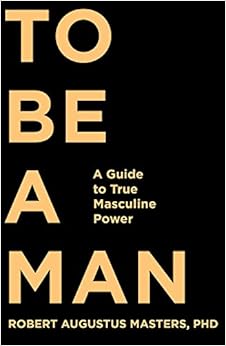
From Tami Simon's interview series, Insights at the Edge, this is an excellent interview with integral psychologist Robert Augustus Masters about his new book, To Be a Man: A Guide to True Masculine Power. This is another classic book from the author of Spiritual Bypassing: When Spirituality Disconnects Us from What Really Matters (2010).

Robert Augustus Masters: True Masculine Power

Download »
Read Transcript »

You might also enjoy:


To Be a Man: A Guide to True Masculine Power


Emotional Intimacy: A Comprehensive Guide for Connecting with the Power of Your Emotions


Knowing Your Shadow: Becoming Intimate with All that You Are

Thursday, December 18, 2014

To Be a Man: A Guide to True Masculine Power - Robert Augustus Masters

http://ecx.images-amazon.com/images/I/417Uu6E5IIL._SY344_BO1,204,203,200_.jpg


This post is to welcome the important new book, To Be a Man, by integral psychologist (an actual practicing psychologist, not of the Ken Wilber variety) and personal growth facilitator, Robert Augustus Masters, author of the instant classic book on spiritual bypassing, Spiritual Bypassing: When Spirituality Disconnects Us from What Really Matters, and the equally classic book on relationship as a spiritual path, Transformation through Intimacy, Revised Edition: The Journey toward Awakened Monogamy.

When publication of this new book was announced, I knew it was going to be an essential read - and it is. This is from the Introduction to the book:
"BE A MAN!"

This demand does a lot more harm than good. It's a powerful shame amplifier, packed with "shoulds" - and the last thing males need is more shaming, more degradation for not making the grade.

Men - and boys - who are on the receiving end of "be a man!" get the message that they are lacking in certain factors that supposedly constitute manliness.
And this . . .
Many boys are subjected to the demand to "be a man!" - or "man up" - from an early age. Such pressure, however well-meaning, can shame and harden a boy well before he reaches adolescence, shrinking him emotionally, making him shun softness and overvalue performance and the appearance of "having it together." Showing vulnerability may invite gibes about being less than masculine. Many a boy has had to force himself not to cry or show tenderness in order to become "one of the boys" rather than a reject or someone to shun. 
He is describing my childhood, and likely that of a large number of men in my generation. What he describes here has often been referred to as the "man box," the tiny little space in which men are allowed to exist if they are to be considered "real men."
 
The problem with this box is that it forces men to jettison a good deal of what makes a man human, including tenderness, vulnerability, compassion, and exuberance. Within the confines of the box, we are allowed to feel any emotion as long as it's anger. We are allowed to shed a tear when our dog dies or our favorite athlete announces his retirement (and crying about one's dog is questionable).

The good thing is that this is changing, slowly, with each new generation. The bad thing is that there are a whole lot of men who raised in the man box, who still live there, and who think that is exactly how it should be for all men.

This book is for those men.

Here is the publisher's ad copy (thanks to Sounds True for bringing this book to the market!):
  • I've got it all-a great job, relationship, and lifestyle-so why do I feel so dissatisfied and disconnected?
  • Why am I not happier in my intimate relationships?
  • How do I become more powerful-without becoming that jerk everyone dislikes?
Robert Augustus Masters has helped thousands of men address and work through such issues. What he's found is that the common solution to these dilemmas is challenging yet clear: we must face our unresolved wounds, shame, and whatever else is holding us back, bringing "our head, heart, and guts into full-blooded alignment."
With To Be a Man, this acclaimed psychotherapist and relationship expert offers a groundbreaking and deeply insightful guide to masculine power and fulfillment. To Be a Man clarifies what's needed to enter a manhood as strongly empowered as it's vulnerable, as emotionally literate as it's unapologetically alive-a manhood at home with truly intimate relationship.
In this book, readers will explore:
  • How your past may be dominating your present
  • Shame in its healthy and unhealthy forms, and how to make wise use of it
  • How vulnerability can be a source of strength
  • Emotional literacy-an essential skill for relational well-being
  • Releasing sex from the obligation to make you feel better
  • How to disempower your inner critic
  • Bringing your shadow (whatever you've disowned in yourself) out of the dark
  • Embodying your natural heroism and persisting regardless of fear
  • What women need from men
  • Understanding and outgrowing pornography
  • Entering the heartland of true masculine power
If you've read your share of popular advice on relationships and being a man-but realize on a gut level that it's going to take some serious inner work-here's a great guide to that most rewarding of challenges: doing what's needed to fully embody your authentic manhood.
Here is some of the "praise" for the book (i.e., solicited endorsements).

 Praise for To Be a Man


"Any book that unveils the male mystique with empathy and compassion, helping men understand themselves and helping women understand men, and that helps the culture understand the masculine dilemma should be hailed as a miracle. This is what Robert Augustus Masters does in To Be a Man. Every man should read it as autobiography, every woman should read it as revelation, and our culture should embrace it as a healing balm."
- Harville Hendrix, PhD, author of Getting the Love You Want and co-author (with Helen LaKelly Hunt, PhD) of Making Marriage Simple


"Robert Augustus Masters has written a powerful guide for men that integrates rigor and receptivity, aggression and authority, vulnerability and potency. With highly developed emotional intelligence, and a nuanced understanding of adult development including the importance of shadow work, Masters delivers a vision of mature, embodied male empowerment. To Be a Man is a fearless book from a master of psycho-emotional healing and awakening."
Diane Musho Hamilton, author of Everything Is Workable: A Zen Approach to Conflict Resolution


"Masters' insights populate every page of this compelling book, and offer creative ways of thinking about many of our era's most complex and controversial issues, among them, pornography, sexual violence, militarism and war, the effects of trauma on men's psyches and identities, and much more."
- Jackson Katz, PhD, author of The Macho Paradox and Leading Men, and creator of the award-winning films Tough Guise and Tough Guise 2


"After thirty years of pioneering men's work, if I were to write the classic handbook for men-this would be it. To Be a Man calls out the 'warrior' to do battle inside, to find authentic masculine power, allowing truly intimate relationships with women, other men, and self."
- Bill Kauth, cofounder of The ManKind Project and author of A Circle of Men and We Need Each Other


"To Be a Man dissects the three words that echo in every man's psyche: "Be a man!" As a seasoned therapist, Masters identifies the accompanying shame men manifest and gives us a guide toward healthy, sustainable masculinity."
- Joe Ehrmann, former NFL player, professional speaker, cofounder of Coaching for America, and author of InSideOut Coaching: How Sports Can Transform Lives


"As a man, this book honors, challenges, teaches, and nurtures me all at once. It shows me where I have the greatest opportunity to grow. Best of all, it celebrates what's truly sacred about being a man."
- Raphael Cushnir, author of The One Thing Holding You Back and Surfing Your Inner Sea

"Every once in a while someone comes along and writes a masterpiece, and Robert Augustus Masters' To Be a Man falls into this category. His book is a true hero's journey of healing and awakening, one that encourages men to cultivate a deep and enduring intimacy with everything that they are for the benefit of one and all."
- Hank Wesselman, PhD, author of The Bowl of Light and the Spiritwalker Trilogy


"As a woman, I am genuinely thankful for the cogent and thoughtful exploration of masculinity that he has offered to the dialogue between men and women. And, as the mother of two boys, I am delighted that he is sharing these fruits of wisdom with the men of today, and the generations to follow."
- Sarah Nicholson, PhD, author of The Evolutionary Journey of Woman


"This book is an invitation to wholeness, to awakening, to the next step man. Compassionately written and wise, it invites men to make a conscious distinction between their benevolent and malevolent identifications, and paves the way for a way of being that is both sturdy and heartfelt. Highly recommended for anyone who has grown tired of limiting gender identifications!"
- Jeff Brown, author of Soulshaping
 
"A brave and full-blooded dive into the challenges and opportunities facing men and masculinity in the 21st century. Masters brings an array of insights, taken from years of personal practice and gleaned from decades of work with clients, to support men on their journey towards mature manhood."
- Vanessa D. Fisher, co-editor and author of Integral Voices on Sex, Gender & Sexuality: Critical Inquiries

"This important book covers the whole spectrum of men's experience and challenges today. Masters explains the development of men's many strengths as well as their compensations, the downsides that so many adopt to 'be a man,' including burying some parts of themselves so deeply that they forget that such parts are even there. A book for men who want to embrace their inner life as well as well as for women who want to understand them."
- Ian Macnaughton, PhD, author of Body Breath and Consciousness


"Robert Augustus Masters is one of the essential wisdom teachers of our time. To Be a Man reflects his deep learning, humility, and decades of experience as a therapist, clinician, and healer. In the section of my library where I have a small collection of books about being a man, this book has moved to the top of my list. I enthusiastically recommend it to any man who wants to wake up, grow up, and show up."
- John Dupuy, author of Integral Recovery

Sunday, November 16, 2014

Diane Abbott - The Crisis of Masculinity


From the Institute of Arts and Letters:
With rapid economic and social change leaving Britain’s men behind, Labour politician Diane Abbott imagines brave solutions to an impending social disaster.

The Crisis of Masculinity


Tuesday, November 4, 2014

The Masculinity Myth: Here's What Women Really Want

http://resources3.news.com.au/images/2014/06/20/1226960/838315-d2790670-f800-11e3-ba3b-878da0800edb.jpg
and he's an effing criminal for crying out loud.

I find these "studies" interesting - what a woman finds attractive looking at pictures has little (if anything) to do with what kind of man they would actually go out with (or more). Consistently, studies show that women who are ovulating prefer more traditionally masculine looking men (from Discover News, Aug. 18, 2010):
Starting in the 1990s, studies began to show that in the days before ovulation women start to become more attracted to men who have deeper voices and more chiseled, masculine and symmetrical faces. According to some studies, that may be because men who look like George Clooney are more likely to have dominant social roles, better genes and stronger immune systems.
Woman in relationships experience an even greater increase in their desire for highly masculine men during ovulation - and ovulating women in relationships are also more likely to cheat on their partners than non-ovulating women.

Unless this variable was controlled for in the study below (from Mother Nature Network), it is meaningless (even if it makes us less masculine looking guys feel better).

The masculinity myth: Here's what women really want

(Hint: It's not what Hollywood has been telling you.)

Mon, Nov 03, 2014
Jenn Savedge, Author of parenting books blogs about raising children and health issues.
In theory, masculinity signifies health and strength — but that's not the whole story. (Photo: Pressmaster/Shutterstock)

If old stereotypes are to believed, women like their men oozing with masculinity. But a new study flips that thinking on its head, revealing that what women really want in a man might be far from this tired depiction of masculinity.

Even though it had never been proven, the stereotype of women liking masculine men has been around for so long that it was considered true by default. Experts theorized that masculinity signified health and strength, thus it was more appealing to potential mates. But a recent study conducted by British researchers at Brunel University in London has revealed that the appeal of more masculine men only holds for women from Westernized, urban communities. Throughout the rest of the world, women prefer feminine-looking men to their more masculine counterparts.

For starters, the team attempted to define "masculinity" in terms of appearance. They compiled data using computer simulations to merge photos of men’s and women’s faces into composite, “average” faces of five different ethnic backgrounds. They edited the photos of the men to make some more "masculine," and others more "feminine." To do this, they calculated the differences between the male and female faces. To make a photo more masculine, they increased these differences. Conversely, to make an image more feminine, they minimized the differences.

Then they showed the images to both urban and rural residents of 12 countries and from different ethnic groups. Participants were shown three sets of photos from models of five different ethnic groups. They asked each of the 962 subjects which of the faces they found most attractive. In urban areas, they got the response they expected. Women consistently found the men with the most masculine traits to be most attractive. But the responses of the remaining women shocked the researchers, as they seemed to prefer men with more neutral or even feminine-looking faces.

Researchers theorized that maybe city-dwellers have developed the masculinity preference as a means to make a snap judgment about a man's health without any other background information.

Either way, the study flies in the face of the age-old notion that women prefer manly men, or that the roots of this so-called preference could be found throughout history.

More likely, the masculinity myth is just another urban legend.


The opinions expressed by MNN Bloggers and those providing comments are theirs alone, and do not reflect the opinions of MNN.com. While we have reviewed their content to make sure it complies with our Terms and Conditions, MNN is not responsible for the accuracy of any of their information.

Thursday, October 30, 2014

Proposal - Relational Education Through Dance

http://www.theprospect.net/wp-content/uploads/2013/12/061010-MiddleSchool-Dance-001-L.jpg

One of the biggest issues I see in how young men relate to young women is the lack of empathy and compassion for their experience (and vice versa). There is, to me, a critical age for learning these skills, generally between the ages of 11-14, puberty.

Proposal

What if, say beginning in sixth grade, we divided up the boys and the girls and talked about how we relate to the opposite sex? Not just the usual "how babies are made" talk, but real, honest, ongoing talk about feeling nervous asking a girl to dance, about flirting, about appropriate language, about inappropriate language and behaviors, and so on.

What if then, after a semester of these ongoing conversations, we then taught kids to dance, formal dance, like the kind we learn for weddings? I suggest this because there is a formality and respect that this type of dance (waltz, rumba, foxtrot, salsa, etc.) entails that can help boys and girls to enact some of what they learn in the conversations that precede it and continue alongside it.

Imagine how much easier our lives might have been had we learned to dance as young people. But more importantly, imagine how much dating and relationships might have been had we learned some basic rules for conduct with the opposite sex (all of which is applicable to same-sex relationships, as well).

I'm sure that as an 11-year-old I would have been mortified at having to dance. I also know that kids get over this awkwardness pretty quickly once they begin to develop a sense of mastery.

http://www.uptowncollective.com/wp-content/uploads/2014/06/Washington-Heights-Kids-Ballroom-Dancing.jpg

I don't know. Maybe this would not work to change the patterns of how young adults interact, but it's worth a try.

Monday, October 27, 2014

"Force Majeure" - A Movie That Will Change How You Think About Manhood (via Esquire)

This review of the new Swedish film Force Majeure (96% Fresh at Rotten Tomatoes), from Esquire, makes it sound equally important for most men to see and painful to have to sit through. Likely, both are true.

Here is the official trailer:


This seems to be a can't miss film, especially for those of us who care about creating a healthier more authentic masculinity.

A Movie That Will Change How You Think About Manhood

The bleak, funny Force Majeure


By Nick Schager on October 23, 2014


Tired of all those superheroes outmatching you in toughness, confidence, and manliness? If so, then the cinematic antidote has arrived in the form of Force Majeure, a Swedish film (and the country's Oscar entry) that tears masculinity a new one.

Opening in limited release tomorrow and then expanding in the coming weeks, director Robert Ostlund's film is ostensibly a drama. But its dissection of macho attitudes and guises is so unsparing that it achieves a pitch-perfect balance between scathing censure and black humor. Rarely has a film taken men to the woodshed for their failings with such a mix of disgust, pity, and wit, the last of which is the key ingredient that helps make Force Majeure such a unique high-wire balancing act. It puts the awkwardness of a Ben Stiller farce to shame, and investigates the man-child phenomenon more deeply than a timid Hollywood bro-comedy ever could.

The film, exquisitely shot to emphasize the dynamics between characters, concerns a middle-class Swedish family on a ski-resort vacation. They're an average clan, led by the average Tomas (Johannes Bah Kuhnke), whose defining characteristic is his milquetoast personality and habit of constantly checking his iPhone for work messages. Their perfectly pleasant, unremarkable getaway is demolished, however, when during breakfast on the resort terrace one morning, a "controlled" avalanche is detonated by mountain officials, and the cascade of snow approaches the vacationers. At first, Tomas tells his panicking children to be calm. Yet as the snow builds to a roaring wall facing them, the possibility of death becomes frighteningly real. In that moment, as wife Ebba (Lisa Loven Kongsli) grabs the children to shield them from the avalanche, Tomas grabs his gloves and phone—and flees.

Yes, he flees.


It's a moment of undeniable cowardice, and one that doesn't go unnoticed by Ebba and the kids, who, once the false alarm is over, sit in stunned silence as their father rejoins them at the table. Tomas's spinelessness and selfishness hang in the air for what seems like an eternity, even as they resume their vacation, with the kids miserable and Ebba barely able to contain her revulsion around Tomas. Her horror at her husband soon builds to an uncontrollable point, and it's then, during two separate conversations with other couples, that Force Majeure truly becomes a film that's watched while squirming restlessly and half-covering one's eyes.

During the first of those two chats, with a man and woman they've just met, Tomas denies that he fled the scene, thus digging himself an even deeper hole. Of course, Tomas is wracked with shame over his failure to act as protector, and Force Majeure depicts him as a man who's outwardly possessed and yet so internally weak and pathetic that he lacks even the courage to retroactively admit to (and atone for) his sins. Tomas hits rock bottom during a later evening spent with big-bearded friend Mats (Game of Thrones' Kristofer Hivju) and his 20-year-old girlfriend, who are put in the amusingly uncomfortable position of having to hear about Tomas's gutlessness, and then, in Mats's case, try to put a positive spin on indefensible behavior. During this tense centerpiece, director Ostlund refuses to turn away from his characters as they grapple with Tomas's shortcomings and the misery he's wrought, casting such an intense eye on Tomas and Ebba (and, in heartbreaking cutaways, their kids) that the film takes on the air of an inescapable nightmare at which you can only laugh.

Tomas's and Mats's ladies-man self-images are destroyed while they have a post-skiing drink, and Mats's girlfriend slams him for, hypothetically speaking, having the same cowardly instincts as Tomas (because, in part, he's left his kids with his ex-wife). No matter where you turn in Force Majeure, masculinity is under attack, and with good reason. And yet despite its scornful critique of traditional ideas about men's strength, bravery, virility, and altruism fostered by Marvel comics adaptations, Ostlund's film is no reprimanding lecture or slog. Instead, by rigorously fixating on his characters' faces as they refuse to look at each other or blubber uncontrollably over their own crappiness, he's created a sharply funny satire about the distance between what men project and what they really are. It's a joke for the ages, but it's also designed as a wake-up call to the real modern man-children of the world who haven't owned up to their true, flawed selves.

Monday, October 13, 2014

7 Biggest Myths about Big Penises

This article appeared originally at The Daily Dot, and then was reposted by Salon, which is where I found it. This article provides an honest and explicit discussion of the perils of a big penis. Men may crave the "cred" that goes with a big unit, especially in the gay world, but there are also a lot of drawbacks.

7 biggest myths about big penises

Bigger may be better, but when it comes to a partner's sexual satisfaction, size is pretty low on the priority list


Ej Dickson and Nico Lang, The Daily Dot


This article originally appeared on The Daily Dot.

Here’s a fun anecdote for your next cocktail party: When it came to providing urine receptacles for their astronauts, NASA encountered an unexpected problem. They gave their astronaut a choice of small, medium, or large sleeves to fit around their penises, but nobody would select either of the first two choices—and they kept slipping right off, leading to some unintended consequences. To fix this issue, the organization came up with a brilliant idea. They labeled them large, gigantic, and humongous instead.

Our society’s penis anxiety is deeply ingrained in the fabric of how we think about our own sexualities—and those of our partners. For a man, the ultimate dig is to suggest that he has a small penis, thus questioning his very manhood. In the case of Drake, all it took was for one message board commenter on Gawker to suggest that his disco stick was “weird,” and penis speculation quickly went viral.

Patrick Moote had a similar experience when he proposed to his girlfriend at a UCLA basketball game. Instead of accepting his offer, she walked away off camera, later admitting that the reason she wouldn’t marry him is that his penis was too small. The moment was documented on YouTube, becoming a viral phenomenon, and Moote later filmed a documentary, Unhung Hero, chronicling his exploration of society’s preferences around penis size.

How much does penis size matter and how much is myth? To address the issue, Daily Dot sexperts EJ Dickson and Nico Lang put together a list of seven reasons that penis size doesn’t matter as much as we think. The results will surprise you.

1) Bigger is only better to an extent.

Nico: I feel the same way about a nine-inch penis that I do an armored tank: They’re nice to look at, but if a guy thinks he’s parking it in my garage, he’s utterly insane. Just because you have the equipment doesn’t mean you necessarily know to operate the machinery, and there’s simply no correlation between a guy’s dick size and performance in bed. A guy with a big penis may be more confident in his sexuality, after a lifetime of having his body affirmed by sexual partners, but that can go one of two ways. Confidence can lead to incredibly sexy sex, but it also could mean that he’s the type of guy who is so “sure of what he’s doing” that he ignores communication and physical cues. Guys who haven’t been gifted with a battering ram tend to be more willing to listen and to give—and everyone loves a giver.

In addition, research has shown that while size matters to the receptive partner, it doesn’t necessarily correlate to being more satisfied either in the bedroom or in a relationship. A survey from Kenya showed that women whose partners had large penises were actually more likely to cheat, and a large penis takes so much effort that there are actual guides on how to date a guy who is “too well-endowed.” If “dating is just one big game of penis roulette,” big penises are a special kind of bullet, one that you don’t necessarily want to have to deal with all the time. Frankly, large members entail a kind of preparation and diligence that one simply doesn’t want to give all the time. That’s why instead of a military-grade member, I personally prefer “boyfriend penis,” the kind that’s just right.

Summing up “bigger is better” debate, former Men’s Health Columnist Nicole Beland put it best: “Yes, we care about the size of a man’s penis. But when it comes to sexual satisfaction, it’s pretty far down on our list of priorities.”

2) Women care about other things way more than they care about large penises.

EJ: For whatever reason, men have been laboring under the misguided impression that there is an underlying scientific reason for why women prefer big penises to smaller ones. And it is true that there are some studies demonstrating a slight tendency toward that preference. Last year, for instance, the Australian National University made headlines with a study that presented women with images of computer-generated males with varying heights and penis lengths. The researchers concluded that women demonstrated a slight preference toward men with larger flaccid penises.

The media, however, failed to pick up on two things about the study. First of all, the women’s attraction to the men actually decreased when their penis size exceeded a certain length, indicating that most women prefer an average or slightly-above-average-size penis to an extra-large one. Just like anything else in life, there’s a happy medium to be attained when it comes to penis size.

The other thing that people failed to realize about the study is that the women only preferred bigger penises when the penises were proportional to the men’s size. So for instance, while they demonstrated a stronger attraction to tall men with larger penises, they weren’t so crazy about shorter men with the same size penis. The Australian researchers surmised that had something to do with women’s aversion to dating short men, but I suspect it has less to do with that and more with the general (though far from scientifically proven) human preference for proportionality. A shorter man with a large penis sort of comes off like the Little Tramp, jauntily whistling and twirling his enormous member at passersby.

3) Just because big penises are the standard in porn doesn’t mean they should be yours in real life.

Nico: If used correctly, pornography can be a great tool for education and discourse, a subject that EJ and I explored in a previous post, but something it’s absolutely awful at is setting the tone for what our bodies should look like. Although there’s nothing wrong with very skinny women who have implants, they tend to be the unilateral norm in straight porn, just as guys with gigantic cocks are in gay porn. Because porn often plays on our desires for excess and the spectacle, pornography has a way of making everything about size for the purpose of a fantasy, an irritatingly singular one.

While it would be imprudent to suggest that these fantasies shouldn’t inform our sex life at all (because what we like to see often carries over to what we like in bed), the fantasy should not be our entire reality. This is a particular problem in the gay community, simply because we have so few representations of what queer bodies look like outside of pornography. LGBT people have made some progress in breaking the glass ceiling of mainstream media, but when it comes to pornography, you can’t throw a rock without hitting a gay porn star. I know a lot of gay porn stars, and I have an enormous respect for what they do, but I don’t think any gay porn star alive thinks that the entire gay community should form their sole opinion of what bodies are by watching Corbin Fisher. That would be like trying to understand what women are by watching the Transformers franchise.

Instead of relying on other people to create your preferences for you, we all need to go out and find out what we like ourselves.

4) The expectations around big penises are too high.

EJ: There are many people who believe that having sex with a dude with a really, really, really big penis is far preferable to having sex with a dude with a really, really, really small penis—or micropenis (pronounced mike-rah-pen-is, as in “acropolis”). I strongly disagree with this. In my experience, having sex with someone with a small penis is kind of like taking the SATs with a quantitative reasoning deficiency. It’s not ideal, and overall you probably won’t do stellar, but you can certainly compensate by your performance on other sections.

This is not the case for men with POUSes (Penises of Unusual Sizes). While they, too, can certainly hold their own on the written and verbal sections, the problem is that, through no fault of their own, the bar is already set so high for them that it’s impossible to live up to your expectations. Their gifts in other areas, however prodigious they might be, are limited by the prodigiousness of their members.

I like to compare seeing your first POUS to seeing a David Lynch movie (for our purposes, let’s go with Mulholland Drive) for the first time. “Oh, OK, so this is what everyone’s gets so excited about,” you find yourself thinking. “This is what everyone’s talking about and quoting from when they drink too much whiskey and printing ironic t-shirts about. OK, well, let’s see if it lives up to the hype.”

Let me tell you something. It doesn’t. Much like seeing Mulholland Drive for the first time, having sex with someone with an enormous penis is an immensely disorienting experience. You don’t know what the hell is going on, and you’re kinda turned on and kinda repulsed at the same time, and all you want to do is get up and take a drink of water and collect your bearings for a minute. In the end, you’re just so overwhelmed by confusion that you shut the DVD off during the “Llorando” scene, scream “This sucks,” and go back to watching 30 Rock reruns for a while.

This is the tragedy of having sex with someone with an enormous penis: Your expectations are so high that it’s impossible for the penis to live up to them, and that’s assuming you guys even make it to the sex act at all. You see that girl on the train with her mascara running down her cheeks? That’s not a drunk chick crying over a breakup; that’s a girl who just lost the opportunity to have sex with a guy with an enormous penis. If you’re a halfway decent person, you should go over there with a tissue immediately and tell her how very sorry you are for her loss.

5) Sex isn’t just about penetration.


Nico: If you’ve ever perused the Kama Sutra, you know that the missionary position is just one of an endless number of positions available to you to explore, and penetrative sex is the same way. Only 25 percent of women are able to regularly experience orgasms through vaginal, meaning that it doesn’t matter how big her partner’s penis is. It’s not going to get her there without a little help from its friends, the vast array of options that are available outside of copulation, in order to provide the direct clitoral stimulation that sex often does not.

Even for gay men, copulation shouldn’t be the only offering at the buffet. The entire BDSM and leather movements are predicated on the idea that sexual intercourse along is just a fraction of everything that goes into attraction and arousal, and for many people, oral sex is more pleasurable than anal interaction. Many gay men report that they dislike penetrative sex, and according to research from the Journal of Sexual Medicine, only “36 percent of men reporting receiving anal sex and 34 percent of men reporting giving it.” According to Good’s Amanda Hess, this study showed that anal sex was actually among the least common sexual behaviors that queer men engaged in, below masturbation, mutual masturbation, and genital-genital contact.

To put this into perspective, around half of women report engaging in anal sex, meaning that more heterosexual couples are having anal sex than same-sex couples are. Like everything in the bedroom, these preferences are highly variable and in no way universal. In bed, one size simply never fits all.

6) Big penises can be painful.


EJ: When men discuss the merits of having a big penis, something that often gets overlooked is how excruciatingly painful it is for most women to have sex with a guy who has one. No matter how much of an ego trip it must be for a dude to be packing a Louisville Slugger instead of a Fisher Price toy, the sad truth is that it’s actually quite difficult for well-endowed men to find partners who are able to handle their equipment, because ladies, I don’t care if you’re the Virgin Mary or if you’ve had sex with the entire 1975 lineup of the New Jersey Nets: If you are not regularly having sex with a man with a big penis, it will hurt. A lot.

I would like, if I may, to share with you a personal anecdote of sorts. When I encountered my first POUS, I had been sexually active for eight years, give or take. Given the amount of time I had invested in my training, I had assumed I had already worked my way up to the Olympics, and was ready to compete with the top athletes in my field. Nearly eight hours of extensive foreplay and an embarrassing train ride on the C later, I discovered that I had not. We hadn’t even been able to have sex. I was a second-string player on a farm team, and an incredibly exhausted one at that.

Although I still look upon that day with some degree of shame and regret—everyone has their 1986 World Series moment, I suppose—I actually learned a very important lesson that day. When it comes to sexual performance, training is key. If you haven’t previously encountered a POUS, and you haven’t put in the time and effort to work up to that specific level, one of two things will happen: 1) Either you’ll be in excruciating pain the whole time, and you’ll feel like you’re giving birth in reverse or 2) You won’t be able to have sex at all, and all the lube and foreplay in the world won’t be able to wash away the shame and disappointment of not being able to take your first enormous dick.

7) Being a “size queen” leaves too many men out.

Nico: If you’re the type of person who will only have sex with guys who at are at least seven inches long (I have some friends insist upon nine), you are severely depleting your dating pool. Studies show that the average erect penis is between 5.1 and 5.9 inches long, but the actual range in terms of penis size is all over the place. An sculpture at Iceland’s Penis Museum shows the incredible diversity of male phalluses, not just in terms of size but also girth. It’s an eye-opening and powerful example of why society’s big penis fetish simply doesn’t measure up; having just one preference doesn’t just set your partners up to fail. It sets you up to fail.

Arguably, that small penis phobia is even more toxic in the bedroom than the actual phallus itself. Men who don’t have a porn-ready seven or eight inches might be dealing with a great deal of internalized shame about their privates, accrued from years of rejection by their partners or silent feelings of worthlessness. Although many studies have shown that those feelings are “all in guys heads,” as even well-endowed men deal with feelings of penis shame, that sense of dysmorphia can lead to eating disorders, depression, and anxiety. Considering the fact that around 45 percent of men report that they’re unhappy with the size of their equipment, this is a major problem.

How can we address such a widespread phenomenon? You can begin by simply shifting your own preferences. Be the change that you want to see in your bedroom.

More Ej Dickson.

Nico Lang is the Opinion Editor at the Daily Dot, as well as a contributor to L.A. Times, Rolling Stone, and the Onion A.V. Club. You can follow him on Twitter @nico_lang.

More Nico Lang.

Wednesday, October 1, 2014

Psychologists: Masculinity Can Lead to Depression

Hmmmm . . . . Faulty headline in my opinion. Depression is a rational response to a really messed up world. No one, male or female, gets depressed for no reason.

Psychologists: Masculinity Can Lead to Depression

27/09/2014

Masculinity has been found to play a significant role in causing depression among men, psychologists from the National Institute of Mental Health (NIMH) say.

MOSCOW, September 27 (RIA Novosti) – Masculinity has been found to play a significant role in causing depression among men, psychologists from the National Institute of Mental Health (NIMH) say.

About six million American men suffer from depression every year, yet few of them are likely to seek help from medical professionals. Traditional masculine traits, which confine emotional expression and encourage ideas of success, power and competition, often compel men to hide their emotions and avoid seeking help. This, in turn, can lead to depression, according to researchers from the NIMH.
Traditional signs of depression, such as sadness, worthlessness and excessive guilt, may not always characterize many men’s depressive periods. Instead, researchers have coined the term “male-based depression” to signify a type of depression which is reflected in symptoms including irritableness and anger, a loss of interest in work and hobbies, insomnia, and a higher likelihood of drug and alcohol abuse. When coupled with substance abuse, these symptoms can mask more commonly-recognized signs of depression, making them harder to detect and effectively treat, said Dr. Aaron Rochlen, a Psychologist from the University of Texas.

Untreated depression can result in personal, family and financial problems; in the worst cases it can even lead to suicide. Four times as many men as women commit suicide in the United States, which psychologists believe happens as a result of a higher prevalence of untreated depression among men.
Luckily, some men have started to re-interpret and expand traditional ideas about what it means to be a man. Instead of seeing the idea of seeking help as unmanly behavior, they have started to consider it proactive and responsible, breaking out of the masculine “straightjacket”, says Jason Spendelow, a Clinical Psychologist from the University of Surrey, as quoted by The Conversation. By re-framing the masculine narrative and getting support from others, men can effectively combat depression, especially when they experience severe symptoms, such as suicidal thoughts.

Spendelow believes that seeking professional help when depression persists for more than a few weeks is a good idea. Some men say more traditional “talking treatments” are not suited for them. Currently, however, there are a variety of therapeutic techniques that can be used to approach depression from different angles and are better suited to men. At the end of the day, psychologists say that it is important for men not to suffer in silence.

Tuesday, September 30, 2014

16 Lies We Need to Stop Teaching Boys about Sex (via Nerve)

This article from Nerve is excellent - it's honest, it's direct, and it's probably not safe for work. BUT it is worthy of sharing with your son (and possibly your husband or boyfriend). Nerve is one of the best, if not the best, adult site (that is not porn) out there, so check them out sometime.

16 Lies We Need to Stop Teaching Boys about Sex


Kate Hakala@explikateme • Apr. 29, 2014

• • • • •
Give me a break, sex doesn’t last for hours.


Recently, Policy Mic put together a completely dead-on list of myths about sex that we need to stop teaching young impressionable girls. But girls aren’t the only ones whose formative sexual education can make or break the way one interacts with their sexuality for the rest of their life. According to a study done by the CDC, only 81 percent of men are taught how to say “no” to sex by the time they graduate high school and a sad 62 percent are taught about different methods of birth control.

Outdated ideas of gender roles impact men just as much as they influence women. Everything from Robin Thicke’s “Blurred Lines” to the Steubenville football players to Old Spice’s Man Your Man Could Smell Like shapes the way young men see themselves and the way they’re sexualized. Before we can all start having better sex, here are some lies we need to stop feeding boys about how “real men” have sex.

1. A big penis is the only way to ever please a lover.


Source

The prevalence of size queens and people who say, “But it really does matter,” are only hurting everybody’s sex lives. Studies have pegged the average penis size somewhere between 5.1 to 5.6 inches. But that’s certainly not the images men are hit with in porn or the rare times dicks are flashed in mainstream movies. All this talk about dick size gives men anxiety about their girth and their ability to please their partners, but studies have pegged up to 77 percent of women don’t care at all about dick size. As the saying goes, it’s not the size of the tools, but how you use them.

2. Sex lasts for at least an hour.


Source

A lot of emphasis is put on men lasting longer in bed, with many products out there attempting to get men to go on for hours and hours. But the average inter-vaginal sex lasts only 7.3 minutes. Shorter sex isn’t exactly “short” — it’s the norm. It’s up to both partners to be respectful enough of each other’s pleasure to make sure that both are satisfied, whatever the duration of intercourse itself.

3. Men always want sex.


Source

Just as the myth that women don’t want as much sex as men exists, society also assumes that men are indefatigable, relentless sex zombies. It’s okay to not want sex, and sometimes, men don’t.

4. Sex ends with a man’s orgasm.


Source

Just as a lot of women can’t orgasm though intercourse alone, sex can still be sex without a male orgasm. It takes the average man about seven to 14 minutes to reach orgasm during sex whereas it takes women anywhere from 10 to 20 minutes — which means, sex doesn’t need to end just because a man has ejaculated. Thinking that way puts a lot of pressure on the male orgasm and leaves the partner’s pleasure by the wayside.

5. What you see in porn is what happens during sex.

Source

Porn is full of huge dongs, ever-moaning women, money shots, fetishes, and extreme sex acts. But, as men come to realize after having sex for a while, solely jackhammering away is generally not the way to go. Not realizing that there are distinct differences between porn and sex — entertainment and reality — is damaging to both partners and puts too much pressure on everyday sex.

6. Men should always initiate sex.


Source

This is simply not true. Men are always cornered to make the first move — first to call, first to ask out, first to head to the bedroom — but initiative doesn’t make someone “manly,” and deciding when is right should be up to both parties.

7. Circumcised penises are the right kind.


Source

There are many camps when it comes to circumcising men, but it really doesn’t matter. Just as with all aesthetic or religious choices, there is no one right way to be. In fact, studies have shown that despite urban legend, circumcised penises don’t influence sexual pleasure. While only 33 percent of women in one survey said they prefer an uncircumcised penis, a large part of that turtleneck fear is that women just aren’t as exposed to them. (But ask anyone who has played with an uncircumcised penis, and they probably don’t care either way.)

8. Men are in charge of buying condoms.


Source

As Policy Mic points out, it’s expected that men buy all the condoms and women just sit back and ignore protection. While it makes sense that men might want to be their own condoms to get the right size, brand, and flavor of their choice, they shouldn’t be the only ones stocking up on rubbers.

9. All men are born with penises.


Source

That’s not say having sex with a man relies solely on the individual’s ability to get an erection. Transgender men and gender queer individuals have sex, too. Being a real man is about knowing oneself as a man.

10. Everyone around you is having sex.


Source

A study from 2013 revealed that while it’s expected that most high school boys are already having sex, in fact only 35 percent of 16-year-old boys have had sex. Meaning: not everyone around you is actually getting it on. While movies like The 40-Year-Old Virgin depict not having sex as an emblem of shame, the truth is, there are often lulls in people’s sex drive and sex frequency throughout a lifetime.

11. Liking butt play makes you gay.


Source

Here’s a little lesson: men, gay or straight, have a prostate gland. It’s a walnut-sized gland that’s part of a dude’s reproductive system. Men can achieve an orgasm from anal sex or a prostate massage alone. Which mean when a guy is requesting “butt stuff,” like a finger in the ass or a rim job, it doesn’t mean anything about his sexual orientation.

12. Going down on someone isn’t masculine.


Source

Going down on someone doesn’t make you a pussy, it makes you good in bed. Besides, studies have shown that the main evolutionary drive behind men giving oral sex isn’t about reciprocation, it’s about sustaining a relationship. Amen.

13. Men can’t get some kinds of STIs.


Source

While there are some wild rumors out there about some men, especially straight men, being exempt from certain STIs, the fact is, that’s simply not true. While it’s harder or impossible to test for some STIs, like HPV, in men, guys are still very capable of catching and spreading STIs, including HIV. Just because boys don’t always have the same symptoms as girls doesn’t mean they’re superhuman.

14. If you buy someone dinner, you’re getting laid.


Source

Sex — unless one of the parties is being paid — is not commerce or an exchange. Picking up the tab on your date’s meal doesn’t mean you should be rewarded with sex. It doesn’t mean anything except that you paid for chicken parm.

15. When men can’t get erections, it means they don’t want sex.


Source

Sometimes, men don’t have a boner. This could be because they’re not in the mood, because they drank too much, they’re on medication, or depressed. There are literally a million reasons why a man sometimes can’t get it up. While some studies have pegged up to 52 percent of men as experiencing some sort of erectile dysfunction in their lives, it’s important to note the presence or absence of an erection in the bedroom doesn’t always have to do with sexual desire. And it has nothing to do with masculinity.

16. Men think about sex every seven seconds.


Source

C’mon. Just stop.

Image via HBO.

Monday, September 29, 2014

Men and Friendship: Letting the Guard Down First (On Being)

Nice post from NPR's On Being blog. In this nice example (although there is some selection bias here in that the men who attended this conference are likely more relational already), all it takes is one man to be open and vulnerable and the other feel safe enough to follow his lead.

There is a lesson in this. We never know when we are leading by example. So if we choose to be open, relational, authentic men, other men who see us may well feel safe to be the same, or at least to try it on for size.

Men and Friendship: Letting the Guard Down First


by Courtney E. Martin (@courtwrites), weekly columnist
Friday, September 26, 2014
Photo by David Goehring

Last weekend, I had the honor of moderating a panel at the Omega Institute’s annual conference exploring women, men, and power. When I’m moderating, I have that rare sense that I am doing one of the things I am built for — listening to the conversation on the stage, but also listening underneath the conversation and to the conversation that is begging to be had.

Sometimes, listening underneath and beyond leads me to some surprising places. As we were exploring work-family balance and pay parity — standard fare — two other words suddenly flashed in my head, bright as neon: men and friendship. So I asked the men on the panel to speak to it.

Thirty-three-year-old poet, actor, and memoirist Carlos Andrés Gómez described how a mentor of his told him that people will only be vulnerable with you if you model it first, and that men so often get stuck in shallow relationship because they are perpetually waiting for the other guy to let his guard down. “So I created an ‘I love you because list,’ with 25 reasons that I loved my best friend and gave it to him,” Carlos revealed to the crowd of 400 people, who suddenly seemed to be breathing as one.

True to form, in that moment when this young poet, this exquisitely genuine and tender and tough man, lay his guard down — so did other men in the audience. The rest of the day, in the dining room and on the paths between cabins, in the sanctuary and down by the lake, I heard men being unapologetically relational with one another. They weren’t just talking about what they did for a living or their favorite teams; they were talking about their fears. They were talking about their confusion. They were talking about their regrets. Later that night, even the former prime minister of Australia, Kevin Rudd, admitted to feeling jealous of the intimacy and authenticity that he’s witnessed within women’s friendships with one another.

As I began digging into the research on men and friendship, I found convincing evidence on why Kevin is right to be jealous. In fact, strong friendships make us significantly healthier and happier (much more effectively, duh, than money), and men have far fewer of them — especially as they age — than women do. There is even a name for it: “the male deficit model” — essentially the sociological theory that men aren’t great at creating lasting, genuine bonds. Men’s friendship tend to be more episodic and short-term — forged over beers after work and then abandoned when someone gets transferred to another department, or born on bikes side by side, climbing up hills with rich conversation, but lost to injury.

Men’s friendships may tend to be fleeting, but the effects are anything but. Many men rely exclusively on women —their partners, first and foremost, but also female friends — to be emotional surrogates of a sort. Without us, men sometimes struggle to consciously experience and name their emotions; women, though I think we rarely admit it, sometimes feel weighed down with the burden of braving our own internal world and mentoring our favorite men to do so, too. It’s a different kind of “second shift” than the one Arlie Russell Hochschild wrote about; it’s the endless labor of emotional midwifery.

Of course there are men who are genius at friendship, just as there are women who are positively dumb at it. But, writ large, we still live in a time and a place where men’s muscles for deep and real connection atrophy as they make their way through and beyond adolescence.

In Niobe Way’s beautiful book, Deep Secrets: Boys' Friendships and the Crisis of Connection, she challenges the idea that men are naturally “emotionally illiterate.” Instead, she finds that teenage boys describe their love for one another with a depth of feeling worthy of romance novels. But as they age, they learn that “real men” don’t speak this way, except, at rare moments, within the safe confines of sports. And so many abandon their native tongue. They adopt the limiting language of safe relationships with other men so as to prove that they’re not soft or gay or needy. In so doing, they lose one of the things that makes their lives most livable, most rich.

I would even go so far as to wonder if the impossibly high suicide rate among young men doesn’t have something to do with their paucity of friendships, where they can show up as themselves, messy and needy. Or the enigmatic trends in violence perpetrated by men — could some of it be the external expression of an internal longing to be seen, heard, and celebrated by other men?

There is good news here. Niobe Way finds that boys thrive when they resist becoming stoic and self-contained “real men” and instead choose to honor their emotional needs by forging lasting and genuine friendships with other brave souls. When my husband went through a divorce in his late 20s, it was one of the first moments when he chose vulnerability — in part because he didn’t feel like it really was a choice — and his friendships with other guys blossomed in the brokenness.

When Carlos painstakingly and bravely penned that “I love you because” list, he not only honored his friend, he honored himself. Men, like women, deserve the gift of genuine, passionate friendship. They are capable of mining their own depths without women’s assistance. But it requires rejecting the roles society steers you into if you’re on autopilot. It requires being awake, being brave. Sometimes, it requires being the first to let your guard down.