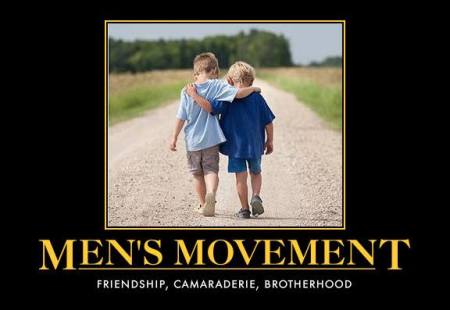
Showing posts with label man box. Show all posts

Thursday, December 18, 2014

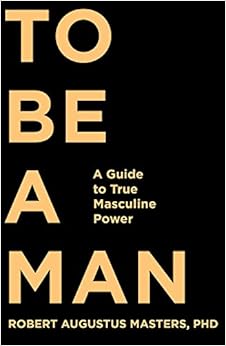
To Be a Man: A Guide to True Masculine Power - Robert Augustus Masters

http://ecx.images-amazon.com/images/I/417Uu6E5IIL._SY344_BO1,204,203,200_.jpg


This post is to welcome the important new book, To Be a Man, by integral psychologist (an actual practicing psychologist, not of the Ken Wilber variety) and personal growth facilitator, Robert Augustus Masters, author of the instant classic book on spiritual bypassing, Spiritual Bypassing: When Spirituality Disconnects Us from What Really Matters, and the equally classic book on relationship as a spiritual path, Transformation through Intimacy, Revised Edition: The Journey toward Awakened Monogamy.

When publication of this new book was announced, I knew it was going to be an essential read - and it is. This is from the Introduction to the book:
"BE A MAN!"

This demand does a lot more harm than good. It's a powerful shame amplifier, packed with "shoulds" - and the last thing males need is more shaming, more degradation for not making the grade.

Men - and boys - who are on the receiving end of "be a man!" get the message that they are lacking in certain factors that supposedly constitute manliness.
And this . . .
Many boys are subjected to the demand to "be a man!" - or "man up" - from an early age. Such pressure, however well-meaning, can shame and harden a boy well before he reaches adolescence, shrinking him emotionally, making him shun softness and overvalue performance and the appearance of "having it together." Showing vulnerability may invite gibes about being less than masculine. Many a boy has had to force himself not to cry or show tenderness in order to become "one of the boys" rather than a reject or someone to shun. 
He is describing my childhood, and likely that of a large number of men in my generation. What he describes here has often been referred to as the "man box," the tiny little space in which men are allowed to exist if they are to be considered "real men."
 
The problem with this box is that it forces men to jettison a good deal of what makes a man human, including tenderness, vulnerability, compassion, and exuberance. Within the confines of the box, we are allowed to feel any emotion as long as it's anger. We are allowed to shed a tear when our dog dies or our favorite athlete announces his retirement (and crying about one's dog is questionable).

The good thing is that this is changing, slowly, with each new generation. The bad thing is that there are a whole lot of men who raised in the man box, who still live there, and who think that is exactly how it should be for all men.

This book is for those men.

Here is the publisher's ad copy (thanks to Sounds True for bringing this book to the market!):
  • I've got it all-a great job, relationship, and lifestyle-so why do I feel so dissatisfied and disconnected?
  • Why am I not happier in my intimate relationships?
  • How do I become more powerful-without becoming that jerk everyone dislikes?
Robert Augustus Masters has helped thousands of men address and work through such issues. What he's found is that the common solution to these dilemmas is challenging yet clear: we must face our unresolved wounds, shame, and whatever else is holding us back, bringing "our head, heart, and guts into full-blooded alignment."
With To Be a Man, this acclaimed psychotherapist and relationship expert offers a groundbreaking and deeply insightful guide to masculine power and fulfillment. To Be a Man clarifies what's needed to enter a manhood as strongly empowered as it's vulnerable, as emotionally literate as it's unapologetically alive-a manhood at home with truly intimate relationship.
In this book, readers will explore:
  • How your past may be dominating your present
  • Shame in its healthy and unhealthy forms, and how to make wise use of it
  • How vulnerability can be a source of strength
  • Emotional literacy-an essential skill for relational well-being
  • Releasing sex from the obligation to make you feel better
  • How to disempower your inner critic
  • Bringing your shadow (whatever you've disowned in yourself) out of the dark
  • Embodying your natural heroism and persisting regardless of fear
  • What women need from men
  • Understanding and outgrowing pornography
  • Entering the heartland of true masculine power
If you've read your share of popular advice on relationships and being a man-but realize on a gut level that it's going to take some serious inner work-here's a great guide to that most rewarding of challenges: doing what's needed to fully embody your authentic manhood.
Here is some of the "praise" for the book (i.e., solicited endorsements).

 Praise for To Be a Man


"Any book that unveils the male mystique with empathy and compassion, helping men understand themselves and helping women understand men, and that helps the culture understand the masculine dilemma should be hailed as a miracle. This is what Robert Augustus Masters does in To Be a Man. Every man should read it as autobiography, every woman should read it as revelation, and our culture should embrace it as a healing balm."
- Harville Hendrix, PhD, author of Getting the Love You Want and co-author (with Helen LaKelly Hunt, PhD) of Making Marriage Simple


"Robert Augustus Masters has written a powerful guide for men that integrates rigor and receptivity, aggression and authority, vulnerability and potency. With highly developed emotional intelligence, and a nuanced understanding of adult development including the importance of shadow work, Masters delivers a vision of mature, embodied male empowerment. To Be a Man is a fearless book from a master of psycho-emotional healing and awakening."
Diane Musho Hamilton, author of Everything Is Workable: A Zen Approach to Conflict Resolution


"Masters' insights populate every page of this compelling book, and offer creative ways of thinking about many of our era's most complex and controversial issues, among them, pornography, sexual violence, militarism and war, the effects of trauma on men's psyches and identities, and much more."
- Jackson Katz, PhD, author of The Macho Paradox and Leading Men, and creator of the award-winning films Tough Guise and Tough Guise 2


"After thirty years of pioneering men's work, if I were to write the classic handbook for men-this would be it. To Be a Man calls out the 'warrior' to do battle inside, to find authentic masculine power, allowing truly intimate relationships with women, other men, and self."
- Bill Kauth, cofounder of The ManKind Project and author of A Circle of Men and We Need Each Other


"To Be a Man dissects the three words that echo in every man's psyche: "Be a man!" As a seasoned therapist, Masters identifies the accompanying shame men manifest and gives us a guide toward healthy, sustainable masculinity."
- Joe Ehrmann, former NFL player, professional speaker, cofounder of Coaching for America, and author of InSideOut Coaching: How Sports Can Transform Lives


"As a man, this book honors, challenges, teaches, and nurtures me all at once. It shows me where I have the greatest opportunity to grow. Best of all, it celebrates what's truly sacred about being a man."
- Raphael Cushnir, author of The One Thing Holding You Back and Surfing Your Inner Sea

"Every once in a while someone comes along and writes a masterpiece, and Robert Augustus Masters' To Be a Man falls into this category. His book is a true hero's journey of healing and awakening, one that encourages men to cultivate a deep and enduring intimacy with everything that they are for the benefit of one and all."
- Hank Wesselman, PhD, author of The Bowl of Light and the Spiritwalker Trilogy


"As a woman, I am genuinely thankful for the cogent and thoughtful exploration of masculinity that he has offered to the dialogue between men and women. And, as the mother of two boys, I am delighted that he is sharing these fruits of wisdom with the men of today, and the generations to follow."
- Sarah Nicholson, PhD, author of The Evolutionary Journey of Woman


"This book is an invitation to wholeness, to awakening, to the next step man. Compassionately written and wise, it invites men to make a conscious distinction between their benevolent and malevolent identifications, and paves the way for a way of being that is both sturdy and heartfelt. Highly recommended for anyone who has grown tired of limiting gender identifications!"
- Jeff Brown, author of Soulshaping
 
"A brave and full-blooded dive into the challenges and opportunities facing men and masculinity in the 21st century. Masters brings an array of insights, taken from years of personal practice and gleaned from decades of work with clients, to support men on their journey towards mature manhood."
- Vanessa D. Fisher, co-editor and author of Integral Voices on Sex, Gender & Sexuality: Critical Inquiries

"This important book covers the whole spectrum of men's experience and challenges today. Masters explains the development of men's many strengths as well as their compensations, the downsides that so many adopt to 'be a man,' including burying some parts of themselves so deeply that they forget that such parts are even there. A book for men who want to embrace their inner life as well as well as for women who want to understand them."
- Ian Macnaughton, PhD, author of Body Breath and Consciousness


"Robert Augustus Masters is one of the essential wisdom teachers of our time. To Be a Man reflects his deep learning, humility, and decades of experience as a therapist, clinician, and healer. In the section of my library where I have a small collection of books about being a man, this book has moved to the top of my list. I enthusiastically recommend it to any man who wants to wake up, grow up, and show up."
- John Dupuy, author of Integral Recovery

Tuesday, July 22, 2014

The 3 Scariest Words A Boy Can Hear

So what are those three scariest words? "Be a man."

This wisdom comes from Joe Ehrmann, a former NFL defensive lineman and now a pastor. He was interviewed recently for NPR's Utah Public Radio, and the transcript is below. This story is part of All Things Considered's "Men in America" series.

Interesting quote:
CORNISH: For you, what is masculinity? What does it mean to be a man?
EHRMANN: I think it could be only defined by two things. One, it's your capacity to love and to be loved. Masculinity ought to be defined in terms of relationships. Second thing, it ought to be defined by commitment to a cause - that all of us have a responsibility to give back - to make the world more fair, more just, more hospitable for every human being. So I think it's about relationships and commitment to a cause. That's the underlying of all humanity - men and women.
Cool interview.

The 3 Scariest Words A Boy Can Hear

By NPR Staff
Originally published on Mon July 14, 2014 

Listen  - 7:25


Joe Ehrmann, shown in 1975, was a defensive lineman with the Baltimore Colts for much of the '70s. He says that as a child, he was taught that being a man meant dominating people and circumstances — a lesson that served him well on the football field, but less so in real life.   Neil Leifer Sports Illustrated/Getty Images
This story is part of All Things Considered's "Men in America" series.

It's rare that a man makes it through life without being told, at least once, "Be a man." To Joe Ehrmann, a former NFL defensive lineman and now a pastor, those are the three scariest words that a boy can hear.

Ehrmann — who played with the Baltimore Colts for much of the 1970s and was a lineman at Syracuse University before that — confronted many models of masculinity in his life. But, as with many boys, his first instructor on manhood was his father, who was an amateur boxer.

Ehrmann says of his father: "I think his definition, which was very old in this country, was: Men don't need. Men don't want. Men don't touch. Men don't feel. If you're going to be a man in this world, you better learn how to dominate and control people and circumstances."

On the football field, those lessons served Ehrmann well. But, as he tells NPR's Audie Cornish, it was not the same case in the pediatric oncology ward. In 1978, Ehrmann's teenage brother was diagnosed with cancer. However tough Joe was on the field, he did not feel equipped to help his brother or himself.

Interview Highlights


On how his brother's death affected him

When he died, that was devastating to me. And I started to ask all the questions about what is the role, the meaning, the purpose of life. I was 29 years old, I was six years into my NFL career, and I had no concept — no concept what life was about, and no concept what I was about. And on this journey, I ended up asking the question: What does it mean to be a man? ...

I recognized that everything I had invested my life in — all my accomplishments, my achievements, the stuff I had accumulated — I recognized at that moment they offered no hope or help to my 19-year-old brother — 18-year-old brother — lying on his deathbed. ...

All I had was these old "man up" kind of things — "suck it up, we'll get through this together" — when he really needed the emotional, the nurturing, the love. And I had to really struggle to pull that out of my heart.

On the roles a coach can play in his players' lives

There's two kinds of coaches in America: You're either transactional or you're transformational. Transactional coaches basically use young people for their own identity, their own validation, their own ends. It's always about them — the team first, players' needs down the road.

And then you have transformational coaches. They understand the power, the platform, the position they have in the lives of young people, and they're going to use that to change the arc of every young person's life. I think football is an ideal place — sports in general — team sports are an ideal place to help boys become men. And the great myth in America today is that sports builds character. That's not true in a win-at-all-costs culture. Sports doesn't build character unless the coach models it, nurtures it and teaches it.

On what those philosophies look like on the field

I think there's a lot of screamers, there's a lot of shouters, there's a lot of shamers. My approach is this: Boy, you're in the middle of the game, and some kid's having a tough time. They get beat. ... I tell all my players, "Come on over to me during the game and I'll give you a hug." And you think about the power of a hug versus swearing, shouting, shaming at some kid.

When I played football, I hated [when] some kid would get a knee injury, your teammate would go down and that coach would say move the practice down 20 yards and leave that kid laying there. ... As coaches, we can kneel down next to that kid, you affirm the tears, the pain, the emotions, and you bring all the team around to say, "How can we help Bobby? He's one of us; he's done so much. He had so many dreams." So, you teach them how to build authentic community as men caring for and loving each other.

On the changes he's seen in ideas of masculinity

I think those three lies of masculinity — athletic ability, sexual conquest, economic success — in many ways, those things have been heightened. You have this increase in social media. You have young boys coming into this world, and they are hit 24/7. They're given all kinds of negative messages about their masculinity. They've been conditioned, and they have way more messaging out of this culture than I ever had as a young boy. I think in many respects, it's more difficult. There's more negative messaging out there and less positive.

On what it means to be a man

It think it can only be defined by two things: One, it's your capacity to love and to be loved. Masculinity ought to be defined in terms of relationships. Second thing, it ought to be defined by commitment to a cause. All of us have a responsibility to give back, to make the world more fair, more just, more hospitable for every human being. So I think it's about relationships and commitments to a cause. That's the underline of all humanity — men and women.

Copyright 2014 NPR. To see more, visit http://www.npr.org/.

Transcript


ROBERT SIEGEL, HOST:

This is ALL THINGS CONSIDERED from NPR News. I'm Robert Siegel.

AUDIE CORNISH, HOST:

And I'm Audie Cornish. We've been hearing about men this summer - how their roles have changed, what their lives are like. And one thing most men are told at some point in their early lives is this - be a man.

JOE EHRMANN: Yeah, I think every boy at a very early age is given this mandate to be a man. They're actually the three scariest words every boy receives.

CORNISH: That's former NFL defenseman Joe Ehrmann. He played in the 1970s, mostly for the Baltimore Colts. As with many boys, his first instructor on manhood was his father.

EHRMANN: I think in many ways my father gave me all the wrong concepts about being a man. I think his definition, which was very old-school in this country, was men don't need. Men don't want. Men don't touch. Men don't feel. If you're going to be a man in this world, you better learn how to dominate and control people and circumstances.

CORNISH: And, of course, men don't cry. On the football field, those lessons served Joe Ehrmann well, but not in the pediatric oncology ward. In 1978 Ehrmann's teenage brother was diagnosed with cancer, and however tough Joe Ehrmann was on the field, he did not feel equipped to help his dying brother or himself.

EHRMANN: When he died, that was devastating to me. And I started to ask all the questions about what is the role, the meaning, the purpose of life. I was 29 years old. I was six years in my NFL career, and I had no concept - no concept what life was about and no concept what I was about. And on this journey I ended up asking the question what does it mean to be a man?

CORNISH: Why that question for this particular really very emotionally wrenching part of life?

EHRMANN: Well, 'cause I think I recognized that when my brother was diagnosed and began his dying process - I recognized that everything I had invested my life in - all my accomplishments, my achievements, stuff I had accumulated - I recognized at that moment they offered no hope or help to my 19-year-old brother - 18-year-old brother lying on his deathbed. I was a socialized male that had separated my heart from my head, trying to live life from the neck up.

CORNISH: You were saying all you had were the locker room speeches basically.

EHRMANN: Yeah. All I had was these old man up kind of things. Suck it up. We'll get through this thing together. When he really needed the emotional - the nurturing, the love. Boy, and I had to really struggle to pull that of my heart.

CORNISH: You went on to seminary and to become a pastor. And you also went on to coach high school football. Now, can you talk about what it is in particular you think coaches can do to shift this ideology and whether you really have encountered coaches who are interested in doing that?

EHRMANN: Well, there's two kinds of coaches in America. You're either transactional or you're transformational. Transactional coaches basically use young people for their own identity, their own validation, their own ends. It's always about them - the team first, players' needs down the road. And then you have transformational coaches. They understand the power, the platform, the position they have in the lives of young people, and they're going to use that to change the arc of every young person's life. I think football is an ideal place - sports in general - team sports are an ideal place to help boys become men. And the great myth in America today is that sports builds character. That's not true in a win-at-all-costs culture. Sports doesn't build character unless a coach models it, nurtures it and teaches it.

CORNISH: You mentioned that coaches are either transactional - what can you do for me - or transformational. On the field, how does that play out? Are you basically talking about the screamers here?

EHRMANN: The screamers, yeah. I think there's a lot of screamers. There's a lot of shouters. There's a lot of shamers. My approach is this - boy, you're in the middle of the game and some kid's having a tough time. They get beat. I tell all my players, come on over to me during the game and I'll give you a hug. And you think about the power of a hug versus swearing, shouting, shaming at some kid. Boy, you know, when I played ball I hated - some kid would get a knee injury. Your teammate would go down and that coach would say move the practice down 20 yards and leave that kid laying there. Boy, as coaches, we get kneeled down next to the kid. You affirm the tears, the pain, the emotions, and then you bring all the team around to say how can we help Bobby? He's one of us. He's done so much. He had so many dreams. So you teach them how to build authentic community as men caring and loving for each other.

CORNISH: I'm speaking with Joe Ehrmann. He's founder of Coach for America. And so you've actually been doing this work for decades. And has the average boy changed in some way or are there changes you've seen in how they approach masculinity than when you were growing up?

EHRMANN: Not too much. Boy, I think there's different nuances and stuff, but we have a real crisis when it comes to what it means to be a man.

CORNISH: Not too much, really?

EHRMANN: I don't think so. I think those three lies of masculinity - athletic ability, sexual conquest, economic success. In many ways those things have been heightened. You have this increase in social media. You have young boys coming into this world and they are - 24/7 they're given all kinds of negative messages about their masculinity. They've been conditioned, and they have way more messaging out of this culture than I ever had as a young boy. So I think in many respects it's more difficult. There's more negative messaging out there and less positive.

CORNISH: Can you talk about a particular incident that really drives that home for you?

EHRMANN: Well, I think the Steubenville, Ohio, rape case - two high school boys - 16-year-old girl - drunk, passed out - hundreds of pictures taken - tweets. And that one person had the moral clarity or moral courage to intervene in the midst of that. Two boys sentenced to prison - had no idea about consent. They weren't taught this stuff. A community tried to cover it up. Boy, I think that thing is played out and could play out at any high school. Boys have to be taught about - they have to have the moral clarity and the moral courage to speak up. That's not going to end. Women can't end it. It's not going to end until we raise up a generation of men that have the courage to call out other men on behalf of women in this country.

CORNISH: For you, what is masculinity? What does it mean to be a man?

EHRMANN: I think it could be only defined by two things. One, it's your capacity to love and to be loved. Masculinity ought to be defined in terms of relationships. Second thing, it ought to be defined by commitment to a cause - that all of us have a responsibility to give back - to make the world more fair, more just, more hospitable for every human being. So I think it's about relationships and commitment to a cause. That's the underlying of all humanity - men and women.

CORNISH: Joe Ehrmann - he's founder of Coach for America. Thank you so much for speaking with us. EHRMANN: Great to be with you, Audie. Thank you.
Transcript provided by NPR, Copyright NPR.

Thursday, June 26, 2014

Breaking the Man Box: Reconstructing Masculinity in America


This event occurred at the University of Minnesota in March of this year (2014). This conversation is a companion to the Office for Equity and Diversity's Critical Conversations about Diversity and Social Justice series at the University of Minnesota. Co-sponsored by the University Libraries.

Breaking the Man Box: Reconstructing Masculinity in America

Friday, March 28, 2014

Watch this event here!   (requires Microsoft Silverlight)


What does it mean to be a man? Historically, certain images of masculinity have been foundational to American beliefs and values. Challenging these rigid constructs has resulted in major shifts in American society, opening up opportunities for new ideas about gender, identities, and behaviors. How are Women/Gender Studies challenging traditional cultural behaviors? How are ideas about masculinity shifting and helping families raise feminist sons? This conversation engages panelists and participants in an examination of manhood, maleness and masculinity by discussing cultural contexts such as sports, gaming and guns; male power in the market place; ethnic masculinities; paternity and parenting; artistic expression; and sexual expression and identity.

This is a companion to the Office for Equity and Diversity's Critical Conversations about Diversity and Social Justice series at the University of Minnesota. Co-sponsored by the University Libraries.

If you are interested in learning more about this topic, check out some of the highlighted resources.

Books

Videos

A call to men by Tony Porter from TEDWomen 2010


How movies teach manhood by Colin Stokes TEDxBeaconStreet 2012


Violence against women—it's a men's issue by Jackson Katz TEDxFiDiWomen 2012


Ten responses to the phrase 'Man Up' by Guante


Articles

Panelists

Moderator

This page was created by Jody Gray, Diversity Outreach Librarian.

Tuesday, April 22, 2014

Omnivore - A Manhood Problem (and a Rebuttal to Hanna Rosin)

Silhouette of young man looking up.

Here is another feast of links form Bookforum's Omnivore blog - this time all of the links are related to men, masculinity, social gender theory, and other related topics - some interesting articles.

One of the articles linked below, by Hanna Rosin (The End of Men) is adapted from her opening statement at the Munk Debate, “Resolved: Men Are Obsolete,” held in Toronto. In it she offers a list of reasons supporting her contention that men are obsolete (not in a biological sense, but in a social constructivist sense).

Here are her five evidence points:
ONE: It’s the end of men because men are failing in the workplace [curator: and in education].
TWO: It’s the end of men because the traditional household, propped up by the male breadwinner, is vanishing.
THREE: It’s the end of men because we can see it in the working and middle class.
FOUR: It’s the end of men because men have lost their monopoly on violence and aggression.
FIVE: It’s the end of men because men, too, are now obsessed with their body hair.
These are weak points aside from number one. Point two is relevant, but not necessarily a bad thing if the men are still involved in raising their kids (but they often aren't).

Once again, as I have argued before, this is not the end of men any more than the 60s and 70s was the end of women. Men are in a transitional space as far as our role in society, and how we navigate this transition will determine whether men evolve into greater care and compassion, or retrench themselves in traditional, domination models of masculinity. How women engage this transition will make all of the difference.

A manhood problem

Apr 21 2014
9:00AM

Thursday, April 17, 2014

Kozo Hattori - 5 Habits of Highly Compassionate Men


Excellent article. I resonate with the opening remarks of the author - I was a very sensitive child and would cry when the gazelle got caught by the lion on Wild Kingdom. Other situations, usually when someone felt shame or fear, also would lead to tears.

Like the author, years of being forced into the "man box" buried that sensitivity and it took years of therapy and Buddhist practice to rediscover it.

Future generations of boys should not have to go through that same soul-crushing experience.

Books mentioned below: Hardwiring Happiness by Rick Hanson, PhD, Raise an Emotionally Healthy Boy by Dr. Ted Zeff, Search Inside Yourself by Chade-Meng Tan, From Wild Man to Wise Man: Reflections on Male Spirituality by Fr. Richard Rohr, and Raising Cain by Michael Thompson and Dan Kindlon. 

Two books not mentioned below but very much worth reading: Born to Be Good: The Science of a Meaningful Life by Darcher Keltner, and The Age of Empathy: Nature's Lessons for a Kinder Society by Fans de Waal.

5 Habits of Highly Compassionate Men

Having compassion leads to increased happiness, freedom from gender stereotypes, and better relationships with others.

by Kozo Hattori
posted Apr 02, 2014

This article originally appeared at Greater Good Berkeley.

Photo by Tom Beardshaw / Flickr.

I remember being a very compassionate child. While watching "The Little House on the Prairie," I cried my eyes out when Laura couldn’t give Pa a Christmas gift. But 12 years of physical abuse and being forced to the confines of the “act-like-a-man box” wrung most of that compassion out of me by the time I reached adulthood.

Although I was what therapists call “high-functioning,” my lack of compassion was like a cancer that poisoned my friendships, relationships, business affairs, and life. At the age of 46, I hit rock bottom. Unemployed and on the verge of divorce, I found myself slapping my four-year-old son’s head when he wouldn’t listen to me.

As a survivor of abuse, I had promised myself that I would never lay a hand on my children, but here I was abusing my beloved son.

I knew I had to change. I started with empathy, which led me to compassion. I committed to a daily meditation practice, took the CCARE Cultivating Compassion class at Stanford University, and completed a 10-day silent meditation retreat. I read and researched everything I could find on compassion.

I found that the more compassion I felt, the happier I became.

Convinced that I had found an essential ingredient to a happy and peaceful life, I started to interview scientific and spiritual experts on compassion, trying to find out what made a compassionate man. Interviewees included Dr. Dacher Keltner, co-founder of the UC Berkeley Greater Good Science Center; Dr. James Doty, founder and director of the Center for Compassion and Altruism Research and Education at Stanford University; Dr. Rick Hanson, author of Hardwiring Happiness; Marc Brackett, director of the Yale Center for Emotional Intelligence; and Thich Nhat Hanh, the Zen Buddhist monk nominated by Martin Luther King Jr. for the Nobel Peace Prize in 1967.

From these interviews and research, I compiled a list of what makes a compassionate man.

1. Learn to see compassion as strength


Most events I attend that discuss compassion are predominately attended by women. When I asked Thich Nhat Hanh how we could make compassion more attractive to men, he answered, “There must be a fundamental misunderstanding about the nature of compassion because compassion is very powerful … Compassion protects us more than guns, bombs, and money.”

Although many men in society see compassion and sympathy as feminine—which translates to a weakness in our patriarchal society—all of the compassionate men I interviewed view compassion as a strength.

Dr. Hanson noted how compassion makes one more courageous since compassion strengthens the heart—courage comes from the French word “coeur,” which means heart. Dacher Keltner argues that Darwin believed in “survival of the kindest,” not the fittest. Dr. Ted Zeff, author of the book Raise an Emotionally Healthy Boy, believes that only compassionate men can save the planet. Zeff argues that “the time has come to break the outdated, rigid male code that insists that all men should be aggressive, thick-skinned, and unemotional”—an excellent description of the act-like-a-man box that I tried to live in.

The compassionate men I interviewed agree with the Dalai Lama when he said, “Love and compassion are necessities, not luxuries. Without them, humanity cannot survive.”

2. Have compassionate role models


All of the compassionate men seemed to have role models that supported their compassion instinct. Marc Brackett gives credit to his uncle, Marvin Maurer, who was a social studies teacher trying to instill emotional intelligence in his students before the term "emotional intelligence" was coined. Over 30 years after teaching in middle school, Maurer’s “Feeling Words Curriculum” acts as a key component of the Yale Center for Emotional Intelligence's RULER program. Similarly, Marshall Rosenberg, author of the book Nonviolent Communication, constantly mentions his compassionate uncle who cared for his dying grandmother.

A role model doesn’t necessarily have to be living, or even real. Chade-Meng Tan, author of Search Inside Yourself, cites Ben Kingsley’s portrayal of Gandhi as a role model for compassion. Dr. Rick Hanson posits Ender from the science-fiction novel Ender’s Game as a compassionate role model. Certainly, Jesus and Buddha are obvious role models of compassion. The key is to treat them like role models.

Role models are not meant to be worshiped, deified, or prayed to. They are meant to be emulated. They pave the way for us to walk a similar path. Can we turn the other cheek and love our enemies like Jesus asked us? Can we transcend our ego and see all things as one, like the Buddha did?

In contrast are individuals who were not guided by positive role models. In his book From Wild Man to Wise Man: Reflections on Male Spirituality, Franciscan friar Richard Rohr describes what he calls “father hunger”: “Thousands and thousands of men, young and old … grew up without a good man’s love, without a father’s understanding and affirmation.” Rohr, who was a jail chaplain for 14 years, claims that “the only universal pattern I found with men and women in jail was that they did not have a good father.”

Scott Kriens, former CEO of Juniper Networks and founder/director of the 1440 Foundation, concurs: “The most powerful thing we can do for our children is be the example we can hope for.”

3. Strive to transcend gender stereotypes


All of the compassionate men interviewed broke out of the "act-like-a-man" box. At a certain point in his life, Dr. Rick Hanson realized that he was too left-brained, so he made a conscious effort to reconnect with his intuitive, emotional side. When Elad Levinson, program director for Spirit Rock Meditation Center, first encountered loving-kindness and compassion practices, his first reaction was one he claims is fairly typical for men: “Come on! You are being a wuss, Levinson. No way are you going to sit here and wish yourself well.” So the actual practice of compassion instigated his breaking free from gender stereotypes.

Ted Zeff cites a study that found infant boys are more emotionally reactive than infant girls, but by the time a boy reaches five or six years old “he’s learned to repress every emotion except anger, because anger is the only emotion society tells a boy he is allowed to have.” If society restricts men’s emotional spectrum to anger alone, then it is obvious men need to transcend this conditioning to become compassionate.

Dr. Doty points to artificially defined roles as a major problem in our society because they prevent men from showing their vulnerability. “If you can’t be vulnerable, you can’t love,” says Doty. Vulnerability is a key to freedom from the "act-like-a-man" box, for it allows men to remove the armor of masculinity and authentically connect with others.

Both Dr. Doty and Scott Kriens emphasize authenticity as a necessary pathway to compassion. Kriens defines authenticity as “when someone is sharing what they believe as opposed to what they want you to believe.” This opens the door to compassion and true connection with others.

4. Cultivate emotional intelligence


In his book Raising Cain, Dan Kindlon and Michael Thompson argue that most boys are raised to be emotionally ignorant: “Lacking an emotional education, a boy meets the pressure of adolescence and that singularly cruel peer culture with the only responses he has learned and practiced—and that he know are socially acceptable—the typical ‘manly’ responses of anger, aggression, and emotional withdrawal.”

In contrast, most of the men I interviewed were “emotionally literate.” They seemed to see and feel things with the sensitivity of a Geiger counter. Tears welled up in Doty’s eyes a number of times when he talked about compassion. Hanson explained how he landed in adulthood “from the neck up” then spent a large part of his 20s becoming whole again. Much of Chade-Meng Tan’s Search Inside Yourself training that he developed for the employees of Google is based on emotional intelligence developed through attention training, self-knowledge, and self-mastery.

Similarly, Father Richard Rohr leads initiation groups for young men that force initiates to face pain, loneliness, boredom, and suffering to expand their emotional and spiritual capacity. It is no coincidence that these initiations are held in nature. Nature seems to be an important liminal space that allows boys and men to reconnect with their inner world. Dr. Hanson is an avid mountain climber. Ted Zeff advocates spending time in nature with boys to allow their sensitivity to develop.

5. Practice silence


Almost all of the men I interviewed regularly spend some time in silence. They’d hit “pause” so that they can see themselves and others more clearly. When our interview approached two hours, Dr. Rick Hanson asked to wrap it up so he would have time for his morning meditation. Meng Tan had just returned from a week-long silent meditation retreat a few days before our interview. Scott Kriens started a daily sitting and journaling practice almost ten years ago that he rigorously practices to this day.

Father Richard Rohr practices Christian contemplative prayer, which he says leads to a state of “undefended knowing” that transcends dualistic, us versus them thinking. Rohr argues that true compassion can’t happen without transcending dualistic thinking. “Silence teaches us not to rush to judgment,” says Rohr.

Self-awareness through mindfulness practices like meditation, silent prayer, or being in nature allow compassionate men to embrace suffering without reacting, resisting, or repressing. Thich Nhat Hanh says that mindfulness holds suffering tenderly “like a mother holding a baby.” That poetic image is backed up by more and more research, which is finding that mindfulness can help foster compassion for others.

So the path to making more compassionate men is clear: Understand compassion as a strength, get to know yourself, transcend gender roles, look for positive role models—and become one yourself. If that sounds too complicated, 84-year-old Marvin Maurer sums up being a compassionate man in five easy words, “Be in love with love.”


This article was originally written by Kozo Hattori, M.A., for Greater Good, where it originally appeared. Kozo is a writer and counselor at PeaceInRelationships.com. His current book project is titled Raising Compassionate Boys.

Read More

Monday, April 14, 2014

Why Men Have So Much Trouble Making Friends

For many men, the friends they make in high school or college are their friends for life, and they seem to struggle to add new men into the category friend. For even more men (straight men), once they get into a serious monogamous relationship they stop spending time with male friends and their female partner becomes their best friend and nearly constant companion. If the relationship fails, as so many do, the man is isolated and without support.

All of this is part of the genesis of men's groups. By sitting in circle with other men week after week, through jobs and relationships, there is a bond, a constancy that supports men in being true to themselves.

Without a men's group, the only real avenue for many men (besides the workplace) is sports - a softball team, a bowling team, golfing, maybe even playing pick up games at the local tennis or racquetball courts.

Why men have so much trouble making friends

Too often men are taught to be self-sufficient -- and it can hamper their ability to enjoy authentic relationships


Mark Greene, The Good Men Project
Saturday, Apr 12, 2014 
 
Jason Segel and Paul Rudd in "I Love You, Man" 

This piece originally appeared on The Good Men Project


“Will you be my friend?” When is the last time you heard one man ask another that simple question? Little boys do it every day on the playground, but sometime around first grade, boys stop asking that question and they never ask it again. Because it quickly becomes an invitation for derision, sarcasm and rejection. Imagine, Frank walks into a bar. He approaches a group of men from work. One guy says, “Frank, meet Bob.” They all chat for a while and then Frank says brightly, “Bob! I’m glad I met you. I like you. How would you like to be my friend?”

Cue the shocked stares. Because Frank just broke the “don’t ask, don’t tell” rule of male friendship. Don’t admit you want or need friends. Don’t admit you need anything. Be confident. Be self reliant. Only if you don’t need friends will you be worthy of having them.

The Question Men Won’t Ask


The reason most American men would never ask another man directly to enter into a friendship is because boys and men in American culture are given little or no opportunity in life to master this kind of interpersonal risk taking. It creates a moment of uncertainty that is agonizing for men. To ask for friendship suggests vulnerability, flexible social standing or even willingness to admit need. All values which are roundly condemned in men.

American men are taught from an early age to access friendships obliquely by joining clearly defined groups, teams or organizations. The opportunities for social contact arise in Boy Scouts, on baseball teams or in schools. This kind of social organizing aligns large populations of boys, teaching them to follow clear and simple rules of how to perform being a boy. Some organizations actually provide written hand books, manuals by which to determine rank, achievement, behavior and appropriate forms of expression. The Boy Scout handbook is one obvious example.

Within these organizations, even social stragglers are grudgingly allowed to remain part of the group regardless of their individual standing. Quickly, boys learn to self select their rank and standing within these organizations. Alphas at the top, socially awkward or needy boys at the bottom. Quickly, boys learn that advancing in the organization doesn’t require the higher skills of tracking nuance and uncertainty. Social risk taking is not rewarded. Being on top simply requires the application of confidence and assertion and a willingness to perform masculinity according to what is normative.

In this way, boys are taught to express a simplified social identity by virtue of their organizational associations. By extension, friendships formed in these organizations are also expressed in restricted and simplified ways. They are friendships that encourage conformity and avoid interpersonal authenticity.

Safety First


In adulthood, men continue to seek friends in the safe but highly conforming contexts of work, team sports, church, or their wives’s social and familial connections. They become friends with the parents they meet at the PTA. They rely on the Lions Club, fraternity or their son’s scout troop. They connect by way of the organizations they embed themselves in, tracking and performing friendship in the ways that are collectively deemed normative.

Because these friendships are sourced in organizations, men keep much of their uniqueness hidden and cleave close to what is culturally normative for those institutions. This creates a high degree of homogeneity in how men express, engage and perform masculine friendship. Joe is my friend because Joe comes to bowling every week, not because Joe is necessarily someone I connect with on any other level. These kind of risk free proximity based friendships can leave men feeling disconnected, hidden or unfulfilled emotionally. Organizational conformity guarantees belonging not expression.

Which is why for men, when their participation in any given organization ends, the relationships or friendships embedded in those organizations often end as well, unless emotional authenticity develops. Emotional authenticity is the glue that holds friendships together. Without it, they are too shallow and fragile to survive beyond simple convenience.

Welcome to the Man Box

In the absence of emotional authenticity, American men become homogeneous in their expression of self. This encourages their location, willingly or otherwise, in what many writers have come to call the Man Box. The Man Box is a set of rigid expectations that define what a “real man” is, particularly in American culture. A real man is strong and stoic. He doesn’t show emotions other than anger and excitement. He is a breadwinner. He is heterosexual. He is able-bodied. He plays or watches sports. He is the dominant participant in every exchange. He is a firefighter, a lawyer, a CEO. He is a man’s man. This “real man”, as defined by the Man Box, represents what is supposedly normative and acceptable within the tightly controlled performance of American male masculinity.

Men will ask women to have sex and take a “no” without skipping a beat. Men will ask a customer to buy a product, and take “no” as just part of the territory. But asking another man to “please be my friend”, represents social risk taking that’s just too potentially frightening to attempt. Because, in the moment a man asks this question, he has failed to be what all men are expected to be. He has failed to be, and pay close attention to the word I’m using here, competent.

Men move in circles of competence. This competency component is central to how men are ranked in the institutions they relay on for social connection; in sports, at work and in every garage and backyard BBQ in the country. We approach each other not just in terms of common interests, but in terms of our competency in those areas. Knowing how matters.

On top of that, we approach with our personal business wired tight and fully formed. We are successful, smart, happy and full of advice on how to correctly do what needs to be done. By extension, we already have plenty of friendships which spring fully formed into our lives, born magically out of our raw manly charisma and charm.

Trained to Hide Behind What We Can Leverage

The male focus on competence in social situations is tied to our belief that our chances of success socially increase when underpinned by something we can leverage. Our position in the company. Our financial success. Our skill at golf. Our willingness to advance the goals of the organization. Something other than the simple fact of who we are.

We lead with: “You’ll want to be my friend because of what I can provide, not because of who I am.” And men carry this same dynamic into their romantic relationships, often leading with the “good provider” story. It’s why we pay for dinner on the first date. It’s rooted in opening doors and providing service to women. Because somewhere deep down, we’re worried we’re not enough without the financial or service element. Or worse, because we want to hold various forms of leverage in any relationship we enter.

Either way, its ultimately about male insecurity. Male insecurity born out of the fact that we have never been taught to lead with our own authentic emotional selves. Seeking friendship by offering what others can leverage is the central transactional skill boys are being taught from childhood. Buying our way in, instead of offering who we are as human beings, sets up a circular pattern by which men are always expected to bring, contribute, produce, provide.

In order to avoid interpersonal vulnerability, men are often convinced its easier buy their way into relationships in this transactional way. As if simply offering ourselves is too scary. This is why men are encouraged to be good providers. And its why we often take the bait. Collectively, we are raising men to feel insecure unless they can bring their transactional leverage. And its a lesson we were not taught by the women we date as adults, but by the boys we were first grouped with as children. That said, men and women alike participate in this generational cycle of emotional suppression. It’s pay to play.

So we take our personal stories off the table and put our competence, our networks and our alpha narratives up front. For men, if our friendships are exclusively about confidence and competence, then, by definition, they can not be very authentic. Because no one is competent across the board. No one is completely without uncertainty or confusion.

Uncertainty = Courage = Friendship

When you share your uncertainty, you start asking much bigger questions. And it is in those conversations that one speaks with honesty and authenticity. Because engaging uncertainty is the highest form of courage, in doing so, we move toward certainty of a much deeper and more resilient kind.

If friendships in men’s lives seem shallow and transitory, it is because so many of those relationships are emotionally risk free and as such, lacking in authenticity. And authenticity is the glue that holds deeper more long term friendships together.

Accordingly, I, for one, am seeking friendship in more individualized and direct ways. Outside my immediate networks, where everyone I meet is more likely to be like me. I going to look for friends away from my comfort zones. I’m going to take some risks, because the bland landscape of social conformity is not enough for me. And never has been.

If I get a “no thanks” I’m going to just move on and keep trying. I’m not going to lead anymore with something transactional that I think might be of value. Not my network. Not my business connections. Not my ability to earn approval by conforming to some set of expectations or common goals. Out front of all that, I’m just offering me. Myself. Because I’m proud of who I am. Getting here took a lot of blood, sweat and tears. And I’m not going to hide it just to insure others are universally comfortable with their choices.

Above all, I want to live a good life. I want to take risks. I want to be who I’m becoming. And continue to make more authentic, emotionally vibrant friends.

~ More Mark Greene.

Thursday, January 23, 2014

Michael Kimmel - How Can We Help Women? By Helping Men

It was nice to see this article from Michael Kimmel in the Huffington Post. This is the fundamental idea that feminism is missing in its often radical views of men and masculinity.

How Can We Help Women? By Helping Men

Michael Kimmel
Posted: 01/17/2014


In her thoughtful op-ed in the New York Times, family historian Stephanie Coontz answered the question "How can we help men?" with a ringing endorsement of gender equality: "By helping women," she answered.

I'd like to suggest the converse is equally true. How can we help women? By helping men.

Women's progress towards equality is incontestable; it seems obvious that we are, today, more gender equal than we have ever been in our history (I hasten to point out that we are not "there" yet, that we have not fully achieved gender equality, just that we are closer than we have ever been.) But progress towards greater equality has slowed: Women have pushed the glass ceiling higher on the corporate ladder, but all that leaning in has not crashed through to the board room. Girls and women compose half of all students in our law, medical and business schools, and have made enormous strides in STEM courses, yet working mothers are doing more housework and child care than they did 30 years ago. Every day, we read stories of sexual assault -- in our schools, homes, at parties and in our military.

How can we further the campaign for women's equality? How can we help women get there?

By helping men. Particularly, we need to help men decouple those aspects of masculinity that hold men -- and women -- back from living the lives they say they want.

This is crucial. A 2013 survey by the Pew Research Center found that women and men rated "being a good parent" (94% of women, 91% of men) and "having a successful marriage" (84% of women, 83% of men) equally highly -- and nearly twice as important as "being successful in a high-paying career." (Interestingly, women rated career aspirations slightly higher than men did, 51% to 49%).

So women and men want the same thing: good careers, loving relationships and happy families. Women are advised to lean in or to opt out -- as if they can do it alone. But women can't have the lives they want without some support from men. Men: We need to listen up.

Let me offer a few examples. Take education. Four decades after a concerted effort to remedy dramatic gender discrimination in education, we read today about a "boy crisis" -- gender disparities in college attendance, a gender-grade gap with girls earning better grades and taking most academic honors, while boys populate the detention room, special education classes and are diagnosed with ADHD far more often. Remedies abound, from the sensible (greater attention to individual learning styles) to the illogical and possibly unconstitutional (single-sex classes with thermostats set at different temperatures, gender-specific classroom seating arrangements and course materials, all based on outdated stereotypes).

In reality, much of the cause of the "boy crisis" in education lies with the definition of masculinity held by the boys themselves -- the notion that academic disengagement is proof of masculinity. Helping boys to engage academically requires that we recognize different learning styles along an array of measures -- which in turn leads to recognizing diverse aptitudes and competencies, enabling everyone, girls and boys, to better achieve to their potential.

Or take balancing work and family. We know that women will not be able to balance work and family until -- well, until men do.

Twenty years ago, I wrote an article in the Harvard Business Review entitled "What Do Men Want?" In it, I asked men who worked for companies that offered parental leave to men why they didn't take it when they became fathers. Each one told the same story: His colleagues wondered loudly if he was really committed to his job, his supervisor gave his permission with a promise that he'd be put on the "daddy track," a stalled track that would not end in partnership. In each case, it was other men who had created a workplace climate that thwarted these fathers from taking the opportunity they wanted to take.

This has really changed. As an article in The Atlantic makes clear, men are not being policed as arduously by other men. And, as Liza Mundy writes, "the true beneficiaries of paternity leave are women." As a result, over the past two decades men have stepped up on the home front. Well, not exactly stepped up -- more like stepped out. Men are doing marginally more housework, but significantly more childcare than they did a generation ago. This separation of housework and childcare has resulted in a new phenomenon: Dad has become the fun parent. Dad takes the kids to the park to pay soccer while mom cleans the breakfast dishes, makes the bed, does the laundry and prepares lunch. The kids come home proclaiming what a great time they had and what a great parent dad is.

If we want to help women, we need to help men find all those inner joys of housework that anti-feminists have been celebrating for decades -- or at least get us to do our share.

What about health? Yes, we know that women outlive men by about 5 years, 81 for women and 76 for men. Men are more likely to die of stress-related illness and miss work due to workplace accidents. By defining masculinity as risk-taking stoicism, men are less likely to have routine screenings, less likely to comply with workplace safety in the name of proving masculinity. Our notions of masculinity deprive our spouses and partners and families of our presence for those five years because of our adherence to these ideals of masculinity.

Finally, let's get even more intimate. Decades of research have shown that the more men subscribe to what we might call "traditional" notions of masculinity -- that manhood is defined by strength, aggression, emotional toughness and sexual prowess -- the more likely they are to believe that male-female relationships are adversarial, that control of women is central to manhood and that violence is sometimes necessary to control a female partners -- beliefs that can sometimes translate into behaviors like earlier first sex, higher rates of HIV and STDs and violence.

Conforming to these traditional ideas of masculinity may be hazardous to our health, but it is also hazardous to the health of our wives, partners and children.

What's common among these is that men often feel they must prove their masculinity -- and they must prove it to other men. One wants to be a man's man, a man among men. (Who wants to be a ladies' man?)

We need to help men reduce the power of that gender policing -- the fear that other men will see us as less than manly if we listen to the voices in our own hearts about how we want to live our lives.

If the past few decades have made anything clear it's been that we are neither Martians nor Venusians. And what's good for Earthlings -- male and female -- is good for all of us. If we want to help women achieve greater equality, we have to engage men.

Thursday, December 26, 2013

The Mask You Live In - Documentary Coming Soon


Below is the trailer for a new film due out in 2014, an exploration of American masculinity. They are also seeking crowd-funding the support project - go here. This is an important topic that can always use more exposure in the public mind. Education is the way to create change.

There's Something Absolutely Wrong With What We Do To Boys Before They Grow Into Men


Joseph Lamour

"Be a man" is something we've all heard at one time or another, even a few of the women reading this right now. Being a "man" in that sense means something completely different to me (and maybe you, too) than what that phrase implies.

I can't even begin to describe the toll that the concept of masculinity has taken on my life. And it's felt everywhere. It's time we make changes, starting from within ourselves.

Monday, December 9, 2013

American Men’s Hidden Crisis: They Need More Friends!


One of the issues I have experienced in my own life, and seen in the men I coach or see in therapy, is that after high school or college, we often have a hard time making new friends. If we take a job in a new city, and we are alone, it can takes year for many men to make even a couple of friends.

In this recent article from Salon, Lisa Wade looks at the issue and some of the reasons men struggle to create intimate friendships, the kind where we can be open about fears, hopes, struggles, and successes. We NEED these kinds of friends.

American men’s hidden crisis: They need more friends!

Men aren't making the same kinds of intimate friendships many women have -- but they want to

Lisa Wade
Saturday, Dec 7, 2013
 

Of all people in America, adult, white, heterosexual men have the fewest friends. Moreover, the friendships they have, if they’re with other men, provide less emotional support and involve lower levels of self-disclosure and trust than other types of friendships. When men get together, they’re more likely to do stuff than have a conversation. Friendship scholar Geoffrey Greif calls these “shoulder-to-shoulder” friendships, contrasting them to the “face-to-face” friendships that many women enjoy. If a man does have a confidant, three-quarters of the time it’s a woman, and there’s a good chance she’s his wife or girlfriend.

When I first began researching this topic I thought, surely this is too stereotypical to be true. Or, if it is true, I wondered, perhaps the research is biased in favor of female-type friendships. In other words, maybe we’re measuring male friendships with a female yardstick. It’s possible that men don’t want as many or the same kinds of friendships as women.

But they do. When asked about what they desire from their friendships, men are just as likely as women to say that they want intimacy. And, just like women, their satisfaction with their friendships is strongly correlated with the level of self-disclosure. Moreover, when asked to describe what they mean by intimacy, men say the same thing as women: emotional support, disclosure and having someone to take care of them.

Men desire the same level and type of intimacy in their friendships as women, but they aren’t getting it.

***

In an effort to understand why men’s friendships are less intimate than women’s, psychologist Niobe Way interviewed boys about their friendships in each year of high school. She found that younger boys spoke eloquently about their love for and dependence on their male friends. In fact, research shows that boys are just as likely as girls to disclose personal feelings to their same-sex friends and they are just as talented at being able to sense their friends’ emotional states.

But, at about age 15 to 16 — right at the same age that the suicide rate of boys increases to four times the rate of girls — boys start reporting that they don’t have friends and don’t need them. Because Way interviewed young men across each year of high school, she was able to document this shift. One boy, Justin, said this in his first year, when he was 15:

[My best friend and I] love each other… that’s it… you have this thing that is deep, so deep, it’s within you, you can’t explain it. It’s just a thing that you know that person is that person… I guess in life, sometimes two people can really, really understand each other and really have a trust, respect and love for each other.
By his senior year, however, this is what he had to say about friendship:
[My friend and I] we mostly joke around. It’s not like really anything serious or whatever… I don’t talk to nobody about serious stuff… I don’t talk to nobody. I don’t share my feelings really. Not that kind of person or whatever… It’s just something that I don’t do.
What happens?

During these years, young men are learning what it means to be a “real man.” The #1 rule: avoid everything feminine. Notice that a surprising number of insults that we fling at men are actually synonyms for or references to femininity. Calling male athletes “girls,” “women” and “ladies” is a central part of motivation in sports. Consider also slurs like “bitch” and “pussy,” which obviously reference women, but also “fag” (which on the face of it is about sexual orientation, but can also be a derogatory term for men who act feminine) and “cocksucker” (literally a term for people who sexually service men). This, by the way, is where the ubiquitous slur “you suck” comes from; it’s an insult that means you give men blow jobs.

So men are pressed — from the time they’re very young — to disassociate from everything feminine. This imperative is incredibly limiting for them. Paradoxically, it makes men feel good because of a social agreement that masculine things are better than feminine things, but it’s not the same thing as freedom. It’s restrictive and dehumanizing. It’s oppression all dressed up as awesomeness. And it is part of why men have a hard time being friends.

***

To be close friends, men need to be willing to confess their insecurities, be kind to others, have empathy and sometimes sacrifice their own self-interest. “Real men,” though, are not supposed to do these things. They are supposed to be self-interested, competitive, non-emotional, strong (with no insecurities at all), and able to deal with their emotional problems without help. Being a good friend, then, as well as needing a good friend, is the equivalent of being girly.

Of course, not all men buy into these prescriptions for male behavior, but these expectations do influence most men’s friendships at least a little bit. They mean that, to make good friends, men have to take risks. In a context in which being a man is good and being friendly is being womanly, each time a man tries to form intimate bonds with another man, he potentially loses status. Men who want truly close friends have to fight the instinct to protect their standing above all else. This isn’t easy, as they’ve been told for a lifetime that their status as male, and their place in that hierarchy, is a significant part of why they’re important and valuable human beings.

Men also have to find other men who are willing to take those risks with them. Knowing who to reach out to isn’t always easy, as men often wear a masculine guise, a mask that projects masculinity and hides the things about them that are disallowed. In one study of men’s experiences, one college-age man explained: “I am more of an emotional person. … I never really felt much like who I [pretended to be] because I [was]… putting my man face on.”

It’s tough to know who to reach out to and it takes courage to do so. Complicating things further, men can feel threatened by the initiation of intimacy and strike back to protect their own guise. Another college-age interviewee explained, “If a guy starts opening up to another guy, he will joke around like, ‘You look like you are ready to make out with me.’” “I have done it,” he confessed.

Finally, because men often don’t have a lot of practice being a good friend, men who value friendships with other men may have to teach others how to be friends. They may have to model friendship for other men or be understanding when their friends fail them and respond with greater disclosure instead of anger or dismissal (e.g., “it hurt my feelings when you didn’t call to see how my surgery went”). This calls on great emotional reserves, but it’s worth it.

***

Having a friend to whom you can disclose your feelings a major determinant of well-being. People with friends are healthier. They’re less likely to get common colds, to develop fatal coronary disease, to develop physical impairments or reductions in brain functioning as they age. People with friends are more likely to survive the death of a spouse without any permanent loss of vitality. Medical doctor Dean Ornish explains:

I am not aware of any other factor — not diet, not smoking, not exercise, not stress, not genetics, not drugs, not surgery — that has a greater impact on our incidence of illness, and [chance of] premature death.
Depending on which research you consult, people with good friends have a 22-60% lower chance of dying over a 10-year period.

People with friends are happier, too. Friendship is correlated with a more joyful life. If a person is depressed, having a friend interact with them regularly is as effective at treating depression as antidepressants or therapy. In old age, friends are more important than grandchildren for maintaining morale. According to sociologist Rebecca Adams, friendship is more strongly correlated with happiness than relationships with a spouse, children, parents or siblings.

Guys, it’s time. Man up and make some friends. We can’t do it for you. And I’m not saying it’s easy, but there’s every reason in the world to make friendship a priority. 
~ Lisa Wade is a professor of sociology at Occidental College and the principal writer for Sociological Images: http://thesocietypages.org/socimages/. You can follow her on Twitter @lisawade and on Facebook: https://www.facebook.com/lisawadephd. More Lisa Wade.