Showing posts with label friendship. Show all posts

Monday, September 29, 2014

Men and Friendship: Letting the Guard Down First (On Being)

Nice post from NPR's On Being blog. In this nice example (although there is some selection bias here in that the men who attended this conference are likely more relational already), all it takes is one man to be open and vulnerable and the other feel safe enough to follow his lead.

There is a lesson in this. We never know when we are leading by example. So if we choose to be open, relational, authentic men, other men who see us may well feel safe to be the same, or at least to try it on for size.

Men and Friendship: Letting the Guard Down First


by Courtney E. Martin (@courtwrites), weekly columnist
Friday, September 26, 2014
Photo by David Goehring

Last weekend, I had the honor of moderating a panel at the Omega Institute’s annual conference exploring women, men, and power. When I’m moderating, I have that rare sense that I am doing one of the things I am built for — listening to the conversation on the stage, but also listening underneath the conversation and to the conversation that is begging to be had.

Sometimes, listening underneath and beyond leads me to some surprising places. As we were exploring work-family balance and pay parity — standard fare — two other words suddenly flashed in my head, bright as neon: men and friendship. So I asked the men on the panel to speak to it.

Thirty-three-year-old poet, actor, and memoirist Carlos Andrés Gómez described how a mentor of his told him that people will only be vulnerable with you if you model it first, and that men so often get stuck in shallow relationship because they are perpetually waiting for the other guy to let his guard down. “So I created an ‘I love you because list,’ with 25 reasons that I loved my best friend and gave it to him,” Carlos revealed to the crowd of 400 people, who suddenly seemed to be breathing as one.

True to form, in that moment when this young poet, this exquisitely genuine and tender and tough man, lay his guard down — so did other men in the audience. The rest of the day, in the dining room and on the paths between cabins, in the sanctuary and down by the lake, I heard men being unapologetically relational with one another. They weren’t just talking about what they did for a living or their favorite teams; they were talking about their fears. They were talking about their confusion. They were talking about their regrets. Later that night, even the former prime minister of Australia, Kevin Rudd, admitted to feeling jealous of the intimacy and authenticity that he’s witnessed within women’s friendships with one another.

As I began digging into the research on men and friendship, I found convincing evidence on why Kevin is right to be jealous. In fact, strong friendships make us significantly healthier and happier (much more effectively, duh, than money), and men have far fewer of them — especially as they age — than women do. There is even a name for it: “the male deficit model” — essentially the sociological theory that men aren’t great at creating lasting, genuine bonds. Men’s friendship tend to be more episodic and short-term — forged over beers after work and then abandoned when someone gets transferred to another department, or born on bikes side by side, climbing up hills with rich conversation, but lost to injury.

Men’s friendships may tend to be fleeting, but the effects are anything but. Many men rely exclusively on women —their partners, first and foremost, but also female friends — to be emotional surrogates of a sort. Without us, men sometimes struggle to consciously experience and name their emotions; women, though I think we rarely admit it, sometimes feel weighed down with the burden of braving our own internal world and mentoring our favorite men to do so, too. It’s a different kind of “second shift” than the one Arlie Russell Hochschild wrote about; it’s the endless labor of emotional midwifery.

Of course there are men who are genius at friendship, just as there are women who are positively dumb at it. But, writ large, we still live in a time and a place where men’s muscles for deep and real connection atrophy as they make their way through and beyond adolescence.

In Niobe Way’s beautiful book, Deep Secrets: Boys' Friendships and the Crisis of Connection, she challenges the idea that men are naturally “emotionally illiterate.” Instead, she finds that teenage boys describe their love for one another with a depth of feeling worthy of romance novels. But as they age, they learn that “real men” don’t speak this way, except, at rare moments, within the safe confines of sports. And so many abandon their native tongue. They adopt the limiting language of safe relationships with other men so as to prove that they’re not soft or gay or needy. In so doing, they lose one of the things that makes their lives most livable, most rich.

I would even go so far as to wonder if the impossibly high suicide rate among young men doesn’t have something to do with their paucity of friendships, where they can show up as themselves, messy and needy. Or the enigmatic trends in violence perpetrated by men — could some of it be the external expression of an internal longing to be seen, heard, and celebrated by other men?

There is good news here. Niobe Way finds that boys thrive when they resist becoming stoic and self-contained “real men” and instead choose to honor their emotional needs by forging lasting and genuine friendships with other brave souls. When my husband went through a divorce in his late 20s, it was one of the first moments when he chose vulnerability — in part because he didn’t feel like it really was a choice — and his friendships with other guys blossomed in the brokenness.

When Carlos painstakingly and bravely penned that “I love you because” list, he not only honored his friend, he honored himself. Men, like women, deserve the gift of genuine, passionate friendship. They are capable of mining their own depths without women’s assistance. But it requires rejecting the roles society steers you into if you’re on autopilot. It requires being awake, being brave. Sometimes, it requires being the first to let your guard down.

Saturday, June 28, 2014

Bosom Buddies: A Photo History of Male Affection - The Art of Manliness

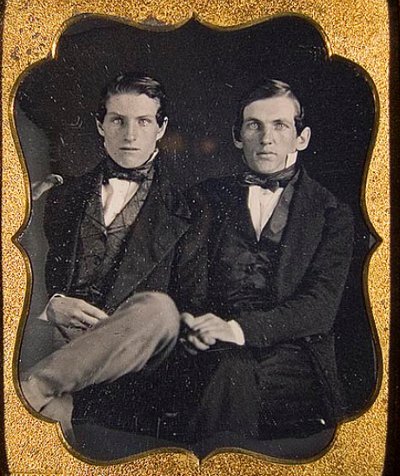
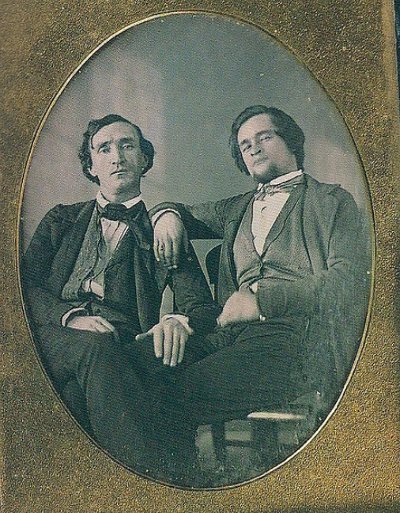
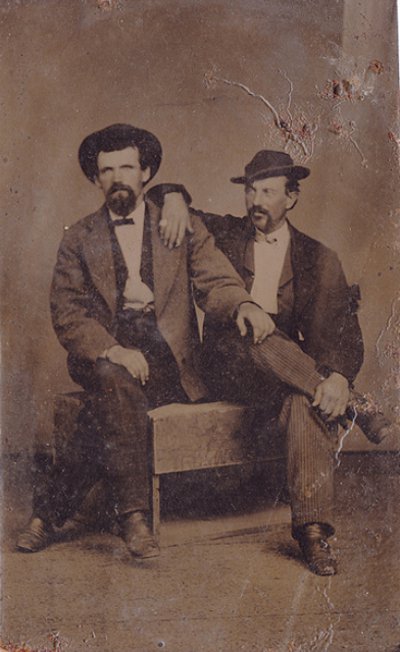
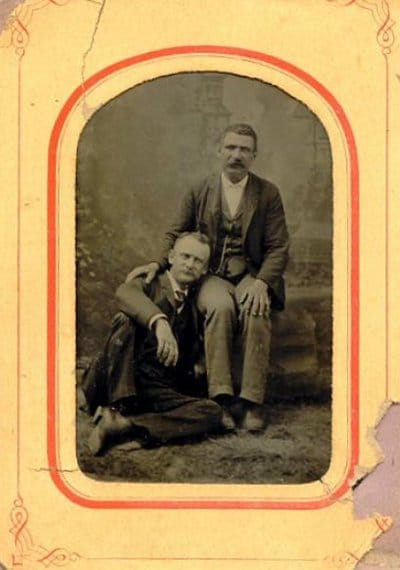
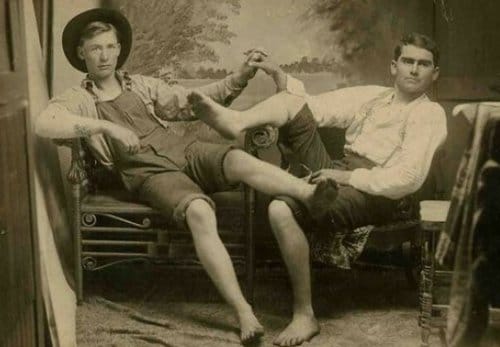
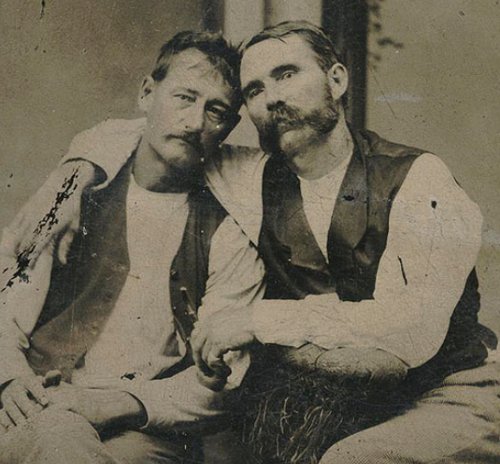
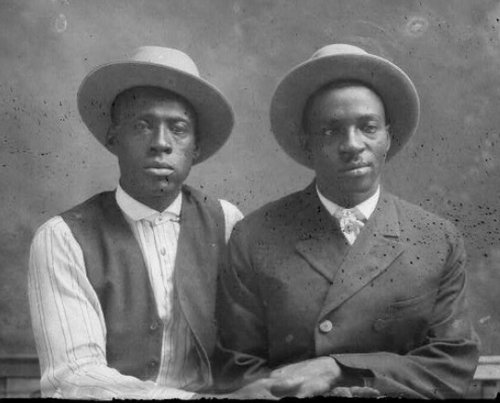
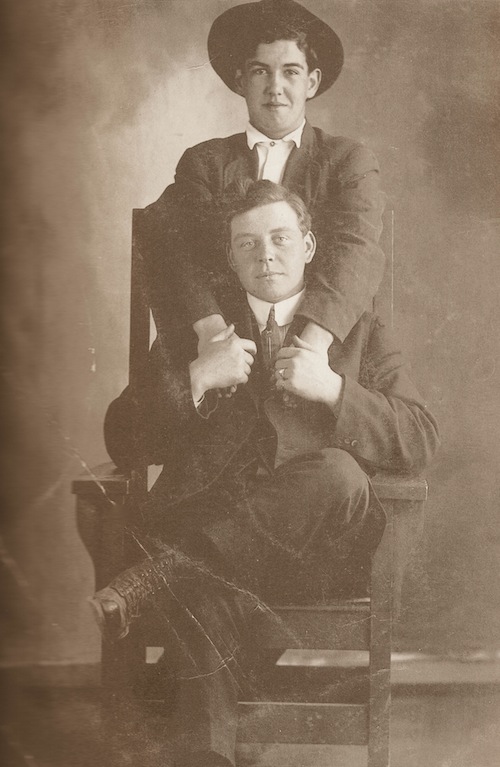
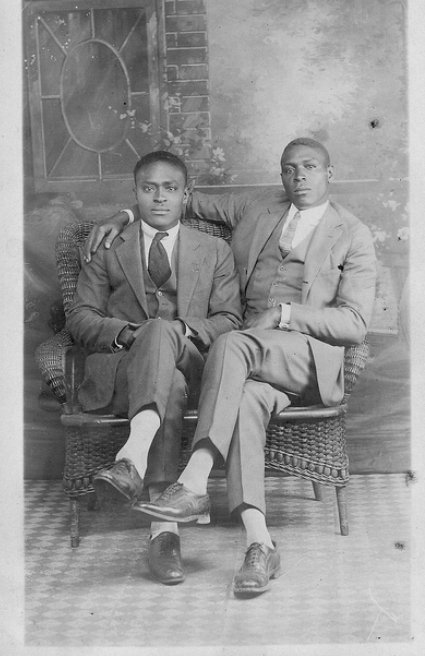
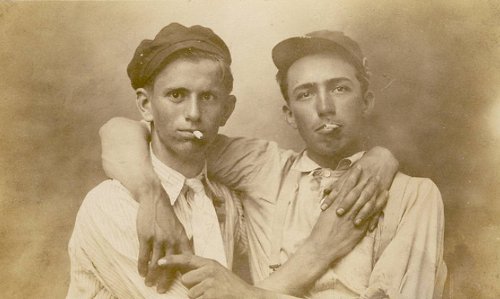
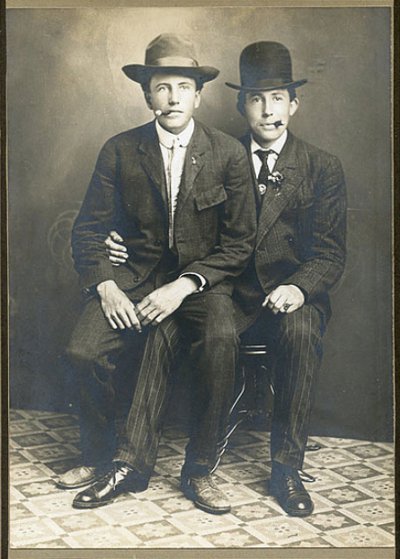
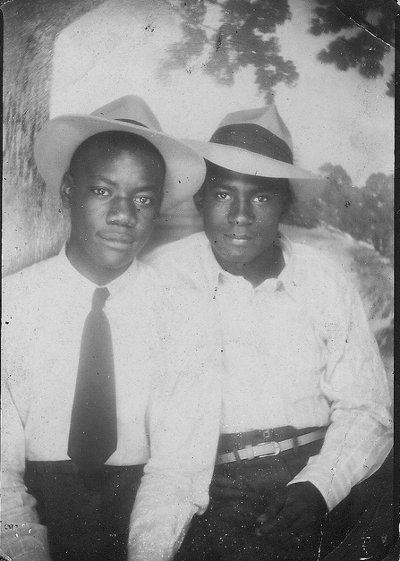
This is an old post from The Art of Manliness, but it's so cool I thought I would share it again. These pictures remind us that it was not all that long ago that men could be affectionate with each other and it meant nothing about their sexuality.

It's sad that we have lost the freedom to be close to each other both physically and emotionally because we are afraid to be called "gay" or "fag."

This is a good reminder that with all the progress we have made as a species in some realms, in other realms we have lost valuable traits and freedoms.

Bosom Buddies: A Photo History of Male Affection

Brett and Kate McKay
July 29, 2012


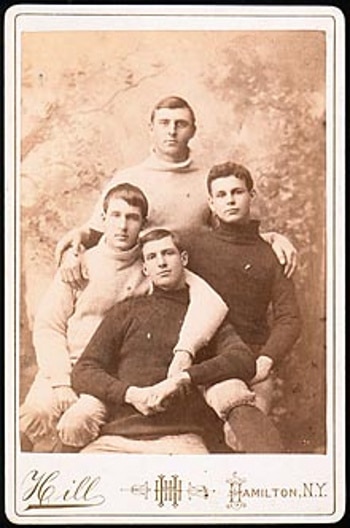
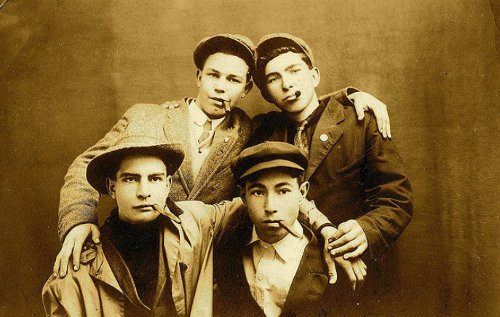
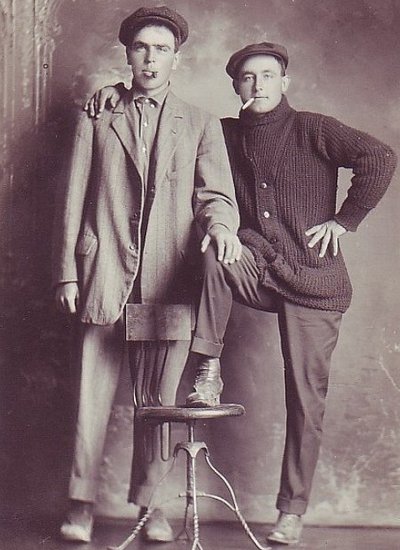
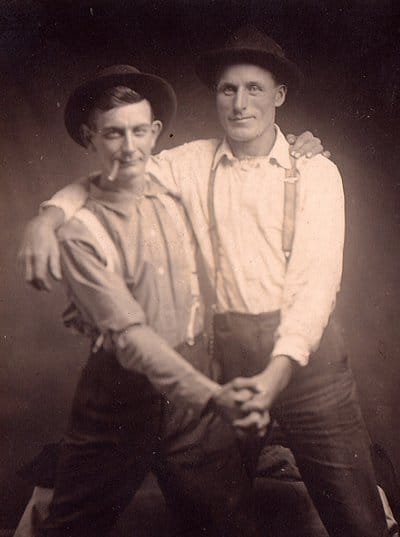
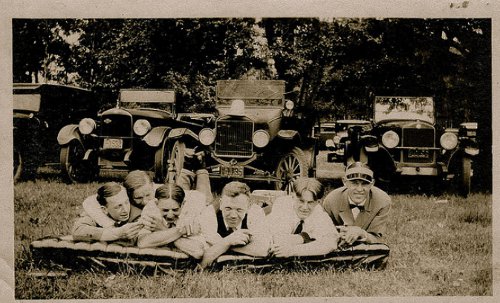
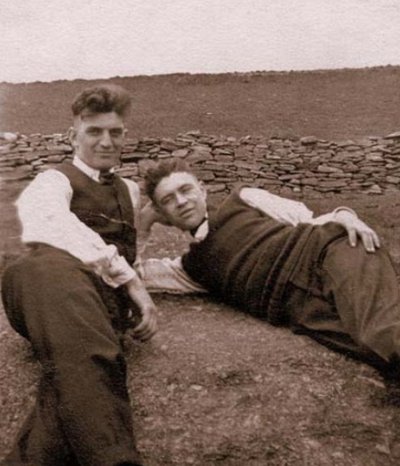
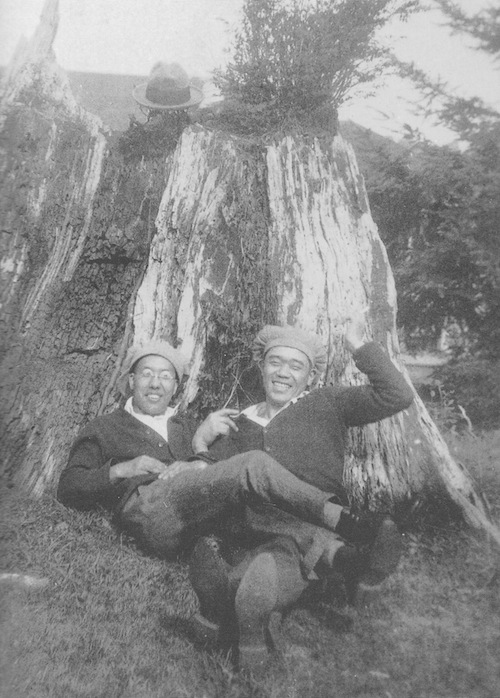
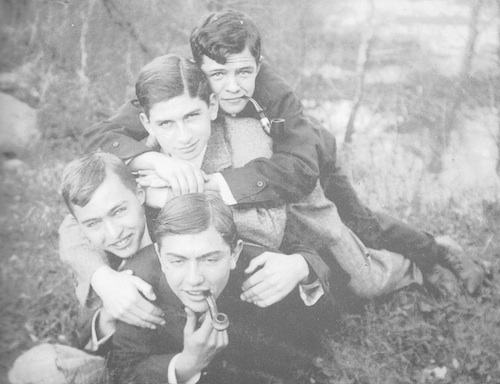
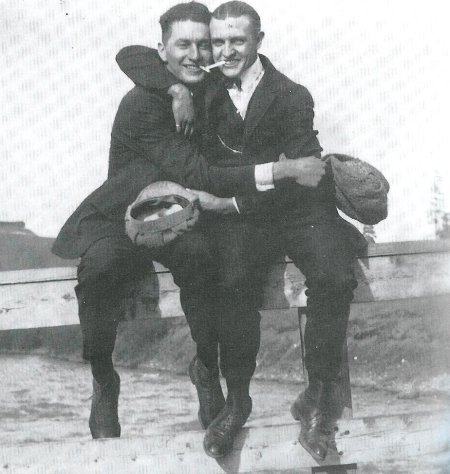
In my unending search for just the right vintage images for our articles, I have looked through thousands of photographs of men from the last century or so. One of the things that I have found most fascinating about many of these images, is the ease, familiarity, and intimacy, which men used to exhibit in photographs with their friends and compadres.

I shared a handful of these images in our very early post on the history of male friendship, but today I wanted to share almost 100 more in order to provide a more in-depth look into an important and highly interesting aspect of masculine history: the decline of male intimacy over the last century.

As you make your way through the photos below, many of you will undoubtedly feel a keen sense of surprise — some of you may even recoil a bit as you think, “Holy smokes! That’s so gay!”

The poses, facial expressions, and body language of the men below will strike the modern viewer as very gay indeed. But it is crucial to understand that you cannot view these photographs through the prism of our modern culture and current conception of homosexuality. The term “homosexuality” was in fact not coined until 1869, and before that time, the strict dichotomy between “gay” and “straight” did not yet exist. Attraction to, and sexual activity with other men was thought of as something you did, not something you were. It was a behavior — accepted by some cultures and considered sinful by others.

But at the turn of the 20th century, the idea of homosexuality shifted from a practice to a lifestyle and an identity. You did not have temptations towards a certain sin, you were a homosexual person. Thinking of men as either “homosexual” or “heterosexual” became common. And this new category of identity was at the same time pathologized — decried by psychiatrists as a mental illness, by ministers as a perversion, and by politicians as something to be legislated against. As this new conception of homosexuality as a stigmatized and onerous identifier took root in American culture, men began to be much more careful to not send messages to other men, and to women, that they were gay. And this is the reason why, it is theorized, men have become less comfortable with showing affection towards each other over the last century. At the same time, it also may explain why in countries with a more conservative, religious culture, such as in Africa or the Middle East, where men do engage in homosexual acts, but still consider homosexuality the “crime that cannot be spoken,” it remains common for men to be affectionate with one another and comfortable with things like holding hands as they walk.

Whether the men below were gay in the way our current culture understands that idea, or in the way that they themselves understood it, is unknowable. What we do know is that the men would not have thought their poses and body language had anything at all to do with that question. What you see in the photographs was common, not rare; the photos are not about sexuality, but intimacy.

These photos showcase an evolution in the way men relate to one another — and the way in which certain forms and expressions of male intimacy have disappeared over the last century.

It has been said that a picture tells a thousand words, so while I have provided a little commentary below, I invite you to interpret the photos yourselves, and to ask and discuss questions such as: “Who were these men?” “What was the nature of their relationships?” “Why has male intimacy decreased and what are the repercussions for the emotional lives of men today?”

Men as Friends


Portraits


From the Civil War through the 1920′s, it was very common for male friends to visit a photographer’s studio together to have a portrait done as a memento of their love and loyalty. Photographers would offer various backgrounds and props the men could choose from to use in the picture. Sometimes the men would act out scenes; sometimes they’d simply sit side-by-side; sometimes they’d sit on each other’s laps or hold hands. The men’s very comfortable and familiar poses and body language might make the men look like gay lovers to the modern eye — and they could very well have been — but that was not the message they were sending at the time. The photographer’s studio would have been at the center of town, well-known by everyone, and one’s neighbors would having been sitting in the waiting room just a few feet away. Because homosexuality, even if thought of as a practice rather than an identity, was not something publicly expressed, these men were not knowingly outing themselves in these shots; their poses were common, and simply reflected the intimacy and intensity of male friendships at the time — none of these photos would have caused their contemporaries to bat an eye.


When the author of Picturing Men, John Ibson, conducted a survey of modern day portrait studios to ask if they had ever had two men come in to have their photo taken, he found that the event was so rare that many of the photographers he spoke to had never seen it happen during their career.

Snapshots

When portable cameras for the amateur photographer became more widely available, they allowed men to photograph themselves in a greater range of more spontaneous situations, and the practice of sitting for formal portraits together waned in the 1930s. The snapshots usually were developed by someone else who would have gotten a look at all of them, so again, these pictures were not likely purposeful expressions of gay love, but rather captured the very common level of comfort men felt with one another during the early 20th century.


One of the reasons male friendships were so intense during the 19th and early 20th centuries, is that socialization was largely separated by sex; men spent most their time with other men, women with other women. In the 50s, some psychologists theorized that gender-segregated socialization spurred homosexuality, and as cultural mores changed in general, snapshots of only men together were supplanted by those of coed groups.


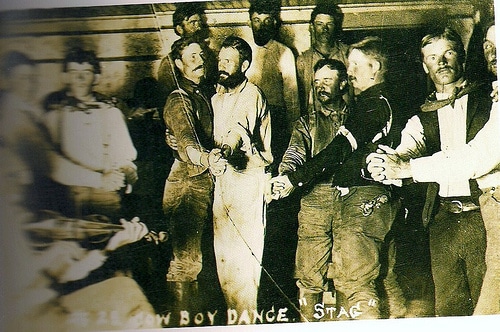
In all male environments, such as mining camps or navy ships, it was common for men to hold dances, with half the men wearing a patch or some other marker to designate them as the “women” for the evening.


Forming pyramids on the beach was a popular pastime for men through the 30s.

There's more at The Art of Manliness.

Saturday, May 17, 2014

40 Boys Open Their Hearts to Support a Friend - Touching


This touching story is from The Mighty. If these boys can do this at their age, they are going to grow up to be some really good men. Stories like this are what prevent me from becoming a complete misanthrope some days.

40 Boys Put on Suits to Stand Up for Their Friend. It Worked.


Megan Griffo

Jennifer Keefe’s 10-year-old son, Timothy, came home from school last November and asked his mom to take him out to buy a suit.

Keefe was taken aback. She was used to her 6-year-old son, Danny, wearing suits — he’d been attached to them since the Christmas before, when his mom bought him a red shirt and black jacket. But Timothy never showed any interest in dressing up.

“Ten-year-old boys like to wear Under Armor and sweatshirts,” Keefe recalls. “I asked him why he needed a suit.”

“We’re all wearing them,” he said, “to show Danny we support him.”


Kids at school often bullied Danny — they didn’t understand why he wore a dress shirt or fedora each day, and they didn’t understand why he couldn’t talk. Danny has apraxia of speech, a motor disorder that makes it difficult for him to communicate. Kids would go up to him and ask, “Why can’t you talk? Just talk.” He’d come home from school distraught.

But a group of the boys on the Bridgewater Badgers’ football team, where Danny is the official water manager, wouldn’t stand for this. Their solution? A “Danny Appreciation Day,” where they would all imitate Danny’s suave style and proudly go to school. In the Life Is Good video below, you can watch scenes from that day — more than 40 boys wore suits. Danny led the march.


“It could have turned ugly. The boys could have gone to the playground and said, ‘Who’s doing this to you? Where are they?’” Keefe told The Mighty. “But instead they responded in this very adult-like, peaceful way. It was all about love and support.”

Nearly six months later, Danny confidently walks around the school hallways. No one picks on him anymore, his mom says.

“It’s kind of the opposite now,” Keefe told The Mighty. “Kids go up to him and say, ‘Hey, you’re the kid from TV!’”

Family friends have also started a fundraiser to help the Keefes afford Danny’s expensive speech therapies. Out of the 100 sessions he needs this year, insurance will only cover about 15, Keefe says. It’s a battle she downplays, though — her son’s happiness is a priority.

“Danny started crying when he saw everyone in suits that day,” Keefe recalls. “He was only 6 but it was like he understood the magnitude of what happened. I’m just so thankful the parents in my community raised such kind young men.”

Watch Danny’s story in this Life Is Good video, directed by Tim O’Donnell:

Monday, May 5, 2014

Over 95% of Straight [British] Male College Athletes Admit to Cuddling Their Teammates in Bed

This comes from The Daily Mail in England, which is not a very reliable source of non-sensationalist information. But this time there is an actual research study that serves as the foundation for the article - from the journal Men and Masculinities.

Cuddling and Spooning: Heteromasculinity and Homosocial Tactility among Student-athletes

By Eric Anderson, Mark McCormack

Abstract

This article examines the prevalence of homosocial tactility and the contemporary status and meaning of heteromasculinity among British male youth. Drawing on in-depth interviews with forty student-athletes at a British university, we find that thirty-seven participants have cuddled with another male. In addition to this cuddling, participants also engage in “spooning” with their heterosexual male friends. Demonstrating the pleasurable aspects of being a man in this culture, we argue that the expansion of esteemed homosocial behaviors for heterosexual men is evidence of an expansion of changing conceptions of masculinity in contemporary culture. We call for the discussion of heteromasculinities and contextualize our findings using inclusive masculinity theory.
There really is nothing at all shocking about this - men used to regular share beds and share physical affection like cuddling and hugs. Seems this died out, at least on the surface, back around the early 20th century.

It's a fallacy, however, to equate this behavior (mostly in men aged 16-22) as homosexual or homoerotic. It seems to me that men are finally getting comfortable (again) with the need for physical touch to be psychologically whole. If you are an athlete in particular, you likely spend more time with teammates than with any other human beings - its logical to look to those guys for emotional support and physical contact. 

I'd bet the numbers are far lower in the U.S. where there is much more homophobia and homohysteria among athletes.

Here is the summary of the article from The Daily Mail.

Spooning for success: Over 95% of straight male college athletes admit to cuddling their teammates in bed

  • Researchers found that 97.5% of heterosexual, male British college athletes have shared a bed with another
  • Small study interviewed 40 male athletes on their sleeping arrangements

By Mark Prigg
Published: 1 May 2014

Researchers have found that the majority of male athletes spoon each other when sharing beds with their teammates.

Researchers found that 97.5% of heterosexual, male college athletes have shared a bed with another man and 93.5% admit to having indulged in spooning.

Researchers say the athletes even spooned with others who were not necessarily close friends.


A fine Bromance: James Franco and Keegan Allen aren't alone, researcher have found. Researchers found that 97.5% of heterosexual, male college athletes have shared a bed with another man and 93.5% admit to having indulged in spooning.
CHANGING ATTITUDES
  • A recent national survey found that 29% of British adults think same-sex relationships are wrong, a sharp drop from 46% in 2000.
  • It’s backed up by data from the Pew Research Center, which found that 74% of Americans born after 1980 believe that homosexuality should be accepted by society.
The study, published last month in the Men and Masculinities journal, was conducted by two researchers at Winchester and Durham Universities, who questioned 40 University athletes.

'In addition to cuddling, participants also engage in ‘spooning’ with their heterosexual male friends,' Eric Anderson and Mark McCormack wrote.

'Highlighting the prosaic nature of bed sharing for these participants, most indicated that it was not necessary to be close friends to share a bed with someone.'

One of the participants said the act was simply one of friendship.

'I love a quick cuddle, just so you remember your friends are about and are there for you.'

Another said: 'I feel comfortable with Connor and we spend a lot of time together.

The researchers say the behavior is common among athletes as they travel and shower together, but is common among all young men - although tapers off with age.

'I happily rest my head on Connor’s shoulder when lying on the couch or hold him in bed. But he’s not the only one. The way I see it, is that we are all very good and close mates.

'We have a bromance where we are very comfortable around each other.'

The researchers say the behavior is common among athletes as they travel and shower together, but is common among all young men - although tapers off with age.

'Outside of an undergraduate setting the numbers are likely to be far less,' Anderson told Vocativ.

'While we know, definitively, that it is a regular occurrence among 16- to 18-year-olds in addition to university students, it is not likely to exist whatsoever among 40-year-old men,' he says.

Participants said cuddling up was simply an act of friendship.

'This is both a function of the homohysteric culture that 40-year-old men experienced in their adolescence, as much as it is a function of the fact that 40-year-old men go home to sleep in bed with their spouses.'

Experts say the study reflects changing attitudes to male sexuality.

'We argue that the expansion of esteemed homosocial behaviors for heterosexual men is evidence of an expansion of changing conceptions of masculinity in contemporary culture, the researchers wrote.

A recent national survey found that 29% of British adults think same-sex relationships are wrong, a sharp drop from 46% in 2000.

It’s backed up by data from the Pew Research Center, which found that 74% of Americans born after 1980 believe that homosexuality should be accepted by society.

Some of the interviewees even admitted they had no problem with their bedmate waking up with a morning erection.

'We don’t give anyone s**t anymore,' said one.

Monday, April 14, 2014

Why Men Have So Much Trouble Making Friends

For many men, the friends they make in high school or college are their friends for life, and they seem to struggle to add new men into the category friend. For even more men (straight men), once they get into a serious monogamous relationship they stop spending time with male friends and their female partner becomes their best friend and nearly constant companion. If the relationship fails, as so many do, the man is isolated and without support.

All of this is part of the genesis of men's groups. By sitting in circle with other men week after week, through jobs and relationships, there is a bond, a constancy that supports men in being true to themselves.

Without a men's group, the only real avenue for many men (besides the workplace) is sports - a softball team, a bowling team, golfing, maybe even playing pick up games at the local tennis or racquetball courts.

Why men have so much trouble making friends

Too often men are taught to be self-sufficient -- and it can hamper their ability to enjoy authentic relationships


Mark Greene, The Good Men Project
Saturday, Apr 12, 2014 
 
Jason Segel and Paul Rudd in "I Love You, Man" 

This piece originally appeared on The Good Men Project


“Will you be my friend?” When is the last time you heard one man ask another that simple question? Little boys do it every day on the playground, but sometime around first grade, boys stop asking that question and they never ask it again. Because it quickly becomes an invitation for derision, sarcasm and rejection. Imagine, Frank walks into a bar. He approaches a group of men from work. One guy says, “Frank, meet Bob.” They all chat for a while and then Frank says brightly, “Bob! I’m glad I met you. I like you. How would you like to be my friend?”

Cue the shocked stares. Because Frank just broke the “don’t ask, don’t tell” rule of male friendship. Don’t admit you want or need friends. Don’t admit you need anything. Be confident. Be self reliant. Only if you don’t need friends will you be worthy of having them.

The Question Men Won’t Ask


The reason most American men would never ask another man directly to enter into a friendship is because boys and men in American culture are given little or no opportunity in life to master this kind of interpersonal risk taking. It creates a moment of uncertainty that is agonizing for men. To ask for friendship suggests vulnerability, flexible social standing or even willingness to admit need. All values which are roundly condemned in men.

American men are taught from an early age to access friendships obliquely by joining clearly defined groups, teams or organizations. The opportunities for social contact arise in Boy Scouts, on baseball teams or in schools. This kind of social organizing aligns large populations of boys, teaching them to follow clear and simple rules of how to perform being a boy. Some organizations actually provide written hand books, manuals by which to determine rank, achievement, behavior and appropriate forms of expression. The Boy Scout handbook is one obvious example.

Within these organizations, even social stragglers are grudgingly allowed to remain part of the group regardless of their individual standing. Quickly, boys learn to self select their rank and standing within these organizations. Alphas at the top, socially awkward or needy boys at the bottom. Quickly, boys learn that advancing in the organization doesn’t require the higher skills of tracking nuance and uncertainty. Social risk taking is not rewarded. Being on top simply requires the application of confidence and assertion and a willingness to perform masculinity according to what is normative.

In this way, boys are taught to express a simplified social identity by virtue of their organizational associations. By extension, friendships formed in these organizations are also expressed in restricted and simplified ways. They are friendships that encourage conformity and avoid interpersonal authenticity.

Safety First


In adulthood, men continue to seek friends in the safe but highly conforming contexts of work, team sports, church, or their wives’s social and familial connections. They become friends with the parents they meet at the PTA. They rely on the Lions Club, fraternity or their son’s scout troop. They connect by way of the organizations they embed themselves in, tracking and performing friendship in the ways that are collectively deemed normative.

Because these friendships are sourced in organizations, men keep much of their uniqueness hidden and cleave close to what is culturally normative for those institutions. This creates a high degree of homogeneity in how men express, engage and perform masculine friendship. Joe is my friend because Joe comes to bowling every week, not because Joe is necessarily someone I connect with on any other level. These kind of risk free proximity based friendships can leave men feeling disconnected, hidden or unfulfilled emotionally. Organizational conformity guarantees belonging not expression.

Which is why for men, when their participation in any given organization ends, the relationships or friendships embedded in those organizations often end as well, unless emotional authenticity develops. Emotional authenticity is the glue that holds friendships together. Without it, they are too shallow and fragile to survive beyond simple convenience.

Welcome to the Man Box

In the absence of emotional authenticity, American men become homogeneous in their expression of self. This encourages their location, willingly or otherwise, in what many writers have come to call the Man Box. The Man Box is a set of rigid expectations that define what a “real man” is, particularly in American culture. A real man is strong and stoic. He doesn’t show emotions other than anger and excitement. He is a breadwinner. He is heterosexual. He is able-bodied. He plays or watches sports. He is the dominant participant in every exchange. He is a firefighter, a lawyer, a CEO. He is a man’s man. This “real man”, as defined by the Man Box, represents what is supposedly normative and acceptable within the tightly controlled performance of American male masculinity.

Men will ask women to have sex and take a “no” without skipping a beat. Men will ask a customer to buy a product, and take “no” as just part of the territory. But asking another man to “please be my friend”, represents social risk taking that’s just too potentially frightening to attempt. Because, in the moment a man asks this question, he has failed to be what all men are expected to be. He has failed to be, and pay close attention to the word I’m using here, competent.

Men move in circles of competence. This competency component is central to how men are ranked in the institutions they relay on for social connection; in sports, at work and in every garage and backyard BBQ in the country. We approach each other not just in terms of common interests, but in terms of our competency in those areas. Knowing how matters.

On top of that, we approach with our personal business wired tight and fully formed. We are successful, smart, happy and full of advice on how to correctly do what needs to be done. By extension, we already have plenty of friendships which spring fully formed into our lives, born magically out of our raw manly charisma and charm.

Trained to Hide Behind What We Can Leverage

The male focus on competence in social situations is tied to our belief that our chances of success socially increase when underpinned by something we can leverage. Our position in the company. Our financial success. Our skill at golf. Our willingness to advance the goals of the organization. Something other than the simple fact of who we are.

We lead with: “You’ll want to be my friend because of what I can provide, not because of who I am.” And men carry this same dynamic into their romantic relationships, often leading with the “good provider” story. It’s why we pay for dinner on the first date. It’s rooted in opening doors and providing service to women. Because somewhere deep down, we’re worried we’re not enough without the financial or service element. Or worse, because we want to hold various forms of leverage in any relationship we enter.

Either way, its ultimately about male insecurity. Male insecurity born out of the fact that we have never been taught to lead with our own authentic emotional selves. Seeking friendship by offering what others can leverage is the central transactional skill boys are being taught from childhood. Buying our way in, instead of offering who we are as human beings, sets up a circular pattern by which men are always expected to bring, contribute, produce, provide.

In order to avoid interpersonal vulnerability, men are often convinced its easier buy their way into relationships in this transactional way. As if simply offering ourselves is too scary. This is why men are encouraged to be good providers. And its why we often take the bait. Collectively, we are raising men to feel insecure unless they can bring their transactional leverage. And its a lesson we were not taught by the women we date as adults, but by the boys we were first grouped with as children. That said, men and women alike participate in this generational cycle of emotional suppression. It’s pay to play.

So we take our personal stories off the table and put our competence, our networks and our alpha narratives up front. For men, if our friendships are exclusively about confidence and competence, then, by definition, they can not be very authentic. Because no one is competent across the board. No one is completely without uncertainty or confusion.

Uncertainty = Courage = Friendship

When you share your uncertainty, you start asking much bigger questions. And it is in those conversations that one speaks with honesty and authenticity. Because engaging uncertainty is the highest form of courage, in doing so, we move toward certainty of a much deeper and more resilient kind.

If friendships in men’s lives seem shallow and transitory, it is because so many of those relationships are emotionally risk free and as such, lacking in authenticity. And authenticity is the glue that holds deeper more long term friendships together.

Accordingly, I, for one, am seeking friendship in more individualized and direct ways. Outside my immediate networks, where everyone I meet is more likely to be like me. I going to look for friends away from my comfort zones. I’m going to take some risks, because the bland landscape of social conformity is not enough for me. And never has been.

If I get a “no thanks” I’m going to just move on and keep trying. I’m not going to lead anymore with something transactional that I think might be of value. Not my network. Not my business connections. Not my ability to earn approval by conforming to some set of expectations or common goals. Out front of all that, I’m just offering me. Myself. Because I’m proud of who I am. Getting here took a lot of blood, sweat and tears. And I’m not going to hide it just to insure others are universally comfortable with their choices.

Above all, I want to live a good life. I want to take risks. I want to be who I’m becoming. And continue to make more authentic, emotionally vibrant friends.

~ More Mark Greene.

Friday, December 6, 2013

Conrad Liveris - Healthy Man, Healthy Mind

Men are stereotypically bad at seeking help for mental health issues - although that is changing with the younger generation of men who have grown up with one or both parents in therapy, and quite possibly having been sent to therapists by their parents at some point.

As men, we need to support each other in being able to discuss mental health issues. This article from the Good Men Project makes that point.

As much as we need to be aware of our own mental health, however, and any possible issues in that realm, it is our responsibility to also be aware of how the male friends and family in our lives are doing emotionally or psychologically.

Hell, it's not about supporting each other as men - it's about supporting each other as human beings.

Healthy Man, Healthy Mind

October 8, 2013 by Conrad Liveris


Conrad Liveris wants to make sure he is there for other men who are suffering from mental health issues.


Earlier this year a close friend came to me and started to discuss his mental health. This was pretty out of the ordinary: we typically discuss work, business, ambitions and where we’re going out. I’ve always been aware of my own mental health, having a strong understanding can help me understand my own capacity and what I can give to my employers, family and communities. My friend’s conversation helped me realise that being conscious of my mental health meant that I had to conscious of those around me too.

It was a big deal for him to open up and say “yeah, I’ve got depression and I’m seeing a psychologist at least every fortnight”. In the months prior I had started seeing less of him and generally felt that his energy levels were low. He was not the man I had known.

It started making me very reflective: who was there for me when I was down? Or were these battles I had to struggle through myself? I realised that it actually didn’t matter so much who I turned to, as long it was someone I could trust.

Mental health is an issue at both ends of the age spectrum: depression is the leading cause of death for Gen Y men, and there are a growing number of Baby Boomers being treated for depression or anxiety. The root-causes might be different, but the impacts on our social and professional lives are the same: it can be under-performance or general unhappiness.

This is an intergenerational crisis that is making a big impact. Mental health costs the US economy US $57.5 billion each year, similar to the cost of cancer, and in Australia it is A$20 billion with 45% of all Australian’s between 16 and 85 suffering from anxiety, mood or a substance disorder.

We all know men can have issues with discussing these issues and feelings, but it’s about being there for each other. The onus isn’t always going to be on the one suffering, but on the man standing beside him. We all have a part to play when we realise that all is not well.

Men need to be able to stand up and be a strong voice in these discussions. Not just for ourselves—it will help how our children look at mental illness.

It isn’t about calling out weaknesses or issues with someone, but about being there for those in need. We shouldn’t be afraid to ask, or hear the answer, when we ask those closest to us, “how are you? Is everything alright?”


Photo: sco / flickr

Sunday, December 1, 2013

The Misguided Monk - A Gentle Lesson in Companionship


A little morning wisdom . . . .

The Misguided Monk


Posted on 19 July 2013 by Buddhism Now


Posted by Tom Long at Vimeo

When an old hermit monk has his day interrupted by an uninvited guest, he is unwillingly taken on a journey to discover the true meaning of companionship.

Wednesday, November 27, 2013

Mark Greene - The Lack of Gentle Platonic Touch in Men’s Lives is a Killer

Mark Greene, over at the Good Men Project, has written an excellent article on the lack of non-sexual (Platonic) touch in men's lives. This is a complicated issue. Men are often raised to believe that all touch with a female is sexual or should lead to sex. On the other hand, the same applies to same-sex touch, and the fear is that (1) a guy might actually enjoy it, and (2) it might mean he is gay.

All touch with women is not and should not be sexual - learning to make that distinction is important in relationships. Likewise, it is perfectly fine to receive a hug - a real hug, not the AA type hug or men's group hug - and enjoy it; it does not mean you are gay.

Greene gets into these issues below - it's worth the read.

The Lack of Gentle Platonic Touch in Men’s Lives is a Killer

November 4, 2013 by Mark Greene


In American culture, men avoid all contact rather than risk even the hint of causing unwanted sexual touch.

In preparing to write about the lack of gentle touch in men’s lives, I right away thought, “I feel confident I can do platonic touch, but I don’t necessarily trust other men to do it. Some guy will do something creepy. They always do.” Quickly on the heels of that thought, I wondered “Wait a minute, why do I distrust men in particular?” The little voice in my head didn’t say, “I don’t necessarily trust people to not be creepy”, it said, “I don’t trust men.”

In American culture, we believe that men can never be entirely trusted in the realm of the physical. We collectively suspect that, given the opportunity, men will collapse into the sexual at a moment’s notice. That men don’t know how to physically connect otherwise. That men can’t control themselves. That men are dogs.

There is no corresponding narrative about women.

Accordingly, it has become every man’s job to prove they can be trusted, in each and every interaction, day by day and case by case. In part, because so many men have behaved poorly. And so, we prove our trustworthiness by foregoing physical touch completely in any context in which even the slightest doubt about our intentions might arise. Which, sadly, is pretty much every context we encounter.

And where does this leave men? Physically and emotionally isolated. Cut off from the deeply human physical contact that is proven to reduce stress, encourage self esteem and create community. Instead, we walk in the vast crowds of our cities alone in a desert of disconnection. Starving for physical connection.

We crave touch. We are cut off from it. The result is touch isolation.

How often do men actually get the opportunity to express affection through long lasting platonic touch? How often does it happen between men? Or between men and women? Not a hand shake or a hug, but lasting physical contact between two people that is comforting and personal but not sexual. Between persons who are not lovers and never will be. Think, holding hands. Or leaning on each other. Sitting together. That sort of thing. Just the comfort of contact. And if you are a man, imagine a five minutes of contact with another man. How quickly does that idea raise the ugly specter of homophobia? And why?

While women are much freer to engage in physical contact with each other, men remain suspect when they touch others. There is only one space in our culture where long term platonic physical contact is condoned for men, and that is between fathers and their very young children.

I found this kind of physical connection when my son was born. As a stay at home dad, I spent years with my son. Day after day, he sat in the crook of my arm, his little arm across my shoulder, his hand on the back of my neck. As he surveyed the world from on high, I came to know a level of contentment and calm that had heretofore been missing in my life. The physical connection between us was so transformative that it changed my view of who I am and what my role is in the world. Yet it took having a child to bring this calming experience to me because so few other opportunities are possible to teach men the value and power of gentle loving touch.

♦◊♦

As a young child and as a teenager, contact between myself and others simply didn’t happen unless it came in the form of rough housing or unwelcome bullying. My mother backed off from contact with me very early on, in part, I think, due to her upbringing. I can only guess that in her parents’ house physical touch was something for toddlers but not for children past a certain age. Add to that, the fact that my father was absent due to my parents’ divorce and years of work overseas, and it meant I grew up without being held or touched

This left me with huge insecurities about human contact. I was well into my twenties before I could put my arm around a girl I was dating without first getting drunk. To this day, I remain uncertain about where and how to approach contact with people, even those I consider close friends. It’s not that I can’t do it, it’s just that it remains awkward, odd. As if we all feel like we’re doing something slightly… off?

Contact with male friends is always brief, a handshake, or a pat on the back. Hugs with men or women are a ballet of the awkward, a comedic choreography in which we turn our groins this way or that. Shoulders in, butts out, seeking to broadcast to anyone within line of sight that we are most certainly not having a sexual moment. We’re working so hard to be seen as sexually neutral that we take no joy in these moments of physical connection.

Not only do we men distrust others in this muddled realm of physical touch, years of shaming and judgement have left us distrusting ourselves. Did I enjoy that too much? Am I having taboo thoughts? This distrust leaves us uncertain about touching another human being unless we have established very clear rules of engagement. Often we give up and simply reduce those rules to being in a relationship. We allow ourselves long-lasting comforting touch with our girlfriends or boyfriends. The vast universe of platonic human touch is suddenly reduced to the exclusive domain of one person and is blended into the sexual. That’s a lot of need to put on one person, however loving and generous they might be.

Which leads to the question, how do we teach our sons to understand how touch works? How to parse out the sexual from the platonic? Is the pleasure of human contact inherently sexual to some degree? I doubt its a question the average Italian man would ever ask himself. But here in America, generations of Puritanical sexual shaming have made it a central question. By putting the fear of the sexual first in all our interactions, we have thrown out the baby with the bathwater, avoiding all contact rather than risk even the hint of unwanted sexual touch.

♦◊♦

Many parents step back from physical contact with boys when their sons approach puberty. The contact these boys seek is often deemed confusing or even sexually suspect. And, most unbelievable of all, all opportunity for potential physical touch is abruptly handed over to young boys’ female peers, who are suddenly expected to act as gatekeepers to touch; young girls who are no more prepared to take on this responsibility than boys are to hand it over.

And so boys are cast adrift with two unspoken lessons:
  • All touch is sexually suspect
  • Find a girlfriend or give up human contact
A particularly damning message to boys who are gay.

American culture leaves boys few options. While aggression on the basketball court or bullying in the locker room often results in sporadic moments of human contact, gentleness likely does not. And young men, whose need for touch is channeled into physically rough interactions with other boys or fumbling sexual contact with girls, lose conscious awareness of the gentle, platonic contact of their own childhoods. Sometimes it’s not until their children are born that they rediscover gentle platonic touch; the holding and caring contact that is free from the drumbeat of sex, sex, sex that pervades our culture even as we simultaneously condemn it.

Is it any wonder that sexual relationships in our culture are so loaded with anger and fear? Boys are dumped on a desert island of physical isolation, and the only way they can find any comfort is to enter the blended space of sexual contact to get the connection they need. Which makes sexual relations a vastly more high stakes experience than it already should be. We encourage aggressive physical contact as appropriate mode of contact for boys and turn a blind eye to bullying even as we then expect them to work out some gentler mode of sexual contact in their romantic lives.

If men could diffuse their need for physical connection across a much wider set of platonic relationships, it would do wonders for our sense of connection in the world. As it is, we can’t even manage a proper hug because we can’t model what was never modeled for us.

♦◊♦

We have seniors in retirement homes who are visited by dogs they can hold and pet. This does wonders for their health and emotional state of mind. It is due to the power of contact between living creatures. Why are good hearted people driving around town, taking dogs to old folks homes? Because no one is touching these elderly people. They should have grandchildren in their laps every day, or a warm human hand to hold, not Pomeranians who come once a week. And yet, we put a dog in their laps instead of give them human touch, because we remain a culture that holds human contact highly suspect. We know the value of touch, even as we do everything we can to shield ourselves from it.
  1. We American men, have a tragic laundry list of reasons why we are not comfortable with touch.
  2. We fear being labeled as sexually inappropriate by women.
  3. We live in a virulently homophobic culture so all contact between men is suspect.
  4. We don’t want to risk any hint of being sexual toward children.
  5. We don’t want to risk our status as macho or authoritative by being physically gentle.
  6. We don’t ever want to deal with rejection when we reach out. (And in our touch averse culture that is the most likely outcome.)
But at the root of all these flawed rationalizations is the fact that most American men are never taught to do gentle non-sexual touch. We are not typically taught that we can touch and be touched as platonic expression of joyful human contact. Accordingly, the very inappropriate over-sexualized touch our society fears runs rampant, reinforcing our culture’s self fulfilling prophecy against men and touch. Meanwhile, this inability to comfortably connect via touch has left men emotionally isolated contributing to rampant rates of alcoholism, depression and abuse.

And what if the lack of platonic touch is causing some men to be far too aggressive toward women, who, as the exclusive gatekeepers for gentle touch are carrying a burden they could never hope to fully manage? Women, who arguably are both victims of and, in partnership with men, enforcers of the prohibition against platonic touch in American culture? The impact of our collective touch phobia is felt across our society by every single man, woman and child.

Brené Brown, in her ground breaking TED Talk titled The power of vulnerability talks at length about the limitations men face when attempting to express vulnerability in our culture. She notes the degree to which men are boxed in by our culture’s expectations about what a man is or is not allowed to do. I would suggest that the limitations placed on men extend to their physical expression though touch. And are just as damaging in that realm.

♦◊♦

But here’s the good news.

There are many reasons why full-time stay at home dads are proving to be such a transformative force in American culture. One powerful reason is the awakening of touch. As full time dads, we are presented with the absolute necessity to hold our own wonderful children. We are learning about touch in the most powerful and life affirming way. In ways that previous generations of men simply were not immersed in. Once you have held your sleeping child night after night or walked for years with their hand in yours, you are a changed person. You gain a fluency and confidence in touch that you will never loose. It is a gift to us men from our children that literally has the capacity to transform American culture.

Accordingly, now, when I am with a friend I do reach out. I do make contact. And I do so with confidence and joy. And I have my own clear path forward.

The patterns in my life may be somewhat set but I intend to do everything I can to remain in contact with my son in hopes that he will have a different view of touch in his life. I hug him and kiss him. We hold hands or I put my arm around him when we watch TV or walk on the street. I will not back off from him because someone somewhere might take issue with our physical connection. I will not back off because somehow there is an unspoken rule that I must cut him loose in the world to fend for himself. I hope we can hold hands even when he is a man. I hope we continue to hold hands till the day I die.

Ultimately, we will unlearn our fear of touch in the context of our personal lives and in our day to day interactions. Learning how to express platonic love and affection through touch is a vast and remarkable change that has to be lived. But it is so important that we do it. Because it is central to having a rich full life.

Touch is life.

Follow Mark Greene on Twitter

For those who are interested, here are a few sources on the issues I raise here:

In an article in Psychology Today Ray B. Williams writes about the central role of touch in living happier, healthier lives:
Daniel Keltner, the founding director of the Greater Good Science Center and professor of psychology at University of California, Berkeley, says “in recent years, a wave of studies has documented some incredible emotional and physical health benefits that come from touch. This research is suggesting that touch is truly fundamental to human communication, bonding, and health.” Keltner cites the work of neuroscientist Edmund Ross, who found that physical touch activates the brain’s orbitfrontal cortex, which is linked to feelings of reward and compassion. Keltner contends that “studies show that touch signals safety and trust, it soothes. It activates the body’s vagus nerve, which is intimately involved with our compassion response…”
A clear indication of how central touch is in our emotional and cognitive development can be seen in the range of studies examining touch and infants (both human and animal), here summarized in an article titled The Importance of Touch in Development found on the National Center for Biotechnology Information’s web site. The article notes:
Developmental delay is often seen in children receiving inadequate or inappropriate sensory stimulation. For example, orphaned infants exposed to the bleakest of conditions in eastern European institutions exhibited impaired growth and cognitive development, as well as an elevated incidence of serious infections and attachment disorders (1) Much evidence now points to the importance of touch in child development and suggests the possibility that these orphaned infants are not suffering from maternal deprivation, per se, but from sensory deprivation, and more specifically a deprivation of mechanosensory stimulation.
Read more about the central role touch plays in human communication in this amazing article in Psychology Today titled The Power of Touch.


SEE ALSO: Touch Isolation: How Homophobia Has Robbed All Men of Touch

and Insisting Boys Learn Independence Creates an Isolating Trap for Men

Photo from the Comic Shop

Tuesday, September 10, 2013

Best. Beer. Commercial. EVER.


Commercial from Guinness, text from Huffington Post.
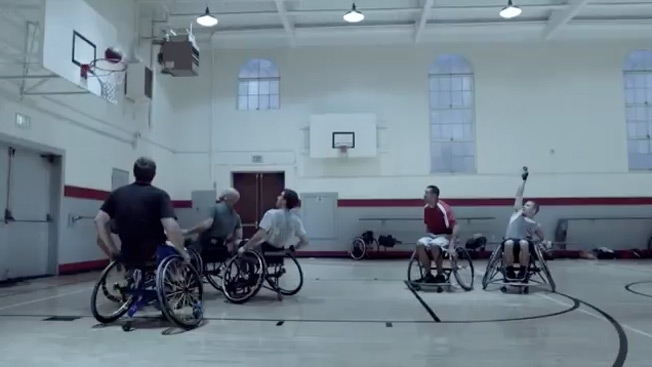
Created by BBDO New York, the ad features a group of wheelchair basketball players.. with an unexpected twist at the end.

Watch it for yourself and be prepared for some serious heartstring-pulling at the end. Let's just say that it's not your average beer commercial.
Most everyone has probably seen this already, but I wanted to post it here for those who haven't seen it.

Saturday, April 6, 2013

The Power of Friendship - Kevin Ware on Louisville Teammate Who 'Touched My Heart'

When Louisville player Kevin Ware went down last weekend with one of the worst sports injuries most of us will ever see, only one player, a teammate, was able to set aside his own fears and sadness and be the friend who helped Kevin through the trauma. This is that story, from USA Today.

Kevin Ware on Louisville teammate that 'touched my heart'

Adam Himmelsbach, USA TODAY Sports
April 4, 2013

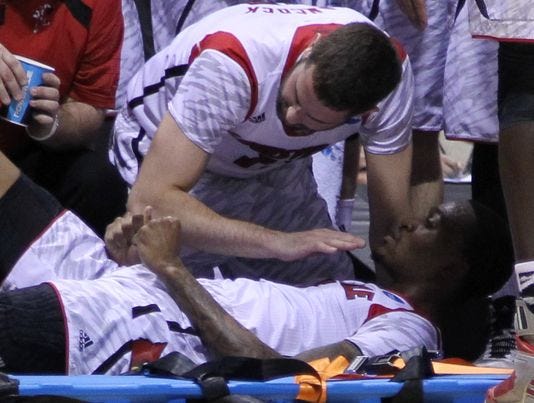
(Photo: Brian Spurlock, USA TODAY Sports)

When Louisville forward Luke Hancock saw Kevin Ware lying near the sideline with a shattered right leg, he initially recoiled like his teammates. Some Cardinals were vomiting, others were crying and inconsolable.

But then Hancock thought back to last summer, when he suffered a gruesome shoulder injury in a pickup game. He remembered how others were aghast. He remembered how former Louisville guard Andre McGee was the only one to rush to his side, to rush him to the hospital. He remembered how much that had meant.

So as Ware lay there in the first half of the Cardinals' NCAA tournament victory over Duke on Sunday, scared and alone and stunned, Hancock ran to him. He held Ware's hand and told him they would get through this together. He told Ware he would say a prayer for him.

Ware didn't respond at first, because he was in shock. Hancock took a deep breath, closed his eyes, clenched Ware's hand and started the prayer.

"Lord, watch over us and let Kevin be OK during this tough time," he began. "The Lord does everything for a reason, and He will get us through this."

Hancock said he did all he could to keep from breaking down, to keep tears from falling onto his fallen teammate. He found out later that Ware also was trying not to cry, trying to stay strong for him.

Hancock gently patted Ware's chest several times, the two of them together in front of 34,657 fans in Lucas Oil Stadium and millions of horrified TV viewers.

"I wouldn't want to be alone in that situation, and I don't think he wanted to be alone," Hancock said, sitting in a small office at the team's training facility Wednesday as Ware held a news conference upstairs. "I just thought if I could talk to him and tell him he'll be all right, it might help."

Luke Hancock on Kevin Ware: "I just thought he needed someone by his side." 
It helped more than Hancock realized, more than he could imagine. Ware said that before Hancock arrived, he was scared. After Hancock touched him and calmed him, he knew he would be fine. 
Before long the other Cardinals were there and Ware was enveloped in a sea of support. His teammates clenched his forearms and held him tight. But that first moment was the most important moment. 
"Seeing Luke there," Ware said, "really just touched my heart." 
He said Hancock's presence allowed him to refocus and regain his strength. It allowed him to start thinking about the team — or, as he told me, "to go into Kevin mode." 
He began telling his teammates to win the game, to win it for him. He said it over and over, until he was taken away on a stretcher before heading to a hospital for surgery. 
You never know how you'll react to danger or disaster or trauma. You like to think you'll be strong and courageous, but sometimes it's just not that easy. 
You can't fault the other players for their initial reaction to such a macabre moment. But you can praise Hancock, and you should. 
"I think it just galvanized everybody," Louisville athletic director Tom Jurich said. "It was the very first thing I noticed. To see Luke right there was just incredible." 
On Tuesday afternoon, Hancock arrived at the team training facility wanting to know when Ware would return home. Told that he already was in the locker room, Hancock rushed in. 
"You could see on my face and on his face that we were just so happy to see each other," Hancock said. "He gave me a hug and said he was so thankful I was there for him. I told him I knew he'd do the same for me. That's my friend."

Wednesday, March 13, 2013

Andrew O’Hagan - The Male Bond

The Beats, including Jack Kerouac (second from left) and Allen Ginsberg (far right) in 1957. 
Getty Images

From the T Magazine blog at the New York Times, this is an interesting post on the uniqueness of the male bond, the male friendship, as exemplified by some rather well-known men.

The Male Bond

By ANDREW O’HAGAN
MARCH 8, 2013

Paul Newman and Robert Redford on the set of ‘‘Butch Cassidy and the Sundance Kid’’ in Mexico, 1968. Lawrence Schiller/Polaris Communications/Getty Images


A woman may represent a man’s better half, but his friends are his other self. Whether they involve arguing, competing or doing nothing much at all, male friendships are elemental — and a salve to the soul.

Male friendship is one of the great mysteries, and even those of us who depend on it can only struggle to say why. I once sat up half the night in the company of Christopher Hitchens at the Plaza Athénée in New York. We didn’t agree about a single thing: not about the merits of Paul Wolfowitz, not about the bad character of Bill Clinton, not about the writing of Evelyn Waugh, or about whether Catholicism was basically sentimental. But the night was fantastic and memorable. Why? Christopher was good at male friendship and at provoking affection, a genius in the old art of fellowship and tapping the male psyche. Male friendship, he seemed to believe, or hope, was the answer to just about any of the problems that mattered to him. He hated falling out with Sidney Blumenthal, an adviser to President Clinton, over the Monica Lewinsky scandal, and he adored being friends with Martin Amis, with whom he enjoyed a kind of ego-marriage.

Christopher believed that men could provide something for one another that women weren’t part of. And sometimes he wasn’t even sure himself what that was — a kind of freedom, yes, a sort of flirtatiousness that didn’t portend to sex. One time in Washington, D.C., at a dinner given by the critic James Wood, he almost drove me out of my mind with his defense of Margaret Thatcher and her behavior during the Falklands War. But the more we argued, the closer we got, and the more I wanted to punch him, the more likely it seemed we would hug, which we did, pathetically, while swinging a bottle of Johnnie Walker Black.

My former girlfriend hated what happened when men got together late at night and drank whiskey. Given that I come from Scotland, and drank the hard stuff in place of milk as a baby, it was hard to avoid those occasions when red-faced philosophers would come bursting through the door after midnight, thirsty for camaraderie and the sauce of life. One night, after several grown men wept and then danced to the radio, she left the house in a rage and booked herself into Claridge’s. And if I’m desperately honest I have to say it was one of the best nights of my life. It certainly ruined our faith in each other forever, but it made perfect sense to me that, occasionally, a man has no choice but to consort with his own kind. No amount of socialization and no number of baby manuals, mortgages, or prams in the hall can alter the fact that when men get into the open air, they tend to fly like starlings, turning this way and that by some collective instinct.

It’s not about the nagging wife. It’s about the nagging self. Men don’t really compare themselves with women, not even with those whom they love. We compare ourselves with other men, and we get bigger or smaller in our eyes depending on how well we can compete. My girlfriend is sedate by nature, but you can see her eyes roll and her tongue flick off her top teeth at the notion, my notion, that I must immediately go to Ireland with my friend Will, who was feeling jumpy. She’s not the nag. I’m the nag who wants to fulfill my primordial duty. “I’m just, like, you know, it’s Will, and, like, he’s my best mate, and, well, he needs me, and I feel good when I’m with him, no, don’t take it. . . . Men just need each other, babe.”

I might leave me if I were her. It’s just not going to get any better and it might even get worse. The truth is that men fire each other up for manhood, even if, like me, you might spend the rest of your time pointing out the virtues of the pocket square and the delightfulness of Virginia Woolf. Men give each other the pure, golden excuse of identification: you can love a woman to death but she can’t give you that. You just know with a good male friend that they get your male crap without judging you for it or even noticing that much. And it’s not about being agreeable, because most of my male friends aren’t that agreeable. “The only things Mick and I disagree about,” Keith Richards once said, “is the band, the music and what we do.” Yet they are superb examples of male friendship at its most inspiring.

The oddest thing about my late father was that he didn’t have any male friends. Well, he had one. His name was Archie, and he lived 200 miles away. My father depended on women to answer the call of his self-questioning, and that was an awful mistake. He didn’t see the way male friendship could just fire a different part of your brain. He was surrounded by bright women, women brighter than him, but he missed out on that egotistical refurb, that cool, rough blast of alternative selfhood, which can only come from human adults who pee the same way that you do.

A male friend can’t ask you for anything at the end of the night. He can speak wise or dumb. He can agree or disagree. He can go that way or this way. It doesn’t matter. His job is to be who he is and witness who you are. When you consider old male friends (and co-stars) Paul Newman and Robert Redford, you don’t look for the joins and the similarities. You don’t examine them for correspondences. You just see two guys. And so do they. It might amount to a really great friendship, this coexisting sense of them having things in common but no obligations. And that is what we depend on with our best male friends: the unspokenness that guarantees the closeness, the ease that masks the fear. And every man fears being a failure. We do. That’s why we need great buddies to fail right by our side.

But there are friends for all seasons. They can also succeed. The ones who succeed have a way of making us try harder. I love talented men because they strengthen my belief in the power of a good example. You can get that from female friends too, of course, but male friends carry it into your conscience in an almost physical way. I’ve got a pal who has a play that’s about to open on Broadway. The fact that he’s a man and has been my chum for 20 years could be tricky — it is for a few of our other friends — but to me it is the occasion for a sweet and uncomplicated sense of joy. We have been through everything together, including things that men and women just don’t share and nobody knows why, and the result is that I root for him now like I’m rooting for a better self. Not just a better self for him, but for me. That’s what male friendship can be if you don’t kill it with anxiety. I remember Christopher saying he only needed one friend and that was Martin. I remember thinking, on hearing, that we should retool the meaning of the phrase “my other half.” A woman is not a man’s other half: she might be a whole in herself, made from what matters to her and is suited to her specialness. But a man’s other half is his best friend and his vital spark. The connection is more elemental than intellectual, a rare connection, a sort of existential empathy. Call it what you must, but let it be.

A version of this article appeared in print on 03/10/2013, on page M286 of the NewYork edition with the headline: The Male Bond.