Showing posts with label history. Show all posts

Thursday, August 14, 2014

The End of Bro Culture?


Slate has posted an interesting article of the history of the word, bro, and the reasons why it may be on its way out of common usage. One of the best arguments is from the Russian linguist Bakhtin, who once pointed out that every genre ends in parody of itself in literary form. This was before films became the cultural standard and literature became a fringe medium. If Bakhtin is right, the recent trend of bro movies (I Love You, Man, The Expendables, Harold And Kumar Go To White Castle, The Hangover, and so on) might be the best indicator the word is doomed.

Here is the video referenced in the first paragraph of the article from Slate.


Funny. It's only fitting that men should know what it feels like to be seen as little more than decoration. The only difference is that here it is done as satire, when male rocker videos do it there is no self-awareness that they are dehumanizing the women.

Here is the more serious full article from Slate on the potential demise of Bro culture. Couldn't happen too soon for me.

The End of Bro

The term’s ubiquity may signal its demise.

By Matthew J.X. Malady

Bro in the news. Image by Slate.

A few weeks ago, the country music duo Maddie & Tae released their debut single “Girl in a Country Song” to impressive airplay numbers and broad media coverage. Why all the attention? The song is catchy, but it also appealed to people as the latest in a series of highly public junk punches that have been pounding away at bro culture as we’ve come to know it. “Girl in a Country Song” takes aim at a musical genre known as Bro Country, a term coined by former Slate music critic Jody Rosen. In the video, which has been viewed more than 4 million times on YouTube, three bros are made to parade around in cutoff jeans and too-tight tank tops before eating strawberries in slo-mo.

As nearly everyone has noticed, since at least the early aughts, men—especially straight, white men between the ages of 15 and 35 who happen to wear their baseball caps backward and enjoy the occasional brewski or bro-hug with other similarly situated men—have been referring to one another as bro with increasing regularity. As a result, we’ve all suffered through far too many bro-related SNL sketches and that ridiculous Bros Icing Bros thing, our ears accosted by annoying portmanbros like “bromance” and “Broseph Stalin.” “U Mad Bro?” became an Internet and T-shirt sensation. “Don’t tase me, bro!” went viral within hours of being uttered. And bro on, and bro on.

During the past 12 months there has been a marked uptick in news stories and magazine articles portraying the bro lifestyle as one based on privilege, self-centeredness, and sexism. (Among the more prominent examples: a widely read New York Times piece that examined “a sexist, alpha-male culture” in the tech industry.) But when it comes to how we talk to one another, a similar level of backlash isn’t immediately evident. The proliferation of “Don’t Bro Me If You Don’t Know Me!” T-shirts may seem to signal the early stages of a rebellion against the bro-ification of our language—but they also appear to claim a truer, more intimate meaning of the term that should not be sullied. (Once we do know the T-shirt wearer, we can, it seems, bro them at will.) And spend 10 minutes at almost any sporting event, concert, gym, or mall, and you’ll quickly realize that bro’s place in casual conversation remains rock solid.

Still, amid this very ubiquity, there are signs that suggest the word may not last. To understand why, it helps to know where the word comes from, and why it’s taken off over the past decade or so.

University of Pittsburgh linguistics professor Scott Kiesling argues that bro has thrived during the recent past at least partly because it offers up a few things that other seemingly similar words like dude, man, and buddy do not. “One difference that bro presents is that it is used much more than the others as a referring term to refer to a particular type of person,” he says. Kiesling notes that dude was at one point associated with a laidback, counterculture vibe, but even then it wasn’t limited to such a precise subset of men. “Dude and the other terms never really picked out a specific type of man [the way] bro does. Dudes are just dudes, men are just men, and even buddies are simply close friends. They do have slightly different connotations, but not to the specificity that bro does.”

In that way, Kiesling adds, bro has become more productive than words such as man or buddy. And when most people use it, they are doing so with specific intent. “In general, I suspect that anyone using bro knows what they are doing and why, and, moreover, taking a stance toward the terms and the culture,” he says. “They may be borrowing some aspect of ‘bro culture’ momentarily, embracing it, criticizing it, etc. But there is no ‘dude culture’ or ‘buddy culture’ to align with or against, so that’s very different.”

Even with this relatively specific set of connotations, though, the word has gradually become more widely applicable. The bro label is no longer being used solely in reference to fratty white men. It has expanded beyond the hetero universe. And, as Ann Friedman noted on the Cut last September—by paraphrasing Jay Z—the term is not even always reserved for men. In some instances, “ladies is bros, too.” (Just in case there are any doubters, Amanda Hess has developed a running list of ladybros.)

So bro is, at least for the moment, a fairly handy word with quite a bit of range. That may not seem like great news for those hoping that it goes the way of yuppie. Are we stuck with bro forever?

This is where a longer view of the word’s history is worth examining. Though usage of bro as an abbreviation of “brother” can be traced back to at least 1660, conversational uses more similar to what we hear today begin cropping up in the mid- to late 18th century, according to lexicographer and Indiana University English professor Michael Adams. He points to the text of a 1762 burlesque play titled Homer Travestie, which includes the word bro several times. “That suggests maybe it’s low or underworld speech—a type of slang of the period,” Adams says. “Brother would often be shortened to bro in this period, in the same way that many names were radically shortened, so that William would be shortened to Wm. You just skip all the letters you didn’t really need to identify the person. So in casual correspondence, that was the way people referred to each other, and it may have migrated into speech.”

Bro’s use as a simple abbreviation appears to have remained fairly consistent during subsequent centuries. But its slang usage really took off during the past 100 years or so as it gained popularity in the black community as a replacement for brother in conversation. (Use of the term brother in the black church, Adams says, can be definitively dated back to at least the early 20th century, though “that’s partly just the emergence of African-American culture into print, so it’s quite likely that brother associated with the church has a longer history. It just ends up not being recorded anywhere.”)

While the heavy use of brother by those participating in social movements during the 1960s helped propel bro into the realm of casual conversation among activists, its more broad ascendance into the pop cultural pantheon after that was mostly due to lots of white kids trying to seem cool by emulating black slang. As the 20th century advanced, first brother and then bro became progressively more common in back speech says Geoffrey Nunberg, a linguistics expert who teaches at Berkeley’s School of Information. “Then,” he adds, “like everything else in black English, it’s appropriated and reinterpreted both deliberately and unwittingly by other speakers.”

This is an old, familiar story with respect to slang progression, Adams notes. “In so many ways, from the jazz age, right up through hip-hop,” he says, “African-Americans have been doing hip things, and white people have been trading on that cultural production, if you want to call it that, in order to prove that they are also hip.”

Of course, that sort of appropriation by no means guarantees that the resulting use, or any contemporary reinterpretation of the word, is destined to live on forever. And, according to both Nunberg and Adams, bro haters may have some reason to be encouraged by how the word has veered off in different directions as usage increased.

Adams contends that the mocking and parodying that has begun to attach to bro’s usage may not bode well for the term’s longevity. “The great Russian formalist critic Bakhtin once pointed out that every genre ends in parody of itself in literary form, and there are ways in which slang also moves toward that parody status,” he says. “So that when something is about ready to explode or die out, when it will be finally used up, is when people have gotten it to the stage of parody.”

Adams also believes the future of bro may to a large extent depend on the persistence of what are considered to be the foremost breeding grounds for bros: fraternities and other all-male organizations. “How residential are our universities going to be 30 years from now?” Adams asks. “Or how many people will be at home taking courses via computer and having other social associations that don’t have to do with getting together only with men.” While admitting that gaming bros and other online bro groupings could still thrive in such a scenario, he says a future wherein people—foremost young people—congregate in person less often could help speed the decline of bro. “The future of the term is going to depend on whether there are social phenomena that require use of the term, or make use of the term somehow evidently useful to some people.”

But even if nothing changes on that front, and men still convene in person with regularity down the line, bro still may not be safe.

“My first instinct would be to say that this word is going [away],” Nunberg says. “It’s too self-conscious. It’s too marked. It’s too easily ridiculed to be around for long. And because bro is associated with all these portmanteaus and derivatives, that’s a good sign it’s not going to be around. Those things never are. Every once in a while something like infotainment sticks around. But these sorts of words tend to climb up on the beach, and then get pulled down with the next tide.”

Both Adams and Nunberg declined to speculate as to whether such a tide might arrive next year, in a few decades, or even centuries from now. And rightly so. Asking for a precise prediction about something as fluid and unpredictable as language progression is a silly endeavor. It is, as one might say, for now at least, a clown question, bro.

~ Matthew J.X. Malady is Slate’s Good Word columnist. Follow him on Twitter @matthewjxmalady.

Tuesday, August 5, 2014

Sarah Nicholson - The Evolutionary Journey of Woman: From the Goddess to Integral Feminism

[NOTE: This post also appears at Integral Options Cafe this morning. While the main topic is integral feminism, it feels particularly useful for men to be acquainted with this book, too.]


The following is my review of Sarah Nicholson's recent book, The Evolutionary Journey of Woman: From the Goddess to Integral Feminism (Integral Publishers, 2013). Sass was kind enough to send me a PDF review copy of the book.

* * * * *

When I was 20 years old or so, I began reading the Collected Works of C.G. Jung on the recommendation of an art history professor who correctly intuited my affinity for Jung's approach to psycho-spirituality. As an adjunct, I also discovered (again) the work of Joesph Campbell, who was the editor of The Portable Jung, one of the better introductions to the writings of Jung, grouped thematically. I was previously familiar with Campbell's work from his PBS series with Bill Moyers (based on his, The Power of Myth) in the 1980s.

The parallels between Jung's model of psychological individuation and Campbell's model of the monomyth took me back to Campbell's work, especially The Hero with a Thousand Faces (Bollingen Series, No. 17), which then took me back to the work of Arnold van Gennep and Victor Turner.

In essence, the hero's myth, which Campbell called the monomyth, is a symbolic narrative of initiation, a process that can be broken down into three stages - separation (from family, community, previous identity), [crossing the threshold in answer to "the call"], initiation (physical and psychological trials, often involving a confrontation with the divine feminine and a need to find atonement with the father), [decision to take the gifts acquired back to the world or not], and return (bringing the "boon" bestowed or earned back to the world, sharing the gift with others, no longer fearing death).

Within those three larger movements, Campbell identified 17 individual stages for the whole process - stages that are common to many (if not most) of the world's best known hero's quests.

One thing you may have noticed, however, is that this model is distinctly masculine. While Campbell occasionally made reference to the monomyth applying to women as well, there is little evidence of this in his work.

The question is this: What does the evolutionary journey (individuation) of woman look like?  Can her story be framed within this same structure, or is there a unique path that women follow in their own trasnformational process?

These are the questions Nicholson addresses in her book.

* * * * *

From the Introduction:
"In the midst of a period of internal and external exploration, fueled by the desire to understand the significant disparity between my socio-cultural context and my inner calling - which insisted that life was deeper, wider and wilder than social norms and material goals suggested - I found the work of Joseph Campbell. This meeting was deeply affective. His exploration of the hero beautifully articulated the core purpose of human life as attunement to the path of awakening, and this spoke to me directly."
As she explored the areas of mythology, religion, and spirituality, she discovered the "deeply androcentric nature of these worlds." In her book, Nicholson seeks to find and follow the heroine, to discover and share her story and to "explore woman's evolving relationship with what it is to be human."

To outline the broader project of book, here is the table of contents (personally, I find the table of contents, the references, and the index to be good indicators of whether or not I want to read a given book):
ONE: HEARING THE CALL: THE HEROINE’S JOURNEY    1
Joseph Campbell and the hero’s journey
Mysticism and mythic symbol
The hero’s journey as perennial philosophy
The hero as ‘everyman’
Feminist critique of the hero
TWO: CROSSING THE THRESHOLD: CONFRONTING THE QUESTION OF WOMAN    17
Feminist approaches to the question of Woman
The First wave of feminism
The Second wave
Sex versus gender
Psychoanalytic and poststructural feminism
Woman, mythology and the religious symbolic
Feminist theology
Mary Daly: Reweaving the journey
Carol Christ: Thealogy
Goddess spirituality and the Great Mother
The God problem
Jungian archetypes
The archetype of the self for women
Towards the third wave and beyond
THREE: WHO IS WOMAN? THE THIRD WAVE AND BEYOND     43
Time and the evolution of feminist thought
The discourses of the Third wave
Subjectivities of inter-relation: corporeal feminism
Process philosophy and the Nomadic Feminist subject
Third wave religion: Buddhism’s nondual philosophy
Non-dual philosophy: Transontolog
Definition: The Name of Woman
Integral theory: New tools
Towards an Integral feminism
Woman - through the quadrants
Evolutionary consciousness
FOUR: THE ROAD OF TRIALS: EVOLUTIONARY PATHWAYS    65
The limits of evolutionary theory
Wilber’s evolutionary theory
Holonic theory
Developmental eras of consciousness
From Origin to Integral: The work of Gebser
Wilber’s Integral Theory of development
The Archaic Stage
The Magical Stage
Habermas: Social Labor and the father
Bacofen: Mother right – Father right
Pre-modern Gender: Wilber’s suppositions
Man the hunter
Foraging: woman the gatherer
Evolutionary continuity: sociobiology and sharing
Sexual dimorphism
The collective hunt
The sedentary woman
The father and the question of work
Feminist archaeology: Re-capitulating the evidence
FIVE: MEETING THE GODDESS: THE MYTHIC PLAINS   97
The Question of Venus
Symbolism of the Magical stage
The Mythic stage
Stages of consciousness: From Magic to Mythic
Gimbutas and the Great Goddess
Critique of the Goddess hypothesis
Remembering and inventing the Goddess
Re-reading the Mythic evidence
Epochal mutation: From Mythic to Mythic-Agrarian
The Metamorphosis of Myth: The Tales of Inanna
Inanna: The Great Death
Mythic-Imperial Stage
The Hero and the Warrior
Mythic-Agrarian: The Iron Age
SIX: THE RISE OF THE RATIONAL     123
The Mental Rational Stage
Formal Operational Cognition
From Monotheism to Globalism
Feminism: Emergence vs. Oppression
Gender Stratification: Coercion and Voluntarism
A rebuttal to Co-creative theory
Capacity Development
Woman and the cultural symbolic
From mythos to religion
The separative self
Pathological dominance
The rise of feminist consciousness
Integral answers
Towards the horizon
SEVEN: DIVINE HORIZONS: THE HEROINE’S PATH TO THE UNITIVE   151
Self abnegation: Women’s estrangement from the divine
Women’s divine horizons
Adult development theory
Critique of developmental theory
The first stages of development
Women in the conventional
Critique of gendered theories of development
Girls development and adolescence
The developmental journey of the hero/ine
A developmental junction: Achiever or Affliate
Differentiation and the separative self
The Post-conventional tier
Integrated vs. Construct Aware
The Post-Postconventional tier
The transcendent stage
The Unitive stage
Practising the sensible transcendental
Horizontal and vertical, terrestrial and heavenly
To be incarnated? Archi-ancient and forever future
EIGHT: CONCLUSION     175
Returning from the Journey with Gift Giving
Hands – the Discourse of Integral Feminism
Next Steps: Sacred Marriage
Her chapters (2 and 3) on the history of feminism are very instructive for readers who are not familiar with this material - and few of us outside of academic feminism read most of the authors she references. They also provide a solid foundation for her later explorations of a uniquely heroine-oriented myth and a critical framework for her deconstruction of gender in Ken Wilber's integral theory.

Inanna and the Descent to the Underworld

The myth she feels drawn toward is one of the oldest human myths, the Sumerian myth of Inanna, Queen of Heaven and goddess of lust, love, fertility, and warfare. However, it's important to note that she is not the goddess of marriage. Her domain is lust and she is associated with extramarital sex and affairs, and she can often be found in taverns seeking the adventure of new sexual partners. The Babylonian epic of Gilgamesh also makes reference to Inanna's well-known disregard for her lovers (after the act).

Nicholson understand's Inanna's narrative as a classic hero's tale, or heroine in this case. Her story was the genesis for her book, and even though she chose to expand the study beyond Inanna's myth, she felt pulled back to the myth.
For two years her story was the topic of this book, but the need to establish an Integral feminist philosophical and methodological position that could adequately contextualize her story in terms of stages of consciousness, the evolution of gender dynamics, and changing representations of the female divine, became increasingly clear to me. Thus this book is focused on the greater schema. Yet, no matter how much I put Inanna’s story aside it continued to return to the text. 
One of her best known myths is "Inanna's Descent to the Underworld." Staying true to her nature, when Inanna is rescued from the Underworld, she must choose someone to replace her there. The first few people they come upon are all mourning servants, but then they come upon her husband, Dumuzi, who is not mourning at all (far from it), and she chooses him to go with the demons and take her place in the Underworld.

Any effort to analyze the goddess figure in history requires discussing and critiquing the work of the archeologist Marija Gimbutas. Despite her popularity among lay readers (especially in New Age goddess movements), archeologists and anthropologists have offered harsh and thorough criticism of her Goddess Hypothesis. Gimbutas' main idea is that all of the world's variety of goddess figures can be traced back to a single neolithic goddess or divine feminine figure. Further, she contends that this period of "peaceful, matrilineal, agricultural and primarily sedentary culture of Mythic Old Europe" ended with the invasion of nomadic herders who brought with them domesticated horses and lethal weapons. According to Gimbutas, these invaders brought to Europe "myths of conquering warrior hero gods" (p. 105).

Aside from the vast criticism of her model in archeological and interpretive grounds (which Nicholson spends a couple of pages outlining), there is also the issue of the pre/trans fallacy (an idea developed by Ken Wilber) in assigning trans-rational capacities to a pre-rational culture. An additional issue is that many anthropologists and archeologists believe that it was agriculture that ushered in the patriarchal dominance from which modern goddess movements seek to extricate themselves [see references: 1, 2, 3], not nomadic herders.

Here is the stance Nicholson takes on Gimbutas' work:
While not absolutely explicit, it is clear that, in keeping with feminist methodology, Gimbutas’ archaeo-mythology is a liberally intuitive and creatively interpretive method. She moves her subject matter out of the realm of archaeology and into the realm of mythopoesis and in doing so blurs boundaries and distinctions, utilising but going beyond the scope of the material evidence. Yet despite these methodological problems, there is much rich material in Gimbutas’ extensive research that should not go unutilised.... (p. 107) 
* * * 

Integral Feminism

Nicholson uses Ken Wilber's model of integral theory to underpin her larger project in this book. For this reader, the time spent on Wilber is the weakest part of the book (but I suspect this is less about the book and more about the seeming need for every book using integral theory to spend a couple of chapters explaining Wilber's AQAL model, as if homage must be paid).

To be fair, Nicholson is perfectly willing to criticize the weaknesses in Wilber's theory, and when it comes to sex and gender, there is a lot of room for criticism. 
It is my intention, utilizing the philosophy and methodology of Integral feminism, to follow woman’s journey through the broad waves of human development, as Wilber presents them , to her arrival in feminist consciousness. Along the way I examine how Wilber positions woman and I make feminist incursions into this history where necessary. (p. 63)
Jean Gebser and Jurgen Habermas, primary sources for Wilber's integral model, also get their due from Nicholson. In chapter four, the author offers a thorough and cogent critique of Wilber's (via Habermas) views on the division of work and gender roles in the "Magical" stage of human evolution.

The evidence seems relatively clear that early horticultural societies were not terribly divided in work roles according to gender (as Wilber would have it). Wilber espouses somewhat of an essentialist position on gender and gender roles, and while there are essential differences in some respects, gender roles are (or were) more egalitarian and less rigidly divided.
Studies of contemporary horticultural societies show an equal distribution of productive work between men and women. Both women and men “plant, weed, harvest, and transport crops” after new areas of land have been cleared and prepared for cultivation, mostly by men (Huber 2006, 71). This is likely to have been the case in the Neolithic period also. (p. 109)
 

While moving towards the socially conventional ‘roles and rules’ of concrete operations and conventional morality, the early Mythic [13] period would not yet have the reified differentiations of gender roles and status divisions that are demonstrated in later stages. (p. 109)
 As horticulture became agriculture with the invention of metal tools, especially the hoe and later the sword, humanity moved from a early mythic worldview to a mythic-agrarian worldview. Kinship loyalties now played a lesser role in culture than did political/power loyalties. Dependence on and subservience to a king was now central in daily life.

By tracking these societal changes alongside changes in the Inanna story, the myth becomes reflective of the lives of its tellers.
The Sumerian mythologies of the goddess Inanna straddle the divide between the early Mythic and Mythic-Agrarian stages. Inanna is a particularly important case study. Encapsulated in the very first written mythic narratives, she is both a unique representation of the heroine and of the divine in female form. In this guise she represents the archetype of the Self as envisaged through the Mythic stage. The significant changes that occur in the manner of her representation as the Mythic stage transitions to Mythic-Agrarian demonstrate the shifts in consciousness that occur during this period. (p, 112)
Nicholson details some of the changes that occur in Inanna's myth over that period of time (roughly 2,000-3,000 BCE). This is how the author characterizes her subject:
 The Mythic Inanna embodied the values of adventure, curiosity, knowledge, sensuality and deeper self-knowledge through mysticism. As a spiritual hero she is both agentic and communal, transcendent and yet deeply immanent. As a goddess, Inanna fully represents the burgeoning consciousness of the Mythic Age. Fundamentally different to the mother Goddess espoused by Gimbutas [16], Inanna is a goddess of exploration and knowledge. (p. 113-114)
From here, Nicholson continues to trace the evolution of the archetypal feminine Self, the development of a heroine's myth, through Wilber's psycho-social stages of development.

Final Thoughts

This is a book I found to be educational, enlightening, thought-provoking, and with which I sometimes found myself arguing. Isn't that what good books should do? Being as familiar as I am with both Campbell and Wilber, however, it was easy to let Nicholson lead me on the "evolutionary journey of woman."

As a man who works with other men on issues around gender roles, this feels like an important book for men to read, at least as much so as it is for women. Perhaps nowhere is this so true as in the integral community, with its reliance on Warren Farrell and David Deida as essential leaders in masculinity.

The integral community, in particular, with so many of the primary authors being male and holding essentialist positions, dictated in part by Wilber, has alienated a lot of women. For example, here is a passage from the "Integral Operating System," based on the writings of Carol Gilligan:
Male logic, or a man’s voice, tends to be based on terms of autonomy, justice, and rights; whereas women’s logic or voice tends to be based on terms of relationship, care, and responsibility. Men tend toward agency; women tend toward communion. Men follow rules; women follow connections. Men look; women touch. Men tend toward individualism, women toward relationship. (Wilber, 2012)
Seriously? To define the feminine as communal, caring, and immanent and the masculine as agentic, rights-oriented, and transcendent is so painfully reductionist that both men and women should be turned off by this androcentric nonsense.

Now, we have Sarah Nicholson's book and voice to add some justice, autonomy, and individualism to the heroic journey of the integral feminine.

References:
  1. Hughes, SS & Hughes, B. (2001). "Women in Ancient Civilizations". In Adas, Michael. Agricultural and pastoral societies in ancient and classical history. Temple University Press. pp. 118–119.
  2. Eagly, AH, & Wood, W. (June 1999). "The Origins of Sex Differences in Human Behavior: Evolved Dispositions Versus Social Roles". American Psychologist; 54 (6): 408–423.
  3. Erdal, D. & Whiten, A. (1996). "Egalitarianism and Machiavellian Intelligence in Human Evolution" in Mellars, P. & Gibson, K. (eds) Modelling the Early Human Mind. Cambridge Macdonald Monograph Series.
  4. Wilber, K. (2012, Mar 11). The Integral Operating System. Part IV: What Type Are You? Retrieved on August, 4, 2014, from https://www.integrallife.com/member/ken-wilber/blog/integral-operating-system-part-iv-what-type-are-you

Saturday, June 28, 2014

Bosom Buddies: A Photo History of Male Affection - The Art of Manliness

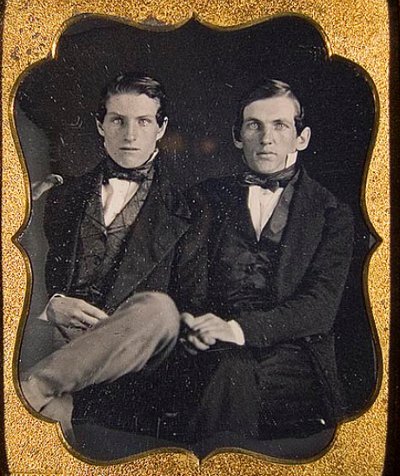
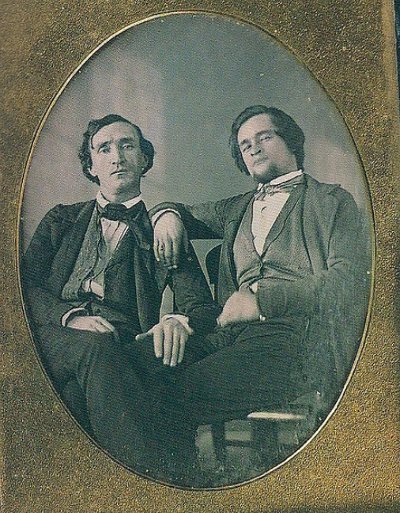
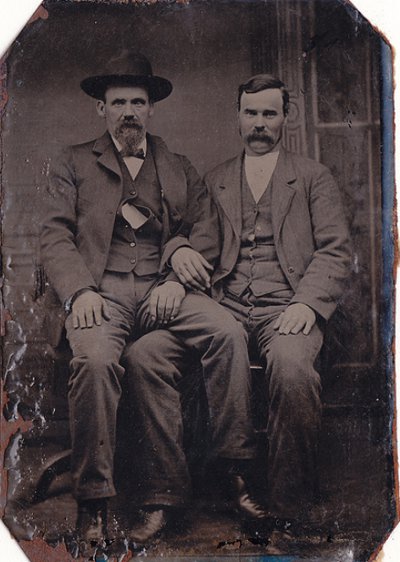
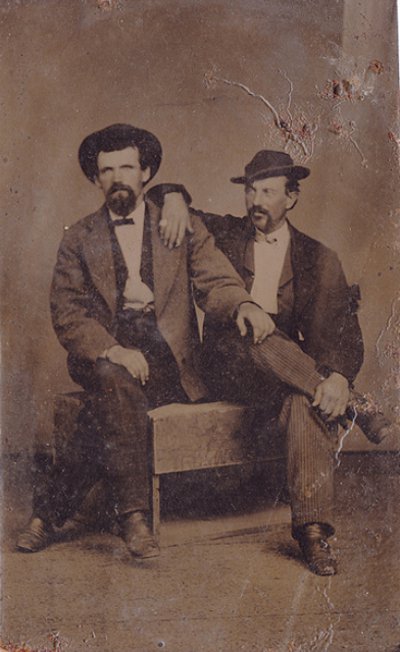
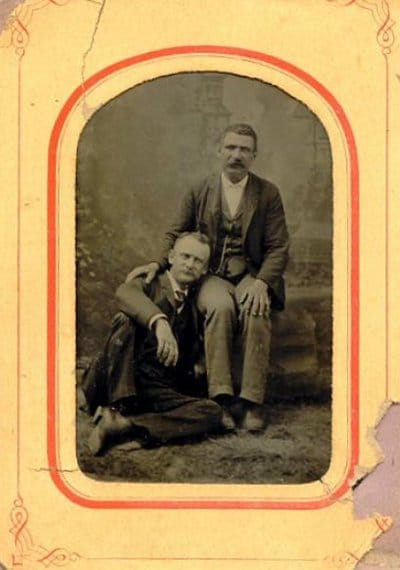
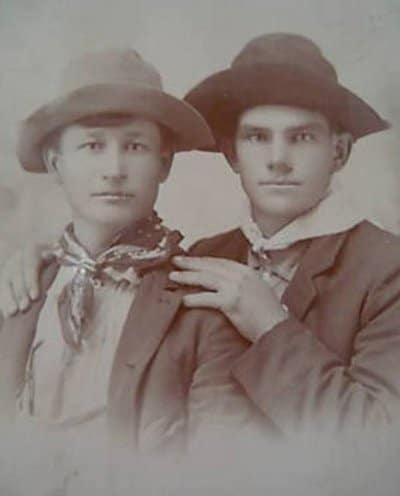
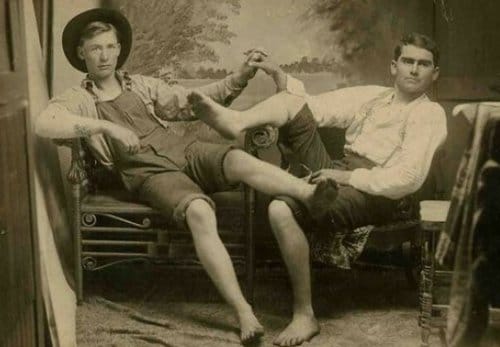
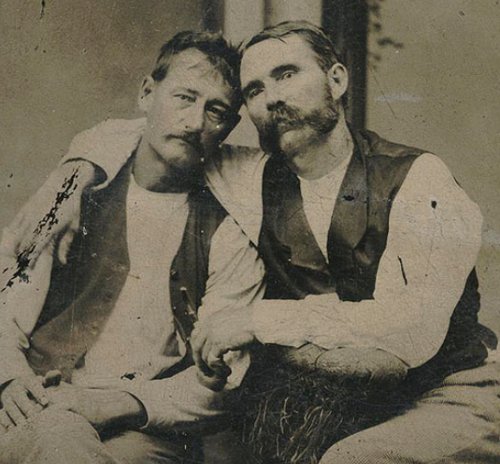
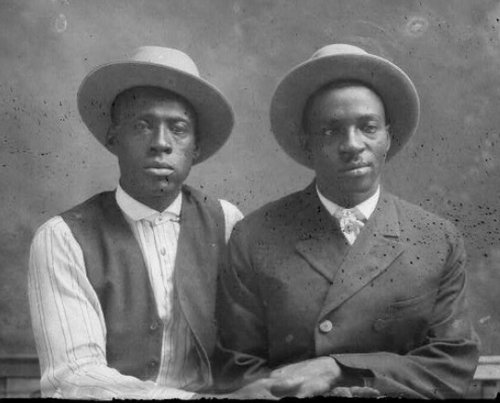
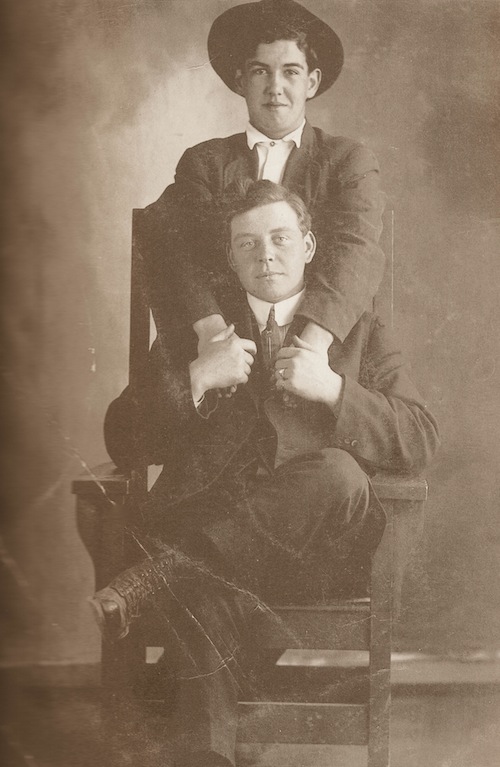
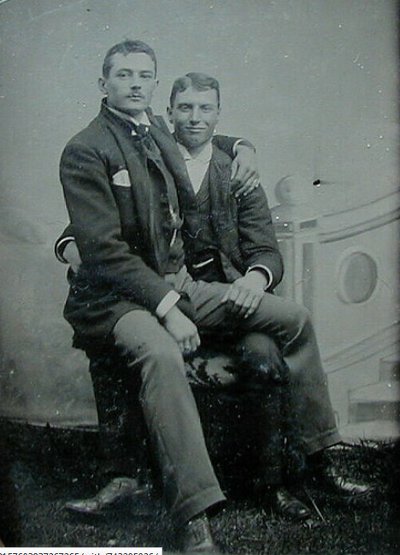
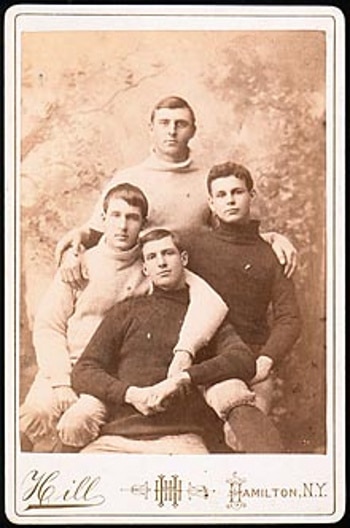
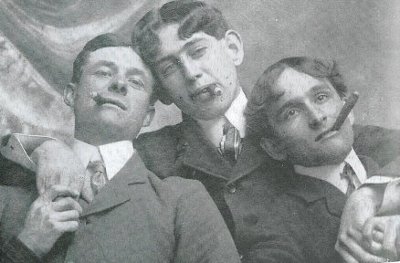
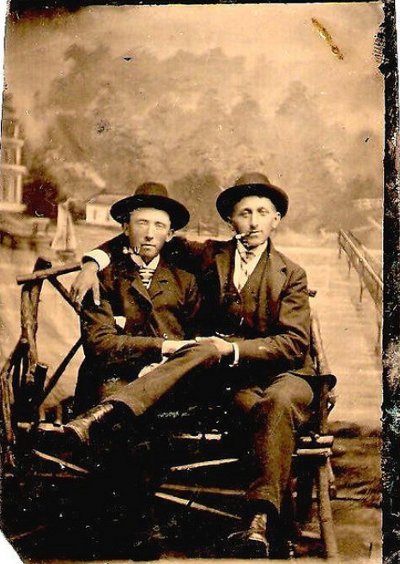
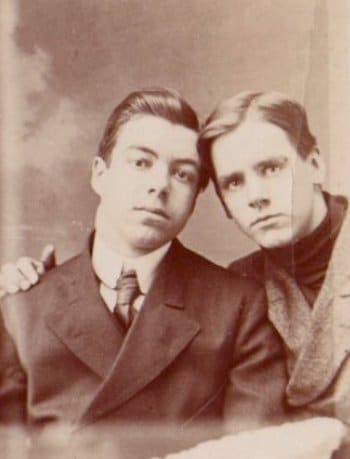
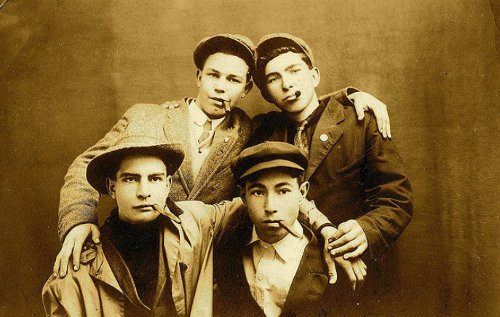
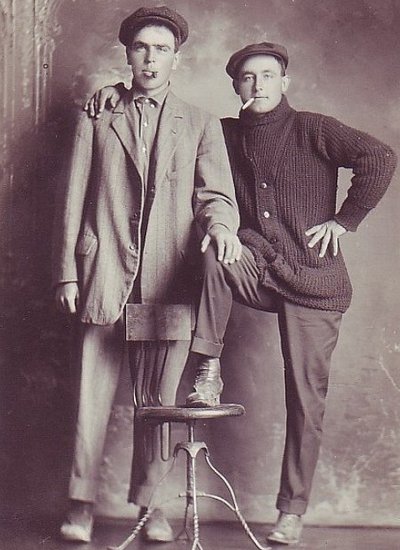
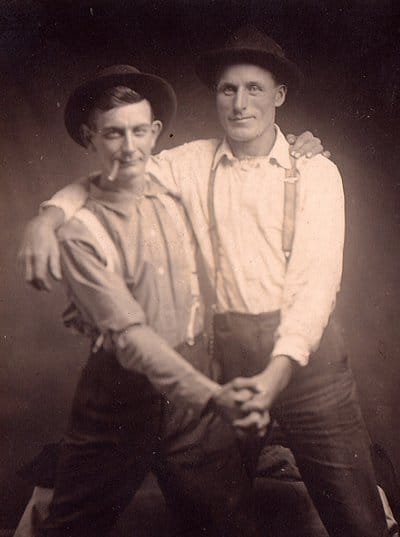
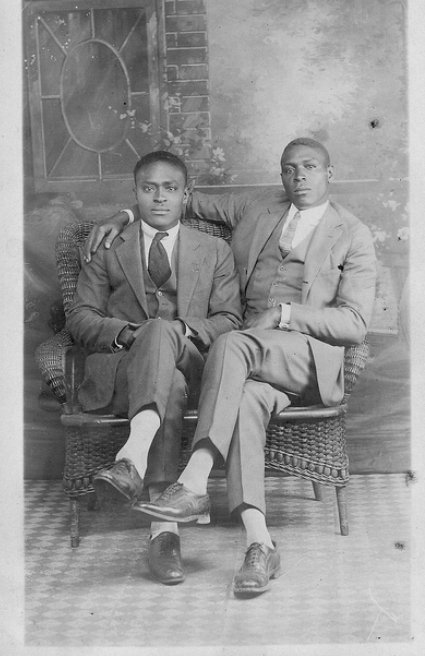
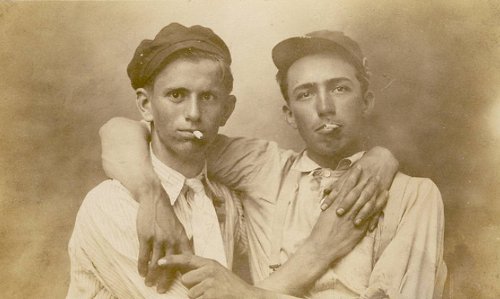
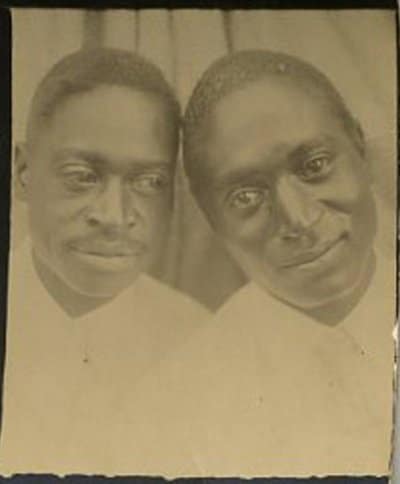
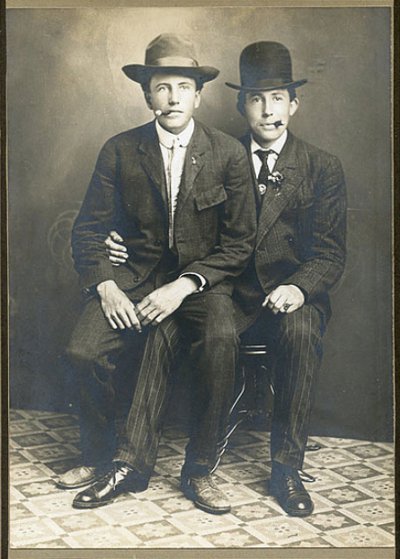
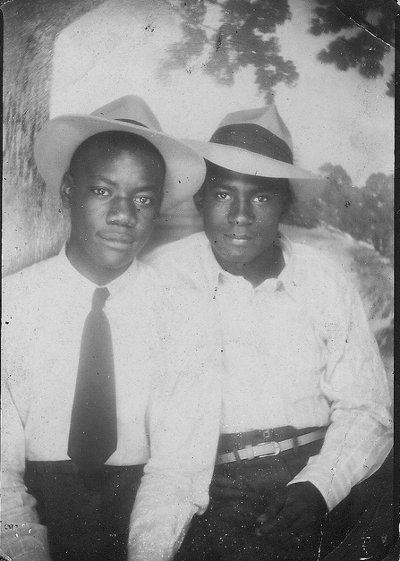
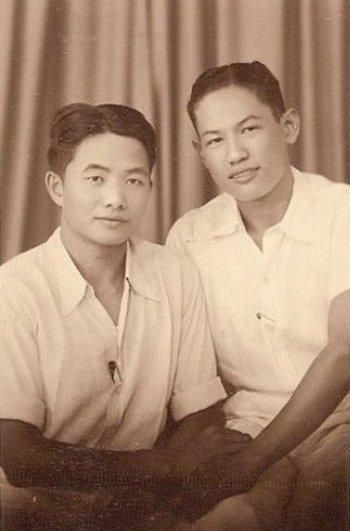
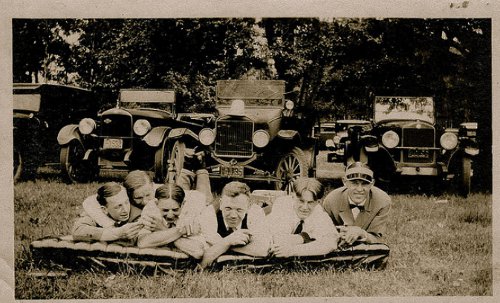
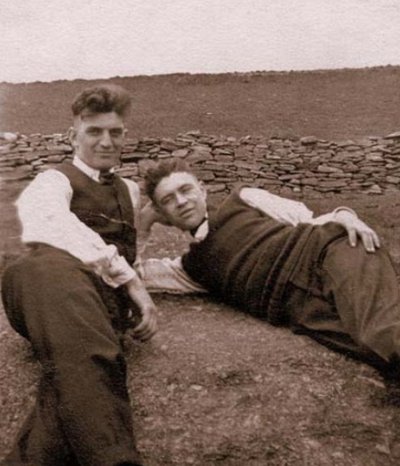
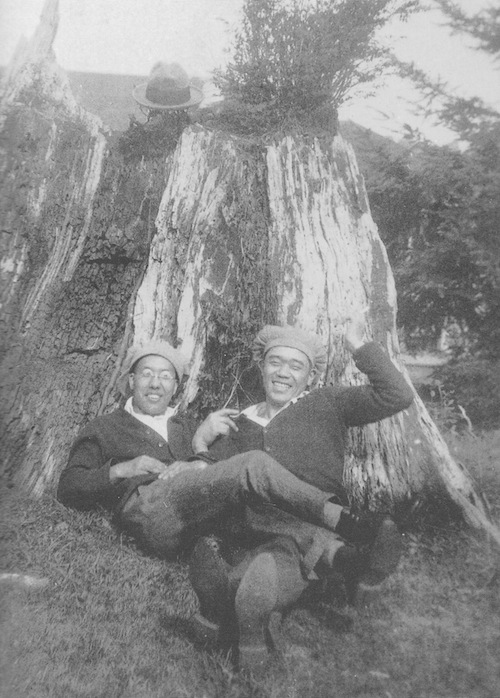
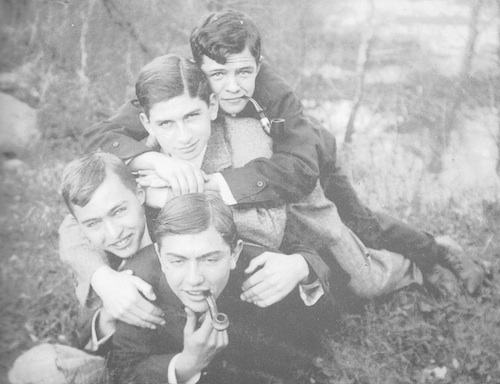
This is an old post from The Art of Manliness, but it's so cool I thought I would share it again. These pictures remind us that it was not all that long ago that men could be affectionate with each other and it meant nothing about their sexuality.

It's sad that we have lost the freedom to be close to each other both physically and emotionally because we are afraid to be called "gay" or "fag."

This is a good reminder that with all the progress we have made as a species in some realms, in other realms we have lost valuable traits and freedoms.

Bosom Buddies: A Photo History of Male Affection

Brett and Kate McKay
July 29, 2012


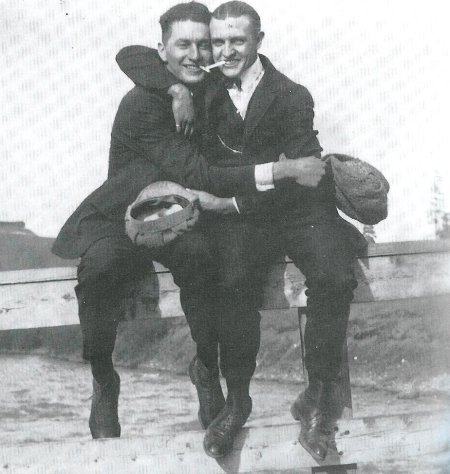
In my unending search for just the right vintage images for our articles, I have looked through thousands of photographs of men from the last century or so. One of the things that I have found most fascinating about many of these images, is the ease, familiarity, and intimacy, which men used to exhibit in photographs with their friends and compadres.

I shared a handful of these images in our very early post on the history of male friendship, but today I wanted to share almost 100 more in order to provide a more in-depth look into an important and highly interesting aspect of masculine history: the decline of male intimacy over the last century.

As you make your way through the photos below, many of you will undoubtedly feel a keen sense of surprise — some of you may even recoil a bit as you think, “Holy smokes! That’s so gay!”

The poses, facial expressions, and body language of the men below will strike the modern viewer as very gay indeed. But it is crucial to understand that you cannot view these photographs through the prism of our modern culture and current conception of homosexuality. The term “homosexuality” was in fact not coined until 1869, and before that time, the strict dichotomy between “gay” and “straight” did not yet exist. Attraction to, and sexual activity with other men was thought of as something you did, not something you were. It was a behavior — accepted by some cultures and considered sinful by others.

But at the turn of the 20th century, the idea of homosexuality shifted from a practice to a lifestyle and an identity. You did not have temptations towards a certain sin, you were a homosexual person. Thinking of men as either “homosexual” or “heterosexual” became common. And this new category of identity was at the same time pathologized — decried by psychiatrists as a mental illness, by ministers as a perversion, and by politicians as something to be legislated against. As this new conception of homosexuality as a stigmatized and onerous identifier took root in American culture, men began to be much more careful to not send messages to other men, and to women, that they were gay. And this is the reason why, it is theorized, men have become less comfortable with showing affection towards each other over the last century. At the same time, it also may explain why in countries with a more conservative, religious culture, such as in Africa or the Middle East, where men do engage in homosexual acts, but still consider homosexuality the “crime that cannot be spoken,” it remains common for men to be affectionate with one another and comfortable with things like holding hands as they walk.

Whether the men below were gay in the way our current culture understands that idea, or in the way that they themselves understood it, is unknowable. What we do know is that the men would not have thought their poses and body language had anything at all to do with that question. What you see in the photographs was common, not rare; the photos are not about sexuality, but intimacy.

These photos showcase an evolution in the way men relate to one another — and the way in which certain forms and expressions of male intimacy have disappeared over the last century.

It has been said that a picture tells a thousand words, so while I have provided a little commentary below, I invite you to interpret the photos yourselves, and to ask and discuss questions such as: “Who were these men?” “What was the nature of their relationships?” “Why has male intimacy decreased and what are the repercussions for the emotional lives of men today?”

Men as Friends


Portraits


From the Civil War through the 1920′s, it was very common for male friends to visit a photographer’s studio together to have a portrait done as a memento of their love and loyalty. Photographers would offer various backgrounds and props the men could choose from to use in the picture. Sometimes the men would act out scenes; sometimes they’d simply sit side-by-side; sometimes they’d sit on each other’s laps or hold hands. The men’s very comfortable and familiar poses and body language might make the men look like gay lovers to the modern eye — and they could very well have been — but that was not the message they were sending at the time. The photographer’s studio would have been at the center of town, well-known by everyone, and one’s neighbors would having been sitting in the waiting room just a few feet away. Because homosexuality, even if thought of as a practice rather than an identity, was not something publicly expressed, these men were not knowingly outing themselves in these shots; their poses were common, and simply reflected the intimacy and intensity of male friendships at the time — none of these photos would have caused their contemporaries to bat an eye.


When the author of Picturing Men, John Ibson, conducted a survey of modern day portrait studios to ask if they had ever had two men come in to have their photo taken, he found that the event was so rare that many of the photographers he spoke to had never seen it happen during their career.

Snapshots

When portable cameras for the amateur photographer became more widely available, they allowed men to photograph themselves in a greater range of more spontaneous situations, and the practice of sitting for formal portraits together waned in the 1930s. The snapshots usually were developed by someone else who would have gotten a look at all of them, so again, these pictures were not likely purposeful expressions of gay love, but rather captured the very common level of comfort men felt with one another during the early 20th century.


One of the reasons male friendships were so intense during the 19th and early 20th centuries, is that socialization was largely separated by sex; men spent most their time with other men, women with other women. In the 50s, some psychologists theorized that gender-segregated socialization spurred homosexuality, and as cultural mores changed in general, snapshots of only men together were supplanted by those of coed groups.


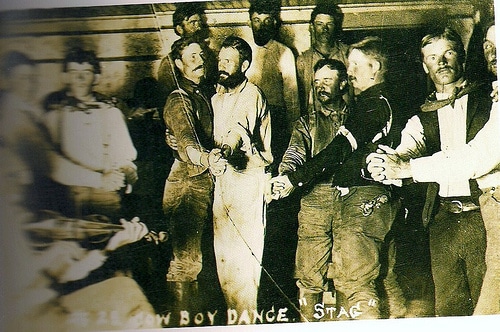
In all male environments, such as mining camps or navy ships, it was common for men to hold dances, with half the men wearing a patch or some other marker to designate them as the “women” for the evening.


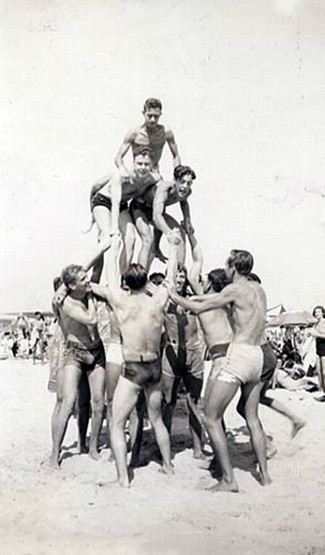
Forming pyramids on the beach was a popular pastime for men through the 30s.

There's more at The Art of Manliness.

Thursday, February 13, 2014

5 Sketchy Facts You Didn't Know About Valentine's Day . . . Because, You Know, Tomorrow Is Valentine's Day and Stuff

Via Cracked, where I often learn stuff I did not know, and then wish I had left well enough alone.


5 Sketchy Facts You Didn't Know About Valentine's Day

By Brendan McGinley | February 13, 2014

Good news! For yet another year, I am prepared to rock Valentine's Day like a hammock in a hurricane. I would share my schemes for the 14th so you can copy them as your own, but you'd have a difficult time even finding a blue garnet, let alone infiltrating the Sports Illustrated Swimsuit Issue release party. But even though only one of us is going to have sex in space this year, that doesn't mean you have to sit home alone cursing the holiday.

Some folks hate Valentine's Day because it reminds them that they're alone, others because they have to make an effort. The solution is for the latter group to outsource their relationships to the lonely folks. But that's a lot of paperwork, so until the spreadsheet is complete, take heart: This entire holiday is a sham.

And I don't mean in the "excuse to sell greeting cards and candy" way. I mean that a historical examination reveals Valentine's Day to be so screwy, it's amazing people even bother falling in love these days. And I think it's all a big conspiracy.

Here's the twisted story of everything Valentine's Day isn't.

#5. It's Based on Pure Legend


Valentine's Day celebrates the idea that true love finds us, and that idea shines in our hearts even amid our modern V-Day celebration of expensive dinners, cheap lingerie, and acrid candy that can only be legally called chocolate in America.


I'm looking at you, Whitman, you alkaline devils. But I'm not tasting you. I can't be hurt like that again.

That idea is based on the story of St. Valentine of Rome, a priest who married couples against the emperor's orders, because married men couldn't be drafted. That was at odds with Emperor Claudius Gothicus' plans to build an army of unfeeling terminators. That's right, there was a brief time when love was against the law and the ultimate crime was to follow your heart. Valentine put it all on the line to win, even winning the heart of his jailer's daughter ...


The third century was very 1980s in that love was a battlefield.

... and was executed. But victory was his, for true love never dies!

The reality is that Valentine appears to have been executed for much more traditional "pagan vs. Christian" theological debate reasons after neither he nor the emperor could convert the other. The ban on Roman soldiers getting hitched never actually occurred, and for good reason: Marriage benefited both Rome and the Legion. It'd cause less uproar to change the rules to draft married men than to ban them.

However, if you want to hate Claudius, there's his much more real, much more damnable statement that his army "had captured so many women that each victorious soldier could take two or three women each."


War: Making monsters of everyone since 200,000 B.C.

Well, great. Only one entry in and we're already looking at this month's most callous fiend on Cracked unless E. Reid Ross writes an Albert Fish retrospective.

#4. Nobody Knows Which Valentine the Holiday Honors


Legend or no, St. Valentine of Hallmark shares billing with two other Sts. Valentine today, neither of whom had anything to do with love (and, thankfully, nothing to do with pillage).

Our Valentine may actually be the same guy as one of them: Valentine of Terni, a bishop who (probably?) died at the same time in (definitely) the same place. The records are muddled, and we know next to nothing about either martyr. The Roman Empire was a mess at that time, and an outlaw religion necessarily had to avoid keeping records. But that was 1,700 years ago, when Rome was still a corrupt bureaucracy in the thrall of a few vicious thugs looking to shift public ire to outsiders.


Italy is home to one of the world's oldest cultures, and maybe one day will stop living in it.

There are 14 Saints Valentin or Valentine (plus one Valentinian who doesn't count because I said so), three of whom died on February 14. That means 2 out of 14 Valentines are celebrated on 2/14, which has a 21.4 percent mortality rate for Valentines. Now, I don't know much about math, but I know a lot about conspiracy theory ramblings, where visually similar numbers indicate a clear plot by the Jewish reptoid freemasons who run the Vatican. If your name is Valentino, or Val, or even just Hart, I recommend you stay inside that day.

I mean, you were probably going to anyway, just to avoid everyone's terrible jokes, but don't answer the door if any Romans or lions ring the bell.


That was a joke. Never turn down a lion fight. What do you want, to live long enough to die of renal failure with no exciting stories?

Whether or not these two are the same person, neither one died to see love thrive, and they're sharing real estate with a third Valentine, who's the patron saint of nothing except dying unknown.


And the Duke of Milan had JUST pardoned him, poor, unlucky bastard.

So far, February 14 has as much in common with romance as my left hand, which is to say: all the feeling, none of the meaning, and with a serving of depression. Although both the holiday and my hand are connected to three dead foreigners who can no longer be identified. Interesting? Highly. Seductive? Only if you're E. Reid Ross.

#3. The Romance Angle Is Relatively New


You know who agrees with me that so far this has been a thoroughly unsexy holiday comprised of aught but state-sanctioned crimes against humanity? A millennium of Western civilization. For roughly 1,000 years after the martyrdom of St. Valentine, this was just another holy remembrance day -- probably a day to reflect on all the things we've done wrong and maybe eat some cheese, which is the only hobby Europe had in those days besides war and playing the hurdy-gurdy.

It's only in the second half of the 14th century (see? CONSPIRACY!) that the print record finally shows shades of seduction. In the medieval Adam Sandler movies that are the works of Geoffrey Chaucer, Valentine's Day had become the romantic subplot. In "Parlement of Foules," he lays a pretty sexy scene: naked love goddesses, birds peacocking their way to sex-victory, and Nature herself "pricking [them] to sweet pain." That's a whole lot of fetishes compressed into a single phrase, but Chaucer was a poet.


You don't want to read his erotic couplets about red-hot pokers.

So yeah, St. Valentine's Day has been a romantic holiday (possibly thanks to Chaucer) since the 14th century, but that's only about half as long as it was a time for personal reflection. And even after the switch, you know that England probably spent another 300 years baking sexy desserts like a sheep stomach wrapped around boiled fish heads.

The other half of the poem is about a Roman general pondering his own immortality before he commits genocide. Eroticism!

#2. It Doesn't Exist Anymore


Still confused by all those Valentines running around Imperial Crisis-era Roman Empire? So are the people cataloging them! That's why at the Second Vatican Council Pope Paul VI eliminated all 12 feasts of St. Valentine from the Liturgical Calendar. How's that for a St. Valentine's Day massacre?

That's right: Valentine's Day hasn't really been St. Valentine's Day since 1969.

Their official reason was that they couldn't verify or distinguish most of the Sts. Valentine, but I think we all know the real cause. It was 1969, and the world was still suffering the effects of the Sex Crisis two years earlier, when the Summer of Love drained most of humanity's love reserves. Which, in turn, is why we needed more oil to lubricate our shameful sex acts, causing the energy crisis a few years after that.

With that, the holiday was unfettered, free to become a morass of Necco candy and roses purchased at a gas station at a 600 percent markup.

#1. It's Originally a Fertility Holiday


But let's go all the way back to antiquity and see if we shouldn't celebrate it after all ... albeit more ingenuously.

The legend of Rome's founders, Romulus and Remus, says that as infants they were nursed in infancy by a wolf -- although the Latin word "lupa," or "she-wolf," was also a slang term for a prostitute. Rome preferred the wolf version of the legend, because it was embarrassing for a city founded in rape and fratricide to have its origins in sex work.


We shall call her Wolf Nurse.

All this took place in a cave called the Lupercal, which archaeologists probably unearthed in 2007. Wolf Nurse was honored every February 13 to 15 during Lupercalia -- although just to confuse things the holiday was primarily dedicated to the god Lupercus, a Latin name meaning "He who throws bitchin' parties." During "The Festival of the Wolf," his priests, the Brothers of the Wolf, dressed up in goatskins to honor him. Not wolfskins, because that would make sense, although he did have goat legs. Yeah, he was basically Pan.


He looks like every guy named Gary you've ever known.

Meanwhile, Rome's noble youths ran naked through the streets, giving zero fucks but many lashings to any woman they ran across "with shaggy thongs." This supposedly conferred healthy, hearty pregnancies, because babies are stronger when they're conceived in kink. That's a science FACT, friend, and you can look it up in your Encyclopedia Dominatio.


Cracked's lawyers prefer that I don't Photoshop a baby in a gimp mask, so enjoy this leather strop.

A great many ladies of the republic placed themselves in the way of these wildlings to have their hands stropped, because a healthy pregnancy begins with open wounds in a country that doesn't use soap.

Now, a lot of scholars will tell you that there isn't enough of a connection to call Lupercalia a precursor to Valentine's Day. But what do they know? They haven't even been flogged by werewolves, and so they cannot speak to the truth known by the human heart -- that love comes in many forms at many times, but if any of them loved you, they'd buy you chocolate.
_____

Brendan is a lover, not a writer. He exposed the even bigger sham of offloading expired Valentine's Day products with his takedown of Sweetest Day.

Related reading: Brendan wanted to know What Love Is, and he wanted you to show him. He also unveiled more holiday mysteries in 5 Reasons Cinco de Mayo Is the Most American Holiday.

Always on the go but can't get enough of Cracked? We have an Android app and iOS reader for you to pick from so you never miss another article.

Do you have a pop culture muse? Channel it in our T-shirt latest contest and you could win $500.

Tuesday, October 22, 2013

"12 Years a Slave" Reminds Us that Slaves Didn't Win Freedom by Being Manly


A friend at Facebook (thanks Jean!) turned me on to this article from The Atlantic, a review of the new film (based on a true story), 12 Years a Slave. The reason this film - and this review of the film - appeals to me is that Director Steve McQueen offers a different take on the movie hero - traditionally a role that requires that a man "man-up," or become a "real man," which generally means to physically defeat one's tormentor or enemy.

Not so in this film, which is a fictionalized adaptation of the 1853 autobiography Twelve Years a Slave by Solomon Northup, a free black man who was kidnapped in Washington, D.C. in 1841 and sold into slavery.

In Django Unchained, as is also true in Glory, manly strength leads to freedom and vengeance. In 12 Years a Slave, it serves only to harm those you care about.
When Northup escapes, it's not through violence, but because a white Canadian working on the plantation agreed to get word to the north. Northup's ordeal ends as abruptly as it began when an old white friend pulls up at the plantation with the sheriff. There's no hail of gunfire, only a hail of legalese. Nor is this a happy ending. No one can give him back his lost years with his wife, or missing his children grow up. Patsey, and many others, are still enslaved. The men who kidnapped him are never brought to justice. Northup has no manly triumph. '12 Years a Slave' doesn't see slavery as a trial that men must overcome on their way to being men, but as a systemic evil that leaves those in its grasp with no good choices.
I'm excited to see this film - it's rare that life on film is presented with the fully incomprehensible abruptness that we experience in real life. One day Northup is a happily married man making a living as a musician - the next he has been sold into slavery. And just as suddenly, 12 years later, through no heroic action on his part, he is once again a free man . . . but his life and his sense of the world is forever altered by his experience.

NPR did a short but interesting review of the film, and it has been reviewed by nearly every major newspaper and culture blog. It has a 7.9/10 rating at IMdB and a 95% positive rating at Rotten Tomatoes (94% among views who are not critics).

12 Years a Slave's Reminder: Slaves Didn't Win Freedom by Being Manly

Unlike Glory or Django Unchained, Steve McQueen's film resists the notion that a slave could overcome the institution just by fully asserting his masculinity.

Noah Berlatsky | Oct 21 2013


Fox Searchlight

Hollywood is in general uncomfortable with race, but it likes heroic masculinity. It's no surprise, then, that films about slavery often end up being about men becoming men. Django Unchained is a basic revenge story, with Django taking up the phallic gun to blast the evil forces that have held him down and captured his wife. Glory is a standard military parable, with the weak and undisciplined black troops learning to be a deadly fighting force even as their boyish white commanding officer proves himself. "We're men," Denzel Washington declares before the final battle, for all the world as if, before they joined the regiment, they were something else.

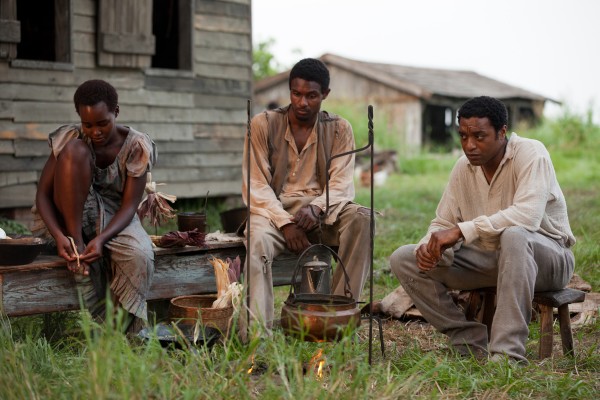
Remarkably and honorably, 12 Years a Slave, based on Solomon Northup's 1841 autobiographical narrative, has a different story to tell. When the film opens, Northup (Chiwetel Ejiofor) is a free musician, living in Saratoga, New York with his wife, son and daughter. He's a success and a grown-up; he doesn't need to learn to become a man. The narrative arc of the film isn't from powerlessness to power. It's the reverse.

Northup is courted by two men who promise him a touring gig, and then, after they've lured him to Washington, slip him a drug, knocking him unconscious. He wakes up in a cell, where he is viciously beaten on all fours while the slaver hits him with a stick from behind. Northup loses his former life, his dignity, even his self, as he is forced to take the name of a runaway slave, Platt. The entire sequence is a violation and unmanning—it's presented as a symbolic rape.

If we were working with the logic of Glory or Django, Northup would have to regain his manhood by standing up to his attackers and besting them in combat. That's not what happens here, though. Instead, Northup tries various ways to deal with the system. At first, he uses his education and skills to help his (very) relatively humane owner, William Ford (Benedict Cumberbatch), with various engineering projects. Then, when he is harassed and attacked by Ford's overseer, he fights back, in a scene reminiscent of Frederick Douglass's autobiography, whipping the man who had intended to whip him. Where Douglass triumphed, though, Northup just ends up sold to a true sadist. As another slave, Eliza (Adepero Oduye), tells Northup, you can compromise yourself as you will, give the slave-owners your skills or your body. It doesn't matter. You're still a slave.

Eliza's speech has no parallels in Glory or Django, because when masculinity is the story, women are pushed to the sidelines. In Django, the main romance of the film is between Django and his white buddy; the second is between Django and the evil slave Stephen—and lagging far behind in third is the relationship between Django and his wife, who functions more as a prize than as a person. For its part, Glory barely has a female speaking role; like Django, all its energy goes into inter- and intra-racial male bonding.

12 Years a Slave though, doesn't present masculinity as a solution to slavery, and as a result it's able to think about and care about women as people rather than as accessories or MacGuffins. Other than Northup, in fact, the most vivid slave characters are female. There's Eliza, who is utterly devastated by the loss of her children. And there's Patsey (Lupita Nyong'o), a phenomenal worker in the cotton fields who Northup's second sadistic owner, Edwin Epps (Michael Fassbender), takes as his mistress. Patsey is raped by Epps, loathed by his jealous wife, and systematically abused, beaten, and tortured by both. In a terrifying scene, she wakes Northup up and begs him to take her to the marsh and drown her. "Do what I ain't got the strength to do myself," she pleads. "God is merciful and forgives merciful acts."

Northup, with a desperate callousness, refuses, asking her "How can you fall into such despair?"—though there's no question that he knows exactly how. Later, he is forced at gunpoint to lash her back bloody. In Django, manly strength leads to freedom and vengeance; here, it serves only to harm those you care about.

When Northup escapes, it's not through violence, but because a white Canadian working on the plantation agreed to get word to the north. Northup's ordeal ends as abruptly as it began when an old white friend pulls up at the plantation with the sheriff. There's no hail of gunfire, only a hail of legalese. Nor is this a happy ending. No one can give him back his lost years with his wife, or missing his children grow up. Patsey, and many others, are still enslaved. The men who kidnapped him are never brought to justice. Northup has no manly triumph. '12 Years a Slave' doesn't see slavery as a trial that men must overcome on their way to being men, but as a systemic evil that leaves those in its grasp with no good choices.

Manly triumph isn't to be sneered at in every case. The 54th Massachusetts of Glory really did fight with honor and transform Northern opinion about blacks—their courage really did matter. But seeing slavery solely as a test of masculinity not only erases women's experience; it ends up making men who don't overcome it responsible for their own oppression. If you were a man, such narratives say, you would fight back and kill them all with the music swelling, as Django does in Django Unchained. Django even explicitly refers to its title character as "exceptional"—he is better than all those others sunk in slavery. If you don't defeat your enemies like a man, the film seems to say, then you're not a man, you're a moral failure. Which is not that far from saying that victims are responsible for their victimhood.

At the end of the film, when Northup returns to his family, he starts stammering apologies—for his appearance, for crying, and, though he doesn't say it, for being captured and being unable to return to his family for so long. To which his wife, Anne (Kelsey Scott) replies, "You have absolutely nothing to apologize for." 12 Years a Slave doesn't see slavery as a trial that men must overcome on their way to being men, but as a systemic evil that leaves those in its grasp with no good choices. As a result, 12 Years a Slave is that rare film about slavery in which slaves don't have to become Hollywood "men" for their stories to matter.

Related Story: 


The Searing, Visceral 12 Years a Slave