Showing posts with label love. Show all posts

Tuesday, July 22, 2014

The 3 Scariest Words A Boy Can Hear

So what are those three scariest words? "Be a man."

This wisdom comes from Joe Ehrmann, a former NFL defensive lineman and now a pastor. He was interviewed recently for NPR's Utah Public Radio, and the transcript is below. This story is part of All Things Considered's "Men in America" series.

Interesting quote:
CORNISH: For you, what is masculinity? What does it mean to be a man?
EHRMANN: I think it could be only defined by two things. One, it's your capacity to love and to be loved. Masculinity ought to be defined in terms of relationships. Second thing, it ought to be defined by commitment to a cause - that all of us have a responsibility to give back - to make the world more fair, more just, more hospitable for every human being. So I think it's about relationships and commitment to a cause. That's the underlying of all humanity - men and women.
Cool interview.

The 3 Scariest Words A Boy Can Hear

By NPR Staff
Originally published on Mon July 14, 2014 

Listen  - 7:25
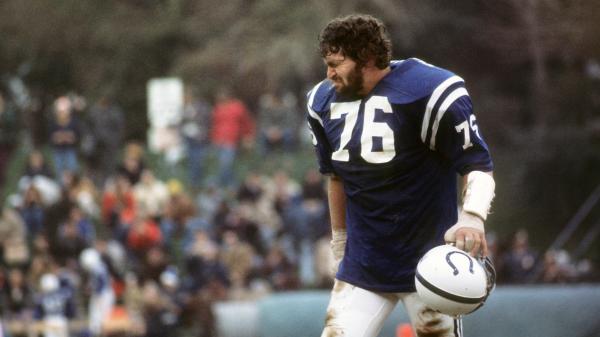

Joe Ehrmann, shown in 1975, was a defensive lineman with the Baltimore Colts for much of the '70s. He says that as a child, he was taught that being a man meant dominating people and circumstances — a lesson that served him well on the football field, but less so in real life.   Neil Leifer Sports Illustrated/Getty Images
This story is part of All Things Considered's "Men in America" series.

It's rare that a man makes it through life without being told, at least once, "Be a man." To Joe Ehrmann, a former NFL defensive lineman and now a pastor, those are the three scariest words that a boy can hear.

Ehrmann — who played with the Baltimore Colts for much of the 1970s and was a lineman at Syracuse University before that — confronted many models of masculinity in his life. But, as with many boys, his first instructor on manhood was his father, who was an amateur boxer.

Ehrmann says of his father: "I think his definition, which was very old in this country, was: Men don't need. Men don't want. Men don't touch. Men don't feel. If you're going to be a man in this world, you better learn how to dominate and control people and circumstances."

On the football field, those lessons served Ehrmann well. But, as he tells NPR's Audie Cornish, it was not the same case in the pediatric oncology ward. In 1978, Ehrmann's teenage brother was diagnosed with cancer. However tough Joe was on the field, he did not feel equipped to help his brother or himself.

Interview Highlights


On how his brother's death affected him

When he died, that was devastating to me. And I started to ask all the questions about what is the role, the meaning, the purpose of life. I was 29 years old, I was six years into my NFL career, and I had no concept — no concept what life was about, and no concept what I was about. And on this journey, I ended up asking the question: What does it mean to be a man? ...

I recognized that everything I had invested my life in — all my accomplishments, my achievements, the stuff I had accumulated — I recognized at that moment they offered no hope or help to my 19-year-old brother — 18-year-old brother — lying on his deathbed. ...

All I had was these old "man up" kind of things — "suck it up, we'll get through this together" — when he really needed the emotional, the nurturing, the love. And I had to really struggle to pull that out of my heart.

On the roles a coach can play in his players' lives

There's two kinds of coaches in America: You're either transactional or you're transformational. Transactional coaches basically use young people for their own identity, their own validation, their own ends. It's always about them — the team first, players' needs down the road.

And then you have transformational coaches. They understand the power, the platform, the position they have in the lives of young people, and they're going to use that to change the arc of every young person's life. I think football is an ideal place — sports in general — team sports are an ideal place to help boys become men. And the great myth in America today is that sports builds character. That's not true in a win-at-all-costs culture. Sports doesn't build character unless the coach models it, nurtures it and teaches it.

On what those philosophies look like on the field

I think there's a lot of screamers, there's a lot of shouters, there's a lot of shamers. My approach is this: Boy, you're in the middle of the game, and some kid's having a tough time. They get beat. ... I tell all my players, "Come on over to me during the game and I'll give you a hug." And you think about the power of a hug versus swearing, shouting, shaming at some kid.

When I played football, I hated [when] some kid would get a knee injury, your teammate would go down and that coach would say move the practice down 20 yards and leave that kid laying there. ... As coaches, we can kneel down next to that kid, you affirm the tears, the pain, the emotions, and you bring all the team around to say, "How can we help Bobby? He's one of us; he's done so much. He had so many dreams." So, you teach them how to build authentic community as men caring for and loving each other.

On the changes he's seen in ideas of masculinity

I think those three lies of masculinity — athletic ability, sexual conquest, economic success — in many ways, those things have been heightened. You have this increase in social media. You have young boys coming into this world, and they are hit 24/7. They're given all kinds of negative messages about their masculinity. They've been conditioned, and they have way more messaging out of this culture than I ever had as a young boy. I think in many respects, it's more difficult. There's more negative messaging out there and less positive.

On what it means to be a man

It think it can only be defined by two things: One, it's your capacity to love and to be loved. Masculinity ought to be defined in terms of relationships. Second thing, it ought to be defined by commitment to a cause. All of us have a responsibility to give back, to make the world more fair, more just, more hospitable for every human being. So I think it's about relationships and commitments to a cause. That's the underline of all humanity — men and women.

Copyright 2014 NPR. To see more, visit http://www.npr.org/.

Transcript


ROBERT SIEGEL, HOST:

This is ALL THINGS CONSIDERED from NPR News. I'm Robert Siegel.

AUDIE CORNISH, HOST:

And I'm Audie Cornish. We've been hearing about men this summer - how their roles have changed, what their lives are like. And one thing most men are told at some point in their early lives is this - be a man.

JOE EHRMANN: Yeah, I think every boy at a very early age is given this mandate to be a man. They're actually the three scariest words every boy receives.

CORNISH: That's former NFL defenseman Joe Ehrmann. He played in the 1970s, mostly for the Baltimore Colts. As with many boys, his first instructor on manhood was his father.

EHRMANN: I think in many ways my father gave me all the wrong concepts about being a man. I think his definition, which was very old-school in this country, was men don't need. Men don't want. Men don't touch. Men don't feel. If you're going to be a man in this world, you better learn how to dominate and control people and circumstances.

CORNISH: And, of course, men don't cry. On the football field, those lessons served Joe Ehrmann well, but not in the pediatric oncology ward. In 1978 Ehrmann's teenage brother was diagnosed with cancer, and however tough Joe Ehrmann was on the field, he did not feel equipped to help his dying brother or himself.

EHRMANN: When he died, that was devastating to me. And I started to ask all the questions about what is the role, the meaning, the purpose of life. I was 29 years old. I was six years in my NFL career, and I had no concept - no concept what life was about and no concept what I was about. And on this journey I ended up asking the question what does it mean to be a man?

CORNISH: Why that question for this particular really very emotionally wrenching part of life?

EHRMANN: Well, 'cause I think I recognized that when my brother was diagnosed and began his dying process - I recognized that everything I had invested my life in - all my accomplishments, my achievements, stuff I had accumulated - I recognized at that moment they offered no hope or help to my 19-year-old brother - 18-year-old brother lying on his deathbed. I was a socialized male that had separated my heart from my head, trying to live life from the neck up.

CORNISH: You were saying all you had were the locker room speeches basically.

EHRMANN: Yeah. All I had was these old man up kind of things. Suck it up. We'll get through this thing together. When he really needed the emotional - the nurturing, the love. Boy, and I had to really struggle to pull that of my heart.

CORNISH: You went on to seminary and to become a pastor. And you also went on to coach high school football. Now, can you talk about what it is in particular you think coaches can do to shift this ideology and whether you really have encountered coaches who are interested in doing that?

EHRMANN: Well, there's two kinds of coaches in America. You're either transactional or you're transformational. Transactional coaches basically use young people for their own identity, their own validation, their own ends. It's always about them - the team first, players' needs down the road. And then you have transformational coaches. They understand the power, the platform, the position they have in the lives of young people, and they're going to use that to change the arc of every young person's life. I think football is an ideal place - sports in general - team sports are an ideal place to help boys become men. And the great myth in America today is that sports builds character. That's not true in a win-at-all-costs culture. Sports doesn't build character unless a coach models it, nurtures it and teaches it.

CORNISH: You mentioned that coaches are either transactional - what can you do for me - or transformational. On the field, how does that play out? Are you basically talking about the screamers here?

EHRMANN: The screamers, yeah. I think there's a lot of screamers. There's a lot of shouters. There's a lot of shamers. My approach is this - boy, you're in the middle of the game and some kid's having a tough time. They get beat. I tell all my players, come on over to me during the game and I'll give you a hug. And you think about the power of a hug versus swearing, shouting, shaming at some kid. Boy, you know, when I played ball I hated - some kid would get a knee injury. Your teammate would go down and that coach would say move the practice down 20 yards and leave that kid laying there. Boy, as coaches, we get kneeled down next to the kid. You affirm the tears, the pain, the emotions, and then you bring all the team around to say how can we help Bobby? He's one of us. He's done so much. He had so many dreams. So you teach them how to build authentic community as men caring and loving for each other.

CORNISH: I'm speaking with Joe Ehrmann. He's founder of Coach for America. And so you've actually been doing this work for decades. And has the average boy changed in some way or are there changes you've seen in how they approach masculinity than when you were growing up?

EHRMANN: Not too much. Boy, I think there's different nuances and stuff, but we have a real crisis when it comes to what it means to be a man.

CORNISH: Not too much, really?

EHRMANN: I don't think so. I think those three lies of masculinity - athletic ability, sexual conquest, economic success. In many ways those things have been heightened. You have this increase in social media. You have young boys coming into this world and they are - 24/7 they're given all kinds of negative messages about their masculinity. They've been conditioned, and they have way more messaging out of this culture than I ever had as a young boy. So I think in many respects it's more difficult. There's more negative messaging out there and less positive.

CORNISH: Can you talk about a particular incident that really drives that home for you?

EHRMANN: Well, I think the Steubenville, Ohio, rape case - two high school boys - 16-year-old girl - drunk, passed out - hundreds of pictures taken - tweets. And that one person had the moral clarity or moral courage to intervene in the midst of that. Two boys sentenced to prison - had no idea about consent. They weren't taught this stuff. A community tried to cover it up. Boy, I think that thing is played out and could play out at any high school. Boys have to be taught about - they have to have the moral clarity and the moral courage to speak up. That's not going to end. Women can't end it. It's not going to end until we raise up a generation of men that have the courage to call out other men on behalf of women in this country.

CORNISH: For you, what is masculinity? What does it mean to be a man?

EHRMANN: I think it could be only defined by two things. One, it's your capacity to love and to be loved. Masculinity ought to be defined in terms of relationships. Second thing, it ought to be defined by commitment to a cause - that all of us have a responsibility to give back - to make the world more fair, more just, more hospitable for every human being. So I think it's about relationships and commitment to a cause. That's the underlying of all humanity - men and women.

CORNISH: Joe Ehrmann - he's founder of Coach for America. Thank you so much for speaking with us. EHRMANN: Great to be with you, Audie. Thank you.

Transcript provided by NPR, Copyright NPR.

Thursday, February 13, 2014

5 Sketchy Facts You Didn't Know About Valentine's Day . . . Because, You Know, Tomorrow Is Valentine's Day and Stuff

Via Cracked, where I often learn stuff I did not know, and then wish I had left well enough alone.


5 Sketchy Facts You Didn't Know About Valentine's Day

By Brendan McGinley | February 13, 2014

Good news! For yet another year, I am prepared to rock Valentine's Day like a hammock in a hurricane. I would share my schemes for the 14th so you can copy them as your own, but you'd have a difficult time even finding a blue garnet, let alone infiltrating the Sports Illustrated Swimsuit Issue release party. But even though only one of us is going to have sex in space this year, that doesn't mean you have to sit home alone cursing the holiday.

Some folks hate Valentine's Day because it reminds them that they're alone, others because they have to make an effort. The solution is for the latter group to outsource their relationships to the lonely folks. But that's a lot of paperwork, so until the spreadsheet is complete, take heart: This entire holiday is a sham.

And I don't mean in the "excuse to sell greeting cards and candy" way. I mean that a historical examination reveals Valentine's Day to be so screwy, it's amazing people even bother falling in love these days. And I think it's all a big conspiracy.

Here's the twisted story of everything Valentine's Day isn't.

#5. It's Based on Pure Legend


Valentine's Day celebrates the idea that true love finds us, and that idea shines in our hearts even amid our modern V-Day celebration of expensive dinners, cheap lingerie, and acrid candy that can only be legally called chocolate in America.


I'm looking at you, Whitman, you alkaline devils. But I'm not tasting you. I can't be hurt like that again.

That idea is based on the story of St. Valentine of Rome, a priest who married couples against the emperor's orders, because married men couldn't be drafted. That was at odds with Emperor Claudius Gothicus' plans to build an army of unfeeling terminators. That's right, there was a brief time when love was against the law and the ultimate crime was to follow your heart. Valentine put it all on the line to win, even winning the heart of his jailer's daughter ...


The third century was very 1980s in that love was a battlefield.

... and was executed. But victory was his, for true love never dies!

The reality is that Valentine appears to have been executed for much more traditional "pagan vs. Christian" theological debate reasons after neither he nor the emperor could convert the other. The ban on Roman soldiers getting hitched never actually occurred, and for good reason: Marriage benefited both Rome and the Legion. It'd cause less uproar to change the rules to draft married men than to ban them.

However, if you want to hate Claudius, there's his much more real, much more damnable statement that his army "had captured so many women that each victorious soldier could take two or three women each."


War: Making monsters of everyone since 200,000 B.C.

Well, great. Only one entry in and we're already looking at this month's most callous fiend on Cracked unless E. Reid Ross writes an Albert Fish retrospective.

#4. Nobody Knows Which Valentine the Holiday Honors


Legend or no, St. Valentine of Hallmark shares billing with two other Sts. Valentine today, neither of whom had anything to do with love (and, thankfully, nothing to do with pillage).

Our Valentine may actually be the same guy as one of them: Valentine of Terni, a bishop who (probably?) died at the same time in (definitely) the same place. The records are muddled, and we know next to nothing about either martyr. The Roman Empire was a mess at that time, and an outlaw religion necessarily had to avoid keeping records. But that was 1,700 years ago, when Rome was still a corrupt bureaucracy in the thrall of a few vicious thugs looking to shift public ire to outsiders.


Italy is home to one of the world's oldest cultures, and maybe one day will stop living in it.

There are 14 Saints Valentin or Valentine (plus one Valentinian who doesn't count because I said so), three of whom died on February 14. That means 2 out of 14 Valentines are celebrated on 2/14, which has a 21.4 percent mortality rate for Valentines. Now, I don't know much about math, but I know a lot about conspiracy theory ramblings, where visually similar numbers indicate a clear plot by the Jewish reptoid freemasons who run the Vatican. If your name is Valentino, or Val, or even just Hart, I recommend you stay inside that day.

I mean, you were probably going to anyway, just to avoid everyone's terrible jokes, but don't answer the door if any Romans or lions ring the bell.


That was a joke. Never turn down a lion fight. What do you want, to live long enough to die of renal failure with no exciting stories?

Whether or not these two are the same person, neither one died to see love thrive, and they're sharing real estate with a third Valentine, who's the patron saint of nothing except dying unknown.


And the Duke of Milan had JUST pardoned him, poor, unlucky bastard.

So far, February 14 has as much in common with romance as my left hand, which is to say: all the feeling, none of the meaning, and with a serving of depression. Although both the holiday and my hand are connected to three dead foreigners who can no longer be identified. Interesting? Highly. Seductive? Only if you're E. Reid Ross.

#3. The Romance Angle Is Relatively New


You know who agrees with me that so far this has been a thoroughly unsexy holiday comprised of aught but state-sanctioned crimes against humanity? A millennium of Western civilization. For roughly 1,000 years after the martyrdom of St. Valentine, this was just another holy remembrance day -- probably a day to reflect on all the things we've done wrong and maybe eat some cheese, which is the only hobby Europe had in those days besides war and playing the hurdy-gurdy.

It's only in the second half of the 14th century (see? CONSPIRACY!) that the print record finally shows shades of seduction. In the medieval Adam Sandler movies that are the works of Geoffrey Chaucer, Valentine's Day had become the romantic subplot. In "Parlement of Foules," he lays a pretty sexy scene: naked love goddesses, birds peacocking their way to sex-victory, and Nature herself "pricking [them] to sweet pain." That's a whole lot of fetishes compressed into a single phrase, but Chaucer was a poet.


You don't want to read his erotic couplets about red-hot pokers.

So yeah, St. Valentine's Day has been a romantic holiday (possibly thanks to Chaucer) since the 14th century, but that's only about half as long as it was a time for personal reflection. And even after the switch, you know that England probably spent another 300 years baking sexy desserts like a sheep stomach wrapped around boiled fish heads.

The other half of the poem is about a Roman general pondering his own immortality before he commits genocide. Eroticism!

#2. It Doesn't Exist Anymore


Still confused by all those Valentines running around Imperial Crisis-era Roman Empire? So are the people cataloging them! That's why at the Second Vatican Council Pope Paul VI eliminated all 12 feasts of St. Valentine from the Liturgical Calendar. How's that for a St. Valentine's Day massacre?

That's right: Valentine's Day hasn't really been St. Valentine's Day since 1969.

Their official reason was that they couldn't verify or distinguish most of the Sts. Valentine, but I think we all know the real cause. It was 1969, and the world was still suffering the effects of the Sex Crisis two years earlier, when the Summer of Love drained most of humanity's love reserves. Which, in turn, is why we needed more oil to lubricate our shameful sex acts, causing the energy crisis a few years after that.

With that, the holiday was unfettered, free to become a morass of Necco candy and roses purchased at a gas station at a 600 percent markup.

#1. It's Originally a Fertility Holiday


But let's go all the way back to antiquity and see if we shouldn't celebrate it after all ... albeit more ingenuously.

The legend of Rome's founders, Romulus and Remus, says that as infants they were nursed in infancy by a wolf -- although the Latin word "lupa," or "she-wolf," was also a slang term for a prostitute. Rome preferred the wolf version of the legend, because it was embarrassing for a city founded in rape and fratricide to have its origins in sex work.


We shall call her Wolf Nurse.

All this took place in a cave called the Lupercal, which archaeologists probably unearthed in 2007. Wolf Nurse was honored every February 13 to 15 during Lupercalia -- although just to confuse things the holiday was primarily dedicated to the god Lupercus, a Latin name meaning "He who throws bitchin' parties." During "The Festival of the Wolf," his priests, the Brothers of the Wolf, dressed up in goatskins to honor him. Not wolfskins, because that would make sense, although he did have goat legs. Yeah, he was basically Pan.


He looks like every guy named Gary you've ever known.

Meanwhile, Rome's noble youths ran naked through the streets, giving zero fucks but many lashings to any woman they ran across "with shaggy thongs." This supposedly conferred healthy, hearty pregnancies, because babies are stronger when they're conceived in kink. That's a science FACT, friend, and you can look it up in your Encyclopedia Dominatio.


Cracked's lawyers prefer that I don't Photoshop a baby in a gimp mask, so enjoy this leather strop.

A great many ladies of the republic placed themselves in the way of these wildlings to have their hands stropped, because a healthy pregnancy begins with open wounds in a country that doesn't use soap.

Now, a lot of scholars will tell you that there isn't enough of a connection to call Lupercalia a precursor to Valentine's Day. But what do they know? They haven't even been flogged by werewolves, and so they cannot speak to the truth known by the human heart -- that love comes in many forms at many times, but if any of them loved you, they'd buy you chocolate.
_____

Brendan is a lover, not a writer. He exposed the even bigger sham of offloading expired Valentine's Day products with his takedown of Sweetest Day.

Related reading: Brendan wanted to know What Love Is, and he wanted you to show him. He also unveiled more holiday mysteries in 5 Reasons Cinco de Mayo Is the Most American Holiday.

Always on the go but can't get enough of Cracked? We have an Android app and iOS reader for you to pick from so you never miss another article.

Do you have a pop culture muse? Channel it in our T-shirt latest contest and you could win $500.

Friday, December 20, 2013

Jim Palmer - Living with Your Heart Flung Wide Open

This is a nice quote from Jim Palmer's new book, Notes from (Over) the Edge: Unmasking the Truth to End Your Suffering.

Living with your heart flung wide open

December 19, 2013


“Jesus came to awaken our heart. Religion too often makes God about rules and rituals, duties and doctrines. It defines our holiness by our allegiance and compliance to the organization, tradition, and system. Over and against religion, Jesus showed up and calls for an awakening of the heart. Jesus invited all people to allow themselves to be loved by God – to open our hearts and know that we are lovable… ever last single one of us. Jesus said look at me and see what God is like, and then he knelt in the dirt to rescue a woman who had been written off by religion. Jesus taught us that love is not an idea. It’s something you feel in your heart, and then you bring expression to it through your humanity. The truth is not a sterile and indifferent philosophy, or a theological creed. Jesus said, “I am the truth,” and then he lived a life of love. He flung his heart wide open to God and the world.”

- Jim Palmer, Notes from (Over) the Edge: Unmasking the Truth to End Your Suffering

Monday, May 20, 2013

Jayson Gaddis - Why Men Need to Feel Their Feelings

From Role/Reboot, this is a good article from Jayson Gaddis - originally posted at his own blog. This is an important topic for men, and I include myself in needing to pay more attention to this aspect of my life. I've become very attuned to feeling my client's emotions, but I have been paying less attention to my own feelings.

My being shut down lately has made my partner angry and uncomfortable - she feels shut out and that I am not fully invested in our relationship. It's understandable that she feels that way in the absence of any indication from me.

This article from Jayson is a good reminder to get back to being self-aware - because when I was younger, I was exactly as he described himself, "emotionally shut down." I don't want to fall into that trap again.

Why Men Need to Feel Their Feelings

By Jayson Gaddis
May 19, 2013


This originally appeared on JaysonGaddis.com. Republished [at Role/Reboot] with permission.

I was emotionally shut down for years. Every woman I dated had to deal with my inability to identify a feeling. She would ask, “Hey is something bothering you?” I would reply, “No, I’m fine” with a hint of defensiveness.

The closest I ever came to identifying what was really going on was “I’m in a funk.” Many folks know this as feeling off somehow or my personal favorite, “I’m in a bad mood.”

Underneath such comments is an entire emotional landscape that remains largely unexplored. The metaphor I like to use is that of a lake.

When standing on the shore of a large lake, you can see ripples, colors, and reflections. If it is windy or stormy out, the surface of the lake changes and makes it even harder to see beneath the surface. Not until the storm dies down can you begin to see more clearly. When things are still, the lake's surface mirrors its surroundings.

Venture beyond the shoreline and even more possibility opens up. The lake takes on a new perspective. Looking beyond the reflection, it becomes three dimensional and you can see below the surface.

We are very similar. When we are upset, it is hard to see things clearly. The only way to see things clearly is to take some space from the upset, calm down, and gain a new perspective. Why am I mentioning this metaphor?

Because feeling helps you see clearly. And seeing clearly helps you move more freely toward what you want in your life. And when you get what you want, you are more fulfilled.

But Why Is It So Hard For Dudes to Feel?

Contrary to some big generalizations out there, men do in fact feel, but most men were trained as little boys by the “boy code” to not feel. They were trained and taught to suck it up, not cry, etc. For example, as a boy I was trained by my dad and my culture to not feel. To feel meant I would be judged as a wimp, a girl, or even gay. (As if girls or gay people are somehow bad?) So, men do feel, it’s just challenging for many men to know what they are feeling.

So, it’s understandable why many men don’t allow themselves to feel and can’t even identify a feeling. Many adult men are still very scared to feel their feelings because if they do, their fear is they will be judged as not manly, acting like a girl or being weak or gay.

So, most men never venture out beyond the shoreline and certainly don’t look below the surface. Therefore, many men remain locked up, shut down, and not free.

The Cost of Not Being Willing to Feel

1. relationship blues

Sadly, these old fears keep many men locked up around their feelings and lead to very frustrating relationships for women dating these men. Rather than dive in to the unknown waters of intimacy, men stay on the shore, where it is safe. But as any sailor will tell you, a ship in a harbor is safe, but that’s not what ships are built for (a William Shedd quote).

Moreover, men who shut down or stuff their feelings remain emotionally constipated and have very little facility or freedom when it comes to intimacy. Then, they keep resisting actual help like couples counseling.

2. narrow bandwidth of expression

If you never let yourself feel grief, anger, sadness and other “negative” emotions, you will have less access to the “positive” emotions such as joy, love, and happiness. The waters you are able to swim and navigate are more shallow. For example, if you avoid “negative” emotions, you might experience some happiness but the depth with which you feel it is limited.

3. you are not free

Staying on the shore, you never really get to test if your vessel is seaworthy. Freedom is the open water of who you are, not the shore.

4. physical problems

Most body workers, massage therapists, and good body-centered, somatic therapists know that the body holds and stores trauma and unexpressed emotion. The more you hold, the more the body has to carry the burden. Your boat begins to decay having never touched water. Stoic men who never learn to feel, are simply in pain.


5. You are less available to give and receive love

If you shut yourself off from your own emotions and never “set sail,” you’ll never know what it is like to swim or sail. The endless terrain that is available to you will remain a distant dream. If you want to feel more love, try feeling all your feelings. Try exploring what lies below the surface farther from the shore.

For the brave who do decide to face the unknown lake of discomfort and painful emotion, what you will experience may shock you. Try it and see what happens. To me it’s something like an elixir.

But Where Do I Start?

1. Get quiet: When you are upset or “in a funk” sit down or lie down and be still. You cannot see below the surface until you are still. Meditation is a tool that can help.

2. Get Curious: Start with the facts before you begin to interpret or try to figure it out. Target three main areas:
a. Thoughts: When did it start? Ask yourself when this feeling started? Was it the fight with your partner last week? Was it a call with your parents? An ex-lover? Did something piss you off at work? Where are your thoughts going and what are they like? 
b. Emotions: What does it feel like? Explore the feeling quality and the sensation that goes along with it. Is it hot? Cold? Tight? Humming? Vibrating? Tense? Soft, Achy? Does it have a color? A tone? Does it radiate? Is it dense? Thick? 
c. Body sensations: Where in your body do you feel it? Is it in your throat? Gut? Chest? Where does it live?
3. Take responsibility for what you are feeling: Name it, begin to articulate it with a friend. For example, “Wow, for the last few days I was locked up. Now I know that it started when ____happened. I have felt tense and irritated ever since. I feel shut down and I don’t want to be around anyone.”

4. Notice what your default behavior is when you feel this way. When you find yourself “in a funk” do you numb out with TV? food? sugar? porn? masturbation? alcohol? drugs? Or do you isolate? Or both?

5. Choose to feel it until it changes. Have the balls to turn toward it. After all, what is the worst thing that could happen?

Want to feel more love and lightness in your life? Then start saying “yes” to feelings you have been saying “no” to. Invite them in and get to know them. As psychotherapist John Welwood says, befriend your emotions.

Jayson Gaddis is a yerba mate addict and a householder. He’s a relationship healer, psychotherapist, and guide devoted to helping people awaken through relationships, intimacy, and parenting. He’s a husband and part-time stay-at-home Dad getting schooled by his two kids.

Related Links:

Wednesday, April 24, 2013

Dr. Adam Sheck - What Do Men Really Want in Relationships?

Dr. Adam Sheck - in an article re-posted at The Good Men Project - insists that for men relationships are not about a “trophy” wife or a caretaker . . . and it’s not even all about sex. It's about acceptance, safety, intimacy, and so much more.

What Do Men Really Want in Relationships?

APRIL 16, 2013 BY DR. ADAM SHECK


Dr. Adam Sheck insists it’s not about a “trophy” wife or a caretaker . . . it’s not even all about sex!

It’s really not that complicated. From both personal and professional experience, I can tell you that what men want in relationships is pretty basic.

Hint: It’s not about having a “trophy” partner or someone to feed us and take care of us when we’re sick. It’s certainly not about having someone to “process” feelings with. It’s not even about sex, though sexuality IS an important part of relationships.

What men REALLY want in a relationship, is a safe place to recharge and renew themselves in order to go back out and face the world and “fight the good fight.” What men want is a safe, secure, STRESS-FREE environment where we can recover from dealing with the “rat-race” and just relax.

What men want is a place where we can be ourselves, without putting on the facade that the world sometimes demands. We want a place where we don’t have to be on our best behavior, where we don’t have to walk on egg shells and where we don’t have to pretend that we’re something we’re not.

We want a place where we can be accepted for who we are and for who we are not! What men want is consistency and routine, because that is what relaxes us. ”Same place, same thing” calms us down. Yes, we like change and excitement from time to time, but what we really want in our primary relationship is a place where we can be at peace, where we don’t have to have our “fight or flight” response triggered. We’re activated enough in the work world, we don’t want our relationship to be like a second job!

Why is this what men want? Why do men want to recharge in relationships? I believe it goes back to our early childhood development (I’m a psychologist, of course I’m going to go there!). Attachment theory tells us that one stage of childhood is that time where we have started to break away from mommy and become more independent. We play with our friends and have fun, but every once in a while we take a look back and connect to mommy, maybe just eye contact, to make sure that she is there and that everything is okay. And then we can get back to play. We need a “secure base” to launch from in order to explore our world and when necessary we need a “safe haven” to seek comfort from that world.

Flickr/CarbonNYC

On some level, I believe that men still do this in our adult relationships. Not in that cliche, “I’ve married my mother” way, but hopefully in a more mature, more conscious way. We want someone around us, to make sure that it (we) are okay. We don’t necessarily want or need to interact with them constantly, just “check in” or “touch base.”

When I’m in a relationship, I’m happy just knowing that my partner is in the house, we don’t even need to talk. And yes, we do interact as well, but there’s something comforting in just knowing that someone is there.

There is the psychology, and then there is also the biology. Men are more susceptible to being physiologically aroused. Yes, THAT way, too, but I mean in terms of “fight or flight” and being ready to fight off attacks from the dinosaurs and sabertooth tigers. That’s what our bodies tell us to do and so we have relationships in order to take a break from that, in order to give our systems a rest, to renew ourselves.

As men we don’t want to multitask and we don’t want to speak in the language of feelings. We’re not built to do these things optimally. We can do them, and of course, sometimes we must, yet we’re just not designed to do them very well.

I’m not saying that we should use biology as an excuse, it just needs to be understood and accepted, so we that can optimize our relationships and have both partner’s needs acknowledged and met.

So there you have it, what men want in relationships. Not necessarily what their partners want (if they are partnered with a woman). And what do women want? And how do we reconcile the differences? That, dear reader, will have to be addressed in another post. Stay tuned!

And of course, it is certainly possible that I’m simply projecting what I personally want in a relationship and backing it up with psychological data, it’s happened before. Once again, it is up to YOU, the reader, to decide what is true for yourself.

If you have a reaction to this post, I welcome ALL of your comments. As always, I am grateful and stimulated by your interaction.

Thank you so much,
Dr. Adam Sheck


Originally appeared at ThePassionDoctor.com

Tuesday, April 23, 2013

New Research - Men ARE More Romantic


A new study reveals that 48% of men admit to falling in love at first time, while only 28% of women admit to having a "love at first sight" experience. On the downside, 33 per cent of men and 19 per cent of women admit to having sex outside of their current relationship. Men are more romantic, but they are also more likely to spread that love around.

The study data is preliminary from an ongoing survey - and the current data is published in The Normal Bar: The Surprising Secrets of Happy Couples and What They Reveal About Creating a New Normal in Your Relationship, by Chrisanna Northrupp, co-authored by academics Professor Pepper Schwartz (sociologist at the University of Washington), and Professor James Schwartz, Director of the Centre for Social Science Research at George Mason University in Virginia.

Men ARE More Romantic

I knew that!

Published on April 20, 2013 by Nancy Kalish, Ph.D. in Sticky Bonds

A survey of 100,000 people worldwide, published in The Normal Bar (Crown Publishing Group, 2013), reveals that 48% of the male participants said they had fallen in love "at first sight." Only 28% of the women said that they had a love at first sight experience.

This survey result indicating that the men were more romantic than the women is consistent with my rekindled romance research. The first post I ever wrote for this blog -- Are Men Romantic? -- discussed my finding that the men who had tried lost love reunions were significantly more likely than the women to report that they "never got over" their first loves.

Yes, men are romantic. And many women are not. The stereotypes of unromantic men with romantic female partners are harmful to adult relationships, and can lead to attempts at gender typing of young boys - to everyone's detriment.
Here is a more in-depth article from The Daily Mail Online.

Men ARE more romantic: 48% fall in love at first sight compared with 28% of women

  • Around 10,000 people took part in online survey about love and relationships in the 21st century
  • While romantic, men are more unfaithful gender, with 33% admitting to having had sex outside a relationship
By RACHEL REILLY
PUBLISHED: 22 April 2013

They may forget anniversaries and buy last minute Valentine’s gifts from petrol stations, but men are, apparently, more romantic than women.

A survey found that while 48 per cent cent have fallen in love at first sight, a mere 28 per cent of women could claim the same.

The research, published in new book The Normal Bar, questioned 10,000 people worldwide about their attitude towards love and relationships.

Dispelling the myth: A new book has found that men are more romantic than women

The Normal Bar is the brainchild of entrepreneur Chrisanna Northrupp and is co-authored by academics Professor Pepper Schwartz, sociologist at the University of Washington, and Professor James Schwartz, Director of the Centre for Social Science Research at George Mason University in Virginia.

Using data collected from their online survey, the book aims to dispel the myths surrounding sexuality and relationships, shed light on what a real 21st century relationship entails and help make your own relationship more satisfying.

The survey, which is ongoing, contains 1,300 questions and touches on everything from sex to the most attractive physical features to personality traits a prospective partner looks for, the Washington Post reported.

Other interesting figures from the survey included the finding that only 74 per cent of people are happy in their relationship and 66 per cent of those questioned believe their partner is their soulmate.

The survey also found that more men than women had strayed in their relationships

But perhaps the most interesting - albeit worrying - discovery was that having sex without a emotional ties outside a relationship was not technically regarded as an affair by many.

While only 15 per cent of those asked admitted to having had an affair, the number confessing to being unfaithful shot up dramatically when the question was phrased as ‘sex outside your current relationship’.

A third of men and 19 per cent of women then said they had indulged in extra-marital relations.

The books goes on to explain that for many, the secret to a happy relationship includes having regular date nights, using pet names, holding hands, passionate kissing, back rubs and frequently saying 'I love you'.

But the most important factor, that almost everyone surveyed agreed on, was communication.

In unhappy relationships, a lack of communication was cited as the number one reason for it breaking down.

. . . BUT ANOTHER STUDY SAYS ROMANCE IS DEAD

We are now twice as likely to choose money over love, according to a new study.

The research, carried out by innovative charity and gambling website jaro.com, has found that twice as many Britons would opt for £650 million (or $1bn U.S., where the research was carried out) over finding their true love, with men particularly being the most money-orientated.

And materialism peaks around middle age, with 40 per cent of those aged between 35 and 44 years old saying cash is more important than love or good health.

The survey of 2,000 adults found that women are more likely to choose love than men, but only by two per cent - 13 per cent of men are more likely to choose money.

The younger generation were found to be the most romantically inclined, with 18 to 24-year-olds placing equal importance on love and money at around 35 per cent each.

Sunday, February 17, 2013

Dan Mahle - One Conversation: A Call to Men

This was posted by Jamie Utt at his Change from Within blog. It's a guest post from a friend of his, Dan Mahle, a program coordinator, facilitator, and community builder living in Seattle, WA.

We all should be asking this one simple question, which is from the article below: “So what can we, as men, do to begin to transform this culture of violence against women?” And then we should take it a step further: "What can we do, as men, to begin to end this culture of violence?"

While I fully support this particular cause, I also recognize that patriarchy is not about men - it is about power over others. We all want to end violence against women, but we also want to end violence against men, against children, against any human being. Rather than power over, we can begin to create a culture of empowered with - we become empowered individually and collectively with each other.

I don't know exactly what a new interdependent culture would look like in practice, but I know that violence would become, over time, obsolete.

Patriarchy vs Love: Time for Men to RISE


This week’s post comes from a dear friend.

Dan Mahle at the 1 Billion Rising event in Seattle, WA

Dan Mahle is a program coordinator, facilitator, and community builder living in Seattle, WA. He received his B.A. in Peace and Global Studies from Earlham College in 2008. He has been involved in a variety of non-profit organizations since then, including several youth programs that he helped to launch. His personal mission is to support people in uniting across lines of difference to identify common values & goals, build culture & community resilience, and share powerful stories through creative expression. When he’s not working, he can be found running, hiking, writing music, and eating tasty bowls of cereal late at night.

——————
One Conversation: A Call to Men


I had an incredible conversation with a complete stranger today. He was an older guy who happened to stop by the 1 Billion Rising local event that took place in downtown Seattle. As I was walking toward the small crowd of mostly women who were holding signs and dancing, he stopped me with a loud, “Hey, what is this ‘1 Billion Rising’ thing?”

When I told him that it was a global movement to end violence against women, launched by Vagina Monologues playwright, Eve Ensler, his voice softened and his eyes darted away.

He started telling me about how violence had affected so many of the women in his life. He began tearing up as he shared that most of the women he loves have been victims of sexual assault and/or abuse. He recalled spending 15 years with his ex-wife who, despite endless medications, could not overcome the depression she felt ever since the day she was sexually assaulted. I could see the hurt and sadness in his face as he told me that he couldn’t find any way to help her. His mother, he said, had also been a survivor.

Suddenly staring firmly at me, he said, “Women shouldn’t be treated this way. They are the life-givers; we owe everything to them.” He was visibly shaken.

I looked back at him and asked, “So what can we, as men, do to begin to transform this culture of violence against women?”

We talked about how important it would be for more men to have honest conversations about patriarchy and its countless negative impacts on us and on the women in our lives. Both of us acknowledged, though, that these kinds of safe spaces for male emotional expression are few and far between.

I gave him a hug and he said, “I love you, man.” We had met just 5 minutes before, but the moment of solidarity and healing that we shared in that short space was profound.

It got me thinking: Why don’t we, as men, seek out more spaces for truthful sharing about our feelings and our experiences with patriarchy? Why don’t we talk about violence against women, about sexism, and about rape culture? The ‘1 Billion Rising’ movement is based on a single, chilling statistic: One in three women on the planet will be raped or beaten in her lifetime.

That’s 1 billion women worldwide. How can we say that we love the women in our lives, even as we are perpetuating (consciously or unconsciously) a culture of violence against them?” Every day that we are silent, the cycle of violence continues.

The Cost of Patriarchy

This is where shame often comes in. I’ve known it by many names: frustration, defensiveness, anger, aggression, rage, a need for control, etc. But it all comes back to shame. It all comes back to some deep-seated feeling of unworthiness that keeps us from meeting our most fundamental human need: the need to feel loved.

While women in our society are taught that their worth depends on their physical beauty, men are taught that our worth depends upon our performance, our control, our accomplishments. At some point, like so many women, many of us realize that we will never be able to fulfil the expectations placed on us. But instead of questioning the patriarchal culture that has burdened us with these perverse and insatiable demands, we come to believe that who we are is not good enough.

In an effort to avoid feelings of vulnerability, we methodically replace emotional expression with emotional numbness. And so, in our disconnection from self and others, we unlearn what it means to truly love.

As bell hooks puts it in her book, The Will To Change: Men, Masculinity, and Love, “The reality is that men are hurting and that the whole culture responds to them by saying, ‘Please do not tell us what you feel.’”

When we forget what it means to love, we often desperately search for cheap replacements: we work long hours at work in an attempt to receive praise and recognition; we watch porn or buy prostitutes in a distorted attempt to feel loved and sexually fulfilled; we buy an endless number of things in an attempt to fill the painful void of loneliness within. Until we, as men, face our fear of vulnerability and begin telling each other what we feel, nothing will change.


Right now, there is a powerful, growing movement of women who are rising up all around the world to demand an end to violence. This movement is a struggle for equality, but it is also a call back to love. It is an invitation to all people to transform the dominant culture from a culture of violence to a culture of love, starting from within our own hearts. We owe it to all women to stand beside them as they say “enough is enough!” We owe it to ourselves to finally invite love, in all of its fullness, back into our lives.

Learn more about 1 Billion Rising here.

Sunday, September 9, 2012

This Is How You Lose Her, by Junot Díaz (Short Stories)


It's nice to be able to recommend some good fiction occasionally - lots of books are written by men and about men, but not so often about what it means to be a man. Pulitzer Prize winner (2008), Junot Díaz has published a new collection, This Is How You Lose Her - this is one of those books, a collection of stories about being male.

The curse of machismo


This Is How You Lose Her. By Junot Díaz. Riverhead; 213 pages; $26.95. Faber and Faber; £12.99. 

STRAIGHTFORWARD writing about male lust is rare. Writing that reveals the price exacted by such lust is rarer still. Junot Díaz, a Dominican-born American writer best known for “The Brief Wondrous Life of Oscar Wao”, which won the Pulitzer prize for fiction in 2008, is a master of this self-flagellating and surprisingly tender art.
His new collection, “This Is How You Lose Her”, offers a series of unflinching portraits of the power, if not the curse, of red-blooded Latino libido. The men cheat on their women; the women usually vanish, never to be seen again. Most of the tales are narrated by Yunior, the alter ego who forms the backbone of much of Mr Díaz’s fiction, circling around one relentless question. Is he, as one girlfriend asserts, “a typical Dominican man: a sucio [pervert], an asshole”?

These are stories about the difficulty of love: how hard it is to recognise or hold onto. In one, Yunior tries to save a relationship he has torpedoed yet again by cheating, on a beach vacation to his homeland. In another, he seeks solace from his brother’s death with an older woman, and wonders if she ruins him for girlfriends his own age. Some are bittersweet accounts of the fragile relationships between other recent immigrants. Many bear the names of the women Yunior both desires and is unable to retain. In the mere four pages of “Alma”, Mr Díaz details not just the steamy heat of teen sex, but the inexplicable way Yunior wrecks this idyll by charging wherever his penis leads.

The stories, like those of his debut collection, “Drown”, which came out in 1996, are quieter than the novel that turned Mr Díaz into a literary star. None quite matches the historical pyrotechnics and manic Spanglish that made the life of Oscar Wao so exhilarating. Yet in their exploration of this particular fuku [curse], they are engaging. In all his work, Mr Díaz manages a seamless blend of high diction and low, of poetry and vulgarity. Nilda, the girlfriend of Yunior’s brother Rafa, has “a chest you wouldn’t believe”, whereas Rafa has “the face bones of a saint”. Yunior is at once loutish and baffled; the effect is both funny and piercing. Rafa at one point has “his hand so far up [Nilda’s] skirt it looked like he was performing a surgical procedure.” Look no further for home truths on sex and heartbreak.

Saturday, February 25, 2012

Sherri Rosen - F***ing and Making Love: What’s the Difference, Men?

Shari Rosen, in her recent Good Men Project article, asked men for their perspective on what the difference is between f**king and making love. Interesting answers.

This has been something I have thought a lot about over the years - and in the past I saw them as very different things. More recently, however, it is my experience (and that of my partner) that it's possible to do both at the same time. 

F***ing and Making Love: What’s the Difference, Men?

February 23, 2012 By

Sherri Rosen went in search of some answers.

I was curious on what is going on with men and whether they know the difference between fucking and making love.  So I decided to have a set of 10 questions to ask many different males—different races, ages, single, married—to see what they had to say.

Before we start, we need some distinction between “making love” and “fucking.” Fucking, Wikipedia says, is “the act of sexual intercourse.” Making love, says Wikipedia: “It’s a bonding, a reinforcement of the partners commitment to one another.”

Now here are the responses.

♦◊♦

Lawrence, 65

Do you know the difference between fucking and making love? Have you ever thought about it?

I’m writing this in the context of a long, healthy marriage. I think we express both in the marriage. We have a lot of intimacy, a lot of fun, some playful aggression and the occasional fight. All of it is the substance of love making, which we generally think is ongoing. It’s like extended foreplay. Then suddenly, for no particular reason unless one of us asks for it, there’s sexual intercourse . . . or sexual commerce in its many manifestations.

Other times, it’s just plain fucking. A “let’s get it done, and move on.” I like that we can be so direct with one another.

Do you care about the difference?

I think the difference makes the relationship richer.

Do you feel it’s important for a couple to please one another or just fuck?

I think it goes without saying. As soon as you say couple, you’re saying it’s not a one-night stand. And couples want to please one another. If they don’t, then it’s not a couple. It’s 2 individuals occupying the same space.

How do you feel about communicating your sexual needs with your partner and your partner to you?

Gotta do it. Again, enriches the relationship. You don’t want a one note symphony, gets boring. And I don’t know your instrument as well as I know mine, so I gotta hear from you.

Is sex different married as opposed to being single?

Sure. It’s better. See the symphony analogy. It’s a whole orchestra when you’re married, lots of different notes and tones, some of them quite base and dark. Others light and airy. Single, it’s more like a band.

Do you believe it’s the quality of sex or just how many times a week that’s most important?

Come on, especially as your life gets complicated . . . lots of demands upon time and creativity . . .

Do you feel the women you have slept with know the difference between fucking and making love?

I think it’s got a lot to do with age and maturity. These are the distinctions of age, a wine mellowed to full fruitiness. They are also the distinctions of sanity. I’ve been plenty insane in my time, and slept with plenty of similar crazies. Fact is, you’ve got to be sober to enjoy the most expensive and rarest wines. If you are crazy drunk, even Thunderbird looks good to you.

♦◊♦

Mike, 38

Do you know the difference between fucking and making love? Have you ever thought about it?

Not sure if I “know” the difference. The first time I thought about it was when I was 13 when I saw Eddie Murphy Raw. Eddie got caught by his girlfriend cheating with another woman. His defense to her: “Yes, I fucked her! I fucked her! But I make love to you.”

What is fucking to you? What is making love to you?

Sometimes fucking falls under the umbrella of making love and sometimes they can be considered opposites. In general, both are done passionately with consideration to your partner. Making love is perhaps a little slower, giving more time for romance and satisfying your partner’s emotional and physical needs. Fucking is consensual sex that is intense, aggressive and more about taking control. In my experience, the power factor heightens the level of excitement. Both ‘making love’ and ‘fucking’ are necessary for a healthy sexual relationship.

Do you care about the difference?

I think there is a time and a place for each.

Do you feel it’s important for a couple to please one another or just fuck?

Couples should always try to please each other, even when they are fucking.

How do you feel about communicating your sexual needs with your partner and your partner to you ?

Very comfortable.

Is sex different married as opposed to being single?

I don’t know.

Do you believe it’s the quality of sex or just how many times a week that’s most important?

Quality.

Do you feel the women you have slept with know the difference between fucking and making love?

I think most of my previous partners share my point of view. All of them wanted to make love as well as get fucked.

Do you feel both are important in a relationship?

Absolutely.

Read the whole article.

Tuesday, February 14, 2012

Jeremy Adam Smith - Greater Good Sex Tips for Guys

Good morning and Happy Valentine's Day. Rather than some sterile history of this made for Hallmark holiday, or a rant about loving your partner every day (not one day a year), I'm sharing with you some sex tips from the Greater Good blog at UC Berkeley. Use them wisely - and have fun out there, not just today, but every day.

Greater Good Sex Tips for Guys

By Jeremy Adam Smith
February 12, 2012

Jeremy Adam Smith offers three science-based sex tips for the emotionally intelligent gentleman.

Pretty much everyone is hardwired for sex. Birds do it, I’m told. So do bees. Men do it as well, but many women would agree with me that there’s always room for improvement. Science can help, gentlemen, and here are three hot tips straight from the Greater Good Science Center.

1. Let your heart be present. Friends, I want you to watch this video and think about sex.


That handsome guy is Jon Kabat-Zinn, one of the world’s leading experts on mindfulness, the moment-to-moment, non-judgmental awareness of what’s happening in our bodies and minds.

So what might mindful whoopee look like? Well, you’re not supposed to be running a porno in your brain or agonizing about next year’s marketing budget. You’re not evaluating your own studly performance or dwelling upon what your beer gut looks like from a feminine point of view. You’re not sorting experiences and thoughts in negative and positive buckets.

Instead you’re taking Jon’s insights and applying them to making the Buddha with two backs: paying attention to your breathing and to your partner’s breathing, to your moans and to those of your partner, to the feel of skin on skin, to ... whew, pardon me, my computer’s getting warm.

In other words, you’re absolutely present with your partner and with the moment. As Jon says, “When you hear the word ‘mindfulness,’ you have to understand that it is ‘presence of heart.’”

To some people, mindfulness during sex comes naturally. But, alas, it’s also very natural for our minds to wander or for anxiety to eat away at the edges of our awareness (and enjoyment). This seems especially true for parents of young children. My wife and I both fret that our son will wake up in the night and try to find mommy and daddy while we’re having special mommy and daddy time. But worrying about that possibility doesn’t make it any less likely to happen, does it? So why not just go with it, and let the future take care of itself?

Or so I tell myself. Do I listen? Not usually, no. But do as I say, gentlemen, not as I do. Your wife will thank me for it.


2. Think like a zebra. If you’re a zebra and a lion attacks, stress makes sense. As neuroendocrinologist Robert Sapolsky points out in a Greater Good Science Center talk he gave last year, our bodies secrete adrenaline and many other hormones to deal with short-term physical crises. Evolution bequeathed us this stress response so that we could escape lions, and it’s great for that.
It’s not so great for erections. Because when we’re running from lions, erections are kind of silly. That’s just not the time for pleasurable reproductive activities.

The problem is, that same stress response kicks in for the modern gentleman when he’s faced with his everyday worries, from traffic jams to utility bills to tomorrow’s Powerpoint presentation. And he stinks at turning off those worries when he enters the bedroom.


The zebra doesn’t have that problem: When he’s not running from the lion, he’s pretty carefree. There’s no such thing as performance anxiety when you’re a zebra. That’s why the freaking zebra has a better sex life than you do. While you’re sitting there worrying about your job evaluation, there are zebras having special mommy and daddy time.

The point, my friend, is that you need to get a grip. Daily stress is a sex-killer. In 21st century America, it’s also pervasive, possibly inevitable. As I write, I’m actually stressed that I won’t finish this article in time for Valentine’s Day. People are depending on me. Guys like you need this article, or your Valentine’s Day is going to suck. So how can we deal with the pressure and think more like zebras, and thus enjoy the same firm, dependable erections they do?

Lucky for you, Greater Good is filled with excellent tips for preventing stress. In her Raising Happiness blog, Christine Carter suggests a few: making a list of all the things that make you stressed so that you can deal with them; changing your routine and make plans that take the stress out of your day; building your coping capacity through sports or yoga or whatever else floats your boat; and prioritizing your own health and happiness. Many studies suggest that practicing compassion and forgiveness reduce stress.

This especially applies to our intimate relationships, where we can stress ourselves out over the wrong word or a sideways glance. “What we don’t like is that when we trust somebody intimately… we’re opening ourselves up to pain because we are unprotected and they’re seeing us naked, physically and emotionally,” says forgiveness expert Fred Luskin in a recent talk for our Science of Meaningful Life series.

Lots of guys can’t deal with that—being vulnerable—and the result is sex-killing stress.

Fred’s advice? Instead of stressing about how the ruling superbabe in your life may or may not have done you wrong, look for what’s awesome in her, and work on accepting the things that make her as screwed-up as you are.


3. Don’t fear the astronaut. Communication. Are you for it or against it? I know the answer should be obvious, but I ask because some guys are against it. I know I am. Oh, sure, I have many pious and high-minded rhetorical points to make about the value of communication, and, hell, I communicate for a living. But, um, sometimes my ideals and professional experience doesn’t translate into actions—or rather, words—at home. Just ask my wife.

“I met recently with a man whose marriage is being smothered by the weight of everything unsaid,” writes neuroscientist Rick Hanson, who I’m pretty sure was not thinking of me. “But not talking is what’s actually blowing up their relationship—and, in fact, when people do communicate in a heartfelt way … it usually evokes support and open-heartedness from others.” Hanson provides some terrific tips for breaking the silence barrier, such as…
  • Ground yourself in good intentions, whatever they may be. To discover and express the truth. To help yourself and the other person.
  • Get a basic sense of what you want to say. Focus on your experience: thoughts, feelings, body sensations, wants, memories, images, the dynamic flow through awareness.
  • Be confident. Have faith in your sincerity, and in the truth itself. Recognize that others may not like what you have to say, but you have a right to say it without needing to justify it.
OK, now, try applying these principles when you bring up the death of oral sex in your relationship.

Or a secret desire to dress up as an astronaut and a ballerina. Or whatever.

Look, when you’ve been with someone for a long time, it’s normal to fall into a rut. It’s nothing to be ashamed of. But you’re not going to stir things up if you clam up. Speak, my friend. You might find out that your girlfriend wants to be the astronaut and you to be the ballerina. Why not? Try it.

Of course, sexual communication goes beyond saying what you want. It also involves asking questions. So use your ears as well as your tongue, and perhaps even strive to understand before you try to be understood.

And don’t stop with the ears and the tongue. Use your fingertips, too. Greater Good Science Center Faculty Director Dacher Keltner has documented how well touch can convey emotions like compassion and get the love hormone oxytocin pumping.

But be warned: He found differences between men and women when they try to communicate emotions through touch. “When a woman tried to communicate anger to a man ... he had no idea what she was doing,” writes Dacher. “And when a man tried to communicate compassion to a woman, she didn’t know what was going on!”

My conclusion? Practice. Touch your mate early and often, and train each other to feel what the other is feeling.


OK, now it’s your turn. Don’t be shy; leave a comment. Ladies, what tips do you have for the emotionally intelligent gentleman? And guys, please do share your wisdom based on your vast and worldly experience. We’re all waiting. With eyes wide open. And lips parted.