Showing posts with label emotions. Show all posts

Wednesday, September 3, 2014

Denise Cummins - Are Males and Females Equally Emotional?


The short answer is yes. The longer answer is that men express emotions (like empathy) differently than do women. Here is the even longer answer:
[I]n another study, male and female teens gave self-reports and had several physiological measures taken while they viewed animated clips depicting people being hurt. Female participants scored higher than males on self-reported empathy, and this sex difference increased with age. But no sex differences  were detected in blood pressure, heart rate, or pupil dilation—all measures of emotional responsiveness. These results suggest that males and females feel the same thing, but report what they feel differently.
These results, and many others like them, lend credibility to the social construction model that suggests many of the differences between males and females are socialized into each gender but are not inherent in either sex.

Are Males and Females Equally Emotional?

The sexes experience emotions the same but process them differently

Published on June 23, 2014 by Denise Cummins, Ph.D. in Good Thinking

In a previous blog, I discussed why some people seem to lack empathy. The short answer is that empathy (feeling distress when viewing another's pain) can be exhausting and lead to burnout, so some people cope by distancing themselves from those who are suffering. I also reported the intriguing results of a study that showed compassion can be trained as a highly effective coping strategy to overcome empathic distress and strengthen resilience. Rather than feeling overwhelmed by the suffering of others (as happens in empathy), compassion allows one to feel concern for another's suffering. This frees us to effectively offer help and to derive peace and satisfaction from acting to reduce the suffering of others.

In that study, however, all participants were female. That might lead the inquiring reader to wonder why the researchers chose to exclude men and whether the results apply to men as well.

Do Men and Women Feel Empathy Equally?

While this seems like a straightforward question, the answer is not. Countless studies have been conducted to address this question, with conflicting results. For example, one study followed the social development of over 500 teenaged boys and girls for six years. The measures they looked at included empathic concern and the ability to see emotional situations from another person's perspective. Girls outpaced boys on both measures.

We might conclude from this that females are indeed more empathetic than boys. But the difficulty is that this study (like most studies on empathy) relied on self-report: Participants simply reported how distressed they felt or how easy or hard it was see things from the other person's perspective. When physiological measures are taken, however, these sex differences tend to disappear. For example, in another study, male and female teens gave self-reports and had several physiological measures taken while they viewed animated clips depicting people being hurt. Female participants scored higher than males on self-reported empathy, and this sex difference increased with age. But no sex differences were detected in blood pressure, heart rate, or pupil dilation—all measures of emotional responsiveness. These results suggest that males and females feel the same thing, but report what they feel differently.

There is more scientific agreement, however, with respect to sex differences in how emotions are processed. A number of studies have reported that males and females recruit different neurocircuitry when processing and "down-regulating" (blunting) emotions.

A recent study led by Dr. Yoshiya Moriguchi of the National Institute of Mental Health shows this quite clearly.

Adult men (n = 17) and women (n = 17) viewed images that typically arouse strong positive or negative emotional reactions. While viewing the images, they rated their moment-to-moment feelings of subjective arousal and underwent fMRI brain scans.

The results showed quite clearly that men and women did not differ overall in their intensity of moment-to-moment emotional reactions to the images. But the neural circuitry recruited during emotion processing differed between the sexes. Women showed neural activity in the anterior insula cortex, which processes bodily sensations. This means that they deeply experienced emotions within their bodies. Men, on the other hand, showed neural responses in the visual cortex. While processing these images, male brains immediately activated circuitry involved in regulating shifts of attention to the world (i.e., the dorsal anterior insula cortex and the dorsal anterior cingulate cortex). This allowed them to shift the emotional impact of the images away from themselves.

Is this automatic shifting of emotional impact away from oneself adaptive? Well, it depends. On the one hand, women risk emotional overwhelm and burnout if they repeatedly experience distress within themselves at the sight of others in distress. So distancing oneself from others' pain may be adaptive to mental and emotional well-being. On the other hand, such distancing also allows one to ignore the pain of others or to freely inflict such pain with little distress to oneself. Such distancing may be adaptive for combat, torture, or cruelty, but can prove problematic for developing prosocial competences.

In either case, this research suggests that compassion training is warranted for both sexes. Such training allows both sexes to learn to disengage in a manner that fosters benevolent action rather than succumbing to overwhelm or resorting to uncaring dissociation.

Copyright Dr. Denise Cummins June 24, 2014

Dr. Cummins is a research psychologist, a Fellow of the Association for Psychological Science, and the author of Good Thinking: Seven Powerful Ideas That Influence the Way We Think.

Saturday, August 2, 2014

'Masters of Sex' Artfully Exposes a Myth of Masculinity

A recent episode (July 27) of Masters of Sex (Showtime) has received a lot of attention for its depiction of main character William Masters' revelation of childhood physical abuse by his father. This revelation was quickly buried again.

The impetus for the revelation was Masters' experience delivering a baby with ambiguous genitalia, and then feeling outraged by the harsh reaction from the newborn's father. Because of this series of events, Masters found himself reflecting on his own struggles with masculinity to research partner Virginia Johnson (Lizzy Caplan) during a secret hotel rendezvous.

This is a show I have not gotten into yet, but I plan to do so. It is currently one of the most highly praised shows on television.

'Masters of Sex' artfully exposes a myth of masculinity

By Yvonne Villarreal


Michael Sheen has wowed critics by playing one of TV’s most unlikable characters in Showtime’s highly praised “Masters of Sex.” (Jay L. Clendenin / Los Angeles Times)

Highlights:
  • Michael Sheen propels 'Masters of Sex' by exposing a troubled childhood and then quickly shutting it away
  • 'Masters of Sex' has delivered a masterful episode that artfully exposes a myth of masculinity
It turns out that the pioneering sex researcher William Masters in "Masters of Sex" is most exposed when cloaked in a plush white bathrobe.

The July 27 episode of the highly praised Showtime drama had viewers more on edge than the moments before a physician delivers test results. The episode pivoted on Michael Sheen's stellar performance as the famous sex researcher who slowly peeled back the Band-Aid on a very troubled childhood and then quickly re-applied it.

After delivering a baby with ambiguous genitalia, and later becoming incensed by the harsh reaction from the newborn's father, Masters found himself reflecting on his own struggles with masculinity to research partner Virginia Johnson (Lizzy Caplan) during a secret hotel rendezvous. With nothing but a bathrobe as his armor, Masters became the patient.

"He did me a favor," Sheen said in the scene where he tells of suffering a broken nose at the hands of his father at age 14. "He made me the man I am today."

It was a commanding point in the slow-burn of the icy character as the modest-performing show settles into its second season. For the man who has thrived in Hollywood's world of historical fiction — playing real-life characters in film such as David Frost in "Frost/Nixon" and former British Prime Minister Tony Blair in "The Queen" — the Welsh native has established himself as one of television's premiere actors. His depiction of the sex researcher as one of TV's least sympathetic anti-heroes has been revered by critics — many took issue with his omission from this year's Emmy race.

Over a recent breakfast, Sheen reviewed the intricacies of the confounding character whose work help set the stage for the sexual revolution. As he cut into two poached eggs, the 45-year-old actor motioned to the oozing yolk with his eyes.

"That will never be Bill," he said. "You won't see his feelings spill out, but he gave us a little something in that episode."

After a pause, he elaborated.


Lizzy Caplan and Michael Sheen star in "Masters of Sex." (Craig Blankenhorn / Showtime)

"The road to happiness can often be a road of awfulness in getting there," he added. "Bill has become the person he's become and he's adapted to life and dealt with things the ways he's dealt with them because of stuff that happened to him when he was younger, but it's not really working for him. What it's created is kind of a prison. And, yeah, he'd like to be free from that prison, but there's a part of him that made that prison for a reason, and he doesn't want to leave it. It's too scary. And I find that so damn interesting, I have to say. It's like he's the Walter White journey in reverse."

When viewers met Masters, he was a prominent but uptight OB-GYN physician at Washington University School of Medicine who was also a detached husband to a doting wife (Caitlin FitzGerald). He soon became fixated on the study of sex, a taboo subject particularly for an academic in the 1950s. Eventually, to pursue his passion, he enlisted Johnson to help conduct research — the two eventually began a sexual relationship.

The near constant in Masters' character is that he's a jerk much of the time. It's a boldly honest approach to a character that dares to buck TV's hang-ups with likability, Sheen said. And like Masters, Sheen isn't here to play nice and make friends.

Michelle Ashford, who developed the series from Thomas Maier's biography of the same name, initially gave consideration to making Masters slightly warmer and more palatable for viewers. The decision was being weighed during a time when audiences were actually rooting for "Breaking Bad's" meth-dealing Walter White.

But Sheen fought against softening his character to please viewers.

"There's a scene in Oliver Stone's film 'Nixon' where [Richard] Nixon points to a painting of JFK, and he says, 'When they look at you, they see what they want to be. When they look at me, they see what they are,'" he said in his best Anthony Hopkins-as-Nixon impersonation. "Most TV characters are who people want to be, even if it's Walter White.

"Sure, Don Draper isn't a pleasant character, but he looks gorgeous, and everyone wants to sleep with him. I don't look like that! And I want to make that a strength. At the same time, I have an absolute responsibility to be totally rigorous in making sure that he's a real person. Why shouldn't the audience have a character that's about all their worst qualities?"

The role was presented to Sheen during his run as Hamlet in a controversial production in London in late 2011. The call was Ashford's first glimpse of Sheen's intensity.

"He was really listening more than he was asking a ton of questions," Ashford said. "Since then, the back and forth between the two of us as to who Bill is and what makes him tick and what makes him weak is a true collaboration. You can't even say he's been invaluable to the process. He just is the process. We talk on the phone, by email, in his trailer — we talk all the time about this character. The way we're able to follow this character for a long time really stirs something in Michael."

Over breakfast, Sheen displays an equal curiosity over the medium's state of metamorphosis — the way it's consumed; its multi-platformness. The fascination has spurred him to begin developing his own projects for television. In doing research, he's read over some TV outlines — among them was the original series overview of HBO's "True Detective."

"In the very opening line, it's described as a 'literary,'" Sheen said. "It hit me like a bullet because I've been thinking about that. I feel like that is what this new version of TV is kind of becoming. It's a cross between a novel and a film. The way you can layer and reveal characters in this space is just so fascinating to me.

"It's why I'm OK with being the [jerk] in your living room. At least I'm not a [jerk] trying to cover it up."

Twitter: @villarrealy

'Masters of Sex'
Where: Showtime
When: 10 p.m. Sunday
Rating: TV-MA-LSV (may be unsuitable for children under the age of 17 with advisories for coarse language, sex and violence)

Wednesday, June 18, 2014

10 Movies That Make Men Cry (Esquire)

Just to be clear, it's okay for men to cry when they are not at the movies, as well. This Top 10 List from Esquire includes some good movies, and some serious tear-jerkers, but there are also some omissions worth noting.  


One of the best movies to make me cry is Whale Rider. Paikea's speech is especially poignant because she has been told that females cannot be leaders. Her grandfather is the man who has tried to enforce the old traditions, seeking a new leader for their people. Pai has invited him to the school concert to see her performance and she eagerly, then sadly, waits for his arrival, which never happens.


What movies make you cry and are not listed here?

I often "prescribe" a sad movie to clients who are emotionally stuck (men more often than women), so I would like to compile a longer list. Help me out, please.

10 Movies That Make Men Cry

Because it's okay to tear up in the theater

By Nick Schager on June 9, 2014


Scores of adolescent girls are heading to theaters to cry their eyes out over The Fault in Our Stars, an adaptation of John Green's popular young-adult novel about a girl stricken with cancer (played by Divergent's Shailene Woodley) who falls in love with a boy (newcomer Ansel Elgort) also attempting to overcome a battle with the fatal disease. It's a teen romance with a healthy dose of tragedy, and one designed to get its target female audience's waterworks flowing. But what about guys? Don't they get to shed a tear or two over the movies as well? In this summer season of stuff blowing up and superheroes saving the world from all manner of out-of-this-world monsters, we think men should remember that, when it comes to the right film — be it about sports, family, or war — it's never shameful to sob. As such, we present the ten best male weepies in movie history.


A Perfect World (1993)


The first of this list's two Kevin Costner-headlined dramas — both of which are rooted in the relationship between parents and children — Clint Eastwood's superb A Perfect World tugs at the heartstrings via the story of an outlaw (Costner) who takes a young boy hostage and, in the process, becomes his surrogate father figure. Their final parting is enough to make even the stoutest man misty-eyed.


Brian's Song (1971)


A 1971 TV movie that's attained legendary status as a work that no man's tear ducts can resist, Brian's Song tells the alternately mournful and inspiring tale of football player Brian Piccolo (James Caan), who was ultimately felled by cancer. His relationship with friend Gale Sayers (Billy Dee Williams) is the stuff of archetypal male camaraderie, and Sayers's speech about his friend is one of the movies' all-time four-hankie moments.


Schindler's List (1993)


Any number of Holocaust films — be they fictional, based on real events, or documentary in nature — could easily fit this list's bill. But few are as emotionally forceful and eloquent as Steven Spielberg's 1993 epic, whose portrait of courage amidst unthinkable horrors remains nothing short of overwhelmingly moving.


The Shawshank Redemption (1994)


A movie about injustice, suffering, and the unbreakable bond forged between two unlikely allies (Tim Robbins and Morgan Freeman), The Shawshank Redemption mixes tragedy and uplift to create a male-oriented melodrama perfect for eliciting tears. If Red's reunion with Andy doesn't make you a blubbering mess, nothing will.


The Bicycle Thief (1948)


Of all the neorealist masterpieces to come out of post-WWII Italy, none is as profoundly moving as Vittorio De Sica's The Bicycle Thief, about a poor man's search for his stolen bicycle, which he needs to earn a living for his family. The last scene, between forlorn father and devoted son, is one of cinema's most quietly devastating.


Big Fish (2003)


A fantastical ode to extraordinary fathers — and the simultaneous love, jealousy, and resentment they inspire in their sons — Tim Burton's Big Fish tells the story of one man's process of truly learning about his larger-than-life dad at the very moment he must begin to let him go. Inspired by Fellini's 8 ½, its climactic parade through a lifetime's worth of friends and loved ones is pure male weepie gold.


Toy Story 3 (2010)


Every adult once loved a childhood toy, and thus Toy Story 3's saga about growing up and permanently separating from those cherished playthings — as well as passing them on to future generations — strikes a universal chord, as manipulatively sentimental to men as it is to women and children. The final farewell between Andy and Woody is a bittersweet one for the ages.


Babe (1995)


A children's fable about a farmer and his pig would hardly seem to be prime crying-jag material for your average macho moviegoer. Nonetheless, Babe's buildup to its triumphant finale is so sweetly funny, and bolstered by such a fantastic performance by James Cromwell, that the farmer's expression of acceptance and love for his swine is apt to soften even the hardest heart.


Saving Private Ryan (1998)


Saving Private Ryan's clunky bookending scenes may be a misstep. Yet they do little to fundamentally undercut Steven Spielberg's harrowing and poignant portrait of American men — led by Tom Hanks, in a performance of affecting everyman heroism — thrust into extraordinary life-and-death WWII circumstances, and the struggles they must endure, and sacrifices they must make, to survive.


Field of Dreams (1989)


Baseball, fathers, sons, nostalgia, ghostly reunions, and a general air of wholesome middle-American romanticism: Field of Dreams is still the ultimate male weepie. When Kevin Costner's corn farmer finally gets to play catch with his dad, the only people who can resist the moment's waterworks-courting power are those who don't like sports. Or dads. Or feelings.

Honorable Mention:

  • The Natural
  • Forest Gump
  • The Pride of the Yankees
  • Gladiator
  • Rudy

~ Nick Schager is a New York City-area film critic and journalist who also contributes to The Village Voice, Time Out New York, Vulture, The A.V. Club, The Dissolve, The Atlantic, SF Weekly, Film Journal International, and Slant Magazine. In his scant spare time, he sleeps.

Thursday, April 17, 2014

Kozo Hattori - 5 Habits of Highly Compassionate Men


Excellent article. I resonate with the opening remarks of the author - I was a very sensitive child and would cry when the gazelle got caught by the lion on Wild Kingdom. Other situations, usually when someone felt shame or fear, also would lead to tears.

Like the author, years of being forced into the "man box" buried that sensitivity and it took years of therapy and Buddhist practice to rediscover it.

Future generations of boys should not have to go through that same soul-crushing experience.

Books mentioned below: Hardwiring Happiness by Rick Hanson, PhD, Raise an Emotionally Healthy Boy by Dr. Ted Zeff, Search Inside Yourself by Chade-Meng Tan, From Wild Man to Wise Man: Reflections on Male Spirituality by Fr. Richard Rohr, and Raising Cain by Michael Thompson and Dan Kindlon. 

Two books not mentioned below but very much worth reading: Born to Be Good: The Science of a Meaningful Life by Darcher Keltner, and The Age of Empathy: Nature's Lessons for a Kinder Society by Fans de Waal.

5 Habits of Highly Compassionate Men

Having compassion leads to increased happiness, freedom from gender stereotypes, and better relationships with others.

by Kozo Hattori
posted Apr 02, 2014

This article originally appeared at Greater Good Berkeley.

Photo by Tom Beardshaw / Flickr.

I remember being a very compassionate child. While watching "The Little House on the Prairie," I cried my eyes out when Laura couldn’t give Pa a Christmas gift. But 12 years of physical abuse and being forced to the confines of the “act-like-a-man box” wrung most of that compassion out of me by the time I reached adulthood.

Although I was what therapists call “high-functioning,” my lack of compassion was like a cancer that poisoned my friendships, relationships, business affairs, and life. At the age of 46, I hit rock bottom. Unemployed and on the verge of divorce, I found myself slapping my four-year-old son’s head when he wouldn’t listen to me.

As a survivor of abuse, I had promised myself that I would never lay a hand on my children, but here I was abusing my beloved son.

I knew I had to change. I started with empathy, which led me to compassion. I committed to a daily meditation practice, took the CCARE Cultivating Compassion class at Stanford University, and completed a 10-day silent meditation retreat. I read and researched everything I could find on compassion.

I found that the more compassion I felt, the happier I became.

Convinced that I had found an essential ingredient to a happy and peaceful life, I started to interview scientific and spiritual experts on compassion, trying to find out what made a compassionate man. Interviewees included Dr. Dacher Keltner, co-founder of the UC Berkeley Greater Good Science Center; Dr. James Doty, founder and director of the Center for Compassion and Altruism Research and Education at Stanford University; Dr. Rick Hanson, author of Hardwiring Happiness; Marc Brackett, director of the Yale Center for Emotional Intelligence; and Thich Nhat Hanh, the Zen Buddhist monk nominated by Martin Luther King Jr. for the Nobel Peace Prize in 1967.

From these interviews and research, I compiled a list of what makes a compassionate man.

1. Learn to see compassion as strength


Most events I attend that discuss compassion are predominately attended by women. When I asked Thich Nhat Hanh how we could make compassion more attractive to men, he answered, “There must be a fundamental misunderstanding about the nature of compassion because compassion is very powerful … Compassion protects us more than guns, bombs, and money.”

Although many men in society see compassion and sympathy as feminine—which translates to a weakness in our patriarchal society—all of the compassionate men I interviewed view compassion as a strength.

Dr. Hanson noted how compassion makes one more courageous since compassion strengthens the heart—courage comes from the French word “coeur,” which means heart. Dacher Keltner argues that Darwin believed in “survival of the kindest,” not the fittest. Dr. Ted Zeff, author of the book Raise an Emotionally Healthy Boy, believes that only compassionate men can save the planet. Zeff argues that “the time has come to break the outdated, rigid male code that insists that all men should be aggressive, thick-skinned, and unemotional”—an excellent description of the act-like-a-man box that I tried to live in.

The compassionate men I interviewed agree with the Dalai Lama when he said, “Love and compassion are necessities, not luxuries. Without them, humanity cannot survive.”

2. Have compassionate role models


All of the compassionate men seemed to have role models that supported their compassion instinct. Marc Brackett gives credit to his uncle, Marvin Maurer, who was a social studies teacher trying to instill emotional intelligence in his students before the term "emotional intelligence" was coined. Over 30 years after teaching in middle school, Maurer’s “Feeling Words Curriculum” acts as a key component of the Yale Center for Emotional Intelligence's RULER program. Similarly, Marshall Rosenberg, author of the book Nonviolent Communication, constantly mentions his compassionate uncle who cared for his dying grandmother.

A role model doesn’t necessarily have to be living, or even real. Chade-Meng Tan, author of Search Inside Yourself, cites Ben Kingsley’s portrayal of Gandhi as a role model for compassion. Dr. Rick Hanson posits Ender from the science-fiction novel Ender’s Game as a compassionate role model. Certainly, Jesus and Buddha are obvious role models of compassion. The key is to treat them like role models.

Role models are not meant to be worshiped, deified, or prayed to. They are meant to be emulated. They pave the way for us to walk a similar path. Can we turn the other cheek and love our enemies like Jesus asked us? Can we transcend our ego and see all things as one, like the Buddha did?

In contrast are individuals who were not guided by positive role models. In his book From Wild Man to Wise Man: Reflections on Male Spirituality, Franciscan friar Richard Rohr describes what he calls “father hunger”: “Thousands and thousands of men, young and old … grew up without a good man’s love, without a father’s understanding and affirmation.” Rohr, who was a jail chaplain for 14 years, claims that “the only universal pattern I found with men and women in jail was that they did not have a good father.”

Scott Kriens, former CEO of Juniper Networks and founder/director of the 1440 Foundation, concurs: “The most powerful thing we can do for our children is be the example we can hope for.”

3. Strive to transcend gender stereotypes


All of the compassionate men interviewed broke out of the "act-like-a-man" box. At a certain point in his life, Dr. Rick Hanson realized that he was too left-brained, so he made a conscious effort to reconnect with his intuitive, emotional side. When Elad Levinson, program director for Spirit Rock Meditation Center, first encountered loving-kindness and compassion practices, his first reaction was one he claims is fairly typical for men: “Come on! You are being a wuss, Levinson. No way are you going to sit here and wish yourself well.” So the actual practice of compassion instigated his breaking free from gender stereotypes.

Ted Zeff cites a study that found infant boys are more emotionally reactive than infant girls, but by the time a boy reaches five or six years old “he’s learned to repress every emotion except anger, because anger is the only emotion society tells a boy he is allowed to have.” If society restricts men’s emotional spectrum to anger alone, then it is obvious men need to transcend this conditioning to become compassionate.

Dr. Doty points to artificially defined roles as a major problem in our society because they prevent men from showing their vulnerability. “If you can’t be vulnerable, you can’t love,” says Doty. Vulnerability is a key to freedom from the "act-like-a-man" box, for it allows men to remove the armor of masculinity and authentically connect with others.

Both Dr. Doty and Scott Kriens emphasize authenticity as a necessary pathway to compassion. Kriens defines authenticity as “when someone is sharing what they believe as opposed to what they want you to believe.” This opens the door to compassion and true connection with others.

4. Cultivate emotional intelligence


In his book Raising Cain, Dan Kindlon and Michael Thompson argue that most boys are raised to be emotionally ignorant: “Lacking an emotional education, a boy meets the pressure of adolescence and that singularly cruel peer culture with the only responses he has learned and practiced—and that he know are socially acceptable—the typical ‘manly’ responses of anger, aggression, and emotional withdrawal.”

In contrast, most of the men I interviewed were “emotionally literate.” They seemed to see and feel things with the sensitivity of a Geiger counter. Tears welled up in Doty’s eyes a number of times when he talked about compassion. Hanson explained how he landed in adulthood “from the neck up” then spent a large part of his 20s becoming whole again. Much of Chade-Meng Tan’s Search Inside Yourself training that he developed for the employees of Google is based on emotional intelligence developed through attention training, self-knowledge, and self-mastery.

Similarly, Father Richard Rohr leads initiation groups for young men that force initiates to face pain, loneliness, boredom, and suffering to expand their emotional and spiritual capacity. It is no coincidence that these initiations are held in nature. Nature seems to be an important liminal space that allows boys and men to reconnect with their inner world. Dr. Hanson is an avid mountain climber. Ted Zeff advocates spending time in nature with boys to allow their sensitivity to develop.

5. Practice silence


Almost all of the men I interviewed regularly spend some time in silence. They’d hit “pause” so that they can see themselves and others more clearly. When our interview approached two hours, Dr. Rick Hanson asked to wrap it up so he would have time for his morning meditation. Meng Tan had just returned from a week-long silent meditation retreat a few days before our interview. Scott Kriens started a daily sitting and journaling practice almost ten years ago that he rigorously practices to this day.

Father Richard Rohr practices Christian contemplative prayer, which he says leads to a state of “undefended knowing” that transcends dualistic, us versus them thinking. Rohr argues that true compassion can’t happen without transcending dualistic thinking. “Silence teaches us not to rush to judgment,” says Rohr.

Self-awareness through mindfulness practices like meditation, silent prayer, or being in nature allow compassionate men to embrace suffering without reacting, resisting, or repressing. Thich Nhat Hanh says that mindfulness holds suffering tenderly “like a mother holding a baby.” That poetic image is backed up by more and more research, which is finding that mindfulness can help foster compassion for others.

So the path to making more compassionate men is clear: Understand compassion as a strength, get to know yourself, transcend gender roles, look for positive role models—and become one yourself. If that sounds too complicated, 84-year-old Marvin Maurer sums up being a compassionate man in five easy words, “Be in love with love.”


This article was originally written by Kozo Hattori, M.A., for Greater Good, where it originally appeared. Kozo is a writer and counselor at PeaceInRelationships.com. His current book project is titled Raising Compassionate Boys.

Read More

Wednesday, April 16, 2014

Shawn Smith - Why Men Feel Outmatched During Arguments with Women


I don't like the idea that men should be trying to make women happy - that is a sure route to misery and resentment. But there is good stuff here about the different ways men and women communicate - an issue I had frequently in an old relationship where she would be trying to talk about the process (HOW we communicate) and I would be trying to talk about the content (WHAT we are communicating about).

He phrases it differently below, but it's the same principle.

Why Men Feel Outmatched During Arguments with Women

“When we argue, it’s like I’m playing one-on-one against LeBron James.”

Published on March 27, 2014 by Shawn T. Smith, Psy.D. in Ironshrink

When a boy gets hurt, he’s likely to hear other males tell him to “walk it off.” Most men were taught early to squelch emotion and man up. Personally, I have no problem with these messages. I received plenty of them, and I’m glad of it. Stoicism is a useful skill. But unmoderated stoicism is a liability when it leaves us with a lack of emotional knowledge.

Insufficient emotional training leaves a lot of us men feeling outwitted and outmatched by women on matters of intimate connection – especially during arguments. As one man put it in my new book, “When we have an argument it’s like I’m playing one-on-one against LeBron James. Why do [women] have to win every argument?”

In my clinical experience, women tend to see a bigger relationship picture than men, and can more easily relate past events to current happenings. That’s not always true, and sometimes the roles are reversed, but I can’t tell you how many couples I’ve seen sidetracked into destructive and pointless arguments because he’s talking about what’s happening here and now, while she’s talking about larger patterns in the relationship.

Because she’s looking at the bigger picture, she may bring up past incidents during an argument, or even speculate about how the current problem will affect the future of the relationship.

That leaves a lot of guys feeling anxious in their relationships because arguments seem like contests for which they’re hopelessly ill-equipped. Many men have told me, in essence, that they feel stupid during arguments with the women in their lives because they don't seem to possess the same memory or insight into patterns.

That leaves a lot of guys feeling incredibly anxious about the relationship because they never know when they’ll have to (in their view) defend themselves for something they did or said long ago. Here’s a little excerpt from my book:

“A man who took my survey described one of the most common dynamics that discourages men from trying to make women happy: “They don’t forget anything. The old mistakes, the purchases that didn’t work out, the words said in anger—a guy can never take them back. Women always bring them back up in an argument. They won’t accept an apology and forget it.”

Bringing up past events in an argument is often an attempt to gain reassurance that old problems won’t be repeated in the future. It’s a problem-solving strategy designed to eradicate painful patterns.

But to the man on the receiving end, it can seem pointlessly aggressive, and it can cause the discussion to devolve into unproductive bickering over particular events rather than problematic patterns.

If one partner in an argument (often the man) is focused on present events, and the other (frequently the woman) is focused on patterns and history, each person is trying to solve a different problem. The partner who’s focused on patterns and history is likely to end up feeling unheard, and the one focused on the immediate problem is likely to fear forever being punished for past mistakes.

That’s precisely the fear that many men have described to me. As one man explained it, “When you remember our past mistakes but forget our successes, we think you expect us to be perfect.” This often compels men to retreat rather than face an impossible standard.”
In my experience working with couples, men tend to feel more comfortable in discussions when we know the ground rules and the goals. Women can help us by setting some guidelines at the outset of a difficult conversation, and letting us know whether they want to discuss the immediate problem, larger patterns, or concerns about the future.

Most of us men prefer to address one thing at a time during relationship discussions. Perhaps that’s a result of the relatively limited emotional training we received. In any case, we can end up feeling discouraged or hopeless when we’re chasing multiple problems at once and perceive that none of them are being solved. It doesn’t matter whether a couple discusses the past, the future, or the present – as long as both partners are on the same page, solving the same problem as a team.

* * * * *

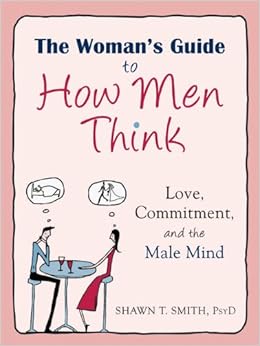
My new book, The Woman’s Guide to How Men Think: Love, Commitment, and the Male Mind is available at Amazon, in stores and online at Barnes & Noble, and at other fine booksellers.


Related Links

Saturday, April 5, 2014

Relationship Problems? Unlock the Code of Men’s Feelings

This comes from Barbara Markway's blog at Psychology Today, Living the Questions. The points I agree with in Markway's list are the double-bind (we are told to express our feelings, especially by female partners, but then we are seen as less masculine when we do so) and that men expressing feelings catches people off-guard (both women and men can react to a man sharing feelings as though someone just farted).

There is no easy answer on how to allow men to feel better and safer sharing emotions, but I have a sense the cultural landscape on this is beginning to change.

Relationship Problems? Unlock the Code of Men’s Feelings

How to help your relationship by decoding men's feelings.

Published on January 18, 2014 by Barbara Markway, Ph.D. in Living the Questions


The myth that men are unfeeling creates damaging relationship problems. In an interview with Daphne Rose Kingma, author of The Men We Never Knew, she said:
"We've dismissed men as the feelingless gender – we've given up on them. Because of the way boys are socialized, their ability to deal with emotions has been systematically undermined. Men are taught, point-by-point, not to feel, not to cry, and not to find words to express themselves."
Just because men aren't adept at expressing their feelings, don't for a minute think they don't feel…and feel deeply. Many times, men express their feelings using a secret code – a code that even they can't decipher.

Men may convert one feeling into another. Men may convert stereotypically feminine feelings, such as sadness or vulnerability, into feelings like anger or pride – feelings more socially acceptable for a man to experience.

I remember a couple who came to see me in distress because they had recently learned their teenage daughter had been assaulted by her boyfriend. A major conflict arose because John was threatening to kill the boyfriend, upsetting his wife and daughter tremendously. They worried he might actually seek revenge and end up in jail. With some work, I was able to help John express his true feelings: he cried, stating that he felt responsible for what had happened – as though he should've been able to protect his daughter. He felt terribly sad that his daughter was going through such pain, and he fell justifiably angry. After he expressed the full range of his feelings, he no longer threatened to kill the young man and was better able to support his daughter in ways that were helpful.

Men may shift their feelings into another arena. Men may express emotions only in places where they feel safe, and where the expression of feelings is considered acceptable. Just look at how men act at sports events. It's not uncommon to see men in the audience express great exuberance and affection, giving each other hugs and high-fives. Football and hockey players, probably some of the most macho men around, appear quite comfortable expressing their feelings with each other during the game. Where else would you see men slapping each other playfully on the butt? Put these same men in another situation and you wouldn't see the same level of openness and comfort with showing emotion.

Men may experience their feelings through physical complaints. It's not uncommon to see men experience their feelings through things such as headaches are backaches. You may know of a man who gets headaches only on the weekends, or become sick on vacations. Why does this happen? Because as long as men are working, they can cut off their feelings. Without the structure of work, however, their feelings and needs surface, and may be expressed through physical symptoms.

Men are in a double-bind when it comes to expressing emotions. Although men may not always know what they're feeling, there's one thing they’re sure about: they’re convinced they’re in a major double bind. Women tell men to express their feelings, but when they do, women are often petrified, if not horrified. Women want men to show their feelings, but only certain feelings, and only in doses they can handle.

In fact, results from numerous research studies, as well as clinical experience, tells us that men may be right to be wary of women who implore the to show their true feelings. Men who deviate from the traditional masculine norm by being emotionally expressive and talking about their fears are often judged as being poorly adjusted.

Men’s feelings may take everyone off guard.


Part of the problem may be that men have silenced their feelings for so long, that they haven't developed resources for handling them when they do arise. Such unplanned for, unexpected emotion can often prove overwhelming. I worked with one couple where this was the case. Rob had taken a new job several hours away. Emily stayed back, trying to get their house ready to sell. They were arguing about whether or not to get a dog. Emily argued that a dog would provide her with some needed company, and would also make her feel secure when alone in their home. In his logical, analytical way, Rob gave her every reason why the timing was not right for a dog. How could you show the house with a puppy running around, peeing on the floor? On an intellectual level, Emily knew he was right, but her heart insisted she would be happier with the dog. They went through several weekends were all they did was fight about the dog issue. Emily thought Rob was being cold and unfeeling. Rob thought Emily was being unreasonable.

With much coaxing, Rob agreed to accompany Emily to the local animal shelter “just to look” at dogs. When Rob saw all those rows and rows of dogs in cages, knowing that most of them would probably be put to death, he began sobbing. Emily said she had never seen him cry so hard. She had been thinking to herself that he didn't have any feelings, when nothing could be further from the truth.

My own observation has been that many men experience intense emotions; but, lacking the training and support to make sense of their feelings, they are left with few options but to bury them deeper. It's only when men are taken off guard (such as when Rob visited the animal shelter) that their feelings are free to surface.

So no, it's not that men are unfeeling. Rather, men are trapped in the confines of a socialization process that tells them it’s unmanly to cry, to hurt, or to express the myriad other motions we all experience as a result of living fully as human beings.

You might also like these posts: A Simple Way to Put The Spark Back in Your Relationship and 80+ Self-Care Ideas.


Let’s Keep in Touch!
I am the co-author of Dying of Embarrassment, Painfully Shy, and Nurturing the Shy Child. Dying of Embarrassment: Help for Social Anxiety & Phobia was found to be one of the most useful and scientifically grounded self-help books in a research study published in Professional Psychology, Research and Practice. I’ve also been featured in the award-winning PBS documentary, Afraid of People. My husband, Greg and I also co-authored Illuminating the Heart: Steps Toward a More Spiritual Marriage.

Photo via canstockphoto.com

Saturday, November 30, 2013

Kate Bartolotta - What Happens When Our Emotions Stay in Our Bodies

This is an excellent article from Kate Bartolotta, posted at the Good Men Project, on what happens to us when we keep emotions locked in the body rather than letting them flow through us as they arise.

For boys and men, this often means sadness, sorrow, grief, rejection and all of the other "soft" emotions that men are taught not to feel - "boys don't cry," "shake it off," or "c'mon, be tough," as just a few examples of the many ways boys are taught not to feel. For men, there are cliches such as "man up," "stiff upper lip," "put it behind you," or "suck it up."

In the words of the AA folks, what we resist persists. We need to stop resisting the feeling and expression of human emotions.

What Happens When Our Emotions Stay in Our Bodies

May 27, 2013
by Kate Bartolotta


It’s never too late to address unexpressed emotion stored in the body as pain, tightness, and discomfort.

When we look at the language we use to talk about emotional reactions, there is often a physical sensation associated as well: a lump in the throat, butterflies in our stomachs, a gut feeling, the weight of the world on our shoulders. This isn’t coincidental! Those visceral reactions are messages from our body.

We hear this referred to as “the mind-body connection.” It’s often associated with using the mind or positivity to help boost the immune system or physically feel better. While that is certainly a helpful boost, we shouldn’t ignore what our bodies can do to help heal our emotions.

Most of us can recall a time growing up where we were discouraged from releasing a painful emotion by well-meaning adults. Parents tell little boys to “be a tough guy” or “shake it off” when they get hurt, while women are encouraged and socialized to discuss their feelings. Our bodies hang on to what happens with our emotions—even if we’ve “talked ourselves out of it.” The physical and emotional impact of unexpressed pain is one that lasts. Unexpressed pain sticks around.

Below are some typical patterns of stored emotion in the body as recognized within the bodywork community. Each person has their own patterns as well, but these are some common patterns :

Infographic courtesy of Nutritional Solutions

Our bodies are aware of the things that our minds would like to push aside. The things that we have forgotten at a conscious level are still present all the time in our bodies. The good news is that it’s never too late to address these issues, and that the results can help with both physical and emotional pain.

A few steps we can take to release unresolved emotion:
  • Find a daily physical practice you enjoy. Notice I didn’t say “exercise.” Caring about our health and fitness is important, but the intention here is a physical activity that we love. It helps to choose an activity that quiets your mind a bit. For me, this is yoga. Many people find running to have a meditative quality. It could be as simple as a ten minute quiet walk where you pay attention to your breathing and the sensations in your body. 
  • Receive regular bodywork. Therapeutic massage and bodywork are some of the most effective ways I’ve seen (and experienced) for releasing stored emotion. When someone works on those knots in your shoulders you have from long held anger or stress, sometimes emotions will come up. I’ve had clients cry on my table—and sometimes they’ve known and shared why; other times, the pain is old and just hanging on in the muscles, waiting to be released. It’s important to remember that a massage therapist is a facilitator for these things—not a psychotherapist. Through bodywork, we can tap into these stored emotions and begin to process them ourselves, or if needed, with another professional. 
  • Make touch a part of your primary relationships. This sounds simple, obvious even. Unfortunately, we have become a very hands-off culture. Fewer and fewer of our daily interactions involve touch. As we rely on social media and smart phones for the bulk of our communication, our relationships often involve less physical contact than we need. Make a point of touching people on the arm or shoulder as you speak with them. Greet friends with a hug. Play a pick-up game of basketball instead of just watching the game. When we begin to remember that we are not just minds stuck inside a body, but body and mind working in concert, we can begin to heal old hurts in a deeper and lasting way.

~ Read more of Kate Bartolotta’s men’s health column, Body Wisdom, on The Good Life

Wednesday, August 21, 2013

Robert Augustus Masters - 7 Ways (Besides Sex) To Emotionally Connect With Your Partner


One of the key differences between men and women, in my experience, is that men tend to use sex to create intimacy while women see sex as an expression of intimacy. This is by no means universal, but it is common enough that Robert Augustus Masters included it in one of the 7 tips below: Instead of using sex to build connection, let sex be a fully embodied expression of already-present connection. 

The biggest and most important point here, which Masters mentions, is that we cannot be emotionally intimate with our partners if we are not intimate with our own emotions. For most men, this is a part of our lives that we have been culturally conditioned to avoid. We need to rewire that conditioning if we want deeply intimate and healthy relationships.

The passage below is excerpted from Emotional Intimacy: A Comprehensive Guide for Connecting with the Power of Your Emotions by Robert Augustus Masters, PhD. Copyright © 2013 Robert Augustus Masters. Published by Sounds True. This article originally appeared at MindBodyGreen.

7 Ways (Besides Sex) To Emotionally Connect With Your Partner

BY ROBERT AUGUSTUS MASTERS
AUGUST 19, 2013


Without emotional intimacy, relationships founder on the reefs of emotional discord or flatness—no matter how heated the sex, no matter how much we hold in common—leaving us marooned from the interpersonal closeness for which we yearn.

En route to developing emotional intimacy, we must learn to find a fitting balance between containment (as when our anger is on the verge of turning into hostility) and expression (as when our held-back anger needs to be given emphatic voice). There’s a lot of debate about the merits of expressing versus not expressing emotions, particularly those that are labeled “negative,” but beyond the sniping between these two camps is another approach: we can make skillful room for both expression and nonexpression, so that expression ceases to be self-indulgent or harmful, and nonexpression ceases to be mere repression. Imagine emotional restraint and emotional uninhibitedness in savvy sync, coexisting consciously and compassionately.

If we want more depth and connection and joy in our relationships, we’re going to have to develop more emotional intimacy with our partners, our friends, our family, our coworkers. It’s that simple and that challenging. Connecting only through our upbeat emotions is not enough—we also need to find, and keep finding, relationship-deepening connection through all our emotions. And there is no way we can do this if we are not significantly intimate with our emotions.


Here are 7 ways to emotionally connect with your partner:

1. When you realize you’re being reactive, say “I’m being reactive.” 

How simple this sounds, and yet how challenging to put into practice — mostly because of the shame we’re on the edge of fully feeling as we become aware of our reactivity.

And once you’ve stated that you’re being reactive, STOP, no matter how tempted you might be to continue your reactivity. Soften your belly, breathe more deeply, and wait until you’re ready to say what you’re feeling and nothing more.

2. Learn to express your remorse from your heart. 

Don’t settle for shallow or emotionally flat expressions. If you’re not sorry, don’t say you are — but if you’ve done something that’s hurt another and you feel bad about this, and the words “I’m sorry” get stuck in your throat, say that you’re having hard time saying it. Such a confession will usually soften you enough to allow your remorse a fitting voice.

3. If you’re being defensive and know it, don’t hesitate to say so.

Be your own whistleblower. Don’t wait for the other to pressure you into owning up to your defensiveness. And don’t slip into being defensive about being defensive!

4. Don’t allow emotional disconnection to last any longer than necessary.

When you lose touch with the other, reestablish it as soon as possible. If you’re staying emotionally disconnected to punish the other, confess that as soon as possible, regardless of how uncomfortable that may be.

5. Never threaten to leave the relationship in order to get your own way or to make your partner beg you to stay.

If you feel like being manipulative, say so, rather than acting it out. Threats are negative promises, and are usually mood-dependent. If you really want to leave a relationship, such wanting will remain present no matter how good, bad, or indifferent you feel.

6. Instead of using sex to build connection, let sex be a fully embodied expression of already-present connection. 

When you want to have sex when you are not very connected to the other, turn your attention to your emotional state and do what it takes to bring that into your heart.

7. Don’t forget that the deeper you dive, the less you’ll mind upsetting waves.

View your relationship as an ever-evolving adventure, potentially deepened by all that happens, however unpleasant. You may hurt more as you mature, but you’ll mind less.

Tuesday, June 11, 2013

Candice Holdorf - Vulnerability Is the Real Strength

In this nice post from The Good Men Project, Candice Holdorf explains why she (and many other women) prefer a man who is in touch with his feelings, and therefore those of his partner. She states, and I cannot agree more (for men AND women), that vulnerability is real strength.

Men, You Get To Have Your Feelings, Too

JUNE 10, 2013 BY CANDICE HOLDORF 

Being more stable and open with our feelings contributes to a better relationship. And a better self. 


I recently experienced what some would call an emotional breakdown. The hippie, new-age Cali girl in me would prefer to think of it as an emotional breakthrough. But yeah, I had a breakdown. 
Anger, unspoken desires, resentment, exhaustion, hunger—all of these conspired to create the perfect storm of matrimonial turbulence. 
Until he finally held my shoulders, looked into my eyes and said, “You get to have your feelings.” Finally, the knot I had been gripping with all my arrogance melted. He had touched the sore place where love does not easily flow. 
The welling tears spilled forth, and my shaking body, caught in the grip of deep climax, collapsed onto his chest.

I could trust this man because I know that in our relationship, he gets to have his feelings too.
♦◊♦
Men seem to be perpetually caught in a paradoxical mind-fuck which dictates that they must be the impenetrable ‘rock’ in the relationship. He can’t have any feelings or those feelings must take a backseat to his partner’s. This belief, while chivalrous in its roots, cripples intimacy. 
The stoic and mysterious Don Draper may certainly be appealing for a night of sensual debauchery, but his relationship track record is pretty wretched. 
To me, being a rock doesn’t mean that a man is bulletproof or fixed. A rock is a porous being. It absorbs the water just as much as it meets and holds it. 
The rock is meant to symbolize constant presence. What that means is a man stays connected no matter what is swirling within himself or his partner. He remains open and permeable, mirroring his partner with equal amounts of honesty 
Vulnerability is the real strength. Someone willing to say what he feels while holding the space for his partner’s experience requires the utmost courage and willingness to stay firmly rooted in the moment. 
When a man is permeable, he is truly feeling his partner and not simply dealing with him/her. The former breeds compassion and trust. The latter usually plays out one of two ways. 
In the first, the man may completely detach from the experience. He essentially waits for his partner to ‘get it over with’ before he returns to the present. 
In the second, the man may settle into the old game of ‘son saves mommy’, leaving both parties completely disempowered as neither will take responsibility for his own experience. The focus becomes on finding someone to ‘fix’ and not on sharing experience authentically. 
As woman, I want a partner, not a caretaker. A playmate, not a parent. Someone who is already whole, not depending on me to make him whole. When a man is in alignment and approval of his own inherent femininity, it opens the door for total, embodied masculinity (which is pretty damn irresistible). 
So men, release the ‘handle-the-problem’ mindset and allow yourself to be penetrated. Your willingness to have your feelings allows me the freedom to share mine. 
Open your heart. Ground into your cock. Breathe. Let your commitment to stay present remain unwavering and speak your truth. That is the real rock we are calling forth from you.

Image Credit: visualpanic/Flickr
Read more about Marriage on The Good Life.

Monday, May 20, 2013

Jayson Gaddis - Why Men Need to Feel Their Feelings

From Role/Reboot, this is a good article from Jayson Gaddis - originally posted at his own blog. This is an important topic for men, and I include myself in needing to pay more attention to this aspect of my life. I've become very attuned to feeling my client's emotions, but I have been paying less attention to my own feelings.

My being shut down lately has made my partner angry and uncomfortable - she feels shut out and that I am not fully invested in our relationship. It's understandable that she feels that way in the absence of any indication from me.

This article from Jayson is a good reminder to get back to being self-aware - because when I was younger, I was exactly as he described himself, "emotionally shut down." I don't want to fall into that trap again.

Why Men Need to Feel Their Feelings

By Jayson Gaddis
May 19, 2013


This originally appeared on JaysonGaddis.com. Republished [at Role/Reboot] with permission.

I was emotionally shut down for years. Every woman I dated had to deal with my inability to identify a feeling. She would ask, “Hey is something bothering you?” I would reply, “No, I’m fine” with a hint of defensiveness.

The closest I ever came to identifying what was really going on was “I’m in a funk.” Many folks know this as feeling off somehow or my personal favorite, “I’m in a bad mood.”

Underneath such comments is an entire emotional landscape that remains largely unexplored. The metaphor I like to use is that of a lake.

When standing on the shore of a large lake, you can see ripples, colors, and reflections. If it is windy or stormy out, the surface of the lake changes and makes it even harder to see beneath the surface. Not until the storm dies down can you begin to see more clearly. When things are still, the lake's surface mirrors its surroundings.

Venture beyond the shoreline and even more possibility opens up. The lake takes on a new perspective. Looking beyond the reflection, it becomes three dimensional and you can see below the surface.

We are very similar. When we are upset, it is hard to see things clearly. The only way to see things clearly is to take some space from the upset, calm down, and gain a new perspective. Why am I mentioning this metaphor?

Because feeling helps you see clearly. And seeing clearly helps you move more freely toward what you want in your life. And when you get what you want, you are more fulfilled.

But Why Is It So Hard For Dudes to Feel?

Contrary to some big generalizations out there, men do in fact feel, but most men were trained as little boys by the “boy code” to not feel. They were trained and taught to suck it up, not cry, etc. For example, as a boy I was trained by my dad and my culture to not feel. To feel meant I would be judged as a wimp, a girl, or even gay. (As if girls or gay people are somehow bad?) So, men do feel, it’s just challenging for many men to know what they are feeling.

So, it’s understandable why many men don’t allow themselves to feel and can’t even identify a feeling. Many adult men are still very scared to feel their feelings because if they do, their fear is they will be judged as not manly, acting like a girl or being weak or gay.

So, most men never venture out beyond the shoreline and certainly don’t look below the surface. Therefore, many men remain locked up, shut down, and not free.

The Cost of Not Being Willing to Feel

1. relationship blues

Sadly, these old fears keep many men locked up around their feelings and lead to very frustrating relationships for women dating these men. Rather than dive in to the unknown waters of intimacy, men stay on the shore, where it is safe. But as any sailor will tell you, a ship in a harbor is safe, but that’s not what ships are built for (a William Shedd quote).

Moreover, men who shut down or stuff their feelings remain emotionally constipated and have very little facility or freedom when it comes to intimacy. Then, they keep resisting actual help like couples counseling.

2. narrow bandwidth of expression

If you never let yourself feel grief, anger, sadness and other “negative” emotions, you will have less access to the “positive” emotions such as joy, love, and happiness. The waters you are able to swim and navigate are more shallow. For example, if you avoid “negative” emotions, you might experience some happiness but the depth with which you feel it is limited.

3. you are not free

Staying on the shore, you never really get to test if your vessel is seaworthy. Freedom is the open water of who you are, not the shore.

4. physical problems

Most body workers, massage therapists, and good body-centered, somatic therapists know that the body holds and stores trauma and unexpressed emotion. The more you hold, the more the body has to carry the burden. Your boat begins to decay having never touched water. Stoic men who never learn to feel, are simply in pain.


5. You are less available to give and receive love

If you shut yourself off from your own emotions and never “set sail,” you’ll never know what it is like to swim or sail. The endless terrain that is available to you will remain a distant dream. If you want to feel more love, try feeling all your feelings. Try exploring what lies below the surface farther from the shore.

For the brave who do decide to face the unknown lake of discomfort and painful emotion, what you will experience may shock you. Try it and see what happens. To me it’s something like an elixir.

But Where Do I Start?

1. Get quiet: When you are upset or “in a funk” sit down or lie down and be still. You cannot see below the surface until you are still. Meditation is a tool that can help.

2. Get Curious: Start with the facts before you begin to interpret or try to figure it out. Target three main areas:
a. Thoughts: When did it start? Ask yourself when this feeling started? Was it the fight with your partner last week? Was it a call with your parents? An ex-lover? Did something piss you off at work? Where are your thoughts going and what are they like? 
b. Emotions: What does it feel like? Explore the feeling quality and the sensation that goes along with it. Is it hot? Cold? Tight? Humming? Vibrating? Tense? Soft, Achy? Does it have a color? A tone? Does it radiate? Is it dense? Thick? 
c. Body sensations: Where in your body do you feel it? Is it in your throat? Gut? Chest? Where does it live?
3. Take responsibility for what you are feeling: Name it, begin to articulate it with a friend. For example, “Wow, for the last few days I was locked up. Now I know that it started when ____happened. I have felt tense and irritated ever since. I feel shut down and I don’t want to be around anyone.”

4. Notice what your default behavior is when you feel this way. When you find yourself “in a funk” do you numb out with TV? food? sugar? porn? masturbation? alcohol? drugs? Or do you isolate? Or both?

5. Choose to feel it until it changes. Have the balls to turn toward it. After all, what is the worst thing that could happen?

Want to feel more love and lightness in your life? Then start saying “yes” to feelings you have been saying “no” to. Invite them in and get to know them. As psychotherapist John Welwood says, befriend your emotions.

Jayson Gaddis is a yerba mate addict and a householder. He’s a relationship healer, psychotherapist, and guide devoted to helping people awaken through relationships, intimacy, and parenting. He’s a husband and part-time stay-at-home Dad getting schooled by his two kids.

Related Links: