Who's The Man? Hollywood Heroes Defined Masculinity For Millions
by Bob Mondello
All Things Considered
July 30, 2014
Movies have always offered a window through which audiences, sitting in the dark, can observe human nature without being observed. A movie theater is where many a boy learned how to make things right, the way John Wayne did in so many pictures, with fists or a gun. Movies taught about sacrificing for the greater good, as Humphrey Bogart did when he sent Ingrid Bergman off with a "here's lookin' at you, kid" in Casablanca. They're a place to learn about standing firm against injustice (with Spencer Tracy in Inherit the Wind), and about standing up for yourself (with Sidney Poitier in A Raisin in the Sun).
All of which was useful for a nation that thought of itself as a melting pot. For generations, newly arrived immigrants had emerged slowly from their ethnic enclaves in big cities, where things were comfortingly just like the old country. Assimilating was hard.
But film — even back when it was silent — was like an instruction manual for the American experience. For a nickel at the nickelodeon, a foreign fellow fresh off the boat could see exactly how American men dressed, how they greeted each other (with a handshake, not with European kisses on each cheek), and, more generally, how people in his newly adopted country behaved. Admittedly, silent films used a kind of shorthand for American behavior — stereotypes, to allow directors to brush in characters quickly without dialogue: women were almost always domestic, delicate and passive, while men were outgoing, strong and active.
Film's power of suggestion quickly became so influential — so overwhelming in fact — that some argued it should be curbed. In the 1930s, the film industry created a production code that laid out a set of strict rules for filmmakers, banning drunkenness, sex, revenge plots, all forms of immorality and stating explicitly that no movie should throw audience sympathy to the side of wrongdoing.
You couldn't do most of Shakespeare under those rules, but you could have strong, manly, family-friendly heroes. Which meant, as the bluenoses intended, that Hollywood, having been told what it could show, was in effect telling audiences what they should be — portraying human behavior (especially male behavior) in idealized, heroic terms that mere mortals might have trouble living up to.
After World War II, the code started fraying around the edges as competition from television cut into Hollywood's bottom line. What could film offer that TV couldn't? Well, foreign films had nudity; indie films offered rebellion. The studios wanted a piece of that action, so they stopped restricting filmmakers with the Production Code and started alerting audiences through the ratings we know today.
And as soon as the restrictions were gone, leading men in movies became more like men in real life — not always strong or good or forceful. Dustin Hoffman became a huge star, playing a total slacker in The Graduate. Peter Fonda easy-rode his way across America; Paul Newman and Steve McQueen played antiheroes and got labeled the "Kings of Cool." John Travolta was that era's Fred Astaire — all of them recognizable as people, not icons.
All were nuanced, and vulnerable and incapable of being like the men of old Hollywood, because the world had changed too much. Woody Allen demonstrated the change in comically literal terms by conjuring up Bogie to help him man up in Play It Again, Sam.
In a world of modern, nuanced, flawed screen men, superheroes like Robert Downey Jr.'s Iron Man have taken up the mantle of traditional movie masculinity, says critic Bob Mondello. Industrial Light & MagicTestosterone was in full retreat by the 1980s. Movies made for teenagers had teen heroes, not adult males. James Bond started poking fun at the kind of "suave" his predecessors had played straight, and romance devolved from Cary Grant to Hugh Grant — stammering, hesitant, charming in a manner that was utterly without eloquence or confidence.
This led over time to the adult male as overgrown child in Judd Apatow comedies, to dads who turned themselves into Mrs. Doubtfires to rule the roost, to sensitive bad guys, earnest good guys, gay guys who wished they could quit each other, and action heroes like Jason Bourne who literally don't know who they are. Men, in short, became varied, and human, and unambiguously authentic on-screen.
But audiences still want heroes — and more important, audiences are eager to pay to see heroes. Which means Hollywood needed to find a way for males to be heroic again.
The solution, which turned out to be a multibillion-dollar solution: Make them superheroic. Men of Steel, Men of Iron, men with the webslinging power of spiders and with the claws of wolverines — but more important, each and every one a man who cares.
From John Wayne to Iron Man ... not such a stretch, really. They're icons both, standing tall, fighting for the greater good. And yes, they're manly in a way that may not be entirely human, or even something most people would want to live up to. But it sure looks great in Cinemascope.
Showing posts with label movies. Show all posts
Showing posts with label movies. Show all posts
Wednesday, August 6, 2014
Who's The Man? Hollywood Heroes Defined Masculinity For Millions
This brief story from NPR details the shift in Hollywood from leading men who embody traditional forms of masculinity (tough, sure, quiet) to men who are more real and more reflective of the varied masculinities men can embody. Even our superheroes are flawed men (Iron Man, The Dark Knight [Batman], Superman) who have doubts about themselves and who many not always act like heroes.


Wednesday, June 18, 2014
10 Movies That Make Men Cry (Esquire)
Just to be clear, it's okay for men to cry when they are not at the movies, as well. This Top 10 List from Esquire includes some good movies, and some serious tear-jerkers, but there are also some omissions worth noting.

What movies make you cry and are not listed here?
I often "prescribe" a sad movie to clients who are emotionally stuck (men more often than women), so I would like to compile a longer list. Help me out, please.
One of the best movies to make me cry is Whale Rider. Paikea's speech is especially poignant because she has been told that females cannot be leaders. Her grandfather is the man who has tried to enforce the old traditions, seeking a new leader for their people. Pai has invited him to the school concert to see her performance and she eagerly, then sadly, waits for his arrival, which never happens.
What movies make you cry and are not listed here?
I often "prescribe" a sad movie to clients who are emotionally stuck (men more often than women), so I would like to compile a longer list. Help me out, please.
10 Movies That Make Men Cry
Because it's okay to tear up in the theater
By Nick Schager on June 9, 2014
Scores of adolescent girls are heading to theaters to cry their eyes out over The Fault in Our Stars, an adaptation of John Green's popular young-adult novel about a girl stricken with cancer (played by Divergent's Shailene Woodley) who falls in love with a boy (newcomer Ansel Elgort) also attempting to overcome a battle with the fatal disease. It's a teen romance with a healthy dose of tragedy, and one designed to get its target female audience's waterworks flowing. But what about guys? Don't they get to shed a tear or two over the movies as well? In this summer season of stuff blowing up and superheroes saving the world from all manner of out-of-this-world monsters, we think men should remember that, when it comes to the right film — be it about sports, family, or war — it's never shameful to sob. As such, we present the ten best male weepies in movie history.
A Perfect World (1993)
The first of this list's two Kevin Costner-headlined dramas — both of which are rooted in the relationship between parents and children — Clint Eastwood's superb A Perfect World tugs at the heartstrings via the story of an outlaw (Costner) who takes a young boy hostage and, in the process, becomes his surrogate father figure. Their final parting is enough to make even the stoutest man misty-eyed.
Brian's Song (1971)
A 1971 TV movie that's attained legendary status as a work that no man's tear ducts can resist, Brian's Song tells the alternately mournful and inspiring tale of football player Brian Piccolo (James Caan), who was ultimately felled by cancer. His relationship with friend Gale Sayers (Billy Dee Williams) is the stuff of archetypal male camaraderie, and Sayers's speech about his friend is one of the movies' all-time four-hankie moments.
Schindler's List (1993)
Any number of Holocaust films — be they fictional, based on real events, or documentary in nature — could easily fit this list's bill. But few are as emotionally forceful and eloquent as Steven Spielberg's 1993 epic, whose portrait of courage amidst unthinkable horrors remains nothing short of overwhelmingly moving.
The Shawshank Redemption (1994)
A movie about injustice, suffering, and the unbreakable bond forged between two unlikely allies (Tim Robbins and Morgan Freeman), The Shawshank Redemption mixes tragedy and uplift to create a male-oriented melodrama perfect for eliciting tears. If Red's reunion with Andy doesn't make you a blubbering mess, nothing will.
The Bicycle Thief (1948)
Of all the neorealist masterpieces to come out of post-WWII Italy, none is as profoundly moving as Vittorio De Sica's The Bicycle Thief, about a poor man's search for his stolen bicycle, which he needs to earn a living for his family. The last scene, between forlorn father and devoted son, is one of cinema's most quietly devastating.
Big Fish (2003)
A fantastical ode to extraordinary fathers — and the simultaneous love, jealousy, and resentment they inspire in their sons — Tim Burton's Big Fish tells the story of one man's process of truly learning about his larger-than-life dad at the very moment he must begin to let him go. Inspired by Fellini's 8 ½, its climactic parade through a lifetime's worth of friends and loved ones is pure male weepie gold.
Toy Story 3 (2010)
Every adult once loved a childhood toy, and thus Toy Story 3's saga about growing up and permanently separating from those cherished playthings — as well as passing them on to future generations — strikes a universal chord, as manipulatively sentimental to men as it is to women and children. The final farewell between Andy and Woody is a bittersweet one for the ages.
Babe (1995)
A children's fable about a farmer and his pig would hardly seem to be prime crying-jag material for your average macho moviegoer. Nonetheless, Babe's buildup to its triumphant finale is so sweetly funny, and bolstered by such a fantastic performance by James Cromwell, that the farmer's expression of acceptance and love for his swine is apt to soften even the hardest heart.
Saving Private Ryan (1998)
Saving Private Ryan's clunky bookending scenes may be a misstep. Yet they do little to fundamentally undercut Steven Spielberg's harrowing and poignant portrait of American men — led by Tom Hanks, in a performance of affecting everyman heroism — thrust into extraordinary life-and-death WWII circumstances, and the struggles they must endure, and sacrifices they must make, to survive.
Field of Dreams (1989)
Baseball, fathers, sons, nostalgia, ghostly reunions, and a general air of wholesome middle-American romanticism: Field of Dreams is still the ultimate male weepie. When Kevin Costner's corn farmer finally gets to play catch with his dad, the only people who can resist the moment's waterworks-courting power are those who don't like sports. Or dads. Or feelings.
Honorable Mention:
- The Natural
- Forest Gump
- The Pride of the Yankees
- Gladiator
- Rudy
~ Nick Schager is a New York City-area film critic and journalist who also contributes to The Village Voice, Time Out New York, Vulture, The A.V. Club, The Dissolve, The Atlantic, SF Weekly, Film Journal International, and Slant Magazine. In his scant spare time, he sleeps.

Wednesday, January 22, 2014
Ryan Leas - Masculinity Anxiety at the Movies: Questioning Yesterday’s Tough Guys (Salon)

From Ryan Leas at Salon, an interesting article on how the Hollywood portrayal of men in the movies has changed considerably since Clint Eastwood was asking bad guys to make his day, or Charles Bronson became a nighttime vigilante in Death Wish.
Today's male leads don't do masculine very well.
In the films reviewed below,
We’re shown all sorts of classic imagery of frontier masculinity, but we’re rarely led to believe the writers, actors or directors behind these characters consider them feasible in a contemporary setting.And . . .
As ambitious as these films are, none of them seem entirely sure what their endings should mean. And that makes complete sense. These are movies dealing with a concept and a trend as it unfolds. We don’t know where it’s going or what should replace it. Longing and wearied, “Mud” and “Out of the Furnace” and “The Place Beyond the Pines” are all stories by men about the sorts of men they might want to be, but with the knowledge that the world is leaving those sorts of men behind.The fact that there are no easy answers in these films reflects our own current struggles to evolve a new form of masculinity is appropriate - we are still in process of shaping where we are heading as men.
Masculinity anxiety at the movies: Questioning yesterday’s tough guys
For the guys in a spate of recent movies, trying to be a tough, rugged outlaw doesn't work out very well
Ryan Leas
Monday, Jan 20, 2014
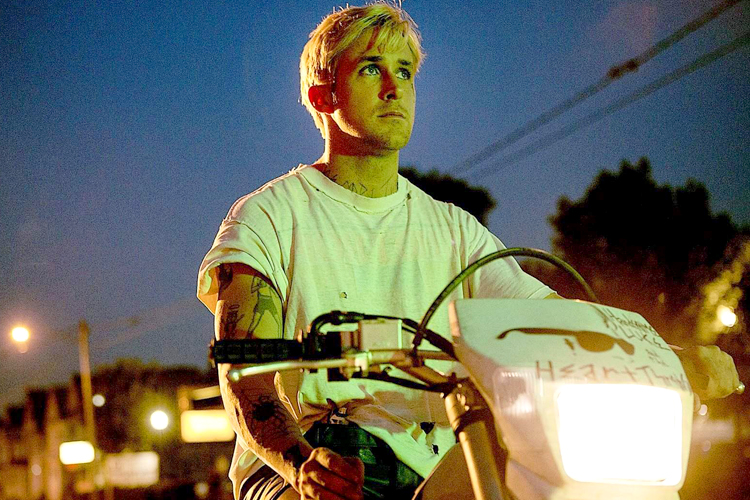
Ryan Gosling in "The Place Beyond the Pines"
A friend of a friend of mine has big plans: quit his prestigious editorial job in New York, grow his beard a bit further out, and start working on the docks. In 2014, the sentiments behind such a decision aren’t anything new, but they’re becoming more and more visible in our pop culture. You know the litany already: Gender roles in the workplace and the family are blurring, outsourcing is closing factory after factory, once-secure manufacturing jobs are disappearing. “American men don’t know how to make things anymore,” and all that. For a certain slice of American men, a romance has cropped up around working the docks, or an oil rig, or a crab boat up around Alaska. You’re getting back in touch with something, some supposedly inherent masculine energy that seems ever more ineffable as the nation adjusts its identity for a new era.
Last year saw a handful of filmmakers take on the questions of what it means to be a man in America in the 21st century, but their films don’t celebrate archetypal images of frontier manliness. Rather, they seem to suggest that looking back to these old forms is another broken urge in an age of cultural nostalgia.
After a decade of male antihero-dominated prestige TV dramas, the problem of contemporary American masculinity had its thematic apotheosis with “Breaking Bad.” Walt might have gotten a bleak version of a final Wild West showdown, but one of the most lasting images of the final season was that of him wasting away alone in a frozen cabin in New Hampshire. All the bluster of Heisenberg faded as Walt was corroded by the consequences of his actions — we saw up close the perversity of a man like him living alone in the woods. But while “Breaking Bad” did condemn old archetypes of masculinity to a degree, other stories seem to eulogize them as they slip away. Such an impulse toward eulogy has run through a handful of recent movies, most notably Jeff Nichols’ “Mud,” Derek Cianfrance’s “The Place Beyond the Pines” and Scott Cooper’s “Out of the Furnace.”
Though they may initially seem to have little in common, the settings of each film all present classic figments of Americana as if they are synonymous with the raw nature of our country’s landscape, a landscape in which listless male characters see their conceptions of life fragmenting. Each movie is shot in its own way, but each poeticizes decrepitude. The moss-covered porches and shuttered storefronts of Braddock, Pa., in “Out of the Furnace” aren’t so different from the strip malls and Piggly Wiggly in “Mud.” Luke and Romina, the ill-fated lovers of “The Place Beyond the Pines,” work as a traveling circus performer and a waitress. There’s something inescapably Springsteen-esque about their struggles, emphasized by the moment where “Dancing in the Dark” fades out as Luke walks up to the diner where Romina works.
That strain of down-on-your-luck American iconography runs through “Out of the Furnace,” as well. When Russell is released from jail, the very next scene begins with a shot of the road leading to the steel mill. Like much of “Out of the Furnace,” the symbolism isn’t overly subtle: a prison lies at one end of the road, the mill at the other. That mill appears as a darkened structure nearly indistinguishable from the earth it sits upon, either as barbaric as nature or being reclaimed by nature. Everything in Braddock is in the process of becoming a ghost.
Cooper, Cianfrance and Nichols also turn to immortal tropes of the past to address a much more contemporary preoccupation with a fading sense of rugged American masculinity. The most overt of these is the biblical influence on “Mud.” The isolated island where Mud lives is Edenic; it’s unclear for much of the movie whether Mud himself is supposed to be the snake in the garden or the First Man. It’s the battleground upon which Ellis’ loss of innocence takes place, the boy’s disillusionment boiling over into a confrontation with Mud that shatters the adventurous, paradisal escapism of the island.
Of course, linking biblical or classical ideas to American mythology is far from new. The difference here is that with each movie’s more or less contemporary setting (“The Place Beyond the Pines” begins in the ’90s, but ends in current day), it feels as if the traditional imagery — both American, and further back — is being deployed as a last-ditch attempt at inflating characters who have stopped making sense. These are broken archetypes wandering through archetypically desolate landscapes. They are men of the frontier, but also victims to it.
In each film, some character embodies a mythic vision of American masculinity. These characters are almost always shown either as out of step with the world around them, or as reflecting ways of life that are dying. They never triumph in an uncomplicated way. Just as the plots of these movies nod to biblical motifs, the characters themselves often take elements of stock fictional depictions of rugged masculinity. Mud is an island man as Rodney (or, on the darker side, Harlan) is a mountain man, as Luke is classical outlaw, a bank robber.
Of all of these, it’s Mud who’s most romanticized. He first appears as something of an apparition, the boys noticing cross-marks in the sand from his boots. They turn around and he’s standing by the tide — appearing out of nowhere, out of nature. He presents himself as an American mystic living out in the swamp, but also sounds like a rambling Beat. The crosses are nails meant to “ward off evil spirits.” As Ellis talks to both Mud and Tom Blankenship, the men mythologize one another. According to Mud, Tom is an ex-CIA assassin living a quiet, monkish second life in a houseboat; Tom claims Mud was “living in the woods when I first met him.” It’s unclear whether anything the men say about each other is actually true, but all of it paints Mud as a romantic outlaw.
In “The Place Beyond the Pines,” Jason hears that his father, Luke, is an “outlaw,” but the tone of the word is far different than when it’s applied to Mud. In “Mud,” there’s the creep of disenchantment — the fact that, far from a man bending the earth to his needs, Mud is a man on the run from the law, relying on Ellis’ groceries for sustenance. Luke, meanwhile, is a tragic outlaw. What would be mythic in a film less concerned with consequence gets refigured as something shameful. Luke thinks he’s living in a Wild West fantasy, but winds up slain by a cop and leaving his son without his biological father. Such complications are what bring each film’s ideas into the modern day. We’re shown all sorts of classic imagery of frontier masculinity, but we’re rarely led to believe the writers, actors or directors behind these characters consider them feasible in a contemporary setting.
What hangs over all of this is a tension between classic visions of manhood and a landscape that’s begun to move beyond them altogether. “Out of the Furnace” makes it explicit, and occasionally too obvious. Russell’s mill work and a hunting sequence are juxtaposed against Rodney’s refusal of a steady job in favor of fighting for money. In their way, both characters represent traditional masculinity through the physicality of their work. But Rodney’s status as an Iraq War veteran makes him, in one way, of the modern world. Russell’s factory life is a remnant of a dying lifestyle, where Rodney’s reclamation of a more visceral sense of masculinity could be seen as an extreme counterpoint to the emasculation Russell experiences through looming unemployment and his girlfriend leaving him for another man during his time in jail. “Out of the Furnace” doesn’t buy into that, though; Rodney’s brashness eventually gets him killed. The failures of the characters in “Out of the Furnace” are similar to Luke’s failures in “The Place Beyond the Pines,” all the men deal with the consequences of trying to embody an inherited vision of masculinity. Even Mud becomes — to gesture toward the Beat language he himself echoes — a holy fool, chasing after the icon of Juniper he’s built up in his head rather than realizing the truths about their relationship.
It’s worth returning to that hunting sequence in “Out of the Furnace.” Placed against Rodney’s fight in the Ramapo Mountains, together the scenes illustrate ritual displays of male control — over nature, over beasts, over themselves. The men of these movies are inevitably tied to the American landscape. They are born from it, but in their failings, they are also overcome by it. Each film centers on an interplay between these characters and their environment, between the marks of humanity and nature.
This comes out most clearly in the ways each film presents machinery and man-made items lost in nature. In “The Place Beyond the Pines,” Luke almost seems a creature of the countryside. His circus rolls through town based on the cycle of seasons; we see him riding his motorcycle rapidly through the woods as if he knows the land. True to the movie’s title, however, it’s out in nature that Luke and Avery come to terms with the more animalistic or darker corners of themselves. Luke goes into the woods and emerges a bank robber; Avery is made to face the physical result of his killing Luke. Natural settings here, as in “Mud” and “Out of the Furnace,” are where men are forced to reckon with themselves and face the futility of the structures they’ve built up, both figurative and literal. It’s there in the beginning of “Mud” in the image of the boat stuck up in the tree and littered with fallen leaves. Even though that boat’s running by the end of the movie, it’s dragging along the dark shadow of the violent gunfight that erupted at the film’s climax. As for “Out of the Furnace,” the steel mill that looms over Braddock and the film alike is on its way to becoming a shell. In the climax of the film, Russell chases Harlan among its ruined corners, through collapsing walls and rails overgrown with brush. The frontier that a character like Russell seems born out of is in the process of reclaiming the man-made symbol of what Russell is.
Even as each of these films undercuts the classic imagery it uses, none of them end without one last gesture toward dominance or transcendence. Both “Mud” and “The Place Beyond the Pines” end with a play on the classic trope of riding off into the sunset. Mud and Tom sail the boat out into open water. Jason purchases a motorcycle, inheriting more strands of his father, and rides off down roads winding through the mountainsides. Neither of these endings are clean or peaceful, and the characters in both still carry the baggage of the events that lead them to this final point. “Out of the Furnace” is more conflicted still — Russell avenges Rodney by shooting Harlan, and then there is a final shot of him sitting alone in his house, with no escape or reprieve after his actions. If these are final touches of romanticism, they are self-conscious ones.
For a moment, it may seem as if each of these films wants to uphold the mythic outlaw figures they’ve messily deconstructed along the way. As ambitious as these films are, none of them seem entirely sure what their endings should mean. And that makes complete sense. These are movies dealing with a concept and a trend as it unfolds. We don’t know where it’s going or what should replace it. Longing and wearied, “Mud” and “Out of the Furnace” and “The Place Beyond the Pines” are all stories by men about the sorts of men they might want to be, but with the knowledge that the world is leaving those sorts of men behind.
Ryan Leas (@RyanLeas) is a freelance writer based in New York. He has also written for GQ.com, Stereogum, and the Village Voice's music blog Sound of the City. More Ryan Leas.
Tuesday, November 5, 2013
Brit Mandelo - Doing Damage to the Text: Gender in Neil Gaiman’s Coraline(s)
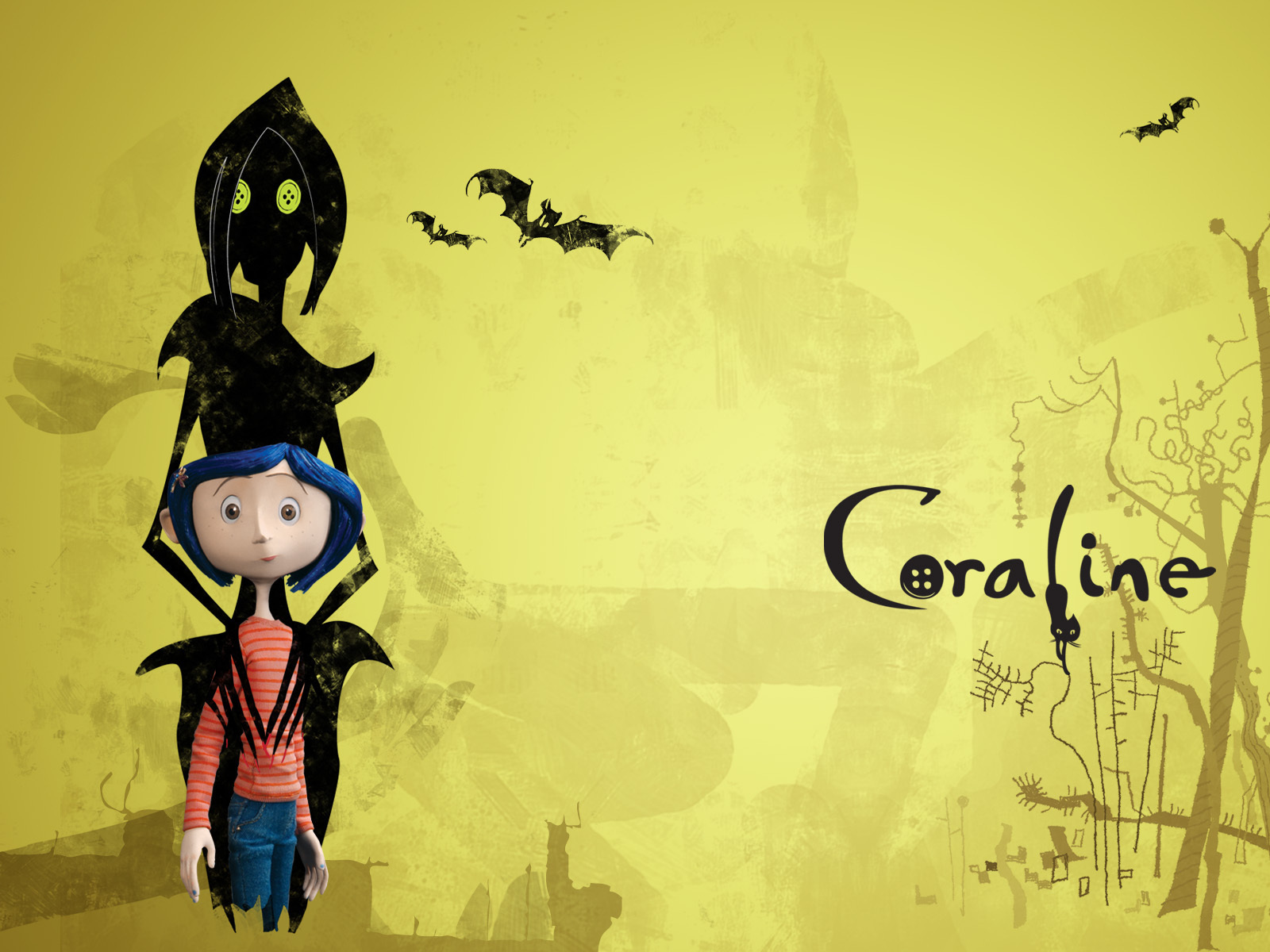
I liked Coraline the movie (2009), but I had never read Coraline (2002), the Neil Gaiman novel on which is was supposed to be based. After reading this article about the two different (very different) Coralines, now I feel compelled to go back and read the book to see what Gaiman really intended for this young heroine.
If you haven't read the novel, maybe this will convince you, too, to go back to the original - and thanks must go out to Brit Mandelo for exposing the heteronormative narrative the director of the film, Henry Selick, imposed on the original text. [And thanks to Arthur for pointing me toward this article.]
Doing Damage to the Text: Gender in Neil Gaiman’s Coraline(s)
Brit Mandelo

Neil Gaiman’s Coraline is a remarkable book. Naturally, given its appeal to children and adults as well as its handsomely creepy narrative, somebody was going to make a movie out of it—and that movie was Henry Selick’s Coraline (2009). I went to see that film in theaters, and though I initially loved it—it was gorgeous, certainly—after a little while something began to itch at me. Something didn’t seem right. There had been quite a lot of revision in the adaptation, but that’s par for the course in making a movie. The text has to be adapted to fit the screen, sure. But then the real problem occurred to me, and it wasn’t that Selick’s version had made changes. I don’t much care about that on principle.
It was that those revisions had turned the initial text into its opposite, retaining the general shape of the plot but gutting the thematic content.
Neil Gaiman’s novel Coraline is a coming of age story; it’s participating in the tradition of stories in which a youth overcomes a trial to develop their identity. The book is about independence, identity, and development. The significant thing is that it is really very much concerned with having a girl as the protagonist, a girl who is fully rounded and develops on her own as a stable, coherent individual subject.
Henry Selick’s adaptation is firmly not. In fact, in his film all of the interesting potentially-feminist freight of Gaiman’s novel disappears, edited away and replaced with a heterosexist couple-narrative. Selick drastically alters and lessens the narrative of female competency and independence contained in the original.
While the basic adventure plot remains in both book and film—Coraline rescuing her parents by challenging the beldam, exploring the frighteningly transformed “other” world to find the souls of the trapped children, and tricking her way through the door back to her own world—the thematic shape changes distinctly, altered by those aforementioned additions (of an entire character and new scenes), as well as serious alterations to other scenes. Exploring and comparing those scenes reveals the problematic shift in theme and tone between the two Coralines—something that matters to me, as a person who would like there to be more authentic, wholly realized stories about young women as protagonists and adventurers, as full subjects of their own stories.
Because it’s not just academic, and it’s not just about having something to argue, this whole thing about the Selick film. Texts are important to shaping culture—to shaping how people see themselves, the roles they’re allowed to step into, and the way they understand the world. Having coming of age stories for girls that are about danger and bravery, trouble and problem-solving, matters. Having a heroine like the Coraline of the novel matters, and having her taken apart and reshaped into a trope matters, too.
So, without further ado, let’s dig in to the argument I’m making about potentially-feminist, certainly-important content in the novel and the opposite of that in the film of the same name.
First off, contrast the opening chapter of the novel and the first ten minutes of the film. The novel’s Coraline, we find, is independently motivated and curious; she does a lot of exploring, all alone, and does not seem to really know fear. The opening of the book is all about her solitary adventures. Tellingly, her response to being told to avoid an old well is to “explore for it, so that she knew where it was, to keep away from it properly” (5). (And pay attention to that well, too; it comes up a few times.)
However, in the film, Coraline simply wanders from her new house onto the grounds out of boredom rather than a desire to explore. Once outside she is alarmed by noises and runs down a hill terrified; there’s some screaming. She’s then nearly run over by a person on a bike, who looms threateningly over her while she sits in the dirt. That person on the bike is a young man named Wybie: Selick’s addition to the screenplay and his film.
Their initial meeting has already presented Coraline as a girl who is easily frightened and subdued by the young man, Wybie. Therefore we have shifted already from a young woman alone exploring to a girl and a boy together, in which the boy has taken a dominant position in the pair. This trend of Wybie as a masculine figure, a source of authority, continues; the well, for instance, is introduced by Wybie. Coraline doesn’t discover it on her own. (Having knocked her over, he warns her that she’s standing on the planks covering the old well.)
In addition, he later informs Coraline that his grandmother lost a sister in the house she now rents out and has warned him and all children away from it. He delivers these warnings as a figure of authority on the house—he knows, Coraline doesn’t, and he tells her. His information, delivered to her from a protective position, entirely removes her potential to discover the danger on her own. Again, this Coraline does not achieve things independently: the introduced male character does them for her.
The narrative of “Wybie as male companion and protector” extends to the Wybie created by the beldam in the other-world, too. Other Wybie is provided to Coraline as equal parts entertainment and companion for her at-first pleasant explorations in the magical, supernatural other-world. He offers her cotton candy at the mouse-circus, sits with her during the burlesque performance at Other Miss Spink & Other Miss Forcible’s, walks with her around the grounds. Conversely, in the novel Coraline braves the eerie circuses and not-quite-right displays entirely on her own.
The independent young woman of the novel is, in the adaptation, sublimated into one half of a heterosexual couple. Her individuality is made a duality, with the young man as a necessity to her exploration. The adventures cannot be had alone, as they must be in the novel; therefore, the element of girlhood exploration and coming-of-age is weakened. There is a shift from explicit concern with the identities of young girls as themselves in the novel to the identities of young girls as they relate to boys in the film. The film is not Coraline: it is Coraline and Wybie.
And it gets worse. That stuff, maybe, could be brushed off—it’s irritating but minor, and possibly works to move the plot along sometimes by offering exposition (though I don’t buy that for a second). The problem is that in the end it’s more than just reducing the danger/bravery element by taking the lone girl explorer protagonist and turning her into half of a couple. It’s more than having the male half of the couple be the deliverer of information and guidance. Because then Wybie has to start rescuing Coraline, and things go way further off of the rails of Gaiman’s novel in a way that renders its whole thematic point—the girl, her subjectivity, her competence—moot.
In both versions the beldam uses a mirror as a prison for her abandoned children, into which she throws Coraline, and in both versions she does so with similar dialogue: “You may come out when you’ve learned some manners […] and when you’re ready to be a loving daughter” (79) in the novel and “You may come out when you’ve learned to be a loving daughter!” in the film. But that’s where the similarity stops.
In the novel, the beldam simply abandons Coraline in the mirror-closet and eventually takes her out when she feels she’s been punished enough—it’s a helpless imprisonment. The point, though, is that Coraline has lasted her out—she doesn’t break, and she even manages not to cry despite the urge to. The mirror-imprisonment is one of the more intense, emotional scenes of the novel. In the film, the scene is translated similarly throughout; the beldam’s speech is the same, the three ghost children are similar, et cetera. It is the ending which has been drastically altered.
Instead of Coraline waiting out the beldam, Other Wybie bursts through into the mirror and rescues her; he then shoves her down the hall and through the door back to her world with the beldam on their heels. As she reaches out to offer to rescue him, he slams the door in her face to force her to go on without him. Other Wybie, not Coraline, is the winner. He has rescued the girl he likes, physically hustled her to safety as if she were incapable of escaping on her own, and slammed a door between them to heroically sacrifice himself.
Coraline, however, is now simply the rescued girl. Faceless and nameless as most of the rescued girls in coming-of-age narratives are, at this point her strength and independence are nonexistent. Again: a boy has to not only rescue her from the mirror-prison but physically force her to safety. It is a rescue she never needs in the novel. Her speech on bravery (“Because, when you’re scared and you still do it anyway, that’s brave” (59)) is also not translated from the book to the film, and this scene makes the reason why particularly obvious: because this translation of Coraline to the screen may be spunky and fun to watch having an adventure, but her story is not about her individual bravery and competence. She may go on to save her own parents, but this rescue comes first, and another rescue follows at the end.
Because in both versions, after Coraline has escaped through the door with the key, the children’s souls, and her parents’ snow-globe—locking the beldam safely behind it again—there is still one threat left: the beldam’s severed hand, which has followed Coraline back to her world. The resolution of this last plot point in the two endings is so completely different that even a viewer not particularly queued into to the gender dynamics otherwise would notice.
In Gaiman’s novel, Coraline notices the hand on her own after it attacks the downstairs neighbor’s dog, frightens the mouse-circus upstairs, and begins scratching gouges in her windows. There’s still one problem left to solve, then, and Coraline sets herself to completing it. She talks her way into getting a tablecloth from her mother for a tea-party with her old dolls and tricks the hand—by talking loudly to the actresses downstairs about the key and her plans to go have a tea-party by herself—into following her. In advance, she had pulled all the boards from the well, even though they were too big for her, and laid the tablecloth over it as camouflage. She lures the hand down to the well, “and then, as carefully as she could, she leaned over and, gently, placed the key on the tablecloth. […] She held her breath, hoping that the cups of water at the edge of the well would weigh the cloth down, letting it take the weight of the key without collapsing into the well” (157). She then moves away to the other side of the well, pretending to serve cake to her dolls, and the hand scrabbles for the key as she watches. “Time slowed for Coraline. The white fingers closer around the black key… And then the weight and the momentum of the hand sent the plastic dolls’ cups flying, and the paper tablecloth, the key, and the other mother’s right hand went tumbling down into the darkness of the well” (158-159).
Once this is done, she hauls the planks back over the well and weighs them down again. To reiterate: she figures out the hand is following her on her own, she makes a plot to get rid of it on her own, she executes the—very physically and emotionally taxing—plan on her own, and she wins on her own. Throughout the course of the novel Coraline has been independent, challenged by horror, by death, and by fates worse than death—and she comes out on the other side of the trial a braver, happier, more centered young woman. It is a coming-of-age scary story for girls, about girls, and concerned with the identities of girls—their power as themselves, by themselves. Hoorah, yes, thank you, etc.
And then, there’s Selick’s film rewrite of the ending. Coraline does not realize the hand is after her; instead, she misses all the clues, and decides she wants to throw away the key for her own peace of mind. She goes to the well, intending to throw the key down it for real—this is not an ingeniously plotted trap—and is attacked by the severed hand. It grabs her and she shrieks, falling. She is about to lose the key to the hand when Wybie appears as rescuer, one last time. He charges down the hill on his bike, knocks the hand away from her, wrestles with it, and is nearly knocked down the well himself—risking his life as the protective man is expected, narratively, to do. He climbs out, finds the hand about to hurt Coraline, and smashes it with a rock. Coraline, so very grateful for her rescue, gives him her hand and gets up off the ground.
The stripping out of the feminist freight about independent young women having adventures, being smart, and saving themselves is finally and irrevocably completed, leaving a story about a heterosexual couple where the man, in the end, rescues the (silly, incompetent) woman from the big bad evil. A story we’ve all seen quite enough.
That’s uncool.
Gaiman’s novel Coraline is a sharply creepy, edge-of-your-seat read starring a young girl who does make mistakes but who also solves problems. She is a power unto herself, and her adventures show readers—other young girls, often—the possibilities of their own subjectivity. They can be brave, they can be competent, and they can win. That’s the argument about gender I’d rather take away from the dual Coraline texts—and that’s why the movie doesn’t sit well with me. I want more coming of age stories about girls who are whole subjects in themselves, rather than stories where the role of the girl is to be rescued. I’ve had about enough of that, thanks.
~ Brit Mandelo is a writer, critic, and editor whose primary fields of interest are speculative fiction and queer literature, especially when the two coincide. She can be found on Twitter or her website.
Wednesday, May 23, 2012
Masculinity Movies Reviews Shutter Island

Speaking of movies (see the previous post below), Masculinity Movies has posted a review of Shutter Island, an excellent psycho-horror homage to film noir with Leonardo DiCaprio in the lead role, along with Mark Ruffalo, Max von Sydow, and Ben Kingsley - and directed by Martin Scorsese. This is a classic style suspense drama with clues and confusion and twists, lots of rising tension, and all leading to one climactic scene. A feminist critic might see this as a typically male plot structure.
Here is a plot summary from IMDb:
It's 1954, and up-and-coming U.S. marshal Teddy Daniels (DiCaprio) is assigned to investigate the disappearance of a patient from Boston's Shutter Island Ashecliffe Hospital. He's been pushing for an assignment on the island for personal reasons, but before long he wonders whether he hasn't been brought there as part of a twisted plot by hospital doctors whose radical treatments range from unethical to illegal to downright sinister. Teddy's shrewd investigating skills soon provide a promising lead, but the hospital refuses him access to records he suspects would break the case wide open. As a hurricane cuts off communication with the mainland, more dangerous criminals "escape" in the confusion, and the puzzling, improbable clues multiply, Teddy begins to doubt everything - his memory, his partner, even his own sanity.This is a "user review," and the user in question is Paul Miller, a consultant psychiatrist & psychogeriatrician trained in Northern Ireland with a special interest in the effects of trauma on people - including miscarriages of justice.
Go read the whole review.Published: May 23, 2012Shutter Island Synopsis
Drama set in 1954, U.S. Marshal Teddy Daniels is investigating the disappearance of a murderess who escaped from a hospital for the criminally insane and is presumed to be hiding nearby. This movie has an amazing twist at the heart of it and you may wish to watch it BEFORE reading this. However, you will want to watch it again.

- Genre: Thriller
- Production year: 2010
- Director: Martin Scorsese
- Male actors: Leonardo DiCaprio, Mark Ruffalo, Ben Kingsley
"Denial is Not a River in Egypt"
by Paul Miller
Past Traumas
Teddy Daniels - the US Marshall - is a troubled man who has returned from WWII having seen the horrors of the holocaust in the Nazi death camps. Pierre Janet (30 May 1859 – 24 February 1947) IMHO the true father of psychotherapy coined the words ‘dissociation’ and ‘subconscious’. He stated that traumatic memories were stored differently in the brain to normal memories and this is now been proven with modern scanning techniques. Essentially traumatic memories are relived rather than re-experienced. He was one of the first people to draw a connection between events in the subject's past life and his or her present day trauma. This is what we see Teddy experiencing in the movie.
Saturday, January 21, 2012
Comics Alliance - The Myth of Sexy Superman and the Search for Superhero Beefcake [Op-Ed]
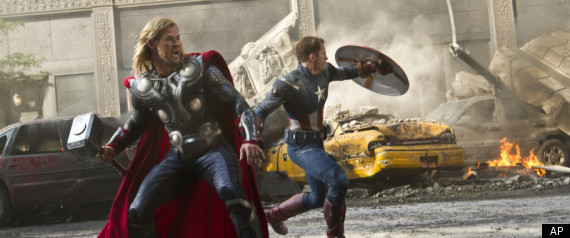
In this editorial from Comics Alliance, Andrew Wheeler looks at the absence of superhero beefcake in comic books and films. Part of his argument - and I agree - is that comic book superheros might as well be eunuchs. I grew up with Superman, in part, and his total inability to own his attraction to Lois and finally move beyond the chaste longing and subtle flirting.
On the other hand, part of what makes Christopher Nolan's version of the Dark Knight so interesting is that Bruce Wayne has a physicality that he sometimes struggles with - he is a man, even if we do not see too much of his body.
Here is a key passage:
Superhero men are idealized, yes, but they're rarely sexualized. While women are presented as broken-backed boob hostesses whose every move is a bend-and-snap designed to flatter and entice the presumed-male, presumed-straight reader, the men are sexless paragons of strength, with propaganda poster good looks that serve as visual shorthand for their masculine, heroic bona fides.Read the whole article below.
As a gay man, I want more from my objectification. I can't speak for straight women, but I suspect they want better as well. [Editor's note: We do.]
The Myth of Sexy Superman and the Search for Superhero Beefcake [Op-Ed]
Jan 19th 2012 By: Andrew Wheeler
2011 was a good year for superhero beefcake. Not in comics, of course, but at the movies. And not in terms of quantity, but in terms of quality. What I'm saying is that Chris Hemsworth took his shirt off in Thor, and it was great.
All right, Chris Evans took his shirt off as well for his Charles-Atlas-ification in Captain America, and I understand Ryan Reynolds was briefly featured in his scanties before having his body replaced with a cantaloupe-skinned wire-frame in Green Lantern. That was it, though. The bar for superhero beefcake is set pretty low. And the bar is set low because the source material -- actual superhero comics -- has never been fertile ground for the shameless sexual objectification of men.
I know that sounds extraordinary to fans who insist that the men in superhero comics are objectified just as much as the women, but I speak as someone who spent his teen years hungry for comics that featured half-dressed supermen.
As a hormonal gay adolescent in the pre-internet age I cherished those very occasional -- and usually incidental -- moments of shirtlessness. Marc Silvestri's Havok in a torn-up costume as the Goblin Prince? John Romita Jr.'s Matt Murdock in tighty whities? Alan Davis's Captain Britain in drawstring pajama pants? Joe Mad's Banshee flashing his abs as he pulls on a sweatshirt? Any comic set in the Savage Land? These were my sacred texts. (And yes, I was a Marvel kid.)
Straight boys never have to hunt for that sort of fan service. The whole industry caters to their libidos. Gay boys and straight girls do not enjoy the same level of pandering. Sure, the men in these comics are usually buff and handsome, and they're all dressed in skin-tight clothes and they all have six-pack abs. If you enjoy looking at athletic, attractive men, you will find athletic, attractive men in these books, especially when drawn by artists like Chris Sprouse, Dale Eaglesham, Nicola Scott and Olivier Coipel.
But it's not equivalent. Superhero men are idealized, yes, but they're rarely sexualized. While women are presented as broken-backed boob hostesses whose every move is a bend-and-snap designed to flatter and entice the presumed-male, presumed-straight reader, the men are sexless paragons of strength, with propaganda poster good looks that serve as visual shorthand for their masculine, heroic bona fides.
As a gay man, I want more from my objectification. I can't speak for straight women, but I suspect they want better as well. [Editor's note: We do.] There's a popular perception that women aren't as shallow about appearance as men, and maybe that's true, but they're more than capable of being just shallow enough. Many women of my acquaintance prefer the pale, skinny men of BBC costume drama rather than the Hollywood jocks I like, but whether you want Chris Hemsworth or Tom Hiddleston, Paul Walker or Paul Bettany, Colin Farrell or Colin Firth, we all like to look.
Our culture is slowly shifting towards equal opportunity ogling. TV is leading the way both with shows that load their casts with obvious hunks, like Glee, Hawaii 5-0 and The Vampire Diaries, and with shows that shamelessly pander to a man-fancying audience with previously unimagined acres of muscled male flesh, like True Blood, Spartacus, and MTV's Teen Wolf.
Movies are catching up as well. The scene in 2006's Casino Royale when Daniel Craig stepped out of the water in tiny square-cut shorts was a watershed moment that opened the door to Taylor Lautner's abs in Twilight: New Moon, Ryan Gosling's abs in Crazy Stupid Love, and Ryan Reynolds's abs in... every movie he makes. Marvel Studios has been smartly on-message in casting leads in its man-friendly movies that might appeal to the oft-neglected other major demographic.
Yet while Marvel Studios is moving in the right direction, actual superhero comics are about as backward as it gets. The see-saw is so tilted towards the exploitation of women that when Wonder Woman put on a pair of trousers there was an outcry, whereas no-one blinked when Namor swapped his swimming trunks for long trousers and a shirt, and Namor is not a character who is coy about his sexuality.
Male superheroes are not written sexy, they're rarely drawn sexy, and they do not dress sexy. While maybe half of all female characters belong on a skin-baring scale from Star Sapphire to Wonder Woman, most male characters fit on a scale from Superman to Spider-Man. Batman has about as much skin showing on his chin as Power Girl shows on her boobs.
There are exceptions. Hercules, Hawkman and Grunge stand apart as heroes happy to flash the flesh, and they each have their fans. The other most scantily clad guys are monsters like the Hulk and the Thing, and even the Thing now wears a leotard, while no-one thinks the Hulk wears cut-offs to bring the girls to the yard. (If Hulk were drawn to be attractive, the way She-Hulk is, he'd look less like a sack of angry walnuts and more like a green Randy Orton.)
Most male heroes actually wear considerably more than wrestlers. They wear more clothes than gymnasts, rugby players or soccer players. Because so many heroes wear gloves and masks, they're even overdressed compared to most soldiers. A thousand justifications are given for female characters to wear as little as they do, from "she's a ninja who needs unrestricted movement" to "she's an alien who isn't hung up on our repressed human notions about sexuality," yet male characters never benefit from the same excuses.
For example, why does Aquaman wear a shirt? Why does Thor wear armor? Why does Gambit wear high collars and metal boots when he would look better and be more in character in an open-neck shirt and long leather riding boots? Why did Superboy trade in the tight black t-shirt for Tron cosplay? And Northstar must have some idea what looks good on a guy, so why does he dress like a Christmas elf in a nunnery? I can't think of any gay man with arms like that who keeps them covered up.
Then there's the definitive example; Grant Morrison's Marvel Boy (let's please not call him Protector). He was meant to be a young, dumb, sexy character, especially as drawn with a J.G. Jones pout. He was a boyband babe who wore tight shorts and short sleeves, but now that vision of the character has been traded in for a guy in the standard spandex burqa of the superman.
Despite the convention for square-jawed heroes with broad shoulders and perfect abs, superhero comics are not courting the half of the world that likes a pretty guy. The industry has the talent -- especially with an increasing number of straight women and gay men at the drawing boards -- but it doesn't have the will to pander to that audience. Comics lag behind other media because the dominant genre remains devoted to one demographic, while the rest of our culture increasingly wants to appeal to everyone.
In 2012 the best superhero beefcake will probably still come from the movies.


Subscribe to:
Posts (Atom)