Showing posts with label traditional masculinity. Show all posts

Wednesday, January 22, 2014

Ryan Leas - Masculinity Anxiety at the Movies: Questioning Yesterday’s Tough Guys (Salon)


From Ryan Leas at Salon, an interesting article on how the Hollywood portrayal of men in the movies has changed considerably since Clint Eastwood was asking bad guys to make his day, or Charles Bronson became a nighttime vigilante in Death Wish.

Today's male leads don't do masculine very well.

In the films reviewed below,
We’re shown all sorts of classic imagery of frontier masculinity, but we’re rarely led to believe the writers, actors or directors behind these characters consider them feasible in a contemporary setting.
And . . .
As ambitious as these films are, none of them seem entirely sure what their endings should mean. And that makes complete sense. These are movies dealing with a concept and a trend as it unfolds. We don’t know where it’s going or what should replace it. Longing and wearied, “Mud” and “Out of the Furnace” and “The Place Beyond the Pines” are all stories by men about the sorts of men they might want to be, but with the knowledge that the world is leaving those sorts of men behind.
The fact that there are no easy answers in these films reflects our own current struggles to evolve a new form of masculinity is appropriate - we are still in process of shaping where we are heading as men.

Masculinity anxiety at the movies: Questioning yesterday’s tough guys

For the guys in a spate of recent movies, trying to be a tough, rugged outlaw doesn't work out very well


Ryan Leas
Monday, Jan 20, 2014


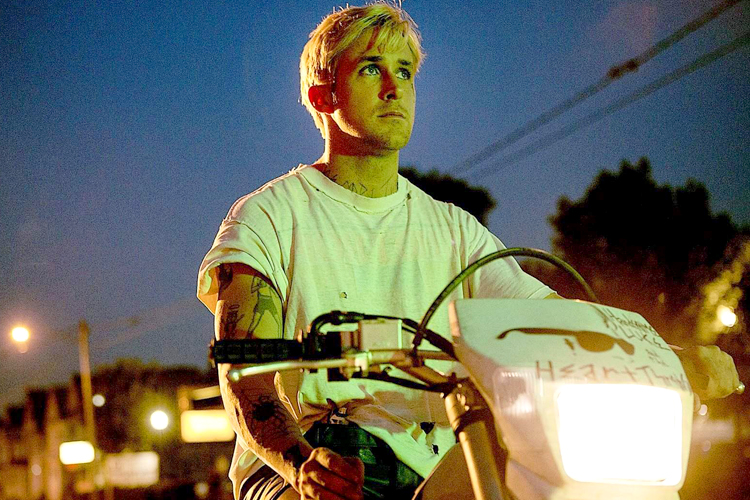
Ryan Gosling in "The Place Beyond the Pines"

A friend of a friend of mine has big plans: quit his prestigious editorial job in New York, grow his beard a bit further out, and start working on the docks. In 2014, the sentiments behind such a decision aren’t anything new, but they’re becoming more and more visible in our pop culture. You know the litany already: Gender roles in the workplace and the family are blurring, outsourcing is closing factory after factory, once-secure manufacturing jobs are disappearing. “American men don’t know how to make things anymore,” and all that. For a certain slice of American men, a romance has cropped up around working the docks, or an oil rig, or a crab boat up around Alaska. You’re getting back in touch with something, some supposedly inherent masculine energy that seems ever more ineffable as the nation adjusts its identity for a new era.

Last year saw a handful of filmmakers take on the questions of what it means to be a man in America in the 21st century, but their films don’t celebrate archetypal images of frontier manliness. Rather, they seem to suggest that looking back to these old forms is another broken urge in an age of cultural nostalgia.

After a decade of male antihero-dominated prestige TV dramas, the problem of contemporary American masculinity had its thematic apotheosis with “Breaking Bad.” Walt might have gotten a bleak version of a final Wild West showdown, but one of the most lasting images of the final season was that of him wasting away alone in a frozen cabin in New Hampshire. All the bluster of Heisenberg faded as Walt was corroded by the consequences of his actions — we saw up close the perversity of a man like him living alone in the woods. But while “Breaking Bad” did condemn old archetypes of masculinity to a degree, other stories seem to eulogize them as they slip away. Such an impulse toward eulogy has run through a handful of recent movies, most notably Jeff Nichols’ “Mud,” Derek Cianfrance’s “The Place Beyond the Pines” and Scott Cooper’s “Out of the Furnace.”

Though they may initially seem to have little in common, the settings of each film all present classic figments of Americana as if they are synonymous with the raw nature of our country’s landscape, a landscape in which listless male characters see their conceptions of life fragmenting. Each movie is shot in its own way, but each poeticizes decrepitude. The moss-covered porches and shuttered storefronts of Braddock, Pa., in “Out of the Furnace” aren’t so different from the strip malls and Piggly Wiggly in “Mud.” Luke and Romina, the ill-fated lovers of “The Place Beyond the Pines,” work as a traveling circus performer and a waitress. There’s something inescapably Springsteen-esque about their struggles, emphasized by the moment where “Dancing in the Dark” fades out as Luke walks up to the diner where Romina works.

That strain of down-on-your-luck American iconography runs through “Out of the Furnace,” as well. When Russell is released from jail, the very next scene begins with a shot of the road leading to the steel mill. Like much of “Out of the Furnace,” the symbolism isn’t overly subtle: a prison lies at one end of the road, the mill at the other. That mill appears as a darkened structure nearly indistinguishable from the earth it sits upon, either as barbaric as nature or being reclaimed by nature. Everything in Braddock is in the process of becoming a ghost.

Cooper, Cianfrance and Nichols also turn to immortal tropes of the past to address a much more contemporary preoccupation with a fading sense of rugged American masculinity. The most overt of these is the biblical influence on “Mud.” The isolated island where Mud lives is Edenic; it’s unclear for much of the movie whether Mud himself is supposed to be the snake in the garden or the First Man. It’s the battleground upon which Ellis’ loss of innocence takes place, the boy’s disillusionment boiling over into a confrontation with Mud that shatters the adventurous, paradisal escapism of the island.

Of course, linking biblical or classical ideas to American mythology is far from new. The difference here is that with each movie’s more or less contemporary setting (“The Place Beyond the Pines” begins in the ’90s, but ends in current day), it feels as if the traditional imagery — both American, and further back — is being deployed as a last-ditch attempt at inflating characters who have stopped making sense. These are broken archetypes wandering through archetypically desolate landscapes. They are men of the frontier, but also victims to it.

In each film, some character embodies a mythic vision of American masculinity. These characters are almost always shown either as out of step with the world around them, or as reflecting ways of life that are dying. They never triumph in an uncomplicated way. Just as the plots of these movies nod to biblical motifs, the characters themselves often take elements of stock fictional depictions of rugged masculinity. Mud is an island man as Rodney (or, on the darker side, Harlan) is a mountain man, as Luke is classical outlaw, a bank robber.

Of all of these, it’s Mud who’s most romanticized. He first appears as something of an apparition, the boys noticing cross-marks in the sand from his boots. They turn around and he’s standing by the tide — appearing out of nowhere, out of nature. He presents himself as an American mystic living out in the swamp, but also sounds like a rambling Beat. The crosses are nails meant to “ward off evil spirits.” As Ellis talks to both Mud and Tom Blankenship, the men mythologize one another. According to Mud, Tom is an ex-CIA assassin living a quiet, monkish second life in a houseboat; Tom claims Mud was “living in the woods when I first met him.” It’s unclear whether anything the men say about each other is actually true, but all of it paints Mud as a romantic outlaw.

In “The Place Beyond the Pines,” Jason hears that his father, Luke, is an “outlaw,” but the tone of the word is far different than when it’s applied to Mud. In “Mud,” there’s the creep of disenchantment — the fact that, far from a man bending the earth to his needs, Mud is a man on the run from the law, relying on Ellis’ groceries for sustenance. Luke, meanwhile, is a tragic outlaw. What would be mythic in a film less concerned with consequence gets refigured as something shameful. Luke thinks he’s living in a Wild West fantasy, but winds up slain by a cop and leaving his son without his biological father. Such complications are what bring each film’s ideas into the modern day. We’re shown all sorts of classic imagery of frontier masculinity, but we’re rarely led to believe the writers, actors or directors behind these characters consider them feasible in a contemporary setting.

What hangs over all of this is a tension between classic visions of manhood and a landscape that’s begun to move beyond them altogether. “Out of the Furnace” makes it explicit, and occasionally too obvious. Russell’s mill work and a hunting sequence are juxtaposed against Rodney’s refusal of a steady job in favor of fighting for money. In their way, both characters represent traditional masculinity through the physicality of their work. But Rodney’s status as an Iraq War veteran makes him, in one way, of the modern world. Russell’s factory life is a remnant of a dying lifestyle, where Rodney’s reclamation of a more visceral sense of masculinity could be seen as an extreme counterpoint to the emasculation Russell experiences through looming unemployment and his girlfriend leaving him for another man during his time in jail. “Out of the Furnace” doesn’t buy into that, though; Rodney’s brashness eventually gets him killed. The failures of the characters in “Out of the Furnace” are similar to Luke’s failures in “The Place Beyond the Pines,” all the men deal with the consequences of trying to embody an inherited vision of masculinity. Even Mud becomes — to gesture toward the Beat language he himself echoes — a holy fool, chasing after the icon of Juniper he’s built up in his head rather than realizing the truths about their relationship.

It’s worth returning to that hunting sequence in “Out of the Furnace.” Placed against Rodney’s fight in the Ramapo Mountains, together the scenes illustrate ritual displays of male control — over nature, over beasts, over themselves. The men of these movies are inevitably tied to the American landscape. They are born from it, but in their failings, they are also overcome by it. Each film centers on an interplay between these characters and their environment, between the marks of humanity and nature.

This comes out most clearly in the ways each film presents machinery and man-made items lost in nature. In “The Place Beyond the Pines,” Luke almost seems a creature of the countryside. His circus rolls through town based on the cycle of seasons; we see him riding his motorcycle rapidly through the woods as if he knows the land. True to the movie’s title, however, it’s out in nature that Luke and Avery come to terms with the more animalistic or darker corners of themselves. Luke goes into the woods and emerges a bank robber; Avery is made to face the physical result of his killing Luke. Natural settings here, as in “Mud” and “Out of the Furnace,” are where men are forced to reckon with themselves and face the futility of the structures they’ve built up, both figurative and literal. It’s there in the beginning of “Mud” in the image of the boat stuck up in the tree and littered with fallen leaves. Even though that boat’s running by the end of the movie, it’s dragging along the dark shadow of the violent gunfight that erupted at the film’s climax. As for “Out of the Furnace,” the steel mill that looms over Braddock and the film alike is on its way to becoming a shell. In the climax of the film, Russell chases Harlan among its ruined corners, through collapsing walls and rails overgrown with brush. The frontier that a character like Russell seems born out of is in the process of reclaiming the man-made symbol of what Russell is.

Even as each of these films undercuts the classic imagery it uses, none of them end without one last gesture toward dominance or transcendence. Both “Mud” and “The Place Beyond the Pines” end with a play on the classic trope of riding off into the sunset. Mud and Tom sail the boat out into open water. Jason purchases a motorcycle, inheriting more strands of his father, and rides off down roads winding through the mountainsides. Neither of these endings are clean or peaceful, and the characters in both still carry the baggage of the events that lead them to this final point. “Out of the Furnace” is more conflicted still — Russell avenges Rodney by shooting Harlan, and then there is a final shot of him sitting alone in his house, with no escape or reprieve after his actions. If these are final touches of romanticism, they are self-conscious ones.

For a moment, it may seem as if each of these films wants to uphold the mythic outlaw figures they’ve messily deconstructed along the way. As ambitious as these films are, none of them seem entirely sure what their endings should mean. And that makes complete sense. These are movies dealing with a concept and a trend as it unfolds. We don’t know where it’s going or what should replace it. Longing and wearied, “Mud” and “Out of the Furnace” and “The Place Beyond the Pines” are all stories by men about the sorts of men they might want to be, but with the knowledge that the world is leaving those sorts of men behind.


Ryan Leas (@RyanLeas) is a freelance writer based in New York. He has also written for GQ.com, Stereogum, and the Village Voice's music blog Sound of the City. More Ryan Leas.
Wednesday, January 15, 2014

The U.S. Is Not a "Feminized Atmosphere" - Life Is Just Getting Harder If You're an Asshole

Fox News' Brit Hume is an asshat. He argued the other day that Chris Christie's bridge blocking scandal is just a man being a good old fashioned man, you know, an asshole, and that he is only in trouble because America is too feminized. Via Esquire.

We Are Not Living in a Feminized Atmosphere - We've Just Made Life Harder If You're an Asshole


By Ben Collins on January 13, 2014


Fox News’ Brit Hume knows why all you peons are lapping up this Chris Christie Bridgegate story. It’s not because Christie’s administration made his constituents’ commutes a living hell solely over a petty political grudge that no average person had anything to do with.

No, it’s because you’re all a bunch of fairies who need to do some lifting, stat.

Punch yourself in the face and listen up, sissies:


Well, I would have to say that in this sort of feminized atmosphere in which we exist today, guys who are masculine and muscular like that in their private conduct, kind of old fashion tough guys, run some risk.  
I mean that men today have learned the lesson the hard way—that if you act like a kind of an old fashioned guy’s guy, you’re in constant danger of slipping out and saying something that’s going to get you in trouble and make you look like a sexist or make you look like you seem thuggish or whatever. That’s the atmosphere in which he operates. This guy is very much an old fashioned masculine, muscular guy, and there are political risks associated with that. Maybe it shouldn’t be, but that’s how it is.
There is no grander American past where you went to the store and fought the clerk fair and square for a jug of milk. That era did not exist. Not everybody lined up red rover-style and snapped at one another to assert dominance until a fist/knifefight broke out. That was West Side Story, and West Side Story is a musical where they would only stop stabbing each other to dance, and we’re not even going to get into the gender politics of that.

Even back in the days of the venerated/since-bastardized-into-something-unrecognizable Founding Fathers, everybody wore wigs to hide their crippling insecurities brought upon largely by syphilis. Have you seen John Hancock's signature? Alexander Hamilton’s pen name in the Federalist Papers was “Glory Hole Johnson.” (Okay, that one's a joke.)

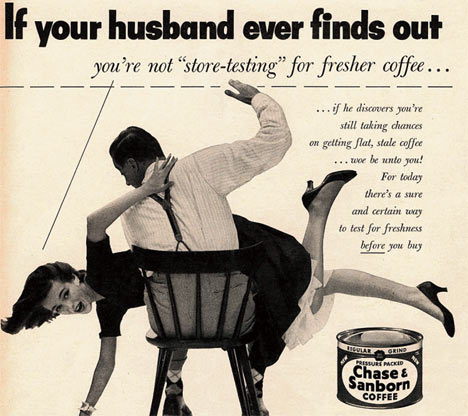
Maybe Brit Hume is thinking of the beautiful 1950s, where if your wife didn’t smell coffee before bringing it home from the supermarket, even advertisements would implore you to beat the living shit out of her until she figured it out. This was basically a cottage industry.

Just to get on the record for this one: That era was worse. Rhetorically, that was a bad time.

Not only is being an asshole an undesirable and unnecessary trait — one that's counterintuitive to getting stuff done and leading a beneficial life — it’s also not why Chris Christie is catching hell.

The media has latched onto this story — this unbelievably boring story about traffic, by the way, which is the world’s sleepiest subject — because this is the definitive role of the press in America: To out precisely this kind of corruption before somebody like this runs for president.

But while we’re at it, remember: The only thing less manly than acting like a tough guy is inquiring where all of the tough guys went, to an audience of nobody.

Sunday, January 5, 2014

‘Traditional Masculine Values’ Are Evolving, Not Dying

Home

This article originally ran in The Guardian (UK) and was picked up by Raw Story. In part this is a response to Camille Paglia's recent piece in the Wall Street Journal, wherein she decries the decline in traditional notions of masculinity (military service, physical labor) and the feminization of education. Here is a passage that begins with her experience with her own son (11-year-old Lucien):
She sees the tacit elevation of "female values"—such as sensitivity, socialization and cooperation—as the main aim of teachers, rather than fostering creative energy and teaching hard geographical and historical facts.

By her lights, things only get worse in higher education. "This PC gender politics thing—the way gender is being taught in the universities—in a very anti-male way, it's all about neutralization of maleness." The result: Upper-middle-class men who are "intimidated" and "can't say anything. . . . They understand the agenda." In other words: They avoid goring certain sacred cows by "never telling the truth to women" about sex, and by keeping "raunchy" thoughts and sexual fantasies to themselves and their laptops.

Politically correct, inadequate education, along with the decline of America's brawny industrial base, leaves many men with "no models of manhood," she says. "Masculinity is just becoming something that is imitated from the movies. There's nothing left. There's no room for anything manly right now." The only place you can hear what men really feel these days, she claims, is on sports radio. No surprise, she is an avid listener. The energy and enthusiasm "inspires me as a writer," she says, adding: "If we had to go to war," the callers "are the men that would save the nation."
On the topic of boys and education, she (and Christina Hoff-Sommers) are dead on - we have created schools and education models that are hostile to boys in particular, and we are seeing the results of the last three decades of that movement in the high percentage of boys diagnosed with ADHD, their lower academic performance, and their lower application, admission, and graduation rates at college.

However, what she sees as "how a civilization commits suicide," some of us see as how a civilization evolves into a healthier and more inclusive version of masculinity. Too much is the traditional model has excluded normal and necessary human expression - the "stiff upper lip," "boys don't cry," and "man up" approach no longer serves men or the women who love them (as friends, sisters, mothers, or partners).

Anyone who is familiar with men's work and masculinity studies knows that we are not seeing "the end of men," rather we are seeing the rough, clumsy, and often challenging transformation of men - and much like feminism it is happening at the local level in men's processing groups, in the Mankind Project's I-groups, and even in some men's spirituality groups. There is also the wider discussion happening on sites such as The Good Men Project, or this blog and many others like it.

And there are more articles being published such as the one below, articles that recognize we are in transition, not decline.


‘Traditional masculine values’ are evolving, not dying

By Ally Fogg, The Guardian
Tuesday, December 31, 2013


I thought I had heard enough febrile, hyperbolic pronouncements on modern masculinity to get me through any year, but I had not counted on Camille Paglia. In an interview with the Wall Street Journal, the maverick libertarian feminist pondered the implications of the feminisation of society and the devaluing of traditional masculine values. “What you’re seeing is how a civilisation commits suicide,” she declared.

Paglia is not a lone Cassandra. Hanna Rosin and Christina Hoff-Sommers have written on The End of Men and The War on Men and Boys respectively. This year, Diane Abbott warned of a crisis of masculinity that is seeing her young male constituents in Hackney corrupted by hardcore pornography and “a Viagra and Jack Daniels culture”. From North America to Europe to Oceania, masculinity is being prodded, pathologised, diagnosed and bemoaned by voices from across the political, cultural and social spectrum. The great irony is that the overwhelming majority of these voices are female.

Most men instinctively know why this would be. It is the first rule of fight club, after all. Men’s concerns, interests, anxieties or even pride in our own gender roles are typically sheltered by the conceits of fiction – as seen in the exquisite 62-hour thesis on modern masculinity that was Breaking Bad – or filtered through protective layers of irony and humour. Social media users recently parodied the internal travails of feminism with the hashtag #MeninistTwitter, but behind the walls of laddish banter and sexism, there were some very real anxieties and resentments on display.

The sledgehammers and stilettos of a gendered society impact upon, and are wielded by, every man, woman and child. Women – and feminists in particular – have spent centuries developing the vocabulary to discuss the myriad ways in which their lives are affected by gender constraints, and, crucially, they have carved the space in which to host those discussions. Men, too often, mutter into our pints and change the subject. This goes a long way to explaining why men vastly outnumber women in the figures for hazardous alcohol and drug abuse. It is why so many men in psychological crisis end up in a police cell rather than a GP’s surgery. At the sharpest end, it may be why men are around three times more likely to take their own lives than women.

One organisation dealing with the fallout of this is the mental health charity CALM, the Campaign Against Living Miserably. In an attempt to turn around self-destructive male habits, they have announced that 2014 will be the Year of the Male – 12 months of campaigning, debate and discussion aimed at changing both public opinion and public policy towards male gender-specific issues. There will be a state-of-nation audit of modern masculinity, and a public campaign inviting men to share their stories and experiences. CALM’s director, Jane Powell, says: “We think it’s time to ask some big questions about men and work, health, the media, education, relationships and family and ask what it really means to be ‘man enough’?”

Separately, the Southbank Centre recently announced a major festival at the end of January entitled Being a Man in which voices as diverse as Jon Snow, Baaba Maal and Grayson Perry will contribute to a weekend of performance and conversations on how men’s roles are evolving.

All this leaves hanging a central question of whether examining, debating and discussing masculinity will actually do anything to change the habits and behaviours of men themselves or society’s expectations and obligations. The supposed crisis of masculinity is largely a crisis in economics and employment, education and social policy, health and social service delivery. Those are not issues that can be solved with an introspective healing circle. Identifying and addressing those problems means changing how we behave as men, and towards men. If that means the end of civilisation as we know it, then perhaps it is a model of civilisation that needs to go.


["Close-Up Of A Man Smiling" on Shutterstock]

Sunday, December 29, 2013

Reducing Rape Requires Re-Wiring How Men Define Masculinity

This article comes from The Mint, a joint-production of the Hindu Times and the Wall Street Journal. Because it comes from India, the jumping off point for the editorial is the one-year anniversary of the gang rape of a 23-year-old physiotherapy student in Delhi. There were marches and demonstrations to remember the woman who died, but there were also echoes of the original responses by some men that rape become a capital offense (death penalty).

The author argues that many young men have bought into the feminist ideals of empowering women and punishing men who perpetrate. But this is misguided - if we want to change the culture of rape then we must re-wire how men define their own masculinity. The author quotes Havovi Wadia, head of research and development at Magic Bus, a children’s non-profit organization, and an activist who has worked in the area of gender-based violence:
“Notions of masculinity need to be challenged perhaps more urgently than notions of femininity. After all, it is the hetero-normative masculine discourse (which holds male heterosexuality as normal and all other expressions of male sexuality/gender as “not masculine” or abnormal) that situates the woman’s body as a site of conquest. Sadly, even feminism has continued to occupy a space within this discourse, resisting masculinities by positing equally problematic versions of the female.”
Gender scholar Ravi Verma, regional director, Asia regional office, International Centre for Research on Women, New Delhi, agrees with this premise and adds:
“We should expand the gender discourse beyond women’s empowerment,” Verma said in a telephone interview. “We have always presented equality from the perspective of giving agency to women, without bothering to normalize the man’s responsibility in achieving gender equality. Where do you see sensitive portrayals of men who are trying to transform themselves but might find their masculinity challenged, or feel frustrated in the process?”

According to Verma, rape falls at one end—the extreme end—of a broad spectrum of more subtle but firmly patriarchal expressions of masculinity that men absorb and exhibit from their childhood onwards. “You cannot stop rape overnight by legislation alone—that’s impossible,” he asserts. “In fact, limiting ourselves to legislative intervention might even have the opposite effect.”
The essential element, it seems to me, is that we need to transform masculinity in young men so that it becomes an object of awareness and not merely an uninterrogated lived experience. It must be a topic of discussion and education beginning very early in boys lives so that there is consciousness of how men are trained as boys to see women's bodies as objects to which they have an inherent right.

Boys must be taught to see girls, and later women, as equal and autonomous human beings who have the same rights to not be violated physically, emotionally, or sexually that men assume for themselves.  

This is how we change rape culture.

Okay, back to the article. The author and those interviewed offer a slightly different argument than I do, focusing instead on reducing the equation of masculinity with “proving behaviors,” including behaviors such as who can drink more, who can drive faster, who is more physically intimidating, and of course, who can “take” this or that girl. All of these are part of the traditional masculine ideal, a remnant of our evolutionary biology that has long ago ceased to be acceptable. 

Being ‘man enough’: Rape and our ideas of masculinity

Any strategy for action against rape must include an engagement with men’s ideas of masculinity


G. Sampath
First Published: Thu, Dec 19 2013


Some of the most chilling images from the anti-rape morchas of last year were those of ultra-aggressive male protesters making shrill demands of capital punishment for rape. Photo: Hindustan Times

It is now one year since the gang rape and murder of a 23-year-old physiotherapy student in Delhi. While it is great that we honoured her memory this week by taking out marches and lighting candles, these are the easier things to do. Far more difficult is to challenge our own comforting assumptions—about the feminisms we subscribe to, the notions of gender we live by.

For instance, some of the most chilling images from the anti-rape morchas of last year were those of ultra-aggressive male protesters making shrill demands of capital punishment for rape. Where did their aggression come from? Did these men—ostensibly out on the streets to support women’s rights and fight patriarchy—ever interrogate their lived sense of masculinity, or that of their male peers? Or were they the kind who, after marching against rape, would go back and rape somebody, as one of them allegedly did?

A number of gender scholars and activists have come to believe that the conventional feminist critique, which holds patriarchal male privilege responsible for fuelling sexual offences by men, does not wash with all men—definitely not with the vast majority for whom their masculinity is wedded to those selfsame patriarchal privileges, which includes a deep sense of entitlement to the bodies of women. Therefore, any strategy for action against rape, they argue, must include an engagement with men’s ideas of masculinity.

Havovi Wadia, head of research and development at Magic Bus, a children’s non-profit organization, and an activist who has worked in the area of gender-based violence says, “Notions of masculinity need to be challenged perhaps more urgently than notions of femininity. After all, it is the hetero-normative masculine discourse (which holds male heterosexuality as normal and all other expressions of male sexuality/gender as “not masculine” or abnormal) that situates the woman’s body as a site of conquest. Sadly, even feminism has continued to occupy a space within this discourse, resisting masculinities by positing equally problematic versions of the female.”

Wadia’s view is echoed by another gender scholar, Ravi Verma, regional director, Asia regional office, International Centre for Research on Women, New Delhi. Verma spent several years studying the processes by which children, teenagers and young adults imbibe normative ideas of gender. He believes that to be able to really address sexual violence against women, it is necessary “to go beyond post-facto responses, such as stringent law enforcement, and get into primary prevention work”.

But what does he mean by primary prevention work? “We should expand the gender discourse beyond women’s empowerment,” Verma said in a telephone interview. “We have always presented equality from the perspective of giving agency to women, without bothering to normalize the man’s responsibility in achieving gender equality. Where do you see sensitive portrayals of men who are trying to transform themselves but might find their masculinity challenged, or feel frustrated in the process?”

According to Verma, rape falls at one end—the extreme end—of a broad spectrum of more subtle but firmly patriarchal expressions of masculinity that men absorb and exhibit from their childhood onwards. “You cannot stop rape overnight by legislation alone—that’s impossible,” he asserts. “In fact, limiting ourselves to legislative intervention might even have the opposite effect.”

The counter-productive impact of punitive intervention is also underscored by another research scholar, Romit Chowdhury of the Kolkata-based Centre for Studies in Social Sciences. In a recent essay in Economic and Political Weekly , he notes, “The existence of laws which criminalize men’s sexual assault on women have not deterred male violence because it has become merely another ground on which men can prove their masculinity.” And how does that come about? He explains: “The possibility of getting caught provides an avenue for proving masculinity, showing that you can take big risks without being daunted by the prospect of danger.”

The centrality of “proving behaviour” to patriarchal definitions of masculinity, wherein a man feels compelled to “prove himself” in order to bond with his peers is well-documented in masculinity studies. While the domain of proof could be male friendship, or a skill of some kind, it typically derives from a patriarchal idea of masculinity. It has no space where one can ask: why does masculinity have to be proved at all? Common instances of such “proving behaviour” include who could drink more, who could drive faster, who is a truer friend, and of course, who could “take” this or that girl, says Verma.

Being undaunted by danger, and being able to get away with risk-taking and violence are widely reinforced as central facets of masculinity in popular culture. Almost every mainstream commercial film unfolds narratives that associate masculinity with violence. And whether you interpret that as reflecting societal norms or shaping them, given its ubiquity and glamorous potency, can we hope to stem the tide of male sexual violence without first systematically challenging these definitions of masculinity, and mainstreaming alternative expressions of male sexuality?

Indeed, one simple step that we as a society could have taken to counter the kind of aggressive masculinity that leans in the direction of rape was to decriminalize homosexuality, and thereby create a congenial climate for the normalizing of alternative, anti-patriarchal masculinities. Instead, with the Supreme Court’s 11 December ruling, we have done the exact opposite.

Both Wadia and Verma agree that an effective strategy against gender-based violence must involve systematic intervention at the institutional level, ideally at a stage when an individual’s gendered identities are yet to solidify. Wadia advocates engaging with children in the playground as a powerful way to challenge patriarchal definitions of masculinity. “The best part about this process—and this is what my organization does—is that it brings girls out of their homes into public spaces. In this case, it is one that, in India, is almost universally occupied by males—the public playground.”

Verma, who has been involved with gender-focused research studies in schools across Maharashtra and Jharkhand, also believes that intervention at the school level is critical. “You walk into any school and you will find that boys and girls are already receiving subtle messages that reinforce patriarchal definitions of gender. Go to the playground, and you will find boys, when they are 12 or 13, forming their ideas of selfhood based on aggression, violence, bullying. Women, too, fall into the same trap of patriarchy. Unless we address regressive notions of masculinity, especially with regard to notions of power and entitlement, we cannot make much progress in tackling regressive notions of femininity held by men as well as women.”

In the aftermath of the “Nirbhaya” case, by and large, the institutional responses to combat rape have coalesced around the twin ideas of punishment and deterrence. The punitive focus has been necessary because for far too long crimes against women have gone unpunished. But it is also vital to extend the battle beyond it—for legislations can always be reversed, as the bitter saga of Article 377 has showed us. Enforcing equality is one thing. Securing it is another thing altogether.

Saturday, November 16, 2013

What Does Manhood Mean in 2013? (from New York Magazine)

From New York Magazine, Ann Friedman looks at what it means to be a man in 2013 - and she uses four press items from the weeks preceding the September 20 article. One of the cool things she included is the Life of Men from Esquire magazine - check it out.

Here is a summary of what she finds in the confusion of men today around definitions of masculinity:
The JWT report gives an overall impression that, just like femininity, masculinity is increasingly defined by both playing to and against type. It's growing a really impressive beard and ordering a kale salad for lunch. It's knowing Super Bowl trivia and being an emotionally supportive partner. But if this makes it sound like men are joining women in having a less gender-bound view of their sense of self, it’s not that simple. According to the JWT research, even though millennial men are, more than older men, okay with using concealer and learning to poach eggs, they also say they're more frustrated with not knowing what it "means" to be a man.
The confusion around masculinity, as far I am concerned, is a good thing - it indicates that the old stereotype of the rugged, emotionally distant, and potentially violent male is no longer a given, no longer the gender role in which boys are automatically embedded as they grow into men. There are now masculinities - and that makes a better world for men and women.

What Does Manhood Mean in 2013?

By Ann Friedman
9/20/13


What does it mean to be a man in 2013? Consider four data points from recent weeks:
1. Tech entrepreneur Bryan Goldberg, who became an Internet laughingstock last month when he issued a stupendously tone-deaf announcement for Bustle, his new site aimed at women, was bashed all over again this week following a New Yorker profile in which he appeared to be overcompensating for his prior gender gaffes. “We didn’t want pink everywhere,” he told the magazine, noting that women seem to be interested in all kinds of things, from earrings to Zumba to Amanda Bynes to Syria. Women, in Goldberg’s view, have complex desires and interests, some of which conform to classic feminine stereotypes, but many that do not. And what of men? According to Goldberg, they like sports and financial markets and ... not reading books. A man is a simple creature.

2. Hanna Rosin, author of The End of Men, declared the end of patriarchy. In an era when middle-class men are struggling to hang onto their jobs and cultural relevance, it’s only feminists who keep the concept of male dominance alive, she argued, by purposefully highlighting the “statistics that make women look most beleaguered.” In other words, how can we be living in a patriarchy if the definition of “male” no longer carries with it a guaranteed level of social and economic status? Without such power, man is over.

3. Esquire revealed its “Life of Men” project, a photo gallery and accompanying questionnaire that aims to “create a living portrait of the American man right now.” There’s a healthy dose of masculine swagger among the subjects, but if there’s one common theme, it’s family. Over and over, these men — some of the most professionally accomplished specimens in America — name their children as their greatest achievement, their best day as the one on which they met their wife. A man is a nurturing partner and father.

4. That theme was echoed somewhat in a new report from the market-research firm JWT on male consumers and masculinity, which found that “emotional support for family” ranked just behind “financial support for family.” The JWT report says two thirds of men would make their work schedule more flexible or stay home with their family full-time if they could afford to. This was confirmed by a new Pew study this week, which declared that there are more men on the “daddy track” than ever before — though not always, it took pains to note, voluntarily. “Men’s ideas,” reported NPR, “have shifted closer to what many women have long felt.” But still, a man is a provider.

What’s striking isn’t the lack of consensus on what defines masculinity now, but the utter confusion about how to go about doing so. That’s because America is finally getting around to having the conversation about what it means to be a man that, decades ago, feminism forced us to have about womanhood. Women still face social consequences when they don’t conform neatly to gender norms, but many of even the most ideologically progressive men are just now starting to talk about how to break with masculine stereotypes and still hang onto a sense of gender identity. Goldberg and Rosin, in using traditional definitions of manhood (the simple, stoic breadwinner), declare him dead, or at least less marketable to advertisers. Men’s magazines, which now peddle facial moisturizers but still often shy away from heartfelt confessionals, have spotted how hard it is for men to balance both embracing and rethinking masculine stereotypes — and they’ve made some attempts to address it, but mostly ended up documenting the confusion.

And much of that confusion can be traced back to the fact that we’re still adapting to an expanded definition of what it means to be a woman. “The most complicated aspect of manhood is dealing with antiquated social norms about gender roles,” says my friend Eric Uhlir, who lives in D.C. “Society, at least American society, still hasn't realized that it's not just a woman's job to raise a child but everyone's job in a sense. We just drop it in women's laps and men just pretend like it's not even a problem. That feels like the most pervasive gender stereotype the world's brohemians don't seem to understand or just choose to ignore.”

Brohemian is an apt term: The JWT report gives an overall impression that, just like femininity, masculinity is increasingly defined by both playing to and against type. It's growing a really impressive beard and ordering a kale salad for lunch. It's knowing Super Bowl trivia and being an emotionally supportive partner. But if this makes it sound like men are joining women in having a less gender-bound view of their sense of self, it’s not that simple. According to the JWT research, even though millennial men are, more than older men, okay with using concealer and learning to poach eggs, they also say they're more frustrated with not knowing what it "means" to be a man.


JWT’s millennial men were more likely to answer affirmatively to statements like "Men can't be men anymore.” These guys have never lived in an era of rigid gender rules. The report says they seek the perceived trappings of manly men of the past to reinforce their masculinity while they pursue the other, more traditionally feminized lifestyle choices they also desire. This theory might explain why you can often find rugged pickaxes in high-end clothing shops of urban America.


“One of the reasons that I think facial hair — mustaches and beards, specifically — have come so much back in vogue is because there seems to be an almost primal urge to reclaim our right to be men and to look like men,” says Phil Walker, a gay man who lives in D.C. and has been known to sport an impressive mustache.


Sometimes the thick beard and the artisanal pickax on the mantel betray the fact that — gender enlightenment aside — a man may not be completely ready to abandon the traditional greatness of being a guy. Even if he wanted to, it would be tough to pull off. “How can guys pick themselves up by their bootstraps and bring home the bacon when we're also embracing the idea that everyone is entitled to whatever bacon they want, however they want to get it?” asked my friend Dylan Lathrop. The real challenge is compromise and balance.

And this is why I think Rosin is wrong about the end of patriarchy. “Patriarchy” doesn’t just mean concrete systems that ensure only men have access to the upper echelons of power; it also encompasses our ingrained cultural understanding of what men should be and how they show dominance. If it looks like we’ve reached the “end of men,” that’s only because patriarchy (alive and well!) tells us the only way to be a man is to be The Man — economically, politically, and socially. If patriarchy were really over, stay-at-home dads wouldn’t be the death knell of an entire gender. They’d just be … men. They are men.

Ultimately, confusion about modern masculinity is a good thing: It means we’re working past the outmoded definition. Men are increasingly comfortable breaking masculine gender stereotypes, but want to hold on to certain gender signifiers? They're uneasy about living in such a mixed-up, muddled-up, post-gender world, but don't want to go back to the rigid roles of the past? Welcome to where women have been since second-wave feminism! It's confusing out here.

Wednesday, November 6, 2013

Even a 300 lb NFL Offensive Lineman Can Be a Victim of Bullying | On Richie Incognito and Jonathan Martin

Miami Dolphins v Houston Texans

Anyone who follows sports has probably heard about the situation in Miami, where second-year player Jonathan Martin abruptly left the team last week after smashing his lunch tray to the floor in response to a prank played on him by his teammates, an effort led by fellow offensive lineman Richie Incognito.

The prank was cruel. Martin was asked to join a table of linemen during lunch, but when he sat down they all got up and walked away.


This is not a situation that happened just by chance.

Incognito has a history of getting himself in trouble going all the way back to his first two years at Nebraska, where he is a freshman All-American in 2002. By the end of the 2003 season, he had been suspended twice, and then suspended indefinitely when new coach Bill Callahan prior to the 2004 season. Incognito then transferred to Oregon, where then-coach Mike Bellotti gave him a 2nd chance, but only if he fulfilled specific conditions. He didn't and he never played a down for Oregon.

Despite missing the entire 2004 season, the Saint Louis Rams selected him in the 3rd round of the 2005 draft. He spent three years with the Rams, all of which fairly uneventful off of the field, but on the field he led the league with 7 personal fouls included in his 38 penalties.

He was already on his way out by 2009.
Things came to a head quite literally late in the 2009 season during a 47-7 loss to the Tennessee Titans. Incognito was twice flagged for head-butting Titans players, and he also got into a verbal spat with then-Rams head coach Steve Spagnuolo. Mike Florio of Pro Football Talk reported that Incognito was subsequently released.

Incognito caught on with the Buffalo Bills for the remainder of the season, but Buffalo decided against re-signing him even though he played well in three games with the team. It was unclear if Incognito would get another chance after the Bills let him walk, but he was lucky enough to be offered a contract by the Dolphins.
While with Miami, he began taking Paxil after refusing to try medication for year. He was named to 6-man leadership team for the Dolphins this year. On the surface, things seemed to have turned around for him - he was maximizing his potential on the field on not getting in trouble off of the field. Or maybe not . . . .

Guys who have played against him think he is a dirty player - pinching and grabbing in the pile. One Dolphin player says, "Richie is the type of guy where if he's on your team you love him," a teammate said. "If he's not on your team, you hate him. Every team needs a guy like that." His previous teammates have witnessed his issues and do not hate him, but they worry about him:
New York Giants kicker Josh Brown was Incognito's teammate at Nebraska as well as with the Rams, and he told Ebenezer Samuel of the New York Daily News that it was par for the course:
None of it shocks me. I don't know any details obviously. The league hasn't released anything. But Richie seems to be a person with a tortured soul. He's had these issues for quite awhile and it's sad.
Brown still considers Incognito a friend, but he believes that his former teammate is still dealing with "demons" despite the prevailing thought that he had turned a corner:
It's sad to see, because he was a friend of mine and still is. I played with him in college and he had a lot of problems in college. I played with him in the Rams, and not severe issues there ... but it seems like this seems to be something that has been haunting him for more than decade. This seems to be somebody who's really got some demons that are out of the building.
A good deal of Incognito's behavior can be traced back to his father, it seems. In Jeff Darlington's NFL.com profile of Incognito, there is this:
"I'd always tell Richie, 'You don't take no s--- from anyone,'" his father said. "'If you let anyone give you s--- now, you're going to take s--- your entire life.'"

Those words may seem like nothing more than a father trying to help his son through a difficult time, but some of his advice proved all too prophetic.

"I'd try to cheer him up," said Richie Sr., who is now a custom pool builder in Arizona. "I'd tell him, 'Payback is going to come, Richie. When it's time for you to have your payback, you open up the gates of hell and make them stare at the devil.' And when that day came, man, he made them stare at the devil."
So, we are not at the present - and Incognito has been suspended indefinitely by the Dolphins and will reportedly be cut following the conclusion of the NFL investigation.

According to reports, Incognito used racial epithets and made threats of bodily harm against Martin, who was in his 2nd year before leaving the team nearly 10 days ago (Oct 28). According to Adam Schefter of ESPN, these are some quotes from the threatening email that serves as the primary piece of evidence in this case.
Adam Schefter         @AdamSchefter
1: Richie Incognito left this VM for Jonathan Martin in April 2013: "Hey, wassup, you half n----- piece of (expletive)...

Adam Schefter         @AdamSchefter
2. More Incognito to Martin: "I saw you on Twitter, you been training ten weeks. (I want to) (expletive) in your (expl) mouth....

Adam Schefter         @AdamSchefter
3. Incognito VM to Martin: "(I'm going to) slap your (expletive) mouth. (I'm going to) slap your real mother across the face (laughter).

Adam Schefter         @AdamSchefter
4. Incognito to Martin, all on same VM in April 2013: "(Expletive) you, you're still a rookie. I'll kill you."
Okay, this is where shit gets ugly. This is one incident, but there apparently have been others. Martin chose, for now at least, to walk away from his NFL career and get counseling while spending time with his family. On the upside, he went to Stanford, so he can probably do anything in life he chooses.

But his fellow teammates, former NFL players, and current NFL players are siding with Incognito - not all of them, but enough that it calls into question the atmosphere in the NFL locker rooms.
Former Dolphins teammate Karlos Dansby, now a linebacker with the Cardinals, told the Arizona Republic that “Richie was a down-to-earth guy. I hate all this came out about him. It's really attacking his character. I hope Martin doesn't have any backlash from this from the rest of his teammates.”

And Dolphins wide receiver Mike Wallace told NFL.com: "I know both [Martin and Incognito] personally. I like both of them. I love Richie. I think he's a great guy. I don't think he was out of hand. I have a lot of respect for Richie. I wish he was here."

Wallace says he doesn't think that team pranks and hazing went too far.
Denver Broncos defensive tackle Terrance Knighton thinks Martin broke the silence code of the locker room by leaving it and making his grievances public.
"Everybody in the NFL knows that when you're a young guy and when you're with the O-line you've got it the hardest," Knighton says. "I mean, that's been going on for a while. ... I don't know where they crossed the line at; maybe (Incognito) said something personal.

"I feel like, as players, when it is player-to-player, it can be handled as players. It can be addressed. I don't think (Martin) should have gone outside the team and expressed how things are going in the locker room."
This is the same nonsense I hear when people begin talking about the sexual or physical abuse or neglect that happened in their families - there is a code of silence around these things. As long as people honor these idiotic codes, they will continue to exist.

The most egregious comments, perhaps, come from New York Giants safety Antrel Rolle, who voices the "traditionally masculine" - i.e., man up, sack up, grow a pair, and so on.
Giants safety Antrel Rolle said that while Incognito was "absolutely" in the wrong, Martin is just as much to blame for what happened. “First of all, know something like that would never, ever happen to myself, because I wouldn't allow it to happen," Rolle told WFAN Tuesday.
"You know, at this level, you're a man. You're not a little boy. You're not a freshman in college. You're a man. So I think everything has its limits. So there's no way that another man is gonna make me pay for something that I choose not to pay for.”

"You're a grown-ass man. You need to stand up for yourself. ...

"Hopefully he's able to bounce back and recover from all that has happened and understand it, and take awareness of, you know, that, you're a grown-a– man,” Rolle continued. “You need to stand up for yourself.”
Not only is that the mentality among the players, but it seems also to be the mentality among the coaching staff of the Miami Dolphins [it must be stated, however, that head coach Joe Philbin, according to team sources, directed veteran players to "cut out" the rookie hazing]:
According to at least two team sources who have spoken to Omar Kelly of the Sun Sentinel, Miami Dolphins coaches told offensive guard Richie Incognito to “toughen up” teammate Jonathan Martin after Martin missed a voluntary workout in the spring. The team sources told the Sun Sentinel that Incognito, who has been suspended indefinitely after he was accused of using threatening and racially incendiary language against Martin, took the orders too far.
Other reporters have confirmed these reports:
Andrew Abramson of the Palm Beach Post wrote on Wednesday that he’s heard the same thing from team sources, adding that the idea was to bring Martin “into the circle.”

“[Dolphins center Mike] Pouncey and Incognito, they talk to each other that way — redneck, [n-word], it doesn’t bother the two of them. It’s how they communicate,” a source told Abramson. “They bond with one another.” Dolphins head coach Joe Philbin, according to sources, told his veterans to “cut out” the rookie hazing, but he did not police what was going on between Incognito and Martin. Martin left the team last week after a lunchroom prank in which Martin was asked to join his linemates at the table, and his teammates then got up and left the table.
Fox Sports reporter, Mike Garafalo, tweeted this:

Forgot to tweet but said on yesterday a former Dolphins OL said coaches supported and encouraged hazing to toughen up Martin + others.
The bullying was not only verbal - there was traditional stealing of lunch money (if you are mufti-millionaire NFL player):
[Adam] Schefter and [Chris] Mortensen also cited unnamed sources that one of the significant allegations is an incident during the summer of 2013 when Incognito got Martin to contribute $15,000 to help finance a trip to Las Vegas by a group of Dolphins, even though Martin preferred not to, "fearing the consequences if he did not hand over the money."
So the message here is that if you man up and get in someone's face, the bullying will stop. But why is there bullying in the first place? Incognito knows first hand from his own childhood haw damaging that can be, but like many victims, he did not deal with the pain, he just passed it along as soon as he was able - just like his father told him to.

As is true with many things, this whole mess starts with the father. Martin is simply the latest victim to endure Incognito's working out of his own pain and trauma by harassing others - but that this was condone in ANY way by the Dolphins coaching staff makes them complicit, right alongside Richie Incognito, Sr.

Friday, September 6, 2013

Getting Psychology in the Psychology of Men and Masculinity


This interesting panel discussion from the 2013 APA Conference offers an interesting look at the challenges of getting psychology into the study and praxis of men and masculinity.

The presenters are academics (faculty or students) and not practitioners, so it feels like a critical perspective is missing - the "on the ground" daily work some of us do in counseling men.

What all of the student presenters have in common is an interest in how the "man box" (the gender norms and rules accepted and installed by the culture) impact men in their mental health, emotional expression, and relationships.

Interesting - and good to see young people pursuing these topics.


Getting Psychology in the Psychology of Men and Masculinity

Published on Jun 3, 2012

The Men's Coping Lab at Clark University organized a symposium at the American Psychological Association Convention in San Francisco, California. The symposium discussed the utility grounding research on men and masculinity in extant basic psychology models and theories.

Chair: Michael Addis, comments read by Alisha Pollastri
Presenters (by appearance - bios below):
MySha Whorley
Jason Berkowitz
Matthew Syzdek
Jonathan Green

Our research team consists of faculty, graduate, and undergraduate students in the Department of Psychology at Clark.


Dr. Michael Addis is Professor and Chair of the Department of Psychology at Clark University. He received a B.A. from the University of California, Berkeley in 1987 and a Ph.D. in clinical psychology from the University of Washington in 1995. Dr. Addis has published over fifty scientific articles and books on men's well-being, depression, anxiety, and the relationship between scientific research and clinical practice in psychology. He is currently interested in links between the social learning of masculine norms and the way men experience, express, and respond to problems in living.


MySha Whorley is a fourth-year clinical psychology graduate student at Clark. Her overarching research interests are in the relationship between adherence to masculine norms and men's experience and expression of emotion. MySha recently concluded a study examining the relationship between adherence to masculine norms, negative affect, and the level of emotion expressed in men’s written disclosures. Her dissertation project will test an intervention to reduce depressive symptoms and increase social support seeking in men recently diagnosed with prostate cancer.


Jason Berkowitz is a senior undergraduate at Clark. His overarching research is men's mental health and partners of mental health patients. He hopes to pursue a Ph.D. in Clinical Psychology to continue research and to provide therapy. Jason is currently formulating an honor's project on the male partners of individuals with a mental disorder.


Matthew Syzdek is a second-year clinical psychology student at Clark. His overarching interests are gender, class, mental health, and social justice, with a focus on how working class men deal with problems in their lives. Matt's current project examines stresses experienced by men following job loss. In his future work, Matt plans to integrate research, clinical work, and advocacy in the pursuit of bettering men’s well-being and mental health. He hopes that his work will eventually impact the lives of individual men as well as public policy.


Jonathan Green is a first-year clinical psychology graduate student at Clark. His overarching research interests include adherence to masculine norms and depression in men; specifically the concept of "covert" or "masked" depression. Jonathan is currently studying the relationship between men's psychophysiology, endorsement of masculinity norms, and reported feelings of sadness.

Wednesday, May 15, 2013

Billy Johnson II - Traditional Gender Expectations May Contribute to Rising Suicide Rates in Men

This is not surprising. In a world where traditional male gender roles are no longer valued economically, where macho behavior is seen as cavemanish, and where gender roles in general have become more confusing, it's no surprise at all that men who feel they have to live up to traditional definitions of masculinity might feel hopeless and depressed about their future.

This article comes from the Good Men Project - and they are seeking stories by those affected by suicide (not sure if their deadline has passed).

Traditional Gender Expectations May Contribute to Rising Suicide Rates in Men

MAY 8, 2013 | BY BILLY JOHNSON II


Feeling trapped between a traditional masculinity and a progressive one can contribute to depression and suicide in men.

Despite strong national efforts, completed suicide is the 10th leading cause of death in the United States. According to the CDC, in 2010 there were 38,364 suicides in 2010 in the United States, a daily average of 105 each day.

Furthermore, these statistics are thought to under-exaggerate the total number of completed suicides as the data can be difficult to gather and this behavior often goes unreported.

Adolescent suicidal behavior has received the bulk of scholastic and media attention because suicide is the third leading cause of death for young people ages 15 to 24. However, the New York Times reported significant increases in suicidal behavior among middle-aged individuals, in particular middle-aged men: specifically completed suicides by persons aged 35-64 increased by nearly 30% from 1999-2010.

The gendered nature of suicide has been well documented with males being three to four times more likely than females to die by suicide. Men’s use of fire arms, tendency to stuff emotions, and low likelihood of seeking help are a few of the variables listed as responsible for the contrast in suicide rates between men and women.

But how do we account for the significant rise in suicide among middle aged men?

The New York Times article listed several possibilities for this trend including access to fatal drugs and the impact of the current economy, one of the consequences of this being higher unemployment rates. Furthermore, this generation may feel financially and emotionally burdened by the task of taking care of their parents or older family members while ensuring their own financial stability.

Depression and anxiety are often at the center of suicidal thoughts, and research by Samaritans, a U.K. charity which aims to lower the number of suicides, revealed that middle aged men who experience divorce or relationship separation, unemployment, and poverty are more likely to experience depression and consider suicide.

The researchers add that these individuals may also feel stuck between traditional masculinity, with its focus on emotional stoicism, and the more recent and progressive gender politics of expressing emotions openly.

Finally, they report that the ineffectiveness of some approaches in curbing suicide lies in the lack of a strong social conversation on the role of inequality in suicidal behavior. Men with low socioeconomic backgrounds are more likely than more affluent males to complete suicide; therefore, any approach for reducing the prevalence of this behavior must also include an analysis of the impact of poverty. This begs the question: how can suicide rates be lowered in a declining economy with such differing opinions of masculinity? What is in our power to do to help lower suicide rates among men of all ages?


In Canada and the U.S., the National Suicide Prevention Lifeline is 1-800-273-TALK (8255).
In the U.K., ring the Samaritans on 08457 90 90 90.

We’re looking for stories of people who have been affected by suicide. Please email lisa@goodmenproject.com if you would be willing to write about the experience.

Photo: ChrisHConnelly/Flickr

Read more:

Tuesday, March 5, 2013

Michael Taylor with Ray Arata - Are You Ready To Wake Up, Step Up and Man Up?


On the most recent episode of Coach Michael Taylor's A New Conversation with Men, Michael welcomed Ray Arata to talk about his new book, Wake Up, Man Up, Step Up: Transforming Your Wake-Up Call Into Emotional Health and Happiness. I'm not a fan of the whole "man up" thing, but the conversation is useful and productive and the book sounds interesting.


Listen to internet radio with Coach Michael Taylor on Blog Talk Radio


Coach Michael Taylor with Ray Arata - Are You Ready To Wake Up, Step Up and Man Up?
How do you find freedom from outmoded and destructive patterns of behavior that keep you from achieving success in your roles as partner, father, husband, leader, and friend? 
Most men aren't aware that the old model of masculinity is outdated and ineffective in today's culture. The absence of a healthy, functioning model of masculinity often causes emotional pain that is unbearable, demanding significant life changes and generating the proverbial "wake-up call." 
Wake Up, Man Up, Step Up: Transforming Your Wake-Up Call Into Emotional Health and Happiness provides an insightful and practical seven-step Roadmap for how you can transform large or small crises into opportunities for better relationships, happiness, and success. 
Join Coach Michael Taylor as he interviews Ray Arata about his wonderful new book Wake Up, Man Up, Step Up as they discuss how men can use this book as a resource to support them in living extraordinary lives.

Sunday, March 3, 2013

Men's Magazines Target Hyper-Masculine Advertising Images to Adolescents

This article appeared recently in the XX Factor column at Slate (What Women Really Think). Amanda Hess offers a summary of a new article from Sex Roles that looked at how advertising in magazines aimed at young, lesser educated men define masculinity and manhood. The view is not good - the stereotypes being presented are very limited and limiting.

According to a survey of the advertising, a "man" is a "stomping, yelling, shooting, drinking, fucking, tough guy. He has big muscles and a limited emotional range—stoic, angry, horny. He exists in dark alleyways, war zones, and fast cars. He holds his beer bottle over his crotch to approximate a boner."

How Men's Magazines Sell Masculinity to Young, Low-Income Men

By Amanda Hess | Posted Friday, March 1, 2013

A group of psychologists read Playboy for the ads

What makes an ideal man? Page through the advertisements placed in a standard American men’s magazine, and you’ll find one idea: He is a stomping, yelling, shooting, drinking, fucking, tough guy. He has big muscles and a limited emotional range—stoic, angry, horny. He exists in dark alleyways, war zones, and fast cars. He holds his beer bottle over his crotch to approximate a boner.

If advertising is meant to be aspirational, these ads are presenting a pretty sad version of what American men can aspire to be. And advertisers aren’t selling this hyper-masculine ideal to just any man: They’re specifically targeting the younger, poorer, less-educated guys in the supermarket aisle. In the latest issue of the journal Sex Roles, a trio of psychologists at the University of Manitoba analyzed the advertising images in a slate of magazines targeted at men, from Fortune to Field and Stream. They counted up the adsthat depict men as violent, calloused, tough, dangerous, and sexually aggressive—what the researchers call “hyper-masculine”—then indexed them with the magazine’s target demographics. Hyper-masculine images, the researchers found, are more likely to be sold to adolescents, who find higher “peer group support” for manly-man behaviors. They’re also sold to working-class men, who are “embedded in enduring social and economic structures in which they experience powerlessness and lack of access to resources” like political power, social respect, and wealth, and so turn to more widely accessible measures of masculine worth—like “physical strength and aggression.”

The magazines pushing this image most aggressively are Playboy and Game Informer, whose ads play on hyper-masculine tropes about 95 percent of the time. (Compare that to magazines like Golf Digest and Fortune, which rely on those images for about 20 percent of ads). Playboy and Game Informer represent two different segments of the hyper-masculine demo: The playboys and the gamers are both bringing in a low annual household income, but the playboys are older (the target age for readers is 30 to 39) and less likely to have attended college than their gaming peers. So while Game Informer’s socially-mobile twentysomethings can conceivably age out of these hyper-masculine tropes, Playboy’s readers are stuck with them.

These advertising trends speak to the latest development in Hugh Hefner’s sexual revolution. When Playboy launched in 1953, it was billed as a liberating, sophisticated, and intellectual response to conservative sexual norms. It featured icons like Marilyn Monroe and Ray Bradbury. It was not, in fact, inconceivable to read it for the articles. Sixty years later, the magazine’s advertisers are chasing a readership of middle-aged men who are undereducated and underpaid. Its vision of masculinity now looks constrictive. And its titular image—that of the wealthy man of leisure—plays ironically. Playboy’s version of sexual revolution was never very empowering to women and gay men. But if the tactics of its advertisers is any indication, it’s not a very liberating mold for straight guys, either.