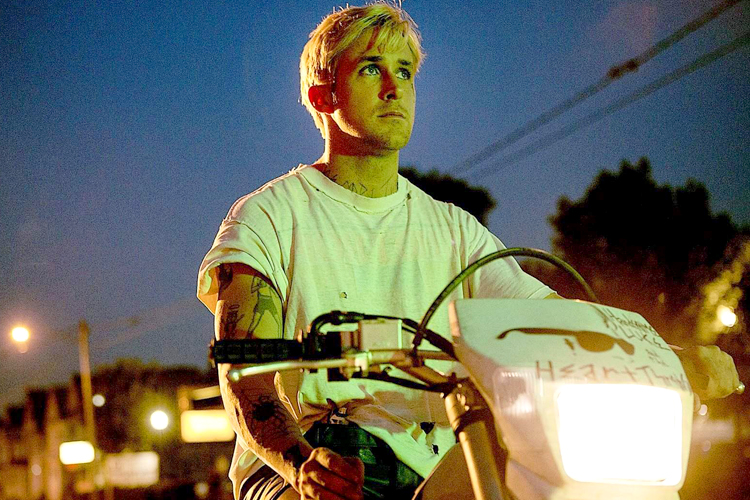
From Ryan Leas at Salon, an interesting article on how the Hollywood portrayal of men in the movies has changed considerably since Clint Eastwood was asking bad guys to make his day, or Charles Bronson became a nighttime vigilante in Death Wish.
Today's male leads don't do masculine very well.
In the films reviewed below,
We’re shown all sorts of classic
imagery of frontier masculinity, but we’re rarely led to believe the
writers, actors or directors behind these characters consider them
feasible in a contemporary setting.
And . . .
As ambitious as these films are, none of them seem entirely sure what
their endings should mean. And that makes complete sense. These are
movies dealing with a concept and a trend as it unfolds. We don’t know
where it’s going or what should replace it. Longing and wearied, “Mud”
and “Out of the Furnace” and “The Place Beyond the Pines” are all
stories by men about the sorts of men they might want to be, but with
the knowledge that the world is leaving those sorts of men behind.
The fact that there are no easy answers in these films reflects our own current struggles to evolve a new form of masculinity is appropriate - we are still in process of shaping where we are heading as men.
A friend of a friend of mine has big plans: quit his prestigious editorial job in New York, grow his beard a bit further out, and start working on the docks. In 2014, the sentiments behind such a decision aren’t anything new, but they’re becoming more and more visible in our pop culture. You know the litany already: Gender roles in the workplace and the family are blurring, outsourcing is closing factory after factory, once-secure manufacturing jobs are disappearing. “American men don’t know how to make things anymore,” and all that. For a certain slice of American men, a romance has cropped up around working the docks, or an oil rig, or a crab boat up around Alaska. You’re getting back in touch with something, some supposedly inherent masculine energy that seems ever more ineffable as the nation adjusts its identity for a new era. Last year saw a handful of filmmakers take on the questions of what it means to be a man in America in the 21st century, but their films don’t celebrate archetypal images of frontier manliness. Rather, they seem to suggest that looking back to these old forms is another broken urge in an age of cultural nostalgia. After a decade of male antihero-dominated prestige TV dramas, the problem of contemporary American masculinity had its thematic apotheosis with “Breaking Bad.” Walt might have gotten a bleak version of a final Wild West showdown, but one of the most lasting images of the final season was that of him wasting away alone in a frozen cabin in New Hampshire. All the bluster of Heisenberg faded as Walt was corroded by the consequences of his actions — we saw up close the perversity of a man like him living alone in the woods. But while “Breaking Bad” did condemn old archetypes of masculinity to a degree, other stories seem to eulogize them as they slip away. Such an impulse toward eulogy has run through a handful of recent movies, most notably Jeff Nichols’ “Mud,” Derek Cianfrance’s “The Place Beyond the Pines” and Scott Cooper’s “Out of the Furnace.” Though they may initially seem to have little in common, the settings of each film all present classic figments of Americana as if they are synonymous with the raw nature of our country’s landscape, a landscape in which listless male characters see their conceptions of life fragmenting. Each movie is shot in its own way, but each poeticizes decrepitude. The moss-covered porches and shuttered storefronts of Braddock, Pa., in “Out of the Furnace” aren’t so different from the strip malls and Piggly Wiggly in “Mud.” Luke and Romina, the ill-fated lovers of “The Place Beyond the Pines,” work as a traveling circus performer and a waitress. There’s something inescapably Springsteen-esque about their struggles, emphasized by the moment where “Dancing in the Dark” fades out as Luke walks up to the diner where Romina works. That strain of down-on-your-luck American iconography runs through “Out of the Furnace,” as well. When Russell is released from jail, the very next scene begins with a shot of the road leading to the steel mill. Like much of “Out of the Furnace,” the symbolism isn’t overly subtle: a prison lies at one end of the road, the mill at the other. That mill appears as a darkened structure nearly indistinguishable from the earth it sits upon, either as barbaric as nature or being reclaimed by nature. Everything in Braddock is in the process of becoming a ghost. Cooper, Cianfrance and Nichols also turn to immortal tropes of the past to address a much more contemporary preoccupation with a fading sense of rugged American masculinity. The most overt of these is the biblical influence on “Mud.” The isolated island where Mud lives is Edenic; it’s unclear for much of the movie whether Mud himself is supposed to be the snake in the garden or the First Man. It’s the battleground upon which Ellis’ loss of innocence takes place, the boy’s disillusionment boiling over into a confrontation with Mud that shatters the adventurous, paradisal escapism of the island. Of course, linking biblical or classical ideas to American mythology is far from new. The difference here is that with each movie’s more or less contemporary setting (“The Place Beyond the Pines” begins in the ’90s, but ends in current day), it feels as if the traditional imagery — both American, and further back — is being deployed as a last-ditch attempt at inflating characters who have stopped making sense. These are broken archetypes wandering through archetypically desolate landscapes. They are men of the frontier, but also victims to it. In each film, some character embodies a mythic vision of American masculinity. These characters are almost always shown either as out of step with the world around them, or as reflecting ways of life that are dying. They never triumph in an uncomplicated way. Just as the plots of these movies nod to biblical motifs, the characters themselves often take elements of stock fictional depictions of rugged masculinity. Mud is an island man as Rodney (or, on the darker side, Harlan) is a mountain man, as Luke is classical outlaw, a bank robber. Of all of these, it’s Mud who’s most romanticized. He first appears as something of an apparition, the boys noticing cross-marks in the sand from his boots. They turn around and he’s standing by the tide — appearing out of nowhere, out of nature. He presents himself as an American mystic living out in the swamp, but also sounds like a rambling Beat. The crosses are nails meant to “ward off evil spirits.” As Ellis talks to both Mud and Tom Blankenship, the men mythologize one another. According to Mud, Tom is an ex-CIA assassin living a quiet, monkish second life in a houseboat; Tom claims Mud was “living in the woods when I first met him.” It’s unclear whether anything the men say about each other is actually true, but all of it paints Mud as a romantic outlaw. In “The Place Beyond the Pines,” Jason hears that his father, Luke, is an “outlaw,” but the tone of the word is far different than when it’s applied to Mud. In “Mud,” there’s the creep of disenchantment — the fact that, far from a man bending the earth to his needs, Mud is a man on the run from the law, relying on Ellis’ groceries for sustenance. Luke, meanwhile, is a tragic outlaw. What would be mythic in a film less concerned with consequence gets refigured as something shameful. Luke thinks he’s living in a Wild West fantasy, but winds up slain by a cop and leaving his son without his biological father. Such complications are what bring each film’s ideas into the modern day. We’re shown all sorts of classic imagery of frontier masculinity, but we’re rarely led to believe the writers, actors or directors behind these characters consider them feasible in a contemporary setting. What hangs over all of this is a tension between classic visions of manhood and a landscape that’s begun to move beyond them altogether. “Out of the Furnace” makes it explicit, and occasionally too obvious. Russell’s mill work and a hunting sequence are juxtaposed against Rodney’s refusal of a steady job in favor of fighting for money. In their way, both characters represent traditional masculinity through the physicality of their work. But Rodney’s status as an Iraq War veteran makes him, in one way, of the modern world. Russell’s factory life is a remnant of a dying lifestyle, where Rodney’s reclamation of a more visceral sense of masculinity could be seen as an extreme counterpoint to the emasculation Russell experiences through looming unemployment and his girlfriend leaving him for another man during his time in jail. “Out of the Furnace” doesn’t buy into that, though; Rodney’s brashness eventually gets him killed. The failures of the characters in “Out of the Furnace” are similar to Luke’s failures in “The Place Beyond the Pines,” all the men deal with the consequences of trying to embody an inherited vision of masculinity. Even Mud becomes — to gesture toward the Beat language he himself echoes — a holy fool, chasing after the icon of Juniper he’s built up in his head rather than realizing the truths about their relationship. It’s worth returning to that hunting sequence in “Out of the Furnace.” Placed against Rodney’s fight in the Ramapo Mountains, together the scenes illustrate ritual displays of male control — over nature, over beasts, over themselves. The men of these movies are inevitably tied to the American landscape. They are born from it, but in their failings, they are also overcome by it. Each film centers on an interplay between these characters and their environment, between the marks of humanity and nature. This comes out most clearly in the ways each film presents machinery and man-made items lost in nature. In “The Place Beyond the Pines,” Luke almost seems a creature of the countryside. His circus rolls through town based on the cycle of seasons; we see him riding his motorcycle rapidly through the woods as if he knows the land. True to the movie’s title, however, it’s out in nature that Luke and Avery come to terms with the more animalistic or darker corners of themselves. Luke goes into the woods and emerges a bank robber; Avery is made to face the physical result of his killing Luke. Natural settings here, as in “Mud” and “Out of the Furnace,” are where men are forced to reckon with themselves and face the futility of the structures they’ve built up, both figurative and literal. It’s there in the beginning of “Mud” in the image of the boat stuck up in the tree and littered with fallen leaves. Even though that boat’s running by the end of the movie, it’s dragging along the dark shadow of the violent gunfight that erupted at the film’s climax. As for “Out of the Furnace,” the steel mill that looms over Braddock and the film alike is on its way to becoming a shell. In the climax of the film, Russell chases Harlan among its ruined corners, through collapsing walls and rails overgrown with brush. The frontier that a character like Russell seems born out of is in the process of reclaiming the man-made symbol of what Russell is. Even as each of these films undercuts the classic imagery it uses, none of them end without one last gesture toward dominance or transcendence. Both “Mud” and “The Place Beyond the Pines” end with a play on the classic trope of riding off into the sunset. Mud and Tom sail the boat out into open water. Jason purchases a motorcycle, inheriting more strands of his father, and rides off down roads winding through the mountainsides. Neither of these endings are clean or peaceful, and the characters in both still carry the baggage of the events that lead them to this final point. “Out of the Furnace” is more conflicted still — Russell avenges Rodney by shooting Harlan, and then there is a final shot of him sitting alone in his house, with no escape or reprieve after his actions. If these are final touches of romanticism, they are self-conscious ones. For a moment, it may seem as if each of these films wants to uphold the mythic outlaw figures they’ve messily deconstructed along the way. As ambitious as these films are, none of them seem entirely sure what their endings should mean. And that makes complete sense. These are movies dealing with a concept and a trend as it unfolds. We don’t know where it’s going or what should replace it. Longing and wearied, “Mud” and “Out of the Furnace” and “The Place Beyond the Pines” are all stories by men about the sorts of men they might want to be, but with the knowledge that the world is leaving those sorts of men behind.
Ryan Leas (@RyanLeas) is a freelance writer based in New York. He has also written for GQ.com, Stereogum, and the Village Voice's music blog Sound of the City. More Ryan Leas.
This comes from Adbusters - The Big Ideas of 2013. I have known guys like the one in this piece, guys who seemed to fear the natural bodily processes we all learn are normal as children - and with books like Everyone Poops, it's even easier to help kids become accepting of bodily functions.
Sometimes, however, I have seen this denial of bodily functions in some of my trauma clients, for whom urination and/or defication are stimgatized so severely by a dysfunctional care-giver (often the mom, though not placing blame) that they will literaly starve themselves (in part) to avoid having to shit. That is an extreme example.
Many other children are raised to be proper at all time and in all locations (kind of like the narrator below) - so much so that they are unable to imagine pulling out their penis and pissing outside. They have never experienced the challenge of writing their name in the snow with their urine stream. Sad.
After years of hand sanitizer, hotel suites and shimmering porcelain, releasing anywhere other than a hand-crafted Italian basin seemed rude, disrespectful, inhuman. Growing up I'd been taught that the essence of humanity was about shedding this animal skin. And though no one ever said it out loud, I knew from a very young age that there was something blasphemous about my piss.
Over time I learned to push the disturbing biological reminders farther and farther from my consciousness. I ran the tap to hide the sound. I stopped looking into the bowl to see if it was yellow or clear. I outfitted the house with the best fans. I insisted on calling the restrooms. I excused myself to the restroom quietly in social occasions, eventually dropping the restroom altogether and just went with "excuse me." I sat down to piss.
Then I met these men from the suburbs. Friends of friends. They joined me at an upscale lakeside retreat. soft roughing it I called it – the elements of the wild with the amenities of home. The restrooms were the best I'd ever experienced. Spaces as large as bedrooms. Basins like small baths. Exquisite. Almost artistic. Complete and total disguises.
But these friends of friends didn't share the same appreciation. In fact they barely noticed the restroom except to comment on the power of the basin's flush. They preferred to pull out their dicks in the middle of the gravel driveway and piss. They often did this in mid-sentence while talking to each other – without even so much as a pause.
Imagine it. Holding their dicks. Laughing. Making eye contact. Shaking the last droplets out of the end. They would zip their trousers in stride as they returned to whatever it was they were doing.
It wasn't long before they stopped using the toilets to piss altogether. Even in the dark of night, they'd stumble across the room banging their knees, tripping over haphazardly strewn shoes and clothing, to unlatch the front door so they could release barefoot under the night sky. Sometimes they'd dribble on their own feet, smiling as the warm urine cut through the damp lakeside air on their skin. I watched from the kitchen one evening as they chuckled to themselves, rubbing the tops of their wet feet on the back of their trousers. God I wanted that.
One day, instead of discretely turning my head and moving to the side, I stood beside them as they pissed together on the driveway. "How come you never piss outside?" one of them asked. I stared blankly at the streams of urine flowing from the large dark puddles of piss. It didn't seem to matter to them either way. They carried on with their conversation. Maybe it was just an idle curiosity. And I couldn't answer because I didn't know why.
Awesome spoken-word piece . . . . I found this at the Good Men Project. The poets are Carlos Andrés Gómez and Adam Falkner. The "man box" I refer to in the title is the culturally- and self-imposed space, equivalent to a small box, in which men are allowed to express themselves. We abide by a "man code" that severely limits our options and expression.
First the humor - and this comes from The Onion - because pornography really is not funny, and it is not an innocent diversion for many guys, which is what we will get to below.
BOISE, ID—With what he described as "a deep sense of satisfaction," local man David Glean closed his laptop Tuesday after viewing his 98,344th pair of naked breasts, telling reporters he had seen enough bare bosoms in his 32 years to last him the rest of his life. "Well, I guess that's that," said Glean, letting out a contented sigh more than two decades in the making. "As soon as I locked eyes on that last set, something clicked in my head and I said to myself, 'Dave, if you don't see another pair of nude breasts again, you'll be fine.' I had never felt that way before." Glean estimated he could still watch another 1,446 ejaculated-upon female faces and at least three more Filipino dwarf fistings.
It was partly luck and partly good timing that I found something about Porn in The Onion. These other two articles have been with me for a while now, and today was the first chance I have had to put together a coherent post.
An explanation of the neurological repercussions of porn and how it can affect your love life off of the Internet.
Editor’s Note: The quotations (all italicized text), unless
otherwise cited, were taken from the comments sections of posts and
message board conversations where men were talking about sex.
♦◊♦
It’s really hard to get erections when I’m trying to [have
intercourse]. Takes about 20 minutes or so to get it up. Really
embarrassing. But if I’m sitting and watching my pornz, it’s almost
instant.—Porn user in his 20s
Are you a heavy porn user who, during lovemaking, cannot consistently
produce/sustain an erection or penetrate a real partner, feel much
sensation, or climax (without difficulty)? If your doctor has ruled out
organic causes for your woes, he/she is likely to hand you a trial pack
of Viagra and refer you to counseling for your “sexual issues.” The
medical assumption is that your issue is psychological (performance
anxiety) rather than physiological. After all, if you can get it up for
porn, your penile health is fine.
Growing evidence suggests that the problem is indeed in your head, not your penis, but that it is primarily physical.
Specifically, overstimulation has produced plastic changes in your
brain, which make you less responsive to pleasure—and yet
hyper-responsive to Internet porn. These addiction-related changes are called desensitization andsensitization, respectively. Together, they explain why porn does the job and your hot babe doesn’t.
Before you panic, know that these brain changes appear to be reversible—most easily in guys who wired to real sex before highspeed Internet arrived. Guys who stop masturbating to porn generally regain their responsiveness during sex within a few months (often after a nasty withdrawal and a disconcerting, temporary absence of libido):
(Age 30, 4 months) From the reboot standpoint, I’m doing
spectacular! Any time my girlfriend and I make out, caress etc., I get
rock hard and it lasts. I really just don’t worry about penile function
anymore.
This last article comes from my comrade in helping men live happier lives, Jayson Gaddis. He recently posted a good article called, The Cost of Porn on Men. Certainly, as the above article shows, porn use can destroy normal arousal patterns and make having sex with a real, live, willing woman difficult or even impossible. But wait, isn't that the goal and porn only a pale substitute for the real thing?
Jayson speaks from a personal level to this issue - and he is clear that unless men can talk to each other about it, the shame and the hiding will persist.
I have nothing against sexuality, masturbation, or sexual aliveness.
But porn has co-opted our sexuality and is now dictating the rules of
how men and women are supposed to be with each other intimately. And, if I’m not paying attention, porn will teach my son an incredibly narrow form of sexuality.
In my own life, porn was a big distraction. A distraction away from
my feelings, my body, and my experience. Along with other “checking out”
behaviors, it served to relieve me temporarily from my suffering.
Quickly, shame and guilt would settle in, as would more behaviors to
hide it all. I was never an “addict.” I never paid for sites or spent
hours online. I would get in, get out, then hide. Even still, it felt
like shit.
It wasn’t until I was able to talk openly with my male friends about
it, that I began to gain some power, control, and choice around
the matter. Through my connections to my male friends, the shame
virtually went away and we discovered that nearly 100% of the time, we
surfed to avoid something, typically discomfort, pain, or unwanted
feelings.
The cost? It took me away from the very thing I wanted — intimacy
with Self and other. And that’s what I’d argue it’s doing to the male
psyche.
I want to add one more paragraph from Jayson, because this sums up precisely what I see in male clients who use porn to self-medicate. It may not have the legal issues of using drugs, or the health risks of drugs and alcohol, but the shame is the same - and shame can destroy us from the inside out.
When men are in pain, disconnected from their bodies, and stressed out
in their lives, porn offers instant, easy, ongoing relief. Porn is also
one of the most accessible, seductive distractions to take a man out of
his center. Men and adolescent boys who have rarely ‘worked on
themselves’ hardly stand a chance against porn. With few effective tools
to engage this fight, a man will often loose. What will he loose? His
center, which is the core of his integrity. Shame will fill the void. He
will be run by shame and instead of owning it, will posture over it
like Beowulf until he chooses to face it.
In the ongoing new (and annoying) fad of Shit ___________ Say, here is a funny one of Shit New Age Guys Say. Most of you have probably seen this already, but I have been busy lately, so it's new to me.
Sadly, some of this is stuff I have heard guys say. Hell, I've said a couple of those things. So please pardon me while I go flog myself.
Directed by Liz Cross-Thompson
Starring Jeff Thompson, Liz Cross-Thompson, and Cameron Kincaid Richardson
Psychologist Philip Zimbardo asks, "Why are boys struggling?" He shares some stats (lower graduation rates, greater worries about intimacy and relationships) and suggests a few reasons -- and he asks for your help! Watch his talk, then take his short 10-question survey: http://on.ted.com/PZSurvey
Speaker Bio:
Philip Zimbardo knows what evil looks like. After serving as an expert witness during the Abu Ghraib trials, he wrote The Lucifer Effect: Understanding How Good People Turn Evil. From Nazi comic books to the tactics of used-car salesmen, he explores a wealth of sources in trying to explain the psychology of evil.
A past president of the American Psychological Association and a professor emeritus at Stanford, Zimbardo retired in 2008 from lecturing, after 50 years of teaching his legendary introductory course in psychology. In addition to his work on evil and heroism, Zimbardo recently published The Time Paradox, exploring different cultural and personal perspectives on time.
Still well-known for his controversial Stanford Prison Experiment, Zimbardo in his new research looks at the psychology of heroism. He asks, "What pushes some people to become perpetrators of evil, while others act heroically on behalf of those in need?"
"Professor Zimbardo deserves heartfelt thanks for disclosing and illuminating the dark, hidden corners of the human soul."
Václav Havel, former president of the Czech Republic
Psychologist Philip Zimbardo asks, “Why are boys struggling?” He shares some stats (lower graduation rates, higher rates of unemployment) and suggests a few reasons — and he asks for your help! Watch his talk, then take his short 10-question survey: http://on.ted.com/PZSurvey(Recorded at TED2011, February 2011, in Long Beach, California. Duration: 4:47.)