Showing posts with label traditional gender roles. Show all posts

Wednesday, January 22, 2014

Ryan Leas - Masculinity Anxiety at the Movies: Questioning Yesterday’s Tough Guys (Salon)


From Ryan Leas at Salon, an interesting article on how the Hollywood portrayal of men in the movies has changed considerably since Clint Eastwood was asking bad guys to make his day, or Charles Bronson became a nighttime vigilante in Death Wish.

Today's male leads don't do masculine very well.

In the films reviewed below,
We’re shown all sorts of classic imagery of frontier masculinity, but we’re rarely led to believe the writers, actors or directors behind these characters consider them feasible in a contemporary setting.
And . . .
As ambitious as these films are, none of them seem entirely sure what their endings should mean. And that makes complete sense. These are movies dealing with a concept and a trend as it unfolds. We don’t know where it’s going or what should replace it. Longing and wearied, “Mud” and “Out of the Furnace” and “The Place Beyond the Pines” are all stories by men about the sorts of men they might want to be, but with the knowledge that the world is leaving those sorts of men behind.
The fact that there are no easy answers in these films reflects our own current struggles to evolve a new form of masculinity is appropriate - we are still in process of shaping where we are heading as men.

Masculinity anxiety at the movies: Questioning yesterday’s tough guys

For the guys in a spate of recent movies, trying to be a tough, rugged outlaw doesn't work out very well


Ryan Leas
Monday, Jan 20, 2014


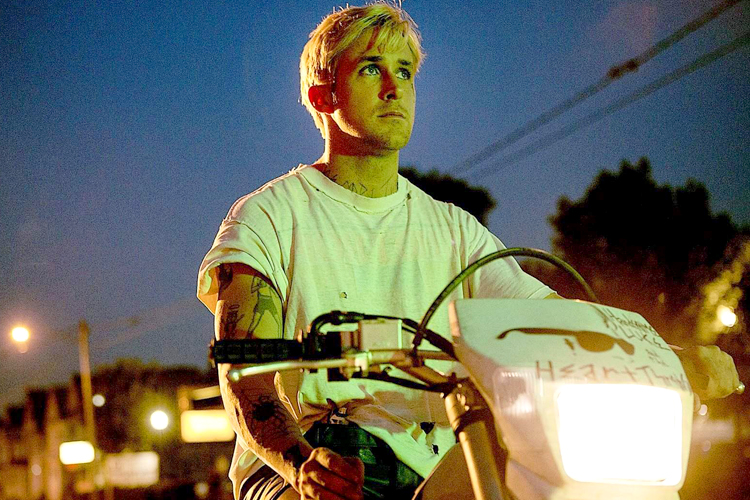
Ryan Gosling in "The Place Beyond the Pines"

A friend of a friend of mine has big plans: quit his prestigious editorial job in New York, grow his beard a bit further out, and start working on the docks. In 2014, the sentiments behind such a decision aren’t anything new, but they’re becoming more and more visible in our pop culture. You know the litany already: Gender roles in the workplace and the family are blurring, outsourcing is closing factory after factory, once-secure manufacturing jobs are disappearing. “American men don’t know how to make things anymore,” and all that. For a certain slice of American men, a romance has cropped up around working the docks, or an oil rig, or a crab boat up around Alaska. You’re getting back in touch with something, some supposedly inherent masculine energy that seems ever more ineffable as the nation adjusts its identity for a new era.

Last year saw a handful of filmmakers take on the questions of what it means to be a man in America in the 21st century, but their films don’t celebrate archetypal images of frontier manliness. Rather, they seem to suggest that looking back to these old forms is another broken urge in an age of cultural nostalgia.

After a decade of male antihero-dominated prestige TV dramas, the problem of contemporary American masculinity had its thematic apotheosis with “Breaking Bad.” Walt might have gotten a bleak version of a final Wild West showdown, but one of the most lasting images of the final season was that of him wasting away alone in a frozen cabin in New Hampshire. All the bluster of Heisenberg faded as Walt was corroded by the consequences of his actions — we saw up close the perversity of a man like him living alone in the woods. But while “Breaking Bad” did condemn old archetypes of masculinity to a degree, other stories seem to eulogize them as they slip away. Such an impulse toward eulogy has run through a handful of recent movies, most notably Jeff Nichols’ “Mud,” Derek Cianfrance’s “The Place Beyond the Pines” and Scott Cooper’s “Out of the Furnace.”

Though they may initially seem to have little in common, the settings of each film all present classic figments of Americana as if they are synonymous with the raw nature of our country’s landscape, a landscape in which listless male characters see their conceptions of life fragmenting. Each movie is shot in its own way, but each poeticizes decrepitude. The moss-covered porches and shuttered storefronts of Braddock, Pa., in “Out of the Furnace” aren’t so different from the strip malls and Piggly Wiggly in “Mud.” Luke and Romina, the ill-fated lovers of “The Place Beyond the Pines,” work as a traveling circus performer and a waitress. There’s something inescapably Springsteen-esque about their struggles, emphasized by the moment where “Dancing in the Dark” fades out as Luke walks up to the diner where Romina works.

That strain of down-on-your-luck American iconography runs through “Out of the Furnace,” as well. When Russell is released from jail, the very next scene begins with a shot of the road leading to the steel mill. Like much of “Out of the Furnace,” the symbolism isn’t overly subtle: a prison lies at one end of the road, the mill at the other. That mill appears as a darkened structure nearly indistinguishable from the earth it sits upon, either as barbaric as nature or being reclaimed by nature. Everything in Braddock is in the process of becoming a ghost.

Cooper, Cianfrance and Nichols also turn to immortal tropes of the past to address a much more contemporary preoccupation with a fading sense of rugged American masculinity. The most overt of these is the biblical influence on “Mud.” The isolated island where Mud lives is Edenic; it’s unclear for much of the movie whether Mud himself is supposed to be the snake in the garden or the First Man. It’s the battleground upon which Ellis’ loss of innocence takes place, the boy’s disillusionment boiling over into a confrontation with Mud that shatters the adventurous, paradisal escapism of the island.

Of course, linking biblical or classical ideas to American mythology is far from new. The difference here is that with each movie’s more or less contemporary setting (“The Place Beyond the Pines” begins in the ’90s, but ends in current day), it feels as if the traditional imagery — both American, and further back — is being deployed as a last-ditch attempt at inflating characters who have stopped making sense. These are broken archetypes wandering through archetypically desolate landscapes. They are men of the frontier, but also victims to it.

In each film, some character embodies a mythic vision of American masculinity. These characters are almost always shown either as out of step with the world around them, or as reflecting ways of life that are dying. They never triumph in an uncomplicated way. Just as the plots of these movies nod to biblical motifs, the characters themselves often take elements of stock fictional depictions of rugged masculinity. Mud is an island man as Rodney (or, on the darker side, Harlan) is a mountain man, as Luke is classical outlaw, a bank robber.

Of all of these, it’s Mud who’s most romanticized. He first appears as something of an apparition, the boys noticing cross-marks in the sand from his boots. They turn around and he’s standing by the tide — appearing out of nowhere, out of nature. He presents himself as an American mystic living out in the swamp, but also sounds like a rambling Beat. The crosses are nails meant to “ward off evil spirits.” As Ellis talks to both Mud and Tom Blankenship, the men mythologize one another. According to Mud, Tom is an ex-CIA assassin living a quiet, monkish second life in a houseboat; Tom claims Mud was “living in the woods when I first met him.” It’s unclear whether anything the men say about each other is actually true, but all of it paints Mud as a romantic outlaw.

In “The Place Beyond the Pines,” Jason hears that his father, Luke, is an “outlaw,” but the tone of the word is far different than when it’s applied to Mud. In “Mud,” there’s the creep of disenchantment — the fact that, far from a man bending the earth to his needs, Mud is a man on the run from the law, relying on Ellis’ groceries for sustenance. Luke, meanwhile, is a tragic outlaw. What would be mythic in a film less concerned with consequence gets refigured as something shameful. Luke thinks he’s living in a Wild West fantasy, but winds up slain by a cop and leaving his son without his biological father. Such complications are what bring each film’s ideas into the modern day. We’re shown all sorts of classic imagery of frontier masculinity, but we’re rarely led to believe the writers, actors or directors behind these characters consider them feasible in a contemporary setting.

What hangs over all of this is a tension between classic visions of manhood and a landscape that’s begun to move beyond them altogether. “Out of the Furnace” makes it explicit, and occasionally too obvious. Russell’s mill work and a hunting sequence are juxtaposed against Rodney’s refusal of a steady job in favor of fighting for money. In their way, both characters represent traditional masculinity through the physicality of their work. But Rodney’s status as an Iraq War veteran makes him, in one way, of the modern world. Russell’s factory life is a remnant of a dying lifestyle, where Rodney’s reclamation of a more visceral sense of masculinity could be seen as an extreme counterpoint to the emasculation Russell experiences through looming unemployment and his girlfriend leaving him for another man during his time in jail. “Out of the Furnace” doesn’t buy into that, though; Rodney’s brashness eventually gets him killed. The failures of the characters in “Out of the Furnace” are similar to Luke’s failures in “The Place Beyond the Pines,” all the men deal with the consequences of trying to embody an inherited vision of masculinity. Even Mud becomes — to gesture toward the Beat language he himself echoes — a holy fool, chasing after the icon of Juniper he’s built up in his head rather than realizing the truths about their relationship.

It’s worth returning to that hunting sequence in “Out of the Furnace.” Placed against Rodney’s fight in the Ramapo Mountains, together the scenes illustrate ritual displays of male control — over nature, over beasts, over themselves. The men of these movies are inevitably tied to the American landscape. They are born from it, but in their failings, they are also overcome by it. Each film centers on an interplay between these characters and their environment, between the marks of humanity and nature.

This comes out most clearly in the ways each film presents machinery and man-made items lost in nature. In “The Place Beyond the Pines,” Luke almost seems a creature of the countryside. His circus rolls through town based on the cycle of seasons; we see him riding his motorcycle rapidly through the woods as if he knows the land. True to the movie’s title, however, it’s out in nature that Luke and Avery come to terms with the more animalistic or darker corners of themselves. Luke goes into the woods and emerges a bank robber; Avery is made to face the physical result of his killing Luke. Natural settings here, as in “Mud” and “Out of the Furnace,” are where men are forced to reckon with themselves and face the futility of the structures they’ve built up, both figurative and literal. It’s there in the beginning of “Mud” in the image of the boat stuck up in the tree and littered with fallen leaves. Even though that boat’s running by the end of the movie, it’s dragging along the dark shadow of the violent gunfight that erupted at the film’s climax. As for “Out of the Furnace,” the steel mill that looms over Braddock and the film alike is on its way to becoming a shell. In the climax of the film, Russell chases Harlan among its ruined corners, through collapsing walls and rails overgrown with brush. The frontier that a character like Russell seems born out of is in the process of reclaiming the man-made symbol of what Russell is.

Even as each of these films undercuts the classic imagery it uses, none of them end without one last gesture toward dominance or transcendence. Both “Mud” and “The Place Beyond the Pines” end with a play on the classic trope of riding off into the sunset. Mud and Tom sail the boat out into open water. Jason purchases a motorcycle, inheriting more strands of his father, and rides off down roads winding through the mountainsides. Neither of these endings are clean or peaceful, and the characters in both still carry the baggage of the events that lead them to this final point. “Out of the Furnace” is more conflicted still — Russell avenges Rodney by shooting Harlan, and then there is a final shot of him sitting alone in his house, with no escape or reprieve after his actions. If these are final touches of romanticism, they are self-conscious ones.

For a moment, it may seem as if each of these films wants to uphold the mythic outlaw figures they’ve messily deconstructed along the way. As ambitious as these films are, none of them seem entirely sure what their endings should mean. And that makes complete sense. These are movies dealing with a concept and a trend as it unfolds. We don’t know where it’s going or what should replace it. Longing and wearied, “Mud” and “Out of the Furnace” and “The Place Beyond the Pines” are all stories by men about the sorts of men they might want to be, but with the knowledge that the world is leaving those sorts of men behind.


Ryan Leas (@RyanLeas) is a freelance writer based in New York. He has also written for GQ.com, Stereogum, and the Village Voice's music blog Sound of the City. More Ryan Leas.
Monday, January 6, 2014

Are Men "Stuck" in Traditional Gender Roles?

According to this article from the Los Angeles Times, it seems that men are at least stuck in traditionally masculine jobs and have made little headway into occupations traditionally dominated by women, while the reverse is not true - women are making more inroads into formerly "male" occupations than ever before.

'Men are stuck' in gender roles, data suggest

By Emily Alpert Reyes
Los Angeles Times
Posted: 12/27/2013

Math teacher Richard Yapchanyk leads a class recently at Archbishop Stepinac High School in White Plains, N.Y. While male teachers are not uncommon at the high school level, federal data show that less than 2 percent of preschool and kindergarten teachers last year were men. (AP Photo/Jim Fitzgerald)

LOS ANGELES -- Brent Kroeger pores over nasty online comments about stay-at-home dads, wondering if his friends think those things about him.

The father from Rowland Heights, east of Los Angeles, remembers high school classmates laughing when he said he wanted to be a "house husband." He avoids mentioning it on Facebook.

"I don't want other men to look at me like less of a man," Kroeger said.

His fears are tied to a bigger phenomenon: The gender revolution has been lopsided. Even as American society has seen expanding roles for women, popular ideas about masculinity seem to have stagnated.

While women have broken into fields once dominated by men, such as business, medicine and law, men have been slower to pursue nursing, teach preschool or take jobs as administrative assistants. Census data and surveys show that men remain rare in stereotypically feminine positions.

When it comes to gender progress, said Ronald Levant, editor of the journal Psychology of Men and Masculinity, "men are stuck."

The imbalance appears at work and at home: Working mothers have become ordinary, but stay-at-home fathers exist in only 1 percent of married couples with kids under age 15, according to U.S. Census Bureau data.

In a recent survey, 51 percent of Americans told the Pew Research Center that children were better off if their mother was at home. Only 8 percent said the same about fathers. Even seeking time off can be troublesome for men: One University of South Florida study found that college students rated hypothetical employees wanting flexible schedules as less masculine.

Other research points to an enduring stigma for boys whose behavior is seen as feminine. "If girls call themselves tomboys, it's with a sense of pride," said University of Illinois at Chicago sociology professor Barbara Risman. "But boys make fun of other boys if they step just a little outside the rigid masculine stereotype."

Two years ago, for instance, a Global Toy Experts survey found that more than half of mothers wouldn't give a doll to someone else's son, while only 32 percent said the same about giving cars or trucks to a girl.

In the southern end of Orange County, Calif., former friends have stopped talking to Lori Duron and her husband. Slurs and threats arrive by email. Their son calls himself a boy, but has gravitated toward Barbies, Disney princesses and pink since he was a toddler. In a blog and a book she wrote, Duron chronicles worries that would seem trivial if her child were a girl: Whether he would be teased for his rainbow backpack. Whether a Santa would look askance at him for wanting a doll.

"If a little girl is running around on the baseball team with her mitt, people think, 'That's a strong girl,' " said her husband, Matt Duron, who, like his wife, uses a pen name to shield the boy's identity. "When my 6-year-old is running around in a dress, people think there's something wrong with him."

Beyond childhood, the gender imbalance remains stark when students choose college majors: Between 1971 and 2011, a growing share of degrees in biology, business and other historically male majors went to women, an analysis by University of Maryland, College Park, sociologist Philip Cohen shows. Yet fields like education and the arts remained heavily female, as few men moved the opposite way. Federal data show that last year less than 2 percent of preschool and kindergarten teachers were men.

In the past 40 years, "women have said, 'Wait a minute, we are competent and assertive and ambitious,' " claiming a wider range of roles, said Michael Kimmel, executive director of the Center for the Study of Men and Masculinities at Stony Brook University. But "men have not said, 'We're kind, gentle, compassionate and nurturing.' "

In Oregon, Griffin Bates was stunned when the little boy she was raising with her lesbian partner at the time came back from a visit with Grandma and Grandpa without his beloved tutu and tiara.

"They were perfectly OK with his mother being gay," Bates said. "But they weren't OK with their grandson playing dress-up in a tutu."

Boys stick with typically masculine toys and games much more consistently than girls adhere to feminine ones, Harvard School of Public Health research associate Andrea Roberts found. Biologically male children who defy those norms are referred to doctors much earlier than biologically female ones who disdain "girl things," said Johanna Olson of the Center for Transyouth Health and Development at Children's Hospital Los Angeles.

Why? "Masculinity is valued more than femininity," University of Utah law professor Clifford Rosky said. "So there's less worry about girls than about boys."

Gender stereotypes do seem to have loosened: The Global Toy Experts survey found that most mothers would let their own sons play with dolls and dress-up sets, even if they shied from buying them for other boys.

But while attitudes may have shifted, Rosky said, "nothing changes until men are willing to act."

Some experts say economic barriers have stopped men from moving further into feminized fields. Jobs held by women tend to pay less, an imbalance rooted in the historical assumption that women were not breadwinners.

Yet it isn't just economics that keeps men from typically female jobs. Men are still rare in nursing, for instance, despite respectable pay. England and other scholars see that dearth as another form of sexism, in which things historically associated with women are devalued.

Sunday, December 29, 2013

Reducing Rape Requires Re-Wiring How Men Define Masculinity

This article comes from The Mint, a joint-production of the Hindu Times and the Wall Street Journal. Because it comes from India, the jumping off point for the editorial is the one-year anniversary of the gang rape of a 23-year-old physiotherapy student in Delhi. There were marches and demonstrations to remember the woman who died, but there were also echoes of the original responses by some men that rape become a capital offense (death penalty).

The author argues that many young men have bought into the feminist ideals of empowering women and punishing men who perpetrate. But this is misguided - if we want to change the culture of rape then we must re-wire how men define their own masculinity. The author quotes Havovi Wadia, head of research and development at Magic Bus, a children’s non-profit organization, and an activist who has worked in the area of gender-based violence:
“Notions of masculinity need to be challenged perhaps more urgently than notions of femininity. After all, it is the hetero-normative masculine discourse (which holds male heterosexuality as normal and all other expressions of male sexuality/gender as “not masculine” or abnormal) that situates the woman’s body as a site of conquest. Sadly, even feminism has continued to occupy a space within this discourse, resisting masculinities by positing equally problematic versions of the female.”
Gender scholar Ravi Verma, regional director, Asia regional office, International Centre for Research on Women, New Delhi, agrees with this premise and adds:
“We should expand the gender discourse beyond women’s empowerment,” Verma said in a telephone interview. “We have always presented equality from the perspective of giving agency to women, without bothering to normalize the man’s responsibility in achieving gender equality. Where do you see sensitive portrayals of men who are trying to transform themselves but might find their masculinity challenged, or feel frustrated in the process?”

According to Verma, rape falls at one end—the extreme end—of a broad spectrum of more subtle but firmly patriarchal expressions of masculinity that men absorb and exhibit from their childhood onwards. “You cannot stop rape overnight by legislation alone—that’s impossible,” he asserts. “In fact, limiting ourselves to legislative intervention might even have the opposite effect.”
The essential element, it seems to me, is that we need to transform masculinity in young men so that it becomes an object of awareness and not merely an uninterrogated lived experience. It must be a topic of discussion and education beginning very early in boys lives so that there is consciousness of how men are trained as boys to see women's bodies as objects to which they have an inherent right.

Boys must be taught to see girls, and later women, as equal and autonomous human beings who have the same rights to not be violated physically, emotionally, or sexually that men assume for themselves.  

This is how we change rape culture.

Okay, back to the article. The author and those interviewed offer a slightly different argument than I do, focusing instead on reducing the equation of masculinity with “proving behaviors,” including behaviors such as who can drink more, who can drive faster, who is more physically intimidating, and of course, who can “take” this or that girl. All of these are part of the traditional masculine ideal, a remnant of our evolutionary biology that has long ago ceased to be acceptable. 

Being ‘man enough’: Rape and our ideas of masculinity

Any strategy for action against rape must include an engagement with men’s ideas of masculinity


G. Sampath
First Published: Thu, Dec 19 2013


Some of the most chilling images from the anti-rape morchas of last year were those of ultra-aggressive male protesters making shrill demands of capital punishment for rape. Photo: Hindustan Times

It is now one year since the gang rape and murder of a 23-year-old physiotherapy student in Delhi. While it is great that we honoured her memory this week by taking out marches and lighting candles, these are the easier things to do. Far more difficult is to challenge our own comforting assumptions—about the feminisms we subscribe to, the notions of gender we live by.

For instance, some of the most chilling images from the anti-rape morchas of last year were those of ultra-aggressive male protesters making shrill demands of capital punishment for rape. Where did their aggression come from? Did these men—ostensibly out on the streets to support women’s rights and fight patriarchy—ever interrogate their lived sense of masculinity, or that of their male peers? Or were they the kind who, after marching against rape, would go back and rape somebody, as one of them allegedly did?

A number of gender scholars and activists have come to believe that the conventional feminist critique, which holds patriarchal male privilege responsible for fuelling sexual offences by men, does not wash with all men—definitely not with the vast majority for whom their masculinity is wedded to those selfsame patriarchal privileges, which includes a deep sense of entitlement to the bodies of women. Therefore, any strategy for action against rape, they argue, must include an engagement with men’s ideas of masculinity.

Havovi Wadia, head of research and development at Magic Bus, a children’s non-profit organization, and an activist who has worked in the area of gender-based violence says, “Notions of masculinity need to be challenged perhaps more urgently than notions of femininity. After all, it is the hetero-normative masculine discourse (which holds male heterosexuality as normal and all other expressions of male sexuality/gender as “not masculine” or abnormal) that situates the woman’s body as a site of conquest. Sadly, even feminism has continued to occupy a space within this discourse, resisting masculinities by positing equally problematic versions of the female.”

Wadia’s view is echoed by another gender scholar, Ravi Verma, regional director, Asia regional office, International Centre for Research on Women, New Delhi. Verma spent several years studying the processes by which children, teenagers and young adults imbibe normative ideas of gender. He believes that to be able to really address sexual violence against women, it is necessary “to go beyond post-facto responses, such as stringent law enforcement, and get into primary prevention work”.

But what does he mean by primary prevention work? “We should expand the gender discourse beyond women’s empowerment,” Verma said in a telephone interview. “We have always presented equality from the perspective of giving agency to women, without bothering to normalize the man’s responsibility in achieving gender equality. Where do you see sensitive portrayals of men who are trying to transform themselves but might find their masculinity challenged, or feel frustrated in the process?”

According to Verma, rape falls at one end—the extreme end—of a broad spectrum of more subtle but firmly patriarchal expressions of masculinity that men absorb and exhibit from their childhood onwards. “You cannot stop rape overnight by legislation alone—that’s impossible,” he asserts. “In fact, limiting ourselves to legislative intervention might even have the opposite effect.”

The counter-productive impact of punitive intervention is also underscored by another research scholar, Romit Chowdhury of the Kolkata-based Centre for Studies in Social Sciences. In a recent essay in Economic and Political Weekly , he notes, “The existence of laws which criminalize men’s sexual assault on women have not deterred male violence because it has become merely another ground on which men can prove their masculinity.” And how does that come about? He explains: “The possibility of getting caught provides an avenue for proving masculinity, showing that you can take big risks without being daunted by the prospect of danger.”

The centrality of “proving behaviour” to patriarchal definitions of masculinity, wherein a man feels compelled to “prove himself” in order to bond with his peers is well-documented in masculinity studies. While the domain of proof could be male friendship, or a skill of some kind, it typically derives from a patriarchal idea of masculinity. It has no space where one can ask: why does masculinity have to be proved at all? Common instances of such “proving behaviour” include who could drink more, who could drive faster, who is a truer friend, and of course, who could “take” this or that girl, says Verma.

Being undaunted by danger, and being able to get away with risk-taking and violence are widely reinforced as central facets of masculinity in popular culture. Almost every mainstream commercial film unfolds narratives that associate masculinity with violence. And whether you interpret that as reflecting societal norms or shaping them, given its ubiquity and glamorous potency, can we hope to stem the tide of male sexual violence without first systematically challenging these definitions of masculinity, and mainstreaming alternative expressions of male sexuality?

Indeed, one simple step that we as a society could have taken to counter the kind of aggressive masculinity that leans in the direction of rape was to decriminalize homosexuality, and thereby create a congenial climate for the normalizing of alternative, anti-patriarchal masculinities. Instead, with the Supreme Court’s 11 December ruling, we have done the exact opposite.

Both Wadia and Verma agree that an effective strategy against gender-based violence must involve systematic intervention at the institutional level, ideally at a stage when an individual’s gendered identities are yet to solidify. Wadia advocates engaging with children in the playground as a powerful way to challenge patriarchal definitions of masculinity. “The best part about this process—and this is what my organization does—is that it brings girls out of their homes into public spaces. In this case, it is one that, in India, is almost universally occupied by males—the public playground.”

Verma, who has been involved with gender-focused research studies in schools across Maharashtra and Jharkhand, also believes that intervention at the school level is critical. “You walk into any school and you will find that boys and girls are already receiving subtle messages that reinforce patriarchal definitions of gender. Go to the playground, and you will find boys, when they are 12 or 13, forming their ideas of selfhood based on aggression, violence, bullying. Women, too, fall into the same trap of patriarchy. Unless we address regressive notions of masculinity, especially with regard to notions of power and entitlement, we cannot make much progress in tackling regressive notions of femininity held by men as well as women.”

In the aftermath of the “Nirbhaya” case, by and large, the institutional responses to combat rape have coalesced around the twin ideas of punishment and deterrence. The punitive focus has been necessary because for far too long crimes against women have gone unpunished. But it is also vital to extend the battle beyond it—for legislations can always be reversed, as the bitter saga of Article 377 has showed us. Enforcing equality is one thing. Securing it is another thing altogether.

Friday, September 6, 2013

Getting Psychology in the Psychology of Men and Masculinity


This interesting panel discussion from the 2013 APA Conference offers an interesting look at the challenges of getting psychology into the study and praxis of men and masculinity.

The presenters are academics (faculty or students) and not practitioners, so it feels like a critical perspective is missing - the "on the ground" daily work some of us do in counseling men.

What all of the student presenters have in common is an interest in how the "man box" (the gender norms and rules accepted and installed by the culture) impact men in their mental health, emotional expression, and relationships.

Interesting - and good to see young people pursuing these topics.


Getting Psychology in the Psychology of Men and Masculinity

Published on Jun 3, 2012

The Men's Coping Lab at Clark University organized a symposium at the American Psychological Association Convention in San Francisco, California. The symposium discussed the utility grounding research on men and masculinity in extant basic psychology models and theories.

Chair: Michael Addis, comments read by Alisha Pollastri
Presenters (by appearance - bios below):
MySha Whorley
Jason Berkowitz
Matthew Syzdek
Jonathan Green

Our research team consists of faculty, graduate, and undergraduate students in the Department of Psychology at Clark.


Dr. Michael Addis is Professor and Chair of the Department of Psychology at Clark University. He received a B.A. from the University of California, Berkeley in 1987 and a Ph.D. in clinical psychology from the University of Washington in 1995. Dr. Addis has published over fifty scientific articles and books on men's well-being, depression, anxiety, and the relationship between scientific research and clinical practice in psychology. He is currently interested in links between the social learning of masculine norms and the way men experience, express, and respond to problems in living.


MySha Whorley is a fourth-year clinical psychology graduate student at Clark. Her overarching research interests are in the relationship between adherence to masculine norms and men's experience and expression of emotion. MySha recently concluded a study examining the relationship between adherence to masculine norms, negative affect, and the level of emotion expressed in men’s written disclosures. Her dissertation project will test an intervention to reduce depressive symptoms and increase social support seeking in men recently diagnosed with prostate cancer.


Jason Berkowitz is a senior undergraduate at Clark. His overarching research is men's mental health and partners of mental health patients. He hopes to pursue a Ph.D. in Clinical Psychology to continue research and to provide therapy. Jason is currently formulating an honor's project on the male partners of individuals with a mental disorder.


Matthew Syzdek is a second-year clinical psychology student at Clark. His overarching interests are gender, class, mental health, and social justice, with a focus on how working class men deal with problems in their lives. Matt's current project examines stresses experienced by men following job loss. In his future work, Matt plans to integrate research, clinical work, and advocacy in the pursuit of bettering men’s well-being and mental health. He hopes that his work will eventually impact the lives of individual men as well as public policy.


Jonathan Green is a first-year clinical psychology graduate student at Clark. His overarching research interests include adherence to masculine norms and depression in men; specifically the concept of "covert" or "masked" depression. Jonathan is currently studying the relationship between men's psychophysiology, endorsement of masculinity norms, and reported feelings of sadness.

Thursday, June 20, 2013

Ian Sinclair - Football’s Dangerous Masculinity


This is an interesting article from The New Left Project, based in the UK, on the issue of masculinity and football (soccer for the American readers). However, I suspect this perspective speaks equally well to our own issues with hyper-masculinity and American football.

Key observation:
As these representative examples show (I could easily have cited countless others) the type of masculinity constructed and reinforced in the footballing world shows football to be an important, highly conservative influence on contemporary gender relations, largely working to reproduce existing inequalities in society.
This is important to be talked about - when I was growing up in sports (football, basketball, and soccer), I had coaches who instructed us to "take out" the other team's best player. As we got older, locker room talk about females became incredibly objectified, boasting of conquests (sexual or otherwise) escalated, and subtle restrictions on what constitutes a "man" became more hyper-masculine and less human.

Then we wonder why some men grow up to be violent, emotionally cold, and insensitive to the feelings or needs of others.


Football’s Dangerous Masculinity

May 21, 2013
by Ian Sinclair

As the UK’s unofficial national sport and with the season running for nine months a year it often seems like it’s impossible to escape from football. It’s the default conversation topic from the office to the barbershop; the latest Premier League happenings round off television news broadcasts and large portions of our newspapers are dedicated to reporting and discussing every minute detail of ‘the beautiful game’. This cultural supremacy has been demonstrated by the recent retirement of Alex Ferguson, the manager of Manchester United for the last 26 years. Treated in a similar manner to the death of a member of the royal family it was the top story on the BBC website and splashed across the frontpage of all the next day’s newspapers. Even Nick Robinson, the BBC’s Political Editor, felt the need to comment, gushing that Sir Alex was the “greatest living Briton”.

However, considering football’s importance to many people and society more broadly, progressives have remarkably little to say about it. Certainly there is ongoing concern about the ever increasing capitalist nature of the game but what is almost completely lacking is an honest discussion or critique of the ideology of the game – in particular football’s relationship with men and masculinity. As Mariah Burton Nelson notes in her 1994 book The Stronger Women Get, The More Men Love Football: Sexism and the American Culture of Sports, “We need to take sports seriously – not the scores or the statistics, but the process. Not to focus on who wins, but on who’s losing.”[1]

As Men’s Studies scholars have noted about sport generally, the hierarchical and highly competitive world of football is one of the key sites for the construction and reproduction of masculinity today.[2] Through playing and watching the game boys learn what it means to be a man – which values and behaviour are manly and which are unmanly. “Be tough”, “be strong”, “play to win”, “get stuck in”, “don’t be intimidated”, “don’t cry”, “don’t wimp out” – all are common encouragements and admonishments to young footballers. And when they return home to watch Match of the Day they hear commentators praising their idols for “dominating” their opponents and “controlling” the game. Those players that play through great pain are heralded as heroes and those, like Roy Keane, who intimidate and revel in the violence and hyper-aggression are feted by fans and awarded with trophies. “I'd waited long enough. I fucking hit him hard. The ball was there (I think). Take that you cunt. And don't ever stand over me sneering about fake injuries”, wrote Keane in his autobiography about his premeditated revenge take down of Manchester City’s Alf-Inge Haaland in 2001, which effectively ended the Norwegian’s career. “My attitude was, fuck him. What goes around comes around. He got his just rewards. He fucked me over and my attitude is an eye for an eye." A subsequent investigation led to Keane being banned for five matches and fined £150,000, although sceptical readers may wonder how long a prison sentence Keane would have received had the incident occurred outside of a football stadium. Three years later Keane was inducted into the English Football Hall of Fame.

While Roy Keane was Manchester United’s enforcer on the pitch, Sir Alex ran the club like a dictatorship. “Fergie’s rule was absolute”, notes Channel 4’s John Anderson. “Loyalty was a quality to be demanded and repaid in equally unswerving fashion, and his word was law.” Pundits marvelled and chuckled at his ability to discipline his players and play macho psychological mind games with his opponents. On several occasions he has been banned and fined for using abusive language to match officials. In a widely reported dressing room incident he kicked a boot in anger that hit David Beckham in the face, requiring stitches. Never mind that this bullying management style would get him immediately sacked from every other workplace in the UK – Sir Alex, we have been told repeatedly in the last week, is the greatest manager ever to have graced the English game. His “achievements demand not just respect, they deserve to be studied and learned from”, argued Robinson. Tony Blair’s own enforcer Alastair Campbell may look up to Ferguson, but what has any of this got to do with those working for democracy, justice and equality except to serve as a guide about how not to behave?

As these representative examples show (I could easily have cited countless others) the type of masculinity constructed and reinforced in the footballing world shows football to be an important, highly conservative influence on contemporary gender relations, largely working to reproduce existing inequalities in society.

And nowhere is football’s resistance to contemporary gender norms more obvious than when talking about the total absence of openly gay players in the professional game. The first openly gay footballer was trailblazer Justin Fashanu – also the first one million pound Black player. "A bloody poof!" was how his manager at Nottingham Forest football club, Brian Clough, described him. Justin’s own brother disowned him when he came out in 1990. “He has come out publicly and stated his sexual preferences, so now he will have to suffer the consequences. I wouldn’t like to play or get changed in the vicinity of him”, said John Fashunu. John went on to present the hit TV show Gladiators. Justin killed himself in 1998.

While sports scholars like Ellis Cashmore and Jamie Cleland argue homophobia among football fans has significantly decreased since those dark days the lived experience on the ground gives less cause for hope. In January 2012, Robbie Rogers left Leeds United by "mutual consent". A month later he announced he was gay. In a statement Rogers said that remaining in football after declaring that you were gay was "impossible".

Football is also stuck in the stone age when it comes to women. This shouldn’t be surprising when you consider sports scholars have long explained that professional, organised sport as we know it emerged in the late 19th century in response to a number of challenges to men’s traditional power, not least the rising consciousness and power of women in society. As Michael Messner, Professor of Sociology and Gender Studies at the University of Southern California, notes:
Sport was a male-created homosocial cultural sphere that provided men with psychological separation from the perceived ‘feminization’ of society, while also providing dramatic symbolic ‘proof’ of the natural superiority of men over women.[3]
More than a century later and “the locker room” continues to be “the last preserve of the all male world”, according to Michael Kimmel, Professor of Sociology at State University of New York.

Football’s endemic sexism hit the headlines in 2011 when the Premier League’s top commentating team, Sky Sports’s Andy Gray and Richard Keys, were caught making disparaging and sexist comments about a female linesman and to a female colleague in the studio. In another incident Keys, off air and talking about Jamie Redknapp’s former partner, lewdly comments “Would you smash it [have sex with her]?... You could have gone round there any night and found Redknapp hanging out the back of it”. Gray and Keys were dismissed by Sky Sports, but it’s important to note their behaviour only became an issue when a (presumably disgruntled) colleague leaked the footage to the media.

What should be clear from all these examples is that the type of masculinity promoted reproduced in the footballing world is not an aberrant masculinity which can be dismissed as the way other men – criminal and psychopathic men, perhaps – act. Rather, it encapsulates many of the values and behaviours that make up mainstream, perhaps even the dominant, form of masculinity today.

The problem, as Cynthia Cockburn and Ann Oakley cogently argued in 2011, is that these “widespread masculine traits and behaviours are dangerous and costly both to individuals and society.” According to Government figures, in 2009-10 men were the perpetrators in 91% of all violent incidents in England and Wales: 81% for domestic violence, 86% for assault, 94% for wounding, 96% for mugging, 98% for robbery. 2009 Ministry of Justice figures show men were responsible for 98% of sexual offences, 92% of drug offences and 89% of criminal damage. 99% of child sex offenders are male. On the road men commit 87% of all traffic offences, 81% of speeding offences, 97% of dangerous driving offences and 94% of motoring offences causing death or bodily harm.

To summarise, the sport that so many of us support financially and emotionally, and the players we idiolise and cheer on, promote a highly conservative version of masculinity that is damaging, sometimes deadly, to women, children and society more generally. Where, then, are the progressive and feminist voices raised in protest and anger at the gender politics of football? Where is UK Feminista? Where is the Fawcett Society? Where are the critiques in the Guardian’s women’s pages? And where, most importantly, are the men who say they are feminists who want more equality between men and women? As chef and Norwich City fan Delia Smith once shouted: “Where are you? Where are you? Let’s be having you! Come on!"

~ Ian Sinclair is a freelance writer based in London and the author of The march that shook Blair: An oral history of 15 February 2003 published by Peace News Press. ian_js@hotmail.com and https://twitter.com/IanJSinclair.


[1] Mariah Burton Nelson, The stronger women get, the more men love football. Sexism and the American culture of sports (Orlando: Harcourt Brace & Company, 1994), p. 8.
[2] For example Michael Messner, ‘Boyhood, organized sports, and the construction of masculinities’, Journal of Contemporary Ethnography, January 1990, Vol. 18, No. 4, pp-416-44.
[3] Michael Messner, Out of play. Critical essays on gender and sport (Albany, State University of New York Press, 2007), p. 92-3.

Wednesday, May 15, 2013

Billy Johnson II - Traditional Gender Expectations May Contribute to Rising Suicide Rates in Men

This is not surprising. In a world where traditional male gender roles are no longer valued economically, where macho behavior is seen as cavemanish, and where gender roles in general have become more confusing, it's no surprise at all that men who feel they have to live up to traditional definitions of masculinity might feel hopeless and depressed about their future.

This article comes from the Good Men Project - and they are seeking stories by those affected by suicide (not sure if their deadline has passed).

Traditional Gender Expectations May Contribute to Rising Suicide Rates in Men

MAY 8, 2013 | BY BILLY JOHNSON II


Feeling trapped between a traditional masculinity and a progressive one can contribute to depression and suicide in men.

Despite strong national efforts, completed suicide is the 10th leading cause of death in the United States. According to the CDC, in 2010 there were 38,364 suicides in 2010 in the United States, a daily average of 105 each day.

Furthermore, these statistics are thought to under-exaggerate the total number of completed suicides as the data can be difficult to gather and this behavior often goes unreported.

Adolescent suicidal behavior has received the bulk of scholastic and media attention because suicide is the third leading cause of death for young people ages 15 to 24. However, the New York Times reported significant increases in suicidal behavior among middle-aged individuals, in particular middle-aged men: specifically completed suicides by persons aged 35-64 increased by nearly 30% from 1999-2010.

The gendered nature of suicide has been well documented with males being three to four times more likely than females to die by suicide. Men’s use of fire arms, tendency to stuff emotions, and low likelihood of seeking help are a few of the variables listed as responsible for the contrast in suicide rates between men and women.

But how do we account for the significant rise in suicide among middle aged men?

The New York Times article listed several possibilities for this trend including access to fatal drugs and the impact of the current economy, one of the consequences of this being higher unemployment rates. Furthermore, this generation may feel financially and emotionally burdened by the task of taking care of their parents or older family members while ensuring their own financial stability.

Depression and anxiety are often at the center of suicidal thoughts, and research by Samaritans, a U.K. charity which aims to lower the number of suicides, revealed that middle aged men who experience divorce or relationship separation, unemployment, and poverty are more likely to experience depression and consider suicide.

The researchers add that these individuals may also feel stuck between traditional masculinity, with its focus on emotional stoicism, and the more recent and progressive gender politics of expressing emotions openly.

Finally, they report that the ineffectiveness of some approaches in curbing suicide lies in the lack of a strong social conversation on the role of inequality in suicidal behavior. Men with low socioeconomic backgrounds are more likely than more affluent males to complete suicide; therefore, any approach for reducing the prevalence of this behavior must also include an analysis of the impact of poverty. This begs the question: how can suicide rates be lowered in a declining economy with such differing opinions of masculinity? What is in our power to do to help lower suicide rates among men of all ages?


In Canada and the U.S., the National Suicide Prevention Lifeline is 1-800-273-TALK (8255).
In the U.K., ring the Samaritans on 08457 90 90 90.

We’re looking for stories of people who have been affected by suicide. Please email lisa@goodmenproject.com if you would be willing to write about the experience.

Photo: ChrisHConnelly/Flickr

Read more: