Showing posts with label social pressure. Show all posts

Thursday, April 24, 2014

Maryann Reid - 15 Things That Introverts Would Never Tell You

cn_image.size.hunger-games-workout

I don't agree with all of this, and I speak from the experience of nearly 47 years as an introvert. However, most of her points are roughly accurate.

It's particularly difficult for male introverts - men are supposed to be outgoing, gregarious, and assertive. It's possible for introverts to be assertive with a little practice, but we are not likely ever going to be outgoing and the rest of it.

However, we are loyal friends, as long as you don't mind long gaps between lunch dates. And we are good thinkers, writers, researchers, and - believe it or not - therapists.

15 Things That Introverts Would Never Tell You

March 24 by Maryann Reid

Introverts get a bad rap in a world that celebrates extroversion and “people-persons”. There are things introverts wish you knew about them that would help any relationship or situation. For instance, we are not anti-social or depressed, we’re just different. In fact, many envy us for our self-contained, cool manner that keeps others calm, focused, and safe. People love us, in secret. As introverts, we have many “ways” that only our closest friends understand. Here are several things about introverts you may not know. 
We don’t care about your birthday.

Any introvert who works in an office knows how it feels to be hustled for birthday cake money. It makes us squirm when a random office person cheerily volunteers that it happens to be their birthday. We think they expect us to respond with like enthusiasm and interest, and maybe even accept their invitation to join them for drinks with a group of about 300 other random people to celebrate. Three hundred is a bit of an exaggeration, but feels that way to an introvert who just wants to go home. If you don’t invite us, we’re not offended. We’re relieved.

We don’t need you to care about our birthday.
Yeah, we don’t. We have friends who genuinely know us and care, if we care. However, an interesting thing about introverts, is some don’t need to celebrate it. We’re okay with quietly honouring the day on our own or with a group of friends we’ve carefully selected. We don’t have to let the world know.

We are not really listening as you recount your weekend.

Unless you are part of our circle of friends, we don’t care what you did last weekend. We are of the mind that everyone has a right to privacy, and if you chose to spend it in a drunken stupor or beating down the door of your ex, then that is up to you. We don’t judge, and find it takes too much energy to give it to people we don’t know. Just because we work with you, that doesn’t mean we know you.

We hate crowds.

Large groups of people make us tired. All the stimulation of having so many different types from all walks of life can make us a little woozy. Some introverts are empaths, so they tend to take on the energy of others easily. We sometimes feel like we “know” everyone in the room and get easily overwhelmed with the swirl of activity.

We don’t really like networking events.

This is especially hard for introverts who run a business. Networking makes us feel like we have to perform. We struggle to say the right thing and listen attentively. We don’t really care since we don’t know you. Even in business, we have to feel connected to someone on another level to get the most out of a networking type of event. This takes time, and choosing the right event, and coming up with a plan to offer value to others, while getting some for ourselves.

We force ourselves to act like we like you.


This is the nasty truth. We know who we like and don’t. It can stem from many reasons that can have its roots in childhood to what we ate for breakfast this morning. Don’t take it personally. We appreciate honesty, and sometimes it hurts. To survive, we have to supersede these feelings and be nice. Nice can be harder than being real.

We know how to get stuff done.

We pack our alone time with activities–projects, phone calls, emails, rough drafts and blueprints for world takeover of our next big idea (which we have lots of). We value solitude because it lets us experiment with new concepts, plan and stretch our imagination. Anything is possible when we spend time alone, and what we create may change our lives, and yours, too.

We like to write things out.
We love email because it helps us get what we need without interruptions. Interruptions throw us off course, and we need to expend more energy to get back on track. So, please don’t call unless it is a close-ended question.

We feel safe with the right people.

When we have the right people in our lives, we give our all. We give our best selves. We become protective warriors who will fight almost any cause for someone we love. Just ask our friends. We blossom in the right company, and shine. It takes us time to find the right people, and when we do, we don’t hold back.

We do have friends, who really like us.

Introverts like people, and people like us. Most introverts have no issue with hanging out in groups, and spending time with others. If we have friends, it’s because we consciously chose them. We’ve put effort into the relationship, and our friends know that. We go to bars, parties, and meet new people. The difference is that not everyone we meet becomes a friend.

We can do the extrovert thing, for a while.

We have to do that to get along. We can be the life of the party, host the networking event, and be the chairperson of the charity. We do this willingly, knowing that at the end of the day we can go home. When we get there, it may take days, or weeks to replenish ourselves, and feel ready to do that again.

We are not shy, rude or uptight.

At first, we may seem that way. Get to know us, and we can actually make you laugh, and hold a conversation that lasts more than 15 minutes. The thing is, we don’t share this with everyone. Being “social” or “sociable” is an option, not a way of being. We can’t fake happy or excited really well, and we show what we think on our face, not as much in our words.

We are okay alone.

We have lots going on in our heads and don’t need more. Unlike our extrovert counterparts, we don’t need others for stimulation. We’re constantly working out life in our heads. We entertain ourselves with creative projects and know how to take ourselves out for a good time. More people, means more stuff to deal with, and we’ve got enough of our own energy to hold.

We hate small talk.

We’re thinkers, and we relish conversations about big ideas, theories and ideals. We rarely get into small talk and do so comfortably.

We make a choice to be with you–appreciate it.


We value our alone time and are picky about who we let in. Letting in the wrong person will drain us, leaving nothing for ourselves. We tend to attract extroverts who suck our energy, and search out likeminded introverts for our groundedness, deep thinking and sense of control. We appreciate our time with other introverts and have an understanding of each other’s limits and boundaries.


Maryann Reid

Maryann Reid, a catalyst for self-empowerment and award-winning author of several books published by St. Martins Press, has a passion for writing stories that unveil the lives of gutsy women on the brink of self-discovery or disaster. Find out more about her at www.maryannreidinc.com or her latest novel, This Life at http://amzn.to/1mHpFpQ.

Friday, September 6, 2013

Getting Psychology in the Psychology of Men and Masculinity


This interesting panel discussion from the 2013 APA Conference offers an interesting look at the challenges of getting psychology into the study and praxis of men and masculinity.

The presenters are academics (faculty or students) and not practitioners, so it feels like a critical perspective is missing - the "on the ground" daily work some of us do in counseling men.

What all of the student presenters have in common is an interest in how the "man box" (the gender norms and rules accepted and installed by the culture) impact men in their mental health, emotional expression, and relationships.

Interesting - and good to see young people pursuing these topics.


Getting Psychology in the Psychology of Men and Masculinity

Published on Jun 3, 2012

The Men's Coping Lab at Clark University organized a symposium at the American Psychological Association Convention in San Francisco, California. The symposium discussed the utility grounding research on men and masculinity in extant basic psychology models and theories.

Chair: Michael Addis, comments read by Alisha Pollastri
Presenters (by appearance - bios below):
MySha Whorley
Jason Berkowitz
Matthew Syzdek
Jonathan Green

Our research team consists of faculty, graduate, and undergraduate students in the Department of Psychology at Clark.


Dr. Michael Addis is Professor and Chair of the Department of Psychology at Clark University. He received a B.A. from the University of California, Berkeley in 1987 and a Ph.D. in clinical psychology from the University of Washington in 1995. Dr. Addis has published over fifty scientific articles and books on men's well-being, depression, anxiety, and the relationship between scientific research and clinical practice in psychology. He is currently interested in links between the social learning of masculine norms and the way men experience, express, and respond to problems in living.


MySha Whorley is a fourth-year clinical psychology graduate student at Clark. Her overarching research interests are in the relationship between adherence to masculine norms and men's experience and expression of emotion. MySha recently concluded a study examining the relationship between adherence to masculine norms, negative affect, and the level of emotion expressed in men’s written disclosures. Her dissertation project will test an intervention to reduce depressive symptoms and increase social support seeking in men recently diagnosed with prostate cancer.


Jason Berkowitz is a senior undergraduate at Clark. His overarching research is men's mental health and partners of mental health patients. He hopes to pursue a Ph.D. in Clinical Psychology to continue research and to provide therapy. Jason is currently formulating an honor's project on the male partners of individuals with a mental disorder.


Matthew Syzdek is a second-year clinical psychology student at Clark. His overarching interests are gender, class, mental health, and social justice, with a focus on how working class men deal with problems in their lives. Matt's current project examines stresses experienced by men following job loss. In his future work, Matt plans to integrate research, clinical work, and advocacy in the pursuit of bettering men’s well-being and mental health. He hopes that his work will eventually impact the lives of individual men as well as public policy.


Jonathan Green is a first-year clinical psychology graduate student at Clark. His overarching research interests include adherence to masculine norms and depression in men; specifically the concept of "covert" or "masked" depression. Jonathan is currently studying the relationship between men's psychophysiology, endorsement of masculinity norms, and reported feelings of sadness.

Tuesday, August 20, 2013

Brandon Ambrosino - The Tyranny of Buffness (The Atlantic)

Men are starting to face the same self-image and body-image challenges women have been dealing with for decades, if not centuries. Perhaps men is too general - right now it is mostly gay men (as Brandon Ambrosino points out in The Tyranny of Buffness [below], from The Atlantic), and whatever it is that we now are calling those guys previously known as "metrosexuals."

To be "sexy" or "masculine," or even to be manly, now requires several hours a week in the gym. A man must be muscular (but not TOO muscular - massive bodybuilders still scare people), and he must be lean (but not TOO lean, which just looks freaky).

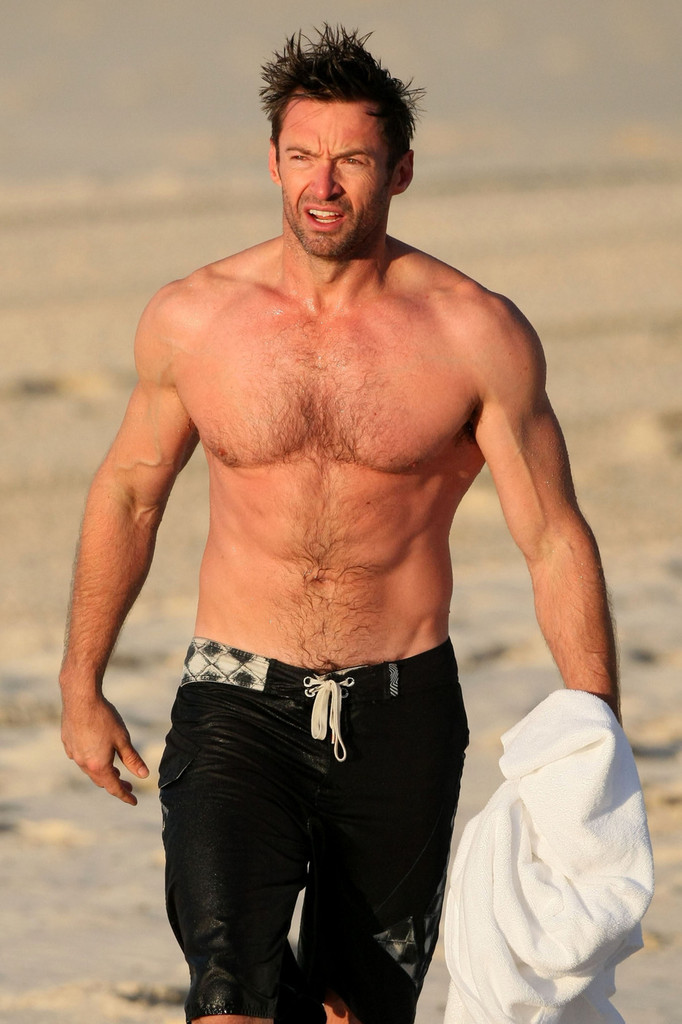
This is the new ideal for a lot of men:


Hugh Jackman is buff and lean, just enough of each to be a role model for a lot of men. He put some muscle on his former-model body for X-Men and decided to keep it. So he works out hard with heavy weights and basic lifts. This is a huge improvement over the 1990s role model of Brad Pitt, circa Fight Club. I remember reading the forums at some fitness sites and everyone wanted to look like Brad Pitt (or at least have his abs, which other than a big chest is the mark of fitness for men).


He looked a lot better, i.e., more buff, when he made Troy:


How many men can actually look like Hugh Jackman or Brad Pitt? So why do we feel we need to do so to be "real" men? Why do we even try if our genetics have not endowed us with the gift of easy muscle growth and good metabolism?

I am not immune to this issue. I work out hard several days a week, and I eat a diet my friends have described as freakishly clean. As a personal trainer, I feel I need to be the exemplar for the lifestyle I teach my clients, but I can be very self-critical if my abs disappear or if lose muscle weight as I increase my cycling work.

As hard as it has become for cis men to deal with these new standards (many of them self-imposed), based on this article it appears to be 10 times as challenging in the gay community.

The Tyranny of Buffness

My boyfriend expected me to be lean and muscular. But I couldn't live up to that standard, and neither can a lot of guys--and we shouldn't have to.


By Brandon Ambrosino | August 16, 2013

phlubdr/flickr

I didn't know I was skinny-fat until my Russian boyfriend told me so. Actually, I didn't even know that was a thing until he told me so.

I did, however, suspect something was wrong with my body the first night I stayed over his house.

I went to use the bathroom in the middle of the night, and ran into his roommate, Julio. I don't remember what he said, but I remember where he looked. He seemed to direct his entire conversation--and disgust--at my exposed midsection.

Also known as my love handles.

Julio (gay) and my boyfriend both possess the envious V-shape: broad shoulders narrowing down to a waist that hasn't smelled a carb in years. Their arms are huge, their chests are cut, their abs are visibly defined.

I went into the bathroom. I looked at myself in the mirror. Sure, I was a professional dancer, and I did yoga, and went running, and watched what I ate. And yes, I was probably in pretty good shape. But I didn't look good enough.

The longer I stared at myself, the more I began to notice what it was that made Julio cringe. My chest was dystrophic. My arms were unformed. My neck was frail. Skin hung over the band of my underwear and, on top of that, I was hairy. Everywhere.

I began to panic. This was the first night my boyfriend saw me naked. He had that godlike body to offer me--and all I could give him was ... was this hairy, love-handley mess of skin?

I went back to the bedroom and turned off every light in the house on my way there.

The tendency of gay men to emphasize physical appearance is "hard to dismiss," says Dr. Duane Duncan, Research Officer at the Australian Research Centre in Sex, Health and Society. In his article "Out of the Closet and Into the Gym," Duncan acknowledges that the idealized male physique is "a major point of cultural reference in the dominant representation of gay men."

"We're doing this to ourselves," says Dr. David Brennan, a clinical social worker from the University of Toronto. "Our entire culture is showing the same body image. And the question is, does that affect us?"

Obviously, this question is politically charged. Anti-gay politicians are more than ready to pathologize any traits gay men may have in common. On the flip side, many gay-rights activists go to great lengths to deny altogether that there are any identifying features of what opponents pejoratively term "the gay lifestyle." In response to this double bind, some researchers have conducted studies to answer the gay body image question. But even then, it seems as if the methodological frameworks underpinning the studies are influenced by one of these political extremes.

Brennan, a gay man himself, insists gay culture's preference for a specific physical ideal does indeed affect those who fall short of the prevailing standards. Some of these negative effects include low self-esteem, eating disorders, and body dysmorphia. Brennan also says some gay men who don't measure up might even develop "an increased use or dependency" on drugs and alcohol.

And even though the research into this area is fairly recent, Brennan suggests the literature we do haveshows that gay men on average tend to experience more body dissatisfaction than heterosexual men. (Some research suggests that gay men and straight men share similar concern for their bodies, but because of the pressures of heterosexual society, straight men don't feel comfortable talking about it. In other words, the differences might be more announced than pronounced, which is the argument offered by the authors of The Adonis Complex.)

But while a conclusive decision has yet to be reached, contemporary gay trends certainly lend credence to Brennan's theory.

Take, for instance, Grindr-a gay social networking app that helps you "find gay, bi, curious guys for free near you." Grindr displays thumbnail pictures of potential, um, "friends" organized by their proximity to your immediate location. Users can scroll through several hundred pictures - an assortment of faces, biceps, and abs - until they find the one guy that tickles their fancy.

Senthorun Raj, a writer at The Guardian, recently described his Grindr experience:
Sorting through each profile makes me feel like I'm a kid in an adult candy store: 'window-shopping' my way through, hoping to find the right guy to fit my current mood. ... I'm in control of who I respond to, how quickly I respond, and the nature of the conversation I am having.
The term "window-shopping" immediately jumped out at me. I've gone "shopping" for men in similar ways, both on and offline. Hm ... that one's balding. That one has gay-face. Oh, the one with big shoulders carrying a briefcase down Fifth Avenue--follow him!

In other words, there are times when I act like I'm on Grindr even when I'm not. What's troubling about this is that, without being aware of it, I've helped to perpetuate the same exclusivity that Brennan says "makes some gay men feel left out or without value."

There's no doubt that there are some benefits to Grindr. In a phone interview, Grindr founder and CEO Joel Simkhai said his company "creates a virtual community" for people who might otherwise feel isolated and alone--think the Middle East or the Republican National Convention.

But when you think about some of the language that characterizes the Grindr experience--"No Asians or Fems!"--you've got to wonder about the kind of community that's being created.

***

The tendency to conflate muscularity and masculinity is widespread throughout gay culture, according to Dr. Murray Drummond. In his article "Men's Bodies: Listening to the Voices of Young, Gay Men," Drummond argues that we often take for granted that muscularity signifies both physical and emotional strength. In gay communities, he says, muscle means something very specific - such as "a sense of control ... [and] an air of resilience."

It's easy to begin to psychoanalyze why this might be the case. There are several different theories about gay muscularity, each one less politically correct than the next. Brennan suggests a view most notably argued by A. Klein in a 1993 book titled Little Big Men. After the AIDS crisis, he says, many gay men hit the gym to avoid looking thin and frail, which might have been taken as signs of being diseased. This new drive to achieve an athletic body was described by Drummond as a form of "protest muscularity."

Another motivation might have been to overcome the homophobia--internalized or otherwise--that saw gay men as weaker than their straight counterparts. Yet another opinion is that in the late 1970s, the growing physical strength of gay men mirrored the continued social strength they were achieving.

Of course, these theories don't entirely explain why younger gay men who didn't live through the AIDS crisis or pre-Stonewall homophobia hold the same muscular ideals as our forerunners. Not to mention, does there have to be a psychological reason for gay men to like muscles?

I was 12 the first time I connected muscularity with gayness. I came across an erotic photography collection by an artist named Tom Bianchi who specializes in the male nude and gay erotica. His subjects are muscular demigods who look very much like my Russian.

Looking at Bianchi's images in seventh grade turned me on. Looking at them today--well, alright, they still turn me on. I also feel pressured to transform my body so that I can be accepted into the community that Bianchi represents.

Bianchi told me in a phone interview that while he doesn't want his photography to pressure me, he hopes it serves to encourage me--and all gay men--to realize our physical potential.

"We have the powers of co-creation," he said. "That's a teaching of the Hindu Vedas. It's remarkable how much power we have to change our physical bodies."

But not all gay men are able to live up to Bianchi's standards, even with a rigorous diet and exercise regiment. Patrick Giles, in a critique of Bianchi published in the Harvard Gay & Lesbian Review, pointed this out. "What about heredity, somatotype, [or] the greater inherent potential of big-muscled people over the smaller-muscled?"

Giles points out that money is also a factor. According to a 2012 LGBT community survey, a higher percentage of gays than straights pay for gym memberships, personal trainers, and weight management programs. This is great for those who can afford such things--but what about those who can't? There's also the question of motivation. Research shows that gay men tend to take care of their bodies more than straight men. But the same research shows gay men are motivated less by the desire to be healthy, and more "for the express purpose of increasing attractiveness."

But whether we're limited by our genes or our funds, it's clear that not all gay men live up to Bianchi's standards. And the fact is - we shouldn't feel like we have to.

As far as Giles is concerned, beauty acts hierarchically in the gay community. Those who have the resources to "Adonize" their bodies are rewarded with power and influence. Everyone else is excluded--and then blamed for not working harder.

Bianchi admits his photography showcases a certain muscular ideal, but he argues that it's hardly unique to his work, or to gay culture. "Our human ancestors recognized that if a man was strong enough to catch prey, then he was attractive."

"Look at Michelangelo's David," he continued. "Muscles have always been signifiers of the power of being, and that's very attractive to us."

But is it true that male muscularity has always been idealized throughout history? Cultural historian George Mosse argues that Bianchi's ideal man is a relatively new invention. In his book The Image of Man, Mosse dates the idealization of the male physique to the Napoleonic Wars (1803-1815). That isn't to say Bianchi is wrong, it's just to admit that not all historians agree with the assertion that history shows a ubiquitous privileging of muscularity.

In other words, sure, there's Michelangelo's David--but let's not forget about Donatello's.

***

The Russian put me on a strict diet after our first night together: No carbs or sugar - not even fruit. When waitresses offered me dessert, he would tell them we only wanted the check. He took me to hot yoga a few days a week, and the gym on the other days. And there was no more midnight munching.

In five weeks I lost 30 pounds. One year later, I lost him.

The obvious question is, why did I allow my boyfriend to influence how I saw my body? The simplest answer is that I didn't want to lose him. He was a hot, Jewish doctor from Eastern Europe with green eyes and a gorgeous physique. There were plenty of other "qualified" guys for him to date, and so I thought I should try to make my body look like theirs.

But another part of the the more complicated answer has to do with the larger gay community. It wasn't as if my partner's ideas about body image were unfamiliar to me. If anything, he was only echoing ideals I had already learned and internalized from my gay peers and the media--ones that I sometimes also perpetuated.

I wonder if being publicly concerned about our bodies is as much a gay rite of passage as loving Judy Garland or watching Ab Fab.

***

Before I hung up with Tom Bianchi, I asked him if he ever air-brushed his images.

"If it inhibits the essence of the photography, I'll edit it out," he said. "For instance, I see no reason to memorialize the red spot from an in-grown hair on someone's ass."

That blemish sounds like one of the "dappled things" the Victorian poet Gerard Manley Hopkins wrote about in "Pied Beauty."

"Glory be to God," sings Hopkins, for all things that are "original, spare, strange," for all things "fickle" and "feckled."

Things like finches' wings, and the spotted underbellies of trout.

Things like love handles, and the extra flap of skin that hangs over my underwear band.

Things like the red spot from an in-grown hair.

Bianchi's art tends toward a Platonic ideal of male beauty. Hopkins, on the other hand, celebrates the beauty found in the diversity of imperfection.

To the photographer, the blemish inhibits a subject's beauty. To the poet, the blemish is what makes him beautiful.

Copyright © 2013 by The Atlantic Monthly Group. All Rights Reserved.

***

Related Story


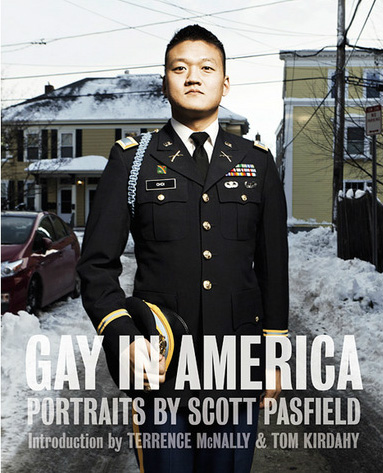
'Gay in America': Photographs of Gay Men From All 50 States

Tuesday, February 12, 2013

F**k Valentine's Day


It's that special time of year again, when Hallmark, diamond sellers, rose growers, and chocolate makers see nothing but dollar signs at the prospect of millions of men trying to show the person they love that they care enough to buy the very best. Men are groomed from a very young age (as are women) to see Valentine's Day as a "better show up" holiday.

F**k that.

VD is a made up holiday designed to sell stuff, mostly to men. And we buy into the scheme. Why? Social pressure, media pressure, and all kinds of other not at all subtle messages that tell us, "This is what god guys do. And you want to be a good guy, right?"

Bullshit.

What good guys actually do is show the person they love that they are special and appreciated all year, not on one made-up holiday. It doesn't mean buying stuff either. It can be as simple as kissing your beloved on the back of the neck while the coffee is brewing. Or just stopping in the middle of cooking dinner or walking across the room just to give a long hug.

My guess is that small acts like this, done all year long, will beat the hell out of the commercialism and materialism we call VD.

If you need some more reasons why VD sucks, check out this post from the Good Men Project.


10 Reasons Why Valentine’s Day Sucks: An Emily Hartridge Original Video


Some people really love Valentine’s Day. This video is not for you. 
And don’t forget our standard disclaimer copy: Emily’s videos are for entertainment only. Do not try this at home.