Showing posts with label gay men. Show all posts

Sunday, September 21, 2014

Domestic Violence Appears More Likely for Same-Sex Couples

http://www.washingtonblade.com/content/files/2014/03/domestic_violence_insert_by_Bigstock.jpg

I've seen research suggesting that this is true in the past - but this adds to the evidence. It would be useful, too, to get a more comprehensive assessment of male same-sex domestic violence. As the article below notes, most of the research has been conducted on lesbians, not gay men or bisexuals.

We need to increase prevention eduction to the LGBT community, not just professional athletes and other high profile people.

Domestic Violence More Likely for Same-Sex Couples

By Janice Wood Associate News Editor
Reviewed by John M. Grohol, Psy.D. on September 21, 2014


Domestic violence occurs at least as frequently — and likely more so — between same-sex couples, according to a review of literature conducted by researchers at Northwestern Medicine.

“Evidence suggests that the minority stress model may explain these high prevalence rates,” said senior author Richard Carroll, associate professor in psychiatry and behavioral sciences at Northwestern University Feinberg School of Medicine and a psychologist at Northwestern Memorial Hospital.

“Domestic violence is exacerbated because same-sex couples are dealing with the additional stress of being a sexual minority. This leads to reluctance to address domestic violence issues.”

Previous studies have shown that domestic violence affects 25 percent to 75 percent of lesbian, gay, and bisexual individuals. However, researchers believe that a lack of representative data and underreporting of abuse suggests even higher rates.

An estimated 25 percent of heterosexual women experience domestic abuse, according to researchers, who note that that percentage is “significantly lower” for heterosexual men.

“There has been a lot of research on domestic violence, but it hasn’t looked as carefully at the subgroup of same-sex couples,” Carroll said. “Another obstacle is getting the appropriate samples because of the stigma that has been attached to sexual orientation. In the past, individuals were reluctant to talk about it.”

The research that has examined same-sex domestic violence has concentrated on lesbians rather than gay men and bisexuals, according to the Northwestern scientists.

“Men may not want to see themselves as the victim, to present themselves as un-masculine and unable to defend themselves,” Carroll said.

He suggests that homosexual men and women may not report domestic violence for fear of discrimination and being blamed for abuse from a partner. They also may worry about their sexual orientation being revealed before they are comfortable with it.

“We need to educate health care providers about the presence of this problem and remind them to assess for it in homosexual relationships, just as they would for heterosexual patients,” Carroll said.

“The hope is that with increasingly deeper acceptance, the stress and stigma will disappear for these individuals so they can get the help they need.”

The review was published in the Journal of Sex & Marital Therapy.

Source: Northwestern University

Thursday, July 17, 2014

Michael Sam's Powerful, Show-Stopping Speech at the ESPYs


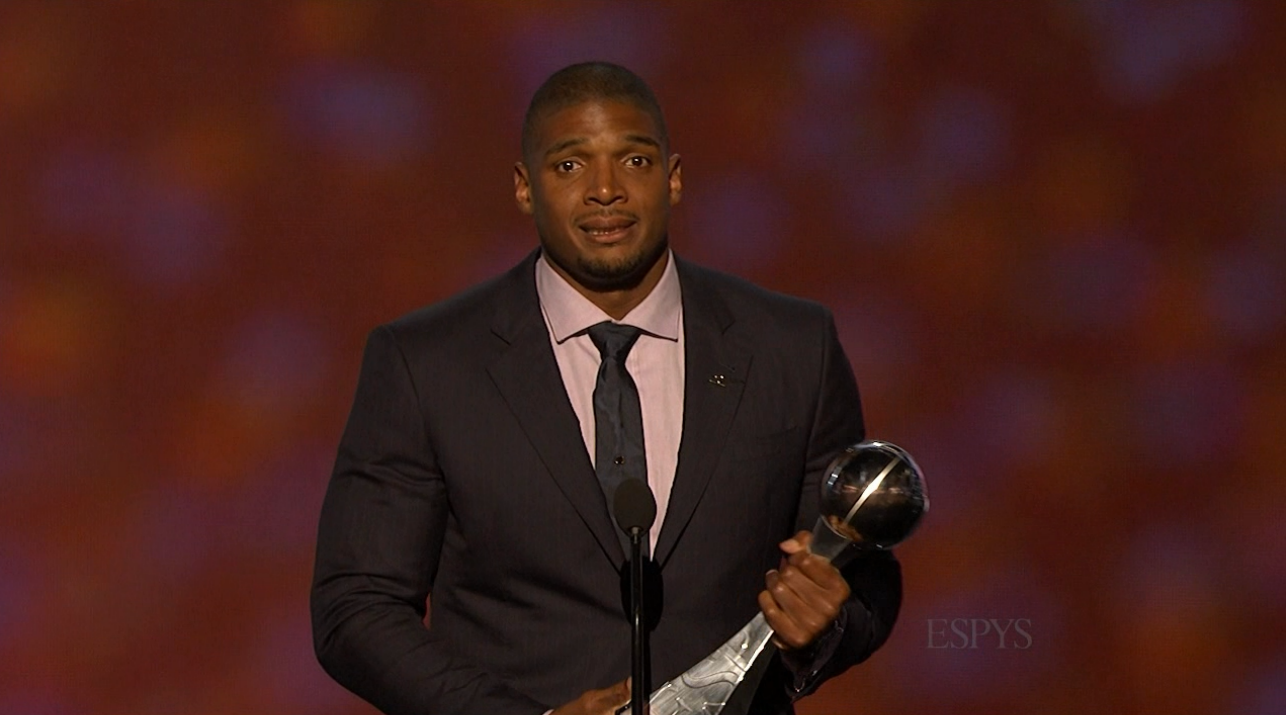
Michael Sam was given the Arthur Ashe Courage Award at the 2014 ESPYs on Wednesday night. His acceptance speech was incredibly powerful. Enjoy!

Michael Sam's Powerful, Show-Stopping Speech at the ESPYs

By Scott Gleeson

LOS ANGELES — Michael Sam delivered an incredibly powerful speech after accepting the Arthur Ashe Courage Award at the 2014 ESPYs on Wednesday night.

There weren’t many dry eyes in the room following the words of Sam, who was honored for his decision to publicly come out and become the first openly gay player drafted into the NFL.

Sam emotionally quoted Ashe’s words of wisdom, that included: Start Where You Are, Use What You Have and Do What You Can.

“Those were words to live by,” Sam said. “Whether you’re white or black. Young or old. Straight or gay.”

Sam fought back tears on stage, and he ended his speech by telling the story of a gay woman who told him she never again consider committing suicide after he came out as gay.

Sam’s powerful message: “To anyone out there, especially young people feeling like you don’t fit in, or are not accepted, great things can happen when you have the courage to be yourself.”

Sam brought boyfriend Vito Cammisano on the red carpet and specifically thanked him.

Dwayne “The Rock” Johnson presented the award. Jason Collins, the first openly gay athlete in the NBA, was shown cheering in the audience.

Saturday, April 12, 2014

10 Percent of Gay Craigslist Ads Seek Men Who Don't Identify as Gay

craigslist_st8.jpg

Curious . . . human sexuality is an interesting and complex phenomenon. The ad above is a reverse on the study below. I know a younger gay man who hooks up with men through chat rooms, but a lot of the guys he sees are straight-identified and often in hetero relationships.

10 percent of gay Craigslist ads seek men who don't identify as gay

Posted By News On March 24, 2014  
Online sexual hook-ups may present a unique opportunity to explore many factors of decision-making that inform sexual health, according to an analysis conducted by Eric Schrimshaw, PhD, at Columbia University's Mailman School of Public Health and Martin J. Downing, Jr., PhD, of the National Development and Research Institutes.

They found evidence that men having sex with men use the Internet to find sexual partners who do not identify as gay, either to fulfill a fantasy or because it allows anonymous sexual encounters without discovery. The findings are in Psychology of Sexual Orientation and Gender Diversity.

To examine the subgroup of men seeking non-gay-identified (NGI) men in the online sexual marketplace, the researchers reviewed 1,200 Internet personal ads posted on Craigslist and selected 282 for analysis and performed comparisons of two categories of personal ads: those seeking encounters with NGI men, including straight, bisexual, married, curious, and men on the "down low" (those who usually identify as heterosexual but have sex with men); and a contrasting set of ads that did not specifically seek NGI men. Craigslist was chosen because it is publicly accessible, highly trafficked, free-of-charge, and widely used by gay, NGI men seeking men, or men who have sex with men and women to find sexual partners.

Among the ads studied, 11% were placed by men seeking NGI partners. Although men who posted NGI-seeking ads were more likely to self-identify as bisexual, married, and/or discreet and to seek out an anonymous encounter relative to the ads of comparison men, only 24% of online advertisements seeking NGI men were posted by men who were themselves non-gay-identified. This suggests that many of the posts are placed by gay men seeking NGI men, perceived by some gay men to be more masculine, dominant, or "straight-acting."

Only a small number of ads by NGI-seeking men mentioned safe sex or condom use. The analysis revealed that men seeking NGI partners were significantly less likely to mention that they wanted to have safer sex/use condoms (15% vs. 33%) and were more likely (66% vs. 42%) to omit mention of condoms or safer sex in their advertisements. "This suggests that these men are more likely to be looking for and willing to engage in sex without a condom which may place them at greater risk for HIV/STI transmission than men who are not seeking non-gay-identified male partners," said Dr. Schrimshaw, who is assistant professor of Sociomedical Sciences at the Mailman School of Public Health.

Although few advertisements posted by men seeking NGI partners specifically sought anal sex without a condom (1% vs. 2%), they were significantly more likely to seek oral sex without a condom (14% vs. 5%) than comparison advertisements. "Future research on NGI-seeking men could lead to better understanding of their risk behaviors which, in turn, could be helpful for developing and targeting HIV/STD prevention and intervention efforts," noted Dr. Schrimshaw.

"Men having sex with men with characteristics that are devalued in the sexual marketplace such as older, heavier, or less masculine men will perhaps have less bargaining power, or at least perceive themselves as having less power, therefore, they may be willing to place themselves at risk for HIV and other sexually transmitted diseases to obtain a sexual partner," said Dr. Downing. These findings suggest that men may be even more willing to do this with NGI men.

The findings have unique implications for sexual health research targeting non-disclosing, NGI MSM and their same-sex partners. The authors note that further investigation is warranted to determine the extent to which NGI-seeking men are successful in finding partners for same-sex encounters who identify as straight or heterosexual, bisexual, down-low, or married as well as the types of behaviors these men engage in and the level of sexual risk.

"Regardless of any study limitations, the research has allowed us to document the existence of a subgroup of men who actively seek out sexual encounters with men who do not identify as gay," said Dr. Schrimshaw. "Moreover, the findings suggest that men with a preference for NGI men attempt to alert such prospective partners through a combination of self-described characteristics, desired partner attributes, and behavioral preferences, all of which serve to attract more discreet and masculine men. Given the attention to the sexual behaviors of NGI MSM, the results of this study support the need for additional research to investigate the behavioral outcomes of NGI-seeking men's personal ads."

Thursday, April 10, 2014

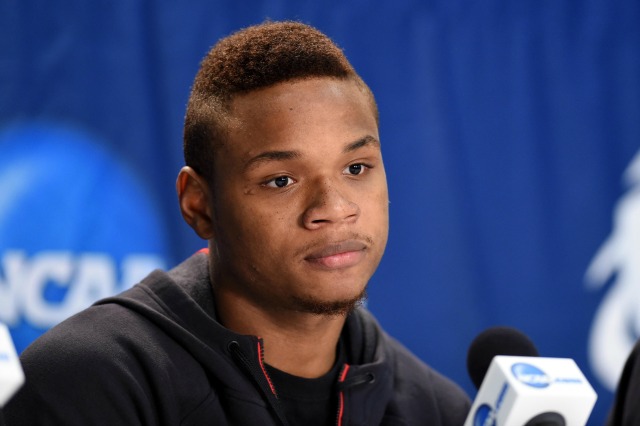
Why Derrick Gordon Coming Out is Important, and a Story


Jason Collins was the first active NBA player to come out; Michael Sam was the first Division I NCAA football player to come out; and now Derrick Gordon is the first Division I NCAA men's basketball player to come up.

Some people seem to think it's no big deal, and it shouldn't be - no one should give a rat's ass about anyone else's sexuality if the other person is not being evangelical. But that's not the world we live in, and that is certainly not the world of male sports. So, kudos to Mr. Gordon for showing other young men it is okay to be yourself - gay, straight, or somewhere in between.

Why Derrick Gordon Coming Out is Important, and a Story

April 9, 2014


Derrick Gordon first realized he was gay in middle school but never told anybody until earlier this month. He's now 22 years old. So the UMass guard has been hiding things from his family and friends for nearly a decade, and, by Gordon's own admission, he didn't figure he'd publicly disclose his sexual orientation for at least another three or four years.

But then NBA veteran Jason Collins came out last year.

And ...

"When he came out I wanted to come out the next day," Gordon said in an interview conducted by Kate Fagan that was broadcast nationally on Wednesday. "It was a relief."

And that, quite simply, is why Gordon's story is a huge and important story.

Because his story might help somebody else the way Collins' story helped him.

"[Collins] was getting subbed into [an NBA] game [as an openly gay man], and everybody stood up and started clapping," Gordon said. "And I was visualizing ... that being me. ... I just kept replaying it over and over again. ... And that definitely put a huge smile on my face."

Over the past year we've now had three examples of prominent male athletes publicly acknowledging that they're gay, and each time somebody on Twitter or a message board has been compelled to ask why this is a story. It happened when Collins came out. It happened again when Missouri football player Michael Sam came out. It happened again early Wednesday, when Gordon, a starter on the UMass team that made this season's NCAA Tournament, came out, and I get so frustrated every time somebody asks this question.

Are you one of those people?

Are you somebody who asks why this is a story?

 
UMass guard Derrick Gordon's decision to come out is important beyond college basketball. (USATSI)

If so, take eight minutes, watch this interview, and then, presumably, you'll never ask that question again because what you'll realize is that Gordon wouldn't be able to live honestly if not for Collins' story first being a story. There had never been an openly gay man in the NBA until Collins just like there had never been an openly gay man in Division I football until Sam just like there had never been an openly gay man in Division I basketball until Gordon, and it's naive to think one very public announcement didn't help trigger the next. In fact, Gordon was quite clear in stating that without Collins' story he'd almost certainly still be in the closet, and he was quite clear in stating that being in the closet was an awful way to live.

"I want to be myself," Gordon said. "I don't want to be somebody that I'm not."

Now, Gordon can be himself.

He doesn't have to hide anything anymore.

And the only reason Gordon ever felt comfortable enough to take this step is because he saw the way Collins and Sam have been treated by teammates and fans in recent months, and the only reason he saw that is because their stories were stories. This is still all so new, you know? So it doesn't matter whether you care or do not care if a player is gay. What matters is that there's another young gay athlete somewhere who will feel empowered to come out because of Gordon's story the same way Gordon was empowered by Collins' story.

And I'll take it a step farther.

Is it foolish to think that Gordon's teammates at UMass are more accepting of the news than they might've otherwise been because of the way they saw the Brooklyn Nets accept Collins? Is it farfetched to suggest that the way future Hall of Famers Kevin Garnett and Paul Pierce publicly handled that situation helped the UMass players better handle this situation?

I don't think it is.

I think all of these stories are connected.

And that's why anybody suggesting these stories aren't stories is wildly missing the point. Again, Collins' story helped pave the way for Sam's story, and those stories helped pave the way for Gordon's story. Across the board, those three men now say they're happier than they've ever been, and watching them be accepted will undoubtedly help somebody else, which is why these important stories deserve every headline they can possibly get.


~ Gary Parrish is a senior college basketball columnist for CBSSports.com and frequent contributor to the CBS Sports Network. The Mississippi native also hosts the highest-rated sports talk radio show -- The Gary Parrish Show -- in the history of Memphis. He lives in that area with his wife, two children and a dog.

Thursday, March 20, 2014

Irish Footballer Thanks “Girlfriends, Boyfriends” Of Teammates In Front Of Packed Crowd (Queerty)

The times they are a changing . . . and for the better it seems, if this is any indication.

Irish Footballer Thanks “Girlfriends, Boyfriends” Of Teammates In Front Of Packed Crowd

This is our kind of ally.

In a victory speech at the All Ireland club football championship, St. Vincent team captain Ger Brennan did what many team captains before him have done: thanked the families of his teammates for their support.

Except this is the first time the girlfriends and boyfriends of the footballers have been thanked.

What we really love about Brennan’s comment is how much of a total non-event it seems to be for him to acknowledge gay teammates in front of a crowd full of fans.

And in what’s sure to be a shock to socially conservative idiots the world over, the stadium doesn’t start to crumble. Parents aren’t forced to shield their young, and hell doesn’t crack the field open enveloping everyone in a torturous flaming abyss.

In fact, nothing happens at all except a seamless celebration of the teams victory.

It’s quite a beautiful thing to witness. And the accent isn’t hurting.

Teammates of high profile athletes like Michael Sam and Jason Collins take note.

Here’s the clip:


Tuesday, August 20, 2013

Brandon Ambrosino - The Tyranny of Buffness (The Atlantic)

Men are starting to face the same self-image and body-image challenges women have been dealing with for decades, if not centuries. Perhaps men is too general - right now it is mostly gay men (as Brandon Ambrosino points out in The Tyranny of Buffness [below], from The Atlantic), and whatever it is that we now are calling those guys previously known as "metrosexuals."

To be "sexy" or "masculine," or even to be manly, now requires several hours a week in the gym. A man must be muscular (but not TOO muscular - massive bodybuilders still scare people), and he must be lean (but not TOO lean, which just looks freaky).

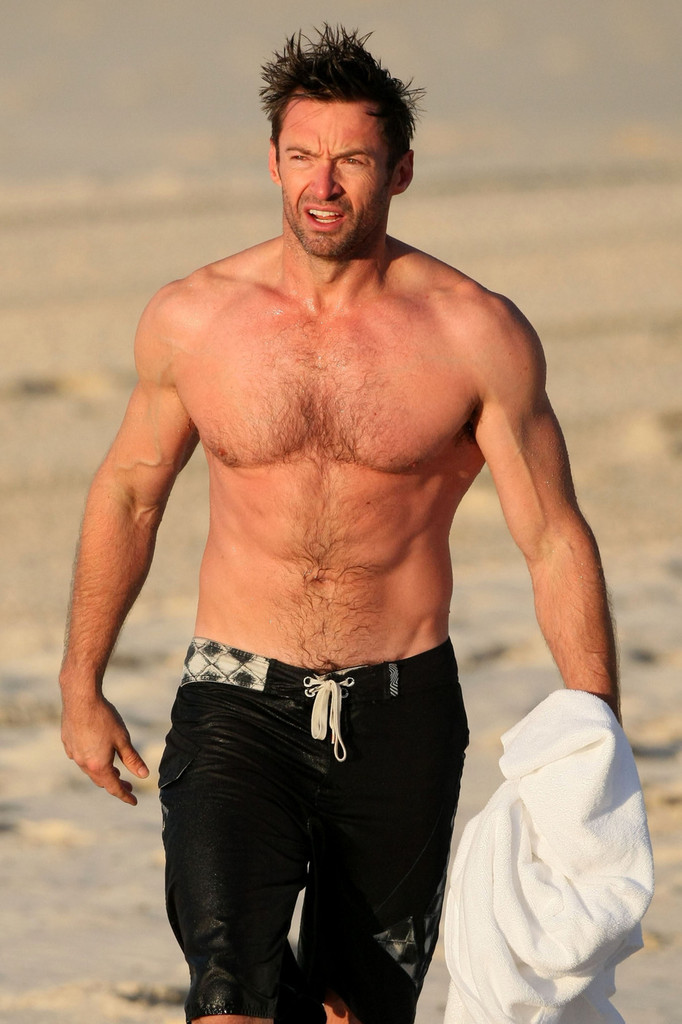
This is the new ideal for a lot of men:


Hugh Jackman is buff and lean, just enough of each to be a role model for a lot of men. He put some muscle on his former-model body for X-Men and decided to keep it. So he works out hard with heavy weights and basic lifts. This is a huge improvement over the 1990s role model of Brad Pitt, circa Fight Club. I remember reading the forums at some fitness sites and everyone wanted to look like Brad Pitt (or at least have his abs, which other than a big chest is the mark of fitness for men).


He looked a lot better, i.e., more buff, when he made Troy:


How many men can actually look like Hugh Jackman or Brad Pitt? So why do we feel we need to do so to be "real" men? Why do we even try if our genetics have not endowed us with the gift of easy muscle growth and good metabolism?

I am not immune to this issue. I work out hard several days a week, and I eat a diet my friends have described as freakishly clean. As a personal trainer, I feel I need to be the exemplar for the lifestyle I teach my clients, but I can be very self-critical if my abs disappear or if lose muscle weight as I increase my cycling work.

As hard as it has become for cis men to deal with these new standards (many of them self-imposed), based on this article it appears to be 10 times as challenging in the gay community.

The Tyranny of Buffness

My boyfriend expected me to be lean and muscular. But I couldn't live up to that standard, and neither can a lot of guys--and we shouldn't have to.


By Brandon Ambrosino | August 16, 2013

phlubdr/flickr

I didn't know I was skinny-fat until my Russian boyfriend told me so. Actually, I didn't even know that was a thing until he told me so.

I did, however, suspect something was wrong with my body the first night I stayed over his house.

I went to use the bathroom in the middle of the night, and ran into his roommate, Julio. I don't remember what he said, but I remember where he looked. He seemed to direct his entire conversation--and disgust--at my exposed midsection.

Also known as my love handles.

Julio (gay) and my boyfriend both possess the envious V-shape: broad shoulders narrowing down to a waist that hasn't smelled a carb in years. Their arms are huge, their chests are cut, their abs are visibly defined.

I went into the bathroom. I looked at myself in the mirror. Sure, I was a professional dancer, and I did yoga, and went running, and watched what I ate. And yes, I was probably in pretty good shape. But I didn't look good enough.

The longer I stared at myself, the more I began to notice what it was that made Julio cringe. My chest was dystrophic. My arms were unformed. My neck was frail. Skin hung over the band of my underwear and, on top of that, I was hairy. Everywhere.

I began to panic. This was the first night my boyfriend saw me naked. He had that godlike body to offer me--and all I could give him was ... was this hairy, love-handley mess of skin?

I went back to the bedroom and turned off every light in the house on my way there.

The tendency of gay men to emphasize physical appearance is "hard to dismiss," says Dr. Duane Duncan, Research Officer at the Australian Research Centre in Sex, Health and Society. In his article "Out of the Closet and Into the Gym," Duncan acknowledges that the idealized male physique is "a major point of cultural reference in the dominant representation of gay men."

"We're doing this to ourselves," says Dr. David Brennan, a clinical social worker from the University of Toronto. "Our entire culture is showing the same body image. And the question is, does that affect us?"

Obviously, this question is politically charged. Anti-gay politicians are more than ready to pathologize any traits gay men may have in common. On the flip side, many gay-rights activists go to great lengths to deny altogether that there are any identifying features of what opponents pejoratively term "the gay lifestyle." In response to this double bind, some researchers have conducted studies to answer the gay body image question. But even then, it seems as if the methodological frameworks underpinning the studies are influenced by one of these political extremes.

Brennan, a gay man himself, insists gay culture's preference for a specific physical ideal does indeed affect those who fall short of the prevailing standards. Some of these negative effects include low self-esteem, eating disorders, and body dysmorphia. Brennan also says some gay men who don't measure up might even develop "an increased use or dependency" on drugs and alcohol.

And even though the research into this area is fairly recent, Brennan suggests the literature we do haveshows that gay men on average tend to experience more body dissatisfaction than heterosexual men. (Some research suggests that gay men and straight men share similar concern for their bodies, but because of the pressures of heterosexual society, straight men don't feel comfortable talking about it. In other words, the differences might be more announced than pronounced, which is the argument offered by the authors of The Adonis Complex.)

But while a conclusive decision has yet to be reached, contemporary gay trends certainly lend credence to Brennan's theory.

Take, for instance, Grindr-a gay social networking app that helps you "find gay, bi, curious guys for free near you." Grindr displays thumbnail pictures of potential, um, "friends" organized by their proximity to your immediate location. Users can scroll through several hundred pictures - an assortment of faces, biceps, and abs - until they find the one guy that tickles their fancy.

Senthorun Raj, a writer at The Guardian, recently described his Grindr experience:
Sorting through each profile makes me feel like I'm a kid in an adult candy store: 'window-shopping' my way through, hoping to find the right guy to fit my current mood. ... I'm in control of who I respond to, how quickly I respond, and the nature of the conversation I am having.
The term "window-shopping" immediately jumped out at me. I've gone "shopping" for men in similar ways, both on and offline. Hm ... that one's balding. That one has gay-face. Oh, the one with big shoulders carrying a briefcase down Fifth Avenue--follow him!

In other words, there are times when I act like I'm on Grindr even when I'm not. What's troubling about this is that, without being aware of it, I've helped to perpetuate the same exclusivity that Brennan says "makes some gay men feel left out or without value."

There's no doubt that there are some benefits to Grindr. In a phone interview, Grindr founder and CEO Joel Simkhai said his company "creates a virtual community" for people who might otherwise feel isolated and alone--think the Middle East or the Republican National Convention.

But when you think about some of the language that characterizes the Grindr experience--"No Asians or Fems!"--you've got to wonder about the kind of community that's being created.

***

The tendency to conflate muscularity and masculinity is widespread throughout gay culture, according to Dr. Murray Drummond. In his article "Men's Bodies: Listening to the Voices of Young, Gay Men," Drummond argues that we often take for granted that muscularity signifies both physical and emotional strength. In gay communities, he says, muscle means something very specific - such as "a sense of control ... [and] an air of resilience."

It's easy to begin to psychoanalyze why this might be the case. There are several different theories about gay muscularity, each one less politically correct than the next. Brennan suggests a view most notably argued by A. Klein in a 1993 book titled Little Big Men. After the AIDS crisis, he says, many gay men hit the gym to avoid looking thin and frail, which might have been taken as signs of being diseased. This new drive to achieve an athletic body was described by Drummond as a form of "protest muscularity."

Another motivation might have been to overcome the homophobia--internalized or otherwise--that saw gay men as weaker than their straight counterparts. Yet another opinion is that in the late 1970s, the growing physical strength of gay men mirrored the continued social strength they were achieving.

Of course, these theories don't entirely explain why younger gay men who didn't live through the AIDS crisis or pre-Stonewall homophobia hold the same muscular ideals as our forerunners. Not to mention, does there have to be a psychological reason for gay men to like muscles?

I was 12 the first time I connected muscularity with gayness. I came across an erotic photography collection by an artist named Tom Bianchi who specializes in the male nude and gay erotica. His subjects are muscular demigods who look very much like my Russian.

Looking at Bianchi's images in seventh grade turned me on. Looking at them today--well, alright, they still turn me on. I also feel pressured to transform my body so that I can be accepted into the community that Bianchi represents.

Bianchi told me in a phone interview that while he doesn't want his photography to pressure me, he hopes it serves to encourage me--and all gay men--to realize our physical potential.

"We have the powers of co-creation," he said. "That's a teaching of the Hindu Vedas. It's remarkable how much power we have to change our physical bodies."

But not all gay men are able to live up to Bianchi's standards, even with a rigorous diet and exercise regiment. Patrick Giles, in a critique of Bianchi published in the Harvard Gay & Lesbian Review, pointed this out. "What about heredity, somatotype, [or] the greater inherent potential of big-muscled people over the smaller-muscled?"

Giles points out that money is also a factor. According to a 2012 LGBT community survey, a higher percentage of gays than straights pay for gym memberships, personal trainers, and weight management programs. This is great for those who can afford such things--but what about those who can't? There's also the question of motivation. Research shows that gay men tend to take care of their bodies more than straight men. But the same research shows gay men are motivated less by the desire to be healthy, and more "for the express purpose of increasing attractiveness."

But whether we're limited by our genes or our funds, it's clear that not all gay men live up to Bianchi's standards. And the fact is - we shouldn't feel like we have to.

As far as Giles is concerned, beauty acts hierarchically in the gay community. Those who have the resources to "Adonize" their bodies are rewarded with power and influence. Everyone else is excluded--and then blamed for not working harder.

Bianchi admits his photography showcases a certain muscular ideal, but he argues that it's hardly unique to his work, or to gay culture. "Our human ancestors recognized that if a man was strong enough to catch prey, then he was attractive."

"Look at Michelangelo's David," he continued. "Muscles have always been signifiers of the power of being, and that's very attractive to us."

But is it true that male muscularity has always been idealized throughout history? Cultural historian George Mosse argues that Bianchi's ideal man is a relatively new invention. In his book The Image of Man, Mosse dates the idealization of the male physique to the Napoleonic Wars (1803-1815). That isn't to say Bianchi is wrong, it's just to admit that not all historians agree with the assertion that history shows a ubiquitous privileging of muscularity.

In other words, sure, there's Michelangelo's David--but let's not forget about Donatello's.

***

The Russian put me on a strict diet after our first night together: No carbs or sugar - not even fruit. When waitresses offered me dessert, he would tell them we only wanted the check. He took me to hot yoga a few days a week, and the gym on the other days. And there was no more midnight munching.

In five weeks I lost 30 pounds. One year later, I lost him.

The obvious question is, why did I allow my boyfriend to influence how I saw my body? The simplest answer is that I didn't want to lose him. He was a hot, Jewish doctor from Eastern Europe with green eyes and a gorgeous physique. There were plenty of other "qualified" guys for him to date, and so I thought I should try to make my body look like theirs.

But another part of the the more complicated answer has to do with the larger gay community. It wasn't as if my partner's ideas about body image were unfamiliar to me. If anything, he was only echoing ideals I had already learned and internalized from my gay peers and the media--ones that I sometimes also perpetuated.

I wonder if being publicly concerned about our bodies is as much a gay rite of passage as loving Judy Garland or watching Ab Fab.

***

Before I hung up with Tom Bianchi, I asked him if he ever air-brushed his images.

"If it inhibits the essence of the photography, I'll edit it out," he said. "For instance, I see no reason to memorialize the red spot from an in-grown hair on someone's ass."

That blemish sounds like one of the "dappled things" the Victorian poet Gerard Manley Hopkins wrote about in "Pied Beauty."

"Glory be to God," sings Hopkins, for all things that are "original, spare, strange," for all things "fickle" and "feckled."

Things like finches' wings, and the spotted underbellies of trout.

Things like love handles, and the extra flap of skin that hangs over my underwear band.

Things like the red spot from an in-grown hair.

Bianchi's art tends toward a Platonic ideal of male beauty. Hopkins, on the other hand, celebrates the beauty found in the diversity of imperfection.

To the photographer, the blemish inhibits a subject's beauty. To the poet, the blemish is what makes him beautiful.

Copyright © 2013 by The Atlantic Monthly Group. All Rights Reserved.

***

Related Story


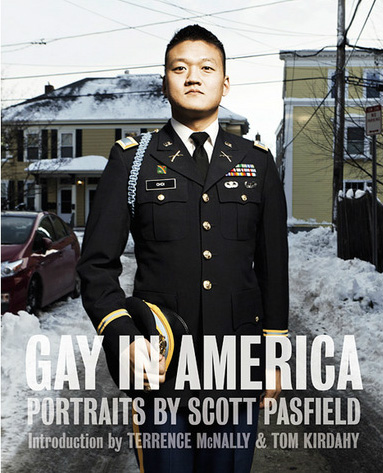
'Gay in America': Photographs of Gay Men From All 50 States

Saturday, August 17, 2013

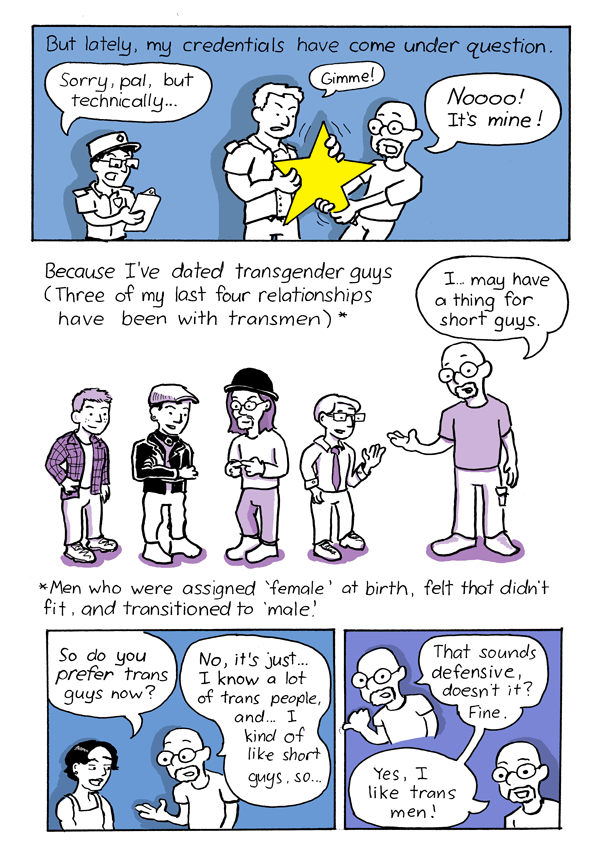
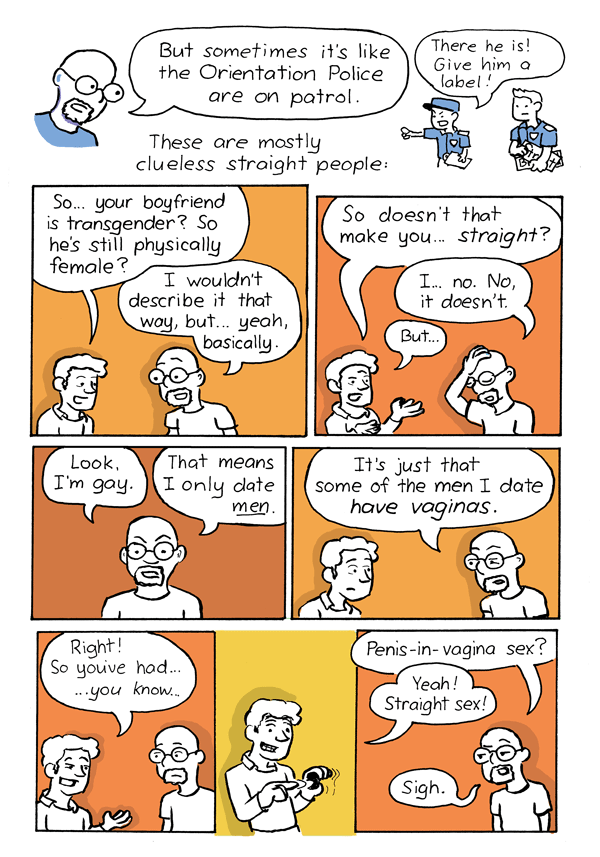
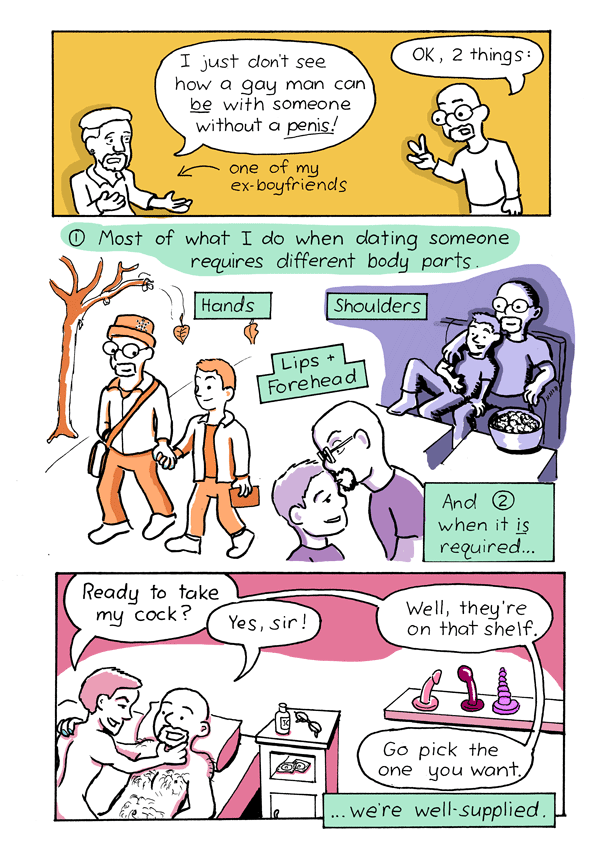
Bill Roundy - Orientation Police (a Comic)

From The Amazing Adventures of Bill, drawn by Bill Roundy. [This comic was drawn for the Anything That Loves anthology from Northwest Press.]

This comic, Orientation Police, is an excellent look at the issues we get into when we insist of labeling ourselves or each other.


Tuesday, April 30, 2013

Jason Collins - "I'm a 34-year-old NBA center. I'm black. And I'm gay"

Collins (right) guarding Shaq

It was going to happen at some point, and now it has - a male athlete in one of the four big team sports (MLB, NFL, NBA, NHL) has come out and will go forward living as an openly gay man. Congratulations to Jason Collins for choosing to be himself, and feeling comfortable enough to do so.

But Collins is 34 years old, and he is a perennial backup center in a sport where big men are often done at his age - and he is free agent. The big question is whether or not he will be on an NBA roster next season. If not, his coming out will still be a good thing, but we not yet know how an openly gay athlete will be accepted in the locker room.

Here is some of the Sports Illustrated article:
By its nature, my double life has kept me from getting close to any of my teammates. Early in my career I worked hard at acting straight, but as I got more comfortable in my straight mask it required less effort. In recent days, though, little has separated "mask on, mask off." Personally, I don't like to dwell in someone else's private life, and I hope players and coaches show me the same respect. When I'm with my team I'm all about working hard and winning games. A good teammate supports you no matter what.

I've been asked how other players will respond to my announcement. The simple answer is, I have no idea. I'm a pragmatist. I hope for the best, but plan for the worst. The biggest concern seems to be that gay players will behave unprofessionally in the locker room. Believe me, I've taken plenty of showers in 12 seasons. My behavior wasn't an issue before, and it won't be one now. My conduct won't change. I still abide by the adage, "What happens in the locker room stays in the locker room." I'm still a model of discretion.

As I write this, I haven't come out to anyone in the NBA. I'm not privy to what other players say about me. Maybe Mike Miller, my old teammate in Memphis, will recall the time I dropped by his house in Florida and say, "I enjoyed being his teammate, and I sold him a dog." I hope players swap stories like that. Maybe they'll talk about my character and what kind of person I am.

As far as the reaction of fans, I don't mind if they heckle me. I've been booed before. There have been times when I've wanted to boo myself. But a lot of ill feelings can be cured by winning.

I'm a veteran, and I've earned the right to be heard. I'll lead by example and show that gay players are no different from straight ones. I'm not the loudest person in the room, but I'll speak up when something isn't right. And try to make everyone laugh.

I've never sought the spotlight. Though I'm coming out to the world, I intend to guard my privacy. I'm making this blanket statement in part to keep rumors and misunderstandings at bay. I hope fans will respect me for raising my hand. And I hope teammates will remember that I've never been an in-your-face kind of guy. All you need to know is that I'm single. I see no need to delve into specifics.
I've been asked how other players will respond to my announcement. The simple answer is, I have no idea. I'm a pragmatist. I hope for the best, but plan for the worst.

Look at what happened in the military when the Don't Ask, Don't Tell policy was repealed. Critics of the repeal were sure that out military members would devastate morale and destroy civilization. But a new study conducted by scholars from every branch of the armed forces except the Coast Guard concluded that "cohesion did not decline after the new policy of open service was put into place. In fact, greater openness and honesty resulting from repeal seem to have promoted increased understanding, respect and acceptance."

The same goes for sports. Doc Rivers, my coach on the Celtics, says, "If you want to go quickly, go by yourself -- if you want to go farther, go in a group." I want people to pull together and push ahead.

Openness may not completely disarm prejudice, but it's a good place to start. It all comes down to education. I'll sit down with any player who's uneasy about my coming out. Being gay is not a choice. This is the tough road and at times the lonely road. Former players like Tim Hardaway, who said "I hate gay people" (and then became a supporter of gay rights), fuel homophobia. Tim is an adult. He's entitled to his opinion. God bless America. Still, if I'm up against an intolerant player, I'll set a pretty hard pick on him. And then move on.

The most you can do is stand up for what you believe in. I'm much happier since coming out to my friends and family. Being genuine and honest makes me happy.
At The Atlantic, there is a good response to this story.

Why Jason Collins's Coming Out Is Such a Big Deal

Everyone's been waiting for a major male sports star to make a move like this. Here's why it's so much harder for men than for women.


APR 29 2013

Washington Wizards' Jason Collins (L) goes to the basket against Chicago Bulls' Taj Gibson during the first half of their NBA basketball game in Chicago, April 17, 2013. (Jim Young/Reuters)

Female professional athletes are already gender non-conforming. Male ones are still worshiped as exemplars of traditional masculinity. Extremely sporty women have to fight stereotyping that they are lesbians and ignore all manner of unkind commentary about how they are mannish, while sporty men are seen as participating in a form of the masculine ideal.

This is the backdrop to why N.B.A. center Jason Collins' revelations in a Sport Illustrated piece today that he is gay are such a big deal -- and why it is that similar recent revelations from the this year's W.N.B.A. Number 1 draft pickBrittney Griner were greeted in mid-April with a collective yawn.

Women who play professional sports are grown-up versions of what we still to this day call "tomboys," a linguistic relic of our cognitive inability to see outdoorsy, competitive, rough-and-tumble behavior as inherently and naturally female, as well as male. Remember when people were speculating that then Supreme Court-nominee Elena Kagan was a lesbian just because she played on a softball team? "Sorry, softball=lesbian," wrote Brian Moylan in Gawker. (Yeah, that still happens.) Team sports have about them something martial or manly, which means that female team sports are often seen as butch activities. Meanwhile, men who participate in activities like gymnastics or ice skating are often stereotyped as gay; even though they are athletes, they are taking part in something more feminine. As King Kaufman observed in Salon in 2002: "The average American sports fan, watching the Olympic men's figure skating competition, probably figured that most of the contestants were gay." He then went on to debunk this assumption in a conversation with U.S. Olympic medalist Rudy Galindo, "the first actively competing figure skater who was out as being gay."

There have been many female athletes who have come out of the closet and been pioneers. Tennis great Billie Jean King. Tennis player Martina Navratilova. WNBA player Sheryl Swoopes, the "female Michael Jordan." Soccer midfielderMegan Rapinoe. Most recently, we had the example of college basketball phenom Griner. Her casual mention earlier this year that she's gay was greeted with aNew York Times story headlined, "Female Star Comes Out as Gay, and Sports World Shrugs." Why was her declaration seen as not such a big deal? Because she was female, according to the paper of record.

"It was an odd juxtaposition," the paper's Sam Borden wrote, "as there is increased speculation about whether a male athlete -- any male athlete -- will come out while still playing a major professional team sport, one of the best female athletes in the history of team sports comes out, and the reaction is roughly equivalent to what one might see when a baseball manager reveals his starting rotation for a three-game series in July."

The reality is that by becoming a top-ranking female basketball player, Griner had already done hard work violating gender norms and was already seen as a gender outlier. "In sports right now, there are two different stereotypes -- that there are no gay male athletes, and every female athlete is a lesbian," Patrick Burke of the gay sports advocacy group You Can Play told the Times. "We've had tremendous success in getting straight male players to speak to the issue; we're having a tougher time finding straight female athletes speaking on this issue because they've spent their entire careers fighting the perception that they're a lesbian."

But a traditionally masculine man, playing a traditionally masculine team sport -- and he's gay? Well, that's news.


Friday, February 15, 2013

Soccer Player Robbie Rogers Reveals He Is Gay . . . and Walks Away from the Sport at 25


I'm glad Robbie Rogers felt safe enough to come out and live his own life, but I am saddened that he felt the need to walk away from the sport that was his "escape, my purpose, my identity." Maybe one day he return to soccer, after all he is only 25 years old.

On the bright side, some of his fellow players applauded his courage and wished him well:
"Brave men like you will make it so that one day there's no need for an announcement. That day can't arrive soon enough," tweeted Eddie Pope, a U.S. veteran of three World Cups and an executive with the MLS players' union. 
"Much love and respect for you," tweeted U.S. teammate Herculez Gomez, a sentiment echoed byD.C. United's Chris Pontius, the Galaxy's Omar Gonzalez and women's national team star Abby Wambach.
I hope Rogers is not the last to live his life openly - and I hope the next man to do so will not feel the need to leave his sport.

Soccer player Robbie Rogers reveals he is gay

Robbie Rogers, 25, a Mater Dei High graduate who has played in MLS and for U.S. national team, says in blog post that he is gay and is 'stepping away' from soccer.

Mater Dei High graduate and professional soccer player Robbie Rogers announced he's gay and will be stepping away from the sport. (Drew Hallowell / Getty Images / August 10, 2011)

By Kevin Baxter | Los Angeles Times
February 15, 2013

Robbie Rogers said he had to choose between being a soccer player or being himself.

He ultimately choose to be himself, stepping away from his sport Friday in a powerful blog post in which he revealed he is gay.

"I always thought I could hide this secret," wrote Rogers, 25, a former Mater Dei High standout who played five seasons in Major League Soccer and had 18 appearances with the U.S. national team.

"Football was my escape, my purpose, my identity. Football hid my secret, gave me more joy than I could ever have imagined."

But, he concluded, "I realized I could only truly enjoy my life once I was honest. . . . My secret is gone, I am a free man, I can move on and live my life as my creator intended."

Rogers did not use the word "retirement" in his seven-paragraph announcement, instead saying, "Now is my time to step away. It's time to discover myself away from football."

Rogers' career has been in free-fall since he left MLS'Columbus Crew in 2011, the year he earned his last cap with the national team.

Troubled by nagging injuries, he was most recently playing for Stevenage of League One, the third tier of English soccer. And in his blog Rogers suggested his decline on the field was influenced by the emotional toll of trying to hide his homosexuality — although in Columbus, at least, that was said to be something of an open secret.

"You hear from athletes all the time that performance suffers from living in the closet," said journalist Cyd Zeigler, co-founder of the gay sports website Outsports.com. "I'd love to see him try again. It might be a mistake for him to stop now.

"There's a great chance that he will . . . have a clear head and be able to focus on the sport in a way he hasn't been able to in his adult life."

No active athlete in a major professional U.S. team sport has come out as gay. But Rogers was being lauded for his courage on social media Friday.

"Brave men like you will make it so that one day there's no need for an announcement. That day can't arrive soon enough," tweeted Eddie Pope, a U.S. veteran of three World Cups and an executive with the MLS players' union.

"Much love and respect for you," tweeted U.S. teammate Herculez Gomez, a sentiment echoed byD.C. United's Chris Pontius, the Galaxy's Omar Gonzalez and women's national team star Abby Wambach.

kevin.baxter@latimes.com

Thursday, January 24, 2013

Battling Homophobia in Professional Sports

In recent years (mostly the last two or three years) there has been an increasingly vocal movement within professional male sports to eradicate, or at the least confront, the pervasive homophobia that has long been a part of that world. We know things are beginning to change when hyper-masculine men such as Brendon Ayanbadejo of the Baltimore Ravens, Scott Fujita of the Cleveland Browns, and Chris Kluwe of the Minnesota Vikings (all are straight) become vocal and even "impassioned" spokesmen for same-sex marriage.

Even boxing has an openly gay fighter, featherweight Orlando Cruz.


But there has never, ever been a professional male athlete who has come out while still playing his (team) sport in the U.S. David Kopay (Redskins running back), Billy Bean (Dodgers and Padres outfielder), John Amaechi (NBA center-forward), and Wade Davis (Titans, Seahawks, and Redskins cornerback) are gay athletes who waited until they were well out of their sport to reveal their sexual identity.

The NHL (You Can Play), MLS, and MLB have taken some leadership in trying to create a more welcoming atmosphere for gay players to feel safe and not feel compelled to be closeted. The San Francisco Giants were followed by a handful of other baseball teams, as well as teams and players from other professional sports, in participating in Dan Savage's It Gets Better Project.

35 N.H.L. players, including Henrik Lundqvist of the Rangers, Corey Perry of the Anaheim Ducks, and Daniel Alfredsson of the Ottawa Senators have supported You Can Play, a campaign created and promoted by hockey’s Burke family to open doors for gay athletes to participate in sports. Brenden Burke died in a car accident in 2010 - he came out while serving as manager of his college hockey team - his brother Patrick Burke is a scout with the Philadelphia Flyers. Their father, Maple Leafs General Manager Brian Burke, marched in Toronto’s gay pride parade with Brendan, and again after Brendan died.

The You Can Play campaign . . .
. . . is intended to “make locker rooms safe for all athletes, rather than places of fear, slurs and bullying,” said Patrick Burke, a scout with the Philadelphia Flyers and a founder of the project. 
The message will be shown for the first time during the first intermission of NBC’s Sunday afternoon telecast of the Bruins-Rangers game [note: this is from 2012]. Thirty-five N.H.L. players, including award winners and All-Stars, have committed to take part in the project, Burke said. The You Can Play Web site is scheduled to go online Sunday. 
Several Major League Baseball teams made similar announcements last season, as did N.B.A. players after a series of incidents in which fellow N.B.A. players used antigay slurs. (LA Times)
Unfortunately, there is still a rainbow ceiling for gay male athletes. 
Just ask soccer player David Testo. When Testo, a decorated midfielder with the Montreal Impact of the second-tier North American Soccer League, came out on a Canadian TV show 13 months ago he said the initial reception was positive. But his contract had expired two weeks earlier and after his announcement the phone stopped ringing. 
Testo, 31, hasn't played a game since. 
"It seems like there is a lot more support these days. But for someone to come out to the public or just to their teammates, it takes a lot of just coming to terms with it yourself," Testo says. "Most of these athletes are younger and they haven't had their time to kind of explore and just come to that kind of self-awareness. 
"I would love for someone to be able to do that in their prime and really be a role model, an inspiration for others. When that one special [player] does it, it's just going to open the floodgates. But it's hard. When there's a lot of money on the line, when there's endorsements on the line, it's different. Why would anyone want to risk that?" (LA Times)
While change is happening, men like David Testo still suffer from the homophobia infecting professional sports. He was a high quality player - nothing about his performance before coming out would have led team to ignore his availability when his contract ended.

In England, Manchester United's heterosexual goalkeeper Anders Lindegaard (of the Premier League - English football's version of the NHL or MLB, sports with lower tier professional leagues) joined the campaign to kick homophobia out of football (that's soccer to my American readers).

IT WAS bold and unequivocal. ''Gay people need a hero. They need someone who dares to step forward and stand for their sexuality.''
He's not the only one. West Ham winger Matt Jarvis became the third heterosexual Premier League star to appear on the cover of Attitude (a gay magazine). Former English rugby union international Ben Cohen launched a foundation with the goal of bringing an end to homophobic bullying. In Australia, Wallabies flanker (rugby) David Pocock has vowed he won't marry his girlfriend until gay couples are afforded the same right.

Still, according to Caroline Fusco (University of Toronto), homophobic attitudes are still embedded in professional sports.
“Sport as a space has been one that has really been there for the production of a certain kind of hyper-masculinity. Particularly when you think of pro sports, the big ones: hockey, football, baseball. These all tie in to the rugged notion of masculinity, and these attitudes remain — that gay men aren’t masculine,” she says.
*****
“Homophobia is also tied in to social class, to race as well,” says Fusco. “Who gets this hyper proving ground for masculinity?”
According to Fusco, these anti-homophobia campaigns are important, but she feels they need to take "a more holistic approach."
“These campaigns are really important, [but] there’s something about the implementation of the plan. It starts very early for boys and girls, at school, and schools need to be involved. Municipal, provincial and federal governments need to get on board.
The same is true here in the U.S. If we want to change the nature of the culture, it starts with teaching our children that every human being has the right to love the person of their choice, whether that person is the opposite sex or the same sex is not relevant.

And this needs to be a part of our sports programs - with a zero tolerance policy for bullying or harassment of gay teammates, or even of other students in the school. Then the programs being created for athletes at the professional level need to be re-tooled for middle school, high school, and college athletes.

I played soccer in Seattle for a couple of seasons on a gay (well, GBT) men's team. There is nothing girlie or weak or contagious about those men. They were ferocious athletes and nice guys. As the token bi guy (most of the team was gay, with a couple of straight guys, as well), I was accepted without hesitation - all they cared was that I was a good passer and an efficient scorer.

Even though this was a "recreational" league, most of these guys had been stars of their high school teams and many of us had played college ball. The level of competition was at least equal to that of my NAIA-Division III school.

I don't know what it will take for the first man at the professional level to feel safe coming out while still playing. But I know that the efforts of You Can Play and the It Gets Better Project (among others) will be instrumental in creating that safe space.

Thursday, October 25, 2012

Romeo Vitelli, Ph.D. - When Men Are Raped


Contrary to what the author of this study reports, I am proud to say that SACASA (Southern Arizona Center Against Sexual Assault), where I work as a trauma therapist, has been seeing male survivors or rape, assault, molestation, and incest for most of its existence, beginning with the Tucson Rape Crisis Center in the late 1970s.

The numbers reported here a bit low, from what I have seen - around 11-15% of all rapes are of males, with 85-89% female victims. [If male rapes in prison and/or the military were accurately reported, I suspect these numbers would be much different.] From what I have seen personally, there is definitely a higher percentage of gay and bisexual (and possibly MTF transgender) survivors, with most being under 25 when they first seek services with our agency.

We work hard to include information on male victims, especially young boys and teens, in our community outreach and education, but I suspect there are still a lot of myths about men and rape, as this article suggests and tries to remedy.

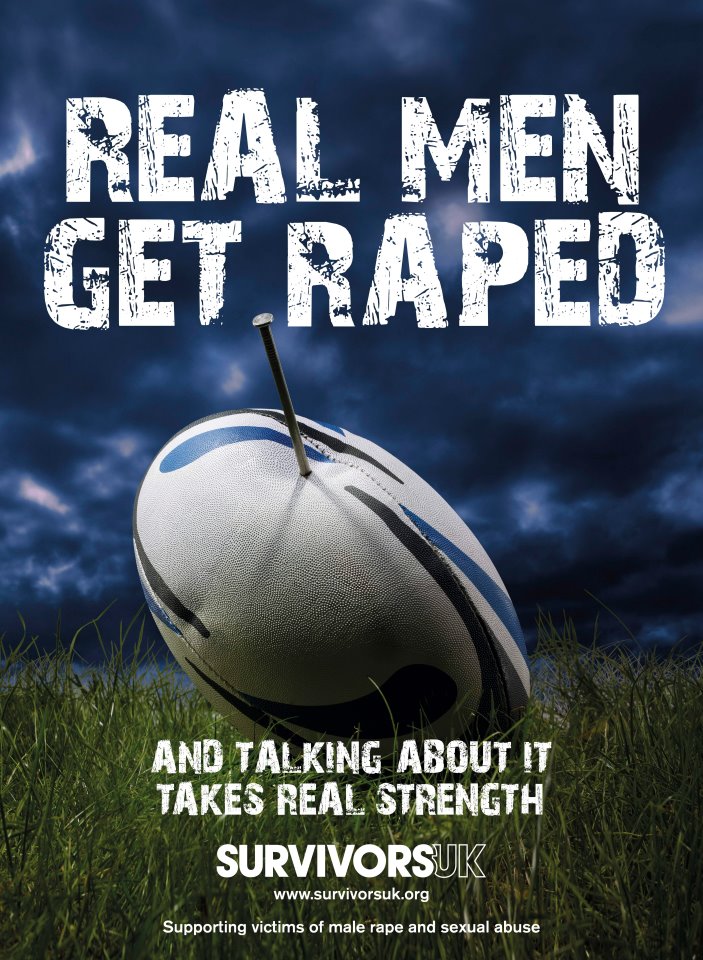
Being sexually assaulted is not something that only happens to women

The trauma that women who have been sexually victimized is well-known, both in terms of the emotional consequences of the assault itself as well as the pain associated with trying to obtain justice afterward. While men are usually the perpetrators of sexual violence and women are usually the victims, that is not always the case however.  

Actual incidence of sexual assault involving adult male victims has always been difficult to estimate. Victim surveys of British and American males have shown that 3 to 8 per cent of males reported at least one adulthood incidence of sexual assault in their lifetimes with at least 5 to 10 per cent of all rape victims being male (Pino & Meier, 1990;   Coxell & King, 1999). These numbers can be substantially higher for non-heterosexual males though.  One 2005 study reported that 13.2 per cent of bisexual males and 11.2 per cent of gay men reported at least one instance of sexual assault as adults. Still, those numbers are almost certainly underestimate the reality considering most male victims are reluctant to report their sexual assault to the police. While the majority of these crimes are committed by male offenders, an estimated 6 to 15 per cent of these sexual assaults can involve female perpetrators (either working independently or in association with male co-offenders). 

But why has male sexual assault been so often marginalized in many societies?   According to a provocative new literature review recently published in Psychology of Men and Masculinity,  the problem may stem from various “myths” surrounding male rape. The review authors, Jessica A. Turchik of Stanford Medical School and Katie M. Edwards of Ohio University,  focus on a series of common rape myths that often prevent male victim from reporting their assault and can even make police officers refuse to take their complaint seriously. The myths include:
  • Men cannot be raped
  • “Real” men can defend themselves against rape
  • Only gay men are victims and/or perpetrators of rape
  • Men are not affected by rape (or not as much as women)
  • A woman cannot sexually assault a man
  • Male rape only happens in prisons
  • Sexual assault by someone of the same sex causes homosexuality
  • Homosexual and bisexual men deserve to be sexually assaulted because they are immoral and deviant
  • If a victim physically responds to a sexual assault, he must have wanted it.
Many of these myths are frequently reported in social psychological reviews of male and female rape. Found across different cultures, they often reflect common attitudes about male sexuality. Since most media coverage on rape focuses on female victims with any reporting of male rape tending to be lurid (and often sarcastic), it is probably not surprising that male rape myths persist over time.   

Media representations of male rape (such as in movies like “Deliverance” and graphic scenes of rape in prison) certainly reinforce these attitudes. Even laws relating to sexual assault have shown a clear gender bias at times with rape being defined as female-only in many jurisdictions (such as in Canada before the Criminal Code was revised during the 1980s).    

Considering how common male rape myths are, it is probably not surprising that studies of law enforcement officers, medical students, and even rape crisis workers have shown these same attitudes towards sexual assault involving male victims. While homophobia can often account for gay rape victims being more likely to be blamed than heterosexual victims of sexual assault,  there is also a strong correlation between believing rape myths involving both male and female victims. In other words, people who believe common myths about male rape are likely to believe myths about female rape as well.

Whatever the cause, persistent attitudes about male rape are found in large segments of the general population and can have devastating consequences for men who have been victimized. Not only are victims far less likely to report the crime but those victims courageous enough to come forward can face a horrendous lack of support from the criminal justice system and even from those agencies that provide assistance for female victims of sexual assault.   

Although crisis center and hospital records have consistently shown that 3 to 12 per cent of reported sexual assault involve male victims,  one study from the 1990s indicate that as many as 37 per cent of rape crisis centres restrict services to females only. I am not aware of any more recent studies to suggest that this has changed substantially over time.

As Turchik and Edwards point out in their review, the negative attitudes spurred on by myths surrounding male rape are well-established among medical professionals, the courts, police officers, the military, and even the prison system and spring from the same patriarchal systems that reinforce negative attitudes about female rape. While more sensitive reporting has helped change attitudes towards female rape, whether these same changes will encourage male victims to come forward is another question.

Though prison rape and sexual assault of underage males have been forced into the open as more high-profile cases are reported, the prevalence of male rape myths in our society and the attitudes about male sexuality that they reflect are much slower to change. That these changes need to happen and resources need to be put in place to help both men and women who experience sexual assault is something that we must face, both as a society and as individuals.

For simple justice, if nothing else.

Thursday, April 12, 2012

Psychiatrist Robert Spitzer Retracts Controversial 2001 Paper Claiming "Ex-Gay Therapy" Works

One of the most often cited "research" articles in defense of "reparative therapy" or "ex-gay therapy" has been retracted by its author. It's about freaking time - it was one of the worst studies published and gave cover to a lot of anti-gay groups, many of whom are convinced men can "pray the gay away." As any gay man who has tried to pray away his natural feelings can attest, it doesn't work.

Psychiatrist retracts infamous study claiming gay people can turn straight through therapy 

Robert Spitzer admits critiques of 2011 research are 'largely correct'

Wednesday, April 11, 2012

 Dr. Robert Spitzer of Columbia University, who at one time said that gay people could be converted, has retracted his claims.

Spitzer's study declared that 'motivated individuals' could turn from gay to straight with the help of so-called ex-gay therapy. 

The psychiatrist behind a prominent 2001 study declaring people can go from gay to straight has retracted his original claims.

Although the research is still cited by anti-gay organizations as proof that so-called ex-gay therapy works to change someone's sexual orientation, the study has endured scientific criticism for years.

Now, Robert Spitzer, who led the research, told American Prospect that he wants to publish a retraction.

"In retrospect, I have to admit I think the critiques are largely correct," Spitzer said. "The findings can be considered evidence for what those who have undergone ex-gay therapy say about it, but nothing more."

Spitzer's confession was part of writer Gabriel Arana's account of growing up gay, and struggling to change his sexual orientation by undergoing therapy.

Arana interviewed Spitzer, 79, who is now retired and suffering from Parkinson's disease, at his home. He asked Arana to print the retraction of his study "so I don't have to worry about it."

The original study was based on interviews with 200 patients who were being treated with ex-gay therapy, which claimed to reverse sexual orientation in gay patients.

The paper Spitzer published concluded that the therapy worked "for a highly select group of motivated individuals" without providing any definitive success rate.

Still, the research was highly lauded, especially by anti-gay groups, and labeled "explosive" by The Associated Press.

One of Spitzer's colleagues said it was like "throwing a grenade into the gay community," according to American Prospect.

While the prestige the study gained infuriated gay rights organizations and psychiatrists who questioned the research, Spitzer had never commented on its credibility until now.

Wayne Besen, author of "Anything But Straight: Unmasking the Scandals and Lies Behind the Ex-Gay Myth," commended Spitzer's retraction in an interview with the Huffington Post.

"Dr. Spitzer's repudiation of his 2001 study is an earthquake that severely undermines the validity of 'ex-gay' programs," he said.

"Spitzer just kicked out the final leg from the stool on which the proponents of 'ex-gay' therapy based their already shaky claims of success."


Tuesday, January 17, 2012

Bookforum - Positionings of Gender

Yesterday's Bookforum offered up a collection of links on issues related to gender - it's a pretty eclectic mixture of material, sure to please and/or piss off most anyone. Contrary to my usual practice, I've broken these links down into discrete entries for your browsing pleasure.

Positionings of gender

Thursday, November 10, 2011

First Openly Gay American Soccer Player Comes Out


Via Think Progress - it seriously should not even be news that a gay man plays professional soccer. And it sucks that he could win an MVP and not acknowledge his partner (at the time) - the man he loved and who no doubt has supported him in his career as an athlete.

When I lived in Seattle, I played on a men's league soccer team that was mostly gay men - in all of my experience in soccer (4 years varsity in high school, 3 years in college), I have never played on a team with men who were tougher, more aggressive, and more competitive than those guys. Being gay has nothing to do with sports skill.
First Openly Gay American Soccer Player Comes Out 

David Testo has become the first openly gay professional soccer player in the United States. He told the CBC: “I really regret not have coming out publicly earlier… Living the life of a professional athlete and being gay is incredibly hard. It’s like carrying around a secret and never actually being allowed to be yourself.” He admitted he has thought about quitting athletics before and described how uncomfortable he felt receiving an MVP award and not being able to recognize his partner. Watch the full interview, in which Testo gets choked up talking about his struggles:


(HT: Towleroad.)