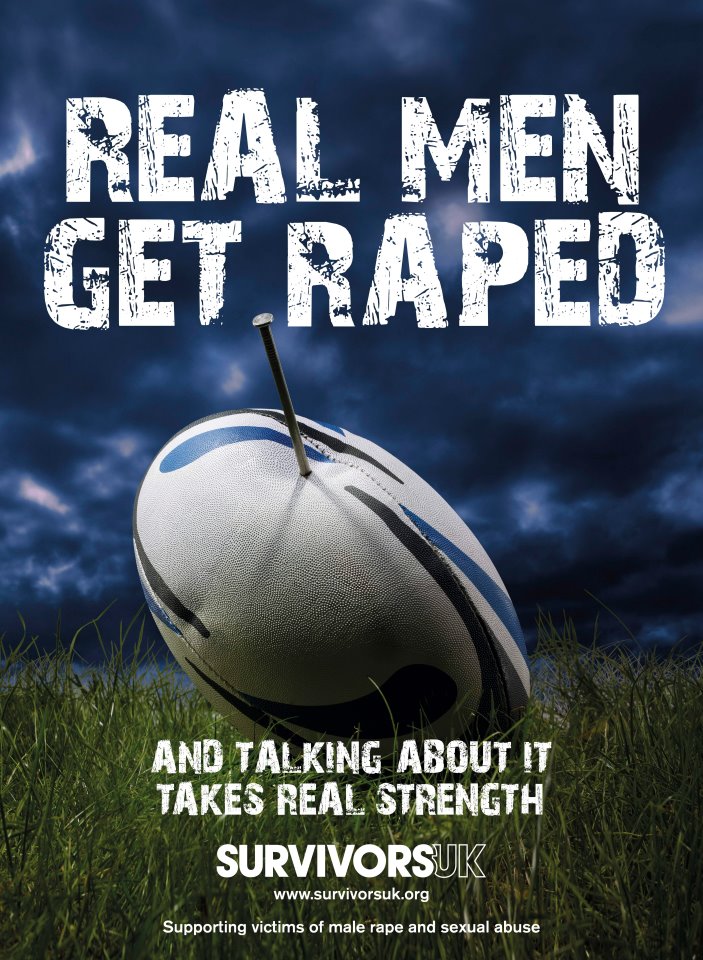
Showing posts with label survivors. Show all posts

Tuesday, June 10, 2014

Your Daily Dose of Dumb - Washington Post's George Will Thinks Being a Sexual Assault Victim Is Now A "Coveted Status"

Wow, and the GOP wonders why they get so few female voters, or voters with working brain matter, as far as that goes. This is just utterly absurd - George Will is now the poster boy for Stupid Rich White Men Who Don't Get It (or SRWHWDGI).

If you think, as I do, that George Will should apologize to the nation's female sexual assault survivors, send him an email and let him know what think: georgewill@washpost.com

Via Media Matters for America:

Wash. Post's George Will: Sexual Assault Victim Is Now A "Coveted Status"

June 8, 2014 ››› SOPHIA TESFAYE


Fox News contributor and Washington Post columnist George Will derided efforts on college campuses to combat the sexual assault epidemic as a ploy to "make victimhood a coveted status that confers privilege."

In a June 7 syndicated op-ed which appeared in The Washington Post and the New York Post, Will dismissed "the supposed campus epidemic of rape, aka 'sexual assault,'" arguing that the definition of sexual assault was too broad because it could include "nonconsensual touching" and disputing the evidence that shows 1 in 5 women experience sexual assault on campuses in the U.S., implying that individuals were pretending to be victims because colleges have made victimhood a "coveted status" (emphasis added):
Colleges and universities are being educated by Washington and are finding the experience excruciating.

They are learning that when they say campus victimizations are ubiquitous ("micro-aggressions," often not discernible to the untutored eye, are everywhere), and that when they make victimhood a coveted status that confers privileges, victims proliferate.

[...]

Now the Obama administration is riding to the rescue of "sexual assault" victims. It vows to excavate equities from the ambiguities of the hookup culture, this cocktail of hormones, alcohol and the faux sophistication of today's prolonged adolescence of especially privileged young adults.

The administration's crucial and contradictory statistics are validated the usual way, by official repetition; Joe Biden has been heard from. The statistics are: One in five women is sexually assaulted while in college, and only 12% of assaults are reported. Simple arithmetic demonstrates that if the 12% reporting rate is correct, the 20% assault rate is preposterous.

[...]

Education Department lawyers disregard pesky arithmetic and elementary due process. Threatening to withdraw federal funding, the department mandates adoption of a minimal "preponderance of the evidence" standard when adjudicating sexual assault charges between males and the female "survivors" -- note the language of prejudgment.Combine this with capacious definitions of sexual assault that can include not only forcible sexual penetration but also nonconsensual touching. Then add the doctrine that the consent of a female who has been drinking might not protect a male from being found guilty of rape. Then comes costly litigation against institutions that have denied due process to males they accuse of what society considers serious felonies.
Will also criticized colleges and universities for attempting "to create victim-free campuses -- by making everyone hypersensitive, even delusional, about victimization."

Despite Will's dismissal of the statistics, a report on sexual violence by the Center for Disease Control (CDC) confirmed that "in a study of undergraduate women, 19% experienced attempted or completed sexual assault since entering college." Moreover, the dangerous stigmatization of sexual assault victims has kept many from reporting these crimes -- particularly because victims who do report can become the targets of vicious attacks. According to the FBI, people falsely report sexual assault only 3 percent of the time.

Saturday, February 9, 2013

The Violence of Homelessness: A Young Male Survivor’s Story [Trigger Warning] - Good Men Project


This moving and disturbing story appeared on the Good Men Project back in January. It's one young man's story of escaping sexual violence at home only to end up homeless, hungry, and the victim of more sexual violence.

I see both boys and girls who have been through this - some in the immediate aftermath, some years later when they have found sobriety, faith, and a "normal" life, except that they never, ever feel normal. This article is part of a series on disposable males, but the reality is that he is one of many, many disposable people (male or female is irrelevant).

The Violence of Homelessness: A Young Male Survivor’s Story [Trigger warning]

JANUARY 27, 2013 BY W.R.R.

W.R.R. escaped his father’s child sex ring only to endure the horrors of homelessness: illness, starvation, and yet more sexual violence.


This is the first in a series on Male Disposability on The Good Life.

Editor’s note: This essay contains graphic descriptions of child sexual abuse and violence. Discretion is advised.


♦◊♦

As I watch my children play, sometimes the fear, grief, and horror of my own childhood and early adulthood fades. I remember that we work to keep them safe, my new family and I. We strive to educate and protect, and listen to them. They are grateful for what they have and they know they won’t always be given what they want, but will always have what they need. Mainly, they know they are loved and they know they are treasured. I can’t promise them that they’ll never have a bad day, or that nobody will ever be mean or unfair to them, but I can promise to do everything in my power to keep them safe and to love them.

To make the din of my past abuse fade to the background so that I can just feel joy as they play, I remind myself of these things: my children will never be used for sex by sick and twisted people, or denied food because they refused to obey a sadistic monster. They will never be rented to pedophiles by the hour, or beaten for stealing a piece of bread to give to a naked toddler kept in a dog kennel. They will never be tortured where the marks won’t show to keep them healthy-looking for their clients. They will never have to escape this horror only to end up in the horror of living homeless, digging food out of dumpsters, or ending up in prostitution just to stay alive. My children will be spared this, as I was not; they will have peace, love, protection and plenty; and this, and they, not my past, are my true legacy.

My children saved my life, and they do this almost daily. When I have been driven by abuse memories and damage to think of suicide, they are my first thought anchoring me in the present. Even when the lie of “They’ll be better off without you” creeps in, I still worry for their safety and want to see who they will become, what they will choose to do with their lives. When I was their age, I didn’t have what they have. Growing up in a child sex ring run by my father, I spent my earliest years desperate to make him love me, as children of neglect and abuse do. I tried to learn what he taught; how to behave to lure new clients, how to obey, and even how to use a gun—all before the age of ten. Some of the things he ordered me to do—things I did to win his approval—make me sick with shame and guilt to this day, and may haunt me forever. Voices of reason remind me that the child is not to blame for the crimes of the pedophile, but the screams in my memory often drown them out.

I didn’t run away as a child, because of the lies I was raised to believe. My father told me all families were the same, all fathers used their children for sex, and it was my duty as a son to obey and please him. He said if I tried to ask for help, those people would just use me as punishment for my defiance of my owner—my own father. I was taken to other homes, other places, and shown that this was true. As a child, I didn’t know those other places were not “normal homes.” If that ploy ever grew thin, he threatened to kill me, other children he owned or managed, or my mother. My mother used me too, but she didn’t use pain and terror against me. She gave me the affection that I craved so intensely. I obeyed her just to please her. It took meeting another boy in junior high school to start showing me my father’s lies for what they were, but by then I was so entrenched and had learned that I was complicit, and so I was far too terrified to run away.

When I left, it was due to a combination of factors. I knew, finally, that I wasn’t a weak little boy anymore. My father had a new plan for me: I was to start getting new children for his pedophile sex ring. The day I came home to him beating my mother, he turned on me when I intervened.

His intention that I continue his “family business” was so repulsive I could barely breathe. The violence he began that day, I finished in a manic fit of rage. When it was over, I threw him out. I was so confused and devastated, I clung to the idea that I would stay and protect my mother. We would find another way to make a living (a grand childish idea I had no clue how to follow through on). In my mixed up abused state and twisted love for her, I envisioned a future together that, to my shock, she didn’t share. Her outrage and rejection of me because I had made him leave made me instantly want to die. I knew he might return and kill me for my defiance.

What saved me from using the gun I’d stolen from him to simply end my life right there in our foyer, was my own fledgling anger. I had saved her; how dare she reject me? I turned away from her, and there was the world outside our open door, and my old curiosity returned. I wanted to know, and now I could leave and find out. I gathered what could be carried in my backpack and finally left that sick life.

I made my way to the elementary school I had attended, where workers were painting over the summer, and I lived in a girl’s restroom for a week. It was the beginning of my life as a disposable male: scrounging for food, seen as “lazy no-good filth” to people who were swift to judge, and invisible to those who did not wish to see.

In my school days, when food was being withheld from me at home, I learned that the dumpster behind the cafeteria had food in it. As I began my life as a homeless man of nineteen, I returned to that solution.

A stolen lunch got me caught by the workers, and when I stopped running, I saw the skyscrapers of downtown in the distance. A vague memory of a trip to Herman Park as a child inspired me to head that way, but I didn’t know that the park wasn’t downtown. Consequently, I didn’t find it for months, and in that time I lived in a misery that could only be called “better” because of the life I had escaped.

In my school days, when food was being withheld from me at home, I learned that the dumpster behind the cafeteria had food in it. As I began my life as a homeless man of nineteen, I returned to that solution. I chose the overpasses to sleep under by their proximity to a restaurant or local grocery’s dumpster. I observed other homeless people, while simultaneously hiding from them, and learned other survival skills, such as knowing which restaurants would dispose of food in takeout containers, so that we could have it. I had to find places others didn’t frequent, because I wasn’t willing to fight for food if many had gathered to eat. A few workers who wanted to be paid for not doing their work, gained my wary trust by trading good hot meals for sweeping up, or doing dishes. A few wanted other favors, and I did that too, after I got sick from eating spoiled food in dumpsters too often. Fresh food was a lure and my abuse had already taught me I was good for nothing but servicing others and obeying them. It was a reflex, quickly over, and then I could eat.

Overpasses got crowded in bad weather, and that made them more dangerous. Most people would steal whatever I had, but some were violent, too; and being seen as weak or different, I was attacked just like I’d always experienced in school. I had my stuff stolen, including my father’s gun, and was assaulted repeatedly. To get some sort of protection, I agreed to work for a man who sold drugs, by holding his supply for him at times. I was already accustomed to many kinds of drugs, as they were given to the children owned by the ring to control us. I thought I was getting sick again, but I was actually going into withdrawals from an addiction to cocaine, and since that was his product, we struck a deal. He made it clear he would beat me if I used more than we agreed I could, or if I lost the supply for any reason. Obeying an authoritative person was second nature, and I almost developed a sense of worship for him when he brought me food.

Then one day, he just never came back. I waited and watched, but the dangers were growing where I was. The few women there were used by the violent people, or were duped into sex by using their mental illness against them. I stepped in to help one woman, but then didn’t use her myself. When they saw that, they called me a faggot and raped me, too.

I was very afraid of knives. My father used a kitchen knife to give me a “Glasgow Smile” when I was four years old. He blinded my left eye with his cigar at sixteen, cutting the eyelid away first so I would have no choice but to watch. Then he made me retrain myself in how to shoot. So I swallowed my fear of my boss returning and traded the man’s drugs for a handgun. I didn’t use it, but showing it to others kept me safer than I had been. I learned how to hide it, but also, that sleeping was dangerous.

When overpasses became too dangerous, I found a place nobody else wanted to hole up in. It was a drain pipe of some sort, just big enough to sit upright in. One end was fouled by garbage and debris, so only a little trickle of water moved through the bottom. At the other end, a dog had died a few feet inside the pipe, and the foul odor made an effective repellent. Not caring what I had to do to be safe, and hygiene being far lower on the scale of survival, I carried my meager belongings over the carcass and lived in that pipe. I would crawl out to find food and supplies, and then return to sit in the dark and damp.

♦◊♦

Shelters were no refuge, and very few would take men. The few times I tried to go to one, the cycle of theft, assault, and rape just continued there, the moment the overworked, underpaid, and understaffed workers turned their backs. Once, taking shelter from the threat of a hurricane, I sat up all night to protect a woman and her two small children, so they could sleep. She was wary of trusting me, but finally did before she passed out. Seeing the pinched faces of those children broke my heart; I couldn’t bear to let anything happen to them there. Watching them sleep, I had the first foggy dream begin that maybe I could be a daddy someday, if I could escape the pit I was in. They looked like they hadn’t been homeless long, and the thought of that boy being treated as I had been filled me with despair even as helping them gave me a glimmer of hope. I knew I couldn’t stay—I could barely help myself survive—but I told her many things I had learned and that there were other shelters just for women and families.

My last attempt to stay at a shelter was during my depression cycle. I made a deal with a man to trade oral sex for his protection and sharing food. Instead, I was raped in the men’s restroom by a man who heard about our deal. When I could walk again, I found a derelict building, covered myself with newspaper and trash so anybody entering wouldn’t see me, and collapsed there for days. I was sick and nearly starved to death before I could go back to scavenging. When I was strong enough to move more than a few blocks, I returned to the only sure shelter I had known: the fouled pipe guarded by the rotting dog.

In moments when the work of survival wasn’t taking over my time and thoughts, a horrid loneliness vying with utter boredom would set in. The mind can rot in those moments, and drugs and booze can’t take it all away. That is when the abuse memories tore through me. My blind eye still hurt. I had no medicine for it, or for the rapid cycle bipolar I’d suffered since childhood. I had tried to get over my fear and ask for help, but people didn’t want to help me. Most of them just looked through me until mental illness and drugs made me fear I was truly fading and they actually couldn’t see me. The few who helped at all always wanted something, and the men who traded oral sex for a hot meal just threw me back on the street again no matter how I begged or what I promised to do. Each time I was afraid the person I approached might be one of my abusers, and the fear was choking me. Eventually, I stopped trying.

So many times I sat there in the dark pipe on a soggy blanket with my pistol in my lap, shaking hands trying not to put the barrel in my mouth. I used to wonder if the bullet would ricochet, and the fear that I might not die fast kept my finger off the trigger. Sometimes, I lost my mind and talked to people who weren’t there—screamed at them, or cried for them to help me. Remembering how the men of the ring had abused us with dogs, I had nightmares that the dog corpse would rise as I slept and attack me.

I tried to think of good times, but there weren’t many. In those moments, in that pipe, with the past screaming in my head and the demands of my body pushing me to go out and risk more fear and pain, I’m still surprised I didn’t give up. Through it all, something always drove me. I remembered my old dream; I still wanted to learn about what I considered “the real world.” Schools had libraries, and I had seen the big public library in the city. I began to plan how to get there and back before dark, and began to dream of the things I might be able to learn there.

♦◊♦

Fear held me back until the day a work crew came while I was out scavenging. They cleared the blockage, ran water through the pipe, and everything I owned except the handgun I carried and the clothes on my back was washed away. Pushed to finally act, I moved again. I found the library, and the first few kind souls willing to help me for nothing worked there. Then I met some teen boys working as hustlers on a street corner, and a few of them took me in and taught me how they survived. It was awful and more dangerous in many ways than my current life, but the food and money came with companionship of sorts, the first I’d had since high school.

My journey out continued through the depths of ugliness that street life and prostitution became for me. For a survivor of child sex abuse and adult male rape, prostitution seemed to make all those pedophile lies come true: that I was nothing but dirty and broken filth, good for nothing but for others to use as they saw fit. It can fill your soul up with fear, shame, guilt, and self-hatred until you drown in it. Yet I stayed, and used it to get out, because the money meant good food and a roof over my head, as often as I could get them. It meant company to fight off the loneliness too, even if so much of that company amounted to different forms of abuse. I endured it because it was better than the pedophile ring, better than the damp dark pipe, and the assaults under the overpasses. I lived, and worked to get free, get out, because the truth I discovered at a public library had slowly started to drown out the lies. There was another step to climb, another plateau to reach, another way to stop being invisible, disposable. So I did it.

♦◊♦

Nothing ends until we die, and the damage of abuse and rape I’ve survived doesn’t just go away one day. It can make survivors like me want to die. “Time heals all wounds” is a base lie. Yet we can heal some wounds, and we can learn coping methods to endure the rest. My way to cope and heal is watching my beautiful, unscarred children play, and knowing I can now work to protect them. My best weapon for defense is that I know what’s out there; I know intimately and horribly what can befall a child, and I wear the scars and damage as proof it’s real, even when others refuse to believe. It will not happen to my children; and that is worth fighting for, and worth living for.

For all survivors of any form of rape or abuse; you are not alone. Speak out. Find your path to healing.


© W.R.R. 1/17/2013

In Canada and the U.S., the National Suicide Prevention Lifeline is 1-800-273-TALK (8255). In the U.K., ring the Samaritans on 08457 90 90 90.

Read more by W.R.R. on The Good Men Project.

~ Image credit: Renato Ganoza/Flickr

Thursday, October 25, 2012

Romeo Vitelli, Ph.D. - When Men Are Raped


Contrary to what the author of this study reports, I am proud to say that SACASA (Southern Arizona Center Against Sexual Assault), where I work as a trauma therapist, has been seeing male survivors or rape, assault, molestation, and incest for most of its existence, beginning with the Tucson Rape Crisis Center in the late 1970s.

The numbers reported here a bit low, from what I have seen - around 11-15% of all rapes are of males, with 85-89% female victims. [If male rapes in prison and/or the military were accurately reported, I suspect these numbers would be much different.] From what I have seen personally, there is definitely a higher percentage of gay and bisexual (and possibly MTF transgender) survivors, with most being under 25 when they first seek services with our agency.

We work hard to include information on male victims, especially young boys and teens, in our community outreach and education, but I suspect there are still a lot of myths about men and rape, as this article suggests and tries to remedy.

Being sexually assaulted is not something that only happens to women

The trauma that women who have been sexually victimized is well-known, both in terms of the emotional consequences of the assault itself as well as the pain associated with trying to obtain justice afterward. While men are usually the perpetrators of sexual violence and women are usually the victims, that is not always the case however.  

Actual incidence of sexual assault involving adult male victims has always been difficult to estimate. Victim surveys of British and American males have shown that 3 to 8 per cent of males reported at least one adulthood incidence of sexual assault in their lifetimes with at least 5 to 10 per cent of all rape victims being male (Pino & Meier, 1990;   Coxell & King, 1999). These numbers can be substantially higher for non-heterosexual males though.  One 2005 study reported that 13.2 per cent of bisexual males and 11.2 per cent of gay men reported at least one instance of sexual assault as adults. Still, those numbers are almost certainly underestimate the reality considering most male victims are reluctant to report their sexual assault to the police. While the majority of these crimes are committed by male offenders, an estimated 6 to 15 per cent of these sexual assaults can involve female perpetrators (either working independently or in association with male co-offenders). 

But why has male sexual assault been so often marginalized in many societies?   According to a provocative new literature review recently published in Psychology of Men and Masculinity,  the problem may stem from various “myths” surrounding male rape. The review authors, Jessica A. Turchik of Stanford Medical School and Katie M. Edwards of Ohio University,  focus on a series of common rape myths that often prevent male victim from reporting their assault and can even make police officers refuse to take their complaint seriously. The myths include:
  • Men cannot be raped
  • “Real” men can defend themselves against rape
  • Only gay men are victims and/or perpetrators of rape
  • Men are not affected by rape (or not as much as women)
  • A woman cannot sexually assault a man
  • Male rape only happens in prisons
  • Sexual assault by someone of the same sex causes homosexuality
  • Homosexual and bisexual men deserve to be sexually assaulted because they are immoral and deviant
  • If a victim physically responds to a sexual assault, he must have wanted it.
Many of these myths are frequently reported in social psychological reviews of male and female rape. Found across different cultures, they often reflect common attitudes about male sexuality. Since most media coverage on rape focuses on female victims with any reporting of male rape tending to be lurid (and often sarcastic), it is probably not surprising that male rape myths persist over time.   

Media representations of male rape (such as in movies like “Deliverance” and graphic scenes of rape in prison) certainly reinforce these attitudes. Even laws relating to sexual assault have shown a clear gender bias at times with rape being defined as female-only in many jurisdictions (such as in Canada before the Criminal Code was revised during the 1980s).    

Considering how common male rape myths are, it is probably not surprising that studies of law enforcement officers, medical students, and even rape crisis workers have shown these same attitudes towards sexual assault involving male victims. While homophobia can often account for gay rape victims being more likely to be blamed than heterosexual victims of sexual assault,  there is also a strong correlation between believing rape myths involving both male and female victims. In other words, people who believe common myths about male rape are likely to believe myths about female rape as well.

Whatever the cause, persistent attitudes about male rape are found in large segments of the general population and can have devastating consequences for men who have been victimized. Not only are victims far less likely to report the crime but those victims courageous enough to come forward can face a horrendous lack of support from the criminal justice system and even from those agencies that provide assistance for female victims of sexual assault.   

Although crisis center and hospital records have consistently shown that 3 to 12 per cent of reported sexual assault involve male victims,  one study from the 1990s indicate that as many as 37 per cent of rape crisis centres restrict services to females only. I am not aware of any more recent studies to suggest that this has changed substantially over time.

As Turchik and Edwards point out in their review, the negative attitudes spurred on by myths surrounding male rape are well-established among medical professionals, the courts, police officers, the military, and even the prison system and spring from the same patriarchal systems that reinforce negative attitudes about female rape. While more sensitive reporting has helped change attitudes towards female rape, whether these same changes will encourage male victims to come forward is another question.

Though prison rape and sexual assault of underage males have been forced into the open as more high-profile cases are reported, the prevalence of male rape myths in our society and the attitudes about male sexuality that they reflect are much slower to change. That these changes need to happen and resources need to be put in place to help both men and women who experience sexual assault is something that we must face, both as a society and as individuals.

For simple justice, if nothing else.

Monday, October 1, 2012

Are You a Male Survivor of Domestic Violence?

If so, there is a research project that could use your participation. I found this at the Good Men Project - they did not look into Dr. Hines it seems, based on their disclaimer, but I took a look at her page at Clark University and she seems to be actively seeking an understanding of male survivors of domestic violence, as well as enacting policy decisions based on that knowledge. She has an extensive list of publications in this realm (see below). The link to the research study is also in the brief post from the Good Men Project.

Men Needed to Participate in Men’s Experiences with Partner Aggression Survey


One thing we come across very often when talking about male survivors of domestic violence is the lack of studies into the issue of male victims of domestic violence.

Research Assistant Professor Denise Hines, PhD at Clark University on Worcester, MA is conducting an online survey into this very subject. If you would like to participate and meet the criteria, visit the survey website here.

For the record, we do not know Professor Hines, nor can we vouch for her credibility or the study, we merely would like to facilitate men finding the survey so they can participate, should they choose.

Image of silhouette in black courtesy of Shutterstock


Selected (Relevant) Publications:
  • Hines, D. A., & Douglas, E. M. (2012). Alcohol and substance abuse in men who sustain intimate partner violence. Aggressive Behavior, 38 (1), 31-46.
  • Douglas, E. M., & Hines, D. A. (2011). The Reported Availability of U.S. Domestic Violence Services to Victims who Vary by Immigration Status, Primary Language, and Disability. Partner Abuse, 2 (4), 427-451.
  • Hines, D. A., & Douglas, E. M. (2011). Understanding the use of violence among male victims of intimate terrorism. Partner Abuse, 2(3), 259-283.
  • Douglas, E. M., & Hines, D. A. (2011). The Help-seeking Experiences of Men Who Sustain Intimate Partner Violence: An Overlooked Population and Implications for Practice. Journal of Family Violence, online first.
  • Hines, D. A., & Douglas, E. M. (2011). Symptoms of post-traumatic stress disorder in men who sustain intimate partner violence: A study of helpseeking and community samples. Psychology of Men and Masculinity, 12 (2), 112-127.
  • Hines, D. A., & Douglas, E. M. (2011). The Reported Availability of U.S. Domestic Violence Services to Victims who Vary by Age, Sexual Orientation, and Gender. Partner Abuse, 2 (1), 3-30.
  • Hines, D. A., & Douglas, E. M. (2010). A Closer Look at Men Who Sustain Intimate Terrorism from their Female Partners. Partner Abuse, 1(3), 286-313.
  • Hines, D. A., & Douglas, E. M. (2010). Intimate terrorism by women towards men: Does it exist? Journal of Aggression, Conflict, and Peace Research, 2(3), 36-56.
  • Hines, D. A., Douglas, E. M., & Mahmood, S. (2010). The effects of survey administration on disclosure rates to sensitive items among men: A comparison of an Internet panel sample with an RDD telephone sample.” Computers in Human Behavior, 26, 1327-1335.