Showing posts with label research. Show all posts

Tuesday, March 17, 2015

The Average Penis Size, According to Science

Men worry an awful lot about the size and/or shape of their penises. Size is (wrongly) associated with virility and masculinity. Most men worry needlessly about this issue. So here is science coming to the rescue. This article originally appeared at Salon.

Here is the average penis length, according to science


Researchers polled over 15,000 men on the length and girth of their manhood, and the results are...surprising

|


Here is the average penis length, according to science  

The results of that age-old question are in: We know the length of the average human penis, and it is smaller than you’d probably expect it to be. Researchers have compiled all the existing data on penis size in what’s purported to be the most comprehensive analysis yet, with over 15,000 “data points” from men in the U.S., Europe, Africa and Asia helping them determine what is “normal.” 

I’ll cut to the chase: According to the study, published this week in BJU International, the average penis is 5.16 inches long and 4.6 inches around when erect, and 3.6 inches long and 3.7 inches around when flaccid. The 15,521 participants in the 20 compiled studies ranged in age from 17 to 91, and exhibited quite a range in size. Only about 2.28 percent had abnormally small penises, which the researchers classified as being two standard deviations below the mean; the same percentage of men had abnormally large penises, two standard deviations above the mean. 

The paper’s title — “Am I normal? A systematic review and construction of nomograms for flaccid and erect penis length and circumference in up to 15 521 men” — sort of gets to the heart of what the researchers hope to achieve with the findings. “We believe these graphs will help doctors reassure the large majority of men that the size of their penis is in the normal range,” lead author David Veale said. “We will also use the graphs to examine the discrepancy between what a man believes to be their position on the graph and their actual position or what they think they should be.”

While the study finds no evidence to suggest that penis size varies by race, the sample is still limited to a majority of European and Middle Eastern men; additional research could draw different conclusions. The researchers also note that the results could have been influenced by their volunteers’ own perceptions of themselves: Men who felt more confident in their penis size might have been more likely to participate in the study. Regardless, this is still the most comprehensive research so far.

Oh, and a final interesting tidbit: The study finds no correlation between a man’s foot size and penis length. 
Jenny Kutner
Jenny Kutner is an assistant editor at Salon, focusing on sex, gender and feminism. 
Follow @jennykutner or email jkutner@salon.com.

Sunday, November 30, 2014

Why You Might Want to Refuse the PSA Test for Prostate Cancer Screening


If you are a man of a certain age (say, over 40-45), you have likely had at least one prostate screen in your regular exams (and if you haven't, DO IT NOW). The old school test is the digital rectal exam (DRE), you know, the one where the doc inserts a gloved, lubricated finger into your arse and feels for the size of the prostate gland. Most men dread this part of the physical. Once prostate specific androgen was discovered (by Richard Ablin, in 1970) and a blood test was developed, PSA screens became the most popular diagnostic tool.

The problem is that PSA screening is not a very effective tool. Dr. Ablin, and a lot of other researchers, worry that "the use of the PSA test has led to overdiagnosis and overtreatment, with millions of unnecessary surgeries, complications and deaths." There is considerable research to support this concern.

This is from "Prevention of Prostate Cancer" (Algotar, AM, Stratton, MS, Harryman, WL, and Cress, AE); Fundamentals of Cancer Prevention, D. Alberts, L.M. Hess (eds.), 2014.
Treatment of clinically silent cancers is termed “overtreatment” (Klotz 2012 ). Estimates place the cost of this phenomenon in excess of $31 and $55 million respectively (Heijnsdijk et al. 2009 ).
After extensive review of literature, the United States Preventive Services Task Force (USPTF) has issued a grade D recommendation (“discourage the use of this service”) for screening with PSA (Force 2012 ). This means that the USPTF believes there is moderate or high certainty that screening with PSA has no net benefit or that the harm outweighs the benefit. This grade D recommendation applies to healthy men of all ages, regardless of race or family history. (p. 495-496)
Perhaps the most scathing review of PSA testing in recent months comes from Dr. Ablin himself, in a New York Times editorial, The Problems with Prostate Screening (Nov. 25, 2014).

In this editorial, he dissects some serious issues with two major studies - European Randomized Study of Screening for Prostate Cancer, and the so-called Swedish Goteborg study - both of which support the use of PSA tests to reduce prostate cancer deaths. These studies appeared in highly prestigious journals, The New England Journal of Medicine and Lancet Oncology, respectively.

The researchers in the European Randomized Study of Screening for Prostate Cancer (ERSPC) have refused to make their data available to outside researchers, despite government and charity funding of the project. This is a HUGE red flag. More troubling, however, is that this project transferred 60% of the data from the Swedish Goteborg Study, which is unique "among country-specific studies in showing an almost 50 percent reduction in prostate cancer deaths for screening recipients." Without this data (which is an outlier in PSA research), there would not have been any clinically relevant survival rate in the ERSPC study.

Another HUGE red flag is that several of primary researchers in the European study have interests in the PSA screening industry. This is from Dr. Ablin's editorial:
Finally, several senior authors of the European trials, and their American supporters, have potential conflicts of interest that relate to payments from companies involved in marketing PSA tests, or in holding patents in the PSA and prostate cancer diagnostic space — relationships documented by the International Committee of Medical Journal Editors, in the forms that accompany the PSA-study publications and in disclosures found in CA: A Cancer Journal for Clinicians.
None of this serves the men who rely on prostate cancer screening to protect them and identify possible tumors as early as possible (early detection = much higher survival rates).

In the end, the decision to get a prostate cancer screen (of whatever type) should be made by the man in discussion with his physician. For men who are not in high-risk groups (high risk groups include African-Americans, first-degree relative with prostate cancer before age 65, and so on), the American Cancer Society does not recommend prostate cancer screens.

For myself, I have chosen to go with the DRE in my physicals, and I made this choice in conversation with one of the leading researchers in prostate cancer, Dr. Anne Cress of the UA Cancer Center (and a friend of mine). This feels like the best choice for me.

Tuesday, November 4, 2014

The Masculinity Myth: Here's What Women Really Want

http://resources3.news.com.au/images/2014/06/20/1226960/838315-d2790670-f800-11e3-ba3b-878da0800edb.jpg
and he's an effing criminal for crying out loud.

I find these "studies" interesting - what a woman finds attractive looking at pictures has little (if anything) to do with what kind of man they would actually go out with (or more). Consistently, studies show that women who are ovulating prefer more traditionally masculine looking men (from Discover News, Aug. 18, 2010):
Starting in the 1990s, studies began to show that in the days before ovulation women start to become more attracted to men who have deeper voices and more chiseled, masculine and symmetrical faces. According to some studies, that may be because men who look like George Clooney are more likely to have dominant social roles, better genes and stronger immune systems.
Woman in relationships experience an even greater increase in their desire for highly masculine men during ovulation - and ovulating women in relationships are also more likely to cheat on their partners than non-ovulating women.

Unless this variable was controlled for in the study below (from Mother Nature Network), it is meaningless (even if it makes us less masculine looking guys feel better).

The masculinity myth: Here's what women really want

(Hint: It's not what Hollywood has been telling you.)

Mon, Nov 03, 2014
Jenn Savedge, Author of parenting books blogs about raising children and health issues.
In theory, masculinity signifies health and strength — but that's not the whole story. (Photo: Pressmaster/Shutterstock)

If old stereotypes are to believed, women like their men oozing with masculinity. But a new study flips that thinking on its head, revealing that what women really want in a man might be far from this tired depiction of masculinity.

Even though it had never been proven, the stereotype of women liking masculine men has been around for so long that it was considered true by default. Experts theorized that masculinity signified health and strength, thus it was more appealing to potential mates. But a recent study conducted by British researchers at Brunel University in London has revealed that the appeal of more masculine men only holds for women from Westernized, urban communities. Throughout the rest of the world, women prefer feminine-looking men to their more masculine counterparts.

For starters, the team attempted to define "masculinity" in terms of appearance. They compiled data using computer simulations to merge photos of men’s and women’s faces into composite, “average” faces of five different ethnic backgrounds. They edited the photos of the men to make some more "masculine," and others more "feminine." To do this, they calculated the differences between the male and female faces. To make a photo more masculine, they increased these differences. Conversely, to make an image more feminine, they minimized the differences.

Then they showed the images to both urban and rural residents of 12 countries and from different ethnic groups. Participants were shown three sets of photos from models of five different ethnic groups. They asked each of the 962 subjects which of the faces they found most attractive. In urban areas, they got the response they expected. Women consistently found the men with the most masculine traits to be most attractive. But the responses of the remaining women shocked the researchers, as they seemed to prefer men with more neutral or even feminine-looking faces.

Researchers theorized that maybe city-dwellers have developed the masculinity preference as a means to make a snap judgment about a man's health without any other background information.

Either way, the study flies in the face of the age-old notion that women prefer manly men, or that the roots of this so-called preference could be found throughout history.

More likely, the masculinity myth is just another urban legend.


The opinions expressed by MNN Bloggers and those providing comments are theirs alone, and do not reflect the opinions of MNN.com. While we have reviewed their content to make sure it complies with our Terms and Conditions, MNN is not responsible for the accuracy of any of their information.

Wednesday, October 29, 2014

Two New Studies on Prostate Cancer with a Surprising Link

Two new studies on prostate cancer have been released in the last couple of days. The first one shows a 3.3 times greater risk of fatal cardiac events (heart attacks) in men who undergo androgen depletion therapy (ADT) for the treatment of prostate cancer (ADT eliminates testosterone from the body).

The new information supports previous studies suggesting that ADT increases risk of cardiovascular disease, risk of depression, induces muscle loss, decreases bone density (leading to osteoporosis), and results in an overall lower quality of life. I'd rather die of the disease than go through any of that. And in the long term, ADT does not stop progression of the disease, it only slows it down for about 6 months. After ADT the risk of a highly aggressive tumor is increased considerably, at which point it is untreatable.

The other study suggests that men who have had more than 20 female sexual partners have a 1/3 lower risk of developing prostate cancer. Strangely, men who sleep with 20 or more male partners are twice as likely to develop prostate cancer. That is a curious result that may be an anomaly, further studies are needed.

The connection between these two studies is testosterone. Men who have more sexual partners tend to have higher testosterone levels, and despite the prevailing belief that ADT is a useful treatment, there is mounting evidence that testosterone provides some protection against developing the most severe prostate cancers (which tend to be estrogen dependent, which makes ADT the most wrong choice possible).

Anyway, here are the press releases for the new studies.

Prostate cancer treatment linked to cardiac death risk 

An increased risk of dying from heart-related causes has been linked with a mainstay treatment of prostate cancer in a subgroup of men who have had prior heart attacks or congestive heart failure.


Written by David McNamee | 10.29.2014
The authors say that the findings of their study should be carefully weighed against larger controlled trials that demonstrate benefits of ADT.

One of the main treatments for prostate cancer, androgen deprivation therapy (ADT) reduced male hormone levels in an effort to prevent them from stimulating cancer cells. However, previous studies have found some adverse effects to be associated with ADT, including increased risk of diabetes, coronary heart disease, heart attacks and sudden cardiac death.

To further investigate this link, a group of researchers from Brigham and Women's Cancer Center and Harvard Medical School - both in Boston, MA - analyzed data from 5,077 prostate cancer patients who were treated between 1997 and 2006. About 30% of the participants had been treated with ADT.

No link was found between ADT and heart-related deaths among men with no risk factors for heart problems after a median follow-up of 4.8 years.

However, among men with congestive heart failure or prior heart attacks, there was a 3.3-times increased risk of death from heart problems. Heart-related deaths occurred in 7.01% of men in this subgroup who were receiving ADT, compared with 2.01% of men not receiving ADT.

The researchers explain that this increased risk works out as one cardiac death for every 20 at-risk men who receive this therapy.

"While androgen deprivation therapy can be a life-saving drug for men with prostate cancer and [can] significantly increase the cure rates when used with radiation for aggressive disease," says Dr. Paul Nguyen, of Brigham and Women's Cancer Center, "this study also raises the possibility that a small subgroup of men who have significant heart disease could experience increased cardiac death on ADT."

Further research should examine different types and durations of ADT

However, the researchers also warn that, as the study - which is published in the journal BJU International - was a retrospective analysis, its findings should be carefully weighed against larger controlled trials that demonstrate benefits of ADT.

It is also possible that changing the type or duration of ADT may reduce cardiac harm, and the researchers suggest that future studies should examine this.

The authors also consider that a longer follow-up period in future studies may reveal associations between ADT and cardiac harms in lower risk subgroups, such as among men with diabetes.

Dr. Nguyen says:
"I would still say that for men with significant heart problems, we should try to avoid ADT when it is not necessary - such as for men with low-risk disease or men receiving ADT only to shrink the prostate prior to radiation. However, for men with high-risk disease, in whom the prostate-cancer benefits of ADT likely outweigh any potential cardiac harms, ADT should be given even if they have heart problems, but the patient should be followed closely by a cardiologist to ensure that he is being carefully watched and optimized from a cardiac perspective."
In March, a study published in the Journal of Clinical Oncology found that prostate cancer patients who received ADT as their primary treatment instead of surgery or radiation therapy did not live any longer than patients who received no treatment.

The authors, from Georgetown Lombardi Comprehensive Cancer Center in Washington, DC, said that their study - which analyzed data from 15,170 patients - "mitigates against any clinical or policy rationale for use of primary androgen deprivation therapy in these men."
* * * * *

Prostate Cancer Risk Reduced By Having More Sex

Trending News: This New Study Suggests The Weirdest Reason You Should Sleep Around


Paul Watson October 28, 2014


Why Is This Important?

Because it may now be medically advisable for men to sleep around.

Long Story Short

Research has revealed that men who have slept with more than 20 women have reduced their risk of prostate cancer by almost a third, but men who have slept with 20 men have doubled their risk.

Long Story

A revolutionary new study has shown that sleeping with more than 20 women can reduce a man’s chances of developing prostate cancer by 28 percent. Conversely, men who sleep with more than 20 male partners are twice as likely to get prostate cancer than a man who has never had sex with another man.

Researchers at the University of Montreal and the Institut Armand-Frappier published their discovery in the journal Cancer Epidemiology after a survey of 3,208 men between 2005 and 2009.

It is suggested that intercourse can protect men from prostate cancer and those who are more promiscuous have more regular sex than those in long-term relationships.

“It is possible that having many female sexual partners results in a higher frequency of ejaculations, whose protective effect against prostate cancer has been previously observed,” lead researcher Dr. Marie-Elise Parent is quoted as saying by The Telegraph.

However, the reason for the reverse effect in homosexual male relationships where men who have slept with 20 male partners have double the chance of getting prostate cancer and a staggering 500% greater chance of developing a less aggressive prostate cancer, is still not clear.

“It could come from greater exposure to STIs, or it could be that anal intercourse produces physical trauma to the prostate,” Parent said, but she stressed that was a “highly speculative" analysis.

This is the first study to find a link between the number of sexual partners and prostate cancer, but it has previously been suggested that intercourse may help guard against prostate cancer because it reduces the concentration of carcinogenic substances in the fluid of the prostate.

Still, many men will be disappointed to hear that Dr. Parent was unwilling to recommend men should be told to sleep with more women, insisting we were “not there yet.”

Own The Conversation
  • Ask The Big Question: Does sleeping with more women really help men avoid prostate cancer?
  • Disrupt Your Feed: I always knew it was medically responsible to sleep with as many women as possible... Kidding.
  • Drop This Fact: Prostate cancer is the most common cancer in Europe for males and the third most common cancer overall.
Expand Your Expertise
  • Prostate cancer risk reduced by sleeping with many women, but increased with many men [Eureka Alert]
  • Sex with 21 women lowers risk of prostate cancer, academics find [The Telegraph]
  • Men who sleep with multiple women REDUCE their risk of prostate cancer [Daily Mail]

Monday, October 6, 2014

Alcohol Makes Your Sperm Stupid, Too

http://t.fod4.com/t/c261c6cabe/c480x270_48.jpg

New research suggests that alcohol, even a moderate weekly amount, makes your sperm slow and stupid. Not quite stupid enough to not find the egg, but stupid enough. If you want good strong swimmers, skip the liquor.

Moderate weekly alcohol intake linked to poorer sperm quality in healthy young men


Date: October 2, 2014
Source: BMJ - British Medical Journal

Summary:
Moderate alcohol intake of at least 5 units every week is linked to poorer sperm quality in otherwise healthy young men, suggests research. And the higher the weekly tally of units, the worse the sperm quality seems to be, the findings indicate, prompting the researchers to suggest that young men should be advised to steer clear of habitual drinking.

They base their findings on 1221 Danish men between the ages of 18 and 28, all of whom underwent a medical examination to assess their fitness for military service, which is compulsory in Denmark, between 2008 and 2012.

As part of their assessment, the military recruits were asked how much alcohol they drank in the week before their medical exam (recent drinking); whether this was typical (habitual); and how often they binge drank, defined as more than 5 units in one sitting, and had been drunk in the preceding month.

They were also invited to provide a semen sample to check on the quality of their sperm, and a blood sample to check on their levels of reproductive hormones.

The average number of units drunk in the preceding week was 11. Almost two thirds (64%) had binge drunk, while around six out of 10 (59%) said they had been drunk more than twice, during the preceding month.

The analysis showed that after taking account of various influential factors, there was no strong link between sperm quality and either recent alcohol consumption or binge drinking in the preceding month.

But drinking alcohol in the preceding week was linked to changes in reproductive hormone levels, with the effects increasingly more noticeable the higher the tally of units.

Testosterone levels rose, while sex hormone binding globulin (SHBG) fell; similar associations were also evident for the number of times an individual had been drunk or had binge drunk in the preceding month.

Almost half (45%, 553) of the men said that the quantity of alcohol they drank in the preceding week was typical of their weekly consumption.

And in this group the higher the tally of weekly units, the lower was the sperm quality, in terms of total sperm count and the proportion of sperm that were of normal size and shape, after taking account of influential factors.

The effects were evident from 5+ units a week upwards, but most apparent among those who drank 25 or more units every week.

And total sperm counts were 33% lower, and the proportion of normal-looking sperm 51% lower, among those knocking back 40 units a week compared with those drinking 1-5.

Habitual drinking was associated with changes in reproductive hormone levels, although not as strongly as recent drinking, while abstinence was also linked to poorer sperm quality.

This is an observational study, so no definitive conclusions can be drawn about cause and effect. And the researchers point out that the findings could be the result of reverse causation -- whereby men with poor quality sperm have an unhealthier lifestyle and behaviours to start with.

But animal studies suggest that alcohol may have a direct impact on sperm quality, they say.

"This is, to our knowledge, the first study among healthy young men with detailed information on alcohol intake, and given the fact that young men in the western world [drink a lot], this is of public health concern, and could be a contributing factor to the low sperm count reported among [them]," they suggest.

And they conclude: "It remains to be seen whether semen quality is restored if alcohol intake is reduced, but young men should be advised that high habitual alcohol intake may affect not only their general health, but also their reproductive health."


Story Source:
The above story is based on materials provided by BMJ-British Medical Journal. Note: Materials may be edited for content and length.

Journal Reference:
T. K. Jensen, M. Gottschau, J. O. B. Madsen, A.-M. Andersson, T. H. Lassen, N. E. Skakkebaek, S. H. Swan, L. Priskorn, A. Juul, N. Jorgensen. Habitual alcohol consumption associated with reduced semen quality and changes in reproductive hormones; a cross-sectional study among 1221 young Danish men. BMJ Open, 2014; 4 (9): e005462 DOI: 10.1136/bmjopen-2014-005462


Wednesday, October 1, 2014

Psychologists: Masculinity Can Lead to Depression

Hmmmm . . . . Faulty headline in my opinion. Depression is a rational response to a really messed up world. No one, male or female, gets depressed for no reason.

Psychologists: Masculinity Can Lead to Depression

27/09/2014

Masculinity has been found to play a significant role in causing depression among men, psychologists from the National Institute of Mental Health (NIMH) say.

MOSCOW, September 27 (RIA Novosti) – Masculinity has been found to play a significant role in causing depression among men, psychologists from the National Institute of Mental Health (NIMH) say.

About six million American men suffer from depression every year, yet few of them are likely to seek help from medical professionals. Traditional masculine traits, which confine emotional expression and encourage ideas of success, power and competition, often compel men to hide their emotions and avoid seeking help. This, in turn, can lead to depression, according to researchers from the NIMH.
Traditional signs of depression, such as sadness, worthlessness and excessive guilt, may not always characterize many men’s depressive periods. Instead, researchers have coined the term “male-based depression” to signify a type of depression which is reflected in symptoms including irritableness and anger, a loss of interest in work and hobbies, insomnia, and a higher likelihood of drug and alcohol abuse. When coupled with substance abuse, these symptoms can mask more commonly-recognized signs of depression, making them harder to detect and effectively treat, said Dr. Aaron Rochlen, a Psychologist from the University of Texas.

Untreated depression can result in personal, family and financial problems; in the worst cases it can even lead to suicide. Four times as many men as women commit suicide in the United States, which psychologists believe happens as a result of a higher prevalence of untreated depression among men.
Luckily, some men have started to re-interpret and expand traditional ideas about what it means to be a man. Instead of seeing the idea of seeking help as unmanly behavior, they have started to consider it proactive and responsible, breaking out of the masculine “straightjacket”, says Jason Spendelow, a Clinical Psychologist from the University of Surrey, as quoted by The Conversation. By re-framing the masculine narrative and getting support from others, men can effectively combat depression, especially when they experience severe symptoms, such as suicidal thoughts.

Spendelow believes that seeking professional help when depression persists for more than a few weeks is a good idea. Some men say more traditional “talking treatments” are not suited for them. Currently, however, there are a variety of therapeutic techniques that can be used to approach depression from different angles and are better suited to men. At the end of the day, psychologists say that it is important for men not to suffer in silence.

Sunday, September 21, 2014

Domestic Violence Appears More Likely for Same-Sex Couples

http://www.washingtonblade.com/content/files/2014/03/domestic_violence_insert_by_Bigstock.jpg

I've seen research suggesting that this is true in the past - but this adds to the evidence. It would be useful, too, to get a more comprehensive assessment of male same-sex domestic violence. As the article below notes, most of the research has been conducted on lesbians, not gay men or bisexuals.

We need to increase prevention eduction to the LGBT community, not just professional athletes and other high profile people.

Domestic Violence More Likely for Same-Sex Couples

By Janice Wood Associate News Editor
Reviewed by John M. Grohol, Psy.D. on September 21, 2014


Domestic violence occurs at least as frequently — and likely more so — between same-sex couples, according to a review of literature conducted by researchers at Northwestern Medicine.

“Evidence suggests that the minority stress model may explain these high prevalence rates,” said senior author Richard Carroll, associate professor in psychiatry and behavioral sciences at Northwestern University Feinberg School of Medicine and a psychologist at Northwestern Memorial Hospital.

“Domestic violence is exacerbated because same-sex couples are dealing with the additional stress of being a sexual minority. This leads to reluctance to address domestic violence issues.”

Previous studies have shown that domestic violence affects 25 percent to 75 percent of lesbian, gay, and bisexual individuals. However, researchers believe that a lack of representative data and underreporting of abuse suggests even higher rates.

An estimated 25 percent of heterosexual women experience domestic abuse, according to researchers, who note that that percentage is “significantly lower” for heterosexual men.

“There has been a lot of research on domestic violence, but it hasn’t looked as carefully at the subgroup of same-sex couples,” Carroll said. “Another obstacle is getting the appropriate samples because of the stigma that has been attached to sexual orientation. In the past, individuals were reluctant to talk about it.”

The research that has examined same-sex domestic violence has concentrated on lesbians rather than gay men and bisexuals, according to the Northwestern scientists.

“Men may not want to see themselves as the victim, to present themselves as un-masculine and unable to defend themselves,” Carroll said.

He suggests that homosexual men and women may not report domestic violence for fear of discrimination and being blamed for abuse from a partner. They also may worry about their sexual orientation being revealed before they are comfortable with it.

“We need to educate health care providers about the presence of this problem and remind them to assess for it in homosexual relationships, just as they would for heterosexual patients,” Carroll said.

“The hope is that with increasingly deeper acceptance, the stress and stigma will disappear for these individuals so they can get the help they need.”

The review was published in the Journal of Sex & Marital Therapy.

Source: Northwestern University

Tuesday, September 16, 2014

Why You Want to Skip Steroid Shots for Pain

This is not a topic specific to men, but it's from Men's Journal. Steroid injections for pain are a mixed bag - sometimes they help and sometimes they can make things worse (when you can't feel the pain, it's very easy to re-injure).

The study discussed below showed that PT (physical therapy) is just as effective as cortisol injections for pain caused by tendonitis, bursitis, or partial rotator cuff tears.

Why You Want to Skip Steroid Shots for Pain


Why You Want to Skip Steroid Shots for Pain
Credit: Getty Images
To relieve nagging shoulder pain, you might want to skip the steroid injections and try physical therapy instead. A new study found that steroid injections are no more effective than PT for treating pain caused by tendonitis, bursitis, or partial rotator cuff tears.

Researchers gave shoulder pain sufferers either one shot of steroids or six PT sessions over three weeks and then monitored their progress throughout the next year. The two treatments worked equally well. On average, both groups saw 50 percent improvement in their pain levels and shoulder functionality. However, almost 40 percent of the injection group required additional shots to ease their pain, and 19 percent wound up needing physical therapy anyway. All of this, plus the fact that there are health risks involved with injections, leads the researchers to side with physical therapy.

RELATED: A Steroid-Free Back Pain Remedy
 
"Although injections can help decrease pain in the short term, they don't address the underlying issue," says lead researcher Daniel Rhon of Brooke Army Medical Center in Texas. "Therefore, you might need more injections and more health care visits in the long run." But getting multiple steroids shots can be risky. "Steroids can weaken and damage tissue if they are used too often," Rhon says. "There's also a low risk of skin reactions and infection."

Physical therapy, on the other hand, does address the root cause of pain and is virtually risk-free, Rhon says. "Manual physical therapy, which includes appropriately prescribed exercises, can certainly help with [the cause of the pain] and should never aggravate symptoms," he says.
This isn't the first study to come down hard on injectable steroids. Last year, Johns Hopkins researchers found that they didn't work any better to ease back and neck pain than injections of a simple saline solution.  

Bottom line? Every case of shoulder pain is different, so you need to thoroughly discuss your treatment options with your doctor. Together, you can weigh out the pros and cons of steroid injections and determine whether that, or perhaps just physical therapy, is the better route. Though Rhon adds, "I think it would rarely hurt to try physical therapy first." 


Thursday, September 4, 2014

Christina Spears Brown - Shyness Doesn’t Make a Boy Any Less of a Man

One of the better blogs at Psychology Today is Beyond Pink and Blue by Christia S. Brown, Ph.D. In this recent post (yesterday), she reports on a new study from Sex Roles: A Journal of Research - Bashful Boys and Coy Girls: A Review of Gender Differences in Childhood Shyness.

This particular study found that by elementary schools boys report 50% lower incidence of shyness than do girls (by 5th grade). This is interesting because at birth, rates of shyness (being inherited) are roughly equal between the sexes. 

Based on these findings, it seems boys begin to under-report their shyness - and the likely reason is that shyness is not masculine.

Shyness Doesn’t Make a Boy Any Less of a Man

Parents, teachers, and peers penalize shy boys, leading to long-lasting stress


Published on September 3, 2014 by Christia S. Brown, Ph.D. in Beyond Pink and Blue

Maybe it’s our culture’s preoccupation with superheroes, or pirates, or football players, or cowboys, or explorers, or astronauts, or firefighters. All of these brave and bold archetypes are almost always depicted as men, and are heavily marketed to boys. I have learned these facts the hard way, slogging through toy aisle after toy aisle. As a mother of a daughter who loves superheroes, I am well aware of how difficult it is to find female superheroes (thank goodness for eBay). And we have plenty of firefighter toys, because my husband is one, but they are all men. This is a minor frustration to me, as I would love to more easily show my daughters models of brave, bold, and daring women.

But a new study published in Sex Roles: A Journal of Research by researchers Laura Doey, Robert Coplan, and Mila Kingsbury is a stark reminder that there are times when living in a gender stereotypical culture is much harsher for boys than girls.

The study examined the issue of shyness in children. Shyness is part of our temperament from birth. It has complex biological foundations, and seems to be largely heritable. Shyness is associated with fear and anxiety in social situations, and leads kids to feel self-conscious and inhibited. Shy kids do not boldly rush into new situations. They typically speak less and interact with their peers less often. They are not depressed or “broken.” They are simply shy (largely because of the genes they inherited from mom and dad).

When children are infants, in preschool, and in early elementary school, there are no differences in shyness between boys and girls. By 5th grade, however, twice as many American girls than boys label themselves as shy! These vast gender differences continue through adolescence as well.


What happened? Why did shyness, which started as a biological trait that was similar across boys and girls, become doubled in girls relative to boys by middle school?

Although the answers are complex, a big reason, according to the authors, is that boys aren’t SUPPOSED to be shy, fearful, or anxious. Shyness definitely doesn’t’ fit the stereotype. We never hear about the meek and quiet superhero, pirate, football player, cowboy, explorer, astronaut, or firefighter.

It appears that boys begin to under-report feeling shy by late elementary school. In other words, they don’t become less shy. They just learn to hide it better. The question immediately becomes why hide a biological, heritable, perfectly normal trait. Because boys (but not girls) are penalized for showing shyness, as though it is a sign of weakness.

In a review of past research, the researchers highlight the ways that parents, teachers, and peers discourage and punish boys for displaying signs of shyness. We see that shy boys are consistently encouraged to be assertive and bold, whereas shy girls are allowed to be who they naturally are. Parents in cross-national samples reward sadness, fear, and shyness in girls, but punish boys for the same emotions. In other studies, mothers interact less positively with shy boys than with shy girls. These differences seem to be exacerbated among parents who endorse gender stereotypes.

We also see differences in how shy boys and shy girls are treated in the classroom. “For example, teachers from the U.S. tend to praise boys for outspoken behaviors, but praise girls for restraining spontaneous conversations in the classroom.” Boys get the message from their peers at school, too. Shy boys are more likely to be rejected by their peers than shy girls.


The researchers even point to studies that have examined children’s books. In one study, children’s storybooks were analyzed and found that shy male characters were portrayed as having exceptionally unhappy and difficult lives compared to shy female characters (who seem pretty content to sit and read a book). It doesn’t take much in-depth research to notice that boys’ toys almost exclusively feature aggressive, heroic action figures.

The stereotype that boys should not be shy is even reflected in children’s memory. When children were read vignettes about other children, they remembered more information about the story and the characters when the story involved a shy girl compared to a shy boy. This is a common principle in the stereotyping literature­– when it fits the stereotype, it is easier to remember.

Why does penalizing boys for being shy, and only showing them bold brave role models, matter? Because research shows that it is extremely stressful to be shy when you are a boy. Even in preschool, shy boys have higher cortisol levels (the hormone that becomes elevated when stressed) throughout the day compared to shy girls. This increased stress level stays throughout childhood. If you conceptualize drug and alcohol use as a means of coping with stress, it is not surprising that being shy increases the likelihood that boys will engage in substance abuse in adolescence. For girls, being shy actually reduces their likelihood to drink or do drugs.

This research puts my frustration at only finding Wonder Woman party supplies on eBay in perspective. The reality is that I can find Wonder Woman, so I can show my daughter bold role models (in tiaras). I can also find plenty of quiet role models. She is allowed to be timid when she wants to be and no one seems to mind.
My concern is for all the shy boys who have a much harder time finding timid or meek male role models. Timid men are only portrayed as less-than "real men." The Clark Kent rube hiding the real hero Superman. "Man up!," boys are frequently told. But the reality is not the stereotype: being timid is not a weakness nor a deficit. It is simply a temperamental style children are born with, one without a real gender difference, and one not to be punished or penalized.

Reference:
Doey, L., Coplan, R.J., & Kingsbury, M. (2014). Bashful boys and coy girls: A review of gender differences in childhood shyness. Sex Roles: A Journal of Research; 70(7-8): 255-266.
Abstract

Shyness is a temperamental trait characterized by a fear of novel social situations and self-consciousness in situations of perceived social evaluation. From early childhood to adolescence, shyness is associated with a host of negative outcomes including poor peer relationships (e.g., exclusion, victimization), internalizing problems (e.g., anxiety, depression), and school adjustment difficulties (e.g., lack of academic success, school avoidance). It has been suggested that shyness may be less socially acceptable for boys than for girls because it violates gender norms related to male social assertion and dominance. In the current paper, we review the empirical support for this assertion. More specifically, we examined: (1) possible gender differences in the prevalence of shyness; (2) how important others (i.e., parents, teachers, peers) might respond differentially to shyness in boys compared to girls; and (3) potential gender differences in the implications of shyness across multiple domains. Most of this research has been conducted with school-aged children from Canada and the United States. However, we also explore findings from emerging cross-cultural studies in this area. Possible conceptual mechanisms that may underlie differences in the potential implications of shyness for boys and girls are then discussed, as well as several prospective directions for future research.
The same journal posted a commentary on this article, and it also is not available due to a paywall. For those who might be interested, here is the abstract:
 
Sex Roles: 70(7-8): 285-308.

Commentary: Bashful Boys and Coy Girls: A Review of Gender Differences in Childhood Shyness

Heidi Gazelle, Divya Peter, Maedeh Aboutalebi Karkavandi

Abstract

In this commentary we argue that subjective reviews of gender differences, as opposed to empirical meta-analyses, can be more affected by influences which may not yield an objective evaluation of the available evidence, including the potential overrepresentation of articles that do versus do not find gender differences and lack of a systematic evaluation of factors that influence findings. We consider theoretical bases for considering shyness to be detrimental to the development and wellbeing of girls. These include perspectives that characterize girls as being particularly affected by their personal relationships and children of both genders as influenced by patterns of same-gender interaction. Some perspectives are helpful in conceptualizing why gender difference patterns can be nuanced over the course of development, across different outcomes, contexts, and historical periods. We also briefly consider the utility of diathesis × stress and differential susceptibility models in understanding gendered patterns of adjustment. We argue that reviews of gender differences in childhood shyness should address the gender difference paradox in childhood shyness and anxiety. That is, why are gender differences in the prevalence of shyness typically absent in early to middle childhood (as concluded in the review article), but girls and women consistently demonstrate higher rates of anxiety disorders, including social anxiety disorder, than their male counterparts in adolescence and adulthood? Finally, we conclude with comments encouraging researchers to consider the potential consequences of how they convey messages about gender differences in childhood shyness. We suggest how such information can be communicated in a responsible manner.

Wednesday, September 3, 2014

Denise Cummins - Are Males and Females Equally Emotional?


The short answer is yes. The longer answer is that men express emotions (like empathy) differently than do women. Here is the even longer answer:
[I]n another study, male and female teens gave self-reports and had several physiological measures taken while they viewed animated clips depicting people being hurt. Female participants scored higher than males on self-reported empathy, and this sex difference increased with age. But no sex differences  were detected in blood pressure, heart rate, or pupil dilation—all measures of emotional responsiveness. These results suggest that males and females feel the same thing, but report what they feel differently.
These results, and many others like them, lend credibility to the social construction model that suggests many of the differences between males and females are socialized into each gender but are not inherent in either sex.

Are Males and Females Equally Emotional?

The sexes experience emotions the same but process them differently

Published on June 23, 2014 by Denise Cummins, Ph.D. in Good Thinking

In a previous blog, I discussed why some people seem to lack empathy. The short answer is that empathy (feeling distress when viewing another's pain) can be exhausting and lead to burnout, so some people cope by distancing themselves from those who are suffering. I also reported the intriguing results of a study that showed compassion can be trained as a highly effective coping strategy to overcome empathic distress and strengthen resilience. Rather than feeling overwhelmed by the suffering of others (as happens in empathy), compassion allows one to feel concern for another's suffering. This frees us to effectively offer help and to derive peace and satisfaction from acting to reduce the suffering of others.

In that study, however, all participants were female. That might lead the inquiring reader to wonder why the researchers chose to exclude men and whether the results apply to men as well.

Do Men and Women Feel Empathy Equally?

While this seems like a straightforward question, the answer is not. Countless studies have been conducted to address this question, with conflicting results. For example, one study followed the social development of over 500 teenaged boys and girls for six years. The measures they looked at included empathic concern and the ability to see emotional situations from another person's perspective. Girls outpaced boys on both measures.

We might conclude from this that females are indeed more empathetic than boys. But the difficulty is that this study (like most studies on empathy) relied on self-report: Participants simply reported how distressed they felt or how easy or hard it was see things from the other person's perspective. When physiological measures are taken, however, these sex differences tend to disappear. For example, in another study, male and female teens gave self-reports and had several physiological measures taken while they viewed animated clips depicting people being hurt. Female participants scored higher than males on self-reported empathy, and this sex difference increased with age. But no sex differences were detected in blood pressure, heart rate, or pupil dilation—all measures of emotional responsiveness. These results suggest that males and females feel the same thing, but report what they feel differently.

There is more scientific agreement, however, with respect to sex differences in how emotions are processed. A number of studies have reported that males and females recruit different neurocircuitry when processing and "down-regulating" (blunting) emotions.

A recent study led by Dr. Yoshiya Moriguchi of the National Institute of Mental Health shows this quite clearly.

Adult men (n = 17) and women (n = 17) viewed images that typically arouse strong positive or negative emotional reactions. While viewing the images, they rated their moment-to-moment feelings of subjective arousal and underwent fMRI brain scans.

The results showed quite clearly that men and women did not differ overall in their intensity of moment-to-moment emotional reactions to the images. But the neural circuitry recruited during emotion processing differed between the sexes. Women showed neural activity in the anterior insula cortex, which processes bodily sensations. This means that they deeply experienced emotions within their bodies. Men, on the other hand, showed neural responses in the visual cortex. While processing these images, male brains immediately activated circuitry involved in regulating shifts of attention to the world (i.e., the dorsal anterior insula cortex and the dorsal anterior cingulate cortex). This allowed them to shift the emotional impact of the images away from themselves.

Is this automatic shifting of emotional impact away from oneself adaptive? Well, it depends. On the one hand, women risk emotional overwhelm and burnout if they repeatedly experience distress within themselves at the sight of others in distress. So distancing oneself from others' pain may be adaptive to mental and emotional well-being. On the other hand, such distancing also allows one to ignore the pain of others or to freely inflict such pain with little distress to oneself. Such distancing may be adaptive for combat, torture, or cruelty, but can prove problematic for developing prosocial competences.

In either case, this research suggests that compassion training is warranted for both sexes. Such training allows both sexes to learn to disengage in a manner that fosters benevolent action rather than succumbing to overwhelm or resorting to uncaring dissociation.

Copyright Dr. Denise Cummins June 24, 2014

Dr. Cummins is a research psychologist, a Fellow of the Association for Psychological Science, and the author of Good Thinking: Seven Powerful Ideas That Influence the Way We Think.

Monday, August 4, 2014

The Thinking Behind Gender Stereotypes

This is an interesting article - here is a good summary of the findings:
The researchers found that male participants tended to partake in more essentialist thinking than their female counterparts, regardless of the group to which they were assigned. They also found that all participants, regardless of condition or their own gender, held stronger stereotypes about males than about females. "People," Eidson explained, "are less willing to accept violations of the male gender role than of the female gender role."
This is why I keep doing this blog - men are much more locked into strict gender roles than are females, and it's both sexes who enforce these expectations.

That's an important finding - if women really want men to change, they have to support those changes.

The thinking behind gender stereotypes

by Angela Herring | Medical Xpress

Associate professor of psychology John Coley, right, and R. Coley Eidson, a doctoral candidate in Coley’s lab, recently released a paper overturning a body of research on the way we think about gender roles. Credit: Brooks Canaday
If you ask a kid what it means to be male or female, you'll likely get a pretty stereotypical response. Boys, kids tend to think, are inherently interested in boy-like things—trucks, baseball, and construction work—while girls are inherently interested in dolls, dress-up, and tea parties. Boys like to build things and go fishing and want to be football players when they grow up. Girls like to sew, wear makeup, and want to be ballerinas. For the young examinee, the behavioral tendencies of boys and girls are just as fundamental as their physical attributes.

Most research has found that this stereotypical, or "essentialist," thinking tends to fade as we get older. According to associate professor of psychology John Coley, the academic literature has suggested that by the time we're in elementary school we start to see environment as playing a large role in the manifestation of gender roles. We learn that girls aren't inherently more inclined to be teachers and nurses, but that our environment and our experiences urge us into such gender-normal behaviors.

But new research from Coley and R. Cole Eidson, a doctoral candidate in his Categorization and Reasoning Lab at Northeastern, suggests that we retain some of our childlike, essentialist-thinking into adulthood. In a paper published earlier this year in the Journal of Cognition and Development, the duo repeated earlier studies of children using a group of undergraduate students, but they added a twist.

Eidson explained that if you could strip away an adult's years of cultural learning—in which they collect a better understanding of people's individuality and how they think and behave—"then you might still find essentialist thinking lurking beneath the surface." To accomplish this, they gave the study's participants a time constraint.

First, they presented the 36 male and 33 female participants with four characters: a girl raised by only women, a girl raised by only men, a boy raised by only women, and a boy raised by only men. Then, just as with the earlier studies on children, they asked the participants how the individual would behave in a particular situation or what kinds of physical attributes the person would have as an adult. But unlike the earlier studies, Eidson and Coley split their participants into two groups with two different directives. Half of them had to wait 10 seconds before making their decision about the character while the other half had to make a snap judgment, answering the question in less than two seconds.

The constraint made a significant difference. Those who had to reply quickly tended to respond with more stereotypical answers, just as a pre-elementary-school child might do. The participants who had more time to consider their replies tended to respond with more socially-acceptable answers.

"This work shows that essentialist thinking is automatic and deeply-rooted, but that people can overcome this bias given time and cognitive resources," Coley said.

The researchers found that male participants tended to partake in more essentialist thinking than their female counterparts, regardless of the group to which they were assigned. They also found that all participants, regardless of condition or their own gender, held stronger stereotypes about males than about females. "People," Eidson explained, "are less willing to accept violations of the male gender role than of the female gender role."

Coley and Eidson can only speculate on why this might be the case, but perhaps, Coley said, it has something to do with the fact that female gender roles have undergone a determined shift over the past century.

This research continues the work being done in Coley's lab examining the way humans categorize their world. But this study is among the first to look at the cognitive processes underlying the way we categorize our fellow humans based on gender.

The work, Eidson said, has implications for dealing with social phenomena such as prejudice and stereotyping. If we believe that different groups have different inherent properties and we start assigning values to those properties, "then really quickly you can move into a place where one group is less desirable than another," he said. "Even adults are still doing this, it's just under the surface. Understanding that may give you some kind of inroad to dealing with those kinds of issues."

Explore further: The brain's reaction to male odor shifts at puberty in children with gender dysphoria

More information: 
Eidsona, RC & Coleya, JD. (2014). Not So Fast: Reassessing Gender Essentialism in Young Adults. Journal of Cognition and Development; 15(2). DOI: 10.1080/15248372.2013.763810

Provided by Northeastern University

Friday, August 1, 2014

Fitness Friday - Fitness News You Can Use

I missed last week, so there are a few extra articles here this week to give you something to read while you should be working. There's a lot of good stuff, so enjoy!

* * * * *

From the Cressey Performance blog, a guest post from Andrew Zomberg.

7 Strategies for Strength Training with the Minimum

Written on June 20, 2014, by Eric Cressey

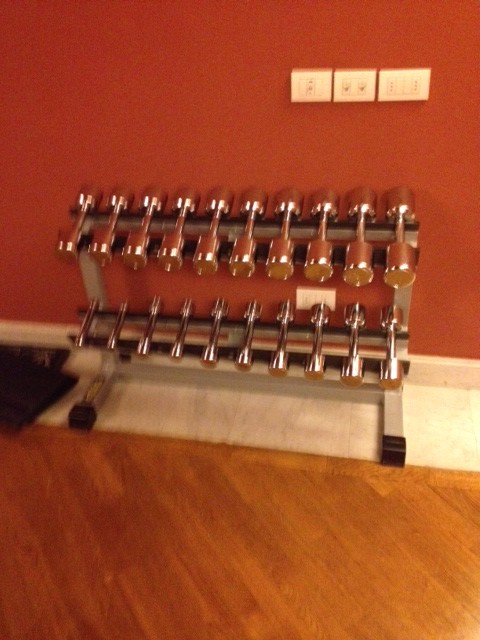
Recently, my wife and I vacationed in Italy, and fitness nuts that we are, we frequented several hotel gyms - none of which were particularly well equipped. Here's the one from hotel in Florence; yes, it was just dumbbells up to 10kg.


Immediately upon leaving, I sent an email to Cressey Performance coach Andrew Zomberg (@AndrewZomberg), who I knew was the guy to write up a post on having a great training effect without much equipment. This is what he pulled together; enjoy! -EC


Greater equipment availability generally yields greater efficiency because in order to induce structural or functional adaptations, you have to “force” the body to do so. Unfortunately, getting to a gym is not always feasible. The good news? Resistance training does not always have to depend on cable machines, power racks, and barbells.

Inaccessibility to gym equipment can be discouraging. The good news is that by creating structured programs and discovering new ways to challenge yourself with progressions, you can easily elicit a comparable training effect, just as if you were in a gym. Here are some options...
* * * * *

From Brett Contreras (the glute guy, as the picture below attests) - a collection of cool links in his "Random Thoughts" post - there is a TON of stuff there, so be sure to check it out.

Random Thoughts


How’s it going fitness peeps? I’ve got some great articles, videos, rants, and before/after pictures for you to check out. Just keeping you in the know!

Good Articles


Here are some great recent articles to read, written by various colleagues.

Scientific Articles


Chris Beardsley

Chris has written some great scientific articles in the past month. Several months ago he focused on hypertrophy, then he moved on to strength, and now he’s examining power. Here are the last six blogposts:
  1. Resistance Training and Power
  2. Ballistics and Power
  3. Injury Rates in Strength Sports
  4. Range of Motion on Strength Gains
  5. Rest Periods on Strength Gains
  6. Training to Failure on Strength Gains

Other Scientific Articles
  • We’re getting fatter due to less exercise, not more calories. See HERE.
  • Are you tired of pseudoscience? HERE are 10 claims that the authors would like to see go away forever.
  • Nick Tumminello teaches you some B.S. detection strategies HERE.
* * * * *

A few articles from T-Nation.

Total Body Strength

Loaded Isometrics for Size and Strength

by Nate Palmer | 07/24/14


Here's what you need to know...

  • Loaded isometrics teach irradiated tension, which increases strength gains in almost every exercise.
  • These moves can be done to increase either muscle size or strength, depending on the load used and the time under tension.
  • These exercises will teach you to use your entire body as one unit, test your mettle, and build strength in several key areas. Perform these after your main lift for the day, as a finisher, or just to test your willpower and see how strong you really are.
  • Keep the entire body tight to build total body strength. Keep your mental focus on the muscle you're working. Build your mental focus and you will get stronger!
Loaded isometrics can teach you a great number of things. The lesson I always learn is that I'm not as strong or as tough as I think I am. It's always a humbling experience to feel a whole new level of pain from a familiar exercise and it's a good check to see if you're actually working on your weak areas or just on the exercises you like.

Loaded isometrics are also fantastic for teaching the concept of irradiated tension, which, when properly performed, can increase strength gains in almost every exercise. The basic premise of irradiated tension is the idea that the body does not function in single units, but that the entire structure is important for even the smallest isolation move. In other words, when you create tension through your whole body, a dumbbell curl is more than just a dumbbell curl.

To create this next-level type of tension through your whole body, assume an athletic stance, feet shoulder-width apart, knees slightly bent, and starting with your core, begin to tighten your abs and then your glutes to create a foundation. Then squeeze the quads, pull the shoulder blades down and back, engage the lats, and lastly, tighten both fists.

Make sure you're taking small shallow breaths and then take inventory of your body. You should feel like an immovable object. If you need more proof that this technique will allow you to lift more, do a single arm dumbbell press with your weaker arm. Try it once without the tension, and try it once with it. Make up your own mind.

* * * * *

8 Rules for Fat Loss Training

by Andrew Heming | 07/29/14 
Here's what you need to know...
  • If you're serious about stripping off body fat, you must make time for proper nutrition. If you don't have time for this, make time.
  • Too often people trying to lose body fat just use intense metabolic resistance training and HITT (high intensity interval training). With fat loss programs, you need to switch as needed to different strategies such as metabolic resistance training, strength training, bodybuilding, and strength plus conditioning.
  • When designing a weekly plan for your training, consider how different styles of training affect different systems and thus affect recovery. You need to allow for some "space" between different kinds of stressors such as nervous system stressors, joint stressors, spinal compression, and metabolic stressors.
  • When trying to burn fat, you should rotate between different types of alactate (without lactic acid) conditioning that consists of short, intense work and lactate (produces lactic acid as a byproduct) conditioning that consists of longer duration work.
Want to lose body fat quickly and keep it off? Stop following those mainstream fitness workouts designed for your granny. Real fat loss training should build calluses on your hands. Here are eight rules for effective fat loss training, plus a sample workout plan that puts them all into action.

* * * * *

Bodybuilder Goes CrossFit

by Christian Thibaudeau | 07/25/14 
Here's what you need to know...
  • While the thinking used to be that CrossFit made guys weak, the average competitor in the CrossFit Games is very impressive.
  • Quite a few CrossFit girls have better physiques than some figure competitors, even without dieting.
  • There's something magical about being able to perform an explosive lift when you're metabolically fatigued and your heart rate is skyrocketing.
  • Doing submaximal lifting that focuses more on speed and density of work, like you do in CrossFit, is a great way to build muscle.
  • CrossFit can also get you lean fast, even with zero emphasis on nutrition.
I have a secret. I did CrossFit almost exclusively last summer. I've competed in Olympic lifting, powerlifting, and I've been a competitive bodybuilder... and now I can say I've been a CrossFitter too. I went to CrossFit Levis three times a week and then trained on my own to work on strength and my Olympic lifts. I actually kept a kind of CrossFit journal back then. So, one year later, here it is: my CrossFit diary, along with some current-day observations.
* * * * *

Here is a little science for you this week:

After resistance exercise, muscle repair and strengthening aided by stem cells


Thursday, 24 July 2014
A new study in mice reveals that mesenchymal (mezz-EN-chem-uhl) stem cells (MSCs) help rejuvenate skeletal muscle after resistance exercise.

By injecting MSCs into mouse leg muscles prior to several bouts of eccentric exercise (similar to the lengthening contractions performed during resistance training in humans that result in mild muscle damage), researchers were able to increase the rate of repair and enhance the growth and strength of those muscles in the exercising mice.

The findings, described in the journal Medicine and Science in Sports and Exercise, may one day lead to new interventions to combat age-related declines in muscle structure and function, said University of Illinois kinesiology and community health professor Marni Boppart, who led the research.
 * * * * *

This comes from Ergo-Log.com, a site that posts some interesting research summaries related to supplements, nutrition, and strength.

The joint effect of strength training and ginger supplementation

Supplementation with ginger combined with strength training reduces the damage wreaked by aggressive molecules in fat people, but the combination doesn't work better than either supplementation or training alone. Sports scientists from Iran state this in the Journal of Exercise Science & Fitness. The results of their study also suggest that ginger supplementation boosts the number of kgs muscle mass you build with strength training, and the number of kgs fat you lose as a result.

Strength training and ginger

Overweight is unhealthy for a number of reasons, and one of these is that the extra kgs of fat multiply the activity of aggressive molecules – free radicals – in the body. Physical exercise – so strength training too – reduces this, and supplementation with ginger does the same. But what does combining the two do? That's the question the researchers wanted to answer in their experiment.