As a trauma therapist working with survivors of rape, abuse, and/or molestation, I was deeply troubled that former Penn State assistant football coach Jerry Sandusky was able to
sexually molest boys, including
his own adopted son, for
more than 35 years without anyone coming forward to press charges until the parents of one young man reported Sandusky to police sometime in or before 2009.
Until the Grand Jury investigation began, not a single young man felt safe enough or strong enough to come forward and tell someone what had happened to him. This silence is much more common in boys and young men than it is in girls and young women. We have created support and safety for female survivors to come forward, but this is missing for males.
Based on research, we know that 1 in 4women experience rape, sexual abuse, or molestation before the age of 18 - and we know now that the numbers are not much lower for men, at 1 in 6 (Finkelhor, David, et al. 1990. "Sexual Abuse in a National Survey of Adult Men and Women: Prevalence, Characteristics, and Risk Factors").
Some research indicates 1 in 5 boys experience sexual abuse before the age of 16.
When we can't or won't talk about this reality, it goes on and more boys
are victimized. I can't remember which site I found this statistic on,
but it was not lost on me that pedophiles who prefer boys will molest
120 boys before being caught (on average), while those who prefer girls
will molest 85 or so before being caught. Maybe if our boys felt safe to
report these things, the numbers would not be so skewed.
Survivors of abuse face a lot of challenges. According to the
World Health Organization (2002), victims of sexual assault are:
- 3 times more likely to suffer from depression.
- 6 times more likely to suffer from post-traumatic stress disorder.
- 13 times more likely to abuse alcohol.
- 26 times more likely to abuse drugs.
- 4 times more likely to contemplate suicide.
With these likely outcomes from sexual abuse in childhood, it saddens me that there are so many myths and stigmas for men who survived sexual abuse. The excellent site,
1in6, offers support and resources - and the most useful piece is exposing
facts and myths around male survivors.
Young men should be exposed to this information as part of all sex education programs, and in church programs, and in the Boy Scouts, or sorts teams. This should be common knowledge.
Before addressing the myths, let’s review some key facts:
- Boys and men can be sexually used or abused, and it has nothing to do with how masculine they are.
- If a boy liked the attention he was getting, or got sexually aroused during abuse, or even sometimes wanted the attention or sexual contact, this does not mean he wanted or liked being manipulated or abused, or that any part of what happened, in any way, was his responsibility or fault.
- Sexual abuse harms boys and girls in ways that are similar and different, but
equally harmful.
- Boys can be sexually abused by both straight men and gay men. Sexual abuse is the result of abusive behavior that takes advantage of a child’s vulnerability and is in no way related to the sexual orientation of the abusive person.
- Whether he is gay, straight or bisexual, a boy’s sexual orientation is neither the cause or the result of sexual abuse. By focusing on the abusive nature of sexual abuse rather than the sexual aspects of the interaction, it becomes easier to understand that sexual abuse has nothing to do with a boy’s sexual orientation.
- Girls and women can sexually abuse boys. The boys are not “lucky,” but exploited
and harmed.
- Most boys who are sexually abused will not go on to sexually abuse others.
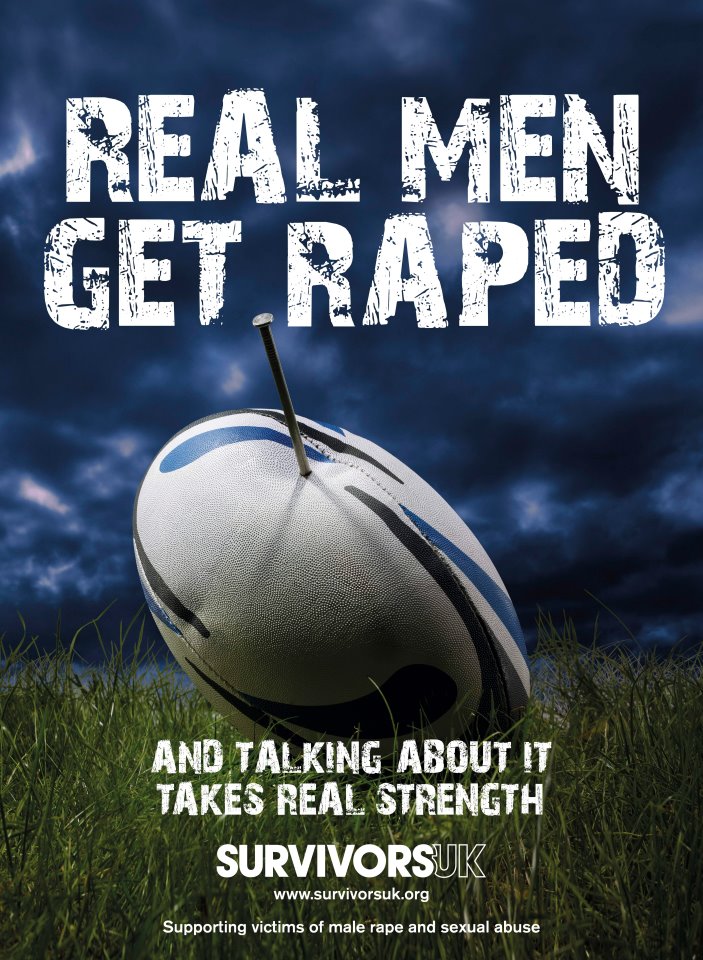
Myth 1 — Boys can’t be sexually used or abused, and if one is, he can never be a “real man.”
Everyone absorbs the myth that males aren’t victims, to some extent.
It’s central to masculine gender socialization, and boys pick up on it
very early in life. This myth implies that a boy or man who has been
sexually used or abused will never be a “real man.” Our society expects
males to be able to protect themselves. Successful men are depicted as
never being vulnerable, either physically or emotionally. (See How It Can Be Different for Men and How Being Male Can Make It Hard to Heal.)
Whether you agree with that definition of masculinity or not, boys are not men. They are children. They are weaker and more vulnerable than those who sexually abuse or exploit them – who use their greater size, strength and knowledge to manipulate or coerce boys into unwanted sexual experiences and staying silent. This is usually done from a position of authority (e.g., coach, teacher, religious leader) or status (e.g. older cousin, admired athlete, social leader), using whatever means are available to reduce resistance, such as attention, special privileges, money or other gifts, promises or bribes, even outright threats.
What happens to any of us as children does not need to define us as
adults or men. It is important to remember that that 1 in 6 boys are
sexually abused before age 18 (see The 1 in 6 Statistic), and that those boys can grow up to be strong, powerful, courageous and healthy men. Examples are found on our website (see Other Guys Like Me), and there are many others out there.
Myth 2 — If a boy experienced sexual arousal during abuse, he wanted
and/or enjoyed it, and if he ever did partly want the sexual
experiences, then they were his fault.
Many boys and men believe this myth and feel lots of guilt and shame
because they got physically aroused during the abuse. It is important
to understand that males can respond to sexual stimulation with an
erection or even an orgasm – even in sexual situations that are
traumatic or painful. That’s just how male bodies and brains work. Those
who sexually use and abuse boys know this. They often attempt to
maintain secrecy, and to keep the abuse going, by telling the child that
his sexual response shows he was a willing participant and complicit in
the abuse. “You wanted it. You liked it,” they say.
But that doesn’t make it true. Boys are not seeking to be sexually
abused or exploited. They can, however, be manipulated into experiences
they do not like, or even understand, at the time. (See Guilt and Shame.)
There are many situations where a boy, after being gradually manipulated
with attention, affection and gifts, feels like he wants such attention
and sexual experiences. In an otherwise lonely life (for example, one
lacking in parental attention or affection – even for a brief period),
the attention and pleasure of sexual contact from someone the boy
admires can feel good.
But in reality, it’s still about a boy who was vulnerable to
manipulation. It’s still about a boy who was betrayed by someone who
selfishly exploited the boy’s needs for attention and affection to use
him sexually. (See Sorting It Out for Yourself,
which discusses feeling like you (partly) ‘wanted’ it then but now
seeing it as an unwanted experience, in terms of it being part of your
life and having continuing negative effects.)
Myth 3 — Sexual abuse is less harmful to boys than girls.
Most studies show that the long term effects of sexual abuse can be
quite damaging for both males and females. One large study, conducted by
the U.S. Centers for Disease Control, found that the sexual abuse of
boys was more likely to involve penetration of some kind, which is
associated with greater psychological harm.
The harm caused by sexual abuse mostly depends on things not determined
by gender, including: the abuser’s identity, the duration of the abuse,
whether the child told anyone at the time, and if so, whether the child
was believed and helped.
Many boys suffer harm because adults who could believe them and help are
reluctant, or refuse, to acknowledge what happened and the harm it
caused. This increases the harm, especially the shame felt by boys and
men, and leads many to believe they have to “tough it out” on their own.
And that, of course, makes it harder to seek needed help in the midst
of the abuse, or even years later when help is still needed. (See How Unwanted or Abusive Sexual Experiences Can Cause Problems and How Being Male Can Make It Hard to Heal.)
Myth 4 — Most men who sexually abuse boys are gay.
Studies about this question suggest that men who have sexually abused
a boy most often identify as heterosexual and often are involved in
adult heterosexual relationships at the time of abusive interaction.
There is no indication that a gay man is more likely to engage in
sexually abusive behavior than a straight man and some studies even
suggest it is less likely. But sexual abuse is not a sexual
“relationship,” — it’s an assault. The sexual orientation of the abusive
person is not really relevant to the abusive interaction. A man who
sexually abuses or exploits boys is not engaging in a homosexual
interaction – any more than men who sexually abuse or exploit girls are
engaging in heterosexual behavior. He is a deeply confused individual
who, for various reasons, desires to sexually use or abuse a child, and
has acted on that desire. (See Why Do People Sexually Use or Abuse Children?)
Myth 5 — Boys abused by males must have attracted the abuse because they are gay or they become gay as a result.
There are different theories about how sexual orientation develops, but
experts in human sexuality do not believe that sexual abuse or premature
sexual experiences play a significant role. There is no good evidence
that someone can “make” another person be homosexual or heterosexual.
Sexual orientation is a complex issue and there is no single answer or
theory that explains why someone identifies himself as homosexual,
heterosexual or bi-sexual.
It is common, however, for boys and men who have been abused to express
confusion about their sexual identity and orientation, whether they
identify as straight, gay or bi-sexual. Some guys who identify as
heterosexual, fear that, due to their experiences as boys, they must
“really” be homosexual. They may believe this would mean that they can’t
be a “real man,” as defined by the larger society. Even men who clearly
indentify as heterosexual, and men who project very traditional
heterosexual traits , may fear that others will “find them out” as gay
or not real men. Men who identify as gay or bi-sexual may wonder if
their sexual orientation was influenced in any way by the abusive
experience or may even be the cause of their orientation. (See How It Can Be Different for Men.)
Also, many boys abused by males wonder if something about them sexually
attracted the person who abused them and will unknowingly attract
other males who will misuse them. While these are understandable fears,
they are not true. One of the great tragedies of childhood sexual abuse
is how it robs a person’s natural right to discover his own sexuality in
his own time.
It is very important to remember that abuse arises from the abusive
persons’s failure to develop and maintain healthy adult sexual
relationships, and his or her willingness to sexually use and abuse
kids. It has nothing to do with the preferences or desires of the child
who is abused, and therefore cannot determine a person’s natural
sexual identity.
Myth 6 — If a female used or abused a boy, he was “lucky,” and if he doesn’t feel that way there’s something wrong with him.
This myth, like several of the others, comes from the image of
masculinity that boys learn from very early. It says not only that males
can’t be sexually abused, but that any sexual experience with girls and
women, especially older ones, is evidence that he’s a “real man.”
Again, the confusion comes from focusing on the sexual aspect rather
than the abusive one – the exploitation and betrayal by a more powerful,
trusted or admired person (who can be a child or adult).
In reality, premature, coerced or otherwise abusive or exploitive sexual
experiences are never positive – whether they are imposed by an older
sister, sister of a friend, baby sitter, neighbor, aunt, mother, or any
other female in a position of power over a boy. At a minimum, they cause
confusion and insecurity. They almost always harm boys’ and men’s
capacities for trust and intimacy.
A gay man who experienced sexual arousal when abused by a female may
wonder whether it means that he is actually straight or wonder what it
means that he was chosen by a woman or older girl.
Being sexually used or abused, whether by males or females, can cause
a variety of other emotional and psychological problems. However, boys
and men often don’t recognize the connections between what happened and
their later problems. To be used as a sexual object by a more powerful
person, male or female, is never a good thing, and can cause
lasting harm.
Myth 7 — Boys who are sexually abused will go on to abuse others.
This myth is especially dangerous because it can create terrible fear in
boys and men. They may not only fear becoming abusers themselves, but
that others will find out they were abused and believe they’re a danger
to children. Sadly, boys and men who tell of being sexually abused often
are viewed more as potential perpetrators than as guys who
need support.
While it is true that many (though by no means all) who sexually abuse
children have histories of sexual abuse, it is NOT true that most boys
who are sexually abused go on to sexually abuse others. The majority of
boys do not go on to become sexually abusive as adolescents or adults;
even those who do perpetrate as teenagers, if they get help when they’re
young, usually don’t abuse children when they become adults. (See Am I Going to Become an Abuser? What if I Already Have?)
Believing these myths is understandable, but dangerous and harmful, and needs to be overcome.
- These are myths that everyone absorbs growing up, and continues to
hear as adults, usually without even thinking about it. So of course
some boys and men will, at least for a while, believe them and suffer
the consequences.
- So long as societies believe these myths, and teach them to children
from their earliest years, many men harmed by unwanted or abusive
sexual experiences won’t get the recognition and help they need.
- So long as boys or men harmed by unwanted or abusive sexual
experiences believe these myths, they will feel ashamed and be less
likely to seek whatever knowledge, understanding and help they need to
achieve the lives they want and deserve.
- So long as boys, men and society as a whole believes these myths and
males don’t get the help they need, males are more likely to join the
minority who end up hurting others.
- And so long as these myths are believed, it increases the power of
another devastating myth: that it was the child’s fault. It is never the
fault of the child in a sexual situation – although some people are
skilled at getting those they use or abuse to take on a responsibility
that is always, and only, their own.
For any man harmed by unwanted or abusive sexual experiences – and
anyone who wants to support him – becoming free of these myths is
necessary to overcoming the effects of the abuse, and to achieving the
life he wants and deserves.
Adapted and expanded from an online piece by Ken Singer.