Showing posts with label PTSD. Show all posts

Saturday, May 3, 2014

Wartorn 1861-2010 - A Documentary on War and PTSD


No new information here for those who work with PTSD and especially combat-related PTSD, but this is still an essential documentary for those who love, live with, or know the young men (and women) coming home from Iraq and Afghanistan. An estimated 25-35% of combat veterans (mostly men) from these two recent wars will experience symptoms of post-traumatic stress disorder. This HBO documentary examines their experience, their symptoms, and their lives once they return home.

Wartorn 1861-2010

68 Minutes


After the Civil War more than half of the patients in mental institutions were veterans. In 1980 post-traumatic stress disorder (PTSD) became an accepted diagnosis for veterans with psychological wounds. Based on personal accounts of American soldiers whose physical and mental health was torn asunder by the shock and fear of bloodshed and PTSD, the documentary narrates the chronic effects of battle agony and post-traumatic anxiety on military personnel and people close to them throughout American history... from the Civil War through today's modern warfare in Iraq and Afghanistan.

There's a lot of confusion about post-traumatic stress. What are some of the physical manifestations? Well, the hallmark symptoms are the agitation and being keyed up and on edge. And the problem with PTSD is that those symptoms don't go away when soldiers come back home. It's almost like a seizure where they don't have control, they don't know when it's going to happen, and they have to constantly plan so that if it does happen, they're in a place where they can recover.

So what about the people that don't get it? Is there anybody that you can honestly say was in a great deal of intense combat situations and comes back completely fine? Those folks are pretty rare. There's that mythology of the warrior that the only thing you should feel when you shoot an insurgent is recoil. But in fact, nobody is really unscathed unless you really have no compassion for human life. If you have a total disregard maybe the only thing you feel is recoil. Everybody else carries something with them.

In August 1943, General Patton slapped a young soldier who was hospitalized with nervous exhaustion. He was reported to have said: I won't have the hospitals cluttered up with these sons of bitches who haven't got the guts to fight. Send that yellow son of a bitch back to the front line.

Saturday, March 29, 2014

Military Men More Distressed by Sexual Harassment than Military Women


The Pentagon says about 3,000 service members reported being sexually assaulted in 2012, but a confidential Department of Defense survey suggests the figure is closer to 26,000 -- up 35 percent over 2010 ["Sexual Assault in the Military," CQ Researcher, 23(29)]. Of these, more than half are men, as the graphic at the top reveals.

New research suggests that male survivors suffer more distress than their female counterparts.

This makes sense. For men, in addition to the violation of their autonomy, they also lose their standing as masculine men. The FALSE belief is that a "real" man would not have been raped or assaulted. Further, a young male survivor (if he is hetero) may begin to question his sexuality, another powerful source of distress.

Military men more distressed by sexual harassment than military women

Date: March 27, 2014
Source: American Psychological Association (APA)

Summary:
Military men who are targets of frightening and threatening sexual harassment may experience more distress and work performance problems than military women who face the same treatment, according to research. "Men may be less likely to think they'll be sexually harassed, so it's a particularly strong violation of their expectations and that could result in stronger negative reactions," an author said of the situation.

Military men who are targets of frightening and threatening sexual harassment may experience more distress and work performance problems than military women who face the same treatment, according to research published by the American Psychological Association.
A total of 52 percent of military women said they had been sexually harassed compared with 19 percent of military men, and women more frequently reported they were very frightened by the experience than their male colleagues, according to a study published online in APA's Journal of Occupational Health Psychology. "The surprise was that men were more upset and debilitated after experiencing frightening sexual harassment than women," said lead author Isis H. Settles, PhD, of Michigan State University.

"Men may be less likely to think they'll be sexually harassed, so it's a particularly strong violation of their expectations and that could result in stronger negative reactions," Settles said. "Another possibility is that men feel less able to cope with their sexual harassment than women, who know it's a possibility and therefore are perhaps more emotionally prepared."

Researchers examined data from a 2002 Department of Defense survey of 17,874 service members, of whom 9,098 were men. A total of 6,304 male and female soldiers reported experiencing sexual harassment while on duty in the past year. Of those, 28 percent were men, 64.5 percent were white, 21.5 percent were African-American and 14 percent were Hispanic.

To differentiate between frightening and less serious harassment, the survey asked participants to recall one incident during the past 12 months that had the greatest effect on them and to rate the experience from being "not at all frightening and threatening" to "extremely frightening and threatening."

"Individuals were free to define how harassment made them feel. As such, frightening or threatening harassment could include experiences that were menacing, threatened their sense of job security, or were those they believed could escalate to an assault," said Settles.

Male soldiers reported that men were the perpetrators 52 percent of the time, while the other incidents involved both a man and a woman or a woman alone. For women, 86 percent of the harassment was by men, while the remaining incidents involved both men and women or only a woman. While soldiers of both genders reported more distress if sexually harassed by a higher ranking soldier, women reported more fear than men when their harasser was higher ranking. A total of 46 percent of men and 68 percent of women were sexually harassed by someone of higher rank.

The researchers assessed victims' level of distress, role limitations and work satisfaction based on their responses to survey questions. For example, to determine role limitations, participants indicated how often in the past four weeks they had difficulty doing their work or other daily activities as a result of physical or emotional problems.

Since the military is male-dominated and adheres to hierarchical, hyper-masculine cultural norms, more research is needed to determine whether the same results occur for men outside of a military context, the authors said.

"Overall, the findings illustrate the negative impact that sexual harassment has for both women and men, emphasizing the importance of organizations like the U.S. military to continue working to reduce its prevalence," Settles said.


Story Source:
The above story is based on materials provided by American Psychological Association (APA). Note: Materials may be edited for content and length.

Journal Reference:
Settles, I.H., Buchanan, N.T., Yap, S.C.Y., Harrell, Z.A.T. (2014, Mar 17). Sex Differences in Outcomes and Harasser Characteristics Associated With Frightening Sexual Harassment Appraisals.. Journal of Occupational Health Psychology, 19(2); DOI: 10.1037/a0035449

Abstract:
This study examined data from U.S. military personnel (1,764 men; 4,540 women) to determine whether appraisals of sexual harassment as frightening mediate the relationship between perpetrator characteristics (perpetrator sex and rank) and three psychological/job outcomes (psychological distress, role limitations, and work satisfaction), and whether these relationships were stronger for women than men. Results indicated that frightening appraisals mediated the relationship between perpetrator rank and all outcomes for both sexes. However, frightening appraisals mediated the relationship between perpetrator sex and outcomes only for women. As predicted, having a male perpetrator or a higher status perpetrator was more strongly related to frightening appraisals for women than men. However, unexpectedly, the relationship between frightening appraisals and more psychological distress, more role limitations, and less work satisfaction was stronger for men than women. We discuss the results in terms of expectancy norm violations and sexual harassment as a form of dominance. (PsycINFO Database Record (c) 2014 APA, all rights reserved)

Friday, May 31, 2013

This Is What a Good Man Looks Like . . . Patrick Stewart

I have admired Patrick Stewart as an example of a good man for several years. He always has seemed humble and grateful, yet is one of the most talented actors of his generation or any other. When he began to speak out about the domestic violence he lived with as a child (see here and here), my respect for him increased substantially.

A blogger at the Comicpalooza in Texas, held on Memorial Day weekend, thanked him for a speech he gave on domestic violence at an Amnesty International event. She said she had been through a similar event in her life and thanked him for speaking out.

From there, things got personal . . . .

Patrick Stewart hugs domestic-abuse survivor, tells of violence in his childhood


Gael Fashingbauer Cooper
TODAY

Patrick Stewart told the Comicpalooza audience that his mother was blamed for the abuse rained on her by his father.

On television, he was the almost unflappable Captain Jean-Luc Picard on "Star Trek: The Next Generation." But Patrick Stewart was raised in a poor household with an abusive father, and the experience gave him the fire to work for such causes once he had the fame to make himself heard.

Stewart appeared at Comicpalooza in Texas over the Memorial Day weekend, and while there, answered questions from audience members.

Heather Skye, who blogs at Lemon Sweetie, thanked Stewart for a speech he gave at an Amnesty International event about domestic violence, saying that she had come through a similar event and appreciated his speaking out, and asked him about what non-acting work he's the most proud of.

And then things got personal. Stewart, who has spoken about his father's abuse before, referenced his own childhood in 1940s England. "The work that I do in campaigns about violence towards women, particularly domestic violence, grew out of my own childhood experience," he said.


He discussed the specific groups he works with, and went on to say, "I do what I do in my mother's name, because I couldn't help her then. Now I can."

Stewart said his father, a World War II veteran, was then said to suffer from severe shellshock, but would today be diagnosed with post-traumatic stress disorder. He works with both the veterans' mental-health charity Combat Stress as well as the domestic-violence shelter Refuge, saying he does so because of both of his parents.

"As a child, I heard in my home doctors and ambulance men say, 'Mrs. Stewart, you must have done something to provoke him,'" Stewart said to Skye and the crowd. "'Mrs. Stewart, it takes two to make an argument.' Wrong! WRONG! My mother did nothing to provoke that, and even if she had, violence is never ever a choice that a man should make. Ever!"

The crowd gave Stewart a standing ovation, and shortly after, he walked into the crowd and hugged Skye. She wrote on her blog, "He told me 'You never have to go through that again, you’re safe now.' I couldn’t stop thanking him. His embrace was so warm and genuine. It was two people, two strangers, supporting and giving love. And when we pulled away he looked (straight) in my eyes, like he was promising that. He told me to take care. And I will."

Friday, April 19, 2013

Review - The Long Walk: A Story of War and the Life That Follows by Brian Castner


Brian Castner's The Long Walk: A Story of War and the Life That Follows is his memoir of three tours of duty in Iraq, two of them as the commander of an Explosive Ordnance Disposal unit, and his life after coming home, dealing with "the Crazy."

Here are the first few paragraphs of the book:
THE FIRST THING you should know about me is that I’m Crazy.

I haven’t always been. Until that one day, the day I went Crazy, I was fine. Or I thought I was. Not anymore.

My Crazy is a feeling. It’s the worst, most intolerable feeling I’ve ever had. And it never goes away.

When you’re Crazy, you make a list of people you have told, the people you have come out to. My list is small. One best friend but not another. Jimbo and John and Greg, but not the other guys on the team. Your wife but not your mother. Those that you think will get it, will understand.

And now I’m telling you. That I’m Crazy, and I don’t know why.

The second thing you should know about me is that I don’t know how to fix it. Or control it. Or endure from one moment to the next. The Crazy is winning.

So I run.

I run every day, twice a day sometimes, out the front door of my peaceful suburban home, past sticky blast scenes of sewage, and motor oil, and bloody swamps of trash and debris, ankle deep, filling the road, sidewalks, shop and house doorsteps. I run through dust clouds, blown in off the desert or kicked up by the helo rotor wash. I run past the screaming women that never shut up, don’t shut up now. I should have made them stop when I had a chance. I run as fast as I can, as long as I can, my feet hitting the pavement in a furious rhythm, along the river near my home.

I run in the hottest part of the day, the full afternoon blaze, the heat of the black asphalt, baking in the summer sun, rising through my shoes and into my feet. I speed up, but the Crazy feeling is still winning. It overwhelms. Sweat pours down my flushed face, in my eyes. Albietz is chalk white skin and brown dried blood from head to toe.

Aside from Johnny Got His Gun, Catch-22, and Slaughterhouse-Five (all novels, although Vonnegut based his novel on his experience as a POW), I am not a huge fan of the war genre in literature, fiction or non-fiction.

Fortunately I am open to new things. A friend of mine highly recommended Castner's memoir last Friday, I bought it that same day, and finished it this morning. It is without doubt one of the most engrossing memoirs I have ever read, and with no ghost writer it is exceptionally well-written and constructed.

The sentences are often short, almost staccato, and Castner uses an image ("the foot in the box") as a hook throughout the text that seems at first part of his PTSD and then is revealed - in an unexpected way - that sheds light on the theme of the memoir.

There are a lot of action scenes set in Iraq, in the field, doing their jobs - all of which are riveting because of the imminent threat of death, and made even more so through the writing style. But there is also humor, brief glimpses of joy, yoga, and the daily battle with "the Crazy."

This is a book, in many ways, about men working with men in a predominantly male world. Yet I think the women who love men who have served in Iraq might better understand their men through this book.

Highly recommended - this was an Amazon Best Book for 2012.

For those who want more of a review, here are some links.

New York Times – August 19, 2012
Dallas Morning News – July 27, 2012
The Boston Globe - July 20, 2012
The New Yorker – July 12, 2012
USAToday - July 12, 2012
The Daily Beast – July 2, 2012

Here is a segment from NPR's Fresh Air that aired last summer.

'The Life That Follows' Disarming IEDs In Iraq

July 08, 2012


Listen to the Story


Fresh Air from WHYY
44 min 17 sec

Download
Transcript
Read an excerpt of The Long Walk


Brian Castner arguably had one of the most nerve-wracking jobs in the U.S. military. He commanded two Explosive Ordnance Disposal units in Iraq, where his team disabled roadside IEDs, investigated the aftermath of roadside car bombings and searched door to door to uncover bomb-makers at their homes.

"We would disassemble the IEDs when somebody else found them; we would go on route-clearance patrols with the engineers to trip the ambushes before they would hit our convoys; and we would do the post-blast investigations," Castner tells Fresh Air's Terry Gross. "Hopefully we would find weapons caches and dispose of a lot of this bulk ordnance before it would be used as an IED. ... But there was no getting rid of all of the bombs."

Sometimes those bombs would go off and Castner's team would be responsible for investigating the gruesome aftermath.

"You would show up and the loved ones would already be picking up bodies or pieces of bodies and they're already loading the destroyed car onto a flatbed, and it's bad enough that you're out there doing this but they're getting in the way of you doing your job," he says. "We could be there for 10 minutes. Because the longer you're there, the more chance you have to get shot at or have a mortar dropped on your head. So you get out as quickly as you can."

In his memoir, The Long Walk, Castner chronicles his three tours in Iraq and the life that followed when he returned home as a different man, unable to forget what he saw or experienced in Iraq. He describes his experiences as "Crazy" — a term that is often repeated in the book.

"You don't want to be a caricature of yourself but that's what it felt like I was turning into," he says. "And I needed a word [for it]. And if you're nauseous, you know you're about to throw up and if you have a headache, that's called pain. But I had a physical symptom that I didn't have a name for. ... So 'Crazy' was the best way to describe it."

Castner also had physical symptoms in addition to the problems in his mind. He began experiencing cognitive side effects related to his close exposure to blast attacks. In recent years, he was diagnosed with traumatic brain injury. Long-term-memory problems, hearing issues and sleep apnea have plagued his body.

"The one that really bothered me, by and far, is the long-term-memory loss," he says. "I've got some sections of when my kids are younger and when my wife and I met and really the first three-quarters of my marriage that I simply don't remember. ... That was part of what I was working through [when I wrote the book]. Why can I remember the day of six [car bombs] so well but I can't remember my kids being born?"


Brian Castner served as an Explosive Ordnance Disposal officer in the U.S. Air Force from 1999 to 2007, deploying to Iraq to command bomb disposal units in Balad and Kirkuk in 2005 and 2006. Joey Campagna/Courtesy of the author


Interview Highlights


On transitioning to home life

"The stakes were all too low suddenly. Whether I did the dishes or not didn't seem to rise to the challenge of what I had done before. When nothing is important anymore, everything is important. Little things start to become too important and you start to become obsessive over the details. And that obsessive part of my brain that kept me alive in Iraq went into overdrive and it became the hindrance. It got in the way."

On why soldiers tie their ID and blood type around their feet instead of their hands

"It turns out that you put your blood type and your NKA (no known allergies) on my foot and you stick a dog tag in your laces because it's the part of you that's most likely to survive if you get blown up. We found feet a lot. If you're going to find a part of the bomber or victim, you might find their head. It's a better chance that you're going to find their hands and feet."

On arriving at the scene of an IED after it went off

"You become numb to it eventually. But I would never call it business as usual. And in fact, the post-blast mission is one that only really developed as the war went on. When I initially went through EOD school, there was no section of the training that was called post-blast investigation. On my first trip to Iraq in 2005, the first time I did one, I had to ask, 'Well, what does that even mean? What do you want me to look for?' "

On the long, lonely walk that was also portrayed in the 2008 film The Hurt Locker

"I put guys in suits all the time and I gave them the approval to put on the suit and go down nearly every day. And it is certainly the longest, loneliest walk that you will ever take. For an EOD guy who is used to being in control and accomplishing the mission, it is certainly more terrifying to be the one in the suit. But not having the sense of control to be the one used to just drive me nuts — to watch them walk down. Neither I nor anybody else can help them in that moment."

On giving the command to shoot a man who he thought might be triggering an IED

"It does not weigh on me because we made a mistake because mistakes happen in wartime. Everybody's just doing the best they can to survive every day. And so I don't regret it from that perspective. I felt like I wanted to give Trey [who was in my unit] the cover to do what he needed to do [which was disarm a potential bomb in a car] because I felt like that was my responsibility. If something bad happened, I wanted to have whatever was going to happen land on me instead of him. If there was an investigation or if there was some sort of wrongful death inquiry, I wanted them to come talk to me.

"But what really bothered me about that situation was [that] I had told myself that what we were doing in Iraq was keeping everyone alive. We kept U.S. soldiers alive, we kept Iraqis alive, we took apart every single bomb and it didn't matter who the target was — it didn't matter if it was going to blow up an Iraqi school or a U.S. convoy. You take them all apart. And in this situation, we were going to use our explosives to kill somebody instead of making Iraq just a little bit safer."

Web Resources

Saturday, January 12, 2013

Conquering the Past and Creating the Future - The Secret Lives of Men Podcast


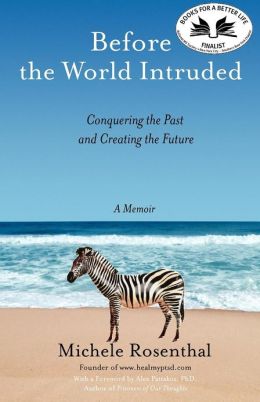
This episode of the Secret Lives of Men podcast features Dr. Chris Blazina talking to his guest, Michele Rosenthal about her new book, Before the World Intruded: Conquering the Past and Creating the Future, A Memoir, which details the author's struggles to overcome the trauma of having nearly died as a thirteen-year old.

You may ask yourself what this has to do with men, but all of us experience trauma in our lives, whether it's a near-fatal illness, an auto accident, the death of a loved one, or any number of other wounds we can experience. How we recover from these traumas has been a learning experience for many of us. In this discussion (and in her book), Ms. Rosenthal offers some insights that can aid all of us in our healing.


Conquering the Past and Creating the Future - The Secret Lives of Men Podcast

Listen to internet radio with Secret Lives of Men on Blog Talk Radio
Before the World Intruded: Conquering the Past and Creating the Future, A Memoir, is one woman’s quest to triumph over trauma — and the very unexpected way she did it. At the age of thirteen Michele Rosenthal survived such a rare, life-threatening illness none of her doctors had actually seen a case. Out of the hospital and making a full recovery, she believed if she only looked toward the future she could escape the trauma in her past. Twenty-five years later, however, the young girl had become a woman imprisoned by memories, fear, and Post-Traumatic Stress Disorder. In a bid to reclaim her life and heal her soul Michele boldly left the world she knew in search of a self she could barely imagine. In her transformation lie the seeds for anyone who wants to conquer the past and create the future. This transcendent book shows what can happen when you discover who you are and then choose who you most deeply want to be. 
~ Michele Rosenthal is an award winning blogger, speaker, poet, post-trauma coach, and radio talk show host. A trauma survivor who struggled with Post-Traumatic Stress Disorder (PTSD) for over twenty-five years, today Michele joyfully lives 100% free of PTSD symptoms. She is the founder of www.healmyptsd.com and sits on the board of Hope4PTSDvets.org and St. Clair Butterfly Foundation. For more information visit, HealMyPTSD.com. To receive over $1,900 in free trauma recovery support resources, take your Amazon sales receipt number and visit: http://yourlifeaftertrauma.com/trauma-project-give-back/free-gifts/

Sunday, October 21, 2012

LA Times - Men Tell of Sexual Abuse by Scoutmaster Decades Ago

When the story was released that the Boy Scouts had covered up sexual abuse by scoutmasters over the organization's history (although they did keep an internal list to make sure these men were not able to go somewhere else and do it again), it was only a matter of time before some of the survivors would come forward and tell their stories.

The LA Times posted an extensive story this weekend on the impact the abuse had on the boys who are now grown men and still living with the PTSD sexual abuse creates.

Men tell of sexual abuse by scoutmaster decades ago

Memories of spending the night at Rodger L. Beatty's home in Pennsylvania are still fresh. Five boys reported their leader's actions to Scout officials and he was expelled, but the police weren't called.

Carl Maxwell Jr.
Carl Maxwell Jr., reviews the Boy Scouts of America's confidential file detailing the alleged abuse he and four other members of Troop 222 were subjected to by Scoutmaster Rodger L. Beatty 
(Kim Christensen, Los Angeles Times / September 4, 2012)


NEWPORT, Pa. — Even after 36 years, Carl Maxwell Jr.'s thoughts leap to the rustic house at the edge of the golf course, and what happened there.

"It is so old, but it is so fresh," Maxwell said, recalling the many nights that members of Troop 222 spent at the home of their scoutmaster, Rodger L. Beatty.

He remembers the mattresses that covered the floor in the front room, the queasy anticipation that would set in among the five boys after Beatty said good night and went to his room.

DATABASE: Search for names, locations

"I remember the first time for me," he said. "The lights were turned off and the moon was out, and I could see it shining through a crack in the blinds. Then all of a sudden it got dark and then it got light again, and you could tell someone passed through the light."

It was Beatty, he said.

"He started at one end of the room and worked his way right down," Maxwell said.

Mike Kunkel also remembers being sexually abused at Beatty's place, and had long kept it to himself.

"I have been married for 20-something years and never said a word about this to my wife until tonight," he said, an hour after a reporter called and asked to stop by to talk about Beatty. "It was a big bomb to drop on her."

All five boys, ages 13 and 14, came forward in July 1976 to accuse Beatty in detailed written statements to local Scout officials. He was expelled from Scouting, but no one called the police. Beatty abruptly left town.

"It's like he ceased to exist after that day," Kunkel said. "Now I'm wondering: Where the hell is he? Is he in jail? Is he dead?"

Beatty, 66, is neither dead nor in jail.

The longtime University of Pittsburgh social worker, educator and AIDS researcher has been in a hospital intensive care unit since Sept. 28, when he suffered a massive stroke. His family asked David Korman, a Pitt colleague and friend of 20 years, to answer questions on his behalf.

"I'm just shocked by this," Korman said. "His reputation on the campus is truly outstanding.... I think everyone here will be stunned."

Korman said Beatty is unable to communicate.

"The only person able to answer the allegations is unable to answer," he said.

Boy Scout files

The accusations that bind the Pennsylvania men's lives are detailed in the Boy Scouts of America's confidential files, a blacklist the organization has used for nearly a century to keep suspected molesters out of its ranks.

Beatty's is among nearly 1,900 such files the Los Angeles Times has reviewed in recent months. Hundred of suspected molesters, many of them respected members of their communities, were never reported to authorities, the records show.

Much of their long-buried history was cast into public view Thursday, when 1,247 of the files, including Beatty's, were unsealed by order of the Oregon Supreme Court, two years after a jury considered them as evidence in a landmark sex-abuse lawsuit against the Scouts.

The Times first attempted to contact Beatty in early September, more than two weeks before he fell ill. He did not respond to repeated email and phone messages.

The newspaper also sought out the former Scouts he was alleged to have abused. Of the five, two have since died and one could not be reached.

Like many other incidents of alleged abuse described in the files, those involving Beatty played out in a small town, where Scouting was a big part of boys' lives.

Maxwell, now 50, said Newport was a great place to "swim in the cricks" and fish in the Juniata River, a few blocks down the hill from the small duplex where he and his sister grew up and where he still lives much of the year. It is about 25 miles from the capital, Harrisburg, and many of its 1,500 residents are state employees. His late father, Carl Sr., worked for the Pennsylvania Department of Transportation.

"I wouldn't have wanted to grow up any other place," Maxwell said, sitting at the kitchen table. "You know how you hear people say you can leave the doors unlocked? Well, this was that kind of neighborhood."

Sponsored by a local church, Troop 222 was led for three years in the mid-1970s by Beatty, then a county drug-and-alcohol counselor in his late 20s. He met some of the boys, including Mike Kunkel and his stepbrother, J.P. Culhane, while helping their parents with alcohol abuse or other problems.

"My mom and dad were having problems, and they started seeking therapy through the county," Kunkel said.

Kunkel said he and Culhane were "loose cannons" at that age and Beatty suggested that they'd benefit from Scouting's structured environment. So they joined his troop.

Beatty took a special interest in some of the boys, Kunkel said. He'd take them on camping trips and to events such as the Klondike Derby, where Scouts test their skills. They always had plenty to eat and lots of fun.

"He taught us how to drive a car," Kunkel said. "He drove a stick ... so we drove a stick."

Beatty eventually began inviting Kunkel, his stepbrother and three other boys, including Maxwell, to group sleepovers at his house "out in the middle of nowhere," near a quarry.

"That's where we would stay on a Friday night, say, if we were going to a Klondike Derby or something the next day," said Kunkel, now 50.

Much of the alleged abuse occurred at the house, but it happened on camp-outs too.

"I woke up and found Rodger in the tent," one of the boys wrote in his statement. "He already had my pants unbuckled, so I tried to get away and he got my pants down and he had sexual intercourse again."

In retrospect, Maxwell and Kunkel said, it's hard to explain why the abuse went on for so long. It probably had to do with being 13 and naive, they said, and with Beatty's position as their trusted leader.

"I look back at it and say, 'You're a victim,' but back then it was like, hey, he was my scoutmaster," Kunkel said.

Maxwell said the repeated abuse took its toll. His good grades fell. He spent more and more time alone in his room.

"I started to close down," he said. "My parents didn't know what was going on. In fact, there toward the end they were ready to send me to a shrink.... I thought, 'I need to come clean with my mom and dad here.' "

Maxwell said that the boys seldom spoke among themselves about the abuse, but that he and his best friend, now deceased, decided they could not put up with it any longer. All five then decided to come forward, he said, and he told his parents.

"My father wanted to kill him," Maxwell said.

Local Scout officials sat the boys down, one by one, to write out what happened. Their accounts, which left little to the imagination, were given to the top local Scout official and the Boy Scouts' national office.

Beatty resigned immediately, citing increasing job demands in a July 1, 1976, letter to Scouting officials. Aware that the five boys had accused Beatty of molesting them repeatedly, Arthur Lesh, the church's troop representative, wrote back.

"Thank you for the time and effort you have expended for us as Scoutmaster," he said, noting he accepted the resignation with "extreme regret."

In his 70s and living in the same town, Lesh said in a recent interview that "a lot of what happened and who it happened to" eludes his memory. But he did recall Beatty and the allegations against him. And he said he believed the boys who made them, in part because "there were so many of them."

He and others affiliated with the troop were shocked and embarrassed by what happened, Lesh said, and no one considered calling the police.

"Nobody wanted to discuss it publicly," he said. "Nobody was too proud that it even happened, or was allowed to happen."

Lesh never heard from Beatty again.

Building a career

Beatty went on to earn a graduate degree in community psychology from Pennsylvania State University and a doctorate in social work from the University of Pittsburgh, according to a 2011 resume and his Pitt biography.

He has worked for more than three decades in public health programs, some geared to the lesbian, gay, bisexual and transgender community. He had several jobs with the Pennsylvania Department of Health and since 1998 has been an assistant professor at Pitt, in the Graduate School of Public Health's Department of Infectious Diseases and Microbiology.

"Dr. Beatty's research focuses on HIV prevention, particularly as it relates to substance abuse and sexual minorities," his Pitt bio states.

Beatty's friends and colleagues say they can't reconcile the man they know with the serial molester portrayed in the Boy Scouts' file.

"I have done lots of work with Rodger," said Michael Shankle, a friend and research associate who has known him for 15 years. "I have never seen anything that would lead me to believe anything that would even come close to that. I am so flabbergasted."

Shankle described Beatty as "a well loved community activist and leader." Beatty's resume lists more than half a dozen honors beginning with the National Jaycees' "Outstanding Young Man of the Year" in 1981 and ending with the 2009 "Red Ribbon Award" from an AIDS-prevention organization.

Beatty has been on a ventilator, according to recorded updates by his family, and he has opened his eyes and moved his arms, legs, fingers and toes. Since his stroke, scores of people have wished him well on Facebook.

"Rodger, you mean so much to me and to many other people whose lives you have touched," one wrote. "I am praying for you and thinking a lot of you every day."

Kunkel, one of the five boys Beatty allegedly abused, has been thinking of him, too.

"My first thought is ... I hope he dies and rots in hell," Kunkel said.

'It was vile'

After high school, Kunkel spent eight years in the Marines and then 19 in the Army National Guard, including a tour in Iraq. He married a hometown girl, Shawn, had two daughters now in their late teens and works as a produce merchandiser for an independent grocer.

After he and the others reported Beatty to the Scouts, he never again talked about it with his stepbrother J.P., who died in a traffic accident years later.

"I wasn't proud of it. In fact, I was embarrassed about it," Kunkel said. "It was something that happened. It was vile, it was foul, but it was something you don't talk about. You move on."

He decided to talk to a reporter, he said, because it might help someone else.

Kunkel said he does not think the experience has had "debilitating effects" on him.

"But in the back of my mind it's always there that people like that are out there," he said.

He recalled his reaction when a man thought to be a child molester kept riding past on a bicycle to "eyeball" his young daughters years ago.

"I told him, 'If you stop in front of my house one more time and look at my kids, I will take you out, '" he said.

In a recent interview, Maxwell's retelling of an abuse incident was nearly identical to the statement he'd written 36 years ago — and hadn't seen since. He also had a vivid recollection of Beatty.

"I can still see his face like it was yesterday," he said.

Like Kunkel, Maxwell rarely talked about what happened once Beatty was gone.

"I wasn't going to let something like that hold me down," he said.

After high school he attended photography school in Philadelphia, then moved to New York City and worked as a bartender until about 10 years ago. He is retired now, with a heart condition, and spends part of the year in a camper on the Delaware shore.

He had coped well with his memories, Maxwell said, until the child sex abuse scandal involving a former assistant football coach at Penn State broke last year.

"With this Jerry Sandusky thing, all of it just came flooding back — terribly, actually," he said.
His own childhood experience affected his ability to trust people, and for that he blames his scoutmaster. Looking back, Beatty "should have been led out in handcuffs," he said.

"All of us boys — two of them's dead now — but all of us were scarred, and scarred for life by that. I'm sorry, but that's not something a 13-year-old boy puts out of his mind," he said. "And he got away with that."

DATABASE: Search for names, locations
FULL COVERAGE: Inside the 'perversion files

Tuesday, July 17, 2012

When Men Can't or Won't Talk About Sexual Abuse


As a trauma therapist working with survivors of rape, abuse, and/or molestation, I was deeply troubled that former Penn State assistant football coach Jerry Sandusky was able to sexually molest boys, including his own adopted son, for more than 35 years without anyone coming forward to press charges until the parents of one young man reported Sandusky to police sometime in or before 2009.

Until the Grand Jury investigation began, not a single young man felt safe enough or strong enough to come forward and tell someone what had happened to him. This silence is much more common in boys and young men than it is in girls and young women. We have created support and safety for female survivors to come forward, but this is missing for males.
 
Based on research, we know that 1 in 4women experience rape, sexual abuse, or molestation before the age of 18 - and we know now that the numbers are not much lower for men, at 1 in 6 (Finkelhor, David, et al.  1990. "Sexual Abuse in a National Survey of Adult Men and Women: Prevalence, Characteristics, and Risk Factors"). Some research indicates 1 in 5 boys experience sexual abuse before the age of 16.

When we can't or won't talk about this reality, it goes on and more boys are victimized. I can't remember which site I found this statistic on, but it was not lost on me that pedophiles who prefer boys will molest 120 boys before being caught (on average), while those who prefer girls will molest 85 or so before being caught. Maybe if our boys felt safe to report these things, the numbers would not be so skewed.

Survivors of abuse face a lot of challenges. According to the World Health Organization (2002), victims of sexual assault are:
  • 3 times more likely to suffer from depression.
  • 6 times more likely to suffer from post-traumatic stress disorder.
  • 13 times more likely to abuse alcohol.
  • 26 times more likely to abuse drugs.
  • 4 times more likely to contemplate suicide. 
With these likely outcomes from sexual abuse in childhood, it saddens me that there are so many myths and stigmas for men who survived sexual abuse. The excellent site, 1in6, offers support and resources - and the most useful piece is exposing facts and myths around male survivors.

Young men should be exposed to this information as part of all sex education programs, and in church programs, and in the Boy Scouts, or sorts teams. This should be common knowledge.

Before addressing the myths, let’s review some key facts:

  1. Boys and men can be sexually used or abused, and it has nothing to do with how masculine they are.
  2. If a boy liked the attention he was getting, or got sexually aroused during abuse, or even sometimes wanted the attention or sexual contact, this does not mean he wanted or liked being manipulated or abused, or that any part of what happened, in any way, was his responsibility or fault.
  3. Sexual abuse harms boys and girls in ways that are similar and different, but
    equally harmful.
  4. Boys can be sexually abused by both straight men and gay men. Sexual abuse is the result of abusive behavior that takes advantage of a child’s vulnerability and is in no way related to the sexual orientation of the abusive person.
  5. Whether he is gay, straight or bisexual, a boy’s sexual orientation is neither the cause or the result of sexual abuse. By focusing on the abusive nature of sexual abuse rather than the sexual aspects of the interaction, it becomes easier to understand that sexual abuse has nothing to do with a boy’s sexual orientation.
  6. Girls and women can sexually abuse boys. The boys are not “lucky,” but exploited
    and harmed.
  7. Most boys who are sexually abused will not go on to sexually abuse others.

Myth 1 — Boys can’t be sexually used or abused, and if one is, he can never be a “real man.”

Everyone absorbs the myth that males aren’t victims, to some extent. It’s central to masculine gender socialization, and boys pick up on it very early in life. This myth implies that a boy or man who has been sexually used or abused will never be a “real man.” Our society expects males to be able to protect themselves. Successful men are depicted as never being vulnerable, either physically or emotionally. (See How It Can Be Different for Men and How Being Male Can Make It Hard to Heal.)

Whether you agree with that definition of masculinity or not, boys are not men. They are children. They are weaker and more vulnerable than those who sexually abuse or exploit them – who use their greater size, strength and knowledge to manipulate or coerce boys into unwanted sexual experiences and staying silent. This is usually done from a position of authority (e.g., coach, teacher, religious leader) or status (e.g. older cousin, admired athlete, social leader), using whatever means are available to reduce resistance, such as attention, special privileges, money or other gifts, promises or bribes, even outright threats.

What happens to any of us as children does not need to define us as adults or men. It is important to remember that that 1 in 6 boys are sexually abused before age 18 (see The 1 in 6 Statistic), and that those boys can grow up to be strong, powerful, courageous and healthy men. Examples are found on our website (see Other Guys Like Me), and there are many others out there.

Myth 2 — If a boy experienced sexual arousal during abuse, he wanted and/or enjoyed it, and if he ever did partly want the sexual experiences, then they were his fault.

Many boys and men believe this myth and feel lots of guilt and shame because they got physically aroused during the abuse. It is important to understand that males can respond to sexual stimulation with an erection or even an orgasm – even in sexual situations that are traumatic or painful. That’s just how male bodies and brains work. Those who sexually use and abuse boys know this. They often attempt to maintain secrecy, and to keep the abuse going, by telling the child that his sexual response shows he was a willing participant and complicit in the abuse. “You wanted it. You liked it,” they say.
But that doesn’t make it true. Boys are not seeking to be sexually abused or exploited. They can, however, be manipulated into experiences they do not like, or even understand, at the time. (See Guilt and Shame.)

There are many situations where a boy, after being gradually manipulated with attention, affection and gifts, feels like he wants such attention and sexual experiences. In an otherwise lonely life (for example, one lacking in parental attention or affection – even for a brief period), the attention and pleasure of sexual contact from someone the boy admires can feel good.

But in reality, it’s still about a boy who was vulnerable to manipulation. It’s still about a boy who was betrayed by someone who selfishly exploited the boy’s needs for attention and affection to use him sexually. (See Sorting It Out for Yourself, which discusses feeling like you (partly) ‘wanted’ it then but now seeing it as an unwanted experience, in terms of it being part of your life and having continuing negative effects.)

Myth 3 — Sexual abuse is less harmful to boys than girls.

Most studies show that the long term effects of sexual abuse can be quite damaging for both males and females. One large study, conducted by the U.S. Centers for Disease Control, found that the sexual abuse of boys was more likely to involve penetration of some kind, which is associated with greater psychological harm.

The harm caused by sexual abuse mostly depends on things not determined by gender, including: the abuser’s identity, the duration of the abuse, whether the child told anyone at the time, and if so, whether the child was believed and helped.

Many boys suffer harm because adults who could believe them and help are reluctant, or refuse, to acknowledge what happened and the harm it caused. This increases the harm, especially the shame felt by boys and men, and leads many to believe they have to “tough it out” on their own. And that, of course, makes it harder to seek needed help in the midst of the abuse, or even years later when help is still needed. (See How Unwanted or Abusive Sexual Experiences Can Cause Problems and How Being Male Can Make It Hard to Heal.)

Myth 4 — Most men who sexually abuse boys are gay.

Studies about this question suggest that men who have sexually abused a boy most often identify as heterosexual and often are involved in adult heterosexual relationships at the time of abusive interaction. There is no indication that a gay man is more likely to engage in sexually abusive behavior than a straight man and some studies even suggest it is less likely. But sexual abuse is not a sexual “relationship,” — it’s an assault. The sexual orientation of the abusive person is not really relevant to the abusive interaction. A man who sexually abuses or exploits boys is not engaging in a homosexual interaction – any more than men who sexually abuse or exploit girls are engaging in heterosexual behavior. He is a deeply confused individual who, for various reasons, desires to sexually use or abuse a child, and has acted on that desire. (See Why Do People Sexually Use or Abuse Children?)

Myth 5 — Boys abused by males must have attracted the abuse because they are gay or they become gay as a result.

There are different theories about how sexual orientation develops, but experts in human sexuality do not believe that sexual abuse or premature sexual experiences play a significant role. There is no good evidence that someone can “make” another person be homosexual or heterosexual. Sexual orientation is a complex issue and there is no single answer or theory that explains why someone identifies himself as homosexual, heterosexual or bi-sexual.

It is common, however, for boys and men who have been abused to express confusion about their sexual identity and orientation, whether they identify as straight, gay or bi-sexual. Some guys who identify as heterosexual, fear that, due to their experiences as boys, they must “really” be homosexual. They may believe this would mean that they can’t be a “real man,” as defined by the larger society. Even men who clearly indentify as heterosexual, and men who project very traditional heterosexual traits , may fear that others will “find them out” as gay or not real men. Men who identify as gay or bi-sexual may wonder if their sexual orientation was influenced in any way by the abusive experience or may even be the cause of their orientation. (See How It Can Be Different for Men.)

Also, many boys abused by males wonder if something about them sexually attracted the person who abused them and will unknowingly attract other males who will misuse them. While these are understandable fears, they are not true. One of the great tragedies of childhood sexual abuse is how it robs a person’s natural right to discover his own sexuality in his own time.

It is very important to remember that abuse arises from the abusive persons’s failure to develop and maintain healthy adult sexual relationships, and his or her willingness to sexually use and abuse kids. It has nothing to do with the preferences or desires of the child who is abused, and therefore cannot determine a person’s natural sexual identity.

Myth 6 — If a female used or abused a boy, he was “lucky,” and if he doesn’t feel that way there’s something wrong with him.

This myth, like several of the others, comes from the image of masculinity that boys learn from very early. It says not only that males can’t be sexually abused, but that any sexual experience with girls and women, especially older ones, is evidence that he’s a “real man.” Again, the confusion comes from focusing on the sexual aspect rather than the abusive one – the exploitation and betrayal by a more powerful, trusted or admired person (who can be a child or adult).

In reality, premature, coerced or otherwise abusive or exploitive sexual experiences are never positive – whether they are imposed by an older sister, sister of a friend, baby sitter, neighbor, aunt, mother, or any other female in a position of power over a boy. At a minimum, they cause confusion and insecurity. They almost always harm boys’ and men’s capacities for trust and intimacy.

A gay man who experienced sexual arousal when abused by a female may wonder whether it means that he is actually straight or wonder what it means that he was chosen by a woman or older girl.
Being sexually used or abused, whether by males or females, can cause a variety of other emotional and psychological problems. However, boys and men often don’t recognize the connections between what happened and their later problems. To be used as a sexual object by a more powerful person, male or female, is never a good thing, and can cause lasting harm.

Myth 7 — Boys who are sexually abused will go on to abuse others.

This myth is especially dangerous because it can create terrible fear in boys and men. They may not only fear becoming abusers themselves, but that others will find out they were abused and believe they’re a danger to children. Sadly, boys and men who tell of being sexually abused often are viewed more as potential perpetrators than as guys who need support.

While it is true that many (though by no means all) who sexually abuse children have histories of sexual abuse, it is NOT true that most boys who are sexually abused go on to sexually abuse others. The majority of boys do not go on to become sexually abusive as adolescents or adults; even those who do perpetrate as teenagers, if they get help when they’re young, usually don’t abuse children when they become adults. (See Am I Going to Become an Abuser? What if I Already Have?)

Believing these myths is understandable, but dangerous and harmful, and needs to be overcome.

  • These are myths that everyone absorbs growing up, and continues to hear as adults, usually without even thinking about it. So of course some boys and men will, at least for a while, believe them and suffer the consequences.
  • So long as societies believe these myths, and teach them to children from their earliest years, many men harmed by unwanted or abusive sexual experiences won’t get the recognition and help they need.
  • So long as boys or men harmed by unwanted or abusive sexual experiences believe these myths, they will feel ashamed and be less likely to seek whatever knowledge, understanding and help they need to achieve the lives they want and deserve.
  • So long as boys, men and society as a whole believes these myths and males don’t get the help they need, males are more likely to join the minority who end up hurting others.
  • And so long as these myths are believed, it increases the power of another devastating myth: that it was the child’s fault. It is never the fault of the child in a sexual situation – although some people are skilled at getting those they use or abuse to take on a responsibility that is always, and only, their own.

  • For any man harmed by unwanted or abusive sexual experiences – and anyone who wants to support him – becoming free of these myths is necessary to overcoming the effects of the abuse, and to achieving the life he wants and deserves.
Adapted and expanded from an online piece by Ken Singer.

Sunday, July 1, 2012

Male Veterans with Traditional Masculinity Values Exhibit Negative Health Behaviors


It has long been known that men are less likely to seek medical care and engage in health-supporting behaviors than are women. But the gap has been narrowing in recent years as more men take responsibility for their health.

One group where this "health gap" has not changed is male military veterans. As we begin the process of reintegrating the soldiers returning from Iraq and Afghanistan, this is going to become an issue, considering the higher rates of PTSD and other health issues already being recorded.

Part of the problem with military personnel and health-supporting behaviors is that men who are drawn to serve are more likely to embrace traditional masculinity values, and admitting one needs help does not fit that value set. Further, there is a serious and overt stigma associated with seeking mental health treatment. in particular, in the armed forces. It can make one an outsider, but it can also impact assignments and promotions.

The recent study showed that men who identify most with traditional values of masculinity - toughness, aggression, and achievement - were less likely to engage in activities to support their health and experienced higher rates of PTSD. These men also tend to believe that "real men" don't pay much attention to emotions, which may contribute to their higher rates of PTSD.

The APA Monitor reports a new study that examines the link between masculinity values and health-supporting behaviors:
Male veterans who conform to traditional ideas of masculinity visit their physicians less often and exhibit other negative health behaviors, suggests research conducted at the University of Mississippi. The study found that male veterans who identified more with toughness, aggression and achievement were less likely to seek medical care, exercise and eat right, and had more post-traumatic stress disorder symptoms than those who identified less with stereotypical masculinity. The men who said that "real men" don't think much about emotions were less adept at recognizing and coping with their own, perhaps making them more vulnerable to PTSD. (Psychology of Men & Masculinity, April)

Unfortunately, the article is behind the usual pay-wall, so here is the abstract:
Morrison, Jay A.
Psychology of Men & Masculinity, Vol 13(2), Apr 2012, 158-165. doi: 10.1037/a0024186 
 
Male veterans ( n = 197) completed an abbreviated version of the Conformity to Masculine Norms Inventory (CMNI; Mahalik et al., 2003), the Masculine Gender Role Stress Scale (MGRS; Eisler & Skidmore, 1987), the Posttraumatic Stress Disorder Checklist–Military Version (PCL–M; Weathers, Huska, & Keane, 1991), and a measure of cardiac-related health behaviors. Hierarchical multiple-regression procedures were followed to test hypothesized main and interaction effects. The interaction between conformity to masculine norms and symptoms of possible posttraumatic stress disorder (PTSD) in the prediction of health behaviors was significant, Δ F(1, 191) = 6.05, Δ R² = .03, p = .015, and was replicated in a subsample of men scoring above the recommended cut-off for possible PTSD in veteran populations on the PCL–M ( n = 32). The Emotional Inexpressiveness subscale of the MGRS was uniquely associated with probable PTSD symptom severity ( r = .49, p = .005), suggesting that emotional inexpressiveness associated with the male gender role may contribute to the failure of emotional processing relevant to the etiology and maintenance of PTSD.

Monday, May 28, 2012

Happy Memorial Day - Perspectives . . . .


According to Wikipedia, Memorial Day was originally known as Decoration Day (because people had begun decorating, both during and after the Civil War, the graves of family members who had been killed):
On May 5, 1868, in his capacity as commander-in-chief of the Grand Army of the Republic - the organization for Union Civil War veterans - Logan issued a proclamation that "Decoration Day" should be observed nationwide.[14] It was observed for the first time on May 30 of the same year; according to folklore, the date was chosen because it was not the anniversary of a battle.[15]

Events were held in 183 cemeteries in 27 states in 1868, and 336 in 1869. The northern states quickly adopted the holiday; Michigan made "Decoration Day" an official state holiday in 1871 and by 1890, every northern state followed suit. The ceremonies were sponsored by the Women's Relief Corps, which had 100,000 members. By 1870, the remains of nearly 300,000 Union dead had been reinterred in 73 national cemeteries, located near the battlefields and therefore mostly in the South. The most famous are Gettysburg National Cemetery in Pennsylvania and Arlington National Cemetery, near Washington.

The Memorial Day speech became an occasion for veterans, politicians and ministers to commemorate the War - and at first to rehash the atrocities of the enemy. They mixed religion and celebratory nationalism and provided a means for the people to make sense of their history in terms of sacrifice for a better nation. People of all religious beliefs joined together, and the point was often made that the German and Irish soldiers had become true Americans in the "baptism of blood" on the battlefield. By the end of the 1870s much of the rancor was gone, and the speeches praised the brave soldiers both Blue and Gray. By the 1950s, the theme was American exceptionalism and duty to uphold freedom in the world.
Over the decades, Memorial Day became a national holiday and a community celebration of our military and its fallen heroes. "Taps" is the somber traditional song played in Memorial Day events:
More…
Taps as played on the bugle by the United States Army Band
While I appreciate the need and the desire to honor those who have served and died for their country, today I want to offer a slightly different perspective - one that I have only come to over the past 15 years or so. Additionally, in the pictures I am including in this post, I want to highlight the humanity of these men and women in such inhumane circumstances.


When I was young (teens and twenties) I tended to think of soldiers as brain-washed kids whose souls had been removed in basic training so that they could be made into efficient killing machines (think of the basic training part of Full Metal Jacket). Maybe part of that view was shaped by my father's insistence that I follow the family tradition and join the Navy or the Marines (all males on my dad's side have done this as far back as anyone knows), and my sense of relief (yes, I mean this) when he died before I had to make the choice to do as he wanted and be miserable, or refuse and be rejected as a wuss and a coward.

I was not cut out to be military. I knew that as a child, and my life has born out that instinct.

But I know now that the men and women who serve are often horrified by the things they have to do in combat, and with a few exceptions (those who are not mentally well), killing is the last thing they want to do. Some studies have shown that during WWII and earlier wars, as many as 80% of soldiers did not fire their weapons in combat situation (these numbers come from U.S. Army Brigadier General S.L.A. Marshall, whose methods and veracity have been challenged). Marshall felt that the soldiers simply could not take another life - and, as draftees, they had not been trained to do so.

By Vietnam that had changed, with up to 95% firing in combat situations. Part of the reason this changed was due to the training they received (from Greater Good, by Lt. Col. Dave Grossman):
Since World War II, a new era has quietly dawned in modern warfare: an era of psychological warfare, conducted not upon the enemy, but upon one’s own troops. The triad of methods used to enable men to overcome their innate resistance to killing includes desensitization, classical and operant conditioning, and denial defense mechanisms.
__

By the time a soldier does kill in combat, he has rehearsed the process so many times that he is able to, at one level, deny to himself that he is actually killing another human being. One British veteran of the Falklands, trained in the modern method, told Holmes that he “thought of the enemy as nothing more or less than Figure II [man-shaped] targets.”

There is “a natural disinclination to pull the trigger… when your weapon is pointed at a human,” says Bill Jordan, a career U.S. Border Patrol officer and veteran of many gunfights. “To aid in overcoming this resistance it is helpful if you can will yourself to think of your opponent as a mere target and not as a human being. In this connection you should go further and pick a spot on your target. This will allow better concentration and further remove the human element from your thinking.”
As it turns out, however, killing people carries a cost to those who do so. The numbers are alarming, with between 18 and 54 percent of the 2.8 million soldiers who did tours of duty in Vietnam suffering from post-traumatic stress disorder (PTSD) These numbers are significantly higher than previous wars. A 1988 study (Jeanne and Steven Stellman at Columbia University), the first one to look at the environmental influence on PTSD, found that those most likely to suffer PTSD served in high intensity combat situations (again from Greater Good):
These veterans suffer far higher incidence of divorce, marital problems, tranquilizer use, alcoholism, joblessness, heart disease, and ulcers. As far as PTSD symptoms are concerned, soldiers who were in noncombat situations in Vietnam were found to be statistically indistinguishable from those who spent their entire enlistment in the U.S.
The PTSD rates seems to be even higher now (and we may not know the full extent of the problem until 5 or 10 years after these wars are over) - but the walls between the soldiers who carry this wound and getting some help are often daunting.


During the Bush administration, the VA was directed to significantly reduce its diagnoses of PTSD, an order that was overturned by Obama. But the challenges to getting service remain, not least of which is the shortage of social workers (the VA does not yet hire counselors, marriage and family therapists, or licensed substance abuse counselors, despite regulations having been changed to include counselors and other masters level therapists).

According to this 2010 article from the American Observer:
Members of Iraq Veterans Against the War . . . . On the anniversary of the start of the war in Afghanistan the veteran's group declared its aim to halt the redeployment of soldiers with psychological health problems like post-traumatic stress disorder , traumatic brain injuries and military sexual trauma.

Veterans describe various institutional challenges that lie along two fronts—getting soldiers the treatment and time to heal, but first, simply ensuring that soldiers who suffer from trauma are identified. They attribute the challenges to stigma, inadequate screening, insufficient resources, and ultimately the military, whose ultimate goal is returning service members to active duty.
You can listen to one soldier's story, that of Matt Southworth:
Listen to Matt Southworth talk about his experience
Top officials in the VA, as late as 2009/2010, do not even believe PTSD is a legitimate diagnosis. Deputy Assistant Secretary for Policy at the VA, Michael McLendon, was quoted in a Boston Review (Nov/Dec 2009) article as follows:
[PTSD] is not a diagnosis based on empirical evidence, but rather . . . it is an artificial construct erected by a vote of selected psychiatrists. This does not mean that there are not problems that certain individuals do have [and] issues that need to be addressed. But rather, it means that we have created policies and programs that have not served veterans well.
This lack of support is part of the problem. More than any other group, the military should understand the psychological cost of killing. But treating PTSD takes time and that costs money when veterans are involved. Part of why Bush and the VA wanted to minimize the numbers of soldiers coming back from Iraq and Afghanistan with PTSD was that it was adding up to a lot of money. It's much easier to deny their symptoms, give them a collection of medications (Alternet, 2010) that amounts to a chemical straightjacket [Paxil (an antidepressant), Klonopin (a mood stabilizer), and Seroquel (a controversial anti-psychotic drug)], and send them back for another tour of duty.

Medications can be necessary for some survivors, but individual and/or group therapy is even more important. Returning for another tour of duty is NOT a good clinical choice, even if it seems to be a good financial choice on paper (retraining a soldier lost to PTSD can be very expensive - but we ask them to serve as volunteers, and promise to take care of them, so spend the damn money to train someone else, and spend the damn money to help the soldier with PTSD).

The lack of real or perceived social support is often part of the problem.

In a 2003 study from Karestan C. Koenen (VA Boston Healthcare System and Boston Medical Center), Jeanne Mager Stellman and Steven D. Stellman (Columbia University), and John F. Sommer Jr. (The American Legion), conducted over a 14-year period with Vietnam veterans, the key to recovery from PTSD is perceived social support.
High combat exposure, perceived negative community attitudes at homecoming, minority race, depression symptoms at Time 1, and more anger at Time 1 predicted a more chronic course. Community involvement at Time 1 was protective and associated with decreased risk at Time 2. Discomfort in disclosing Vietnam experiences was associated with an increased risk for developing PTSD but did not predict its course. Combat exposure predicted PTSD course more strongly than any other risk factor. Findings suggest recovery from PTSD is significantly influenced by perceived social support.
Social support is exactly what the Vietnam vets did not get. I recently spoke with a 73-year-old veteran of that war, who had served in a combat role, who said, with sadness and some tears, that no one had ever thanked him for his service to his country - not family, not friends, and not co-workers. He said that experience made him bitter and hurt him deeply.

Things have shifted in the last couple of decades. Many Americans opposed both Gulf Wars and the war in Afghanistan, but even among far left liberals the slogan was, "Hate the War, Love the Soldier."


So on this memorial day, let us praise the fallen, those who gave their lives for their country, but let us also love the men and women who have returned from any and all of our wars with psyches broken by the horrors they have seen and committed. No person should have to carry that burden alone, or in silence.

Where the government is failing these walking casualties of war, let us take the lead and give them the social support that can make the difference between a lifetime of suffering or the promise of healing and a return to a life in the world, not apart from it, an outsider in one's own home and country.

These men and women have paid a deep price in service to their country, our country, we owe them some compassion and some support.


Want to help?  
(inclusion of listing here does not imply endorsement) 
  • Soldier's Best Friend is non-profit dedicated to providing "United States military veterans suffering from Post Traumatic Stress Disorder (PTSD) or Traumatic Brain Injury (TBI) with a trained Service or Therapeutic Companion Dog, most of these dogs of which will be rescued from local shelters."
  • VA Voluntary Service - Volunteer to help care for wounded veterans.
  • Angels of Mercy / No Soldier Left in Need - Donate clothes to wounded soldiers returning stateside, or donate to long-term rehabilitation programs.
  • Wounded Warriors Fund - Donates everything from phone cards to TVs to wounded soldiers.
  • Adopt A US Soldier -  “Adoption” is as easy as writing letters or as involved as sending care packages. 
There are also many other ways to help.