Showing posts with label war. Show all posts

Thursday, August 21, 2014

What Only Soldiers Understand (On Youth and Male Friendship)


Sebastian Junger has a new film about the same group of soldiers he followed in the award-winning documentary, Restrepo. It's not really sequel, however, even though it uses the same cache of interviews he drew from in the last film. Korengal, which takes its name from the Korengal Valley in northeastern Afghanistan where he followed the 15-month tour of the platoon in 2010, is more a story about male bonding among young men. There was some of that theme in Restrepo, but here it is the focus of the film. Sounds promising - I look forward to seeing it.

What Only Soldiers Understand

Christopher de Bellaigue
August 20, 2014


Outpost Films A soldier on patrol in Sebastian Junger’s Korengal

The acclaimed documentary Restrepo, which was made in 2010 by Sebastian Junger and Tim Hetherington, followed a platoon of US soldiers during their fifteen-month tour of duty in the Korengal Valley in northeastern Afghanistan. Released during President Obama’s Afghan “surge,” when there were some 30,000 US troops deployed in the country, the film took its name from Private First Class Juan Sebastián Restrepo, who was killed by the Taliban and immortalized in the name of an American observation post — “OP Restrepo.” The film began with a Taliban ambush and featured explosions, grueling patrols, and the slam of bullets into wood, earth, and metal. Restrepo conveyed with a relentless, almost monotonous immediacy the experience of combat — and this for an audience that was, in every sense, thousands of miles away.

Korengal is a new film that follows the same soldiers over the same period of time and draws from the same corpus of footage and interviews. But Korengal, while clearly related to Restrepo, cannot be considered its sequel; it might be misleading even to call it a war film. The film contains allusions to the death of PFC Restrepo, but the viewer is more aware of a second casualty, whose voice can occasionally be heard from behind the camera. By the time Sebastian Junger came to gather his material into Korengal, his confrere Tim Hetherington had been killed (while following another war, this one in Libya) and the US was preparing to pull out of Afghanistan. To some degree, the film is Hetherington’s memorial.

Korengal’s subjects are youth and male friendship, and it deals in a peculiarly profound way with the unsettling sense that a young warrior experiences, after fighting alongside his brothers-in-arms, that he knows all the joy and agony that life can offer. “I’d rather be there than here,” says one of the film’s unsuspecting heroes, the elfin, soft-spoken Misha Pemble-Belkin, after his tour has finished; “I’d go back right now if I could.” His nostalgia is echoed by others who spent their entire deployments despising their surroundings and longing for home, and insights of this kind into human frailty and illogic lift Korengal into a rare category of achievement.

Junger is outstanding at evoking the diabolical thrill of battle. “Until you hear the snap of a bullet go by your head” — and here Specialist Kyle Steiner, another of the film’s stars, permits himself a knowing, almost superior smile –- “there’s nothing else like it.” The film’s pivotal scene is a single firefight built into a mesmerizing homage to combat, complete with thumping, cod-Irish score and whoops of bloodlust. “I’m on fucking fire!” someone yells amid the mayhem. We all are, and we can be pretty sure the Taliban shooting back feel the same way — only their shouts are a little different, more in the line of, Allahu Akbar.

After the high of engagement comes the low of enforced inaction, boredom, and jangling nerves. Some of these men only recently grew into their bodies, and they hardly know what to do with themselves. They wrestle like lion cubs, play video games, mistreat a guitar, and conduct inane conversations (would George Clooney beat Fabio in a fight?). And, like generations of soldiers before them, they smoke.

There is an affecting scene when one of the soldiers confesses that he is afraid that God hates him because he has committed sins while in battle. But Korengal does not mention religious faith as a possible psychological buttress , and whether this reflects the predilections of the filmmakers or the skepticism of the men is not clear. If the answer is the latter, then a want of belief may be one of the few things that distinguish the men of Second Platoon, Battle Company from their predecessors in war. Given the psychological damage to which many of them confess, it may not be a good thing.

More than the deaths, lost limbs, and broken ankles (plenty in the scree-covered mountainsides) that punctuate the deployment, it’s this vulnerability that interests Junger and Hetherington. In Specialist Miguel Cortez they have a perfect case to study. Cortez is the kind of man whose cracks show through his too-ready smile, and whose eyes flee when he thinks dark thoughts. As the deployment wears on it’s Cortez who begins to court death, and who has to be told by his comrades that by endangering himself he is endangering them. And it’s this same, magnificent Cortez who wins a Bronze Star Medal for valor, and who says (again with that disarming smile), “I would actually throw myself on a grenade [for them], and the guys know that I would, without hesitation.”

Complexities of this kind are the stock-in-trade of Korengal — the product of a close, compassionate interest by Hetherington and Junger in the soldiers around them. There is a fascinating diversion into the racial bafflements of Specialist Sterling Jones, for instance. He is one of the few black men in the whole company — because, as he says sardonically, “black people don’t jump out of planes.” Jones believes he is disliked by his white comrades, which makes his motivations for fighting all the more surprising. “I’m not doing this for recognition from my country,” he says. “Truthfully, I could give a shit what anybody thinks — except for those guys to my left and my right, because that’s what it’s about…that’s why in a deployment you see people run out under fire to go pull their buddy back.”

The irony about Jones is that his mother had urged him to join the army, and he had protested. Pemble-Belkin is the opposite. His parents were Oregon hippies who disapproved of him playing soldiers. Now he smiles angelically and asks, “What’s not to like about a giant machine gun?”

A second telling absence in Korengal is politics. Officers and NCOs dutifully repeat the message of bringing civilization to a benighted people, but for the rest the war seems almost like a sealed exercise, justified in personal, rather than patriotic terms. They certainly feel no sympathy for the locals, and why should they? As Steiner puts it,
Hearts and minds is out the window when you see the guy shooting at you and then he puts his wife and kids in front of him knowing full well that we won’t shoot back. Or the guy who shakes our hand, takes the ten bags of rice we give him for his family and the school supplies…and immediately walks up the mountain and shoots an RPG at us, and walks back down and smiles the next morning when he’s walking his goats…

Fuck his heart. Fuck his mind.
It is a remarkable commentary on modern warfare waged by a democracy that a film like Korengal can be made, with the full cooperation of the US military, and without anyone getting into trouble for an excess of candor.

Later on, after the deployment, Steiner is under pressure from his family and his girlfriend. He is back home, but it seems that he is not fully present. “You’ll never understand,” is his somewhat tetchy response. “It’s not your position to understand.” Steiner wouldn’t be here if it weren’t for the helmet that protected his head from a Taliban round. He is the kind of man who would cross the country to help a former comrade change a tire –- “in a heartbeat.” Now he delivers himself of an aphorism that expresses his feelings brutally: “You may have your family’s blood running through your veins. You didn’t shed it with them.”

Even for the survivors, war is a kind of death.

Saturday, May 3, 2014

Wartorn 1861-2010 - A Documentary on War and PTSD


No new information here for those who work with PTSD and especially combat-related PTSD, but this is still an essential documentary for those who love, live with, or know the young men (and women) coming home from Iraq and Afghanistan. An estimated 25-35% of combat veterans (mostly men) from these two recent wars will experience symptoms of post-traumatic stress disorder. This HBO documentary examines their experience, their symptoms, and their lives once they return home.

Wartorn 1861-2010

68 Minutes


After the Civil War more than half of the patients in mental institutions were veterans. In 1980 post-traumatic stress disorder (PTSD) became an accepted diagnosis for veterans with psychological wounds. Based on personal accounts of American soldiers whose physical and mental health was torn asunder by the shock and fear of bloodshed and PTSD, the documentary narrates the chronic effects of battle agony and post-traumatic anxiety on military personnel and people close to them throughout American history... from the Civil War through today's modern warfare in Iraq and Afghanistan.

There's a lot of confusion about post-traumatic stress. What are some of the physical manifestations? Well, the hallmark symptoms are the agitation and being keyed up and on edge. And the problem with PTSD is that those symptoms don't go away when soldiers come back home. It's almost like a seizure where they don't have control, they don't know when it's going to happen, and they have to constantly plan so that if it does happen, they're in a place where they can recover.

So what about the people that don't get it? Is there anybody that you can honestly say was in a great deal of intense combat situations and comes back completely fine? Those folks are pretty rare. There's that mythology of the warrior that the only thing you should feel when you shoot an insurgent is recoil. But in fact, nobody is really unscathed unless you really have no compassion for human life. If you have a total disregard maybe the only thing you feel is recoil. Everybody else carries something with them.

In August 1943, General Patton slapped a young soldier who was hospitalized with nervous exhaustion. He was reported to have said: I won't have the hospitals cluttered up with these sons of bitches who haven't got the guts to fight. Send that yellow son of a bitch back to the front line.

Wednesday, April 23, 2014

Paul Rosenberg on David Brooks’ and Chuck Todd's Twisted Rhetoric on Obama's “Manhood Problem" (Salon)

This kind of nonsense is infuriating. Because President Obama does not want to engage militarily with Russia to force them out of the Ukraine, then somehow Obama is not really an "alpha male" (Todd) and has a "manhood problem" (Brooks).

For perspective, this is what Steve Benen noted at Maddowblog noted about Obama's use of force as president:
It was this president who escalated the use of force against al Qaeda; it was this president that launched the mission that killed bin Laden; it was this president who increased the use of predator drones to strike at terrorist suspects (including killing Americans affiliated with al Qaeda living abroad); it was this president who helped assemble an international coalition to strike at the Gadhafi regime in Libya; and on and on.
Far from being a pacifist based on this record. Perhaps his rhetoric is not he cowboy bravado we
heard from Bush, or that we are getting from Putin, but talk is cheap. Bush bungled the whole 9/11 response, and Obama has cleaned up the mess, and in fact has taken even broader steps in the futile "war on terror."

In fact, Obama has been so willing to use force that does not endanger American soldiers that the far left in this country (what there is of it) has called him a thug - which is white code for a scary black man.

When one is a pragmatist and a realist, looking often for the middle way through conflict, neither side is going to support such an agenda - the conservatives brand him unmanly and the liberals brand him a brutish man. It's a no-win public image war, so one might as well do what he things is best.

David Brooks’ twisted “manhood”: Questioning Obama’s masculinity isn’t just racist, it’s wrong

Obama foreign policy's rooted in successful realist tradition. Questioning his manhood is rooted in white supremacy


Paul Rosenberg |

Chuck Todd, David Brooks (Credit: NBC News/AP/Nam Y. Huh)

This just in: New York Times columnist David Brooks and NBC’s Chuck Todd want you to know that President Obama has “a manhood problem” — or at least the appearance of one. That’s the conclusion the two white men reached on “Meet the Press” on Sunday (transcript), following comments by another white man, Sen. Bob Corker, R-Tenn., the ranking Republican on the Senate Foreign Relations Committee. Corker warned, “I think we’re going to lose eastern Ukraine,” which would be “a geopolitical disaster,” resulting from “an era of permissiveness the U.S. has created around the world.”

But that perception doesn’t only belong to Republicans. No, it was international, Brooks claimed:
Basically since Yalta we’ve had an assumption that borders are basically going to be borders and once that comes into question if in Ukraine or in Crimea or anywhere else, then all over the world all bets are off. And let’s face it, Obama, whether deservedly or not, does have a — I’ll say it crudely — but a manhood problem in the Middle East. (editor’s note: the bolding is ours) Is he tough enough to stand up to somebody like Assad or somebody like Putin? I think a lot of the rap is unfair but certainly in the Middle East there is an assumption that he’s not tough enough.
And Todd asserted that the Obama administration itself shared this perception:
By the way, internally, they fear this. You know, it’s not just Bob Corker saying it, okay, questioning whether the president is being alpha male. That’s essentially what he’s saying: He’s not alpha dog enough. His rhetoric isn’t tough enough. (blogger's note: bolding is mine) They agree with the policy decisions that they’re making. Nobody is saying– but it is sort of the rhetoric. Internally this is a question.
Here’s the video:


Of course, Todd provided no sourcing for this claim. He wouldn’t be an insider if he didn’t depend on sources he can’t name. It’s such a manly way to do politics, sniping from the shadows.

There’s so much BS involved here, one hardly knows where to start. Because it can cloud out everything else, it’s best to hold back the black masculinity aspect, and start with foreign policy facts. First off, as Steve Benen noted at Maddowblog, the assumption Obama is “not tough enough” flies in the face of “overwhelming evidence to the contrary,” even using Brooks-approved standards:
It was this president who escalated the use of force against al Qaeda; it was this president that launched the mission that killed bin Laden; it was this president who increased the use of predator drones to strike at terrorist suspects (including killing Americans affiliated with al Qaeda living abroad); it was this president who helped assemble an international coalition to strike at the Gadhafi regime in Libya; and on and on.

If you knew literally nothing about the last five years, you might hear this chatter about “manhood” and “alpha males” and assume that President Obama was a pacifist, reluctant to use military force under any circumstances. But given what we know about what actually happened over the last five years, the scuttlebutt is just bizarre.
What Obama actually is — Surprise! Surprise! — is a foreign policy realist, which is to say he belongs to the sober mainstream of U.S. foreign policy thinking since World War II. The realists stand in stark contrast to the neocons, along with their deluded sidekicks, the liberal hawks. As Stephen Walt explained last week in Foreign Policy, realists have often come off as doves, because war is almost always a bad idea from a levelheaded realist perspective, particularly for a superpower as dominant as the U.S. has been since 1945.

“For realists, international politics takes place in a dog-eat-dog world, where states keep a wary eye on potential rivals and constantly seek ways to improve their own positions,” Walt wrote, but he goes on to outline “four obvious reasons why realists are inclined to be dovish, especially here in the United States.” The first is that “realism encourages close attention to the material elements of power,” which have favored the U.S. ever since the end of World War II. During the Cold War, Walt notes, “The Soviet economy was much smaller and less efficient than America’s and its allies were also less powerful or reliable than ours.” We were sure to prevail in the long run, provided we didn’t undo ourselves “through bloated defense budgets or foolish foreign adventures.” Putin’s Russia, obviously, is far less powerful than the Soviet Union. The realist logic is stronger than ever.

Walt’s second point is the realist belief that “states tend to balance against threats rather than bandwagon with them.” Faced with clear-cut aggression, it’s relatively easy to pull together a strong coalition — become the aggressors, even just arguably, and the logic reverses against you. Hence, realists “understood that other states might take various steps to counter the United States if it threw its own weight around too often or too carelessly.” What’s more, far from bolstering your credibility, belligerence could be counterproductive: “realists understood that wasting resources on pointless wars might actually undermine your credibility, especially if it left the nation weaker or war-weary.”

Walt’s third point is so obvious — “[R]ealists also understand that war was an unpredictable business, and even powerful states sometimes blunder into costly conflicts” — that it only needs a one-word explication: Vietnam.

But Walt’s fourth point may be the most telling, for situating foreign policy in a domestic political framework: “[R]ealists are less prone to demonize opponents because they recognize that all states face competitive pressures and that most countries will act ruthlessly in order to protect their interests.”

For conservatives, however, demonizing opponents, and implicating them all in each other’s bad deeds, is the whole point, the very essence of their tribal politics. After 9/11, neocons came to the fore because their enemy “other” was most readily demonized — even if Saddam Hussein was actually bin Laden’s bitterest ideological foe. Things have changed a lot since then, as other demonizing frameworks have been deployed against Obama. A favorite one — Obama himself as Hitler — clashes violently with the notion of Obama as an incompetent weakling. But demonizing narratives don’t have to be consistent, so long as they are consistently frightening to the point that rational thought becomes impossible. And that’s what we see from conservatives today.

The racial aspect adds another dimension. Obama’s entire political career has been defined by pushing back against the “threatening, black alpha-male” stereotype. Conciliation, not confrontation, is not just his style, but the core of his substance as well. The slightest break from this stance can trigger immediate backlash — as was seen in the knee-jerk response to his comment saying police acted “stupidly” when they arrested Harvard professor Henry Louis Gates for trespassing in his own home. Since then, conservative activists and media have manufactured countless similar offenses as Obama has consistently failed to produce them himself. He has a “deep-seated hatred of white people,” as Glenn Beck alleged, without a scintilla of evidence, when Obama held his “beer summit” to atone for his momentary lapse of inconvenient truth-telling. And that has been the right-wing narrative subtext ever since. But the textual evidence has been virtually nonexistent, because Obama’s personality and his politics have been so deeply wedded to compromise and conciliation.

Now, suddenly, it’s possible for conservatives to finally admit Obama’s not a dictatorial tyrant — now that they’ve found a way to hold it against him!

This swift reversal should not be surprising. White male anxiety about black manhood has always been so deeply irrational that it can switch polarities multiple times in a single racist rant. On a much larger, historical scale, in ”Darwin’s Athletes,” one of the most striking reversals John Hoberman notes came about when blacks first began demonstrating their athletic prowess. Before that, white supremacy had been asserted across the boards — whites were superior to blacks in every way — mentally, physically, morally, spiritually. But when top black athletes emerged to disprove that, white supremacy reconfigured itself: Brute physical superiority was suddenly equated axiomatically with inferiority in every other realm.

Naturally, that’s been a problem for white manhood ever since — even without considering the long history of top black scholar athletes, from Paul Robeson to Richard Sherman. The more that physicality, per se, is demonized in the black male, the more problematic it becomes for white males asserting their own masculine identities, particularly their power over women. This inherent, largely buried contradiction lies close to the core of the GOP’s current problems, simultaneously losing the votes of women and minorities in a long demographic decline.

Faced with this reality, the GOP has no choice. No matter how riddled with contradictions it may be, faulting Barack Obama for his performance of masculinity is the only possible move Republicans have left. And if they can get away with it on “Meet the Press,” then who’s to say they’re wrong?

Paul Rosenberg is a California-based writer/activist, senior editor for Random Lengths News, and a columnist for Al Jazeera English. Follow him on Twitter at @PaulHRosenberg. 

More Paul Rosenberg.

Friday, April 19, 2013

Review - The Long Walk: A Story of War and the Life That Follows by Brian Castner


Brian Castner's The Long Walk: A Story of War and the Life That Follows is his memoir of three tours of duty in Iraq, two of them as the commander of an Explosive Ordnance Disposal unit, and his life after coming home, dealing with "the Crazy."

Here are the first few paragraphs of the book:
THE FIRST THING you should know about me is that I’m Crazy.

I haven’t always been. Until that one day, the day I went Crazy, I was fine. Or I thought I was. Not anymore.

My Crazy is a feeling. It’s the worst, most intolerable feeling I’ve ever had. And it never goes away.

When you’re Crazy, you make a list of people you have told, the people you have come out to. My list is small. One best friend but not another. Jimbo and John and Greg, but not the other guys on the team. Your wife but not your mother. Those that you think will get it, will understand.

And now I’m telling you. That I’m Crazy, and I don’t know why.

The second thing you should know about me is that I don’t know how to fix it. Or control it. Or endure from one moment to the next. The Crazy is winning.

So I run.

I run every day, twice a day sometimes, out the front door of my peaceful suburban home, past sticky blast scenes of sewage, and motor oil, and bloody swamps of trash and debris, ankle deep, filling the road, sidewalks, shop and house doorsteps. I run through dust clouds, blown in off the desert or kicked up by the helo rotor wash. I run past the screaming women that never shut up, don’t shut up now. I should have made them stop when I had a chance. I run as fast as I can, as long as I can, my feet hitting the pavement in a furious rhythm, along the river near my home.

I run in the hottest part of the day, the full afternoon blaze, the heat of the black asphalt, baking in the summer sun, rising through my shoes and into my feet. I speed up, but the Crazy feeling is still winning. It overwhelms. Sweat pours down my flushed face, in my eyes. Albietz is chalk white skin and brown dried blood from head to toe.

Aside from Johnny Got His Gun, Catch-22, and Slaughterhouse-Five (all novels, although Vonnegut based his novel on his experience as a POW), I am not a huge fan of the war genre in literature, fiction or non-fiction.

Fortunately I am open to new things. A friend of mine highly recommended Castner's memoir last Friday, I bought it that same day, and finished it this morning. It is without doubt one of the most engrossing memoirs I have ever read, and with no ghost writer it is exceptionally well-written and constructed.

The sentences are often short, almost staccato, and Castner uses an image ("the foot in the box") as a hook throughout the text that seems at first part of his PTSD and then is revealed - in an unexpected way - that sheds light on the theme of the memoir.

There are a lot of action scenes set in Iraq, in the field, doing their jobs - all of which are riveting because of the imminent threat of death, and made even more so through the writing style. But there is also humor, brief glimpses of joy, yoga, and the daily battle with "the Crazy."

This is a book, in many ways, about men working with men in a predominantly male world. Yet I think the women who love men who have served in Iraq might better understand their men through this book.

Highly recommended - this was an Amazon Best Book for 2012.

For those who want more of a review, here are some links.

New York Times – August 19, 2012
Dallas Morning News – July 27, 2012
The Boston Globe - July 20, 2012
The New Yorker – July 12, 2012
USAToday - July 12, 2012
The Daily Beast – July 2, 2012

Here is a segment from NPR's Fresh Air that aired last summer.

'The Life That Follows' Disarming IEDs In Iraq

July 08, 2012


Listen to the Story


Fresh Air from WHYY
44 min 17 sec

Download
Transcript
Read an excerpt of The Long Walk


Brian Castner arguably had one of the most nerve-wracking jobs in the U.S. military. He commanded two Explosive Ordnance Disposal units in Iraq, where his team disabled roadside IEDs, investigated the aftermath of roadside car bombings and searched door to door to uncover bomb-makers at their homes.

"We would disassemble the IEDs when somebody else found them; we would go on route-clearance patrols with the engineers to trip the ambushes before they would hit our convoys; and we would do the post-blast investigations," Castner tells Fresh Air's Terry Gross. "Hopefully we would find weapons caches and dispose of a lot of this bulk ordnance before it would be used as an IED. ... But there was no getting rid of all of the bombs."

Sometimes those bombs would go off and Castner's team would be responsible for investigating the gruesome aftermath.

"You would show up and the loved ones would already be picking up bodies or pieces of bodies and they're already loading the destroyed car onto a flatbed, and it's bad enough that you're out there doing this but they're getting in the way of you doing your job," he says. "We could be there for 10 minutes. Because the longer you're there, the more chance you have to get shot at or have a mortar dropped on your head. So you get out as quickly as you can."

In his memoir, The Long Walk, Castner chronicles his three tours in Iraq and the life that followed when he returned home as a different man, unable to forget what he saw or experienced in Iraq. He describes his experiences as "Crazy" — a term that is often repeated in the book.

"You don't want to be a caricature of yourself but that's what it felt like I was turning into," he says. "And I needed a word [for it]. And if you're nauseous, you know you're about to throw up and if you have a headache, that's called pain. But I had a physical symptom that I didn't have a name for. ... So 'Crazy' was the best way to describe it."

Castner also had physical symptoms in addition to the problems in his mind. He began experiencing cognitive side effects related to his close exposure to blast attacks. In recent years, he was diagnosed with traumatic brain injury. Long-term-memory problems, hearing issues and sleep apnea have plagued his body.

"The one that really bothered me, by and far, is the long-term-memory loss," he says. "I've got some sections of when my kids are younger and when my wife and I met and really the first three-quarters of my marriage that I simply don't remember. ... That was part of what I was working through [when I wrote the book]. Why can I remember the day of six [car bombs] so well but I can't remember my kids being born?"


Brian Castner served as an Explosive Ordnance Disposal officer in the U.S. Air Force from 1999 to 2007, deploying to Iraq to command bomb disposal units in Balad and Kirkuk in 2005 and 2006. Joey Campagna/Courtesy of the author


Interview Highlights


On transitioning to home life

"The stakes were all too low suddenly. Whether I did the dishes or not didn't seem to rise to the challenge of what I had done before. When nothing is important anymore, everything is important. Little things start to become too important and you start to become obsessive over the details. And that obsessive part of my brain that kept me alive in Iraq went into overdrive and it became the hindrance. It got in the way."

On why soldiers tie their ID and blood type around their feet instead of their hands

"It turns out that you put your blood type and your NKA (no known allergies) on my foot and you stick a dog tag in your laces because it's the part of you that's most likely to survive if you get blown up. We found feet a lot. If you're going to find a part of the bomber or victim, you might find their head. It's a better chance that you're going to find their hands and feet."

On arriving at the scene of an IED after it went off

"You become numb to it eventually. But I would never call it business as usual. And in fact, the post-blast mission is one that only really developed as the war went on. When I initially went through EOD school, there was no section of the training that was called post-blast investigation. On my first trip to Iraq in 2005, the first time I did one, I had to ask, 'Well, what does that even mean? What do you want me to look for?' "

On the long, lonely walk that was also portrayed in the 2008 film The Hurt Locker

"I put guys in suits all the time and I gave them the approval to put on the suit and go down nearly every day. And it is certainly the longest, loneliest walk that you will ever take. For an EOD guy who is used to being in control and accomplishing the mission, it is certainly more terrifying to be the one in the suit. But not having the sense of control to be the one used to just drive me nuts — to watch them walk down. Neither I nor anybody else can help them in that moment."

On giving the command to shoot a man who he thought might be triggering an IED

"It does not weigh on me because we made a mistake because mistakes happen in wartime. Everybody's just doing the best they can to survive every day. And so I don't regret it from that perspective. I felt like I wanted to give Trey [who was in my unit] the cover to do what he needed to do [which was disarm a potential bomb in a car] because I felt like that was my responsibility. If something bad happened, I wanted to have whatever was going to happen land on me instead of him. If there was an investigation or if there was some sort of wrongful death inquiry, I wanted them to come talk to me.

"But what really bothered me about that situation was [that] I had told myself that what we were doing in Iraq was keeping everyone alive. We kept U.S. soldiers alive, we kept Iraqis alive, we took apart every single bomb and it didn't matter who the target was — it didn't matter if it was going to blow up an Iraqi school or a U.S. convoy. You take them all apart. And in this situation, we were going to use our explosives to kill somebody instead of making Iraq just a little bit safer."

Web Resources

Friday, March 8, 2013

Men Are More Likely to Cooperate in Difficult Circumstances


When men are in stressful and difficult circumstances, they are much more likely to work together and cooperate. The stereotype, er, traditional view, is that men respond to stress or threat with "fight or flight” (aggression or escape), whereas women are more prone to “tend and befriend” (help others). New research, however, overturns this stereotype . . . finally.

Anyone who has served in combat or has seen a documentary like Restrepo knows that men under extreme duress not only bond and cooperate, but willingly give their lives for each other.

When Stress Leads to Male Bonding and Compassion

New evidence that men are more likely to cooperate in difficult circumstances

Published on February 19, 2013 by Emma M. Seppala, Ph.D. in Feeling It

Ever feel that stress makes you more cranky, hot-headed or irritable? For men in particular, we think of stress as generating testosterone-fueled aggression – thus instances of road rage, or the need to “blow off steam” after work with a trip to the gym or a bar. On the other hand, in circumstances of extreme trauma such as the Sandy Hook incident or during natural disasters like Hurricane Sandy, we hear moving accounts of people going out of their way to help others. The tsunami in Asia a couple of years ago led to a huge influx of financial support to help afflicted areas. Many who lived in New York City during 9/11 remember that, for a few days afterward, the boundaries and class divisions between people dissolved: people greeted each other on the street and were more considerate, sensitive to each other, and gentle than normal.

The classic view is that, under stress, men respond with "fight or flight,” i.e. they become aggressive or leave the scene, whereas women are more prone to “tend and befriend,” as has been shown in research by Shelley Taylor. A new study by Markus Heinrichs and Bernadette von Dawans at the University of Freiburg, Germany, however, suggests that acute stress may actually lead to greater cooperative, social, and friendly behavior, even in men. This more positive and social response could help explain the human connection that happens during times of crises, a connection that may be responsible, at least in part, for our collective survival as a species.

In Heinrichs’ and Dawans’ study, male participants were assigned to either an experimental group, with a stress procedure (a public speaking exercise followed by a complicated mental arithmetics), or a control group with no stress. They all were then asked to play an economics game involving potential financial gain based on the choices they make. In this game, they could choose to cooperate with others and trust them or not. The researchers found that, rather than becoming more aggressive after stress, men in the stress group actually became more trusting of others, displayed more trustworthy behavior themselves, and were more likely to cooperate and share profits. The researchers also found that these results were not due to weakened judgment in the stress group: the stress group did not differ from the control groups in their ability to make decisions or their willingness to sanction another participant who behaved unfairly.

One reason why stress may lead to cooperative behavior is our profound need for social connection. Human beings are fundamentally social animals and it is the protective nature of our social relationships that has allowed our species to thrive. Decades of research shows that social connection is a fundamental human need linked to both psychological and and physical health including a stronger immune system, faster recovery from disease and even longevity.

Social connection may be particularly important under stress because stress naturally leads to a sense of vulnerability and loss of control. A study by Benjamin Converse and colleagues at the University of Virginia found that feeling out of control (through a reminder of one’s mortality) leads to greater generosity and helpfulness while research at Stanford University by Aneeta Rattan and Krishna Savani showed that the opposite is true when we are primed with feelings of self-determination and control. Think back to a time when you felt out of control, for example during a romantic break-up, when you had an empty bank account, or lost a job. Chances are your feeling of vulnerability and feelings of lack of control may have made you seek the comfort of others in some way. Brene Brown, Professor at the University of Houston Graduate College of Social Work and expert in the field of social connection, explains that vulnerability is a core ingredient of social bonding (for more on vulnerability, see this post).

War is one of the greatest stresses anyone could ever encounter yet it also often leads to deep human friendships and incredible acts of heroism and sacrifice for one other. In my research with returning veterans, I have often heard them speak of the tight bond that occurs between service members on the battlefield — one of the most stressful situations that exists. Countless soldiers have perished running into a line of fire to save an injured brother-in-arms. Some believe that it these experiences of profound human bonding that, despite the acute anguishes of war, makes some veterans long to return to war.

If stress leads to bonding, why then do we sometimes experience stress as making us cranky? The cause may be explained by a difference between acute and chronic stress.We know from research by Robert Sapolsky that acute stress prepares the body for resistance (physiological readiness, increased immune response, and heightened awareness) but that chronic stress slowly beats down the body. It may be that “acute” stress, i.e. a one-time stressful experience may lead to social bonding, as shown in the study, but that “chronic” stress, i.e. repeated exposure to stress over a long period, might wear us out. More research is needed to thoroughly examine the impact of chronic stress on social behavior.

Acute stress may help remind us of a fundamental truth: our common humanity. Understanding our shared vulnerability — life makes no promises — may be frightening, but it can inspire kindness, connection, and desire to stand together and support each other. Acute stress, as unpleasant as it may be, may also be an opportunity to experience the most beautiful aspects of life: social connection and love.

----------------

For more on the science of happiness, health and social connection: www.emmaseppala.com.

Follow Emma on Twitter: https://twitter.com/emmaseppala
Subscribe Facebook: https://www.facebook.com/emma.seppala

Photo Credit: DavidMixner.com

[a version of this article was originally published in Scientific American Mind]

Monday, December 10, 2012

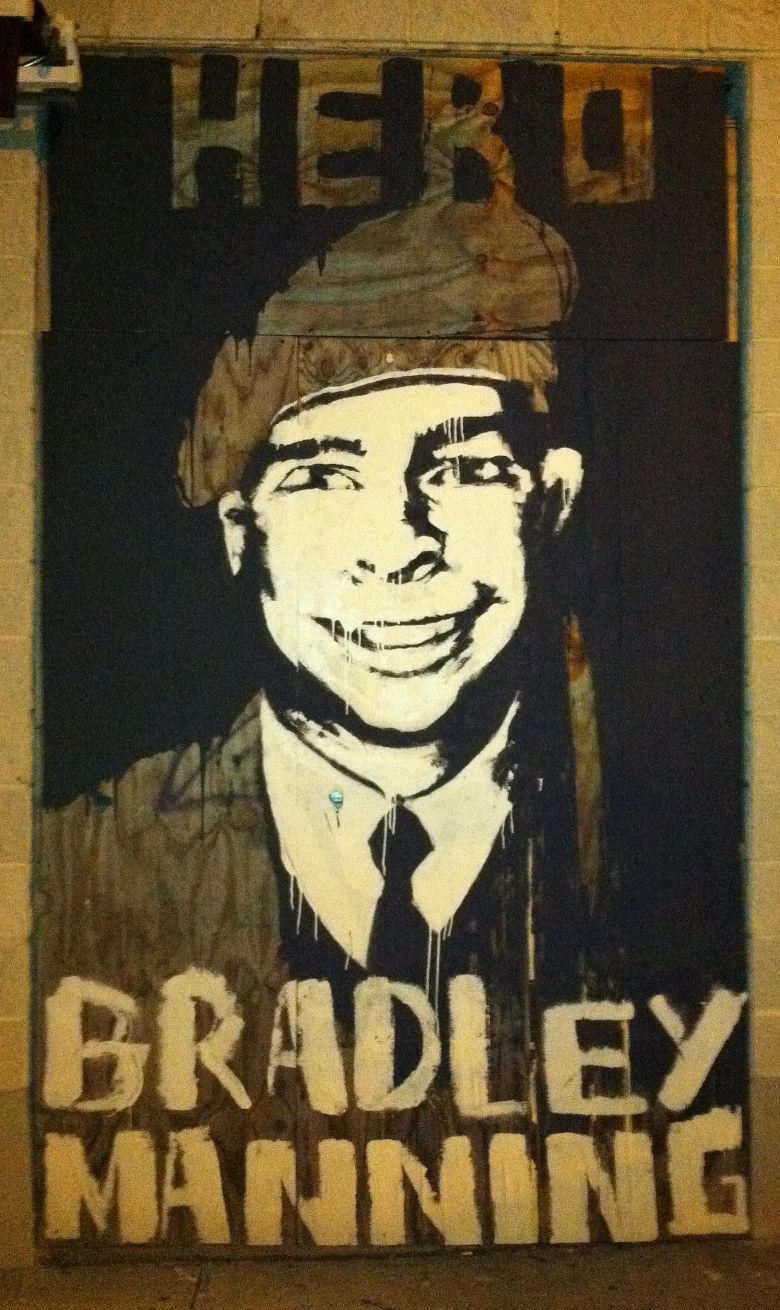
Bradley Manning Is The Guardian's 'Person of the Year 2012'

 Is Bradley Manning a Hero?

PFC Bradley Manning, who is accused of espionage, aiding the enemy, and many, many other offenses, all of which stem from his decision to copy and share tens of thousands of files with Wikileaks, including the now infamous Collateral Murder video (which showed a United States Apache helicopter firing on civilians in New Baghdad in 2007), has been named The Guardian's "Person of the Year" for 2012, with 70% of the vote by readers of The Guardian.
WikiLeaks releases attributed to Bradley Manning have provided unparalleled access to important facts.

Revealing covert crimes in Iraq and Afghanistan and corporations' pervasive influence in governance, this window into the realities of modern international relations has changed the world for the better. While some of these documents may demonstrate how much work lies ahead in terms of securing international peace and justice, they also highlight the potential of the internet as a forum for citizens to participate more directly in civic discussion and creative government accountability projects.
Last week, PFC Bradley Manning offered to accept responsibility for releasing classified documents as an act of conscience – not as charged by the US military (espionage, aiding the enemy, etc.).

I think he is a good choice, not that there aren't dozens of good choices each year. It takes an incredible amount of courage to risk one's life in the interests of  disclosing military and government corruption.

In an effort to break him, he was subjected to nearly a year in solitary confinement against the recommendations of mental health professionals. The argument that he was a suicide risk was refuted in the testimony of three psychiatrists at Quantico, while his personal counselor (Gunnery Sergeant (GYSGT) Blenis) recommended that he be kept on suicide watch (POI), which requires isolation and removal of personal items (at the same time his counselor told Manning that his behavior was exemplary).
While the government has argued this week that PFC Manning’s harsh holding conditions met brig regulations, the defense continued arguing the unnecessarily severe nature of PFC Manning’s Quantico treatment with testimony from the garrison commander at PFC Manning’s current prison in Ft. Leavenworth, KS, Lt. Col. Dawn Hilton.  At Ft. Leavenworth, Lt. Col. Hilton testified, Bradley Manning was found through psychological interviews and observation to be a medium security prisoner, meaning he was allowed much greater freedom of movement, interaction with other prisoners, as well as an array of personal items.  She continued that at Ft. Leavenworth, Suicide Watch was the status most comparable to POI, and her goal was always to downgrade prisoners from this status as soon as possible, by working with psychological staff.  She testified that if a detainee’s condition was so severe that prison staff was unable to successfully downgrade their status within a few days, she would next work to have them transferred to a psychiatric ward, rather than remain in prison.  Additionally, she testified that all prisoners were allowed at least 1 hour of outside recreation per day, in accordance with American Corrections Association (ACA) standards; for the first 6 months of PFC Manning’s imprisonment at Quantico, he was allowed a mere 20 minutes of sunlight per day.  Unlike the Quantico military brig, the Ft. Leavenworth garrison is accredited as meeting 100 percent of ACA standards.
If you are interested in what was actually released in the Wikileaks documents, there is a document that outlines that major items that the government claims are national security issues, but seem actually to be crimes that they do not want exposed. For example:
  • There is an official policy to ignore torture in Iraq.
  • U.S. officials were told to cover up evidence of child abuse by contractors in Afghanistan.
  • Guantanamo prison has held mostly innocent people and low-level operatives.
  • There is an official tally of civilian deaths in Iraq and Afghanistan.
  • U.S. Military officials withheld information about the indiscriminate killing of Reuters journalists and innocent Iraqi civilians.
  • The State Department backed corporate opposition to a Haitian minimum wage law.
  • The U.S. Government had long been faking its public support for Tunisian President Ben Ali.
  • Known Egyptian torturers received training from the FBI in Quantico, Virginia.
  • The Obama Administration allowed Yemen’s President to cover up a secret U.S. drone bombing campaign.
If you would like to contribute to his defense fund, you can do so here.

Tuesday, July 10, 2012

Chris Hedges - War Is Betrayal: Persistent Myths of Combat


As far as I know, there has not been a formal declaration of war in my lifetime (since 1967). Still, various presidents have sent our military around the planet in a variety of combat missions, most recently to Afghanistan and Iraq. There also has not been a mandatory draft in my lifetime, which has resulted in a military composed of the patriotic (an act of service to the nation) and the poor (those who join to learn a skill or earn money for college, or simply to escape a life of flipping hamburgers).

According to Chris Hedges, in a new article for the Boston Review, the reality is even more harsh:
We condition the poor and the working class to go to war. We promise them honor, status, glory, and adventure. We promise boys they will become men. We hold these promises up against the dead-end jobs of small-town life, the financial dislocations, credit card debt, bad marriages, lack of health insurance, and dread of unemployment. The military is the call of the Sirens, the enticement that has for generations seduced young Americans working in fast food restaurants or behind the counters of Walmarts to fight and die for war profiteers and elites. 
I doubt that Hedges identifies himself with the term, but I'm willing to bet he has been named a Marxist by the rich, mostly-white "ruling class" he so often targets in his articles and books. For him, this is a nation of social class built on wealth and power - the rich (the proverbial 1%) vs. the rest of us.

The poor are those who do the hardest most dangerous work, and that includes military service - of the 25 most dangerous jobs, 99% of those doing them are men, and of those men, my guess is that a fair percentage are from low-income families and from minority families. And now, even women are beginning to enter these fields (especially military service).

Here is some more from Hedge's article, War Is Betrayal: Persistent Myths of Combat:
At the age of ten I was given a scholarship to a top New England boarding school. I spent my adolescence in the schizophrenic embrace of the wealthy, on the playing fields and in the dorms and classrooms that condition boys and girls for privilege, and came back to my working-class relations in the depressed former mill towns in Maine. I traveled between two universes: one where everyone got chance after chance after chance, where connections and money and influence almost guaranteed that you would not fail; the other where no one ever got a second try. I learned at an early age that when the poor fall no one picks them up, while the rich stumble and trip their way to the top.

Those I knew in prep school did not seek out the military and were not sought by it. But in the impoverished enclaves of central Maine, where I had relatives living in trailers, nearly everyone was a veteran. My grandfather. My uncles. My cousins. My second cousins. They were all in the military. Some of them—including my Uncle Morris, who fought in the infantry in the South Pacific during World War II—were destroyed by the war. Uncle Morris drank himself to death in his trailer. He sold the hunting rifle my grandfather had given to me to buy booze.

He was not alone. After World War II, thousands of families struggled with broken men who, because they could never read the approved lines from the patriotic script, had been discarded. They were not trotted out for red-white-and-blue love fests on the Fourth of July or Veterans Day.

The myth of war held fast, despite the deep bitterness of my grandmother—who acidly denounced what war had done to her only son—and of others like her. The myth held because it was all the soldiers and their families had. Even those who knew it to be a lie—and I think most did—were loath to give up the fleeting moments of recognition, the only times in their lives they were told they were worth something.

“For it’s Tommy this, an’ Tommy that, an’ ‘Chuck him out, the brute!’” Rudyard Kipling wrote. “But it’s ‘Saviour of ’is country’ when the guns begin to shoot.”

Any story of war is a story of elites preying on the weak, the gullible, the marginal, the poor. I do not know of a single member of my graduating prep school class who went into the military. You could not say this about the high school class that graduated the same year in Mechanic Falls, Maine.
This was true, in its own way, in my own high school.

Only none of us were wealthy. The only true wealth in rural Southern Oregon was intelligence and hard work, our ticket to college. For others, especially the young men, it was a life in the timber mills (a life that dried up not long after we graduated) or spend a few years in the military to earn money for college or learn a trade.


Hedges can be prone to more than a little hyperbole, but this article is pretty spot on. Read the whole thing.

But before you go read the article (and I hope you do), here is one last passage that gets the point across in case you choose not to click through:
War comes wrapped in patriotic slogans; calls for sacrifice, honor, and heroism; and promises of glory. It comes wrapped in the claims of divine providence. It is what a grateful nation asks of its children. It is what is right and just. It is waged to make the nation and the world a better place, to cleanse evil. War is touted as the ultimate test of manhood, where the young can find out what they are made of. From a distance it seems noble. It gives us comrades and power and a chance to play a bit part in the great drama of history. It promises to give us identities as warriors, patriots, as long as we go along with the myth, the one the war-makers need to wage wars and the defense contractors need to increase their profits.

But up close war is a soulless void. War is about barbarity, perversion, and pain. Human decency and tenderness are crushed, and people become objects to use or kill. The noise, the stench, the fear, the scenes of eviscerated bodies and bloated corpses, the cries of the wounded all combine to spin those in combat into another universe. In this moral void, naïvely blessed by secular and religious institutions at home, the hypocrisy of our social conventions, our strict adherence to moral precepts, becomes stark. War, for all its horror, has the power to strip away the trivial and the banal, the empty chatter and foolish obsessions that fill our days. It might let us see, although the cost is tremendous.

Monday, May 28, 2012

Happy Memorial Day - Perspectives . . . .


According to Wikipedia, Memorial Day was originally known as Decoration Day (because people had begun decorating, both during and after the Civil War, the graves of family members who had been killed):
On May 5, 1868, in his capacity as commander-in-chief of the Grand Army of the Republic - the organization for Union Civil War veterans - Logan issued a proclamation that "Decoration Day" should be observed nationwide.[14] It was observed for the first time on May 30 of the same year; according to folklore, the date was chosen because it was not the anniversary of a battle.[15]

Events were held in 183 cemeteries in 27 states in 1868, and 336 in 1869. The northern states quickly adopted the holiday; Michigan made "Decoration Day" an official state holiday in 1871 and by 1890, every northern state followed suit. The ceremonies were sponsored by the Women's Relief Corps, which had 100,000 members. By 1870, the remains of nearly 300,000 Union dead had been reinterred in 73 national cemeteries, located near the battlefields and therefore mostly in the South. The most famous are Gettysburg National Cemetery in Pennsylvania and Arlington National Cemetery, near Washington.

The Memorial Day speech became an occasion for veterans, politicians and ministers to commemorate the War - and at first to rehash the atrocities of the enemy. They mixed religion and celebratory nationalism and provided a means for the people to make sense of their history in terms of sacrifice for a better nation. People of all religious beliefs joined together, and the point was often made that the German and Irish soldiers had become true Americans in the "baptism of blood" on the battlefield. By the end of the 1870s much of the rancor was gone, and the speeches praised the brave soldiers both Blue and Gray. By the 1950s, the theme was American exceptionalism and duty to uphold freedom in the world.
Over the decades, Memorial Day became a national holiday and a community celebration of our military and its fallen heroes. "Taps" is the somber traditional song played in Memorial Day events:
More…
Taps as played on the bugle by the United States Army Band
While I appreciate the need and the desire to honor those who have served and died for their country, today I want to offer a slightly different perspective - one that I have only come to over the past 15 years or so. Additionally, in the pictures I am including in this post, I want to highlight the humanity of these men and women in such inhumane circumstances.


When I was young (teens and twenties) I tended to think of soldiers as brain-washed kids whose souls had been removed in basic training so that they could be made into efficient killing machines (think of the basic training part of Full Metal Jacket). Maybe part of that view was shaped by my father's insistence that I follow the family tradition and join the Navy or the Marines (all males on my dad's side have done this as far back as anyone knows), and my sense of relief (yes, I mean this) when he died before I had to make the choice to do as he wanted and be miserable, or refuse and be rejected as a wuss and a coward.

I was not cut out to be military. I knew that as a child, and my life has born out that instinct.

But I know now that the men and women who serve are often horrified by the things they have to do in combat, and with a few exceptions (those who are not mentally well), killing is the last thing they want to do. Some studies have shown that during WWII and earlier wars, as many as 80% of soldiers did not fire their weapons in combat situation (these numbers come from U.S. Army Brigadier General S.L.A. Marshall, whose methods and veracity have been challenged). Marshall felt that the soldiers simply could not take another life - and, as draftees, they had not been trained to do so.

By Vietnam that had changed, with up to 95% firing in combat situations. Part of the reason this changed was due to the training they received (from Greater Good, by Lt. Col. Dave Grossman):
Since World War II, a new era has quietly dawned in modern warfare: an era of psychological warfare, conducted not upon the enemy, but upon one’s own troops. The triad of methods used to enable men to overcome their innate resistance to killing includes desensitization, classical and operant conditioning, and denial defense mechanisms.
__

By the time a soldier does kill in combat, he has rehearsed the process so many times that he is able to, at one level, deny to himself that he is actually killing another human being. One British veteran of the Falklands, trained in the modern method, told Holmes that he “thought of the enemy as nothing more or less than Figure II [man-shaped] targets.”

There is “a natural disinclination to pull the trigger… when your weapon is pointed at a human,” says Bill Jordan, a career U.S. Border Patrol officer and veteran of many gunfights. “To aid in overcoming this resistance it is helpful if you can will yourself to think of your opponent as a mere target and not as a human being. In this connection you should go further and pick a spot on your target. This will allow better concentration and further remove the human element from your thinking.”
As it turns out, however, killing people carries a cost to those who do so. The numbers are alarming, with between 18 and 54 percent of the 2.8 million soldiers who did tours of duty in Vietnam suffering from post-traumatic stress disorder (PTSD) These numbers are significantly higher than previous wars. A 1988 study (Jeanne and Steven Stellman at Columbia University), the first one to look at the environmental influence on PTSD, found that those most likely to suffer PTSD served in high intensity combat situations (again from Greater Good):
These veterans suffer far higher incidence of divorce, marital problems, tranquilizer use, alcoholism, joblessness, heart disease, and ulcers. As far as PTSD symptoms are concerned, soldiers who were in noncombat situations in Vietnam were found to be statistically indistinguishable from those who spent their entire enlistment in the U.S.
The PTSD rates seems to be even higher now (and we may not know the full extent of the problem until 5 or 10 years after these wars are over) - but the walls between the soldiers who carry this wound and getting some help are often daunting.


During the Bush administration, the VA was directed to significantly reduce its diagnoses of PTSD, an order that was overturned by Obama. But the challenges to getting service remain, not least of which is the shortage of social workers (the VA does not yet hire counselors, marriage and family therapists, or licensed substance abuse counselors, despite regulations having been changed to include counselors and other masters level therapists).

According to this 2010 article from the American Observer:
Members of Iraq Veterans Against the War . . . . On the anniversary of the start of the war in Afghanistan the veteran's group declared its aim to halt the redeployment of soldiers with psychological health problems like post-traumatic stress disorder , traumatic brain injuries and military sexual trauma.

Veterans describe various institutional challenges that lie along two fronts—getting soldiers the treatment and time to heal, but first, simply ensuring that soldiers who suffer from trauma are identified. They attribute the challenges to stigma, inadequate screening, insufficient resources, and ultimately the military, whose ultimate goal is returning service members to active duty.
You can listen to one soldier's story, that of Matt Southworth:
Listen to Matt Southworth talk about his experience
Top officials in the VA, as late as 2009/2010, do not even believe PTSD is a legitimate diagnosis. Deputy Assistant Secretary for Policy at the VA, Michael McLendon, was quoted in a Boston Review (Nov/Dec 2009) article as follows:
[PTSD] is not a diagnosis based on empirical evidence, but rather . . . it is an artificial construct erected by a vote of selected psychiatrists. This does not mean that there are not problems that certain individuals do have [and] issues that need to be addressed. But rather, it means that we have created policies and programs that have not served veterans well.
This lack of support is part of the problem. More than any other group, the military should understand the psychological cost of killing. But treating PTSD takes time and that costs money when veterans are involved. Part of why Bush and the VA wanted to minimize the numbers of soldiers coming back from Iraq and Afghanistan with PTSD was that it was adding up to a lot of money. It's much easier to deny their symptoms, give them a collection of medications (Alternet, 2010) that amounts to a chemical straightjacket [Paxil (an antidepressant), Klonopin (a mood stabilizer), and Seroquel (a controversial anti-psychotic drug)], and send them back for another tour of duty.

Medications can be necessary for some survivors, but individual and/or group therapy is even more important. Returning for another tour of duty is NOT a good clinical choice, even if it seems to be a good financial choice on paper (retraining a soldier lost to PTSD can be very expensive - but we ask them to serve as volunteers, and promise to take care of them, so spend the damn money to train someone else, and spend the damn money to help the soldier with PTSD).

The lack of real or perceived social support is often part of the problem.

In a 2003 study from Karestan C. Koenen (VA Boston Healthcare System and Boston Medical Center), Jeanne Mager Stellman and Steven D. Stellman (Columbia University), and John F. Sommer Jr. (The American Legion), conducted over a 14-year period with Vietnam veterans, the key to recovery from PTSD is perceived social support.
High combat exposure, perceived negative community attitudes at homecoming, minority race, depression symptoms at Time 1, and more anger at Time 1 predicted a more chronic course. Community involvement at Time 1 was protective and associated with decreased risk at Time 2. Discomfort in disclosing Vietnam experiences was associated with an increased risk for developing PTSD but did not predict its course. Combat exposure predicted PTSD course more strongly than any other risk factor. Findings suggest recovery from PTSD is significantly influenced by perceived social support.
Social support is exactly what the Vietnam vets did not get. I recently spoke with a 73-year-old veteran of that war, who had served in a combat role, who said, with sadness and some tears, that no one had ever thanked him for his service to his country - not family, not friends, and not co-workers. He said that experience made him bitter and hurt him deeply.

Things have shifted in the last couple of decades. Many Americans opposed both Gulf Wars and the war in Afghanistan, but even among far left liberals the slogan was, "Hate the War, Love the Soldier."


So on this memorial day, let us praise the fallen, those who gave their lives for their country, but let us also love the men and women who have returned from any and all of our wars with psyches broken by the horrors they have seen and committed. No person should have to carry that burden alone, or in silence.

Where the government is failing these walking casualties of war, let us take the lead and give them the social support that can make the difference between a lifetime of suffering or the promise of healing and a return to a life in the world, not apart from it, an outsider in one's own home and country.

These men and women have paid a deep price in service to their country, our country, we owe them some compassion and some support.


Want to help?  
(inclusion of listing here does not imply endorsement) 
  • Soldier's Best Friend is non-profit dedicated to providing "United States military veterans suffering from Post Traumatic Stress Disorder (PTSD) or Traumatic Brain Injury (TBI) with a trained Service or Therapeutic Companion Dog, most of these dogs of which will be rescued from local shelters."
  • VA Voluntary Service - Volunteer to help care for wounded veterans.
  • Angels of Mercy / No Soldier Left in Need - Donate clothes to wounded soldiers returning stateside, or donate to long-term rehabilitation programs.
  • Wounded Warriors Fund - Donates everything from phone cards to TVs to wounded soldiers.
  • Adopt A US Soldier -  “Adoption” is as easy as writing letters or as involved as sending care packages. 
There are also many other ways to help.


Wednesday, May 23, 2012

Masculinity Movies Reviews Shutter Island


Speaking of movies (see the previous post below), Masculinity Movies has posted a review of Shutter Island, an excellent psycho-horror homage to film noir with Leonardo DiCaprio in the lead role, along with Mark Ruffalo, Max von Sydow, and Ben Kingsley - and directed by Martin Scorsese. This is a classic style suspense drama with clues and confusion and twists, lots of rising tension, and all leading to one climactic scene. A feminist critic might see this as a typically male plot structure.

Here is a plot summary from IMDb:
It's 1954, and up-and-coming U.S. marshal Teddy Daniels (DiCaprio) is assigned to investigate the disappearance of a patient from Boston's Shutter Island Ashecliffe Hospital. He's been pushing for an assignment on the island for personal reasons, but before long he wonders whether he hasn't been brought there as part of a twisted plot by hospital doctors whose radical treatments range from unethical to illegal to downright sinister. Teddy's shrewd investigating skills soon provide a promising lead, but the hospital refuses him access to records he suspects would break the case wide open. As a hurricane cuts off communication with the mainland, more dangerous criminals "escape" in the confusion, and the puzzling, improbable clues multiply, Teddy begins to doubt everything - his memory, his partner, even his own sanity.
This is a "user review," and the user in question is Paul Miller, a consultant psychiatrist & psychogeriatrician trained in Northern Ireland with a special interest in the effects of trauma on people - including miscarriages of justice.


Published: May 23, 2012

Shutter Island Synopsis

Drama set in 1954, U.S. Marshal Teddy Daniels is investigating the disappearance of a murderess who escaped from a hospital for the criminally insane and is presumed to be hiding nearby. This movie has an amazing twist at the heart of it and you may wish to watch it BEFORE reading this. However, you will want to watch it again.

Genre: Thriller
Production year: 2010
Director: Martin Scorsese
Male actors: Leonardo DiCaprio, Mark Ruffalo, Ben Kingsley

"Denial is Not a River in Egypt"

Past Traumas

Teddy Daniels - the US Marshall - is a troubled man who has returned from WWII having seen the horrors of the holocaust in the Nazi death camps. Pierre Janet (30 May 1859 – 24 February 1947) IMHO the true father of psychotherapy coined the words ‘dissociation’ and ‘subconscious’. He stated that traumatic memories were stored differently in the brain to normal memories and this is now been proven with modern scanning techniques. Essentially traumatic memories are relived rather than re-experienced. He was one of the first people to draw a connection between events in the subject's past life and his or her present day trauma. This is what we see Teddy experiencing in the movie. 

Go read the whole review.

Friday, November 18, 2011

Real Warrior Profile - Major Ed Pulido

When we hear about soldiers wounded in battle in Iraq or Afghanistan, we tend to hear mostly about the ones who have recovered from frightening injuries and seem to have found a sense of peace with their new lives.

We hear less often about those men (and women) who recover from their physical wounds but struggle with the emotional and psychological wounds, with PTSD. The Real Warrior series looks at some of those men and women.

Channel N, from Psych Central, posted this particular video, which is how I learned about the project.

A Real Warrior

By SANDRA KIUME


Major Ed Pulido


A US Army veteran describes what it was like to experience a severe blast injury in the Iraq war that affected him both physically and psychologically. 17 surgeries and many months in hospital saved his body, but it took more than that to heal from PTSD that also resulted. Now retired, he works to inspire others to seek help. The military media campaign Real Warriors profiles a series of veterans who suffered from PTSD and demonstrated the strength to seek assistance in recovery.


See all the videos here.


Visit Real Warriors Web Site

Producer: Real WarriorsFeaturing: Maj. Ed Pulido
Format: FlashDate: 03/08/10
Length: 00:06:01
Video Link:
http://youtu.be/8HA1YGvEyiU