We Are Not Living in a Feminized Atmosphere - We've Just Made Life Harder If You're an Asshole
By Ben Collins on January 13, 2014
Fox News’ Brit Hume knows why all you peons are lapping up this Chris Christie Bridgegate story. It’s not because Christie’s administration made his constituents’ commutes a living hell solely over a petty political grudge that no average person had anything to do with.
No, it’s because you’re all a bunch of fairies who need to do some lifting, stat.
Punch yourself in the face and listen up, sissies:
Well, I would have to say that in this sort of feminized atmosphere in which we exist today, guys who are masculine and muscular like that in their private conduct, kind of old fashion tough guys, run some risk.I mean that men today have learned the lesson the hard way—that if you act like a kind of an old fashioned guy’s guy, you’re in constant danger of slipping out and saying something that’s going to get you in trouble and make you look like a sexist or make you look like you seem thuggish or whatever. That’s the atmosphere in which he operates. This guy is very much an old fashioned masculine, muscular guy, and there are political risks associated with that. Maybe it shouldn’t be, but that’s how it is.There is no grander American past where you went to the store and fought the clerk fair and square for a jug of milk. That era did not exist. Not everybody lined up red rover-style and snapped at one another to assert dominance until a fist/knifefight broke out. That was West Side Story, and West Side Story is a musical where they would only stop stabbing each other to dance, and we’re not even going to get into the gender politics of that.
Even back in the days of the venerated/since-bastardized-into-something-unrecognizable Founding Fathers, everybody wore wigs to hide their crippling insecurities brought upon largely by syphilis. Have you seen John Hancock's signature? Alexander Hamilton’s pen name in the Federalist Papers was “Glory Hole Johnson.” (Okay, that one's a joke.)
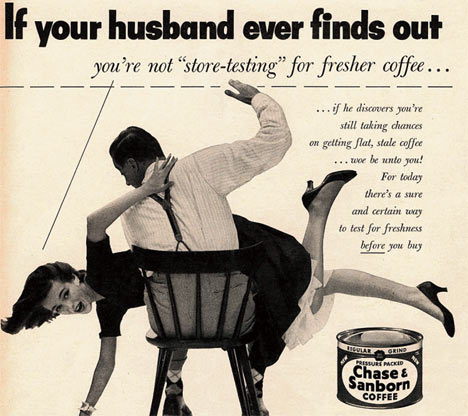
Maybe Brit Hume is thinking of the beautiful 1950s, where if your wife didn’t smell coffee before bringing it home from the supermarket, even advertisements would implore you to beat the living shit out of her until she figured it out. This was basically a cottage industry.
Just to get on the record for this one: That era was worse. Rhetorically, that was a bad time.
Not only is being an asshole an undesirable and unnecessary trait — one that's counterintuitive to getting stuff done and leading a beneficial life — it’s also not why Chris Christie is catching hell.
The media has latched onto this story — this unbelievably boring story about traffic, by the way, which is the world’s sleepiest subject — because this is the definitive role of the press in America: To out precisely this kind of corruption before somebody like this runs for president.
But while we’re at it, remember: The only thing less manly than acting like a tough guy is inquiring where all of the tough guys went, to an audience of nobody.
Showing posts with label government. Show all posts
Showing posts with label government. Show all posts
Wednesday, January 15, 2014
The U.S. Is Not a "Feminized Atmosphere" - Life Is Just Getting Harder If You're an Asshole
Fox News' Brit Hume is an asshat. He argued the other day that Chris Christie's bridge blocking scandal is just a man being a good old fashioned man, you know, an asshole, and that he is only in trouble because America is too feminized. Via Esquire.


Friday, October 25, 2013
Actor/Comedian Russell Brand Calls for Global Political Revolution on the BBC

Russell Brand calls for global political revolution on the BBC
Damn Straight!
I've always enjoyed Russell Brand's comedy when he was not being raunchy - like Eddie Izzard, he has the ability to use his intelligence in his comedy in a way that might limit his audience (although no one is as good as Izzard).
In the last year or two, Brand has been putting his intelligence and progressive political views on display in his own television show, Brand X with Russell Brand. His 2012 conversation with the Dalai Lama at a youth event went viral (His Holiness stole the laughs).
In a new video that has gone Super Viral, Brand has declared his vision for a revolution, a global political revolution that is necessary because we now have a ruling class that is only concerned with maintaining their power and wealth, not serving the people.
Brand has a foundation, as the child of a messed up family, for his progressive political views, despite the fact that he is now a wealthy man. He has not forgotten where he came from and he is able to see the corruption that supports a small elite class and a large underclass . . . because he comes from the underclass. Here is some of his background from Wikipedia:
Russell Edward Brand was born in Grays, Essex, England. He is the only child of photographer Ronald Henry Brand and Barbara Elizabeth Nichols.[4] Brand's parents divorced when he was six months old, and he was raised by his mother. He has described his childhood as isolated and lonely.[5] When he was seven, a tutor sexually abused him.[6] When Brand was eight, his mother contracted uterine cancer and then breast cancer one year later.[7] While she underwent treatment, Brand lived with relatives.[7] When he was 14, he suffered from bulimia nervosa. When he was 16, he left home because of disagreements with his ill mother's live-in partner.[7] Brand then started to use illegal drugs such as cannabis, amphetamines, LSD, and ecstasy.[7]
In an interview on National Public Radio's Weekend Edition Saturday, Brand says he had a strange relationship with his father, whom he saw sporadically and who took him to visit prostitutes during a trip to the Far East.[8]
___
Brand has been a vegetarian since the age of 14[67] and a vegan since October 2011.[68] He dresses in a flamboyant bohemian fashion, describing himself as looking like an "S&M Willy Wonka".[69] He has been diagnosed with attention deficit hyperactivity disorder and bipolar disorder.[70] He has also suffered from bulimia[67] and went through a period of self-harming.[71] Brand has shown interest in the Hare Krishna Movement and chants the Hare Krishna mantra for drug rehabilitation.[72] During an interview with Ellen DeGeneres on her show in October 2010, Brand talked about his love of Transcendental Meditation.[73][74][75]Two key quotes from the interview on BBC:
“The planet is being destroyed, we are creating an underclass, we're exploiting poor people all over the world and the genuine, legitimate problems of the people are not being addressed by our political class.”
___
“By spiritual I mean the acknowledgement that our connection to one another and the planet must be prioritised.”
“The revolution of consciousness is a decision, decisions take a moment. In my mind the revolution has already begun.”
He demonstrates here a progressive perspective and a certain degree of naivete, which is probably necessary for one to become the spokesperson for a revolution. There is also the evidence here of his spiritual practices. Here is a quote from the beginning of that essay:
I have never voted. Like most people I am utterly disenchanted by politics. Like most people I regard politicians as frauds and liars and the current political system as nothing more than a bureaucratic means for furthering the augmentation and advantages of economic elites. Billy Connolly said: “Don’t vote, it encourages them,” and, “The desire to be a politician should bar you for life from ever being one.”
I don’t vote because to me it seems like a tacit act of compliance; I know, I know my grandparents fought in two world wars (and one World Cup) so that I’d have the right to vote. Well, they were conned. As far as I’m concerned there is nothing to vote for. I feel it is a far more potent political act to completely renounce the current paradigm than to participate in even the most trivial and tokenistic manner, by obediently X-ing a little box.
Total revolution of consciousness and our entire social, political and economic system is what interests me, but that’s not on the ballot. Is utopian revolution possible? The freethinking social architect Buckminster Fuller said humanity now faces a choice: oblivion or utopia. We’re inertly ambling towards oblivion, is utopia really an option?
Read his full commentary (4,500 words) on a revolution in consciousness at the New Statesmen.
Russell Brand Calls for Global Political Revolution on the BBC
By Dell Cameron on October 24, 2013
Russell Brand wants to launch a global political revolution or, at least, instigate one.
During a Thursday night interview on the BBC’s Newsnight, the actor and comedian told Jeremy Paxman that traditional political structures should be razed, since they’ve consistently failed to respond to vital global economic and environmental issues.
On YouTube, the BBC promoted the video as if it were a boxing match, “Paxman vs Brand.” If so, Brand scored an easy knockout.
Earlier this week, political magazine New Statesman appointed Brand as a guest editor. He used the opportunity to published a 4,500 word essay that uses the word “revolution” 12 times.
In the piece, Brand says that he doesn’t vote and claims he never has.
“Like most people I am utterly disenchanted by politics. Like most people I regard politicians as frauds and liars and the current political system as nothing more than a bureaucratic means for furthering the augmentation and advantages of economic elites,” he writes.
When Paxman asked if he was advocating revolution, Brand explained, “The planet is being destroyed, we are creating an underclass, we're exploiting poor people all over the world and the genuine, legitimate problems of the people are not being addressed by our political class.”
During the broadcast, Paxman seemed genuinely perplexed as to how Brand could make such strong political statements, given his non-existant voting record, and accused Brand of being "trivial."
Brand responded, “It’s not that I’m not voting out of apathy, I’m not voting out of absolute indifference and weariness and exhaustion from the lies, treachery, deceit of the political class that has been going on for generations.”
When asked what his ideal political system would look like, Brand admitted he didn’t have all the answers, but he quickly shot off a list of reasonable qualifications: “Shouldn’t destroy the planet; shouldn’t create massive economic disparity; shouldn’t ignore the needs of the people.”
More specifically he called it a “Socialist-egalitarian system based on the massive redistribution of wealth, heavy taxation of corporations and massive responsibility for energy companies… exploiting the environment.”
“Do you see any hope?” Paxman asked Brand at the end of their interview.
“Totally. There’s going to be a revolution. It’s totally going to happen.” Brand responded.
In the New Statesman, Brand declares his allegiance to the leftist political ideologies and attacks conservatism, “The right has all the advantages, just as the devil has all the best tunes. Conservatism appeals to our selfishness and fear, our desire and self-interest; they neatly nurture and then harvest the inherent and incubating individualism.”
But, he also claims the “solution” must also be spiritual, something he admits is often at odds with leftist principles. He explains, “By spiritual I mean the acknowledgement that our connection to one another and the planet must be prioritised.”
“The revolution of consciousness is a decision, decisions take a moment. In my mind the revolution has already begun.”
The Newsnight interview was not the first time Brand has drastically overmatched the hosts of a news program. In June, he made headlines for excoriating the gang on MSNBC's "Morning Joe," in an appearance the Washington Post called "devastating."
Photo via Russell Brand (Remix by Dell Cameron)

Saturday, March 30, 2013
Wikileaks: The Forgotten Man (Private Bradley Manning)
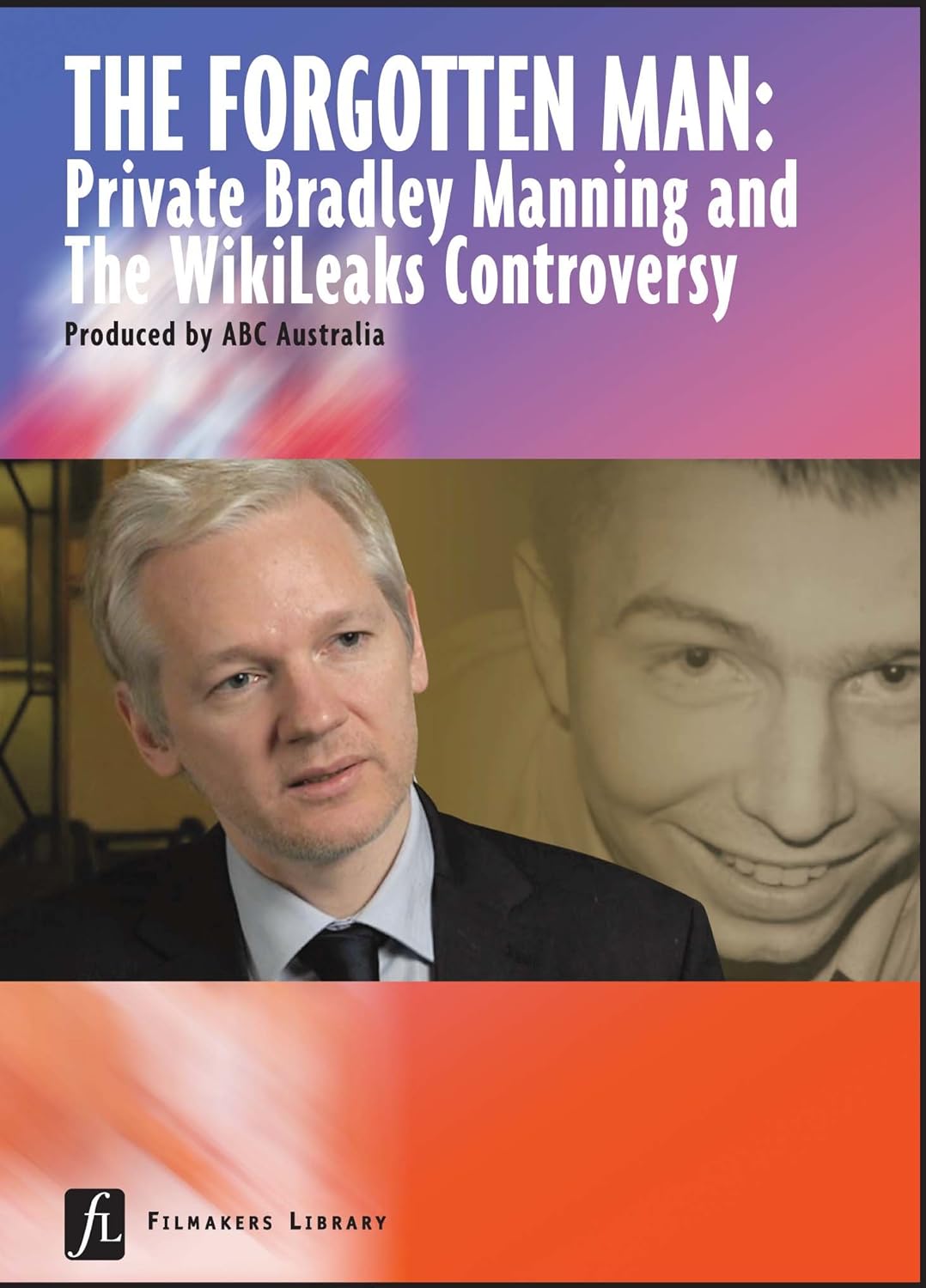
Private Bradley Manning is clearly the most interesting and important figure in the WikiLeaks controversy, but the media has been obsessed with WikiLeaks publsiher Julian Assange. Currently, Manning is wasting away in solitary confinement, with David House being one of the small number of civilians allowed to see him.
House describes the young soldier's mental deterioration and his struggle to deal with long hours of solitary confinement, often without clothing. "The US Government is just trying to put immense pressure on him in order to get him to crack open.
A lot of people see Manning as a hero - a young man who was appalled by the things he saw happening (including war crimes and violations of the Geneva Conventions) in Iraq and decided that the American people should know what their government is doing. Others see him as a traitor who deserves nothing less than conviction and execution for treason.
What do you think?
The film includes interviews with Julian Assange, former military analyst Daniel Ellsberg, former WikiLeaks spokesperson Daniel Dmosceit-Berf, Manning supporter David House, hacker Adrian Lamo, and New York Times Washington Bureau Chief Dean Baquet.
WIKILEAKS: THE FORGOTTEN MAN
Private Bradley Manning is the man United States authorities allege stole classified military files, providing them to WikiLeaks for publication.
While WikiLeaks founder Julian Assange battles to avoid extradition from the United Kingdom to Sweden, on the other side of the Atlantic Bradley Manning is facing a court martial. If found guilty Manning could spend the rest of his life in prison.
It’s a case that has all the hallmarks of a spy thriller. Bradley Manning was an American soldier serving in Iraq, when he allegedly downloaded classified military files onto a disk storing Lady Gaga songs. A short time later the authorities arrested Manning and he’s been in a military jail ever since.
Early last year reporter Quentin McDermott told the story of Bradley Manning and the people who’d helped the United States government build a case against him. This film uncovers crucial new elements describing the ferocious battle between hackers and the U.S. government as they pursue Julian Assange and WikiLeaks.
The Forgotten Man also interviews Juan Mendez, the United Nations Special Rapporteur on Torture, about the treatment of Bradley Manning. Mr Mendez says Manning was subjected to cruel, inhuman and degrading treatment during his “excessive and prolonged isolation” at Quantico Marine Corps Base outside Washington.
But one question still remains: will Bradley Manning attempt to avoid a life sentence by turning against Julian Assange?
Tuesday, March 26, 2013
AZ SB 1045 - Discrimination Against TRansgender People and Anyone Who Does Not Identify or Appear as Biologically Male or Female
I received this email today from the Arizona Counselors Association - I have sent a letter to Mr. Kavanagh, who drafted this "strike everything" amendment to Senate Bill 1045 expressing my concerns around legalizing discrimination against anyone who does look or identify as strictly male or female by traditional standards.
If you are a counselor or even a concerned citizen in Arizona, please write to one the representatives below.

If you are a counselor or even a concerned citizen in Arizona, please write to one the representatives below.
Social Justice Action
Transgender SB1045 - No Loo 4U
Re: SB 1045
Who: All Mental Health Professionals
When: ASAP, prior to March 27th 2pm
How To: See Below
Transgender SB1045
No Loo 4U
The Appropriations Committee will be hearing a strike everything amendment tied to SB 1045 proposed by state Representative John Kavanagh. The strike everything amendment is clearly targeting and discriminating transgender individuals and is an affront to civil rights and human rights. The Government Relations/Public Policy Committee and AzALGBTIC of the Arizona Counselors Association are asking that Professional Counselors, Counselor Educators, and Counseling Students write the members of the Appropriations Committee expressing their reasons that they vote "NO" on the Kavanagh Amendment. As counselors, part of our identity is addressing oppression and abuses of power and privilege, this is an opportunity for counselors to practice Social Justice. Please take a few minutes and write to the Appropriations Committee.
This is a link to read the strike out amendment:
http://www.azleg.gov/legtext/51leg/1r/proposed/h.1045jk.pdf
Here are some talking points you can pick and choose from:
There is no problem for this bill to solve. There are no cases of transgender people causing problems in "private" spaces. It is unnecessary and only promotes discrimination. Instead of the government protecting the most vulnerable, this only encourages people to bully them.
This law tries to single out transgender people with targeted discrimination. It serves no purpose but to deny a specific minority with rights others enjoy. Such laws are unconstitutional.
This is fear mongering, a victimization of transgender people. The problem isn't them, it's other people's irrational and unjustified fear. Legislating discrimination against the innocent to satisfy the irrational fears of the privileged is the worst kind of discrimination.
This bill is written with the presumption that transgender people are inherently dangerous and society needs to be protected from them. There is no rational basis for this.
Transgender people are struggling with a recognized medical condition, they face horrible levels of discrimination, and most of them live in poverty. This just encourages people to pick on the weakest among us. This is bullying in law.
Transgender people are the most murdered minority in America. We are the ones who need protection. Others do not need protection from us. Laws like this promote the hate that gets people killed.
Everyone has a gender expression, not just transgender people. This makes it legal to humiliate men for having long hair by forcing them to use a women's room, or degrading women who wear pants by pointing them at the men's room.
This bill in no way addresses physical anatomy, which is what Kavanagh claims it is about. It just characterizes all transgender people as deserving denial of access to all private places.
Last week, Mr. Kavanagh said all transgender people should be in jail. This week he says they should just be degraded and humiliated when trying to use a public restroom. Perhaps next week he will actually get to know one of us and realize that we are just people. You are rushing in and passing laws on something you know nothing about. This is not governance.
This is an inappropriate revision to the law to be coming out of Appropriations. This law has absolutely nothing to do with government expenditure and is nothing but condoning of discrimination in the private sector.
Please send your emails to the members of the Appropriations Committee before 2:00 pm Wednesday, March 27, 2013.
Chairman: John Kavanagh (R) jkavanagh@azleg.gov 602-926-5170
Vice-Chair: Justin Olson (R) jolson@azleg.gov 602-926-5288 https://www.facebook.com/justin.olson.779?fref=ts
Lela Alston (D) lalston@azleg.gov 602-926-5829 https://www.facebook.com/lela.alston.5? fref=ts
Rick Gray (R) rgray@azleg.gov 602-926-5993 https://www.facebook.com/rickgrayaz? fref=ts
Michelle Ugenti (R) mugenti@azleg.gov 602-926-4480 https://www.facebook.com/michelle.rita.ugenti?fref=ts
Paul Boyer (R) pboyer@azleg.gov 602-926-4173 https://www.facebook.com/pauldboyer? fref=ts
Adam Kwasman (R) akwasman@azleg.gov 602-926-5839 https://www.facebook.com/AdamKwasman?fref=ts
Chad Campbell (D) chcampbell@azleg.gov 602-926-3026 https://www.facebook.com/chad.campbell.52687?fref=ts
Stefanie Mach (D) smach@azleg.gov 602-417-3126 https://www.facebook.com/StefanieMachAZ?fref=ts
Thomas Forese (R) tforese@azleg.gov 602-926-5168
Andrew Sherwood (D) asherwood@azleg.gov 602-926-3028 https://www.facebook.com/sherwood.andrew?fref=ts
I would also copy your state Senators and Representative by using the link below to find out who they are:
http://www.azleg.gov/alisStaticPages/HowToContactMember.asp
If you have any questions, please feel free to contact me, Elizabeth Forsyth (elizabeth.forsyth@me.com), or Chad Mosher (chadmosher@gmail.com)
Thank you for your efforts to stand for justice and equality,
Gordon Gray and Elizabeth Forsyth (President of the Arizona Association for Lesbian, Gay, Bisexual, and Transgender Issues in Counseling- AzALGBTIC)
Gordon Gray II
Government Relations/Public Policy Chair
AzALGBTIC Bylaws Chair
Arizona Counselors Association
P.O. Box 38652
Phoenix, AZ 85069
602-300-6198 (Cell)
623-748-9599 (FAX)
gordongray@me.com
Monday, May 28, 2012
Happy Memorial Day - Perspectives . . . .

According to Wikipedia, Memorial Day was originally known as Decoration Day (because people had begun decorating, both during and after the Civil War, the graves of family members who had been killed):
On May 5, 1868, in his capacity as commander-in-chief of the Grand Army of the Republic - the organization for Union Civil War veterans - Logan issued a proclamation that "Decoration Day" should be observed nationwide.[14] It was observed for the first time on May 30 of the same year; according to folklore, the date was chosen because it was not the anniversary of a battle.[15]Over the decades, Memorial Day became a national holiday and a community celebration of our military and its fallen heroes. "Taps" is the somber traditional song played in Memorial Day events:
Events were held in 183 cemeteries in 27 states in 1868, and 336 in 1869. The northern states quickly adopted the holiday; Michigan made "Decoration Day" an official state holiday in 1871 and by 1890, every northern state followed suit. The ceremonies were sponsored by the Women's Relief Corps, which had 100,000 members. By 1870, the remains of nearly 300,000 Union dead had been reinterred in 73 national cemeteries, located near the battlefields and therefore mostly in the South. The most famous are Gettysburg National Cemetery in Pennsylvania and Arlington National Cemetery, near Washington.
The Memorial Day speech became an occasion for veterans, politicians and ministers to commemorate the War - and at first to rehash the atrocities of the enemy. They mixed religion and celebratory nationalism and provided a means for the people to make sense of their history in terms of sacrifice for a better nation. People of all religious beliefs joined together, and the point was often made that the German and Irish soldiers had become true Americans in the "baptism of blood" on the battlefield. By the end of the 1870s much of the rancor was gone, and the speeches praised the brave soldiers both Blue and Gray. By the 1950s, the theme was American exceptionalism and duty to uphold freedom in the world.
While I appreciate the need and the desire to honor those who have served and died for their country, today I want to offer a slightly different perspective - one that I have only come to over the past 15 years or so. Additionally, in the pictures I am including in this post, I want to highlight the humanity of these men and women in such inhumane circumstances.

When I was young (teens and twenties) I tended to think of soldiers as brain-washed kids whose souls had been removed in basic training so that they could be made into efficient killing machines (think of the basic training part of Full Metal Jacket). Maybe part of that view was shaped by my father's insistence that I follow the family tradition and join the Navy or the Marines (all males on my dad's side have done this as far back as anyone knows), and my sense of relief (yes, I mean this) when he died before I had to make the choice to do as he wanted and be miserable, or refuse and be rejected as a wuss and a coward.
I was not cut out to be military. I knew that as a child, and my life has born out that instinct.
But I know now that the men and women who serve are often horrified by the things they have to do in combat, and with a few exceptions (those who are not mentally well), killing is the last thing they want to do. Some studies have shown that during WWII and earlier wars, as many as 80% of soldiers did not fire their weapons in combat situation (these numbers come from U.S. Army Brigadier General S.L.A. Marshall, whose methods and veracity have been challenged). Marshall felt that the soldiers simply could not take another life - and, as draftees, they had not been trained to do so.
By Vietnam that had changed, with up to 95% firing in combat situations. Part of the reason this changed was due to the training they received (from Greater Good, by Lt. Col. Dave Grossman):
Since World War II, a new era has quietly dawned in modern warfare: an era of psychological warfare, conducted not upon the enemy, but upon one’s own troops. The triad of methods used to enable men to overcome their innate resistance to killing includes desensitization, classical and operant conditioning, and denial defense mechanisms.As it turns out, however, killing people carries a cost to those who do so. The numbers are alarming, with between 18 and 54 percent of the 2.8 million soldiers who did tours of duty in Vietnam suffering from post-traumatic stress disorder (PTSD) These numbers are significantly higher than previous wars. A 1988 study (Jeanne and Steven Stellman at Columbia University), the first one to look at the environmental influence on PTSD, found that those most likely to suffer PTSD served in high intensity combat situations (again from Greater Good):
__
By the time a soldier does kill in combat, he has rehearsed the process so many times that he is able to, at one level, deny to himself that he is actually killing another human being. One British veteran of the Falklands, trained in the modern method, told Holmes that he “thought of the enemy as nothing more or less than Figure II [man-shaped] targets.”
There is “a natural disinclination to pull the trigger… when your weapon is pointed at a human,” says Bill Jordan, a career U.S. Border Patrol officer and veteran of many gunfights. “To aid in overcoming this resistance it is helpful if you can will yourself to think of your opponent as a mere target and not as a human being. In this connection you should go further and pick a spot on your target. This will allow better concentration and further remove the human element from your thinking.”
These veterans suffer far higher incidence of divorce, marital problems, tranquilizer use, alcoholism, joblessness, heart disease, and ulcers. As far as PTSD symptoms are concerned, soldiers who were in noncombat situations in Vietnam were found to be statistically indistinguishable from those who spent their entire enlistment in the U.S.The PTSD rates seems to be even higher now (and we may not know the full extent of the problem until 5 or 10 years after these wars are over) - but the walls between the soldiers who carry this wound and getting some help are often daunting.

During the Bush administration, the VA was directed to significantly reduce its diagnoses of PTSD, an order that was overturned by Obama. But the challenges to getting service remain, not least of which is the shortage of social workers (the VA does not yet hire counselors, marriage and family therapists, or licensed substance abuse counselors, despite regulations having been changed to include counselors and other masters level therapists).
According to this 2010 article from the American Observer:
You can listen to one soldier's story, that of Matt Southworth:Members of Iraq Veterans Against the War . . . . On the anniversary of the start of the war in Afghanistan the veteran's group declared its aim to halt the redeployment of soldiers with psychological health problems like post-traumatic stress disorder , traumatic brain injuries and military sexual trauma.Veterans describe various institutional challenges that lie along two fronts—getting soldiers the treatment and time to heal, but first, simply ensuring that soldiers who suffer from trauma are identified. They attribute the challenges to stigma, inadequate screening, insufficient resources, and ultimately the military, whose ultimate goal is returning service members to active duty.
Listen to Matt Southworth talk about his experience
Top officials in the VA, as late as 2009/2010, do not even believe PTSD is a legitimate diagnosis. Deputy Assistant Secretary for Policy at the VA, Michael McLendon, was quoted in a Boston Review (Nov/Dec 2009) article as follows:
[PTSD] is not a diagnosis based on empirical evidence, but rather . . . it is an artificial construct erected by a vote of selected psychiatrists. This does not mean that there are not problems that certain individuals do have [and] issues that need to be addressed. But rather, it means that we have created policies and programs that have not served veterans well.This lack of support is part of the problem. More than any other group, the military should understand the psychological cost of killing. But treating PTSD takes time and that costs money when veterans are involved. Part of why Bush and the VA wanted to minimize the numbers of soldiers coming back from Iraq and Afghanistan with PTSD was that it was adding up to a lot of money. It's much easier to deny their symptoms, give them a collection of medications (Alternet, 2010) that amounts to a chemical straightjacket [Paxil (an antidepressant), Klonopin (a mood stabilizer), and Seroquel (a controversial anti-psychotic drug)], and send them back for another tour of duty.
Medications can be necessary for some survivors, but individual and/or group therapy is even more important. Returning for another tour of duty is NOT a good clinical choice, even if it seems to be a good financial choice on paper (retraining a soldier lost to PTSD can be very expensive - but we ask them to serve as volunteers, and promise to take care of them, so spend the damn money to train someone else, and spend the damn money to help the soldier with PTSD).
The lack of real or perceived social support is often part of the problem.
In a 2003 study from Karestan C. Koenen (VA Boston Healthcare System and Boston Medical Center), Jeanne Mager Stellman and Steven D. Stellman (Columbia University), and John F. Sommer Jr. (The American Legion), conducted over a 14-year period with Vietnam veterans, the key to recovery from PTSD is perceived social support.
High combat exposure, perceived negative community attitudes at homecoming, minority race, depression symptoms at Time 1, and more anger at Time 1 predicted a more chronic course. Community involvement at Time 1 was protective and associated with decreased risk at Time 2. Discomfort in disclosing Vietnam experiences was associated with an increased risk for developing PTSD but did not predict its course. Combat exposure predicted PTSD course more strongly than any other risk factor. Findings suggest recovery from PTSD is significantly influenced by perceived social support.Social support is exactly what the Vietnam vets did not get. I recently spoke with a 73-year-old veteran of that war, who had served in a combat role, who said, with sadness and some tears, that no one had ever thanked him for his service to his country - not family, not friends, and not co-workers. He said that experience made him bitter and hurt him deeply.
Things have shifted in the last couple of decades. Many Americans opposed both Gulf Wars and the war in Afghanistan, but even among far left liberals the slogan was, "Hate the War, Love the Soldier."

So on this memorial day, let us praise the fallen, those who gave their lives for their country, but let us also love the men and women who have returned from any and all of our wars with psyches broken by the horrors they have seen and committed. No person should have to carry that burden alone, or in silence.
Where the government is failing these walking casualties of war, let us take the lead and give them the social support that can make the difference between a lifetime of suffering or the promise of healing and a return to a life in the world, not apart from it, an outsider in one's own home and country.
These men and women have paid a deep price in service to their country, our country, we owe them some compassion and some support.
Want to help?
(inclusion of listing here does not imply endorsement)
- Soldier's Best Friend is non-profit dedicated to providing "United States military veterans suffering from Post Traumatic Stress Disorder (PTSD) or Traumatic Brain Injury (TBI) with a trained Service or Therapeutic Companion Dog, most of these dogs of which will be rescued from local shelters."
- VA Voluntary Service - Volunteer to help care for wounded veterans.
- Angels of Mercy / No Soldier Left in Need - Donate clothes to wounded soldiers returning stateside, or donate to long-term rehabilitation programs.
- Wounded Warriors Fund - Donates everything from phone cards to TVs to wounded soldiers.
- Adopt A US Soldier - “Adoption” is as easy as writing letters or as involved as sending care packages.

Sunday, April 15, 2012
CNN - Rape Victims in Military Given Personality Disorder Diagnosis and Discharged

It is estimated that nearly 1 in 3 female military veterans were victims of rape or sexual assault by their fellow soldiers (Time, March 8, 2010) while serving on active duty. Now it seems that the military, rather than deal with the issue, is blaming victims by diagnosing them with a personality disorder and discharging them.
For those who do not know what this means, it is widely considered (albeit wrongly) that personality disorders are incurable - so giving someone a personality disorder diagnosis (Axis II in the DSM-IV-TR) is labeling them as "crazy." Once this diagnosis is given, it will follow these women for life, impacting their employment options, their insurance costs, and many other areas of their lives, not least of which is their sense of self.
This is fucked up - these women are victimized by their fellow soldiers, then they are further victimized by the patriarchal military system. Adding further insult, dumbass talking heads on networks like Fox News are blaming them as well:
“I think they have actually discovered there is a difference between men and women. And the sexual abuse report says that there has been, since 2006, a 64% increase in violent sexual assaults. Now, what did they expect? These people are in close contact, the whole airing of this issue has never been done by Congress, it’s strictly been a question of pressure from the feminist.”Is this how we should make sense of the violence? Military women should expect to be raped because they are serving in close proximity to men? Men cannot control their beastly sexual urges when they are around women?
She then noted that the budget of the Defense Department’s Sexual Assault Prevention and Response Office increased from $5 million in 2005 to more than $23 million in 2010.
“So, you have this whole bureaucracy upon bureaucracy being built up with all kinds of levels of people to support women in the military who are now being raped too much,” Trotta remarked.
It must be noted, despite the belief that rape is about sex, that most rape is about anger, power, humiliation, or some other motivation (control, revenge, and so on) and is NOT about sex. Please keep that in my mind throughout this post.
Cultural and literary critic Camille Paglia thinks women need to get beyond the feminist idea that men and women are equal (from PBS - Rape: The most intimate of crimes).
In her book, Sex, Art and American Culture, Camille Paglia calls these "somber truths" women must accept. "Feminism keeps saying the sexes are the same," she writes. "It keeps telling women they can do anything, go anywhere, say anything, wear anything. No, they can't. Women will always be in sexual danger." She may be right, but that doesn't necessarily make rape a woman's responsibility.Meanwhile, Gloria Steinem believes we need to stop worrying about who gets raped (aside from being focused on the 18-24 age range, there are few other patterns, and even older women are targets) and start looking at who does the raping:
"We have to stop talking about who gets raped and talk about who rapes. Somebody is doing these things. And we have to identify who they are." Who is that somebody? Why do men rape women? And how do you stop them?When humans lived in a world of physical power, small tribal groups, tenuous survival, and little to no higher cognitive function (such as guilt or empathy), rape may have been a part of life. Or at least that is what the evolutionary psychologists argue, and they contend those same drives are still present in our psychological make-up as a species.
They may be partially correct - rape is more likely when social structures break down in famine, natural disasters, and warfare. To a certain degree, social structure helps reduce violence and enforces norms of behavior.
Further, while we tend to think of primates as more sexually violent, Frans de Waal and other primatologists present very different viewpoints. Barbara Smuts (Discover, Aug. 1995) observes:
Orangutans and chimpanzees are the only nonhuman primates whose males in the wild force females to copulate, while males of several other species, such as vervet monkeys and bonobos (pygmy chimpanzees), rarely if ever try to coerce females sexually. Between the two extremes lie many species, like hamadryas baboons, in which males do not force copulation but nonetheless use threats and intimidation to get sex.
Clearly, this behavior is not common to all primates, and bonobos offer the best example of a culture where male assault never has been recorded - interestingly, we are as closely related to bonobos as we are to chimpanzees.
A unique aspect of bonobo society is that they are a female-dominated species thanks to the network of support that exists between bonobo females. Chimpanzee females are largely isolated from one another, but bonobo females come to one another’s aid. While there may be genetic differences that account for the lack of sexual coercion in bonobos, one important factor is the different environment that promotes these cooperative networks and limits the usefulness of male coercion (see my interview with Frans de Waal for more on this topic). Male bonobos mate more frequently by gaining support from these female networks rather than using sexual coercion as can be found in chimpanzees. Males grow up with this “culture” and observe the older males in their troop emphasize grooming over aggression and then adapt their own behavior in order to maximize their reproductive success.But even among baboons, where sexual violence is common, where the physically dominant male forces females into sexual relations, there is a clear pattern of learned behavior that can be unlearned in a single generation (as related by Robert Sapolsky in his essay “A Natural History of Peace” for the journal Foreign Affairs [pdf here] and cited in Scientific American, July 20, 2011):
Male baboons have been known to viciously maul a female that has rejected their advances and the level of male aggression is strongly correlated with their mating success. However, in a unique natural experiment Stanford primatologist Robert Sapolsky observed what developed when the largest and most aggressive males died out in a group known as Forest Troop (because they were feeding at the contaminated dump site of a Western safari lodge). In the intervening years Forest Group developed a culture in which kindness was rewarded more than aggression and adolescent males who migrated into the troop adopted this culture themselves.Clearly, there is a learned component to this form of behavior that is not inherent in baboon culture. So why are human males still prone to sexual violence - millennia after we have outgrown the conditions that may have supported such behavior - and why does male sexual violence seem worse in the military?
Why doesn't military structure offer some of the same protective structure against rape as civilian culture? Maybe there is something about the military culture that also produces or encourages this behavior? According to U.S. Rep. Jackie Speier (CA), the system is completely broken.
The Department of Defense estimates that more than 19,000 service members were raped or sexually assaulted in 2010. Due to a military culture heavy on retaliation and light on prosecution, only 13.5 percent of the victims report the rape.Rep. Speier says there have been many reports outlining the problems and suggesting changes, but the Pentagon has systematically ignored them.
The system of justice designed to adjudicate cases of rape in the military is in complete shambles. Victims are blamed. Assailants are promoted. Unit commanders - whose promotions are dependent on the conduct and performance of the soldiers they supervise - have an incentive to see that allegations are few and convictions are fewer. As a result, the overwhelming majority of cases get swept under the rug.
This abomination is not new. The Pentagon has largely ignored the recommendations of 18 reports on sexual assault and rape in the military over the past 16 years. As a result, the problem is now worse than ever.
It took four years and the resignation of Defense Secretary Donald Rumsfeld to finally establish a statutorily required commission to investigate reports of sexual misconduct in the military. His successor, Robert Gates, has yet to implement a statutorily required database that would centralize all reports of rapes and sexual assaults in the military.Read the whole article.
It is time for the Pentagon to stop treating legal directives as mere suggestions. And it is time for Congress to abandon its role as a bystander.
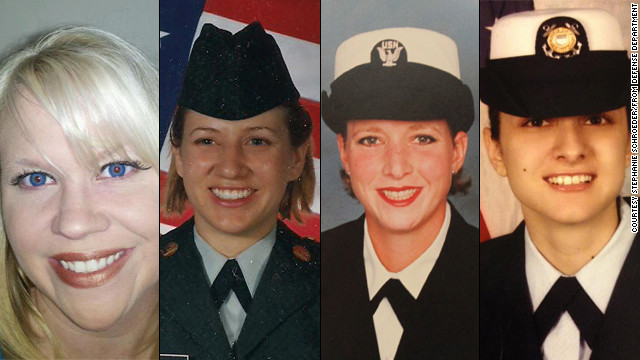

The military has issued a couple of reports that are freely available online:
Friday, October 7, 2011
Notes from the Front Lines - Back Home, and Homeless
This is a first person account of life after the military for a veteran of Afghanistan - homeless, broke, and emotional unstable - 16 months homeless out of the 18 months he has been back in country.
It's incomprehensible top me that we send these young to occupy a foreign country and fight a faceless enemy, then abandon them when they come home with broken minds and hearts.
It's incomprehensible top me that we send these young to occupy a foreign country and fight a faceless enemy, then abandon them when they come home with broken minds and hearts.
Read the whole story.Back Home, and Homeless
By MATT FARWELLMid-June, 2011: I find myself alone in a dark wooded park tucked between million-dollar houses south of Stanford University, looking for a spot in the bushes to stash my bags. Until that morning I’d been living in a cheap weekly-rate motel in Palo Alto. Before checkout, knowing I couldn’t afford the $48 fee for another night, I laid out my stuff on the bed. Over the cigarette burns on threadbare sheets, I scrounged for quarters, dimes and nickels. There was enough for an extra value meal at Taco Bell. I divided everything else I had between three bags; an olive-drab backpack my brother used in the Army Rangers, a black duffel I bought at Goodwill and a satchel for my laptop.This was my life. I was two weeks shy of my 28th birthday, unemployed, broke, thousands of miles from my family, watching the weather forecast to see how uncomfortable sleeping outside would be that night. Whatever the prediction, I could handle it. Four and a half years in the Army, including 16 months as an infantryman in eastern Afghanistan, provided plenty of skills with no legal application in the civilian world. It was, however, wonderful preparation for being homeless.I was searching for a hole in the bushes to hide my bags. They were heavy and awkward, cumbersome to lug around Palo Alto. They clashed with the mishmash of designer bags embroidered with labels from Silicon Valley tech companies that the Stanford kids carried. Walking with them, I stood out, the opening scene of the first Rambo movie cycling through my mind: Sylvester Stallone on the side of the road with a big, green duffel bag slung over his shoulder and blending in with every part of his faded green field jacket except the red, white and blue flag patch, attracts the attention of the sheriff who wants John Rambo and all the bad mojo he carries from Vietnam out of his town. That movie ended badly for Rambo, the sheriff and the town. My life wasn’t a movie and I wasn’t John Rambo, but the same possibilities for a bad ending loomed. I’d learned that fact the only way fools like me learn anything: experience.As infantry on the ground in Afghanistan, we were introduced to the ugliness of violent, unpredictable death. Over the 16 months of our tour, we caused it and we endured it; we grew well acquainted with it. Sometimes I think that we took it back, an invisible scythe-carrying stowaway on board the airplane we took back to the States. How else to explain my friend Michael Cloutier, whose spot-on shooting probably saved my life when our observation post was attacked by Taliban who outnumbered us three to one, dying of a drug overdose a year after we came back?Or the staff sergeant from my former battalion — Second Battalion, 87th Infantry Regiment, Third Brigade, Tenth Mountain Division — who committed suicide by cop on Fort Drum later that year when military police were called to investigate a domestic disturbance? I didn’t know him that well and had already left Fort Drum for a cushy assignment as an assistant in a four-star general’s headquarters, but I wrote the eulogy my old company commander delivered at his funeral.Not too long after that, when my friends in my old unit were rotating back, I started to crack a bit.

Sunday, August 7, 2011
Sarah Seltzer - 5 Shocking Facts About Gender in America

This article appeared on Alternet a month or so ago - one of the facts that I found disturbing was that so many people still think it is okay for a man to hit his wife. Among men AND women, 16% feel it is okay for a man to hit his wife. Assuming a U.S. population of 300 million, that's 48 million people - including women, which boggles the mind.
 With the GOP-waged wars on women, middle-class workers and poor families in full swing and steadily whittling away at women’s status in the US, it’s obvious that we have a long way to go in terms of equality of all kinds. But a new report sheds light on some surprising numbers highlighting that imbalance.
Without the right to abortion, or the ability to prevent and prosecute rape, or the ability to support one’s family, a woman cannot be a full human being, a citizen exercising her rights. This is a given. But did you know that many Americans--16 percent--still think it’s okay for a man to hit his wife? And did you know just how massive the wage gap remains between black and Latina women and white men? What about the fact that until recently, it was almost impossible for native American women to file rape charges if they were assaulted on reservations or that we’re positively the worst “developed” country on parental leave, bar none?
The list goes on, thanks to a recently released global report, “Progress of the World’s Women.(pdf), which focuses on the access to justice of women worldwide. The report comes from the dynamic new group, UN Women. Headed by Michele Bachelet, former president of Chile, the group is hopefully a nascent force for accelerating global gender equity. UN Women has released individualized information on all regions, and the North American fact-sheet (pdf link) highlights some fascinating, surprising and disturbing statistics that background our current climate.
Most importantly, when stacked up to other countries worldwide, the facts show that we’re not some pillar of opportunity for women compared to other countries and regions, but rather saddled with our own major problems. As Flavia Dzodan wrote for Tiger Beatdown, “I think this report does a good job at showing that inequalities and injustices are a global problem and that each region faces a unique set of issues, defined by their socio-political and cultural realities...no region in the world is without serious troubles.” Dzodan also makes the apt point that LGBT issues are absent from the report, which is unfortunate given their frequent close link with gender, race and class inequity. Abortion and reproductive health issues are not included in the US fact sheet, either.
Still, there’s a lot to learn about ourselves here.
Here are five of the most shocking facts from the "Progress Women" report pertaining to the USA, and the way they affect the current climate that can only be described as bleak. Read to the bottom for a few slightly more positive trends.
1. Dogged by Violence. This pervasive inequality extends far beyond the pay gap, threatening the physical and legal safety of women of color, and indeed, all women.
The Dominique Strauss-Kahn case has brought the economic, racial and sexual bias that informs the pursuit of justice in rape and domestic violence cases to the fore. And the numbers found by UN Women back up the way the press has reacted to this high-profile case: “Evidence shows that jurors in the USA are especially likely to question the credibility of African American and Latina female witnesses in rape cases.”
One of the most shocking statistics in the report? The public perception of gender violence as sometimes acceptable, within the context of marriage. This is from the report’s language: “In the USA, 16 percent of women and men agree that it is sometimes justifiable for a man to beat his wife.”
Sure, 16 percent is a fairly standard number for representing the lunatic fringe of American culture, but the fact that these respondents willingly admit they think it’s okay certainly sheds a disturbing light on why violence against women remains widespread: “Prevalence surveys in the USA show that 22 percent of women have experienced physical violence, and 8 percent have been targeted for sexual violence in their lifetimes.”
One other element to these statistics that may be lesser-known is the issue of rape against Native American women, which is astoundingly high. Native American women are more than twice as likely as other women to be raped. One of the things compounding the problem was a confusion over judicial jurisdiction: “Crimes committed by non-Native Americans on reservations often went unpunished, due to uncertainty over which jurisdiction applied. This is thought to have contributed to the high levels of rape of Native American women, Progress shows.“ In other words, a culture of impunity existed.
Last year, UN Women notes, the Tribal Law and Order Act was passed, which hopefully will increase centralized coordination and aid women seeking protection and justice.
2. Persistent Pay Gap. We passed Lily Ledbetter, right? So why is this still an issue? Well, the gender pay gap remains at 23 percent in the USA, according to the new fact sheet from UN Women. If that number isn’t dismaying enough, for African American and Latina women, that gap swells to huge proportions: “On average 39 and 48 percent less than white men, respectively.”
Add what’s happening right now--public workers losing their benefits and their right to collectively bargain, layoffs and festering unemployment-- to that number and you get a level of racial and gender stratification that is staggering.
3. Under-Represented in the Justice System. One of the hindrances to women seeking a fair application of the legal system is a lack of women’s representation in that system's hierarchy. While three female Supreme Court justices are certainly a step in the right direction, even that huge stride gives women disproportionately small representation.
Women are under-represented as prosecutors, judges and police officers throughout North America. Statistics cited by UN Women indicate that “data from 40 countries where women are present in the police, reporting of sexual assault increases.”
4. Packed Prisons. As our ballooning prison-industrial complex--and the drug war that feeds its engines--comes into greater focus, it’s worth remembering the women who are caught in the gears of this incarceration machine. A lesser-known fact about US prisons is that we have one of the highest rates of women’s incarceration in the world, UN Women notes. Adding insult to injury, women in prison “are typically young, have low levels of education and have dependent children. Many have histories of substance abuse and violence.”
These are often the women who need help, not incarceration.
5. Miserable Maternity Leave. The United States is the only--that’s right, the one and only--developed country in the entire world that does not offer paid maternity leave. Yes, under Federal Employment law, there has to be maternity leave. But it doesn’t have to be paid. And, the report notes, “The USA is one of only a few developed countries that do not oblige employers to offer paternity leave, which is proven to help encourage a more equitable division of childcare responsibilities.”
As for free daycare, which the report doesn’t even mention, the sensible idea seems laughable given our current obsession with “austerity” and slashing government programs.
A Few Heartening Numbers
The report did have a few interesting, more positive trends to highlight, a counterweight to the areas lagging so terribly.
* Research shows that since the Violence Against Women Act (VAWA) was passed in the USA in 1994, non-fatal, violent victimizations committed by intimate partners declined by 49 percent.
* Between 1997 and 2010 the proportion of women in the US Congress increased from 11 percent to 17 percent, and a third of ministerial positions are held by women – almost double the world average.
Small steps, but evidence that forward progress is possible.
Read about how we stack up to the world's other regions at progress.unwomen.org
Sarah Seltzer is an associate editor at AlterNet, a staff writer at RH Reality Check and a freelance writer based in New York City. Her work has been published in Jezebel.com and on the websites of the Nation, the Christian Science Monitor and the Wall Street Journal. Find her at sarahmseltzer.com.
Tags:
Subscribe to:
Posts (Atom)