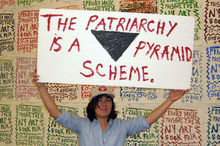
Next Time Someone Says Women Live On A Different Planet, Show Them This.
28th August 2014

http://www.robot-hugs.com/interpretation/
ARCP 11: Gender and Sexuality
This Annual Review of Critical Psychology 11 with a focus on gender and sexuality is formed by a number of articles on diverse themes and theoretical perspectives. This diversity is seen in relation to the themes, approaches and also from papers from different geographical locations (and in different languages). This broad scope allowed for a plethora of perspectives, also pointing to the importance of intersectional work for critical perspectives, hence, the papers considered key social categories in their analysis, such as gender, sexuality, class, race, age and disability, and many of them accounted for intersections of social categories in their analysis.
Contents of ARCP 11
Editorial
Ilana Mountian, Jemma Tosh, Marco Aurélio Máximo Prado and Suryia Nayak
Towards a situated approach to sex/gender identities
Antar Martínez-Guzmán, Marisela Montenegro and Joan Pujol – EN
Consideraciones para un abordaje situado de las identidades de sexo/género
Antar Martínez-Guzmán, Marisela Montenegro and Joan Pujol – ES
Troubling humanity: towards a queer feminist critical psychology
João Manuel de Oliveira, Carlos Goncalves da Costa and Nuno Santos Carneiro – EN
Problematizando a humanidade: Para uma Psicologia Crítica Feminista Queer
João Manuel de Oliveira, Carlos Goncalves da Costa and Nuno Santos Carneiro – PT
The Governance of Gender Non-Conforming Children: A Dangerous Enclosure
Jake Pyne – EN
Touching Race Through Play: Sadomasochism, Phenomenology, and the Intertwining of Race and Sexuality
Ada Demaj – EN
Subjectivation and the Law: Bodily Desire Between Normalization and Subversion
Sonja Buckel and Julia König – EN
Far beyond the rainbow. The constitution of collective identities between civil society and the state
Marco Aurélio Máximo Prado and Frederico Viana Machado – EN
Muito além do arco-íris. A constituição de identidades coletivas entre a sociedade civil e o estado
Marco Aurélio Máximo Prado and Frederico Viana Machado – PT
Pedagogy of the closet: heterosexism and gender surveillance on Brazilian everyday school life
Rogério Diniz Junqueira – EN
A Pedagogia do Armário: heterossexismo e vigilância de gênero no cotidiano escolar brasileiro
Rogério Diniz Junqueira – PT
Performances of a contested body: homo/eroticism and ageing
Fernando Altair Pocahy – EN
Performances de um corpo contestado: homo/erotismo e envelhecimento
Fernando Pocahy – PT
Legislating (lesbian) sexuality: colonial law and post-colonial impact
Dyuti Ailawadi – pronto – EN
The idealized family and discourses about same-sex parenting
Miriam Debieux Rosa and Michele Kamers – EN
A família idealizada e os discursos sobre a Homoparentalidade
Miriam Debieux Rosa and Michele Kamers – PT
The political scope of travestilities: On the transgressive potential of travestis
Julieta Vartabedian – EN
El alcance político de las travestilidades: acerca del potencial transgresor de las travestis
Julieta Vartabedian – ES
On high heels: intertwinings between the art of travestility, becoming-drag queen and self-affirmation
Aureliano Lopes and Anna Paula Uziel – EN
Chest Surgeries of a Different ‘Nature’
T. Garner – EN
The critical intersections of disability and non-normative sexualities in Spain
Paco Guzmán and Raquel (Lucas) Platero – EN
Exploring Ableism and Cisnormativity in the Conceptualization of Identity and Sexuality “Disorders”
Alexandre Baril and Kathryn Trevenen – EN
Gender, Sexuality, and Experience of Disability in Women in Southern Brazil
Marivete Gesser, Adriano Henrique Nuernberg and Maria Juracy Filgueiras Toneli – EN
Gênero, Sexualidade e a Experiência da Deficiência Física em Mulheres no Sul do Brasil
Marivete Gesser, Adriano Henrique Nuernberg and Maria Juracy Filgueiras Toneli – PT
Annual Review of Critical Psychology is an international peer-reviewed online open-access journal (ISSN 1746-739X)

Nicole Daedone is an author, consultant, teacher and entrepreneur in service of bringing a more fulfilling sense of orgasm to the world. Voted one of Vanity Fair’s Twelve Women Who Changed the Way We Look at Sex, Nicole first came to prominence as the leader of the Slow Sex Movement and the innovator of the 15 minute orgasm. Throughout her work, Nicole has expanded the horizons of sexual experience, which has earned her invitations to share the stage as a speaker alongside other luminaries such as Neil Stauss, Tony Robbins, Naomi Wolfe and Esther Perel, as well as inclusion in Tim Ferris’ breakthrough book “The Four Hour Body.” Nicole brings a no-nonsense, empirical approach to the question most of us ask, “How do I have a better sex life?” But much more than that, her life has been spent exploring the impact our full human potential in the arena of sex and what benefits that can bring to not just individuals and couples, but to communities, organizations and societies as a whole. What becomes possible for our lives, our health, our happiness, and our prosperity when we learn to live in a continual state of orgasm? This is the territory Nicole continues to explore today.
- For more about OneTaste and OM, visit www.onetaste.us.
- Nicole’s blog appears at www.nicoledaedone.com
Read the whole article.As Above, So (Very Different) Below: On the Masculine and Feminine
February 2, 2014 | Nicole Daedone

Recently I was reading an article about male-female dynamics that said the number one complaint women have about men is that all guys want is sex. The number two complaint is that he doesn’t even know what he’s doing once he gets there. The man’s number one complaint, for his part, was that women make everything so difficult.
I loved this. Not because I am a fan of the war of the sexes (if there is such a thing) but because it points toward something so much bigger. If we pull back the lens, these very day-to-day complaints start looking like clues in the mysterious game that I like to call “Masculine/Feminine.” Part of me cringes to use those terms. They have been co-opted by a whole lot of people who use them a whole lot differently than I do. So let me be clear. Masculine/Feminine is not a synonym for male/female or man/woman. The latter are rough approximations of a very nuanced truth, the incarnation of masculine/feminine qualities painted with very broad strokes. Man/woman is an impressionist’s version of a water lily; masculine/feminine is the lily itself, with all its uniqueness and subtleties and gradients.
So you can look at the complaints men and women have about each other as clunky approximations of the deeper, more precise, and more relevant forces working in the world. The forces I call “masculine” and “feminine.” Male/female are physical-realm analogues of underlying principles, which are begging to be brought into relationship within each of us. We see in the male/female dynamic the desire for wholeness within ourselves. This article will explore how to bring the two into communication, and to see how to maintain connection.
So, a request. If you look at what follows as being associated directly with men and women, rather than the forces of masculine and feminine that are within all of us, you could easily accuse me of gross generalizations and gender stereotyping. So just don’t do that, okay? When I use “her,” know that I am referring to the feminine within all of us; when I use “him,” the masculine. Thanks in advance for your understanding.
The basic experience of masculine is the desire to act. The masculine force is forward-moving, direct, focused and bright. It is powerful, but it does not generate power. You might think of it as the turbine on a ship; it’s what makes the ship go. It’s the part that is easy to see from the outside but without the coal-fired engine down below, it’s not going anywhere.
The coal-fired engine is the force of the feminine. It is dark, rich, unpredictable, and generative. The feminine is where true power comes from; it is the creative force that fuels the turbine of the masculine so the ship can move forward. Without cooperation between the two, the ship is going nowhere.
Once each of us learns to be at ease in both positions–to go above, where the masculine operates, and below, where the feminine is found, and to understand the customs of each domain within ourselves–we will finally be able to transition out of polarized role-playing (man as “masculine” and woman as “feminine”) and into something infinitely deeper.
* * *
So we’re on the same page: we all have masculine and feminine forces within us, and both need to be activated in order for us to feel whole, complete, catalyzed. Here’s the quandary. To come together, the masculine and feminine must cooperate. They must work together. For starters, both of them need the creative energy of the feminine in order to get into flow. The feminine cannot access her power alone; she needs him to help pull it out of her. It requires a kind of mining, and mining is the masculine’s specialty.
But problems arise right away, for his approach to mining alienates her. She desires gentle coaxing; he seems to bark orders. The feminine feels like she’s getting yelled at from above. To her, he sounds all-knowing, entitled, and demanding. He may be saying, “Let’s go to the store.” But for some reason she hears, “You are incompetent. Why didn’t you go to the store already?”
For his part, the masculine can barely understand a word out of her mouth. Truth is she can’t always put into words what she wants to say. Because words are not a problem for him, he assumes that she is being evasive, dramatic or tricky. He gets frustrated. She gets hurt. He’s just trying to help, and can’t understand why she can’t just take the help he’s offering. Why she can’t get herself into shape.
The feminine has impediments the masculine doesn’t understand. She has flows and rhythms that she needs to answer to. He’s up there looking down, and things look so obvious; just do it, already! She’s down there with gunfire and emotions, saying, “Yeah, you think it’s so easy, you come down here and do it!” She’s the man in the trenches. He’s the general.
Of course she wants his guidance. He has a bigger view from up above. Of course she wants some vision and perspective. But she does not operate in the suggested ways. Not because she is defiant, not because she is oblivious, but because she has a different set of circumstances to contend with.
The other element is that beneath this game, she knows that she holds the power that they both need. He in his position doesn’t understand why she won’t just give it to him. It’s simple enough, from his perspective. Just give it to me and we will both be happy. When she can’t—she just can’t—he perceives it as manipulation, sloth, recklessness. In truth, they are both bound together by the same dilemma. Her sex is power, electricity, fuel. Both want it converted to a usable form, which is what happens when they meet. But he gets frustrated trying to “get it right,” and she gets frustrated because she can’t just “give it away.” He has to earn it.
Her inability to offer well-thought-out, articulate reasons leads him to believe that she is not very smart. So he speaks to her as if she’s stupid, which offends her. After all, she has the power he needs. Should he not treat her with a little more care?
Moreover, isn’t it obvious? If he doesn’t earn it, he won’t respect it. If he doesn’t respect it, he won’t know what to do with it. He will risk wasting it and how will her power and vision be activated in the world without him? So what she is waiting for is a kind of reverence. Not adoration. Simple reverence for what she is carrying inside of her. Reverence slows his impatience, softens his entitlement, adds subtlety to his directness. Then she involuntarily opens. But to the masculine, reverence is humbling. To admit how deeply he desires to serve? To recognize that it will be through surrender rather than force that he will get it? Humbling indeed.
But it is the only way. In fact, both masculine and feminine must surrender to the power of the lower. It is only in this surrender that the power can actually begin to ascend. They are not surrendering to one another; they are surrendering to the power that exists inside of her.
Surrender comes more naturally to her than to him. She is closer to the creative source, and understands how to surrender to it intuitively. This is where we get it all mixed up when we get to the concrete experience of male-female relating. Because the feminine knows the pleasure of surrender, women tend to surrender to the men they love. More aptly said, we abandon ourselves to them in the attempt to surrender enough for two. We try to surrender for both of us. The feminine is formless, so has an easier time tying herself into the shape she thinks she should be in. But desire will not take that which is not offered. So she can attract, entice, seduce—but she cannot surrender for him. For he himself is also standing at the edge of the cliff, asking to be taken with complete abandon. He must offer himself. Only then will he receive the life in which he can become himself. She must do the same, but to the orgasm itself, not the signifier which is the man. Both dive into the same pool together—the pool of feminine, of Orgasm in its truest sense—and from that pool they emerge refreshed.
The Production of Patriarchy
Dec 20 2013
9:00AM

The Great American Gender Debates of 2013
From Supreme Court cases to blockbuster films, these are the narratives on sex and gender that dominated the news this year.
Heather Horn and Svati Kirsten Narula | Dec 17 2013
Some of the biggest stories and debates in the media in 2013 had to do with gender relations—LGBT rights, women in the workplace, parenting styles, and more. Same-sex marriage gained more approval and legitimacy than ever this year, both in public opinion polling and as a matter of federal law. Sheryl Sandberg told women to "lean in" at the office, while the military told women they were now permitted to "lean in" on the battlefield. Bradley Manning became Chelsea Manning. And researchers offered up interesting new studies for individuals seeking a happy home life.
Here are our picks for the most interesting narratives about sex and gender in 2013.
Gay Marriage Starts to Influence Straight Marriage
On June 26, the Supreme Court struck down the Defense of Marriage Act, which had denied federal benefits to gay couples legally married in their states. In The Atlantic’s June cover story, Liza Mundy argued that gay marriage has the potential to change straight marriage—for the better. Mundy pointed to research showing higher rates of satisfaction in same-sex unions. Same-sex partnerships, researchers quoted in the piece suggested, may finally shed light on an old question: How much of the conflict we’ve come to see as inherent in heterosexual marriage is about marriage, and how much of it is about gender roles? Same-sex couples often have different approaches to handling chores, childcare, and intimacy, Mundy noted. Maybe straight couples have something to learn.
Intriguingly, however, it appears there’s one area where gay marriage is reinforcing traditional norms: name-changing.
Marissa Mayer Shakes Up the Work-Life Debate
 "Marissa Mayer is a CEO first and a woman second," wrote Anne-Marie Slaughter in February. (Henny Ray Abrams/Associated Press file photo)Marissa Mayer was already a divisive figure and potential feminist icon when the year opened, having become CEO of Yahoo in July 2012 and taken only two weeks of maternity leave that October before returning to work. In February of 2013, she made headlines again with a controversial ban on telecommuting. Some called Mayer hypocritical for having made life more difficult for Yahoo’s working parents while she, herself, could afford to have a private nursery built next to her office. In April, though, Mayer doubled paid maternity leave for mothers and instituted a new eight-week paid paternity leave to fathers. Critics hailed the move as a first step towards gender-parity in parenting.
Marriage Is Good for Your Career—If You’re a Man
In January, the American Historical Association revealed the results of its 2010 Career Paths Survey. As Alexis Coe reported for The Atlantic, the study showed not only that men progressed quicker from associate to full professor than women did, but also that marriage hastened a man’s promotion, while slowing a woman’s promotion. The difference was attributed, in part, to the support married men get from their female partners, who are more likely to take a leave of absence from their own jobs to aid a husband’s career. Another study Coe covered that same month suggested this isn’t just true in academia: It pays to be a married dad whose wife doesn’t work full-time.
Sheryl Sandberg Tells Women to Lean In
March saw the release of Facebook COO Sheryl Sandberg’s book Lean In, an extension of her viral TED talk, “Why We Have Too Few Women Leaders.” Sandberg’s key contribution to the debate was not just to focus on sexism in the workplace: She also challenged women to speak up in the office, and not to check their ambitions out of a premature consideration for the pressures of motherhood.
Was the book too focused on upper-class women? Did it ignore gender differences and patronize “lean back” moms? Some critics thought so. But the book was also well timed. Recent studies had found women less likely than men to behave aggressively in the workplace, particularly when it came to asking for raises. And a study in January revealed that women were less likely even to talk about their salaries. The Atlantic’s Garance Franke-Ruta, among others, praised Sandberg for getting the conversation going. Rebecca Rosen pointed to the book’s message for men: Making workplaces and homes more equal not only requires their help, but could also benefit them, as well.
Women Will Fill Combat Roles, and Get Better Procedures for Reporting Sexual Assaults
In January, Defense Secretary Leon Panetta announced, with hearty and unequivocal support from General Martin Dempsey, that the Pentagon would lift its controversial ban on women in combat. "I went back to teach at West Point in 1984 and found the place far better than it was when I had been a cadet,” said Dempsey when a reporter pressed him on how women would affect combat readiness. “I attributed a good amount of that to the fact that we opened up the academy to women." Dempsey also thought greater moves to include women would reduce the military’s pernicious sexual assault problem: "The more we can treat people equally, the more likely they are to treat each other equally.”
Politicians weren’t prepared to wait on that front. Debate over reforms in the military’s sexual assault reporting and prosecution process raged in Congress over the summer. On December 12, the House of Representatives voted by an overwhelming majority to pass the resulting defense policy bill.
Dempsey’s confidence that women could meet the standards required for combat roles got some support this fall: For the first time in history, women are set to graduate from the infantry training course of the U.S. Marine Corps. No allowances or adjustments were made to the physical fitness requirements. Remember those 17 percent of Marines who said in February they’d quit if women were allowed in combat roles? Time to find out whether they were serious.
Angelina Jolie Attempts to De-Stigmatize Mastectomies
In May, actress Angelina Jolie revealed in a New York Times op-ed that she had undergone a preventative double mastectomy. She chose to remove her breasts, she wrote, after learning she carried the infamous BRCA1 gene. Her mother died of breast cancer. The message? “A woman is still sexy, even after she has her breasts removed and reconstructed,” argued The Atlantic’s Eleanor Barkhorn. “It’s hard to imagine a person who can say that with more authority than Jolie.”
Jolie’s revelation prompted an outpouring of anecdotes from other women. In November, television reporter Amy Robach underwent a double mastectomy following an on-air screening mammogram, prompting some to wonder whether American women were getting the wrong message about breast cancer options.
Sex and the College Girl
The American media remain fascinated with the way young men and women flirt, hook up, and form relationships at college. The biggest stories this year revolved around sexual assault on campus: how to prevent incidents from occurring in the first place (should we just tell female students to stop drinking so much?), and how to make it easier for victims to speak up and seek justice. Whether the need to report assaults, in the interest of campus-wide safety and awareness, outweighs a victim’s desire to move on is also up for debate. Meanwhile, the NCAA was accused of turning a blind eye to Division I programs who set their high school recruits up with “hostesses” on official visits – another sign, according to author Jessica Luther, “that the culture of men’s Division I sports can be harmful to women.”
Transgender Issues Gain Unprecedented Mainstream Coverage
It’s an encouraging time for queer identities in America—or, at least, in the American media. The story of Chelsea-née-Bradley Manning—and the ensuing discussion of how and when federal prisoners get access to hormone therapy and sex re-assignment surgery—was one of several highlighting society’s shifting attitudes on defining gender. In The Atlantic, a few weeks after Matt Duron explained why he’s okay with raising a “gender-creative” son who wears dresses, Noah Berlatsky interviewed author Julia Serano about gender expression and biology. On Halloween, Duron’s wife Lori wrote about letting their son choose “girl costumes” instead of “boy costumes.”
Meanwhile, Harvard Business School's first openly trans student has been speaking up about why Harvard's progress is a good sign for society at large.
The Great Princess Debate Rages On
In January, Saraswati Nagpal argued that princesses can be heroic role models for young girls, even if they’re not wielding weapons and conquering bad guys. Nagpal pointed to epic mythological tales from India for examples of princesses who display strength in domestic ways. Merida, the spunky red-headed princess from Pixar’s 2012 movie Brave, got a “sexy makeover” this May, which fans of her original personality—“a cross between Annie Oakley and Katniss Everdeen,” a tomboy who might even be lesbian—were not too happy about. The backlash against Merida’s enhanced femininity was maybe too reductive, argued Noah Berlatsky: There ought to be a middle ground between tomboys and girly-girls in princess-dom. Meanwhile, Andy Hinds tried to keep his twin daughters away from Disney’s Cinderella stories, thinking that a video of Sonia Sotomayor saying “being a princess is not a career” would help keep them away from what he called “the Princess Industrial Complex.” To his dismay, one daughter eventually just said: “I don’t want to have a real career.”
Women Who ‘Opt Out’
Ten years after Lisa Belkin wrote about “The Opt-Out Revolution” for the New York Times, Lisa Miller penned a cover story for New York magazine about the exact same thing: “Feminists who say they’re having it all – by choosing to stay home.” Is there anything wrong with highly educated professional women who are more interested in raising their kids than running the world? If the trend is less a reflection of women's preferences and more about inflexible, family-unfriendly workplaces, then maybe so. Relatedly, however, Emily Matchar pointed out what she calls the “new domesticity”: Mothers from all walks of life are making environmentalist, anti-consumerist political statements by staying home.
In August, The New York Times issued a controversial update on the original Belkin piece: “The Opt-Out Generation Wants Back In.” Apparently women who left the workforce for their families are now, whether due to divorce, restlessness, or economic necessity, rethinking the move—and having a hard time getting back into the market. The piece prompted The Atlantic’s daddy panel to protest that there’s no such thing as opting out. “Why did these women think they could get away with this?” Another writer offered the obvious but necessary reminder that “Keeping a Family Together Is Hard, Whether You ‘Opt Out’ or Not.”
The Year in Marriage Advice
Is marriage changing? Earlier this year Conor Friedersdorf said he’s not sure that his own marriage is very different from his grandparents’ marriage. Two things that have shifted, though, according to public opinion polls, are attitudes about cheating and divorce. While divorce is becoming more and more acceptable, along with pre-marital sex and having children out of wedlock, public disapproval for cheating has skyrocketed. The new message, Hugo Schwyzer summarized, is “I’d rather be left than lied to”; that the reverse would have been true forty years ago says a lot about how our views have changed.
How can one avoid an unhappy marriage, divorce, or infidelity to begin with? Researchers have looked to gay and lesbian couples for insights on what strains and strengthens partnerships (as mentioned above). The Dean of the National Cathedral offered his list of twelve things he urges couples to discuss before tying the knot. Eleanor Barkhorn took Vladimir Putin’s divorce as an opportunity to consider the importance of “mutual independence” in marriages. Karen Swallow Prior told readers not to shy away from getting married young, as marriage may make a better “cornerstone” of adulthood than a “capstone.” No matter when you get married, though, one piece of advice surfaces over and over again—the key to living happily ever after is dividing the housework. Even if one spouse ends up doing only 35 percent of the chores, the less ambiguity there is about whose job it is to empty the dishwasher, the better.
New insights into gendered brain wiring, or a perfect case study in neurosexism?

Cordelia Fine - ARC Future Fellow, Melbourne School of Psychological Sciences; Associate Professor, Melbourne Business School at University of Melbourne
Disclosure Statement
Cordelia Fine receives funding from an ARC Future Fellowship.
Male brains are, on average, larger than females but this doesn’t mean men are better at reading maps. Flickr/pedrosimoes7
The latest neuroscience study of sex differences to hit the popular press has inspired some familiar headlines. The Independent, for example, proclaims that:
The hardwired difference between male and female brains could explain why men are “better at map reading” (And why women are “better at remembering a conversation”).The study in question, published in PNAS, used a technology called diffusion tensor imaging to model the structural connectivity of the brains of nearly a thousand young people, ranging in age from eight to 22.
It reports greater connectivity within the hemispheres in males, but greater connnectivity between the hemispheres in females. These findings, the authors conclude in their scientific paper,
suggest that male brains are structured to facilitate connectivity between perception and coordinated action, whereas female brains are designed to facilitate communication between analytical and intuitive processing modes.One important possibility the authors don’t consider is that their results have more to do with brain size than brain sex. Male brains are, on average, larger than females and a large brain is not simply a smaller brain scaled up.
Larger brains create different sorts of engineering problems and so – to minimise energy demands, wiring costs, and communication times – there may physical reasons for different arrangements in differently sized brains. The results may reflect the different wiring solutions of larger versus smaller brains, rather than sex differences per se.
But also, popular references to women’s brains being designed for social skills and remembering conversations, or male brains for map reading, are utterly misleading.
In an larger earlier study (from which the participants of the PNAS study were a subset), the same research team compellingly demonstrated that the sex differences in the psychological skills they measured – executive control, memory, reasoning, spatial processing, sensorimotor skills, and social cognition – are almost all trivially small.
 To give a sense of the huge overlap in behaviour between males and females, of the twenty-six possible comparisons, eleven sex differences were either non-existent, or so small that if you were to select a boy and girl at random and compare their scores on a task, the “right” sex would be superior less than 53% of the time.Biological sex is a dismal guide to psychological ability. Karel Seidl
Even the much-vaunted female advantage in social cognition, and male advantage in spatial processing, was so modest that a randomly chosen boy would outscore a randomly chosen girl on social cognition – and the girl would outscore the boy on spatial processing – over 40% of the time.
As for map-reading and remembering conversations, these weren’t measured at all.
Yet the authors describe these differences as “pronounced” and as reflecting “behavioural complementarity” – scientific jargon-speak for “men are from Mars, women are from Venus”. Rather than drawing on their impressively rich data-set to empirically test questions about how brain connectivity characteristics relate to behaviour, the authors instead offer untested stereotype-based speculation. Even though, with such considerable overlap in male/female distributions, biological sex is a dismal guide to psychological ability.
Also missing from the study is any mention of experience-dependent brain plasticity. Why?
As prominent feminist neuroscientists have noted, the social phenomenon of gender means that a person’s biological sex has a significant impact on the experiences (including social, material, physical, and mental) she or he encounters which will, in turn, leave neurological traces.
Yet the researchers do not pay any attention to the gendered experiences (such as hobbies, subjects studied at school or higher education, or participation in sporting activities) of the young males and females in their sample.
This absence has two consequences. First, the researchers miss an opportunity to investigate whether gendered experiences might influence brain development and enhance the acquisition of important skills valuable to all. The second consequence is that, by failing to look at gendered social influences, the authors guarantee that no data will be produced that challenge the notion of “hardwired” male/female neural signatures.
These characteristics of the PNAS study are very common in neuroscientific investigations of male/female sex differences, and represent two important ways in which scientific research can be subtly “neurosexist”, reinforcing and legitimating gender stereotypes in ways that are not scientifically justified. And, when researchers are “blinded” by sex, they can overlook potentially informative research strategies.
 Returning to the popular representations, we can now see a striking disconnect with the actual data. The research provides strong evidence for behavioural similarities between the sexes. It provides no evidence that those modest behavioural sex differences are associated with brain connectivity differences. And, it offers no information about the developmental origins of either behavioural or brain differences.The study did not find evidence that women’s brain wiring was linked to their ability to nurture. Flickr/shootingjaydred
Yet, the popular press presents it as evidence that “hardwired” sex differences explain why men are from Mars and women are from Venus. While this is tediously predictable, what is more surprising is for a study author to push along such misinterpretations, claiming to have found evidence for “hardwired” sex differences, and suggesting that this might explain behavioural sex differences not actually measured in the study, such as in “intuition” skills “linked with being good mothers”.
In the latest issue of Trends in Cognitive Sciences, co-authors Rebecca Jordan-Young, Anelis Kaiser and Gina Rippon and I argued that scientists investigating sex differences have a responsibility to realise “how social assumptions influence their research and, indeed, public understanding of it.” We then called on scientists working in this area to:
recognise that there are important and exciting opportunities to change these social assumptions through rigorous, reflective scientific inquiry and debate.The continuing importance of this message is only reinforced by this latest case study in how easily scientific “neurosexism” can, with a little stereotype-inspired imagination, contribute to inaccurate and harmful lay misunderstanding of what neuroscience tells us about the sexes.
Deformed Freak Born Without Penis
ISSUE 49•49 • Dec 3, 2013
The utterly disfigured creature, who sources say somehow has to make its way through life with no male genitalia whatsoever.
NORFOLK, VA—In an alarming case that has baffled and repulsed many, sources confirmed Tuesday that a severely deformed freak born without a penis has managed to live with the condition for over 26 years.
The bizarre, monstrous human specimen was reportedly born with no other noticeable maladies and has, amazingly enough, attempted to lead a normal, albeit severely impaired life despite possessing no male genitalia whatsoever.
“We first noticed something was off about three months into the pregnancy, and I was of course horrified,” said Dr. Mark Joules, the obstetrician who delivered the grotesque—some would say subhuman—abhorrence of nature. “You could clearly see in the ultrasound that a penis and testicles were not developing as one would hope—or at all, in fact—and we immediately knew something was terribly, terribly wrong.”
“Had we caught it earlier, we most likely would have recommended that the pregnancy be terminated,” Joules continued. “But it was unfortunately too late at that point, so we were forced to deliver the baby as planned and just pray that it could get by in that state. We did our best, but with such a horrible and incredibly crippling deformity, there wasn’t much hope to be had.”
According to reports, the sadly disfigured 26-year-old’s quality of life has been greatly diminished due to such a condition. Sources said the abnormal, visibly blemished creature has been repeatedly passed over for employment opportunities, frequently gawked at and harassed on the street by total strangers, and has faced near constant discrimination for over two decades, all due to the horrific and debilitating birth defect.
Indeed, many are reportedly unable to look past the glaring deformity and simply see the 26-year-old as a human being.
“Whoa, look at that,” said 31-year-old onlooker Grant Megson, who, like many others, gawked at the freakish human anomaly while passing by on the sidewalk. “I don’t mean to stare, but honestly, it’s hard not to. Jesus Christ.”
“I just wish some of my buddies were here to see this,” added Megson, smiling and taking one last look before continuing with his day.
Sources confirmed that, unfortunately, such cases are actually quite common, with roughly one in every two babies afflicted with the lifelong disfigurement.
However, that is reportedly little consolation to the malformed specimen’s father, who told reporters that a day doesn’t go by in which he doesn’t wish his child was born a normal, healthy baby with male genitalia.
“Sadly, because the deformity is so obvious, our child was treated very differently from all the other kids,” the father told reporters, admitting that he was incredibly upset and disappointed when he first learned that his baby would be born a freak, one to be mistreated and viewed as inferior its whole life. “Even though the doctors explained all the incredible challenges and prejudice the poor thing would face, I don’t think it really sunk in until after the birth, when I saw the disfigurement with my own eyes. You never want your child to have to grow up that way.”“But what can you do?” he added. “I’m just thankful that my other two kids weren’t born like that.”
Below we provide a summary of statistics drawn from an article by Brown University researcher Anne Fausto-Sterling.2 The basis for that article was an extensive review of the medical literature from 1955 to 1998 aimed at producing numeric estimates for the frequency of sex variations. Note that the frequency of some of these conditions, such as congenital adrenal hyperplasia, differs for different populations. These statistics are approximations.
Not XX and not XY one in 1,666 births Klinefelter (XXY) one in 1,000 births Androgen insensitivity syndrome one in 13,000 births Partial androgen insensitivity syndrome one in 130,000 births Classical congenital adrenal hyperplasia one in 13,000 births Late onset adrenal hyperplasia one in 66 individuals Vaginal agenesis one in 6,000 births Ovotestes one in 83,000 births Idiopathic (no discernable medical cause) one in 110,000 births Iatrogenic (caused by medical treatment, for instance progestin administered to pregnant mother) no estimate 5 alpha reductase deficiency no estimate Mixed gonadal dysgenesis no estimate Complete gonadal dysgenesis one in 150,000 births Hypospadias (urethral opening in perineum or along penile shaft) one in 2,000 births Hypospadias (urethral opening between corona and tip of glans penis) one in 770 births
Total number of people whose bodies differ from standard male or female one in 100 births Total number of people receiving surgery to “normalize” genital appearance one or two in 1,000 births
Uploaded on Jan 17, 2011
Many babies are born intersex with genitals that did not fully develop in the womb. In such situations, most doctors declare a state of medical emergency, and quickly move to operate in an effort to "fix" the child and give it the appearance of either a male or female. But this intervention is not always welcome: Many intersex adults that were surgically changed in infancy now insist they should have been given a choice in the matter. In many cases the gender they were assigned at birth does not match the gender they grew to believe they were. This begs a larger question: How much of our gender identity is formed by nature and how much by nurture? "Sex: Unknown" delves into the complex world of gender identity.

Gabrielle Burton: Gender Fluidity (TEDxColumbus)
At one point a few years ago, Gabrielle’s worlds of being a filmmaker, conscious observer and parent collided. Fueled by her upbringing by thoughtful, feminist, and creative parents and being in business with her four sisters, her current project has put her ‘out there’ in ways she’d never imagined. By challenging presumptions and misunderstandings, Gabrielle will explore the notion that gender is fluid, revealing insight into a culture that makes us question social roles and assumptions we may not even be aware we are promoting.
Gabrielle Burton
Filmmaker. Writer. Activist.
Gabrielle’s Website
About Gabrielle:
Gabrielle is a writer/director/actor whose current project is as director of Kings, Queens, and In- Betweens, a documentary about the fluidity of gender identity as seen through the window of drag queens and kings in Columbus, Ohio. Her feature and short film credits include: Manna from Heaven (MGM/Sony), Temps (Netflix), Just Friends (AMC/We Channel), The Happiest Day of His Life (MTV/Logo), Letting Go of God (Showtime), as well as nationally released commercials and PSAs. As a director, Gabrielle got her training in film school at the Ecole Superieure d’Audio-Visuel in Toulouse, France, where she received a DEUP degree with High Honors. Gabrielle worked on the television program Law and Order in their director training program. After an Isobel Briggs scholarship to study music at Berklee College of Music, she won a Rotary Scholarship to study film in France. Her short, Sage and Time, was selected for the La Corrida International Film Festival in France, and Gabrielle was invited as the opening night speaker to show Manna from Heaven at La Corrida’s 10th film festival. A graduate of Harvard/Radcliffe, Gabrielle is a published poet, and also wrote and directed the full length plays Sage and Time and Club Venus at the ART’s Loeb Ex theater. She was featured on the Voice Of America program and in the Harvard CRIMSON. She just received the Thomas A. Milhelmus Editor’s Award for an essay she wrote on the giant turtles in Malaysia, which will be published this fall by the Southern Indiana Review.
Kings, Queens, and In-Betweens (to be completed this year) is a documentary on the fluidity of gender identity as seen through the window of drag queens, kings, and transgender performers in Columbus, Ohio. Perhaps surprisingly, Columbus has one of the most imaginative, diverse drag scenes in the country, set in the middle of Ohio as a complex, politically important swing state. Drawing on interviews and performances by entertainers (from those who only do drag as a form of show business to those who use drag for personal exploration), KQIB challenges common assumptions about drag and gender.
KQIB will be the first film to include the whole gender performance spectrum — queens, kings, and transgender performers.
Twenty years since the groundbreaking film “Paris is Burning” was shot, this is a chance to move the conversation forward, showing how drag both entertains and pushes the envelope — making us question binary categories of male/female, gay/straight, butch/femme. KQIB captures how these terrific performers tackle the complexities and pathos of gender expression, personal identity, and human rights — all with humor, great music, big hair, and duct tape.
Full Citation:Near the Edge of Sexual Ambiguity
September 5, 2013
By Cory Silverberg
My Bio
It's rare to find poetry in a press release.
But I pulled the above phrase, which is so evocative and rich, describing as it does, not our bodies but a moment during fetal development before sex assignment; I mean just think about it: What does that edge look like? What happens when you peer over it? Who is teetering there? Are they worried about falling off, are they waiting to jump, or are they happy living on the edge? This is clearly the stuff of poetry and humanity) from a Case Western Reserve University press release a few days ago.
The release describes a study conducted by Michael Weiss and his colleagues at the School of Medicine, who have for several years been exploring in the most micro way imaginable what it is that makes us think about bodies as being either one sex or another, only male or only female.
A bit of background is required:
Despite rich and varied histories that demonstrate it isn't so, most societies function on the premise that all humans are easily classifiable as male or female, and that we can identify who is who by looking at genitals, hormones, and chromosomes. Usually human experience (one of the things we call "culture") is juxtaposed with science in this regard. The science, we're told is more cut and dry. Only it isn't. Medicine and science has for some time documented that humans are not easily categorizable into one of two sexes. If you look carefully at the research, sexual diversity, on the level of genital appearance, hormones and chromosomes, is present and predictable in humans. To use the language of normativity, the fact that some of us don't fit into one of two boxes is as normal as the fact that some of us do.
As Prof. Weiss explains in the poetic release, developmental biology has stuck with the two category model based on the understanding that human bodies develop in a consistent or reliable way because "evolution favors reliability. Robust switches ensure that our genetic programs give rise to a consistent body plan to ensure that babies have one heart, two arms, ten fingers, and so forth."
The switches Weiss is referring to are a way that researchers like him conceptualize gene expression and sexual development. Essentially, it is thought, that all fetuses begin with "female tissues." At some point in fetal development a "switch" turns on and as a result the fetus begins to develop "male tissues." Eventually testes develop, which produce testosterone, which in turn informs the development of male genitalia.
You may have heard someone say that we all start off female. That's what they were referring to.
So the theory is that in order to have bodies that can reliably survive and reproduce, we have evolved "robust switches." In other words, our fetal development is more or less sturdy and fixed, not a lot of diversity.
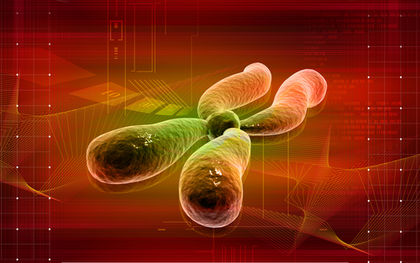
But we know that there is more diversity than society advertises. Thinking only of chromosomal sex, there are far more than two options. Instead of the popular XY "male" and XX "female" options we hear so much about, some of us have cells with XXX, XXY, XXYY, XYY, XO chromosomes, and the list continues. These "other" options are usually referred to as chromosomal abnormalities. Of course they aren't "other" or abnormal, they are chromosomes in bodies, they are us.
For simplicity sake I'm not going to get deeper into gender here, but it's hard not to point out that there are many more of us whose bodies have XY chromosomes and who are women, whose bodies have XX chromosomes and are men, whose bodies have one combination or another but identify somewhere in between or completely outside of the popular models that we're offered by society. You can read this glossary entry for more about the difference between sex and gender.
Back to genes and sex and switches.
In an effort to understand all this confusion between fixity and diversity, Weiss has been looking for many years at a particular switch, the SRY gene "master switch," that sets into motion the process of fetal tissue changing in a way that is described as male sex development.
In this paper he and his colleagues decided to look at the SRY genes that are shared by a father and his daughter. In this case the daughter has XY "male" chromosomes, but the SRY genes didn't trigger the switch in the predictable way so instead she developed internal female genitalia (ovaries, fallopian tubes, and uterus).
The researchers assumed that something significant must happen to make the SRY switch function in this unexpected way (in their language they expected that a "severe insult to the Y-encoded switch" was necessary and would be in the neighborhood of a factor of 100 or more). What they found was the threshold at which the SRY functions in this unexpected way was only a factor of two. From the release:
"Therefore, human males actually develop near the edge of sexual ambiguity. This means that, unlike the robust genetic programs which develop other essential processes like heart function, the SRY gene master switch is particularly vulnerable to change. It only takes a slight deviation from the normal process to dramatically alter fetal sexual development.Weiss hypothesizes that, rather than predictability, diversity in sex development and expression is itself an evolutionary advantage:
Given the importance of sexual reproduction to the survival of a species, why do human SRY genes function so close to the boundary of infertility? The idea of an unreliable master switch might appear paradoxical, but a growing body of research suggests that it might be an evolutionary necessity."
"We have this tenuous switch on the Y chromosome, and we anticipate that its gift to humanity is variability in the pathway of male development from its earliest stages. The essential idea is that our evolution has favored a broad range of social competencies. In prehistory, this range would have given a survival advantage to communities enriched by a diversity of gender styles."Weiss is focusing on a very narrow part of our bodies, one group of genes on one chromosome. And to be honest I only have the most rudimentary understanding of the technology that allows them to do this work, and the science that describes the work they are doing. But with that caveat, it's hard for me not to want to think about the implications of this research not only on a chromosomal level but on a social one.
The incorrect notion that bodies should fit into one of two clear categories and those bodies are clearly and visibly different in ways that are fixed and consistent across time makes living in our bodies difficult and even intolerable for many of us. It also continues to contribute to the practice of performing unnecessary and harmful surgeries on infants in order to make their bodies fall in line with social expectations that have nothing to do with health or with the beauty of our bodies.
It's hard for me not to let out a little "damn right" yell when I read a Professor of Biochemistry and Medicine writing that all our bodies, especially those that insist on undecidable sex characteristics, are a "gift to humanity" (even if I'm unsure whose giving that gift and who is receiving it).
In some ways this research is only confirming what those of us paying particular attention to sex and gender already know is true. And given medicine's lackluster track record at dealing respectfully with bodies that don't fit its normative expectations, maybe I shouldn't get so excited. But I guess I'm happy any time it feels like someone is getting to speak some truth. It's a little bit of poetry.
Proceedings of the National Academy of Sciences: Inherited human sex reversal due to impaired nucleocytoplasmic trafficking of SRY defines a male transcriptional threshold
Inherited human sex reversal due to impaired nucleocytoplasmic trafficking of SRY defines a male transcriptional threshold
Yen-Shan Chen, Joseph D. Racca, Nelson B. Phillips, and Michael A. Weiss,
Author Affiliation
Significance
Mutations in human SRY (sex determining region on Y chromosome) associated with somatic sex reversal provide a model for the perturbation of a genetic switch in organogenesis. Inherited alleles, associated with either testicular or ovarian differentiation, provide unique probes of threshold biochemical properties, defining mechanistic borders between functional and nonfunctional transcription factors. This study exploited two such alleles to demonstrate that bidirectional nucleocytoplasmic trafficking (import–export shuttling) enables robust operation of this switch via phosphorylation at a site external to the DNA-binding motif of the transcription factor. In accordance with studies of intersexual mice, our results suggest that human SRY functions at the edge of ambiguity.
Abstract
Human testis determination is initiated by SRY (sex determining region on Y chromosome). Mutations in SRY cause gonadal dysgenesis with female somatic phenotype. Two subtle variants (V60L and I90M in the high-mobility group box) define inherited alleles shared by an XY sterile daughter and fertile father. Whereas specific DNA binding and bending are unaffected in a rat embryonic pre-Sertoli cell line, the variants exhibited selective defects in nucleocytoplasmic shuttling due to impaired nuclear import (V60L; mediated by Exportin-4) or export (I90M; mediated by chromosome region maintenance 1). Decreased shuttling limits nuclear accumulation of phosphorylated (activated) SRY, in turn reducing occupancy of DNA sites regulating Sertoli-cell differentiation [the testis-specific SRY-box 9 (Sox9) enhancer]. Despite distinct patterns of biochemical and cell-biological perturbations, V60L and I90M each attenuated Sox9 expression in transient transfection assays by twofold. Such attenuation was also observed in studies of V60A, a clinical variant associated with ovotestes and hence ambiguity between divergent cell fates. This shared twofold threshold is reminiscent of autosomal syndromes of transcription-factor haploinsufficiency, including XY sex reversal associated with mutations in SOX9. Our results demonstrate that nucleocytoplasmic shuttling of SRY is necessary for robust initiation of testicular development. Although also characteristic of ungulate orthologs, such shuttling is not conserved among rodents wherein impaired nuclear export of the high-mobility group box and import-dependent phosphorylation are compensated by a microsatellite-associated transcriptional activation domain. Human sex reversal due to subtle defects in the nucleocytoplasmic shuttling of SRY suggests that its transcriptional activity lies near the edge of developmental ambiguity.
Gender gap
Oct 4 2013
3:00PM