Showing posts with label sexual ambiguity. Show all posts

Wednesday, December 4, 2013

Deformed Freak Born Without Penis (Satire as an Introduction to Intersex)

This bit of satire from The Onion generated some conversation at Facebook - and it brings up some issues about sexual and gender identity and intersex people. First up the story from The Onion:

Deformed Freak Born Without Penis

ISSUE 49•49 • Dec 3, 2013


The utterly disfigured creature, who sources say somehow has to make its way through life with no male genitalia whatsoever.

NORFOLK, VA—In an alarming case that has baffled and repulsed many, sources confirmed Tuesday that a severely deformed freak born without a penis has managed to live with the condition for over 26 years.

The bizarre, monstrous human specimen was reportedly born with no other noticeable maladies and has, amazingly enough, attempted to lead a normal, albeit severely impaired life despite possessing no male genitalia whatsoever.

“We first noticed something was off about three months into the pregnancy, and I was of course horrified,” said Dr. Mark Joules, the obstetrician who delivered the grotesque—some would say subhuman—abhorrence of nature. “You could clearly see in the ultrasound that a penis and testicles were not developing as one would hope—or at all, in fact—and we immediately knew something was terribly, terribly wrong.”

“Had we caught it earlier, we most likely would have recommended that the pregnancy be terminated,” Joules continued. “But it was unfortunately too late at that point, so we were forced to deliver the baby as planned and just pray that it could get by in that state. We did our best, but with such a horrible and incredibly crippling deformity, there wasn’t much hope to be had.”

According to reports, the sadly disfigured 26-year-old’s quality of life has been greatly diminished due to such a condition. Sources said the abnormal, visibly blemished creature has been repeatedly passed over for employment opportunities, frequently gawked at and harassed on the street by total strangers, and has faced near constant discrimination for over two decades, all due to the horrific and debilitating birth defect.

Indeed, many are reportedly unable to look past the glaring deformity and simply see the 26-year-old as a human being.

“Whoa, look at that,” said 31-year-old onlooker Grant Megson, who, like many others, gawked at the freakish human anomaly while passing by on the sidewalk. “I don’t mean to stare, but honestly, it’s hard not to. Jesus Christ.”

“I just wish some of my buddies were here to see this,” added Megson, smiling and taking one last look before continuing with his day.

Sources confirmed that, unfortunately, such cases are actually quite common, with roughly one in every two babies afflicted with the lifelong disfigurement.

However, that is reportedly little consolation to the malformed specimen’s father, who told reporters that a day doesn’t go by in which he doesn’t wish his child was born a normal, healthy baby with male genitalia.

“Sadly, because the deformity is so obvious, our child was treated very differently from all the other kids,” the father told reporters, admitting that he was incredibly upset and disappointed when he first learned that his baby would be born a freak, one to be mistreated and viewed as inferior its whole life. “Even though the doctors explained all the incredible challenges and prejudice the poor thing would face, I don’t think it really sunk in until after the birth, when I saw the disfigurement with my own eyes. You never want your child to have to grow up that way.”“But what can you do?” he added. “I’m just thankful that my other two kids weren’t born like that.”
* * * * *

One of the comments at Facebook mentioned that in Germany there has been an increase in children born with intersex features (or as not either clearly male or female). Intersex is much more common than people think - comprehensive statistics suggest 1 in 100 children are born with chromosome patterns other than the standard XX or XY. These are the numbers from the Intersex Society of North America:
Below we provide a summary of statistics drawn from an article by Brown University researcher Anne Fausto-Sterling.2 The basis for that article was an extensive review of the medical literature from 1955 to 1998 aimed at producing numeric estimates for the frequency of sex variations. Note that the frequency of some of these conditions, such as congenital adrenal hyperplasia, differs for different populations. These statistics are approximations. 

Not XX and not XYone in 1,666 births
Klinefelter (XXY)one in 1,000 births
Androgen insensitivity syndromeone in 13,000 births
Partial androgen insensitivity syndromeone in 130,000 births
Classical congenital adrenal hyperplasiaone in 13,000 births
Late onset adrenal hyperplasiaone in 66 individuals
Vaginal agenesisone in 6,000 births
Ovotestesone in 83,000 births
Idiopathic (no discernable medical cause)one in 110,000 births
Iatrogenic (caused by medical treatment, for instance progestin administered to pregnant mother)no estimate
5 alpha reductase deficiencyno estimate
Mixed gonadal dysgenesisno estimate
Complete gonadal dysgenesisone in 150,000 births
Hypospadias (urethral opening in perineum or along penile shaft)one in 2,000 births
Hypospadias (urethral opening between corona and tip of glans penis)one in 770 births

Total number of people whose bodies differ from standard male or femaleone in 100 births
Total number of people receiving surgery to “normalize” genital appearanceone or two in 1,000 births

For additional information on this topic, here is a documentary, Sex: Unknown.


Uploaded on Jan 17, 2011

Many babies are born intersex with genitals that did not fully develop in the womb. In such situations, most doctors declare a state of medical emergency, and quickly move to operate in an effort to "fix" the child and give it the appearance of either a male or female. But this intervention is not always welcome: Many intersex adults that were surgically changed in infancy now insist they should have been given a choice in the matter. In many cases the gender they were assigned at birth does not match the gender they grew to believe they were. This begs a larger question: How much of our gender identity is formed by nature and how much by nurture? "Sex: Unknown" delves into the complex world of gender identity.

Thursday, October 17, 2013

Cory Silverberg - Near the Edge of Sexual Ambiguity

Sex Determination 3838

Michael Weiss and his colleagues at the Case Western Reserve University School of Medicine have been for several years exploring at the micro level what it is that makes us perceive our bodies as being either one sex or another, only male or only female.

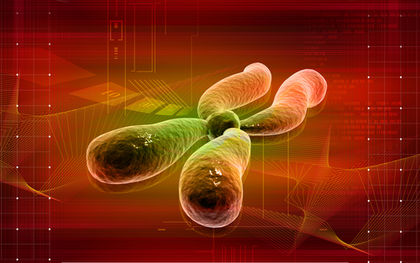
In this new study they look at the chromosomal structures that determine biological sex - and it turns out there are many variations other than our culturally accepted sex/gender binary.

Near the Edge of Sexual Ambiguity

September 5, 2013
By Cory Silverberg
My Bio

It's rare to find poetry in a press release.

But I pulled the above phrase, which is so evocative and rich, describing as it does, not our bodies but a moment during fetal development before sex assignment; I mean just think about it: What does that edge look like? What happens when you peer over it? Who is teetering there? Are they worried about falling off, are they waiting to jump, or are they happy living on the edge? This is clearly the stuff of poetry and humanity) from a Case Western Reserve University press release a few days ago.

The release describes a study conducted by Michael Weiss and his colleagues at the School of Medicine, who have for several years been exploring in the most micro way imaginable what it is that makes us think about bodies as being either one sex or another, only male or only female.

A bit of background is required:

Despite rich and varied histories that demonstrate it isn't so, most societies function on the premise that all humans are easily classifiable as male or female, and that we can identify who is who by looking at genitals, hormones, and chromosomes. Usually human experience (one of the things we call "culture") is juxtaposed with science in this regard. The science, we're told is more cut and dry. Only it isn't. Medicine and science has for some time documented that humans are not easily categorizable into one of two sexes. If you look carefully at the research, sexual diversity, on the level of genital appearance, hormones and chromosomes, is present and predictable in humans. To use the language of normativity, the fact that some of us don't fit into one of two boxes is as normal as the fact that some of us do.

As Prof. Weiss explains in the poetic release, developmental biology has stuck with the two category model based on the understanding that human bodies develop in a consistent or reliable way because "evolution favors reliability. Robust switches ensure that our genetic programs give rise to a consistent body plan to ensure that babies have one heart, two arms, ten fingers, and so forth."

The switches Weiss is referring to are a way that researchers like him conceptualize gene expression and sexual development. Essentially, it is thought, that all fetuses begin with "female tissues." At some point in fetal development a "switch" turns on and as a result the fetus begins to develop "male tissues." Eventually testes develop, which produce testosterone, which in turn informs the development of male genitalia.

You may have heard someone say that we all start off female. That's what they were referring to.

So the theory is that in order to have bodies that can reliably survive and reproduce, we have evolved "robust switches." In other words, our fetal development is more or less sturdy and fixed, not a lot of diversity.

But we know that there is more diversity than society advertises. Thinking only of chromosomal sex, there are far more than two options. Instead of the popular XY "male" and XX "female" options we hear so much about, some of us have cells with XXX, XXY, XXYY, XYY, XO chromosomes, and the list continues. These "other" options are usually referred to as chromosomal abnormalities. Of course they aren't "other" or abnormal, they are chromosomes in bodies, they are us.

For simplicity sake I'm not going to get deeper into gender here, but it's hard not to point out that there are many more of us whose bodies have XY chromosomes and who are women, whose bodies have XX chromosomes and are men, whose bodies have one combination or another but identify somewhere in between or completely outside of the popular models that we're offered by society. You can read this glossary entry for more about the difference between sex and gender.

Back to genes and sex and switches.

In an effort to understand all this confusion between fixity and diversity, Weiss has been looking for many years at a particular switch, the SRY gene "master switch," that sets into motion the process of fetal tissue changing in a way that is described as male sex development.

In this paper he and his colleagues decided to look at the SRY genes that are shared by a father and his daughter. In this case the daughter has XY "male" chromosomes, but the SRY genes didn't trigger the switch in the predictable way so instead she developed internal female genitalia (ovaries, fallopian tubes, and uterus).

The researchers assumed that something significant must happen to make the SRY switch function in this unexpected way (in their language they expected that a "severe insult to the Y-encoded switch" was necessary and would be in the neighborhood of a factor of 100 or more). What they found was the threshold at which the SRY functions in this unexpected way was only a factor of two. From the release:
"Therefore, human males actually develop near the edge of sexual ambiguity. This means that, unlike the robust genetic programs which develop other essential processes like heart function, the SRY gene master switch is particularly vulnerable to change. It only takes a slight deviation from the normal process to dramatically alter fetal sexual development.

Given the importance of sexual reproduction to the survival of a species, why do human SRY genes function so close to the boundary of infertility? The idea of an unreliable master switch might appear paradoxical, but a growing body of research suggests that it might be an evolutionary necessity."
Weiss hypothesizes that, rather than predictability, diversity in sex development and expression is itself an evolutionary advantage:
"We have this tenuous switch on the Y chromosome, and we anticipate that its gift to humanity is variability in the pathway of male development from its earliest stages. The essential idea is that our evolution has favored a broad range of social competencies. In prehistory, this range would have given a survival advantage to communities enriched by a diversity of gender styles."
Weiss is focusing on a very narrow part of our bodies, one group of genes on one chromosome. And to be honest I only have the most rudimentary understanding of the technology that allows them to do this work, and the science that describes the work they are doing. But with that caveat, it's hard for me not to want to think about the implications of this research not only on a chromosomal level but on a social one.

The incorrect notion that bodies should fit into one of two clear categories and those bodies are clearly and visibly different in ways that are fixed and consistent across time makes living in our bodies difficult and even intolerable for many of us. It also continues to contribute to the practice of performing unnecessary and harmful surgeries on infants in order to make their bodies fall in line with social expectations that have nothing to do with health or with the beauty of our bodies.

It's hard for me not to let out a little "damn right" yell when I read a Professor of Biochemistry and Medicine writing that all our bodies, especially those that insist on undecidable sex characteristics, are a "gift to humanity" (even if I'm unsure whose giving that gift and who is receiving it).

In some ways this research is only confirming what those of us paying particular attention to sex and gender already know is true. And given medicine's lackluster track record at dealing respectfully with bodies that don't fit its normative expectations, maybe I shouldn't get so excited. But I guess I'm happy any time it feels like someone is getting to speak some truth. It's a little bit of poetry.

Proceedings of the National Academy of Sciences: Inherited human sex reversal due to impaired nucleocytoplasmic trafficking of SRY defines a male transcriptional threshold
Full Citation:
Yen-Shan Chen, YS, Racca, JD, Phillips, NB, and Weiss, MA. (2013, Sep 3). Inherited human sex reversal due to impaired nucleocytoplasmic trafficking of SRY defines a male transcriptional threshold. Proceedings of the National Academy of Sciences, Published online before print September 3, 2013, doi: 10.1073/pnas.1300828110

The full article is behind a paywall, so here is the basic abstract info for the original article discussed above.

Inherited human sex reversal due to impaired nucleocytoplasmic trafficking of SRY defines a male transcriptional threshold


Yen-Shan Chen, Joseph D. Racca, Nelson B. Phillips, and Michael A. Weiss,
Author Affiliation
 

Significance


Mutations in human SRY (sex determining region on Y chromosome) associated with somatic sex reversal provide a model for the perturbation of a genetic switch in organogenesis. Inherited alleles, associated with either testicular or ovarian differentiation, provide unique probes of threshold biochemical properties, defining mechanistic borders between functional and nonfunctional transcription factors. This study exploited two such alleles to demonstrate that bidirectional nucleocytoplasmic trafficking (import–export shuttling) enables robust operation of this switch via phosphorylation at a site external to the DNA-binding motif of the transcription factor. In accordance with studies of intersexual mice, our results suggest that human SRY functions at the edge of ambiguity.


Abstract


Human testis determination is initiated by SRY (sex determining region on Y chromosome). Mutations in SRY cause gonadal dysgenesis with female somatic phenotype. Two subtle variants (V60L and I90M in the high-mobility group box) define inherited alleles shared by an XY sterile daughter and fertile father. Whereas specific DNA binding and bending are unaffected in a rat embryonic pre-Sertoli cell line, the variants exhibited selective defects in nucleocytoplasmic shuttling due to impaired nuclear import (V60L; mediated by Exportin-4) or export (I90M; mediated by chromosome region maintenance 1). Decreased shuttling limits nuclear accumulation of phosphorylated (activated) SRY, in turn reducing occupancy of DNA sites regulating Sertoli-cell differentiation [the testis-specific SRY-box 9 (Sox9) enhancer]. Despite distinct patterns of biochemical and cell-biological perturbations, V60L and I90M each attenuated Sox9 expression in transient transfection assays by twofold. Such attenuation was also observed in studies of V60A, a clinical variant associated with ovotestes and hence ambiguity between divergent cell fates. This shared twofold threshold is reminiscent of autosomal syndromes of transcription-factor haploinsufficiency, including XY sex reversal associated with mutations in SOX9. Our results demonstrate that nucleocytoplasmic shuttling of SRY is necessary for robust initiation of testicular development. Although also characteristic of ungulate orthologs, such shuttling is not conserved among rodents wherein impaired nuclear export of the high-mobility group box and import-dependent phosphorylation are compensated by a microsatellite-associated transcriptional activation domain. Human sex reversal due to subtle defects in the nucleocytoplasmic shuttling of SRY suggests that its transcriptional activity lies near the edge of developmental ambiguity.