Showing posts with label expectations. Show all posts

Thursday, January 2, 2014

My Personal Goal for 2014 - Fail More, Embrace Imperfection


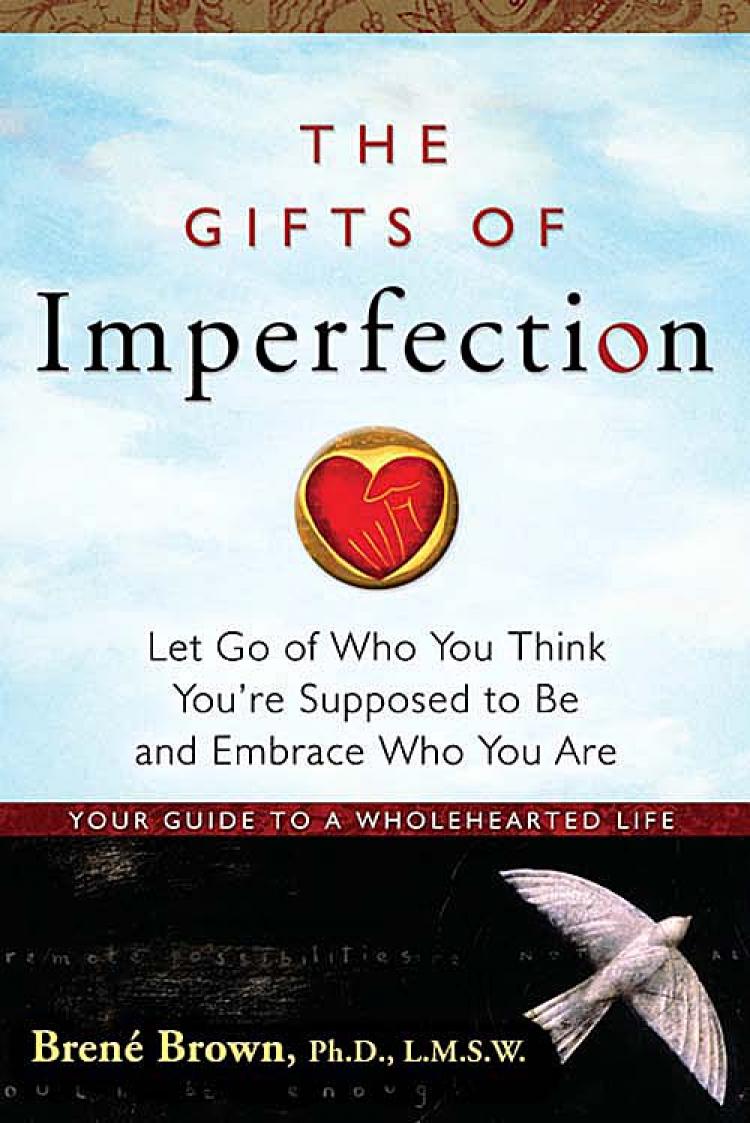
In the spirit of Brené Brown's The Gifts of Imperfection: Let Go of Who You Think You're Supposed to Be and Embrace Who You Are, my personal growth challenge for 2014 is to fail more often and to embrace imperfections.

I have always feared failure, which is fitting because one of my coping strategies to deal with a hyper-critical parent was to become a perfectionist. It worked great in school - I got good grades and the teachers loved me. Then that parent died, and I still had this perfectionist inside me.

The downside is that I have missed out on a lot of opportunities to do things because I was afraid I would not be good something new. That fear of being laughed at and being obviously not good at something was a powerful deterrent.

I have changed this quite a bit over the years - to the point that I am fine with falling on my ass trying something new. But that perfectionist is still in there, and when he fears he failed at something, he and the inner critic get together and have a shame party at my expense.

No more. 

Here are two of Brown's TED Talks on vulnerability, which is what we must embrace if we embrace imperfection. The illusion of perfection offers an invulnerability cloak (a protection from shame), but failure is raw, vulnerable, and human.

Brené Brown: Listening to Shame: TED Talk


Brené Brown: The Power of Vulnerability: TED Talk


This last video is from the Behance U99 Conference in 2013.

Brené Brown: Why Your Critics Aren't The Ones Who Count


And for one other bit of inspiration, it appears that over at the Good Men Project has a similar goal for 2014. Here is his post from yesterday.


Hey Man, Let’s Practice Imperfection in 2014
January 1, 2014 by Joe Rutland


Joe Rutland in defense of messiness, authenticity and imperfection.
Every New Year’s Day is a chance for men to either start something new or stop actions and behaviors that may not be healthy to their lives. Those infamous “New Year’s resolutions” can sometimes, without intention, become a horrendous “to-do” list that feels like a 45-pound weight swinging around a man’s neck. What if this Jan. 1 was different? What if men chose a few different actions beside the usual list of “eating healthier, exercising more, stressing out less, getting finances in order, etc.”? Let me suggest three possibilities: Choose imperfection. Choose messiness. Choose authenticity.

Being imperfect is actually a healthy emotional behavior as the stress to be perfect is lessened. Messiness shakes the reins of obsessive-compulsive behaviors and thoughts, turning them upside down. Authenticity, when practiced, can become a blessing instead of a fear-based, soul-wrenching curse.

Now when it comes to perfection and being a perfectionist, then you’ll find my name at the top of the list. Oh no, you think your name is No. 1. Nope. I’m the chief of perfectionists, meaning that I have to do every single thing in my life just right. I have to say the right words, act the right way, stuff my thoughts and feelings deep within myself and not let them out, even when sitting among what I consider safe environments and safe people. Fighting against perfectionism hasn’t been a healthy battle in my life. I have lost more times than I have won, and I’ve lost so much time and emotional energy to it.

What I can say is that I’ve learned a lot about letting go, trusting the process (whatever that looks like), and believing in myself in recent years. Reading others’ stories and hearing other men talk about how they deal with perfection has helped me greatly. Perfectionism could almost be put into a mental health category alongside shame.

One of the more enlightening pieces of literature I’ve read recently around this subject is The Gifts of Imperfection, written by Dr. Brene’ Brown, a member of the research faculty at the University of Houston Graduate School of Social Work. Dr. Brown’s work has focused around the topics of shame and fear and the subject of Wholeheartedness, about which Dr. Brown poses this question: “How do we cultivate the courage, compassion, and connection that we need to embrace our imperfections and to recognize that we are enough—that we are worthy of love, belonging, and joy?”

A lot of men are more apt to wrap their self-worth around the trophy system. You know: the trophy job, the trophy wife, the trophy car, the trophy sexual conquests, the trophy fill-in-the-blank. Then one day, a man wakes up, looks within, goes into his bathroom and stares at the mirror. “It’s all bullshit,” he mutters to his reflection. Now this could be called a rude awakening. It also could be called a spiritual awakening. Not one of blazing chariots of fire coming down from the heavens and lifting the veil from his eyes, per se. But this moment is powerful if and when it happens.

Imperfection allows breathing room for mistakes, missteps and foibles. Remember the opening scene from “The Dick Van Dyke Show” where Rob Petrie (Van Dyke) walks through his front door, leans in to kiss his wife Laura (Mary Tyler Moore), turns and starts heading toward his “Alan Brady Show” co-writers Sally Rogers and Buddy Sorrell (Rose Marie and Morey Amsterdam, respectively), and doesn’t see the ottoman in front of him and flips over it? That’s imperfection. It’s also a good sense of acrobatic timing on Van Dyke’s part. To get that scene right, he probably had to practice it a few times; therefore, getting the “imperfect” scene perfect.

Yet the image is of imperfection. Now do I put up an “image of imperfection” so that I can hold on like a drunken sailor to my perfections? God knows I’ve done my best to dump that image and trade it for reality. Oh, but my perfections protect me from you…and you…and you, too. I don’t want you to see that I make mistakes. It pisses me off when I don’t get something perfect. Even today, after years of soul work, I still catch myself starting that negative self-talk chatter when I make a mistake. It is brutal.

Living in imperfection is definitely easier. Accepting myself as I am—a man who is worthy of love, compassion, empathy, healthy sexuality, nurturing and support—sure helps my mental and emotional well-being. Come to think of it, my physical health improves, too. Imperfection, messiness and authenticity do take time and practice so they can become a part of a man’s life. For too long, men (and women, too) have been bombarding themselves with negative self-talk. It is a disease, or dis-ease, of the mind, body and spirit.

So what if someone doesn’t like what I think or write? OK.

So what if someone doesn’t believe what I believe? OK.

Is it really “OK” or, again, am I fooling myself and you with my physical responses to not pleasing you?

A very wise friend told me one time four words about physical responses that people give off to other people’s statements or words: “The body don’t lie.” Think about it. When your wife, girlfriend, employer, best friend or co-worker starts giving you a hard time about something, are you aware of your physical responses? You know, like folding your arms across your chest, making a loud sighing noise (which is really telling the person to shut up without saying “shut up”), or pressing your lips so tightly together that water flowing from Niagara Falls couldn’t get inside your mouth.

Well, I’d say it is time for me and you to give ourselves a break. Let’s do our best to drop perfectionism this year. Embrace your mistakes, foibles and faults. Know that it is OK to screw up and it’s also OK to protect yourself from others’ perfectionism.

Be imperfect. Give it a shot in 2014 and see what happens. Who knows? Your life, and mine, might change for the better.

- modified photo Plat / Flickr Creative Commons

Sunday, October 27, 2013

Gender Fluidity: Gabrielle Burton at TEDxColumbus


This is a nice, though TED-style brief talk on one of my favorite gender-related topics - gender fluidity. Burton explores the notion that gender is fluid, revealing insight into a culture that makes us question social roles and assumptions we may not even be aware we are promoting.

Gabrielle Burton: Gender Fluidity (TEDxColumbus)


At one point a few years ago, Gabrielle’s worlds of being a filmmaker, conscious observer and parent collided. Fueled by her upbringing by thoughtful, feminist, and creative parents and being in business with her four sisters, her current project has put her ‘out there’ in ways she’d never imagined. By challenging presumptions and misunderstandings, Gabrielle will explore the notion that gender is fluid, revealing insight into a culture that makes us question social roles and assumptions we may not even be aware we are promoting.

Gabrielle Burton
Filmmaker. Writer. Activist.


Gabrielle’s Website
Facebook
Twitter
Email

About Gabrielle:

Gabrielle is a writer/director/actor whose current project is as director of Kings, Queens, and In- Betweens, a documentary about the fluidity of gender identity as seen through the window of drag queens and kings in Columbus, Ohio. Her feature and short film credits include: Manna from Heaven (MGM/Sony), Temps (Netflix), Just Friends (AMC/We Channel), The Happiest Day of His Life (MTV/Logo), Letting Go of God (Showtime), as well as nationally released commercials and PSAs. As a director, Gabrielle got her training in film school at the Ecole Superieure d’Audio-Visuel in Toulouse, France, where she received a DEUP degree with High Honors. Gabrielle worked on the television program Law and Order in their director training program. After an Isobel Briggs scholarship to study music at Berklee College of Music, she won a Rotary Scholarship to study film in France. Her short, Sage and Time, was selected for the La Corrida International Film Festival in France, and Gabrielle was invited as the opening night speaker to show Manna from Heaven at La Corrida’s 10th film festival. A graduate of Harvard/Radcliffe, Gabrielle is a published poet, and also wrote and directed the full length plays Sage and Time and Club Venus at the ART’s Loeb Ex theater. She was featured on the Voice Of America program and in the Harvard CRIMSON. She just received the Thomas A. Milhelmus Editor’s Award for an essay she wrote on the giant turtles in Malaysia, which will be published this fall by the Southern Indiana Review.
* * * * *

Ms. Burton's next project, Kings, Queens, and In- Betweens (see here for more about the film), also looks very interesting and fun.

Kings, Queens, and In-Betweens (to be completed this year) is a documentary on the fluidity of gender identity as seen through the window of drag queens, kings, and transgender performers in Columbus, Ohio. Perhaps surprisingly, Columbus has one of the most imaginative, diverse drag scenes in the country, set in the middle of Ohio as a complex, politically important swing state. Drawing on interviews and performances by entertainers (from those who only do drag as a form of show business to those who use drag for personal exploration), KQIB challenges common assumptions about drag and gender.

KQIB will be the first film to include the whole gender performance spectrum — queens, kings, and transgender performers.

Twenty years since the groundbreaking film “Paris is Burning” was shot, this is a chance to move the conversation forward, showing how drag both entertains and pushes the envelope — making us question binary categories of male/female, gay/straight, butch/femme. KQIB captures how these terrific performers tackle the complexities and pathos of gender expression, personal identity, and human rights — all with humor, great music, big hair, and duct tape.

Monday, July 1, 2013

Jennifer Kromberg - How Dads Shape Daughters’ Adult Relationships

Fathers can have a tremendous impact on the future relationships of their daughters, especially their romantic relationships. We tend to think of this more in terms of the father-daughter dynamic during the crucial years of development (ages 3-9). However, as this post from Jennifer Kromberg, PsyD at her Inside Out blog on Psychology Today, even the earliest experiences a daughter may have with her father (during the primary attachment years of birth-3 years) can shape her idea of a what a man should be, and this shapes her future attractions (to men who are like dad), a fact to which she will often be unaware unless it is revealed in therapy or some other self-exploration process.

How Dads Shape Daughters’ Relationships

Dad creates a daughter's conscious and unconscious relationship expectations

Published on July 1, 2013 by Jennifer Kromberg, PsyD in Inside Out

Image: Flickr/Aurthur40A

Many years ago, I sat with my family in the lobby of a restaurant waiting to be seated. Out of nowhere, a very little girl toddled around the corner and walked straight up to my 6’5”, 325 lb. dad and laughed and babbled at him. It was a scene straight from the movie Monsters Inc.

Within seconds, a young man equal in size and stature to my dad rounded the corner and in a very deep, kind voice said to the toddler, “Rachel, where did you go?” Rachel laughed and her dad picked her up high in the air, nodded an acknowledgment to my dad and walked out of the restaurant.

Even my dad was a little surprised at the little girl’s courage, but it didn’t take a PhD to deduce that not only was tiny little Rachel not afraid of my big, huge dad, she was actually attracted to him. When I say “attracted” I don’t mean in a creepy, inappropriate way. I mean that in a group of people of different heights and sizes, she was drawn to the one who most resembled her own dad.

It makes sense, doesn’t it? As infants, we take in a complete sensory experience of our everyday surroundings and this shapes our perception of normalcy. If, like Rachel and me, everyday experiences included a giant, deep-voiced, lumberjack man, then that is what we imprinted as normal. Not only does this influence ring true, but many, many studies including this from the Journal of Genetic Psychology have shown the influence of fathers on their daughters’ relationships.

If there was a dad or other male caregiver in your early life, he probably set the first model of how a relationship with a man would be. And for better or for worse, regardless of circumstances, children love their parents/caregivers unconditionally and accept the attachment and love that is (or is not!) given in return as normal. Our first attachment patterns shape our expectations for future attachments. Overtly and also unintentionally, our parents teach us how to approach our lives and relationships – they teach us how to express and receive love, how to handle disagreements, how to process feelings, etc. Our parents shape and color the lens through which we see and organize meaning about other human interactions.

So a woman’s early relationship with dad, who is usually the first male object of her love, shapes her conscious and unconscious perceptions of what she can expect and what is acceptable in a romantic partner.

In my years of psychology practice, I’ve met very few women who did not unconsciously or consciously pick a romantic partner based on the characteristics of her father. I don’t mean only physical characteristics, although that can also be present – I mean relational pattern characteristics. Even the women that state they chose partners who were opposite of their dad are basing their decisions on the relationship (or non-relationship) with dad – a choice to go opposite is still a choice based on dad.

So, does this mean that today Rachel is married to a lumberjack who chases her around in restaurants? I have no idea, but chances are whatever relationship she’s in is influenced by her early relationship with her father. What does this mean for all us? A lot. And in upcoming posts I’ll address exactly what. Topics will explore how different, early attachment patterns (including no attachment) can affect our current relationship choices and how we respond in relationships. Please stay tuned and join in the conversation!

Twitter: @JenKrombergPsyD
Facebook: www.facebook/Dr-Jennifer-Kromberg

Thursday, March 8, 2012

Levni Yilmaz - How to Be a Man?


The Good Men Project posted this short little video - Levni Yilmaz (Tales of Mere Existence) examines his experience with being a man. He feels torn between the various possibilities and the traditional models for men. I think his experience mirrors that of many men who have taken time to think about this topic.

Video: “How To Be A Man?” Tales Of Mere Existence


Artist Levni Yilmaz asks “Does anyone else think it’s a confusing time to be a man?”


In this video, artist Levni Yilmaz talks about how what he thought being a man was supposed to be like as as a kid, and how it is completely different than his experience as an adult.

Gender roles are changing, women are more equal, and masculinity isn’t as simple as hunting + beer + cool car or being Don Draper. Yilmaz is mostly happy about this, but the question “What is a man?” with its shifting, fluid definition is becoming harder and harder to answer.

What do you think? Does Levni Yilmaz’s video resonate with you? Is “manhood” different from what you understood it to be when you were younger? How has your view changed?


Tuesday, February 16, 2010

Tag You're It, Gen Y (US News & World Report)

http://experiencematters.files.wordpress.com/2007/10/071005_consumerforum_bruce-temkin_edited_v3.jpg

Damn, I'd hate to be in high school or college right now, or have kids who are there. The Baby Boomers have made a mess of things, and my generation, Gen X, doesn't really give a damn (if you believe the media). So, Gen Y, especially young men, sorry to tell you this, but you're screwed.

More than likely, unless things change dramatically, not only will you not make as much as your parents, but you may not even make as much as your grandparents. And retirement? Yeah, right, maybe when they put you in the ground.

Oh yeah, we didn't do you any favors as parents, either.

Tag You're It, Gen Y

Not Everyone Gets a Trophy.” That's the title of Bruce Tulgan’s new book and I think it summarizes perfectly a point I would like to make to younger job seekers today.

[See the best careers for 2010.]

We, your parents, have done you wrong. Because of our never-ending support and helicoptering, we have nudged you toward the conclusion that most authority figures will be the same. You know: flexible, willing to listen to your reasons, er, excuses, and happy to provide you with the tools you need to be passionate at work.

Of course, nothing is further from the truth. Now, the brutal reality of the workplace has hit even us. Where we once thought we were “safe,” we have learned that's no longer true. Our 401(k)’s have dropped in value so much they ought to be called 201's, and we are fearful. We have precious few years to recover, but recover we must. Many fear that you have been trained to be so selfish and in pursuit of instant gratification, that you won’t be there to help out.

[See how to love the job you're with.]

As you search for that one passionate job, please remember that you can learn a lot from jobs you dislike. That is OK. You learn something from each one, get better, and move on. The worst thing you can do is sit around, and be on that perpetual search.

We are too busy now to help you much. Tag, you're it.

G. L. Hoffman is a serial entrepreneuer and venture investor/operator/incubator/mentor. Two of his companies have traveled the entire success path from the garage to IPO. Currently, he is chairman of JobDig, which operates LinkUp, one of the fastest-growing job search engines. His blog can be found at WhatWouldDadSay.com.

But wait a minute - if all this is true, why get out of bed in the morning?

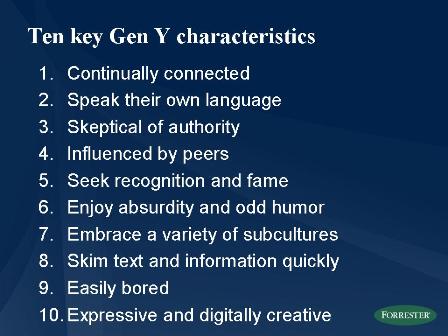
Check the list at the top of this post. Gen Y has a unique advantage on previous generations in that you have grown up with technology as a way of life. Sure, Gen X created most of it, but you kids use it better than we ever imagined, and you will find ways to make relationships the focus of both your personal life and your income.

We are creating the foundation for person-to-person culture (P2P), but you will find new ways to implement it. You are the first post-modern generation. According to the research, you don't see skin color, you believe in equal rights for ALL people, and you want to give back as much as you take.

Gen Y is the first networked generation.
"What of the subject in networked culture? Under modernism, for the most part, the subject is autonomous, or at least subscribes to a fantasy of autonomy, even if experiencing pressures and deformations from the simultaneity generated by that era’s technologies of communication and by increasing encounters with the Other. In postmodernism, Jameson explains, these pressures couple with a final unmooring of the self from any ground as well as the undoing of any coherent temporal sequence, forcing the subject to schizophrenically fragment. With network culture, these shards of the subject take flight, disappearing into the network itself. Less an autonomous individual and more of a construct of the relations it has with others, the contemporary subject is constituted within the network. This is a development of the condition that Castells observes in The Rise of the Network Society, when he concludes that contemporary society is driven by a fundamental division between the self and the net. To support his argument, Castells turns to Alain Touraine: “In a post-industrial society, in which cultural services have replaced material goods at the core of its production, it is the defence of the subject, in its personality and in its culture, against the logic of apparatuses and markets, that replaces the idea of class struggle.”
You guys are up to this, right?

On second thought, maybe you should just follow your heart and find a way to do work that makes you happy.

Screw the expectations and the predictions.

Take a deep breath or two, talk to your friends, build meaningful relationships, and create a life centered in love and compassion. That's what the world really needs from you young men - passion, compassion, and joy.