Showing posts with label shame. Show all posts

Sunday, February 16, 2014

Omnivore - Incoherent Masculinities

From Bookforum's Omnivore blog, a collection of links on masculinity - coherent, cultural, genetic, and all kinds of other topics.

Incoherent Masculinities

Feb 13 2014  
9:00AM

Tuesday, February 4, 2014

Scott Sonnon - The Boy I Was, The Man it Makes Me

This article is from Scott Sonnon on the Good Men Project - it's an interesting discussion of how the way we are treated by others is shaped by how others see us, whether or not that is valid.

As a child he was overweight, but in his teens he lost weight and built muscle. Following a suicide attempt after yet another humiliating beating, he went from being invisible to being invited to play sports, receiving smiles from girls, and being invited to parties.

After defending another overweight kid from bullies, he was given a wake-up call that changed his perspective . . . and made him an advocate for the overweight, as well as a coach who could help them change their shape.

It's sad that any child has to get to a suicide attempt because of shaming, humiliation, and beatings. Nothing deserves that kind of abuse, certainly not being overweight.

The Boy I Was, The Man it Makes Me

February 2, 2014 by Scott Sonnon

Scott Sonnon has a mission to speak out for all of what he has seen.


I was invisible; and the only times I had been seen were the uncomfortable moments of public shaming and violent abuse. Is it any wonder that I began to prefer my invisibility over recognition?

I had been fat. And the differences between how I am treated today with how I had been treated in my youth, I still find extremely uncomfortable.

Please don’t misunderstand. I am healthy now, and rarely ill, like I was as a boy. My joints no longer constantly ache from the condition which had once plagued them. And with a family history of diabetes and heart disease, my path was being carved for the same, had I not departed from carrying so much excess fat, into the fitness I am now blessed to have for the time it remains.

I remember precisely the day when I had returned home from yet another humiliating beating that I had decided I couldn’t become any more invisible unless I committed suicide. So, I tried. Calling a friend, I divulged what I had done. She called the police, and I had been saved, thanks to her and God.

The next morning, I realized that invisibility couldn’t serve me if I were to remain alive, and more importantly, LIVING. That day, the changes in my nutrition and fitness began.

The path that I had adopted wasn’t the best, as I didn’t know anything about how to diet and exercise at the time, but it achieved external results. Within a year, my physique made obvious changes. Within two years, most people no longer recognized me when we passed each other.

As my fat melted, so did people’s demeanor toward me. The fights virtually disappeared within months. Many more people began to smile at me, start conversations and even make gestures toward friendships like inviting me to parties and events. Girls began to flirt with me, an artform that today I still remain incompetently unaware of.

I had thought, “Was this some new type of invisibility? Do they not realize I’m the same person?”

♦◊♦

Guys would slap me on the shoulder and ask me about my exercise routine and ask me to join their team for a game of… anything. Girls would linger their eyes upon me, something that had never happened before. I had felt enamored with the lavish attention, the sudden rush of validation; an extreme contrast with the prior horrifying periods of unwanted visibility.

As a fat kid, I had grown familiar with being picked last and begrudgingly, “Okay, we have to take Sonnon.” I had been acquainted to sitting alone at the school dances watching everyone snicker at my exclusion. I had learned to not be heard or seen. And I had learned to be thankful for that invisibility for fear of the repercussions its opposite held: public shaming and physical violence.

I had come to understand those behaviors were “normal.” So, when I had begun to be treated like someone whose presence was not only acknowledged but DESIRED, I was completely overwhelmed, unprepared and socially uneducated.

At first, I held my guard expecting that it would again be one of the jokes pulled on me of pretending to be my friend or girlfriend in order to humiliate me, but it didn’t have a punch line. They just continued being friendly and affectionate. Of course, I basked in that warmth. And the more I had changed my physique, the more the affection grew. I had become a very willing captive of social conditioning.

But then, I saw the injustice committed against other fat people, and my new “friends” began to invite me into their “humorous” atrocities against them. I became livid with anger. I was ONE of those fat people, even with my bodily changes. Didn’t these people understand the terror and depression they were creating?

No, they did not. Every time I spoke out against their mistreatment, they’d turn in surprise, like I had taken off some sort of mask; they realized again that I was one of “those ugly people.” Whenever I had removed my mask by standing up against those unjust remarks and behaviors, I was excommunicated out of the “cool” clique.

The fights began again as I let my anger take control of me. But by that time, I had become a champion fighter, and I found myself a vigilante to the bullyism once committed against me.

I came to my senses one day in college. I had pulled two thuggish students off an overweight boy they had been pushing back and forth like a pinball; his carefully prepared papers flying in the wind, presumably lost in those years before memory sticks. Throwing one of the bullies against the wall, I took the other down to the ground, hovering a fist above his face, cocked to unleash my vengeance. The bully flinched his hands over his face, squinting his eyes to avoid watching the impact, quickly muttering, “Dude stop! We were just having some fun!”

I wish that I could write that I had had some moral epiphany at that moment, that I had stayed my hand and realized I had become the thing I had hated. But I didn’t. That word “fun” undid me. His nose exploded in a pool of blood, and I stood to check on my fellow fat kid; my fist uncurling from its wrath.

When I saw him, he was terrified. And his words rattled my brain, “What the hell, man!? Do you know what they’re going to do to me the next time they see me and you’re not around to pull your Captain America routine? Thanks for nothing!” He stormed away running after his still flying papers.

What had I done? I had become the monster; only one of a different breed – one with pointed, skilled malice, camouflaged as one of “them.”

The affection of girls at my changed physique began to lose its luster, as did the members-only guys club of athletics I had willingly joined.

I couldn’t hold them accountable for the social quicksand into which even I, with my fat aware perspective, had fallen. There was a very distinct social stratification: fit was SOMETHING and fat was NOTHING.

I was only physically different but mentally and emotionally the same. I had been something before I was fit. I had had dreams, ideas, goals, loves and fantasies. They were dismissed by others because they had learned to define fat as nothing, but once fit – my ideas had gained aknowledgement.

♦◊♦

Today, when I write, I find a few students of mine sending messages. They ask me why I talk about past hardships, philosophies, and advocacies for issues not regarding elite fitness. They plead with me to “just be the coach that once” helped them change their “shape” and they ask me to stop wasting my time advocating for severe cases when a coach of my “level” should dedicate himself to “the best athletes.” I recognize that they are teetering where I had once stood: inside the door to the cool kids club.

Our culture lionizes fit and castigates fat. But fit or fat is not who we are. It is only how we appear. Myamoto Musashi once wrote, “You can see the shape by which I am victorious but you cannot see the form by which I guarantee triumph.” Our form, who we essentially are, cannot be defined by our shape. Who we are is shapeless, beyond any transient state of our bodies, beyond our illnesses or our vitality, beyond our disease or our health, beyond our fitness or fatness.

Make no mistake, as I walk down the beach here in Costa Rica vacationing with my family, I see the reaction men and women have toward my athletic, tattooed shape. But they don’t see my form.

This shape WILL pass, but my form will remain.

My walk in life may be more visible on the surface now but my thoughts, hopes and dreams for a better future together remain invisible if I allow my current appearance to mask my true form.

I may be a fit adult man now but I will always have my awareness of the world from a young fat boy. I will take this shape I currently have while others will choose to make it visible, and bring light to the invisible world we are missing by its distraction.

Sharing that awareness might help others realize that they can choose to change their shape, improve their health and enhance their physical capacity, but acknowledge that they are already perfect in form, beautiful and wondrous in nature. And sharing that awareness might also break down the gated prejudice of the cool kids club so that we can improve our insight into the transient nature of our physical bodies, that the world is rich in shapes and sizes, beautiful and wondrous in each…

Very Respectfully,
Scott Sonnon
www.facebook.com/ScottSonnon


Photo by author

More writing by Scott Sonnon

Thursday, January 2, 2014

My Personal Goal for 2014 - Fail More, Embrace Imperfection


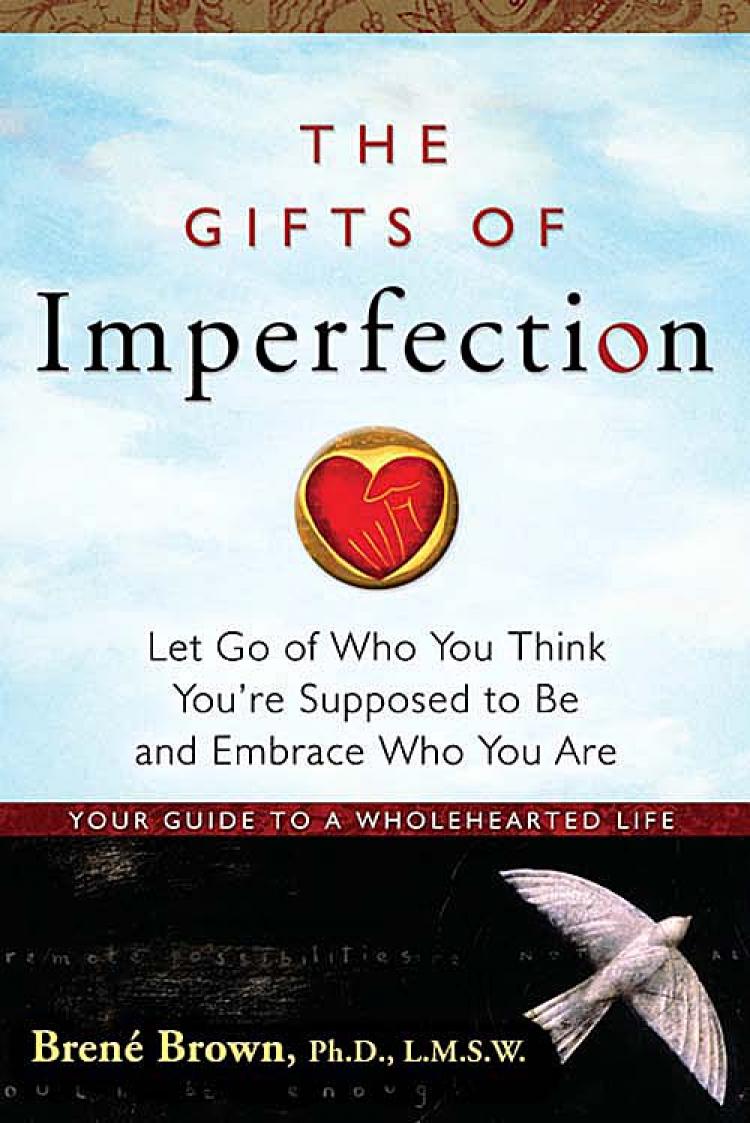
In the spirit of Brené Brown's The Gifts of Imperfection: Let Go of Who You Think You're Supposed to Be and Embrace Who You Are, my personal growth challenge for 2014 is to fail more often and to embrace imperfections.

I have always feared failure, which is fitting because one of my coping strategies to deal with a hyper-critical parent was to become a perfectionist. It worked great in school - I got good grades and the teachers loved me. Then that parent died, and I still had this perfectionist inside me.

The downside is that I have missed out on a lot of opportunities to do things because I was afraid I would not be good something new. That fear of being laughed at and being obviously not good at something was a powerful deterrent.

I have changed this quite a bit over the years - to the point that I am fine with falling on my ass trying something new. But that perfectionist is still in there, and when he fears he failed at something, he and the inner critic get together and have a shame party at my expense.

No more. 

Here are two of Brown's TED Talks on vulnerability, which is what we must embrace if we embrace imperfection. The illusion of perfection offers an invulnerability cloak (a protection from shame), but failure is raw, vulnerable, and human.

Brené Brown: Listening to Shame: TED Talk


Brené Brown: The Power of Vulnerability: TED Talk


This last video is from the Behance U99 Conference in 2013.

Brené Brown: Why Your Critics Aren't The Ones Who Count


And for one other bit of inspiration, it appears that over at the Good Men Project has a similar goal for 2014. Here is his post from yesterday.


Hey Man, Let’s Practice Imperfection in 2014
January 1, 2014 by Joe Rutland


Joe Rutland in defense of messiness, authenticity and imperfection.
Every New Year’s Day is a chance for men to either start something new or stop actions and behaviors that may not be healthy to their lives. Those infamous “New Year’s resolutions” can sometimes, without intention, become a horrendous “to-do” list that feels like a 45-pound weight swinging around a man’s neck. What if this Jan. 1 was different? What if men chose a few different actions beside the usual list of “eating healthier, exercising more, stressing out less, getting finances in order, etc.”? Let me suggest three possibilities: Choose imperfection. Choose messiness. Choose authenticity.

Being imperfect is actually a healthy emotional behavior as the stress to be perfect is lessened. Messiness shakes the reins of obsessive-compulsive behaviors and thoughts, turning them upside down. Authenticity, when practiced, can become a blessing instead of a fear-based, soul-wrenching curse.

Now when it comes to perfection and being a perfectionist, then you’ll find my name at the top of the list. Oh no, you think your name is No. 1. Nope. I’m the chief of perfectionists, meaning that I have to do every single thing in my life just right. I have to say the right words, act the right way, stuff my thoughts and feelings deep within myself and not let them out, even when sitting among what I consider safe environments and safe people. Fighting against perfectionism hasn’t been a healthy battle in my life. I have lost more times than I have won, and I’ve lost so much time and emotional energy to it.

What I can say is that I’ve learned a lot about letting go, trusting the process (whatever that looks like), and believing in myself in recent years. Reading others’ stories and hearing other men talk about how they deal with perfection has helped me greatly. Perfectionism could almost be put into a mental health category alongside shame.

One of the more enlightening pieces of literature I’ve read recently around this subject is The Gifts of Imperfection, written by Dr. Brene’ Brown, a member of the research faculty at the University of Houston Graduate School of Social Work. Dr. Brown’s work has focused around the topics of shame and fear and the subject of Wholeheartedness, about which Dr. Brown poses this question: “How do we cultivate the courage, compassion, and connection that we need to embrace our imperfections and to recognize that we are enough—that we are worthy of love, belonging, and joy?”

A lot of men are more apt to wrap their self-worth around the trophy system. You know: the trophy job, the trophy wife, the trophy car, the trophy sexual conquests, the trophy fill-in-the-blank. Then one day, a man wakes up, looks within, goes into his bathroom and stares at the mirror. “It’s all bullshit,” he mutters to his reflection. Now this could be called a rude awakening. It also could be called a spiritual awakening. Not one of blazing chariots of fire coming down from the heavens and lifting the veil from his eyes, per se. But this moment is powerful if and when it happens.

Imperfection allows breathing room for mistakes, missteps and foibles. Remember the opening scene from “The Dick Van Dyke Show” where Rob Petrie (Van Dyke) walks through his front door, leans in to kiss his wife Laura (Mary Tyler Moore), turns and starts heading toward his “Alan Brady Show” co-writers Sally Rogers and Buddy Sorrell (Rose Marie and Morey Amsterdam, respectively), and doesn’t see the ottoman in front of him and flips over it? That’s imperfection. It’s also a good sense of acrobatic timing on Van Dyke’s part. To get that scene right, he probably had to practice it a few times; therefore, getting the “imperfect” scene perfect.

Yet the image is of imperfection. Now do I put up an “image of imperfection” so that I can hold on like a drunken sailor to my perfections? God knows I’ve done my best to dump that image and trade it for reality. Oh, but my perfections protect me from you…and you…and you, too. I don’t want you to see that I make mistakes. It pisses me off when I don’t get something perfect. Even today, after years of soul work, I still catch myself starting that negative self-talk chatter when I make a mistake. It is brutal.

Living in imperfection is definitely easier. Accepting myself as I am—a man who is worthy of love, compassion, empathy, healthy sexuality, nurturing and support—sure helps my mental and emotional well-being. Come to think of it, my physical health improves, too. Imperfection, messiness and authenticity do take time and practice so they can become a part of a man’s life. For too long, men (and women, too) have been bombarding themselves with negative self-talk. It is a disease, or dis-ease, of the mind, body and spirit.

So what if someone doesn’t like what I think or write? OK.

So what if someone doesn’t believe what I believe? OK.

Is it really “OK” or, again, am I fooling myself and you with my physical responses to not pleasing you?

A very wise friend told me one time four words about physical responses that people give off to other people’s statements or words: “The body don’t lie.” Think about it. When your wife, girlfriend, employer, best friend or co-worker starts giving you a hard time about something, are you aware of your physical responses? You know, like folding your arms across your chest, making a loud sighing noise (which is really telling the person to shut up without saying “shut up”), or pressing your lips so tightly together that water flowing from Niagara Falls couldn’t get inside your mouth.

Well, I’d say it is time for me and you to give ourselves a break. Let’s do our best to drop perfectionism this year. Embrace your mistakes, foibles and faults. Know that it is OK to screw up and it’s also OK to protect yourself from others’ perfectionism.

Be imperfect. Give it a shot in 2014 and see what happens. Who knows? Your life, and mine, might change for the better.

- modified photo Plat / Flickr Creative Commons

Monday, November 11, 2013

Christopher M. Anderson - Let’s Talk About Men and Shame

Over at the Good Men Project, Chris Anderson addresses the issue of whether or not the GMP site is essentially shaming men (a charge likely leveled by those in the men's rights activists [MRA], a group that has become equivalent with misogyny).

In general, MRAs are entirely to hateful to be taken seriously. However, the one issue where they get some traction with me is around men's rights in court decisions about custody of their children. Too many men are denied shared custody of their kids in divorces - it seems the woman must be an active drug addict or be sexual molesting the children for the man to get custody.

Anyway . . . .

The Urban Dictionary gives some more, uh, precise, definitions of MRAs"

1. MRA

Acronym for a group called Men's Rights Activists.
I.E. - A bunch of whiny pedantic morons that think there is some vast Illuminati feminist conspiracy while seemingly ignoring the fact that their own gender runs the majority of the world.
 
- Hey, you hear about that guy in Marketing that complains about his ex-wife all the time?
--- Yeah, I heard that he just got a raise and tried to take his ex to court to reduce his child support.
- Jeez, what a MRA.

2. MRA

An MRA is a troglodyte that writes “women’s rights --- ROFLOL!“ and “a woman is the useless skin around the vagina” on Urban Dictionary.

An MRA thinks that a woman should be locked in the kitchen and “slammed and beaten” (a quote). They are scared shitless that one day women might become truly equal and try to use all kinds of defamation and con artistry to keep women down.
 
MRA 1: Wanna hear a joke?
MRA 2: Yeah.
MRA 1: Women's rights!
MRA 2: HAHAHAHAHAHA
 

3. MRA

"MRA" means "men's rights activist."

An MRA is a white man who insists against all evidence and decency that white men are oppressed and than women and minorities are "revered and privileged."

An MRA would never support the rights of those men who truly are at a disadvantage in our society: homosexual and black men. Instead, he leaves campaigning for LGBT rights and minorities' rights to the "evil evil cunt bull dykes" aka feminists.
  • An MRA sits on a huge pile of white and male privilege and keeps whining that he is oppressed.
  • An MRA loves Pat Robertson and Bill O'Reilly, thinks that Fox news is the one and only reliable delivery mechanism for news, is a psychotic bible thumper who believes that women were made from "Adam's rib," wanks to Rush Limbaugh, supports the religious right, and has never finished high school.
There's more, but that is sufficient. You might think this is hyperbole, but it's far more accurate than it should be.
 
Anderson concludes, rightly (and I may be guilty of this), that both sides, the MRAs (he calls them MRMs) and more liberal men's advocates tend to use shame to dehumanize the other side.
Sadly, the one thing that unites both sides of the debate of whether men are inherently good or bad is that they usually turn to the rhetoric of shame and blame in an attempt to discredit their opponents. Anyone who uses shame as a tool for promoting social change profoundly misunderstands the destructive power of shame. Shame is a tool that bullies and predators use to shred the souls of their victims. How can any movement that seeks to lift people up justify methods that do nothing more than tear people down?
Good point - and point well-taken.

Let’s Talk About Men and Shame


November 3, 2013 by Christopher M. Anderson

Chris M. Anderson tackles the rather large question of how we as a society go about talking about masculinity without shame.

—–

A question about “shaming” men. Ok – so this has been coming up a LOT lately, and I want to understand it. A fair number of people are calling us out lately for “shaming” men. I am putting the word in quotes because the word confuses me. And I’d like your help figuring it out.


Lisa Hickey – aka the big cheese round these parts — posted an open question on the GMP writers Facebook page recently about whether people think GMP is a site that “shames” men and/or masculinity. (By the way, if you are a GMP contributor and you are not a part of that group – feel free to visit: Facebook Groups: GoodMenProjectWriters). Ultimately the major question that we seem to struggle with here is, “Is there actually something inherently wrong with men, and/or masculinity itself?”

There are two core attitudes at war in this debate. One side feels that masculinity has been given a bad rap and is out to “reclaim” it as it were. The other identifies masculinity with beer chugging, boob staring, and sexual obsessions that are inherently unhealthy and counter to what is required to building a just, civil, and respectful society.

Neither side is completely right, or completely wrong, in my opinion. Should a man feel guilty about lasciviously ogling pictures of bikini clad women (or rugged and half-clothed men if that’s your cup of tea)? No, but at the same time he shouldn’t allow that activity to dominate how he interacts with real people in the real world. I should not permit my lust to justify treating anyone (male or female) as nothing more than a sack of flesh that exists to satisfy my needs. The question ultimately comes down to whether there is such a thing as a socially responsible, sexually sensitive, and essentially masculine man? Or does a modern man have to trade in some part of their sexual appetite in order to be considered a “good” man?

Attempts to answer that question inevitably lead to a vicious paradox. Modern, liberal, and socially conscious people want a lifestyle that embraces a certain degree of sexual freedom and that shuns the Puritanical constraints of former times. Sexual liberation was supposed to free us from the degrading social norms that kept women in the kitchen and rewarded philandering and powerful men for being pigs. (We hate Don Draper.) But what has happened in the past 30 years? Some would say that we have regressed morally. And when you look at the shockingly high numbers of women and men that are victims of sexual violence, it can be hard to argue against that perspective. But is that really true? Are men behaving more badly than before? (We love Don Draper.) 
♦◊♦

It’s a fairly common presumption that males are, by and large, easily distracted by anything that has to do with sex. Given the popularity of columns here at GMP that include “sex” in the title, and the profundity of boobs, butts, and cleavage surrounding us in all other forms of media, there seems little reason to debate the point. But does modern, stereotypical “male” media really reinforce and encourage dangerous and harmful kinds of sexist behavior in men (and accordingly permissive attitudes in women)? I’m somewhat dubious of that claim, especially when much of stereotypically “female” media is just as “sex” obsessed as their “male” media counterparts. Like it or not, we may simply be stuck with this paradox between sex and reason. Our sexuality is a primal, animalistic part of our selves, one that does not always play by the nice, rational rules that we want to establish for our society.

But this is not a satisfactory answer for those who earnestly believe that there are social ills that require fixing, and for whom outdated masculine norms and patriarchal social structure lie at the root of all wrong. There’s plenty of things that obviously cry out for change. I’m not at all saying that we have to tolerate sexual violence simply because we are not pure rational creatures. But neither can we expect that demonizing masculinity or male sexuality will improve the social condition and the behavior of men and boys en masse.

But that’s precisely the tact that many in the modern men’s movement have taken. In response to which, an increasingly loud and emphatic “Men’s Right’s Movement” (MRM) has come to the fore in an attempt to discredit what they see as an unwarranted attack on maleness. There are certainly justifiable objections to much of the “man-bashing” that many people see in the social changes made possible by the rise of modern feminist theory. To name one example, it’s virtually impossible in many communities for male survivors of sexual and domestic violence to get any assistance and protection at all. But GMP is not, and will never become, a bastion of Men’s Right’s theory in response. (For more info on the MRM and it’s more outrageous attitudes, see R. Tod Kelley’s piece recently published in the Daily Beast). 
♦◊♦

Sadly, the one thing that unites both sides of the debate of whether men are inherently good or bad is that they usually turn to the rhetoric of shame and blame in an attempt to discredit their opponents. Anyone who uses shame as a tool for promoting social change profoundly misunderstands the destructive power of shame. Shame is a tool that bullies and predators use to shred the souls of their victims. How can any movement that seeks to lift people up justify methods that do nothing more than tear people down? Ultimately, I believe what we want to promote is healing, not harm. Is a drunken frat boy really going to change his ways because an “enlightened” soul has come to his campus to speak on the ills of modern masculinity? So long as the kegs are flowing at the tailgate parties, I doubt it very much. But more than that – why is it so hard to get some crusaders for sexual and social justice to see that that frat boy might himself be a victim who might be drinking to excess precisely because it is so hard for him to get the help that, were he a woman, might (and I stress might) be more readily supplied?

Men have evolved to be what we are—an often infuriating blend of lustful impulse and emotional sensitivity. Fostering a “healthier” masculinity starts with understanding that masculinity itself isn’t a bad thing, it is what we are. We should be finding better ways to hold men (and women) accountable for the harm they cause and reward them for the good they do, that’s ultimately what GMP and the discussions fostered here are working towards.


Photo: bmente / flickr

Wednesday, September 4, 2013

Taking Sick Days - And Shaming Myself for "Being Lazy"


I get sick about once every five or six years, and this is one of those times. In my head, I know I need to rest and rebuild my strength, and I know that it's better to stay home and not get others sick than to fight through it and work anyway (which has been my pattern). But my rational mind is not always in control - at another level I am shaming myself for "being lazy," for "abandoning my clients," for "not being invincible."

I put those beliefs in quotation marks because I know they are not true, but my inner critic (see here, here, and here) uses phrases like that to shame me, to remind myself that I am "lazy, irresponsible, and inconsiderate." Those are some of the messages I internalized as a child (thanks Dad, thanks Mr. Laney [2nd grade teacher], and thanks Mr. Fox [6th grade teacher]).

Some part of me, that internalized critic, truly believes I should never get sick, never miss work days, never fail to be there for my clients. And it really doesn't really help to know that other people struggle with this, too.

As I write this, hoping that maybe some other guys (or gals) will find this useful and supportive, I keep bringing myself back to my breath. I seek the compassionate observer within (or simply observing self, see here and here) and try to view being sick and how my critic responds, holding both parts of me in compassion.

If you are new to this kind of work, here is an exercise from Dr. Krisitn Neff (author of Self-Compassion Stop Beating Yourself up and Leave Insecurity Behind), from her website, where she offers a lot of free worksheets, exercises, and meditations (the meditations are by Dr. Christopher Germer, author of The Mindful Path to Self-Compassion: Freeing Yourself from Destructive Thoughts and Emotions):

The criticizer, the criticized, and the compassionate observer


This exercise is modeled on the two-chair dialogue studied by Gestalt therapist Leslie Greenberg. In this exercise, clients sit in different chairs to help get in touch with different, often conflicting parts of their selves, experiencing how each aspect feels in the present moment.
To begin, put out three empty chairs, preferably in a triangular arrangement. Next, think about an issue that often troubles you, and that often elicits harsh self-criticism. Designate one chair as the voice of your inner self-critic, one chair as the voice of the part of you that feels judged and criticized, and one chair as the voice of a wise, compassionate observer. You are going to be role-playing all three parts of yourself - you, you, and you. It may feel a bit silly at first, but you may be surprised at what comes out once you really start letting your feelings flow freely.

1) Think about your “issue,” and then sit in the chair of the self-critic. As you take your seat, express out loud what the self-critical part of you is thinking and feeling. For example “I hate that fact that you’re such a whimp and aren’t self-assertive.” Notice the words and tone of voice the self-critical part of you uses, and also how it is feeling. Worried, angry, self-righteous, exasperated? Note what your body posture is like. Strong, rigid, upright? What emotions are coming up for you right now?

2) Take the chair of the criticized aspect of yourself. Try to get in touch with how you feel being criticized in this manner. Then verbalize how you feel, responding directly to your inner critic. For example, “I feel so hurt by you” or “I feel so unsupported.” Just speak whatever comes into your mind. Again, notice the tone of your voice? Is it sad, discouraged, childlike, scared, helpless? What is your body posture like? Are you slumped, downward facing, frowning?

3) Conduct a dialogue between these two parts of yourself for a while, switching back and forth between the chair of the criticizer and the criticized. Really try to experience each aspect of yourself so each knows how the other feels. Allow each to fully express its views and be heard.

4) Now occupy the chair of the compassionate observer. Call upon your deepest wisdom, the wells of your caring concern, and address both the critic and the criticized. What does your compassionate self say to the critic, what insight does it have? For example, “You sound very much like your mother” or, “I see that you’re really scared, and you’re trying to help me so I don’t mess up.” What does your compassionate self say to the criticized part of yourself? For example, “It must be incredibly difficult to hear such harsh judgment day after day. I see that you’re really hurting” or “All you want is to be accepted for who you are.” Try to relax, letting your heart soften and open. What words of compassion naturally spring forth? What is the tone of your voice? Tender, gentle, warm? What is your body posture like - balanced, centered, relaxed?

5) After the dialogue finishes (stop whenever it feels right), reflect upon what just happened. Do you have any new insights into how you treat yourself, where your patterns come from, new ways of thinking about the situation that are more productive and supportive? As you think about what you have learned, set your intention to relate to yourself in a kinder, healthier way in the future. A truce can be called in your inner war. Peace is possible. Your old habits of self-criticism don’t need to rule you forever. What you need to do is listen to the voice that’s already there, even if a bit hidden - your wise, compassionate self.
It can take some practice to not feel weird doing exercises such as this, but it's worth the effort and the sense of feeling silly. In fact, this work can trigger inner critic response, offering more fuel for the work of developing self-compassion.

Thursday, August 15, 2013

Dr Brené Brown - The Power of Vulnerability (at The RSA)


On July 4th, Dr. Brené Brown spoke at The RSA about her research into vulnerability, courage, worthiness, and shame. The original talk of over an hour is no longer available in video format, but The RSA has just released a 20+ minute "highlights" video (why!??), which is below. There is also a link to the full audio of the event below the video.

Brown's books include I Thought It Was Just Me (but it isn't): Making the Journey from "What Will People Think?" to "I Am Enough" (2007), The Gifts of Imperfection: Let Go of Who You Think You're Supposed to Be and Embrace Who You Are (2010), and Daring Greatly: How the Courage to Be Vulnerable Transforms the Way We Live, Love, Parent, and Lead (2012).

As usual, this talk is informational and entertaining. I have posted her talks many times over at Integral Options Cafe, but it occurred to me this morning that we, as men, need this as much or more than do women. 


We are raised to believe vulnerability = weakness, and that to be vulnerable makes us less than ______ (fill in the blank, with some choices being masculine, manly, strong). When we feel vulnerable, and ALL human beings do at some point, then we feel ashamed and weak. 

The truth, however, is that it takes much more strength and courage to be vulnerable than it does to pretend that nothing gets to us, that we do not have a tender open heart. We do. We simply must learn how to be okay with that, and add vulnerability to the list of masculine traits.

Dr Brené Brown - The Power of Vulnerability


Published on Aug 15, 2013

Influential author and speaker Dr Brené Brown tackles the myth that vulnerability is a weakness. Instead, she argues, it is the clearest path to courage and meaningful connection, and has the power to transform the way we engage and educate.

Listen to the podcast of the full event including audience Q&A.

Follow the RSA on Twitter: http://www.twitter.com/thersaorg
Like the RSA on Facebook: http://www.facebook.com/thersaorg

Our events are made possible with the support of our Fellowship. Support us by donating or applying to become a Fellow.

Donate: http://www.thersa.org/support-the-rsa
Become a Fellow: http://www.thersa.org/fellowship/apply

Thursday, April 11, 2013

Know Your Shadow (Robert Augustus Masters) and Master the Neuroscience of Change (Kelly McGonigal)

I don't generally endorse products on any of my blogs, other than books in review, but this is a little different. One of the things I promote and try to embody in this blog is the receptiveness to change and personal growth that can open and make tender the masculine heart.

Each of the Sounds True offerings below are excellent tools for that kind of transformation. If you are a professional, CEUs are also available.

First, integral psychotherapist and teacher Robert Augustus Masters offers a course on Knowing Your Shadow, designed to help each of us "discover and cultivate intimacy with the endarkened aspects of yourself including core wounds and difficult emotions." I've been reading Masters' work for many years now and I can recommend his teachings without reservation - he offers essential tools for transforming ourselves into better men, better human beings.

The other recommendation is for Kelly McGonigal's The Neuroscience of Change, a course in personal transformation based in mindfulness and self-compassion. She explains how to "nourish the seeds of change and transformation by working with inner experiences as the key to making outward change through willingness, self-awareness, and surrender." This feels like a very useful melding of the work of Kristin Neff (mindfulness and self-compassion) and Dan Siegel (mindfulness and neuroplasticity).

If you would like to support this blog, and these courses feel useful to you, please order them through the links below, If you do so, I will make a little coin to buy more of these programs (and books) so that I can recommend for you the ones I feel are most relevant and useful to readers of this blog.

Knowing Your Shadow
Becoming Intimate with All That You Are
 

Robert Augustus Masters

from Sounds True


Description


“Why are the people around me so difficult?” “Why do I keep getting in situations like this?” Our shadow side, teaches Robert Augustus Masters, contains the emotions and desires we've disowned, neglected, or hidden from ourselves. If not skillfully worked with, it can easily direct our lives on every level. With Knowing Your Shadow, this acclaimed psychotherapist and author shows us how to illuminate and wisely engage with the endarkened aspects of who we are. Join him to explore in depth the areas where shadow work can most benefit us, including:
  • Discovering and cultivating intimacy with the endarkened aspects of yourself
  • Identifying and healing your core wounds
  • Working effectively with anger, fear, shame, guilt, and other difficult emotions
  • Understanding how your shadow influences those around you, often beyond conscious awareness
  • Guided practices, meditations, and exercises for developing more authenticity and wholeness in your personal and workplace relationships, your sexuality, and your spiritual path
Our moods and relationships often seem to have a life of their own. Knowing Your Shadow offers exceptional support for taking charge of your life at a deep level, providing expert guidance and instruction to discover and make wise use of what lies hidden or otherwise neglected within us.

Learn More About:

  • Becoming intimate with your shadow
  • Relating wisely to shame and guilt
  • Ending your suffering by entering your pain
  • Exploring the presence of your past
  • Freeing yourself from your inner critic
  • Working with fear, anger, and other darker emotions
  • Bringing sex out of the shadows—how we eroticize our unmet needs
  • The signs of spiritual bypassing
  • Healthy spirituality
  • Becoming intimate with all that you are


Music by Diane Bardwell


Knowing Your Shadow - Session Titles
Session 1: Becoming Intimate with Your Shadow
Session 2: Becoming Intimate with Your Reactivity and Pain
Session 3: Relating Wisely to Your Inner Critic, Shame, and Guilt
Session 4: Becoming Intimate with Your Darker Emotions
Session 5: Bringing Sex Out of the Shadows
Session 6: Spirituality's Shadow

6 CE credits available!
» Learn more
» Calculate how many home study hours are allowed per renewal period

Want to buy the CE credits only? If you already purchased this title, you can purchase the CE credits separately.

NOTE: CE credits are available for US customers only.

Course objectives:
  • Discuss how to discover and cultivate intimacy with the endarkened aspects of yourself including core wounds and difficult emotions
  • Explain how your shadow influences those around you, often beyond conscious awareness
  • Define the signs of spiritual bypassing versus healthy spirituality
  • Discuss how to free yourself from your inner critic
  • Summarize how to become intimate with all that you are
  • Utilize guided practices, meditations, and exercises for developing more authenticity and wholeness in your personal and workplace relationships, your sexuality, and your spiritual path

* * * * *

The Neuroscience of Change
A Compassion-Based Program for Personal Transformation
 

Kelly McGonigal

from Sounds True


Description 

Personal Transformation Based on Mindfulness and Self-Compassion

What's your most important goal? Why does it matter so deeply? How will you overcome the obstacles? Answer these questions with sincerity, proceed with mindfulness and compassion, and you have just set in motion a revolutionary method for personal change that is supported by both the latest science and traditional wisdom. On The Neuroscience of Change, psychologist and award-winning Stanford lecturer Kelly McGonigal presents six sessions of breakthrough ideas, guided practices, and real-world exercises for making self-awareness and kindness the basis for meaningful transformation.

Practical Methods to Retrain Your Brain to Support Your Goals

Our understanding of the incredible power of the human brain is at an all-time high, with the emerging fields of neuroscience, evolutionary psychology, and psychophysiology opening new possibilities for greater health, happiness, and freedom from suffering. Drawing on her training as a research scientist and longtime practitioner of meditation and yoga, Dr. McGonigal reveals these startling findings—including the clinically supported methods for training the mind away from default states and negativity that no longer serve us and establishing behaviors and attitudes aligned with our highest values and aspirations.

The First Rule of Change: It's Already Happening

As the world's wisdom traditions teach and science is now verifying, our lives are in fact defined by constant change. Whether you're looking to change a behavior, improve your health or other circumstances, or simply for a way to bring hope and resilience into your life as it is, The Neuroscience of Change will help you trust yourself and unfold your true capacities for personal transformation.

Highlights
  • Willingness, self-awareness, and surrender—how to nourish the seeds of change
  • Focusing on the process, not the outcome
  • How to overcome the “trigger-to-instinct” reaction
  • The proven benefits of meditation—and how to start practicing yourself
  • How to transform self-criticism into self-compassion
  • Why your mind creates habits—and how to consciously create new ones
  • Making values-driven commitments
  • Visualization and the principle of “encoding prospective memories”
  • The power of the vow
  • “Deep activation” and the danger of rejecting what is
  • Working with inner experiences as the key to making outward change
  • Six hours of breakthrough science, practical wisdom, guided exercises, and mindfulness meditations for making positive change that lasts

6.5 CE credits available!

» Learn more
» Calculate how many home study hours are allowed per renewal period

Want to buy the CE credits only? If you already purchased this title, you can purchase the CE credits separately.

NOTE: CE credits are available for US customers only.

Course objectives:
  • Discuss how to nourish the seeds of change and transformation by working with inner experiences as the key to making outward change through willingness, self-awareness, and surrender.
  • Explain how to transform self-criticism into self-compassion
  • Discuss the value of vows, "encoding prospective memories," making values-driven commitments and how to overcome the "trigger-to-instinct" in the process of transformation and change.
  • Practice guided reflections based on breakthrough science, practical sensibility, and wisdom traditions, including exercises and mindfulness meditations that for making positive change that lasts.

Wednesday, March 20, 2013

Brené Brown - Shame Corrodes Our Ability to Believe We Are Capable of Change


New York City, under Mayor Bloomberg's direction, recently unveiled its new anti-teen pregnancy campaign, with a series of posters similar to the one above (which is part of the series). A lot of people who are frequently liberal allies of Bloomberg have denounced the ad campaign, including Planned Parenthod:
Planned Parenthood issued a statement denouncing the poster campaign, saying that it ignored the racial, economic and social factors that contribute to teenage pregnancy and instead stigmatized teenage parents and their children.
Brené Brown - author of Daring Greatly: How the Courage to Be Vulnerable Transforms the Way We Live, Love, Parent, and Lead, The Gifts of Imperfection: Let Go of Who You Think You're Supposed to Be and Embrace Who You Are, and I Thought It Was Just Me (but it isn't): Making the Journey from "What Will People Think?" to "I Am Enough", among other works - also weighs in on the issue, and she suggests (rightfully so) that shaming these young mothers is pouring salt in an open wound. Most of them probably did not plan to be mothers, but it happened, and shaming them for it will just create even more shame as they shame themselves.

She should know - Brown is one of the leading researchers and writers on shame in the U.S., and her TED Talks (The Power of Vulnerability, 2010, and Listening to Shame, 2012) have been HUGE successes.

This is from Brown's blog.

Public Shaming is a Better Example of "If it feels good - do it" than Teen Pregnancy


March 20, 2013


Richard Reeves’ New York Times Op/Ed arguing that shame is an essential ingredient of a healthy society is not only wrong, but also potentially more dangerous to parents, children, and society than teen pregnancy – the example he uses in his argument.

Last week New York City unveiled its public education campaign targeting teenage pregnancy. Taking a page from the Georgia obesity campaign and Nathaniel Hawthorne’s The Scarlet Letter, the campaign features pictures of tear-stained toddlers admonishing their teen mothers for ruining their lives.

The ads are painful, and in a moment of sheer frustration and anger, I thought about ditching this article and just sending both Reeves and Mayor Bloomberg pictures of tear-stained pregnant teenagers staring out and declaring: “Please don’t attack my self-worth. I’m already struggling and desperate for love and belonging.”

Having spent the past decade studying shame, courage, and vulnerability, I know that ploy is cheap, easy, and ineffective. I’m going old school – with facts.

To be effective, all shame- and stigma-based campaigns rely on the intended audience’s feeling empathy and guilt when they see the images. In New York the goal is for teenagers to see the forlorn toddlers and think, “I don’t want to do that to a child.” In anti-obesity ads, the goal is for parents to see a desperate child saying, “Please help me. I don’t want to be fat,” and think, “I’ve got to start making better choices for my family.”

Here’s the rub:

Shame diminishes our capacity for empathy.

Shame corrodes the very part of us that believes we are capable of change.


You can’t depend on empathetic connection to make a campaign effective, then crush the needed empathy with shame.

Researchers June Tangney and Ronda Dearing, authors of Shame and Guilt, explain that feelings of shame are so painful that it pulls the focus to our own survival, not the experiences of others.

Example: A man shakes a bottle of pills in his wife’s face, “Look around you! Your pill-popping is destroying our family. Our son is failing out of school and our daughter is literally starving herself for attention. What's wrong with you?”

Does the shame of what she’s doing to her family lead her to get help, or does it lead her to slink away and get high? After-school specials tell us she gets help. Data say she gets high. In fact, new research shows that some addiction may be born of shame and that shame leads to relapse rather than relapse prevention.

A man is convicted of domestic abuse and the judge sentences him to stand downtown during rush hour holding a sign that says, “I am a wife beater.” Would you like to be the woman he comes home to that night? Are you safer when he’s in shame or repairing shame?

Reeves basically makes the good shame/bad shame argument, explaining that shame should be used in some ways but not others.

I don’t see any evidence of “good shame.” Not in my research and not in the research being done by other affect researchers.

I define shame as “the intensely painful feeling or experience of believing we are flawed and therefore unworthy of love and belonging.” Along with many other shame researchers, I’ve come to the conclusion that shame is much more likely to be the source of dangerous, destructive, and hurtful behaviors than it is to be the solution.

It is human nature, not just the nature of liberals (as Reeves argues), to want to feel affirmed and valued. When we experience shame, we feel disconnected and desperate for belonging and recognition. It’s when we feel shame or the fear of shame that we are more likely to engage in self-destructive behaviors, to attack or humiliate others, or to stay quiet when we see someone who needs our help.

Making the distinction between good and bad shame, and promoting so-called good shame is like saying there’s “good starvation” and “bad starvation” and that we need to address the obesity epidemic with “good starvation.” Just like there’s no such thing as “good starvation,” there’s no such thing as “good shame.”

The “good shame” that Reeves describes is actually a combination of guilt and empathy. And, interestingly, there is actually significant research on the important roles both guilt and empathy play in pro-social, positive behavior.

Is this just a case of semantics? No. We don’t refer to balanced, healthy eating as “good starvation” because it’s confusing, inaccurate, and misleading. It also obscures and confuses what we really need to do to move toward positive social outcomes.

The majority of shame researchers agree that the difference between shame and guilt is best understood as the difference between “I am bad” and “I did something bad.” Shame is about who we are, and guilt is about our behaviors.

When we apologize for something we’ve done, make amends to others, or change a behavior that we don’t feel good about, guilt is most often the motivator. Of course, you can shame someone into saying, “I’m sorry,” but it’s rarely authentic. Guilt is as powerful as shame; it just doesn’t have the paralyzing and debilitating impact that prevents shame from being an effective agent of meaningful change.

Empathy is the ability to put ourselves in someone else’s place in order to understand what they are feeling. When we are empathetic, we can listen and respond authentically to others, and we have the skills to consider how our actions will impact others.

Again, why don’t we just refer to guilt and empathy as “good shame”? Because it’s inaccurate. It clouds the fact that being empathetic and communicating with others (colleagues, children, partners, friends) without using shame requires most of us to develop new skills. Labeling these skills “good shame” moves us away from the hard work of understanding, identifying, and acquiring the knowledge we need to change.

Based on my own experiences with shame (we all have it) and what I’ve learned about it as a researcher, I know the intense pain, isolation, and fear it causes. I’m not proud to say this, but even with this knowledge, if I thought shaming people would, in the long run, keep them safer and make the world a better place, I might do it. As a parent and an observer of human behavior, I can get extremely fearful, and that fear might allow me to overlook the pain caused by shame if I thought it would ensure a better outcome.

Fortunately, I don’t have to wrestle with that moral dilemma because we know that shame never works as a catalyst for healthy, lasting change.

Shame is at the core of violence, addiction, disengagement, and fear. Shame is about anger and blame, not accountability and change. Meaningful change means understanding the realities of these girls’ lives (and the boys who get them pregnant) and working with them to cultivate educational opportunities, hope, and support.

Reeves writes, “We need a sense of shame to live well together. For those with liberal instincts, this is necessarily hard. But it is also necessary.” I’m not sure what he means by “liberal instincts,” but what I do know is that using shame as a tool when we are frustrated, angry, or desperate to see behavior change in people is a much better example of the “it feels good – do it” ethos than the teen pregnancy problem. We might feel justified in belittling and humiliating people, but it makes the world a more dangerous place.

I'd love to know what you think. Respectful debate and discussion is always welcome! ​

Saturday, February 23, 2013

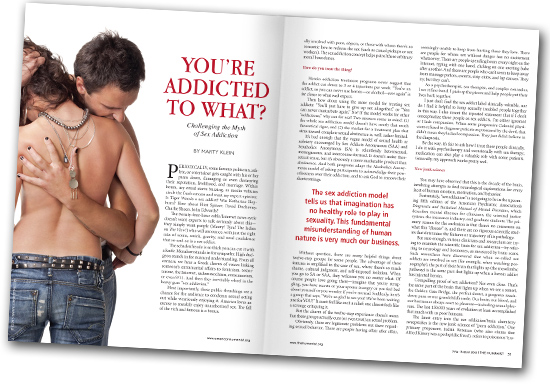
Marty Klein - Challenging the Myth of Sex Addiction (and My Reply)

Dr. Marty Klein is a licensed marriage and family therapist and certified sex therapist in Palo Alto, California - and he seems to think that the notion (diagnosis) of sex addiction is a load of crap. While there is a lot I agree with in this post (especially the repugnant cop-out of "sex addiction" for celebrities and politicians who get caught in affairs), there is even more that my experience tells me is simply wrong.

My girlfriend is a Certified Sex Addiction Therapist and we both have worked with men (and in her case some women, I believe) who are, beyond a doubt, sex addicts. These people have lost homes, spouses, jobs, and all of their assets because of their addiction. This is a little different than being a womanizer or surfing too much internet porn.

The key factor for sex as an addiction, in my opinion, is that it is a compulsive form of self-medication. Sex addiction is a process addiction (a behavior rather than a substance), and its cycle looks like this:


Patrick Carnes, who Klein rightly acknowledges as the pioneer in sex addiction diagnosis and treatment, identifies four core beliefs held by most sex addicts in one form or another (and if you substitute something else for sex in the fourth one, like cocaine, heroin, or food, these may apply to all addicts).
  1. I am basically a bad, unworthy person
  2. No one would love me as I am
  3. My needs are never going to be met if I have to depend upon others
  4. Sex is my most important need
Let's unpack these a little more (all of this material comes from Patrick Carnes, Out of the Shadows: Understanding Sexual Addiction):
The first core belief of the addict is “I am basically a bad, unworthy person.” Abandonment means being unwanted. The child can only conclude that being unwanted means being unworthy and bad.
___

A second core belief comes from the first core belief about the child being a bad person. Because of personal unworthiness, the child believes, “No one would love me as I am.” Relationships with others become more tenuous the deeper this belief is. Children grow up believing that no one will accept them unconditionally. People will not be there; they cannot be trusted or depended on. If they do want a relationship, it is because they want something—not because they care. There will always be a price to pay. Minimally, there will be something that must be overlooked, ignored, or denied. To be close will mean to lose reality or integrity somehow. So intimacy is avoided.
___

[I]n the lonely search for something or someone to depend on—which has already excluded parents—a child can start to find those things which always comfort, which always feel good, which always are there, and which always do what they promise. For some, alcohol and drugs are the answer. For others it is food. And there is always sex, which usually costs nothing and nobody else can regulate.

This choice stems from the addict’s third core belief that is about needs: “My needs are never going to be met if I have to depend upon others.” In healthy families, children have a deep sense that their parents care for them as opposed to abandoning them.

Healthy parenting includes touching, loving, affirming, and guiding. The child feels cared for even when struggling with rules and limits. Trust in one’s self, as well as trust of others, emerges in that relationship.

When a child’s exploration of sexuality goes beyond discovery to routine self-comforting because of the lack of human care, there is potential for addiction [emphasis added]. Sex becomes confused with comforting and nurturing. Moreover, the assumption is made that everyone else feels and acts the same. Therefore, to feel secure means to be sexual.

Consequently, the child’s relationships with people have the potential for being replaced with an addictive relationship with sexuality. Addiction is a relationship—a pathological relationship in which sexual obsession replaces people. And it can start very early. The final core belief of the addict emerges clearly: “Sex is my most important need.

The kinds of childhood situations described here are further complicated when the children are surrounded by negative rules, messages, and judgments about sex. When addicts and their spouses study their families of origin, they are flooded with memories of events where they were told that being sexual was bad or, worse, that they were bad for being sexual.

When children’s primary source of comfort is sex and yet they are told by those whose judgments count the most that to be sexual is perverse, the conclusions they make about themselves are clear. They are unlikable. They need to hide that central part of themselves, which others will despise. Rather than repressing the sexual behaviors, they hide them or keep them secret. Needing to keep that central part of themselves secret adds to the pain and loneliness—which, in turn, creates a need for comfort, making the sexual fix that much more necessary.
In my experience, the self-medicating aspect is a reply to the inner sense of worthlessness and feeling unlovable. Some kids who have this sense of shame discover alcohol or drugs (for me it was alcohol and marijuana), other kids discover sex or food - either way, what is a normal healthy behavior becomes pathological because it is used to numb, to dissociate, to medicate away the pain of living with shame.

The worst part of it is that the addict feels more shame when s/he tries to control or stop the behavior and can't - then they act out to numb that shame, and the cycle spirals downward until the person's life is out of control.

You’re Addicted to What?
Challenging the Myth of Sex Addiction


by: Marty Klein
Published in the July/August 2012 Humanist


Periodically, some famous politician, athlete, or entertainer gets caught with his or her pants down, damaging or even destroying their reputation, livelihood, and marriage. Within hours, my email starts buzzing, as media vultures circle the fresh carcass and want my expert opinion: Is Tiger Woods a sex addict? Was Katharine Hepburn? How about Eliot Spitzer, David Duchovny, Charlie Sheen, John Edwards?

The twenty-four-hour cable/Internet news cycle doesn’t want experts to talk seriously about this—they simply want people (Maury! Tyra! The ladies on The View!) who will announce, with just the right mix of scorn, smirk, gravity, and total confidence that so-and-so is a sex addict.

The schadenfreude is so thick you can cut it with a knife. Moralism stands in for sympathy. High dudgeon stands in for nuanced understanding. From all corners, we hear a Greek chorus of voices linking someone’s extramarital affairs to feminism, testosterone, the Internet, sadomasochism, consumerism, or even 9/11. And then they inevitably wheel in the heavy gun: “sex addiction.”

Most importantly, these public thrashings are a chance for the audience to condemn sexual acting out while vicariously enjoying it. America loves an excuse to sneakily enjoy unauthorized sex. The fall of the rich and famous is a bonus.

So when USA Today calls about Eliot Spitzer’s high-end escorts, or CNN emails about Anthony Weiner’s sexting, I’m usually pretty slow to respond to the ghoulish invitation.

I don’t diagnose people I haven’t met. More importantly, I don’t use the diagnosis of sex addiction. In thirty-one years as a sex therapist, marriage counselor, and psychotherapist, I’ve never seen sex addiction. I’ve heard about virtually every sexual variation, obsession, fantasy, trauma, and involvement with sex workers, but I’ve never seen sex addiction.

New patients tell me all the time how they can’t keep from doing self-destructive sexual things; still, I see no sex addiction. Instead, I see people regretting the sexual choices they make, often denying that these are decisions. I see people wanting to change, but not wanting to give up what makes them feel alive or young or loved or adequate; wanting the advantages of changing, but not wanting to give up what makes them feel they’re better or sexier or naughtier than other people. Most importantly, I see people wanting to stop doing what makes them feel powerful, attractive, or loved, but since they don’t want to stop feeling powerful, attractive or loved, they can’t seem to stop the repetitive sex clumsily designed to create those feelings.

The conflict over sex addiction is important to humanists for several reasons. “Sex addiction” is a special weapon now used by the religious right to combat perceived liberalism, to ignore science, and to ignite fear. It also helps legitimize anti-sex moralism and bigotry. And psychologists, judges, legislators, and the media are buying it.
When people refer to themselves or others as “sex addicts,” what are they actually talking about? More than anything, simple narcissistic character structure: the familiar “I guess I thought I could get away with it,” “Deep down, I don’t really believe the rules apply to me,” or “When I hurt, I want relief, and I don’t care so much about breaking promises or hurting others.”

If that sounds like normal people—if that sounds like you—it’s not surprising. Narcissism is a common human condition. So here’s my evaluation of almost everyone who is diagnosed as a sex addict—by themselves, their loved ones, or an addictionologist: it’s someone who is unhappy with the consequences of their sexual choices, but who finds it too emotionally painful to make different choices. You know, the way some of us are with cookies, new sweaters, or watching the Kardashians on TV.

Which is to say, it’s not about the sex. It’s about the immature decision-making.

The rest of the people who are in pain about their sexual decision-making are generally struggling with one or more of the following: compulsivity, impulsivity, obsessive-compulsive disorder, bipolar disorder, borderline personality disorder, or post-traumatic stress disorder. An idiosyncratic response to medication can even be a factor.

So when people talk about sex addiction, they’re really talking about all of these, and more. When someone says, “sexually, I’m out of control,” that doesn’t tell us very much. When we know someone has affair after affair; or that someone regularly masturbates to the point of pain; or that someone constantly pressures his wife for sex regardless of how unrealistic it is (she’s post-partum, she has the flu, his parents are in the next room, they had a big fight just a few hours ago); or that someone is pursuing anonymous sex in public parks in a way that’s begging for jail time and loss of career; or that someone watches three hours of porn per night, we simply don’t know very much about the person.

On the other hand, anyone who says “sexually, I’m out of control” is automatically welcomed into the fellowship of sex addicts—without any attempt to evaluate that person’s mental state. Sex therapists generally don’t get distracted by the sexual part of patients’ stories. Those without training in sexuality—like so-called sex addiction counselors—often do.

Let’s examine this cultural phenomenon in more detail.
Read the whole article