Showing posts with label shadow work. Show all posts

Thursday, April 11, 2013

Know Your Shadow (Robert Augustus Masters) and Master the Neuroscience of Change (Kelly McGonigal)

I don't generally endorse products on any of my blogs, other than books in review, but this is a little different. One of the things I promote and try to embody in this blog is the receptiveness to change and personal growth that can open and make tender the masculine heart.

Each of the Sounds True offerings below are excellent tools for that kind of transformation. If you are a professional, CEUs are also available.

First, integral psychotherapist and teacher Robert Augustus Masters offers a course on Knowing Your Shadow, designed to help each of us "discover and cultivate intimacy with the endarkened aspects of yourself including core wounds and difficult emotions." I've been reading Masters' work for many years now and I can recommend his teachings without reservation - he offers essential tools for transforming ourselves into better men, better human beings.

The other recommendation is for Kelly McGonigal's The Neuroscience of Change, a course in personal transformation based in mindfulness and self-compassion. She explains how to "nourish the seeds of change and transformation by working with inner experiences as the key to making outward change through willingness, self-awareness, and surrender." This feels like a very useful melding of the work of Kristin Neff (mindfulness and self-compassion) and Dan Siegel (mindfulness and neuroplasticity).

If you would like to support this blog, and these courses feel useful to you, please order them through the links below, If you do so, I will make a little coin to buy more of these programs (and books) so that I can recommend for you the ones I feel are most relevant and useful to readers of this blog.

Knowing Your Shadow
Becoming Intimate with All That You Are
 

Robert Augustus Masters

from Sounds True


Description


“Why are the people around me so difficult?” “Why do I keep getting in situations like this?” Our shadow side, teaches Robert Augustus Masters, contains the emotions and desires we've disowned, neglected, or hidden from ourselves. If not skillfully worked with, it can easily direct our lives on every level. With Knowing Your Shadow, this acclaimed psychotherapist and author shows us how to illuminate and wisely engage with the endarkened aspects of who we are. Join him to explore in depth the areas where shadow work can most benefit us, including:
  • Discovering and cultivating intimacy with the endarkened aspects of yourself
  • Identifying and healing your core wounds
  • Working effectively with anger, fear, shame, guilt, and other difficult emotions
  • Understanding how your shadow influences those around you, often beyond conscious awareness
  • Guided practices, meditations, and exercises for developing more authenticity and wholeness in your personal and workplace relationships, your sexuality, and your spiritual path
Our moods and relationships often seem to have a life of their own. Knowing Your Shadow offers exceptional support for taking charge of your life at a deep level, providing expert guidance and instruction to discover and make wise use of what lies hidden or otherwise neglected within us.

Learn More About:

  • Becoming intimate with your shadow
  • Relating wisely to shame and guilt
  • Ending your suffering by entering your pain
  • Exploring the presence of your past
  • Freeing yourself from your inner critic
  • Working with fear, anger, and other darker emotions
  • Bringing sex out of the shadows—how we eroticize our unmet needs
  • The signs of spiritual bypassing
  • Healthy spirituality
  • Becoming intimate with all that you are


Music by Diane Bardwell


Knowing Your Shadow - Session Titles
Session 1: Becoming Intimate with Your Shadow
Session 2: Becoming Intimate with Your Reactivity and Pain
Session 3: Relating Wisely to Your Inner Critic, Shame, and Guilt
Session 4: Becoming Intimate with Your Darker Emotions
Session 5: Bringing Sex Out of the Shadows
Session 6: Spirituality's Shadow

6 CE credits available!
» Learn more
» Calculate how many home study hours are allowed per renewal period

Want to buy the CE credits only? If you already purchased this title, you can purchase the CE credits separately.

NOTE: CE credits are available for US customers only.

Course objectives:
  • Discuss how to discover and cultivate intimacy with the endarkened aspects of yourself including core wounds and difficult emotions
  • Explain how your shadow influences those around you, often beyond conscious awareness
  • Define the signs of spiritual bypassing versus healthy spirituality
  • Discuss how to free yourself from your inner critic
  • Summarize how to become intimate with all that you are
  • Utilize guided practices, meditations, and exercises for developing more authenticity and wholeness in your personal and workplace relationships, your sexuality, and your spiritual path

* * * * *

The Neuroscience of Change
A Compassion-Based Program for Personal Transformation
 

Kelly McGonigal

from Sounds True


Description 

Personal Transformation Based on Mindfulness and Self-Compassion

What's your most important goal? Why does it matter so deeply? How will you overcome the obstacles? Answer these questions with sincerity, proceed with mindfulness and compassion, and you have just set in motion a revolutionary method for personal change that is supported by both the latest science and traditional wisdom. On The Neuroscience of Change, psychologist and award-winning Stanford lecturer Kelly McGonigal presents six sessions of breakthrough ideas, guided practices, and real-world exercises for making self-awareness and kindness the basis for meaningful transformation.

Practical Methods to Retrain Your Brain to Support Your Goals

Our understanding of the incredible power of the human brain is at an all-time high, with the emerging fields of neuroscience, evolutionary psychology, and psychophysiology opening new possibilities for greater health, happiness, and freedom from suffering. Drawing on her training as a research scientist and longtime practitioner of meditation and yoga, Dr. McGonigal reveals these startling findings—including the clinically supported methods for training the mind away from default states and negativity that no longer serve us and establishing behaviors and attitudes aligned with our highest values and aspirations.

The First Rule of Change: It's Already Happening

As the world's wisdom traditions teach and science is now verifying, our lives are in fact defined by constant change. Whether you're looking to change a behavior, improve your health or other circumstances, or simply for a way to bring hope and resilience into your life as it is, The Neuroscience of Change will help you trust yourself and unfold your true capacities for personal transformation.

Highlights
  • Willingness, self-awareness, and surrender—how to nourish the seeds of change
  • Focusing on the process, not the outcome
  • How to overcome the “trigger-to-instinct” reaction
  • The proven benefits of meditation—and how to start practicing yourself
  • How to transform self-criticism into self-compassion
  • Why your mind creates habits—and how to consciously create new ones
  • Making values-driven commitments
  • Visualization and the principle of “encoding prospective memories”
  • The power of the vow
  • “Deep activation” and the danger of rejecting what is
  • Working with inner experiences as the key to making outward change
  • Six hours of breakthrough science, practical wisdom, guided exercises, and mindfulness meditations for making positive change that lasts

6.5 CE credits available!

» Learn more
» Calculate how many home study hours are allowed per renewal period

Want to buy the CE credits only? If you already purchased this title, you can purchase the CE credits separately.

NOTE: CE credits are available for US customers only.

Course objectives:
  • Discuss how to nourish the seeds of change and transformation by working with inner experiences as the key to making outward change through willingness, self-awareness, and surrender.
  • Explain how to transform self-criticism into self-compassion
  • Discuss the value of vows, "encoding prospective memories," making values-driven commitments and how to overcome the "trigger-to-instinct" in the process of transformation and change.
  • Practice guided reflections based on breakthrough science, practical sensibility, and wisdom traditions, including exercises and mindfulness meditations that for making positive change that lasts.

Wednesday, January 9, 2013

Jayson Gaddis - The Modern Day Spiritual Warrior

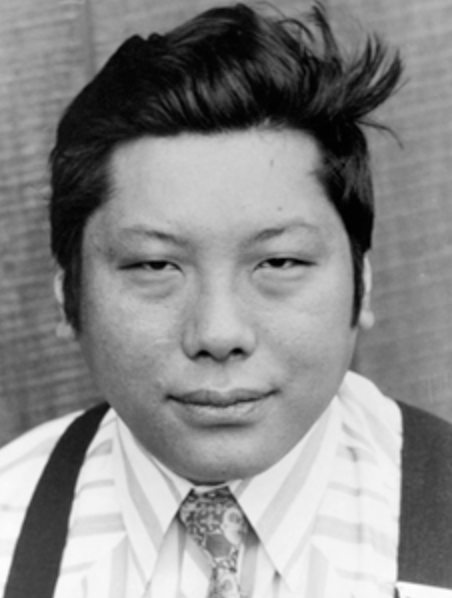
The other day, Jayson Gaddis, over at his personal blog, posted an interesting article on the "spiritual warrior," a concept that comes from Buddhism, and more specifically from Chogyam Trungpa Rinpoche. The post concludes with a short video on his upcoming Warrior Training.

This morning, Tricycle's Daily Dharma quote was from Pema Chodron, a short piece taken from an excerpted section of The Places that Scare You: A Guide to Fearlessness in Difficult Times (2001). In this short section she also addresses the idea of the spiritual warrior, which is fitting since she was Trungpa's student up until his death.

I think these are important first steps in reframing the warrior archetype toward a more compassionate and self-aware ideal. One of the things I like about Trugpa's vision of the spiritual warrior is his emphasis on having a "warrior heart."
Warriorship is so tender, without skin, without tissue, naked and raw. It is soft and gentle. You have renounced putting on a new suit of armor. You have renounced growing a thick, hard skin. You are willing to expose naked flesh, bone, and marrow to the world. 
~ Adapted from Smile at Fear: Awakening the True Heart of Bravery, by Chogyam Trungpa. Copyright 2009 by Diana J, Mukpo.
Jayson's post first:

The Modern Day Spiritual Warrior

January 5, 2013


Chogyam Trungpa Rinpoche

Recently, I realized that I’m in the business of training warriors.

But what is a warrior? what exactly do I mean?

I have not been able to find a better term than warrior. Sure, there is Jedi, Samurai, badass, etc.

But warrior is the closest term I have found for what I’m attempting to describe. And, I love that one of my teachers Chogyam Trungpa Rinpoche spoke of the sacred warrior. He was speaking to the spiritual practitioner who is willing to face their life head on and help others eliminate their suffering. It’s a bold path.

So, the term warrior must be defined here. I get that “warrior” conjures up a lot of historycially and traditional masculine roles. Pick any movie from Gladiator, to Braveheart, to Hunger Games. They all have a hero or heroine who fights to save their people or save the day. But I am not so idealistic or naive here. Sure, we are all great, heros and heroines in our own right. But let’s be realistic and true, meeting our lives directly free from unrealistic expectations, magical thinking, or fairy tales.

So, here’s my definition (or better yet aspiration) of the modern day spiritual warrior:
A modern day spiritual warrior is first and foremost a student of his or her own, direct experience. She is committed to being herself completely and her life journey is about coming home to who she really is. He is always learning, always growing. Her courage gives her the power and choice to face “what is so” directly and head on. He turns toward the darkness in order to transmute it. She learns to train the mind to serve the heart. He learns to “hold his seat” in the midst of life’s challenges. He learns to own and tame his inner stallion so that he may ride him powerfully and elegantly. She is willing to fall down, fail miserably, and get back up in order to be herself. He is embodied, emotionally literate, relationally adept. She is willing to fight, even die, for truth, love, and family. He enjoys the practice of burning up in this way. She desires, and is willing, to go all the way.
And, for the men out there, here’s a quick video about an upcoming warrior training.


And here is the Pema Chodron excerpt:

The In-between State

Pema Chodron points to the perfect training ground for the spiritual warrior—anxiety, heartbreak, and tenderness.

By Pema Chodron
The secret of Zen is just two words: not always so.—Shunryu Suzuki Roshi
It takes some training to equate complete letting go with comfort. But in fact, "nothing to hold on to" is the root of happiness. There's a sense of freedom when we accept that we're not in control. Pointing ourselves toward what we would most like to avoid makes our barriers and shields permeable.
This may lead to a don't-know-what-to-do kind of feeling, a sense of being caught in-between. On the one hand, we're completely fed up with seeking comfort from what we can eat, drink, smoke, or couple with. We're also fed up with beliefs, ideas, and "isms" of all kinds. But on the other hand, we wish it were true that outer comfort could bring lasting happiness.

This in-between state is where the warrior spends a lot of time growing up. We'd give anything to have the comfort we used to get from eating a pizza or watching a video. However, even though those things can be pleasurable, we've seen that eating a pizza or watching a video is a feeble match for our suffering. We notice this especially when things are falling apart. If we've just learned that we have cancer, eating a pizza doesn't do much to cheer us up. If someone we love has just died or walked out, the outer places we go to for comfort feel feeble and ephemeral.

We are told about the pain of chasing after pleasure and the futility of running from pain. We hear also about the joy of awakening, of realizing our interconnectedness, of trusting the openness of our hearts and minds. But we aren't told all that much about this state of being in-between, no longer able to get our old comfort from the our side but not yet dwelling in a continual sense of equanimity and warmth.

Anxiety, heartbreak, and tenderness mark the in-between state. It's the kind of place we usually want to avoid. The challenge is to stay in the middle rather than buy into struggle and complaint. The challenge is to let it soften us rather than make us more rigid and afraid. Becoming intimate with the queasy feeling of being in the middle of nowhere only makes our hearts more tender. When we are brave enough to stay in the middle, compassion arises spontaneously. By not knowing, not hoping to know, and not acting like we know what's happening, we begin to access our inner strength.

Yet it seems reasonable to want some kind of relief. If we can make the situation right or wrong, if we can pin it down in any way, then we are on familiar ground. But something has shaken up our habitual patterns and frequently they no longer work. Staying with volatile energy gradually becomes more comfortable than acting it out or repressing it. This open-ended tender place is called bodhichitta. Staying with it is what heals. It allows us to let go of our self-importance. It's how the warrior learns to love.

This is exactly how we're training every time we sit in meditation. We see what comes up, acknowledge that with kindness, and let go. Thoughts and emotions rise and fall. Some are more convincing than. others. Habitually we are so uncomfortable with that churned-up feeling that we'd do anything to make it go away. Instead we kindly encourage ourselves to stay with our agitated energy by returning to the breath. This is the basic training in maitri that we need to just keep going forward, to just keep opening our heart.

Dwelling in the in-between state requires learning to contain the paradox of something's being both right and wrong, of someone's being strong and loving and also angry, uptight, and stingy. In that painful moment when we don't live up to our own standards, do we condemn ourselves or truly appreciate the paradox of being human? Can we forgive ourselves and stay in touch with our good and tender heart? When someone pushes our buttons, do we set our to make the person wrong? Or do we repress our reaction with "I'm supposed to be loving. How could I hold this negative thought?" Our practice is to stay with the uneasiness and not solidify into a view. We can meditate, do tonglen, or simply look at the open sky—anything that encourages us to stay on the brink and not solidify into a view.

When we find ourselves in a place of discomfort and fear, when we're in a dispute, when the doctor says we need tests to see what's wrong, we'll find that we want to blame, to take sides, to stand our ground. We feel we must have some resolution. We want to hold our familiar view. For the warrior, "right" is as extreme a view as "wrong." They both block our innate wisdom. When we stand at the crossroads, not knowing which way to go, we abide in prajnaparamita. The crossroads is an important place in the training of a warrior. It's where our solid views begin to dissolve.

Holding the paradox is not something any of us will suddenly be able to do. That's why we're encouraged to spend our whole lives training with uncertainty, ambiguity, insecurity. To stay in the middle prepares us to meet the unknown without fear; it prepares us to face both our life and our death. The in-between state—where moment by moment the warrior finds himself learning to let go—is the perfect training ground. It really doesn't matter if we feel depressed about that or inspired. There is absolutely no way to do this just right. That's why compassion and maitri, along with courage, are vital: they give us the resources to be genuine about where we are, but at the same time to know that we are always in transition, that the only time is now, and that the future is completely unpredictable and open.

As we continue to train, we evolve beyond the little me who continually seeks zones of comfort. We gradually discover that we are big enough to hold something that is neither lie nor truth, neither pure nor impure, neither bad nor good. But first we have to appreciate the richness of the groundless state and hang in there.

It's important to hear about this in-between state. Otherwise we think the warrior's journey is one way or the other; either we're all caught up or we're free. The fact is that we spend a long time in the middle. This juicy spot is a fruitful place to be. Resting here completely—steadfastly experiencing the clarity of the present moment—is called enlightenment. ▼

Pema Chodron, an American Buddhist nun, is a founding member and resident teacher at Gampo Abbey, Cape Breton, Nova Scotia, the first Tibetan Buddhist monastery in North America established for Westerners. Excerpted from The Places That Scare You © 2001 by Pema Chodron. 

Saturday, July 14, 2012

Don Dianda - Learning to Embrace Our Inner Demons

Yesterday I posted on ending unhealthy cycles and transitions into new phases of our lives - and a part of that entry included a personal story by Don Dianda, author of See for your Self: Zen Mindfulness for the Next Generation, about his struggle to awaken from the self-numbing he had been doing in his life (a story all too familiar to me).
The slow change within my heart had been an ongoing process. There had been an upswelling of feeling and emotion when I had been alone hiking in the hills or swimming in the ocean. Also, brief moments of disconnect from my social life allowed questions, concerning what I was doing, to bubble up. But fear and doubt coincided with these thoughts. So, naturally I did what I was good at, I dove back into my life with added vigor. I denied. I suppressed all my inner yearnings with more alcohol, more drugs, and more meaningless relationships. I searched for more of the same to fill the growing inner void and outer disconnection—feeding my ego, only to have it come back to me over and over again. There was something deep inside that persisted in repelling my unconscious overtures. Though I did not realize it at the time, my Self was saving me from myself.
Those could easily be my words, right down to the "upswelling of feeling and emotion" that comes when we are alone in nature, when there is space for the still small voice of awareness to be heard.

I liked Dianda's writing, so I looked for more at The Mindful Word blog and came across this one, which I quite like. By the way, The Mindful Word seems like a very cool blog, so check it out.

DOING THE DIRTY WORK: Learning to embrace our inner demons

DOING THE DIRTY WORK: Learning to embrace our inner demons

By Don Dianda | July 13, 2012

In Buddhism, hell or suffering is subtly defined as life lived outside the experience of this moment, where one is easily governed by the rushing nature of the small mind. You aren’t sent to this hell by a patronizing, morally dignified figure. You suffer or put yourself in hell on your own: You judge yourself and the world around you, and so it is your life, your mind, your experience, and thus your choice to be where you are–to be stuck in judgment and reaction or… just to be here, free. If hell could be viewed as the unexamined mind, and more specifically, the demons lurking below the streaming thoughts, then let us descend into the places we might not wish to visit. The process or journey isn’t like Dante’s Inferno. There are no linear explanations, set layers, or encounters with internal guides, just a trail and an unknowable, wild landscape to begin to rediscover.
While there are many instances in Zen lore of people suddenly becoming awakened and moving towards mastership of the ordinary mind, whether it is due to the relevance of modern day psychology or Jungian theory, I often tend to lean towards the notion that one should lie with past grievances first and let them pass through the body and mind in their own way and in their own time before moving more deeply into mindfulness practice. Old nagging memories linger in the unexamined mind. They rot, fester, and manifest as addictions, uncontrollable reactions, anxiety, a need to view life warily, indifference, and a whole slew of mentally created fortresses to hide behind or underneath. Sometimes I will pounce on a sudden negatively charged, grainy thought and follow a chord deep into the caverns of my mind only to find a small demon there making noise and begging for attention. It could be an old grievance, something that happened a few moments before, a hardened opinion… The list goes on, but nevertheless, life is life and I’d like to be here for it. Doing the dirty work and diving inwards is how I go about uncovering freedom.

The inner regions of the mind are not governed by reason or logic. You can only pretend not to notice its total presence. In this inexplicably mysterious place lies a multi-dimensional wilderness full of life and death, vines, demons, decay, Siberian tigers, and flowering cherry blossom trees. It functions best when one applies balance and clear vision. When internal troubles are neglected, like a wildfire, the neglected begins to consume. And in its consumption of your life and your attention, it becomes who you are.
I find it interesting that the very things we wish to keep at bay can in a sense define us. “I don’t ever want to be an angry person like the man who used to abuse me as a child” flips into a kind of fierce defensiveness that was created to wall-out that person, and yet that behaviour lives on and pervades the person’s view of the world for life. Those who experience a sexual assault or abuse might say “I don’t ever want to be with someone like that” and so they push love interests away, or even more strangely, fall for someone capable of committing the same horrific transgressions. I don’t use these examples to try to get you to relate. I bring them up to show how sticky and warped the inner world is, especially when it is neglected and left to its own devices. Our greatest challenges and personal injuries—left shunned and unexamined—seep into our internal wiring and spread into our relationship with life. They help perpetuate the subtle hell—the one that does not allow the world to be the world. But when you turn over this coin, it also becomes apparent that the greatest growth comes from sitting intimately among shunned demons—to breathe their air and laugh their laugh, to hold hands and caw at the descending night.

When I began to realize that depth came from stepping forward and going down into my own mind, I was not prepared for the intensity of moving through a land long bereft of any attention or reverence. This inner world of mine—full of swirling colour, sweat beads, heat, ice, and phantoms—simply needed to be acknowledged and respected, but I didn’t know it at the time. I didn’t understand what clarity or patience felt like here. Instead, I headed towards a past grievance from a certain angle with a single-track mind, as if I was some kind of Marlow character slashing my way deep into the heart of an impenetrable wilderness, searching for the ever so elusive and awe-inspiring Kurtz. Through this methodology, my memory or grievance would morph and turn into something else—a new overwhelming issue for me to work with again in an entirely different dimension with altered rules of engagement. I started to realize that doggedly pursuing phantoms wasn’t going to work. Instead of trying to learn from, or push over, or figure out, I thought it could be interesting to embrace a demon and sit with it, no matter the length of time. Letting go in the realms of demons was a strange and powerful move that began to restore balance to my inner regions.

No matter the fortress, rules, or territory that come with facing a demon, sitting and watching quenches the thirst of all boundaries and leads to an opening for a true meeting. The demon is you and you are the demon. This is the practice of oneness.

I often smile at the thought of not doing the dirty work—what the texture of my life would feel like without going into the vastness of my mind to be with what needs to be examined. I might appear successful, happy, totally fine on the surface, but on an internal level, the one that really defines the vital pulse of my connection to life and the world around me, there would be so many deadening walls keeping me from experiencing what is here. And I think it’s important to note that this learning to be is the great gift of doing such work.

I’m under the impression that human beings are extremely intelligent animals capable of doing many things: loving, committing violence, appreciating, living, dying, drinking, working, writing poetry, making mistakes, and laughing. All of these various possibilities contribute to the oneness that binds humanity to the common experience of living a life grounded into the unknown wilderness-like nature of the world and the inner regions. Doing the dirty work in this life doesn’t mean that you’re special or suddenly not an organic creature anymore. You’re just using the gift of the complexity of the mind to tap into depth—the kind that opens the doors to balance. It’s through the simple experience and relishing of life through the medium of our incredibly complex minds that freedom is found.

When I look at our culture, or more accurately, the collective consciousness of our culture, I’m dismayed by the lack of attention the inner regions receive. If our inner regions represent the underbelly of an iceberg—the vast majority of the entire entity—it might behoove us to begin looking underneath—within. So much depends falsely on surface-level achievements, titles, and appearances that at some point I think it’s important not to fall for the dream our modern culture lures us into. When you sit with your own mind, gaze at the billions of galaxies, or contemplate the vastness of geological time, the dream becomes more apparent. I also believe that if happiness is a goal for someone, it might not be outside of the experience of what is here. The things we buy into—our culture, the rampant movements of our small mind, and the desire to seek without instead of within—may be the very barriers between genuine happiness and where we are now.


Friday, July 13, 2012

Ending the Cycle - Perspective and Personal Story

These two posts feel connected in my mind - whether or not they are is up to you, I suppose. The first one is a Daily Om from a while ago, which I may have posted by itself. The second is a personal story by Dan Dianda at The Mindful Word.

Ending the Cycle: Start Today


by Madisyn Taylor

Each day offers us an opportunity to renew our resolve to the universe that we are ready for change.


One of the hardest things in life is feeling stuck in a situation that we don’t like and want to change. We may have exhausted ourselves trying to figure out how to make change, and we may even have given up. However, each day offers us an opportunity to renew our resolve and to declare to the universe that we are ready for change. We may even say out loud that we have tried and struggled and have not found a way, but that we are open to help, and that we intend to keep working to create change for ourselves. Making this declaration to the universe, and to ourselves, may be just the remedy for the stagnation we are experiencing. And, it can be done today, right now.

It is difficult to understand, even with hindsight, how the choices we have made have added up to our current situation, but it is a good idea to examine the story we tell ourselves. If we tend to regard ourselves as having failed, this will block our ability to allow ourselves to succeed. We have the power to change the story we tell ourselves by acknowledging that in the past, we did our best, and we exhibited many positive qualities, and had many fine moments on our path to the present moment. We can also recognize that we have learned from our experiences, and that this will help us with our current choices.

When we do this kind of work on how we view our past self, we make it possible for the future to be based on a positive self-assessment. This inner shift may allow us to get out of the cycle we’ve been in that’s been keeping us stuck. Now we can declare our intentions to the universe, knowing that we have done the inner work necessary to allow our lives to change. Allow today to be the day to end cycles and enter into a new way of being.
I'm not sure about declaring things to the universe, but there are often times in our lives where we wonder how we ended up in this moment and place and situation. All of our choices in the past have led us to this moment, and this moment, and this moment.

If we do like where we find ourselves, it's up to us to change things. Only I can create a new future from this moment forward by making new choices. Each morning that I wake up is a new day in which I can make new choices to create the future I desire - it's never easy, and in fact, change is one of the hardest things for most us to accomplish.

In a post related to this topic, Dan Dianda at The Mindful Word wrote about his own experience with how he "began to question what was going on around me and why I went along without checking in with myself—without questioning the narrative spinning in my head."
Don Dianda is the author of See for your Self: Zen Mindfulness for the Next Generation. Through meditation, daily mindfulness practice, and individual koan work, Dianda seeks to shed light on the inherently deep connection one can have with the experience of this life as well as the world one moves through. Stepping into the now and recognizing the movements within the mind is where the path begins.

Here is his article.

REAL MEANING: A personal essay on questioning the fabricated reality of one’s life 

WE CREATE OUR OWN REALITY: I had it all, or so I thought
“Every day is a journey, and the journey itself is home.”—Matsuo Basho

Growing up in a well-to-do American family is materially comfortable. Family troubles aside—and they can be considerable—life is full of pleasure: desires are satisfied, drinks guzzled and fanciful whims gained. There are high school football games, school days, workdays, sex, travelling, television, Fourth of July celebrations, drama, weekend all-nighters, jokes, cliques, victories, and defeats. Like a giant cliché, life unfolds, and it unfolds around a focal point: me-I-a separate ego. From here good and bad, love and hate, sad, mad, happy, despair, upbeat, low, subject, object, outside, come together to form one’s life experience. To keep some form of sanity, we follow our mind and attempt to gratify its wants and needs as a way to find fulfillment and success. We create stories and follow them. We listen to our thoughts intently—to the point where we eventually become them. We go for more and more. But is that it? I found out. Coming home at three in the morning tired, intoxicated, full of shallow thoughts and loaded with cheap laughs, my life was passing before my eyes.

Throughout my first two years in college, I often had the urge to “black out,” literally. Though I wasn’t conscious enough to be aware of it at the time, I wanted to be able to float through life, running from painful experiences that had rooted themselves into my psyche. The path at the time was simply to ignore any stirrings within and to keep going, to press on, to focus on money and being accepted within the constructs of the society I found myself in. These were the values, but I wasn’t buying them anymore.

Something was shifting inside me. I wasn’t aware of what it was or how it was working. I just began to question what was going on around me and why I went along without checking in with myself—without questioning the narrative spinning in my head.

I changed my life and woke up during my junior year of college: I’d had enough. The drinking didn’t do it for me. The partying didn’t do it for me. Vegas, Miami, L.A., didn’t do it for me. I felt completely strange and insubstantial in my own body. Everything I had created, my ego, my friendships, my internal wiring, my identity—aspects of my external being I had spent years cultivating, shaping and reshaping—were just the bones of a paper tiger in the face of the stirrings of what lay buried beneath. I’d been living in a dream and I was finally beginning to realize it.

The slow change within my heart had been an ongoing process. There had been an upswelling of feeling and emotion when I had been alone hiking in the hills or swimming in the ocean. Also, brief moments of disconnect from my social life allowed questions, concerning what I was doing, to bubble up. But fear and doubt coincided with these thoughts. So, naturally I did what I was good at, I dove back into my life with added vigor. I denied. I suppressed all my inner yearnings with more alcohol, more drugs, and more meaningless relationships. I searched for more of the same to fill the growing inner void and outer disconnection—feeding my ego, only to have it come back to me over and over again. There was something deep inside that persisted in repelling my unconscious overtures. Though I did not realize it at the time, my Self was saving me from myself.

If time passes in the blink of an eye, how could insubstantial things be more valuable than the present moment?

One early morning after going out and drinking, I came home feeling slightly ill. I crawled into bed and passed out, something many of us can relate to. In the night, I dreamed that a powerful, jet-black snake had been sucking vital energy from the back of my neck. Its muscles pulsated with each drink. All I could do was grab it and pull, but to no avail.
Read the whole article.

Wednesday, July 6, 2011

Owen Marcus - If You Want to Change – Go Deep

Owen Marcus wrote a guest post for the folks at The Mankind Project - it's good stuff. I think this is approach will work well with a lot of men - I'm just not one of those men - but Owen has a lot more experience in this than I do

If You Want to Change – Go Deep

June 28, 2011

by Owen Marcus

I, like the rest of us, would much rather do the minimum than work hard. Why do more than you need to?

Well, there are times when our mental solutions don’t work. In this post on my blog I write about how the mantra of our groups is – “Take the man deeper” produces a level of change unattainable from any mental technique I have ever seen.

We are trained to be smart, to come up with solutions to problems. We compete to come up with the best solution as quickly as possible. Our egos, or at least I will say mine, wants to be the “smartest man in the room.” We admire men who are articulate in their solutions.

This strategy might work well in business, law or many of our professions. It doesn’t work well for sustainable change. Whenever this strategy is in the room we are defensive, as we should be. There is a competition happening, we need to step up – not step down into our feelings.

Knowing that as men we are inherently competitive, I help orchestrate in our groups a subtle competition of who can go the deepest, the quickest. We have all seen it; the man who speaks the unspeakable immediately gets the respect of all the other men. Isn’t it strange, doing the thing we are trained not to do produces the most respect?

How to go deep

I explain in the post that learning how to go deep comes from observing those that have gone there and can go there when needed, in other words, modeling it. In the ‘real world’ we don’t often see this behavior, but in our groups we do. The senior men step up and model the courage it takes to say the unspeakable or to expose oneself when the situation is not safe.

A powerful weekly group is your best support for developing your ability to go deep within yourself and to hold the space for another man to go there.

Owen Marcus, MA a Rolfer, holistic medical clinic owner, men’s group leader and for 30 years has catalyzed deep change for other men. His blog – www.owenmarcus.com addresses a wide range of concerns for men. Owen was a featured speaker at the Ultimate Men’s Summit in June 2011. He completed the New Warrior Training Adventure in October 2007.


Friday, November 12, 2010

Open Practice - Owning Our Parts with Integrity

Yesterday, I posted an Onion "article" here that made fun of how easily distracted men are by naked women, and how stupid the political polling process appears very often. The article was funny and it was good satire.

However, I felt the need to somehow justify and rationalize my choice to post it, rather than simply honor the adolescent part of me that enjoyed the humor and picture of an attractive naked woman. One of my Facebook friends called me on that disconnect. As soon as she made her comment, which resulted in a variety of responses from others, I knew she was right.

Here is my response to the conversation, where I try to own my parts and the disconnect I revealed - and do it with as much integrity as I can:
this is what happens when my inner adolescent gets a little free reign

seriously: when I first read Liz's comments, my felt sense was *shit, I hate when I act without consciousness* - and then my response was, *thank [fill in the deity of yo...ur choice] I have friends who will give me a gentle slap upside the head when I am not being conscious*

I see a lot of pieces of the truth in the various responses - yes, the NSFW should have been disclaimer enough - and yes, my extra words reveal some need to make myself seem "better than" the silly adolescent who found the article (and the image) amusing - better I should just honor the impulse and not do what Liz correctly observed in rationalizing it to myself or my readers

I appreciate the conversation and the growth opportunity (for me) that this errant post provided

it's good to have good friends :)
In a personal communication to Liz, the friend who saw my disconnect and did what good friends do, called me on it, I said this:
Mostly, I'm thankful that you risked the ensuing [conversation] to call me out when I acted in a manner that is less than who I am capable of being - your perspective on my need to rationalize the post was spot on and very useful to me - I was NOT in alignment, and I was not conscious of what my motivations were, so you pointing that out helps me grow

I really do make an effort to own and honor the various parts of myself - and when I don't, I hope my friends feel safe enough with me to call me on it, so BIG LOVE to you for being one of those friends
This last paragraph is the important part - owning our parts and our actions. Try as we might, we will all make mistakes, so this is where friends - real friends who are willing to risk denial to serve our growth - are so important.

For many men, the only place they can find this is in men's groups - where men work to develop both the fearlessness to be vulnerable in their "shadow" stuff, and the courage to stand in truth when someone is not in alignment.

I am fortunate to have friends, both in meatspace and the virtual space, who will do this for me. It's a huge gift, and I am so very grateful.

Most importantly, I wanted to share this with my readers as a form of Open Practice, a way to be transparent in my own personal growth. To me, it's important that men model these things for each other as a support for doing this kind of work.

So, my apologies to you, the reader, for not being in full awareness and alignment with my desire to have this blog be an honest place of mature masculinity. I can still express and honor my adolescent parts (they are welcome in the conversation), but I want to do so without trying to rationalize them, which only serves to deny their unique truth.


Tuesday, September 28, 2010

Jayson Gaddis - The Shadow and My Major Blind Spot

Jayson was our fearless host this last weekend for the Evolving Men's Conference - he had posted this piece on his blog before the conference and I had been wanting to share it, but spaced it out. So better late than never.

The Shadow and My Major Blind Spot

Mon, Sep 20, 2010

The Shadow

For years, folks have been giving me a certain kind of reflection. It went something like this:

“Jayson, I appreciate what you are telling me, but “how” you are telling me is kind of harsh.” In other words, I would often laser in with my very accurate bullshit detector, but “how” I called bullshit left people feeling stung and even hurt.

Sometimes, even today, I give people feedback as a way to push them away in order to get some personal space. I also have cut people out of my life because the story was “I can’t stand your neediness.” (more to the story below…)

In fact, I used to unconsciously get in a fight with my wife to get some space from her because I was too afraid to ask for space directly (a classic enmeshed relationship pattern). Do you have some version of this?

The feedback others gave me was the kind of mirroring which was attempting to point me to my blind spots. At first I was defensive. Later I was open to hear it. Now, I begrudgingly give thanks when someone points out a blind spot, otherwise know as my shadow.

The Shadow

Ah yes, the shadow. We all have one. As Carl Jung said,

“Everyone carries a shadow, and the less it is embodied in the individual’s conscious life, the blacker and denser it is. At all counts, it forms an unconscious snag, thwarting our most well0meant intentions.”

The shadow is essentially what we are unconscious to within ourselves. The shadow can run our lives if we are not careful. Contrary to popular belief, the shadow is not some dark, bad part of us that we must “get rid of.” The shadow is as valid as any other part of us and it needs our curiousity, love, attention, kindness and acceptance.

Once we finally see our shadow, we can begin to heal it, reclaim it, and become whole again.

As a “healer” it is pretty easy to fall victim to hiding my shadow from my clients and mentees. Most western therapies train the therapist to reveal very little about themselves so the patient or client can project onto them. Then, the therapist works the projection and the person can begin to heal. While this is valid and largely a good technique for certain folks, it is far from what I am doing these days.

I continue to reveal more of who I am not only because this is one aspect of the new masculine paradigm, but because people keep telling me my truth-telling serves them. It gives other men “permission” and inspiration to do the same.

Even still, this one is hard to admit. I don’t like admitting what I admit in this video, but it is crucial to my path. It is paramount that I continue to tell the full truth about myself so as to be fearless and free.

Not surprisingly, after uncovering this shadow last Sunday night and being raw all week, my shadow surfaced three specific times. Three times I lashed out toward others. Ouch.

Watch the video as I take responsibility for my main shadow.

Go watch the video.


Sunday, January 24, 2010

Anam Thubten - Ego Is the Problem


NO SELF, NO PROBLEM
by Anam Thubten,
edited by Sharon Roe
more...

Dharma Quote of the Week

Ego is the problem. Sometimes ego is very spoiled, like a child who is constantly throwing tantrums. Sometimes ego doesn't accept where we are. Sometimes ego doesn't accept who we are. Sometimes ego doesn't accept the way things are without any real complaint. So what do we do? There is nothing that we can do. Sometimes ego doesn't accept the fact that the sky is blue but there is nothing that we can do. You see. Sometimes ego doesn't accept that we are living on a planet that is permeated with natural disasters, earthquakes, floods, and other catastrophes. All we can do is accept that and learn how to surrender to the flow of all events.

When we accept the way things are we are able to love everything and everybody. When we are not able to accept even one thing in this world right now, then how could we ever develop boundless love? Lack of acceptance is conflict. Conflict is pain. It is psychological pain. It is a spiritual illness. As long as our hearts are tormented by that pain, we do not have the strength to give our heart to anything and because of that it is impossible to bring about inner awakening. Enlightenment, you see, is just another name for boundless love.

It is almost impossible to practice loving-kindness towards all living beings without addressing, in a meaningful way, the innumerable problems arising in our own lives. It is a contradiction, you see. It does not work. If our heart is tormented because we are not able to accept things the way they are, then it is impossible to open our heart. It is impossible to let go of all of our defenses and embrace others. Therefore we have to constantly practice and deepen our awareness. We have to remind ourselves to accept things as they are. This is pretty much what the teachings called Mind Training are all about. Mind Training in Buddhism is about carrying those perspectives and even reciting slogans, phrases like "I shall accept the way things are."

--from No Self, No Problem by Anam Thubten, edited by Sharon Roe, published by Snow Lion Publications

A great justification of why we ALL should be doing shadow work in some way or another.


Thursday, September 17, 2009

Carl Jung's Red Book - The Holy Grail of the Unconscious

This is generally a post that would appear at Integral Options Cafe, and not here, but something about Jung's process in creating this book feels very instructive for those of us seeking a more mature and integrated masculinity.

This excellent article on the history and imminent publication of Carl Jung's fabled Red Book is from the New York Times.

Jung's psychological breakdown as long been the stuff of myth within the Jungian Community. The period began when he was 38 years old, with World War I just beginning, following the fallout with his mentor Freud, and with the emergence in his psyche of Philemon, Jung's inner guide.

Jung talked about this period of his life in Memories, Dreams, Reflections (his autobiography) quite openly, but the actual "work" of that period has been a long-guarded secret. Until now. The Red Book is set for publication in October. In it, we see the images and the writings of a man diving deeply into his unconscious life. From that darkness he emerged more whole and complete.

There is a lesson in this for all of us, but especially for men who are often dissuaded in this culture from having an inner life, let alone exploring it and learning from it. Jung was way ahead of his time in some ways. And certainly we can learn from him that if we do not embrace our interior life, it can and will haunt us.

Anyway, here is a passage from the second page of the article:
Jung soon found himself in opposition not just to Freud but also to most of his field, the psychiatrists who constituted the dominant culture at the time, speaking the clinical language of symptom and diagnosis behind the deadbolts of asylum wards. Separation was not easy. As his convictions began to crystallize, Jung, who was at that point an outwardly successful and ambitious man with a young family, a thriving private practice and a big, elegant house on the shores of Lake Zurich, felt his own psyche starting to teeter and slide, until finally he was dumped into what would become a life-altering crisis.

What happened next to Carl Jung has become, among Jungians and other scholars, the topic of enduring legend and controversy. It has been characterized variously as a creative illness, a descent into the underworld, a bout with insanity, a narcissistic self-deification, a transcendence, a midlife breakdown and an inner disturbance mirroring the upheaval of World War I. Whatever the case, in 1913, Jung, who was then 38, got lost in the soup of his own psyche. He was haunted by troubling visions and heard inner voices. Grappling with the horror of some of what he saw, he worried in moments that he was, in his own words, “menaced by a psychosis” or “doing a schizophrenia.”

He later would compare this period of his life — this “confrontation with the unconscious,” as he called it — to a mescaline experiment. He described his visions as coming in an “incessant stream.” He likened them to rocks falling on his head, to thunderstorms, to molten lava. “I often had to cling to the table,” he recalled, “so as not to fall apart.”

Had he been a psychiatric patient, Jung might well have been told he had a nervous disorder and encouraged to ignore the circus going on in his head. But as a psychiatrist, and one with a decidedly maverick streak, he tried instead to tear down the wall between his rational self and his psyche. For about six years, Jung worked to prevent his conscious mind from blocking out what his unconscious mind wanted to show him. Between appointments with patients, after dinner with his wife and children, whenever there was a spare hour or two, Jung sat in a book-lined office on the second floor of his home and actually induced hallucinations — what he called “active imaginations.” “In order to grasp the fantasies which were stirring in me ‘underground,’ ” Jung wrote later in his book “Memories, Dreams, Reflections,” “I knew that I had to let myself plummet down into them.” He found himself in a liminal place, as full of creative abundance as it was of potential ruin, believing it to be the same borderlands traveled by both lunatics and great artists.

Jung recorded it all. First taking notes in a series of small, black journals, he then expounded upon and analyzed his fantasies, writing in a regal, prophetic tone in the big red-leather book. The book detailed an unabashedly psychedelic voyage through his own mind, a vaguely Homeric progression of encounters with strange people taking place in a curious, shifting dreamscape. Writing in German, he filled 205 oversize pages with elaborate calligraphy and with richly hued, staggeringly detailed paintings.

What he wrote did not belong to his previous canon of dispassionate, academic essays on psychiatry. Nor was it a straightforward diary. It did not mention his wife, or his children, or his colleagues, nor for that matter did it use any psychiatric language at all. Instead, the book was a kind of phantasmagoric morality play, driven by Jung’s own wish not just to chart a course out of the mangrove swamp of his inner world but also to take some of its riches with him. It was this last part — the idea that a person might move beneficially between the poles of the rational and irrational, the light and the dark, the conscious and the unconscious — that provided the germ for his later work and for what analytical psychology would become.

The book tells the story of Jung trying to face down his own demons as they emerged from the shadows. The results are humiliating, sometimes unsavory. In it, Jung travels the land of the dead, falls in love with a woman he later realizes is his sister, gets squeezed by a giant serpent and, in one terrifying moment, eats the liver of a little child. (“I swallow with desperate efforts — it is impossible — once again and once again — I almost faint — it is done.”) At one point, even the devil criticizes Jung as hateful.

He worked on his red book — and he called it just that, the Red Book — on and off for about 16 years, long after his personal crisis had passed, but he never managed to finish it. He actively fretted over it, wondering whether to have it published and face ridicule from his scientifically oriented peers or to put it in a drawer and forget it. Regarding the significance of what the book contained, however, Jung was unequivocal. “All my works, all my creative activity,” he would recall later, “has come from those initial fantasies and dreams.”

Jung evidently kept the Red Book locked in a cupboard in his house in the Zurich suburb of Küsnacht. When he died in 1961, he left no specific instructions about what to do with it. His son, Franz, an architect and the third of Jung’s five children, took over running the house and chose to leave the book, with its strange musings and elaborate paintings, where it was. Later, in 1984, the family transferred it to the bank, where since then it has fulminated as both an asset and a liability.
Read the whole interesting article.


Friday, September 11, 2009

Robert Wicks - Self-Knowledge Each Day

How well do you know yourself? Do you spend time looking back at each day, debriefing as it is called, and appreciating the joys, learning from the challenges? We all should be doing this.

More importantly, we should be doing this honestly, looking for the ways in which we are being true to who we are, seeking the ways in which we are deceiving ourselves or others. This process is about becoming more authentic, more integrated, more centered.

It's about becoming the best men we can be - each and every day.

Self-Knowledge Each Day

by Robert Wicks
Learning to Debrief Yourself

Psychologists, psychiatrists, and others in the healing and helping professions have known for years that they must debrief themselves at the end of each day. Otherwise, pressures would build up within themselves that might "psychologically contaminate" their family, friends, and co-workers with the negative experiences they had encountered during the day.

What they have learned and do applies to all of us. Whether one is in the helping professions, is a single parent, in a stressful job, or is dealing with a myriad of other difficult challenges in life, debriefing can relieve stress and increase self knowledge in ways that increase one's resilience and the joys one takes from life.

It is very easy to move through life-even the most service-oriented of lives-in such a compulsive, driven way that we feel out of control. When we take out time to reflect on who we are and what we are doing we often see how "unfree" we have become in so many ways. In his most classic work, physician and Russian spiritual leader, Anthony Bloom puts it in a way that is easy to imagine:

There is a passage in Dickens' Pickwick Papers which is a very good description of my life and probably also of your lives. Pickwick goes to the club. He hires a cab and on the way he asks innumerable questions. Among the questions, he says, "Tell me, how is it possible that such a mean and miserable horse can drive such a big and heavy cab?" The cabbie replies "It's not a question of the horse, Sir, it's a question of the wheels', and Mr. Pickwick says "What do you mean?" The cabbie answers "You see, we have a magnificent pair of wheels which are so well oiled that it is enough for the horse to stir a little for the wheels to begin to turn and then the poor horse must run for its life!"

Bloom then adds by way of commentary on this: "Take the way we live most of the time. We are not the horse that pulls, we are the horse that runs away from the cab in fear of its life." The bottom line is: we can count on losing perspective and deluding ourselves if time is not devoted to reflection on our thoughts, behavior and affects.

Self-awareness is an ongoing, dynamic undertaking that requires daily attention. When we have such a process in place we can become more attuned to the rhythm of our personality and have our "psychological fingers" on the pulse of where we are emotionally with respect to an issue, person, challenge or the general thrust of where our life is moving. It is based on clarity: clarity about our feelings, beliefs, actions, and reactions. The process requires energy and discipline.

To accomplish this, we need to be aware of the ebb and flow of our reactions so we can become more sensitive to the subtle inconsistencies in our affect (i.e. experiences of sadness, depression, happiness, etc.), cognitions (ways of thinking, perceiving and understanding), and actions. This provides us with a link to some of our motivations and mental agendas that lie just beyond awareness-what some would refer to as our "preconscious" or un-examined schemata (beliefs). To be in a position for such an appreciation of ourselves, time must be taken to identify anything in the way we live that is incongruent so we can seek to understand the reasons for the difference and achieve greater clarity.

Clarity is a process by which we must be willing to look at how we too may be denying, minimizing, rationalizing, or hiding things from ourselves. Although we often say that we want to see ourselves and our situation as they truly are, conflict often arises when this happens because the responsibility then falls on us to be aware of all of our own agendas-including the immature ones-and improve our critical thinking.

Thinking that we do things for only one reason is naïve. In most cases there are a number of reasons-some immature, others mature-that we do things. Since the ones we don't like to acknowledge tend to remain beyond our awareness, clarity calls on us to uncover and make creative efforts to embrace all of them. Through this awareness, chances will increase that the defensive motivations will atrophy while the healthy outlook is given the "psychological space" to grow and deepen. However, to accomplish this goal, we must first accept that we are all defensive in some unique way. Such an admission is an excellent beginning because it doesn't put us in the position of asking: "Are we or aren't we?" Instead, it moves it out of the black and white situation and into the gray areas where most of us live psychologically. When we look at all the reasons why we react to situations in the way we do, we can begin to appreciate why people react to us in the way that they do. Otherwise, we will remain puzzled, consider ourselves misunderstood, and project most of the blame outward so as never to learn what the dynamics of our behavior are and how to unravel them in any given situation.

Clarity calls on us to recognize our agendas, face our own fears, understand the games we play with others, lessen our defensiveness, develop new coping skills, and create alternative ways to deal with stressful situations. Yet to do this, we have to be honest. We also have to appreciate that this can have a positive domino effect in our life because by moving through the resistance we have, we create more opportunity for growth and change. Moreover, when we start focusing on understanding individual interactions, larger questions open up as to whether we as clinicians are getting enough rest or leisure, the right balance of time alone and with good friends, and whether we are setting appropriate limits in all aspects of our life. It is important to recognize that the self is a limited entity which can be depleted if we don't involve ourselves seriously in a process of self care that includes self-knowledge.

Through simple, periodic, self-questioning we can better see our motivations, fears, and interpersonal style more clearly. The more this is accomplished, the more we will almost automatically withdraw our projections, take control of our lives and-in the process-reduce unnecessary chronic and acute stress.

The problem is that as aware adults, we take for granted that we do this as a matter of course. Unfortunately, with busy schedules, such time for structured self-awareness often isn't undertaken as often and regularly as it should be. This can develop into a real problem-especially when we are confronted with failures, as we certainly will be, given the intense nature of some of our interactions people who like us, sometimes experience serious emotional, medical, financial, and social difficulties in our stressful, uncertain world.

Critical thinking helps us to not only what is going on around us, but also to recognize our own agendas, negative emotions, attitudes, motivations, talents, and growing edges. This allows us not only have a greater grasp of reality but also stops the drain of psychological energy it takes to be defensive or protect our image. Since critical thinking is not always natural (although we may think it is) it takes discipline, a willingness to face the unpleasant, and a stamina that sustains us when we don't grow or gain insight as quickly as we'd prefer.

As persons with full lives requiring many decisions, the types of questions we must be willing to ask ourselves as critical thinkers are:

Am I willing to avoid seeing things simply in black and white and entertain ambiguity in life?

Can I appreciate that the "answer" or "diagnosis" I now offer for the challenges in my life is always tentative?

Am I able to entertain the possible as well as the probable without undue discomfort?

Do I need to come to a quick solution or take one side of an issue because I lack the intellectual stamina that encourages an open mind?

Am I so uncomfortable with personal rejection, a tarnished image, or failure that I capitulate when others disagree with me?

Am I willing to "unlearn" what I have learned that is not useful anymore and be open to new techniques and approaches?

Do I realize the obvious and less noticeable ways that I resist change? Am I open to seeing my emotions and extreme reactions as red flags that can often indicate that I am holding on because of fear, stubbornness, or some other defensive reason?

The willingness to be a critical thinker (and face questions like the ones above) takes not only motivation but also involves an appreciation of how resistant most of us are much of the time without knowing it. As a result, to face these questions, we must also de facto, face our natural resistance to change as well. However, given the power of true self-knowledge, it is certainly worth the effort.

Dr. Robert Wicks received his doctorate in psychology from Hahnemann Medical College and Hospital in Philadelphia, is on the faculty of Loyola University Maryland and the author of BOUNCE: LIVING THE RESILIENT LIFE (Oxford).

Monday, April 20, 2009

Shadow Work - Hijacked by a Part

I wrote this poem last night as a way to sort out something that came up for me. The circumstances aren't important, but the response in me caught me off guard.
unable

behind the words
I heard my father's voice,
so unexpected,
felt myself 6 years old
and quivering

some feelings persist,
buried in the dust of memory
but still potent,
able to rattle bones
and wring the heart

I watched it happen,
helpless now as then,
watched myself crumble
inwardly, silent, unable
to unclench my jaw
In parts work (or subpersonalities, if you prefer), this is what is known as being hijacked by a part. It gets triggered and, much like an autonomous complex in Jungian psychology, takes over the system.

This can only happen if the part in question has been exiled from consciousness, or relegated to the shadow. So it waits there, quietly, unconscious most of the time, until a trigger comes up that is associated with its original causation.

Parts get exiled when we are young as a result of trauma, anxiety, fear, or any other feeling that makes the "executive control function" feel that the emotion is too much for consciousness. Over time, similar feelings get added to the exiled part, making it more or less a distinct personality, but a young one, and one with lots of emotional baggage.

So, years later, if these parts are never dealt with, they can pop up when a similar trigger is present. That's what happened to me last night - an expected trigger sent me back to being six years old and feeling ineffectual.

In all the work I've done over the years, apparently I haven't dealt with the ways my father dismissed me and made me feel worthless. For me, like many men, my masculinity is at least in part connected to my sense of agency in the world - my ability to feel self-directed and effectual, the drive to be whole.

So now I know he's there (the hard way). My next step is to get to know him, dialogue with him, find out who that child is and what he needs, and how to help him release his burden. The more compassion, curiosity, courage, and creativity I can bring to the exploration, the easier the process will be.

BUT, and this is a big BUT, any time there is an exiled part, there are "managers" whose job it is to keep the part exiled. I can't just go in and work with the exile directly. I must deal with the managers who would rather not let that part into the light of day. From their perspective, it was a HUGE failure that the part got out last night, and they are likely to clamp down that much harder to prevent its escape again. So there must be negotiation with these managers (and this is something a lot of therapists don't understand in their "inner child" work with clients) before the exile can be approached.

My work is cut out for me.