Showing posts with label subpersonalities. Show all posts

Sunday, February 3, 2013

Working with My Parts . . . and How It Feels When I Fail to Do So


This morning I tried to ride my first 20K time trial, the shortest distance for time trials in Arizona. I had planned to ride my first one last weekend, but I was feeling pretty logy, so I made the right decision and bailed. I should have bailed today, as well, and in the end I had to abandon about three miles into the ride.

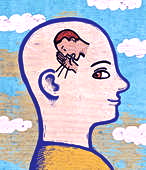
We all have various parts, or subpersonalities, that impact and sometimes dictate our behavior. One common grouping of parts is known as Pushers, and as their name indicates, they push us to perform, to achieve, to succeed, to always be seeking the next "golden ring," whatever that may be. I have a particularly powerful Pusher, and when it gets control of the self-system, I try to push myself beyond what my common sense says is appropriate. That's what happened today.

I have been feeling run-down, as though I am fighting off some kind of a respiratory illness for around 10 days now. I have been short of breath in my normal workouts, which never happens unless I am sick or fighting off some infection. But rather than listen to my body, I tried to race this morning and about 3 miles in it was clear I should not be out there - I couldn't breathe and my lungs literally hurt, to the point that it felt how I imagine asthma must feel.

So my first mistake was letting my Pusher talk me into doing a race I had no business starting. BUT the next issue is the Inner Critic response to my decision to abandon the race. The purpose of the Critic is to beat us up so thoroughly that we won't do anything that might warrant criticism from others. When we do something that we fear might bring condemnation from others, the Critic kicks into overdrive and is way harder on us than anyone else might be.

As I rode slowly back to the staging area today after deciding to abandon, my Critic did a number on me - loser, quitter, too weak, failure, wuss, wimp, coward, and on and on. The Critic can dig right past any defenses and get deeply into the repository of shame so many of us carry inside.

Fortunately, my friend Pat was there to watch me ride my first race . . . and then to talk some sense into me as I was haranguing myself out loud. Part of it was feeling as though I had wasted his morning by not even finishing the race. He reminded me that I did not simply quit, I could not breathe so there was no way to ride.

The internal abuse continued for most of the drive home. And when I got home there was a message on my cell from Pat, reminding me again that my mind was willing but my body said no. There's no shame in succumbing to illness.

I have been working with parts for more than a decade, and I generally am pretty good about being mindful when they act out. But not this time. Maybe it was wanting to get the first race out of the way, or maybe it was that I had been training for a couple of months, or maybe it was just plain old pride - whatever it was, I let my Pusher override my common sense and then my Critic kicked my ass for doing so.

Tough lessons.


Further Reading:

Thursday, February 23, 2012

Elisha Goldstein, Ph.D. - A Radical Way to Break Free from Automatic Negative Thoughts


In this article from Psych Central, Elisha Goldstein, Ph.D., looks at some ways to break free from negative thinking - what I might call non-adaptive parts - through reframing our perspective on those voices/thoughts (they originally existed to help us in some way).

All of us have these negative thoughts/voices - and the more trauma we have experienced, or the more neglect as children (physical or emotional), the more negative and destructive these thoughts can be, including compulsive self-hate, cutting, or even suicide.

The key to working with these parts of ourselves, rather than stuff them down or drowning them in sex or drugs/alcohol, is to try to approach them with calmness, curiosity, clarity, compassion, confidence, creativity, courage, and connectedness - when we can do that, we are coming from our Self, our Buddhanature, or our soul (the IFS model calls it Self Leadership, but it is whatever you conceive it to be). That is where the healing comes from.

If you are struggling with these thoughts and think you might need help, you probably do need help. You can find a therapist in your area through GoodTherapy.org and/or Psychology Today, or you can seek an Internal Family Systems therapist - they are trained specifically to work with parts.

~ Elisha Goldstein, Ph.D. is a clinical psychologist in private practice in West Los Angeles and is author of the just-released book The Now Effect: How this Moment Can Change the Rest of Your Life, co-author of A Mindfulness-Based Stress Reduction Workbook, with a Foreword by Jon Kabat-Zinn, and the author of several other apps, audio series, and training programs. You can join the Elisha Goldstein Facebook Community to keep up with important information, tips, and events.

depressed man 

I often write about the demanding and criticizing voices in our heads because they are so amazingly prevalent and I figure just about anyone can identify with that and almost all of us need support with them. Every day these voices arise out of habit, telling us “I can’t do that right,” “I’m never going to achieve that,” or “I’m not good enough.”

More often than not we indulge and get overwhelmed by these limiting beliefs or as Thich Nhat Hanh says,” we water the seeds of our own suffering.” The end result is we end up hating ourselves. But what if these voices were trying to help us in some way?

That may sound crazy, but really, consider it for a moment. What if these negative and limiting voices were looking after our best interest?

Many of us have past wounds in our lives, whether it was parent seeming too busy to pay attention to us or losing someone early in life, or being the victim of assault. Voices start arising inside us to help us maintain some control over our environments to keep us safe from being wounded again. These voices may judge us or others so we don’t get too close and run the risk the danger of either losing them or being hurt by them.

Or maybe the voices just criticize us so we don’t have to face the discomfort inside and spend all of our time taking care of other people. Although at the end of the day, these voices aren’t effective in maintaining a life of health and well-being, they can be viewed as really trying to help.

The moment we can see these voices for what they are is a moment of clarity where we step into the choice to relate to them differently with greater mindfulness. This space of choice is called The Now Effect and it gives us immense mental and emotional freedom. The end result is that we can learn to be more kind and caring to ourselves instead of damning and hating.

So, rather than damning and hating these voices that keep us down, we can learn to be a bit kinder to them, acknowledging their presence, and then choosing a different path. For example, if the voice arises “you’re not good enough, don’t even try it,” try and notice it and see it as a part of you that is simply trying to keep you safe from a past wounding experience.

Whether the negative voices come to you in relationship to abilities at work, parenting, traveling, procrastinating or issues with stress, anxiety, depression, addiction or trauma, you can acknowledge and view this wound coming to life and rather than entertaining it, thank it for trying to keep you safe and rather than cursing it, see if you can acknowledge the pain.

In that space of awareness you can get perspective, telling yourself that you know this is a difficult task, but that was then and this is now and you’re going to give it a shot anyway.

Easier said than done, but in practicing and understanding that even our damning voices have the intentions of keeping us safe, we can begin to “water the seeds of happiness” by breaking the habitual cycle of sending hate into ourselves and instead sending compassion and care.

See if you can put the Now Effect to work for you and notice how past wounding in your life may be sending you messages that keep you from getting too close to others or risking success to keep you safe from harm. When they arise, thank them for trying to keep you safe. Notice what a difference this can make than struggling with the messages.

As always, please share your thoughts and comments below, you additions here provide a living wisdom for us all to benefit from.

***Announcement – The Now Effect: How This Moment Can Change the Rest of Your Life hit bookshelves Tuesday, February 21st 2012. Order your copy now.
Wednesday, October 26, 2011

Introduction To Voice Dialogue


Voice Dialogue was created by Hal and Sidra Stone back in the 1970s from an amalgam of Jungian and Gestalt (among others) therapeutic perspectives. While most people in the integral community know about Big Mind/Big Heart, the pseudo-spiritual method of dis-identification created by former Zen teacher Dennis Merzel, many fewer people know that what he teaches is essentially little more than Voice Dialogue, minus the safeguards that a therapeutic environment includes.

You can check out their reading room here. The book above, Embracing Our Selves, is considered the Voice Dialogue Manual.

They also have a YouTube Channel with a handful of short videos, of which this is the Introduction.

Introduction To Voice Dialogue


I think there is much of value in their approach that can help men in their personal growth - as we become of aware of our various roles in life - father, son, brother, husband, friend, employee - we can then become more aware of our parts or subpersonalities.

Sunday, January 23, 2011

Working with Introjected Parental Voices

http://acoarecovery.files.wordpress.com/2010/07/ruggia0566c2.jpg

All of us, as children, development a "part" in our psyches that stands in for our most critical parent - these internalized "objects" (using the terminology of object relations psychology) are called introjects. They function much the same as inner critics in various forms of subpersonality work, or as "parent" parts in the subconscious mind.

These introjects take many forms - the critical parent (my father), the worrying parent (my mother), the shaming parent, or (among many other variations) - if you are lucky - the supportive parent.

Getting to know these inner voices that our not our own is an important piece in developing our unique identity as men, as adults. As long as we are acting out introjected "parental objects" we are not acting from our individual perspective. When act from these voices, we are often enacting unhealthy behaviors for our current relationships.

This article from Athena Staik, Ph.D at Neuroscience & Relationships looks at the scared or worrying parent part. Most of us have some variation of this.

Maybe every time you consider doing something risky you hear your mother's voice in the back of your head, "Be careful! Don't hurt yourself." And maybe you've generalized this voice to asking for what you need at work, or from your partner, of even to asking a woman (or man) out for a date.

Neuroscience and Relationships


When your subconscious mind acts like a scared parent, interrupting your life or resisting your efforts to implement change, with its hyper-reactive protective instincts, more than anything, its greatest need is, first, assuring words from you, then, follow up actions that emphatically say you now take full responsibility for the care of yourself and life.

Like a scared parent, your subconscious won’t let go of its protective role without assurance, in word and deed, that you can survive on your own. How will you take charge of your life and its direction, however, when a “parent” compulsively takes over in crisis?

What does it mean to have an overprotective subconscious?

It likely means you have, inadvertently, trained your subconscious mind to rescue you. Somehow, it has come to believe that:

  • You cannot handle events that trigger uncomfortable emotions inside you.
  • Your survival, thus, is in danger whenever you experience emotional discomfort, such as hurt, shame or disappointment—all of which are a form of fear.
  • You “need” it to alert you, by activating your body’s survival response, to defend yourself with automatic protective strategies.

In other words, it holds certain limiting beliefs in memory that lead to the conclusion that you absolutely need help you avoid feeling emotional pain.

Why is your subconscious acting like a scared parent?

Basically, it’s scared because it believes your physical survival is still at stake in situations that trigger painful emotions, when in reality it is not (hopefully)!

In charge of habit formation, the subconscious keeps of a special pool of data in cellular memory, an accrued record of memories from birth. It places particular weight on early neural patterns that were formed in the first three to five years of life, a period when you were particularly vulnerable — emotionally.

This was a time when fears of rejection or abandonment were actual threats to your physical survival. As babies do not survive without love, your physical survival at this time depended on feeling safe by feeling loved.

The subconscious turns to this accrued data as a reliable source of information that helps it ensure your survival.

Each time it activates one of your defense strategies, such as an angry outbursts, blame, procrastination, etc., your body releases hormones that lower your anxiety to some degree. These quick-fix strategies release the love-and-safety hormone Oxytocin into the blood stream.

As a result, your subconscious mind concludes that this strategy “still works.” Defensiveness, however, causes problems in relationships.

The truth is that, as an adult, you can handle feeling your fears and anxieties, in fact, in order to effectively handle them, you must be willing to fully feel them, understand them as action signals, and so on.

So, how do you take your life back from an overprotective “parent”?

Read the rest of the article to get the answers to that question.


Tags: , , , , , , , , , , ,

Monday, December 27, 2010

Healing Childhood Wounds

http://farm4.static.flickr.com/3042/3110403097_2e6bd3130d.jpg

One of the strange elements of life is that girls become women simply by growing up and physically maturing (for the most part), but boys must earn manhood. We do not become men simply by growing into an adult body, we are forced to repress or deny natural parts of ourselves (emotions, compassion, vulnerability, and so on), and to adopt the four basic rules of manhood (via Michael Kimmel):
1. Don't be a sissy: You can never do anything that even remotely hints of the feminine. In the United States, we don't raise boys to become men, we raise them to not become women.

2. Always win:
Wealth, power, status—these are the markers of masculinity. All right, let's quote a bumper sticker here: "He who has the most toys when he dies wins." Sorry, did I just quote a bumper sticker?

3. Be a sturdy oak: What makes a man is that he is reliable in a crisis. And what makes him reliable is how closely he resembles an inanimate object. A rock, a pillar, a species of tree.

4. Go for it:
Exude an aura of daring and aggression. Live life on the edge, Take risks. Don't give a damn about what others think.
Then there are also two ways we define manhood - (1) not feminine, (2) not gay.

All of these "rules" for growing into manhood force into false roles - we are much more than these simplistic limiting rules. When we adopt these rules to fit in and be considered men, we lose large parts of ourselves - and this leaves up wounded and hurting.

But we do not have to live this way - we can begin to wake up to the ways we have been forced into these little boxes of manhood. We can undo the wounding and become more expansive and whole. But it requires we do some work - hard work - to uncover our pain, to find our lost emotions and reintegrate them.

Someplace inside of us - not matter how cliche this sounds - there is that child who holds all of the feelings and desires and hopes we have denied we have (in our effort to be seen as men). We can access that child with help from a therapist, a coach, or with some personal growth technologies.

We can reparent that child with love and compassion, give him permission to have his feelings, to dream big dreams, to follow his natural curiosity. In doing so, we heal ourselves as adults. It's not an easy process - it requires more strength and courage than most men possess. But the rewards for doing so are tremendous.

This Daily Om offers a simple look at the process.
Going Back By Going Within
Healing Childhood Wounds

With the wisdom of an adult, we can be the loving parent or guardian we needed as a child.

Events from childhood, our first experiences, have the power to shape our lives. Some do so immediately, offering us challenges to overcome and encouragement to make use of our talents and interests. In the process character is built, and we make the first steps upon our personal paths. Other events seem to lay dormant until adulthood, when our closest relationships help to bring out the deepest aspects of ourselves. This is when unexamined lessons can be put to use and untended childhood wounds make themselves known in a call for healing.

We may discover issues of trust coming up, or perhaps we find ourselves mirroring actions from our past instinctively. No matter the case, we have the power within us to heal ourselves at the deepest level. With the wisdom of an adult, we can be the loving parent or guardian we needed as a child. Knowing that we are each whole spiritual beings having a human experience, we can nurture ourselves from that wholeness, and then reach out to others as well. We can recreate scenarios in our mind’s eye, trying different outcomes and following them to their logical conclusions. In doing so, we may be able to imagine possible reasons a situation occurred as it did, and even accept that it could not have happened any other way. With the wisdom born from age and experience, we might be able to see events from a different perspective, bringing new understanding and freeing ourselves from any hold the past may have on us.

Life offers opportunities to clear these weeds in the gardens of our souls. However, when we want to focus on easier and more pleasant tasks, we are likely to pass up the chances, leaving the wounds to continue to drain our energy and resources for living life fully today. We might find we need support to face the events of the past, so turning to a trained professional who can offer tools for healing can be a valid choice. As long as we remember that the child we were lives on within us, we are always free to go back and right old wrongs, correct mistaken perceptions, heal wounds, forgive, and begin anew.


Monday, April 20, 2009

Shadow Work - Hijacked by a Part

I wrote this poem last night as a way to sort out something that came up for me. The circumstances aren't important, but the response in me caught me off guard.
unable

behind the words
I heard my father's voice,
so unexpected,
felt myself 6 years old
and quivering

some feelings persist,
buried in the dust of memory
but still potent,
able to rattle bones
and wring the heart

I watched it happen,
helpless now as then,
watched myself crumble
inwardly, silent, unable
to unclench my jaw
In parts work (or subpersonalities, if you prefer), this is what is known as being hijacked by a part. It gets triggered and, much like an autonomous complex in Jungian psychology, takes over the system.

This can only happen if the part in question has been exiled from consciousness, or relegated to the shadow. So it waits there, quietly, unconscious most of the time, until a trigger comes up that is associated with its original causation.

Parts get exiled when we are young as a result of trauma, anxiety, fear, or any other feeling that makes the "executive control function" feel that the emotion is too much for consciousness. Over time, similar feelings get added to the exiled part, making it more or less a distinct personality, but a young one, and one with lots of emotional baggage.

So, years later, if these parts are never dealt with, they can pop up when a similar trigger is present. That's what happened to me last night - an expected trigger sent me back to being six years old and feeling ineffectual.

In all the work I've done over the years, apparently I haven't dealt with the ways my father dismissed me and made me feel worthless. For me, like many men, my masculinity is at least in part connected to my sense of agency in the world - my ability to feel self-directed and effectual, the drive to be whole.

So now I know he's there (the hard way). My next step is to get to know him, dialogue with him, find out who that child is and what he needs, and how to help him release his burden. The more compassion, curiosity, courage, and creativity I can bring to the exploration, the easier the process will be.

BUT, and this is a big BUT, any time there is an exiled part, there are "managers" whose job it is to keep the part exiled. I can't just go in and work with the exile directly. I must deal with the managers who would rather not let that part into the light of day. From their perspective, it was a HUGE failure that the part got out last night, and they are likely to clamp down that much harder to prevent its escape again. So there must be negotiation with these managers (and this is something a lot of therapists don't understand in their "inner child" work with clients) before the exile can be approached.

My work is cut out for me.


Friday, March 20, 2009

The "Panic Room" Self


This post is a little insight into how my mind works. My hope is that some of you might see some similarities here, or that my female readers might see their partners in this.

When I am confronted with something that seriously shakes my expectations in a negative way (which is, of course, a matter of interpretation), I have a subpersonality (a part of my psyche) that pops up and takes over - I call it the "panic room" self.

Most of you know what a panic room is, but if you don't, here is a description:
A safe room or panic room is a fortified room which is installed in a private residence or business to provide a safe hiding place for the inhabitants in the event of a break-in, home invasion, or other threat. Safe rooms usually contain communications equipment, so that law enforcement authorities can be contacted.
Many of us who have been through hard stuff in our lives have a self inside of us that functions much like a panic room. When we are overwhelmed with a threat of some kind, that part/self emerges to take over and prevent the psyche from being harmed. When we were young and defenseless, this was a healthy adaptation, as adults, not so much.

When my panic room self gets activated, like many men, I withdraw - energetically, emotionally, and often physically. Because this is a widespread issue - in fact, it is often (wrongly) seen as a feature of masculinity - men tend to be seen as incapable of expressing emotion. Or, we tend to be seen, at least in the past, as the strong, silent types. True but partial.

As we increase our awareness, however, we can often see this happening and either tell our partner about what is happening, or at the least assure her/him that it isn't personal. Being able to see these interior selves as objects of awareness rather than be their subjects of experience is an important skill to develop. Being able to make this distinction - and share it with our partners - could go a long way toward saving many relationships that might otherwise fail.

There are two basic ways to develop this skill.

1) Mindfulness and meditation practice. If we can learn to observe our thoughts and feelings as they happen, rather than simply acting them out, we are well on our way to being able to identify and observe the different selves we contain, so that we do not become victims of their maladaptive behaviors.

This video by Thich Nhat Hanh explains basic mindfulness and more:
Buddhist mindfulness techniques can help to bring the mind back to the body so that you are fully present here and now. For sitting meditation, Thich Nhat Hanh describes simple practices of awareness that increase a sense of well being and release tension in the body. He offers walking meditation as a practice that can help you to live deeply every moment of your life, free from the prison of the past and of the future. He gives instruction, too, in addressing pain and anger in your heart and developing a deeper awareness of and appreciation for everyday moments of life: cooking, cleaning, driving, and working in such a way that you feel peaceful, mindful,and happy.


2) Developing an observer self, often through psychotherapy. I've posted this before at IOC, but I'll include it here for those new to my blogs.
An Exercise to Identify the Observer Self

The observer self is that aspect of consciousness which can watch us act like fools and stand back at a safe distance, shaking its head in disbelief. It is capable of observing our behaviors with an even, unattached point of view. The observer can help us see our wounded areas, our habitual patterns, and our inner selves more clearly, without the interference of the ego and its desire to maintain the status quo. The observer self is an invaluable ally in personal growth that can lead us into higher levels of consciousness.

The following exercise, adapted from Roberto Assagioli’s disidentification process in Psychosynthesis and Ken Wilber’s meditations in One Taste, can help us detach from ego-consciousness and step back into the observer self. For each of the steps there is a mantra that some people find quite useful in detaching from each element of the ego-self.

Practicing Detachment

Get into a comfortable position, either sitting or lying down. Take a few deep, centering breaths, allowing the body to relax. Closing the eyes can help focus attention. Feel the air moving in an out of your lungs as you breathe. Become aware of your body, its position, how your limbs feel, where you are holding tension. Become aware of your whole body and all the sensations it experiences. If you are comfortable with mantras, the one for this step is, "I have a body, but I am not my body." Repeat aloud or in your thoughts.

Take three deep cleansing breaths. Now leave your body and move to your emotions. What feelings do you notice? Are you bored, anxious, happy? Notice your current feelings, and then think about the most common feelings in your life. Do not dwell on those feelings -- just recall them and then release them. Mantra: "I have feelings, but I am not my feelings." This mantra works well as a reminder when you are angry or afraid that you are frozen in an emotion.

Take three deep cleansing breaths. Move from your feelings to your desires. Desires are those things that motivate us. We all have many things that motivate our behaviors, such as simplicity, comfort, quiet, money, health, or others. Observe the things that motivate you, but do not judge them. Simply call them up and notice them. Mantra: "I have desires, but I am not my desires."

Take three deep cleansing breaths. Now move to your thoughts. As each thought rises to consciousness, observe it but do not dwell on it. Then watch as the next one rises to replace it, over and over again. This is the state of consciousness most of us experience. However, we often get stuck on a handful of thoughts that return over and over again in our lives. Notice the pattern, but do not hold on to it. Notice the flotsam and jetsam of consciousness, the memories, the ideas, the fears, the opinions, and the ways you tell yourself who you are as a person. Mantra: "I have thoughts, but I am not my thoughts." This mantra works in meditation to return a wandering mind to the breath.

Take three deep cleansing breaths. Finally, become aware of that part of you that has been observing your body, your feelings, your desires, and your thoughts. Having detached from the basic elements of consciousness, repeat the mantras: I have a body, but I am not my body; I have feelings, but I am not my feelings; I have desires, but I am not my desires; I have thoughts, but I am not my thoughts.

What is the source of your awareness? Who is that self behind all these realms of ego? The self is not an image or a thought, but a deeper essence. The self is at the core of our humanity.

The one who has been watching your sensations, feelings, desires, and thoughts is not the same as the object it observes. WHO IS IT THAT HAS BEEN OBSERVING ALL THESE REALMS? It is your SELF. The Self is not an image or a thought; it is that ESSENCE which has been observing all these realms and yet is distinct from all of them. Mantra: "I am the self, a center of pure consciousness."
Whatever comes into awareness is fine. You are none of those things, so just watch them pass like clouds across a blue sky. "And this witnessing awareness is not itself anything specific you can see. It is just a vast, background sense of Freedom – or pure Emptiness – and in that pure Emptiness, which you are, the entire manifest world arises. You are that Freedom, Openness, Emptiness – and not any itty bitty thing that arises in it" (Ken Wilber, One Taste, 88).
If we can come to this place of mindfulness or develop a strong observer self (both function in very similar ways), we are less likely to end up in the panic room self when confronted with hard stuff, or we'll at least know that it is happening as it happens - and we'll be much more conscious partners in our relationships.


Thursday, July 3, 2008

Embodying Masculinity, Part Three - Know Thyself


As part of the project to embody a healthy masculinity, I feel it is important to know who we are. And if you think -- because this is what you have been told -- that there is a single you, whoever that might be, you are mistaken.

We all have a core self, the perspective from which we operate on most days (even this is an illusion, but that's a whole other topic). But beneath that ego or persona, there are a whole mess of other, lesser selves. Each of these parts take on specific roles (most simply: father, son, brother, husband, employee, and so on, including more complex roles such as the inner critic, the pusher, the inner child, and many others).

Subpersonality theory
explains these other selves (referred to as parts, selves, subs, schemas, ego states, and so on) and how they develop. Nearly every branch of psychology has a version of subpersonality theory, though there is little agreement among them as to how these parts operate.

As we get to know our parts -- and most people have between three and twelve distinct parts (and no, this does not mean you have dissociative personality disorder) -- we begin to understand why we act in the ways we do.

Have you ever totally blown a fuse over the littlest thing, then wondered what the hell came over you, as though for a few minutes you were a completely different person? Well, for those minutes you were -- you had been hijacked by a part. Most part "hijackings" are associated with specific scenarios, often ways in which we were hurt or shamed as children. We have grown up, but those protective parts have not.

There are many ways to get to know our parts, and one of the best ways was developed by Hal and Sidra Stone, the Voice Dialogue approach. One of their students was Genpo Roshi, who adapted their voice dialogue model to something he calls Big Mind/Big Heart.

What follows is a series of videos of Genpo performing the Big Mind method, with the purported goal of inducing a higher state of consciousness (that's up to you to decide). What this will do, however, is introduce you to the process of sorting out your various selves. Don't be worried if you don't have some of those he mentions, just follow along to the next one. And you'll likely have some parts not mentioned, no worries, explore them on your own.

You might want to make some notes as you go along.

Part One:


Part Two:


Part Three:


Part Four:


Part Five:


Part Six:


Part Seven:


Part Eight:


Part Nine:


Part Ten:


Part Eleven:


OK, so that is the Big Mind, Big Heart method. How many parts did you get a clear feel for? Are there others that you think might be there?

When we can learn to see our parts, and know them, we have more control over when and how they manifest. Rather than getting defensive when someone offers criticism, you can acknowledge that your inner critic was triggered and is beating up on you, which makes you feel defensive.

The person most likely to trigger our parts is our romantic partner, the person who knows us best. Our inter-locking parts are often what draw us into relationships (this link explains bonding patterns and was written during a previous relationship), which is all well and good at the beginning. But over time they can become habitual ways of treating each other, and they can limit who we are with each other.

When we can see a part (for example, a dismissive father voice who gets angry when your partner feels to you to be a helpless little girl) get triggered and step outside of it, then we are much freer and more expansive in our ability to respond to our partners. And we respond with more maturity and compassion.

A great exercise to practice getting outside of our parts is the disidentification exercise from Psychosynthesis -- it essentially helps us get into the observing self (this link is also an exercise), or aware ego, of higher self. what one wants to call it.

Do this work often, share it with your partner (if you have one). The better know who you are, the more you can embody a mature form of masculinity.