Showing posts with label inner critic. Show all posts

Thursday, July 24, 2014

Feeling Overwhelmed? Remember "RAIN"

Some days we can feel completely buried by the responsibilities and obligations we carry. For some of us, when we get in this place, rather than acknowledging the magnitude of our burdens we can become self-critical and beat ourselves up for our perceived failure to "man up" (a phrase I hate, by the way).

The acronym RAIN is shorthand for a simple method to deal with overwhelm and self-criticism.
Recognize what is going on;
Allow the experience to be there, just as it is;
Investigate with kindness;
Natural awareness, which comes from not identifying with the experience.
Tara Brach is a well-known spiritual teacher and the author of several books and audio teachings, including True Refuge: Finding Peace and Freedom in Your Own Awakened Heart (2013) and Radical Acceptance: Embracing Your Life With the Heart of a Buddha (2004).


Feeling Overwhelmed? Remember "RAIN"

Four steps to stop being so hard on ourselves.

By Tara Brach | Mindful Magazine


Illustrations by Michael Woloschinow

When I was in college, I went off to the mountains for a weekend of hiking with an older, wiser friend of twenty-two. After setting up our tent, we sat by a stream, watching the water swirl around rocks, talking about our lives. At one point she described how she was learning to be “her own best friend.” A wave of sadness came over me, and I broke down sobbing. I was the furthest thing from my own best friend. I was continually harassed by an inner judge who was merciless, nit-picking, demanding, always on the job. My guiding assumption was, “Something is fundamentally wrong with me,” as I struggled to control and fix what felt like a basically flawed self.

Over the last several decades, through my work with tens of thousands of clients and meditation students, I’ve come to see the pain of perceived deficiency as epidemic. It’s like we’re in a trance that causes us to see ourselves as unworthy. Yet, I have seen in my own life, and with countless others, that we can awaken from this trance through practicing mindfulness and self-compassion. We can come to trust the goodness and purity of our hearts.

In order to flower, self-compassion depends on honest, direct contact with our own vulnerability. Compassion fully blossoms when we actively offer care to ourselves. To help people address feelings of insecurity and unworthiness, I often introduce mindfulness and compassion through a meditation I call the RAIN of Self-Compassion. The acronym RAIN, first coined about 20 years ago by Michele McDonald, is an easy-to-remember tool for practicing mindfulness. It has four steps:
Recognize what is going on;
Allow the experience to be there, just as it is;
Investigate with kindness;
Natural awareness, which comes from not identifying with the experience.
You can take your time and explore RAIN as a stand-alone meditation or move through the steps in a more abbreviated way whenever challenging feelings arise.


R—Recognize What's Going On
Recognizing means consciously acknowledging, in any given moment, the thoughts, feelings, and behaviors that are affecting us. Like awakening from a dream, the first step out of the trance of unworthiness is simply to recognize that we are stuck, subject to painfully constricting beliefs, emotions, and physical sensations. Common signs of the trance include a critical inner voice, feelings of shame or fear, the squeeze of anxiety or the weight of depression in the body.
In order to flower, self-compassion depends on honest, direct contact with our own vulnerability. Compassion fully blossoms when we actively offer care to ourselves.

Different people respond to the sense of unworthiness in different ways. Some might stay busy, trying to prove themselves valuable; others, fearful of failure, may become discouraged or even paralyzed. Still others may resort to addictive behaviors to avoid facing their shame and fear. Any of these strategies can lead to either defensive or aggressive behavior with others, or unhealthy attachment.

Some of us are at war with ourselves for decades, never realizing how our self-judgment and self-aversion keep us from finding genuine intimacy with others or enjoying our lives. One palliative caregiver reports that a key regret of the dying is not having been true to themselves. Rather than listening to and trusting our inner life, most of us try to live according to the expectations of others, which we internalize. When we inevitably fall short of the mark, we condemn ourselves.

Though it may sound depressing or overwhelming, learning to recognize that we are at war with ourselves is quite empowering. One meditation student described the trance of unworthiness as “…the invisible and toxic gas I am always breathing.” As he became increasingly mindful of his incessant self-judgment and feelings of inadequacy, his aspiration to free himself from his painful inner prison grew.

A—Allowing: Taking a Life-Giving Pause

Allowing means letting the thoughts, emotions, feelings, or sensations we have recognized simply be there. Typically when we have an unpleasant experience, we react in one of three ways: by piling on the judgment; by numbing ourselves to our feelings; or by focusing our attention elsewhere. For example, we might have the sinking, shameful feeling of having been too harsh in correcting our child. But rather than allowing that feeling, we might blame our partner for not doing his or her part, worry about something completely different, or decide it’s time for a nap. We’re resisting the rawness and unpleasantness of the feeling by withdrawing from the present moment.

We allow by simply pausing with the intention to relax our resistance and let the experience be just as it is. Allowing our thoughts, emotions, or bodily sensations simply to be doesn’t mean we agree with our conviction that we’re unworthy. Rather, we honestly acknowledge the presence of our judgment, as well as the painful feelings underneath. Many students I work with support their resolve to let it be by silently offering an encouraging word or phrase to themselves. For instance, you might feel the grip of fear and mentally whisper yes in order to acknowledge and accept the reality of your experience in this moment.

Victor Frankel writes, “Between the stimulus and the response there is a space, and in this space lies our power and our freedom.” Allowing creates a space that enables us to see more deeply into our own being, which, in turn, awakens our caring and helps us make wiser choices in life. For one student, the space of allowing gave her more freedom in the face of urges to binge eat. In the past, whenever she felt restless or anxious at night, she’d start thinking of her favorite food—trail mix—then mindlessly consume a half pound of it before going to bed, disgusted with herself. Learning to recognize the cues and taking a pause interrupted the pattern. While pausing, she would allow herself to feel the tension in her body, her racing heart, the craving. Soon, she began to contact a poignant sense of loneliness buried beneath her anxiety. She found that if she could stay with the loneliness and be gentle with herself, the craving passed.

I—Investigating with Kindness

Investigating means calling on our natural curiosity—the desire to know truth—and directing a more focused attention to our present experience. Simply pausing to ask, what is happening inside me?, can initiate recognition, but investigation adds a more active and pointed kind of inquiry. You might ask yourself: What most wants attention? How am I experiencing this in my body? Or What am I believing? What does this feeling want from me? You might notice hollowness or shakiness, then discover a sense of unworthiness and shame masked by those feelings. Unless you bring them into awareness, your unconscious beliefs and emotions will control your experience and perpetuate your identification with a limited, deficient self.

Poet Dorothy Hunt says that we need a “...heartspace where everything that is, is welcome.” Without such an attitude of unconditional care, there isn’t enough safety and openness for real investigation to take place. About ten years ago I entered a period of chronic illness. During one particularly challenging period of pain and fatigue, I became discouraged and unhappy. In my view I was terrible to be around—impatient, self-absorbed, irritable, gloomy. I began working with RAIN to recognize these feelings and judgments and to consciously allow the unpleasantness in my body and emotions to just be there. As I began to investigate, I heard an embittered voice: “I hate living like this.” And then a moment later, “I hate myself!” The full toxicity of self-aversion filled me.

Not only was I struggling with illness, I was at war with the self-centered, irritable person I believed I had become. Unknowingly, I had turned on myself and was held captive by the trance of unworthiness. But in that moment of recognizing and allowing the suffering of self-hatred, my heart began to soften with compassion.

Here’s a story that helps to describe the process I went through. Imagine while walking in the woods you see a small dog sitting by a tree. You bend down to pet it and it suddenly lunges at you, teeth bared. Initially you might be frightened and angry. But then you notice one of its legs is caught in a trap, buried under some leaves. Immediately your mood shifts from anger to concern. You see that the dog’s aggression sprang from vulnerability and pain.

This applies to all of us. When we behave in hurtful, reactive ways, it’s because we’re caught in some kind of painful trap. The more we investigate the source of our suffering, the more we cultivate a compassionate heart toward ourselves and others.

When I recognized how my leg was in a trap—sickness compounded with self aversion— my heart filled with sorrow and genuine self-care. The investigating deepened as I gently put my hand over my heart—a gesture of kindness— and invited whatever other feelings were there to surface. A swell of fear (uncertainty for my future) spread through my chest, followed by an upwelling of grief at losing my health. The sense of self-compassion unfurled fully as I mentally whispered, It’s all right, sweetheart, and consciously offered care to the depths of my vulnerability, just as I would to a dear friend.

Compassion arises naturally when we mindfully contact our suffering and respond with care. As you practice the RAIN of Self-Compassion, experiment and see which intentional gesture of kindness most helps to soften or open your heart. Many people find healing by gently placing a hand on the heart or cheek; others, in a whispered message of care, or by envisioning being bathed in warm, radiant light. What matters is that once you have investigated and connected with your suffering, respond by offering care to your own heart. When the intention to awaken self love and compassion is sincere, the smallest gesture—even if, initially, it feels awkward— will serve you well.

N—Natural Loving Awareness

Natural loving awareness occurs when identification with the small self is loosened. This practice of non-identification means that our sense of who we are is not fused with any limiting emotions, sensations, or stories. We begin to intuit and live from the openness and love that express our natural awareness.

Though the first three steps of RAIN require some intentional activity, the N is the treasure: A liberating homecoming to our true nature. There’s nothing to do for this last part of RAIN; we simply rest in natural awareness.

The RAIN of Self-Compassion is not a one-shot meditation, nor is the realization of our natural awareness necessarily full, stable, or enduring. Rather, as you practice you may experience a sense of warmth and openness, a shift in perspective. You can trust this! RAIN is a practice for life—meeting our doubts and fears with a healing presence. Each time you are willing to slow down and recognize, oh, this is the trance of unworthiness… this is fear… this is hurt…this is judgment…, you are poised to de-condition the old habits and limiting self-beliefs that imprison your heart. Gradually, you’ll experience natural loving awareness as the truth of who you are, more than any story you ever told yourself about being “not good enough” or “basically flawed.”

A friend of mine was sitting with her dying mother while she was in a coma. At one point the mother opened her eyes, looked at her daughter with great lucidity, and said “You know, all my life I thought something was wrong with me.” She closed her eyes, sank back into a coma and died shortly thereafter. For my friend, her mother’s words were a parting gift. They inspired her to dedicate herself to the mindfulness and self-compassion that frees us.

We each have the conditioning to live for long stretches of time imprisoned by a sense of deficiency, cut off from realizing our intrinsic intelligence, aliveness, and love. The greatest blessing we can give ourselves is to recognize the pain of this trance, and regularly offer a cleansing rain of self-compassion to our awakening hearts.

* * *

~ Clinical psychologist Tara Brach is the author of True Refuge: Finding Peace & Freedom in Your Own Awakened Heart. For guided meditations and talks, visit Tara Brach's website.

Thursday, January 2, 2014

My Personal Goal for 2014 - Fail More, Embrace Imperfection


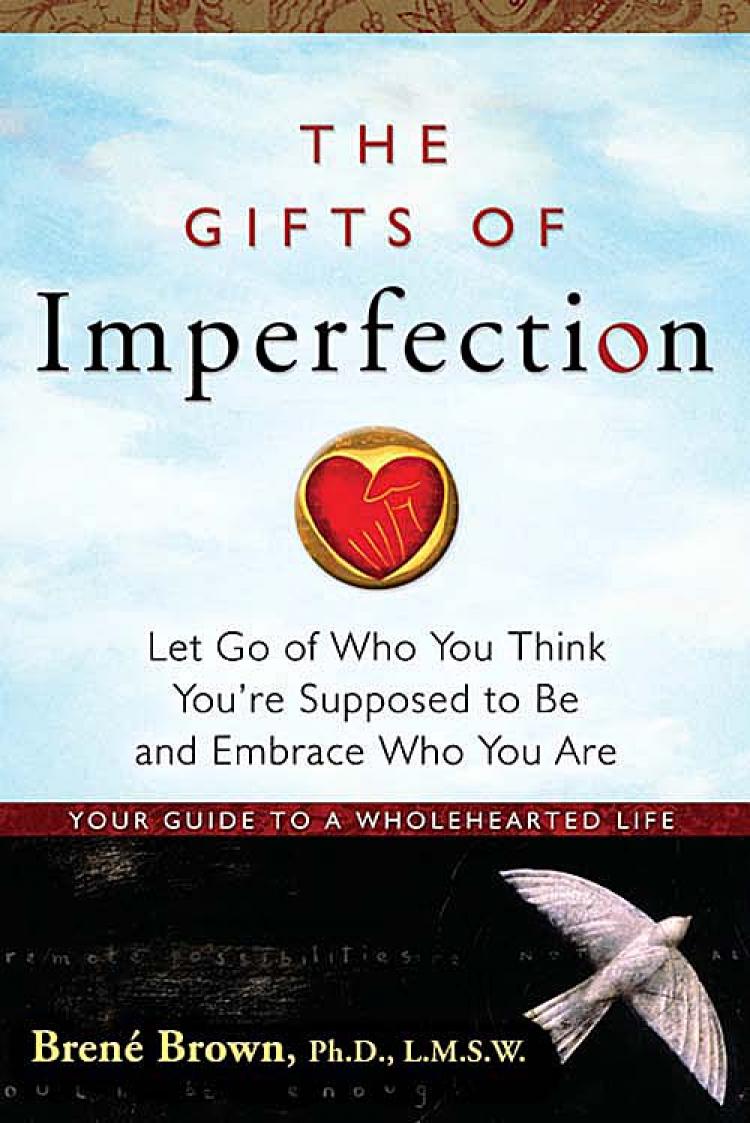
In the spirit of Brené Brown's The Gifts of Imperfection: Let Go of Who You Think You're Supposed to Be and Embrace Who You Are, my personal growth challenge for 2014 is to fail more often and to embrace imperfections.

I have always feared failure, which is fitting because one of my coping strategies to deal with a hyper-critical parent was to become a perfectionist. It worked great in school - I got good grades and the teachers loved me. Then that parent died, and I still had this perfectionist inside me.

The downside is that I have missed out on a lot of opportunities to do things because I was afraid I would not be good something new. That fear of being laughed at and being obviously not good at something was a powerful deterrent.

I have changed this quite a bit over the years - to the point that I am fine with falling on my ass trying something new. But that perfectionist is still in there, and when he fears he failed at something, he and the inner critic get together and have a shame party at my expense.

No more. 

Here are two of Brown's TED Talks on vulnerability, which is what we must embrace if we embrace imperfection. The illusion of perfection offers an invulnerability cloak (a protection from shame), but failure is raw, vulnerable, and human.

Brené Brown: Listening to Shame: TED Talk


Brené Brown: The Power of Vulnerability: TED Talk


This last video is from the Behance U99 Conference in 2013.

Brené Brown: Why Your Critics Aren't The Ones Who Count


And for one other bit of inspiration, it appears that over at the Good Men Project has a similar goal for 2014. Here is his post from yesterday.


Hey Man, Let’s Practice Imperfection in 2014
January 1, 2014 by Joe Rutland


Joe Rutland in defense of messiness, authenticity and imperfection.
Every New Year’s Day is a chance for men to either start something new or stop actions and behaviors that may not be healthy to their lives. Those infamous “New Year’s resolutions” can sometimes, without intention, become a horrendous “to-do” list that feels like a 45-pound weight swinging around a man’s neck. What if this Jan. 1 was different? What if men chose a few different actions beside the usual list of “eating healthier, exercising more, stressing out less, getting finances in order, etc.”? Let me suggest three possibilities: Choose imperfection. Choose messiness. Choose authenticity.

Being imperfect is actually a healthy emotional behavior as the stress to be perfect is lessened. Messiness shakes the reins of obsessive-compulsive behaviors and thoughts, turning them upside down. Authenticity, when practiced, can become a blessing instead of a fear-based, soul-wrenching curse.

Now when it comes to perfection and being a perfectionist, then you’ll find my name at the top of the list. Oh no, you think your name is No. 1. Nope. I’m the chief of perfectionists, meaning that I have to do every single thing in my life just right. I have to say the right words, act the right way, stuff my thoughts and feelings deep within myself and not let them out, even when sitting among what I consider safe environments and safe people. Fighting against perfectionism hasn’t been a healthy battle in my life. I have lost more times than I have won, and I’ve lost so much time and emotional energy to it.

What I can say is that I’ve learned a lot about letting go, trusting the process (whatever that looks like), and believing in myself in recent years. Reading others’ stories and hearing other men talk about how they deal with perfection has helped me greatly. Perfectionism could almost be put into a mental health category alongside shame.

One of the more enlightening pieces of literature I’ve read recently around this subject is The Gifts of Imperfection, written by Dr. Brene’ Brown, a member of the research faculty at the University of Houston Graduate School of Social Work. Dr. Brown’s work has focused around the topics of shame and fear and the subject of Wholeheartedness, about which Dr. Brown poses this question: “How do we cultivate the courage, compassion, and connection that we need to embrace our imperfections and to recognize that we are enough—that we are worthy of love, belonging, and joy?”

A lot of men are more apt to wrap their self-worth around the trophy system. You know: the trophy job, the trophy wife, the trophy car, the trophy sexual conquests, the trophy fill-in-the-blank. Then one day, a man wakes up, looks within, goes into his bathroom and stares at the mirror. “It’s all bullshit,” he mutters to his reflection. Now this could be called a rude awakening. It also could be called a spiritual awakening. Not one of blazing chariots of fire coming down from the heavens and lifting the veil from his eyes, per se. But this moment is powerful if and when it happens.

Imperfection allows breathing room for mistakes, missteps and foibles. Remember the opening scene from “The Dick Van Dyke Show” where Rob Petrie (Van Dyke) walks through his front door, leans in to kiss his wife Laura (Mary Tyler Moore), turns and starts heading toward his “Alan Brady Show” co-writers Sally Rogers and Buddy Sorrell (Rose Marie and Morey Amsterdam, respectively), and doesn’t see the ottoman in front of him and flips over it? That’s imperfection. It’s also a good sense of acrobatic timing on Van Dyke’s part. To get that scene right, he probably had to practice it a few times; therefore, getting the “imperfect” scene perfect.

Yet the image is of imperfection. Now do I put up an “image of imperfection” so that I can hold on like a drunken sailor to my perfections? God knows I’ve done my best to dump that image and trade it for reality. Oh, but my perfections protect me from you…and you…and you, too. I don’t want you to see that I make mistakes. It pisses me off when I don’t get something perfect. Even today, after years of soul work, I still catch myself starting that negative self-talk chatter when I make a mistake. It is brutal.

Living in imperfection is definitely easier. Accepting myself as I am—a man who is worthy of love, compassion, empathy, healthy sexuality, nurturing and support—sure helps my mental and emotional well-being. Come to think of it, my physical health improves, too. Imperfection, messiness and authenticity do take time and practice so they can become a part of a man’s life. For too long, men (and women, too) have been bombarding themselves with negative self-talk. It is a disease, or dis-ease, of the mind, body and spirit.

So what if someone doesn’t like what I think or write? OK.

So what if someone doesn’t believe what I believe? OK.

Is it really “OK” or, again, am I fooling myself and you with my physical responses to not pleasing you?

A very wise friend told me one time four words about physical responses that people give off to other people’s statements or words: “The body don’t lie.” Think about it. When your wife, girlfriend, employer, best friend or co-worker starts giving you a hard time about something, are you aware of your physical responses? You know, like folding your arms across your chest, making a loud sighing noise (which is really telling the person to shut up without saying “shut up”), or pressing your lips so tightly together that water flowing from Niagara Falls couldn’t get inside your mouth.

Well, I’d say it is time for me and you to give ourselves a break. Let’s do our best to drop perfectionism this year. Embrace your mistakes, foibles and faults. Know that it is OK to screw up and it’s also OK to protect yourself from others’ perfectionism.

Be imperfect. Give it a shot in 2014 and see what happens. Who knows? Your life, and mine, might change for the better.

- modified photo Plat / Flickr Creative Commons

Saturday, October 19, 2013

Lisa Firestone, Ph.D. - What's Getting in the Way of Your Sex Life

Dr. Lisa Firestone is the co-author of Sex and Love in Intimate Relationships (2008) and the Compassion Matters blog at Psychology Today, as well as several other books, including The Self Under Siege: A Therapeutic Model for Differentiation (2012) and Creating a Life of Meaning and Compassion: The Wisdom of Psychotherapy (2003).

This is an interesting, though brief, post on the challenges we all can face in our sex lives over time and as we age.

What's Getting in the Way of Your Sex Life

Why our sexuality changes and what to do about it

Published on October 15, 2013 by Lisa Firestone, Ph.D. in Compassion Matters

Your sexuality can change a lot throughout one lifetime. It can even change a lot throughout one relationship. Some of these changes can be for the better. Others can feel like they're for the worse. When these changes occur, many men and women tend to take the wrong course of action, shutting up or shutting down. You may shy away from talking to your partner or pull away from a physical relationship you valued. You might lose interest in sex altogether or turn against yourself and your body. When people face these challenges, what they'll often find is that talking about sex, while it may feel uncomfortable at first, can be the key to maintaining a healthy sex life and a positive sense of one's own sexuality.

So what are some of the changes that impact a person's sex life? These shifts can be physical or related to age. They can even be caused by medications that strongly affect one's sexual feelings and performance. Although these are often natural alterations that our bodies go through over time, people tend to view them as embarrassing or something to be kept secret. However, the opposite is true.

Talking about these changes, be it with your partner, a friend or your doctor can lead to more understanding and self-compassion and allows you to maintain a satisfying sex life. As your body changes, you can choose to take a healthy approach to these shifts without turning on yourself and giving in to your "critical inner voices," allowing them to tear you down or make you feel insecure. It's important not to listen to what your inner critic tells you about these changes or to allow yourself to shut the door on your sexuality.

In addition to physical adjustments, people of all ages often face an onslaught of psychological influences that can hurt their sexuality. This can have a lot to do with the critical inner voice, which every person possesses. When it comes to sexuality a person's inner critic often comments on their performance, their bodies or what their partner is feeling or not feeling. This "voice" keeps people in their heads instead of in their bodies.

When it comes to sex, most people tend to feel there are a lot of "supposed to's," as if they are supposed to perform this way or feel that way in a sexual encounter. These expectations are fueled by the critical inner voice and can lead people to feel self-conscious, insecure or disconnected when being physically affectionate. Many people can also be critical of their appearance, viewing themselves as too old/fat/unattractive/uncomfortable for sex. With all its input, your inner critic can negatively influence your sexual relationships and eventually prove the false notion that passionate relationships can't last long-term.

The truth is that intimate relationships don't have to lose their excitement. However, as people get closer, they tend to struggle with maintaining an alive and satisfying sexual relationship. Many people find it difficult to combine emotional intimacy and deep loving feelings with passionate sexuality. One reason this can occur, albeit mostly unconsciously, is that old issues from their past begin to surface. People may even start to experience "critical inner voices" about their sexuality that hold familiar themes from their past. For example, if you were hurt or rejected by the people who cared for you, you may have grown up feeling there is something wrong with you on a bodily level. You may have thoughts like "you are so unattractive, he/she is repulsed by you." If you felt a lack of affection as kids, you may feel desperate for affection as an adult, having thoughts like "you need to be aggressive. he/she is not going to come toward you." If you felt intruded on, you may have a tendency to pull away when someone gets close, thinking "he/she is so hungry towards you; you don't really want this."

When people start to get into their heads during sex, they lose a sense of connectedness to their partner. When they feel this distance, the sexual experience often doesn't feel as satisfying or worthwhile. With their head flooded with self-critiques and attacks on their partner, they may start to think about just getting through the sexual situation instead of enjoying it. Emotional closeness is the most important aspect of physical intimacy. Therefore, it becomes all the more important to bring your struggles to light and talk about what's going on.

When changes occur in you, be them physical or emotional, it can also affect your partner's feelings about him or herself. It may trigger critical inner voices in them like, you are bored with them or that they're unattractive to you, etc. Talking to your partner and exposing the destructive attitudes of your critical inner voices can bring you back to yourselves and can reestablish the closeness between you and your partner. Closeness, self-esteem and open communication are essential to lasting, healthy sexuality. They are also the biggest factors in sexual satisfaction.

When you open up to your partner about what's going on in your mind in regards to your sexuality, you allow him or her to know you on a deeper level. In a certain sense, conversation can be foreplay, as it allows a couple to feel for each other and get closer. While it may feel awkward or unnatural at first, very often, when they do open up and talk about it, there are major, surprising shifts in a couple's sexual relationship.

Too often, people let years pass without having a conversation about their sexuality. In addition to talking to your partner, you can confide in a close friend or a therapist. It's all too easy to feel alone in your struggles, but you'd be surprised at how many people relate to exactly what you're going through. Staying silent leaves room for your critical inner voices to fester and will make you feel worse and even like giving up on your sexuality. The more you talk, the better you are likely to feel, and the quieter the noise in your head can become.

When it comes to sex, the optimal experience involves feeling emotionally close to your partner, in touch with your body and in the present moment. I have found that by identifying and challenging destructive thought processes or critical inner voices that interfere with closeness and optimal sexual functioning, people can learn to combine love and sexuality and achieve that special combination that is so desirable in an intimate relationship. Taking a chance and talking to your partner can be the first step to achieving this goal.

Read more from Dr. Lisa Firestone at PsychAlive.org

Dr. Lisa Firestone will be presenting a weekend workshop on "Creating a Loving Relationship" Nov. 8-10 in Ojai, CA. The event is open to individuals and couples. Learn more here.

Read Dr. Lisa Firestone's book, Sex and Love in Intimate Relationships.


Wednesday, September 4, 2013

Taking Sick Days - And Shaming Myself for "Being Lazy"


I get sick about once every five or six years, and this is one of those times. In my head, I know I need to rest and rebuild my strength, and I know that it's better to stay home and not get others sick than to fight through it and work anyway (which has been my pattern). But my rational mind is not always in control - at another level I am shaming myself for "being lazy," for "abandoning my clients," for "not being invincible."

I put those beliefs in quotation marks because I know they are not true, but my inner critic (see here, here, and here) uses phrases like that to shame me, to remind myself that I am "lazy, irresponsible, and inconsiderate." Those are some of the messages I internalized as a child (thanks Dad, thanks Mr. Laney [2nd grade teacher], and thanks Mr. Fox [6th grade teacher]).

Some part of me, that internalized critic, truly believes I should never get sick, never miss work days, never fail to be there for my clients. And it really doesn't really help to know that other people struggle with this, too.

As I write this, hoping that maybe some other guys (or gals) will find this useful and supportive, I keep bringing myself back to my breath. I seek the compassionate observer within (or simply observing self, see here and here) and try to view being sick and how my critic responds, holding both parts of me in compassion.

If you are new to this kind of work, here is an exercise from Dr. Krisitn Neff (author of Self-Compassion Stop Beating Yourself up and Leave Insecurity Behind), from her website, where she offers a lot of free worksheets, exercises, and meditations (the meditations are by Dr. Christopher Germer, author of The Mindful Path to Self-Compassion: Freeing Yourself from Destructive Thoughts and Emotions):

The criticizer, the criticized, and the compassionate observer


This exercise is modeled on the two-chair dialogue studied by Gestalt therapist Leslie Greenberg. In this exercise, clients sit in different chairs to help get in touch with different, often conflicting parts of their selves, experiencing how each aspect feels in the present moment.
To begin, put out three empty chairs, preferably in a triangular arrangement. Next, think about an issue that often troubles you, and that often elicits harsh self-criticism. Designate one chair as the voice of your inner self-critic, one chair as the voice of the part of you that feels judged and criticized, and one chair as the voice of a wise, compassionate observer. You are going to be role-playing all three parts of yourself - you, you, and you. It may feel a bit silly at first, but you may be surprised at what comes out once you really start letting your feelings flow freely.

1) Think about your “issue,” and then sit in the chair of the self-critic. As you take your seat, express out loud what the self-critical part of you is thinking and feeling. For example “I hate that fact that you’re such a whimp and aren’t self-assertive.” Notice the words and tone of voice the self-critical part of you uses, and also how it is feeling. Worried, angry, self-righteous, exasperated? Note what your body posture is like. Strong, rigid, upright? What emotions are coming up for you right now?

2) Take the chair of the criticized aspect of yourself. Try to get in touch with how you feel being criticized in this manner. Then verbalize how you feel, responding directly to your inner critic. For example, “I feel so hurt by you” or “I feel so unsupported.” Just speak whatever comes into your mind. Again, notice the tone of your voice? Is it sad, discouraged, childlike, scared, helpless? What is your body posture like? Are you slumped, downward facing, frowning?

3) Conduct a dialogue between these two parts of yourself for a while, switching back and forth between the chair of the criticizer and the criticized. Really try to experience each aspect of yourself so each knows how the other feels. Allow each to fully express its views and be heard.

4) Now occupy the chair of the compassionate observer. Call upon your deepest wisdom, the wells of your caring concern, and address both the critic and the criticized. What does your compassionate self say to the critic, what insight does it have? For example, “You sound very much like your mother” or, “I see that you’re really scared, and you’re trying to help me so I don’t mess up.” What does your compassionate self say to the criticized part of yourself? For example, “It must be incredibly difficult to hear such harsh judgment day after day. I see that you’re really hurting” or “All you want is to be accepted for who you are.” Try to relax, letting your heart soften and open. What words of compassion naturally spring forth? What is the tone of your voice? Tender, gentle, warm? What is your body posture like - balanced, centered, relaxed?

5) After the dialogue finishes (stop whenever it feels right), reflect upon what just happened. Do you have any new insights into how you treat yourself, where your patterns come from, new ways of thinking about the situation that are more productive and supportive? As you think about what you have learned, set your intention to relate to yourself in a kinder, healthier way in the future. A truce can be called in your inner war. Peace is possible. Your old habits of self-criticism don’t need to rule you forever. What you need to do is listen to the voice that’s already there, even if a bit hidden - your wise, compassionate self.
It can take some practice to not feel weird doing exercises such as this, but it's worth the effort and the sense of feeling silly. In fact, this work can trigger inner critic response, offering more fuel for the work of developing self-compassion.

Sunday, February 3, 2013

Working with My Parts . . . and How It Feels When I Fail to Do So


This morning I tried to ride my first 20K time trial, the shortest distance for time trials in Arizona. I had planned to ride my first one last weekend, but I was feeling pretty logy, so I made the right decision and bailed. I should have bailed today, as well, and in the end I had to abandon about three miles into the ride.

We all have various parts, or subpersonalities, that impact and sometimes dictate our behavior. One common grouping of parts is known as Pushers, and as their name indicates, they push us to perform, to achieve, to succeed, to always be seeking the next "golden ring," whatever that may be. I have a particularly powerful Pusher, and when it gets control of the self-system, I try to push myself beyond what my common sense says is appropriate. That's what happened today.

I have been feeling run-down, as though I am fighting off some kind of a respiratory illness for around 10 days now. I have been short of breath in my normal workouts, which never happens unless I am sick or fighting off some infection. But rather than listen to my body, I tried to race this morning and about 3 miles in it was clear I should not be out there - I couldn't breathe and my lungs literally hurt, to the point that it felt how I imagine asthma must feel.

So my first mistake was letting my Pusher talk me into doing a race I had no business starting. BUT the next issue is the Inner Critic response to my decision to abandon the race. The purpose of the Critic is to beat us up so thoroughly that we won't do anything that might warrant criticism from others. When we do something that we fear might bring condemnation from others, the Critic kicks into overdrive and is way harder on us than anyone else might be.

As I rode slowly back to the staging area today after deciding to abandon, my Critic did a number on me - loser, quitter, too weak, failure, wuss, wimp, coward, and on and on. The Critic can dig right past any defenses and get deeply into the repository of shame so many of us carry inside.

Fortunately, my friend Pat was there to watch me ride my first race . . . and then to talk some sense into me as I was haranguing myself out loud. Part of it was feeling as though I had wasted his morning by not even finishing the race. He reminded me that I did not simply quit, I could not breathe so there was no way to ride.

The internal abuse continued for most of the drive home. And when I got home there was a message on my cell from Pat, reminding me again that my mind was willing but my body said no. There's no shame in succumbing to illness.

I have been working with parts for more than a decade, and I generally am pretty good about being mindful when they act out. But not this time. Maybe it was wanting to get the first race out of the way, or maybe it was that I had been training for a couple of months, or maybe it was just plain old pride - whatever it was, I let my Pusher override my common sense and then my Critic kicked my ass for doing so.

Tough lessons.


Further Reading:

Friday, August 31, 2012

Confessions of a Young Therapist


I have been working with clients for about 15 months, and I have been doing so as a Nationally Certified Counselor (NCC) for about 6 months. I am daily reminded how little I know and how much more there is to learn, and I wish I could learn it now, or yesterday.

Some days I actually feel like I might be good at this in a few years, with enough continuing education and openness to allowing my clients to be my best and most crucial supervisors (not literally, of course). I have seriously learned more from my clients than I ever learned in school.

And then there are days when I feel like an imposter, a fraud, and that any minute now someone is going to figure out my secret and make me stop seeing clients.

Because of the work I do, many of my clients are incredibly acute. The sense of being a fraud is even stronger when my clients are experiencing structural dissociation, or derealization, or wondering if not being alive may be a better option than another day of depression, anxiety, and panic attacks.

So as I prepared for my next client between sessions today (generally, this amounts to deep breathing and releasing the "energy" of the previous session), I suddenly wondered what right I had to sit in the "therapist" chair and pretend I have the slightest idea what it feels like to be the survivor of such incredibly wounding incest, rape, and/or molestation.

As much as I know that the real benefits of therapy are in the relational realm, in the intersubjective connection between client and therapist - the research repeatedly demonstrates that technique and knowledge are always secondary to the relationship - I still have that voice in my head that whispers, "Dude, you're a wicked fraud. Better quit now before you get caught."

[Yes, my inner voice sounds like Jeff Spicoli some days.]

It's always easy for me to see this in my clients - the sense of being a fraud, never good enough, always wondering when rejection or condemnation will begin - because I know that voice all too well in my own life.

Perhaps, as we discussed last night in our psychoanalytic study group, part of the reason I became a therapist is to better understand and heal those wounded parts of myself. I think it is often true of psychotherapists, as it is of shamans, that we are the wounded healers. And it is our wounds - my wounds - that allow me to feel such empathy and compassion for my clients, and allow me to connect, even for a few moments, in some small way with their lived experience.

When I was the client, through the end of my 20s and much of my 30s, it was those times when I felt my therapist really got where I was coming from that I began to heal. And when she could see through my defenses and connect with my pain, I would cry so deeply, so abjectly, that I was not even aware of the emotions. All I knew was that for maybe the first time in my life, someone else understood me, and cared about me.

If I can offer that feeling for my clients someday, maybe I will get past that voice in my head that tells me I am fraud . . . my father's voice.

Sunday, June 3, 2012

Self-Compassion with Dr. Kristin Neff on The Secret Lives of Men


Kristin Neff is one of my favorite people - she has helped bring the idea of self-compassion, rather than self-esteem, into the forefront of research and praxis. Dr. Neff is an Associate Professor in Human Development and Culture at the University of Texas at Austin - she has been featured at TED and has spoken at a variety of other conferences and venues - there are several video clips at her site (linked at her name above).

Through her work, I have changed my approach to doing therapy, and I have spread ideas to my co-workers as well. Her website has some cool self-compassion meditations, free assessment tools for counselors and researchers, exercises to increase self-compassion, and lots of other very useful material - all open access. Many of the materials offered are co-created with Dr. Christopher K. Germer, author of The Mindful Path to Self-Compassion: Freeing Yourself from Destructive Thoughts and Emotions (another book I HIGHLY recommend).

For those of you who have seen the film, she is the mother who took her family to Mongolia in search of a shaman to work with her autistic son - the film about her journey is called The Horse Boy. This is a very touching film - and since I love Mongolia (the people and the landscape are beautiful) that part was an extra bonus.

On a recent episode of The Secret Lives of Men, Dr. Chris Blazina spoke with Dr. Kristin Neff about her research and hr recent book, Self-Compassion: Stop Beating Yourself Up and Leave Insecurity Behind. Here is the publishers ad-copy for the book:
The relentless pursuit of high self-esteem has become a virtual religion—and a tyrannical one at that. Our ultra-competitive culture tells us we need to be constantly above average to feel good about ourselves, but there is always someone more attractive, successful, or intelligent than we are. And even when we do manage to grab hold of high self-esteem for a brief moment, we can't seem to keep it. Our sense of self-worth goes up and down like a ping-pong ball, rising and falling in lockstep with our latest success or failure. 

Fortunately, there is an alternative to self-esteem that many experts believe is a better and more effective path to happiness: self-compassion. The research of Dr. Kristin Neff and other leading psychologists indicates that people who are compassionate toward their failings and imperfections experience greater well-being than those who repeatedly judge themselves. The feelings of security and self-worth provided by self-compassion are also highly stable, kicking in precisely when self-esteem falls down. This book powerfully demonstrates why it's so important to be self-compassionate and give yourself the same caring support you'd give to a good friend.

This groundbreaking work will show you how to let go of debilitating self-criticism and finally learn to be kind to yourself. Using solid empirical research, personal stories, practical exercises, and humor, Dr. Neff—the world's foremost expert on self-compassion—explains how to heal destructive emotional patterns so that you can be healthier, happier, and more effective. Engaging, highly readable, and eminently accessible, this book has the power to change your life.
I think this topic is especially relevant for men. We are raised to be competitive, to be self-critical and aim for perfection, and to be intolerant of anything less than greatness. No wonder so many men secretly feel like failures or frauds.


Listen to internet radio with Secret Lives of Men on Blog Talk Radio

Self-Compassion: Kristin Neff

by Secret Lives of Men

May 22, 2012

Self-Compassion: Stop Beating Yourself Up and Leave Insecurity Behind. Kristin Neff 

From leading psychologist Dr. Kristin Neff comes a step-by-step guide explaining how to be more self-compassionate and achieve your dreams in life.
Dr. Kristin Neff (and other leading psychologists) indicates that people who are compassionate toward their failings and imperfections experience greater well-being than those who repeatedly judge themselves. The feelings of security and self-worth provided by self-compassion are also highly stable, kicking in precisely when self-esteem falls down. This book powerfully demonstrates why it's so important to be self-compassionate and give yourself the same caring support you'd give to a good friend. This groundbreaking work will show you how to let go of debilitating self-criticism and finally learn to be kind to yourself.

Thursday, February 23, 2012

Elisha Goldstein, Ph.D. - A Radical Way to Break Free from Automatic Negative Thoughts


In this article from Psych Central, Elisha Goldstein, Ph.D., looks at some ways to break free from negative thinking - what I might call non-adaptive parts - through reframing our perspective on those voices/thoughts (they originally existed to help us in some way).

All of us have these negative thoughts/voices - and the more trauma we have experienced, or the more neglect as children (physical or emotional), the more negative and destructive these thoughts can be, including compulsive self-hate, cutting, or even suicide.

The key to working with these parts of ourselves, rather than stuff them down or drowning them in sex or drugs/alcohol, is to try to approach them with calmness, curiosity, clarity, compassion, confidence, creativity, courage, and connectedness - when we can do that, we are coming from our Self, our Buddhanature, or our soul (the IFS model calls it Self Leadership, but it is whatever you conceive it to be). That is where the healing comes from.

If you are struggling with these thoughts and think you might need help, you probably do need help. You can find a therapist in your area through GoodTherapy.org and/or Psychology Today, or you can seek an Internal Family Systems therapist - they are trained specifically to work with parts.

~ Elisha Goldstein, Ph.D. is a clinical psychologist in private practice in West Los Angeles and is author of the just-released book The Now Effect: How this Moment Can Change the Rest of Your Life, co-author of A Mindfulness-Based Stress Reduction Workbook, with a Foreword by Jon Kabat-Zinn, and the author of several other apps, audio series, and training programs. You can join the Elisha Goldstein Facebook Community to keep up with important information, tips, and events.

depressed man 

I often write about the demanding and criticizing voices in our heads because they are so amazingly prevalent and I figure just about anyone can identify with that and almost all of us need support with them. Every day these voices arise out of habit, telling us “I can’t do that right,” “I’m never going to achieve that,” or “I’m not good enough.”

More often than not we indulge and get overwhelmed by these limiting beliefs or as Thich Nhat Hanh says,” we water the seeds of our own suffering.” The end result is we end up hating ourselves. But what if these voices were trying to help us in some way?

That may sound crazy, but really, consider it for a moment. What if these negative and limiting voices were looking after our best interest?

Many of us have past wounds in our lives, whether it was parent seeming too busy to pay attention to us or losing someone early in life, or being the victim of assault. Voices start arising inside us to help us maintain some control over our environments to keep us safe from being wounded again. These voices may judge us or others so we don’t get too close and run the risk the danger of either losing them or being hurt by them.

Or maybe the voices just criticize us so we don’t have to face the discomfort inside and spend all of our time taking care of other people. Although at the end of the day, these voices aren’t effective in maintaining a life of health and well-being, they can be viewed as really trying to help.

The moment we can see these voices for what they are is a moment of clarity where we step into the choice to relate to them differently with greater mindfulness. This space of choice is called The Now Effect and it gives us immense mental and emotional freedom. The end result is that we can learn to be more kind and caring to ourselves instead of damning and hating.

So, rather than damning and hating these voices that keep us down, we can learn to be a bit kinder to them, acknowledging their presence, and then choosing a different path. For example, if the voice arises “you’re not good enough, don’t even try it,” try and notice it and see it as a part of you that is simply trying to keep you safe from a past wounding experience.

Whether the negative voices come to you in relationship to abilities at work, parenting, traveling, procrastinating or issues with stress, anxiety, depression, addiction or trauma, you can acknowledge and view this wound coming to life and rather than entertaining it, thank it for trying to keep you safe and rather than cursing it, see if you can acknowledge the pain.

In that space of awareness you can get perspective, telling yourself that you know this is a difficult task, but that was then and this is now and you’re going to give it a shot anyway.

Easier said than done, but in practicing and understanding that even our damning voices have the intentions of keeping us safe, we can begin to “water the seeds of happiness” by breaking the habitual cycle of sending hate into ourselves and instead sending compassion and care.

See if you can put the Now Effect to work for you and notice how past wounding in your life may be sending you messages that keep you from getting too close to others or risking success to keep you safe from harm. When they arise, thank them for trying to keep you safe. Notice what a difference this can make than struggling with the messages.

As always, please share your thoughts and comments below, you additions here provide a living wisdom for us all to benefit from.

***Announcement – The Now Effect: How This Moment Can Change the Rest of Your Life hit bookshelves Tuesday, February 21st 2012. Order your copy now.