Showing posts with label responsibility. Show all posts

Thursday, September 25, 2014

Selfless Cop Changes Lives of Two Boys . . . FOREVER

http://cdn.inquisitr.com/wp-content/uploads/2014/09/Jack-Mook-and-Sons-665x385.jpg

When a Pittsburgh police detective noticed that two boys he was training in a boxing gym stopped showing up, he went looking for them. What happens next is why I still have faith in human beings.

These Kids Had No Idea a Cop Would React This Way When He Heard about Their Living Situation


Police officer Jack Mook was enjoying his bachelor life, only having himself to take care of. He was boxing in his spare time and noticed that a couple of foster kids he helped train stopped showing up.

He tracked them down and found that they were living under terrible circumstances with abusive foster parents. Jack took matters into his own hands and had them placed in a new foster home…HIS home. Jack traded in his single life for the life of a parent and even legally adopted the two boys. Jack and the boys wouldn’t have it any other way and are restoring a lot of people’s faith in humanity!

Thursday, July 24, 2014

Feeling Overwhelmed? Remember "RAIN"

Some days we can feel completely buried by the responsibilities and obligations we carry. For some of us, when we get in this place, rather than acknowledging the magnitude of our burdens we can become self-critical and beat ourselves up for our perceived failure to "man up" (a phrase I hate, by the way).

The acronym RAIN is shorthand for a simple method to deal with overwhelm and self-criticism.
Recognize what is going on;
Allow the experience to be there, just as it is;
Investigate with kindness;
Natural awareness, which comes from not identifying with the experience.
Tara Brach is a well-known spiritual teacher and the author of several books and audio teachings, including True Refuge: Finding Peace and Freedom in Your Own Awakened Heart (2013) and Radical Acceptance: Embracing Your Life With the Heart of a Buddha (2004).


Feeling Overwhelmed? Remember "RAIN"

Four steps to stop being so hard on ourselves.

By Tara Brach | Mindful Magazine


Illustrations by Michael Woloschinow

When I was in college, I went off to the mountains for a weekend of hiking with an older, wiser friend of twenty-two. After setting up our tent, we sat by a stream, watching the water swirl around rocks, talking about our lives. At one point she described how she was learning to be “her own best friend.” A wave of sadness came over me, and I broke down sobbing. I was the furthest thing from my own best friend. I was continually harassed by an inner judge who was merciless, nit-picking, demanding, always on the job. My guiding assumption was, “Something is fundamentally wrong with me,” as I struggled to control and fix what felt like a basically flawed self.

Over the last several decades, through my work with tens of thousands of clients and meditation students, I’ve come to see the pain of perceived deficiency as epidemic. It’s like we’re in a trance that causes us to see ourselves as unworthy. Yet, I have seen in my own life, and with countless others, that we can awaken from this trance through practicing mindfulness and self-compassion. We can come to trust the goodness and purity of our hearts.

In order to flower, self-compassion depends on honest, direct contact with our own vulnerability. Compassion fully blossoms when we actively offer care to ourselves. To help people address feelings of insecurity and unworthiness, I often introduce mindfulness and compassion through a meditation I call the RAIN of Self-Compassion. The acronym RAIN, first coined about 20 years ago by Michele McDonald, is an easy-to-remember tool for practicing mindfulness. It has four steps:
Recognize what is going on;
Allow the experience to be there, just as it is;
Investigate with kindness;
Natural awareness, which comes from not identifying with the experience.
You can take your time and explore RAIN as a stand-alone meditation or move through the steps in a more abbreviated way whenever challenging feelings arise.


R—Recognize What's Going On
Recognizing means consciously acknowledging, in any given moment, the thoughts, feelings, and behaviors that are affecting us. Like awakening from a dream, the first step out of the trance of unworthiness is simply to recognize that we are stuck, subject to painfully constricting beliefs, emotions, and physical sensations. Common signs of the trance include a critical inner voice, feelings of shame or fear, the squeeze of anxiety or the weight of depression in the body.
In order to flower, self-compassion depends on honest, direct contact with our own vulnerability. Compassion fully blossoms when we actively offer care to ourselves.

Different people respond to the sense of unworthiness in different ways. Some might stay busy, trying to prove themselves valuable; others, fearful of failure, may become discouraged or even paralyzed. Still others may resort to addictive behaviors to avoid facing their shame and fear. Any of these strategies can lead to either defensive or aggressive behavior with others, or unhealthy attachment.

Some of us are at war with ourselves for decades, never realizing how our self-judgment and self-aversion keep us from finding genuine intimacy with others or enjoying our lives. One palliative caregiver reports that a key regret of the dying is not having been true to themselves. Rather than listening to and trusting our inner life, most of us try to live according to the expectations of others, which we internalize. When we inevitably fall short of the mark, we condemn ourselves.

Though it may sound depressing or overwhelming, learning to recognize that we are at war with ourselves is quite empowering. One meditation student described the trance of unworthiness as “…the invisible and toxic gas I am always breathing.” As he became increasingly mindful of his incessant self-judgment and feelings of inadequacy, his aspiration to free himself from his painful inner prison grew.

A—Allowing: Taking a Life-Giving Pause

Allowing means letting the thoughts, emotions, feelings, or sensations we have recognized simply be there. Typically when we have an unpleasant experience, we react in one of three ways: by piling on the judgment; by numbing ourselves to our feelings; or by focusing our attention elsewhere. For example, we might have the sinking, shameful feeling of having been too harsh in correcting our child. But rather than allowing that feeling, we might blame our partner for not doing his or her part, worry about something completely different, or decide it’s time for a nap. We’re resisting the rawness and unpleasantness of the feeling by withdrawing from the present moment.

We allow by simply pausing with the intention to relax our resistance and let the experience be just as it is. Allowing our thoughts, emotions, or bodily sensations simply to be doesn’t mean we agree with our conviction that we’re unworthy. Rather, we honestly acknowledge the presence of our judgment, as well as the painful feelings underneath. Many students I work with support their resolve to let it be by silently offering an encouraging word or phrase to themselves. For instance, you might feel the grip of fear and mentally whisper yes in order to acknowledge and accept the reality of your experience in this moment.

Victor Frankel writes, “Between the stimulus and the response there is a space, and in this space lies our power and our freedom.” Allowing creates a space that enables us to see more deeply into our own being, which, in turn, awakens our caring and helps us make wiser choices in life. For one student, the space of allowing gave her more freedom in the face of urges to binge eat. In the past, whenever she felt restless or anxious at night, she’d start thinking of her favorite food—trail mix—then mindlessly consume a half pound of it before going to bed, disgusted with herself. Learning to recognize the cues and taking a pause interrupted the pattern. While pausing, she would allow herself to feel the tension in her body, her racing heart, the craving. Soon, she began to contact a poignant sense of loneliness buried beneath her anxiety. She found that if she could stay with the loneliness and be gentle with herself, the craving passed.

I—Investigating with Kindness

Investigating means calling on our natural curiosity—the desire to know truth—and directing a more focused attention to our present experience. Simply pausing to ask, what is happening inside me?, can initiate recognition, but investigation adds a more active and pointed kind of inquiry. You might ask yourself: What most wants attention? How am I experiencing this in my body? Or What am I believing? What does this feeling want from me? You might notice hollowness or shakiness, then discover a sense of unworthiness and shame masked by those feelings. Unless you bring them into awareness, your unconscious beliefs and emotions will control your experience and perpetuate your identification with a limited, deficient self.

Poet Dorothy Hunt says that we need a “...heartspace where everything that is, is welcome.” Without such an attitude of unconditional care, there isn’t enough safety and openness for real investigation to take place. About ten years ago I entered a period of chronic illness. During one particularly challenging period of pain and fatigue, I became discouraged and unhappy. In my view I was terrible to be around—impatient, self-absorbed, irritable, gloomy. I began working with RAIN to recognize these feelings and judgments and to consciously allow the unpleasantness in my body and emotions to just be there. As I began to investigate, I heard an embittered voice: “I hate living like this.” And then a moment later, “I hate myself!” The full toxicity of self-aversion filled me.

Not only was I struggling with illness, I was at war with the self-centered, irritable person I believed I had become. Unknowingly, I had turned on myself and was held captive by the trance of unworthiness. But in that moment of recognizing and allowing the suffering of self-hatred, my heart began to soften with compassion.

Here’s a story that helps to describe the process I went through. Imagine while walking in the woods you see a small dog sitting by a tree. You bend down to pet it and it suddenly lunges at you, teeth bared. Initially you might be frightened and angry. But then you notice one of its legs is caught in a trap, buried under some leaves. Immediately your mood shifts from anger to concern. You see that the dog’s aggression sprang from vulnerability and pain.

This applies to all of us. When we behave in hurtful, reactive ways, it’s because we’re caught in some kind of painful trap. The more we investigate the source of our suffering, the more we cultivate a compassionate heart toward ourselves and others.

When I recognized how my leg was in a trap—sickness compounded with self aversion— my heart filled with sorrow and genuine self-care. The investigating deepened as I gently put my hand over my heart—a gesture of kindness— and invited whatever other feelings were there to surface. A swell of fear (uncertainty for my future) spread through my chest, followed by an upwelling of grief at losing my health. The sense of self-compassion unfurled fully as I mentally whispered, It’s all right, sweetheart, and consciously offered care to the depths of my vulnerability, just as I would to a dear friend.

Compassion arises naturally when we mindfully contact our suffering and respond with care. As you practice the RAIN of Self-Compassion, experiment and see which intentional gesture of kindness most helps to soften or open your heart. Many people find healing by gently placing a hand on the heart or cheek; others, in a whispered message of care, or by envisioning being bathed in warm, radiant light. What matters is that once you have investigated and connected with your suffering, respond by offering care to your own heart. When the intention to awaken self love and compassion is sincere, the smallest gesture—even if, initially, it feels awkward— will serve you well.

N—Natural Loving Awareness

Natural loving awareness occurs when identification with the small self is loosened. This practice of non-identification means that our sense of who we are is not fused with any limiting emotions, sensations, or stories. We begin to intuit and live from the openness and love that express our natural awareness.

Though the first three steps of RAIN require some intentional activity, the N is the treasure: A liberating homecoming to our true nature. There’s nothing to do for this last part of RAIN; we simply rest in natural awareness.

The RAIN of Self-Compassion is not a one-shot meditation, nor is the realization of our natural awareness necessarily full, stable, or enduring. Rather, as you practice you may experience a sense of warmth and openness, a shift in perspective. You can trust this! RAIN is a practice for life—meeting our doubts and fears with a healing presence. Each time you are willing to slow down and recognize, oh, this is the trance of unworthiness… this is fear… this is hurt…this is judgment…, you are poised to de-condition the old habits and limiting self-beliefs that imprison your heart. Gradually, you’ll experience natural loving awareness as the truth of who you are, more than any story you ever told yourself about being “not good enough” or “basically flawed.”

A friend of mine was sitting with her dying mother while she was in a coma. At one point the mother opened her eyes, looked at her daughter with great lucidity, and said “You know, all my life I thought something was wrong with me.” She closed her eyes, sank back into a coma and died shortly thereafter. For my friend, her mother’s words were a parting gift. They inspired her to dedicate herself to the mindfulness and self-compassion that frees us.

We each have the conditioning to live for long stretches of time imprisoned by a sense of deficiency, cut off from realizing our intrinsic intelligence, aliveness, and love. The greatest blessing we can give ourselves is to recognize the pain of this trance, and regularly offer a cleansing rain of self-compassion to our awakening hearts.

* * *

~ Clinical psychologist Tara Brach is the author of True Refuge: Finding Peace & Freedom in Your Own Awakened Heart. For guided meditations and talks, visit Tara Brach's website.

Monday, May 20, 2013

Jayson Gaddis - Why Men Need to Feel Their Feelings

From Role/Reboot, this is a good article from Jayson Gaddis - originally posted at his own blog. This is an important topic for men, and I include myself in needing to pay more attention to this aspect of my life. I've become very attuned to feeling my client's emotions, but I have been paying less attention to my own feelings.

My being shut down lately has made my partner angry and uncomfortable - she feels shut out and that I am not fully invested in our relationship. It's understandable that she feels that way in the absence of any indication from me.

This article from Jayson is a good reminder to get back to being self-aware - because when I was younger, I was exactly as he described himself, "emotionally shut down." I don't want to fall into that trap again.

Why Men Need to Feel Their Feelings

By Jayson Gaddis
May 19, 2013


This originally appeared on JaysonGaddis.com. Republished [at Role/Reboot] with permission.

I was emotionally shut down for years. Every woman I dated had to deal with my inability to identify a feeling. She would ask, “Hey is something bothering you?” I would reply, “No, I’m fine” with a hint of defensiveness.

The closest I ever came to identifying what was really going on was “I’m in a funk.” Many folks know this as feeling off somehow or my personal favorite, “I’m in a bad mood.”

Underneath such comments is an entire emotional landscape that remains largely unexplored. The metaphor I like to use is that of a lake.

When standing on the shore of a large lake, you can see ripples, colors, and reflections. If it is windy or stormy out, the surface of the lake changes and makes it even harder to see beneath the surface. Not until the storm dies down can you begin to see more clearly. When things are still, the lake's surface mirrors its surroundings.

Venture beyond the shoreline and even more possibility opens up. The lake takes on a new perspective. Looking beyond the reflection, it becomes three dimensional and you can see below the surface.

We are very similar. When we are upset, it is hard to see things clearly. The only way to see things clearly is to take some space from the upset, calm down, and gain a new perspective. Why am I mentioning this metaphor?

Because feeling helps you see clearly. And seeing clearly helps you move more freely toward what you want in your life. And when you get what you want, you are more fulfilled.

But Why Is It So Hard For Dudes to Feel?

Contrary to some big generalizations out there, men do in fact feel, but most men were trained as little boys by the “boy code” to not feel. They were trained and taught to suck it up, not cry, etc. For example, as a boy I was trained by my dad and my culture to not feel. To feel meant I would be judged as a wimp, a girl, or even gay. (As if girls or gay people are somehow bad?) So, men do feel, it’s just challenging for many men to know what they are feeling.

So, it’s understandable why many men don’t allow themselves to feel and can’t even identify a feeling. Many adult men are still very scared to feel their feelings because if they do, their fear is they will be judged as not manly, acting like a girl or being weak or gay.

So, most men never venture out beyond the shoreline and certainly don’t look below the surface. Therefore, many men remain locked up, shut down, and not free.

The Cost of Not Being Willing to Feel

1. relationship blues

Sadly, these old fears keep many men locked up around their feelings and lead to very frustrating relationships for women dating these men. Rather than dive in to the unknown waters of intimacy, men stay on the shore, where it is safe. But as any sailor will tell you, a ship in a harbor is safe, but that’s not what ships are built for (a William Shedd quote).

Moreover, men who shut down or stuff their feelings remain emotionally constipated and have very little facility or freedom when it comes to intimacy. Then, they keep resisting actual help like couples counseling.

2. narrow bandwidth of expression

If you never let yourself feel grief, anger, sadness and other “negative” emotions, you will have less access to the “positive” emotions such as joy, love, and happiness. The waters you are able to swim and navigate are more shallow. For example, if you avoid “negative” emotions, you might experience some happiness but the depth with which you feel it is limited.

3. you are not free

Staying on the shore, you never really get to test if your vessel is seaworthy. Freedom is the open water of who you are, not the shore.

4. physical problems

Most body workers, massage therapists, and good body-centered, somatic therapists know that the body holds and stores trauma and unexpressed emotion. The more you hold, the more the body has to carry the burden. Your boat begins to decay having never touched water. Stoic men who never learn to feel, are simply in pain.


5. You are less available to give and receive love

If you shut yourself off from your own emotions and never “set sail,” you’ll never know what it is like to swim or sail. The endless terrain that is available to you will remain a distant dream. If you want to feel more love, try feeling all your feelings. Try exploring what lies below the surface farther from the shore.

For the brave who do decide to face the unknown lake of discomfort and painful emotion, what you will experience may shock you. Try it and see what happens. To me it’s something like an elixir.

But Where Do I Start?

1. Get quiet: When you are upset or “in a funk” sit down or lie down and be still. You cannot see below the surface until you are still. Meditation is a tool that can help.

2. Get Curious: Start with the facts before you begin to interpret or try to figure it out. Target three main areas:
a. Thoughts: When did it start? Ask yourself when this feeling started? Was it the fight with your partner last week? Was it a call with your parents? An ex-lover? Did something piss you off at work? Where are your thoughts going and what are they like? 
b. Emotions: What does it feel like? Explore the feeling quality and the sensation that goes along with it. Is it hot? Cold? Tight? Humming? Vibrating? Tense? Soft, Achy? Does it have a color? A tone? Does it radiate? Is it dense? Thick? 
c. Body sensations: Where in your body do you feel it? Is it in your throat? Gut? Chest? Where does it live?
3. Take responsibility for what you are feeling: Name it, begin to articulate it with a friend. For example, “Wow, for the last few days I was locked up. Now I know that it started when ____happened. I have felt tense and irritated ever since. I feel shut down and I don’t want to be around anyone.”

4. Notice what your default behavior is when you feel this way. When you find yourself “in a funk” do you numb out with TV? food? sugar? porn? masturbation? alcohol? drugs? Or do you isolate? Or both?

5. Choose to feel it until it changes. Have the balls to turn toward it. After all, what is the worst thing that could happen?

Want to feel more love and lightness in your life? Then start saying “yes” to feelings you have been saying “no” to. Invite them in and get to know them. As psychotherapist John Welwood says, befriend your emotions.

Jayson Gaddis is a yerba mate addict and a householder. He’s a relationship healer, psychotherapist, and guide devoted to helping people awaken through relationships, intimacy, and parenting. He’s a husband and part-time stay-at-home Dad getting schooled by his two kids.

Related Links:

Monday, March 4, 2013

Art of Manliness - The Importance of Owning Up to Mistakes

This is an excellent post from Brett and Kate McKay at The Art of Manliness on the importance of admitting our mistakes and how to do it. One of the best ways in the world to strengthen a relationship, in my opinion, whether it's friendship or romantic, is to be able to say, "I was wrong. I'm sorry."

Quoting Tavris and Aronson (authors of Mistakes Were Made (But Not by Me): Why We Justify Foolish Beliefs, Bad Decisions, and Hurtful Acts), they conclude we must, “learn to see mistakes not as terrible personal failings to be denied or justified, but as inevitable aspects of life that help us grow, and grow up.” Sounds right to me.

Here is the first half of the article, follow the links to see the "how to" portion on taking responsibility for our mistakes.

Personal Responsibility 102: The Importance of Owning Up to Your Mistakes and How to Do It

by BRETT and KATE MCKAY on FEBRUARY 19, 2013


Yesterday we discussed the cognitive blind spots our brains generate that can make it difficult for us to honestly assess our actions and determine our responsibility for those actions and their consequences. We discovered the way in which our brains are inclined to flatter and shield our egos from blame when we make mistakes.

Despite how difficult it is to counter the mechanisms of our ego defense system, the task is not wholly insurmountable. Every man who wishes to take on the mantle of manhood must make the effort. In doing so, you will find that striving to take responsibility for your life and ownership of your mistakes is incredibly worthwhile for many reasons:

Allows you to make better decisions. Self-justifications distort reality. The more you use them, the more you create an alternate universe for yourself. This leads to a decreased ability to make good choices, as the information you’re using to do so is warped. This can keep you from the people and pursuits that could have been good for you – if only you had been able to see them clearly for what they were. For example, that professor who was “out to get you” might have become an incredible mentor, if you had seen his criticism as a desire to help, rather than an attack.

Most dangerously, one self-justification begets another, setting off a domino effect that sends you more and more off track. Once you justify one decision, you’re deeper into it, and to get rid the dissonance you’ll feel worrying if was the right choice, you’ll make a decision that digs you even further into it. And the cycle continues. For example if you bully a kid at school, you’ll then feel some dissonance in the aftermath for hurting someone (no one likes to think of themselves as cruel), so you’ll justify that decision by saying the kid is an annoying crybaby who deserved it. The more you dwell on those justifications, the more convinced of them you’ll become, and the more you’ll feel like bullying him again.

Keeps little problems from turning into big ones. Related to the point above, if you can own up to a mistake as soon as you make it and do your best to correct it or make it right, you can prevent it from turning into a huge problem that’s going to be difficult to solve. A snowballed mistake may torpedo various aspects of your relationships and career before you can get yourself out from under it.

Allows you to learn from your mistakes. Simple — you can’t learn from your mistakes if you can’t acknowledge you’ve made them! And if you don’t learn from your mistakes, you’re destined to repeat them. That’s a recipe for quickly going nowhere in life.

Engenders the respect of others. We often hide our mistakes from other people because we worry they will think less of us once they’ve seen that we’ve messed up. But, frankly acknowledging your mistakes, apologizing for them, and then earnestly working to make things right almost always has the opposite effect – people respect you for it. There might still be consequences, of course, but people will appreciate your honesty. If they use your confession as a way to belittle and use you, those are probably not the kind of people you want to work/live with anyway. It’s actually when you hide your mistakes, and they’re found out anyway, that people lose their respect and their trust in you.

Strengthens relationships. Self-justification is a cold, hard relationship killer, as it causes us to build a case of total blame against the other person when things are going poorly between you.

There are two ways to explain mistakes: the person did what they did because of the situation, or, because of who they are. We use the former explanation with ourselves — “I forgot her birthday because I have so much on my mind right now.” We tend to use the second explanation on others — “She forgot my birthday because she’s so self-centered.” We don’t critique theirbehavior, but their character – they don’t do bad stuff, they are bad. This kind of blanket condemnation is called a global label. The person is stupid, crazy, useless, selfish, immature, bitchy, evil, lazy, etc. They’re a failed human being.

Global labels are almost never accurate, but your brain finds them very satisfying to develop and spew. They allow you to see your partner as deliberately hurting you — as intentionally sinking the relationship. It’s their fault, and you’re the victim, so you feel entitled to punish and attack them.

Once you give someone a global label – “She’s self-centered” – you focus on gathering evidence to confirm your conclusion, and overlook all evidence to the contrary. Velcro and Teflon. You keep mulling over how she forgot your birthday, but don’t think about how just yesterday she canceled plans with her friends to stay home and help you finish a paper. As you strengthen your “case” against her, you’re filled with self-righteous indignation, which allows you to go on the attack. Then, when you see you’ve hurt her, dissonance arises (again nobody likes to think of themselves as mean or heartless), so you gather more evidence to justify your attacks as well-deserved. And on it goes. When the global label becomes firmly entrenched, you come to see the person as hopelessly flawed and unable to change (“You’re just like your father!”), which leads to you feeling contempt for them, one of the death knells of a relationship.

Conversely, being able to admit fault, being able to acknowledge one’s role in the current health of the relationship, and having empathy for why your partner might do what she does from time to time without being hopelessly flawed (just like you!), leads to strong, healthy relationships.

The Bottom Line: Owning up to our mistakes allows us to take responsibility for our lives. If we can’t accurately perceive who we are, how we behave (and how others behave towards us), and how our behavior affects others and our own lives, life will always feel like something that’s happening to us, rather than something we are in control of. Men with an internal locus of control – those who believe they can shape life through their own decisions and actions — are more confident, more likely to seek learning and be leaders, more disciplined, and better able to deal with stress and challenges. Men with an external locus of control, on the other hand, believe the course of their life is determined by luck and other people, and see themselves as victims. They are prone to problems with both their physical and mental health, and often plagued by stress, anxiety, and depression. When they make mistakes, they are apt to think, “Why is this happening to me?”

Men with an internal locus of control are achievement-oriented and more likely to find academic and professional success. Instead of remaining in a childish mindset, they grow into mature manhood. Instead of seeing themselves as the victim and blaming others for their failures, they learn from their mistakes and use them as stepping stones to getting stronger and moving ahead.
Read the second half of this article.

Thursday, May 14, 2009

Justice Marshall on Getting Respect in Relationships

This is a nice question and answer on how men get respect from their partners in relationship. For many men in the authoritarian to self-directed stages of development (Blue and Orange in Spiral Dynamics), respect is a critical issue in partnerships, so this is a great bit of wisdom.

Respect is a difficult issue for some men, primarily because they think it comes from being dominant and controlling - this is what many of us learned from our fathers. But the reality is much different.

Respect comes when we have earned it through compassion and control of ourselves - not from controlling others. For people in the stages I mentioned, there needs to be a realization that men must learn how to treat others by how they treat themselves. How we relate to our own strengths and weaknesses says a lot about we will treat others. Justice addresses those issues here.

“I’m not getting the Passion and Respect I want in my relationship… AND her sister is driving us apart.”

11 May, 2009 | Written by justicemarshall

I received this letter from a reader recently:

Dear Justice,

I read your book and I really appreciate how your e-mails help me keep my eye on my goal of being a good boyfriend.

The thing is, I live with my girlfriend’s sister and there have been a number of things that make it so hard to keep a normal relationship. About 2 years ago Melinda (my girlfriend) lost her mother who was a stay at home mom, cooked and cleaned, and went above and beyond for her kids. Now her dad has met someone else who is a very bad influence in his life. Melinda’s sister (Katie) couldn’t live with her dad any more because he kept bringing this person around, so Katie is living with us.

The main problem is that anytime I try to have a conversation about how I’m feeling about how Katie is acting, doing, not doing… my girlfriend brings up everything she’s been through over the last 2 years including things in our relationship that I’ve messed up on. I’m all for being the HERO and I would love to be a better man in this kind of situation. I’ve made a list of all the things that I feel I’m missing in my relationship and things Katie is doing that make me upset, and you can tell me what you think or what you would do.

Katie:

  • Does not try do make a financial contribution to the household.
  • She does not respect me.
  • She does not care about my privacy.
  • She does not take an interest in how her sister is feeling.
  • She’s not a person of her word.
  • And she does not do anything that in some way won’t benefit her.

Things missing from my relationship:

  • Passion.
  • Respect.
  • Compassion.
  • Communication.
  • Trust.
  • Acceptance.
  • Laughter.
  • Romance.

Please Help,

Adam

My Response:

Dear Adam,

Here’s the bottom line:
Every time you blame or put your focus “over there” on someone else, you miss the point.
You dis-empower yourself.

If you will accept that challenges arise without necessarily being anyone’s “fault”, then you will be better equipped to rise to those challenges and find the opportunity within them.

Ultimately the opportunity is always some version of this: Be present, open your heart, and keep growing into the man you are capable of being. That is what your life and relationship challenges are all about. This is NOT to say that you shouldn’t take action. Quite the contrary. You just want to be sure the action you take reflects your truest values and your most empowered, wisest self. In other words, you want to act from your True Hero Nature… right?

My intention in writing The Hero Principles is to provide a map, a compass to help guide your actions and keep you on your hero path. For example, if you decide that it’s time for you and your girlfriend to have your own space back, and for her sister to move out, make sure you are clear that you are taking a stand FOR your relationship, not AGAINST her sister. And remember Hero Principle #4: Do it Powerfully. Provide support and guidance to both of these women to the best of your ability.

When I look at your list of the things missing from your relationship, I can really relate. I’ve been there, and I’ve seen many men work through similar circumstances.

So here is the answer to your question. Here is the best way (perhaps the ONLY way) to bring these missing qualities into your relationship:

Start living them in every part of your life right now. Give YOURSELF what you want so desperately from her.

You want PASSION in your relationship.
Are you following your own life PASSION?
Are you living purposefully?
Are you playing full-out?
Do you have friends that support and inspire you?
Is your work meaningful?

You want RESPECT in your relationship.
How much RESPECT do you show yourself every day?
Do you take care of your health… Mentally, physically, and spiritually?

You want COMPASSION in your relationship.
How much COMPASSION do you show yourself?
How kind are you to YOU?

You want COMMUNICATION in your relationship.
How well do you COMMUNICATE with you?
Do you listen to your own wisdom?
Do you know your heart?

You want TRUST and ACCEPTANCE in your relationship.
How fully do you TRUST and ACCEPT yourself?

You want LAUGHTER in your relationship.
Can you lovingly laugh at yourself?
Can you meet your challenges with humor?

You want ROMANCE in your relationship.
Will you ROMANCE yourself, basking in the glow of your own heart?
Will you let yourself enjoy the beauty and inspiration of all of life, regardless of your girlfriend’s mood?

Do you see what I’m getting at here?
The more you give these things to yourself, the more you embody them in every moment, the more you will become a magnet for attracting them from others.

Look at each of the qualities that you named right now and make an honest assessment - How fully you are living each one? What are you willing to do to bring more of these qualities into your life right now, regardless of Melinda, Katie or anyone else? Choose one action that you will commit to for each quality. Write it down and share it with a friend. Email it to me or post it on this blog.

Is this the only answer to your question? No. If you were my client, we would go more deeply into helping you understand and respond effectively to these issues. But I can tell you with certainty - this is how you begin. This is the foundation.

Whether you choose to work with a coach or not, please find a men’s group and/or accountability partner. Bring yourself into the company of men who will support and challenge you to be your best.

Even the best of us can’t always do it alone.

Thanks for stretching your edge and doing your best. The world needs men like you.

All My Best,

Justice


Thursday, April 30, 2009

Justice Marshall - Calling all Heroes! A Relationship Wake-up Call for Men

This is the good stuff - where men can heal in the most important area of our lives.

29 Apr, 2009 | Written by justicemarshall

Guys - How much responsibility are you taking right now for the quality of your marriage or relationship? Choose a number. 40%? 50%? 90%?

I have news for you: Unless you are taking 100% Full Responsibility for the quality of your relationship, you are short-changing yourself and your partner.

So what does it really mean to take Full Responsibility for the quality of your relationship?

It means you are always “Able to Respond” to any situation you encounter. It means not succumbing to old habitual reactions. It means never shaming or blaming yourself or her. It means never choosing to justify your behaviour.

Perhaps more realistically, it means having a commitment that guides you, an ideal that brings you back whenever you fall.

I used to have the same fight with my wife over and over.

Under stress, I would snap at her or treat her less than kindly. Then I would justify my behaviour, pointing out how she had pushed me to my edge. She would be angry and demand reassurance that I wouldn’t treat her like that ever again. She would say that she deserved better and that she wouldn’t tolerate being spoken to like that. I would say that her demands were unreasonable and that she pushes me. I would say that if she wanted my behaviour to change, she should change her own.

And around and around we would go. Is this sounding familiar to anyone?

Well guess what. I woke up. I realized that I was dis-empowering myself and failing to provide a container of safety for my wife. Once I woke up to this fully, everything changed… overnight… literally. The benefits were incredible! I took a new kind of positive leadership in my marriage.

I became invincible… And she became my biggest fan!

When we men get in touch with our innate strength and ability (what I call our True Hero Nature), we can literally transform our relationship patterns immediately.

My loving challenge to my brothers:

Commit to taking Full Responsibility for the quality of your relationship today. If you slip, simply come back to your commitment. If you fall prey to blame, shame or justification… congratulate yourself for catching yourself in the act and come back to your True Hero Nature.

Let me know how it goes.

All My Best,
Justice Marshall


Wednesday, March 25, 2009

The New Man - Episode 55: Kute Blackson, Pt 2: Quit the Blame Game and Step Up

Here is part two of the most recent New Man interview with life coach Kute Blackson.

Episode 55: Kute Blackson Pt 2: Quit the Blame Game and Step Up

Listen Now
RSS: Subscribe
RSS: iTunes

Kute Blackson continues downloading his 6 Step Process for getting your life out of fear and into gear. In this series he describes the pitfalls guys get into when life trips them up -- analysis paralysis, the blame game -- and how you can move through them and into positive action.

It’s times like these that separate the men from the boys. What will you do?

Thursday, March 19, 2009

The New Man Episode 54: Kute Blackson: Get Out of Fear and Into Gear

Nice conversation from The New Man podcast.

Episode 54: Kute Blackson: Get Out of Fear and Into Gear

Listen Now
RSS: Subscribe
RSS: iTunes

Life coach to the stars, Kute Blackson is back on The New Man, and he’s just in time. Many listeners are dealing with a ton of fear these days -- finances, career and the world in general all seem to be going to hell in a hand basket.

But what can YOU do about it, right now?

Kute walks us through a powerful 6 Step Process to cut the crap and make your life better -- regardless of the world outside.


Sunday, March 1, 2009

Roy F. Baumeister - One Ideal Image of Manliness

I liked this post from the Psychology Today blogs. It offers up the lead character in Hotel Rawanda as an ideal of manliness. I agree.

One Ideal Image of Manliness

Who is your image of the ideal man? Our culture has gotten confused about how to depict manhood in a positive light. Hollywood movies have changed. When I was young, cowboy types like the young Clint Eastwood showed abundant competence and minimal emotion, had complete self-control, mastered violence, and did what was right. Rebellious images of manliness such as Marlon Brando swaggered and dominated. Then we moved to sensitive guys like Alan Alda. Strength and competence continued to show up in the characters played by Arnold Schwarzenegger, who gradually added a sense of humor as well.

Let me offer a very different sort of candidate. I recently watched the film Hotel Rwanda. The lead character in that film, Paul Rusesabagina, played by Don Cheadle, offers a great model of manliness. Slight of build, gentle, with soft high voice and almost servile manner, he bears no resemblance to the Schwarzenegger type of manhood. Yet the inner strength and resourcefulness that he exhibits throughout the story were remarkable. (Incidentally, the story behind the film is true.)

He has a nice job managing a hotel when suddenly the society around him descends into mass killing. He belongs to the dominant Hutu faction and would be safe, though his wife, a Tutsi, is at risk. Yet he resists the violence and uses every ploy and trick he can think of to save the lives of the vulnerable people at his hotel. He bribes, flatters, pleads. Knowing appearances count, he interrupts his increasingly desperate efforts to deal with the situation in order to take the time to dress properly and look good, so that his meetings with the generals and others with power will bear more fruit, and he can reassure the frightened guests that things are still under control. (At the end, when no one with power is willing to help, the concern with appearance is abandoned, revealing it to have been purely pragmatic.)

What made him manly, in my view? Although not physically overpowering, he was strong, resourceful, and effective. Patient, smart, realistic. He accepted more responsibility than was necessary and did his very best without complaint. He took care of a great many people, including his family but also a large number of complete strangers who had fallen under his care. (Women tend to specialize in caring for the small circle; men operate in larger social spheres and groups.) He maintained superb self-control, remaining restrained and pragmatic even as his world disintegrated into horror.

Read the rest of the post.


Tuesday, February 24, 2009

Making Amends for Past Mistakes


The purpose of this post is to take responsibility for my actions in the past - specifically as a teenager in high school - that may have hurt, humiliated, or intimidated others, and to apologize for my actions or inaction.

But first some context:

Jayson had an interesting post on his blog and an interesting challenge for the Revolutionary Men group at Facebook last week.
This week I challenge you to find an area in your past where you crossed a line with someone. You took advantage of them, wronged them, hurt them, manipulated them, or hurt them in some way.

For example, maybe your bullied someone in Jr. High. Maybe you hurt a girlfriend or boyfriend in an unnecessary way.

Next are 2 steps:

1. Own up to it. Own up to it with yourself first, then with them directly. Ideally, in person or over the phone. Publicly is another way.
2. Make amends and/or apologize

If you need further guidance, read my latest blog post to get the fire lit under you. Here\'s the link:

http://tinyurl.com/bvjr4g

Lean in to this one people!

Jayson
In his post, Jayson apologized to the people he hazed in college. Here is some of his admission:

The purpose of this post is to publicly apologize and to own up to three key mistakes I made while I was an undergraduate:

  1. I watched and did nothing as others were hazed, knowing inside that it was wrong.
  2. In turn, I betrayed my own integrity and hazed others. I manipulated, misled, shamed, and verbally and emotionally hurt other men.
  3. When I changed my tune and realized hazing was wrong, I “came out” against hazing in a very unskillful fashion.

In college I took part in hazing other men with the aim of unifying each pledge class and “making” pledges active members of my fraternity. A guy had to “earn” his way in, and dammit, I was going to make it hard for him. After all, I reasoned, I went through it, now he has to go through it too. I think the members achieved the desired outcome of unifying the pledge class, but the means with which we did it were plain wrong.

I had many justifications for my behavior. “It’s not really real.” “I didn’t mean the things I said to him.” “It was just a joke, all BS, just for fun.” “If this guy didn’t go through hell week, he’d still be an arrogant asshole. I put him in his place.” “It made him a man” and many, many other such rationalizations.

I was this guy, but in high school, and much worse.

The purpose of this post is to take responsibility for my actions as a teenager. I abandoned my own sense of right and wrong in order to be "cool," or to fit it, or simply to feel as though I had some power and control in my life. Many of my actions were unconscious, in that I did not realize at the time the harm I was causing, but that is not an excuse.

I am a big proponent of personal responsibility, and I believe that the only way to be a mature man is own my mistakes and make amends whenever possible. So here is my admission:

1. I treated friends badly and with little respect.
2. I used the young women who liked me to feel better about myself, with little concern for their feelings.
3. I wasted four years of my life in a fog of drugs and alcohol that left me insensitive, uncaring, and sometimes just plain mean.
4. I stood by while others were shamed, bullied, or humiliated, even laughed along with the bullies, when I knew what was happening was wrong.

I was a coward and a fool.
In doing these things, I hurt many people, including family and friends - for that I am truly sorry.

In many ways, I have been trying to make amends for these actions ever since I got sober and began to seek out a more compassionate life, so this is the formal apology to all the people I will never be able to contact personally.

I can never really make amends, but I can live a more compassionate and caring life - and that is my goal, both as an individual with my friends, and in my career.

Tuesday, February 3, 2009

Sports Man Therapy for Tough Times


This article is meant to be humorous, in large part, but there is also a deeper truth here that has often disturbed me about American culture. We are quick to "drown our troubles" in shopping, television, sports, scandals, or some other method of distracting ourselves from our immediate reality.

This tendency toward escapism is the the same tendency that makes us drug, alcohol, or sex addicts. I have no doubt that it feeds into the same brain circuits.

There is a fine line between the distraction of looking beyond one's own depression to something more soothing, or hiding from the reality of our pain. Sports Man may be doing a little of both. And while he is watching his favorite team, the world is burning.

Sports Man Therapy for Tough Times

By Froma Harrop

I envy Sports Man. He can rise above his own problems by focusing on the triumphs or setbacks of The Team.

Last October, the stock market was tanking and so was Sports Man's beloved Red Sox. Did Sports Man worry that his dreams of easy living were being dashed on the shoals of a stormy Dow? He did not. He was fixated on the Sox drama, and that crowded out depressing thoughts that he might never ever retire.

Psychologists specializing in cognitive therapy have long urged patients to do what Sports Man does naturally. The late Richard Wenzlaff, a University of Texas psychologist, conducted studies in the '80s showing the good uses of such distraction.

"The problem in depressed people is that they ruminate on their negative thoughts, which evoke a worse mood and which in turn primes more negative thoughts," Wenzlaff told science writer Daniel Goleman, who included the professor's findings in his book "Emotional Intelligence." The way to end this cycle is to move patients' attention to situations they enjoy -- "sporting events," for instance.

Sports Man has no trouble moving his attention to sporting events. Thus, whatever the economy does on the last week of January makes no impression on him: That is when he prepares for the holiest day of the Sports Man calendar, Super Bowl Sunday.

"You don't want to go into the game like a virgin, so to speak," he explains. "You want a sense of what to look for in the strategy, offensively and defensively, of the two teams. You want to know the players." Since there are 45 men on each team, he has a lot of players to know.

Sports Man can find the sports angle in anything. He perked up when a panelist on "Meet the Press" mentioned former Secretary of State George Schultz. "Biggest calves in the Ivy League," Sports Man observed. Wha? Schultz had been a blocking back for Princeton University.

Now any ignoramus can bandy about sports terms applied to politics. A losing candidate's bold move is a "Hail Mary pass" -- or "throwing long." After the debate, the candidate does or does not "hit it out of the park." After a political primary, the leading contender has or has not "delivered a knockout punch."

Sports Man thinks in more complicated metaphors. The politician itching to make a salient point is "like a designated hitter who's been under the stadium swinging at fastballs from a pitching machine."

Doc, a question: Suppose Sports Man can't distinguish between his problems and those of The Team. In other words, what's the point of shifting attention from one's real woes to The Team's if Sports Man sees The Team's losses as his own personal tragedy?

Sports Man has a way out: No matter how well or poorly the team does, its ranking snaps back to zero at the end of the season. There's a total rebirth of hope.

The Dow Jones Industrial Average doesn't work that way. There's no automatic reset back to the glory days or even the beginning of the previous year. The Dow didn't return to its pre-1929 crash levels for over two decades.

"Life's like a ball game," goes a line in the 1945 thriller "Detour." "You gotta take a swing at whatever comes along before you find it's the ninth inning."

For Sports Man, however, life is not like a ball game. It is a ball game. And I've got to tell you, there's something to be said for a worldview in which, no matter what happens, the scorecard resets to zero at the end of the season -- and you start anew.


Saturday, January 10, 2009

Revolutionary Man - 5 Strategies to Manning Up in ‘09

A nice post from Jayson at Revolutionary Man on how to be a better and more mature man in 2009.

5 Strategies to Man Up in ‘09

picture-2

2009 is the year to Man Up to your vision and goals. But how? Let’s say you have a big dream and big plans for this year. But you often lack follow through or fail to achieve your goals. By now, a few days in to 09, you should be able to gauge if you’re being realistic with your goals.

Here are 5 key strategies to not backing down from your new year’s goals.

Step 1. Get honest.

Step 2. Have a clear vision and be relentless about it.

Step 3. Micro-goals.

Step 4. Accountability.

Step 5. Reward yourself.
You'll have to go read his original post to get the low-down on each of these suggestions.


Wednesday, December 24, 2008

A Lesson in Manliness

The Art of Manliness addresses an on-going drama involving a reporter and the coach of the absolutely horrible Detroit Lions. The reported insinuated, and rightfully so, that the team's defensive coordinator would be unemployed if he wasn't married to the coach's daughter.

Here is the gist of the feud:
The question that just won't go away: Detroit Lions Coach Ron Marinelli refused to accept an apology from Detroit News columnist Rob Parker for his question Sunday about the team's defensive coordinator, who happens to be Marinelli's son-in-law.

Parker had asked, after the 15th Lions loss, whether Marinelli had wished his daughter had married a better defensive coordinator. Marinelli didn't respond Sunday, but certainly did on Monday, calling the question inappropriate. Now Detroit News Managing Editor Don Nauss says the question was unprofessional.

Unprofessional, yeah, but relevant - and an attempt to make light of a BAD situation in Detroit. But Marinelli won't own his mistake in choosing his son-in-law as defensive coordinator, and he won't forgive Parker's bad choice in humor.

Here's the key section from The Art of Manliness, who I think nails the real issue:

No, this question was very funny and Rob Parker should not get fired or suspended for it. An apology was fine and it should be left at that.

I am not endorsing his comments here, but I think manliness is about taking responsibility. Parker has taken responsibility for his question and apologized for any hurt feelings. Marinelli should accept the apology and simply say, “we are all very dissapointed by our season” and simply move on.

That being said, Rod Marinelli also has to take responsibility. He took a HUGE risk by placing his son-in-law as the defensive coordinator. It has not worked out, people in Detroit are pissed about it, and he has to step up and address the critics. Also, Marinelli has to take the heat. He is the guy in charge. He is the coach and ultimately responsible for putting his team in position to win. He has failed on this point. Don’t want the heat, then don’t take the millions of dollars in salary and the position which is coveted by so many.

Damn straight. I don't care if you are a man or a woman, it is incumbent upon all mature human beings to take responsibility for the things we do, the decisions we make, or the missteps we take in life.

Marinelli probably should have never hired his son-in-law as his defensive coordinator, especially given his lack of experience. Now take the hit, fire the kid, and admit you made a mistake - it's that simple.

It's always that simple, if only we are mature enough to "man up."


Tuesday, October 21, 2008

The New Man Episode 34: Authentic Man Program: The Power of Integrity

The New Man this week talks with Bryan Bayer and Garrison Cohen of the Authentic Man Program, about their latest tools to help men achieve their true potential.

Episode 34: Authentic Man Program: The Power of Integrity

Listen Now
RSS: Subscribe
RSS: iTunes

What the hell is integrity really? Why would it play an important role in our lives and our interactions with other men...and women?

This week we're talking again with our friends Bryan Bayer and Garrison Cohen of the Authentic Man Program, about their latest tools to help men achieve their true potential.

Listen as the fellas from AMP cover:

  • How our being nice can be the barrier to our own greatness;
  • How it is really our duty to express how we really feel, regardless of the outcome;
  • The importance of owning our attraction;
  • What we have to put on the line to evolve to the next level;
  • Where to find the arena to play our highest game;
  • Calling ourselves on our own bullshit;
  • The latest multimedia products from AMP;
  • How to put all of this theory in to real action.

Click Here to start discovering your potential with the Authentic Man Program.

Related Links:

Friday, September 26, 2008

Relationships - Check-In Exercise


Arthur Gillard posted this exercise in the Robert Masters Pod (at Gaiam) that he and his partner have been doing of late - it's taken from the new book Integral Life Practice, by Ken Wilber, Terry Patton, Adam Leonard, & Marco Morelli.

This exchange sounds like a pattern I was in with some of my previous relationships.
Every Sunday evening Tessa and Luke sit down together for their weekly check-in practice. By turns, they speak their truth of the moment. The sharing could cover everything from mundane highlights of the past week to interpersonal issues toemotional dynamics to questions about meaning, direction, and purpose. Even after four years of marriage, it's a mystery what will come out when they begin speaking.

While one person shares with full honestly and authenticity, the other's job is to listen with an open heart and mind. Well, at least that's the intention behind the practice. It doesn't always happen that way.

A pattern began to develop when Tessa would confront Luke about something and Luke would immediately become defensive and shoot back an elaborate and logical argument justifying why he acted as he did. When Tessa finally became aware of this dynamic, she mirrored Luke's defensiveness so he could clearly see it in himself. When he finally saw it and reflected on it, he recognized how this same defensivenessshowed up in other areas of his life.

The next day, Luke created the affirmation, “I am open and vulnerable when confronted by someone I trust,” and began to speak and affirm it every day.

In their next check in, Tessa communicated how hurt she felt when Luke broke a promise he hadmade to her. Luke opened his mouth in defense, then stopped abruptly. Beacons flashed and his affirmation, “I am open and vulnerable when confronted by someone I trust,” streaked across his mind. Luke caught himself and chose to practice rather than react in his normal way. Dropping into his full being, he was able to take Tessa's perspective and empathically feel her hurt before evenuttering a word. When Luke finally responded, he spoke from a different place. From there, the conversation flowed into a space of mutual recognition, understanding, and love (p. 308, Integral Life Practice).
This is something all of us can do to help our relationships be deeper and stronger. It takes very little effort, only an effort to be present and open with the person you love.

Part of being in the mature masculine is owning our responsibility to our relationships.


Thursday, August 21, 2008

Art of Manliness - Five Traits of True Leadership

A cool post from the Art of Manliness blog on Five Traits of True Leadership.

These are all good, positive traits, but they are essentially forms of agency, and cool as that might be in this culture, it's not the only form of leadership that exists.

Five Traits of True Leadership
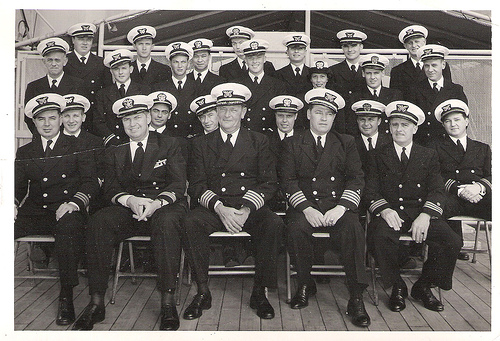
officers Five Traits of True Leadership

We all lead at some point in our life. We serve as leaders in our jobs, in our communities, and in our families. For many, being a leader means having the power to control others. Those who take this view eventually find that the more they try to control people, the less influence they have over them. For others, leadership means being in a position of authority. Yet, a man can be a leader even if he’s on the bottom of the totem pole. When a man sees that something must be done, he won’t let his lack of position limit him from taking charge; he steps into the gap and assumes responsibility. True leadership is not about superiority, position, or prestige. It’s about revealing and releasing the potential of those around you. Leadership is not about the power of one, but facilitating the greatness of many.

Unfortunately, many men today are sloughing off leadership responsibilities either because of laziness or apathy. They would rather live a life of ignoble ease and have others shoulder the responsibility for them. But the world needs the leadership of virtuous men more than ever. When you’re called to serve as a leader, will you be ready to take on the challenge?

In 1950, the United States Military printed a small book for all armed forces officers on how to become better leaders and men. In it, five traits are set forth on what makes an effective leader. We’ve taken these traits and explored their meaning and application for every man whether an officer or a civilian.

1. Quiet resolution. An effective leader has the resolve to see every task through to the end. Resolve is easy to have in the quiet before the storm comes. Resolve is a breeze when one’s commitment has never been tested. It is when the fear, chaos, and stress of a crisis hits that true resolve is revealed. In any situation, there will be an opportunity for retreat, an escape hatch, the chance to shirk responsibility and choose safety and defeat over risk and greater reward. At that moment, the man with quiet resolve does not waffle, he does not doubt the choice that he knows is right. Without the terrible grip of indecision seizing him, he is cool and levelheaded, unflappable in the face of challenge. He is not loud, yelling and frenetically scurrying about in an attempt to cover his lack of grit with useless action. The man with quiet resolution is a man others can feel supremely confident in. While the world around him goes to pot, he knows what his mission is and he calmly fulfills it. He is the anchor in the storm.

How to become a leader with quiet resolution:

Do not wait for a crisis to emerge to make a decision. Inventory your values and goals, and set a plan for how you will react when certain crises arise and important decisions need to be made. DO NOT wait to make you choice until the heat of the moment, when you will be most tempted to surrender your values. Set a course for yourself, and when trials come, and you are sorely tested, you will not panic, you will not waver, you will simply remember your plan and follow it through.

2. The hardihood to take risks. Nothing ventured, nothing gained. Great achievements come to those who are willing to take risks. A leader who continually plays it safe will never put themselves or the people they lead in a position to experience success. A life without risks is surely alluring; its sweet lullaby of safety and comfort has lulled many a man into the trap of mediocrity and apathy. The weak man stands at the crossroads of decision, tempted by the possible reward and yet paralyzed by the fear of defeat. He is blinded to the fact that even failure brings its own rewards. Without failure a man never comes to know himself, his limits, his potential, and what he is truly capable of. A man who never dares greatly fails to see that he has taken the greatest risk of all: the risk that he will never progress, never refine his soul, never amount to anything worthwhile.

How to become a leader that takes risks:

The fear of taking risks can be very real. You cannot expect to have the courage to take a large risk when you have had no experience taking small ones. So find opportunities in your daily life to take little risks. It could be as small as approaching a stranger and striking up a conversation. Find an activity that frightens you, like public speaking and go for it. As you venture more risks, you develop the capacity to overcome your fear and gain the wisdom to know when a risk is worth taking. You will achieve the mettle to take the big risk when your leadership abilities are truly called upon.

3. The readiness to share in rewards with subordinates. A great leader, although supremely confident, humbly acknowledges that no success, no matter how large of a role he personally played in bringing it to fruition, is a wholly solo effort. He is deeply grateful for all those, even those with small roles, who played a part in the achievement. And he understands human nature. He understands that people love to be recognized for their contributions. When a group or organization succeeds, a true leader makes it a priority to recognize both in public and private the contributions of those he led. When a person sees that a leader is humble and will share in success, they’ll be more willing to follow that person.

How to become a leader that shares rewards with subordinates:

Sharing success with the people who follow you can be as easy as offering public recognition or increasing their compensation. A simple thank you card expressing your gratitude for an employee’s effort in completing a project can go a long ways in building loyalty to you and your organization. When offering thanks or giving praise, try to be as specific as possible. It shows the person you lead that you are keenly aware of what they do and makes the thanks or praise more personal and sincere.

4. An equal readiness to take the blame when things go adversely. It is when things go wrong that true leaders are separated from the pretenders. The weasel leader will gladly accept the accolades when he and his team succeeds, but will find another individual to take the fall when things get tough. When followers see this, it completely demolishes any confidence and allegiance to that leader. True leaders will take responsibility for all consequences of their decisions, even the bad ones. Even when the results were the fault of a subordinate, a true leader will still take all the blame. Perhaps the leader failed to communicate clearly what the subordinate’s duty was, or maybe the leader failed to match the right man with the right job. After taking responsibility for the results, an effective leader will immediately take action to correct the situation.

How to be a leader by taking the blame when things go adversely:

When taking the blame, you must do so sincerely. Your confession must spring from a genuine belief that you were at fault. To accept blame, but to do so grudgingly, makes you a boy, not a man. Never play the part of the martyr and seek glory for taking the fall. Likewise, don’t take the blame publically, but then tell your subordinates that the only reason you took responsibility was to save their asses. You’ll look like a phony and deteriorate their trust in you.

5. The nerve to survive storm and disappointment and to face each new day with the score sheet wiped clean; neither dwelling on one’s successes, nor accepting discouragement from one’s failures. All of history’s great leaders had moments of supreme success and moments of devastating defeat. Great leaders focus on the things they can change and influence, and the past is not one of those things. If you fail, learn from it and then immediately cease to dwell on it. Rehashing the past will not do anything for you. Moreover, the people a man leads will lose confidence in their leader if they continually brood over their failures.

When you succeed, celebrate with your followers, and move on. A leader who continually dwells on past success shows that he has not set his eye on greater things. Additionally, as we learn from the Greeks, a leader’s hubris can quickly become their downfall. Always stay humble and hungry.

How to become a leader by not living in the past:

Read biographies of great leaders from history. By reading about the lives of these great men, you’ll learn that even the best leaders faced enormous setbacks. You’ll gain perspective and come to see that one failure does not mean the death of a man’s capacity to lead. And the amazing feats of the great men of history will inspire you to believe in the powerful influence on history a true leader can wield.

All in all, good advice.