Showing posts with label integrity. Show all posts

Thursday, September 25, 2014

Selfless Cop Changes Lives of Two Boys . . . FOREVER

http://cdn.inquisitr.com/wp-content/uploads/2014/09/Jack-Mook-and-Sons-665x385.jpg

When a Pittsburgh police detective noticed that two boys he was training in a boxing gym stopped showing up, he went looking for them. What happens next is why I still have faith in human beings.

These Kids Had No Idea a Cop Would React This Way When He Heard about Their Living Situation


Police officer Jack Mook was enjoying his bachelor life, only having himself to take care of. He was boxing in his spare time and noticed that a couple of foster kids he helped train stopped showing up.

He tracked them down and found that they were living under terrible circumstances with abusive foster parents. Jack took matters into his own hands and had them placed in a new foster home…HIS home. Jack traded in his single life for the life of a parent and even legally adopted the two boys. Jack and the boys wouldn’t have it any other way and are restoring a lot of people’s faith in humanity!

Friday, September 13, 2013

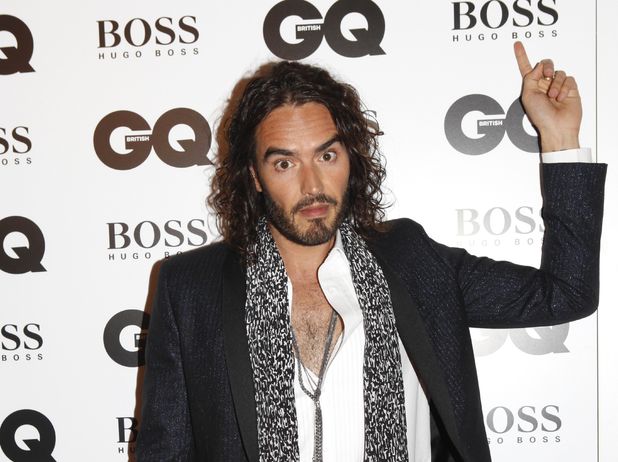
Russell Brand Rips Into Hugo Boss at GQ Men of the Year Awards


This is WHY Russell Brand deserves a Man of the Year Award, I'm just suspecting that GQ is not feeling so good about choosing him as one of their Men of the Year. I love when intelligence and wit combine to point out horrible things we'd rather not discuss and deal with, like Hugo Boss's history with the Nazis.

But they did give him the "Oracle" award - a word that comes from the latin verb ōrāre "to speak," and generally referred to the priest or priestess uttering the prediction(s) of the future. According to Wikipedia:
Oracles were thought to be portals through which the gods spoke directly to people. In this sense they were different from seers (manteis, μάντεις) who interpreted signs sent by the gods through bird signs, animal entrails, and other various methods.[1]
I suspect the people at GQ were not fully versed on the role of the Oracle as a vehicle for the gods to speak directly to humans. In his own way, Brand was pointing out an ugly truth that no one in that room, and especially the organizers at GQ, wanted to hear.

Anyway, this was posted on their "Winner and Losers Live Blog":
He must have seen this coming... Oracle of the Year goes to Russell Brand, handed over by John Bishop. This will only fuel his Messiah Complex. He accepts graciously: "Thank you for the Oracle Award... which honestly sounds made up."
But the links are dead-ends - seems they took down whatever information they had on their site about the award or this year's winner.

Apparently, Brand was kicked out of the After Party for his comments.

Watch The Moment Russell Brand Rips Into A Big, Famous Brand With A Terrible Past

By Rossalyn Warren (More from Rossaly)

When comedians put people on the spot, it's always a tad awkward. But when one of the most recognizable comedians in the world rips into the history of one of the most famous brands in the world on stage at an expensive event that said expensive brand is sponsoring ... just see for yourself.

Lots of companies have this same black mark in their history books, but it's hard to forgive some things. And it's kinda neat to see this company not being let off the hook.

His comments: "Any of you who know a little bit about history and fashion will know that Hugo Boss made the uniforms for the Nazis. The Nazis did have flaws, but, you know, they did look fucking fantastic, let's face it, while they were killing people on the basis of their religion and sexuality." 

After this, Russell Brand tweeted: 
Russell Brand         @rustyrockets
GQ editor: "What you did was very offensive to Hugo Boss." 
Me:" What Hugo Boss did was very offensive to the Jews."

Monday, March 4, 2013

Art of Manliness - The Importance of Owning Up to Mistakes

This is an excellent post from Brett and Kate McKay at The Art of Manliness on the importance of admitting our mistakes and how to do it. One of the best ways in the world to strengthen a relationship, in my opinion, whether it's friendship or romantic, is to be able to say, "I was wrong. I'm sorry."

Quoting Tavris and Aronson (authors of Mistakes Were Made (But Not by Me): Why We Justify Foolish Beliefs, Bad Decisions, and Hurtful Acts), they conclude we must, “learn to see mistakes not as terrible personal failings to be denied or justified, but as inevitable aspects of life that help us grow, and grow up.” Sounds right to me.

Here is the first half of the article, follow the links to see the "how to" portion on taking responsibility for our mistakes.

Personal Responsibility 102: The Importance of Owning Up to Your Mistakes and How to Do It

by BRETT and KATE MCKAY on FEBRUARY 19, 2013


Yesterday we discussed the cognitive blind spots our brains generate that can make it difficult for us to honestly assess our actions and determine our responsibility for those actions and their consequences. We discovered the way in which our brains are inclined to flatter and shield our egos from blame when we make mistakes.

Despite how difficult it is to counter the mechanisms of our ego defense system, the task is not wholly insurmountable. Every man who wishes to take on the mantle of manhood must make the effort. In doing so, you will find that striving to take responsibility for your life and ownership of your mistakes is incredibly worthwhile for many reasons:

Allows you to make better decisions. Self-justifications distort reality. The more you use them, the more you create an alternate universe for yourself. This leads to a decreased ability to make good choices, as the information you’re using to do so is warped. This can keep you from the people and pursuits that could have been good for you – if only you had been able to see them clearly for what they were. For example, that professor who was “out to get you” might have become an incredible mentor, if you had seen his criticism as a desire to help, rather than an attack.

Most dangerously, one self-justification begets another, setting off a domino effect that sends you more and more off track. Once you justify one decision, you’re deeper into it, and to get rid the dissonance you’ll feel worrying if was the right choice, you’ll make a decision that digs you even further into it. And the cycle continues. For example if you bully a kid at school, you’ll then feel some dissonance in the aftermath for hurting someone (no one likes to think of themselves as cruel), so you’ll justify that decision by saying the kid is an annoying crybaby who deserved it. The more you dwell on those justifications, the more convinced of them you’ll become, and the more you’ll feel like bullying him again.

Keeps little problems from turning into big ones. Related to the point above, if you can own up to a mistake as soon as you make it and do your best to correct it or make it right, you can prevent it from turning into a huge problem that’s going to be difficult to solve. A snowballed mistake may torpedo various aspects of your relationships and career before you can get yourself out from under it.

Allows you to learn from your mistakes. Simple — you can’t learn from your mistakes if you can’t acknowledge you’ve made them! And if you don’t learn from your mistakes, you’re destined to repeat them. That’s a recipe for quickly going nowhere in life.

Engenders the respect of others. We often hide our mistakes from other people because we worry they will think less of us once they’ve seen that we’ve messed up. But, frankly acknowledging your mistakes, apologizing for them, and then earnestly working to make things right almost always has the opposite effect – people respect you for it. There might still be consequences, of course, but people will appreciate your honesty. If they use your confession as a way to belittle and use you, those are probably not the kind of people you want to work/live with anyway. It’s actually when you hide your mistakes, and they’re found out anyway, that people lose their respect and their trust in you.

Strengthens relationships. Self-justification is a cold, hard relationship killer, as it causes us to build a case of total blame against the other person when things are going poorly between you.

There are two ways to explain mistakes: the person did what they did because of the situation, or, because of who they are. We use the former explanation with ourselves — “I forgot her birthday because I have so much on my mind right now.” We tend to use the second explanation on others — “She forgot my birthday because she’s so self-centered.” We don’t critique theirbehavior, but their character – they don’t do bad stuff, they are bad. This kind of blanket condemnation is called a global label. The person is stupid, crazy, useless, selfish, immature, bitchy, evil, lazy, etc. They’re a failed human being.

Global labels are almost never accurate, but your brain finds them very satisfying to develop and spew. They allow you to see your partner as deliberately hurting you — as intentionally sinking the relationship. It’s their fault, and you’re the victim, so you feel entitled to punish and attack them.

Once you give someone a global label – “She’s self-centered” – you focus on gathering evidence to confirm your conclusion, and overlook all evidence to the contrary. Velcro and Teflon. You keep mulling over how she forgot your birthday, but don’t think about how just yesterday she canceled plans with her friends to stay home and help you finish a paper. As you strengthen your “case” against her, you’re filled with self-righteous indignation, which allows you to go on the attack. Then, when you see you’ve hurt her, dissonance arises (again nobody likes to think of themselves as mean or heartless), so you gather more evidence to justify your attacks as well-deserved. And on it goes. When the global label becomes firmly entrenched, you come to see the person as hopelessly flawed and unable to change (“You’re just like your father!”), which leads to you feeling contempt for them, one of the death knells of a relationship.

Conversely, being able to admit fault, being able to acknowledge one’s role in the current health of the relationship, and having empathy for why your partner might do what she does from time to time without being hopelessly flawed (just like you!), leads to strong, healthy relationships.

The Bottom Line: Owning up to our mistakes allows us to take responsibility for our lives. If we can’t accurately perceive who we are, how we behave (and how others behave towards us), and how our behavior affects others and our own lives, life will always feel like something that’s happening to us, rather than something we are in control of. Men with an internal locus of control – those who believe they can shape life through their own decisions and actions — are more confident, more likely to seek learning and be leaders, more disciplined, and better able to deal with stress and challenges. Men with an external locus of control, on the other hand, believe the course of their life is determined by luck and other people, and see themselves as victims. They are prone to problems with both their physical and mental health, and often plagued by stress, anxiety, and depression. When they make mistakes, they are apt to think, “Why is this happening to me?”

Men with an internal locus of control are achievement-oriented and more likely to find academic and professional success. Instead of remaining in a childish mindset, they grow into mature manhood. Instead of seeing themselves as the victim and blaming others for their failures, they learn from their mistakes and use them as stepping stones to getting stronger and moving ahead.
Read the second half of this article.

Friday, January 18, 2013

My Perspective on Lance Armstrong's Oprah Confession - It's Not About the Drugs . . . .


I have not seen the whole broadcast, but I have read enough (and know enough of the background) to have a well-informed opinion. Having been a serious cycling fan since Greg LeMond was winning his three Tours de France, I had little doubt about the use of performance enhancing drugs (PEDs) in cycling, especially after the Festina Affair in 1998.

Here is what I wrote in a status update earlier today on Facebook (edited and greatly expanded):

* * * * * * *

The legendary Eddy Merckx  was a 5-time Tour de France winner, 5-time Giro d'Italia winner, 1-time winner of the Vuelta a Espana, and he won the Giro and the Tour back-to-back three times. Merckx is widely considered by most cycling fans the greatest rider of all time. When Merckx was dominating the sport (the myth is that when other riders saw Merckx line up at the start of a race, they all knew they were racing for 2nd place), no one questioned his brilliance, his training, his will to win.

The only differences between now-disgraced Lance Armstrong (7-time winner of the Tour de France, no matter what the records say) and Merckx is that there was no EPO to use in the early 1970s, but amphetamines and anabolic steroids (testosterone and its variations) were legal . . . and crucially, there was no drug testing.

If you look at the way Merckx dominated the sport and made other great riders like look like weekend enthusiasts, the likelihood that he did not use PEDs is pretty slim. In his best year (1971), Merckx won almost every other race he rode. Merckx won the equivalent of a race a week for six years [The Independent, Friday 6th July, 2007.]

This list shows his wins as a percentage of races started - look at how often he won in 1970-1973:
  • 1966: 21%
  • 1967: 23% 
  • 1968: 24% 
  • 1969: 33%
  • 1970: 37%
  • 1971: 45%
  • 1972: 39% 
  • 1973: 37%
  • 1974: 27%
  • 1975: 25%
No mater how great Merckx was - and he was the best rider ever - these numbers are at best suspicious. The difference between him and Lance is that Lance dominated the Tour in an era when PEDs were not only illegal, but were the source of many scandals. In 1998, the year he returned to the Tour after his battle with testicular cancer (and the year before Lance's first victory), the Festina Affair ripped the drug scene in cycling wide open. Here is a brief summary from Wikipedia:
The Festina Affair refers to the events that surrounded several doping scandals, doping investigations and confessions by riders to doping that occurred during and after the 1998 Tour de France. The affair began when a large haul of doping products was found in a car of the Festina cycling team just before the start of the race. An investigation was followed by the opening of a separate case into the TVM team and the subsequent searching of many teams during the race. The investigation revealed systematic doping, and suspicion was raised that there may have been a widespread network of doping involving many teams of the Tour de France. Publicity on the case was constant and negative. Hotels were searched by police, and a spate of confessions were made by retired and current riders. Many team personnel were arrested or detained, and protests were made by riders in the race. Several teams withdrew from the race.
When Lance says he chose to use PEDs because that is what it took to be competitive and win races, this is the environment to which he is referring. To me, Lance is the greatest rider in a generation of riders who  were using PEDs. If drugs are simply another technology (and they are, which is why I believe they should be legal), like having better bikes, better wheels, better aero helmets, and better training techniques, then Lance had better drugs and applied their use more effectively.

For me, it's not about the drugs . . . .

What bothers me is that he lied about it, and not just lied, but actively sought to destroy anyone who might reveal his truth to the world. Men who willingly place themselves as role models have an obligation to at the very least be honest and demonstrate some integrity. In 1997, the year he returned to competitive cycling, he founded the Lance Armstrong Foundation, which later became the Livestrong Foundation. Lance wanted to be a role model - he spoke about his miraculous recovery, the great story of a hero overcoming imminent death to win one of the toughest sporting events on the planet, and then do it 6 more times.

However, the real issue to me is the way Lance bullied and intimidated other riders who spoke out about drugs, and especially those who spoke against him. In 1999, the first of Lance's 7 victories, Christophe Bassons (the only Festina rider from 1998 who rode clean) wrote some articles about the Tour and about doping, suggesting that the speeds were suspicious and that he believed little had changed. He paid a heavy price for those words, with Lance dealing the hardest blow:
The peloton began to turn against him, refusing to speak to him, and otherwise shunning him.[3]  
Stage 10 occurred on July 14 and was from Sestrieres to Alpe d'Huez. Bassons would later tell the story of this stage to media, including an October 2012 interview with the BBC. He said that nobody had been talking to him. The entire peloton planned to ride slow for the first 100 km without telling him. Bassons only heard about this because a mechanic from his team told him. Bassons decided he was "fed up" and decided to ride ahead of the others ("attacked from the start"). As they came to a flat spot, "all of the teams rode together to close me down". As the teams rode by him, they looked at him.[3]
" . . . and then Lance Armstrong reached me. He grabbed me by the shoulder, because he knew that everyone would be watching, and he knew that at that moment, he could show everyone that he was the boss. He stopped me, and he said what I was saying wasn't true, what I was saying was bad for cycling, that I mustn't say it, that I had no right to be a professional cyclist, that I should quit cycling, that I should quit the tour, and finished by saying [*beep*] you. . . . I was depressed for 6 months. I was crying all of the time. I was in a really bad way." - Bassons, on BBC Radio 5, 2012 10 15[3]
In 2011/2012, after investigations into past doping in cycling, especially the 2012 USADA report on Armstrong's US Postal Service team, the media began to re-tell Bassons story. In one interview for the BBC, Armstrong teammate Tyler Hamilton publicly apologized for being part of the peloton that shunned him, saying that he was "100% wrong" not to talk to him. Bassons said "that's life, it's nothing. I don't begrudge Hamilton. I understand."[3] 
Where I find little tolerance for Lance is not in his drug use (all but one of the 2nd and 3rd place finishers behind Lance in those Tour wins have been implicated in doping, as well). My intolerance lies in how he destroyed lives to maintain his lie, something he did not address last night. 

Greg LeMond and Frankie Andreu lost their livelihood at various points because of Lance (granted, LeMond had/has his own issues that made success off the bike more difficult). After LeMond expressed concern about Armstrong's relationship with Dr. Michele Ferrari, a known supplier of doping products and protocols to cyclists, Trek Bicycles threatened to drop the LeMond line of bikes unless LeMond apologized to Lance for saying he rode dirty - LeMond claims he suffered two years of depression for giving in to this demand.
The two parties first found themselves at odds in July 2001, after LeMond expressed public concern over the relationship between Italian doping doctor Michele Ferrari and Trek's star athlete, Lance Armstrong. "When I heard he was working with Michele Ferrari, I was devastated," LeMond was quoted as saying of Armstrong. "If Lance is clean, it is the greatest comeback in the history of sports. If he isn't, it would be the greatest fraud."[108][109] 
Trek's president John Burke pressured LeMond to apologize, claiming, "Greg's public comments hurt the LeMond brand and the Trek brand."[110][111] Burke allegedly justified his demand for an apology by advising that, "As a contractual partner, he [LeMond] could criticize doping only generally – not point his finger at specific athletes, particularly one that happens to be the company's main cash cow."[112]
Betsy and Frankie Andreu were close friends of Armstrong - and Frankie a teammate - who were present with Lance in the hospital when he was diagnosed with testicular cancer. During this revelation, the Andreus contend the overheard Lance admit to using EPO, steroids, and other banned substances.

From the New York Times:
The Andreus claim that they overheard two doctors in an Indianapolis hospital room in 1996 ask Armstrong if he had ever used performance-enhancing drugs. They said Armstrong, who was battling cancer then, rattled off: testosterone, EPO, growth hormone, cortisone, and steroids. 
But for years, Armstrong vehemently criticized them for their claims, saying they made up the story because they were jealous and vindictive, and that Betsy Andreu hated him. 
Yet when Armstrong told Winfrey in an interview that aired Thursday that he had doped throughout most of his cycling career, he failed to say that the Andreus’ hospital room story was true. 
“I’m not going to take that on,” he said when Winfrey asked about it. “I’m laying down on that one.”
He has not apologized or made any amends to them for his public assertions of their dishonesty and his use of the legal system to silence them. After the first segment of Lance's apology concluded, Betsy Andreu appeared on CNN with Anderson Cooper - she seemed clearly pained that Lance evaded the question and did not issue an apology:

She was not waiting for his doping confession. She was waiting for Armstrong to announce that she and her husband, Frankie, were not liars when they said Armstrong in 1996 had admitted to doping. 
But the acknowledgment that Betsy Andreu had long anticipated never came. 
“He owed it to me,” Betsy Andreu, on the verge of tears, said Thursday night on CNN’s Anderson Cooper 360. “You owed it to me, Lance, and you dropped the ball. After what you’ve done to me and what you’ve done to my family, and you couldn’t own up to it? Now we’re supposed to believe you? You had one chance at the truth, and this was it.”

If ever there were a place where "Man Up" is the appropriate response, this would be it. Armstrong owes a lot of apologies to a lot of people, which he did say was part of his effort to come clean. But for those people most wronged by Lance, it is probably far too little and far too late.

* * * * * * *

As Shawn Phillips has mentioned in his comments on Lance, we can never know what pressures he faced and what motivations lie beneath the surface in his life (including his calculated, detached, and minimal admission of doping on Oprah's couch, not with a sports reporter or cycling magazine). It's hard to judge someone when we acknowledge our own flaws and weaknesses - and while I find it difficult to accept that he should not be held, somehow, accountable for those lives he damaged, I also know that I live in a glass house. So this is where I place my stones on the ground and walk away.

* * * * * * *

Beyond the doping and the lost titles, and the money that will likely have to be returned, there is a man who has to live with himself for the next 40 or 50 years. There are deeper lessons in all of this, painful though they may be.

In the end, the races, the screaming fans, and the money mean nothing in life. What is important, however, are the relationships, the friendships, without which we are isolated and life loses its value and purpose. A man who throws friends and colleagues under the bus to protect his own lie, a lie he seems to have believed was his privilege, is a man who will die alone and lonely.

It seems Lance has not experienced this realization, yet, whereby he is willing to publicly apologize, and so sincerely, for destroying the lives of friends and teammates.

Wednesday, August 22, 2012

LL Cool J Breaks Burglar's Jaw, Detains Thief Until Police Arrive


LL Cool J is a big man, and it appears he's also badass enough to protect his home and family without a gun. According to stories all over the web today, LL Cool J beat the crap out a man who had broken into his San Fernando Valley home last night. The unnamed suspect was still receiving treatment for a broken nose and broken jaw as the story hit the press.
When LL Cool J was surprised by an intruder who had tripped the alarm system at his Studio City home in Los Angeles home around 1 a.m. this morning, he decided the fend off the man himself.

At over 6 feet tall and a hulking 200-pounds plus (of pure muscle, we're guessing), it was no surprise he was able to overcome the burglar and detain him until police could arrive.

The Associated Press reports that police responded to a call to 9-1-1 from a girl who said her father was holding a man who had broken into the home.

When police got to the scene, they found the perpetrator with minor bruises and LL Cool J unharmed. The man reportedly did not take anything but was still arrested on suspicion of burglary, said law enforcement officials.

A spokesperson for the L.A. police originally said that the call came from a home on Blairwood Drive, a street on which LL Cool J's real name, "James Smith," is listed as a resident. It was later confirmed to TMZ that it was indeed the home of the rapper-turned actor.

“As a father, husband and citizen, [LL Cool J] is committed to keeping his family safe and is cooperating with authorities on this private matter," said the spokesperson in a statement to the Daily News.
Very cool - a man who is a musician, an actor, a family man, and can kick ass and take names when necessary.

Cool J told Men's Health Magazine in 2006 that his workout program includes "free-weight bodybuilding exercises, plyometrics, fighters' moves, calisthenics, and endurance training, all designed to build muscle while burning fat." Among the fun things he does are 100 meter sprints, running hills in a weighted vest, and mixes of old school bodybuilding with high-intensity cardio - all done with his trainer, Scooter Honig.

I've always admired Cool J even while not being a rap/hip-hop fan. He chose his own path in the industry - not gangsta and not political - and fused rap/hip-hop with pop music appeal. He has been incredibly successful and has also been labeled a sell-out by some factions of the rap community.

He responded to the worst of it, in 1990, with Mama Said Knock You Out (see below), a huge hit and his hardest music to that point - the best-selling record in his career.

More importantly, he has been married to the same woman since 1995, and they have four children (oldest is 22, youngest is 11). It's rare to see anyone in the music or acting stay married that long, maybe more so for man coming out of the rap community.

On the page devoted to him at AskMen.com, he is quoted:
"Keeping it real ain't about carrying a gun or smoking blunts. It's about being true to yourself and those around you." 
He has been active in politics, supporting both Republican and Democratic candidates - based not on their political party, but on what they do for the community. His support of NY Governor George Pataki (R) grew out of meeting him at an assisted-living project fund-raiser in Cool J's old neighborhood (where his grandparents raised him following his parents' divorce when he was 4 years old).

He has also been active in helping youth, according to Rolling Stone:
He taped a radio commercial for a "Stay in School" literacy campaign and founded the Camp Cool J Foundation and Youth Enterprises, a program for urban youth.
Here is the video for Mama Said Knock You Out, which we can now take a bit more literally.


Monday, July 2, 2012

Sexual Misconduct: The Third Zen Precept by Nancy Baker


This is member-supported content from Tricycle - A useful discussion on Zen's Third Precept: Sexual Misconduct, by Nancy Baker (supporting membership required for access). You don't have to be Zen or even Buddhist to appreciate this precept - all of us should be more aware of our sexual conduct and our embodiment of sexual ethics.

The Third Zen precept - Kamesu micchacara veramani sikkhapadam samadiyami, "I undertake the course of training in refraining from wrong-doing in respect of sensuality." - began in the monastic world, where celibacy was required. The rules were fairly strict (from Access to Insight, Buddhism and Sex):
Complete sexual continence is considered an essential feature of the monastic life. Intercourse of a heterosexual or homosexual character is automatically a Parajika offense. A monk who performs such an act is considered to have expelled himself from the Order, and is no longer in communion with the other monks. Any acts of a sexually unbecoming nature falling short of intercourse result in suspension and require expiation. Samaneras, or novice monks, who break their training in this respect are disrobed.
Laypeople who do not participate in sexual violence (rape, molestation, incest) or psychologically coercive sexual misconduct (incest, power imbalances such teacher/student, quid pro quo situations), or morally inappropriate sexual conduct (marital affairs, lying to seduce) may feel that this precept has no relevance in their lives. Nancy Baker counters that belief:
In fact, if we look more closely, it is a subtle and interesting precept; there is more to it than first meets the eye. There are several different translations of its subject matter: “adultery,” “impure sexuality,” “sexual misconduct,” “unchaste conduct,” and “misuse of sex.” What causes the misconduct and the impurity has been translated as “attachment,” “greed,” “grasping,” and “desire.” A consideration of some of the differences among these translations actually allows us to see the richness of the precept. Here, I will examine two ways of understanding this precept: sexual misconduct and misuse of sex.
The sexual misconduct point is easiest to grasp - "our conscious and unconscious impulses to take advantage of the susceptibility of others for our own emotional or physical gratification" - i.e., sex that harms others in any way.

Misuse of sex, however, relates to the impact of our sexual behavior on ourselves. In the end, it comes down the the Buddhist idea of kamma (karma). Here is more from Access to Insight's article (by M. O'C. Walshe):
We may recall that a few years ago there was a song "Money is the Root of all Evil" Some people pointed out that not money, but the love for money is the root of all evil (well, of a lot of evil, anyway). And here is the snag. Sexual pleasure (like money) is not "evil" (or unskilled), but attachment to sexual pleasure (like the love of money) is. If we can experience the pleasure without attachment we are all right; if we become attached to it, we are not "hitting the mark." Now of course it is rather difficult (to put it mildly) to experience pleasure of any sort without feeling attached to it. But attachment is kamma, and unskilled kamma at that. And the results of that will inevitably, according to Buddhism, be something unpleasant in the future.

Many people will find this explanation novel. Some will find it puzzling. Some will undoubtedly reject it — with or without investigation — with the excuse that it is overly subtle, or arbitrary, or something of the sort. What they mean is, of course, that they find it inconvenient. But it will repay a lot of consideration and mindful investigation. Careful study, in fact, should show that it is the key to the whole problem. The matter can also be considered in terms of the law of Dependent Origination: "Contact is the basis for the arising of feeling; feeling... of craving; craving... of clinging;" etc., the ultimate outcome being of course the continued process of becoming, with all the sufferings entailed.
It seems to me there is, in the Theravada tradition of Buddhism, an emphasis on control of desire - exercising restraint in all areas of our lives, but especially sexuality, to prevent attachment. I find that when we try to control anything that is natural in our lives - sexuality, hunger, desire, emotions - that we end up in a negative relationship with that energy - it ends up controlling us either overtly or covertly.

I propose we do not try to control our cravings, desires, and feelings (I can no more repress anger than I can sexual desire), but rather, befriend them, get to know them, and understand the role they play in our lives (positive and negative, since it will never be all one or the other). This is a different approach, but I suspect it is more likely to allow us to come into "right relationship" with our sexuality, desires, and feelings.

Sexual Misconduct

The Third Zen Precept 

Nancy Baker

Author Nancy Baker is currently leading a Tricycle community discussion about sexual misconduct and the third Zen precept. You can join the discussion here.

Wednesday, September 28, 2011

Sounds True - David Schnarch: Emotional Commitment and Great Sex?

David Schnarch is one of the better sex and relationship psychotherapists who shares his wisdom and experience through books and lectures. Tami Simon at Sounds True recently interviewed him for Insights at the Edge.

Two of his books, Passionate Marriage, and Resurrecting Sex, have been incredibly useful in understanding how relationships fail - and how to prevent that from happening. His newest book is Intimacy & DesireAwaken the Passion in Your Relationship.

David Schnarch: Emotional Commitment and Great Sex?

Tuesday, September 27, 2011

ArrayTami Simon speaks with Dr. David Schnarch, a licensed clinical psychologist, certified sex therapist, and clinical member of the American Association for Marriage and Family Therapy. David is the author of the books Intimacy and DesirePassionate Marriage, and Resurrecting Sex, and with Sounds True he has published a two-session audio program called Secrets of a Passionate Marriage: How to Increase Sexual Pleasure and Emotional Fulfillment in Committed Relationships. In this episode, Tami speaks with David about the four drives of sexual desires, his understanding of integrity and its importance in a healthy partnership, and what it might mean to “hold onto yourself” in relationship. (67 minutes)
Listen Now:


Download »

Read Transcript »

Monday, April 18, 2011

We Must Own Our Mistakes - And Face the Consequences with Strength

http://lawofhollywoodland.files.wordpress.com/2009/04/prison-break-lane-garrison-dui1.jpg%3Fw%3D300

One of my clients told me about this Today Show segment with a former star of the TV series Prison Break, Lane Garrison. In less than 30 minutes (in 2006) he made a series of mistakes that cost a teen boy his life and landed Garrison in jail for 40 months - after he pleaded guilty to all changes against him.

He did a horrible thing - and a family lost their son. As Garrison admits, he deserved the jail time. But while most kids his age (he was 26) would have fought the charges and tried to plead them down, he stood there in front of the judge and court and the cameras and said, "Yes, I am guilty."

That takes courage and strength. We all mess up, seldom as bad as that, but do we own the mistakes and face the consequences? Would we "man up," as Garrison calls it in the interview, if we were in that same spot he was in?

I'd like to think I would, but I'm not sure I would be that strong.


'Prison Break' star not free from pain of actions

Lane Garrison owned up to deadly accident but wishes he could make it better with family of dead teen

By Courtney Hazlett
TODAY.com
updated 4/18/2011

In 2006, actor Lane Garrison, then best known for his role on “Prison Break,” made 26 minutes worth of terrible, tragic decisions.

At a supermarket near his home in Beverly Hills, Calif., he accepted an invitation from star-struck high schoolers to go to a party. He went, he drank and then he left the party with three teens to get more alcohol. While driving, Garrison jumped a curb in his Land Rover at about 50 mph and hit a tree. The accident killed Vaughn Setian, a 17-year-old Beverly Hills High School student, and injured two 15-year-old girls.

When the time came to go to trial, Garrison did something you don’t often see celebrities do: he owned up to his actions. On May 21, 2007, he pleaded guilty to vehicular manslaughter, drunken driving and providing alcohol to a minor. He was sentenced to 40 months in prison. For the first time since his 2009 release, the actor spoke about the experience Monday, on TODAY with Matt Lauer.

But Garrison has more to say about his experiences. He wants young people to know what life is really like behind bars and that not being able to contact the Setian family has been one of the most difficult parts of the experience.

“I wish I could have talked a little bit more about what life was like inside prison so that people could understand the consequences of their actions. Really see what’s going on inside of a prison, inside of a jail — which obviously I put myself in,” Garrison said after his TODAY interview. “Waking up in a cell covered in ants and roaches. Being tortured by guards. Not having anything but four walls. One of the things about jail that’s weird is that you’re sent to a place where you’re supposed to sit there and think about your actions and their consequences and why you’re there. And I think now, it turns more into — the minute you go there, it’s just survival.”

Survival is one thing. Knowing you’re wholly responsible for a family’s grief is an added challenge. “There’s a family that doesn’t have their son. The least of my worries was doing jail time. The whole notion that I was responsible for someone losing their life, that’s what really ate me up inside,” Garrison said. “This is something that I am never going to get over, they’re never going to get over.”

Getting through prison — eight different prisons, in fact — was something Garrison did by making the choice to be a “bright light in a dark place.”

“These people were in so much pain, no matter what crime they committed — and I didn’t ask, because in there you’re all the same. You’re a number, not a name. Most guys can’t leave, they can’t write, their parents were drug dealers and they were doing drops for them on their way to school by the time they were 11 years old. They’ve never had one chance, let alone two,” Garrison said.

“There were days in there that I felt, ‘how can I help these guys?’” At one point the actor organized a talent show. As president of the substance abuse program at one prison, he was able to use the program’s budget to get a Thanksgiving dinner delivered. Garrison recalls the reaction he got afterward: “There was a man over in the corner and he calls me over and is sobbing. He’d been locked up for 15 years. And he said ‘I want to thank you so much for doing this for us. Just the smell of real food gave me back all the memories of my family that I’d forgotten. I haven’t smelled real food in 15 years.’ And there are days like that that I’d think, I’m in here for a reason.”

Through all of this, Garrison wishes that he could have contact with the family of the young man he killed. Through his attorneys, he has reached out to the family. During the trial, Garrison was ordered to not make contact with the victims, which was difficult for him.

“It was eating me up inside. I literally wanted to scream. Walking into a courtroom and having the family right there and not being able to say anything literally made me go insane,” he recalled. “I just wanted to scream and say this is who I am; this is who I’m not. If you want to slap me, punch me, whatever. I just wanted some kind of contact with them. I pray to God that over time, that will happen.”

In the meantime, Garrison is moving forward with his life, but that too is taking time. After his April 29, 2009, release, it took him about a year to be able to function on a level close to normal, much less work. “My nervous system was shot. You’re desensitized after, by all that you’ve seen. And as an actor, that’s the worst thing you can be. To be a good actor you have to feel life, and observe life. And it felt like I came back from war. It took me about a year to adapt, to hug someone, to be able to tell someone I love you. Or even be able to hold a coffee cup. Post-prison, I was jittery.”

Garrison is currently appearing on a multi-episode arc on “The Event,” his first television work since his release (he’s also written a screenplay, “One Heart,” and participated in “Graduation Day,” a PSA about drinking and driving).

“It’s amazing,” he says of being back at work. “I want to do it every day. When I show up on set, I feel like, ‘this is my home. I’m supposed to be here.’ There is nothing better to me.”

Regardless of where Garrison’s career takes him, he is certain about the events of December 2006. “There was no other choice than to say, ‘I’m guilty. I made a bad decision.’ This family is in pain because of me,” he said. “I’m just trying to tell people what it’s like so they don’t make the same mistakes.”


Saturday, January 29, 2011

Julio Diaz - This Is How a Man Behaves (from 2008)

This guy's story is amazing - a true act of compassion and understanding. This is what it means to be a man, to be a human being, to be humane to our fellow citizens. Moving story - from 2008 - not sure how I only now came across it.

Chuck Norris style masculinity might have hurt the kid, broken his arm in taking away the knife. But Diaz saw a kinder way, some simple compassion and recognition of this kid's heart, which the kid probably didn't even know he had.
Julio Diaz

Julio Diaz recorded his story in New York City just days after he was mugged in the subway.
March 28, 2008

Julio Diaz has a daily routine. Every night, the 31-year-old social worker ends his hour-long subway commute to the Bronx one stop early, just so he can eat at his favorite diner.

But one night last month, as Diaz stepped off the No. 6 train and onto a nearly empty platform, his evening took an unexpected turn.

He was walking toward the stairs when a teenage boy approached and pulled out a knife.

"He wants my money, so I just gave him my wallet and told him, 'Here you go,'" Diaz says.

As the teen began to walk away, Diaz told him, "Hey, wait a minute. You forgot something. If you're going to be robbing people for the rest of the night, you might as well take my coat to keep you warm."

The would-be robber looked at his would-be victim, "like what's going on here?" Diaz says. "He asked me, 'Why are you doing this?'"

Diaz replied: "If you're willing to risk your freedom for a few dollars, then I guess you must really need the money. I mean, all I wanted to do was get dinner and if you really want to join me ... hey, you're more than welcome.

"You know, I just felt maybe he really needs help," Diaz says.

Diaz says he and the teen went into the diner and sat in a booth.

"The manager comes by, the dishwashers come by, the waiters come by to say hi," Diaz says. "The kid was like, 'You know everybody here. Do you own this place?'"

"No, I just eat here a lot," Diaz says he told the teen. "He says, 'But you're even nice to the dishwasher.'"

Diaz replied, "Well, haven't you been taught you should be nice to everybody?"

"Yea, but I didn't think people actually behaved that way," the teen said.

Diaz asked him what he wanted out of life. "He just had almost a sad face," Diaz says.

The teen couldn't answer Diaz — or he didn't want to.

When the bill arrived, Diaz told the teen, "Look, I guess you're going to have to pay for this bill 'cause you have my money and I can't pay for this. So if you give me my wallet back, I'll gladly treat you."

The teen "didn't even think about it" and returned the wallet, Diaz says. "I gave him $20 ... I figure maybe it'll help him. I don't know."

Diaz says he asked for something in return — the teen's knife — "and he gave it to me."

Afterward, when Diaz told his mother what happened, she said, "You're the type of kid that if someone asked you for the time, you gave them your watch."

"I figure, you know, if you treat people right, you can only hope that they treat you right. It's as simple as it gets in this complicated world."

Certainly, this could have gone very wrong and Diaz might be dead - but he's not. That's what matters. Would you be able to "man up" this way? I don't know that I could - and that bothers me.

I have been trained in self-defense, but I also have seen muggings go very badly. I might have given him the wallet and let him go about his night, mugging more people.

I'm still working to find that place within me that is open enough in those moments to act from my "warrior heart" and not from my culture-bound brain.


Thursday, November 18, 2010

Has Tiger Woods Grown Up?

It's closing in on the one year anniversary of Tiger Woods driving his SUV into a tree and subsequently watching his life unravel in ways few of could have guessed it would. Bimbos, porn stars, sex addiction, in-patient treatment, and finally, a $750 million divorce. Oh yeah, and he didn't win any any gold tournaments this year for the first time in his career.

Woods is getting out in front of the one-year thing with Twitter posts and a new essay in the Newsweek.

What do you think? Has Woods gained some perspective on what really matters in life? Or is he still just saying all the right things, without any real insight into how he made this mess of his life?

How I’ve Redefined Victory

Tiger Woods at the BMW Championship in September.
Jamie Squire / Getty Images: Woods at the BMW Championship in September.

Last November, everything I thought I knew about myself changed abruptly, and what others perceived about me shifted, too. I had been conducting my personal life in an artificial way—as if detached from the values my upbringing had taught, and that I should have embraced.

The physical pain from that car accident has long healed. But the pain in my soul is more complex and unsettling; it has been far more difficult to ease—and to understand. But this much is obvious now: my life was out of balance, and my priorities were out of order. I made terrible choices and repeated mistakes. I hurt the people whom I loved the most. And even beyond accepting the consequences and responsibility, there is the ongoing struggle to learn from my failings.

At first, I didn’t want to look inward. Frankly, I was scared of what I would find—what I had become. But I’m grateful that I did examine my life because it has made me more grounded than I’ve ever been; I hope that with reflection will come wisdom. Golf is a self-centered game, in ways good and bad. So much depends on one’s own abilities. But for me, that self-reliance made me think I could tackle the world by myself. It made me think that if I was successful in golf, then I was invincible. Now I know that, no matter how tough or strong we are, we all need to rely on others.

Slowly, I’m regaining the balance that I’d lost. My healing process is far from complete, but I am beginning to appreciate things I had overlooked before. I’m learning that some victories can mean smiles, not trophies, and that life’s most ordinary events can bring joy. Giving my son, Charlie, a bath, for example, beats chipping another bucket of balls. Making mac and cheese for him and his sister, Sam, is better than dining in any restaurant. Sharing a laugh watching cartoons or reading a book beats channel-surfing alone. Some nights now, it’s just me and the kids, an experience that’s both trying and rewarding. Probably like the experience a lot of families have every evening around the world.

When I first came back to golf this spring, after taking a necessary break, I was worried about how fans would treat me. But they’ve been kinder and more supportive than I ever imagined possible. That’s true away from the golf course, too. When I go to the store, or to work out, or to grab lunch, I’ve been amazed by the considerate, encouraging words I hear. I’ve realized that those sentiments are not merely courtesies but generous expressions of compassion for which I’ll always be thankful.

I have a lasting gratitude to those who stood by me in ways large and small. Unfortunately, opportunists are trying still to cash in on my troubles, no matter how irresponsible or ridiculous their claims may be. In many cases, I’ve never even met these people. But there’s no way I can dispute each lie without provoking more. Besides, everyone has probably heard more than they ever wanted to about my private life.

I can never truly repair the damage I’ve done, especially to my family. But I can keep trying. What endures in the record books are the achievements won through competition. What endures in our actual lives is the love of our family and the respect of others. I know now that some things can and must change with time and effort. I’m not the same man I was a year ago. And that’s a good thing.

Woods, one of the winningest golfers of all time, is founder of the Tiger Woods Foundation, which has helped educate more than 10 million kids.

Tuesday, October 19, 2010

Tony Schwartz - The Four Capacities Every Great Leader Needs (And Very Few Have)

This article was posted at the Harvard Business Review, and I thought it might be useful to take a look at the four traits he mentions. Schwartz looks at (1) leaders see others' hidden talents, (2) meeting the needs of their team, including meaningful purpose, (3) offer clear vision of success and empower team to achieve success, and (4) the best leaders are both strong and vulnerable, able to embrace their shadows as well as their light.

Two of these are clearly leadership goals (#2 & #3), but the other two (and potentially all four) are traits of mature human beings - those we want in a friend, a relationship partner, or especially in our team as we work on a project.

In my experience, the best leaders are those with the widest and deepest perspectives and with the best emotional intelligence and interpersonal skills. In a sense, I think that's what Schwartz is getting at too.

~ Tony Schwartz is the president and CEO of The Energy Project and the author of The Way We're Working Isn't Working. Become a fan of The Energy Project on Facebook and connect with Tony at Twitter.com/TonySchwartz and Twitter.com/Energy_Project.

When I was a very young journalist, full of bravado and barely concealed insecurity, Ed Kosner, editor of Newsweek, hired me to do a job I wasn't sure I was capable of doing. Thrown into deep water, I had no choice but to swim. But I also knew he wouldn't let me drown. His confidence buoyed me.

Some years later, I was hired away by Arthur Gelb, the managing editor of the New York Times. This time, I was seduced by Gelb's contagious exuberance about being part of a noble fraternity committed to putting out the world's greatest newspaper.

Over the last dozen years, I've worked with scores of CEOs and senior executives to help them build more engaged, high performance cultures by energizing their employees. Along the way, I've landed on four key capacities that show up, to one degree or another, in the most inspiring leaders I've met.

1. Great leaders recognize strengths in us that we don't always yet fully see in ourselves.

This is precisely what Kosner did with me. He provided belief where I didn't yet have it, and I trusted his judgment more than my own. It's the Pygmalion effect: expectations become self-fulfilling.

Both positive and negative emotions feed on themselves. In the absence of Kosner's confidence, I simply wouldn't have assumed I was ready to write at that level.

Because he seemed so sure I could — he saw better than I did how my ambition and relentlessness would eventually help me prevail — I wasted little energy in corrosive worry and doubt.

Instead, I simply invested myself in getting better, day by day, step by step. Because we can achieve excellence in almost anything we practice with sufficient focus and intention, I did get better, which fed my own confidence and satisfaction, and my willingness to keep pushing myself.

2. Rather than simply trying to get more out of us, great leaders seek to understand and meet our needs, above all a compelling mission beyond our immediate self-interest, or theirs.

Great leaders understand that how they make people feel, day in and day out, has a profound influence on how they perform.

We each have a range of core needs — physical, emotional, mental and spiritual. Great leaders focus on helping their employees meet each of these needs, recognizing that it helps them to perform better and more sustainably.

Arthur Gelb helped me meet not just my emotional need to be valued, but also my spiritual need to be engaged in a mission bigger than my own success. Far too few leaders take the time to figure out what they truly stand for, beyond the bottom line, and why we should feel excited to work for them.

3. Great leaders take the time to clearly define what success looks like, and then empower and trust us to figure out the best way to achieve it.

One of our core needs is for self-expression. One of the most demoralizing and infantilizing experiences at work is to feel micromanaged.

The job of leaders is not to do the work of those they lead, but to serve as Chief Energy Officer — to free and fuel us to bring the best of ourselves to work every day.

Part of that responsibility is defining, in the clearest possible way, what's expected of us — our concrete deliverables. This is a time-consuming and challenging process, and most leaders I've met do very little of it. When they do it effectively, the next step for leaders is to get out of the way.

That requires trusting that employees will figure out for themselves the best way to get their work done, and that even though they'll take wrong turns and make mistakes, they learn and grow stronger along the way.

4. The best of all leaders — a tiny fraction — have the capacity to embrace their own opposites, most notably vulnerability alongside strength, and confidence balanced by humility.

This capacity is uniquely powerful because all of us struggle, whether we're aware of it or not, with our self worth. We're each vulnerable to believing, at any given moment, that we're not good enough.

Great leaders don't feel the need to be right, or to be perfect, because they've learned to value themselves in spite of shortcomings they freely acknowledge. In turn, they bring this generous spirit to those they lead.

The more leaders make us feel valued, in spite of our imperfections, the less energy we will spend asserting, defending and restoring our value, and the more energy we have available to create value.

All four capacities are grounded in one overarching insight. Great leaders recognize that the best way to get the highest value is to give the highest value.

Thursday, August 12, 2010

Guest Post: Cherie Beck - A Call to Integral Males

This guest post from Cherie Beck was actually a comment left on a post over at Integral Options Cafe that dealt with Marc Gafni, his childhood, and the behaviors that have left so many of us in the integral community feeling that he has not healed his own wounding sufficiently to be teaching in public.

Cherie is a long-time member of the integral community - and a Spiral Dynamics Trainer/Coach. I first met her back in 2005 when I took an SDi training with Don Beck - she was his assistant teacher. At that time, I was unaware that Beck also had sexual boundary issues with students (and he too is a married man).

I felt that her three-part comment, while deeply personal, was also a call to the integral community, especially the men, to become the leaders who we would want to follow.

Tough role, that one. To be a teacher and a leader requires us to know our own shit inside and out, and to know those areas that can trigger us into behaviors and expressions that are not healthy for ourselves or the community. There is a consensus among many of us that our current (primarily male) leaders are not setting a good example in that regard.

Besides her blog, you can connect with Cherie at these social networks:
And now, her post.
Cherie Beck - A Call to Integral Males

I came back from the ITC yearning for the juice. In a jam packed weekend of presentations, where is it? Where were you? One of the only people I had wanted to connect with and didn’t. Here you are - And you’ve got the juice!

I hear the cry, once again, for some kind of accounting through at least a conversation, by exposing of more points of view of this subject, to at least reflect on the process of how this community is monitoring it’s ethical standards.

I answer this time - for the same reason I came forth when the light shined upon Don Beck - the lack of a suitable container to workout these critically important issues. My yearning for the creation of an appropriate environment to meet the complexity of human sexuality, change, and leadership grows within me. I can see that I have some role to play here, so I am called forth once again.

In this situation, the conditions are different, as is my relationship with the person at the center of the conflict, although both hold positions of perceived leadership in this infant web of connections that I hear referred to as the Integral community.

In the prior instance, I choose to create a boundary so that a toxic situation could be isolated and dealt with, at least in the short term, in a manner and by people more suited to the leader involved.

In this instance, I find that your positioning of the circumstances involving Marc Gafni to be a seed through which a more public participation might help support the growth, development, and emergence of the NEXT spiritual leaders, leaders more competent to handle the demands of this community as it struggles to form into something viable and valuable to the world, as it arises from that same world. My intent is to strengthen your container in which the seeds you are planting might thrive.

As humanity pushes out beyond the structures of a postmodern worldview into overwhelming challenges posed by global problems, the solutions, at this stage, are falling squarely on the the personal development challenges of the individuals on a trajectory toward such heights. And sexuality and leadership will be the hotbed of obstacles, insights, breakdowns, and breakthroughs as the movement of transcending and including unfolds beneath our feet.

First, I want to make clear that I stand for sexuality, and sexual practice, as a compulsory catalyst for human transformation and social evolutionary change.

Compulsory.

From this stand, I continue to look for 2nd tier approaches, lenses, and thinking to support the change that is wanting to happen. There is a huge load to unpack here. More than can be accomplished in this one, lengthy comment.

Second, fresh from the ITC (as a presenter) where I began to weave in the dynamics of generations as social holons - and cycles of times as important change patterns that are vitally relevant - and up to this point, a missing component in comprehensive integral framing, I understand that the leaders, spiritual or otherwise, that have taken us to the point we are at, are not the ones to lead us forward. Those leaders still have a role play, even if it is continuing to create the conditions within which the next leaders will emerge. Therein, I see a very appealing opening in this situation.

So as I relate to Marc Gafni, my first real exposure to him came from his participation as an panelist in the ITC session entitled "Integral as a Mass Movement or Elitist Pursuit." In the audience, I sat in front of a pregnant woman to whom Marc pointed during his introduction as (paraphrased), Mariana, the person to whom he is partnered and whom is with child.

Really? The impact of the introduction resonated in my being as, "Oh, so that is his solution. Interesting."

I walked away very uninspired from that panel session. Marc was only one of five men who voiced a perspective on the topic - and I sat listening, attentive, as a perspective arose in me to a degree I couldn’t sit still. Yet, I found myself in a conversation where there was no space in which to move.

My perspective is that in order for integral to be a movement instead of an elitist pursuit (which is what the the session projected, not from it’s words, but from it’s actions) the understanding of “movement” needs to be reframed. But that’s another story.

I offer in the forum you have created about Marc Gafni’s participation in this talked about “movement,” where my perspective does have space in which to move, a reframe:

I think the ethical question has been answered. Whatever indiscretions Marc Gafni indulged, he was evaluated as psychologically sound and competent by his peers. Personally, from where the ITC is operating today, that assessment makes sense to me. I think you’ll have a hard time changing it.

The question relevant now is: What is his impact, intended and unintended? Inside of this question I see a tight framing around the issue of integrity rather than ethics, a way of seeing which presents a path forward.

I find myself, very turned on looking into the frame of integrity. For I sense at this time, what is important for you as men, and what I yearn for as a woman in your sphere of influence, is for you to support and hold each other to a level of integrity we’ve not yet seen because the cognitive capacity of the men in this community is far beyond their practical skill set as messengers.

As a woman I can tell you my impression is that Marc is not in integrity and that the impact of such a gap is worth paying attention to. Yet pay attention to it not as a character flaw - but as a developmental challenge for him personally, and for the leadership roles within and without the community. Spiritual teachings are not easy to live into. And Integral Spiritual teachings, while they help us find our way in the territory, have also significantly upped the game.

So this is a challenge by choice, not by peer pressure, nor by collective ethical/moral obligation.

Whomever steps forward to lead the Integral Community into and out the other side of integrity - I guarantee that we will be in the company of the NEXT spiritual leaders of our time. That lights me up and has me care about what is happening here and even ignites my own sexual desire in a way I’ve not experienced before.

Well, guess what. When you bring the juice, Bill, you bring it! I didn’t have to look far to see who the first candidate would be.

I got to Alex Rollin’s comments where he says he is looking for who’s voice isn’t being heard and asks what else can be done, in a stream of information that included a public disclosure of his promiscuity. Yikes, I was left with yet another knife plunged deep into the center of my heart. But this time, though, I am well practiced, for it’s not the first knife, nor even the worst heartbreak to come from the hands of this man. For I am the one he married, and I am the one he divorced, and I am the one on the receiving end of his “just what I am doing now” behavior justifications. I am the one who continues to dwell in the crucible that is our relationship. I stayed still and centered throughout the night opening to the burning pain in my heart and letting this publicized truth integrate through my being.

Shit this stuff hurts even though it is not as debilitating as it once was.

It lasted into the next day tearing away old thought patterns and sinking deep into my core where I was able to slowly release an energy bubble, which in earlier days would have a been a primal scream likely to have brought the house down.

In the midst of this clearing I awoke to a startling clarity. In this polarized spiraling spin of yin/yang connection Alex and I have been caught in for the last 5 years, it was the dearth of love in our relationship that triggered, not caused, but triggered his “promiscuity.”

Holy shit . . . literally. He has not acted alone in what I often found to be absolutely egregious actions.

All this energy in the system that is WE, has to go somewhere, and when it can’t go up, it goes down. Sometimes it has to go down before it can go up. As a Spiral Dynamics integralist, I understand that.

Yet in that same moment, I realized that while I may not have been able to love enough before, that is no longer true. In the depths of my own heart I have a felt sense and need in my own experience of how important love is for the integral and evolutionary development of the human being, and any container for such development must be filled with it. This is a love that demands we open to all of the things we abhor, fear, and reject - to open to a “being withness” that Gail Taylor named in this community and was promptly told didn’t fit. And yes, evolution is wanting us to face the past and clear away all the old programming no matter where it came from - childhood trauma and human karma be damned. Toward this end my friends, we will need a depth of being that has yet to emerge here.

So Alex, it’s is my voice that continues to want to be heard, if by no one else but you.

In answering your second question, Alex, of what else can be done, I turn to Bill and request him to direct his energy not toward Marc Gafni, but to you as one who carries the potential to be a next spiritual leader in this community and for him to hold you accountable to your own heart, and to the truth and teachings you so readily access for others. Here in the forum of your choosing, of your stated life purpose of an open and free internet and of peer to peer engagement, through the declaration I see coming through in your comments- you have chosen to show up.

I make this request from a place of more than enough love, as the woman who carries the 3rd entity of the “WE” in my heart, mind, and soul as though it was a baby developing inside me, that I am not satisfied with nor will I settle for anything less than who you were born to be.

If you accept this challenge, I will stand by you as the woman who now loves, the woman who knows who she is, who recognizes who you are, who has learned who you are not, and who is partnered with you in who you are becoming; and as the woman who moves through her world in the experience of deep connection to how out of integrity you are living today.

Why? Because I care and it matters.
Cherie named Alex Rollin, her ex-husband, as a potential spiritual leader in the integral community, as well as expressing her impression that he is not living in integrity with himself. So I think it's fair to also include his response to her comments - this is all available on the blog post linked to above.
Cherie, thanks for writing in and showing yourself in such a beautiful and spectacular way in public. Really amazing!

I'm doing a little bit. I found another "leader" who was saying to everyone that he was inviting people to "put all their chickens in the shared community" basket but it turns out he doesn't want to share the eggs back or acknowledge anyone who put in a chicken.

There's about 16 nasty threads, and lots of obfuscation and nastiness. In the end I was inspired by the dialogue here so I hopped in with a full personal critique of use of power. Now the leader wants to "divorce" me. His words.

When I put up the comment, the first one above, and asked about "what else could be listened to," I did not mean that any of us privileged folk should make more noise about how cool we are or why we are all alright and back ourselves up in that the truly good are that, whether we label them that or not.

I was talking about little girls in Israel who got(?) tricked, for example, and perhaps want to share their side of the story. How about we start our own witch hunt office?

Some standing operation that is a way anyone can make accusations of anyone else, or question them. It would be like a standardized format for doing so, and an explanation of the format.

And it better not be called "integral witch hunt" either because that's bull. How about "permaculture witch hunt: for culture that lasts longer than man." Anthropocentrism is so 20th century, anyways.

Wait . . . crap, this might make witches feel bad. Hmm...How about "permaculture energy hunt: culture that lasts longer than man." The process itself would give folks who feel like they are abused a forum and format and method for speaking truth to power.

As a drunken quasi-self-authoring fool, I don't have a lot of problem with this, and I regularly lose my shirt speaking truth to power, but others are not so drunken or lucky to afford this extravagance. Those are the people we ought to be listening to.

I could give a crap about whether any current "integral" toady thinks Marc is this OR that because it is not part of a process that includes the non-hyper-enabled people's of the world.

Terrified? Good. And that, too, shall pass.
Hmmmm . . . I don't know Alex very well, although I DO know he has a wicked sense of humor. This comment seems half serious, half full of shit. Maybe I am misreading him.

Anyway, I know I am not the next spiritual leader in the integral community, but I do have some things to say, and I plan to begin saying them more publicly in the future. I also am not a teacher, so I don't know what to call my rantings . . .

I simply want to understand what it means to live with fierce compassion, to embody wise love, and find a way to share that with those who want to listen. And if I can't do it, I hope someone else can - that is the male energy we need in the leaders who will come next.