Robert Augustus Masters: True Masculine Power
Tuesday, January 20, 2015
Robert Augustus Masters is an integral psychotherapist and spiritual teacher whose work emphasizes physical embodiment and greater relational maturity. With Sounds True, he has published the book To Be a Man: A Guide to True Masculine Power. In this episode of Insights at the Edge, Robert and Tami Simon talk about the deep shame that men often experience in a society that encourages them to “man up” and ignore their emotions. They also speak on developing a healthier approach to anger, as well as coming to a new understanding of masculine sexuality. Finally, they discuss Robert’s interpretation of what women truly need from modern men. (68 minutes)
Showing posts with label relationships. Show all posts
Showing posts with label relationships. Show all posts
Tuesday, February 3, 2015
Tami Simon Interviews Robert Augustus Masters: True Masculine Power
From Tami Simon's interview series, Insights at the Edge, this is an excellent interview with integral psychologist Robert Augustus Masters about his new book, To Be a Man: A Guide to True Masculine Power. This is another classic book from the author of Spiritual Bypassing: When Spirituality Disconnects Us from What Really Matters (2010).



Monday, October 27, 2014
"Force Majeure" - A Movie That Will Change How You Think About Manhood (via Esquire)
This review of the new Swedish film Force Majeure (96% Fresh at Rotten Tomatoes), from Esquire, makes it sound equally important for most men to see and painful to have to sit through. Likely, both are true.
Here is the official trailer:
This seems to be a can't miss film, especially for those of us who care about creating a healthier more authentic masculinity.
Here is the official trailer:
This seems to be a can't miss film, especially for those of us who care about creating a healthier more authentic masculinity.
A Movie That Will Change How You Think About Manhood
The bleak, funny Force Majeure
By Nick Schager on October 23, 2014
Tired of all those superheroes outmatching you in toughness, confidence, and manliness? If so, then the cinematic antidote has arrived in the form of Force Majeure, a Swedish film (and the country's Oscar entry) that tears masculinity a new one.
Opening in limited release tomorrow and then expanding in the coming weeks, director Robert Ostlund's film is ostensibly a drama. But its dissection of macho attitudes and guises is so unsparing that it achieves a pitch-perfect balance between scathing censure and black humor. Rarely has a film taken men to the woodshed for their failings with such a mix of disgust, pity, and wit, the last of which is the key ingredient that helps make Force Majeure such a unique high-wire balancing act. It puts the awkwardness of a Ben Stiller farce to shame, and investigates the man-child phenomenon more deeply than a timid Hollywood bro-comedy ever could.
The film, exquisitely shot to emphasize the dynamics between characters, concerns a middle-class Swedish family on a ski-resort vacation. They're an average clan, led by the average Tomas (Johannes Bah Kuhnke), whose defining characteristic is his milquetoast personality and habit of constantly checking his iPhone for work messages. Their perfectly pleasant, unremarkable getaway is demolished, however, when during breakfast on the resort terrace one morning, a "controlled" avalanche is detonated by mountain officials, and the cascade of snow approaches the vacationers. At first, Tomas tells his panicking children to be calm. Yet as the snow builds to a roaring wall facing them, the possibility of death becomes frighteningly real. In that moment, as wife Ebba (Lisa Loven Kongsli) grabs the children to shield them from the avalanche, Tomas grabs his gloves and phone—and flees.
Yes, he flees.
It's a moment of undeniable cowardice, and one that doesn't go unnoticed by Ebba and the kids, who, once the false alarm is over, sit in stunned silence as their father rejoins them at the table. Tomas's spinelessness and selfishness hang in the air for what seems like an eternity, even as they resume their vacation, with the kids miserable and Ebba barely able to contain her revulsion around Tomas. Her horror at her husband soon builds to an uncontrollable point, and it's then, during two separate conversations with other couples, that Force Majeure truly becomes a film that's watched while squirming restlessly and half-covering one's eyes.
During the first of those two chats, with a man and woman they've just met, Tomas denies that he fled the scene, thus digging himself an even deeper hole. Of course, Tomas is wracked with shame over his failure to act as protector, and Force Majeure depicts him as a man who's outwardly possessed and yet so internally weak and pathetic that he lacks even the courage to retroactively admit to (and atone for) his sins. Tomas hits rock bottom during a later evening spent with big-bearded friend Mats (Game of Thrones' Kristofer Hivju) and his 20-year-old girlfriend, who are put in the amusingly uncomfortable position of having to hear about Tomas's gutlessness, and then, in Mats's case, try to put a positive spin on indefensible behavior. During this tense centerpiece, director Ostlund refuses to turn away from his characters as they grapple with Tomas's shortcomings and the misery he's wrought, casting such an intense eye on Tomas and Ebba (and, in heartbreaking cutaways, their kids) that the film takes on the air of an inescapable nightmare at which you can only laugh.
Tomas's and Mats's ladies-man self-images are destroyed while they have a post-skiing drink, and Mats's girlfriend slams him for, hypothetically speaking, having the same cowardly instincts as Tomas (because, in part, he's left his kids with his ex-wife). No matter where you turn in Force Majeure, masculinity is under attack, and with good reason. And yet despite its scornful critique of traditional ideas about men's strength, bravery, virility, and altruism fostered by Marvel comics adaptations, Ostlund's film is no reprimanding lecture or slog. Instead, by rigorously fixating on his characters' faces as they refuse to look at each other or blubber uncontrollably over their own crappiness, he's created a sharply funny satire about the distance between what men project and what they really are. It's a joke for the ages, but it's also designed as a wake-up call to the real modern man-children of the world who haven't owned up to their true, flawed selves.


Tuesday, October 21, 2014
Why One Male College Student Abandoned Affirmative Consent (via The Atlantic)
Interesting . . . raises some interesting issues that men must deal with regularly, but that seldom get brought up in the discussions around consent.
Perhaps this is a discussion that people should have before things move to the bedroom, or wherever.
And, more importantly, we need to remove the double standard around female sexuality. Women like sex, too (duh!), and should not be shamed for liking it or initiating it.
Perhaps this is a discussion that people should have before things move to the bedroom, or wherever.
And, more importantly, we need to remove the double standard around female sexuality. Women like sex, too (duh!), and should not be shamed for liking it or initiating it.
Why One Male College Student Abandoned Affirmative Consent A letter from a recent graduate who takes issue with California's new sexual-assault law
 Beck Diefenbach/Reuters
After I asked college students and recent grads to comment on California's affirmative-consent law, several different respondents shared a controversial perspective best captured in the email below. The male writer reports that he began college determined to ask women for explicit verbal consent during sexual encounters, but abandoned that approach over time.
Here is his explanation of why:
Dear Conor,I am a recent graduate, and want to share with you a few of my experiences that I think are illustrative of why the new affirmative-consent laws are out of touch with the reality of the human experience. I hope they can be of some value to the debate.I was raised by a left-leaning, feminist family who (at least I thought at the time) were relatively open about sex. But while I arrived at college with a healthy respect for women, I was totally unprepared for the complex realities of female sexuality.“Oh,” sighed one platonic female friend after we had just watched Harrison Ford grab Alison Doody and kiss her is Indiana Jones and the Last Crusade, “Why don’t guys do that kind of thing anymore? Now days they are all too scared.”On our second night together, one of my first partners threw up her hands in disgust. “How am I supposed to get turned on when you keep asking for permission for everything like a little boy?” She said. “Just take me and fuck me already.”She didn’t stay with me for longThis would be a recurring theme. More than once I saw disappointment in the eyes of women when I didn’t fulfill the leadership role they wanted me to perform in the bedroom. I realized that women don’t just desire men, they desire men’s desire―and often they don’t want to have to ask for it. I also realized that I was in many ways ashamed of my own sexual desire as a man, and that this was not healthy.At this point I was experiencing some cognitive dissonance with my upbringing, but in time learned to take an assertive lead unless I got a “no” or otherwise thought I was about to cross a boundary as indicated by body language.One night I ended up back in a girl’s room after a first date (those do happen in college). She had invited me in and was clearly attracted to me. We were kissing on her bed, outer layers of clothing removed, but when my hands wandered downward she said, “No, wait.” I waited. She began kissing me again, passionately, so again I moved to remove her underwear. “Stop,” she said, “this is too fast.” I stopped.“That’s fine,” I said. I kissed her again and left soon after, looking forward to seeing her again.But my text messages received only cold, vaguely angry replies, and then silence. I was rather confused. Only many weeks later did I find out the truth from one of her close friends: “She really wanted you, but you didn’t make it happen. She was pretty upset that you didn’t really want her.”“Why didn’t she just say so then, why did she say we were moving too fast?”“Of course she said that, you dumbass. She didn’t want you to think she was a slut.”Talk about confusing. Apparently in this case even no didn’t mean no. It wasn’t the last time I've come across “token resistance” that is intended to be overcome either. But that’s a line that I am still uncomfortable with testing, for obvious reasons.But I have learned not to ask when it clearly isn’t necessary, or desired.One of my fondest sexual experiences started with making eye contact across a room, moved to a dance floor, and then to an empty bathroom. Not a single word was ever spoken, because none had to be. We both knew and understood. I was a man and she was a woman, and we found ourselves drawn together in that beautiful way that men and women have been since a time immemorial, a time long before language was ever spoken.Today in California this would be considered rape. I find that very sad. Women are not infantile. They can make their own decisions about sex, and that includes being able to say no―even if they don’t want to have to say yes.Regards,The experiences that this young man had will resonate with some readers. Others will find his descriptions unreliable or his conclusions wrongheaded. Agree or disagree with him, this much is clear: If his attitude persists among a significant number of college students, it will be a huge obstacle to spreading affirmative-consent culture.
Anonymous
How might different supporters of affirmative consent respond to this young man? They might say:
I'd be curious to see a frank debate between this young man and critics of his position. (Would anyone be persuaded to refine their position or learn how to better persuade their critics?) But the sensitivity of the subject, the understandable aversion most people have to speaking on-the-record about their past sexual encounters, and the way both politically correct stigma and misogynistic threats are used to police discourse on this subject make it less likely that college men who feels this way will have open, rigorous on-campus exchanges with those whose perspective is different.
- Under an affirmative-consent standard, consent need not be verbal. Depending on the details, it's possible that your "saw her across the room" hookup was fine.
- Perhaps women supposedly put off by your attempts to seek consent were actually reacting to a lack of confidence or wimpy manner, not consent-seeking itself, which can be sought in a confident, assertive, charismatic manner.
- Some women may put off by explicit consent-seeking, but others are turned on by it. And even if some subset of women dislike explicit consent-seeking, that doesn't mean the standard should be abandoned, even if it does "cost" men some hookups, as if society should care about that when it adopts norms. This will reduce rape and sexual assault, a benefit that is much more significant than the trivial cost of a 22-year-old guy not having sex quite as often, or 22-year-old women who can no longer offer "token resistance" and get laid.
- The idea that women offer "token resistance" enables rapists and other sex criminals and should not affect consent-seeking. (The writer seems to agree in part when he notes that he is "still uncomfortable" testing "token resistance.")
My hope is that emails from students and recent grads about any aspect of the affirmative-consent debate will air a broad spectrum of views and facilitate frank exchanges. If you have thoughts or insights informed by what you've seen or experienced, please share, anonymously or not, by emailing conor@theatlantic.com.
Conor Friedersdorf is a staff writer at The Atlantic, where he focuses on politics and national affairs. He lives in Venice, California, and is the founding editor of The Best of Journalism, a newsletter devoted to exceptional nonfiction.
Sunday, October 5, 2014
7 Things All Women Need In A Relationship
I tend to flinch when I see headline that proclaims anything about ALL people, or men, or women. There are very few absolutes, if there are any at all. But this seven things on this list are pretty accurate, and I would guess that most men want/need these qualities in a relationship - I know I do.
7 Things All Women Need In A Relationship
Jordan Gray - Relationship Coach
12/7/2013

Men and women are at an emotional stalemate.
We feel something’s lacking in our relationships. The majority of men aren’t able to penetrate their women fully, nor are women fully opening to their men.
Women aren’t opening because men aren’t giving them what they need. Women feel disappointed and resentful; they are suffering. When women suffer, and they feel like they aren’t being seen, they close off to their men.
Fortunately, you can learn the right tools to be able to more fully penetrate your woman. You can give your partner what she needs, allowing her to feel seen so that she will open again.
Take the time to read through these needs. Let them sink in. Understanding what you can do to help your partner fully open will not only improve your relationship, but it will improve your entire life.
Here are the seven things that all women want in a relationship.
1. To Feel Loved
When women feel loved, they relax and open to us. The arguments dissipate, the sex is abundant, and their nurturing feminine energy flows throughout our lives.
Not feeling loved is the subtext of every argument that you and your partner have.
If she is unhappy that you are going out with your friends, or she’s upset about her day at work, or she is only responding to you with brief snippets of sentences, then the cause is most likely her not feeling loved enough.
Learn to see through her words, actions, and moods and see what the real root of it is.
2. To Feel Safe
There is a war being waged on women’s self-esteem, sexuality, and safety from a very young age.
Because of the barrage of disempowering messages being sent to women regarding their sexuality, women need to have a safe space where they feel that they can trust their partners.
She wants to trust your strength. She wants to feel like you can handle whatever she shows you.
She wants to feel like you will not judge her if she asks for something risqué. She wants to know you won’t collapse in defeat if she tells you to do it “This way” instead.
By creating a safe space for your woman to open up to you emotionally and sexually, you will be giving her a very powerful gift- you allow her to grow within your relationship and undo old emotional damage.
3. To Feel Seen
Women want to feel seen.
She wants to feel you hearing her, and being aware of her emotional state.
She doesn’t necessarily want you to be affected by her emotional state, but she does want you to be witness to it.
If she is sitting across the room from you and you aren’t picking up on the fact that she is suffering emotionally and on the verge of tears, she will begin to trust you less. She will think, “If he can’t see that I am hurting now, how long will it take him to figure it out? Will I be suffering for days or weeks before he is aware of it or cares enough to help me through this? I guess I have to rely on myself for my own emotional support.”
Life can seem extremely lonely, even within a relationship. You have to constantly show your partner that at least one person will be witness to her and her journey through life. (Hint: that person is you.)
4. To Be Allowed To Be Nurturing
Just as masculine energy has the need to protect, feminine energy has the desire to nurture.
Women want to see the cracks in our armour. They want to see that we trust them enough to open up to them. They want to be able to help us through our sadness.
An integrated, evolved man who has a balanced masculine energy as well as his own sliver of feminine would welcome his woman’s nurturing.
If you are a guy reading this, have you ever held open a door for a woman because it’s the polite thing to do (but more just because she’s a person and it wasn’t even a gender-based act) and she chews your ear off for it? “Oh what? I can’t open the door for myself because I’m a woman?! You sexist pig!”
That is an example of a wounded, unbalanced woman who doesn’t want to accept help from a masculine source. This is exactly how it feels to your partner when you push her away when you feel the most vulnerable. “I don’t need to lay my head down on your chest and tell you about my feelings because I don’t have any!” That is a lie. It’s a lie that serves your purpose of not letting your partner in. This lack of vulnerability and authenticity is what is making you and your partner suffer.
So let her in. She wants to love you.
5. To Feel Sexually Desired
What’s a major difference between your relationship to your partner and your relationship to everyone else in your life? You have sex with your partner.
Women need to feel sexually desired. They want to make sure that you see and appreciate them as a feminine, sexual being.
Praise her body. Feel her and grab her appreciatively. Remind her that you see her as a sexual being and you will both benefit.
6. To Be Appreciated
The feminine in all people responds primarily to praise and appreciation.
Remind your partner that you love her. Tell her that you appreciate what she brings to your life. Show her how much she means to you.
The fastest way to run your relationship into the ground is by ignoring your partner and taking her for granted. Appreciation is the opposite of those things. Appreciation is the embodying this mindset: “I am aware of what you bring to my life, and I want you to be sure that I am aware of it as well.”
So tell her what you appreciate, and tell her often.
7. To Feel Like She Can Count On You
Life gets pretty messy sometimes.
When life’s unavoidable difficulties arise, do you fall apart under pressure or are you able to bend and not break?
Women want to know that we can handle ourselves when life happens. They want to know that we won’t run and hide when they get a bit ‘too emotional’ for our liking. They want to know that they can count on us.
When you tell your partner you’ll do something, and then you don’t do it, it hurts her. She loses a piece of trust in you that has to be earned back. Even seemingly small things break that trust like you saying that you will wash the dishes shortly after dinner, but washing them the next morning instead.
When enough small transgressions like this are sprinkled throughout your relationship, she will distrust you.
Do what you say you will do, be who you say you are, and be consistent in your actions.
What Do Women Want In A Relationship?
Women want partners that care.
Women don’t want perfect partners; they want men who are striving to be their best selves.
She doesn’t necessarily want someone who has every step of his life pre-planned, but she wants someone with drive and with goals.
She doesn’t necessarily want someone who cries every day, but she does want someone who has the courage to cry in front of her when he needs to.
She doesn’t necessarily want someone who stays in therapy for his entire life, but she does want someone who has the courage to face his own emotional demons.
So put in the work. End the stalemate. Decide that you want to be in the kind of relationship that most people don’t have and you want to put in the effort necessary to become that kind of man.
The women of the world are waiting for us. And they want us to step up just as badly as we want them to open up.
Dedicated to your success,
Jordan
Ps. Want do women want in a relationship? Check out my best-selling book Keep Her Captivated: Lead Your Relationship To Its Maximum Potential to become the ultimate relationship partner (and the kind of man that women crave). Not much of a reader? You can check out my video course Fight Less, Love More instead.


Thursday, October 2, 2014
Philip Zimbardo - Men, Sex, and Time Perspectives
From his Psychology Today blog, The Time Cure, psychologist Philip Zimbardo proposes that how a man views/understands time impacts his orientation and behavior as a sexual/romantic partner. This post and the blog from which it comes are promotions for his new book, The Time Cure: Overcoming PTSD with the New Psychology of Time Perspective Therapy.
He divides our time conception like this:
Past, Present and Future, but each of these can be subdivided into: Past Positive and Past Negative, Present Hedonism and Present Fatalism, and finally, Future (goal focused) and Future Transcendental (life begins after the body dies).In this post he breaks down each of the six and explains a little about how they impact romantic and erotic expression.
Men, Sex, and Time Perspectives
The way a guy views time determines his views of sex and loving relationships
Published on September 26, 2014 by Rosemary K.M. Sword in The Time Cure
Men’s time perspectives affect their erotic relationships.
Caio! Phil Zimbardo here. I’d like to share some information we’ve gathered about how men’s time perspectives affect their views on sex and loving relationships with partners.

Here goes:
Whether male or female, for better or worse, your time perspective can dominate how you prioritize stuff in your life, even when it comes to sex. If you're not getting what you want from your sex life, it is likely that your time perspective could be holding you back from enjoying more fulfilling erotic experiences. Each of us has developed personal ways of breaking up the flow of our experiences into time zones, automatically and non-consciously. The obvious big three are Past, Present and Future, but each of these can be subdivided into: Past Positive and Past Negative, Present Hedonism and Present Fatalism, and finally, Future (goal focused) and Future Transcendental (life begins after the body dies).
All of us have these dimensions to a greater or lesser extent, so where we are on their spectrum depends on the degree to which we regularly engage them. The key is keeping your time perspectives in harmony, knowing when to turn up the volume on one while turning down the volume of another - depending on situational demands. Problems in our life can arise when any one of them takes over, prevailing over the others in a biased, rather than a balanced fashion. And nowhere does that bias have a greater impact on our behavior and our emotions than in the sexual arena.
Let’s figure out where your time perspectives are now and then see what you can do to create an ideal Balanced Sex Time Perspective. (To find out your personal Time Zone pattern, see the note below this column for taking my time assessment assessment.)
Past Negative
Past Negative people may have been abused, neglected, had partners who cheated or betrayed them or have cheated or betrayed their partners, had a strict religious upbringing, parents who were poor models of a healthy relationship, narcissistic parents, divorced parents, the list goes on. For whatever reason, these people hold themselves back in some way. Depending on the severity of whatever caused their past negative perspective, they may be incapable of feeling pleasure or derive enjoyment from sex and/or intimate relationships. If they do have relationships, they often choose unhealthy, emotionally damaged partners because a healthy relationship is too threatening - they are afraid of being nurtured. Men who have a Past Negative time perspective often keep their partner at a distance emotionally, physically, or spiritually. Bad Boys, Momma’s Boys, Perfectionists, Control Freaks, and the Peter Pan types all fit into this category.
Questions to reflect on for guys holding back in this category: Do you feel like you deserve to be loved? Do relationships make you feel anxious? Do you think something bad will happen if you feel pleasure or "let go"? Are you uncomfortable sharing intimate thoughts and feelings with your partner? Are you very critical of new partners and find no one can meet your standards? Can any woman, or other man, ever really be allowed to be your close partner? Finally, do you have to "self-medicate" - be under the influence of drugs/alcohol in order to have sex?
Past Positive
Past Positive people have many pleasant memories from the past, either from growing up in happy surroundings, or previously good relationships. They may feel they’ve been lucky with love. Men in this category may be a widower that had a great relationship with their partner and is optimistic about finding love again. Some divorced men are Past Positive depending on the nature of their separation.
Questions to reflect on for guys holding back in this category: Are you afraid you won't find another special connection with someone since your partner passed away? Do you feel like being with someone new would betray the memory of what you had, feeling some guilt over moving on to the untried new and leaving the familiar old? Do you feel shy about putting yourself out there?
Present Hedonism
Present Hedonist folks live for novel sensations, seeking pleasure in all they do. While living for momentary highs, they rarely think about the future consequences of their actions. They live more in their bodies than in their minds. Many of them just want a brief hook-up or a one-night stand with no obligations to a partner beyond satisfying their own needs. Often they grow up in an environment where no one was setting and enforcing proper boundaries; maybe they were the youngest child and everyone else was always taking care of things. They usually don't want the responsibility or aren't mature enough to handle long-term relationships, thus they back away from commitment and don't set lasting romantic goals. Men in this category can be serial monogamists where the passion heats up quickly and then fizzles just as fast. College students and frat guys can be in this category as well, since many feel it is a unique time in their life to experiment and have no-strings-attached hook up relationships.
Questions to reflect on for guys holding back in this category: Do you have trouble "reading" people or understanding what others want from you? Are you afraid of being taken advantage of? Do you purposely choose partners who are not on your level so it will be easy to walk away? Do you believe passion and personal relationships are not compatible?
Many present hedonist guys (mainly Millenials and Gen Xers) are becoming caught up in porn traps, now able to access an infinite variety of porn sex freely available on line 24/7/365. This solitary excess creates a new kind of arousal that is addictive and totally distorts any healthy or realistic perspective on sexual experience. Daily porn use also thwarts the motivation to seek a romantic, intimate, loving relationship with a real partner in the future. Guys not only get a false sense of what ordinary woman want sexually, but also an unrealistic view of male penis size and sexual stamina should in virtual sexual performance.
Questions for these guys: Do you suffer from performance anxiety? Do you have arousal problems? Do you get bored of partners easily? Have you given up on sex with real world, off-line partners? This alarming disaster-in-process was the subject of one of my TED talks, titled The Demise of Guys, which then led to an expanded TED eBook which you can view at www.amazon.com, search The Demise of Guys that I wrote with my colleague, Nikita Duncan.
Present Fatalism
Present Fatalist people believe that whatever is meant to happen will happen. In relationships this means that these people will not be an active participant in their love life. They think that if they're meant to find The One, that it will magically happen or that person will find them. Sometimes they let great partners pass through their lives while remarking that, "it wasn't the right timing" or "just not meant to be for me." They do not like the chase. Like the Present Hedonists, Present Fatalists shrug responsibility in various aspects of relationships to mask an underlying fear of commitment. In this category you’ll find passive men, the betas rather than the alphas.
Questions to reflect on for guys holding back in this category: Do you have difficulty being decisive with partners? What would you lose by taking responsibility for your fate and putting more effort into finding the right person?
Future Oriented
Future Oriented people often lose their virginity later than those in the other categories, and are often more mindful about having protected sex. Most likely they grew up with parents who modeled pleasant, but perhaps more formal and less affectionate interactions. People who fit this category often find healthy and long-lasting intimate relationships, though the flip side is that they often put social-emotional relationships and sexual experiences off in favor of other career goals. Workaholics and financially successful middle-aged men who wake up one day feeling their life is “empty” fit into this category.
Questions to reflect on for guys holding back in this category: Are you able to relax and enjoy romantic and intimate moments? Have you been put off finding love because of your endless pursuit of your career? When was the last time you gave and/or received a really satisfying orgasm?
Future Transcendental
Future Transcendental people dismiss earthly desires in favor of rewards in the afterlife. Monks fit this category. We have no reflective questions for this group since this is a way of life they have mindfully chosen, and therefore wordly sex is not as relevant to them as men within the other five time zones.
What's An Ideal Sex Time Perspective?
wikigender.org
Being stuck in any one of these categories suggests an extreme personality type, which is why it’s easy to find stereotypical examples for each. But most people are a combination of perspectives. Whether you are wondering which time perspective you are or if you've already figured it out, you probably want to know what an ideal Sex Time Perspective is. Assuming you want to have or eventually have a long-term romantic and fulfilling social-emotional-sexual relationship, it would be a blend of moderate Future Oriented and Present Hedonist, with a dash of Past Positive. If you strongly resonated with the Past Negative or Present Fatalist perspectives, you may want to analyze the depressing impact it’s had on your love life, how you can remove those negative perspectives’ limits, and consider how to better filter those potential partners. It is important, guys, for you to also understand your partner's dominant time zone since their positive compatibility with yours is one key to happiness.
To get out of a Past Negative or Present Fatalistic rut, you must get a better understanding of what is causing your negative or fatalistic associations with relationships. Was it because of a traumatic childhood experience, poor role models, a destructive relationship you witnessed or partook in, or something else altogether? Being stuck in a negative time zone is destructive in all areas of your life, not only sexually. You must consider putting in time, effort and even funds to change to a healtbhier time zone. Talk to a trustworthy friend or therapist about it. Find out what your downer triggers are, if there are similarities in past unsuccessful relationships, times when you felt at a disadvantage, and make yourself aware of situations where this has happened or could happen in relationships so you can better prepare for them when you’re not in the heat of the moment.
For best results, for all guys, take your time to reflect on and answer the questions above that pertain to the time perspectives with which you identify. The further you go with finding the right answers the more in-depth you can be with re-writing your time perspectives to be more ideally balanced and ultimately to really enjoy your love life fully.
Caio!
Phil Zimbardo
* * * * *
Visit our Psychology Today blogs to get a fuller appreciation of how to create a more balanced time perspective in your life!
Take the Zimbardo Time Perspective Inventory at www.thetimeparadox.com to discover your personal time perspective.
See The Time Cure: Overcoming PTSD with the New Psychology of Time Perspective; "Psychology Today looks at Psychotherapy" Therapy (Zimbardo, Sword & Sword, 2012, Wiley Publishing); for strategies to reduce stress and improve communication, visit timecure.com and lifehut.com.
Visit our website, www.timecure.com, to view a free 20 minute video - The River of Time; you’ll learn self-soothing techniques as well as how to let go of past negatives, work towards a brighter future, and live in a more compassionate present.
References:
- The Demise of Guys TED Talk by Phil Zimbardo
- The Demise of Guys: Why Boys are Struggling and What We Can Do About It by Philip Zimbardo and Nikita Duncan, 2012. Kindle edition; www.amazon.com, search The Demise of Guys
- The Secret Powers of Time with Philip Zimbardo, RSA Animate.
Images: photos-public-domain.com, wikigender.org

Tuesday, September 30, 2014
16 Lies We Need to Stop Teaching Boys about Sex (via Nerve)
This article from Nerve is excellent - it's honest, it's direct, and it's probably not safe for work. BUT it is worthy of sharing with your son (and possibly your husband or boyfriend). Nerve is one of the best, if not the best, adult site (that is not porn) out there, so check them out sometime.
16 Lies We Need to Stop Teaching Boys about Sex
Kate Hakala • @explikateme • Apr. 29, 2014
• • • • •
Give me a break, sex doesn’t last for hours.

Recently, Policy Mic put together a completely dead-on list of myths about sex that we need to stop teaching young impressionable girls. But girls aren’t the only ones whose formative sexual education can make or break the way one interacts with their sexuality for the rest of their life. According to a study done by the CDC, only 81 percent of men are taught how to say “no” to sex by the time they graduate high school and a sad 62 percent are taught about different methods of birth control.
Outdated ideas of gender roles impact men just as much as they influence women. Everything from Robin Thicke’s “Blurred Lines” to the Steubenville football players to Old Spice’s Man Your Man Could Smell Like shapes the way young men see themselves and the way they’re sexualized. Before we can all start having better sex, here are some lies we need to stop feeding boys about how “real men” have sex.
1. A big penis is the only way to ever please a lover.
Source
The prevalence of size queens and people who say, “But it really does matter,” are only hurting everybody’s sex lives. Studies have pegged the average penis size somewhere between 5.1 to 5.6 inches. But that’s certainly not the images men are hit with in porn or the rare times dicks are flashed in mainstream movies. All this talk about dick size gives men anxiety about their girth and their ability to please their partners, but studies have pegged up to 77 percent of women don’t care at all about dick size. As the saying goes, it’s not the size of the tools, but how you use them.
2. Sex lasts for at least an hour.
Source
A lot of emphasis is put on men lasting longer in bed, with many products out there attempting to get men to go on for hours and hours. But the average inter-vaginal sex lasts only 7.3 minutes. Shorter sex isn’t exactly “short” — it’s the norm. It’s up to both partners to be respectful enough of each other’s pleasure to make sure that both are satisfied, whatever the duration of intercourse itself.
3. Men always want sex.
Source
Just as the myth that women don’t want as much sex as men exists, society also assumes that men are indefatigable, relentless sex zombies. It’s okay to not want sex, and sometimes, men don’t.
4. Sex ends with a man’s orgasm.
Source
Just as a lot of women can’t orgasm though intercourse alone, sex can still be sex without a male orgasm. It takes the average man about seven to 14 minutes to reach orgasm during sex whereas it takes women anywhere from 10 to 20 minutes — which means, sex doesn’t need to end just because a man has ejaculated. Thinking that way puts a lot of pressure on the male orgasm and leaves the partner’s pleasure by the wayside.
5. What you see in porn is what happens during sex.
Source
Porn is full of huge dongs, ever-moaning women, money shots, fetishes, and extreme sex acts. But, as men come to realize after having sex for a while, solely jackhammering away is generally not the way to go. Not realizing that there are distinct differences between porn and sex — entertainment and reality — is damaging to both partners and puts too much pressure on everyday sex.
6. Men should always initiate sex.
Source
This is simply not true. Men are always cornered to make the first move — first to call, first to ask out, first to head to the bedroom — but initiative doesn’t make someone “manly,” and deciding when is right should be up to both parties.
7. Circumcised penises are the right kind.
Source
There are many camps when it comes to circumcising men, but it really doesn’t matter. Just as with all aesthetic or religious choices, there is no one right way to be. In fact, studies have shown that despite urban legend, circumcised penises don’t influence sexual pleasure. While only 33 percent of women in one survey said they prefer an uncircumcised penis, a large part of that turtleneck fear is that women just aren’t as exposed to them. (But ask anyone who has played with an uncircumcised penis, and they probably don’t care either way.)
8. Men are in charge of buying condoms.
Source
As Policy Mic points out, it’s expected that men buy all the condoms and women just sit back and ignore protection. While it makes sense that men might want to be their own condoms to get the right size, brand, and flavor of their choice, they shouldn’t be the only ones stocking up on rubbers.
9. All men are born with penises.
Source
That’s not say having sex with a man relies solely on the individual’s ability to get an erection. Transgender men and gender queer individuals have sex, too. Being a real man is about knowing oneself as a man.
10. Everyone around you is having sex.
Source
A study from 2013 revealed that while it’s expected that most high school boys are already having sex, in fact only 35 percent of 16-year-old boys have had sex. Meaning: not everyone around you is actually getting it on. While movies like The 40-Year-Old Virgin depict not having sex as an emblem of shame, the truth is, there are often lulls in people’s sex drive and sex frequency throughout a lifetime.
11. Liking butt play makes you gay.
Source
Here’s a little lesson: men, gay or straight, have a prostate gland. It’s a walnut-sized gland that’s part of a dude’s reproductive system. Men can achieve an orgasm from anal sex or a prostate massage alone. Which mean when a guy is requesting “butt stuff,” like a finger in the ass or a rim job, it doesn’t mean anything about his sexual orientation.
12. Going down on someone isn’t masculine.

Source
Going down on someone doesn’t make you a pussy, it makes you good in bed. Besides, studies have shown that the main evolutionary drive behind men giving oral sex isn’t about reciprocation, it’s about sustaining a relationship. Amen.
13. Men can’t get some kinds of STIs.
Source
While there are some wild rumors out there about some men, especially straight men, being exempt from certain STIs, the fact is, that’s simply not true. While it’s harder or impossible to test for some STIs, like HPV, in men, guys are still very capable of catching and spreading STIs, including HIV. Just because boys don’t always have the same symptoms as girls doesn’t mean they’re superhuman.
14. If you buy someone dinner, you’re getting laid.
Source
Sex — unless one of the parties is being paid — is not commerce or an exchange. Picking up the tab on your date’s meal doesn’t mean you should be rewarded with sex. It doesn’t mean anything except that you paid for chicken parm.
15. When men can’t get erections, it means they don’t want sex.
Source
Sometimes, men don’t have a boner. This could be because they’re not in the mood, because they drank too much, they’re on medication, or depressed. There are literally a million reasons why a man sometimes can’t get it up. While some studies have pegged up to 52 percent of men as experiencing some sort of erectile dysfunction in their lives, it’s important to note the presence or absence of an erection in the bedroom doesn’t always have to do with sexual desire. And it has nothing to do with masculinity.
16. Men think about sex every seven seconds.

Source
C’mon. Just stop.
Image via HBO.


Monday, September 8, 2014
10 Health Benefits of Being in a Relationship (via Men's Journal)
Men's Journal has assembled 10 health benefits from being in a [healthy] relationship (they left out the healthy part, which is important - an unhealthy relationship is BAD for your health).
Judge for yourself whether you need to be in a relationship to get these benefits in your life (although, men in relationships live longer than those who are not and, generally, report greater life satisfaction).
Judge for yourself whether you need to be in a relationship to get these benefits in your life (although, men in relationships live longer than those who are not and, generally, report greater life satisfaction).
10 Health Benefits of Being in a Relationship
Men's Journal – Taylor Kubota
Romantic relationships, no matter their length, can be complicated, frustrating, and demanding. Although every couple has their issues, overall, partnering can actually give our physical and psychological well-being a big boost.
“I think the big picture is pretty straightforward: Good relationships are good for our health and bad relationships are not,” says Christine Proulx, associate professor at the College of Human Environmental Sciences at the University of Missouri.
Some of the advantages of being in a relationship are straightforward, like having someone to talk to and share financial burdens with. Others are more surprising, like the fact that men in long-term relationships live longer. Read on to learn more about the health benefits of coupling and how they work.
Click the links below to read more on each topic.

Increased Dopamine and Testosterone

Longer Lifespan

Emotional Support

Greater Wealth

Gain a Confidant

Avoid Loneliness

More Leisure Time

Reduced Stress

Get Taken Care Of

Long-Term Happiness

Tuesday, August 26, 2014
We Are All Sexters Now: America’s Favorite Amateur Porn
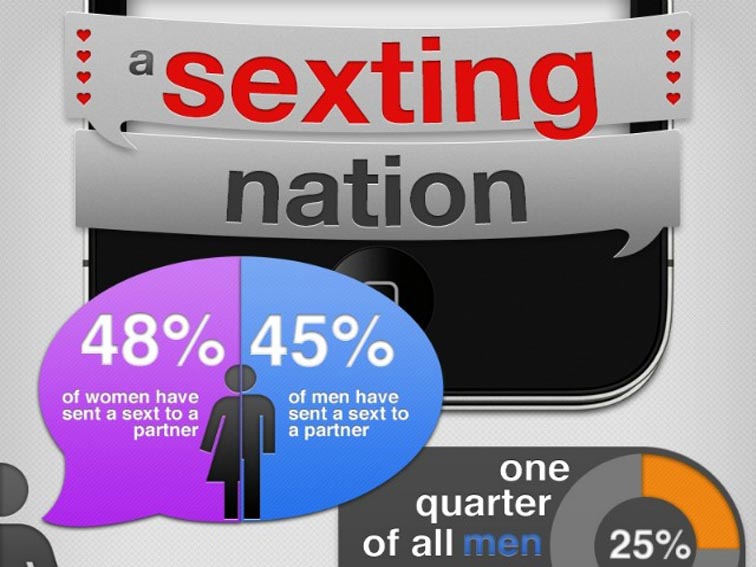
"All" is such an inclusive word. I suspect many of us are not part of this "all." But the numbers of people now sexting, and not just teens and young adults, has sky-rocketed.
To me, as an apparent middle aged man, this phenomenon feels like a sad commentary on our increasing isolation from each other as a result of technology. Although, to be fair, I am sure some people do this in responsible and safe ways.
We are all sexters now: America’s favorite amateur porn
Sexting nation, 78 million strong! How the scolds and moralists lost, and sexting became an all-American pastime
David Rosen
Saturday, Aug 16, 2014
(Credit: Ammentorp Photography via Shutterstock)
It was only a few years ago when scolds and the media made “sexting” a national concern. Congressmen were being outed for exposing themselves in revealing sexts; states across the country were passing laws making it a crime; hundreds of kids were being busted for doing it; and talk-show talking heads, along with religious leaders and other social worthies, were bemoaning the fate of American youth. Sexting was scary.
Today, sexting has all but disappeared from public discourse. Sure, occasional teen busts are reported, but they capture far less media attention. Why? What’s happened to make the hottest media story of a couple of years ago pretty much disappear from the public stage?
With rare exception, the popular media are driven by the crisis du jour: the latest body count report, natural disaster or political sex scandal. So, yesterday’s news is so yesterday.
But sexting is more than a media story; it is the first original form of pornography to emerge in the 21st century. Sexting may have disappeared from the public spotlight, but it has not disappeared from public life.
Sexting is an original form of do-it-yourself (DIY) or user-generated-content (UGC) media, amateur porn. It began as a subversive art, with young people taking, sending and receiving explicit nude, semi-nude and provocative still images, video clips and/or text messages of themselves and others via a smartphone or another mobile communication device.
Sexting is not child porn, or sexual bullying; for the most part, sexting is not a form of sexual exploitation, of violation. Rather, it is a postmodern aesthetic with roots reaching back to pre-modern forms of female representation, from the original 17th century “posture girl.” Between 10 and 20 percent of teens engage in sexting, but they are only the tip of an increasingly popular social phenomenon.
The outings of Congressmen Anthony Weiner, D-N.Y., and Chris Lee, R-N.Y., in 2011 shifted the sexting storyline. It went from a tabloid tale of out-of-control teens, a 21st-century version of 1950s kids into obscene comic books or Marlon Brando’s “The Wild One,” to pathetic tales of male exhibitionists. Perhaps most alarming: recent disclosures about the UK spy program, “Optic Nerve,” which scooped up an untold number of sexually explicit images, proves again that sexting is widespread among American adults.
Sexting is going suburban and vanilla. Like “adult” pornography, it is being accepted as just one more of the “50 shades” of sexual titillation. Sexting scandals involving adults are regular occurrences and there’s even a website featuring the latest celebrity sexting scandal. Retina-X Studios, a company that sells online tracking tools, recently conducted a study of 4,800 respondents and found that the most sexting takes place on Tuesday morning, between 10 a.m. and noon – time when most teens are in school. It also found that iPhone users engaged in sexting almost twice as frequently as Android users.
The most revealing testimony to the mainstreaming of sexting was a recent Washington Post piece, “A guide to safe sexting: How to send nude photos without ruining your life, career and reputation.” Its warning to readers was simple: “Repeat after me: If you can’t prevent people from spreading your nudes, the next-best thing you can do is prevent them from ever knowing said nudes belong to you.”
The Post instructed readers to follow two essential rules for online posts. First: “Never include your face in the photo. Make the background nondescript. Cover or omit distinguishing features, like birthmarks and tattoos.” Second: “Anonymize the photo file itself. All photos, even ones taken on a smartphone or tablet, are embedded with information about how, when and where the photo was taken. This is called EXIF data, and you want to strip it from any photos you may need to deny ownership of in the future.” One can only wonder how many inside-the-Beltway players saved the article. Sexting has become an all-American form of self-expression.
*
No one knows how many Americans engage in sexting. However, recent surveys by McAfee and Pew suggest how sexting is going mainstream.
McAfee, the cyber security firm, released a study earlier this year of “more than 1,500 consumers” and found that more than half (54%) “send or receive intimate content including video, photos, emails and messages.” It found that one in three American adults have filmed sexual content on their mobile devices.
Digging deeper, McAfee reported that 70 percent of 18- to 24-year-olds receive sexually suggestive content and that (among those using mobile devices) more males than females do so (61% vs. 48%). It also found that 45 percent of adults stored the sexts they received while 40 percent stored the ones they sent. Among those who sent “intimate or racy content,” three-fourths (77%) sent it to their significant other, while only 1 in 10 sent such content to a total stranger.
Pew Research reported that “sexting … is practiced by couples and singles alike” and has nearly doubled since its last survey in 2012. The most active adults engaged in sexting were between 25 and 34 years of age. “Married and partnered adults are just as likely as those not in a relationship to say they have sent sexts,” the report noted, adding, “single adults are more likely to report receiving and forwarding such images or videos.” Pew’s research also found the following among adults: 20 percent of “cellphone” owners have received a sext of someone they know; 9 percent have sent a message of themselves to someone else; and 3 percent have forwarded a sext to someone else.
Approximately 145 million Americans own a “smartphone,” a 3G or 4G mobile device capable of image-based sexting. Extrapolating from this estimate, the McAfee report suggests that upwards of 78 million users have engaged in sexting. The Pew report suggests that some 30 million Americans have received a sext and about 13 million have sent one. The scope of sexting among Americans likely resides somewhere between the two estimates. Clearly, sexting is no longer simply a teen titillation.
*
Sexting emerged as a form of DIY or amateur pornography about a decade ago and originally subverted the dominant porn conventions in (for the most part) three ways. First, it involved teen makers and viewers, not adults (e.g., sex predators); second, it involved erotic display and not explicit sex acts (e.g., fellatio, intercourse); and third, it was a non-commercial form of enticements (i.e., not a product for sale). Sexting continues as a form of teen flirting, something essentially by and for young people and freely exchanged, a gift.
However, sexting seems to be increasingly adopted as part of the postmodern adult sex scene, and as it goes mainstream it is losing its critical edge. In the U.S., “noncommercial” sexual relations between consenting adults are not illegal. One can easily imagine sexts becoming the next intimate Valentine’s card or seductive private message, the latest personal turn-on. Who needs chocolates when one can send a sext?
Will sexting be integrated into the commercial sex industry? Sex is big business in the U.S., estimated at $50 billion in annual revenue. Prostitution, illegal in all but a handful of Nevada counties, pulls in an estimated $18 billion; the sex toy or “sexual wellness” sector is pegged at $15 billion; the 3,000 or so gentlemen’s clubs are reported to serve some 1.2 million (mostly male) customers a day and generate an estimated $3.1 billion to $7.5 billion in revenues. And this does not include the private “safe sex” clubs for gays and straights as well as specialized fetish clubs (e.g., BDSM) often hosted by a professional dominatrix, the gay bathhouses or other illicit “noncommercial” hookups easily arranged via voice calls, Internet sites and wireless app services.
The U.S. porn business is estimated at $10 billion-plus annually. According to one source, there are nearly 25 million porn sites worldwide, making up 12 percent of all websites. Sebastian Anthony, writing for ExtremeTech, reports that Xvideos is the biggest porn site on the Web, receiving 4.4 billion page views and 350 million unique visits per month. He claims porn accounts for 30 percent of all Web traffic. (In comparison, Wikipedia gets about 8 billion page views.) Anthony estimates the average length of time spent on Xvideo at 15 minutes. From an aesthetic perspective, he notes that, alas, most people receive their digital video feeds using low-resolution streaming.
Sex saturates the marketplace, whether promoting personal satisfaction or glamorizing a product, be it a new car or a mouthwash. Sexting illustrates the power of technological innovation and, sadly, of how a once-radical, DIY form of self-expression is being recuperated, integrated into the commercial economy. The marketplace has perfected the art of turning the most intimate human exchange into a commodity. The only unanswered question is what intimacy remains to be plundered?
More David Rosen.




Subscribe to:
Posts (Atom)