Showing posts with label films. Show all posts

Monday, October 27, 2014

"Force Majeure" - A Movie That Will Change How You Think About Manhood (via Esquire)

This review of the new Swedish film Force Majeure (96% Fresh at Rotten Tomatoes), from Esquire, makes it sound equally important for most men to see and painful to have to sit through. Likely, both are true.

Here is the official trailer:


This seems to be a can't miss film, especially for those of us who care about creating a healthier more authentic masculinity.

A Movie That Will Change How You Think About Manhood

The bleak, funny Force Majeure


By Nick Schager on October 23, 2014


Tired of all those superheroes outmatching you in toughness, confidence, and manliness? If so, then the cinematic antidote has arrived in the form of Force Majeure, a Swedish film (and the country's Oscar entry) that tears masculinity a new one.

Opening in limited release tomorrow and then expanding in the coming weeks, director Robert Ostlund's film is ostensibly a drama. But its dissection of macho attitudes and guises is so unsparing that it achieves a pitch-perfect balance between scathing censure and black humor. Rarely has a film taken men to the woodshed for their failings with such a mix of disgust, pity, and wit, the last of which is the key ingredient that helps make Force Majeure such a unique high-wire balancing act. It puts the awkwardness of a Ben Stiller farce to shame, and investigates the man-child phenomenon more deeply than a timid Hollywood bro-comedy ever could.

The film, exquisitely shot to emphasize the dynamics between characters, concerns a middle-class Swedish family on a ski-resort vacation. They're an average clan, led by the average Tomas (Johannes Bah Kuhnke), whose defining characteristic is his milquetoast personality and habit of constantly checking his iPhone for work messages. Their perfectly pleasant, unremarkable getaway is demolished, however, when during breakfast on the resort terrace one morning, a "controlled" avalanche is detonated by mountain officials, and the cascade of snow approaches the vacationers. At first, Tomas tells his panicking children to be calm. Yet as the snow builds to a roaring wall facing them, the possibility of death becomes frighteningly real. In that moment, as wife Ebba (Lisa Loven Kongsli) grabs the children to shield them from the avalanche, Tomas grabs his gloves and phone—and flees.

Yes, he flees.


It's a moment of undeniable cowardice, and one that doesn't go unnoticed by Ebba and the kids, who, once the false alarm is over, sit in stunned silence as their father rejoins them at the table. Tomas's spinelessness and selfishness hang in the air for what seems like an eternity, even as they resume their vacation, with the kids miserable and Ebba barely able to contain her revulsion around Tomas. Her horror at her husband soon builds to an uncontrollable point, and it's then, during two separate conversations with other couples, that Force Majeure truly becomes a film that's watched while squirming restlessly and half-covering one's eyes.

During the first of those two chats, with a man and woman they've just met, Tomas denies that he fled the scene, thus digging himself an even deeper hole. Of course, Tomas is wracked with shame over his failure to act as protector, and Force Majeure depicts him as a man who's outwardly possessed and yet so internally weak and pathetic that he lacks even the courage to retroactively admit to (and atone for) his sins. Tomas hits rock bottom during a later evening spent with big-bearded friend Mats (Game of Thrones' Kristofer Hivju) and his 20-year-old girlfriend, who are put in the amusingly uncomfortable position of having to hear about Tomas's gutlessness, and then, in Mats's case, try to put a positive spin on indefensible behavior. During this tense centerpiece, director Ostlund refuses to turn away from his characters as they grapple with Tomas's shortcomings and the misery he's wrought, casting such an intense eye on Tomas and Ebba (and, in heartbreaking cutaways, their kids) that the film takes on the air of an inescapable nightmare at which you can only laugh.

Tomas's and Mats's ladies-man self-images are destroyed while they have a post-skiing drink, and Mats's girlfriend slams him for, hypothetically speaking, having the same cowardly instincts as Tomas (because, in part, he's left his kids with his ex-wife). No matter where you turn in Force Majeure, masculinity is under attack, and with good reason. And yet despite its scornful critique of traditional ideas about men's strength, bravery, virility, and altruism fostered by Marvel comics adaptations, Ostlund's film is no reprimanding lecture or slog. Instead, by rigorously fixating on his characters' faces as they refuse to look at each other or blubber uncontrollably over their own crappiness, he's created a sharply funny satire about the distance between what men project and what they really are. It's a joke for the ages, but it's also designed as a wake-up call to the real modern man-children of the world who haven't owned up to their true, flawed selves.

Thursday, September 18, 2014

Generation X Finally Grows Up (via Esquire)

As an actual member of Generation X (The Harvard Center uses 1965 to 1984 to define Gen X), this article from Esquire, which riffs on a recent column by A.O. Scott in the NY Times, is both insulting and frustrating. Gen X has been judged in large part by its most visible representatives - actors, musicians, etc. Most of us do not fit so neatly into these stereotypes, which is the insulting and frustrating part.

http://archer-associates.com/wp-content/uploads/2014/02/generations.png

We are the in-between generation - some say the 13th generation in American history - sandwiched between 80 million Boomers and 78 million Millennials, and nearly half their size at 46 million. Yet, much of the world we live in today was created by Gen Xers:
Jeff Bezos, founder of the retail giant Amazon.com was born in 1964. YouTube was co-founded by three former Paypal employees, Chad Hurley, Steven Shih Chen, and Jawed Karim, born in 1976, 1978, and 1979 respectively. MySpace was first overseen by Brad Greenspan (b. 1975), Chris DeWolfe (b 1966), and Tom Anderson (b. 1970). The creator of Twitter, Jack Dorsey, was born in 1976; and Wikipedia, the first collaborative, multilingual online encyclopedia was the brainchild of Jimmy Wales (b. 1966) and Larry Sanger (b. 1968).
Gen X also includes novelist Brett Easton Ellis, Pearl Jam's Eddie Vedder, actors Rob Lowe, Robert Downey, Jr, Halle Berry, Kiefer Sutherland, Julia Roberts, Uma Thurman, and Drew Barrymore, as well as musicians Trent Reznor, Lenny Kravitz, Tracy Chapman, Shania Twain, Kurt Cobain, Billy Corgan, Dr. Dre, and Ice Cube.

For a more realistic look at Gen X, see this site.

Generation X Finally Grows Up

Nineties icons are ready to face adulthood after all


By Stephen Marche on September 12, 2014


Jennifer Aniston in Cake at TIFF and Ethan Hawke in Boyhood.

Read more of our dispatches from the 2014 Toronto International Film Festival

Generation X is famously the generation that wouldn't grow up. This week, A.O.Scott has written a New York Times obituary for American adulthood, identifying a well-established phenomenon that Adam Sternbergh noticed nearly a decade ago: the rise of adults who are not really adult, at least in the traditional sense. The trend has coincided neatly with the rise (or semi-rise anyway) of the children born to the Boomers. It began in the nineties and has continued to swell since then. Which is why the Toronto International Film Festival this year may actually prove to be something of a turning point. In 2014, several different icons from the nineties, who are right at the heart of Generation X, are trying desperately to be grown-ups. They're even succeeding to some degree. Ethan Hawke, Reese Witherspoon, and even — gasp — Jennifer Aniston have made excellent, deadly serious movies that are, for lack of a better word, mature.

Jennifer Aniston's movie, Cake, may be the event of the festival. Its reception here has been highly reminiscent of the reception Dallas Buyers Club received last year. Standing ovations. Industry people crying in their seats. Matthew McConaughey won an Oscar for Dallas Buyers Club, and it would not surprise me if Aniston repeated the act for Cake. It would certainly be weird if she weren't nominated. That's certainly why the movie exists. The story itself is classic suffering-redemption-porn Academy bait. Aniston plays a woman recovering from a car accident that killed her son. The emotional trauma is secondary to the chronic pain she must endure. Popping massive quantities of Percocet and OxyContin, which she sometimes has to buy in bulk from a Tijuana pharmacist, she doesn't kill herself mainly because she doesn't have the guts.

Much will be made of the "look" of Jennifer Aniston in this movie. She wears no makeup and is covered in scars, including her face. "Ravaged" would be the correct word. No matter what she does to herself physically, however, she's still going to be Rachel and everyone watching will sympathize with her instantly. That sympathy is a powerful weapon given the subject of chronic pain. The character's constant, unremitting discomfort, which is alleviated only by drugged stupor, makes the audience's skin crawl. There is not a moment to settle down and relax, not one. You feel bad for her the entire 98 minutes. The misery is compounded, and complicated, by the fact that Aniston's character is a bitch — a self-aware bitch, but a bitch nonetheless. It's a courageous position to take: This woman's pain does not mean that she is a good person. Rather the opposite: The pain just makes her already nasty traits nastier. This is much, much braver than any other attempt by Aniston to recreate herself. She is willing to trade in on her strengths as an actress while pushing the audience as far as they can go. In other words, she is acting like somebody who wants to make something truly great and is willing to make personal sacrifices to help achieve it. In other words, she is acting like a grown-up. 

Ethan Hawke, too, is doing some maturing this year, a year that may also turn out to be McConaugheyesque for him. He was in Boyhood, of course, one of the greatest films ever made about the nature of maturity and immaturity. And he has come to the festival with two great follow-ups. The most unlikely is a documentary about Seymour Bernstein, a classical pianist who teaches lessons in his single-room apartment in Manhattan, as he has done for nearly 59 years. It is a quiet, contained portrait of a single eccentric individual that nonetheless reaches far enough to ask questions about what the nature of art may be, what qualifies as a successful life, and where craft and ecstasy meet in the psychology of the artist. It is a film, really, about what creative work means. And it eschews the usual banalities about authenticity and personal expression in favor of a straight look into the minutiae of the business. Apparently Hawke had finally, mercifully abandoned the bullshit of Dead Poets Society and (shudder) Reality Bites.

Then there's Reese Witherspoon in Wild, which is most explicitly about maturation. The film version of Cheryl Strayed's memoir about hiking the Pacific Coast Trail, it is literally a pilgrimage away from the bad behavior of her youth — heroin, screwing random guys — and away from her grief at her mother's death, into a new life, into as she says "becoming the woman my mother thought I could be." In other words she had become an adult. The woman who was Tracy Flick in Election has finally grown up. The woman from Legally Blond has finally grown up.

All these actors are, or were, icons of the grand Peter Pan syndrome that has generally gripped culture, and which A.O Scott is the latest to identify. But I wonder if Scott may have spoken too soon. Adulthood hunger is starting to rear its head, although it's also possible that his piece is a symptom of the desire for maturity as much as an identification of its reality. At least these three actors show a kind of reprieve in the onslaught of kids' stories being the only stories. Eventually, acting like a kid gets boring. One of the most unexpected results of growing up is that everything gets much more interesting, even as it gets much harder and much more complicated.

Wednesday, September 10, 2014

The 10 Best Movies About Becoming a Man (via Esquire)

Esquire has assembled their list of the 10 best male coming of age movies, beginning with this year's instant classic, Boyhood.

The original version of Lord of the Flies is a classic bit of weirdness and a deep look at the savage still lurking within all of us.

The 10 Best Movies About Becoming a Man

By Nick Schager on July 11, 2014


Richard Linklater's Boyhood.

Shot over twelve years in order to capture its headlining newcomer Ellar Coltrane's literal aging from a precocious 6-year-old kid to a lanky 18-year-old teen, the exceptional Boyhood, in theaters today, takes a unique approach to the coming-of-age saga. But despite the clever gimmick, it follows in a long line of films concerned with male maturation, a process that can be at once funny and awkward, tumultuous and traumatic, depressing and euphoric. Whether somber or comic (or both), these stories plumb adolescent and young-adult experiences in order to locate the ways in which we confront early challenges, encounters, and triumphs, and then use those incidents as stepping stones on the path to adulthood. In honor of Boyhood, we present ten great movies about becoming a man.


Stand by Me (1986)


A truly great American coming-of-age film, this gem directed by Rob Reiner (based on Stephen King's short story "The Body") tracks four friends as they embark on an odyssey to find the corpse of a missing friend. It's an alternately joyous and haunting tale, and one marked by its mature, unsettling snapshot of kids coming face-to-face, for the first time, with their own mortality.


The 400 Blows (1959)


François Truffaut's debut remains the genre's standard-bearer, depicting the adolescent bumps and bruises suffered by young schoolboy Antoine Doinel (Jean-Pierre Léaud) with piercing empathy and acute attention to detail. Though Truffaut and Léaud would revisit the character four subsequent times, The 400 Blows' legendary final close-up speaks silent volumes about Doinel's transition from naïve boy to young man.


Say Anything... (1989) 


The definitive '80s romantic comedy as well as a sly coming-of-age tale, Cameron Crowe's Say Anything... is rooted in the amorous quest — and concurrent, hard-won maturation — of John Cusack's Lloyd Dobler, the endearingly funny, sensitive high-school guy no one could resist.


Empire of the Sun (1987)


Steven Spielberg's period drama focuses on the ordeal of a young British boy (Christian Bale) living in Shanghai who, during WWII, finds himself a prisoner of war after the city is occupied by the Japanese, and is separated from his parents and forced to contend with the horrors of war. It's one of Spielberg's most quietly evocative depictions of childhood's end.


Lord of the Flies (1963)


Peter Brook's adaptation of William Golding's famous 1954 novel concerns the harsh lessons learned by a group of British schoolchildren stranded on a remote island. Left to fend for themselves, their efforts to survive — and establish some sort of law and order in the process — result in an unforgettable allegory about the alternately kind and cruel nature of both boys and men.


Hope and Glory (1987)


Like Spielberg's Empire of the Sun (released the same year), John Boorman's Hope and Glory charts the difficult childhood of a young boy during wartime — in this case, a ten-year-old named Bill (Sebastian Rice-Edwards), whose turbulent attempts to make sense of the world while London is wracked by the Blitz during WWII is based on director Boorman's own harrowing experiences.


Walkabout (1971)


Stranded in the Australian outback after their father loses his mind and kills himself, a young brother and sister are compelled to survive off the land with the help of an Aboriginal boy in Nicolas Roeg's Walkabout. It's a film of tremendous beauty and terror about the clash between civilization and untamed nature, and how that conflict shapes — in ways both predictable and unexpected — these siblings' transformation into adults.


Big Wednesday


John Milius's unsung surfing movie follows three friends (Jan-Michael Vincent, William Katt, and Gary Busey) as they grow up during the late 1960s, as the Vietnam War escalates. A rowdy saga of riding waves and enduring tragedies, it's a surprisingly poignant film about seemingly invulnerable men coping with the inevitable loss of youthful innocence.


Swingers (1996)


Unemployed actors enjoy the L.A. and Vegas nightlife — and ladies — in Jon Favreau's Swingers, an amusing ode to getting busy and moving on with your life. Via the fumbling and bumbling of Favreau's mopey Mike Peters, it captures how a broken heart can be the unlikely catalyst for finding your true, grown-up self.


Straw Dogs (1971)


Sam Peckinpah's controversial character study/home-invasion thriller revolves around a wimpy mathematician (Dustin Hoffman) whose very masculinity is challenged when a group of roughneck locals begins terrorizing him and his beautiful wife at a rural English cottage. Noted for its incendiary rape scene, it's fundamentally the story of a coward learning, through violence, to embrace his powerful, ultimately destructive manhood.

Thursday, August 21, 2014

What Only Soldiers Understand (On Youth and Male Friendship)


Sebastian Junger has a new film about the same group of soldiers he followed in the award-winning documentary, Restrepo. It's not really sequel, however, even though it uses the same cache of interviews he drew from in the last film. Korengal, which takes its name from the Korengal Valley in northeastern Afghanistan where he followed the 15-month tour of the platoon in 2010, is more a story about male bonding among young men. There was some of that theme in Restrepo, but here it is the focus of the film. Sounds promising - I look forward to seeing it.

What Only Soldiers Understand

Christopher de Bellaigue
August 20, 2014


Outpost Films A soldier on patrol in Sebastian Junger’s Korengal

The acclaimed documentary Restrepo, which was made in 2010 by Sebastian Junger and Tim Hetherington, followed a platoon of US soldiers during their fifteen-month tour of duty in the Korengal Valley in northeastern Afghanistan. Released during President Obama’s Afghan “surge,” when there were some 30,000 US troops deployed in the country, the film took its name from Private First Class Juan Sebastián Restrepo, who was killed by the Taliban and immortalized in the name of an American observation post — “OP Restrepo.” The film began with a Taliban ambush and featured explosions, grueling patrols, and the slam of bullets into wood, earth, and metal. Restrepo conveyed with a relentless, almost monotonous immediacy the experience of combat — and this for an audience that was, in every sense, thousands of miles away.

Korengal is a new film that follows the same soldiers over the same period of time and draws from the same corpus of footage and interviews. But Korengal, while clearly related to Restrepo, cannot be considered its sequel; it might be misleading even to call it a war film. The film contains allusions to the death of PFC Restrepo, but the viewer is more aware of a second casualty, whose voice can occasionally be heard from behind the camera. By the time Sebastian Junger came to gather his material into Korengal, his confrere Tim Hetherington had been killed (while following another war, this one in Libya) and the US was preparing to pull out of Afghanistan. To some degree, the film is Hetherington’s memorial.

Korengal’s subjects are youth and male friendship, and it deals in a peculiarly profound way with the unsettling sense that a young warrior experiences, after fighting alongside his brothers-in-arms, that he knows all the joy and agony that life can offer. “I’d rather be there than here,” says one of the film’s unsuspecting heroes, the elfin, soft-spoken Misha Pemble-Belkin, after his tour has finished; “I’d go back right now if I could.” His nostalgia is echoed by others who spent their entire deployments despising their surroundings and longing for home, and insights of this kind into human frailty and illogic lift Korengal into a rare category of achievement.

Junger is outstanding at evoking the diabolical thrill of battle. “Until you hear the snap of a bullet go by your head” — and here Specialist Kyle Steiner, another of the film’s stars, permits himself a knowing, almost superior smile –- “there’s nothing else like it.” The film’s pivotal scene is a single firefight built into a mesmerizing homage to combat, complete with thumping, cod-Irish score and whoops of bloodlust. “I’m on fucking fire!” someone yells amid the mayhem. We all are, and we can be pretty sure the Taliban shooting back feel the same way — only their shouts are a little different, more in the line of, Allahu Akbar.

After the high of engagement comes the low of enforced inaction, boredom, and jangling nerves. Some of these men only recently grew into their bodies, and they hardly know what to do with themselves. They wrestle like lion cubs, play video games, mistreat a guitar, and conduct inane conversations (would George Clooney beat Fabio in a fight?). And, like generations of soldiers before them, they smoke.

There is an affecting scene when one of the soldiers confesses that he is afraid that God hates him because he has committed sins while in battle. But Korengal does not mention religious faith as a possible psychological buttress , and whether this reflects the predilections of the filmmakers or the skepticism of the men is not clear. If the answer is the latter, then a want of belief may be one of the few things that distinguish the men of Second Platoon, Battle Company from their predecessors in war. Given the psychological damage to which many of them confess, it may not be a good thing.

More than the deaths, lost limbs, and broken ankles (plenty in the scree-covered mountainsides) that punctuate the deployment, it’s this vulnerability that interests Junger and Hetherington. In Specialist Miguel Cortez they have a perfect case to study. Cortez is the kind of man whose cracks show through his too-ready smile, and whose eyes flee when he thinks dark thoughts. As the deployment wears on it’s Cortez who begins to court death, and who has to be told by his comrades that by endangering himself he is endangering them. And it’s this same, magnificent Cortez who wins a Bronze Star Medal for valor, and who says (again with that disarming smile), “I would actually throw myself on a grenade [for them], and the guys know that I would, without hesitation.”

Complexities of this kind are the stock-in-trade of Korengal — the product of a close, compassionate interest by Hetherington and Junger in the soldiers around them. There is a fascinating diversion into the racial bafflements of Specialist Sterling Jones, for instance. He is one of the few black men in the whole company — because, as he says sardonically, “black people don’t jump out of planes.” Jones believes he is disliked by his white comrades, which makes his motivations for fighting all the more surprising. “I’m not doing this for recognition from my country,” he says. “Truthfully, I could give a shit what anybody thinks — except for those guys to my left and my right, because that’s what it’s about…that’s why in a deployment you see people run out under fire to go pull their buddy back.”

The irony about Jones is that his mother had urged him to join the army, and he had protested. Pemble-Belkin is the opposite. His parents were Oregon hippies who disapproved of him playing soldiers. Now he smiles angelically and asks, “What’s not to like about a giant machine gun?”

A second telling absence in Korengal is politics. Officers and NCOs dutifully repeat the message of bringing civilization to a benighted people, but for the rest the war seems almost like a sealed exercise, justified in personal, rather than patriotic terms. They certainly feel no sympathy for the locals, and why should they? As Steiner puts it,
Hearts and minds is out the window when you see the guy shooting at you and then he puts his wife and kids in front of him knowing full well that we won’t shoot back. Or the guy who shakes our hand, takes the ten bags of rice we give him for his family and the school supplies…and immediately walks up the mountain and shoots an RPG at us, and walks back down and smiles the next morning when he’s walking his goats…

Fuck his heart. Fuck his mind.
It is a remarkable commentary on modern warfare waged by a democracy that a film like Korengal can be made, with the full cooperation of the US military, and without anyone getting into trouble for an excess of candor.

Later on, after the deployment, Steiner is under pressure from his family and his girlfriend. He is back home, but it seems that he is not fully present. “You’ll never understand,” is his somewhat tetchy response. “It’s not your position to understand.” Steiner wouldn’t be here if it weren’t for the helmet that protected his head from a Taliban round. He is the kind of man who would cross the country to help a former comrade change a tire –- “in a heartbeat.” Now he delivers himself of an aphorism that expresses his feelings brutally: “You may have your family’s blood running through your veins. You didn’t shed it with them.”

Even for the survivors, war is a kind of death.

Wednesday, June 18, 2014

10 Movies That Make Men Cry (Esquire)

Just to be clear, it's okay for men to cry when they are not at the movies, as well. This Top 10 List from Esquire includes some good movies, and some serious tear-jerkers, but there are also some omissions worth noting.  


One of the best movies to make me cry is Whale Rider. Paikea's speech is especially poignant because she has been told that females cannot be leaders. Her grandfather is the man who has tried to enforce the old traditions, seeking a new leader for their people. Pai has invited him to the school concert to see her performance and she eagerly, then sadly, waits for his arrival, which never happens.


What movies make you cry and are not listed here?

I often "prescribe" a sad movie to clients who are emotionally stuck (men more often than women), so I would like to compile a longer list. Help me out, please.

10 Movies That Make Men Cry

Because it's okay to tear up in the theater

By Nick Schager on June 9, 2014


Scores of adolescent girls are heading to theaters to cry their eyes out over The Fault in Our Stars, an adaptation of John Green's popular young-adult novel about a girl stricken with cancer (played by Divergent's Shailene Woodley) who falls in love with a boy (newcomer Ansel Elgort) also attempting to overcome a battle with the fatal disease. It's a teen romance with a healthy dose of tragedy, and one designed to get its target female audience's waterworks flowing. But what about guys? Don't they get to shed a tear or two over the movies as well? In this summer season of stuff blowing up and superheroes saving the world from all manner of out-of-this-world monsters, we think men should remember that, when it comes to the right film — be it about sports, family, or war — it's never shameful to sob. As such, we present the ten best male weepies in movie history.


A Perfect World (1993)


The first of this list's two Kevin Costner-headlined dramas — both of which are rooted in the relationship between parents and children — Clint Eastwood's superb A Perfect World tugs at the heartstrings via the story of an outlaw (Costner) who takes a young boy hostage and, in the process, becomes his surrogate father figure. Their final parting is enough to make even the stoutest man misty-eyed.


Brian's Song (1971)


A 1971 TV movie that's attained legendary status as a work that no man's tear ducts can resist, Brian's Song tells the alternately mournful and inspiring tale of football player Brian Piccolo (James Caan), who was ultimately felled by cancer. His relationship with friend Gale Sayers (Billy Dee Williams) is the stuff of archetypal male camaraderie, and Sayers's speech about his friend is one of the movies' all-time four-hankie moments.


Schindler's List (1993)


Any number of Holocaust films — be they fictional, based on real events, or documentary in nature — could easily fit this list's bill. But few are as emotionally forceful and eloquent as Steven Spielberg's 1993 epic, whose portrait of courage amidst unthinkable horrors remains nothing short of overwhelmingly moving.


The Shawshank Redemption (1994)


A movie about injustice, suffering, and the unbreakable bond forged between two unlikely allies (Tim Robbins and Morgan Freeman), The Shawshank Redemption mixes tragedy and uplift to create a male-oriented melodrama perfect for eliciting tears. If Red's reunion with Andy doesn't make you a blubbering mess, nothing will.


The Bicycle Thief (1948)


Of all the neorealist masterpieces to come out of post-WWII Italy, none is as profoundly moving as Vittorio De Sica's The Bicycle Thief, about a poor man's search for his stolen bicycle, which he needs to earn a living for his family. The last scene, between forlorn father and devoted son, is one of cinema's most quietly devastating.


Big Fish (2003)


A fantastical ode to extraordinary fathers — and the simultaneous love, jealousy, and resentment they inspire in their sons — Tim Burton's Big Fish tells the story of one man's process of truly learning about his larger-than-life dad at the very moment he must begin to let him go. Inspired by Fellini's 8 ½, its climactic parade through a lifetime's worth of friends and loved ones is pure male weepie gold.


Toy Story 3 (2010)


Every adult once loved a childhood toy, and thus Toy Story 3's saga about growing up and permanently separating from those cherished playthings — as well as passing them on to future generations — strikes a universal chord, as manipulatively sentimental to men as it is to women and children. The final farewell between Andy and Woody is a bittersweet one for the ages.


Babe (1995)


A children's fable about a farmer and his pig would hardly seem to be prime crying-jag material for your average macho moviegoer. Nonetheless, Babe's buildup to its triumphant finale is so sweetly funny, and bolstered by such a fantastic performance by James Cromwell, that the farmer's expression of acceptance and love for his swine is apt to soften even the hardest heart.


Saving Private Ryan (1998)


Saving Private Ryan's clunky bookending scenes may be a misstep. Yet they do little to fundamentally undercut Steven Spielberg's harrowing and poignant portrait of American men — led by Tom Hanks, in a performance of affecting everyman heroism — thrust into extraordinary life-and-death WWII circumstances, and the struggles they must endure, and sacrifices they must make, to survive.


Field of Dreams (1989)


Baseball, fathers, sons, nostalgia, ghostly reunions, and a general air of wholesome middle-American romanticism: Field of Dreams is still the ultimate male weepie. When Kevin Costner's corn farmer finally gets to play catch with his dad, the only people who can resist the moment's waterworks-courting power are those who don't like sports. Or dads. Or feelings.

Honorable Mention:

  • The Natural
  • Forest Gump
  • The Pride of the Yankees
  • Gladiator
  • Rudy

~ Nick Schager is a New York City-area film critic and journalist who also contributes to The Village Voice, Time Out New York, Vulture, The A.V. Club, The Dissolve, The Atlantic, SF Weekly, Film Journal International, and Slant Magazine. In his scant spare time, he sleeps.

Sunday, March 9, 2014

Generation X's Midlife Crisis Bites Back (on Where Spike Jonze's "Her" Fits in the Gen X Tradition)

Logan Hill, writing for Esquire, places Spike Jonze's Academy Award Nominated (best picture) Her as an examination of the midlife crisis of Gen X romance. It's an interesting and literate article. According to Hill, Gen X was BORN into midlife crisis.

As a Gen Xer myself, I have often been dismayed by the limited view of our generation as represented in the media (novels, television, films). I am not as pop culture obsessed or ironic as any of the familiar Gen X characters. Nor am a I a "slacker," perhaps the most serious misreading of my generation.
Gen X — a term that's still most accurate when applied to the sort of person who has strong opinions about Pavement and less useful when not — is that rare generation that wasn't defined by war, depression, or social upheaval.
This also is a misreading.

In 1987 (Black Monday), the stock market fell more than 500 points in a single day (22.61%), then fell some more. When the first Gulf War (2 August 1990 – 28 February 1991) began, now known as Operation Desert Storm, many of my high school classmates were in the military. We came of age amid financial crisis and the threat of a draft.

Even earlier in our lives, we saw Nixon resign, we saw the last soldiers airlifted out of Vietnam, we saw an American embassy overtaken in Iran (with 52 diplomats and citizens held for 444 days) and we saw an American military bunker blown up in Lebanon (229 soldiers killed) by two truck bombs.

We also saw the beginning of MTv, the congressional hearings on offensive lyrics in music (in which a baby boomer, Frank Zappa, saved music for our generation - transcript), and the emergence of computers as the dominant technology in culture.

If anything defines our generation, it is flexibility and resilience.

Be that as it may, this is still an interesting article.

Generation X's Midlife Crisis Bites Back

Twenty years after Reality Bites, the slackers still don't know what they want

By Logan Hill on February 27, 2014


"At the beep, please leave your name, number, and a brief justification for the ontological necessity of modern man's existential dilemma..."

In February of 1994, exactly twenty years ago, Ethan Hawke recorded that insufferable answering machine greeting as the unemployed, flannelled poet Troy Dyer, the most zeitgeist-y guy in Ben Stiller's directorial debut Reality Bites. Troy, the prototypical Gen X slacker, grew up so fast in what Douglas Coupland termed the "accelerated culture" of the time that he went straight from college into a fashionably precocious midlife crisis: the knee-jerk rejection of conventional comfort; the hyper-verbalized, oh-so-exhausted angst; the meaningless affairs; the guitar; the dubious facial hair. When he didn't let the answering machine chime, he picked up the phone with the grousing of an older man: "You've reached the winter of our discontent..."


And why not? Gen X — a term that's still most accurate when applied to the sort of person who has strong opinions about Pavement and less useful when not — is that rare generation that wasn't defined by war, depression, or social upheaval. It was named for its lack: that "X," which stood primarily for all those X-ed out marriages. Latch-key kids like Troy Dyer were birthed by the same adults who created record-breaking divorce rates and a pop culture seeded with midlife crisis tales (from Thirtysomething to John Irving). Gen X was literally born into midlife crisis: 1965 marks both the beginning of "Gen X" (which includes anyone born between then and Reagan's election) and the birth of the phrase "midlife crisis," coined that same year by psychologist Elliot Jacques.

Like many Gen X kids, Troy may have joked about his parents' divorce, but he seemed determined to get his own soul-searching messiness out of the way. And he did. In the final minutes of the film, Stiller pushed Troy into a new town, a real job, a house, and a committed relationship with Winona Ryder's Lelaina at the ripe age of 23. Stiller didn't resolve any of Troy or Lelaina's self-contradictory existential dilemmas. He sped through them in montage. Of course, what you repress often comes back to haunt you.

Gen X was literally born into midlife crisis.

What happens at the movies, when Gen X kids, who thought they'd outsmarted their parents years ago, finally confront their own middle age?

In 2010, New York Times critic A.O. Scott spotted this oncoming wave of "Gen X Midlife Crisis" stories in an essay that dwelled on Stiller's aging grouse in Noah Baumbach's Greenberg. Since then, there have been plenty of man-child comedies and middle-aged sitcoms, but there's been no generation-defining middle-age movie like The Big Chill. (Judd Apatow's too-earnest This Is Forty tried but flopped.) Richard Linklater's Before Midnight from last year earned raves and an Oscar best screenplay nomination by pushing the nineties heartthrob Ethan Hawke into divorce scuffles, custody battles, and marital less-than-bliss — but that film never made it out of the arthouse. For a generation splintered into 76,897 Netflix micro-genres, the sharpest midlife-crisis pop narratives have been narrow-cast stories riven with itchy weirdness (Enlightened and Louie, starring the 46-year-olds Laura Dern and Louis C.K.) or nostalgic tales from Gen X auteurs who position themselves in relation to an older generation, as in Sofia Coppola's Lost in Translation, Noah Baumbach's The Squid & The Whale, and Matthew Weiner's Mad Men.

This Oscar season, one big Gen X midlife-crisis movie, Ben Stiller's The Secret Life of Walter Mitty, was groomed for Oscar glory with a December release date, big stars, a literary pedigree, and a big budget — but it didn't click. Only the third film Stiller's directed since Reality Bites, Mitty also stars the actor as the sputteringly impotent Walter. He turns 42 in the film's first act — the same birthday celebrated by Kevin Spacey's fucked-up Lester Burnham in American Beauty. Whereas Lester retreated into teenage dreams of pot and Dylan, Walter broke out his old external-frame backpack and regressed into his teenage, Outward Bound vision of adulthood: He climbed a mountain, fought a shark, grew a vacation beard, wore a choker, and skateboarded away from an exploding volcano while wearing a Buzzcocks t-shirt as Arcade Fire's soundtrack swelled. "It's like Indiana Jones decided to become the lead singer of the Strokes," Patton Oswalt crowed — and that awful line made Walter, at the moment of his triumph, appear to be Gen X's most-despised bogeyman: the poseur. The breakthrough was bogus. Stiller's Mitty didn't have to re-evaluate his immature, implausible, selfish dreams of manhood. Instead (as in Old Hogs or City Slickers), the movie made them manifest. The film has made twice as much abroad as at home, perhaps because its earnest approach repelled the audience it was built to court.


But Her­, written and directed by Spike Jonze, the skate rat who co-created the MTV generation's magpie music-video aesthetic, has triggered ecstatic raves, earned a Best Picture nomination, and triggered a roiling online debate, largely because it was endlessly self-aware about the middle-aged issues that plagued Mitty. All that while being about a man who falls in love with his operating system. Jonze somehow gets away with it in his most personal film yet by crafting a high-concept, high-waisted aesthetic more befitting of his restless generation. Like Dave Eggers's Gen X touchstone A Heartbreaking Work of Staggering Genius, Her armors naked truths in a dizzying array of ironic, defensive plot machinery: Sold as a satirical sci-fi romance, Her plays as a dark drama about a man emerging from a painful divorce. Heartbreaking Work, meet BeautifulHandwrittenLetters.com.

Samantha is more than a cool gimmick. The film begins with Theodore's post-divorce retreat from reality. The absence of a "real" relationship is this film's painfully self-aware premise, subject, and form. With Theodore talking and talking about all those feelings to a receptive audience, often while lying on his back and staring at the ceiling, the film sometimes unspools like a therapy session.

Many (particularly women) seem baffled as to why Theodore's digital companion would be smitten with a mopey, dopey, sad-sack who's licking at the wounds of his divorce in his half-furnished living room. But she has been programmed to please. When Theodore boots up his new OS, the Freudian program asks him if he wants a male or female voice, and then asks a question about his mother. Theodore answers, "One thing I found frustrating is that I'd say something and her reaction would usually be about her." Calibrated according to that simple data, Samantha coddles. When she's laughing at his jokes, telling him he's sexy, and giggling girlishly at his hilarious emails it's because that's how she's been wired.

The film's entire first act embodies most of the feminist criticisms hurled against it (and what's more Gen X than pop critique?). It begins as a sick, realistic joke about how badly men crave affirmation, even if it's purchased, or fake, or delusional. Initially, Samantha is the ultimate younger woman: Just a millisecond old when she and fortysomething Theodore first meet, she's so young she hasn't even been named. Voiced by Scarlett Johansson (a decade younger than Phoenix), she's flirty and fascinated by all of his mature problems, which seem so far beyond her limited comprehension. She is infinitely less complicated than his ex-wife and "excited about life." In Mad Men terms, she's Megan, not Betty — only upgraded and disembodied. Samantha is Theodore's lover, yuppie status symbol, assistant, lover, therapist, tech toy, cheerleader, friend, IT specialist, secretary, editor, and video-game co-pilot.

Theodore, who says he's such a mess he can't prioritize "between porn and video games," doesn't have to choose anymore. He can play love like an Xbox, reveling in the Pavlovian thrill of mashing Samantha's buttons and getting exactly what he wants, no matter what he does, or how pathetic he seems. Many of the critiques of Samantha's character seem to miss the fact that the first act was terrifying as a kind of psychological horror film. This is not a healthy man in a healthy relationship, as his wife points out later. As his date says, Theodore is a "creepy dude."

How can Gen X middle age not be caught up in technology? If there's one thing different about this generation's midlife crises, it's that they're the first to be mediated by technology so thoroughly. But in Mitty, Stiller's vision of the dating site eHarmony is so out-of-touch and odd that Walter's main interaction with the site involves an impotent mouse that won't click and old-school telephone calls with Patton Oswalt's customer service rep. Jonze's future feels like Gen X's present. Theodore gets lost in the bespoke technology, like so many of us. Every shot of Phoenix stumbling through a frame all alone, talking to nobody, exaggerates that push-pull feel of how technology can blunt our worst days and also, perhaps, prolong them with distraction. He mistakes technological mastery for psychological maturity — and lifehacking for living.

In the second act, Samantha's intelligence rapidly evolves and, for a while, she and Theodore sync up and genuinely seem to connect. Samantha becomes more than his algorithmic projection and evolves into a more-human intelligence. Theodore becomes slightly less solipsistic, while still latching onto the childish pop-song view of love he spouts at work ("Suddenly this bright light hit me and woke me up. That light was you!").

In the third act, Theodore continues his slow slog down the post-divorce, Kubler-Ross path of his grief, but by the time he's ready to engage in something resembling a mutually respectful relationship, it's too late. Samantha is built to evolve: "What makes me 'me' is the ability to grow from my experiences," she says, paraphrasing zen guru Alan Watts, a favorite of Jonze's. In a sci-fi sense, she's evolved exponentially beyond the singularity. In midlife-crisis metaphorical sense, she's sick of being the rebound girl for this self-centered divorcee who's always bitching about his ex-wife. So she leaves Theodore, along with 8,316 other deluded lovers just like him.

Theodore's melancholic ending — in which he accepts his divorce and has, perhaps, learned to love by trying it out on a bot — is the slightest of victories. As it should be: Gen X, having grown up in the pop hysteria of midlife crisis, has always had extremely realistic, if not pessimistic, romantic expectations. Its filmmakers have complicated the idealistic movie romance over and over again, from Before Sunrise to (500) Days of Summer. Her isn't a wholly new model of the middle-aged movie, but it's an honest upgrade.

Wednesday, January 22, 2014

Ryan Leas - Masculinity Anxiety at the Movies: Questioning Yesterday’s Tough Guys (Salon)


From Ryan Leas at Salon, an interesting article on how the Hollywood portrayal of men in the movies has changed considerably since Clint Eastwood was asking bad guys to make his day, or Charles Bronson became a nighttime vigilante in Death Wish.

Today's male leads don't do masculine very well.

In the films reviewed below,
We’re shown all sorts of classic imagery of frontier masculinity, but we’re rarely led to believe the writers, actors or directors behind these characters consider them feasible in a contemporary setting.
And . . .
As ambitious as these films are, none of them seem entirely sure what their endings should mean. And that makes complete sense. These are movies dealing with a concept and a trend as it unfolds. We don’t know where it’s going or what should replace it. Longing and wearied, “Mud” and “Out of the Furnace” and “The Place Beyond the Pines” are all stories by men about the sorts of men they might want to be, but with the knowledge that the world is leaving those sorts of men behind.
The fact that there are no easy answers in these films reflects our own current struggles to evolve a new form of masculinity is appropriate - we are still in process of shaping where we are heading as men.

Masculinity anxiety at the movies: Questioning yesterday’s tough guys

For the guys in a spate of recent movies, trying to be a tough, rugged outlaw doesn't work out very well


Ryan Leas
Monday, Jan 20, 2014


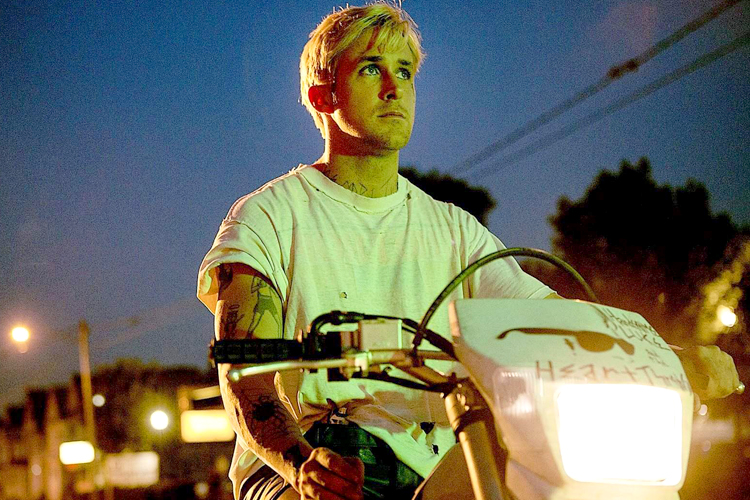
Ryan Gosling in "The Place Beyond the Pines"

A friend of a friend of mine has big plans: quit his prestigious editorial job in New York, grow his beard a bit further out, and start working on the docks. In 2014, the sentiments behind such a decision aren’t anything new, but they’re becoming more and more visible in our pop culture. You know the litany already: Gender roles in the workplace and the family are blurring, outsourcing is closing factory after factory, once-secure manufacturing jobs are disappearing. “American men don’t know how to make things anymore,” and all that. For a certain slice of American men, a romance has cropped up around working the docks, or an oil rig, or a crab boat up around Alaska. You’re getting back in touch with something, some supposedly inherent masculine energy that seems ever more ineffable as the nation adjusts its identity for a new era.

Last year saw a handful of filmmakers take on the questions of what it means to be a man in America in the 21st century, but their films don’t celebrate archetypal images of frontier manliness. Rather, they seem to suggest that looking back to these old forms is another broken urge in an age of cultural nostalgia.

After a decade of male antihero-dominated prestige TV dramas, the problem of contemporary American masculinity had its thematic apotheosis with “Breaking Bad.” Walt might have gotten a bleak version of a final Wild West showdown, but one of the most lasting images of the final season was that of him wasting away alone in a frozen cabin in New Hampshire. All the bluster of Heisenberg faded as Walt was corroded by the consequences of his actions — we saw up close the perversity of a man like him living alone in the woods. But while “Breaking Bad” did condemn old archetypes of masculinity to a degree, other stories seem to eulogize them as they slip away. Such an impulse toward eulogy has run through a handful of recent movies, most notably Jeff Nichols’ “Mud,” Derek Cianfrance’s “The Place Beyond the Pines” and Scott Cooper’s “Out of the Furnace.”

Though they may initially seem to have little in common, the settings of each film all present classic figments of Americana as if they are synonymous with the raw nature of our country’s landscape, a landscape in which listless male characters see their conceptions of life fragmenting. Each movie is shot in its own way, but each poeticizes decrepitude. The moss-covered porches and shuttered storefronts of Braddock, Pa., in “Out of the Furnace” aren’t so different from the strip malls and Piggly Wiggly in “Mud.” Luke and Romina, the ill-fated lovers of “The Place Beyond the Pines,” work as a traveling circus performer and a waitress. There’s something inescapably Springsteen-esque about their struggles, emphasized by the moment where “Dancing in the Dark” fades out as Luke walks up to the diner where Romina works.

That strain of down-on-your-luck American iconography runs through “Out of the Furnace,” as well. When Russell is released from jail, the very next scene begins with a shot of the road leading to the steel mill. Like much of “Out of the Furnace,” the symbolism isn’t overly subtle: a prison lies at one end of the road, the mill at the other. That mill appears as a darkened structure nearly indistinguishable from the earth it sits upon, either as barbaric as nature or being reclaimed by nature. Everything in Braddock is in the process of becoming a ghost.

Cooper, Cianfrance and Nichols also turn to immortal tropes of the past to address a much more contemporary preoccupation with a fading sense of rugged American masculinity. The most overt of these is the biblical influence on “Mud.” The isolated island where Mud lives is Edenic; it’s unclear for much of the movie whether Mud himself is supposed to be the snake in the garden or the First Man. It’s the battleground upon which Ellis’ loss of innocence takes place, the boy’s disillusionment boiling over into a confrontation with Mud that shatters the adventurous, paradisal escapism of the island.

Of course, linking biblical or classical ideas to American mythology is far from new. The difference here is that with each movie’s more or less contemporary setting (“The Place Beyond the Pines” begins in the ’90s, but ends in current day), it feels as if the traditional imagery — both American, and further back — is being deployed as a last-ditch attempt at inflating characters who have stopped making sense. These are broken archetypes wandering through archetypically desolate landscapes. They are men of the frontier, but also victims to it.

In each film, some character embodies a mythic vision of American masculinity. These characters are almost always shown either as out of step with the world around them, or as reflecting ways of life that are dying. They never triumph in an uncomplicated way. Just as the plots of these movies nod to biblical motifs, the characters themselves often take elements of stock fictional depictions of rugged masculinity. Mud is an island man as Rodney (or, on the darker side, Harlan) is a mountain man, as Luke is classical outlaw, a bank robber.

Of all of these, it’s Mud who’s most romanticized. He first appears as something of an apparition, the boys noticing cross-marks in the sand from his boots. They turn around and he’s standing by the tide — appearing out of nowhere, out of nature. He presents himself as an American mystic living out in the swamp, but also sounds like a rambling Beat. The crosses are nails meant to “ward off evil spirits.” As Ellis talks to both Mud and Tom Blankenship, the men mythologize one another. According to Mud, Tom is an ex-CIA assassin living a quiet, monkish second life in a houseboat; Tom claims Mud was “living in the woods when I first met him.” It’s unclear whether anything the men say about each other is actually true, but all of it paints Mud as a romantic outlaw.

In “The Place Beyond the Pines,” Jason hears that his father, Luke, is an “outlaw,” but the tone of the word is far different than when it’s applied to Mud. In “Mud,” there’s the creep of disenchantment — the fact that, far from a man bending the earth to his needs, Mud is a man on the run from the law, relying on Ellis’ groceries for sustenance. Luke, meanwhile, is a tragic outlaw. What would be mythic in a film less concerned with consequence gets refigured as something shameful. Luke thinks he’s living in a Wild West fantasy, but winds up slain by a cop and leaving his son without his biological father. Such complications are what bring each film’s ideas into the modern day. We’re shown all sorts of classic imagery of frontier masculinity, but we’re rarely led to believe the writers, actors or directors behind these characters consider them feasible in a contemporary setting.

What hangs over all of this is a tension between classic visions of manhood and a landscape that’s begun to move beyond them altogether. “Out of the Furnace” makes it explicit, and occasionally too obvious. Russell’s mill work and a hunting sequence are juxtaposed against Rodney’s refusal of a steady job in favor of fighting for money. In their way, both characters represent traditional masculinity through the physicality of their work. But Rodney’s status as an Iraq War veteran makes him, in one way, of the modern world. Russell’s factory life is a remnant of a dying lifestyle, where Rodney’s reclamation of a more visceral sense of masculinity could be seen as an extreme counterpoint to the emasculation Russell experiences through looming unemployment and his girlfriend leaving him for another man during his time in jail. “Out of the Furnace” doesn’t buy into that, though; Rodney’s brashness eventually gets him killed. The failures of the characters in “Out of the Furnace” are similar to Luke’s failures in “The Place Beyond the Pines,” all the men deal with the consequences of trying to embody an inherited vision of masculinity. Even Mud becomes — to gesture toward the Beat language he himself echoes — a holy fool, chasing after the icon of Juniper he’s built up in his head rather than realizing the truths about their relationship.

It’s worth returning to that hunting sequence in “Out of the Furnace.” Placed against Rodney’s fight in the Ramapo Mountains, together the scenes illustrate ritual displays of male control — over nature, over beasts, over themselves. The men of these movies are inevitably tied to the American landscape. They are born from it, but in their failings, they are also overcome by it. Each film centers on an interplay between these characters and their environment, between the marks of humanity and nature.

This comes out most clearly in the ways each film presents machinery and man-made items lost in nature. In “The Place Beyond the Pines,” Luke almost seems a creature of the countryside. His circus rolls through town based on the cycle of seasons; we see him riding his motorcycle rapidly through the woods as if he knows the land. True to the movie’s title, however, it’s out in nature that Luke and Avery come to terms with the more animalistic or darker corners of themselves. Luke goes into the woods and emerges a bank robber; Avery is made to face the physical result of his killing Luke. Natural settings here, as in “Mud” and “Out of the Furnace,” are where men are forced to reckon with themselves and face the futility of the structures they’ve built up, both figurative and literal. It’s there in the beginning of “Mud” in the image of the boat stuck up in the tree and littered with fallen leaves. Even though that boat’s running by the end of the movie, it’s dragging along the dark shadow of the violent gunfight that erupted at the film’s climax. As for “Out of the Furnace,” the steel mill that looms over Braddock and the film alike is on its way to becoming a shell. In the climax of the film, Russell chases Harlan among its ruined corners, through collapsing walls and rails overgrown with brush. The frontier that a character like Russell seems born out of is in the process of reclaiming the man-made symbol of what Russell is.

Even as each of these films undercuts the classic imagery it uses, none of them end without one last gesture toward dominance or transcendence. Both “Mud” and “The Place Beyond the Pines” end with a play on the classic trope of riding off into the sunset. Mud and Tom sail the boat out into open water. Jason purchases a motorcycle, inheriting more strands of his father, and rides off down roads winding through the mountainsides. Neither of these endings are clean or peaceful, and the characters in both still carry the baggage of the events that lead them to this final point. “Out of the Furnace” is more conflicted still — Russell avenges Rodney by shooting Harlan, and then there is a final shot of him sitting alone in his house, with no escape or reprieve after his actions. If these are final touches of romanticism, they are self-conscious ones.

For a moment, it may seem as if each of these films wants to uphold the mythic outlaw figures they’ve messily deconstructed along the way. As ambitious as these films are, none of them seem entirely sure what their endings should mean. And that makes complete sense. These are movies dealing with a concept and a trend as it unfolds. We don’t know where it’s going or what should replace it. Longing and wearied, “Mud” and “Out of the Furnace” and “The Place Beyond the Pines” are all stories by men about the sorts of men they might want to be, but with the knowledge that the world is leaving those sorts of men behind.


Ryan Leas (@RyanLeas) is a freelance writer based in New York. He has also written for GQ.com, Stereogum, and the Village Voice's music blog Sound of the City. More Ryan Leas.

Friday, January 17, 2014

Christina Hoff Sommers - Masculinity Is More Than a Mask


Christina Hoff Sommers is a political commentator, author, and resident scholar at the American Enterprise Institute (a right wing "think tank"). A revised and updated version of her book, The War Against Boys: How Misguided Policies are Harming Our Young Men, has recently been published.

Although I applaud Sommers for her frequent and vocal defense of men (although it sometimes seems she is defending the traditional model of masculinity against its own growth and evolution), I often disagree with he, as the prior parenthetical indicates.

In this article from Time Magazine she offers her supportive critique of how to make The Mask You Live In a better or more fair film for men and boys. This is one of those times I mostly agree with her. 

Masculinity Is More Than a Mask

Is it O.K. to tell boys to "be a man"? An upcoming film that is much buzzed about on the web ignores the real differences between the sexes


By Christina Hoff Sommers Jan. 13, 2014


Are school shooters and mass murderers born out of an aggressive emphasis on masculinity in our society? The trailer for filmmaker and feminist activist Jennifer Siebel Newsom’s new documentary, The Mask You Live In, would have us think so.

The recently released trailer has attracted 1 million views on YouTube. It argues that American boys are captive to a rigid and harmful social code of masculinity. From the earliest age, they are told to “Be a man!” “Don’t cry!” “Stop with the emotion!” and “Man up!” This “guy code” suppresses their humanity, excites their drive for dominance and renders many of them dangerous. The trailer features adolescent men describing their isolation, despair and thoughts of suicide, artfully interspersed with terrifying images of school shooters and mass murderers.

I admire Newsom for using her considerable talent to advocate for boys. But I worry that she is less concerned with helping boys than with re-engineering their masculinity according to specifications from some out-of-date gender-studies textbook. The trailer is suffused with males-are-toxic ideology but shows little appreciation for how boys’ nature can be distinctively good. The Mask You Live In is scheduled to be released later this year. Let’s hope there is still time for edits.

Here are a few suggestions:


1. Recognize that masculinity is more than a “mask”

The title and content of the film suggest that masculinity is a cultural creation. That is only marginally true. A lot of typical boy behavior, such as rough-and-tumble play, risk taking and fascination with gadgets rather than dolls, appears to have a basis in biology. Researchers have found, for example, that female monkeys play with dolls much more than their brothers, who prefer toy cars and trucks. Are male monkeys captive to a “guy code”? A recent study on sex differences by researchers from the University of Turin, in Italy, and the University of Manchester, in England, confirms what most of us see with our eyes: with some exceptions, women tend to be more sensitive, esthetic, sentimental, intuitive and tender-minded, while men tend to be more utilitarian, objective, unsentimental and tough-minded. We do not yet fully understand the biological underpinnings of these universal tendencies, but that is no reason to deny they exist.

(MORE: It’s a Man’s World, and It Always Will Be)


2. Appreciate the difference between healthy and pathological masculinity

Some boys are hypermasculine or pathologically masculine. They are bullies and worse, establishing their male bona fides through destruction, mayhem and preying on the weak and vulnerable. But most boys evince healthy masculinity. They may enjoy mayhem in games and sports, but in life they like to build, not destroy. Their instinct is not to exploit vulnerable people but to protect and defend them. Of course, all boys need guidance and discipline from the adults in their lives. I agree with Newsom that telling a boy to “man up” can be harsh and degrading. But teaching him to “be a gentleman” is another matter. It’s a tried-and-true way to bring out the best in males.


3. Acknowledge the virtue of male reserve

Newsom’s film tells us that boys in our society don’t feel safe talking about emotions and personal struggles. To do so violates the boy code and subjects them to shame and ridicule. The driving message of Newsom’s film is that we must free our young men to become emotionally expressive. Of course, parents should do all they can to improve their sons’ emotional literacy. But parents (as well as wives and girlfriends) should keep in mind that male reticence has its advantages.

A 2012 a study surveyed and observed nearly 2,000 children and adolescents and found that boys and girls have very different expectations about the value of problem talk. Girls were more likely to report that personal disclosure made them feel cared for and understood. Boys, overall, found it to be a tedious waste of time — and “weird.” Contrary to what we learn from Newsom’s film, boys did not find personal disclosure embarrassing or unmasculine. According to the study’s author, Amanda Rose: “Boys’ responses suggest they just don’t see talking about problems to be a particularly useful activity” (emphasis added).

But in girls, excessive problem talk is in fact linked to anxiety and depression. Male stoicism may be adaptive and protective. If you want a boy to be more forthcoming, Rose has good advice for parents and counselors: “You will have to persuade him that it serves a practical purpose.” Engage his male instinct for problem solving.

(MORE: What Boys Want: Hook-Up Culture Doesn’t Just Hurt Girls)


4. Make clear that most boys are psychologically sound and resilient

The Mask You Live In gives the impression that the average adolescent boy is severely depressed. In fact, clinical depression is rare among boys. (National Institute of Mental Health data show that the prevalence of depression among among 13- to 17-year-old boys is 4.3%; among girls of the same age group, it is 12.4%.)

Newsom’s film reports that every day in the U.S. three or more boys take their own lives. Suicide is, indeed, primarily a male disease. Among 10- to 24-year-olds, 81% of suicide victims are male. In 2010, a total of 3,951 young men died by their own hands. Male suicide is a much neglected scourge, and Newsom’s efforts to raise awareness are admirable. Still, in a nation of nearly 33 million boys, that means that the percentage of boys who commit suicide is close to 0.01%. Each of these deaths is a tragedy. But it helps no one to pretend that suicide is typical male behavior.

Attention-deficit/hyperactivity disorder (ADHD) does appear to be an epidemic among boys, but the implications of that are ambiguous. It could be that as a society, we are pathologizing age-old male rambunctiousness. Some experts have suggested that ADHD would be significantly reduced if we allowed boys more unstructured recess and occasions for spirited rough-and-tumble play. Yet, in Newsom’s documentary, scenes of boys engaging in mock fisticuffs, playfully head-butting and chasing one another around the playground are offered as evidence of how young males are driven to “prove” their aggressive masculinity.


5. Include specific ideas on how to help boys with depression or thoughts of suicide

Some of the most promising, innovative ideas are coming out of Australia. In 2006, a report in the Medical Journal of Australia argued for a paradigm shift in the nation’s mental-health system. Rather than blaming “masculinity” or trying to “re-educate” men away from their reluctance to seek help, the author asks, “Why not provide health services that better meet the needs of men?”

The Australians are now developing male-specific mental-health protocols. A 2012 Australian study, for example, found that large majorities of young men associate the term mental health with insanity and straightjackets. Mental fitness seems to go over better with men. The Australians recently launched a mental-fitness app for guys. The focus is on acquiring “skills,” developing “strengths” and achieving “self-mastery.” But doesn’t that reinforce traditional narratives of masculinity? It certainly does — that’s the point, and the key to its promise.

The energy, competitiveness and corporal daring of normal males are responsible for much good in the world. No one denies that boys’ aggressive and risk-taking tendencies must be socialized and channeled toward constructive ends. But the de–Tom Sawyering of the American boy should not be anyone’s agenda. I am sure it is not Newsom’s. Yet her film in progress suggests otherwise.


Christina Hoff Sommers @chsommers

Christina Hoff Sommers is a resident scholar at the American Enterprise Institute. A revised and updated version of her book, The War Against Boys: How Misguided Policies are Harming Our Young Men, has recently been published. The views expressed are solely her own.

Thursday, December 26, 2013

The Mask You Live In - Documentary Coming Soon


Below is the trailer for a new film due out in 2014, an exploration of American masculinity. They are also seeking crowd-funding the support project - go here. This is an important topic that can always use more exposure in the public mind. Education is the way to create change.

There's Something Absolutely Wrong With What We Do To Boys Before They Grow Into Men


Joseph Lamour

"Be a man" is something we've all heard at one time or another, even a few of the women reading this right now. Being a "man" in that sense means something completely different to me (and maybe you, too) than what that phrase implies.

I can't even begin to describe the toll that the concept of masculinity has taken on my life. And it's felt everywhere. It's time we make changes, starting from within ourselves.

Thursday, December 19, 2013

The Meaning of Masculinity - How Three 2013 Films Depict Masculinity in a Time of Societal Flux

Via The Washington Free Beacon (a seriously right wing paper - sorry about that), this article reviews three films from 2013 in terms of what they reveal about masculinity in a time when it's in flux, both for individual men and for the society as a whole. I haven't seen any of these, but they all sound interesting.

The Meaning of Masculinity

The Place Beyond the Pines, The Spectacular Now, and Dallas Buyers Club on what it means to be a man


December 6, 2013


As awards season kicks into high gear, critics are inundated with screeners for films they may have missed the first time around. Here are three prestige pictures—The Place Beyond the Pines, The Spectacular Now, and The Dallas Buyers Club—that are interesting for the competing ways in which they present masculinity in a time of societal flux.

###

Luke: He can get his own kid. That’s every man’s right.

The Place Beyond the Pines

Derek Cianfrance’s The Place Beyond the Pines is a story of fathers and sons, and the way sons become their fathers. But it is more than that, a look at masculinity in America and what it means to be a man in a changing world where opportunities are scarce.

Luke (Ryan Gosling) is a carnival daredevil who discovers that during his last turn through upstate New York he fathered a child. He is forced to choose: quit his act and get involved with his kid’s life or push on, same as always. Sticking around, of course, isn’t enough. He needs to earn the respect of Romina (Eva Mendes), his son’s mother. To do that, he needs to earn money. And to do that … well, how does a carny with no work experience, no skills, and a tendency to get violent do that?

In post-industrial America—an America in which there’s minimum-wage work and not much else for the unskilled—Luke doesn’t have many options. He is desperate to live up to his ideal of manhood—a father to his son, a provider to his lover—and that desperation eventually boils over. So he takes to robbing banks, upping the stakes until, eventually, he gets crushed.

###

Dan: If I were your father, I guess this would be the part where I give you a lecture.

Sutter: If you were my father, you wouldn’t have to give me a lecture.

The Spectacular Now

For much of The Spectacular Now, there is a noticeable lack of male role models in the life of the hard-drinking Sutter (Miles Teller). Sutter lives with his mother, a nurse doing her best to get by while raising a kind but troubled kid.

But then we see what has become of Sutter’s father and we understand that no influence can be better than a bad influence. His dad Tommy (Kyle Chandler) is a drunken lout, more interested in hooking up with the local slattern than having a beer or three with his long-neglected son. Indeed, he sticks Sutter with the tab as he scoots off to catch a case of the clap.

The closest things to positive male role models in Sutter’s life are Dan (Bob Odenkirk), his boss at a men’s clothing boutique, and Mr. Aster (Andre Royo), Sutter’s long-suffering math teacher. Each takes a different approach to straightening Sutter out: Mr. Aster offers the stick (do better in math or I’ll fail you and you won’t graduate) while Dan offers the carrot (you can avoid being downsized by promising not to come into work hammered). But neither has enough influence over the boy to set him on the right path.

Sutter needs a father, not a father figure. But the dissolution of the nuclear family and the lack of stability that results have destroyed whatever chances Sutter might have had at success. And it’s not long before his pathologies threaten the stability of Aimee (Shailene Woodley), another fatherless child floating through modern America, trying to find something on which to grab hold.

###

Ron: I got a newsflash for y’all: ain’t nothin’ out there that can kill Ron Woodruff in 30 days.

Dallas Buyers Club

Dallas Buyers Club isn’t terribly interested in fathers. But it is fascinated by the way traditional conceptions of masculinity initially may have facilitated the spread of AIDS—and then helped get the disease under control.

Ron Woodruff (Matthew McConaughey) is a man’s man in mid-1980s Dallas, running scams at the rodeo when he isn’t fixing the electrical systems on oil rigs or bedding trailer trash skanks two at a time, coke-rings around his nose and Jack Daniels in his gut. That excess comes back to haunt him, however, as he catches HIV from one of his conquests.

When the doctor who diagnoses him asks if he has engaged in homosexual relations recently, Ron snarls that he’s no “faggot.” HIV? That’s for queers and junkies. He loves the ladies and takes his drugs nasally, thank you very much.

But Ron definitely has HIV. And as he comes to grips with that fact, he must also come to grips with the fact that his friends have abandoned him. He’s no longer welcome in his local watering hole or at his place of business. He even gets evicted from the trailer park in which he lives. After overdosing on the retroviral AZT—at the time going through FDA testing—he heads to Mexico to concoct a cocktail of unapproved drugs.

Discovering a better way to keep his disease under control, Ron also stumbles into a business opportunity: He can sell his blend of drugs to similarly desperate men. This brings him into contact with the “faggots” he once so despised—and with them comes a modicum of compassion. His fight to live (and to save the lives of others) gives him new purpose, and helps him redefine what it means to be a man.

###

All three of these examinations of masculinity are interesting in spurts and all three have their problems. The Place Beyond the Pines is the most ambitious, in part due to its disregard for narrative conventions surrounding time lapsed on screen. Cianfrance discards the flow of the story in order to rather pedantically drive home the point he wants to make: The sins of the father are revisited upon the son.

The Spectacular Now, meanwhile, is the most heartfelt of these pictures. There’s a real pain in Sutter’s eyes; you can feel him struggling to make sense of his life in a world that doesn’t quite know what to do with him. Unfortunately, it feels a bit slight.

Dallas Buyer’s Club is probably the best of the three, and McConaughey deserves the buzz he’s receiving for his starring turn. But the film feels something like a Hallmark-special-by-way-of-HBO. We are in the theater to learn a lesson about tolerance and compassion and acceptance, and we’re rarely allowed to forget that fact.