Showing posts with label media. Show all posts

Monday, September 15, 2014

Gender Studies, Masculinity and Television (via Utne Reader)

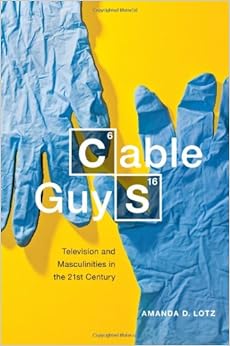
http://ecx.images-amazon.com/images/I/51lIcjN9IWL._SY344_BO1,204,203,200_.jpg

This is an interesting look at the dearth of analysis of male characters on television in gender studies. The majority of characters are male, yet they are seldom studied within their gender performance context, while women have been often studied over the last several decades.

This brief article is an excerpt from the Introduction to Cable Guys: Television and Masculinities in the 21st Century (NYU Press, 2014), by Amanda D. Lotz.

Gender Studies, Masculinity and Television


Why gender studies should examine male television characters like Archie Bunker and Tony Soprano more closely.

 
By Amanda D. Lotz
September 2014

Despite the number of male characters in American television, the study of these men—and their roles as men in society—are not among the popular topics when discussing gender studies. Photo by Fotolia/migfoto

Women’s roles on television have been analyzed over the course of television’s history. Through the 20th century and into the 21st century, the evaluation of gender roles has come mostly through the analysis of women. Why not men? In Cable Guys: Television and Masculinities in the 21st Century (NYU Press, 2014), Amanda D. Lotz attributes the lack of analysis and typology to the abundance of types of male characters in television, which leads to an audience who is more accepting of the male characters they see on television. In the following excerpt from the introduction, Lotz examines why male television characters have not been analyzed in depth under gender studies while many male film characters have. 


What Do We Know about Men on Television?


It is revealing that so little has been written about men on television. Men have embodied such an undeniable presence and composed a significant percentage of the actors upon the small screen—be they real or fictional—since the dawn of this central cultural medium and yet rarely have been considered as a particularly gendered group. In some ways a parallel exists with the situation of men in history that Michael Kimmel notes in his cultural history, Manhood in America. Kimmel opens his book by noting that “American men have no history” because although the dominant and widely known version of American history is full of men, it never considers the key figures as men. Similarly to Kimmel’s assertion, then, we can claim that we have no history of men, masculinity, and manhood on television—or at best, a very limited one—despite the fact that male characters have been central in all aspects of the sixty-some years of US television history. It is the peculiar situation that nearly all assessments of gender and television have examined the place and nature of women, femininity, and feminism on television while we have no typologies of archetypes or thematic analyses of stories about men or masculinities.

For much of television studies’ brief history, this attention to women made considerable sense given prevailing frameworks for understanding the significance of gender representation in the media. Analyses of women on television largely emerged out of concern about women’s historical absence in central roles and the lack of diversity in their portrayals. Exhaustive surveys of characters revealed that women were underrepresented on television relative to their composition of the general populace and that those onscreen tended to be relegated to roles as wives, love interests, or sex objects. In many cases, this analysis was linked with the feminist project of illustrating how television contributed to the social construction of beliefs about gender roles and abilities, and given the considerable gender-based inequity onscreen and off, attention to the situation of men seemed less pressing. As a result, far less research has considered representations of men on television and the norms or changes in the stories the medium has told about being a man.

Transitioning the frameworks used for analyzing women on television is not as simple as changing the focus of which characters or series one examines. Analyzing men and masculinity also requires a different theoretical framework, as the task of the analysis is not a matter of identifying underrepresentation or problematic stereotypes in the manner that has dominated considerations of female characters. The historic diversity of stories about and depictions of straight white men has seemed to prevent the development of “stereotypes” that have plagued depictions of women and has lessened the perceived need to interrogate straight white men’s depictions and the stories predominantly told about their lives. Any single story about a straight white man has seemed insignificant relative to the many others circulating simultaneously, so no one worried that the populace would begin to assume all men were babbling incompetents when Darrin bumbled through episodes of Bewitched, that all men were bigoted louts because of Archie Bunker, or even that all men were conflicted yet homicidal thugs in the wake of Tony Soprano. Further, given men’s dominance in society, concern about their representation lacked the activist motivation compelling the study of women that tied women’s subordinated place in society to the way they appeared—or didn’t appear—in popular media.

Gender Studies: Focusing on Men


So why explore men now? First, it was arguably shortsighted to ignore analysis of men and changing patterns in the dominant masculinities offered by television to the degree that has occurred. Images of and stories about straight white men have been just as important in fostering perceptions of gender roles, but they have done their work by prioritizing some attributes of masculinity—supported some ways of being a man—more than others. Although men’s roles might not have been limited to the narrow opportunities available to women for much of television history, characteristics consistent with a preferred masculinity have pervaded—always specific to the era of production—that might generally be described as the attributes consistent with what is meant when a male is told to “be a man.” In the past, traits such as the stoicism and controlled emotionality of not being moved to tears, of proving oneself capable of physical feats, and of aggressive leadership in the workplace and home have been common. Men’s roles have been more varied than women’s, but television storytelling has nevertheless performed significant ideological work by consistently supporting some behaviors, traits, and beliefs among the male characters it constructs as heroic or admirable, while denigrating others. So although television series may have displayed a range of men and masculinities, they also circumscribed a “preferred” or “best” masculinity through attributes that were consistently idealized.

The lack of comprehensive attention to men in any era of television’s sixty-some-year history makes the task of beginning difficult because there are so few historical benchmarks or established histories or typologies against which newer developments can be gauged. Perhaps few have considered the history of male portrayal because so many characteristics seemed unexceptional due to their consistency with expectations and because no activist movement has pushed a societal reexamination of men’s gender identity in the manner that occurred for women as a component of second-wave feminism. Male characters performed their identity in expected ways that were perceived as “natural” and drew little attention, indicating the strength of these constructs. Indeed, television’s network-era operational norms of seeking broad, heterogeneous audiences of men and women, young and old, led to representations that were fairly mundane and unlikely to shock or challenge audience expectations of gender roles.

One notable aspect of men’s depictions has been the manner through which narratives have defined them primarily as workers in public spaces or through roles as fathers or husbands—even though most male characters have been afforded access to both spaces. A key distinction between the general characterizations of men versus women has been that shows in which men functioned primarily as fathers (Father Knows Best, The Cosby Show) also allowed for them to leave the domestic sphere and have professional duties that were part of their central identity—even if actually performing these duties was rarely given significant screen time. So in addition to being fathers and husbands, with few exceptions, television’s men also have been workers. Similarly, the performance of professional duties has primarily defined the roles of another set of male characters, as for much of television history, stories about doctors, lawyers, and detectives were necessarily stories about male doctors, lawyers, and detectives. Such shows may have noted the familial status of these men but rarely have incorporated family life or issues into storytelling in a regular or consistent manner.

This split probably occurs primarily for reasons of storytelling convention rather than any concerted effort to fragment men’s identity. I belabor this point here because a gradual breakdown in this separatespheres approach occurs in many dramatic depictions of men beginning in the 1980s and becomes common enough to characterize a subgenre by the twenty-first century. Whether allowing a male character an inner life that is revealed through first-person voice-over—as in series such as Magnum, P.I., Dexter, or Hung—or gradually connecting men’s private and professional lives even when the narrative primarily depicts only one of these spheres—as in Hill Street Blues or ER—such cases in which the whole lives of men contribute to characterization can be seen as antecedents to the narratives that emphasize the multifaceted approach to male characters that occurs in the male-centered serial in the early 2000s. Though these series offer intricately drawn and complex protagonists, their narrative framing does not propose them as “role models” or as men who have figured out the challenges of contemporary life. The series and their characters provide not so much a blueprint of how to be a man in contemporary society as a constellation of case studies exposing, but not resolving, the challenges faced.

The scholarly inattention to men on television is oddly somewhat particular to the study of television. The field of film studies features a fairly extensive range of scholarship attending to changing patterns of men’s portrayals and masculinities. While these accounts are fascinating, the specificity of film as a medium very different from television in its storytelling norms (a two-hour contained story as opposed to television’s prevailing use of continuing characters over years of narrative), industrial characteristics (the economic model of film was built on audiences paying for a one-time engagement with the story while television relies on advertisers that seek a mass audience on an ongoing basis), and reception environment (one chooses to go out and see films as opposed to television’s flow into the home) prevent these studies of men on film to tell us much about men on television. Further, gender studies and sociology have developed extensive theories of masculinity and have been more equitable in extending beyond the study of women. Although theories developed in these fields provide a crucial starting point—such as breaking open the simple binary of masculinity and femininity to provide a language of masculinities—it is the case that the world of television does not mirror the “real world” and that the tools useful for exploring how societies police gender performance aren’t always the most helpful for analyzing fictional narratives. Sociological concepts about men aid assessments of men and masculinity on television, but it is clearly the case that the particularities of television’s dominant cultural, industrial, and textual features require focused and specific examination.


Reprinted with permission from Cable Guys: Television and Masculinities in the 21st Century by Amanda D. Lotz and published by NYU Press, 2014.


Related Content

Tuesday, July 1, 2014

Orange Is the New Black's Irresponsible Portrayal of Men

I enjoy this show - and although I have noticed stereotypical and limited portrayals of men on the show, specially the males who work at the prison, this article takes that analysis to a whole other level.

I think I will continue to suspend my analytical mind until I have gotten through the 2nd season.

Orange Is the New Black's Irresponsible Portrayal of Men

The victims of the prison system the Netflix show satirizes are overwhelmingly male. Leaving them out reinforces old stereotypes that hurt both genders.

Noah Berlatsky Jun 30 2014


Orange Is the New Black has been justly praised for its representation of groups who are often either marginalized or completely invisible in most mainstream media. The show has prominent, complex roles for black women, Latinas, lesbian and bisexual women, and perhaps the first major role for a trans woman played by a trans woman, the wonderful Laverne Cox. There remains, however, one important group that the show barely, and inadequately, represents.

That group is men.

This may seem like a silly complaint. Men, after all, are amply represented in the media, in major and minor rolls, whether on Game of Thrones or Mad Men or Breaking Bad or The Wire. For that matter, there are in fact a number of male characters on OITNB, such as counselor Sam Healey (Michael Harney) who gets a typical guy-plot about struggling against disillusionment and prejudice to be a good man. Why should OITNB, unique in being devoted to women, bother with more men?


The reason: While media is full of men, real-life prisons are even more so. Men are incarcerated at more than 10 times the rate of women. In 2012, there were 109,000 women in prison. That's a high number—but it's dwarfed by a male prison population that in 2012 reached just over 1,462,000. In 2011, men made up about 93 percent of prisoners.

Of course, Orange is the New Black is under no obligation to accurately represent prison demographics, and just because they're a minority in prison doesn't mean that women's stories there aren't important. The problem is that the ways in which OITNB focuses on women rather than men seem to be linked to stereotypically gendered ideas about who can be a victim and who can't.

The few male prisoners who are shown on OITNB are presented in almost aggressively stereotypical ways. Early in the second season, when Piper (Taylor Schilling) is being moved to Chicago to testify in a drug trial, we're shown a number of male inmates being transported as well. They are presented as a threatening, uniform mass. The one prisoner who is given a more substantial role is a black man who makes frightening sexual verbal advances towards Piper; he's a contract killer and refers to himself, apparently without irony, as a "super-predator." He eventually delivers a message for Piper in exchange for her dirty panties. The one male prisoner we meet, then, is violent and abusive, with a sexual kink that is presented as laughable and repulsive. He deviant, dangerous, and the show seems to think that he is exactly where he belong—behind bars.

Female prisoners on the show are treated very differently. They may be violent and may be queer, but they are, for the most part, presented as sympathetic. This seems like a feminist move, on the surface. But the inability to extend that sympathy to male inmates, raises a disturbing possibility: that the show is condescending to women while reinforcing old and destructive attitudes about men.

Adam Jones argues in his book Gender Inclusive that empathy for victims is often, in our culture, dependent on the victim being a woman. As he says, "We live in a culture that is trained to view the violent victimization of women as a much more serious offense than the violent victimization of men."

Jones includes a wide range of supportive evidence. Male victims of domestic violence are almost entirely ignored, though domestic violence is perpetrated by men and women at about equal rates (though, Jones points out, violence by men is disproportionately more serious because of strength and weight difference.) In Bosnia, human-rights organizations focused on the (horrible, important) suffering of women rape victims and refugees, while largely ignoring the mass, gender-targeted killing of "battle-age" men. Similarly, violent attacks on women receive much more media attention than violent attacks on men, though men are substantially more likely to be attacked.

In other words, male victimization is seen as natural, or not worth commenting on. As a result, Jones argues, it is difficult to see that, "the most severe and institutionalized human rights abuses in the United States are overwhelmingly inflicted upon men, especially—though far from exclusively—younger, poorer, and minority men."

I don't know that I agree that men are the victims of the worst human rights abuses in this country, nor am I sure that ranking abuses in that way is helpful. But I think Jones is absolutely right that part of the reason we see our violent, abusive prison system as acceptable is because we have trouble seeing violence against young, black men as violence. That's why, Jones argues, men are 17 percent more likely to be put in prison than women for similar crimes, and serve an additional year in prison when they are incarcerated.

According to Orange Is the New Black, though, men in prison are "super-predators" while women in prison are, often, innocent victims, doomed by circumstances and their own painful but touching character flaws. OITNB underlines this most clearly in its flashbacks, where we see each inmate’s life-story as a tragic melodrama (a significantly gendered genre) leading to prison.

Though there are a couple of exceptions (like cancer-victim Rosa, a former bank-robbing adrenaline junkie, or sociopathic new villain Vee (Lorraine Toussaint)) for the most part the characters land behind bars because of a tragic lack of love. Taystee (Danielle Brooks) is a foster-child who craves a mother; Suzanne (Uzo Aduba) is a black adoptee of a white family hungry for affection and acceptance; Morello (Yael Stone) is a stalker fixated on romantic love; even Sister Ingalls (Beth Fowler), the nun, has a story framed around her failure to connect with Jesus in her heart. The backstories don't really focus on systemic injustices. Instead, they show how individual weaknesses lead the women to prison. A woman in OITNB goes to the bad when her impulse for love is thwarted.

In contrast, a former prisoner reviewing the series at the Washington City Paper said, "I get the need for drama and stories, but if the lady who runs this show wanted to be realistic, most of these flashbacks would be about 8 seconds long." She adds:
I mean that a lot of the girls I knew in prison were in there for really uncomplicated and undramatic reasons. Like, an accurate flashback scene would be a black girl sitting on the couch watching TV, and her boyfriend...says “Hey, baby, do you mind if I leave this shit here for my cousin to pick up?” And she says “OK,” without even looking up from QVC. And then, boom, cut to her serving 10 years.
The prison pipeline is routine—and, just as significantly, it's a routine involving, and closely connected, to men.

As Yasmin Nair points out, heroin in OITNB is presented as some sort of absolute, corrupting, verboten evil—precisely the attitude that has created our decades-old incarceration binge. Minority, marginalized men, often deliberately segregated and barred from most employment, turn to the drug trade. The state typically uses moral panic around drug use as an opportunity to police, harass, and imprison them.

Occasionally, women—especially minority women—end up getting caught in the gears too. That doesn't make for a dramatic, personal story about victimized individuals who want love. It's just the boring, soul-crushing, everyday grind of institutional oppression, mostly aimed at controlling minority men who are perceived, by virtue of their race and gender, as a violent threat just for existing. Destroying the lives of minority women is, in that context, mostly an accidental bonus oppression.

This isn't to say that minority women aren't discriminated against in many, many ways. The fact that Orange Is The New Black has been able to attract such a range of phenomenally talented women actors of color speaks loudly about the shamefully limited opportunities for black and Latina women in television and film. But despite its path-breaking representation of minority women, the show remains trapped by gender preconceptions that aren't path-breaking at all. OITNB is so eager to sympathize with broken-hearted women and their individual sadnesses that it has no time to consider the institutional machinery of injustice that, in this case, has little directly to do with either individuals or women. It's hard to see how such a distorted view of incarceration helps prisoners of any gender.

Wednesday, May 7, 2014

Sexual Similarity Studies Get Framed as a Major New Finding of Sex Differences


From Slate, looks at how two new studies that identified sex similarities between men and women got reported in the media as offering major new findings in sex differences. How does sh!t like this happen so often?

As we get deeper and deeper into the human genome and are able to identify specifics in the male and female genome, we are likely to discover some real differences that impact, physical and mental health, as well as the development of body and mind.

Yet, even now, we are also learning of the incredible similarities in males and females. The studies discussed below (here is a link to one of them, Nature) found that there are 12 important genes on the Y chromosome that are important in controlling that state of the genome and the activation of other genes.

The New York Times (as well as others) presented these findings as representing "a fundamental difference in how the cells in men’s and women’s bodies read off the information in their genomes.” However, the Nature studies clearly demonstrated the opposite:
The 12 genes residing on the Y chromosome exist to ensure sexual similarity. The genes are “dosage-sensitive,” meaning that two copies are needed for them to function properly. We’ve long known that those 12 genes exist on X chromosomes. Females have the 12 genes active on both of their X chromosomes. If males, who have just one X, didn’t have them on the Y, they would not have a sufficient dosage of those genes. Now we know they do. Just like women.
Not only does this call into question how science gets reported in the media (either ignorance or an agenda seems to play a powerful role), but it also requires readers to be very skeptical when we see headlines about sex differences in men and women.

Sarah Richardson is the author of Sex Itself: The Search for Male and Female in the Human Genome.

Y All the Hype?

A study about sexual similarity gets framed as a major new finding of sex difference.

By Sarah S. Richardson


Illustration by Natalie Matthews-Ramo

Last month two Nature studies on the Y chromosome were in the news, trumpeted as revealing “differences in men’s and women’s bodies, differences found as deep down as the cellular level.” The coverage of the studies offers an allegory for our age about the way scientific hype and a fascination with the sex binary continue to influence scientific research on sex today.

The New York Times reported that scientists had discovered 12 genes on the Y chromosome that play “high-level roles in controlling the state of the genome and the activation of other genes.” They “may represent a fundamental difference in how the cells in men’s and women’s bodies read off the information in their genomes.” The Huffington Post quoted one of the studies’ authors as saying that these “special” genes “may play a large role in differences between males and females.”

Yet what the Nature articles actually show is the exact opposite. The 12 genes residing on the Y chromosome exist to ensure sexual similarity. The genes are “dosage-sensitive,” meaning that two copies are needed for them to function properly. We’ve long known that those 12 genes exist on X chromosomes. Females have the 12 genes active on both of their X chromosomes. If males, who have just one X, didn’t have them on the Y, they would not have a sufficient dosage of those genes. Now we know they do. Just like women.

Reports of newly found sex differences in the genome need to be viewed with healthy skepticism.

Furthermore, the 12 genes do not specialize in sex differences. The studies demonstrate that they are part of a family of genes that play an all-purpose regulatory role in the human genome. Scientists don’t yet know precisely what the genes do, but the studies show that they are important, because fetal viability is impaired without two doses of them.

How did a study of gene dosage equalization between males and females get framed as a major new finding of sex difference?

A little literary forensics reveals the story. In the very last lines of one of the Nature papers—the part of a paper where researchers typically engage in a bit of speculation—the scientists wonder if the X-derived and Y-derived versions of the proteins encoded by the 12 genes might “exhibit subtle functional differences.” They venture that if this is the case, the possibility of a role in sex differences in disease might be explored in the future.

And with that, the study’s most speculative moment became the headline.

Genetic sex difference claims will proliferate in the coming years, as more studies based on the genome come out. Yet reports of newly found sex differences in the genome need to be viewed with healthy skepticism and an awareness of how gender beliefs can distort our interpretation of scientific results.

This rush to see sex differences where they may not exist is nothing new. A 2005 Nature paper declared that the sexes differ at up to 350 genes on the X chromosome, a finding that garnered major media coverage and led one commentator to gush that “women and men differ genetically almost as much as humans differ from chimpanzees.” Follow-up studies confirmed only nine such genes—but no headlines touted the corrective.

A 2007 paper in the Journal of the American Medical Association reanalyzed 188 claims of genetic sex differences in recent peer-reviewed scientific articles and found that 55.9 percent were not statistically significant. Additionally, almost none of the findings of sex differences had been replicated by other studies—a critical measure of the validity of genomic findings. The authors concluded that in genetic sex difference research, “investigators very often seem to fall into classic traps.”

Last month’s Y chromosome studies show the continuing, stubborn influence of what I call the “sex difference paradigm.” The studies presented the unsexy claim that certain genes on the Y chromosome work to ensure sexual similarity. Filtered through our gender scripts and scientific hype generator, it became a revolutionary finding said to have groundbreaking implications for our understanding of the genetic basis of sex differences.

How can we break the difference paradigm? Top scientists such as Randy Schekman have recently drawn attention to the pernicious role of leading journals such as Nature in encouraging scientists to make big media-ready claims that later don’t hold up scientifically. But hype is only part of the problem. When it comes to sex, scientific reviewers, journals, funders, and reporters simply find similarities less interesting than differences.

What can be done to change that? A project at Stanford University is leading the way, working to “identify gender bias and understand how it operates in science and technology.” The Gendered Innovations initiative, funded in part by the National Science Foundation, is all about showing how critical analysis of gender assumptions can contribute to scientific knowledge. Now the challenge is filtering that understanding to the media and to the public so that we all bring some skepticism to too-tidy findings, and recognize that the real discoveries happen when we free ourselves from old mindsets.

~ Sarah S. Richardson is an assistant professor at Harvard University. She is the author of Sex Itself: The Search for Male and Female in the Human Genome.

Wednesday, April 23, 2014

Paul Rosenberg on David Brooks’ and Chuck Todd's Twisted Rhetoric on Obama's “Manhood Problem" (Salon)

This kind of nonsense is infuriating. Because President Obama does not want to engage militarily with Russia to force them out of the Ukraine, then somehow Obama is not really an "alpha male" (Todd) and has a "manhood problem" (Brooks).

For perspective, this is what Steve Benen noted at Maddowblog noted about Obama's use of force as president:
It was this president who escalated the use of force against al Qaeda; it was this president that launched the mission that killed bin Laden; it was this president who increased the use of predator drones to strike at terrorist suspects (including killing Americans affiliated with al Qaeda living abroad); it was this president who helped assemble an international coalition to strike at the Gadhafi regime in Libya; and on and on.
Far from being a pacifist based on this record. Perhaps his rhetoric is not he cowboy bravado we
heard from Bush, or that we are getting from Putin, but talk is cheap. Bush bungled the whole 9/11 response, and Obama has cleaned up the mess, and in fact has taken even broader steps in the futile "war on terror."

In fact, Obama has been so willing to use force that does not endanger American soldiers that the far left in this country (what there is of it) has called him a thug - which is white code for a scary black man.

When one is a pragmatist and a realist, looking often for the middle way through conflict, neither side is going to support such an agenda - the conservatives brand him unmanly and the liberals brand him a brutish man. It's a no-win public image war, so one might as well do what he things is best.

David Brooks’ twisted “manhood”: Questioning Obama’s masculinity isn’t just racist, it’s wrong

Obama foreign policy's rooted in successful realist tradition. Questioning his manhood is rooted in white supremacy


Paul Rosenberg |

Chuck Todd, David Brooks (Credit: NBC News/AP/Nam Y. Huh)

This just in: New York Times columnist David Brooks and NBC’s Chuck Todd want you to know that President Obama has “a manhood problem” — or at least the appearance of one. That’s the conclusion the two white men reached on “Meet the Press” on Sunday (transcript), following comments by another white man, Sen. Bob Corker, R-Tenn., the ranking Republican on the Senate Foreign Relations Committee. Corker warned, “I think we’re going to lose eastern Ukraine,” which would be “a geopolitical disaster,” resulting from “an era of permissiveness the U.S. has created around the world.”

But that perception doesn’t only belong to Republicans. No, it was international, Brooks claimed:
Basically since Yalta we’ve had an assumption that borders are basically going to be borders and once that comes into question if in Ukraine or in Crimea or anywhere else, then all over the world all bets are off. And let’s face it, Obama, whether deservedly or not, does have a — I’ll say it crudely — but a manhood problem in the Middle East. (editor’s note: the bolding is ours) Is he tough enough to stand up to somebody like Assad or somebody like Putin? I think a lot of the rap is unfair but certainly in the Middle East there is an assumption that he’s not tough enough.
And Todd asserted that the Obama administration itself shared this perception:
By the way, internally, they fear this. You know, it’s not just Bob Corker saying it, okay, questioning whether the president is being alpha male. That’s essentially what he’s saying: He’s not alpha dog enough. His rhetoric isn’t tough enough. (blogger's note: bolding is mine) They agree with the policy decisions that they’re making. Nobody is saying– but it is sort of the rhetoric. Internally this is a question.
Here’s the video:


Of course, Todd provided no sourcing for this claim. He wouldn’t be an insider if he didn’t depend on sources he can’t name. It’s such a manly way to do politics, sniping from the shadows.

There’s so much BS involved here, one hardly knows where to start. Because it can cloud out everything else, it’s best to hold back the black masculinity aspect, and start with foreign policy facts. First off, as Steve Benen noted at Maddowblog, the assumption Obama is “not tough enough” flies in the face of “overwhelming evidence to the contrary,” even using Brooks-approved standards:
It was this president who escalated the use of force against al Qaeda; it was this president that launched the mission that killed bin Laden; it was this president who increased the use of predator drones to strike at terrorist suspects (including killing Americans affiliated with al Qaeda living abroad); it was this president who helped assemble an international coalition to strike at the Gadhafi regime in Libya; and on and on.

If you knew literally nothing about the last five years, you might hear this chatter about “manhood” and “alpha males” and assume that President Obama was a pacifist, reluctant to use military force under any circumstances. But given what we know about what actually happened over the last five years, the scuttlebutt is just bizarre.
What Obama actually is — Surprise! Surprise! — is a foreign policy realist, which is to say he belongs to the sober mainstream of U.S. foreign policy thinking since World War II. The realists stand in stark contrast to the neocons, along with their deluded sidekicks, the liberal hawks. As Stephen Walt explained last week in Foreign Policy, realists have often come off as doves, because war is almost always a bad idea from a levelheaded realist perspective, particularly for a superpower as dominant as the U.S. has been since 1945.

“For realists, international politics takes place in a dog-eat-dog world, where states keep a wary eye on potential rivals and constantly seek ways to improve their own positions,” Walt wrote, but he goes on to outline “four obvious reasons why realists are inclined to be dovish, especially here in the United States.” The first is that “realism encourages close attention to the material elements of power,” which have favored the U.S. ever since the end of World War II. During the Cold War, Walt notes, “The Soviet economy was much smaller and less efficient than America’s and its allies were also less powerful or reliable than ours.” We were sure to prevail in the long run, provided we didn’t undo ourselves “through bloated defense budgets or foolish foreign adventures.” Putin’s Russia, obviously, is far less powerful than the Soviet Union. The realist logic is stronger than ever.

Walt’s second point is the realist belief that “states tend to balance against threats rather than bandwagon with them.” Faced with clear-cut aggression, it’s relatively easy to pull together a strong coalition — become the aggressors, even just arguably, and the logic reverses against you. Hence, realists “understood that other states might take various steps to counter the United States if it threw its own weight around too often or too carelessly.” What’s more, far from bolstering your credibility, belligerence could be counterproductive: “realists understood that wasting resources on pointless wars might actually undermine your credibility, especially if it left the nation weaker or war-weary.”

Walt’s third point is so obvious — “[R]ealists also understand that war was an unpredictable business, and even powerful states sometimes blunder into costly conflicts” — that it only needs a one-word explication: Vietnam.

But Walt’s fourth point may be the most telling, for situating foreign policy in a domestic political framework: “[R]ealists are less prone to demonize opponents because they recognize that all states face competitive pressures and that most countries will act ruthlessly in order to protect their interests.”

For conservatives, however, demonizing opponents, and implicating them all in each other’s bad deeds, is the whole point, the very essence of their tribal politics. After 9/11, neocons came to the fore because their enemy “other” was most readily demonized — even if Saddam Hussein was actually bin Laden’s bitterest ideological foe. Things have changed a lot since then, as other demonizing frameworks have been deployed against Obama. A favorite one — Obama himself as Hitler — clashes violently with the notion of Obama as an incompetent weakling. But demonizing narratives don’t have to be consistent, so long as they are consistently frightening to the point that rational thought becomes impossible. And that’s what we see from conservatives today.

The racial aspect adds another dimension. Obama’s entire political career has been defined by pushing back against the “threatening, black alpha-male” stereotype. Conciliation, not confrontation, is not just his style, but the core of his substance as well. The slightest break from this stance can trigger immediate backlash — as was seen in the knee-jerk response to his comment saying police acted “stupidly” when they arrested Harvard professor Henry Louis Gates for trespassing in his own home. Since then, conservative activists and media have manufactured countless similar offenses as Obama has consistently failed to produce them himself. He has a “deep-seated hatred of white people,” as Glenn Beck alleged, without a scintilla of evidence, when Obama held his “beer summit” to atone for his momentary lapse of inconvenient truth-telling. And that has been the right-wing narrative subtext ever since. But the textual evidence has been virtually nonexistent, because Obama’s personality and his politics have been so deeply wedded to compromise and conciliation.

Now, suddenly, it’s possible for conservatives to finally admit Obama’s not a dictatorial tyrant — now that they’ve found a way to hold it against him!

This swift reversal should not be surprising. White male anxiety about black manhood has always been so deeply irrational that it can switch polarities multiple times in a single racist rant. On a much larger, historical scale, in ”Darwin’s Athletes,” one of the most striking reversals John Hoberman notes came about when blacks first began demonstrating their athletic prowess. Before that, white supremacy had been asserted across the boards — whites were superior to blacks in every way — mentally, physically, morally, spiritually. But when top black athletes emerged to disprove that, white supremacy reconfigured itself: Brute physical superiority was suddenly equated axiomatically with inferiority in every other realm.

Naturally, that’s been a problem for white manhood ever since — even without considering the long history of top black scholar athletes, from Paul Robeson to Richard Sherman. The more that physicality, per se, is demonized in the black male, the more problematic it becomes for white males asserting their own masculine identities, particularly their power over women. This inherent, largely buried contradiction lies close to the core of the GOP’s current problems, simultaneously losing the votes of women and minorities in a long demographic decline.

Faced with this reality, the GOP has no choice. No matter how riddled with contradictions it may be, faulting Barack Obama for his performance of masculinity is the only possible move Republicans have left. And if they can get away with it on “Meet the Press,” then who’s to say they’re wrong?

Paul Rosenberg is a California-based writer/activist, senior editor for Random Lengths News, and a columnist for Al Jazeera English. Follow him on Twitter at @PaulHRosenberg. 

More Paul Rosenberg.

Thursday, April 3, 2014

Increasing Number of Men Pressured to Accept Realistic Standards of Female Beauty

From The Onion, America's Finest News Source, satire is often more telling than reality. In this case, making fun of men having to deal with how women really look in advertisements. With 67% of the population either overweight or obese, skinny models and actresses are certainly not the norm.

Increasing Number Of Men Pressured To Accept Realistic Standards Of Female Beauty

ISSUE 50•13 • Apr 2, 2014


More men are speaking out against the pervasive depictions of average women in the media, which have left them feeling demoralized and compelled to accept unwelcome ideals of beauty.

NEW YORK—Confronted on a regular basis with images of women who represent a diverse array of body types, a growing number of American men are reportedly feeling pressured to accept the increasingly realistic standards of female beauty now depicted in the media, social scientists confirmed this week.

“More and more, men today find themselves bombarded with un-retouched images, and with that comes the considerable mental burden of trying to reconcile what they see in these ads and magazines with their personal perceptions of beauty,” said sociologist Cliff Hillard, who studies attainable ideals of female attractiveness in the media and how they can create an overly realistic sense of what women ought to look like. “For most men, it’s very discouraging. Instead of seeing only rail-thin models, they’re now exposed to accurate representations of women whose proportions mimic those of actual human females.”

“Think about the average man flipping through a magazine that features pictures of women who haven’t had their cheekbones raised or their noses reshaped with Photoshop,” Hillard continued. “How is he supposed to feel when he sees something like that?”

Every day, according to Hillard, men are faced with “inescapable” displays of average-sized women, women who are representatively diverse in terms of race and ethnicity, and women who are not professional models. According to one recent study, the average man sees photographs of women without digitally exaggerated bust-to-waist ratios dozens of times per day on TV, billboards, and the sides of buses, which the findings suggest has a demoralizing effect on the male psyche and has been shown to negatively influence men’s self-esteem and mood the more often they view such images.

Hillard noted that major companies like Dove, H&M, and Ralph Lauren now use nontraditional models in their advertising campaigns, an increasingly popular trend that, according to the sociologists’ research, ultimately serves to make men feel upset and frustrated when the women in commercials don’t live up to their own personal fantasies.

“Nowadays I can’t even leave the house without seeing an ad featuring properly proportioned women of statistically normal weights,” said San Diego–based civil engineer Spencer DeLane, adding that some of the models’ bodies are “startlingly average.” “Sometimes I don’t even want to go online or turn on the television because I know I’ll see a regular, healthy-looking woman. Don’t these advertisers understand how deeply depressing that is for me?”

“It’s not fair to me, and it’s not fair to other men like me,” he continued. “Having to live with society’s expectations that I accept women just the way they are takes an enormous toll.”

In a recent USA Today poll, 87 percent of men said that in the past month they’d seen an ad that made them feel inadequate by challenging their conceptions of physical beauty. Within that group, 74 percent said they’d seen a model posing without makeup and 83 said they’d seen visible blemishes, with a further 62 percent reporting that they’d seen a model with slight wrinkles around her eyes that “could very easily have been digitally or surgically removed.”

Armed with mounting evidence that men can feel crushed under the heavy mental strain to appreciate all types of women, Hillard questioned the costs of depicting them in a sensible way that reflects their natural physical variance.

“Here you’ve got a generation of boys who will grow up looking at women in the media and seeing flaws here, flaws there, flaws everywhere—what are they supposed to think?” said Hillard, who noted that his 12-year-old son is just now beginning to objectify women and that such portrayals could grossly alter what he perceives as an idealized female form for the rest of his life. “That’s why it’s more important than ever to empower men so they can teach themselves to ignore these ads and images.”“We men simply need to have conviction in our own ideas of what makes a woman beautiful,” he added.

Sunday, March 9, 2014

Generation X's Midlife Crisis Bites Back (on Where Spike Jonze's "Her" Fits in the Gen X Tradition)

Logan Hill, writing for Esquire, places Spike Jonze's Academy Award Nominated (best picture) Her as an examination of the midlife crisis of Gen X romance. It's an interesting and literate article. According to Hill, Gen X was BORN into midlife crisis.

As a Gen Xer myself, I have often been dismayed by the limited view of our generation as represented in the media (novels, television, films). I am not as pop culture obsessed or ironic as any of the familiar Gen X characters. Nor am a I a "slacker," perhaps the most serious misreading of my generation.
Gen X — a term that's still most accurate when applied to the sort of person who has strong opinions about Pavement and less useful when not — is that rare generation that wasn't defined by war, depression, or social upheaval.
This also is a misreading.

In 1987 (Black Monday), the stock market fell more than 500 points in a single day (22.61%), then fell some more. When the first Gulf War (2 August 1990 – 28 February 1991) began, now known as Operation Desert Storm, many of my high school classmates were in the military. We came of age amid financial crisis and the threat of a draft.

Even earlier in our lives, we saw Nixon resign, we saw the last soldiers airlifted out of Vietnam, we saw an American embassy overtaken in Iran (with 52 diplomats and citizens held for 444 days) and we saw an American military bunker blown up in Lebanon (229 soldiers killed) by two truck bombs.

We also saw the beginning of MTv, the congressional hearings on offensive lyrics in music (in which a baby boomer, Frank Zappa, saved music for our generation - transcript), and the emergence of computers as the dominant technology in culture.

If anything defines our generation, it is flexibility and resilience.

Be that as it may, this is still an interesting article.

Generation X's Midlife Crisis Bites Back

Twenty years after Reality Bites, the slackers still don't know what they want

By Logan Hill on February 27, 2014


"At the beep, please leave your name, number, and a brief justification for the ontological necessity of modern man's existential dilemma..."

In February of 1994, exactly twenty years ago, Ethan Hawke recorded that insufferable answering machine greeting as the unemployed, flannelled poet Troy Dyer, the most zeitgeist-y guy in Ben Stiller's directorial debut Reality Bites. Troy, the prototypical Gen X slacker, grew up so fast in what Douglas Coupland termed the "accelerated culture" of the time that he went straight from college into a fashionably precocious midlife crisis: the knee-jerk rejection of conventional comfort; the hyper-verbalized, oh-so-exhausted angst; the meaningless affairs; the guitar; the dubious facial hair. When he didn't let the answering machine chime, he picked up the phone with the grousing of an older man: "You've reached the winter of our discontent..."


And why not? Gen X — a term that's still most accurate when applied to the sort of person who has strong opinions about Pavement and less useful when not — is that rare generation that wasn't defined by war, depression, or social upheaval. It was named for its lack: that "X," which stood primarily for all those X-ed out marriages. Latch-key kids like Troy Dyer were birthed by the same adults who created record-breaking divorce rates and a pop culture seeded with midlife crisis tales (from Thirtysomething to John Irving). Gen X was literally born into midlife crisis: 1965 marks both the beginning of "Gen X" (which includes anyone born between then and Reagan's election) and the birth of the phrase "midlife crisis," coined that same year by psychologist Elliot Jacques.

Like many Gen X kids, Troy may have joked about his parents' divorce, but he seemed determined to get his own soul-searching messiness out of the way. And he did. In the final minutes of the film, Stiller pushed Troy into a new town, a real job, a house, and a committed relationship with Winona Ryder's Lelaina at the ripe age of 23. Stiller didn't resolve any of Troy or Lelaina's self-contradictory existential dilemmas. He sped through them in montage. Of course, what you repress often comes back to haunt you.

Gen X was literally born into midlife crisis.

What happens at the movies, when Gen X kids, who thought they'd outsmarted their parents years ago, finally confront their own middle age?

In 2010, New York Times critic A.O. Scott spotted this oncoming wave of "Gen X Midlife Crisis" stories in an essay that dwelled on Stiller's aging grouse in Noah Baumbach's Greenberg. Since then, there have been plenty of man-child comedies and middle-aged sitcoms, but there's been no generation-defining middle-age movie like The Big Chill. (Judd Apatow's too-earnest This Is Forty tried but flopped.) Richard Linklater's Before Midnight from last year earned raves and an Oscar best screenplay nomination by pushing the nineties heartthrob Ethan Hawke into divorce scuffles, custody battles, and marital less-than-bliss — but that film never made it out of the arthouse. For a generation splintered into 76,897 Netflix micro-genres, the sharpest midlife-crisis pop narratives have been narrow-cast stories riven with itchy weirdness (Enlightened and Louie, starring the 46-year-olds Laura Dern and Louis C.K.) or nostalgic tales from Gen X auteurs who position themselves in relation to an older generation, as in Sofia Coppola's Lost in Translation, Noah Baumbach's The Squid & The Whale, and Matthew Weiner's Mad Men.

This Oscar season, one big Gen X midlife-crisis movie, Ben Stiller's The Secret Life of Walter Mitty, was groomed for Oscar glory with a December release date, big stars, a literary pedigree, and a big budget — but it didn't click. Only the third film Stiller's directed since Reality Bites, Mitty also stars the actor as the sputteringly impotent Walter. He turns 42 in the film's first act — the same birthday celebrated by Kevin Spacey's fucked-up Lester Burnham in American Beauty. Whereas Lester retreated into teenage dreams of pot and Dylan, Walter broke out his old external-frame backpack and regressed into his teenage, Outward Bound vision of adulthood: He climbed a mountain, fought a shark, grew a vacation beard, wore a choker, and skateboarded away from an exploding volcano while wearing a Buzzcocks t-shirt as Arcade Fire's soundtrack swelled. "It's like Indiana Jones decided to become the lead singer of the Strokes," Patton Oswalt crowed — and that awful line made Walter, at the moment of his triumph, appear to be Gen X's most-despised bogeyman: the poseur. The breakthrough was bogus. Stiller's Mitty didn't have to re-evaluate his immature, implausible, selfish dreams of manhood. Instead (as in Old Hogs or City Slickers), the movie made them manifest. The film has made twice as much abroad as at home, perhaps because its earnest approach repelled the audience it was built to court.


But Her­, written and directed by Spike Jonze, the skate rat who co-created the MTV generation's magpie music-video aesthetic, has triggered ecstatic raves, earned a Best Picture nomination, and triggered a roiling online debate, largely because it was endlessly self-aware about the middle-aged issues that plagued Mitty. All that while being about a man who falls in love with his operating system. Jonze somehow gets away with it in his most personal film yet by crafting a high-concept, high-waisted aesthetic more befitting of his restless generation. Like Dave Eggers's Gen X touchstone A Heartbreaking Work of Staggering Genius, Her armors naked truths in a dizzying array of ironic, defensive plot machinery: Sold as a satirical sci-fi romance, Her plays as a dark drama about a man emerging from a painful divorce. Heartbreaking Work, meet BeautifulHandwrittenLetters.com.

Samantha is more than a cool gimmick. The film begins with Theodore's post-divorce retreat from reality. The absence of a "real" relationship is this film's painfully self-aware premise, subject, and form. With Theodore talking and talking about all those feelings to a receptive audience, often while lying on his back and staring at the ceiling, the film sometimes unspools like a therapy session.

Many (particularly women) seem baffled as to why Theodore's digital companion would be smitten with a mopey, dopey, sad-sack who's licking at the wounds of his divorce in his half-furnished living room. But she has been programmed to please. When Theodore boots up his new OS, the Freudian program asks him if he wants a male or female voice, and then asks a question about his mother. Theodore answers, "One thing I found frustrating is that I'd say something and her reaction would usually be about her." Calibrated according to that simple data, Samantha coddles. When she's laughing at his jokes, telling him he's sexy, and giggling girlishly at his hilarious emails it's because that's how she's been wired.

The film's entire first act embodies most of the feminist criticisms hurled against it (and what's more Gen X than pop critique?). It begins as a sick, realistic joke about how badly men crave affirmation, even if it's purchased, or fake, or delusional. Initially, Samantha is the ultimate younger woman: Just a millisecond old when she and fortysomething Theodore first meet, she's so young she hasn't even been named. Voiced by Scarlett Johansson (a decade younger than Phoenix), she's flirty and fascinated by all of his mature problems, which seem so far beyond her limited comprehension. She is infinitely less complicated than his ex-wife and "excited about life." In Mad Men terms, she's Megan, not Betty — only upgraded and disembodied. Samantha is Theodore's lover, yuppie status symbol, assistant, lover, therapist, tech toy, cheerleader, friend, IT specialist, secretary, editor, and video-game co-pilot.

Theodore, who says he's such a mess he can't prioritize "between porn and video games," doesn't have to choose anymore. He can play love like an Xbox, reveling in the Pavlovian thrill of mashing Samantha's buttons and getting exactly what he wants, no matter what he does, or how pathetic he seems. Many of the critiques of Samantha's character seem to miss the fact that the first act was terrifying as a kind of psychological horror film. This is not a healthy man in a healthy relationship, as his wife points out later. As his date says, Theodore is a "creepy dude."

How can Gen X middle age not be caught up in technology? If there's one thing different about this generation's midlife crises, it's that they're the first to be mediated by technology so thoroughly. But in Mitty, Stiller's vision of the dating site eHarmony is so out-of-touch and odd that Walter's main interaction with the site involves an impotent mouse that won't click and old-school telephone calls with Patton Oswalt's customer service rep. Jonze's future feels like Gen X's present. Theodore gets lost in the bespoke technology, like so many of us. Every shot of Phoenix stumbling through a frame all alone, talking to nobody, exaggerates that push-pull feel of how technology can blunt our worst days and also, perhaps, prolong them with distraction. He mistakes technological mastery for psychological maturity — and lifehacking for living.

In the second act, Samantha's intelligence rapidly evolves and, for a while, she and Theodore sync up and genuinely seem to connect. Samantha becomes more than his algorithmic projection and evolves into a more-human intelligence. Theodore becomes slightly less solipsistic, while still latching onto the childish pop-song view of love he spouts at work ("Suddenly this bright light hit me and woke me up. That light was you!").

In the third act, Theodore continues his slow slog down the post-divorce, Kubler-Ross path of his grief, but by the time he's ready to engage in something resembling a mutually respectful relationship, it's too late. Samantha is built to evolve: "What makes me 'me' is the ability to grow from my experiences," she says, paraphrasing zen guru Alan Watts, a favorite of Jonze's. In a sci-fi sense, she's evolved exponentially beyond the singularity. In midlife-crisis metaphorical sense, she's sick of being the rebound girl for this self-centered divorcee who's always bitching about his ex-wife. So she leaves Theodore, along with 8,316 other deluded lovers just like him.

Theodore's melancholic ending — in which he accepts his divorce and has, perhaps, learned to love by trying it out on a bot — is the slightest of victories. As it should be: Gen X, having grown up in the pop hysteria of midlife crisis, has always had extremely realistic, if not pessimistic, romantic expectations. Its filmmakers have complicated the idealistic movie romance over and over again, from Before Sunrise to (500) Days of Summer. Her isn't a wholly new model of the middle-aged movie, but it's an honest upgrade.

Monday, January 20, 2014

Juliet Jacques - He to She (Aeon Magazine)

Juliet Jacques

The other day, an ignorant and blindly privileged woman named Dani Katz wrote a horrible article against transgender realities, of which she showed herself to be entirely clueless. The article was published at Reality Sandwich, an otherwise progressive and open-minded site with solidly spiritual values. Katz's article hides behind the pretense of spirituality to denigrate and degrade the experience of transgender people.

You can go read it if you choose, the link is above. Or you can read this article from Aeon Magazine.

Here, Juliet Jacques discusses not only the history of transgendered people but her own history as a trans woman and how that transformation occurred both psychologically and physically.

He to She

Transformation is sold as an instant miracle — but for transsexual people the journey is slow and painful

by Juliet Jacques

 
Christine Jorgensen, formerly George Jorgensen (seen, left to right, in 1943, 1952 and 1975). Photo by Bettmann/Corbis

~ Juliet Jacques is a British journalist who writes about gender, literature, film, art and football. She has written for The Guardian, New Statesman, Time Out, The London Review of Books, and other publications. She lives in east London.

AS A BOY, growing up in a small town in the south-east of England, I found little to nourish me when I questioned my gender; there was nothing on such issues in our local library and no discussion of it at school. I used to scour the TV listings and the newspapers, desperate to find anyone with the same issues as me, and learn how they handled them. In films and documentaries, and in articles that tried to explain transsexual lives, I kept seeing the same stories: people who ‘always knew’ that they were ‘born in the wrong body’, and who had to choose between being themselves or risk their family and friends disowning them. I soon tired of them. However, one thing about these articles struck me every time: the ‘before and after’ photographs.

I remember one article in a women’s magazine about someone who was ‘Born a Man’. At the time, I didn’t think about how stupid this phrase was: I was too dazzled by the photographs of a person reclining, her palm resting where her forehead met her long, blonde hair. ‘Now I’m a Beautiful Woman!’ screamed the headline. Clearly, the photographs were the story. In her past, the woman looked like any boy, neither exceptionally attractive nor unattractive. Now, she could have been a model. I didn’t care: although I knew deep down that I wanted to be a woman, I had no interest in fashion, and I soon realised that this article wasn’t for me.

In the Sunday People, I saw an ad for a company called Transformation. ‘From He To She … Instantly!’ it promised, above photos of a stubbly, balding man and a glamorous woman in heavy make-up, brunette wig and pretty dress. It was designed to sell feminising products to male-born people who cross-dressed or were transsexual. I was skeptical about what they sold to stop facial hair growth or to develop a bust, thinking this would require more than some miracle cream or stuffing something inside a bra. The ad seemed like it came from another world; yet it made me feel that transition might be possible, even if I still didn’t really know how.

The adult me, cannier and more cynical, can see that ‘before and after’ photographs have the strange effect of masking the process of change even as they appear to reveal it. I still see the ruse all the time, in the same tabloids that my parents read during my teens, notably the Daily Mail. And it’s a stalwart on pop culture websites, the main weapon in both malicious attempts to undermine someone’s identity, as well as seemingly sympathetic articles. Recently, the shortcomings of ‘before and after’ were exposed when a number of high-profile transsexual people, such as American actress Alexis Arquette, Chaz Bono (child of Sonny and Cher) and Hollywood film director Lana Wachowski, came out. With Arquette in particular, who was constantly in the public eye, and whose film roles include a memorable performance as the young cross-dresser Georgette in Last Exit to Brooklyn (1989) — there was no point in trying to pretend that she had changed overnight; so instead of trading on ‘before and after’, media outlets studied old images for gradual movement, scanning for any ‘signs’ they had missed.

Makeover TV shows such as 10 Years Younger or What Not to Wear also rely on the trope of dramatic and instantaneous change. Admittedly, these demonstrate more of the transformative processes, but still implying that all will be perfect once they are completed, making outer appearance and inner peace synonymous. What happened to their subjects once the cameras go away?

The rise of reality TV shows has made this question all the more visible, including for transgender contestants. Big Brother, in particular, made a near fetish of featuring outsiders, presumably in the hope that they would clash with each other. It had the surprising effect of normalising transgender people, while catapulting them to sudden fame. In 2004, the trans woman Nadia Almada won Big Brother, and in 2012 trans man Luke Anderson triumphed. Neither had told their housemates about their pasts, but revealed them to the public instead. Their victories made them into transgender role models, and the internet gave them longevity, creating a strange new middle ground in the old obscurity-celebrity-obscurity narrative.

‘BEFORE AND AFTER’ pictures have been part of print coverage of transsexualism from the start. In January 1937, less than a decade after the earliest sex reassignment surgeries were performed in Berlin, the American bodybuilding magazine Physical Culture ran one of the first articles on the subject, entitled ‘Can Sex In Humans Be Changed?’ Its opening paragraph was surprisingly relaxed about the possibility of radical social change, suggesting: ‘The old landmarks are going, nothing is static, everything flows … Life is created in the laboratory [and] Sex is no longer immutable.’ The writer, Donald Furthman Wickets, went on to look at historical ideas of ‘male’ and ‘female’, and the role of hormones in determining them.

The article was accompanied by two shots of Britain’s first surgically transsexual man, Mark Weston: one of him posing in a white shirt, tie and tank top with Alberta Bray, ‘a former girl chum to whom he is now married’; the other as ‘the late Miss Mary Weston, Great Britain’s girl [javelin] champion’ during the 1920s. The only clear difference between the two was that he had grown some stubble. There was also a single image of Zdenek Koubkov of Czechoslovakia, who’d won the women’s 100m at the 1932 Olympic Games as Zdeneka Koubkova, but who had since transitioned, and was shown wearing a suit and lifting his hat to show off his closely-cropped hair. The pronouns ‘he’ and ‘him’ were used throughout, and readers were offered little sense of what happened physically to the athletes. In both cases, they were told: ‘The miracle was accomplished by surgery and duly acknowledged by law.’

Weston and Koubkov did not become international news. It was only after the Second World War, as photographs on newspaper covers became commonplace, that transsexualism developed into a mass media phenomenon. On 1 December 1952, the New York Daily News ran the sensational story of Christine Jorgensen under the headline ‘Ex-GI Becomes Blonde Beauty’ – with contrasting images of her as a male soldier, then glamorous woman, dominating the spread. Instantly, Jorgensen became a celebrity, working as an actress, singer and transgender rights advocate.

In Transgender History (2008), Susan Stryker claims the fascination with Jorgensen ‘had to do with the mid-20th-century awe for scientific technology, which now could not only split atoms but also, apparently, turn a man into a woman’. Stryker, a professor of gender studies at the University of Arizona, also notes that Jorgensen was the first American transsexual woman to become prominent after the war changed women’s relationships with paid labour and domestic work. It wasn’t just gender roles that were in flux, but gender itself.

As it transpired, The Transsexual Phenomenon (as the sexologist Harry Benjamin called it in his influential 1966 book) did not destroy US society. Or even visibly change it. Looking at the New York Daily News photographs of Jorgensen now, they come nowhere near to justifying their attention-grabbing tag – ‘Operations Transform Bronx Youth’. Jorgensen’s facial structure, her hairline, eyes, nose and chin, barely altered between 1943 and 1952: the main differences were her clothes and make-up.

While magazines like Physical Culture and the New York Daily News, were modelling a radical discontinuity between ‘male’ and ‘female’ and emphasising the otherworldly, even anarchic, intentions of those crossing them, sexologists, feminists and gender/queer theorists were exploring the space between these categories and suggesting that it was here that behavioural expectations for men and women were socially generated. The writers I liked most argued that the very possibility of gender re-assignment meant there wasn’t as much difference between the sexes as was once thought. By the late 1980s, Sandy Stone’s seminal essay ‘The “Empire” Strikes Back: A Post-Transsexual Manifesto’ was calling for transsexual people to be open about the space between male and female identity, and how they moved within it. This is the space that ‘before and after’ pictures keep hidden in order to retain their power to humiliate and shock.

Cautiously optimistic about the future: Juliet, aged 22 (left) with Joe Stretch (centre) and Joe Cross (right) at the Retro Bar, Manchester, summer 2004. Photo courtesy of the author

I SPENT MY LATE TEENS and early 20s exploring my gender. I read essays and books, and watched many more films that featured transgender characters and even, sometimes, transgender actors. I wore women’s clothes at home and to clubs and bars, trying out different styles to see what felt comfortable, and talked to people who asked whether or not I wanted to ‘go all the way’. Eventually, in March 2009, I decided that I did, and asked my doctor about gender reassignment through hormones and surgery.

I didn’t expect the sort of rapid transformation I’d seen advertised in my youth, and I wasn’t surprised to learn that from start to finish the process would take about three years, partly due to waiting times for specialised services. Nor was I shocked when told that the physical changes would not transform me beyond quick recognisability, as they had not transformed Weston or Jorgensen. Instead, they’d form part of a longer psychological process; altering my body in a society with entrenched ideas about how men and women should appear and how they should be treated, meant rethinking how I dressed, spoke and moved, where I went and with whom, and how I felt about myself.

Like Sandy Stone, I decided to document the time it took to move, in what became my transgender journey blog for The Guardian (it ran from June 2010 to November 2012). I hoped to create something between those one-off ‘transition narrative’ articles, which seemed to have barely evolved since the 1990s, and transsexual autobiographies such as April Ashley’s Odyssey (1982), which for years were the only way people could explain what happened at any meaningful length.

Ashley’s memoir, co-written with Duncan Fallowell, documented her voyage from the post-Depression Liverpool slums of the 1930s to national fame in the 1960s. There were spells in the Merchant Navy and as a performer in a Parisian cabaret, surgery in Casablanca, an acting and modelling career hampered by tabloid revelations, and a marriage to Arthur Corbett, Lord Rowallan, later annulled on the grounds that she was ‘a person of the male sex’. That her beauty came with a transsexual history was central to her celebrity, yet the path from photos of ‘George Jamieson, aged 15, at school’ to ‘Toni April, aged 21’, and finally April Ashley in the early 1960s appeared not jarring but smooth and logical. Another British autobiography, Conundrum (1974) by Jan Morris, an established travel writer long before her transition, used no images at all — an approach I much preferred.

As a rebuttal of the implied instantaneity of ‘before and after’ photographs, I wanted my Guardian posts to cover the process in real time, but it was too slow: months passed between my appointments at the gender identity clinic, the hormone prescription took more than a year to arrive, and the effects of the oestrogen were gradual. Even allowing for the fact that my blog began a year after the medical pathway, I’d said all I wanted to say about the social and psychological aspects of transitioning long before I got a date for surgery.

One thing I did find hard to chronicle was the strange effect this all had on my sense of myself as a continuous subject. For many months, coming out and changing my name seemed like the major rupture: having people refer to me differently and treat me differently felt far more sudden than anything that later happened to my body. Besides, the hormonal effects were too subtle for me to see, so when friends said I looked different, I'd ask them to explain how. Their responses usually matched my expectations — thicker hair, softer skin, fuller cheeks.

After more than a year of despairing at how little impact the oestrogen seemed to have made, I undressed in front of a mirror and was astonished by my own appearance. Even without make-up, my face suddenly looked more female than ever before. I realised that nobody had heckled me on the street for being transsexual for months. Moreover, I’d developed breasts — smaller than the inserts I’d bought a couple of years earlier, which in hindsight weren’t well-judged, presenting too fast a change in my appearance, and they were too obviously prosthetic — but a visible and important change nonetheless.

At this point, I came across Becoming (2010), a flipbook by the Berlin-based artist Yishay Garbasz. She regularly photographed herself as a standing nude after starting gender reassignment, choosing 87 of the 911 pictures for her book, and installing 28 images as a zoetrope for the 2010 Busan Biennale in South Korea. Each picture was taken against a white backdrop, without make-up, emphasising the incremental changes to her frame. In this context, even her sex reassignment surgery in 2008 did not appear abrupt or incongruous, but was rather assimilated into the physical landscape she presented.

LIKE ME, Garbasz had struggled to take control of the ‘before and after’ conceit, and expose the potentially limitless terrain contained within it. I still enjoy seeing it debunked. For example, I recently laughed at how easily the ‘dramatic weight loss’ juxtaposition was taken apart by an Australian personal trainer on her blog, MelVFitness. She showed how better posture, fake tan lotion and black bikini bottoms — as well as zooming in for the ‘before’ and out for the ‘after’ — enabled her to fake such a ‘radical transformation’ in just 15 minutes.

I’ve seen this demystification so often that I now find it strange to see such pictures in print — and never stranger than when I spotted someone I’d known by a male name at sixth-form college who’d become famous as a female model, with the newspaper spreads yet again screaming ‘before and after’. I recognised her from the opening catwalk shot long before I got to the image of her as a boy, or the story of her gradual self-realisation, which closely mirrored mine.

This took me back to a photograph of myself from 2004, which I stumbled across just after my body epiphany. It was taken in Manchester; I was pictured with two friends, Joe Stretch and Joe Cross, and wore a 1920s-style dress and a headscarf over my hair, with make-up hiding my skin texture. This find led to another kind of epiphany, which instantly closed the psychological gap between my pre- and post-transitional self, and highlighted the continuum between the various identities I’d grown into while exploring my gender. I realised that I could have easily faked transsexual ‘before and after’ pictures back then, if I’d wanted to, editing out the fact that, at the time, I presented mostly as male.

This autumn, 15 months after surgery, and finally feeling settled — like someone who had transitioned rather than someone who was transsexual — I let the American singer-songwriter Emily Forst, a keen amateur make-up artist, give me a makeover. She styled my hair and took a portrait that made me feel, for the first time since 2004, like the person I wanted to be. This came after years of dodging cameras — a hangover from the negative self-image attached to presenting as a man. Comparing the two photographs, the main differences I see are in my expression: my cautious optimism as a 22‑year‑old against the deep sadness in my thirtysomething eyes, having endured five years of street harassment, anxieties about how my loved ones would react to my transition, the physical pain of surgery, and the responsibilities that came with writing about it all.

I doubt that anyone who looks only at the before and after pictures of me would be able to see much of this. Although they would probably be better placed to tell me how my features had changed. But, really, that always struck me as the least interesting thing about my experience. And after everything that’s happened, it still does.