Robert Augustus Masters: True Masculine Power
Tuesday, January 20, 2015
Robert Augustus Masters is an integral psychotherapist and spiritual teacher whose work emphasizes physical embodiment and greater relational maturity. With Sounds True, he has published the book To Be a Man: A Guide to True Masculine Power. In this episode of Insights at the Edge, Robert and Tami Simon talk about the deep shame that men often experience in a society that encourages them to “man up” and ignore their emotions. They also speak on developing a healthier approach to anger, as well as coming to a new understanding of masculine sexuality. Finally, they discuss Robert’s interpretation of what women truly need from modern men. (68 minutes)
Showing posts with label books. Show all posts
Showing posts with label books. Show all posts
Tuesday, February 3, 2015
Tami Simon Interviews Robert Augustus Masters: True Masculine Power
From Tami Simon's interview series, Insights at the Edge, this is an excellent interview with integral psychologist Robert Augustus Masters about his new book, To Be a Man: A Guide to True Masculine Power. This is another classic book from the author of Spiritual Bypassing: When Spirituality Disconnects Us from What Really Matters (2010).



Thursday, December 18, 2014
To Be a Man: A Guide to True Masculine Power - Robert Augustus Masters
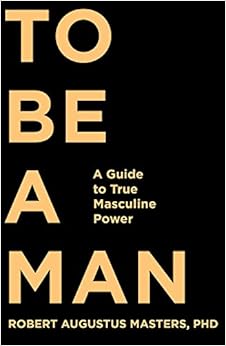
To Be a Man: A Guide to True Masculine Power - Amazon, $18.60
This post is to welcome the important new book, To Be a Man, by integral psychologist (an actual practicing psychologist, not of the Ken Wilber variety) and personal growth facilitator, Robert Augustus Masters, author of the instant classic book on spiritual bypassing, Spiritual Bypassing: When Spirituality Disconnects Us from What Really Matters, and the equally classic book on relationship as a spiritual path, Transformation through Intimacy, Revised Edition: The Journey toward Awakened Monogamy.
When publication of this new book was announced, I knew it was going to be an essential read - and it is. This is from the Introduction to the book:
"BE A MAN!"And this . . .
This demand does a lot more harm than good. It's a powerful shame amplifier, packed with "shoulds" - and the last thing males need is more shaming, more degradation for not making the grade.
Men - and boys - who are on the receiving end of "be a man!" get the message that they are lacking in certain factors that supposedly constitute manliness.
Many boys are subjected to the demand to "be a man!" - or "man up" - from an early age. Such pressure, however well-meaning, can shame and harden a boy well before he reaches adolescence, shrinking him emotionally, making him shun softness and overvalue performance and the appearance of "having it together." Showing vulnerability may invite gibes about being less than masculine. Many a boy has had to force himself not to cry or show tenderness in order to become "one of the boys" rather than a reject or someone to shun.He is describing my childhood, and likely that of a large number of men in my generation. What he describes here has often been referred to as the "man box," the tiny little space in which men are allowed to exist if they are to be considered "real men."
The problem with this box is that it forces men to jettison a good deal of what makes a man human, including tenderness, vulnerability, compassion, and exuberance. Within the confines of the box, we are allowed to feel any emotion as long as it's anger. We are allowed to shed a tear when our dog dies or our favorite athlete announces his retirement (and crying about one's dog is questionable).
The good thing is that this is changing, slowly, with each new generation. The bad thing is that there are a whole lot of men who raised in the man box, who still live there, and who think that is exactly how it should be for all men.
This book is for those men.
Here is the publisher's ad copy (thanks to Sounds True for bringing this book to the market!):
Robert Augustus Masters has helped thousands of men address and work through such issues. What he's found is that the common solution to these dilemmas is challenging yet clear: we must face our unresolved wounds, shame, and whatever else is holding us back, bringing "our head, heart, and guts into full-blooded alignment."
- I've got it all-a great job, relationship, and lifestyle-so why do I feel so dissatisfied and disconnected?
- Why am I not happier in my intimate relationships?
- How do I become more powerful-without becoming that jerk everyone dislikes?
With To Be a Man, this acclaimed psychotherapist and relationship expert offers a groundbreaking and deeply insightful guide to masculine power and fulfillment. To Be a Man clarifies what's needed to enter a manhood as strongly empowered as it's vulnerable, as emotionally literate as it's unapologetically alive-a manhood at home with truly intimate relationship.
In this book, readers will explore:Here is some of the "praise" for the book (i.e., solicited endorsements).
If you've read your share of popular advice on relationships and being a man-but realize on a gut level that it's going to take some serious inner work-here's a great guide to that most rewarding of challenges: doing what's needed to fully embody your authentic manhood.
- How your past may be dominating your present
- Shame in its healthy and unhealthy forms, and how to make wise use of it
- How vulnerability can be a source of strength
- Emotional literacy-an essential skill for relational well-being
- Releasing sex from the obligation to make you feel better
- How to disempower your inner critic
- Bringing your shadow (whatever you've disowned in yourself) out of the dark
- Embodying your natural heroism and persisting regardless of fear
- What women need from men
- Understanding and outgrowing pornography
- Entering the heartland of true masculine power
Praise for To Be a Man
"Any book that unveils the male mystique with empathy and compassion, helping men understand themselves and helping women understand men, and that helps the culture understand the masculine dilemma should be hailed as a miracle. This is what Robert Augustus Masters does in To Be a Man. Every man should read it as autobiography, every woman should read it as revelation, and our culture should embrace it as a healing balm."
- Harville Hendrix, PhD, author of Getting the Love You Want and co-author (with Helen LaKelly Hunt, PhD) of Making Marriage Simple
"Robert Augustus Masters has written a powerful guide for men that integrates rigor and receptivity, aggression and authority, vulnerability and potency. With highly developed emotional intelligence, and a nuanced understanding of adult development including the importance of shadow work, Masters delivers a vision of mature, embodied male empowerment. To Be a Man is a fearless book from a master of psycho-emotional healing and awakening."
- Diane Musho Hamilton, author of Everything Is Workable: A Zen Approach to Conflict Resolution
"Masters' insights populate every page of this compelling book, and offer creative ways of thinking about many of our era's most complex and controversial issues, among them, pornography, sexual violence, militarism and war, the effects of trauma on men's psyches and identities, and much more."
- Jackson Katz, PhD, author of The Macho Paradox and Leading Men, and creator of the award-winning films Tough Guise and Tough Guise 2
"After thirty years of pioneering men's work, if I were to write the classic handbook for men-this would be it. To Be a Man calls out the 'warrior' to do battle inside, to find authentic masculine power, allowing truly intimate relationships with women, other men, and self."
- Bill Kauth, cofounder of The ManKind Project and author of A Circle of Men and We Need Each Other
"To Be a Man dissects the three words that echo in every man's psyche: "Be a man!" As a seasoned therapist, Masters identifies the accompanying shame men manifest and gives us a guide toward healthy, sustainable masculinity."
- Joe Ehrmann, former NFL player, professional speaker, cofounder of Coaching for America, and author of InSideOut Coaching: How Sports Can Transform Lives
"As a man, this book honors, challenges, teaches, and nurtures me all at once. It shows me where I have the greatest opportunity to grow. Best of all, it celebrates what's truly sacred about being a man."
- Raphael Cushnir, author of The One Thing Holding You Back and Surfing Your Inner Sea
"Every once in a while someone comes along and writes a masterpiece, and Robert Augustus Masters' To Be a Man falls into this category. His book is a true hero's journey of healing and awakening, one that encourages men to cultivate a deep and enduring intimacy with everything that they are for the benefit of one and all."
- Hank Wesselman, PhD, author of The Bowl of Light and the Spiritwalker Trilogy
"As a woman, I am genuinely thankful for the cogent and thoughtful exploration of masculinity that he has offered to the dialogue between men and women. And, as the mother of two boys, I am delighted that he is sharing these fruits of wisdom with the men of today, and the generations to follow."
- Sarah Nicholson, PhD, author of The Evolutionary Journey of Woman
"This book is an invitation to wholeness, to awakening, to the next step man. Compassionately written and wise, it invites men to make a conscious distinction between their benevolent and malevolent identifications, and paves the way for a way of being that is both sturdy and heartfelt. Highly recommended for anyone who has grown tired of limiting gender identifications!"
- Jeff Brown, author of Soulshaping
"A brave and full-blooded dive into the challenges and opportunities facing men and masculinity in the 21st century. Masters brings an array of insights, taken from years of personal practice and gleaned from decades of work with clients, to support men on their journey towards mature manhood."
- Vanessa D. Fisher, co-editor and author of Integral Voices on Sex, Gender & Sexuality: Critical Inquiries
"This important book covers the whole spectrum of men's experience and challenges today. Masters explains the development of men's many strengths as well as their compensations, the downsides that so many adopt to 'be a man,' including burying some parts of themselves so deeply that they forget that such parts are even there. A book for men who want to embrace their inner life as well as well as for women who want to understand them."
- Ian Macnaughton, PhD, author of Body Breath and Consciousness
"Robert Augustus Masters is one of the essential wisdom teachers of our time. To Be a Man reflects his deep learning, humility, and decades of experience as a therapist, clinician, and healer. In the section of my library where I have a small collection of books about being a man, this book has moved to the top of my list. I enthusiastically recommend it to any man who wants to wake up, grow up, and show up."
- John Dupuy, author of Integral Recovery
Thursday, October 2, 2014
Philip Zimbardo - Men, Sex, and Time Perspectives
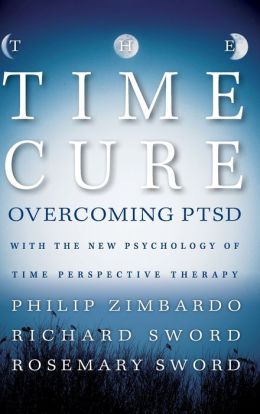
From his Psychology Today blog, The Time Cure, psychologist Philip Zimbardo proposes that how a man views/understands time impacts his orientation and behavior as a sexual/romantic partner. This post and the blog from which it comes are promotions for his new book, The Time Cure: Overcoming PTSD with the New Psychology of Time Perspective Therapy.
He divides our time conception like this:
Past, Present and Future, but each of these can be subdivided into: Past Positive and Past Negative, Present Hedonism and Present Fatalism, and finally, Future (goal focused) and Future Transcendental (life begins after the body dies).In this post he breaks down each of the six and explains a little about how they impact romantic and erotic expression.
Men, Sex, and Time Perspectives
The way a guy views time determines his views of sex and loving relationships
Published on September 26, 2014 by Rosemary K.M. Sword in The Time Cure
Men’s time perspectives affect their erotic relationships.
Caio! Phil Zimbardo here. I’d like to share some information we’ve gathered about how men’s time perspectives affect their views on sex and loving relationships with partners.

Here goes:
Whether male or female, for better or worse, your time perspective can dominate how you prioritize stuff in your life, even when it comes to sex. If you're not getting what you want from your sex life, it is likely that your time perspective could be holding you back from enjoying more fulfilling erotic experiences. Each of us has developed personal ways of breaking up the flow of our experiences into time zones, automatically and non-consciously. The obvious big three are Past, Present and Future, but each of these can be subdivided into: Past Positive and Past Negative, Present Hedonism and Present Fatalism, and finally, Future (goal focused) and Future Transcendental (life begins after the body dies).
All of us have these dimensions to a greater or lesser extent, so where we are on their spectrum depends on the degree to which we regularly engage them. The key is keeping your time perspectives in harmony, knowing when to turn up the volume on one while turning down the volume of another - depending on situational demands. Problems in our life can arise when any one of them takes over, prevailing over the others in a biased, rather than a balanced fashion. And nowhere does that bias have a greater impact on our behavior and our emotions than in the sexual arena.
Let’s figure out where your time perspectives are now and then see what you can do to create an ideal Balanced Sex Time Perspective. (To find out your personal Time Zone pattern, see the note below this column for taking my time assessment assessment.)
Past Negative
Past Negative people may have been abused, neglected, had partners who cheated or betrayed them or have cheated or betrayed their partners, had a strict religious upbringing, parents who were poor models of a healthy relationship, narcissistic parents, divorced parents, the list goes on. For whatever reason, these people hold themselves back in some way. Depending on the severity of whatever caused their past negative perspective, they may be incapable of feeling pleasure or derive enjoyment from sex and/or intimate relationships. If they do have relationships, they often choose unhealthy, emotionally damaged partners because a healthy relationship is too threatening - they are afraid of being nurtured. Men who have a Past Negative time perspective often keep their partner at a distance emotionally, physically, or spiritually. Bad Boys, Momma’s Boys, Perfectionists, Control Freaks, and the Peter Pan types all fit into this category.
Questions to reflect on for guys holding back in this category: Do you feel like you deserve to be loved? Do relationships make you feel anxious? Do you think something bad will happen if you feel pleasure or "let go"? Are you uncomfortable sharing intimate thoughts and feelings with your partner? Are you very critical of new partners and find no one can meet your standards? Can any woman, or other man, ever really be allowed to be your close partner? Finally, do you have to "self-medicate" - be under the influence of drugs/alcohol in order to have sex?
Past Positive
Past Positive people have many pleasant memories from the past, either from growing up in happy surroundings, or previously good relationships. They may feel they’ve been lucky with love. Men in this category may be a widower that had a great relationship with their partner and is optimistic about finding love again. Some divorced men are Past Positive depending on the nature of their separation.
Questions to reflect on for guys holding back in this category: Are you afraid you won't find another special connection with someone since your partner passed away? Do you feel like being with someone new would betray the memory of what you had, feeling some guilt over moving on to the untried new and leaving the familiar old? Do you feel shy about putting yourself out there?
Present Hedonism
Present Hedonist folks live for novel sensations, seeking pleasure in all they do. While living for momentary highs, they rarely think about the future consequences of their actions. They live more in their bodies than in their minds. Many of them just want a brief hook-up or a one-night stand with no obligations to a partner beyond satisfying their own needs. Often they grow up in an environment where no one was setting and enforcing proper boundaries; maybe they were the youngest child and everyone else was always taking care of things. They usually don't want the responsibility or aren't mature enough to handle long-term relationships, thus they back away from commitment and don't set lasting romantic goals. Men in this category can be serial monogamists where the passion heats up quickly and then fizzles just as fast. College students and frat guys can be in this category as well, since many feel it is a unique time in their life to experiment and have no-strings-attached hook up relationships.
Questions to reflect on for guys holding back in this category: Do you have trouble "reading" people or understanding what others want from you? Are you afraid of being taken advantage of? Do you purposely choose partners who are not on your level so it will be easy to walk away? Do you believe passion and personal relationships are not compatible?
Many present hedonist guys (mainly Millenials and Gen Xers) are becoming caught up in porn traps, now able to access an infinite variety of porn sex freely available on line 24/7/365. This solitary excess creates a new kind of arousal that is addictive and totally distorts any healthy or realistic perspective on sexual experience. Daily porn use also thwarts the motivation to seek a romantic, intimate, loving relationship with a real partner in the future. Guys not only get a false sense of what ordinary woman want sexually, but also an unrealistic view of male penis size and sexual stamina should in virtual sexual performance.
Questions for these guys: Do you suffer from performance anxiety? Do you have arousal problems? Do you get bored of partners easily? Have you given up on sex with real world, off-line partners? This alarming disaster-in-process was the subject of one of my TED talks, titled The Demise of Guys, which then led to an expanded TED eBook which you can view at www.amazon.com, search The Demise of Guys that I wrote with my colleague, Nikita Duncan.
Present Fatalism
Present Fatalist people believe that whatever is meant to happen will happen. In relationships this means that these people will not be an active participant in their love life. They think that if they're meant to find The One, that it will magically happen or that person will find them. Sometimes they let great partners pass through their lives while remarking that, "it wasn't the right timing" or "just not meant to be for me." They do not like the chase. Like the Present Hedonists, Present Fatalists shrug responsibility in various aspects of relationships to mask an underlying fear of commitment. In this category you’ll find passive men, the betas rather than the alphas.
Questions to reflect on for guys holding back in this category: Do you have difficulty being decisive with partners? What would you lose by taking responsibility for your fate and putting more effort into finding the right person?
Future Oriented
Future Oriented people often lose their virginity later than those in the other categories, and are often more mindful about having protected sex. Most likely they grew up with parents who modeled pleasant, but perhaps more formal and less affectionate interactions. People who fit this category often find healthy and long-lasting intimate relationships, though the flip side is that they often put social-emotional relationships and sexual experiences off in favor of other career goals. Workaholics and financially successful middle-aged men who wake up one day feeling their life is “empty” fit into this category.
Questions to reflect on for guys holding back in this category: Are you able to relax and enjoy romantic and intimate moments? Have you been put off finding love because of your endless pursuit of your career? When was the last time you gave and/or received a really satisfying orgasm?
Future Transcendental
Future Transcendental people dismiss earthly desires in favor of rewards in the afterlife. Monks fit this category. We have no reflective questions for this group since this is a way of life they have mindfully chosen, and therefore wordly sex is not as relevant to them as men within the other five time zones.
What's An Ideal Sex Time Perspective?
wikigender.org
Being stuck in any one of these categories suggests an extreme personality type, which is why it’s easy to find stereotypical examples for each. But most people are a combination of perspectives. Whether you are wondering which time perspective you are or if you've already figured it out, you probably want to know what an ideal Sex Time Perspective is. Assuming you want to have or eventually have a long-term romantic and fulfilling social-emotional-sexual relationship, it would be a blend of moderate Future Oriented and Present Hedonist, with a dash of Past Positive. If you strongly resonated with the Past Negative or Present Fatalist perspectives, you may want to analyze the depressing impact it’s had on your love life, how you can remove those negative perspectives’ limits, and consider how to better filter those potential partners. It is important, guys, for you to also understand your partner's dominant time zone since their positive compatibility with yours is one key to happiness.
To get out of a Past Negative or Present Fatalistic rut, you must get a better understanding of what is causing your negative or fatalistic associations with relationships. Was it because of a traumatic childhood experience, poor role models, a destructive relationship you witnessed or partook in, or something else altogether? Being stuck in a negative time zone is destructive in all areas of your life, not only sexually. You must consider putting in time, effort and even funds to change to a healtbhier time zone. Talk to a trustworthy friend or therapist about it. Find out what your downer triggers are, if there are similarities in past unsuccessful relationships, times when you felt at a disadvantage, and make yourself aware of situations where this has happened or could happen in relationships so you can better prepare for them when you’re not in the heat of the moment.
For best results, for all guys, take your time to reflect on and answer the questions above that pertain to the time perspectives with which you identify. The further you go with finding the right answers the more in-depth you can be with re-writing your time perspectives to be more ideally balanced and ultimately to really enjoy your love life fully.
Caio!
Phil Zimbardo
* * * * *
Visit our Psychology Today blogs to get a fuller appreciation of how to create a more balanced time perspective in your life!
Take the Zimbardo Time Perspective Inventory at www.thetimeparadox.com to discover your personal time perspective.
See The Time Cure: Overcoming PTSD with the New Psychology of Time Perspective; "Psychology Today looks at Psychotherapy" Therapy (Zimbardo, Sword & Sword, 2012, Wiley Publishing); for strategies to reduce stress and improve communication, visit timecure.com and lifehut.com.
Visit our website, www.timecure.com, to view a free 20 minute video - The River of Time; you’ll learn self-soothing techniques as well as how to let go of past negatives, work towards a brighter future, and live in a more compassionate present.
References:
- The Demise of Guys TED Talk by Phil Zimbardo
- The Demise of Guys: Why Boys are Struggling and What We Can Do About It by Philip Zimbardo and Nikita Duncan, 2012. Kindle edition; www.amazon.com, search The Demise of Guys
- The Secret Powers of Time with Philip Zimbardo, RSA Animate.
Images: photos-public-domain.com, wikigender.org

Monday, September 15, 2014
Gender Studies, Masculinity and Television (via Utne Reader)
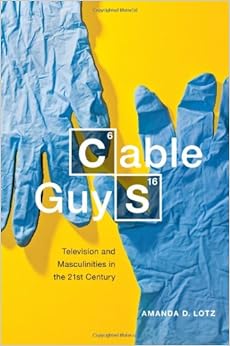
This is an interesting look at the dearth of analysis of male characters on television in gender studies. The majority of characters are male, yet they are seldom studied within their gender performance context, while women have been often studied over the last several decades.
This brief article is an excerpt from the Introduction to Cable Guys: Television and Masculinities in the 21st Century (NYU Press, 2014), by Amanda D. Lotz.
Gender Studies, Masculinity and Television
Why gender studies should examine male television characters like Archie Bunker and Tony Soprano more closely.
By Amanda D. Lotz
September 2014
 Despite the number of male characters in American television, the study of these men—and their roles as men in society—are not among the popular topics when discussing gender studies. Photo by Fotolia/migfoto
Women’s roles on television have been analyzed over the course of television’s history. Through the 20th century and into the 21st century, the evaluation of gender roles has come mostly through the analysis of women. Why not men? In Cable Guys: Television and Masculinities in the 21st Century (NYU Press, 2014), Amanda D. Lotz attributes the lack of analysis and typology to the abundance of types of male characters in television, which leads to an audience who is more accepting of the male characters they see on television. In the following excerpt from the introduction, Lotz examines why male television characters have not been analyzed in depth under gender studies while many male film characters have.
What Do We Know about Men on Television?
It is revealing that so little has been written about men on television. Men have embodied such an undeniable presence and composed a significant percentage of the actors upon the small screen—be they real or fictional—since the dawn of this central cultural medium and yet rarely have been considered as a particularly gendered group. In some ways a parallel exists with the situation of men in history that Michael Kimmel notes in his cultural history, Manhood in America. Kimmel opens his book by noting that “American men have no history” because although the dominant and widely known version of American history is full of men, it never considers the key figures as men. Similarly to Kimmel’s assertion, then, we can claim that we have no history of men, masculinity, and manhood on television—or at best, a very limited one—despite the fact that male characters have been central in all aspects of the sixty-some years of US television history. It is the peculiar situation that nearly all assessments of gender and television have examined the place and nature of women, femininity, and feminism on television while we have no typologies of archetypes or thematic analyses of stories about men or masculinities.
For much of television studies’ brief history, this attention to women made considerable sense given prevailing frameworks for understanding the significance of gender representation in the media. Analyses of women on television largely emerged out of concern about women’s historical absence in central roles and the lack of diversity in their portrayals. Exhaustive surveys of characters revealed that women were underrepresented on television relative to their composition of the general populace and that those onscreen tended to be relegated to roles as wives, love interests, or sex objects. In many cases, this analysis was linked with the feminist project of illustrating how television contributed to the social construction of beliefs about gender roles and abilities, and given the considerable gender-based inequity onscreen and off, attention to the situation of men seemed less pressing. As a result, far less research has considered representations of men on television and the norms or changes in the stories the medium has told about being a man.
Transitioning the frameworks used for analyzing women on television is not as simple as changing the focus of which characters or series one examines. Analyzing men and masculinity also requires a different theoretical framework, as the task of the analysis is not a matter of identifying underrepresentation or problematic stereotypes in the manner that has dominated considerations of female characters. The historic diversity of stories about and depictions of straight white men has seemed to prevent the development of “stereotypes” that have plagued depictions of women and has lessened the perceived need to interrogate straight white men’s depictions and the stories predominantly told about their lives. Any single story about a straight white man has seemed insignificant relative to the many others circulating simultaneously, so no one worried that the populace would begin to assume all men were babbling incompetents when Darrin bumbled through episodes of Bewitched, that all men were bigoted louts because of Archie Bunker, or even that all men were conflicted yet homicidal thugs in the wake of Tony Soprano. Further, given men’s dominance in society, concern about their representation lacked the activist motivation compelling the study of women that tied women’s subordinated place in society to the way they appeared—or didn’t appear—in popular media.
Gender Studies: Focusing on Men
So why explore men now? First, it was arguably shortsighted to ignore analysis of men and changing patterns in the dominant masculinities offered by television to the degree that has occurred. Images of and stories about straight white men have been just as important in fostering perceptions of gender roles, but they have done their work by prioritizing some attributes of masculinity—supported some ways of being a man—more than others. Although men’s roles might not have been limited to the narrow opportunities available to women for much of television history, characteristics consistent with a preferred masculinity have pervaded—always specific to the era of production—that might generally be described as the attributes consistent with what is meant when a male is told to “be a man.” In the past, traits such as the stoicism and controlled emotionality of not being moved to tears, of proving oneself capable of physical feats, and of aggressive leadership in the workplace and home have been common. Men’s roles have been more varied than women’s, but television storytelling has nevertheless performed significant ideological work by consistently supporting some behaviors, traits, and beliefs among the male characters it constructs as heroic or admirable, while denigrating others. So although television series may have displayed a range of men and masculinities, they also circumscribed a “preferred” or “best” masculinity through attributes that were consistently idealized.
The lack of comprehensive attention to men in any era of television’s sixty-some-year history makes the task of beginning difficult because there are so few historical benchmarks or established histories or typologies against which newer developments can be gauged. Perhaps few have considered the history of male portrayal because so many characteristics seemed unexceptional due to their consistency with expectations and because no activist movement has pushed a societal reexamination of men’s gender identity in the manner that occurred for women as a component of second-wave feminism. Male characters performed their identity in expected ways that were perceived as “natural” and drew little attention, indicating the strength of these constructs. Indeed, television’s network-era operational norms of seeking broad, heterogeneous audiences of men and women, young and old, led to representations that were fairly mundane and unlikely to shock or challenge audience expectations of gender roles.
One notable aspect of men’s depictions has been the manner through which narratives have defined them primarily as workers in public spaces or through roles as fathers or husbands—even though most male characters have been afforded access to both spaces. A key distinction between the general characterizations of men versus women has been that shows in which men functioned primarily as fathers (Father Knows Best, The Cosby Show) also allowed for them to leave the domestic sphere and have professional duties that were part of their central identity—even if actually performing these duties was rarely given significant screen time. So in addition to being fathers and husbands, with few exceptions, television’s men also have been workers. Similarly, the performance of professional duties has primarily defined the roles of another set of male characters, as for much of television history, stories about doctors, lawyers, and detectives were necessarily stories about male doctors, lawyers, and detectives. Such shows may have noted the familial status of these men but rarely have incorporated family life or issues into storytelling in a regular or consistent manner.
This split probably occurs primarily for reasons of storytelling convention rather than any concerted effort to fragment men’s identity. I belabor this point here because a gradual breakdown in this separatespheres approach occurs in many dramatic depictions of men beginning in the 1980s and becomes common enough to characterize a subgenre by the twenty-first century. Whether allowing a male character an inner life that is revealed through first-person voice-over—as in series such as Magnum, P.I., Dexter, or Hung—or gradually connecting men’s private and professional lives even when the narrative primarily depicts only one of these spheres—as in Hill Street Blues or ER—such cases in which the whole lives of men contribute to characterization can be seen as antecedents to the narratives that emphasize the multifaceted approach to male characters that occurs in the male-centered serial in the early 2000s. Though these series offer intricately drawn and complex protagonists, their narrative framing does not propose them as “role models” or as men who have figured out the challenges of contemporary life. The series and their characters provide not so much a blueprint of how to be a man in contemporary society as a constellation of case studies exposing, but not resolving, the challenges faced.
The scholarly inattention to men on television is oddly somewhat particular to the study of television. The field of film studies features a fairly extensive range of scholarship attending to changing patterns of men’s portrayals and masculinities. While these accounts are fascinating, the specificity of film as a medium very different from television in its storytelling norms (a two-hour contained story as opposed to television’s prevailing use of continuing characters over years of narrative), industrial characteristics (the economic model of film was built on audiences paying for a one-time engagement with the story while television relies on advertisers that seek a mass audience on an ongoing basis), and reception environment (one chooses to go out and see films as opposed to television’s flow into the home) prevent these studies of men on film to tell us much about men on television. Further, gender studies and sociology have developed extensive theories of masculinity and have been more equitable in extending beyond the study of women. Although theories developed in these fields provide a crucial starting point—such as breaking open the simple binary of masculinity and femininity to provide a language of masculinities—it is the case that the world of television does not mirror the “real world” and that the tools useful for exploring how societies police gender performance aren’t always the most helpful for analyzing fictional narratives. Sociological concepts about men aid assessments of men and masculinity on television, but it is clearly the case that the particularities of television’s dominant cultural, industrial, and textual features require focused and specific examination.
Reprinted with permission from Cable Guys: Television and Masculinities in the 21st Century by Amanda D. Lotz and published by NYU Press, 2014.
Sunday, September 7, 2014
Doing The Hard Work Of Becoming A 'Real Man'
From NPR's All Things Considered, Saeed Jones reviews the intriguing book from TC Cooper, Real Man Adventures (2012). The reason this book is interesting to me, and likely anyone who is interested in how masculinity is socially constructed, is that the author is a trans man, a man born with a female biological body but a male sense of self.
Here is the publisher's ad copy for the book:
Here is the publisher's ad copy for the book:
A few years ago, the novelist T Cooper wrote his parents a letter telling them he “wasn’t their daughter anymore.” And that was the “good news.”I look forward to reading this, and sharing it with my trans men clients who are still working to develop a comfortable sense of a being man without the socialization cis males get simply by being born male. The way that trans men construct their masculine identity is informative for all of us.
Real Man Adventures is Cooper’s brash, wildly inventive, and often comic exploration of the paradoxes and pleasures of masculinity. He takes us through his transition into identifying as male, and how he went on to marry his wife and become an adoring stepfather of two children. Alternately bemused and exasperated when he feels compelled to explain all this, Cooper never loses his sense of humor. “Ten Things People Assume I Understand About Women But Actually Don’t,” reads one chapter title, while another proffers: “Sometimes I Think the Whole of Modern History Can Be Explained by Testosterone.”
A brilliant collage of letters, essays, interviews (with his brother, with his wife, with the parents of other transgender children), artwork, and sharp evocations of difficult conversations with old friends and puzzled bureaucrats, Real Man Adventures will forever change what you think about what it means to be a man.
Doing The Hard Work Of Becoming A 'Real Man'
by Saeed Jones
September 01, 2014
All Things Considered
3 min 10 sec
Here is something I wish I'd been taught when I was still a limp-wristed little boy: Any man who says that the performance of red-blooded masculinity comes naturally and is easy to pull off is either lying to you, or worse, himself. Being a man, or, constructing manhood is damn hard work.
Some of us just give up and eventually settle into an easier, more breathable version of ourselves. Others resort to all sorts of desperate shows of sexism, violence and general havoc in an attempt to convince ourselves and our culture that we are up to measure.
T Cooper's recent book, Real Man Adventures, examines manhood's precariousness through the lens of his own experiences. The memoir opens, after an epigraph from Ralph Ellison's novel Invisible Man, with these three sentences: "I am a visible man. By all appearances white, middle-class, heterosexual. Male."
Cooper, a happy married man with two young step daughters, is also transgender. His identity as a transgender man is not and should not be regarded as a paradox. And through the book, via essays both humorous and heartbreaking, lists, illustrated diagrams and interviews with family members and friends, Cooper strives and ultimately succeeds in illuminating what he has learned about manhood on the way to becoming himself.
One chapter is a list of changes he and his wife have noticed since he first started taking testosterone, among them: "I am angry more frequently. Or: it takes way less to make me blazing mad." And, "People defer to me more." And, "I say less to strangers." Later, there's a chapter in which Cooper interviews a trans friend's mother. He begins the interview by admitting: "I'm asking you these questions because I'm too much of a wimp to ask my own parents. Or maybe I'm not ready to hear their answers."
Cooper writes with intelligence and vulnerability as he grapples with the idea of being or becoming a "real man." And in doing so, he gets to an essential truth that we'd all do well to heed: Manhood itself is a work of art, you might say. The stoicism, the toughness, the strength are like a painter's brushstrokes on a self-portrait: "This is who I am. This is who I want you to see." If we are real men, Cooper seems to say, it is because we are real to and with ourselves.
What he has accomplished with Real Man Adventures was not achieved without risk or sacrifice. He weighs the possible consequences of writing about his personal life and thus exposing himself and his family. For all the progress America has made regarding acceptance of transgender people, there is still a great deal of work to be done. But the necessary change, the breakthrough we seek and need begins here in this book, with the honest questions answered and the self laid bare.
I would have loved to read Cooper's book when I was still a boy, but I suppose — since being a man is an ever ongoing process — his brilliant writing has arrived right on time all the same.
- Saeed Jones' next book of poetry, Prelude to Bruise, comes out next month.

Tuesday, August 5, 2014
Sarah Nicholson - The Evolutionary Journey of Woman: From the Goddess to Integral Feminism
[NOTE: This post also appears at Integral Options Cafe this morning. While the main topic is integral feminism, it feels particularly useful for men to be acquainted with this book, too.]
The following is my review of Sarah Nicholson's recent book, The Evolutionary Journey of Woman: From the Goddess to Integral Feminism (Integral Publishers, 2013). Sass was kind enough to send me a PDF review copy of the book.
When I was 20 years old or so, I began reading the Collected Works of C.G. Jung on the recommendation of an art history professor who correctly intuited my affinity for Jung's approach to psycho-spirituality. As an adjunct, I also discovered (again) the work of Joesph Campbell, who was the editor of The Portable Jung, one of the better introductions to the writings of Jung, grouped thematically. I was previously familiar with Campbell's work from his PBS series with Bill Moyers (based on his, The Power of Myth) in the 1980s.
The parallels between Jung's model of psychological individuation and Campbell's model of the monomyth took me back to Campbell's work, especially The Hero with a Thousand Faces (Bollingen Series, No. 17), which then took me back to the work of Arnold van Gennep and Victor Turner.
In essence, the hero's myth, which Campbell called the monomyth, is a symbolic narrative of initiation, a process that can be broken down into three stages - separation (from family, community, previous identity), [crossing the threshold in answer to "the call"], initiation (physical and psychological trials, often involving a confrontation with the divine feminine and a need to find atonement with the father), [decision to take the gifts acquired back to the world or not], and return (bringing the "boon" bestowed or earned back to the world, sharing the gift with others, no longer fearing death).
Within those three larger movements, Campbell identified 17 individual stages for the whole process - stages that are common to many (if not most) of the world's best known hero's quests.
One thing you may have noticed, however, is that this model is distinctly masculine. While Campbell occasionally made reference to the monomyth applying to women as well, there is little evidence of this in his work.
The question is this: What does the evolutionary journey (individuation) of woman look like? Can her story be framed within this same structure, or is there a unique path that women follow in their own trasnformational process?
These are the questions Nicholson addresses in her book.
From the Introduction:
To outline the broader project of book, here is the table of contents (personally, I find the table of contents, the references, and the index to be good indicators of whether or not I want to read a given book):
Inanna and the Descent to the Underworld
The myth she feels drawn toward is one of the oldest human myths, the Sumerian myth of Inanna, Queen of Heaven and goddess of lust, love, fertility, and warfare. However, it's important to note that she is not the goddess of marriage. Her domain is lust and she is associated with extramarital sex and affairs, and she can often be found in taverns seeking the adventure of new sexual partners. The Babylonian epic of Gilgamesh also makes reference to Inanna's well-known disregard for her lovers (after the act).
Nicholson understand's Inanna's narrative as a classic hero's tale, or heroine in this case. Her story was the genesis for her book, and even though she chose to expand the study beyond Inanna's myth, she felt pulled back to the myth.
Any effort to analyze the goddess figure in history requires discussing and critiquing the work of the archeologist Marija Gimbutas. Despite her popularity among lay readers (especially in New Age goddess movements), archeologists and anthropologists have offered harsh and thorough criticism of her Goddess Hypothesis. Gimbutas' main idea is that all of the world's variety of goddess figures can be traced back to a single neolithic goddess or divine feminine figure. Further, she contends that this period of "peaceful, matrilineal, agricultural and primarily sedentary culture of Mythic Old Europe" ended with the invasion of nomadic herders who brought with them domesticated horses and lethal weapons. According to Gimbutas, these invaders brought to Europe "myths of conquering warrior hero gods" (p. 105).
Aside from the vast criticism of her model in archeological and interpretive grounds (which Nicholson spends a couple of pages outlining), there is also the issue of the pre/trans fallacy (an idea developed by Ken Wilber) in assigning trans-rational capacities to a pre-rational culture. An additional issue is that many anthropologists and archeologists believe that it was agriculture that ushered in the patriarchal dominance from which modern goddess movements seek to extricate themselves [see references: 1, 2, 3], not nomadic herders.
Here is the stance Nicholson takes on Gimbutas' work:
Integral Feminism
Nicholson uses Ken Wilber's model of integral theory to underpin her larger project in this book. For this reader, the time spent on Wilber is the weakest part of the book (but I suspect this is less about the book and more about the seeming need for every book using integral theory to spend a couple of chapters explaining Wilber's AQAL model, as if homage must be paid).
To be fair, Nicholson is perfectly willing to criticize the weaknesses in Wilber's theory, and when it comes to sex and gender, there is a lot of room for criticism.
The evidence seems relatively clear that early horticultural societies were not terribly divided in work roles according to gender (as Wilber would have it). Wilber espouses somewhat of an essentialist position on gender and gender roles, and while there are essential differences in some respects, gender roles are (or were) more egalitarian and less rigidly divided.
By tracking these societal changes alongside changes in the Inanna story, the myth becomes reflective of the lives of its tellers.
Final Thoughts
This is a book I found to be educational, enlightening, thought-provoking, and with which I sometimes found myself arguing. Isn't that what good books should do? Being as familiar as I am with both Campbell and Wilber, however, it was easy to let Nicholson lead me on the "evolutionary journey of woman."
As a man who works with other men on issues around gender roles, this feels like an important book for men to read, at least as much so as it is for women. Perhaps nowhere is this so true as in the integral community, with its reliance on Warren Farrell and David Deida as essential leaders in masculinity.
The integral community, in particular, with so many of the primary authors being male and holding essentialist positions, dictated in part by Wilber, has alienated a lot of women. For example, here is a passage from the "Integral Operating System," based on the writings of Carol Gilligan:
Now, we have Sarah Nicholson's book and voice to add some justice, autonomy, and individualism to the heroic journey of the integral feminine.
References:

The following is my review of Sarah Nicholson's recent book, The Evolutionary Journey of Woman: From the Goddess to Integral Feminism (Integral Publishers, 2013). Sass was kind enough to send me a PDF review copy of the book.
* * * * *
When I was 20 years old or so, I began reading the Collected Works of C.G. Jung on the recommendation of an art history professor who correctly intuited my affinity for Jung's approach to psycho-spirituality. As an adjunct, I also discovered (again) the work of Joesph Campbell, who was the editor of The Portable Jung, one of the better introductions to the writings of Jung, grouped thematically. I was previously familiar with Campbell's work from his PBS series with Bill Moyers (based on his, The Power of Myth) in the 1980s.
The parallels between Jung's model of psychological individuation and Campbell's model of the monomyth took me back to Campbell's work, especially The Hero with a Thousand Faces (Bollingen Series, No. 17), which then took me back to the work of Arnold van Gennep and Victor Turner.
In essence, the hero's myth, which Campbell called the monomyth, is a symbolic narrative of initiation, a process that can be broken down into three stages - separation (from family, community, previous identity), [crossing the threshold in answer to "the call"], initiation (physical and psychological trials, often involving a confrontation with the divine feminine and a need to find atonement with the father), [decision to take the gifts acquired back to the world or not], and return (bringing the "boon" bestowed or earned back to the world, sharing the gift with others, no longer fearing death).
Within those three larger movements, Campbell identified 17 individual stages for the whole process - stages that are common to many (if not most) of the world's best known hero's quests.
One thing you may have noticed, however, is that this model is distinctly masculine. While Campbell occasionally made reference to the monomyth applying to women as well, there is little evidence of this in his work.
The question is this: What does the evolutionary journey (individuation) of woman look like? Can her story be framed within this same structure, or is there a unique path that women follow in their own trasnformational process?
These are the questions Nicholson addresses in her book.
* * * * *
From the Introduction:
"In the midst of a period of internal and external exploration, fueled by the desire to understand the significant disparity between my socio-cultural context and my inner calling - which insisted that life was deeper, wider and wilder than social norms and material goals suggested - I found the work of Joseph Campbell. This meeting was deeply affective. His exploration of the hero beautifully articulated the core purpose of human life as attunement to the path of awakening, and this spoke to me directly."As she explored the areas of mythology, religion, and spirituality, she discovered the "deeply androcentric nature of these worlds." In her book, Nicholson seeks to find and follow the heroine, to discover and share her story and to "explore woman's evolving relationship with what it is to be human."
To outline the broader project of book, here is the table of contents (personally, I find the table of contents, the references, and the index to be good indicators of whether or not I want to read a given book):
ONE: HEARING THE CALL: THE HEROINE’S JOURNEY 1Her chapters (2 and 3) on the history of feminism are very instructive for readers who are not familiar with this material - and few of us outside of academic feminism read most of the authors she references. They also provide a solid foundation for her later explorations of a uniquely heroine-oriented myth and a critical framework for her deconstruction of gender in Ken Wilber's integral theory.
Joseph Campbell and the hero’s journeyTWO: CROSSING THE THRESHOLD: CONFRONTING THE QUESTION OF WOMAN 17
Mysticism and mythic symbol
The hero’s journey as perennial philosophy
The hero as ‘everyman’
Feminist critique of the hero
Feminist approaches to the question of WomanTHREE: WHO IS WOMAN? THE THIRD WAVE AND BEYOND 43
The First wave of feminism
The Second wave
Sex versus gender
Psychoanalytic and poststructural feminism
Woman, mythology and the religious symbolic
Feminist theology
Mary Daly: Reweaving the journey
Carol Christ: Thealogy
Goddess spirituality and the Great Mother
The God problem
Jungian archetypes
The archetype of the self for women
Towards the third wave and beyond
Time and the evolution of feminist thoughtFOUR: THE ROAD OF TRIALS: EVOLUTIONARY PATHWAYS 65
The discourses of the Third wave
Subjectivities of inter-relation: corporeal feminism
Process philosophy and the Nomadic Feminist subject
Third wave religion: Buddhism’s nondual philosophy
Non-dual philosophy: Transontolog
Definition: The Name of Woman
Integral theory: New tools
Towards an Integral feminism
Woman - through the quadrants
Evolutionary consciousness
The limits of evolutionary theoryFIVE: MEETING THE GODDESS: THE MYTHIC PLAINS 97
Wilber’s evolutionary theory
Holonic theory
Developmental eras of consciousness
From Origin to Integral: The work of Gebser
Wilber’s Integral Theory of development
The Archaic Stage
The Magical Stage
Habermas: Social Labor and the father
Bacofen: Mother right – Father right
Pre-modern Gender: Wilber’s suppositions
Man the hunter
Foraging: woman the gatherer
Evolutionary continuity: sociobiology and sharing
Sexual dimorphism
The collective hunt
The sedentary woman
The father and the question of work
Feminist archaeology: Re-capitulating the evidence
The Question of VenusSIX: THE RISE OF THE RATIONAL 123
Symbolism of the Magical stage
The Mythic stage
Stages of consciousness: From Magic to Mythic
Gimbutas and the Great Goddess
Critique of the Goddess hypothesis
Remembering and inventing the Goddess
Re-reading the Mythic evidence
Epochal mutation: From Mythic to Mythic-Agrarian
The Metamorphosis of Myth: The Tales of Inanna
Inanna: The Great Death
Mythic-Imperial Stage
The Hero and the Warrior
Mythic-Agrarian: The Iron Age
The Mental Rational StageSEVEN: DIVINE HORIZONS: THE HEROINE’S PATH TO THE UNITIVE 151
Formal Operational Cognition
From Monotheism to Globalism
Feminism: Emergence vs. Oppression
Gender Stratification: Coercion and Voluntarism
A rebuttal to Co-creative theory
Capacity Development
Woman and the cultural symbolic
From mythos to religion
The separative self
Pathological dominance
The rise of feminist consciousness
Integral answers
Towards the horizon
Self abnegation: Women’s estrangement from the divineEIGHT: CONCLUSION 175
Women’s divine horizons
Adult development theory
Critique of developmental theory
The first stages of development
Women in the conventional
Critique of gendered theories of development
Girls development and adolescence
The developmental journey of the hero/ine
A developmental junction: Achiever or Affliate
Differentiation and the separative self
The Post-conventional tier
Integrated vs. Construct Aware
The Post-Postconventional tier
The transcendent stage
The Unitive stage
Practising the sensible transcendental
Horizontal and vertical, terrestrial and heavenly
To be incarnated? Archi-ancient and forever future
Returning from the Journey with Gift Giving
Hands – the Discourse of Integral Feminism
Next Steps: Sacred Marriage
Inanna and the Descent to the Underworld
The myth she feels drawn toward is one of the oldest human myths, the Sumerian myth of Inanna, Queen of Heaven and goddess of lust, love, fertility, and warfare. However, it's important to note that she is not the goddess of marriage. Her domain is lust and she is associated with extramarital sex and affairs, and she can often be found in taverns seeking the adventure of new sexual partners. The Babylonian epic of Gilgamesh also makes reference to Inanna's well-known disregard for her lovers (after the act).
Nicholson understand's Inanna's narrative as a classic hero's tale, or heroine in this case. Her story was the genesis for her book, and even though she chose to expand the study beyond Inanna's myth, she felt pulled back to the myth.
For two years her story was the topic of this book, but the need to establish an Integral feminist philosophical and methodological position that could adequately contextualize her story in terms of stages of consciousness, the evolution of gender dynamics, and changing representations of the female divine, became increasingly clear to me. Thus this book is focused on the greater schema. Yet, no matter how much I put Inanna’s story aside it continued to return to the text.One of her best known myths is "Inanna's Descent to the Underworld." Staying true to her nature, when Inanna is rescued from the Underworld, she must choose someone to replace her there. The first few people they come upon are all mourning servants, but then they come upon her husband, Dumuzi, who is not mourning at all (far from it), and she chooses him to go with the demons and take her place in the Underworld.
Any effort to analyze the goddess figure in history requires discussing and critiquing the work of the archeologist Marija Gimbutas. Despite her popularity among lay readers (especially in New Age goddess movements), archeologists and anthropologists have offered harsh and thorough criticism of her Goddess Hypothesis. Gimbutas' main idea is that all of the world's variety of goddess figures can be traced back to a single neolithic goddess or divine feminine figure. Further, she contends that this period of "peaceful, matrilineal, agricultural and primarily sedentary culture of Mythic Old Europe" ended with the invasion of nomadic herders who brought with them domesticated horses and lethal weapons. According to Gimbutas, these invaders brought to Europe "myths of conquering warrior hero gods" (p. 105).
Aside from the vast criticism of her model in archeological and interpretive grounds (which Nicholson spends a couple of pages outlining), there is also the issue of the pre/trans fallacy (an idea developed by Ken Wilber) in assigning trans-rational capacities to a pre-rational culture. An additional issue is that many anthropologists and archeologists believe that it was agriculture that ushered in the patriarchal dominance from which modern goddess movements seek to extricate themselves [see references: 1, 2, 3], not nomadic herders.
Here is the stance Nicholson takes on Gimbutas' work:
While not absolutely explicit, it is clear that, in keeping with feminist methodology, Gimbutas’ archaeo-mythology is a liberally intuitive and creatively interpretive method. She moves her subject matter out of the realm of archaeology and into the realm of mythopoesis and in doing so blurs boundaries and distinctions, utilising but going beyond the scope of the material evidence. Yet despite these methodological problems, there is much rich material in Gimbutas’ extensive research that should not go unutilised.... (p. 107)
* * *
Integral Feminism
Nicholson uses Ken Wilber's model of integral theory to underpin her larger project in this book. For this reader, the time spent on Wilber is the weakest part of the book (but I suspect this is less about the book and more about the seeming need for every book using integral theory to spend a couple of chapters explaining Wilber's AQAL model, as if homage must be paid).
To be fair, Nicholson is perfectly willing to criticize the weaknesses in Wilber's theory, and when it comes to sex and gender, there is a lot of room for criticism.
It is my intention, utilizing the philosophy and methodology of Integral feminism, to follow woman’s journey through the broad waves of human development, as Wilber presents them , to her arrival in feminist consciousness. Along the way I examine how Wilber positions woman and I make feminist incursions into this history where necessary. (p. 63)Jean Gebser and Jurgen Habermas, primary sources for Wilber's integral model, also get their due from Nicholson. In chapter four, the author offers a thorough and cogent critique of Wilber's (via Habermas) views on the division of work and gender roles in the "Magical" stage of human evolution.
The evidence seems relatively clear that early horticultural societies were not terribly divided in work roles according to gender (as Wilber would have it). Wilber espouses somewhat of an essentialist position on gender and gender roles, and while there are essential differences in some respects, gender roles are (or were) more egalitarian and less rigidly divided.
Studies of contemporary horticultural societies show an equal distribution of productive work between men and women. Both women and men “plant, weed, harvest, and transport crops” after new areas of land have been cleared and prepared for cultivation, mostly by men (Huber 2006, 71). This is likely to have been the case in the Neolithic period also. (p. 109)As horticulture became agriculture with the invention of metal tools, especially the hoe and later the sword, humanity moved from a early mythic worldview to a mythic-agrarian worldview. Kinship loyalties now played a lesser role in culture than did political/power loyalties. Dependence on and subservience to a king was now central in daily life.
While moving towards the socially conventional ‘roles and rules’ of concrete operations and conventional morality, the early Mythic [13] period would not yet have the reified differentiations of gender roles and status divisions that are demonstrated in later stages. (p. 109)
By tracking these societal changes alongside changes in the Inanna story, the myth becomes reflective of the lives of its tellers.
The Sumerian mythologies of the goddess Inanna straddle the divide between the early Mythic and Mythic-Agrarian stages. Inanna is a particularly important case study. Encapsulated in the very first written mythic narratives, she is both a unique representation of the heroine and of the divine in female form. In this guise she represents the archetype of the Self as envisaged through the Mythic stage. The significant changes that occur in the manner of her representation as the Mythic stage transitions to Mythic-Agrarian demonstrate the shifts in consciousness that occur during this period. (p, 112)Nicholson details some of the changes that occur in Inanna's myth over that period of time (roughly 2,000-3,000 BCE). This is how the author characterizes her subject:
The Mythic Inanna embodied the values of adventure, curiosity, knowledge, sensuality and deeper self-knowledge through mysticism. As a spiritual hero she is both agentic and communal, transcendent and yet deeply immanent. As a goddess, Inanna fully represents the burgeoning consciousness of the Mythic Age. Fundamentally different to the mother Goddess espoused by Gimbutas [16], Inanna is a goddess of exploration and knowledge. (p. 113-114)From here, Nicholson continues to trace the evolution of the archetypal feminine Self, the development of a heroine's myth, through Wilber's psycho-social stages of development.
Final Thoughts
This is a book I found to be educational, enlightening, thought-provoking, and with which I sometimes found myself arguing. Isn't that what good books should do? Being as familiar as I am with both Campbell and Wilber, however, it was easy to let Nicholson lead me on the "evolutionary journey of woman."
As a man who works with other men on issues around gender roles, this feels like an important book for men to read, at least as much so as it is for women. Perhaps nowhere is this so true as in the integral community, with its reliance on Warren Farrell and David Deida as essential leaders in masculinity.
The integral community, in particular, with so many of the primary authors being male and holding essentialist positions, dictated in part by Wilber, has alienated a lot of women. For example, here is a passage from the "Integral Operating System," based on the writings of Carol Gilligan:
Male logic, or a man’s voice, tends to be based on terms of autonomy, justice, and rights; whereas women’s logic or voice tends to be based on terms of relationship, care, and responsibility. Men tend toward agency; women tend toward communion. Men follow rules; women follow connections. Men look; women touch. Men tend toward individualism, women toward relationship. (Wilber, 2012)Seriously? To define the feminine as communal, caring, and immanent and the masculine as agentic, rights-oriented, and transcendent is so painfully reductionist that both men and women should be turned off by this androcentric nonsense.
Now, we have Sarah Nicholson's book and voice to add some justice, autonomy, and individualism to the heroic journey of the integral feminine.
References:
- Hughes, SS & Hughes, B. (2001). "Women in Ancient Civilizations". In Adas, Michael. Agricultural and pastoral societies in ancient and classical history. Temple University Press. pp. 118–119.
- Eagly, AH, & Wood, W. (June 1999). "The Origins of Sex Differences in Human Behavior: Evolved Dispositions Versus Social Roles". American Psychologist; 54 (6): 408–423.
- Erdal, D. & Whiten, A. (1996). "Egalitarianism and Machiavellian Intelligence in Human Evolution" in Mellars, P. & Gibson, K. (eds) Modelling the Early Human Mind. Cambridge Macdonald Monograph Series.
- Wilber, K. (2012, Mar 11). The Integral Operating System. Part IV: What Type Are You? Retrieved on August, 4, 2014, from https://www.integrallife.com/member/ken-wilber/blog/integral-operating-system-part-iv-what-type-are-you
Tuesday, July 29, 2014
Vanessa Fisher - Men and the Future of the Integral Movement--with R. Michael Fisher

Over at her blog, Poetic Justice, Vanessa D. Fisher has posted the final interview in a series she conducted in promotion for the book she co-edited with Sarah Nicholson, Integral Voices on Sex, Gender, and Sexuality: Critical Inquiries, part of the SUNY series on Integral Theory.
This interview is a little more special than the previous three - she is interviewing her father, R. Michael Fisher, author, philosopher, teacher, and a whole lot more. Here is the bio material that was posted at Beams and Struts:
It's a good interview featuring two REALLY smart people - check it out!R. Michael Fisher
Michael Fisher, a philosopher at-heart, who has studied and applied the work of Ken Wilber and other integral theorists to the general area of curriculum theory and instruction, healing and spiritual development, and specifically to social emancipatory praxis, since the early 1980s. His philosophy is liberational and grounded not so much in the human potential or new age movements of which he's often critical, but ground more in a path beginning with the theory and practice of Re-evaluation Co-counseling, Integral Studies, Sacred Warriorship Studies, Critical Theory and the Fearlessness Tradition.
A self-proclaimed fearologist and cultural critic, therapeutic counselor, artist and educator, with a BSc in Environmental Biology, a BEd in Science Secondary Education, an M.A. in Adult Education and a Ph.D. in Curriculum & Instruction, his transdisciplinary research as a scholar and public intellectual has led to many published exhibitions, monographs and articles--while he continues to lecture, coach and counsel in private practice, facilitate workshops, and engage in trans(per)formative artistic practices and collaborations. He is former founder/teacher of the School of Sacred Warriorship (1993-96), co-founder and Director of the In Search of Fearlessness Research Institute (1989-) (http://www.feareducation.com), and founder Director of the Center for Spiritual Inquiry & Integral Education (http://csiie.org). His personal website can be found at http://loveandfearsolutions.com/
A prolific writer with over two hundred publications since 1974, his latest book, The World's Fearlessness Teachings: A Critical Integral Approach to Fear Management/Education for the 21st Century was published in the late fall of 2010 by University Press of America (Rowman & Littlefield). Michael is a certified school teacher and a Level-2 Spiral Dynamics Integral Technology facilitator. Born and raised in Western Canada, he has recently moved to Carbondale, IL, USA with his wife/partner, Barbara Bickel. Michael (pronounced my-ky-el), formerly Robert M. Fisher. He lives in conscious abstinence, as spiritual practice, without a motor vehicle, ownership of house or land, TV set, and the titillation of Facebook and Twitter.

Men and the Future of the Integral Movement--with R. Michael Fisher
Jul 22, 2014
As the third and last of my special dialogues devoted to giving people a taste for the contents of our book, yesterday I interviewed Dr. R. Michael Fisher (who is also my father) on his chapter in our anthology entitled "Are Men Tragically Hopeless? A Critical Integralists' Perspective". A chapter which situates men at a significant point of crisis in evolutionary history and presents the case for a radical shift in how we think about men's liberation. Responding critically to both integral and postmodern theory, and drawing from his personal experience, Fisher's chapter follows the developments and struggles of men in conscious community and advocates for the liberation of both genders by working from the ruins of hopelessness.
In this, dialogue we explore Fisher's unique approach to men's liberation work as a practice of social identity development which includes political, economic, cultural, and social systems perspectives. We also chart and personally reflect on the history of the integral movement, and discuss important critiques of integral theory and leadership, while exploring our own relationship to the questions of gender as father and daughter.
Download this Dialogue as an MP3
This was a provocative dialogue that touches on many topical issues. At times theoretical, at times deeply personal, and at times controversial in our discussion of men, women and the integral movement.
This is the third of a series of three dialogues I conducted in preparation for the launch of my book this month, in order to give a taste of some of the topics that will be covered in the anthology. Click here to see and listen to all three free interviews I hosted for this series, with Diane Musho Hamilton, Dr. Elizabeth Debold, and Dr. Warren Farrell.

* * * * *
My book, Integral Voices on Sex, Gender and Sexuality: Critical Inquiries, co-edited with Sarah E. Nicholson, is now available on Kindle through amazon! Paperback and hardcovers will be available August 1st.
I also put together a short video trailer for our book this weekend on imovie, I'm not a professional, but I liked how it turned out, and it was a lot of fun! Check it out:

There's also seven days left to enter our draw for a free copy of our book before it is published, through Goodreads.
If you'd like to receive automatic updates when a new dialogue is posted, you can subscribe to my new Poetic Justice iTunes podcast page, which I've recently created and uploaded all my dialogues to. This will give you free access and automatic updates on all my Poetic Justice Dialogues in future.
Sarah Nicholson, my co-editor for this anthology, and I have also created a group Facebook page, where many of these dialogues and topics related to sex, gender, and sexuality are being discussed in more depth. If you'd like to join the group conversation, please click this highlighted link and request to be added.
Enjoy....
Subscribe to:
Posts (Atom)