Robert Augustus Masters: True Masculine Power
Tuesday, January 20, 2015
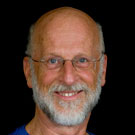
Robert Augustus Masters is an integral psychotherapist and spiritual teacher whose work emphasizes physical embodiment and greater relational maturity. With Sounds True, he has published the book To Be a Man: A Guide to True Masculine Power. In this episode of Insights at the Edge, Robert and Tami Simon talk about the deep shame that men often experience in a society that encourages them to “man up” and ignore their emotions. They also speak on developing a healthier approach to anger, as well as coming to a new understanding of masculine sexuality. Finally, they discuss Robert’s interpretation of what women truly need from modern men. (68 minutes)
Showing posts with label Sounds True. Show all posts
Showing posts with label Sounds True. Show all posts
Tuesday, February 3, 2015
Tami Simon Interviews Robert Augustus Masters: True Masculine Power
From Tami Simon's interview series, Insights at the Edge, this is an excellent interview with integral psychologist Robert Augustus Masters about his new book, To Be a Man: A Guide to True Masculine Power. This is another classic book from the author of Spiritual Bypassing: When Spirituality Disconnects Us from What Really Matters (2010).


Thursday, April 11, 2013
Know Your Shadow (Robert Augustus Masters) and Master the Neuroscience of Change (Kelly McGonigal)
I don't generally endorse products on any of my blogs, other than books in review, but this is a little different. One of the things I promote and try to embody in this blog is the receptiveness to change and personal growth that can open and make tender the masculine heart.
Each of the Sounds True offerings below are excellent tools for that kind of transformation. If you are a professional, CEUs are also available.
First, integral psychotherapist and teacher Robert Augustus Masters offers a course on Knowing Your Shadow, designed to help each of us "discover and cultivate intimacy with the endarkened aspects of yourself including core wounds and difficult emotions." I've been reading Masters' work for many years now and I can recommend his teachings without reservation - he offers essential tools for transforming ourselves into better men, better human beings.
The other recommendation is for Kelly McGonigal's The Neuroscience of Change, a course in personal transformation based in mindfulness and self-compassion. She explains how to "nourish the seeds of change and transformation by working with inner experiences as the key to making outward change through willingness, self-awareness, and surrender." This feels like a very useful melding of the work of Kristin Neff (mindfulness and self-compassion) and Dan Siegel (mindfulness and neuroplasticity).
If you would like to support this blog, and these courses feel useful to you, please order them through the links below, If you do so, I will make a little coin to buy more of these programs (and books) so that I can recommend for you the ones I feel are most relevant and useful to readers of this blog.
Each of the Sounds True offerings below are excellent tools for that kind of transformation. If you are a professional, CEUs are also available.
First, integral psychotherapist and teacher Robert Augustus Masters offers a course on Knowing Your Shadow, designed to help each of us "discover and cultivate intimacy with the endarkened aspects of yourself including core wounds and difficult emotions." I've been reading Masters' work for many years now and I can recommend his teachings without reservation - he offers essential tools for transforming ourselves into better men, better human beings.
The other recommendation is for Kelly McGonigal's The Neuroscience of Change, a course in personal transformation based in mindfulness and self-compassion. She explains how to "nourish the seeds of change and transformation by working with inner experiences as the key to making outward change through willingness, self-awareness, and surrender." This feels like a very useful melding of the work of Kristin Neff (mindfulness and self-compassion) and Dan Siegel (mindfulness and neuroplasticity).
If you would like to support this blog, and these courses feel useful to you, please order them through the links below, If you do so, I will make a little coin to buy more of these programs (and books) so that I can recommend for you the ones I feel are most relevant and useful to readers of this blog.
Knowing Your Shadow
Becoming Intimate with All That You Are
Robert Augustus Masters
from Sounds True
Description
“Why are the people around me so difficult?” “Why do I keep getting in situations like this?” Our shadow side, teaches Robert Augustus Masters, contains the emotions and desires we've disowned, neglected, or hidden from ourselves. If not skillfully worked with, it can easily direct our lives on every level. With Knowing Your Shadow, this acclaimed psychotherapist and author shows us how to illuminate and wisely engage with the endarkened aspects of who we are. Join him to explore in depth the areas where shadow work can most benefit us, including:
Our moods and relationships often seem to have a life of their own. Knowing Your Shadow offers exceptional support for taking charge of your life at a deep level, providing expert guidance and instruction to discover and make wise use of what lies hidden or otherwise neglected within us.
- Discovering and cultivating intimacy with the endarkened aspects of yourself
- Identifying and healing your core wounds
- Working effectively with anger, fear, shame, guilt, and other difficult emotions
- Understanding how your shadow influences those around you, often beyond conscious awareness
- Guided practices, meditations, and exercises for developing more authenticity and wholeness in your personal and workplace relationships, your sexuality, and your spiritual path
Learn More About:
- Becoming intimate with your shadow
- Relating wisely to shame and guilt
- Ending your suffering by entering your pain
- Exploring the presence of your past
- Freeing yourself from your inner critic
- Working with fear, anger, and other darker emotions
- Bringing sex out of the shadows—how we eroticize our unmet needs
- The signs of spiritual bypassing
- Healthy spirituality
- Becoming intimate with all that you are
Music by Diane Bardwell
Knowing Your Shadow - Session Titles
Session 1: Becoming Intimate with Your Shadow
Session 2: Becoming Intimate with Your Reactivity and Pain
Session 3: Relating Wisely to Your Inner Critic, Shame, and Guilt
Session 4: Becoming Intimate with Your Darker Emotions
Session 5: Bringing Sex Out of the Shadows
Session 6: Spirituality's Shadow
6 CE credits available!
» Learn more
» Calculate how many home study hours are allowed per renewal period
Want to buy the CE credits only? If you already purchased this title, you can purchase the CE credits separately.
NOTE: CE credits are available for US customers only.
Course objectives:
- Discuss how to discover and cultivate intimacy with the endarkened aspects of yourself including core wounds and difficult emotions
- Explain how your shadow influences those around you, often beyond conscious awareness
- Define the signs of spiritual bypassing versus healthy spirituality
- Discuss how to free yourself from your inner critic
- Summarize how to become intimate with all that you are
- Utilize guided practices, meditations, and exercises for developing more authenticity and wholeness in your personal and workplace relationships, your sexuality, and your spiritual path
* * * * *The Neuroscience of Change
A Compassion-Based Program for Personal Transformation


Kelly McGonigal
from Sounds True
Description

Personal Transformation Based on Mindfulness and Self-Compassion
What's your most important goal? Why does it matter so deeply? How will you overcome the obstacles? Answer these questions with sincerity, proceed with mindfulness and compassion, and you have just set in motion a revolutionary method for personal change that is supported by both the latest science and traditional wisdom. On The Neuroscience of Change, psychologist and award-winning Stanford lecturer Kelly McGonigal presents six sessions of breakthrough ideas, guided practices, and real-world exercises for making self-awareness and kindness the basis for meaningful transformation.
Practical Methods to Retrain Your Brain to Support Your Goals
Our understanding of the incredible power of the human brain is at an all-time high, with the emerging fields of neuroscience, evolutionary psychology, and psychophysiology opening new possibilities for greater health, happiness, and freedom from suffering. Drawing on her training as a research scientist and longtime practitioner of meditation and yoga, Dr. McGonigal reveals these startling findings—including the clinically supported methods for training the mind away from default states and negativity that no longer serve us and establishing behaviors and attitudes aligned with our highest values and aspirations.
The First Rule of Change: It's Already Happening
As the world's wisdom traditions teach and science is now verifying, our lives are in fact defined by constant change. Whether you're looking to change a behavior, improve your health or other circumstances, or simply for a way to bring hope and resilience into your life as it is, The Neuroscience of Change will help you trust yourself and unfold your true capacities for personal transformation.
Highlights
- Willingness, self-awareness, and surrender—how to nourish the seeds of change
- Focusing on the process, not the outcome
- How to overcome the “trigger-to-instinct” reaction
- The proven benefits of meditation—and how to start practicing yourself
- How to transform self-criticism into self-compassion
- Why your mind creates habits—and how to consciously create new ones
- Making values-driven commitments
- Visualization and the principle of “encoding prospective memories”
- The power of the vow
- “Deep activation” and the danger of rejecting what is
- Working with inner experiences as the key to making outward change
- Six hours of breakthrough science, practical wisdom, guided exercises, and mindfulness meditations for making positive change that lasts
6.5 CE credits available!
» Learn more
» Calculate how many home study hours are allowed per renewal period
Want to buy the CE credits only? If you already purchased this title, you can purchase the CE credits separately.
NOTE: CE credits are available for US customers only.
Course objectives:
- Discuss how to nourish the seeds of change and transformation by working with inner experiences as the key to making outward change through willingness, self-awareness, and surrender.
- Explain how to transform self-criticism into self-compassion
- Discuss the value of vows, "encoding prospective memories," making values-driven commitments and how to overcome the "trigger-to-instinct" in the process of transformation and change.
- Practice guided reflections based on breakthrough science, practical sensibility, and wisdom traditions, including exercises and mindfulness meditations that for making positive change that lasts.
Saturday, November 3, 2012
Tami Simon Speaks with David Schnarch: Emotional Commitment and Great Sex?
This Sounds True Insights at the Edge podcast is from September 27, 2011 but is still highly relevant for nearly all couples. David Schnarch is one of the most widely respected marriage and sex counselors, and he has authored several books, including Intimacy and Desire: Awaken the Passion in Your Relationship (2011), Passionate Marriage: Keeping Love and Intimacy Alive in Committed Relationships (2009) and Resurrecting Sex: Solving Sexual Problems and Revolutionizing Your Relationship (2003), among others.
With Sounds True, he has a 2-session audio program called Secrets of a Passionate Marriage: How to Increase Sexual Pleasure and Emotional Fulfillment in Committed Relationships.
Download
Read Transcript
Here is an excellent article from Dr. Schnarch that outlines a bit of his therapeutic model.
With Sounds True, he has a 2-session audio program called Secrets of a Passionate Marriage: How to Increase Sexual Pleasure and Emotional Fulfillment in Committed Relationships.
David Schnarch: Emotional Commitment and Great Sex?
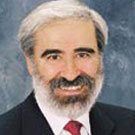
Tami Simon speaks with Dr. David Schnarch, a licensed clinical psychologist, certified sex therapist, and clinical member of the American Association for Marriage and Family Therapy. David is the author of the books Intimacy and Desire, Passionate Marriage, and Resurrecting Sex, and with Sounds True he has published a two-session audio program called Secrets of a Passionate Marriage: How to Increase Sexual Pleasure and Emotional Fulfillment in Committed Relationships. In this episode, Tami speaks with David about the four drives of sexual desires, his understanding of integrity and its importance in a healthy partnership, and what it might mean to “hold onto yourself” in relationship. (67 minutes)
Read Transcript
Here is an excellent article from Dr. Schnarch that outlines a bit of his therapeutic model.
by Dr. David Schnarch, Ph.D.
What are the Crucible 4 Points of Balance?
Holding on to yourself in relationships
One of the most important things in life is becoming a solid individual. And another important thing is to have meaningful relationships. Two of the most powerful human drives are our urge to control our own lives (autonomy), and our urge for relationship with others (attachment). One of the biggest tasks of adulthood is being able to balance these two urges, and one of the most common problems is having too much of one, and not enough of the other. People often feel claustrophobic or controlled in committed relationships, or feel like they can't be their true self in their relationships, or feel like their sense of self is starting to disappear and they don't know who they are any more. Others are constantly worried about "abandonment," or "safety and security," and constantly press their partner for "commitment," and "unconditional love."
The ability to balance our needs for autonomy and attachment is called differentiation. Differentiation is a scientific process that occurs in all species. For humans, it is about becoming more of a unique individual and a solid person through relationships with others.
The Crucible 4 Points of Balance are:
- How we operationalize differentiation in practical terms. They help you put science into practice.
- Our unique way of helping you become more grounded, adaptive, creative, and mature ("better differentiated").
The 4 Points of Balance come from distilling over 30 years of clinical experience. They are many things
- Core organizing principles of our Intensive Therapy Program, from which they were developed.
- Part of our programmatic efforts to help people around the world to live better lives.
- Hallmark of the Crucible Institute, the flagship of our programs and services.
The 4 Points of Balance can help you when you really need help.
- When you really need help you need to keep the help simple.
- There are just 4 things to remember.
- Easy to memorize, understand and recall when things get tough.
When your life is a mess, or you're under massive stress or you don't know what to do, your best move is always to hold on to the Crucible 4 Points of Balance.
The beauty of the 4 Points of Balance is that they look simple at first, but they are also incredibly sophisticated. The more you grow as a person, the deeper and more profound you understand them. Many people first find the 4 Points of Balance at difficult times in their lives and go on to use them as a way of life.
- These are not just great ideas or catchy phrases,
- They are powerful multi-faceted tools that can help you in every aspect of your life.
Each of the 4 Points of Balance is important. And together they provide a foundation for a healthy life.

1st Point of Balance: Solid Flexible Self™
Many people lack a solid sense of themselves. They have no real identity of their own.
- They get emotionally claustrophobic or overly dependent in committed relationships.
- Or they're rigid, brittle, controlling, and bend their relationships to fit their own needs and wants.
- Or they become increasingly dependent--emotionally fused--with their partner.
To the degree you lack a solid sense of self you depend on a reflected sense of self. You depend on getting a positive reflected sense of self from other people. Many people say they want intimacy, but what they're looking for is:
- Validation,
- Acceptance,
- Unconditional love
There's nothing wrong with wanting to feel validated, accepted and dearly loved. But if you depend on a reflected sense of self, you crash when these aren't forthcoming, and you spend lots of time talking about "safety and security," "abandonment," and vulnerability.
When you have solid flexible self:
- You have an internalized set of core values by which you run your life.
- You have a sense of your own self worth that perseveres through hard time.
- You can maintain your own viewpoints and sense of direction when others pressure you to conform.
- You draw your sense of personal stability, values, and direction from within yourself, which comes from frequently confronting yourself (from the best in yourself) that you could be wrong.
- You don't always have to be right, and you don't crash when you're wrong.
Solid Flexible Self is not a rigid self. Being able to adapt and change when prudent is just as import as staying the course. Flexibility:
- lets you learn from your mistakes.
- lets you change roles when your children leave home or you retire.
- lets other people to be right sometimes.
- makes room for your partner in your relationship.
Solid Flexible Self lets you stand on your own two feet in a relationship--without always standing on your partner’s toes.
2nd Point of Balance: Quiet Mind and Calm Heart™
Soothe your own mind and heart
The second basis of emotionally healthy living involves handling your own emotional inner world.
Quiet Mind and Calm Heart is our way of helping you do that.
There are two inter-related parts to developing an emotionally healthy inner world.
- Your thoughts
- Your feelings and emotions
- Your body's physical response to both
This means getting control of where all these take place. In practical terms this means three things:
- Quieting your mind
- Calming your heart
- Focusing on your physical reactions
In practice this means:
- Controlling your anxiety so it doesn't run away with you
- Handling your feelings and emotions
- Soothing your emotional bruises
- Monitoring your body
Many people have difficulty soothing their own emotions and/or calming their anxiety.
Developing Quiet Mind & Calm Heart not only makes your own life better, it lets other people live better too.
3rd Point of Balance: Grounded Responding™
Getting emotionally grounded
Over-reacting to tense or anxiety-filled situations is a common problem. Unbalanced, untimely, or disproportionate responses are one of the most common ways people ruin their lives. This is NOT grounded responding. This includes people:
- with explosive tempers with "short fuses"
- who say cutting things in difficult conversations.
- who break collaborative alliances whenever they get hurt.
- who are always yelling at their kids.
- who go to pieces over little things.
Under-reacting (avoidance) is also NOT Grounded Responding. It's not as obvious and more socially acceptable. Sometimes avoidance masquerades as Grounded Responding but it's not. It is commonly excused as procrastination. You’re not making grounded responses if you fail to react or take action when necessary.
Grounded Responding involves making modulated responses to people, events, and situations. There's an old saying that completely contradicts common emphasis on expressing feelings and frustrations. It says,"Marriage is improved by the two or three things not said each day."
- When your kids need discipline and you're just not feeling like doing it.
- You're concerned your child is showing signs of learning disabilities but you don't seek help.
- You know your partner's having an affair, but you say nothing because you don't want to upset the status quo.
4th Point of Balance: Meaningful Endurance™
Tolerating discomfort for growth
Of all things that determine success in life, perhaps the most important is Meaningful Endurance, the 4th Point of Balance.
Very little gets accomplished in life without Meaningful Endurance. Endurance increases your chances of success in marriage, parenting, families, and careers.
Meaningful Endurance is the basis of mastery. You cannot master a new skill, refine your abilities, develop your talent, learn new things, or expand your personality without Meaningful Endurance.
- Sticking with things so you can accomplish your goals
- Making yourself do what needs to be done, even when you don’t want to do it
- Absorbing hardship and disappointment, bouncing back after defeat
- Withstanding stress
Meaningful Endurance is not blind perseverance, stubbornness, or refusal to face facts. It is not stupid pain-for-no-purpose. It is not simply high pain tolerance, or accepting a lousy relationship.
Meaningful Endurance is about tolerating pain for growth. If there's no growth, it's not meaningful.
Many people lack Meaningful Endurance.
Tuesday, July 3, 2012
Tami Simon and John Welwood - Healing the Core Wound of the Heart

Excellent - John Welwood is one of my favorite teachers, and this is an excellent conversation with him, from Tami Simon, founder and owner of Sounds True. Welwood's Perfect Love, Imperfect Relationships is one of the best books, on relationships or otherwise, that I have ever read.
Healing the Core Wound of the Heart
Tuesday, July 3, 2012
Tami Simon speaks with Dr. John Welwood, a clinical psychologist, psychotherapist, and practicing student of Buddhism and Eastern contemplative psychology. Dr. Welwood is an author whose books include Journey of the Heart and Perfect Love, Imperfect Relationships, and with Sounds True he has created the audio learning program Conscious Relationships. In this episode, Tami speaks with Dr. Welwood about his understanding of the relationship between psychological work and the spiritual journey, as well as his view of the phenomenon of “spiritual bypassing.” He also spoke about committed relationships and the most common issue that couples present in couples therapy. (61 minutes)
Healing the Core Wound of the Heart

Subscribe to:
Posts (Atom)